

Table of Contents
What "Qualified Demos" Actually Mean for SaaS Companies
Why LinkedIn + Cold Email Work Better Together for SaaS Lead Generation
Step-by-Step SaaS Demo Generation Framework
Common SaaS Lead Generation Mistakes With LinkedIn and Cold Email
When SaaS Companies Should Outsource Lead Generation
How Cleverly Helps SaaS Companies Generate Sales-Qualified Demos
Conclusion
Frequently Asked Questions
Modified On :
September 4, 2026
Key Takeaways
- Qualified demos require ICP fit, buying urgency, and decision-maker access, not just calendar fills.
- SaaS lead generation strategy works best when LinkedIn builds trust and cold email drives scale simultaneously.
- Coordinate both channels to hit the same prospects within 3-5 days for higher reply and conversion rates.
- Qualify replies before booking by asking about timeline, budget authority, and current solutions.
- Measure demo-to-opportunity rates (25-40% benchmark) instead of total demo volume.
- Reply handling and qualification determine pipeline quality more than outreach volume ever will.
Most SaaS companies chase demo volume and wonder why their pipelines stay empty. The problem isn't effort. It's that volume doesn't equal qualified demand.
We've watched thousands of SaaS teams burn budgets on spray and pray tactics.
They book meetings with tire kickers, early stage startups with no budget, or prospects who ghost after the first call. The demo calendar looks full, but nothing closes.
What changed?
SaaS lead generation strategy isn't about picking LinkedIn or cold email anymore. It's about running both channels together, coordinated around the same prospect list.
When your LinkedIn outreach warms up a decision maker and your cold email hits their inbox three days later, you're not interrupting. You're following up on a conversation you already started.
This is how modern SaaS lead generation actually works. One channel builds awareness. The other drives action. Together, they fill your calendar with demos that actually convert.
Let's break down exactly how to build this system.
What "Qualified Demos" Actually Mean for SaaS Companies
Not all demos are created equal. We've seen SaaS companies celebrate 50 booked demos a month, then close two deals. That's not a lead problem. That's a qualification problem.
Booked demos vs sales-qualified demos
A booked demo is anyone willing to jump on a call. A sales-qualified demo is someone who can actually buy your product, needs it now, and has a budget allocated. The difference shows up in your close rate.
Most SaaS lead generation efforts optimize for the wrong metric. They chase calendar fills instead of revenue potential. Your sales team wastes hours on calls with:
- Junior employees doing "research" with no buying authority.
- Companies too small or too large for your ICP.
- Prospects exploring solutions they won't buy for 12 months.
- Competitors fishing for product intel.
Why high demo volume tanks your close rates
When you book 100 low quality demos, your team burns out. They start treating every call like it won't close because statistically, it won't. That energy bleeds into calls with actual qualified prospects. Your best salespeople leave. Your metrics look busy but your revenue stays flat.
SaaS-specific qualification signals that matter
Before we book a demo for our clients, we validate three things:
- ICP fit: Company size, industry, tech stack, and revenue range match your ideal customer profile.
- Urgency: They're actively solving the problem now, not researching for next quarter.
- Buying role: We're talking to the person who signs contracts or directly influences the decision.
These signals separate tire kickers from checks cleared. This is how lead generation for SaaS companies actually drives revenue instead of just activity.
Why SaaS Lead Generation Is Harder Than Other B2B Sales
Selling software isn't like selling a service or a physical product. SaaS lead generation strategy runs into three problems most B2B sales motions don't face at the same intensity, and ignoring them is why so many campaigns stall out before they start.
Longer sales cycles mean one pitch never closes the deal
A landscaping company can pitch a mowing contract and close it in a single call. SaaS doesn't work that way. The median B2B SaaS sales cycle now runs close to 84 days, and it's stretched roughly 22% longer since 2022 as buying committees grow and budget scrutiny tightens (Benchmarkit, 2025 SaaS Performance Metrics Report). For anything above $100K in contract value, that number climbs well past three months.
That means your outreach can't be a single touch. It has to be a sequence, spread across weeks, that keeps showing up without becoming annoying. One LinkedIn message and one cold email won't survive a sales cycle this long. You need a system built for sustained nurture, not a single pitch.
Buyers can't touch, feel, or test-drive your product from a message
A physical product sells itself with a photo. A service sells itself with a portfolio. Software stays intangible until someone actually logs in and uses it, and that makes trust the hardest thing to earn in cold outreach.
This is why social proof carries so much weight in SaaS lead generation. Client logos, case studies, and specific outcomes ("cut ramp time in half for teams like yours") do the work a product photo would do for a physical good. Prospects need proof your software works before they'll spend 30 minutes watching it work.
Buyers are exhausted by features that all sound the same
Most SaaS categories are crowded. A CFO evaluating your product has probably seen four other vendors this quarter making nearly identical claims about "streamlining workflows" and "driving efficiency." Feature lists blur together fast, and generic messaging gets deleted before it's read.
Cutting through means leading with a specific outcome for a specific buyer, not a list of capabilities. "We help RevOps teams cut lead routing time by 40%" beats "our platform offers advanced automation" every time.
Why these three factors shape everything that follows
Long cycles, intangible products, and buyer fatigue aren't separate problems. They compound. A long cycle gives feature fatigue more time to set in. An intangible product needs even more proof when the buyer has already tuned out five other vendors making the same promises.
That's the logic behind every tactic in this guide. Coordinated LinkedIn and email exist to survive a long sales cycle. Case studies and specific messaging exist to overcome intangibility and fatigue. Qualification exists because none of this works if you're spending your nurture budget on the wrong prospects. Keep these three constraints in mind. They're why "just send more messages" was never going to be the answer.
🔥 Book Demos on Autopilot
Cleverly runs LinkedIn outreach + cold email to deliver demo-ready SaaS leads—starting at $397/mo or pay per qualified meeting.
Why LinkedIn + Cold Email Work Better Together for SaaS Lead Generation
Most SaaS companies treat LinkedIn and cold email as separate campaigns. They run LinkedIn outreach in January, cold email in February, and wonder why neither channel hits target. That's like trying to run on one leg.
The best SaaS lead generation strategies use both channels simultaneously, hitting the same prospects within the same week. Here's why this approach outperforms single channel tactics.
LinkedIn builds trust before you ask for anything

When you connect with a VP of Sales on LinkedIn, view their profile, and engage with their content, you're not a stranger anymore. You're showing up in their notifications. They see your company name. They check out your profile and notice you work with brands they recognize.
LinkedIn gives you:
- Social proof through mutual connections and client logos.
- Context about their role, company, and recent activity.
- Trust building through profile views and content engagement before the pitch.
More on This: Generate 30+ Leads On Linkedin Without Spamming People
Cold email delivers scale and speed
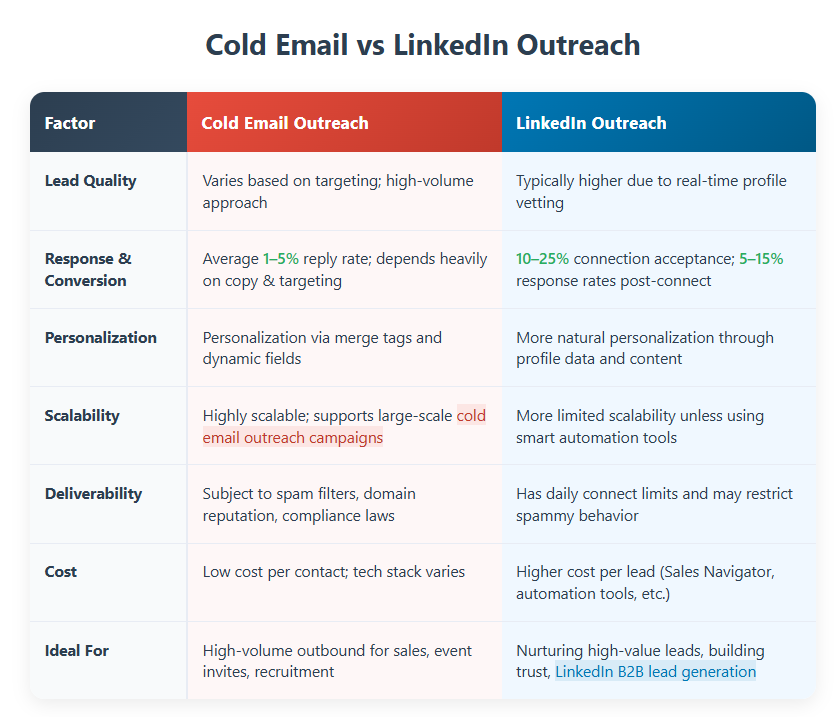
LinkedIn has connection limits and daily message caps. You can't reach 500 decision makers this week through LinkedIn alone. Cold email removes those constraints.
Cold email gives you:
- Volume to test messaging and identify what resonates.
- Speed to reach entire target account lists in days, not months.
- Direct inbox access without platform restrictions.
Read More: Cold Email Outreach Best Practices
Why combining them increases demo conversion
Here's what happens when we coordinate both channels for clients:
A CFO sees your LinkedIn connection request on Monday. Tuesday, they notice you viewed their profile. Wednesday, your cold email lands in their inbox and it's not from a random stranger. It's from that person who just connected on LinkedIn. The one who works with companies like theirs.
The LinkedIn touchpoint makes your cold email familiar instead of intrusive. Your email gives them an easy way to respond without switching to LinkedIn. Together, they create multiple impressions across different environments, work computer and mobile phone, desktop and LinkedIn app.
We've run thousands of B2B SaaS lead generation strategies for clients. Single channel campaigns get 1-2% reply rates.
Coordinated LinkedIn and cold email campaigns get 4-8% reply rates. The math is simple: more qualified replies mean more qualified demos.
This coordination is what separates SaaS lead generation that fills calendars from strategies that fill pipelines.
Compare In-depth: Cold Email vs LinkedIn Outreach: What Gets Better Results?
Content Marketing & SEO as an Inbound Channel
LinkedIn and cold email are outbound. You're reaching out first. But SaaS lead generation strategy gets stronger when you pair outbound with a channel that brings buyers to you: content marketing and SEO.
Blogs, ebooks, and webinars as gated lead capture
A well-written blog post that ranks for a buyer's actual question does something outbound can't. It reaches someone while they're already looking for an answer, not while they're in the middle of their workday getting interrupted.
The format matters less than the intent match. Educational blog content earns organic traffic and builds authority over time. Ebooks and gated guides trade a deeper resource for an email address, feeding your nurture list. Webinars often convert best of all, since they combine education with a live commitment that filters out casual browsers before your sales team ever gets involved.
SEO as a compounding channel that runs alongside outbound
Outbound gets you meetings this month. SEO builds an asset that keeps producing meetings next year without a matching increase in spend. That compounding effect is the entire appeal. A blog post you publish once can keep ranking, and keep sending qualified traffic, for years without another dollar of outreach spend behind it.
It's not a replacement for outbound. It's a second growth curve running underneath it.
The realistic timeline: content takes months, outbound takes weeks
Here's the tradeoff nobody likes to hear. Outbound can put qualified demos on your calendar in 2 to 4 weeks. Content and SEO typically take 3 to 6 months to build real momentum, and competitive keywords can take longer than that.
That timeline gap is exactly why the best SaaS lead generation strategies run both at once instead of picking one. Outbound covers the gap while your content program builds toward its own compounding return. If you wait for content to work before starting outbound, you've lost two quarters of pipeline you didn't have to lose.
Inbound leads still need the same qualification step
A demo request from a blog CTA feels different from a cold email reply, but it isn't automatically more qualified. Someone downloading your ebook might be a student doing research, a competitor, or a genuine buyer three months from budget approval.
Run inbound leads through the same ICP fit, urgency, and buying role checks outlined earlier for outbound demos. The source of the lead changes how they found you. It doesn't change whether they can actually buy.
Cold Calling as a Third Channel
LinkedIn and email aren't the only two channels worth running. Cold calling for SaaS lead generation earns a spot in the mix too, and it works best as a third layer, not a replacement for the other two.
Where cold calling fits alongside LinkedIn and email
Digital channels can get ignored. A LinkedIn message sits unread. A cold email gets buried under 200 others. A phone call demands a decision in the moment: answer or don't. That immediacy is what makes cold calling worth including, especially once you already have a name and a reason to call from your LinkedIn and email sequence.
57% of C-level executives and VPs say they'd rather be contacted by phone than any other channel (RAIN Group). For senior buyers specifically, calling isn't a fallback channel. It's often the preferred one.
When a call breaks through where digital channels stall
Calling works best at specific moments in a sequence, not as the opener. If a prospect opened your emails three times but never replied, or viewed your LinkedIn profile without accepting the connection, that's a signal of interest without action. A call converts that passive interest into a real conversation faster than a fourth follow-up message ever will.
It also works well right after a trigger event: a funding announcement, a leadership change, a public complaint about a competitor's tool. A call that references something specific and current cuts through in a way a templated message can't.
Coordinating call timing with your LinkedIn and email sequence
The same rule that governs LinkedIn and email applies here: don't run all three channels blind to each other. Calling a prospect the same day your cold email lands feels like a pile-on. Calling three weeks after your last touch feels random.
Build call timing into the sequence itself. A common pattern: LinkedIn connection in week one, email in week one, a call attempt in week two if there's been engagement but no reply, and a final email referencing the voicemail you left. Each channel should know what the others already said.
When SaaS Companies Should Outsource Lead Generation
Step-by-Step SaaS Demo Generation Framework
Running effective B2B SaaS lead generation strategies isn't about blasting messages and hoping something sticks. It's a systematic process that filters for quality at every stage.
Here's the exact framework we use to generate qualified demos for SaaS clients.
Step 1: Define a Demo-Worthy ICP (Not Just a Target Market)
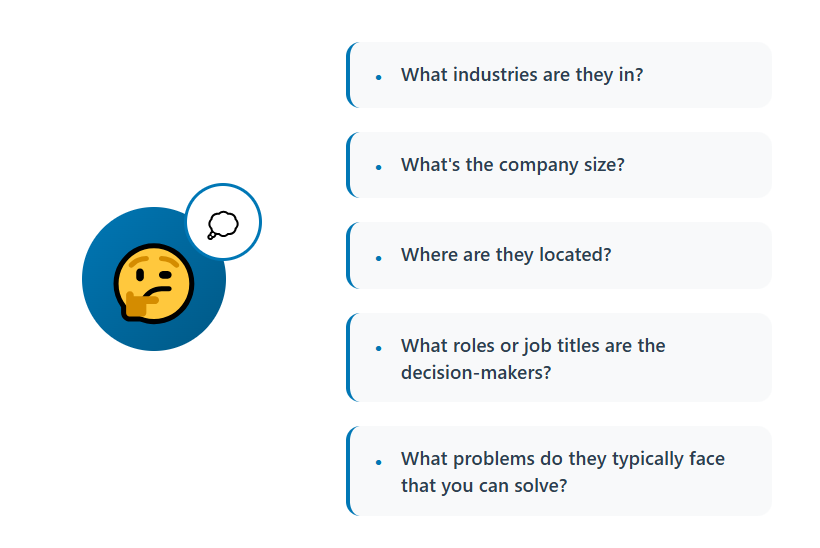
Most SaaS companies say their ICP is "B2B companies with 50-500 employees." That's not an ICP. That's a guess.
Your demo-worthy ICP needs precision:
Buyer roles vs influencers
We separate who uses your product from who buys it. A marketing manager might love your tool, but the CMO signs the contract. We target the CMO first. The manager becomes our internal champion after the demo is booked, not before.
Firmographic and technographic alignment
Your best customers aren't random. They share patterns:
- Revenue range where your pricing makes sense
- Team size that matches your product complexity
- Tech stack that integrates with your platform
- Industry where your use case is proven
We build targeting lists around these data points. If your best customers use Salesforce and HubSpot, we target companies with that same stack. If you close deals in 50-200 employee companies, we exclude the 20 person startups and 5,000 person enterprises.
Disqualifying bad-fit demo requests
Not every reply deserves a demo. We've trained our team to politely decline:
- Companies outside your revenue range
- Prospects wanting free consulting disguised as a demo
- Students and researchers with no buying intent
- Competitors doing "market research"
Saying no to bad fits protects your sales team's time and keeps your close rate honest.
Differentiate: Lead Quality vs Quantity - Why More Leads Can Hurt B2B Revenue
Step 2: Build a Cold Offer That Earns a Demo
Here's where most SaaS lead generation strategies fall apart. They lead with "book a demo" to people who don't know them, don't trust them, and aren't actively shopping.
Why "book a demo" fails for cold traffic
Cold prospects aren't ready to sit through your 30 minute product walkthrough. They don't know if you're credible. They don't know if you solve their specific problem. Asking for a demo is asking for too much, too soon.
Transitional CTAs that lead to demos
We use softer entry points:
- "Want to see how [competitor alternative] handles [specific use case]?"
- "I can send you our pricing breakdown and integration guide"
- "Happy to show you a 5 minute walkthrough of how [specific feature] works"
These lower-commitment offers get responses. Once they reply with interest, we qualify them and then suggest a proper demo to go deeper.
Aligning the offer with buying-stage awareness
If they're actively evaluating solutions, we can be direct about demos. If they're not aware they have the problem yet, we lead with education. Your offer should match where they are in the buying process, not where you want them to be.
Step 3: Launch LinkedIn Outreach First
LinkedIn is your warmup channel. We use it to build familiarity before we ever ask for anything.
Connection strategy and positioning
We send connection requests without pitch messages. Just a simple request. Once connected, we don't immediately pitch. We view their profile, engage with a recent post, or send a brief connection message acknowledging something specific about their role or company.
Conversation-first messaging
Our LinkedIn messages sound like humans, not sales bots:
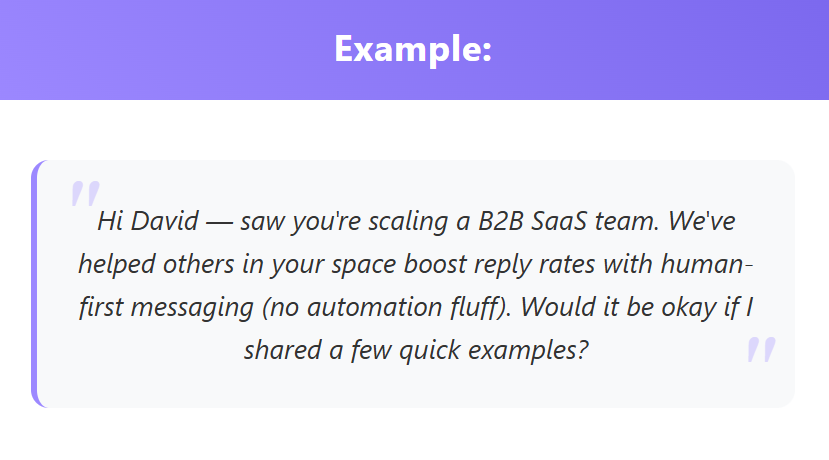
"Saw you're hiring SDRs at [company]. We've helped a few teams in [industry] cut their ramp time by about half. Mind if I share how?"
No "I hope this message finds you well." No "I'd love to pick your brain." Just direct, relevant, and specific to them.
How to create familiarity before pitching
We treat the first week of LinkedIn outreach as awareness building. By the time our cold email hits their inbox, they've seen our name 2-3 times on LinkedIn. We're not strangers anymore.
Might Help: 10 High-Converting LinkedIn InMail Templates to Boost Your Outreach Success
Step 4: Layer Cold Email for Scale
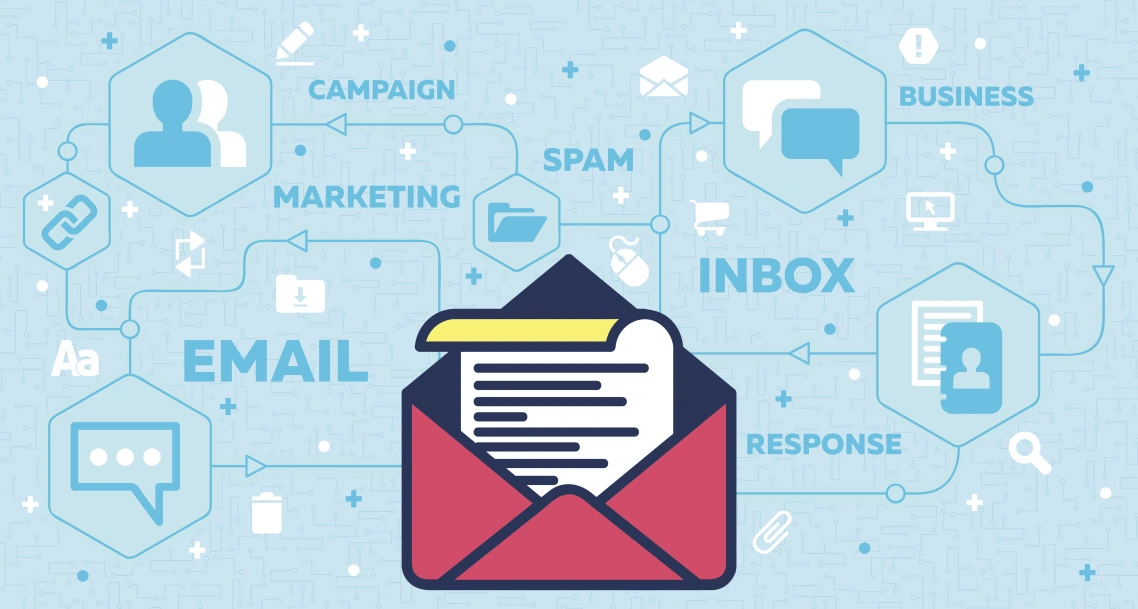
LinkedIn builds trust. Email drives volume. You need both.
When email should follow LinkedIn (and vice versa)
We typically connect on LinkedIn first, then send a cold email 3-5 days later. The LinkedIn connection makes the email feel like a follow-up, not a cold interruption. For high-priority accounts, we might reverse it, sending an email first and a LinkedIn message as a follow-up to the email.
Matching email tone to LinkedIn context
If we mentioned a specific pain point on LinkedIn, we reference it in the email. If they engaged with our connection request but didn't reply, we acknowledge that in the email. The channels should feel coordinated, not random.
Avoiding channel overlap mistakes
Never send the exact same message on LinkedIn and email. It looks automated and lazy. Never pitch on both channels in the same day. That's spam. And never ignore a LinkedIn reply to push an email thread. Meet prospects where they respond.
Also Check: How to Write Cold Emails That Get Replies (Complete Guide)
Step 5: Handle Replies and Qualify Before Booking
Getting a reply is not the same as getting a qualified demo. This step separates good lead generation for SaaS from wasted sales time.
Why reply handling impacts demo quality
Most teams book any reply that doesn't say no. That's how you end up with 50 demos and 2 closed deals. We ask qualifying questions before we confirm the calendar invite:
- "What's driving you to look at solutions right now?"
- "Who else is involved in evaluating this on your team?"
- "What does your timeline look like for making a decision?"
Their answers tell us if this demo will go anywhere.
Filtering curiosity vs buying intent
Curious prospects say things like "just exploring options" or "doing some research." Buying intent sounds like "we need to solve this by Q2" or "our current tool isn't cutting it anymore." We prioritize the second group.
Reducing no-shows and low-intent demos
We send calendar invites with context. We confirm the meeting 24 hours before. We remind them why they booked the call in the first place. These small steps cut no-show rates and keep demo quality high.
Helps in Qualification: Best Lead Scoring Tools for B2B Sales Teams
Step 6: Measure Demo Quality, Not Just Volume
Vanity metrics kill SaaS growth. Booked demos mean nothing if they don't convert.
Demo-to-opportunity rate
This is your north star metric. If you're booking 40 demos and creating 4 opportunities, your demo-to-opp rate is 10%. Industry benchmark for qualified demos is 25-40%. Anything below 15% means you're booking unqualified meetings.
Pipeline influenced vs pipeline created
Some demos turn into immediate opportunities. Others warm up accounts that close six months later. Track both. Pipeline created measures direct attribution. Pipeline influenced captures the long game.
Feedback loops between sales and outreach
Your sales team knows which demos waste their time. We run weekly sync calls with sales to understand:
- Which lead sources produce the best opportunities?
- What objections keep coming up in demos?
- Which personas close faster than others?
That feedback refines targeting, messaging, and qualification. Your outreach gets better every month because you're learning from closed deals, not just booked meetings.
This framework is how we've generated $312 million in pipeline revenue and $51.2 million in closed revenue for our clients. It's not magic. It's process, precision, and obsessive focus on demo quality over demo quantity.
Dive Deeper: Cold Email Strategy for B2B SaaS (With Real Reply Rate Benchmarks)
🚀 From Cold Outreach to Qualified Demos
We handle targeting, copy, inboxing, and follow-ups, so your calendar fills with SaaS buyers ready to see the product.
Common SaaS Lead Generation Mistakes With LinkedIn and Cold Email
We've audited hundreds of SaaS lead generation campaigns that looked good on paper but generated zero revenue. The patterns are predictable.
Here are the mistakes that kill conversion, even when your outreach gets replies.
❌ Running both channels with the same messaging
Copy-pasting your LinkedIn message into a cold email doesn't make you efficient. It makes you lazy.
LinkedIn is a social platform. People expect casual, conversational tone. Email is direct communication. People expect you to get to the point faster. When your message reads identical on both channels, prospects notice. It feels automated and impersonal.
Worse, if they see your LinkedIn message on Monday and your email with the exact same words on Wednesday, you've told them you're running bulk campaigns. Trust drops to zero.
We adjust tone, length, and structure for each channel. LinkedIn messages stay short and conversational. Emails include more context and clearer CTAs. Same value proposition, different delivery.
❌ Over-automating LinkedIn conversations
LinkedIn automation tools promise to scale your outreach. They deliver flag-worthy behavior patterns instead.
When you auto-like 50 posts per day, auto-view 100 profiles, and send connection requests every 3 minutes, LinkedIn's algorithm notices. So do your prospects. Nobody believes a real human viewed their profile at 2:47am and sent a message 12 seconds later.
The bigger problem is conversational automation. Bots can't read context. They send follow-up number three when the prospect already said no in reply number two. They ask questions the prospect answered in their previous message. They turn potential conversations into frustrating loops.
We use automation for list building and initial outreach scheduling. We keep humans in the conversation loop. Real replies get real responses, not triggered sequences that ignore what was actually said.
❌ Optimizing for replies instead of sales outcomes
High reply rates feel good. They don't pay bills.
We've seen campaigns with 15% response rates that generated zero pipeline. The messages were intriguing. They sparked curiosity. But they attracted the wrong people, researchers, students, competitors, or prospects so early in their buying journey that they won't convert for 18 months.
Meanwhile, a campaign with 3% reply rates closed six figures in revenue because every reply came from a qualified ICP with active buying intent.
Your lead generation for SaaS metrics should track backwards from revenue:
- How many demos turned into opportunities?
- How many opportunities closed?
- What was the CAC for closed customers?
Reply rates are a leading indicator, not the goal. When teams optimize for replies, they start using clickbait subject lines and vague value propositions that get responses from unqualified prospects. The calendar fills up. The pipeline stays empty.
❌ Treating demo booking as the finish line
Booking the demo is the starting line, not the finish line. This mindset error destroys conversion rates.
When your outreach team celebrates booked meetings and moves on to the next target list, nobody owns the qualification process. Unqualified demos slip through. Sales teams waste time on calls that were never going anywhere. The feedback loop between outreach and sales breaks down.
We treat demo booking as step five in an eight-step process:
- Target the right ICP
- Generate awareness through LinkedIn
- Drive replies through cold email
- Qualify intent through conversation
- Book the demo
- Send pre-call context and confirmation
- Support sales with account research
- Analyze which demos closed and why
The outreach team stays involved until the opportunity is created or disqualified. That accountability changes everything. When your bonus depends on opportunity creation, not just booked meetings, you stop booking junk demos.
These mistakes are why most SaaS lead generation looks busy but delivers weak results. Volume without qualification is just expensive noise. Fix these four issues and your close rates will climb even if your demo volume drops.
Crucial to Understand: MQL vs SQL - What’s the Difference and How to Approach Each?
When SaaS Companies Should Outsource Lead Generation
Most SaaS founders try building an in-house SDR team first. It makes sense. You want control over messaging, ownership of the process, and direct feedback loops. But there's a point where the DIY approach stops being scrappy and starts costing you growth.
Here's when it makes sense to work with a B2B lead generation agency instead of grinding through the build yourself path.
Signs in-house SDR efforts aren't scaling
You hired two SDRs six months ago. They're busy. Your Slack shows activity. But your demo calendar looks the same as it did when you were doing outreach yourself.
Red flags that your in-house setup isn't working:
- Your SDRs spend more time on list building and research than actual outreach.
- Reply rates dropped after the first month and never recovered.
- Demo volume is inconsistent, 12 meetings one month, 3 the next.
- Your best SDR just left and took all the process knowledge with them.
- You're paying $80k+ per SDR but they're only booking 4-6 qualified demos per month.
The math stops working when your cost per demo exceeds your customer lifetime value. If you're spending $15k per month on two SDRs and getting 8 demos, that's $1,875 per demo.
For a SaaS product with $30k ACV and 20% demo-to-close rate, you need 5 demos to close one deal. That's $9,375 in SDR costs alone per customer, before you factor in sales team time, tools, or overhead.
Infrastructure, data, and deliverability gaps

Effective outbound isn't just about sending messages. It's infrastructure you probably don't want to build.
Data and targeting
Good list building requires multiple data sources, enrichment tools, and constant quality checks. You need accurate emails, verified phone numbers, technographic data, and intent signals. Most companies buy one database subscription and wonder why 40% of their emails bounce.
Professional agencies maintain relationships with 5-8 data providers, cross-reference sources, and build proprietary filtering processes. They've already made the expensive mistakes around data quality.
Email deliverability
Your company domain can't handle cold email volume without tanking deliverability. You need secondary domains, proper DNS configuration, IP warming protocols, and constant monitoring of sender reputation.
Set this up wrong and your cold emails land in spam. Worse, your internal company emails start getting filtered because you damaged your domain reputation. Fixing deliverability issues takes months.
Agencies run dedicated infrastructure with warmed domains, managed IP pools, and daily email deliverability monitoring. They absorb the technical complexity so you don't have to.
LinkedIn account management
Scaling LinkedIn outreach means managing multiple accounts without triggering platform restrictions. You need to understand connection limits, message cadences, profile optimization, and how to avoid automation flags.
One mistake and LinkedIn restricts your account for weeks. Agencies spread risk across managed accounts and know exactly where the platform boundaries are.
Why agencies outperform tools alone
Buying Apollo, Instantly, or LinkedIn Sales Navigator doesn't make you good at outbound. Tools enable execution. They don't replace strategy, copywriting, testing, or qualification expertise.
We've seen SaaS companies spend $50k on tools and get worse results than our clients who pay us to run everything:
Agencies bring specialized skills you don't want to hire for
- Copywriters who've written thousands of cold email variations and know what converts
- Targeting specialists who understand ICP definition at the data level
- Reply handlers who can qualify prospects in 3-4 messages
- Deliverability experts who keep your emails out of spam
- Campaign strategists who've run tests across hundreds of industries
You'd need to hire 4-5 people to replicate this skillset in-house. That's $300k+ per year in payroll before tools and overhead.
Agencies test at scale
We run campaigns for dozens of clients simultaneously. When we discover a subject line that increases open rates by 15%, all our clients benefit immediately. When we test a new LinkedIn connection strategy across 20 accounts, we know within two weeks if it works.
Your in-house team tests one variable at a time on your single ICP. Learning is slow. Agencies learn across multiple ICPs, industries, and buying cycles simultaneously.
What to expect from a done-for-you model
Not all agencies operate the same way. Some sell you software and call it done-for-you. Others actually do the work.
Here's what real done-for-you SaaS lead generation looks like:
We handle everything from targeting to reply management
You give us your ICP and ideal customer examples. We build the target lists, write the messaging, launch the campaigns, handle replies, qualify prospects, and book meetings directly on your calendar. You show up to talk to qualified prospects. That's it.
You only pay for results, not activity
At Cleverly, our cold email clients only pay for meeting-ready leads we send them. Not replies. Not booked meetings. Meeting-ready leads that match your qualification criteria. If we book a demo with someone outside your ICP, you don't pay for it.
Our LinkedIn services start at $397/mo, and we've generated $312 million in pipeline revenue and $51.2 million in closed revenue for over 10,000 clients including Amazon, Google, Uber, PayPal, Slack, and Spotify.
You get transparency without the operational burden
Good agencies send weekly performance reports showing exactly what's happening: messages sent, reply rates, demos booked, and qualified lead flow. You see the results without managing the process.
When outsourcing makes sense
Consider a B2B lead generation agency if:
- You need qualified demos in the next 30-60 days, not 6 months from now.
- Your team should focus on product and closing deals, not outbound infrastructure.
- You've tried building in-house and hit a ceiling on quality or consistency
- You want to test outbound as a channel without committing to full-time headcount
The best SaaS companies don't outsource because they can't do it themselves. They outsource because their time is worth more spent elsewhere.
How Much Should a SaaS Company Spend on Lead Generation?
The math above raises the real question: what's a healthy amount to spend on lead generation in the first place? The honest answer depends on stage, but there are real benchmarks to plan against.
Sales and marketing spend as a percentage of revenue
Early-stage SaaS companies, especially those chasing initial traction, often spend 20-40% of revenue on combined sales and marketing. That's not a rounding error. It reflects the reality that you're buying market presence before retention and referrals start doing any of the work for you.
Mature SaaS companies bring that number down significantly, typically landing in the 15-30% range as retention, expansion revenue, and word-of-mouth start covering more of the growth. If your spend still looks like an early-stage company's after you've scaled past $20M ARR, that's usually a sign your channels aren't getting more efficient with age.
CAC payback: the benchmark to watch
CAC payback measures how many months it takes to recover what you spent to acquire a customer, based on their gross margin contribution. The median B2B SaaS company recovers CAC in around 16 months, while top-quartile companies do it in under 6 (Aleph x Benchmarkit, 2026 SaaS & AI Performance Benchmarks). Under 12 months is generally considered healthy for venture-backed SaaS. Past 18-24 months, you're funding growth for a long time before it turns a profit on paper.
Watch this number over time more than at any single point. A payback period creeping up quarter over quarter, even while demo volume looks fine, is an early signal that your CAC is rising faster than your average contract value.
Why tracking CAC per channel beats one blended number
A single blended CAC hides more than it reveals. LinkedIn, cold email, cold calling, paid ads, and content all carry different costs and different payback timelines, and averaging them together makes a great channel look mediocre and a bad channel look fine.
Track CAC and payback separately for each channel you run. If outbound is paying back in 4 months and a paid channel is paying back in 14, that's a budget conversation, not a footnote.
Budget allocation across outbound, content, and paid
There's no universal split, but a reasonable starting allocation for a SaaS company running all three motions looks something like this:
- Outbound (LinkedIn + cold email + calling): the fastest path to pipeline, and usually where 40-60% of an early-stage lead gen budget should sit, since it produces demos in weeks rather than months.
- Content and SEO: a smaller slice early on, often 15-25%, that compounds as posts age and start ranking, becoming a larger share of the mix as the library matures.
- Paid: flexible, typically 15-30%, useful for testing messaging fast and filling gaps while organic channels build.
Adjust these ranges to your own CAC payback data once you have a few months of results. The goal isn't hitting an industry ratio. It's spending where your own numbers show the payback is fastest.
Explore: Why Done-for-You LinkedIn Lead Generation Delivers Faster ROI
How Cleverly Helps SaaS Companies Generate Sales-Qualified Demos
We're a B2B lead generation agency that runs LinkedIn and cold email as one coordinated system, not separate campaigns. We build familiarity on LinkedIn, then hit the same prospects with email 3-5 days later.
What we handle for you:
- SaaS-specific targeting based on tech stack, growth signals, and actual buying behavior.
- Channel-specific copy that sounds human on LinkedIn and gets to the point in email.
- Reply qualification so only sales-ready prospects hit your calendar.
- Demo-to-opp rates as our success metric, not vanity reply counts.
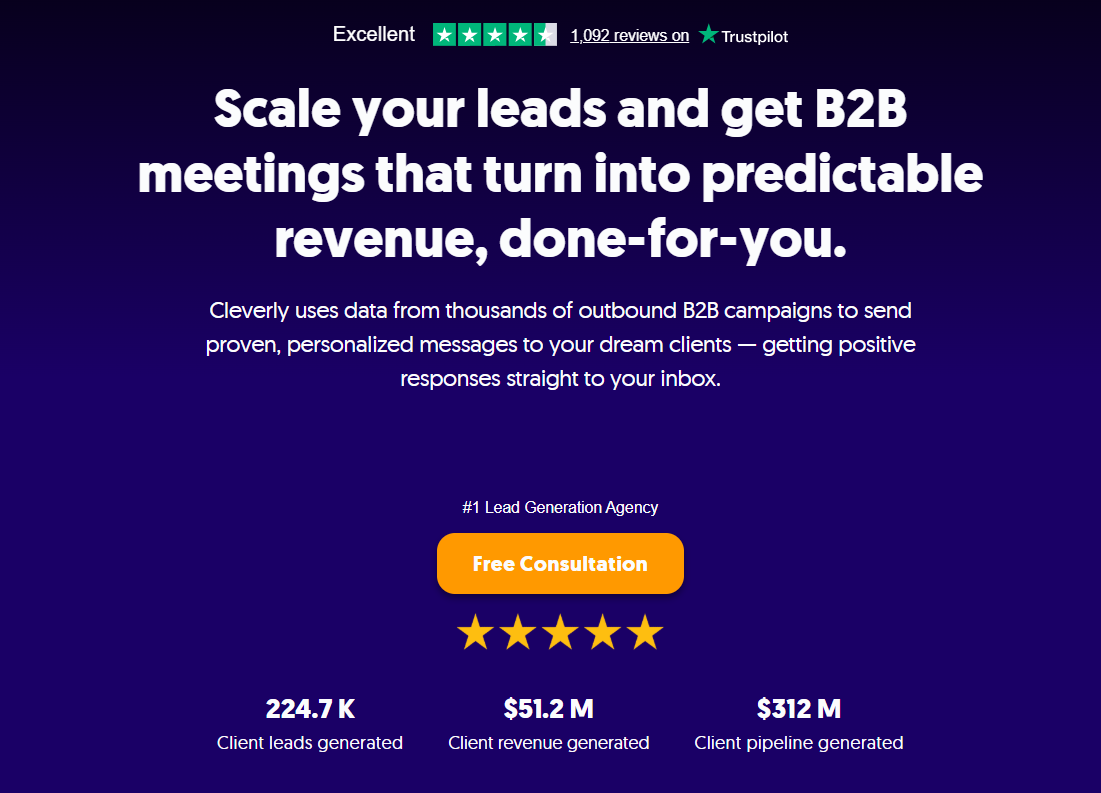
💸 Generated $312 million in pipeline and $51.2 million in closed revenue for 10,000+ clients like Amazon, Google, Uber, and Spotify.

LinkedIn starts at $397/mo. Cold email? You only pay for meeting-ready leads.
Book a strategy call and we'll build your exact campaign, target list, and 60-day forecast.
Conclusion
Qualified demos don't come from software. They come from SaaS lead generation strategy that filters for quality at every step.
LinkedIn builds trust and familiarity. Cold email drives scale and speed. When you run both channels together with clear roles, reply rates double and demo quality improves.
The companies that scale sustainably aren't chasing volume. They're building repeatable systems that consistently deliver sales-qualified prospects. That's the difference between a busy calendar and a growing business.
Start with your ICP. Coordinate your channels. Qualify before you book. Measure what actually closes. The demos will follow.
Frequently Asked Questions
Free Resource
How to Scale a Profitable Cold Call System
Get the complete guide — download it instantly now.
Free Ebook
Download the Free Guide
Enter your details to get instant access.
You're all set! 🎉
Your ebook is downloading now.
Click below if the download didn't start automatically.


