

Table of Contents
What Is an MQL and What Is an SQL?
MQL vs SQL: The Core Differences
Where MQLs and SQLs Fit in the B2B Funnel Today
Why Marketing and Sales Fight Over Lead Quality
What Is a Good MQL to SQL Conversion Rate?
How to Calculate MQL to SQL Conversion Rate
How Cleverly Approaches MQLs, SQLs, and Sales Readiness
Conclusion
Frequently Asked Questions
Modified On :
September 10, 2026
Key Takeaways
- MQLs show interest through engagement while SQLs are vetted and ready to buy through actual sales conversations.
- A good MQL to SQL conversion rate ranges from 13-20% for inbound and 25-50% for outbound channels.
- Outbound strategies skip the MQL stage entirely and create SQLs directly through targeted outreach.
- Misaligned definitions between marketing and sales are why most MQLs never convert to SQLs.
- Your funnel structure should match your sales motion: SMB uses MQLs, enterprise skips straight to SQLs.
- Quality conversations matter more than lead volume when building predictable pipeline
We've all been there. Marketing celebrates 500 new leads while sales complains the pipeline is empty. Sound familiar?
The disconnect usually comes down to one thing: not understanding the MQL vs SQL framework.
When you blur the line between these two lead types, you waste time chasing people who aren't ready to buy and miss the ones who are.
Here's the truth. Not every lead deserves a sales call. And treating all leads the same is why your conversion rates are probably lower than they should be.
In this guide, we're breaking down exactly what separates marketing qualified leads from sales qualified leads, how to move leads between stages efficiently, and how to fix the handoff process that's costing you deals right now.
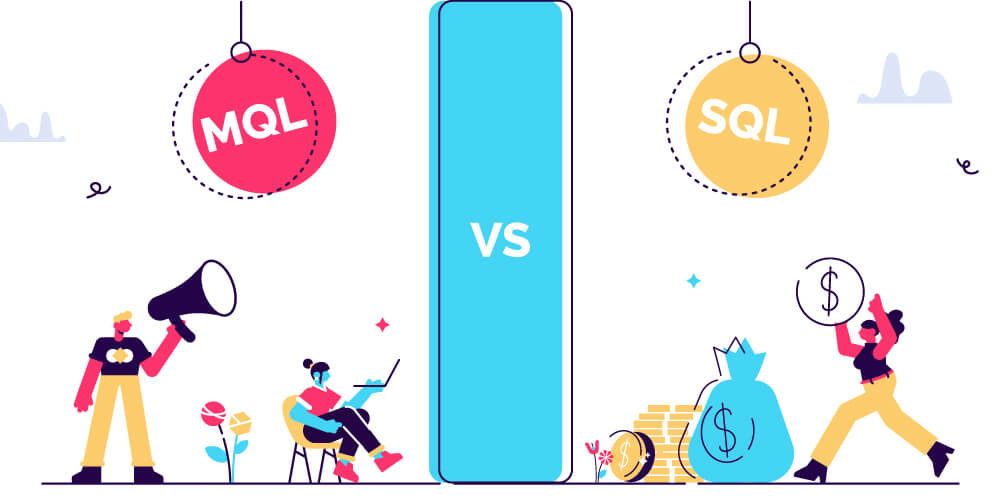
What Is an MQL and What Is an SQL?
Let's keep this simple for marketing and sales alignment.
An MQL (Marketing Qualified Lead) is someone who's shown interest but isn't ready to talk to sales yet. They downloaded your ebook, attended a webinar, or visited your pricing page multiple times. They're engaging with your content and fit your ideal customer profile, but they haven't raised their hand for a conversation.
An SQL (Sales Qualified Lead) is different. This person has been vetted by your sales team and confirmed they have a real need, budget, and timeline. They've moved past research mode and into buying mode.
How MQLs originate:
- Downloading gated content like whitepapers or guides
- Signing up for newsletters or product demos
- Engaging with multiple blog posts or case studies
- Showing intent signals like repeat website visits or email opens
How SQLs are created:
- Direct conversations with sales reps
- Qualifying questions that confirm fit (budget, authority, need, timeline)
- Explicit interest in pricing, implementation, or next steps
- Two-way dialogue that reveals genuine purchase intent
Let’s talk about the catch. These definitions aren't universal.
A SaaS company might mark someone as an MQL after a free trial signup, while a lead generation agency like us considers booked discovery calls as the SQL threshold. Your definitions should match your sales cycle, deal size, and how your teams actually work together.
Learn More: Lead Quality vs Quantity
🚀 Skip the MQL Stage Altogether
From $397/mo LinkedIn outreach to pay-per-meeting email and 10–30 guaranteed calls/month, we deliver SQL-level conversations from day one.
MQL vs SQL: The Core Differences
The MQL vs SQL debate boils down to ownership, intent, and sales readiness.
MQLs are marketing's responsibility. They're generated through content downloads, webinars, ads, and website activity. We qualify them based on engagement signals like email opens, form fills, and behavioral lead scoring. They're showing interest but aren't ready for a sales conversation yet.
SQLs belong to sales. They come from actual conversations, outbound cold outreach, or discovery calls where a rep confirms fit, budget, pain points, and buying timeline. These leads are validated by humans, not automation, and they're ready for active pipeline movement.
The biggest differences:
- Intent level: MQLs show curiosity. SQLs show buying intent.
- Qualification method: MQLs are scored by marketing workflows. SQLs are vetted through real conversations.
- Sales readiness: MQLs need nurturing. SQLs need proposals and demos.
- Revenue impact: MQLs build awareness indirectly. SQLs drive deals directly.
Where companies mess up - Treating every MQL like an SQL wastes your sales team's time. But waiting too long to engage an SQL-ready lead means your competitors get there first. The key is knowing exactly when to make the handoff, and we'll cover that next.
MQL vs SQL: Side-by-Side Comparison
Where MQLs and SQLs Fit in the B2B Funnel Today
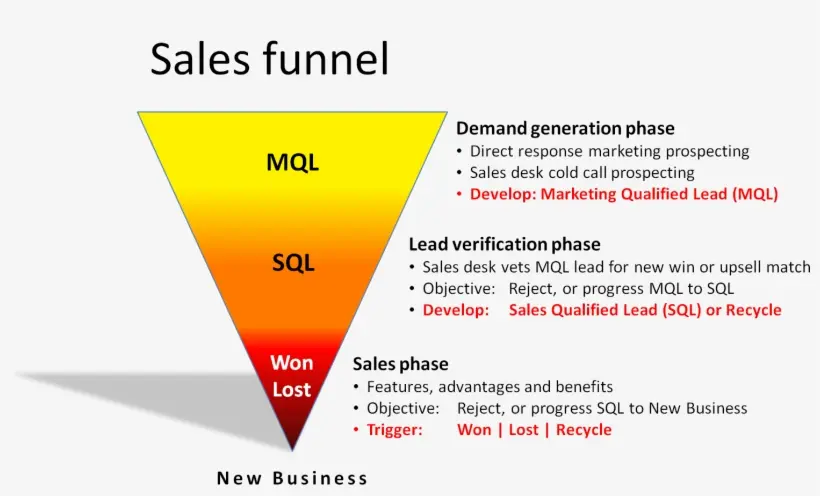
The traditional lead gen funnel made MQL vs SQL seem sequential. Awareness leads to interest, interest becomes MQLs, MQLs convert to SQLs, and SQLs close into customers. Clean and linear.
That's not how modern B2B works anymore.
Traditional funnel vs modern revenue funnel
In the old model, marketing owned the top and middle of the funnel while sales took over at the bottom. MQLs were the handoff point. Today's revenue funnel is messier. Leads jump stages, sales gets involved earlier, and buying committees mean multiple stakeholders enter at different points.
How outbound has changed the MQL/SQL sequence
Outbound flips the script entirely. When you're running cold email campaigns or booking calls through LinkedIn outreach, you're not waiting for someone to download an ebook. You're creating SQLs from scratch.
At Cleverly, we've generated over 53,000 appointments through outbound alone because we're reaching people with intent before they ever visit a website.
Why some teams skip MQLs entirely
If you're selling high-ticket enterprise deals or running account-based marketing, MQLs might not make sense. You're targeting 50 named accounts, not scoring 5,000 inbound leads. Sales talks directly to decision-makers from day one. No nurture sequences needed.
Funnel placement by sales motion
- SMB sales: MQLs work well here. High volume, lower touch, content-driven funnels.
- Mid-market: Hybrid approach. Some MQLs from inbound, but outbound creates most SQLs.
- Enterprise: Skip MQLs. Go straight to SQL through targeted outreach and relationship building.
Your funnel should match how your buyers actually buy, not some outdated template.
Content Mapped to Each Funnel Stage
Getting the MQL vs SQL distinction right doesn't matter much if you're sending the wrong content to each stage.
MQL-stage content should educate, not close. Blog posts, how-to guides, and webinars work here because the person is still building a case for why this problem matters, not evaluating vendors yet. This is where you earn trust before you ask for a decision.
SQL-stage content does different work. Case studies, pricing breakdowns, ROI calculators, and live demos belong here because the person has already decided the problem is worth solving. What they need now is proof you can solve it and a clear picture of what it costs.
Send the wrong asset to the wrong stage and you waste it. A detailed ROI calculator lands flat on someone who's still reading blog posts to understand the category. They're not ready to run numbers yet, and pushing them there too early can actually push them away.
On the flip side, a generic educational guide feels like a step backward to someone who's already sat through a demo and is comparing vendors on price.
The good news is you're probably already tracking the signals that tell you which content to send. Repeat pricing page visits, demo requests, and case study downloads are all SQL-stage behavior. Ebook downloads and blog subscriptions are MQL-stage behavior.
If your lead scoring model already captures this, use it to drive your nurture sequences too, not just your handoff rules. A SaaS lead nurturing sequence built around this kind of stage-matching converts better than one that sends the same three emails to everyone regardless of where they are.
Understand this: B2B Buying Process - How Buyers Make Decisions Today
🔥 Turn MQLs Into Real Conversations
Cleverly uses LinkedIn, cold email, and cold calling to qualify leads into sales-ready meetings your team can close.
Why Marketing and Sales Fight Over Lead Quality
The MQL vs SQL handoff is where most revenue teams break down.
Marketing defines MQLs based on activity. Someone downloaded three resources, opened five emails, and visited the pricing page? That's an MQL. Sales gets the lead, makes a call, and finds out the person was just doing research for a college project.
Sales defines SQLs based on actual conversations. They need to hear pain points, confirm budget, and verify decision-making authority. If marketing's MQL doesn't check those boxes, it goes nowhere.
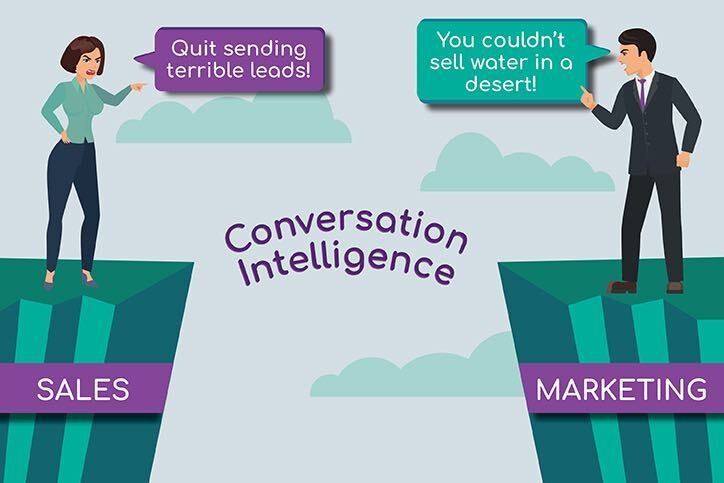
Why many MQLs never become SQLs:
- Volume over quality: Marketing gets pressure to hit lead targets, so scoring thresholds drop.
- No buying intent: Engagement doesn't equal interest in purchasing.
- Wrong buyer persona: The lead fits the profile but isn't the decision-maker.
- Bad timing: They're researching but won't buy for 12 months.
- Misaligned definitions: What marketing calls qualified and what sales calls qualified are completely different.
If your MQL and SQL conversion rate is below 13%, you've got a qualification problem. Either marketing is passing junk or sales isn't following up fast enough. Both teams need to agree on what "qualified" actually means before anything improves.
Signs of a Good MQL vs. a Bad MQL
Not all MQLs are created equal, even when they clear the same scoring threshold.
A good MQL usually shows a few things at once. They fit your ICP on paper, not just on the form they filled out. They've engaged with bottom-funnel content like pricing pages, comparison guides, or case studies, not just a single top-of-funnel ebook. And they keep coming back. Someone who visits your pricing page three times in two weeks is telling you something a lead score alone won't catch.
A bad MQL, the kind sales calls a tire kicker, tends to look the opposite. One-time download and nothing since. A job title that has zero purchasing authority. No response when a rep tries to follow up. These leads clear your scoring rules, but they were never going to buy.
Here's the problem with volume-based scoring: it counts activity, not intent. A prospect who downloads five gated PDFs in one sitting can out-score a decision-maker who visited your pricing page twice and then went quiet to loop in a co-founder. Points add up the same way regardless of what's actually driving the behavior.
Before you pass a lead to sales, run it through a quick gut check:
- Does this person's title actually buy or influence this decision? Not "could plausibly work at a company like ours," but does their role touch budget or implementation.
- Have they touched anything past the awareness stage? Pricing, a demo request, a comparison page. Curiosity content doesn't count.
- Would they recognize your company name if a rep called right now? If the answer is no, they're not warm, they're anonymous.
If a lead fails two of those three, it's not ready. Send it back to nurture instead of burning a rep's time on a call that goes nowhere.
The Handoff SLA: How Fast Should Sales Follow Up With a New SQL
Qualification criteria get all the attention in the MQL vs SQL debate. Speed usually gets ignored, and it shouldn't.
Harvard Business Review's audit of 2,241 companies found that firms contacting a lead within an hour were nearly 7 times more likely to qualify it than firms that waited even 60 minutes longer, and more than 60 times more likely than firms that waited 24 hours or more. An older but still widely cited MIT study found that leads called within 5 minutes were 21 times more likely to qualify than leads called at the 30-minute mark. The exact multipliers vary by study, but the direction never does. Speed is one of the highest-leverage variables in this entire funnel, and it costs nothing to fix except discipline.
Set a real target: same-day contact, ideally within a few hours. Not "get to it when things slow down." Every hour a hot SQL sits untouched, the odds of reaching them and the odds of them still caring both drop.
The fix isn't asking reps to check their queue more often. It's building the SLA into your routing so it happens automatically. That means:
- Instant lead routing the moment a lead crosses the SQL threshold, not a batch process that runs once a day.
- Alerts that reach reps directly through Slack, SMS, or a CRM push, not a dashboard nobody checks until Monday.
- A backup owner if the primary rep doesn't respond within a set window, so a hot lead never just sits in one inbox.
What slow follow-up actually costs you isn't abstract. It's the deal that goes to whichever vendor picked up the phone first, the buyer who assumes silence means you're not that interested, and the marketing spend that generated a real SQL only to watch it go cold in a rep's queue. If your outsourced SDR team or in-house reps can't hit same-day response consistently, that's a bigger lever to pull than tightening your MQL definition further.
What Is a Good MQL to SQL Conversion Rate?
Most B2B companies see an MQL vs SQL conversion rate between 13% and 20%. But that number alone doesn't tell you much.
Typical MQL to SQL benchmarks by channel:
- Inbound content and SEO: 10-15%
- Paid ads and PPC: 8-12%
- Webinars and events: 15-25%
- Outbound cold email and LinkedIn: 25-40%
- Cold calling: 30-50%
Notice the pattern? Outbound channels convert higher because you're targeting specific accounts with real intent signals, not just anyone who downloaded a guide.
MQL to SQL Conversion Benchmarks by Industry
Channel tells you part of the story. Industry tells you the rest.
First Page Sage's analysis of client data gathered between 2019 and 2025 puts B2B SaaS at 13%, financial services and healthcare also around 13%, and fintech slightly lower at 11%. On the other end, HVAC and business insurance both sit at 26%, largely because those purchases move faster and involve fewer stakeholders. Real estate and legal services land at the bottom, around 10%, weighed down by long, emotionally charged decision cycles and heavy regulatory friction.
That's a real spread, and it's exactly why a single industry-wide number doesn't tell you much on its own. As a rough baseline across sectors, something in the neighborhood of 1 in 5 MQLs converting to SQL is a reasonable target to aim for. But "reasonable" shifts a lot depending on what you sell and to whom.
Here's why this matters alongside your channel data instead of replacing it: channel tells you where your best leads come from, industry tells you what's realistic to expect once they're in the funnel. A company selling into healthcare that's stuck at 13% MQL to SQL isn't necessarily broken. That might just be the ceiling for the vertical. The same 13% at a company selling HVAC software, where 26% is the norm, is a real problem worth digging into.
Use both cuts together to diagnose where your funnel actually underperforms. If your channel mix looks healthy (a good share of SQLs coming from higher-intent sources like outbound or SEO) but your overall rate still lags your industry benchmark, the issue is probably qualification criteria or follow-up speed, not lead source.
If your channel mix is skewed toward low-intent volume plays, fix that first before touching anything else. This is also useful context if you're trying to reverse-engineer how many leads you actually need to hit a pipeline target. Your industry's realistic conversion rate should be the number you plug in, not an optimistic guess.
Why "good" depends on ICP, deal size, and channel:
If you're selling a $500/month SaaS product to SMBs, a 15% conversion rate might be solid. But if you're closing $100k enterprise deals, anything below 30% means you're wasting time on unqualified leads. Your ideal customer profile and average deal size should determine what's acceptable.
Why inbound-heavy teams see inflated MQLs but low SQLs:
Inbound casts a wide net. People download content for all kinds of reasons that have nothing to do with buying. You'll generate volume, but most won't convert because they're early-stage researchers, students, or competitors.
Why outbound-led teams see fewer MQLs but higher SQL quality:
With outbound, you're handpicking targets. Our lead generation agency approach through cold calling and LinkedIn outreach means we're talking directly to decision-makers from day one. Fewer total leads, but way more conversations that actually matter.
If your MQL to SQL conversion rate is stuck in single digits, you don't have a sales problem. You have a qualification problem.
How to Calculate MQL to SQL Conversion Rate
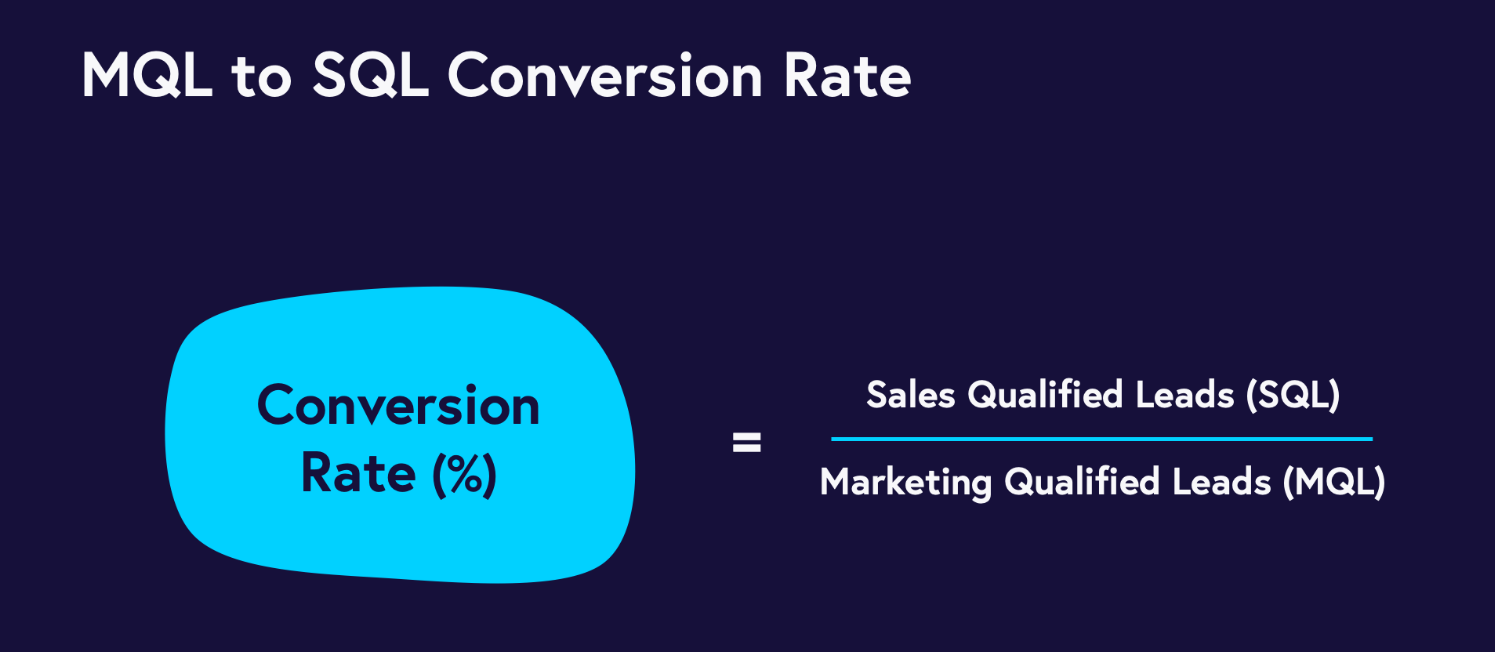
How to calculate MQL to SQL conversion rate is straightforward. No complex formulas or spreadsheet gymnastics needed.
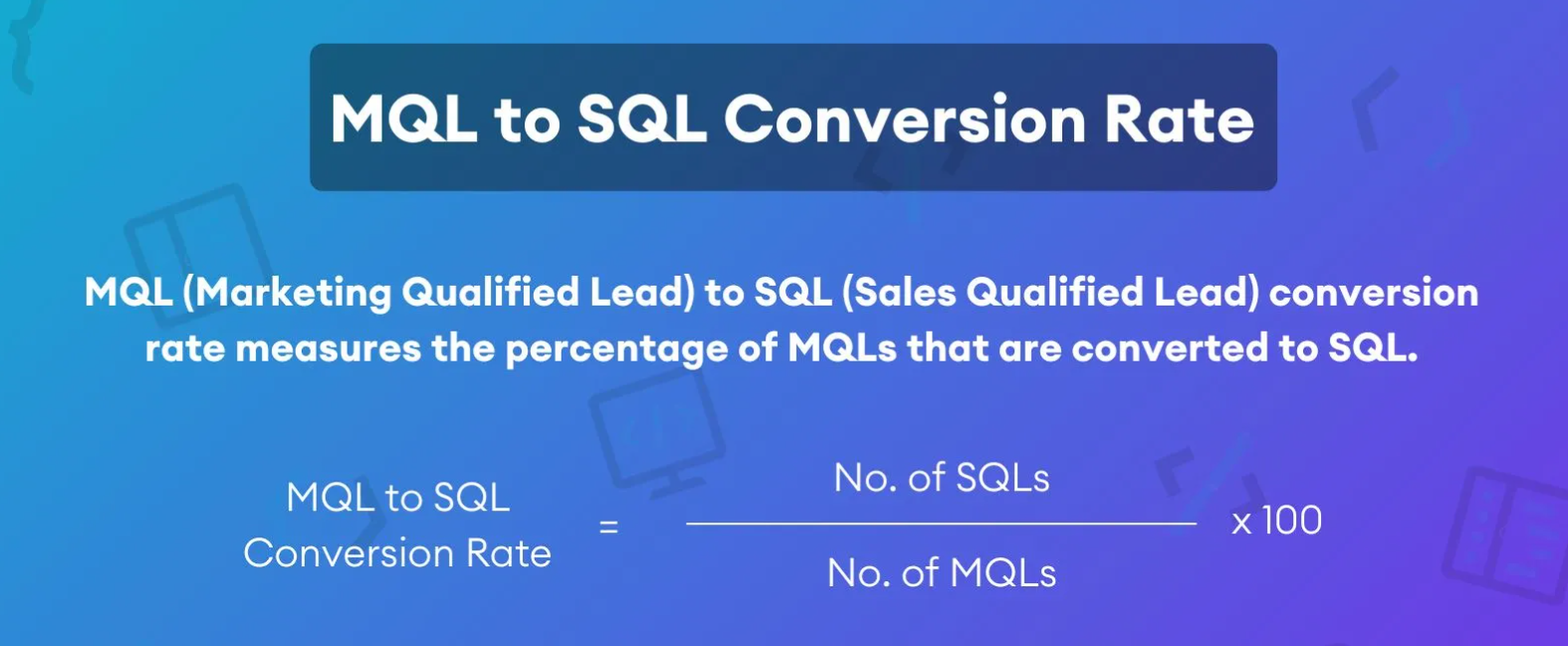
The formula:
(Number of SQLs / Number of MQLs) × 100 = MQL to SQL Conversion Rate
That's it. You're measuring how many marketing qualified leads actually turned into sales qualified leads over a specific time period.
Example calculation:
Let's say your marketing team generated 500 MQLs last month. Your sales team qualified 75 of those as SQLs after discovery calls and outreach.
(75 SQLs / 500 MQLs) × 100 = 15% conversion rate
A few things to keep in mind:
- Use the same time window for both metrics (monthly, quarterly, etc.)
- Track by channel if you want to see what's actually working
- Don't cherry-pick data or you'll mask real problems
If you're calculating this and the number looks bad, don't panic. It just means you need tighter qualification criteria on the front end or better follow-up on the back end. We'll cover how to fix that next.
How Cleverly Approaches MQLs, SQLs, and Sales Readiness
Most lead generation agencies brag about lead volume. We brag about booked meetings that close.
The difference?
🔥 No MQL fluff.
We don't send you downloadable content leads or "showed interest" contacts. Our LinkedIn outreach starts at just $397/mo and delivers actual conversations with decision-makers, not researchers.
🔥 You only pay for meeting-ready leads.
With our cold email service, there's no retainer for junk. You pay for SQLs we put on your calendar. That's it.
🔥 Our cold calling system books 10-30 qualified sales calls every month, guaranteed.
We place a no-accent appointment setter, train them in 2 weeks, write breakthrough scripts, and include all the data and tech. It's half the cost of in-housing and we've made over 1 million cold calls that resulted in 53,000+ appointments.
🔥 Pre-qualification is built in.
Every lead we send has been vetted by our team. Budget confirmed. Pain identified. Authority verified. Your reps aren't wasting time on maybes.
The results speak for themselves. We've helped 10,000+ clients including Amazon, Google, Uber, PayPal, Slack, and Spotify generate $312 million in pipeline revenue and $51.2 million in closed revenue.
We're not here to inflate your MQL count. We're here to fill your pipeline with SQLs that actually convert.
🚀 If your sales team wants meetings that turn into deals, not leads that sit in your CRM, let's talk.

Conclusion
The MQL vs SQL debate isn't about picking the right acronym. It's about building a system where marketing and sales actually work together.
Focus on what matters:
Definitions over labels. Your team needs to agree on what "qualified" means before anyone passes a single lead. If marketing thinks it's five email opens and sales thinks it's a confirmed budget conversation, you'll stay stuck.
The real goal is a predictable, sales-ready pipeline. Not more leads. Not higher MQL counts. Just a steady flow of people who are ready to buy and worth your reps' time.
Alignment beats perfect funnel math. You can have a 40% MQL vs SQL conversion rate and still miss quota if sales isn't following up fast enough. You can have a 10% rate and crush it if both teams are targeting the right accounts at the right time.
Stop obsessing over stage definitions. Start obsessing over whether the leads you're generating actually close.
Frequently Asked Questions
Free Resource
How to Scale a Profitable Cold Call System
Get the complete guide — download it instantly now.
Free Ebook
Download the Free Guide
Enter your details to get instant access.
You're all set! 🎉
Your ebook is downloading now.
Click below if the download didn't start automatically.


