

Table of Contents
The Real Truth About B2B Lead Generation Channels
How to Choose the Right Lead Gen Channel for Your Business
LinkedIn Lead Generation Explained
Cold Email Lead Generation Explained
Cold Calling Lead Generation Explained
Channel Performance Breakdown Based on Real Campaigns
LinkedIn vs Cold Email vs Cold Calling (Side-by-Side Comparison)
Why Offer Strength Beats Channel Choice Every Time
How Cleverly Runs All Three Channels Without Guesswork
Conclusion
Frequently Asked Questions
Modified On :
September 11, 2026
Key Takeaways
- No channel is "dead". Bad messaging is. Buyers ignore generic outreach, not LinkedIn, email, or cold calls.
- The #1 success variable is offer strength, not channel choice. Differentiation and relevance beat volume every time.
- LinkedIn works best for niche, high-value audiences with strong social proof and relationship-driven sales cycles.
- Cold email scales fastest for large TAMs with proven offers, but requires serious deliverability infrastructure to work.
- Cold calling converts highest when executed well. It's the fastest path to booked meetings but demands trained reps and clean data.
- Master one channel before mixing. Blended strategies usually mean weak execution across the board.
If you're debating LinkedIn vs cold email vs cold call, you're probably asking the wrong question.
Most B2B teams spend weeks arguing about which channel is "best" — when the real issue is that their offer isn't strong enough to break through on any channel.
The truth is, no outbound channel is dead. Not LinkedIn. Not cold email. Not cold calling.
The channel doesn't fail you. Bad outreach does.
We're not here to tell you which channel is "better." We're here to help you choose the right one based on your business — your ICP, deal size, volume goals, and internal resources.
Here's what you'll learn:
- How LinkedIn outreach, cold email, and cold calling actually work in 2026
- When each channel wins (and when it doesn't)
- A side-by-side comparison of cost, scale, effort, and lead quality
- How to choose the right channel based on your TAM, ACV, and goals
Let's break it down.
The Real Truth About B2B Lead Generation Channels
You've probably heard it a hundred times: "LinkedIn is saturated." "Cold email is dead." "No one picks up the phone anymore."
What's actually happening? Buyers are ignoring boring, generic outreach — not the channels themselves.
When a lead generation agency runs a campaign that sounds like every other pitch in the market, it doesn't matter if it's sent via LinkedIn, email, or phone. It gets ignored. Deleted. Blocked.
But when the message is differentiated, relevant, and specific to the recipient's world? It works. On all three channels.
The #1 Success Variable Isn't the Channel
It's your offer.
Most teams obsess over which tool to use, how many touches to send, whether to A/B test subject lines or cold call opening lines?
But they skip the hardest question: Why would someone who doesn't know you stop what they're doing and take a meeting?
If you can't answer that clearly and compellingly, no amount of volume, sequencing, or channel-hopping will save you.
Why "Spray Everything" Multi-Touch Strategies Underperform
The default playbook in 2026 is still: "Hit them on LinkedIn, email, and phone — eventually something will stick."
In theory, it sounds smart. In practice, it rarely works well because:
- Each channel requires a different strategy.
A great cold email doesn't translate into a great cold call script. LinkedIn messaging has its own tone and context. - Multi-touch sequences often mean weak messaging everywhere.
You're optimizing for coverage, not quality. - Buyers notice when you're everywhere at once.
It doesn't feel personalized — it feels automated and desperate.
The teams that win? They pick one channel, build a strong strategy around it, and execute at a high level. Then they layer in a second channel only when the first one is working.
A Necessary Clarification: Blending Isn't the Same as Sequencing
It's worth being precise about what actually underperforms here, because "master one channel first" gets misread as "never combine channels," and that's not quite the argument.
Unfocused blending is what the section above is warning against: hitting the same prospect on LinkedIn, email, and phone with three disconnected messages, hoping volume covers for a lack of strategy. That's the version that fails.
Coordinated sequencing is a different thing entirely. An email that opens the conversation, followed by a call that references the email by name, followed by a LinkedIn touch that reinforces both, is not spray and pray. It's a single message delivered across three surfaces, timed deliberately.
Multi-channel sequences that combine email, phone, and LinkedIn touchpoints have been shown to outperform single-channel sequences by around 40% on engagement, and campaigns running three or more channels see purchase rates well over double a single-channel sequence in some analyses. That data isn't in tension with the "master one channel first" advice above. It's the next step after it.
So the sequence for most teams looks like this:
- Get one channel working. Prove out the messaging, targeting, and offer on a single channel before you add complexity.
- Layer in a second channel that references the first, rather than running in parallel with no connection between them.
- Only attempt a fully coordinated three-channel cadence once you have the team and budget to execute each channel at the level described earlier in this article.
"Master one channel first" is step one of a bigger playbook, not the ceiling on what outbound can look like. Teams with the resources to do it well shouldn't read this article as an argument against omnichannel. They should read it as an argument against doing omnichannel badly.
Know More: What is Multithreading in Sales?
Each Channel Needs Its Own Strategy
- Cold email lead generation works when your message is tight, your list is clean, and your offer is clear.
- LinkedIn lead generation works when you're targeting the right seniority, using profile context to personalize, and building trust before the ask.
- Cold calling lead generation works when your reps are trained, your script is conversational, and you're calling people who actually pick up the phone.
Trying to do all three at once — without dedicated strategy, team, or budget for each — is how you end up with mediocre results across the board.
🔥 Pay for Results, Not Guesswork
Cleverly has generated $312M+ in pipeline using outbound that actually converts.Start with LinkedIn, cold email, or cold calling—whatever fits your growth goals best.
How to Choose the Right Lead Gen Channel for Your Business
There's no universal "best" channel for B2B outbound. The right choice depends on your business — not what worked for someone else's.
Here's how to actually decide.
Decision Variables That Matter More Than Channel Preference
Before you pick LinkedIn, email, or cold calling, answer these five questions:
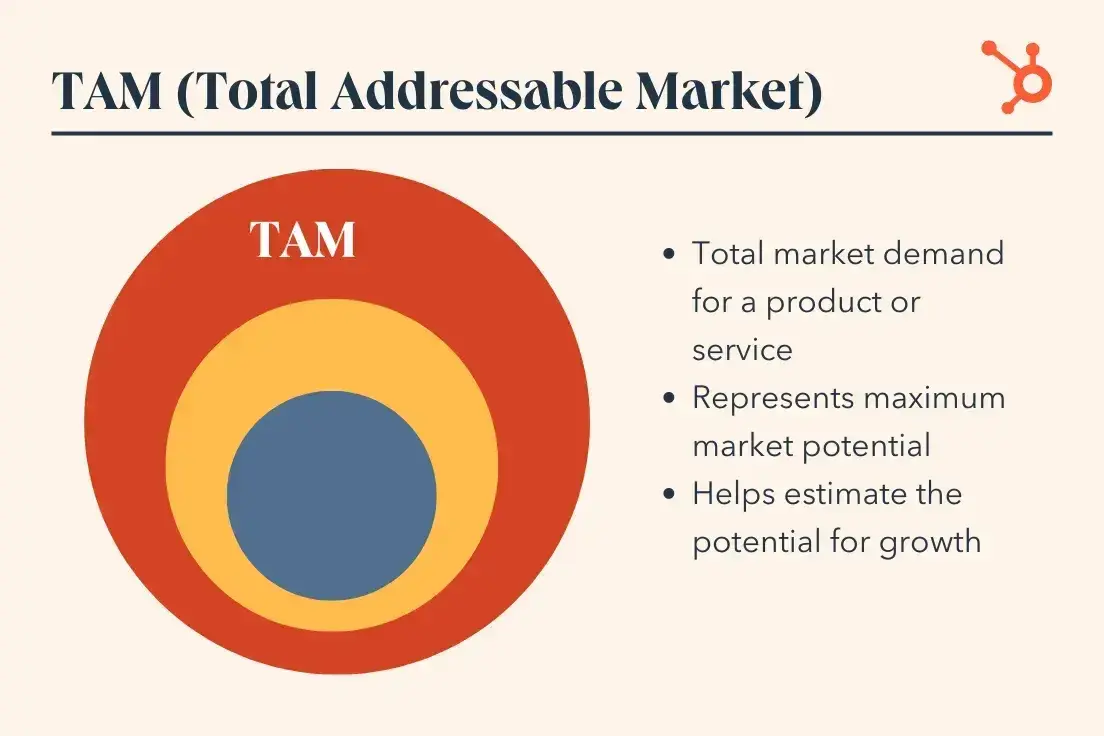
1. What's Your Total Addressable Market (TAM)?
If you're selling to a narrow, high-value audience — like CTOs at Series B SaaS companies or CFOs at PE-backed firms — LinkedIn lead generation is your best bet. You can target with surgical precision and personalize at scale.
If your TAM is broad and high-volume — like small business owners, real estate agents, or insurance brokers — cold email or cold calling will give you the reach and speed you need.
Rule of thumb:
- TAM under 5,000 accounts? LinkedIn or cold calling.
- TAM over 50,000 accounts? Cold email or cold calling.
2. What's Your Deal Size and LTV?
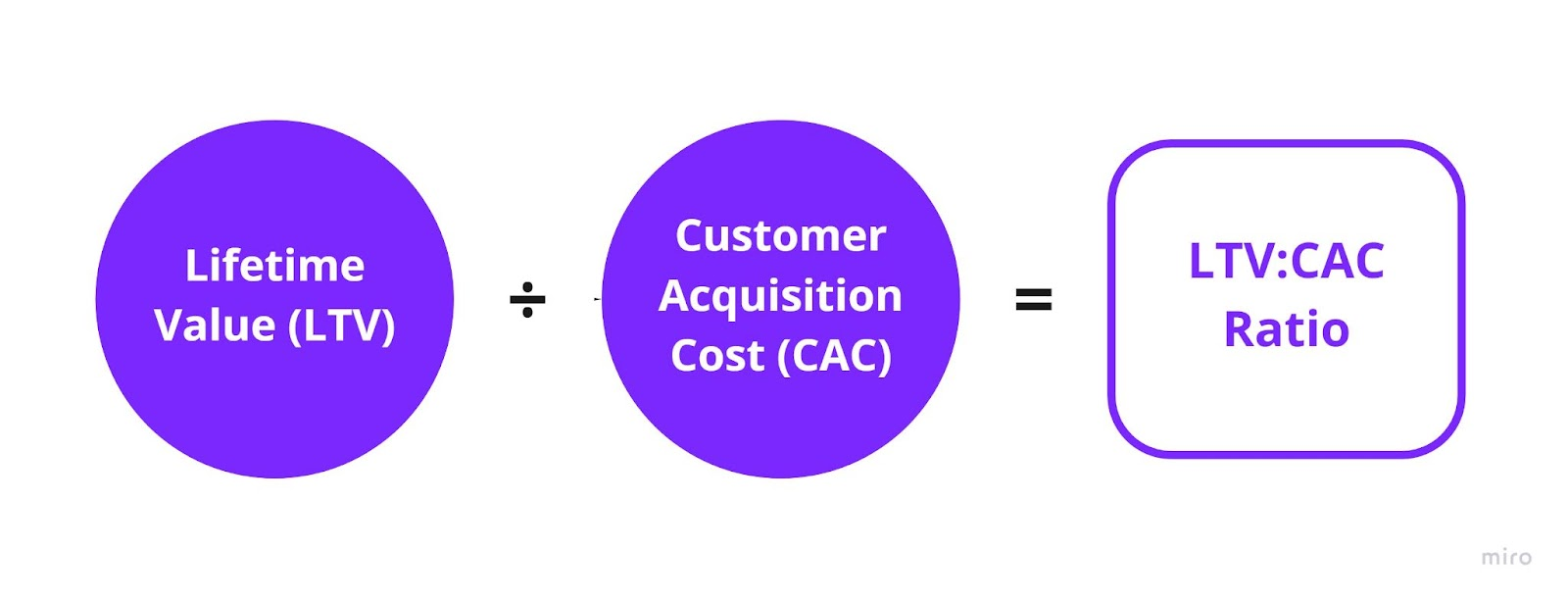
High-ticket deals ($25K+ ACV) justify the time and effort of relationship-driven outreach. LinkedIn and cold calling shine here because they open the door to real conversations faster.
Lower-ticket deals ($3K–$10K ACV) need volume and efficiency. Cold email is the most scalable way to generate pipeline without burning through budget or headcount.
Rule of thumb:
- ACV under $10K? Cold email.
- ACV $10K–$50K? Cold email or LinkedIn.
- ACV over $50K? LinkedIn or cold calling.
3. How Long Is Your Sales Cycle?
If your sales cycle is 6+ months with multiple stakeholders, you need a channel that builds familiarity and trust early.
LinkedIn lead generation lets you warm up cold prospects over time with content, profile views, and soft engagement before the ask.
If your sales cycle is 30–90 days and transactional, speed matters more than relationship-building. Cold email and cold calling get you into conversations faster.
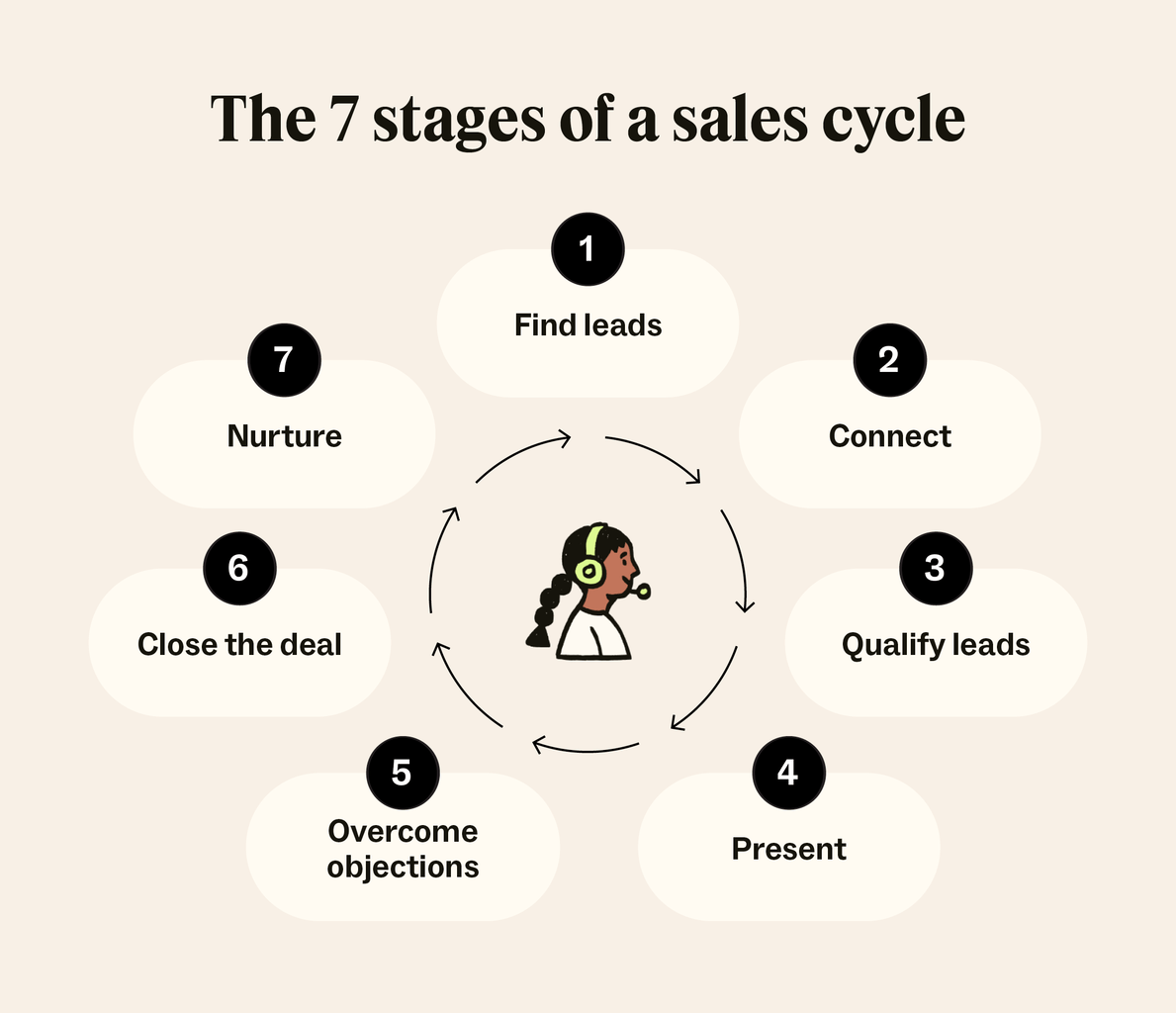
4. What's Your Budget and Internal Resources?
Be honest about what you can actually execute.
Cold email is the most cost-effective channel to scale — but only if you have clean data, strong copywriting, and proper email deliverability infrastructure.
LinkedIn outreach is lower-cost than calling but requires either in-house SDRs with Sales Navigator seats or a done-for-you LinkedIn partner who knows how to avoid account restrictions.
Cold calling delivers the fastest speed-to-conversation — but it's also the most resource-intensive. You need trained reps, a power dialer, accurate phone data, and strong scripting. Hiring in-house SDRs can cost $60K–$80K per rep annually.
5. Are You Optimizing for Volume or Relationship-Driven Growth?
If your goal is to book 100+ meetings per month across a large TAM, cold email or cold calling will get you there.
If your goal is to build deep relationships with 10–20 dream accounts per quarter, LinkedIn and cold calling are better suited for that level of personalization and persistence.
Most teams don't need all three channels at once. They need one channel, done really well — with a strong offer and consistent execution.
6. What Seniority Level Are You Actually Selling To?
TAM and ACV tell you the size and value of your audience. They don't tell you how that audience wants to be contacted, and that's a separate variable worth answering on its own.
If your buyers are practitioners or managers, email tends to win the first touch. Research on prospecting benchmarks finds that C-level and VP buyers prefer the phone over any other channel, while managers and directors lean toward email, with manager-level preference for phone sitting well below director and C-level preference.
Director-level buyers are the real toss-up. They sit close enough to the top to want the credibility of a call, but close enough to the ground floor that a well-written email still gets read and forwarded.
C-level and VP buyers skew hardest toward the phone. About three-quarters of B2B buyers overall say they want initial outreach by email, yet C-level and VP-level executives are more likely to prefer a phone call for relevant topics. That's a real split, not a rounding error.
Rule of thumb:
- Practitioner or manager buyer? Lead with email or LinkedIn.
- Director-level buyer? Test both. It's genuinely close.
- C-level or VP buyer? Lead with the phone, even if email supports it.
This is a linkedin outreach vs. cold calling — which is more effective question with a "depends on who's answering the phone" answer. Seniority doesn't replace TAM or ACV as a decision variable. It cuts across both. You can have a $75K ACV deal with a broad TAM that still needs a phone-first motion, simply because the buyer sitting at the top of that account behaves like every other VP: too senior to reply to a cold LinkedIn request, senior enough to take a relevant call.
LinkedIn Lead Generation Explained
LinkedIn lead generation isn't just another outbound channel. It's the only platform where social credibility, professional context, and trust-building happen in the same place.
That combination changes how cold outreach works.
Why LinkedIn Is Different
Unlike email or cold calling, LinkedIn sits at the intersection of social networking and professional buying behavior. When you reach out on LinkedIn:
- Prospects can see your LinkedIn profile, your connections, and your credibility before they respond.
- The platform encourages two-way conversation, not one-way pitching.
- Connection requests and messages feel less intrusive than a cold email or phone call.
This creates higher reply rates and connect rates than most other channels — if your profile and messaging are dialed in.
The Network Effect: Results Compound Over Time
Here's what most teams miss about LinkedIn: it's a compounding asset.
Every accepted connection request expands your 2nd-degree network. Every post, comment, or profile view builds familiarity. The longer you're active, the warmer your outreach becomes.
We've seen this play out across 10,000+ clients. The profiles that perform best aren't always the ones with the biggest budgets — they're the ones with 1,000–8,000 connections, consistent activity, and strong positioning.
Learn the Difference: LinkedIn Followers vs Connections
Best For: Hyper-Targeted, Relationship-Heavy Sales
LinkedIn lead generation works best when you're selling to:
- Niche job titles that manage one specific process (like "Pre-construction Manager," "Scrum Master," or "Head of Learning & Development").
- Industries that live on LinkedIn: recruiters, HR leaders, salespeople, marketers, consultants, agencies, brokers, investors, and finance professionals.
- Decision-makers with buying authority who are active on the platform and open to conversations.
If your ideal customer is a VP of Sales at a mid-market SaaS company or a Benefits Broker targeting enterprise clients, LinkedIn is your strongest play.
Who Performs Best on LinkedIn?
Over the years, we've worked with Amazon, Google, Uber, PayPal, Slack, Spotify, and thousands of other companies.
The clients who see the best results share a few things in common:
🚀 They have strong social proof.
Case studies, recognizable client names, years of experience, or big numbers (like "$100M in real estate managed") give cold prospects a reason to engage.
🚀 They target the right audience.
LinkedIn works when you're going after recruiters, HR teams, sales leaders, marketers, consultants, MSPs, agencies, brokers, real estate professionals, or investors — people who actually use the platform daily.
🚀 They're great at sales.
LinkedIn gets you the conversation. But if you can't nurture leads, follow up fast, or hold a strong discovery call, the channel won't perform. The best clients understand speed-to-lead, pipeline management, and proper follow-up.
🚀 They have something new, free, or interesting.
A "wow" product, an irresistible free offer, or a unique angle makes cold outreach feel less cold.
Limitations: What You Need to Know
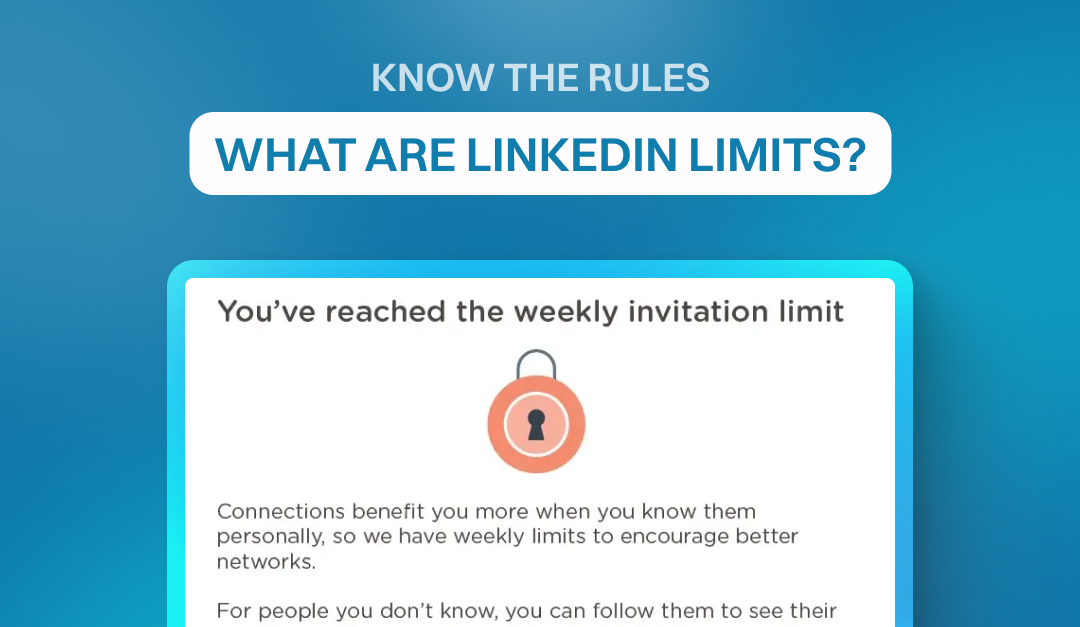
LinkedIn isn't infinite. Each profile is capped at roughly 500 connection requests per month. That means:
- You need niche focus and tight targeting.
- You can't rely on spray-and-pray volume.
- Your messaging and positioning need to be sharp.
If your TAM is 100,000+ accounts and you need speed, LinkedIn alone won't cut it. You'll need cold email or cold calling to scale.
Check This Out: 5 Ways to Get 500 LinkedIn Connections (in Under 5 Minutes a Day)
Launch Speed and Cost Efficiency
One of LinkedIn's biggest advantages? You can launch fast and cost-effectively.
No complex email infrastructure. No phone data scraping. No multi-month ramp. With the right strategy, profile setup, and messaging, you can start booking meetings in 2–3 weeks.
📢 For companies with established LinkedIn profiles (1,000+ connections), product-market fit, and a sales team ready to convert, LinkedIn is one of the most efficient channels to generate pipeline — especially at deal sizes between $10K–$50K ACV.
Check Out Cleverly’s LinkedIn Lead Generation Case Studies:
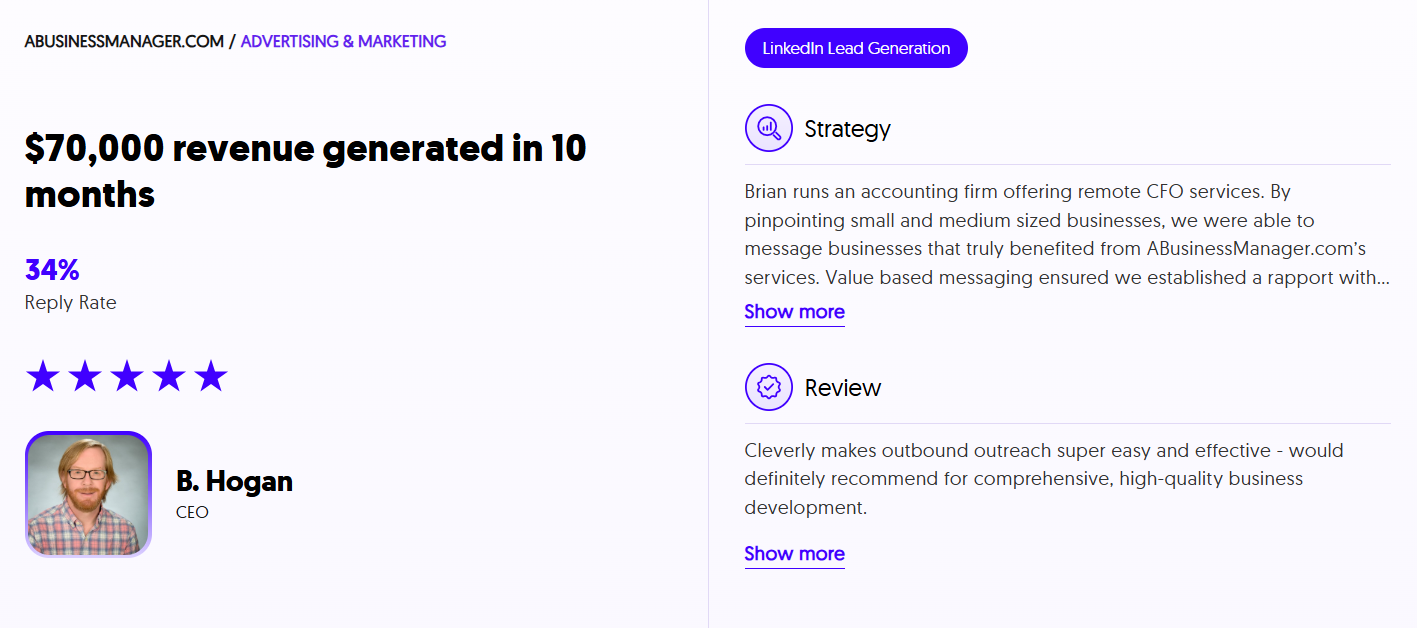
🚀 Get 30+ Sales Call Booked Every Month
We run LinkedIn, cold email, and cold calling fully done-for-you. You focus on closing while we deliver qualified meetings every month.
Cold Email Lead Generation Explained
If you need to reach thousands of prospects per month with a proven offer, cold email lead generation is your most scalable option.
No other channel gives you the same combination of reach, speed, and cost efficiency at high volume.
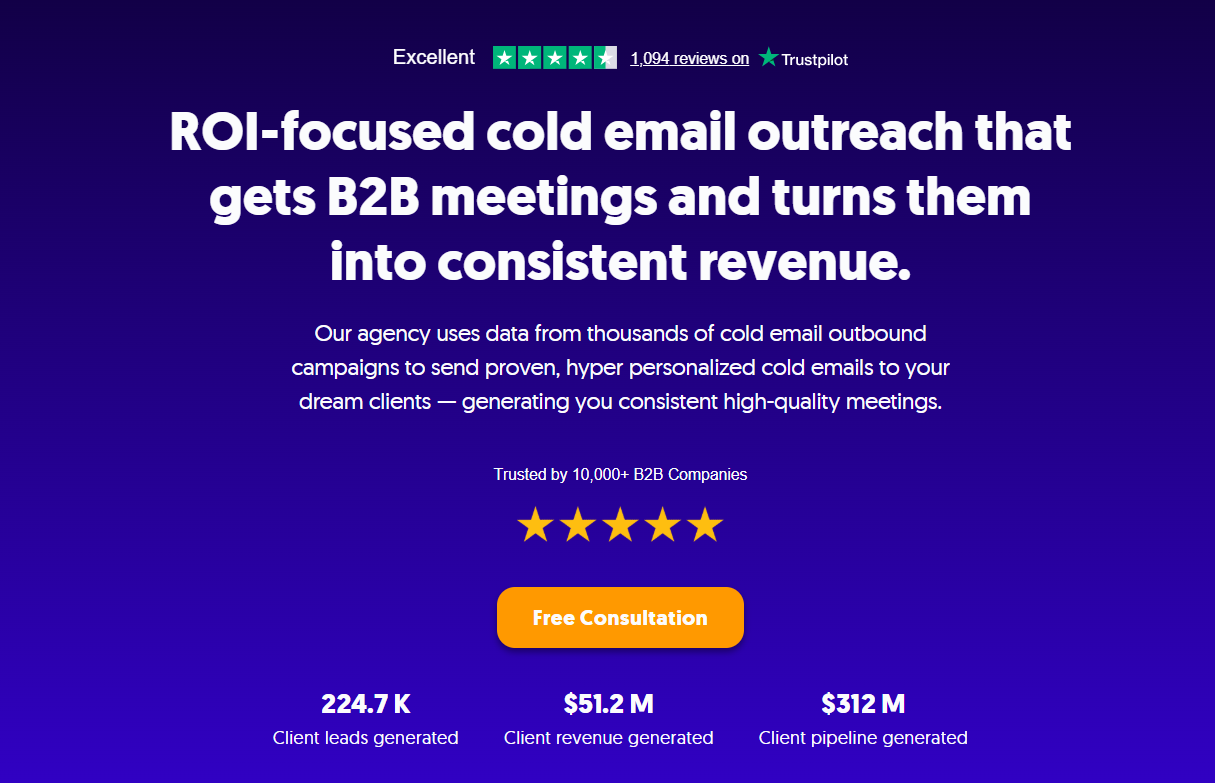
Why Cold Email Offers the Largest Reach at Scale
Cold email is built for volume without friction.
- You can send to 10,000+ prospects per month (with proper infrastructure).
- No connection limits, no platform restrictions, no manual outreach caps.
- Works across any industry, job title, or geography.
- Costs a fraction of what cold calling or LinkedIn outreach costs per lead.
If your Total Addressable Market is 50,000+ accounts and your offer is repeatable, cold email is the fastest way to fill your pipeline.
Also Check: Best Cold Email Blueprint to Generate Leads (100% Tested)
Best For: Massive TAM and Proven Offers
Cold email lead generation works best when:
- Your TAM is broad and high-volume (think: small business owners, insurance agents, real estate brokers, ecommerce brands, or SaaS companies).
- Your offer is clear, differentiated, and proven — you're not testing messaging, you're scaling what already works.
- Your ACV is $3K–$25K and your sales cycle is transactional (30–90 days).
- You have a sales team ready to handle inbound replies and qualify leads fast.
Cold email doesn't build relationships the way LinkedIn does. It gets you into the conversation quickly — then your team takes over.
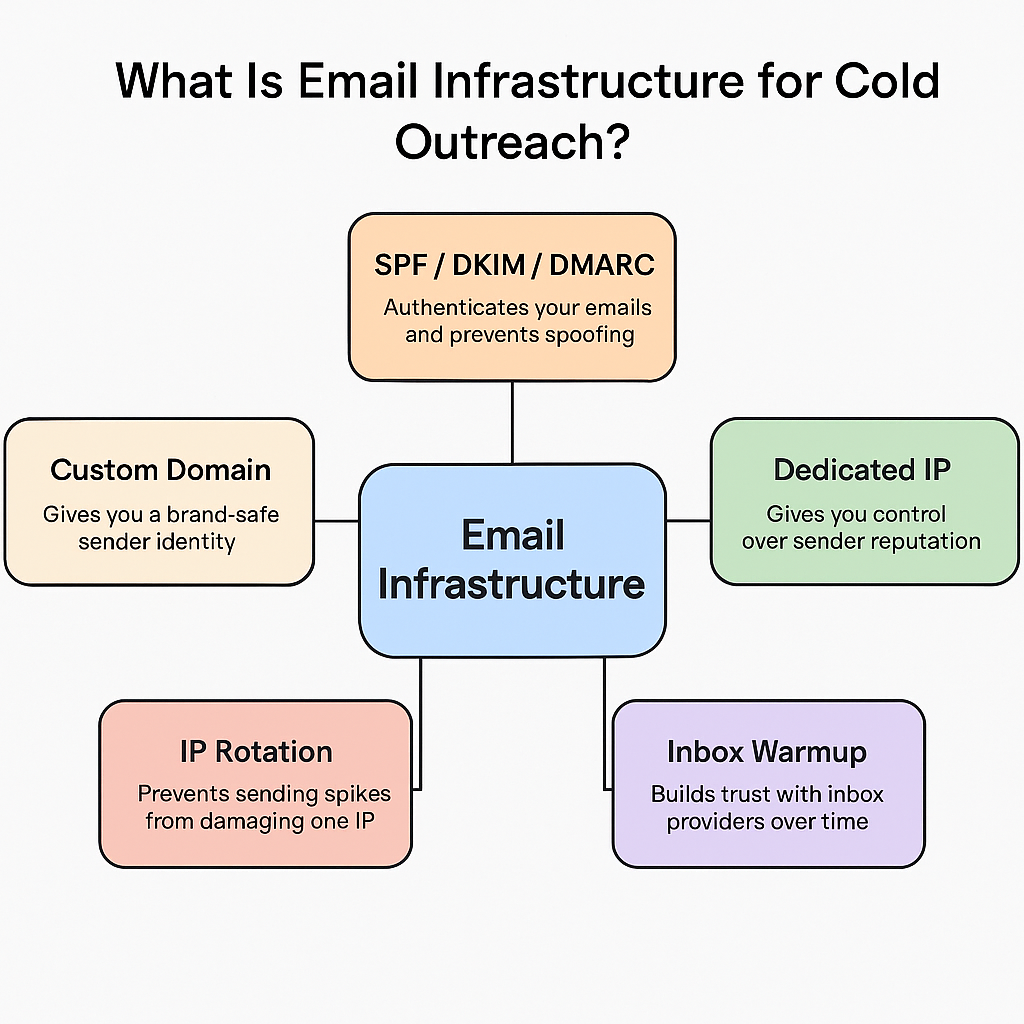
The Infrastructure Reality: It's Not Just "Send and Hope"
Most teams think cold email is simple. Write a message, hit send, wait for replies.
That's also why most cold email campaigns fail.
Cold email lead generation only works at scale if you have serious infrastructure in place:
- Domain setup and warming.
You can't send cold emails from your main company domain without destroying your sender reputation. You need dedicated sending domains, proper DNS records (SPF, DKIM, DMARC), and a multi-week warmup process to build trust with inbox providers. - Deliverability management.
Inbox placement isn't guaranteed. If your emails land in spam, your campaign is dead. You need to monitor bounce rates, spam complaints, and engagement signals constantly. - Clean, accurate data.
Bad emails = bad deliverability. If 10%+ of your list bounces, Gmail and Outlook will throttle your domain. You need verified, up-to-date contact data.
This is why companies either:
- Hire a full-time email ops person to manage infrastructure, or
- Work with a cold email agency that handles domains, warming, deliverability, and data as part of the service.
We've run cold email campaigns for 10,000+ clients and generated $312M in pipeline revenue. The campaigns that perform? They all have bulletproof infrastructure before the first email goes out.
Why LinkedIn-Sourced Emails Bounce So Often
Here's a pattern we see constantly: a team builds a beautiful LinkedIn Sales Navigator list, exports it into an enrichment tool, and launches a cold email campaign, only to watch a huge chunk of it bounce in the first 48 hours.
The reason is simple once you know it. LinkedIn does not expose verified email addresses anywhere in the platform. When an enrichment tool "finds" an email from a LinkedIn profile, it isn't pulling a real address. It's guessing, usually by pattern-matching a person's name against their company's known email format (first.last@company.com, flast@company.com, and so on).
That guess is right often enough to be useful and wrong often enough to hurt you. Single-source enrichment tools that rely on this kind of pattern guessing tend to produce bounce rates in the 15% to 25% range, compared with an 80%+ match rate and a sub-1% bounce rate from tools that verify the address against a live mail server before returning it.
A few things follow from this:
- A LinkedIn-sourced list is not the same thing as a verified list, even if the names and companies are perfectly accurate.
- Run an email verification pass before any send, regardless of where the contact came from. This applies to purchased lists, scraped lists, and LinkedIn-derived lists equally. If your enrichment provider does a real SMTP check rather than a pattern guess, say so in your own workflow documentation, because it changes how much re-verification you need to layer on top.
- If you're using LinkedIn for targeting and email for outreach, treat those as two separate steps with two separate quality checks. LinkedIn tells you who to target. It tells you almost nothing reliable about how to reach that person by email.
Teams that skip this step are usually the same teams asking why do half my cold emails bounce back even though i got the contacts from linkedin. The list wasn't verified. It was guessed, and the guess didn't hold up at scale.
Lead Handling Reality: Replies Must Be Qualified and Nurtured Correctly
Here's what most teams don't expect: cold email gets you replies — not booked meetings.
You'll get:
- "Tell me more"
- "Send me some info"
- "Not right now, maybe in Q2"
- "What's your pricing?"
Your job is to qualify those replies, nurture the warm ones, and disqualify the tire-kickers fast.
If your team isn't responding within 60 minutes, following up consistently, or asking strong discovery questions, you'll lose deals you could've closed.
Even if you work with a cold email outreach provider who manages campaigns and handles initial replies, you still own the nurture, qualification, and close. No agency can do that for you.
Tools to Explore: Best AI Lead Qualification Tools for Faster B2B Conversions
When Cold Email Fails (and Why Most Teams Blame the Channel)
Cold email gets a bad rap because most teams execute it poorly — then blame the channel.
Here's why cold email actually fails:
- Your offer isn't differentiated.
If your message sounds like every other pitch in the inbox, it gets ignored. The problem isn't cold email — it's that your value prop is weak. - Your email list is garbage.
Sending to outdated, unverified, or irrelevant contacts destroys deliverability and wastes budget. Quality data is non-negotiable. - Your messaging is too generic.
"We help companies grow revenue" doesn't work. Specificity, relevance, and clarity win. - You're not nurturing replies.
Getting a "maybe later" response and doing nothing with it is leaving money on the table. - You gave up too soon.
Cold email takes 4–6 weeks to ramp properly. If you quit after two weeks because results are slow, you never gave it a real shot.
So, to conclude, cold email It's not a relationship-building channel. It's a volume-driven, speed-to-conversation channel that works when your messaging is sharp and your sales team is ready to convert.
If you can't commit to proper setup, consistent follow-up, and long-term execution, cold email won't work — no matter how good your copywriting is.
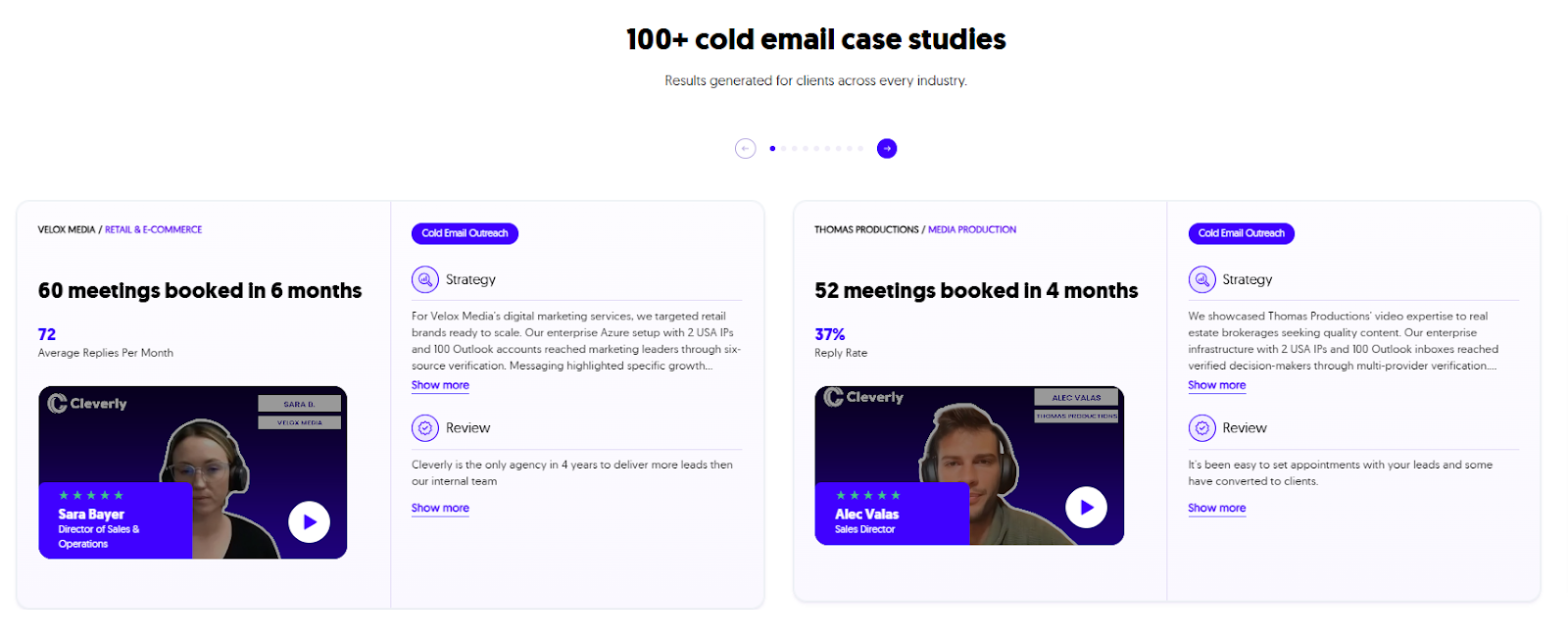
Check Cleverly’s Cold Email Case Studies:
Cold Calling Lead Generation Explained
If you want the fastest path from cold prospect to booked meeting, nothing beats a phone call.
Cold calling lead generation is still the highest-converting outbound channel — when it's done right.
Why Cold Calling Still Books the Most Meetings
Here's what cold calling does that email and LinkedIn can't:
- Real-time conversations. You're not waiting for a reply. You're having the conversation now.
- Instant qualification. You can ask questions, handle objections, and gauge interest in 60 seconds — not over a week-long email thread.
- Human connection. Tone, pace, and rapport matter. A skilled rep can turn a skeptical prospect into a booked meeting faster than any written message.
We've made over 1 million cold calls and set 53,000+ appointments for clients.
The reality? When your cold calling script is tight, your data is clean, and your reps are trained, cold calling outperforms email and LinkedIn on speed and conversion rate.
Direct Conversations = Faster Qualification
One of the biggest advantages of cold calling is that you're not playing the waiting game.
With cold email or LinkedIn, you send a message and hope they respond in 2–3 days. With cold calling, you know in 30 seconds if someone is:
- A fit and interested
- A fit but not ready yet
- Not a fit at all
That level of clarity lets your sales team focus on real opportunities instead of chasing dead-end replies.
Dive Deeper: Proven Cold Calling Tips to Book More Meetings
Works for Audiences Unreachable via Email or LinkedIn
Some buyers just don't respond to written outreach. They're too busy, their inbox is flooded, or they're not active on LinkedIn.
Cold calling cuts through the noise and reaches:
- Blue-collar industries (construction, trades, manufacturing)
- Small business owners who don't check email regularly
- Executives with gatekeepers who filter their inboxes but will take a live call
- High-intent buyers who prefer to talk through solutions instead of reading long emails
If your TAM includes these audiences, cold calling isn't optional — it's your best channel.
The Reality: Highest Effort and Highest Cost Channel
Let's be honest. Cold calling lead generation is the most resource-intensive outbound channel.
Here's what it actually takes to scale:
- Strong, verified phone data.
Bad numbers = wasted dials. You need accurate, up-to-date contact information or your team spends half their day hitting voicemails and disconnected lines. - Power dialers and tech stack.
Manual dialing doesn't scale. You need a dialer that integrates with your CRM, tracks call outcomes, and automates follow-up tasks. - Skilled SDRs who can hold a conversation.
Cold calling isn't about reading a script robotically. It's about tonality, objection handling, and building rapport in 60 seconds. That takes training, coaching, and ongoing management. - Ongoing management and optimization.
Scripts need to be tested and refined. Reps need feedback. Call data needs to be analyzed. If you're not actively managing the process, performance drops fast.
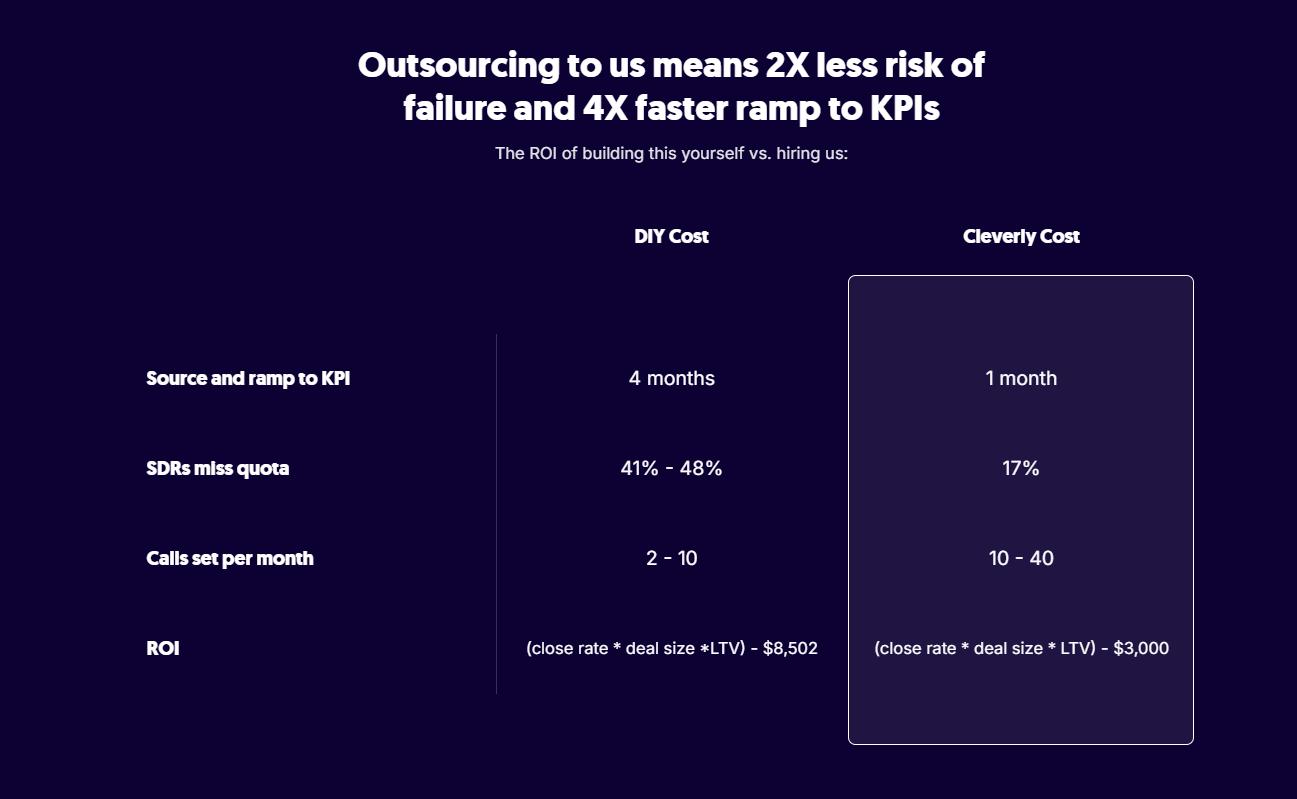
The In-House vs Outsourced Reality
Building an in-house cold calling team means:
- Hiring SDRs at $60K–$80K per year (plus benefits, training, and tools)
- Ramping them for 2–3 months before they're productive
- Managing turnover, performance issues, and ongoing coaching
Most companies don't have the bandwidth or budget to do that well.
That's why companies turn to a us. You get:
- Trained, no-accent appointment setters who are live in 2 weeks
- Custom call scripts, verified data, and a power dialer included
- Guaranteed appointments (10–30 per month) or SDR replacement
- Half the cost of hiring in-house
We've helped clients generate $312M in pipeline through our $5M Cold Calling System.
The companies that perform best? They treat cold calling like a strategic channel, not a last-ditch effort when email stops working.
Cold calling is the highest-converting, fastest outbound channel — but it's also the most demanding.
It works when:
- You have clean data and the right tech stack.
- Your reps are trained and managed consistently.
- Your offer is strong enough to survive real-time scrutiny.
If you can't commit to doing it right — or you don't have the internal resources to scale it — partnering with a cold calling agency that specializes in cold calling is the smarter move.
The Legal and Compliance Landscape for Each Channel
Before you scale any channel, it's worth knowing what you're actually allowed to do on it. This is a cold email vs linkedin outreach vs cold calling b2b effectiveness question that gets skipped constantly, and it's the one that can turn a good quarter into a legal bill.
Cold Calling: TCPA and Do Not Call Rules
In the US, most B2B cold calling to a verified business landline falls under a federal exemption from the Do Not Call Registry. That exemption has real limits.
- Personal cell phones used for business are not exempt. The TCPA treats them as residential numbers regardless of how they're used, so an SDR calling a decision-maker's cell needs to be careful about how the call is placed.
- Auto-dialed calls to cell phones require prior express written consent. Manual dialing to a legal-hours business number is generally fine. Auto-dialers hitting mobile numbers are where the real exposure sits.
- A handful of states run their own stricter Do Not Call lists that include business numbers, so a national campaign can be compliant federally and still expose you in specific states.
- Violations aren't cheap. The TCPA allows a private right of action worth $500 to $1,500 per call, and separate Do Not Call violations can run up to roughly $43,792 per infraction.
If you're running or outsourcing a cold calling program, ask whether your data is scrubbed against the national registry and any relevant state lists, and whether your dialer distinguishes cell numbers from landlines before it dials.
Cold Email: CAN-SPAM Requirements
CAN-SPAM is the more forgiving framework of the three, which is part of why cold email scales the way it does in the US.
- You don't need prior consent to send a first cold email to a US business address, which is the single biggest reason cold email works at volume here.
- You do need a working opt-out mechanism. It doesn't have to be a formal unsubscribe link. A plain reply instruction works.
- Opt-outs must be honored within 10 business days, and once someone opts out, you can't re-add them from a different list later.
- Penalties scale per email, not per campaign. Fines can run up to roughly $53,088 per individual non-compliant message, and each address on a send counts as its own violation.
This is the regulatory backbone that lets cold email hit the volume numbers covered in the infrastructure section above. It's also why a clean suppression list matters as much as a clean prospect list.
Why GDPR and CASL Push EU, UK, and Canadian Campaigns Toward Calling and LinkedIn
The US permissiveness on cold email does not travel well.
- GDPR treats a business email address as personal data in several EU member states. B2B cold email is generally workable under a "legitimate interest" basis, but it needs to be relevant to the recipient's role and documented, and a few countries, including Germany, restrict it further.
- CASL in Canada defaults to requiring consent before you send anything. Because of that, many B2B teams route Canadian prospects through LinkedIn first and only move to email after the prospect responds directly, which sidesteps the consent question entirely.
- This is exactly why LinkedIn and cold calling tend to lead in EU, UK, and Canadian campaigns, even when email would be the default channel for the same ICP in the US. A LinkedIn connection request or a phone call doesn't carry the same consent burden that a cold commercial email does.
One honest caveat: regulatory guidance in this space moves fast, and rules described in older articles, including parts of this one from a previous update, may already be out of date. Treat this section as a starting point for a conversation with legal counsel, not a substitute for one.
Channel Performance Breakdown Based on Real Campaigns
Let's cut through the theory and look at what actually happens when you run LinkedIn vs cold email vs cold call campaigns in the real world.
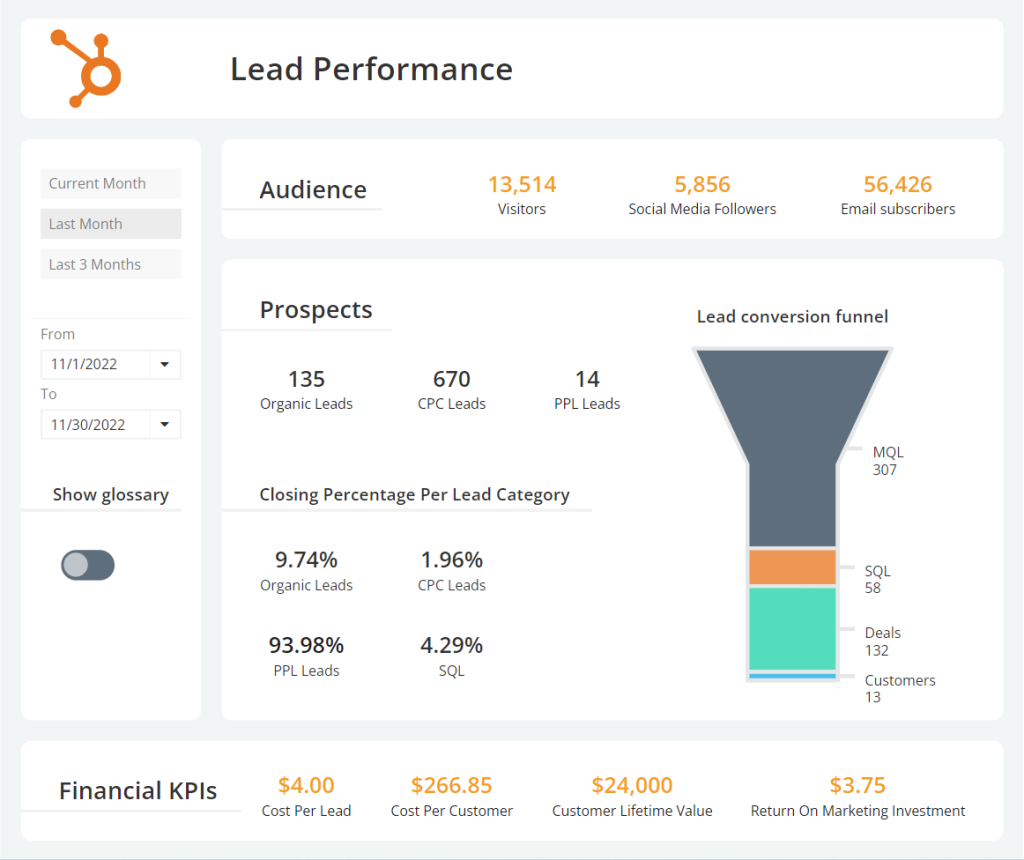
We've run outbound for 10,000+ clients across all three channels and generated $312M in pipeline revenue. Here's what the data shows.
Average Reply Rates by Channel
- LinkedIn outreach: 20–40% connection accept rate, 10–25% reply rate on messages (when messaging is personalized and profile is strong).
- Cold email: 1–5% reply rate on average (heavily dependent on list quality, offer strength, and deliverability).
- Cold calling: 1–3% connect rate (actual conversations), but 30–50% of connected calls convert to meetings when the script and qualification are tight.
What this means: LinkedIn gets the most engagement. Cold email gets moderate engagement at scale. Cold calling gets the least engagement overall — but the highest conversion once you're in a conversation.
Meetings Booked Per Month (Per Channel)
- LinkedIn outreach: 5–15 meetings per month per profile (capped by connection request limits and manual outreach constraints).
- Cold email: 10–50+ meetings per month depending on send volume, list size, and offer (scalable with proper infrastructure).
- Cold calling: 10–30 meetings per month per SDR (or guaranteed appointment volume when working with a trained team).
What this means: If you need high volume fast, cold email and cold calling scale better than LinkedIn. If you need quality over quantity, LinkedIn wins.
Time to First Meeting
- LinkedIn outreach: 1–3 weeks (connection request → acceptance → message exchange → meeting booked).
- Cold email: 2–4 weeks (account warmup, first send, reply nurture, meeting scheduled).
- Cold calling: 1–2 weeks (live conversations happen immediately, meetings book faster).
What this means: Cold calling is the fastest channel to a booked meeting. LinkedIn and cold email take longer but allow for more relationship-building before the ask.
Cost Efficiency
Let's talk about what it actually costs to generate a meeting — not what you pay upfront.
LinkedIn outreach:
- Low cost per send (Sales Navigator seat + time/labor)
- High cost per meeting if targeting is off or messaging is weak
- Best ROI when selling to niche, high-intent audiences on the platform.
Cold email:
- Low cost per send (domains, tools, data).
- Medium cost per meeting (dependent on deliverability and reply handling).
- Best ROI when TAM is large and offer is proven.
Cold calling:
- High cost per attempt (rep time, dialer, data).
- Low cost per meeting when reps are trained and script is dialed in.
- Best ROI when deal sizes are $25K+ ACV and speed-to-conversation matters.
What this means: The "cheapest" channel isn't always the most efficient. Cost per meeting depends on how well your offer resonates with your audience — not just how much you spend on tools or labor.
The Bottom Line
There's no universal winner in LinkedIn vs cold email vs cold call. The channel that performs best is the one that aligns with your audience, offer, and execution.
If your ICP lives on LinkedIn and you have strong social proof, LinkedIn wins.
If your TAM is massive and your offer is proven, cold email wins.
If you need speed, direct conversations, and high-ticket deals, cold calling wins.
The worst mistake? Picking a channel because it's trendy — instead of picking the one your prospects actually respond to.
LinkedIn vs Cold Email vs Cold Calling (Side-by-Side Comparison)
Here's what you need to know when comparing cold email vs cold calling vs LinkedIn engagement — broken down by the factors that actually matter.
Use this matrix to identify which channel aligns with your TAM, deal size, budget, and growth goals.
Why Offer Strength Beats Channel Choice Every Time
Let us say a harsh truth - no channel will save a weak offer.
You can have the best LinkedIn messaging, the cleanest email list, or the most trained cold callers — but if your offer isn't compelling, none of it matters.
Strong Offer = Clarity, Urgency, Differentiation
A strong B2B lead generation offer answers three questions immediately:
- What problem does this solve? (Clarity)
- Why should I care right now? (Urgency)
- Why you and not someone else? (Differentiation)
Weak offers sound like everyone else. Strong offers make prospects stop and think, "Wait, this might actually be for me."
Weak vs Strong Cold Offers
❌ Weak offer: "We help B2B companies grow revenue with our proven sales strategies."
Why it fails: Generic. No specificity. No urgency. No reason to respond.
✅ Strong offer: "We book 10–30 qualified sales calls per month for B2B SaaS companies selling $25K+ ACV deals — or you don't pay."
Why it works: Specific outcome. Clear audience. Risk reversal. Differentiated positioning.
How Relevance Cuts Through Noise Regardless of Channel
The biggest competitive advantage in outbound today isn't the channel. It's relevance.
When your message speaks directly to someone's world — their role, their challenges, their goals — it doesn't matter if it's delivered via LinkedIn, email, or phone.
Relevance makes cold outreach feel warm.
That's why the best lead generation agencies obsess over messaging and positioning before they ever scale a campaign. Because once your offer is dialed in, every channel works better.
How Cleverly Runs All Three Channels Without Guesswork
Most lead generation agencies make you choose a channel, cross your fingers, and hope it works.
We don't do that.
At Cleverly, we don't "test channels" on your dime. We deploy the right channel based on your ICP, deal size, and goals — then execute it at a level most in-house teams can't match.
What's Done-For-You Across All Three Channels
Whether it's LinkedIn, cold email, or cold calling, here's what we handle:
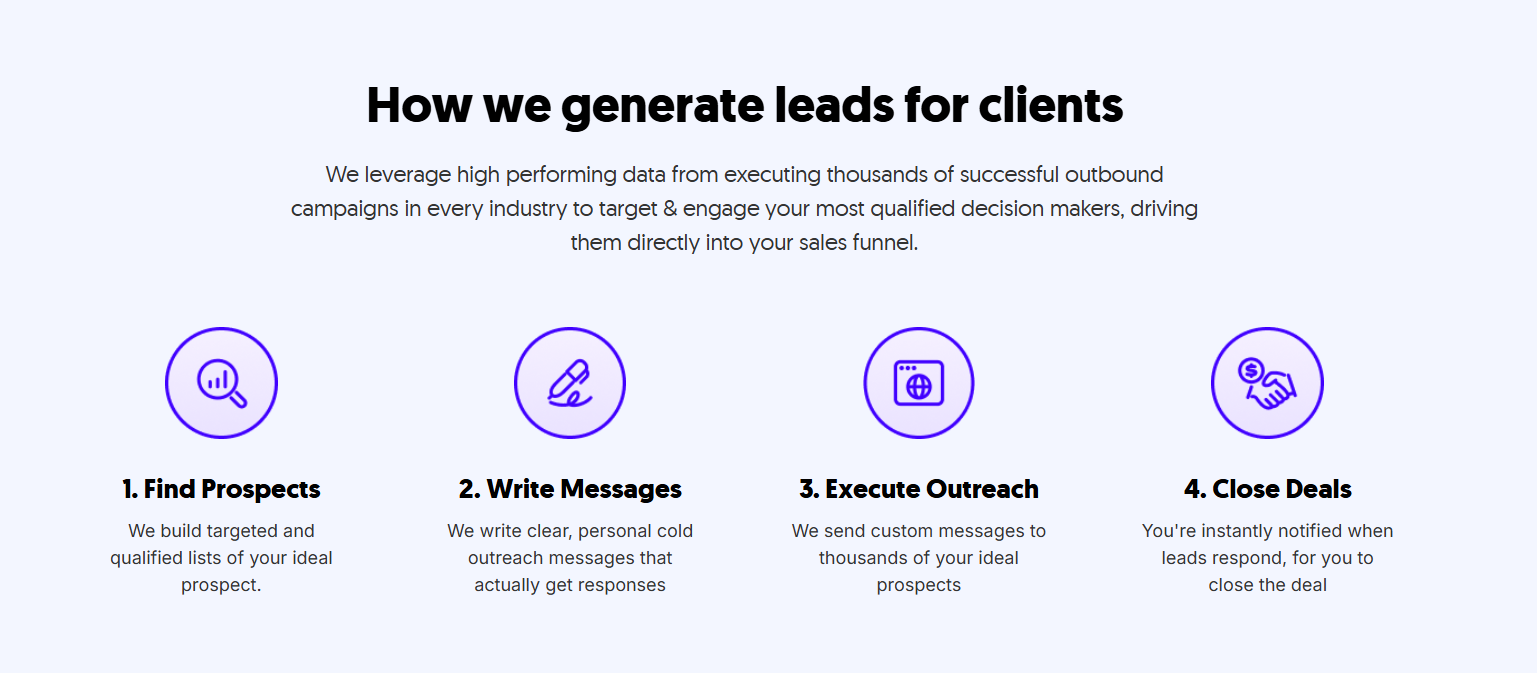
- Targeting & Data — We build your list, verify contacts, and ensure you're reaching the right people (not wasting budget on bad data).
- Messaging & Positioning — We write the scripts, emails, and LinkedIn messages that actually get responses. No generic templates. No "spray and pray."
- Outreach Execution — We manage the infrastructure, deliverability, dialers, and daily sends. You don't lift a finger.
- Response Handling — We qualify replies, filter out tire-kickers, and hand you meeting-ready leads (not just "someone said maybe").
What You Own: Nurturing, Follow-Up, and Closing
Here's the reality: we can book the meeting, but you have to show up and close it.
That means:
- Responding to warm leads within 60 minutes
- Following up consistently on "not right now" replies
- Running strong discovery calls and moving deals forward
The clients who see the best ROI? They treat outbound like a partnership, not a vending machine. We generate the pipeline. You convert it.
Why Separating Strategies by Channel Drives Higher Conversion Rates
We've worked with Amazon, Google, Uber, PayPal, Slack, Spotify, and 10,000+ other companies. The pattern is clear:
Dedicated strategies win. Blended strategies don't.
A great cold email doesn't translate into a great LinkedIn message. A strong cold call script doesn't work over InMail. When you try to do everything at once, you dilute execution and kill results.
We pick one channel, build a strategy around it, and scale what works before layering in a second.
That's how we've generated $312M in pipeline revenue and $51.2M in closed revenue for our clients.
Ready to Stop Guessing and Start Booking Meetings?
Not sure which channel fits your business? Book a strategy call and we'll map it for you.
We'll look at your TAM, deal size, sales process, and goals — then tell you exactly which channel will perform best and how we'd execute it.
No hard sell. No cookie-cutter pitch. Just a clear plan based on what actually works.
Let's build your pipeline the right way!
Conclusion
There is no "best" channel in LinkedIn vs cold email vs cold call.
There's only the best-fit channel for your business — the one that matches your TAM, deal size, audience behavior, and internal resources.
The fastest way to lose money? Chasing volume without strategy. Blasting thousands of emails, connection requests, or cold calls with a generic offer that sounds like everyone else.
The fastest way to win? Pairing the right channel with a differentiated offer — then executing it consistently until it works.
Stop debating channels. Start fixing your messaging.
Frequently Asked Questions
Free Resource
How to Scale a Profitable Cold Call System
Get the complete guide — download it instantly now.
Free Ebook
Download the Free Guide
Enter your details to get instant access.
You're all set! 🎉
Your ebook is downloading now.
Click below if the download didn't start automatically.


