

Table of Contents
What Does Lead Quantity Really Mean in B2B?
Lead Quality vs Quantity — The Core Differences
Why More Leads Often Result in Worse Revenue
How High-Quality Leads Actually Improve Revenue Performance
How Lead Quality Affects Revenue and Sales Efficiency
How to Decide the Right Balance Between Lead Quality and Quantity
Is Choosing Quantity Over Quality a Problem in Cold Outreach?
How Cleverly Helps Teams Prioritize Lead Quality Without Sacrificing Scale
Conclusion
Frequently Asked Questions
Modified On :
August 6, 2026
Key Takeaways
- More leads don't equal more revenue, they often increase costs, dilute sales focus, and reduce close rates.
- Lead quantity creates activity without outcomes, while lead quality drives actual pipeline progression and closed deals.
- High-volume approaches work for low-ACV transactional sales, but most B2B companies need quality-first strategies.
- Poor lead quality causes SDR burnout, pipeline pollution, and forecasting failures that damage long-term growth.
- The right balance depends on your ACV, sales motion, deal complexity, and team bandwidth.
- Audit your pipeline by lead source and win rate to identify where quality beats quantity in your business.
More leads can create more opportunities, but only when enough of those leads match the market, involve relevant buyers, and justify sales attention. Otherwise, additional volume produces more research, disqualification, follow-up, and CRM cleanup without creating equivalent pipeline.
That is the practical difference between lead quality and quantity. Quantity measures how many contacts enter the funnel. Quality measures whether those contacts have the fit, relevance, and buying context required to progress.
Cleverly evaluates outbound performance beyond list size and send volume. We track positive replies, held meetings, qualification, opportunities, pipeline, and revenue because an inexpensive lead source can become costly after it reaches sales.
This guide explains the difference between high- and low-quality B2B leads, how quality affects revenue efficiency, and how to find enough qualified volume without lowering your standards.
What Does Lead Quantity Really Mean in B2B?
Quantity vs quality sales leads starts with understanding what quantity actually measures. Lead quantity is pure volume.
It's how many contacts enter your CRM, how many form fills you get, or how many people respond to your outreach. It's a numbers game measured in thousands, not fit.
High-volume leads typically come from these sources:
- Broad LinkedIn outreach campaigns with minimal targeting
- Paid ads optimized for clicks instead of buyer intent
- Purchased contact lists with surface-level firmographics
- Cold email blasts to massive databases
Here's the problem. Those volume metrics look incredible on your marketing dashboard. You'll see charts trending up, lead counts in the hundreds, and activity that feels like momentum.
But when those leads hit your sales pipeline, reality sets in. Most don't have budget. Many aren't decision makers. Some don't even have the problem you solve.
When quantity actually works: If you're selling a low-ticket product with a massive total addressable market and a transactional sales process, volume can win.
Think SaaS tools under $100/month or e-commerce plays. Cast a wide net, automate the nurture, and let conversion rates do their job.
But for most B2B companies selling complex solutions with longer sales cycles?
Chasing quantity vs quality sales leads becomes expensive fast. Your sales team can only work so many opportunities. When half of them are dead on arrival, you're not scaling. You're just busy.
Check These Out: Best Lead Scoring Tools for B2B Sales Teams
🚀 Stop Buying Noise
From $397/mo LinkedIn outreach to pay-per-meeting email and 10–30 guaranteed calls/month, we focus on conversations that convert.
Lead Quality vs Quantity — The Core Differences
In B2B sales, revenue scales more reliably when lead quality improves, not when lead volume increases.
What Is the Difference Between High-Quality and Low-Quality B2B Leads?
A high-quality B2B lead matches the minimum characteristics of a customer your company can serve and provides enough evidence to justify the next sales action. A low-quality lead lacks that fit, evidence, or both.
For a deeper definition and diagnostic framework, review what good lead quality means across fit, intent, contact accuracy, and sales readiness.
High-quality does not always mean ready to buy today. A strong account may match the ideal customer profile but need nurturing until a relevant project, priority, or buying window appears.
Look for evidence across four areas:
- Account fit: The company matches the target industry, size, location, business model, and technical requirements.
- Contact relevance: The person owns, influences, or understands the problem your offer addresses.
- Problem and intent: The account has a credible need, and its behavior or response suggests the issue matters.
- Commercial viability: The potential value, timing, and buying process justify the expected sales effort.
Low-quality leads often show the opposite pattern. The company falls outside the serviceable market, the contact has no connection to the problem, the record is inaccurate, or the apparent engagement has no buying context.
Do not define quality from one signal. A senior title does not prove need. A pricing-page visit does not prove authority. A positive reply does not prove commercial fit. Quality becomes clearer when several relevant signals agree.
Why More Leads Often Result in Worse Revenue
The lead quality vs quantity trap doesn't just waste time. It actively damages your revenue engine in ways that compound over months.
Your sales team has finite bandwidth.

When the pipeline is flooded with poor-fit leads, reps spend more time researching, disqualifying, and chasing non-buyers. That leaves less time for discovery, follow-up, and deal progression with prospects who have a credible reason to buy.
SDR burnout becomes inevitable.

When your appointment setters are dialing through garbage leads day after day, hearing "not interested" on 95% of calls, morale tanks. Follow-up gets sloppy. Good reps leave. The ones who stay start going through the motions instead of actually selling. We've seen teams collapse under this cycle.
Pipeline forecasting falls apart.
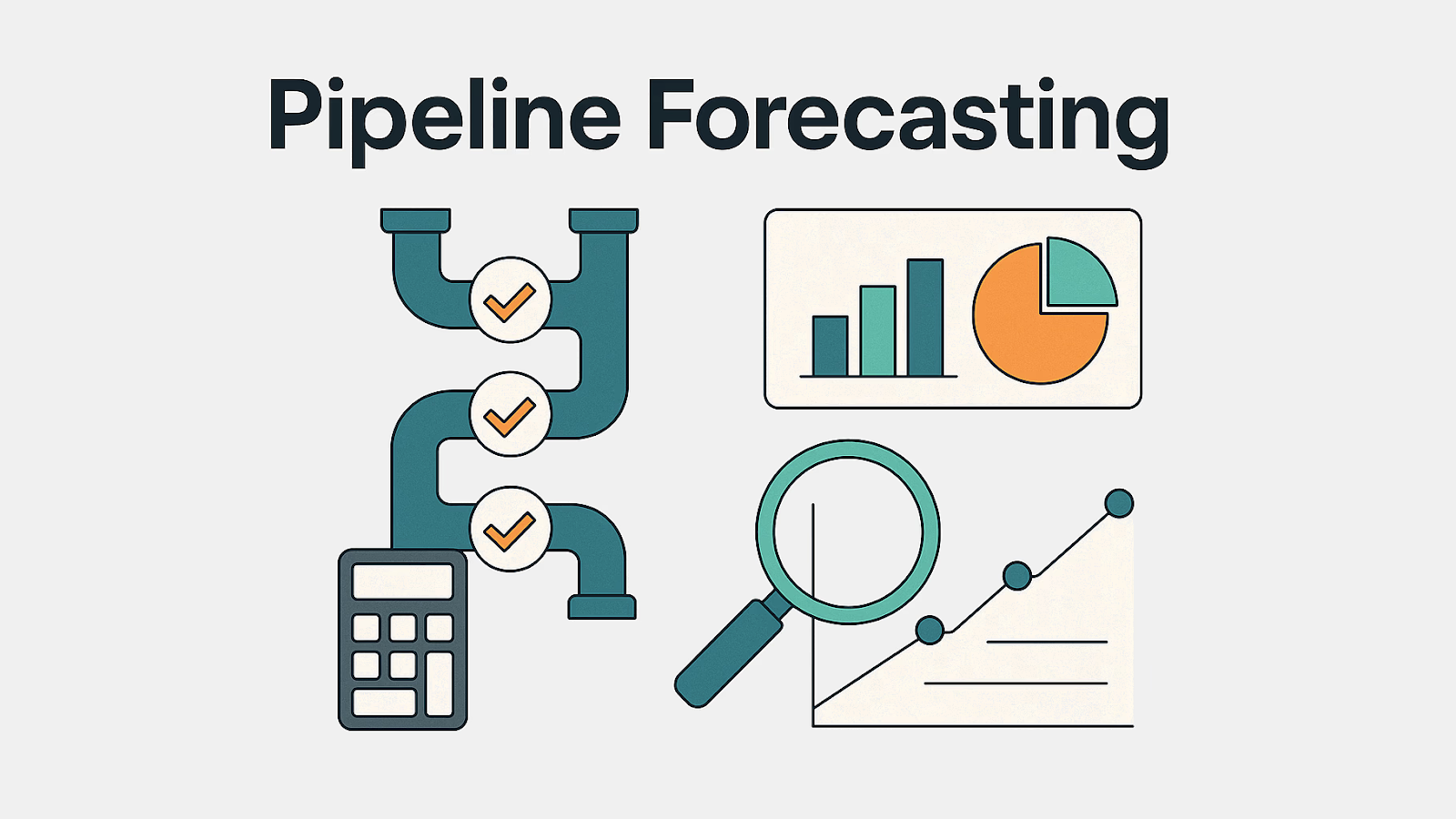
A CRM can show substantial pipeline value while containing opportunities that lack an active need, qualified buyer, defined next step, or credible timeline. Forecasting becomes unreliable when those records receive the same weight as properly qualified deals.
Leadership may then make hiring, spending, or capacity decisions based on pipeline that was unlikely to close. The issue is not merely an inaccurate dashboard. It is an operating plan built on opportunities that never met the required standard.
Win rates drop, but activity metrics stay high.
This creates a dangerous illusion. Your team booked 100 meetings this month. Feels like progress. But you only closed 2 deals, and both were from referrals, not those meetings. The data says you're busy. The bank account says otherwise.
Here's what actually happens: revenue teams start optimizing for the wrong thing. Instead of focusing on deal velocity and close rates, everyone obsesses over call volume, email sends, and meeting counts.
You hit your activity goals and miss your revenue targets. That's the lead quality vs quantity failure in action.
Learn More: How to Measure Sales Success
🔥 Fewer Leads. More Deals.
Cleverly delivers meeting-ready leads via LinkedIn, cold email, and cold calling—built for sales, not dashboards.
How High-Quality Leads Actually Improve Revenue Performance
Flip the script, and everything changes. When you focus on how to improve lead quality, the entire revenue engine runs cleaner.
Response and conversion rates jump immediately.
We've seen this across thousands of campaigns. When you target the right companies with the right message, reply rates go from 2% to 15%. Meeting show rates climb from 40% to 75%. Why? Because you're reaching people who actually have the problem you solve, not random contacts who happened to open an email.

Sales conversations get easier.
Your reps aren't explaining why the prospect needs your category. They're discussing implementation timelines and ROI because the lead already gets it. Discovery calls feel collaborative instead of combative. Objections shift from "we don't need this" to "how does pricing work for our team size?"
Deals move faster through your pipeline.
High-quality leads have urgency. They're dealing with a pain point right now, not someday. That means shorter sales cycles. What used to take 4 months closes in 6 weeks because you're not spending half the cycle convincing someone they have a problem.

Close rates multiply.
Compare conversion rates within your own funnel by lead source, segment, and qualification tier. The useful question is not whether a lead meets a generic industry benchmark. It is whether that lead source produces more accepted opportunities and closed revenue than the alternatives available to your team.
Customers actually stick around.
This is the part most teams miss when debating how to improve lead quality. When you close the right customers, they don't churn after 3 months. They renew. They expand. They refer. Bad-fit customers you forced through the pipeline? They leave the second their contract allows it, and now your net revenue retention is underwater.
Quality leads don't just convert better. They build sustainable revenue.
Explore More: How to Master Lead Enrichment for Smarter B2B Sales
How Lead Quality Affects Revenue and Sales Efficiency
Lead quality affects revenue through the decisions and work that happen after acquisition. A cheap lead can become expensive when sales spends hours researching, contacting, qualifying, and following up before discovering that the account was never viable.
Measure lead quality through downstream outcomes rather than top-of-funnel volume alone.
Sales Acceptance Rate
Sales acceptance rate shows how many marketing or outbound leads sales agrees are worth pursuing.
Sales acceptance rate = sales-accepted leads ÷ leads handed to sales × 100
A low rate may indicate weak targeting, incomplete records, unclear qualification criteria, or disagreement between marketing and sales.
Opportunity Creation Rate
Opportunity creation rate shows how often leads become credible sales opportunities.
Opportunity creation rate = opportunities created ÷ leads reviewed × 100
Define an opportunity carefully. A booked meeting or positive reply should not automatically become pipeline unless the account meets the agreed requirements.
Win Rate by Lead Source
Compare closed-won opportunities with all closed opportunities from the same source. This reveals whether a channel generates revenue rather than inexpensive records.
Review sources by campaign, audience, offer, and qualification tier. Combining all outbound, paid, referral, and organic leads into one average hides meaningful differences.
Cost per Sales-Qualified Lead
Cost per lead rewards inexpensive acquisition, even when the records never become useful to sales. Cost per sales-qualified lead connects spending to a stricter outcome.
Cost per sales-qualified lead = total lead-generation cost ÷ sales-qualified leads
Include media, data, software, agency, and relevant labor costs so channels are compared fairly.
Sales Time per Opportunity
Track how much sales time is required to create one qualified opportunity from each source. Include research, outreach, discovery, follow-up, and disqualification work.
A source with a higher cost per lead may still be more efficient if it requires less manual filtering and creates more accepted opportunities.
This guide to cost per sales meeting explains which data, software, labor, and management costs belong in the calculation.
Pipeline and Revenue per Source
Measure qualified pipeline and closed revenue generated from each lead source. Keep influenced pipeline separate from sourced pipeline so the attribution remains clear.
A clean lead generation pipeline makes it easier to connect each opportunity with its source, stage, owner, value, and next action.
How to Decide the Right Balance Between Lead Quality and Quantity
There's no universal answer to the lead quality vs quantity debate. The right mix depends on your specific business model, and getting it wrong in either direction will cost you.
Your average contract value matters most.
If you're selling $500/month software, you can afford some volume. The math works when you need 200 deals to hit your number. But if you're closing $50K annual contracts? Every deal counts.
You can't waste pipeline space on prospects who'll never buy. Higher ACV demands higher quality because your sales team physically can't work that many opportunities.
Sales motion changes everything.
SMB deals with short cycles and light touch sales can handle more volume. You're running plays at scale. Enterprise deals with 6-month cycles and multi-stakeholder negotiations?
You need surgical precision. Your team can only manage 10-15 active enterprise deals at once. Fill those slots with garbage leads and you've killed the quarter.
Deal complexity sets your threshold.
Simple product with clear ROI and fast implementation? Volume works. Complex solution requiring technical validation, change management, and executive buy-in?
Every lead better be qualified or you're burning cash on deals that stall in month three.
Team size creates hard constraints.
Two SDRs can't effectively work 500 leads. They'll either ignore most of them or spread themselves so thin that nothing closes. Ten reps with strong support? You've got bandwidth for higher volume, assuming quality doesn't tank.
Here's what we've learned across 10,000+ clients: most B2B companies should optimize for quality-first volume. Start with strict qualification criteria. Build a pipeline with leads that actually fit your ICP. Then, once you've got that dialed in, layer in volume. Not the other way around.
The danger isn't picking quality or quantity. It's going extreme on either end. Pure quality with tiny volume means you'll never scale.
Pure quantity with zero standards means you'll scale chaos. The lead quality vs quantity balance lives in the middle, but it should always lean toward quality first.
How to Balance Lead Quality and Quantity in Practice
The goal is not to generate the smallest possible list. It is to produce enough qualified pipeline for the revenue target without exceeding the team’s capacity or lowering the minimum standard.
Use this process:
1. Calculate the Required Opportunity Volume
Start with the revenue target, average deal size, and historical win rate.
If the team needs 20 new customers and closes 25% of qualified opportunities, it needs roughly 80 qualified opportunities before allowing for deal slippage. Work backward through the funnel to estimate how many accepted leads and initial contacts are required.
2. Define the Minimum Quality Standard
List the criteria a lead must meet before a rep works it. Separate hard requirements from signals that affect priority.
Hard requirements might include supported region, target company size, relevant use case, valid contact data, or exclusion status. Priority signals might include seniority, active research, urgency, hiring, funding, or technology usage.
A documented lead qualification process turns those minimum standards into repeatable advance, nurture, and disqualification decisions.
3. Estimate Sales Capacity
Determine how many leads the team can research, contact, qualify, and follow up properly. Capacity should reflect the sales motion.
A transactional motion may support high volume and lighter qualification. A complex sale with multiple stakeholders requires fewer accounts per rep and more time per opportunity.
4. Test Volume in Controlled Segments
Increase volume one audience, source, or campaign at a time. Keep the qualification criteria and measurement method consistent during the test.
If volume rises while sales acceptance, opportunity creation, or positive replies fall sharply, inspect the new segment before expanding further.
5. Protect the Minimum Standard
Do not lower qualification criteria only because the team missed a weekly lead target. That creates apparent growth at the top of the funnel while moving the shortfall downstream to sales.
When qualified volume is insufficient, improve targeting, the offer, channel coverage, data sources, or conversion. Do not redefine weak leads as good ones.
6. Review Quality and Quantity Together
Report raw leads beside:
- Sales-accepted leads
- Qualified opportunities
- Pipeline generated
- Closed revenue
- Cost per qualified opportunity
- Sales time required
- Rejection reasons
The correct balance is the highest sustainable volume that maintains the minimum quality and produces enough pipeline for the target.
Is Choosing Quantity Over Quality a Problem in Cold Outreach?
Yes, when higher volume is achieved by weakening targeting, using inaccurate data, or sending generic messages to accounts with no credible reason to engage.
More outreach can be useful when the team expands into another qualified segment, adds a channel, or increases capacity without lowering standards. The problem begins when volume replaces qualification.
Quantity-first cold outreach creates several risks:
- Invalid or stale records increase bounce and delivery problems.
- Broad targeting produces more irrelevant conversations and complaints.
- Generic messaging gives qualified prospects no reason to respond.
- Reps spend more time filtering poor-fit contacts.
- Strong prospects receive less thoughtful follow-up.
- Campaign averages hide which audiences are actually producing pipeline.
Scale cold outreach by adding qualified segments, not by removing filters. Confirm that each segment matches the ideal customer profile, validate contact data, tailor the message to a relevant problem, and monitor positive replies, held meetings, opportunities, and pipeline by source.
If those downstream measures weaken as volume rises, stop expanding and identify which new list, audience, or message caused the decline.
Should Financial Advisors Prioritize Lead Quality or Quantity?
Financial advisors should generally protect lead quality because geography, investable assets, service fit, trust, and regulatory considerations narrow the viable audience. A large list of contacts who do not meet the firm’s service requirements creates more prospecting work without creating a stronger pipeline.
Quantity still matters because not every suitable prospect will be ready to change advisors. Build a sufficiently large audience of qualified households, business owners, or referral partners, then prioritize outreach by fit, timing signals, and relationship context.
For industry-specific tactics, use this guide to lead generation for financial advisors.
How Cleverly Helps Teams Prioritize Lead Quality Without Sacrificing Scale
Most lead generation agencies promise volume. We promise revenue.
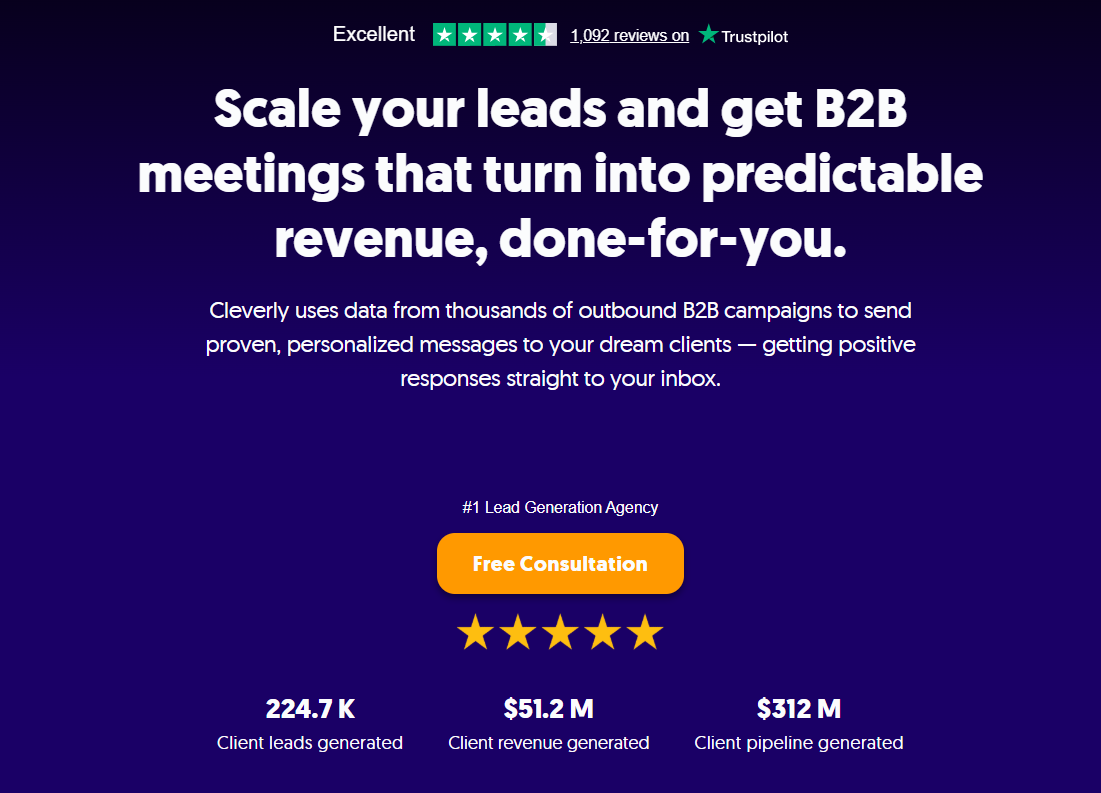
We Only Send You Leads That Are Actually Ready to Buy
With our cold email lead gen services, you don't pay for lead lists or email sends. You pay per meeting-ready lead we deliver. No fluff. No tire kickers. Just qualified prospects who match your ICP and are ready to talk business.
Our LinkedIn outreach works the same way. We've generated $312 million in pipeline revenue and $51.2 million in closed revenue for over 10,000 clients, including Amazon, Google, Uber, and PayPal. That doesn't happen by spamming inboxes. It happens by targeting the right people with messaging that actually resonates.
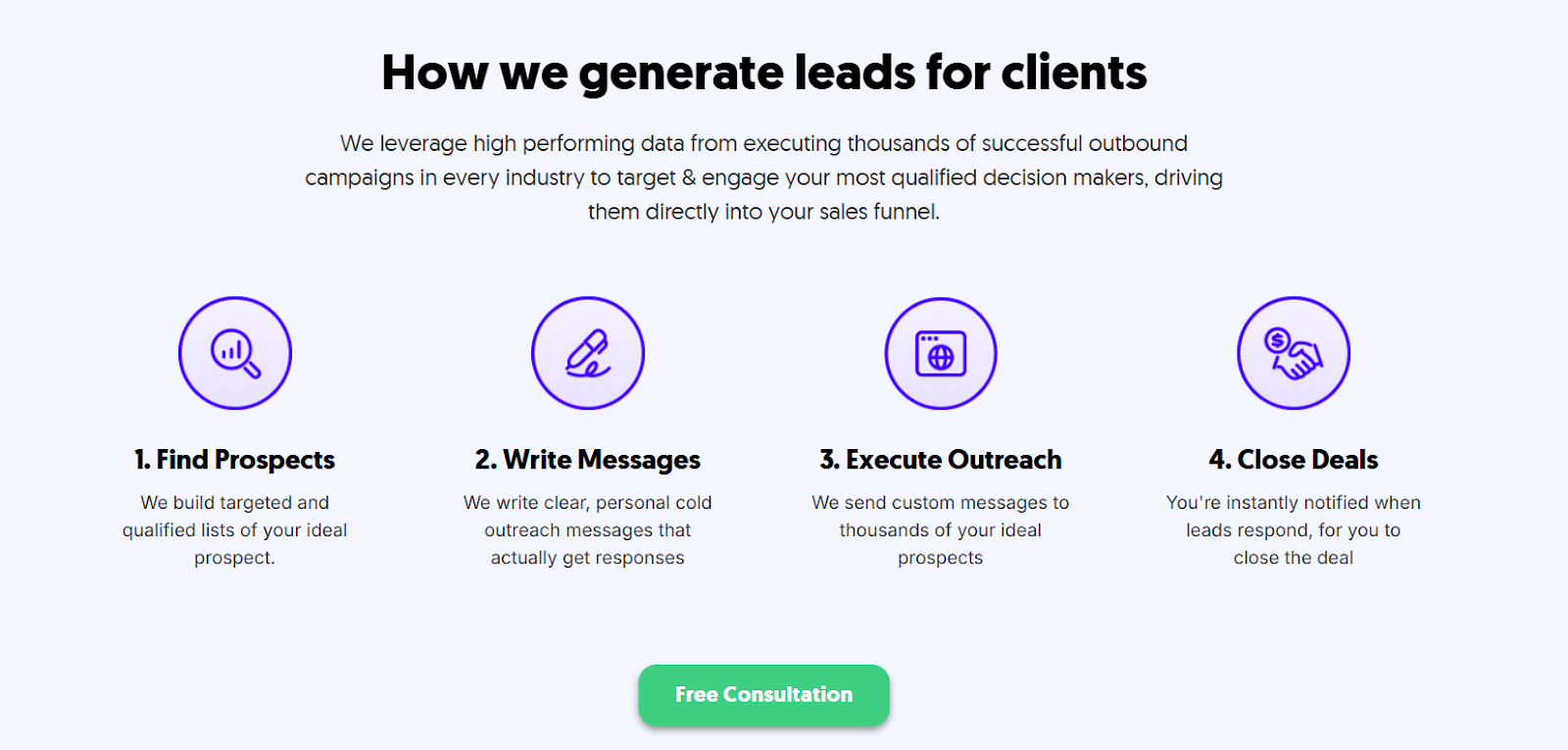
Guaranteed Appointments, Not Just Activity Metrics
Our cold calling system is built around one thing: qualified sales conversations. We place a no-accent appointment setter on your team, train them in 2 weeks, write breakthrough scripts, and include all the data and tech you need.
The result? 10-30 qualified sales calls every month, guaranteed.
We've made over 1 million cold calls and set 53,000 appointments. If your SDR doesn't deliver, we replace them. No excuses.
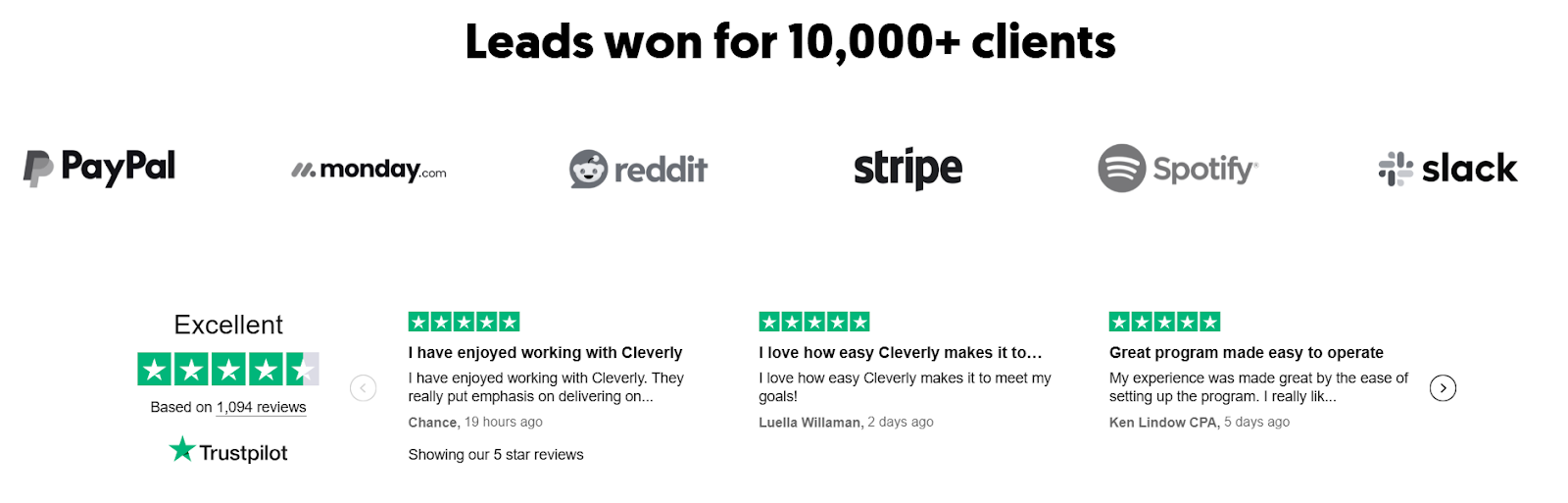
Quality at Scale, Starting at $397/Month
LinkedIn campaigns start at just $397 per month. Cold email? You only pay for the meeting-ready leads we send. Cold calling? Half the cost of building an in-house team, with guaranteed results.
We've proven that you don't have to choose between lead quality vs quantity. You can have both when you work with a lead generation agency that's actually accountable for revenue, not vanity metrics.
Ready to fill your pipeline with leads that actually close? Let's talk about which channel makes sense for your team.
🔥 Book a strategy call with Cleverly today

Conclusion
Lead quality and quantity are not opposing goals. A revenue team needs enough leads to support its target and a strong enough qualification standard to protect sales time.
Start by defining what makes a lead workable. Measure sales acceptance, opportunity creation, win rate, pipeline, revenue, and sales effort by source. Then increase volume only while those downstream outcomes remain healthy.
The best lead program is not the one that produces the largest list or the smallest one. It is the one that creates enough qualified opportunities for the revenue target without filling the pipeline with records sales should never have received.
Frequently Asked Questions
Free Resource
How to Scale a Profitable Cold Call System
Get the complete guide — download it instantly now.

Free Ebook
Download the Free Guide
Enter your details to get instant access.
You're all set! 🎉
Your ebook is downloading now.
Click below if the download didn't start automatically.


