Table of Contents
What Is a Buyer Persona?
Why B2B Buyer Personas Matter for Sales & Lead Generation
B2B Buyer Persona vs ICP: What's the Difference?
5 Core Elements of a High-Converting B2B Buyer Persona
How to Create a B2B Buyer Persona Step by Step
Buyer Persona Template You Can Use (Copy & Customize)
How to Use B2B Buyer Personas Across Your Go-To-Market Motion
Common Mistakes When Building Buyer Personas
How Cleverly Uses Buyer Personas to Drive Qualified B2B Pipeline
Conclusion
Frequently Asked Questions
Modified On :
April 10, 2026
Key Takeaways
- B2B buyer personas are data-driven profiles of your ideal decision-makers that drive revenue, not just marketing documents that sit unused.
- Focus on five core elements: role and responsibilities, primary goals and KPIs, pain points and frustrations, buying triggers and objections, and decision criteria and influence level.
- Build personas from real data like sales calls, CRM notes, and customer interviews, not assumptions or guesswork about what buyers care about.
- Most B2B companies only need 2-4 personas focused on decision-makers, influencers, and blockers who actually impact whether deals close.
- Use your buyer personas across every channel: cold email, LinkedIn outreach, sales calls, content creation, and lead scoring.
- Update your personas every 6-12 months as markets shift and buyer priorities evolve to keep your messaging relevant and effective.
We've seen it happen too many times. Companies spend thousands on B2B buyer persona workshops, create beautiful slide decks with fictional characters, and then... nothing changes.
The personas collect dust while the sales team keeps pitching to anyone with a pulse.
The truth is, most buyer personas fail because they're built for marketing presentations, not revenue generation.
The companies crushing it with B2B lead generation? They're using personas as living, breathing targeting tools.
Every cold email, LinkedIn message, and sales call is laser-focused on solving specific problems for specific people. That's when personas actually move the needle on your bottom line.
We're going to show you how to build B2B buyer personas that your sales team will actually use. No fluff, no theory. Just the exact framework we've used to help generate over $312 million in pipeline revenue across 10,000+ B2B clients.
Let's get into it.

What Is a Buyer Persona?
Buyer persona is a data-driven profile of your ideal decision-maker or influencer. Think of it as a detailed snapshot of the real person who signs off on your deal, complete with their goals, pain points, objections, and how they actually make buying decisions.
But here's where people get confused. A buyer persona isn't the same as your target audience or ICP:
- Target Audience = broad market segment (e.g., "SaaS companies with 50-200 employees")
- ICP (Ideal Customer Profile) = the type of company you want to work with (firmographics, revenue, tech stack)
- Buyer Persona = the specific person inside that company who influences or approves the purchase (their role, motivations, challenges)
You need all three, but they serve different purposes. Your ICP tells you which companies to target. Your buyer personas tell you which people to reach and exactly what to say to them.
Why Personas Matter More in B2B
In B2C, you're usually selling to one person making a quick decision. B2B is a different beast entirely.
- Multiple stakeholders are involved. The marketing director who loves your solution isn't writing the check. You need to convince the CFO, get buy-in from the VP of Sales, and sometimes loop in IT for technical approval.
- Sales cycles are longer. We're talking weeks or months, not impulse purchases. Your messaging needs to address different concerns at different stages.
- The stakes are higher. Nobody gets fired for buying the wrong pair of shoes. But choosing the wrong B2B solution? That can tank a quarter or derail a career. Your personas need to speak to that risk.
When we build outreach campaigns for clients, we're not just targeting "marketing managers." We're crafting different messages for the budget-conscious CMO, the metrics-obsessed demand gen lead, and the overworked marketing ops person.
That specificity is what turns cold outreach into qualified conversations.
Learn More: B2B Buying Process - How Buyers Make Decisions Today
🔥 Personas That Book Meetings
Cleverly uses real buyer data across LinkedIn, cold email, and calling to target decision-makers who actually convert.
Why B2B Buyer Personas Matter for Sales & Lead Generation
Here's what we've noticed after running millions of outreach touchpoints: generic messages get generic results.
But when you nail your buyer personas and tailor everything to them? The numbers completely flip.
How Personas Improve Your Sales Metrics
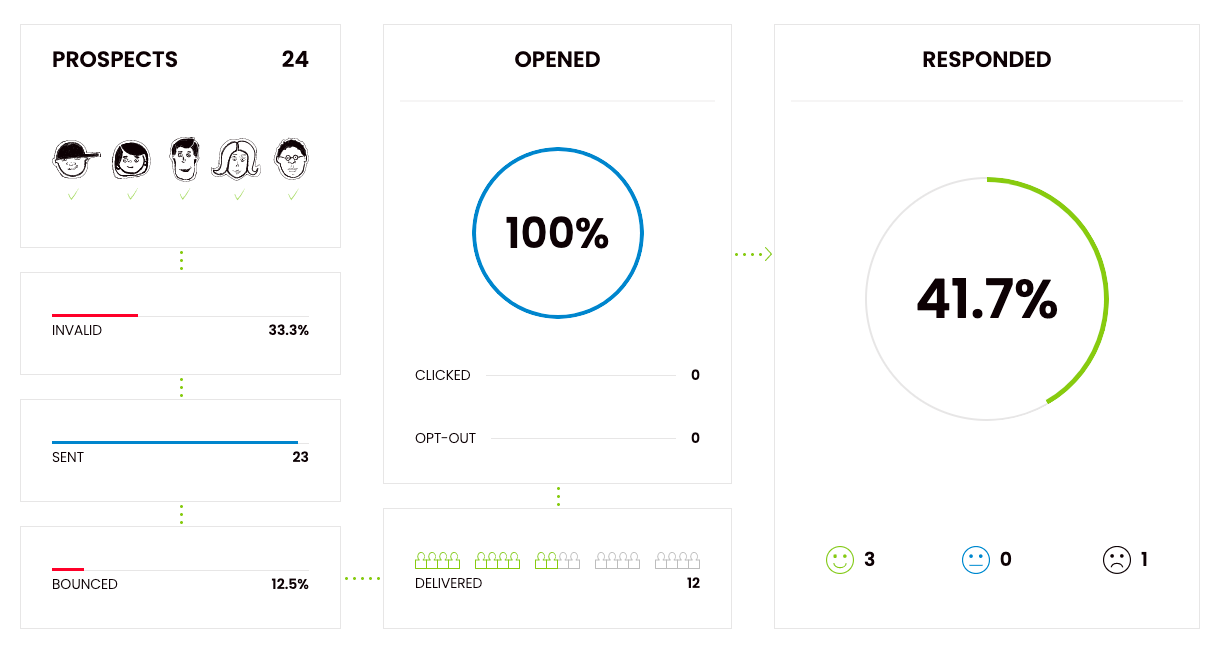
Cold email reply rates jump.
Instead of blasting "Are you interested in our solution?" to 1,000 people, you're sending targeted messages that reference specific pain points. We've seen reply rates go from 1-2% to 8-12% just by dialing in persona-specific messaging.
LinkedIn connection acceptance increases.
When your connection request mentions a challenge that VP of Sales is actually dealing with (like ramping up a new SDR team), they're way more likely to accept than a generic "I'd love to connect" message.
Sales call quality gets better.
Your reps aren't wasting 20 minutes on discovery. They already know the persona's typical objections, budget constraints, and decision-making process. Calls become consultative conversations, not interrogations.
Deal close rates improve.
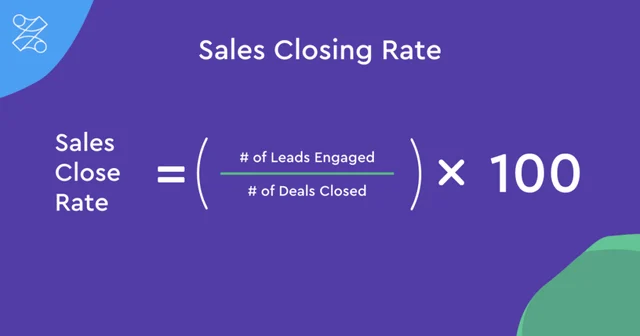
When you're speaking directly to what keeps your buyer up at night, deals move faster. You're not educating them on problems they already know they have. You're positioning your solution as the obvious answer.
What Happens Without Solid Personas
We see this constantly with companies before they work with us. Their outreach is scattershot. Sales is pitching features nobody cares about. Marketing is creating content that misses the mark entirely.
The result? Tons of activity, very little revenue. Your team is busy, but they're spinning their wheels talking to the wrong people or saying the wrong things to the right people.
Buyer personas go stale fast too. The CFO's priorities in 2026 look nothing like they did in 2023. If you built your personas years ago and haven't updated them, you're basically operating blind.
Personas = Revenue, Not Just Marketing Fluff
Let's be clear about something. We don't build buyer personas so your marketing deck looks prettier. We build them because they directly impact how much pipeline you generate and how many deals you close.
Every persona insight should answer one question: how does this help us start more conversations and close more business? If it doesn't, it's just noise.
When we work with clients on LinkedIn and cold email campaigns, persona alignment is step one. It's why we've helped generate over $312 million in pipeline. We're not guessing who to target or what to say. We know exactly who the decision-maker is and what message will make them respond.
Also Check: How to Measure Sales Success
B2B Buyer Persona vs ICP: What's the Difference?
We get this question all the time, and honestly, mixing these up is one of the biggest reasons outbound campaigns flop.
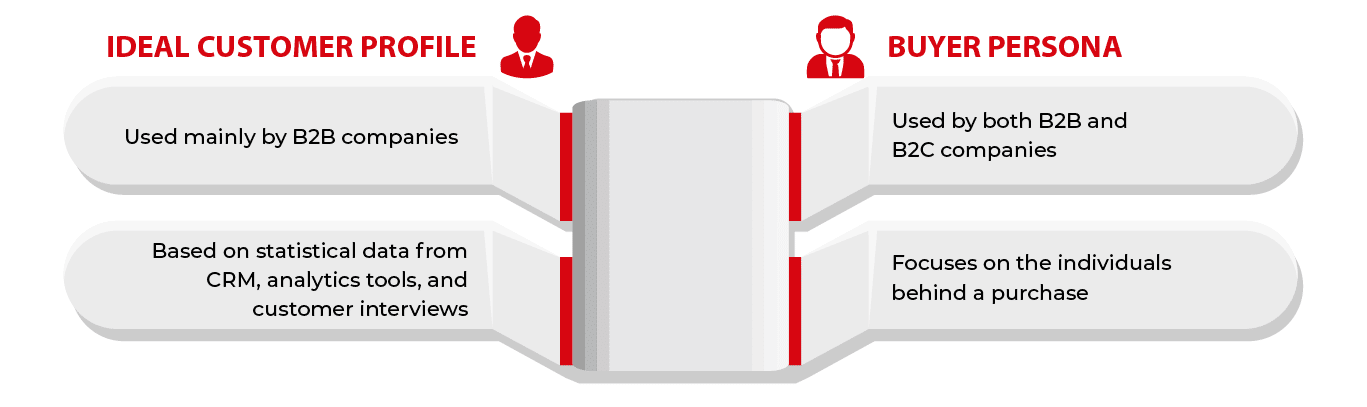
ICP (Ideal Customer Profile) = company-level fit. This is about the business itself. Industry, revenue, employee count, tech stack, growth stage. It answers: "Should we target this company?"
B2B buyer persona = human-level fit. This is about the actual person inside that company. Their role, goals, pain points, how they make decisions. It answers: "Who do we talk to and what do we say?"
You need both. Your ICP gets you in the right ballpark. Your B2B buyer persona tells you which door to knock on and what to say when someone answers.
Same ICP, Completely Different Personas
Let's say your ICP is mid-market SaaS companies with 100-500 employees looking to scale their sales team. Perfect. But who are you actually reaching out to?
- The CEO cares about revenue growth and capital efficiency. They want to know how your solution impacts the bottom line.
- The VP of Sales is stressed about hitting quota with a team that's underwater. They need tactical solutions that work fast.
- The Sales Ops Manager is drowning in tools that don't talk to each other. They want integration and ease of implementation.
Same company. Three completely different conversations. If you're sending the same message to all three, you're leaving deals on the table.
Why Outbound Fails Without Personas
Here's what happens when companies only define their ICP: they build a great target list, then send generic messages that don't resonate with anyone.
"We help SaaS companies scale their sales teams." Cool. So does everyone else.
But when you nail the B2B buyer persona, your message gets specific: "We help overwhelmed VPs of Sales book 20+ qualified calls per month without hiring more SDRs." Now you're speaking directly to their reality.
We've run campaigns where the ICP was identical but we created different sequences for different personas. The persona-specific campaigns outperformed the generic ones by 3-4x on response rates. Every single time.
Quick Comparison
So, the bottom line?
Your ICP gets you to the right companies. Your buyer personas get you meetings with the right people inside those companies. Miss either one, and your outbound strategy falls apart.
Explore More: B2B Sales KPIs Every Revenue Team Should Track
🚀 Target Buyers, Not Titles
We turn personas into meeting-ready leads with intent-driven outreach—you only pay when real buyers show up.
5 Core Elements of a High-Converting B2B Buyer Persona
Most buyer persona templates are bloated with useless details. Favorite coffee shop? Hobbies? Come on. We're not planning a birthday party, we're trying to close deals.
Here are the five elements that actually matter when you're building personas for revenue generation. Every buyer persona template we use includes these, and nothing more.
1. Role & Responsibilities
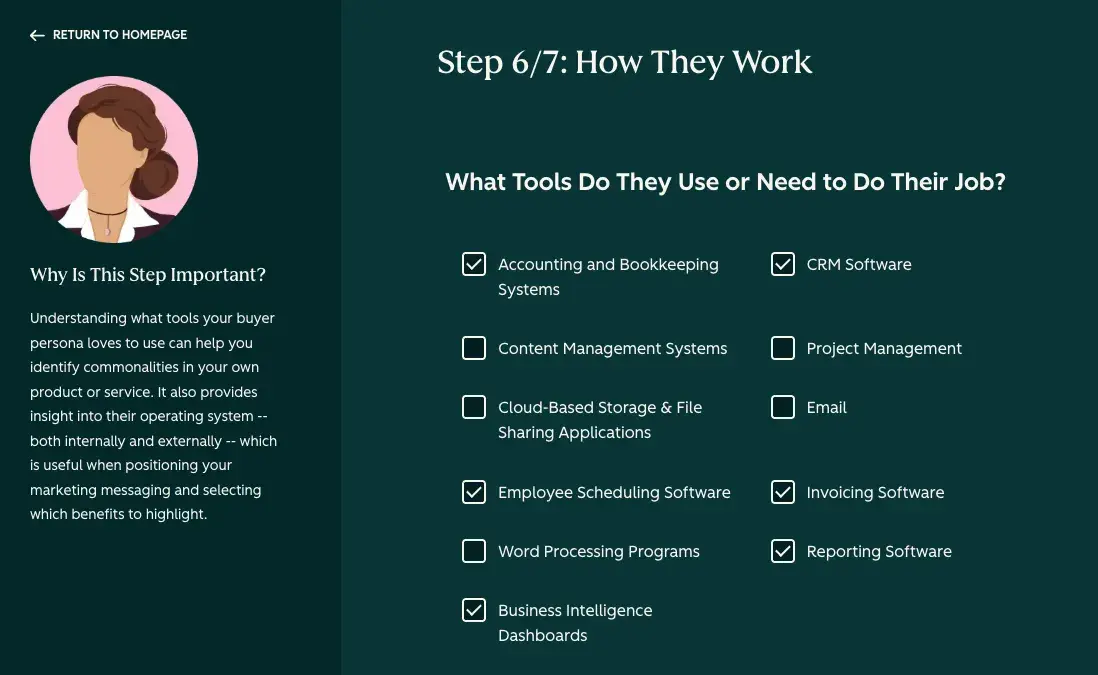
Start with the basics. What's their exact title? What do they actually do all day?
A "Sales Manager" at a 50-person startup has a completely different day than a "Sales Manager" at a 5,000-person enterprise. One is in the trenches closing deals. The other is managing managers and looking at dashboards.
What to document:
- Exact job title and level (director, VP, C-suite)
- Day-to-day responsibilities
- Who they report to and who reports to them
- How their performance is measured by leadership
This tells you how much authority they have and what kind of language resonates with them.
2. Primary Goals & KPIs

What does success look like for this person? What are they trying to accomplish this quarter or this year?
The VP of Sales wants to hit 120% of quota. The marketing director needs to generate 500 qualified leads per month. The CFO is trying to cut costs by 15% without sacrificing growth.
What to document:
- Top 3 business objectives
- Metrics they're accountable for
- What gets them promoted (or fired)
- Team goals vs personal goals
When you know what they're measured on, you can position your solution as the thing that helps them hit those numbers.
3. Pain Points & Frustrations

This is where most personas get it wrong. They list surface-level problems instead of digging into what's actually keeping this person up at night.
"Needs more leads" isn't a pain point. "Spent $50K on a lead gen agency that delivered garbage contacts and now the CEO is questioning my judgment" is a pain point.
What to document:
- Specific operational challenges they face daily
- Resource constraints (budget, headcount, time)
- Internal politics and pushback they deal with
- Failed solutions they've tried before
The more specific you get here, the better your messaging performs. We're talking to real humans with real problems, not personas on a slide deck.
4. Buying Triggers & Objections
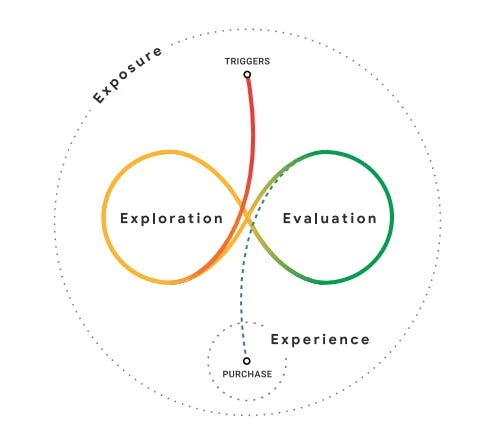
What makes someone go from passively interested to actively looking for a solution? And what stops them from pulling the trigger?
Buying triggers might be:
- Just missed quarterly targets for the second time
- Got budget approved for new tools
- Hired a new team that needs ramping fast
- Competitor just launched something that's eating their lunch
Common objections might be:
- "We tried this before and it didn't work"
- "I don't have budget until next quarter"
- "We already have a solution in place"
- "I need to get buy-in from three other people"
When you document both, your sales team knows when to strike and how to handle resistance.
Master: Common Cold Calling Objections & How to Overcome Them
5. Decision Criteria & Influence Level
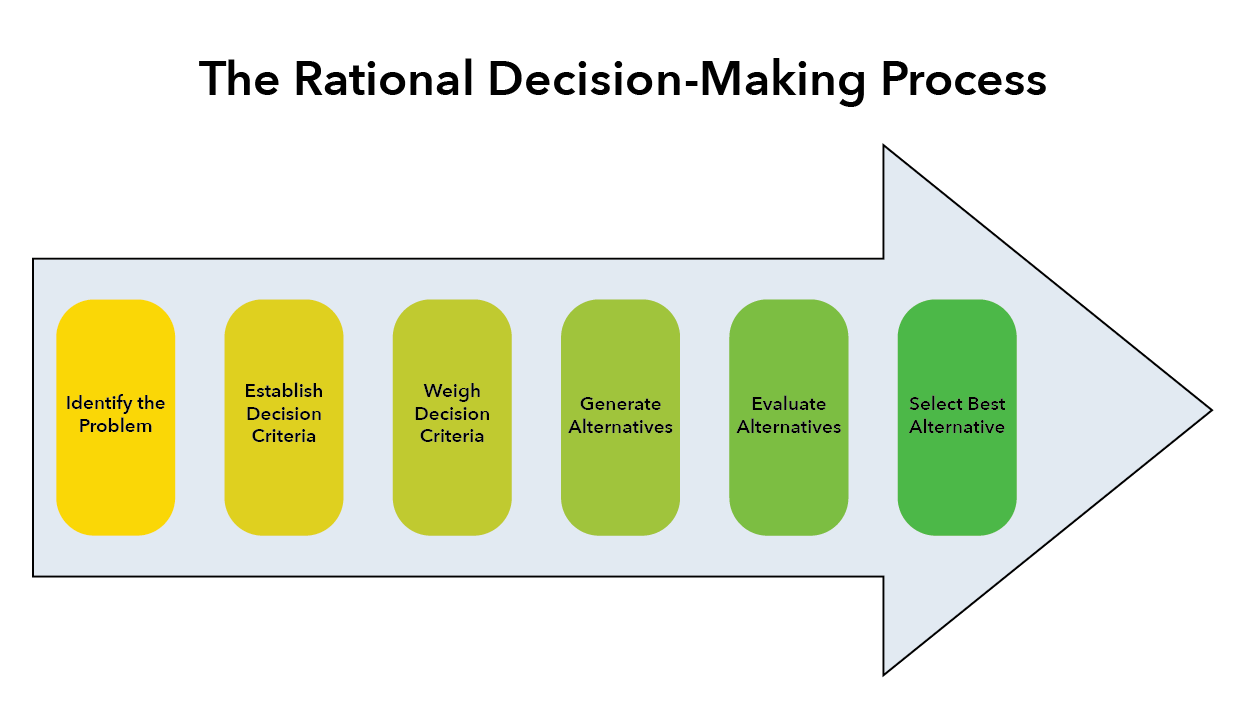
Here's the reality: the person you're talking to might not be the person who signs the contract.
What to document:
- Are they the decision-maker, influencer, or gatekeeper?
- Who else is involved in the buying process?
- What criteria do they use to evaluate solutions?
- What's their typical buying timeline?
A marketing manager might love your product, but if they need CFO approval and the CFO only cares about ROI, your pitch needs to address both angles.
Putting It All Together
A solid buyer persona template with these five elements gives your team everything they need. No fluff, no guesswork. Just actionable intelligence that translates directly into better conversations and more closed deals.
When we build outreach campaigns, every message, every follow-up, every sales call script ties back to these five elements. That's how you turn personas from a planning exercise into a revenue driver.
Also Check: Ways to Increase Your Inbound B2B Leads (Proven Framework)
How to Create a B2B Buyer Persona Step by Step
Alright, let's get practical. Here's exactly how to create a buyer persona that your sales team will actually use. No theory, just the process we follow with every client.
Step 1: Identify the Revenue-Driving Roles
Don't build personas for everyone who might touch your product. Focus on the people who directly influence whether the deal closes or dies.
- Decision-maker = signs the contract, controls the budget, gives final approval. Usually a VP, director, or C-level executive.
- Influencer = champions your solution internally, does the research, makes recommendations. Often a manager or senior individual contributor.
- Blocker = can kill the deal even if they can't approve it. Think IT security, procurement, legal, or a skeptical executive who needs convincing.
Start with your top 10 closed deals. Who was in the buying committee? Who showed up on calls? Who asked the hard questions? That's your starting lineup for personas.
Most B2B companies need 2-4 personas max. If you're building 10+ personas, you're overcomplicating it.
Step 2: Collect Data From Real Sources
This is where how to create a buyer persona separates the amateurs from the pros. You can't build accurate personas by guessing or making assumptions.
- Mine your CRM. Look at deal notes, email threads, and recorded sales calls. What objections came up repeatedly? What questions did buyers ask? What language did they use?
- Interview your sales team. They talk to these people every day. Ask: "What's the first thing this persona usually asks about? What makes them say yes? What makes them ghost?"
- Analyze closed-won deals. Who was involved? What was their title? How long did it take? What was the final objection they had to overcome?
- Check LinkedIn profiles. Look at 20-30 profiles of your ideal buyer. What's their background? What content are they engaging with? What groups are they in?
- Talk to actual customers. If possible, interview 5-10 customers who match your ideal profile. Ask them what problem they were trying to solve and why they chose you over competitors.
Real data beats educated guesses every single time. This step takes effort, but it's what separates personas that work from personas that sit in a Google Doc forever.
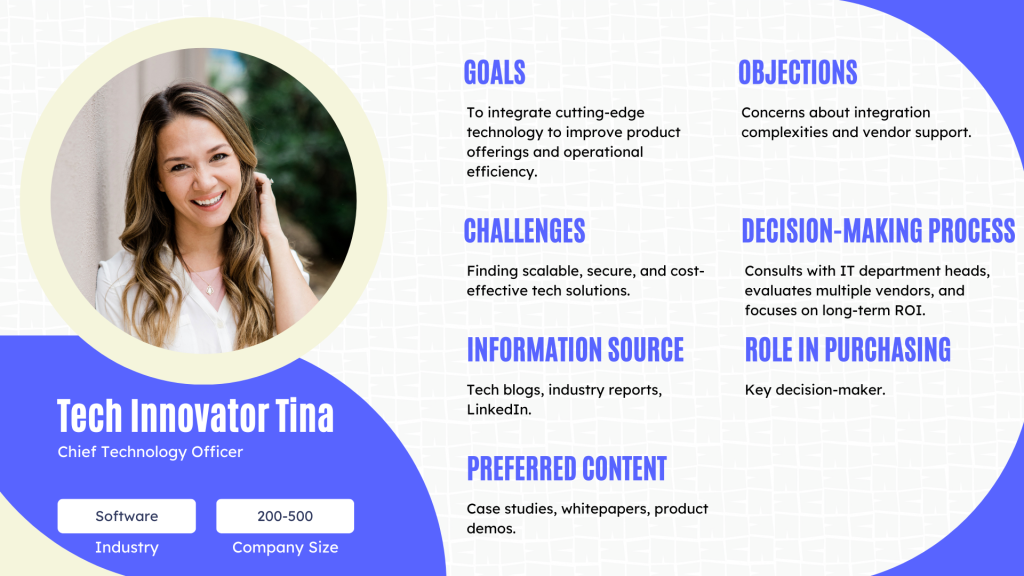
Step 3: Map Goals, Pains, and Buying Motivation
Now you're connecting the dots. What does this person actually care about?
- Professional goals: Hit quota, launch a new initiative, prove ROI on their budget, get promoted, avoid getting blamed for a failed project.
- Personal motivations: Look good in front of leadership, make their job easier, reduce stress, work fewer nights and weekends.
Here's an example. A VP of Sales might have a professional goal of "increase pipeline by 40%" but their personal motivation is "stop getting roasted in exec meetings for missed targets."
Both matter. Your messaging should speak to the business outcome and the emotional reality.
When we're crafting cold email or LinkedIn sequences, we lead with the pain and follow with the goal. "Tired of your SDR team burning through leads without booking meetings? We'll place a trained appointment setter who books 10-30 qualified calls per month, guaranteed."
Step 4: Define Objections & Buying Concerns
Every persona has predictable objections. Document them now so your team isn't caught off guard later.
- Budget: "This is too expensive" or "I don't have budget until Q3."
- Timing: "We're in the middle of a product launch" or "Let's revisit this next year."
- Trust: "We tried something like this before and it didn't work" or "How do I know this will actually deliver results?"
- Internal approval: "I need to get buy-in from my boss" or "IT has to approve any new tools."
For each objection, write down the response that actually works. Not a generic script, but the real answer that's closed deals in the past.
This is gold for your sales team and for building objection-handling sequences in your outreach campaigns.
Step 5: Align Messaging to Persona Language
Here's the mistake we see constantly: companies write messaging in their own corporate speak instead of how their buyer personas actually talk.
Your VP of Sales doesn't say "optimize our go-to-market strategy." They say "we need more meetings with qualified buyers, fast."
Your CFO doesn't care about "innovative solutions." They want to know "how much this costs and what the ROI looks like in 6 months."
Go back to those sales call recordings and CRM notes. What exact words and phrases do these people use? That's your messaging playbook.
When we write cold email sequences, we literally pull language directly from discovery calls with similar personas. It sounds natural because it is natural. We're speaking their language, not pitching in marketing jargon.
Pull It All Together
Once you complete these five steps, you've got a buyer persona that's built on reality, not assumptions. Your sales team knows who to target, what to say, and how to handle objections. Your marketing knows what content resonates and what falls flat.
Buyer Persona Template You Can Use (Copy & Customize)
Forget the overcomplicated buyer persona templates with 47 fields you'll never fill out. Here's a clean, simple structure you can actually use. Copy this, fill it in, and you're good to go.

How to Adapt This Template for Multiple Personas
Here's the beauty of a solid buyer persona template: you use the same structure but fill it with different information for each role in your buying committee.
Let's say your ICP is mid-market B2B SaaS companies. You might have three personas:
Persona 1: VP of Sales (Decision-maker)
- Goals: Hit quota, scale the team without blowing budget
- Pains: SDRs aren't booking enough meetings, outbound is inconsistent
- Objections: "Will this actually work?" and "How fast can we see results?"
- Preferred channel: LinkedIn and phone
Persona 2: Sales Operations Manager (Influencer)
- Goals: Improve tech stack efficiency, reduce manual work
- Pains: Tools don't integrate, data is messy, team resists new processes
- Objections: "How hard is implementation?" and "Will the sales team actually use this?"
- Preferred channel: Email with detailed docs
Persona 3: CFO (Blocker/Final Approver)
- Goals: Control costs, prove ROI on every investment
- Pains: Too many tools with unclear value, budget scrutiny from board
- Objections: "What's the payback period?" and "Can we pilot this first?"
- Preferred channel: Email with hard numbers
Same company, same deal. But three completely different conversations. Your outreach to the VP of Sales focuses on results and speed. Your follow-up to the Ops Manager emphasizes ease of implementation. Your business case for the CFO is pure ROI.
When we build campaigns for clients, we create separate sequences for each persona even when they're all at the same company.
The VP gets our LinkedIn outreach highlighting the guarantee of 10-30 qualified calls per month. The CFO gets an email breaking down cost per meeting compared to in-housing an SDR team. Different message, different channel, same ICP.
Keep It Simple, Keep It Updated
Don't overthink this. Fill out the buyer persona template based on what you know today. You can always refine it as you learn more from actual conversations.
The goal isn't perfection. The goal is having a clear, documented understanding of who you're selling to and what they care about. That's what turns random outreach into targeted campaigns that actually book meetings and close deals.
How to Use B2B Buyer Personas Across Your Go-To-Market Motion
Building B2B buyer personas is step one. Actually using them to drive revenue is where most companies drop the ball.
Here's how to embed your personas into every part of your sales and marketing process so they actually impact your pipeline, not just sit in a shared drive.
Cold Email Personalization
Generic cold emails get deleted. Persona-specific emails get replies.
Instead of: "We help companies generate more leads."
Try: "We help VPs of Sales book 20+ qualified meetings per month without hiring more SDRs or relying on inconsistent outbound."
That second version speaks directly to a specific b2b buyer persona. It mentions their pain (inconsistent outbound), their constraint (can't hire more people), and their goal (qualified meetings).
Pro tip: Use persona research to nail your subject lines too. If your persona is drowning in work, try "20 hours back per month." If they're quota-focused, go with "Hit 120% without adding headcount."
Explore: How To Actually Get B2B Clients With Cold Email
LinkedIn Outreach Messaging
Your buyer personas should directly inform every LinkedIn connection request and InMail you send.
For a growth-stage VP of Sales: "Noticed you're scaling your team. Most VPs we work with struggle with ramping new SDRs fast enough. We place trained appointment setters that go live in 2 weeks and book 10-30 qualified calls monthly. Worth a quick chat?"
For a sales ops leader: "Saw your post about tech stack consolidation. We handle the entire outbound motion (data, dialer, scripts, trained reps) so your team has one less vendor to manage. Open to connecting?"
Same service. Completely different angle based on the persona.
Sales Call Scripts
Your reps should have different discovery questions and talk tracks for each persona.
- For a VP of Sales, ask: "What's your biggest bottleneck in hitting pipeline targets right now? How many meetings is your team booking per month?"
- For a CFO, ask: "What does your current cost per qualified meeting look like? Have you calculated the fully loaded cost of an in-house SDR versus outsourcing?"
Same product. Different conversation. Your B2B buyer personas tell you which questions to ask and which value props to emphasize.
Content Topics & Angles
Stop creating content you think is interesting. Create content your buyer personas are actually searching for and engaging with.
If one of your personas is a demand gen manager struggling with lead quality, write about lead scoring frameworks, MQL definitions, and how to align sales and marketing on what counts as a qualified lead.
If another persona is a CFO evaluating ROI, create calculators, comparison guides, and case studies with hard numbers.
Check what your personas are engaging with on LinkedIn. What posts are they commenting on? What groups are they in? That's your content roadmap right there.
Lead Scoring & Prioritization
Not all leads are created equal. Your B2B buyer personas should directly influence how you score and prioritize inbound leads and replies.
A VP of Sales at a company matching your ICP gets an immediate follow-up. An entry-level coordinator at the same company gets nurtured but doesn't jump the queue.
We help clients set up lead scoring based on persona fit. Decision-makers get higher scores than influencers. People with active buying triggers (just got funding, hired a new team, posted about a problem you solve) get prioritized over passive browsers.
When you're running outbound at scale, you can't treat every response the same way. Persona-based prioritization ensures your best reps are talking to your best-fit buyers.
Funnel Segmentation
Different personas move through your funnel at different speeds and need different touchpoints.
A hands-on founder might be ready to buy after two conversations. An enterprise VP needs to loop in procurement, legal, and three other stakeholders before anything moves forward.
Segment your nurture sequences by persona. Don't send the same 12-email drip to everyone. The CFO needs ROI proof and case studies. The sales leader needs testimonials from other sales leaders and quick wins.
The bottom line: your B2B buyer personas should touch every single part of your go-to-market motion. If they don't, you're building personas for the sake of building personas. Use them everywhere, update them constantly, and watch your conversion rates climb across the board.
Common Mistakes When Building Buyer Personas
We've seen companies waste weeks building buyer personas that never get used. Here's what kills them:
❌ Building on assumptions, not data. Your gut feeling about what your buyer cares about is probably wrong. Talk to actual customers. Listen to sales calls. Pull real objections from your CRM. Guessing gets you generic personas that don't work.
❌ Over-complicating with useless details. Nobody cares if your persona is named "Marketing Mary" or what her favorite Netflix show is. Focus on goals, pains, and buying behavior. Everything else is noise that distracts from revenue-driving insights.
❌ Never updating them. The VP of Sales persona you built in 2022 is outdated. Priorities shift. Markets change. Budget constraints evolve. Set a calendar reminder to refresh your personas every 6-12 months based on recent deals.
❌ Using one generic persona everywhere. Your LinkedIn message shouldn't sound like your cold email. Your first touch shouldn't mirror your sixth. Adapt your persona insights to the channel and stage. Same core truth, different execution.
Fix these four things and your buyer personas actually become useful instead of another planning doc that collects dust.
How Cleverly Uses Buyer Personas to Drive Qualified B2B Pipeline
Here's the thing: personas only matter if they're activated in real outreach.
You can have the most detailed B2B buyer persona document in the world, but if your cold emails still sound generic and your LinkedIn messages get ignored, what's the point?
At Cleverly, we don't just help you build personas. We use them to generate actual pipeline.
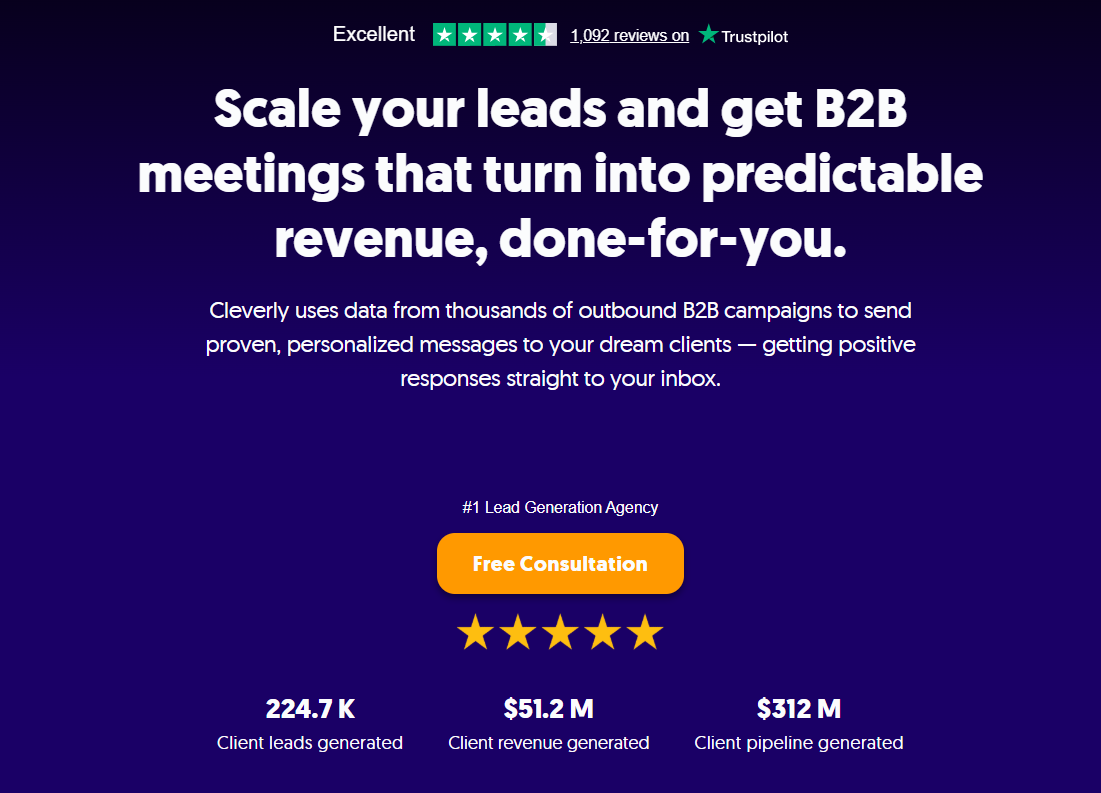
LinkedIn Outreach Built Around Your Buyer
We've helped over 10,000 clients generate leads with companies like Amazon, Google, Uber, PayPal, and Spotify. How? Every LinkedIn sequence we run is tailored to specific buyer personas within your ICP.
We're not sending the same message to CFOs and VPs of Sales. We craft different angles, different pain points, different proof points based on who we're talking to. That's how we've generated $312 million in pipeline revenue and $51.2 million in closed revenue.
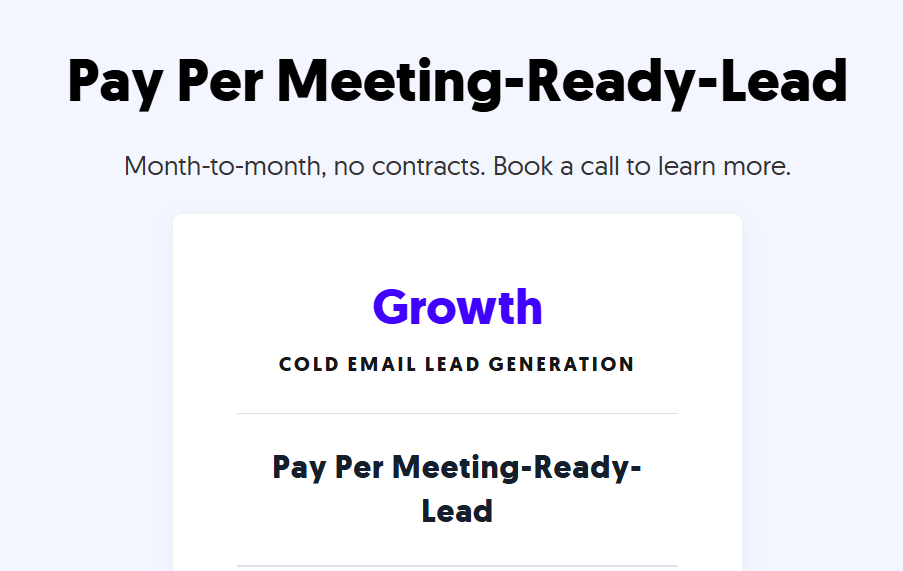
Our LinkedIn campaigns start at just $397/month, and every message is persona-aligned from day one.
Cold Email That Speaks Their Language
Our cold email campaigns don't blast your entire TAM with the same template. We segment by persona, customize messaging based on their role and pains, and you only pay for the meeting-ready leads we send you.
No fluff. No unqualified tire-kickers. Just conversations with people who match your B2B buyer personas and actually have buying intent.
Cold Calling With Persona-Specific Scripts
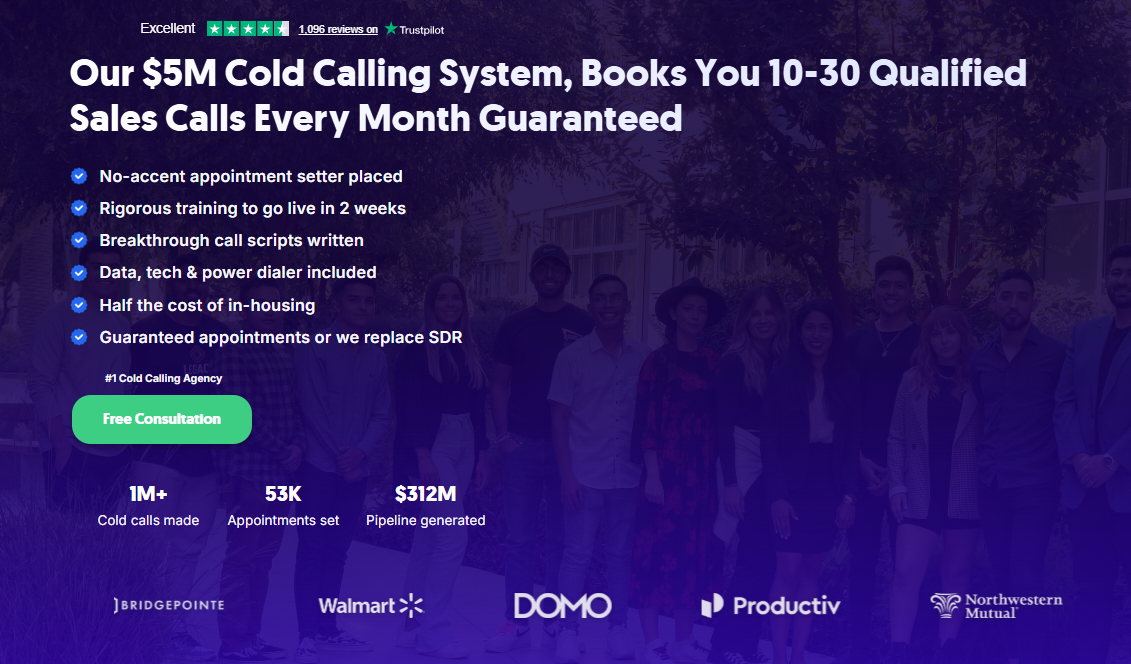
Our $5M cold calling system doesn't rely on generic discovery questions. We place a no-accent appointment setter, train them on your specific buyer personas in just 2 weeks, and arm them with breakthrough scripts tailored to each role.
The result? 10-30 qualified sales calls every month, guaranteed. We've made over 1 million cold calls and set 53,000+ appointments because we know exactly who we're calling and what they care about.
If the rep doesn't perform, we replace them. If they don't book the guaranteed meetings, we keep working until they do. That's confidence in persona-driven outreach.
We're a B2B lead generation agency that doesn't just talk about personas. We activate them across LinkedIn, cold email, and cold calling to fill your pipeline with qualified opportunities.
Because at the end of the day, the only personas that matter are the ones driving revenue.
🚀 Ready to get started? Let’s talk!
Conclusion
Let's be real: buyer personas aren't something you build once, put in a slide deck, and forget about. They're execution tools that should live in your CRM, your outreach sequences, your sales scripts, and every conversation your team has.
Strong B2B buyer personas mean better messaging. Better messaging means better conversations. Better conversations mean more deals closed and more revenue in the bank.
If your personas are gathering dust instead of driving pipeline, it's time to rebuild them the right way. Focus on real data, keep them simple, and actually use them across every channel.
The companies winning at B2B lead generation aren't guessing who to talk to or what to say. They know their buyers inside and out, and it shows in their results.
Now go build personas that actually make you money.
Frequently Asked Questions
Free Resource
How to Scale a Profitable Cold Call System
Get the complete guide — download it instantly now.
Free Ebook
Download the Free Guide
Enter your details to get instant access.
You're all set! 🎉
Your ebook is downloading now.
Click below if the download didn't start automatically.