Table of Contents
What Is the B2B Buying Process?
Key Stakeholders in the B2B Buying Process
B2B Buying Process Steps (From Problem Awareness to Purchase)
B2B vs B2C Buying Process: Key Differences
Aligning Your Sales Process With the B2B Buying Process
How the B2B Buying Process Impacts Lead Generation
How Cleverly Helps Teams Engage Buyers at the Right Stage
Conclusion
Frequently Asked Questions
Modified On :
July 17, 2026
Key Takeaways
- The B2B buying process involves multiple stakeholders and requires consensus, not just one decision-maker's approval.
- Buyers move non-linearly through stages, often looping back as new stakeholders enter or requirements change.
- Aligning sales process with B2B buying process means meeting buyers where they are instead of forcing them through your pipeline stages.
- Early-stage buyers need education and trust-building, not aggressive pitching or premature demo requests.
- Multi-threading across economic buyers, technical buyers, and champions prevents deals from stalling when one contact goes silent.
- Lead quality wins lead volume when your outreach matches buyer intent and actual readiness to engage.
The B2B buying process isn't what it used to be. Gone are the days when a single decision-maker picked up the phone, talked to a sales rep, and signed a deal by Friday.
Today's buyers are doing their homework long before they ever talk to you. They're researching solutions online, comparing vendors in private Slack channels, and building consensus across multiple departments.
By the time they reach out, they've already formed 70% of their opinion about whether you're the right fit.
We've worked with over 10,000 companies to generate qualified leads, and here's what we've observed: the B2B buying process has fundamentally shifted.
Understanding how your buyers actually make decisions today is the difference between closing deals and getting ghosted after the discovery call.
In this guide, we'll walk you through exactly how modern B2B buyers navigate their purchasing journey and what you need to do to align your sales approach with their reality.
What Is the B2B Buying Process?
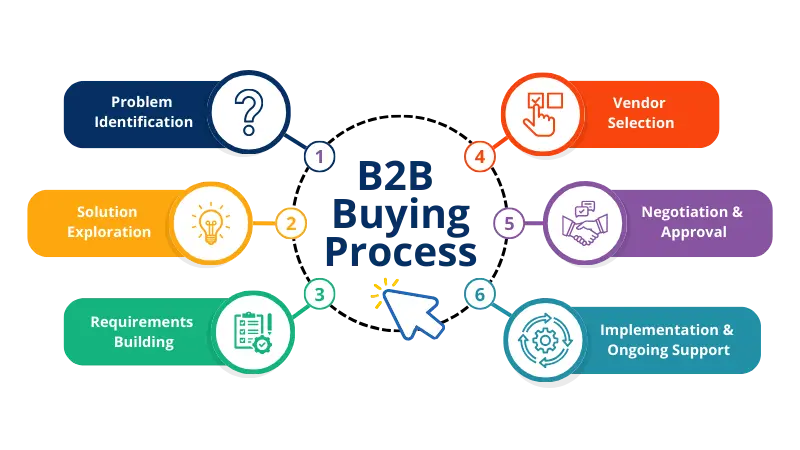
The B2B buying process is the journey a business takes from realizing they have a problem to actually purchasing a solution.
It's how companies evaluate options, build internal buy-in, and ultimately decide which vendor gets their budget.
Here's the thing though: it's rarely a straight line from point A to point B.
Who's Actually Making the Decision?
Unlike B2C purchases where one person clicks "buy now," the B2B buying process typically involves a buying committee.
You're not selling to just one person. You're navigating multiple stakeholders:
- The end user who'll actually use your product daily.
- The department head who owns the budget.
- The IT team who needs to approve integrations.
- The legal team reviewing contracts.
- The C-suite executive who signs off on major purchases.
Each person has different priorities, concerns, and criteria for what makes a solution worth buying.
The finance person cares about ROI. The end user cares about ease of use. IT cares about security and implementation.
Why It's Not a Linear Journey
The B2B buying process doesn't follow a neat path anymore. Buyers jump between research, comparison, internal discussions, and vendor conversations in whatever order makes sense to them.
They might talk to your sales team in week one, go silent for a month while they evaluate competitors, then resurface asking questions you already answered.
This happens because buying decisions require consensus. Your champion needs to convince their boss. Their boss needs sign-off from finance. Finance wants a second opinion from another department.
It's a back-and-forth process where multiple people need to agree before anything moves forward.
That's why understanding the B2B buying process matters. When you know how buyers actually work through decisions, you can meet them where they are instead of pushing them through your sales process.
Also Check: Smart Ways to Use AI for B2B Lead Generation
🔥 Reach Buyers at Every Stage
Cleverly engages prospects across LinkedIn, cold email, and cold calls, aligning outreach with how B2B buyers actually decide.
Key Stakeholders in the B2B Buying Process
Every B2B buying process involves multiple people with different roles and agendas. If you're only talking to one person, you're setting yourself up for a stalled deal.
Here's who's actually in the room when purchasing decisions get made.
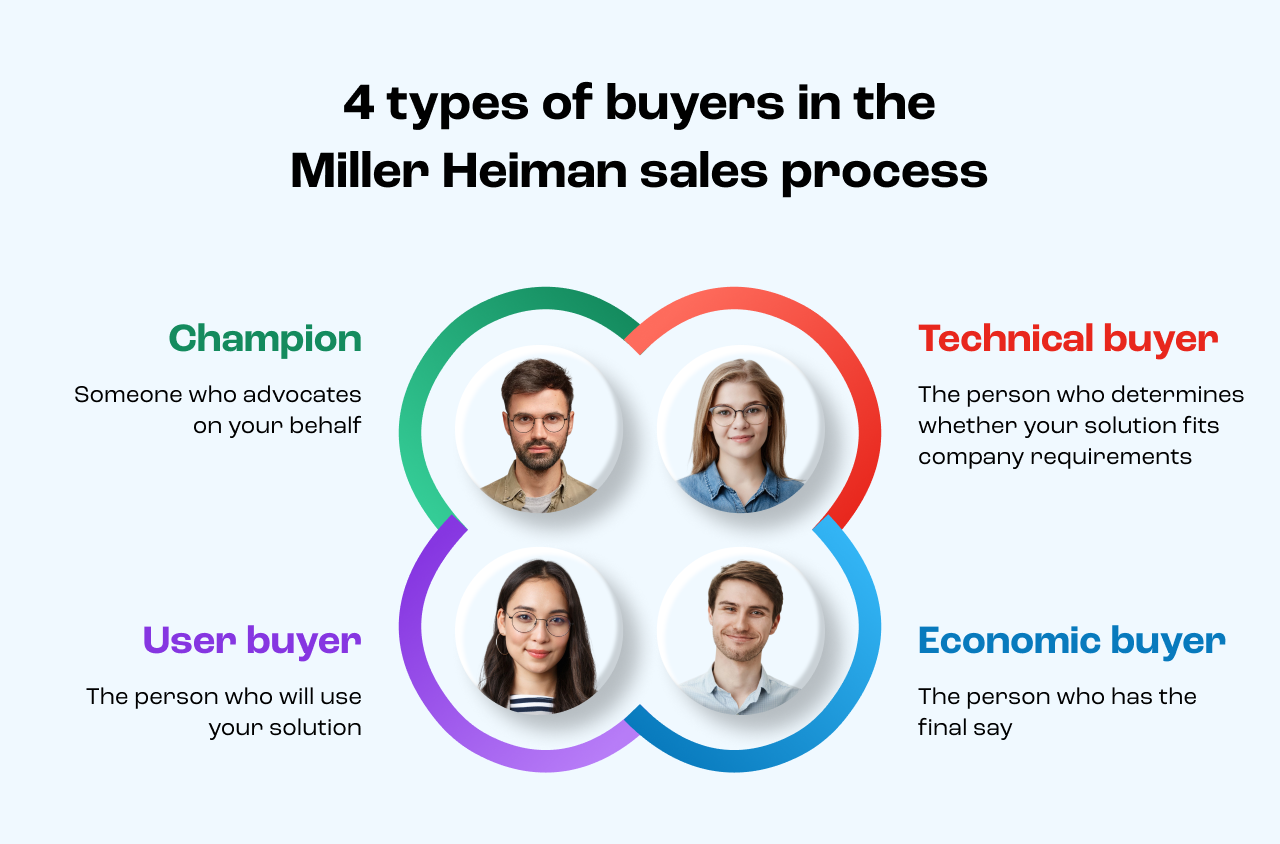
The Four Key Players
- Economic Buyer – This person controls the budget and has final sign-off authority. They care about ROI, risk mitigation, and whether this purchase aligns with company priorities. Without their approval, nothing moves forward.
- Technical Buyer – Usually someone from IT, operations, or engineering who evaluates whether your solution actually works with their existing systems. They're focused on implementation complexity, security, integrations, and potential technical roadblocks.
- End Users – The people who'll use your product every day. They care about ease of use, workflow improvements, and whether this makes their job easier or harder. If they hate it, they'll kill the deal from the inside.
- Champion – Your internal advocate who believes in your solution and sells it for you when you're not in the room. They navigate internal politics, build consensus, and push the deal forward. Without a champion, the B2B buying process drags on indefinitely.
Why Deals Stall Without Multi-Threading
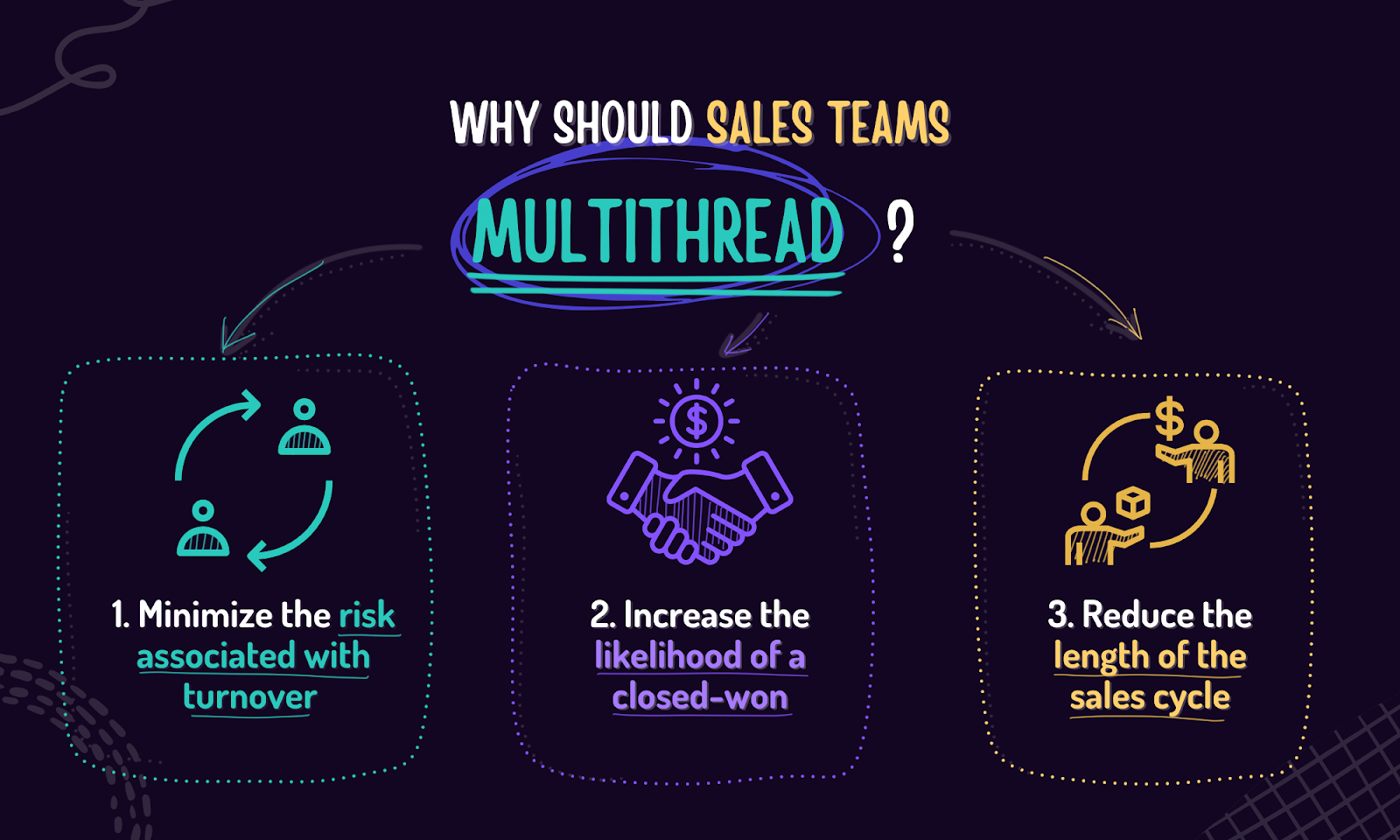
We've seen this pattern thousands of times while generating leads for clients: sales reps build a great relationship with one contact, then that person goes on vacation, changes roles, or loses internal support. Suddenly the deal goes cold.
Multi-threading in sales means building relationships with multiple stakeholders throughout the B2B buying process.
When you're connected to the economic buyer, technical buyer, and champion simultaneously, you create deal momentum that doesn't depend on one person's availability or influence.
Internal Alignment Speeds Everything Up
The faster stakeholders align internally, the faster deals close. When the technical buyer, economic buyer, and end users all agree on the problem and solution, the B2B buying process moves smoothly.
But when these groups aren't aligned, you get endless revision cycles, surprise objections in late stages, and deals that sit in "evaluation" for months.
Your job is helping facilitate that internal alignment by providing the right information to each stakeholder at the right time.
Learn More: Perfect B2B Sales Strategy to Close More Deals (Proven Methods)
B2B Buying Process Steps (From Problem Awareness to Purchase)
In the B2B buying process buyers don't move from stage 1 to stage 5 in perfect order. They jump around, revisit earlier stages, and sometimes restart the entire process when new stakeholders get involved.
Here's how the journey typically unfolds:
Step 1: Problem Recognition
Someone in the organization realizes something isn't working. Maybe lead volume dropped, customer churn increased, or a manual process is eating too much time.
This is where the B2B buying process steps begin. At this stage, buyers are figuring out if the problem is serious enough to warrant a solution and budget.
Step 2: Solution Research and Shortlisting
Once the problem is validated, buyers start researching potential solutions. They're reading blog posts, watching demos on YouTube, asking peers in LinkedIn groups, and building a shortlist of vendors.
Most of this happens before they ever fill out a contact form. They want to educate themselves first and understand what's possible.
Step 3: Vendor Evaluation and Comparison
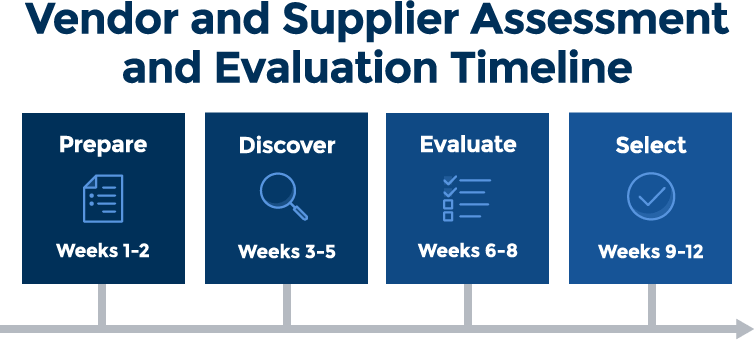
Now buyers are actively comparing vendors on their shortlist. They're booking demos, requesting proposals, checking reviews on G2 or Capterra, and asking detailed questions about pricing, implementation, and results.
This is where differentiation matters. They're looking for proof that your solution actually delivers.
Step 4: Internal Alignment and Approval
This is where most deals slow down in the B2B buying process steps. Your champion needs to get buy-in from the technical buyer, economic buyer, and end users.
They're building internal business cases, addressing objections from finance, and navigating budget approval processes. You're not in these conversations, which is why having a strong champion matters.
Step 5: Final Decision and Purchase
After internal alignment, the deal moves to final negotiations, contract reviews, and purchase order approvals. Legal might have questions. Procurement might push for discounts.
But if you've navigated the earlier B2B buying process steps well, this stage is mostly administrative.
Why Buyers Loop Back Between Stages
Here's the reality: buyers don't follow these B2B buying process steps in order. They might be in vendor evaluation, then a new stakeholder joins and suddenly they're back in solution research asking basic questions.
Or they reach internal alignment, finance rejects the budget, and they restart at problem recognition with a smaller scope.
This happens because:
- New stakeholders enter with different concerns
- Budget priorities shift mid-evaluation
- Competitive intel changes their requirements
- Internal champions leave or lose influence
We've generated over $312 million in pipeline revenue for clients, and the deals that close fastest are the ones where sales teams stay engaged through these loops instead of assuming buyers will follow a linear path.
When you understand that the B2B buying process steps are messy and non-linear, you can guide buyers back on track instead of losing them in the chaos.
🚀 Turn Buyer Intent Into Meetings
We time messaging to buying signals and deliver qualified, meeting-ready leads—so you enter deals earlier and close faster.
B2B vs B2C Buying Process: Key Differences
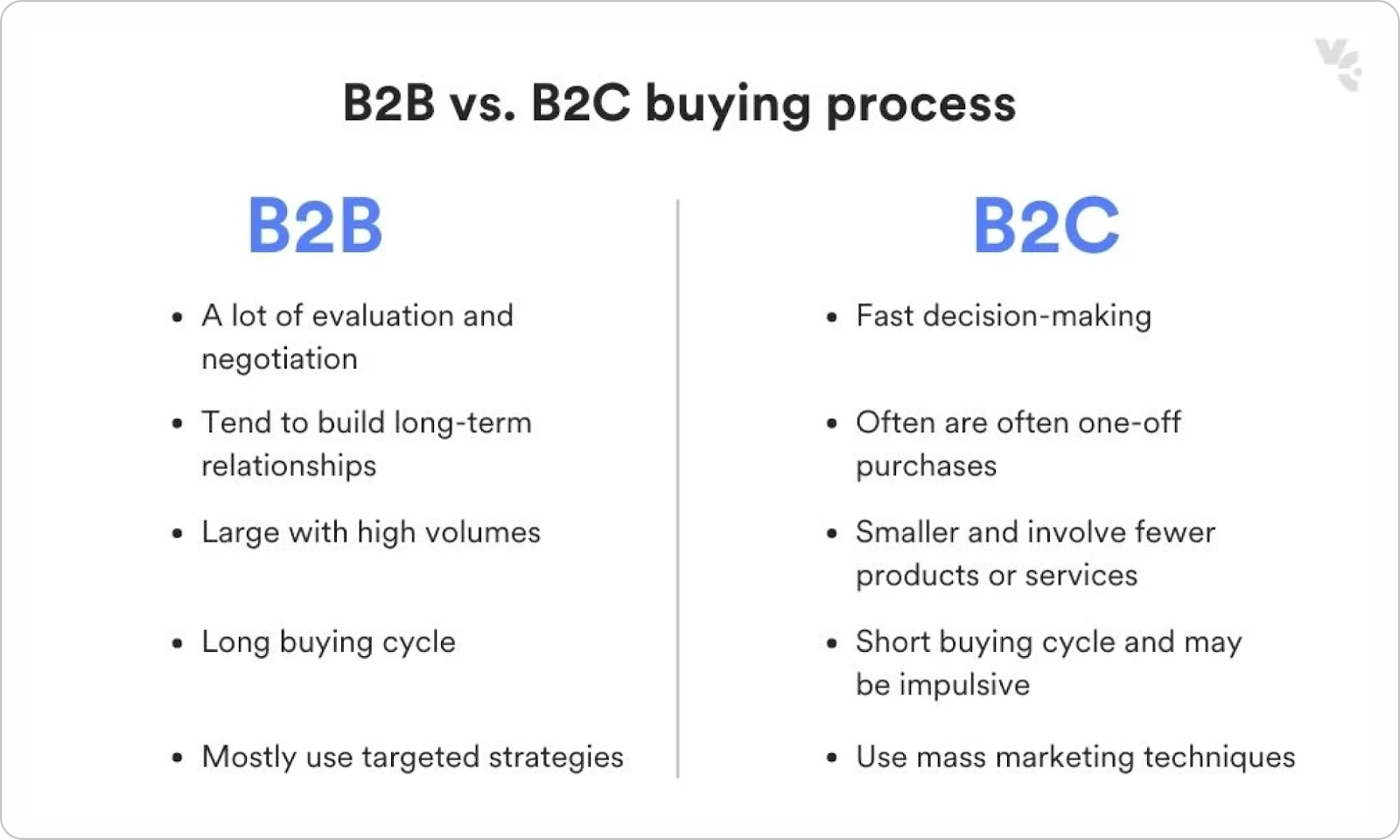
The B2B vs B2C buying process couldn't be more different. Understanding these differences is critical because if you're selling B2B solutions with B2C tactics, you'll struggle to close deals.
Decision-Making Complexity
In B2C, one person decides. They see an ad, like the product, and buy it. The B2B vs B2C buying process diverges immediately here because B2B involves multiple stakeholders with competing priorities.
You're navigating buying committees, internal politics, and consensus-building across departments. A single "no" from the technical buyer can kill a deal even if everyone else loves your solution.
Time to Purchase
B2C purchases happen fast. Someone buys shoes online in five minutes. The B2B vs B2C buying process shows a massive difference in timeline. B2B deals take weeks, months, or even a year depending on deal size.
There are budget cycles, approval processes, implementation planning, and vendor evaluations that stretch out timelines. This isn't inefficiency. It's the reality of how businesses make purchasing decisions.
Emotional vs Rational Drivers
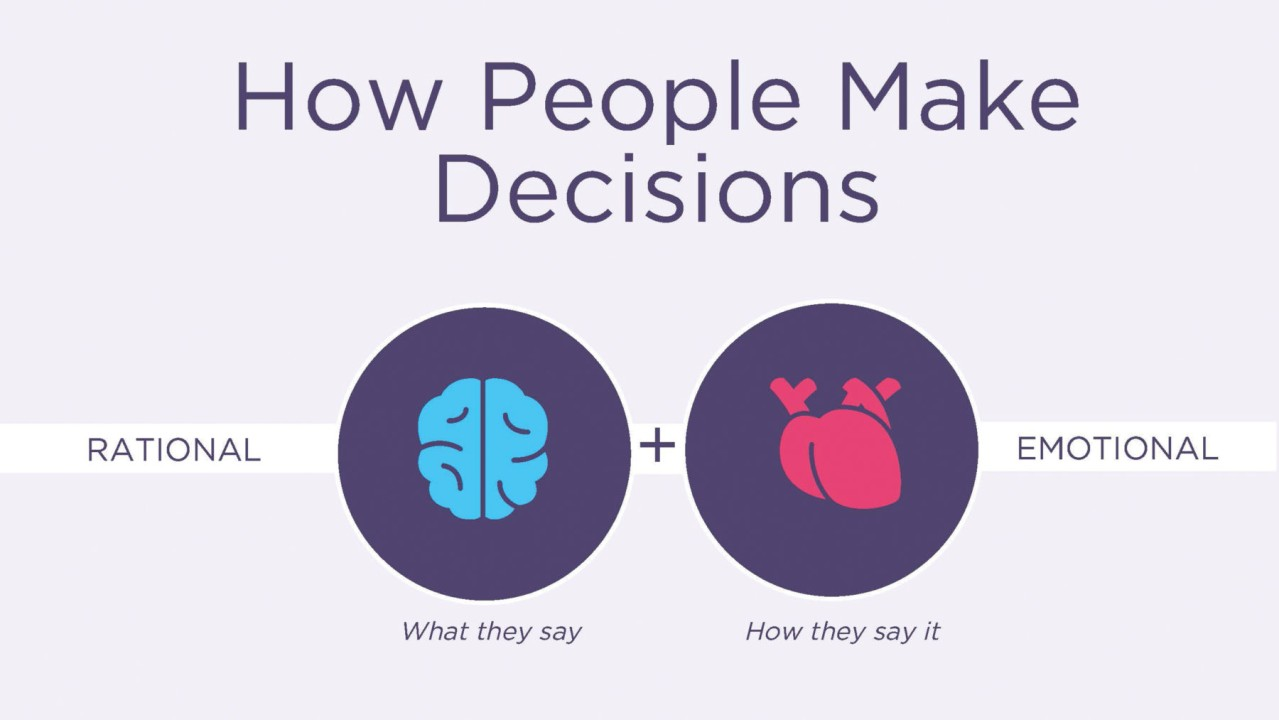
B2C buyers make emotional decisions and justify them rationally later. They want that new phone because it looks cool, then convince themselves they need the better camera.
The B2B vs B2C buying process flips this dynamic. B2B buyers lead with rational evaluation: ROI calculations, risk assessments, feature comparisons, and reference checks. Emotion plays a role, but it's secondary to proving business value.
The Role of Trust, Proof, and Consensus
In B2C, trust comes from reviews and brand recognition. You check Amazon ratings and buy. But in the B2B vs B2C buying process, trust requires significantly more proof:
- Case studies showing results with similar companies
- References from customers in their industry
- Demos proving the solution actually works
- Security certifications and compliance documentation
- Proof that implementation won't disrupt operations
B2C buyers trust their own judgment. B2B buyers need consensus. Your champion has to convince their entire team that you're the right choice.
They need ammunition: data, testimonials, competitive comparisons, and ROI projections to build that internal case.
Why This Matters for Your Sales Strategy
When we help clients with LinkedIn outreach and cold email campaigns, the ones who understand the B2B vs B2C buying process get better results.
They don't push for quick closes. They build relationships across buying committees. They provide proof points at every stage. They recognize that B2B sales is about facilitating complex decisions, not convincing individual buyers.
If you're treating B2B sales like B2C transactions, you're working against how buyers actually make decisions. The companies closing more deals are the ones who align their approach with the reality of the B2B vs B2C buying process.
Explore Further: Sales Enablement Strategy to Close More Deals
Aligning Your Sales Process With the B2B Buying Process
Most sales teams are stuck in a disconnect. They've built rigid processes focused on their internal milestones instead of where buyers actually are in their decision journey.
Aligning sales process with B2B buying process isn't optional anymore. It's the difference between becoming a trusted partner and getting filtered straight to spam.

Why Most Sales Processes Are Misaligned
Traditional sales processes look like this: cold outreach, discovery call, demo, proposal, negotiation, close. Rinse and repeat. The problem? Buyers don't care about your pipeline stages.
When aligning sales process with B2B buying process, most teams fail because they're optimizing for their own workflow instead of buyer behavior.
They push demos when buyers are still in problem recognition. They send generic proposals when buyers need specific proof points for their technical team. They rush closings when buyers are still building internal consensus.
We've booked over 53,000 appointments for clients, and the pattern is clear: deals move faster when sales reps meet buyers where they are instead of forcing them through predetermined steps.
Mapping Sales Actions to Buyer Intent
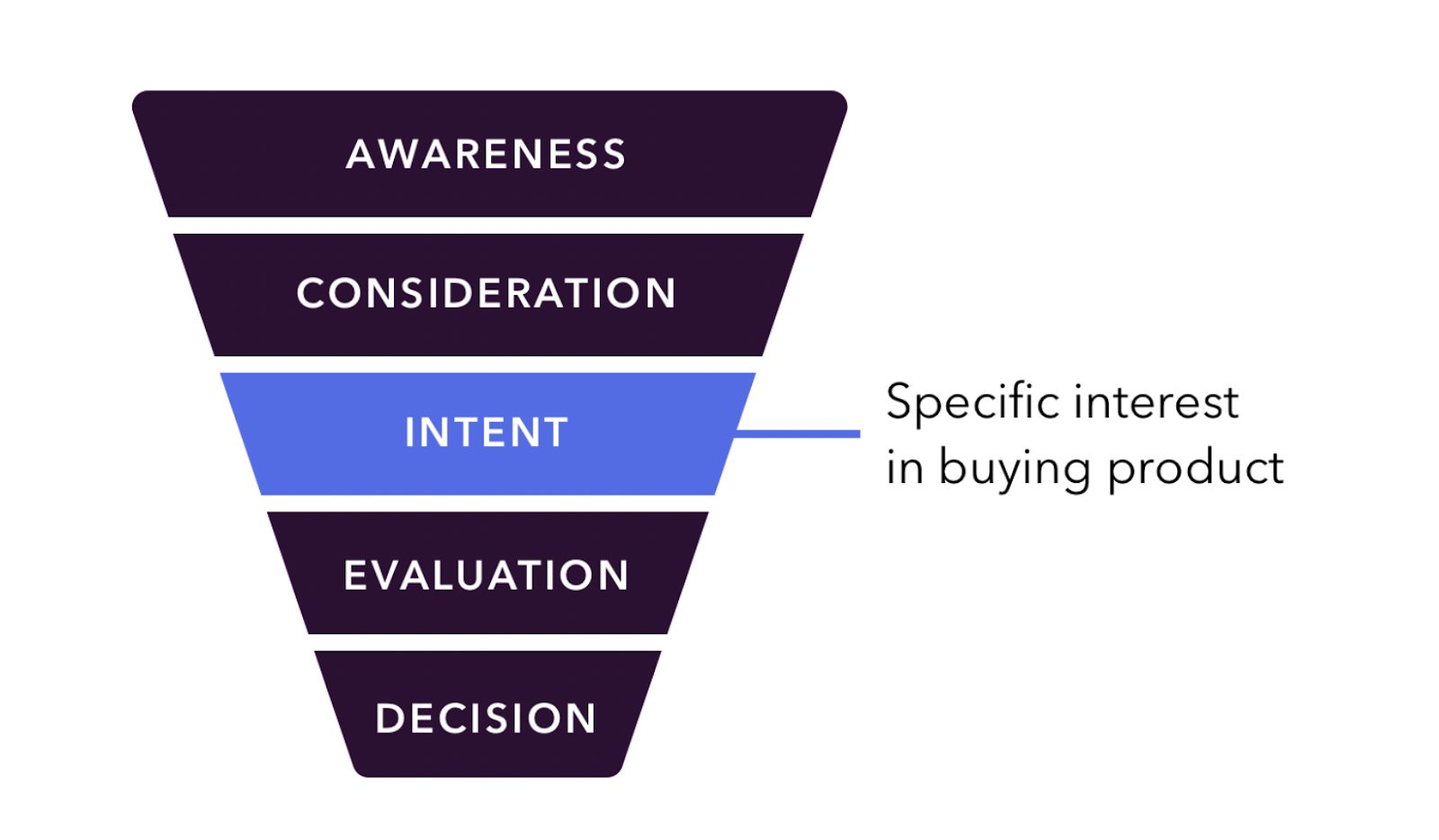
Aligning sales process with B2B buying process means matching your actions to their stage:
- Problem Recognition Stage – Your buyers are identifying pain points. Your sales action: educate them on the cost of inaction and help them quantify the problem. Share relevant case studies and industry benchmarks.
- Solution Research Stage – They're exploring options and building a shortlist. Your sales action: position your differentiation clearly and provide educational content that addresses their specific use case.
- Vendor Evaluation Stage – They're comparing you against competitors. Your sales action: facilitate multi-threaded conversations with stakeholders, provide detailed proof points, and address objections proactively.
- Internal Alignment Stage – Your champion is selling internally. Your sales action: arm them with ROI calculators, one-pagers for executives, and answers to technical questions they'll face.
- Final Decision Stage – Legal and procurement are involved. Your sales action: streamline contract negotiations and remove friction from the buying process.
Adjusting Outreach, Messaging, and Timing
Aligning sales process with B2B buying process requires different messaging at different stages. A cold email hitting someone in problem recognition should look nothing like outreach to someone actively evaluating vendors.
Early stage messaging focuses on problems and insights. Late stage messaging focuses on differentiation and proof.
When we run LinkedIn and cold email campaigns for clients, we segment by buyer intent signals. Someone engaging with educational content gets different follow-up than someone requesting pricing.
Timing matters too. Pushing for a demo when buyers aren't ready creates resistance. Waiting too long when they're in active evaluation loses deals to faster competitors.
Aligning sales process with B2B buying process means reading buyer signals and adjusting your pace accordingly.
Check This: Best Time to Send Cold Emails (Backed by Data & Research)
Helping Buyers Buy Instead of Pushing Them
Your job isn't to sell, it is to help buyers make confident decisions. When you focus on aligning sales process with B2B buying process, you become a facilitator instead of a pusher.
This means:
- Answering questions your champion will face from their CFO.
- Providing competitive intel so they can defend their choice.
- Creating internal business cases that address each stakeholder's concerns.
- Being transparent about implementation timelines and potential challenges.
- Following up based on their timeline, not your quota deadline.
We've helped generate $312 million in pipeline revenue by focusing on this approach. The clients who close the most deals aren't the ones with the slickest pitches.
They're the ones who've mastered aligning sales process with B2B buying process by making it easier for buyers to navigate their internal decision journey.
When your sales process mirrors how buyers actually buy, everything gets easier. Deals move faster. Close rates improve. Buyers trust you more. That's the power of true alignment.
How the B2B Buying Process Impacts Lead Generation
Understanding buying stages completely changes how you approach lead generation. A B2B lead generation agency that ignores where buyers are in their journey will flood your pipeline with unqualified contacts who ghost after the first call.
Why Early-Stage Buyers Shouldn't Be Pitched
When buyers are in problem recognition, they're not ready for demos or pricing conversations. Pitching too early kills deals before they start. Early-stage buyers need education and insights, not sales pressure.
Push a demo when they're still researching, and they'll disappear. This is where most B2B lead generation agency efforts fail—they optimize for volume over timing.
Matching Lead Generation Channels to Buying Stages
Different channels reach buyers at different stages:
- LinkedIn outreach works well for early-stage education and relationship building. Buyers actively research solutions on LinkedIn, making it ideal for starting conversations before they're ready to buy.
- Cold email reaches decision-makers across all stages but requires messaging tailored to intent. Generic pitches get deleted. Personalized outreach addressing specific pain points gets responses.
- Cold calling excels at mid-to-late stage engagement when buyers are actively evaluating vendors. A well-trained SDR can qualify intent fast and book meetings with stakeholders actually ready to talk.
At Cleverly, we've generated over $312 million in pipeline revenue by matching channel strategy to buying stage.
Compare: LinkedIn vs Cold Email vs Cold Calling: Which Channel Works Best?
The Role of Education, Trust, and Follow-Up
A smart B2B lead generation agency builds trust before asking for meetings. Share case studies, industry insights, and relevant content that helps buyers make better decisions. Then follow up consistently without being pushy.
Most agencies give up after two touchpoints. We've seen deals close after the eighth or tenth follow-up because that's when the buyer finally entered active evaluation.
Timing matters more than persistence.
Why Lead Quality Beats Lead Volume
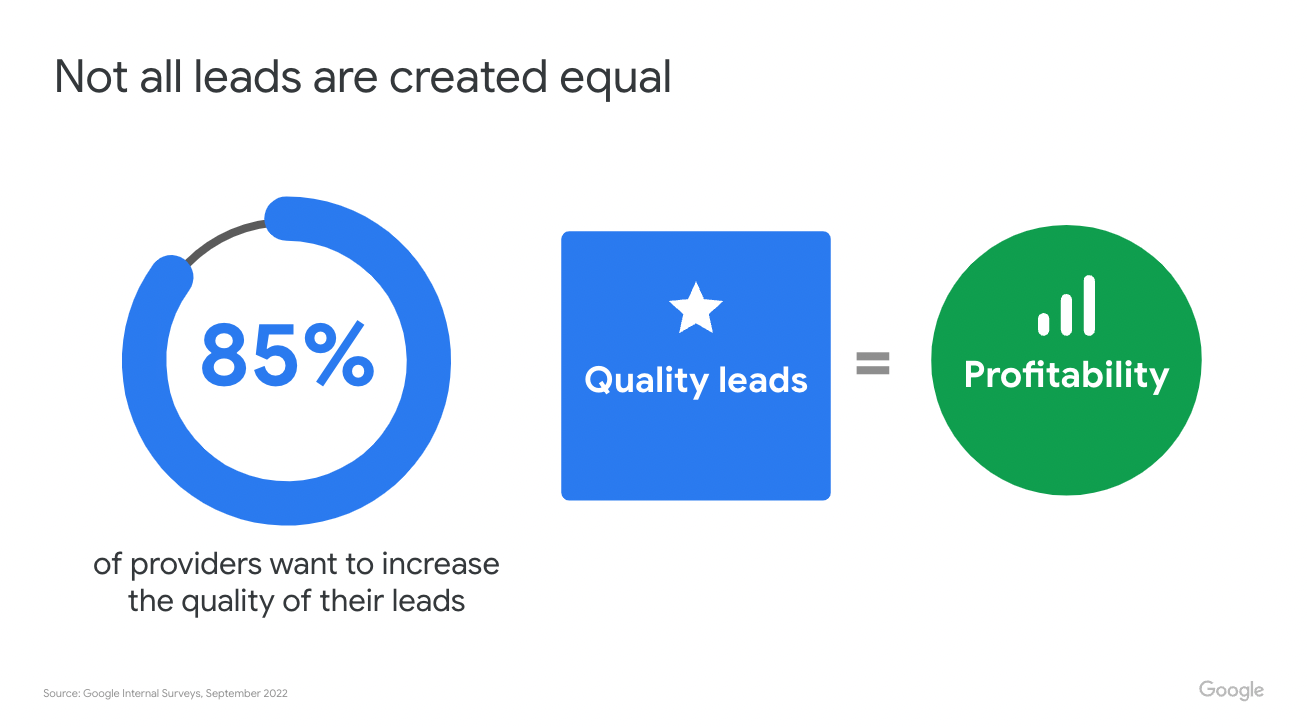
You don't need 500 leads. You need 50 qualified ones. A B2B lead generation agency focused on quality vets leads based on intent, budget, authority, and timeline. We only charge clients for meeting-ready leads on our cold email campaigns because unqualified volume wastes everyone's time.
When lead generation aligns with actual buying behavior, your sales team spends time talking to buyers who are ready to move forward, not educating people who clicked a form by accident.
Learn How To: Measure Sales Success - Metrics That Actually Matter
How Cleverly Helps Teams Engage Buyers at the Right Stage
Most B2B lead generation agency partners flood your calendar with tire-kickers. We do the opposite.
At Cleverly, we've cracked the code on reaching buyers when they're actually ready to talk. Our approach matches outreach strategy to buying stage, so you're not wasting time on cold leads who aren't even close to a decision.
- LinkedIn Outreach (Starting at $397/mo) – We build early-stage relationships and nurture prospects through education before they hit active evaluation. Perfect for filling top-of-funnel with buyers who'll convert in 3-6 months.
- Cold Email Lead Gen (Pay Only for Meeting-Ready Leads) – You're not paying for clicks or opens. You pay when we deliver qualified leads ready to take a meeting. No fluff, no vanity metrics.
- Cold Calling ($5M System, 10-30 Qualified Appointments Monthly, Guaranteed) – We place trained, no-accent appointment setters who engage mid-to-late stage buyers actively comparing solutions. Call scripts, data, power dialers, and guaranteed results included.

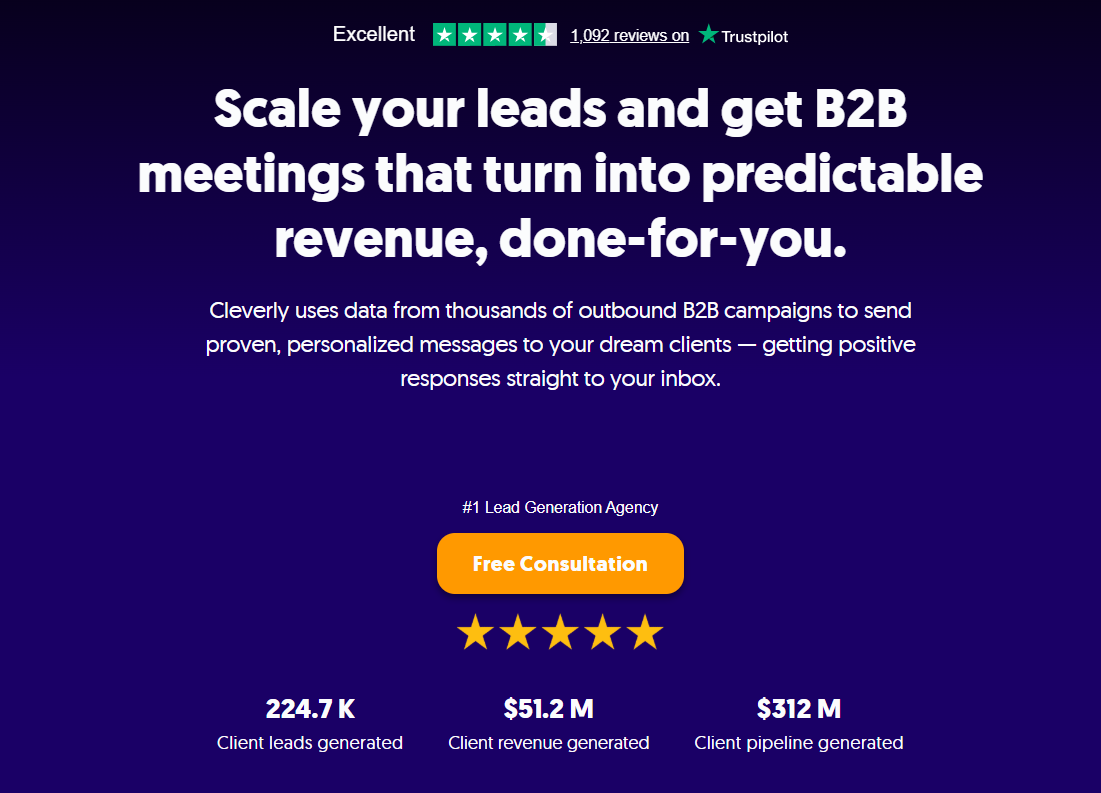
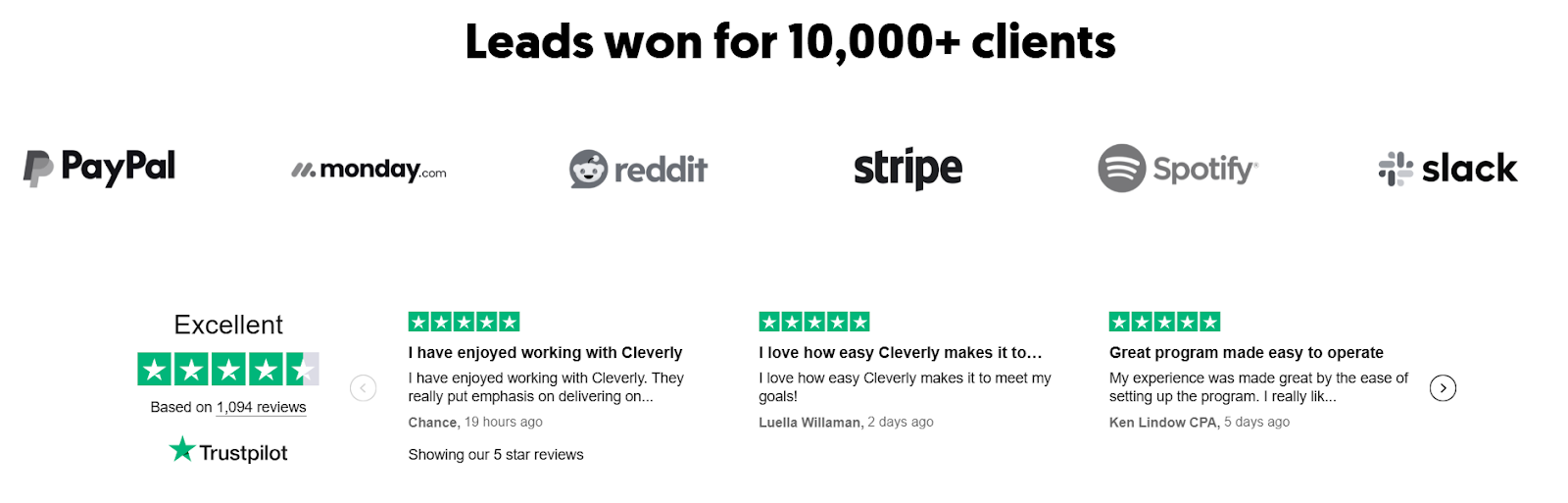
We've worked with over 10,000 clients including Amazon, Google, Uber, PayPal, and Spotify. That resulted in $312 million in pipeline revenue and $51.2 million in closed deals.
We don't just generate leads. We understand where buyers are in their journey and engage them accordingly. When you align outreach with actual buying behavior, everything changes.
Ready to fill your pipeline with buyers who actually want to talk? Let's make it happen!
Conclusion
The B2B buying process isn't broken. It's just complex. Multiple stakeholders, non-linear stages, and consensus-driven decisions are the reality of how businesses buy today.
Sales teams that win aren't the ones pushing hardest for quick closes. They're the ones who understand buyer behavior and align their approach accordingly. When you meet buyers where they are instead of forcing them through your pipeline stages, deals move faster and close rates improve.
Here's the competitive advantage: most of your competitors are still treating B2B sales like B2C transactions. They're pitching too early, ignoring buying committees, and wondering why deals stall. You don't have to make those mistakes.
Understand the B2B buying process, map your sales actions to buyer intent, and become the partner who makes purchasing decisions easier. That's how you win in today's B2B landscape.
Frequently Asked Questions
Free Resource
How to Scale a Profitable Cold Call System
Get the complete guide — download it instantly now.
Free Ebook
Download the Free Guide
Enter your details to get instant access.
You're all set! 🎉
Your ebook is downloading now.
Click below if the download didn't start automatically.