

Table of Contents
What Are Lead Scoring Tools?
Types of Lead Scoring Models You Should Know
When Should You Use Lead Scoring Tools?
10 Best Lead Scoring Tools for B2B Teams
Lead Scoring Tools vs Manual Lead Qualification
How Cleverly Uses Lead Scoring to Deliver Sales-Ready Leads
Conclusion
Frequently Asked Questions
Modified On :
February 13, 2026
Key Takeaways
- Lead scoring tools rank prospects by conversion likelihood, helping you focus on high-intent leads instead of wasting time on bad fits.
- Rule-based scoring is simple and manual; predictive models use past data; AI-powered lead scoring tools adapt and improve automatically over time.
- Use scoring when you're handling high inbound volumes, running outbound campaigns, managing large SDR lists, or executing account-based strategies.
- The best lead scoring tools integrate directly with your CRM and sales stack to automate prioritization without extra manual work.
- Free options exist for early-stage teams, but paid AI lead scoring tools deliver better accuracy and scale as your pipeline grows.
- Scoring only works when paired with strong outreach—you still need the right messaging, targeting, and follow-up to close deals.
If your sales team is chasing every lead that comes through the door, you're burning time and money on conversations that were never going to close.
That's where lead scoring tools come in.
Lead scoring tools help you separate the tire-kickers from the buyers by ranking prospects based on fit, behavior, and buying intent. Instead of treating every lead the same, you focus your energy on the ones most likely to convert—and ignore the rest.
The problem?
There are hundreds of lead scoring tools out there, each claiming to be the best. Some use basic point systems. Others leverage AI to predict which leads will actually close. And a few are completely free (with trade-offs, of course).
We've tested dozens of them. In this guide, we're breaking down the best lead scoring tools for B2B sales teams in 2026: what they do, who they're for, and how to pick the right one for your team.
What Are Lead Scoring Tools?
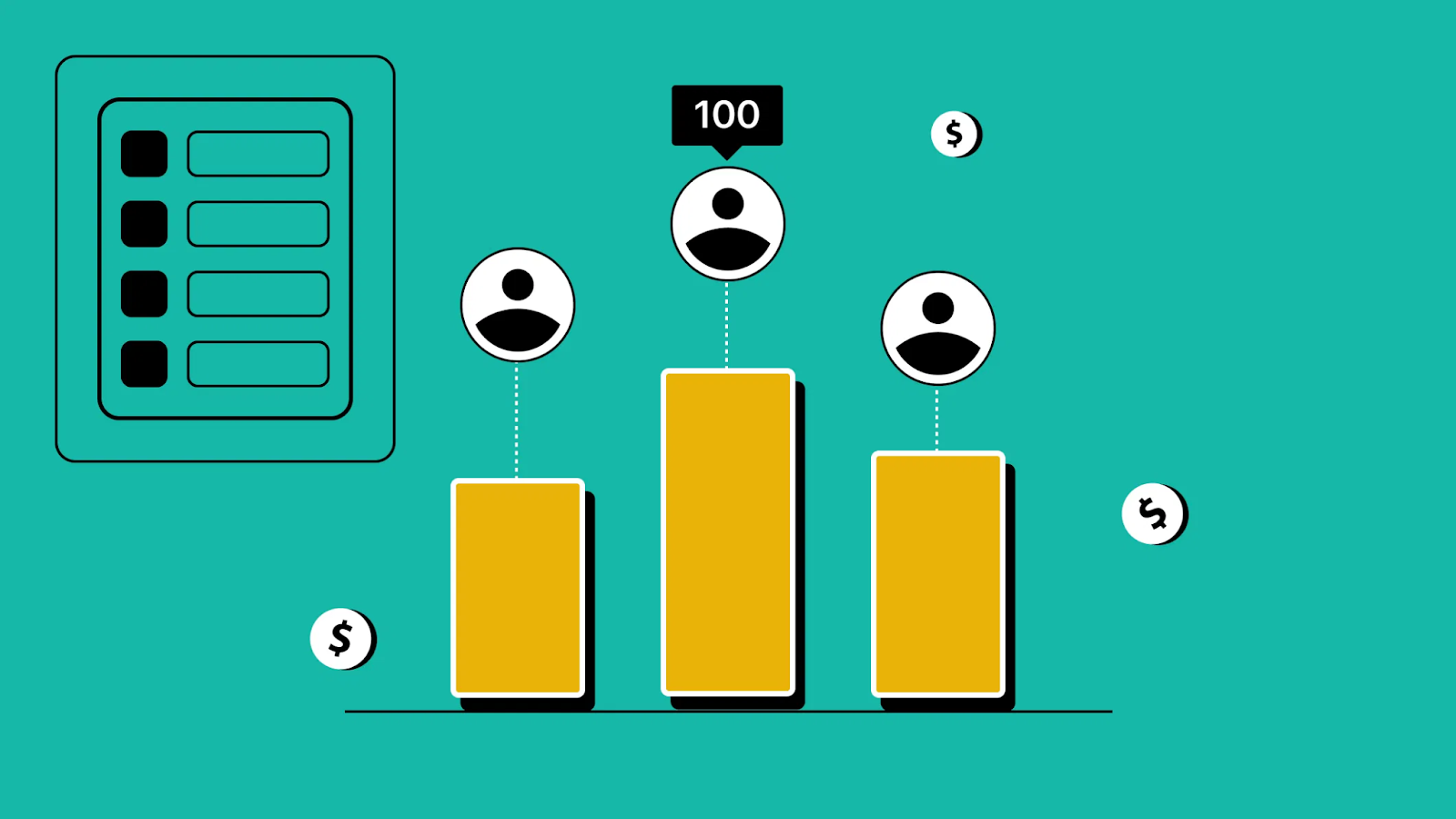
A lead scoring tool is software that ranks your leads based on how likely they are to buy. It assigns points or grades to prospects using data like job title, company size, website activity, email engagement, and more.
The key difference is - lead qualification is a yes/no decision (does this lead meet our basic criteria?). Lead scoring goes deeper. It tells you which qualified leads deserve attention first.
Most lead scoring tools plug directly into your CRM or marketing automation platform. They sit in your sales funnel and automatically score leads as they come in, so your reps always know who to call next.
Why it matters for B2B teams:
- Outbound: You're working lists of hundreds or thousands of prospects. Scoring helps you prioritize who to reach out to first based on fit and intent signals.
- Inbound: Not every demo request or content download is equal. Scoring separates hot leads from cold ones so you don't waste time on low-intent inquiries.
Basically, a lead scoring tool turns messy lead data into a clear action plan for your sales team.
Learn in Detail: B2B Lead Scoring Explained: Models, Examples, and Automation
🚀 Meetings Beat Scores
We don’t send “high-score” leads—we send meeting-ready conversations. Pay per qualified meeting or get 10–30 guaranteed calls/month with our $5M calling system.
Types of Lead Scoring Models You Should Know
Not all lead scoring tools work the same way. Here's how the most common b2b lead scoring models stack up.
Rule-Based Lead Scoring
This is the manual approach. You set the rules—like "+10 points for director-level title" or "+5 points for opening an email"—and the system follows them.
- Best for: Early-stage teams who are still figuring out what makes a good lead. It's simple, transparent, and easy to adjust as you learn.
- The catch: You're guessing. If your rules are wrong, your scores will be too.
Predictive Lead Scoring
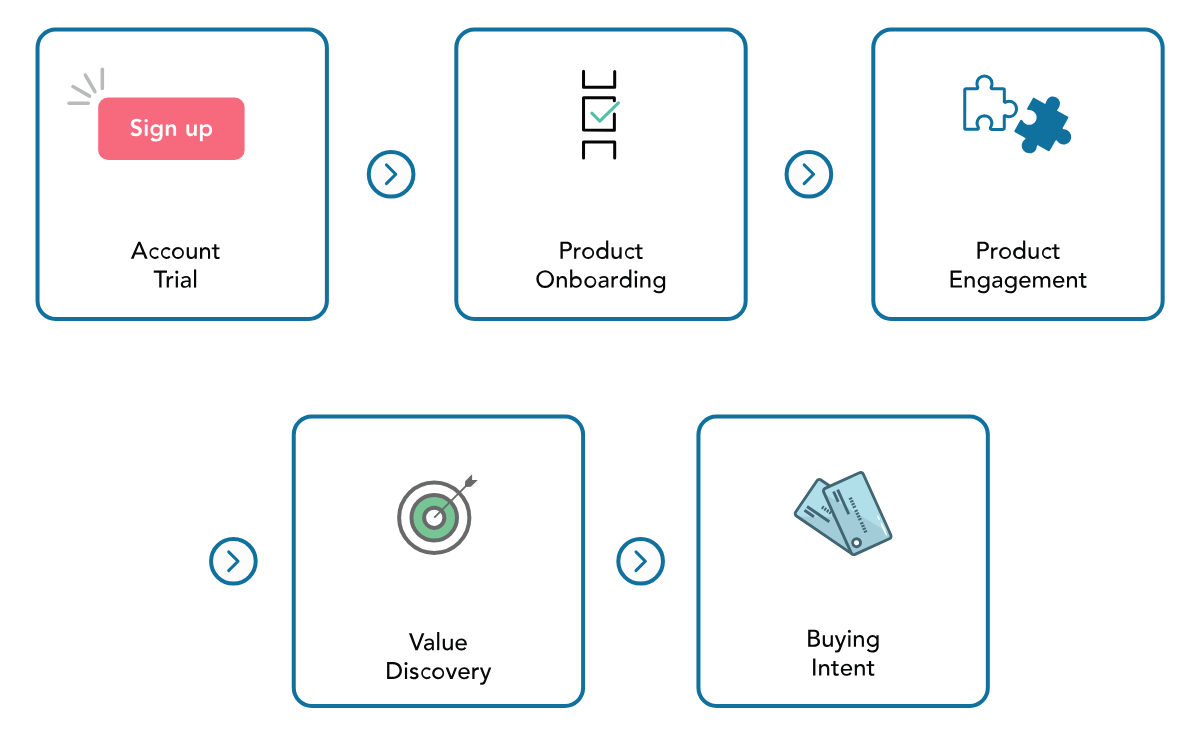
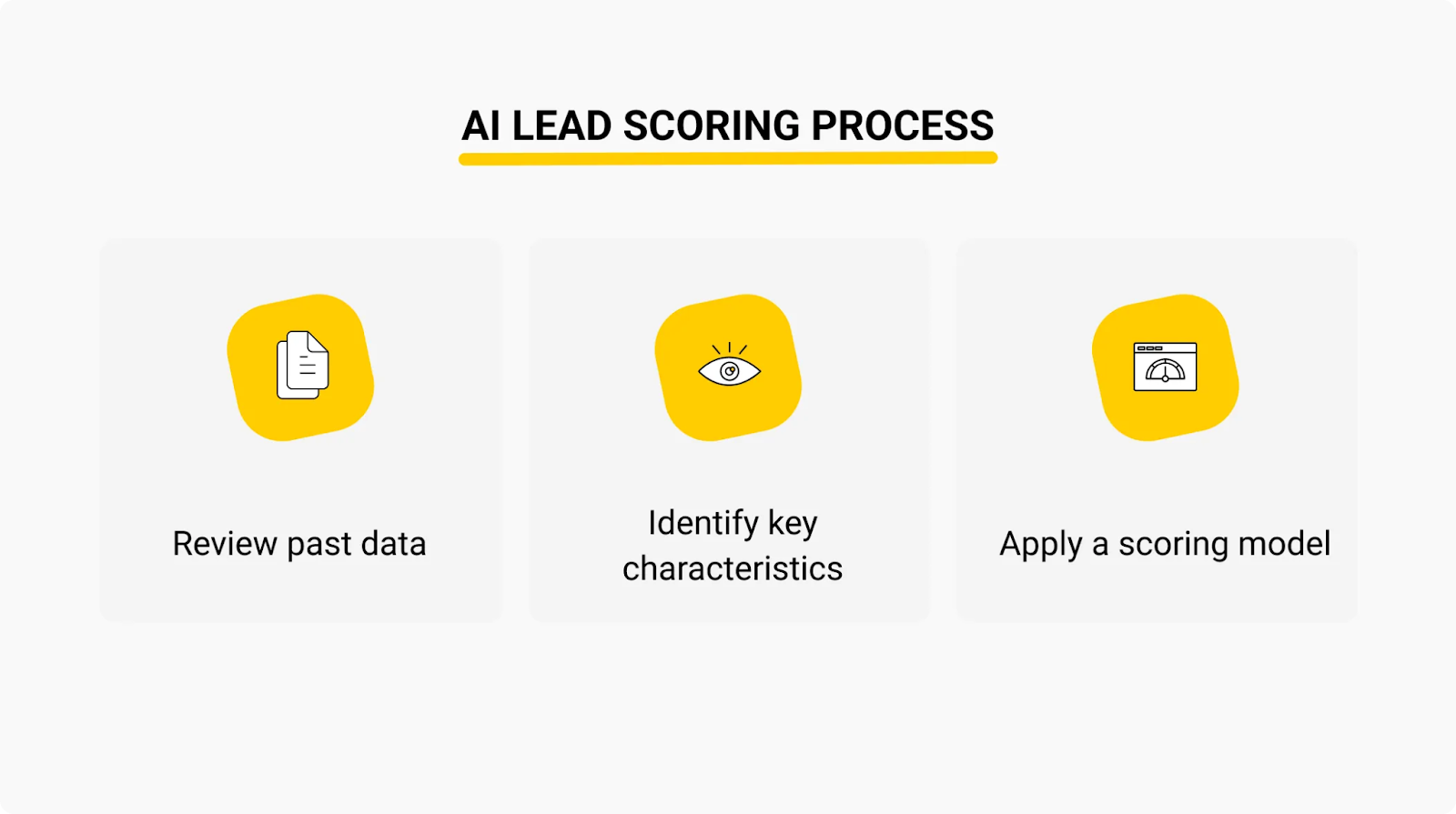
Predictive lead scoring analyzes your past deals—who converted, who didn't—and builds a B2B lead scoring model based on actual outcomes, not hunches.
It looks at patterns across hundreds of data points (firmographics, engagement, timing) and scores new leads based on how similar they are to your best customers.
- Best for: Teams with enough historical data (usually 100+ closed deals) to train the model.
- Why it works: It's more accurate than manual scoring because it's based on what actually happened, not what you think will happen.
AI-Powered Lead Scoring
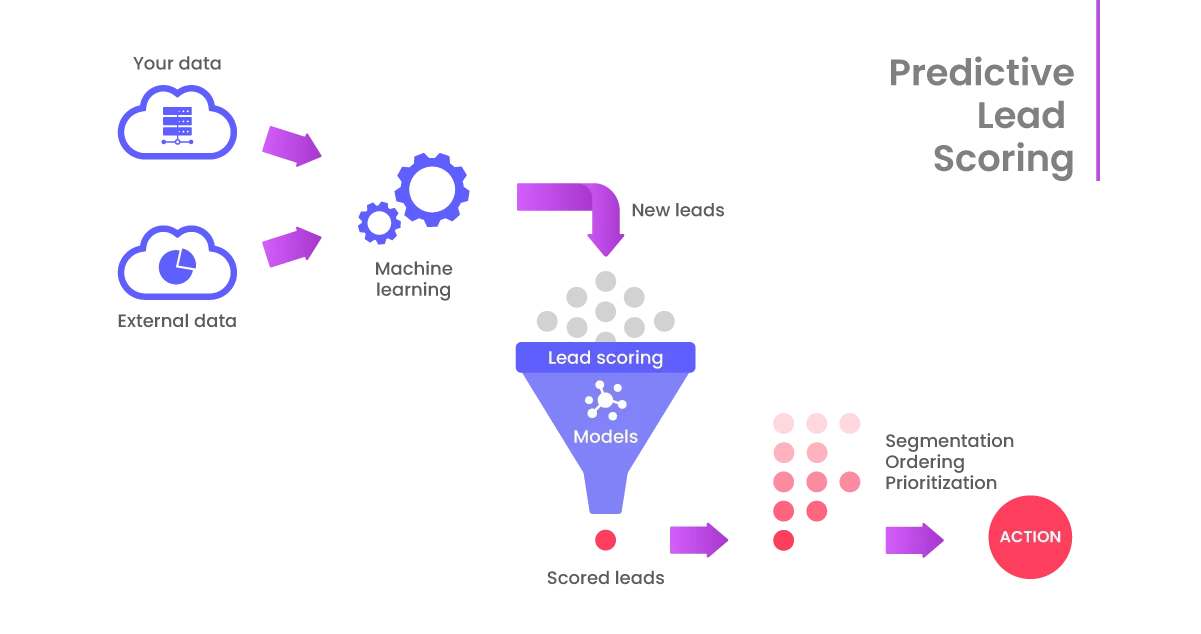
AI-powered lead scoring tools take predictive scoring to the next level. Instead of static models, they use machine learning to detect hidden buying patterns and adjust scores in real time.
The more data they process, the smarter they get.
- Best for: Teams with complex sales cycles, multiple buyer personas, or high lead volumes where manual scoring breaks down.
- The upside: It adapts automatically. If buyer behavior shifts, the B2B lead scoring model evolves with it.
Learn More: How to Master Lead Enrichment for Smarter B2B Sales
When Should You Use Lead Scoring Tools?
Lead scoring tools aren't necessary for every team. But if you're in one of these situations, they'll save you serious time and improve close rates.
Inbound-Heavy Pipelines with High Lead Volume

If you're getting hundreds of inbound leads per month - from ads, content, webinars, demos - you can't manually vet every single one.
Automate lead scoring B2B sales methods help you triage fast. Hot leads get routed to sales immediately. Cold ones go into nurture sequences. No bottlenecks, no guesswork.
Outbound Campaigns Needing Prioritization
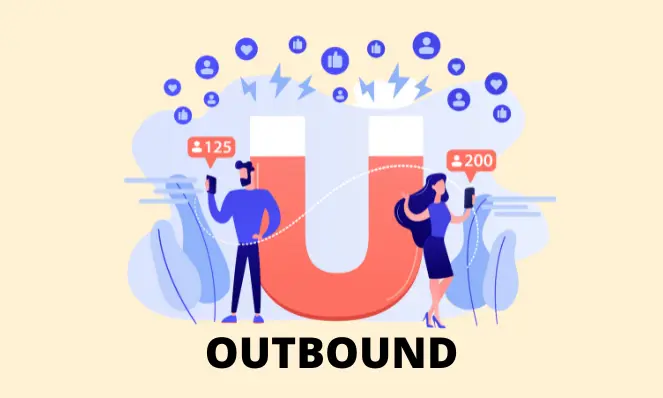
You're working a list of 5,000 prospects. Who do you call first?
A lead scoring tool ranks them based on fit (company size, industry, role) and intent signals (visited your pricing page, downloaded a case study). Your SDRs start with the highest-scoring names instead of working the list alphabetically.
SDR Teams Handling Large Prospect Lists

When your SDRs are juggling multiple campaigns across LinkedIn, email, and phone, automate lead scoring B2B sales methods keep them focused on the leads most likely to book.
Instead of chasing everyone equally, they double down on the prospects showing real buying signals.
Account-Based Sales Motions
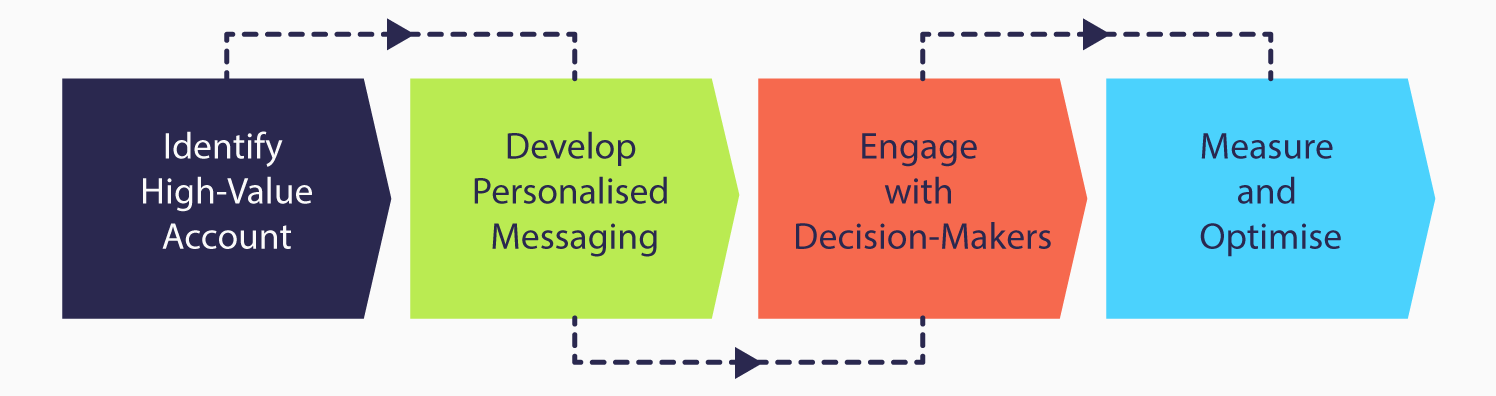
In ABM, not every contact at a target account matters equally. Lead scoring tools help you identify the key decision-makers and engaged stakeholders within each account.
You stop spreading your outreach thin and start focusing on the people who actually influence the deal.
If you're drowning in leads or struggling to prioritize who to contact next, it's time to automate lead scoring B2B sales methods.
Explore Further: How to Build a High-Converting Lead Generation Funnel
🔥 Stop Scoring. Start Selling.
Cleverly delivers sales-ready leads via LinkedIn, cold email, and cold calling—so reps talk to buyers, not spreadsheets.
10 Best Lead Scoring Tools for B2B Teams
Looking to identify your hottest leads without wasting time on tire-kickers? The right lead scoring tool automatically ranks prospects based on their fit and engagement, so your sales team knows exactly who to call first.
1. HubSpot Lead Scoring
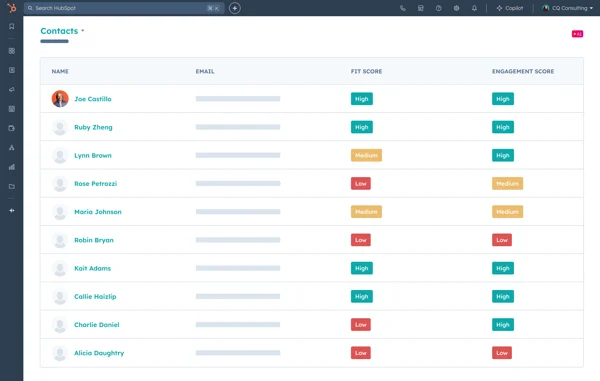
HubSpot's lead scoring system helps B2B teams separate high-intent prospects from window shoppers using both rule-based and AI-powered scoring methods.
The platform lets you assign points based on demographics, behaviors, and engagement patterns—then automatically routes qualified leads to your sales team.
With HubSpot, you're not just scoring leads; you're building an intelligent qualification system that learns from your actual closed deals and gets smarter over time.
Key Features:
- Custom scoring rules based on job title, company size, website activity, email engagement, and form submissions.
- Separate "Fit" and "Engagement" scores to evaluate demographics and behavioral signals independently.
- Automatic score decay that reduces points for inactive leads over time.
- Point caps to prevent single actions from artificially inflating scores.
- AI-powered predictive scoring that forecasts close probability within 90 days (Enterprise only).
- Workflow automation triggered by score thresholds for instant sales notifications.
- Built-in segmentation and reporting to analyze lead quality trends.
Best For: Mid-market and enterprise B2B companies managing high lead volumes who need tight sales and marketing alignment.
Pricing: Manual lead scoring starts at the Professional tier ($800+/month for Marketing Hub or Sales Hub). AI-powered predictive scoring requires Enterprise plans ($3,600+/month).
2. Salesforce Einstein Lead Scoring
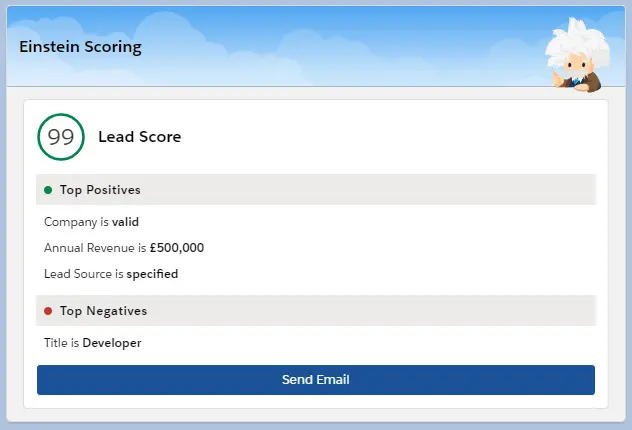
Salesforce Einstein Lead Scoring uses AI to automatically rank your leads from 0-100 based on actual conversion data—no manual rule-building required. The system analyzes your historical won/lost deals to identify patterns, then applies those insights to score every new lead in your pipeline.
Unlike basic point systems, Einstein shows you exactly which factors (job title, lead source, engagement level) are pushing scores up or down, so you understand the "why" behind each ranking.
Key Features:
- AI-generated scores from 0-100 predicting each lead's likelihood to convert into an opportunity.
- Conversion factor breakdown showing which specific fields influence scores positively or negatively.
- Customizable scoring models that let you choose which lead segments and fields to include.
- Global scoring model using anonymized Salesforce data for teams without enough conversion history.
- Native integration with Salesforce lead records, list views, and reports for seamless workflows.
- Automatic model updates every 10 days to adapt to changing sales patterns.
Best For: Sales teams already using Salesforce who want AI-driven prioritization without manual scoring rule maintenance.
Pricing: Included with Sales Cloud Unlimited ($330+/user/month) and Performance editions. Available as a $50/user/month add-on for Enterprise edition ($165/user/month base).
3. MadKudu
MadKudu takes lead scoring beyond basic point systems by combining fit data (company demographics, tech stack) with behavioral signals (product usage, intent) to identify which leads are actually ready to buy.
Built specifically for modern SaaS buying journeys, it helps teams distinguish between tire-kickers and product-qualified leads who've already experienced your value.
The platform gives marketing ops teams full control to build and customize scoring models without waiting on engineering—while providing sales reps with clear explanations for why each lead scored high or low.
Key Features:
- Predictive scoring that blends firmographic fit with product engagement and intent signals.
- Transparent scoring explanations that build sales and marketing trust in the model.
- Multi-motion support for inbound, PLG, ABM, and outbound lead flows in one system.
- Automated data enrichment leveraging your existing tech stack and third-party sources.
- Marketing ops ownership with no-code model customization and testing.
- Time-based score decay that deprioritizes inactive leads automatically.
Best For: SaaS and product-led growth companies that need to identify product-qualified leads (PQLs) based on actual usage behavior, not just demographics.
Pricing: Premium pricing starts around $1,000-$2,000+/month for Growth and Pro tiers. Custom enterprise pricing available; contact for specific quotes.
4. Freshsales Lead Scoring
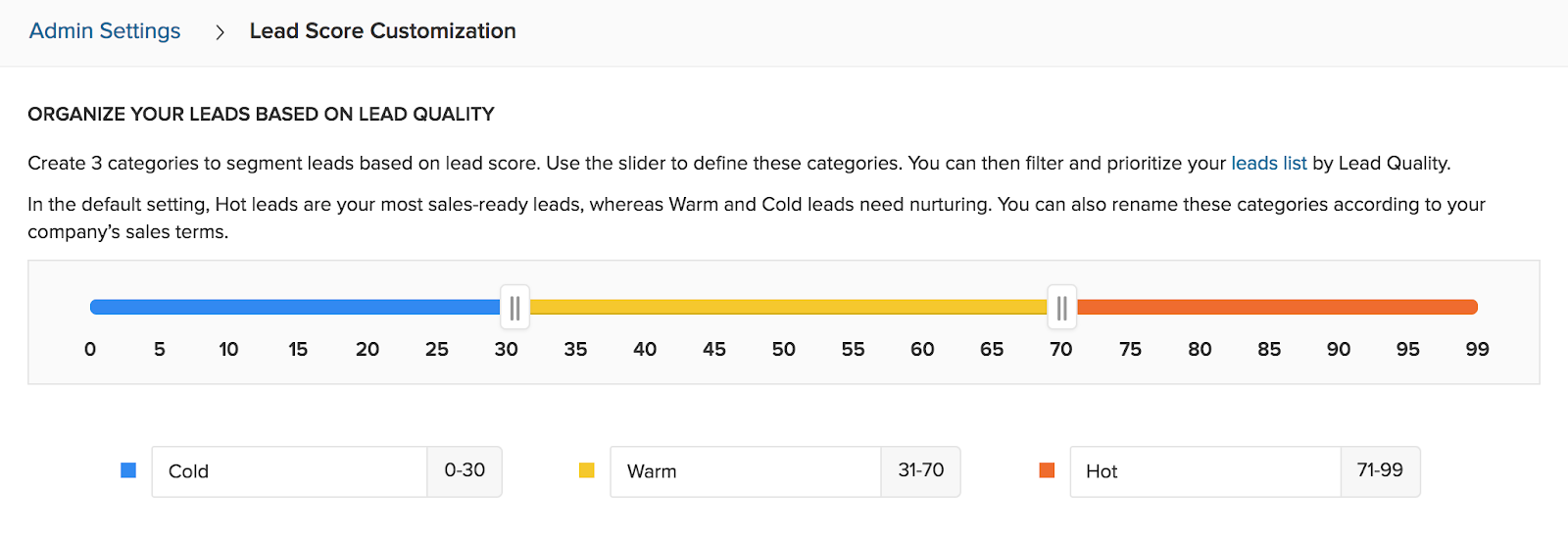
Freshsales uses Freddy AI to automatically score and rank your leads based on both fit criteria and engagement behavior.
The system learns from your conversion history to predict which prospects are most likely to close, then sorts them into hot, warm, and cold categories for quick prioritization.
Beyond just scores, Freshsales provides "Next Best Action" recommendations—telling your reps exactly how to engage each lead based on their behavior patterns and stage in the buying journey.
Key Features:
- Freddy AI automatically scores leads using your historical conversion data.
- Customizable scoring rules based on lead properties, demographics, and firmographics.
- Behavioral tracking across website visits, email engagement, and product interactions.
- Automatic lead categorization into hot, warm, and cold segments.
- Real-time score updates as new engagement signals come in.
- AI-driven next best action suggestions for optimal follow-up timing and messaging.
- Unified scoring framework that aligns sales and marketing on lead quality definitions.
Best For: SMBs and high-velocity sales teams that need AI-powered prioritization without enterprise-level complexity or cost.
Pricing: Free plan available for up to 3 users. Paid plans start at $15/user/month (Growth), $39/user/month (Pro), and $69/user/month (Enterprise), billed annually.
5. Zoho CRM Lead Scoring
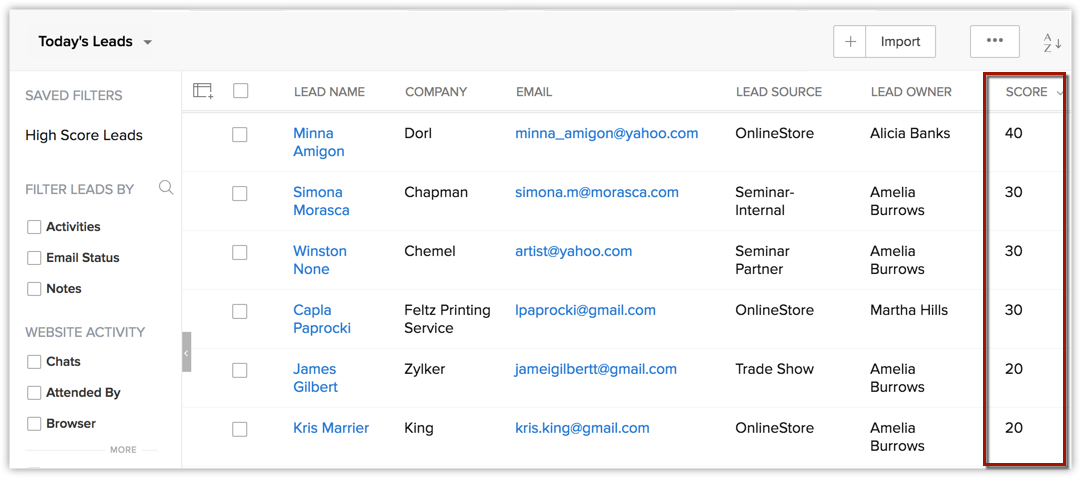
Zoho CRM's lead scoring system helps sales teams cut through the noise by ranking prospects based on demographic fit and behavioral engagement.
The platform assigns points for positive actions (email opens, demo requests, website visits) while automatically deducting points for red flags like inactivity or unsubscribes.
For teams on higher-tier plans, Zia—Zoho's AI assistant—adds predictive scoring that analyzes historical patterns to forecast deal closure likelihood and recommend next steps.
Key Features:
- Customizable scoring rules based on job title, company size, location, and other demographic factors.
- Behavioral tracking across website visits, email engagement, content downloads, and event attendance.
- Negative scoring that automatically reduces points for inactivity or disengagement signals.
- Workflow automation triggered by score thresholds for instant follow-up tasks and notifications.
- Zia AI assistant for predictive scoring and deal closure probability (Enterprise tier).
- Real-time score updates as new interactions and data points flow in.
- Built-in reporting dashboards to analyze scoring model performance and lead source quality.
- Native integration with Zoho SalesIQ, Campaigns, and third-party platforms.
Best For: Small to mid-sized businesses looking for affordable, customizable lead scoring with optional AI capabilities as they scale.
Pricing: Lead scoring starts at the Standard plan ($14/user/month annually, $20 monthly). Professional is $23/user/month annually ($35 monthly). Enterprise with AI features is $40/user/month annually ($50 monthly). Free plan available for 3 users with limited functionality.
6. ActiveCampaign Lead Scoring
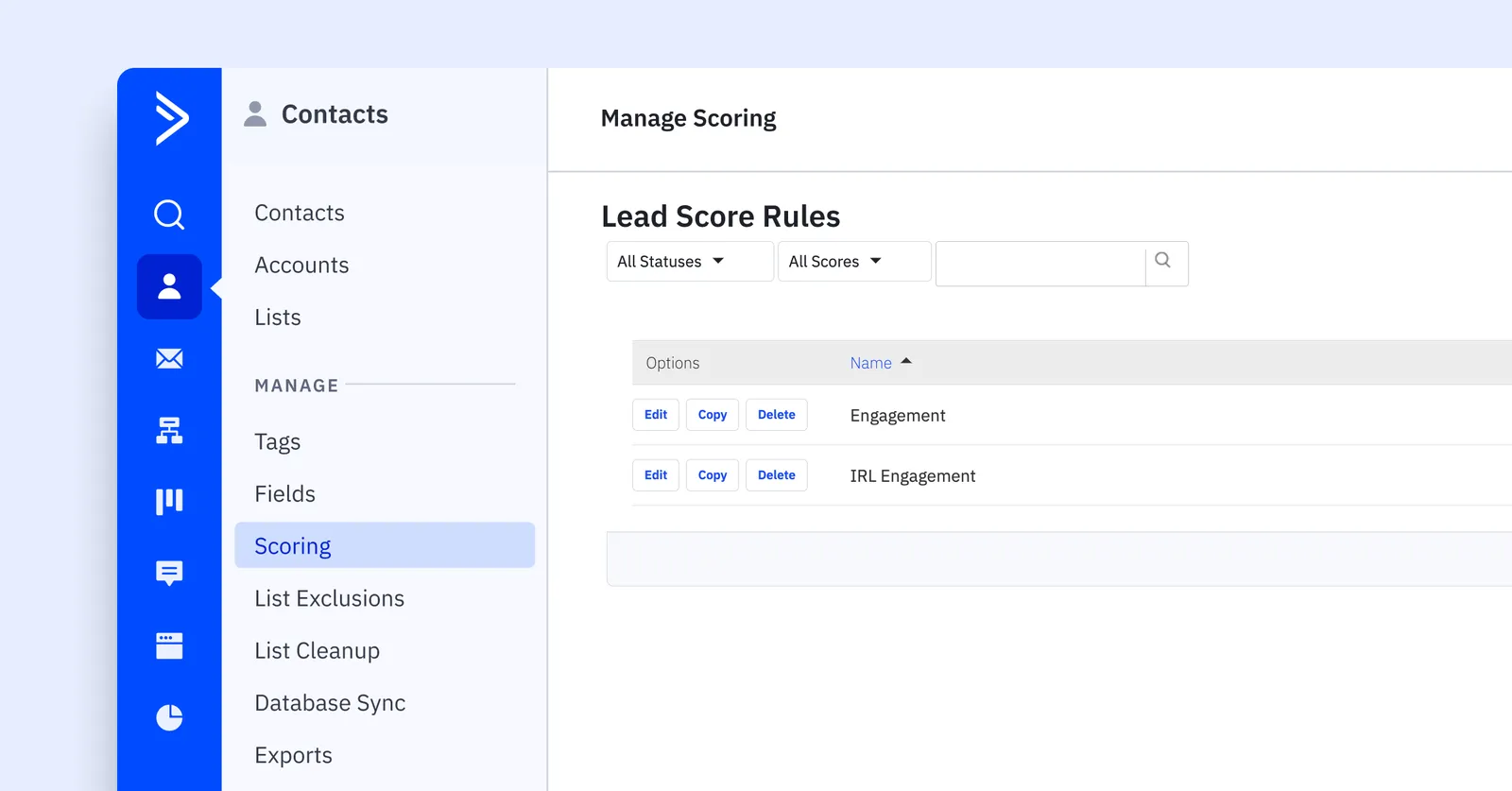
ActiveCampaign combines rule-based scoring with AI-powered predictions to help businesses identify their hottest prospects.
The platform tracks both explicit data (job title, company size) and implicit behaviors (email clicks, website visits, form submissions) to build a complete picture of each lead's engagement and fit.
What sets ActiveCampaign apart is its dual scoring system—you can create separate models for contact-level engagement and deal-level progression, giving you granular control over how you prioritize different stages of your funnel.
Key Features:
- Customizable scoring rules that award or deduct points based on contact attributes and actions.
- Real-time behavioral tracking across email engagement, website visits, form submissions, and custom events.
- AI-powered predictive scoring that learns from historical data to forecast conversion likelihood.
- Automation triggers that move leads into sales pipelines or launch sequences at specific score thresholds.
- Score expiration settings that automatically reduce points after periods of inactivity.
- Separate scoring models for contacts (overall engagement) and deals (pipeline progression).
- Unified framework that aligns sales and marketing teams on lead qualification standards.
Best For: Small to mid-sized B2B companies that need marketing automation and lead scoring in one integrated platform.
Pricing: Lead scoring starts at the Plus plan ($70/month for 1,000 contacts, billed annually). Professional plan with AI features starts at $159/month for 500 contacts. Enterprise pricing available for custom needs.
7. Marketo Engage Lead Scoring
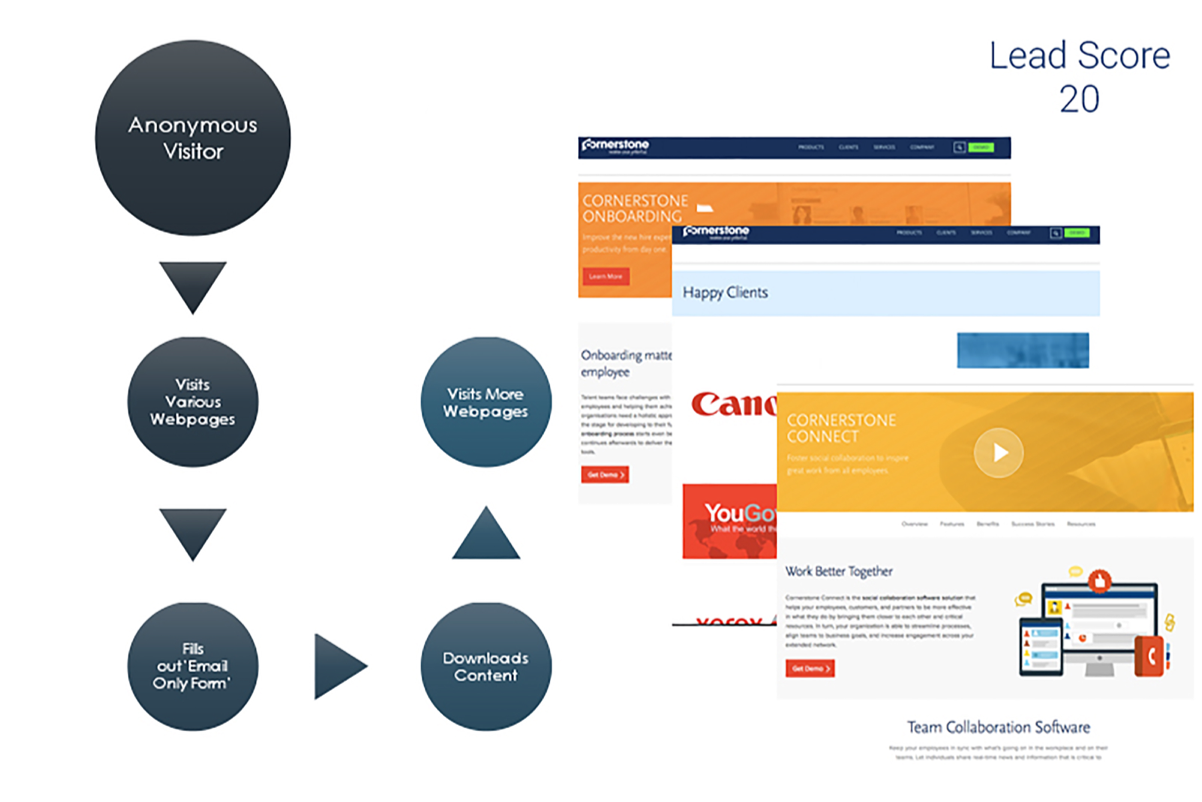
Marketo Engage's lead scoring system combines behavioral signals with demographic fit to identify which prospects are truly sales-ready.
The platform tracks everything from email clicks and webinar attendance to job title and company size, building a comprehensive score that reflects both interest level and buyer profile match.
As part of the broader Adobe ecosystem, Marketo syncs scores bidirectionally with major CRMs, ensuring your sales team always sees updated lead intelligence without manual data transfers.
Key Features:
- Behavioral scoring based on website visits, email engagement, content downloads, and event attendance.
- Demographic and firmographic profiling using job title, industry, company size, and location data.
- Multiple customizable scoring models for different products, personas, or sales processes.
- Automatic score decay that reduces points for inactive leads to maintain accuracy.
- Native CRM integration with Salesforce and Microsoft Dynamics for real-time score syncing.
- Automated sales alerts triggered when leads cross MQL score thresholds.
- Advanced reporting dashboards to track scoring model performance and revenue attribution.
Best For: Mid-market and enterprise B2B companies with complex sales cycles that need sophisticated lead scoring tied to marketing automation workflows.
Pricing: Custom pricing based on database size and feature requirements. Typically starts in the mid-four-figures monthly range for enterprise-grade implementations. Contact Adobe for specific quotes.
8. Pipedrive Lead Scoring
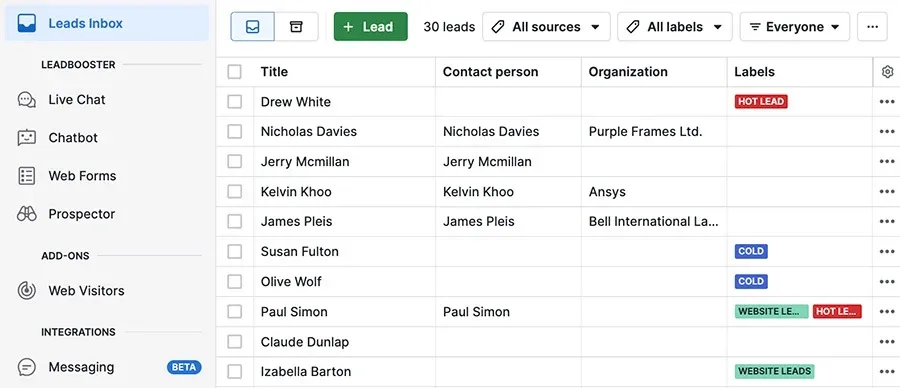
Pipedrive's lead scoring feature helps sales-focused teams cut through pipeline clutter by ranking prospects based on fit and engagement.
The system automatically updates scores as new data flows in—whether that's a job title change, email click, or website visit—keeping your prioritization current without manual updates.
For teams on Premium and Ultimate plans, Pipedrive's AI-powered Pulse toolkit adds another layer of intelligence, recommending which specific leads deserve attention based on historical win patterns.
Key Features:
- Customizable scoring based on demographic attributes and behavioral engagement signals.
- Real-time automatic score updates as lead data and activities change.
- Negative scoring that deducts points for disengagement like unsubscribes or extended inactivity.
- Lead segmentation into hot, warm, and cold categories based on score thresholds.
- Workflow automation and instant alerts triggered when leads hit predefined score levels.
- AI-powered insights from the Pulse toolkit that recommend high-priority leads to pursue.
- Smart Contact Data enrichment that auto-fills missing company and contact details for better scoring accuracy.
Best For: Sales-focused SMBs that want CRM-native lead scoring without buying separate marketing automation platforms.
Pricing: Custom lead scoring is available starting at the Premium plan ($49/user/month, billed annually) and Ultimate plan ($79/user/month, billed annually).
9. LeadSquared Lead Scoring
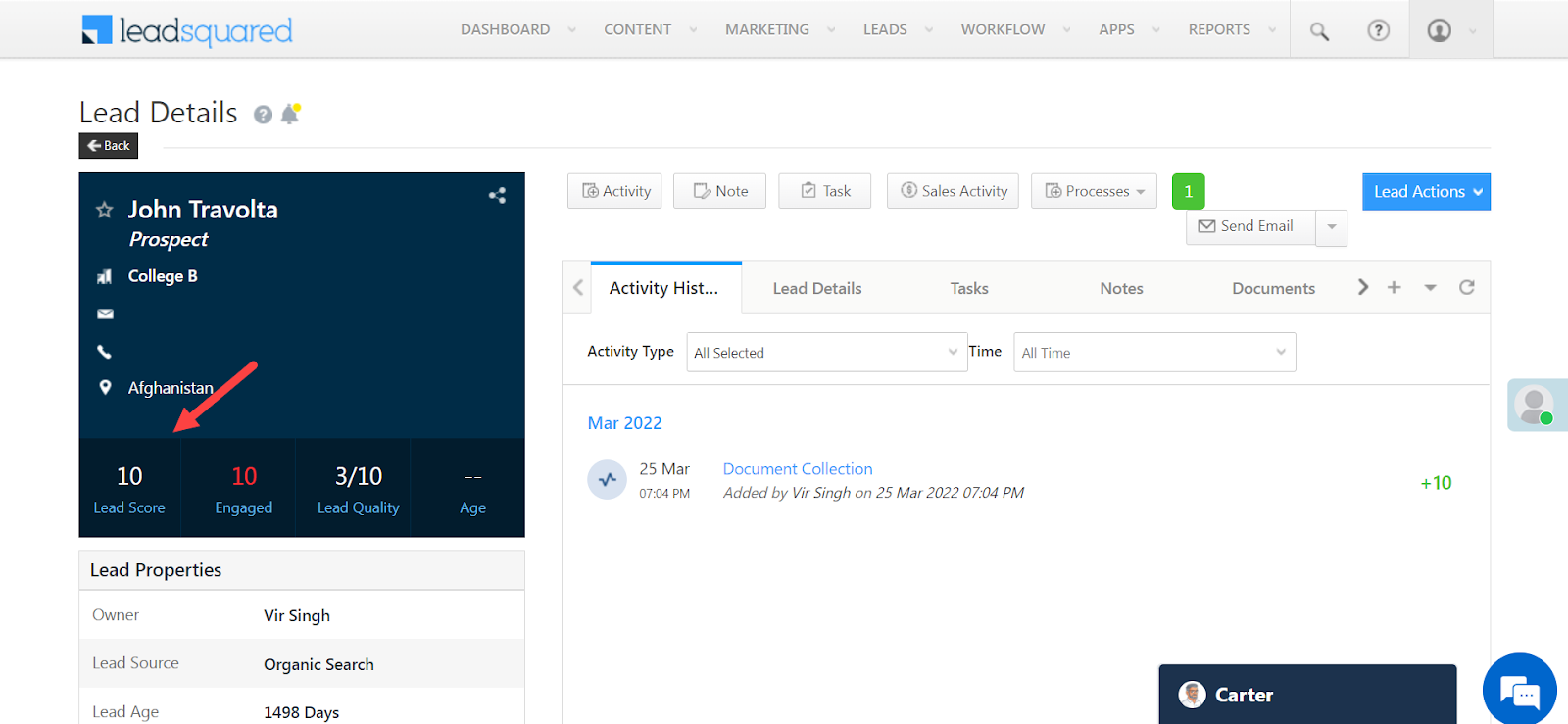
LeadSquared takes a three-dimensional approach to lead scoring with separate metrics for overall engagement, recent activity, and ideal customer fit. This triple-metric system gives sales teams a more nuanced view than single-number scores—you can see at a glance whether a lead is highly engaged but not a perfect fit, or vice versa.
The platform combines customizable manual rules with AI-powered predictive scoring that learns from your conversion history, making it particularly effective for high-volume sales environments where reps need instant prioritization.
Key Features:
- Customizable scoring rules for both online activities (email opens, website visits) and offline interactions (phone calls, document collection).
- AI-powered predictive scoring using machine learning to analyze behavioral patterns and forecast conversion likelihood.
- Triple-metric qualification system with separate Lead Score, Engagement Score, and Quality Score for comprehensive evaluation.
- Automated lead stage progression and real-time sales notifications when prospects hit score thresholds.
- Dynamic list segmentation that automatically groups leads by score and stage for targeted campaigns.
- Built-in analytics dashboards to track scoring model performance, campaign ROI, and lead source quality.
Best For: High-volume B2B and B2C sales teams in education, healthcare, financial services, and real estate that need unified CRM and marketing automation.
Pricing: Sales Pro starts at $25/user/month (billed annually). Sales Super starts at $50/user/month (billed annually). Advanced marketing and ultimate plans available with custom pricing.
10. Customer.io Lead Scoring
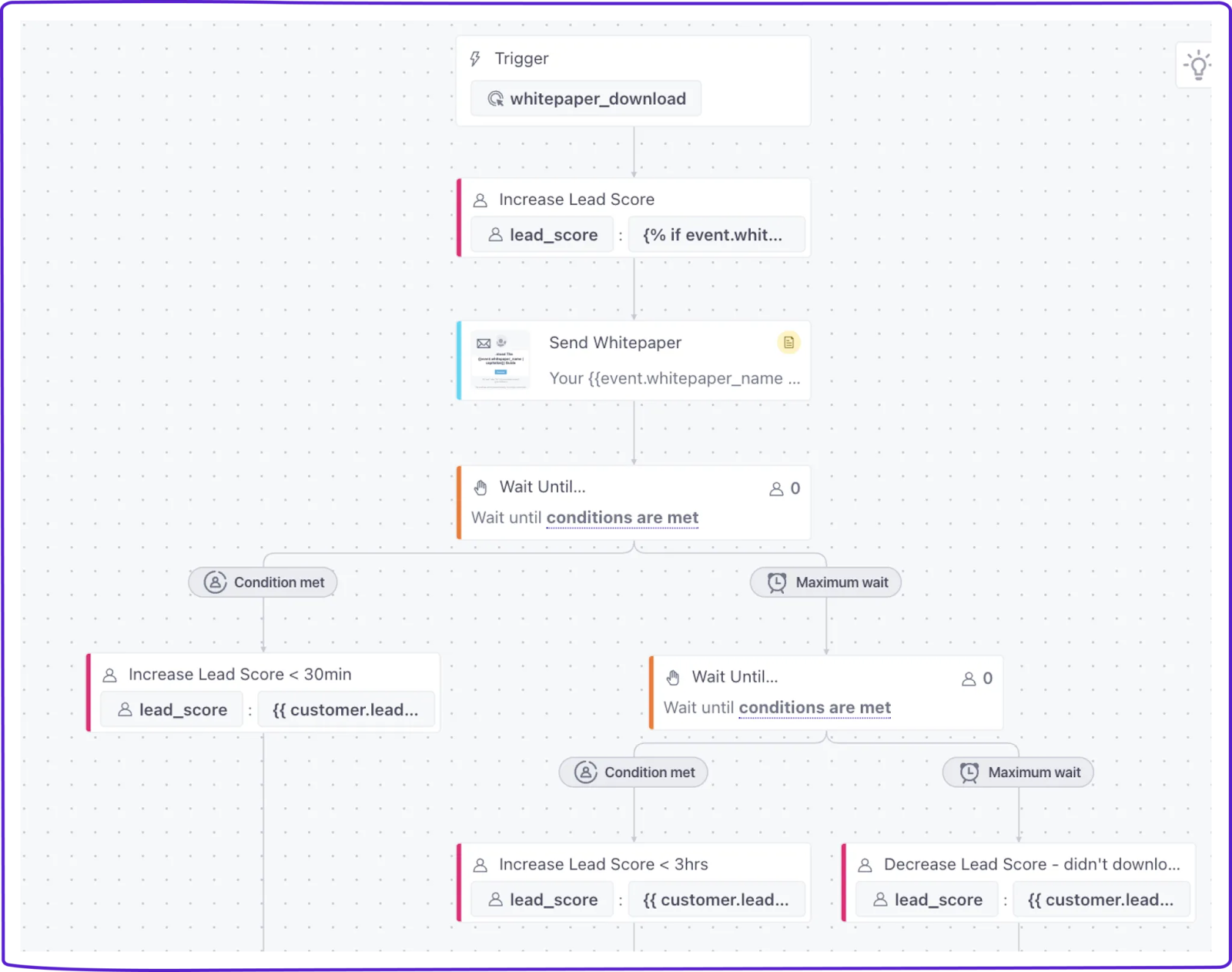
Customer.io takes a build-your-own approach to lead scoring, giving you complete control to create custom models based on your specific product usage patterns and engagement signals.
Unlike rigid pre-built systems, you design the exact scoring logic using a visual workflow builder—perfect for teams whose qualification criteria don't fit standard templates.
The platform shines for product-led companies that need to score based on in-app behaviors, feature adoption, and usage frequency rather than just email clicks and form fills.
Key Features:
- Fully customizable scoring criteria based on any customer action or profile attribute.
- Real-time score updates triggered by API events, webhooks, and behavioral data.
- Visual drag-and-drop workflow builder for incorporating score changes into multi-channel campaigns.
- Advanced segmentation that routes leads to different messaging tracks based on score thresholds.
- Built-in A/B testing to optimize messaging and scoring model performance.
- Unified framework that aligns sales and marketing on lead qualification definitions.
- Conversion goal tracking and analytics to continuously refine scoring accuracy.
Best For: Product-led growth companies and SaaS businesses that need event-based scoring tied to actual product usage and feature engagement.
Pricing: Essentials starts at $100/month for 5,000 profiles and 1 million emails. Premium starts at $1,000/month with custom volumes and advanced features. Enterprise offers custom pricing with dedicated support and infrastructure.
Lead Scoring Tools vs Manual Lead Qualification
Manual qualification made sense when you had 20 leads a month. But if you're generating 100+ leads, dealing with product signups, or running multi-channel campaigns, lead scoring tools pay for themselves by preventing your best reps from chasing tire-kickers.
How Cleverly Uses Lead Scoring to Deliver Sales-Ready Leads
Most lead generation agencies dump raw leads into your pipeline and call it a day. We don't.
At Cleverly, we combine multi-channel outreach (LinkedIn, cold email, cold calling) with proprietary lead scoring to filter out tire-kickers before they ever reach your sales team.
Our system tracks engagement signals across every touchpoint—email replies, LinkedIn profile views, call responses—then scores each prospect based on fit and intent.
The result? You only pay for meeting-ready leads that actually show up.
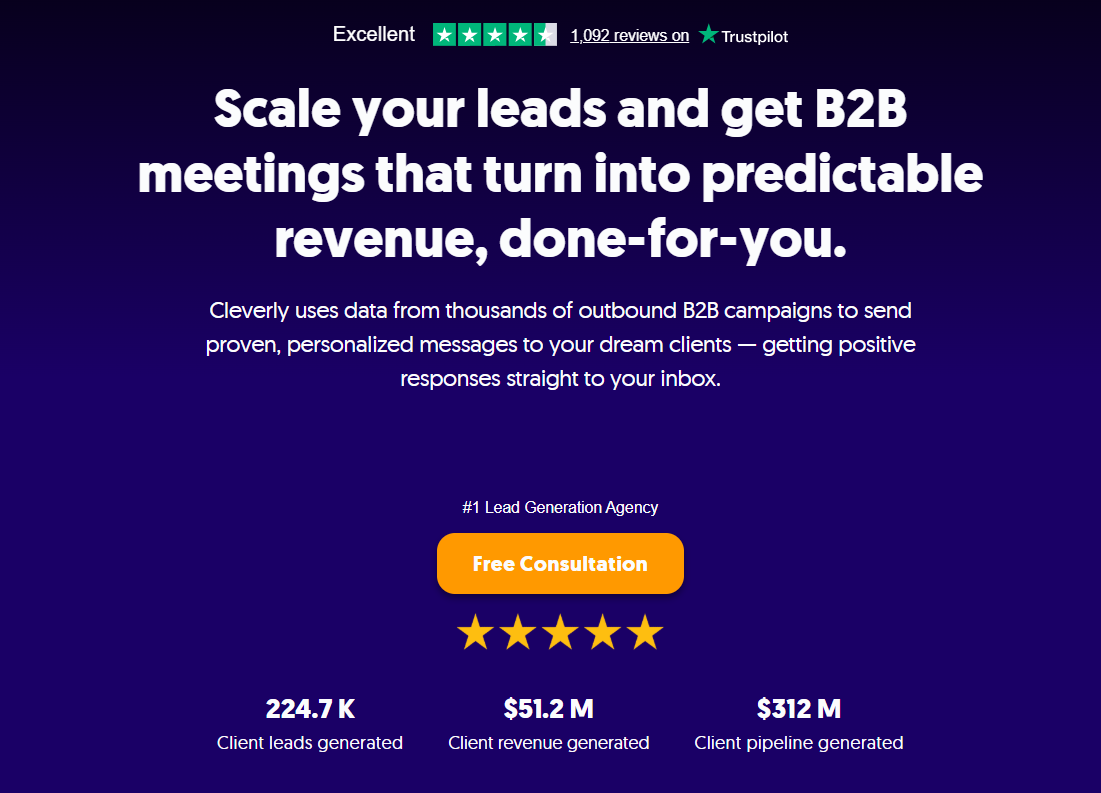
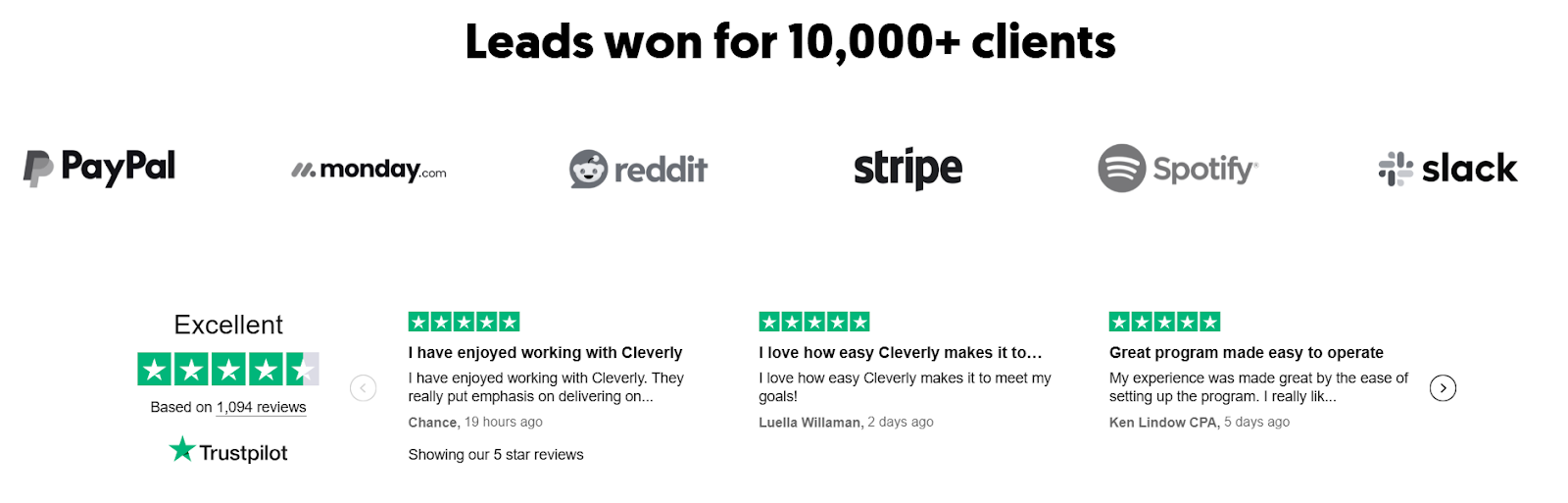
We've helped over 10,000 clients generate $312 million in pipeline revenue and $51.2 million in closed deals—working with companies like Amazon, Google, Uber, and Spotify. Our clients don't waste time chasing cold prospects because our scoring system has already done the qualification work.
Want to see how a lead generation agency with built-in lead scoring can fill your calendar with qualified meetings?
🔥 Book a strategy call with Cleverly

Conclusion
The days of treating every lead equally are over. Lead scoring tools help B2B teams cut through the noise and focus on quality prospects that are actually ready to buy—not just anyone who downloaded a whitepaper.
AI-powered scoring is quickly becoming table stakes for competitive sales teams. The platforms we've covered use machine learning to identify buying signals your reps would never catch manually, getting smarter with every closed deal.
But here's the truth: the best scoring model in the world means nothing without quality leads feeding into it.
Real success comes from aligning three things—accurate data, intelligent scoring, and consistent outreach execution. Get all three right, and you'll stop chasing ghosts and start closing deals.
Frequently Asked Questions
Free Resource
How to Scale a Profitable Cold Call System
Get the complete guide — download it instantly now.
Free Ebook
Download the Free Guide
Enter your details to get instant access.
You're all set! 🎉
Your ebook is downloading now.
Click below if the download didn't start automatically.


