Modified On :
September 16, 2026
Key Takeaways
- Focus your LinkedIn profile around problems solved, not job roles, and back it with proof and CTAs.
- Post consistently to build trust, using carousels, personal insights, client wins, and educational content.
- Use LinkedIn search filters, Boolean searches, and segment your audience by buyer persona.
- Craft connection messages and follow-ups that are warm, relevant, and value-driven — not pitch-heavy.
- Host LinkedIn Events, engage through comments, and use mutual connections to build relationships.
- Don’t pitch in the first message, keep your profile value-focused, and maintain a human touch, even when automating parts of your process.
While some people are turning their profiles into true revenue machines, many are making simple mistakes that leave leads (and pipeline) on the table.
At Cleverly, we analyzed 1,000+ LinkedIn profiles for B2B, across industries, company sizes, and markets, to uncover what actually works when it comes to driving lead generation from LinkedIn.
The difference between profiles that convert and those that get ignored? It comes down to strategy, positioning, and consistency.
In this blog, we’ll break down what most B2B brands get wrong on LinkedIn and what the highest converting profiles do differently.
You will also find some actionable steps to improve your LinkedIn marketing strategy and start generating qualified leads
Let’s dive in!
How to Generate Leads on LinkedIn?
If you’re in B2B, you already know that LinkedIn isn’t just a networking site — it’s a goldmine for finding qualified leads and turning them into clients.
But with so many professionals competing for attention, how do you stand out and consistently drive revenue?
Here’s a step-by-step playbook on how to generate leads on LinkedIn, based on what’s driving $51.2M in revenue and 224.7K leads for our clients.
Optimize Your LinkedIn Profile for B2B Visibility
The first step to effective linkedin for b2b lead generation is building a linkedin profile for b2b that attracts and converts your ideal prospects, even before you start messaging them.
Here’s what we found top-performing profiles do:
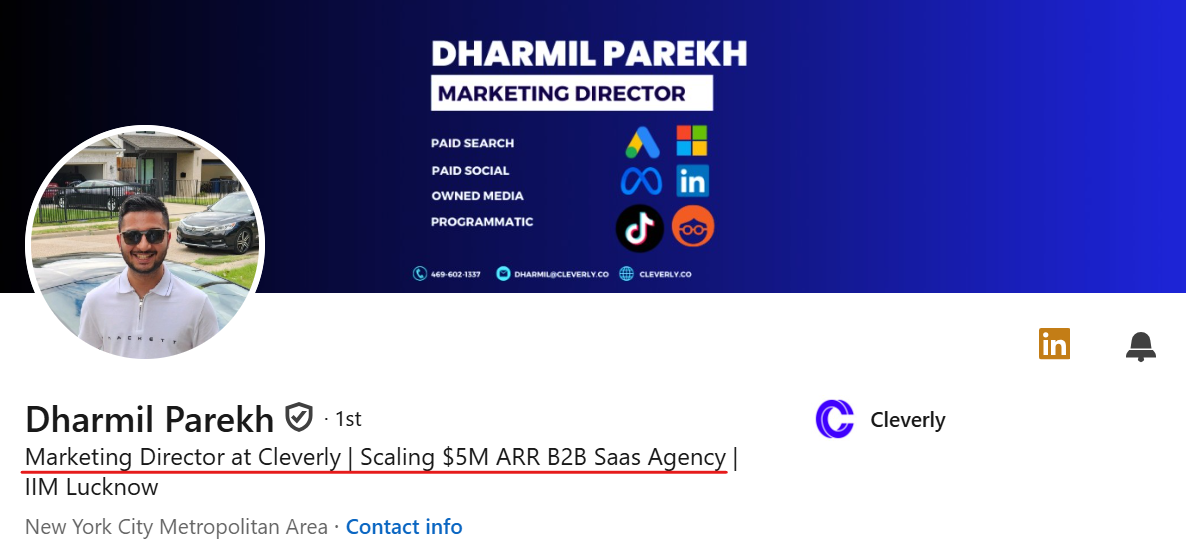
Profile Image, Banner, and Tagline Positioning
First impressions matter.
A professional profile image builds trust instantly. Pair it with a banner image that visually communicates your brand or value proposition.
Your tagline should go beyond your job title — think outcome-driven, like “Helping SaaS companies 3x pipeline with LinkedIn.” This instantly positions you for b2b lead generation linkedin success.
One Quick Check Before You Move On
Your profile image, banner, and tagline are the first things a prospect sees, often in the same five seconds. If any of them contradict each other, that mismatch creates doubt before your prospect even reaches your About section.
Here's a simple self-audit. Read your headline, then your banner, then your tagline in sequence, as if you were a stranger landing on your profile for the first time. Ask yourself: do all three tell the same story, or does one of them undercut the others?
A common mismatch: a headline that promises "helping SaaS companies scale pipeline," paired with a banner that's a generic stock photo or a logo with no context. The B2B LinkedIn headline does the positioning work, but the banner does nothing to reinforce it, and that gap registers, even if the visitor can't say exactly why.
When you find the mismatch, fix the weakest link first. Don't spend another hour polishing a headline that's already strong. Put that time into the banner or tagline that's dragging the other two down.
This consistency compounds. Every section a visitor scans, from your image to your headline to your About section, either builds trust or chips away at it.
Write Headlines for Outcomes Instead of Job Roles
Your headline is prime real estate. Instead of “Account Executive at XYZ,” write “Helping mid-market companies streamline IT with cloud-first solutions.”
This subtle shift helps prospects understand the outcomes you deliver — which directly supports linkedin for b2b lead generation.
About Section: Highlight Pain Points You Solve
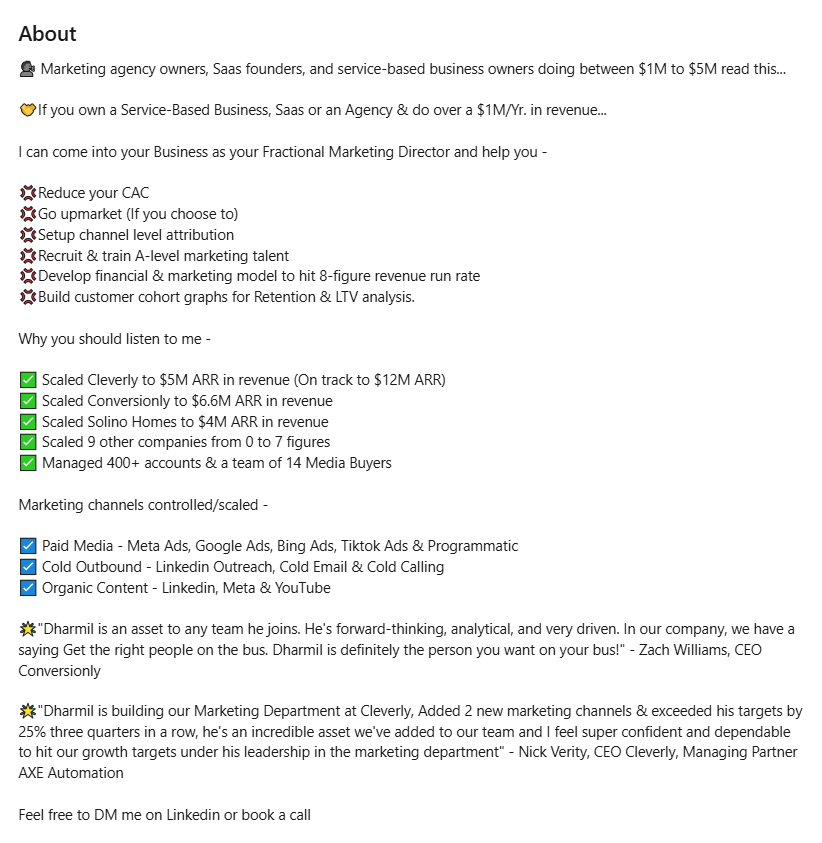
Your About section should speak to your audience’s pain points — not just your resume. Use the space to show that you understand their challenges and offer solutions.
For example:
“If you’re tired of chasing cold leads and inconsistent pipelines, I help founders and sales teams drive predictable revenue through LinkedIn.”
Using AI to Get Your First Draft Faster
If staring at a blank About section is what's stopping you from doing this at all, AI can get you a usable first draft in minutes. But the way most people prompt it works against them.
Don't paste your resume into ChatGPT and ask it to "make my About section professional." That produces the same generic, buzzword-heavy paragraph everyone else is getting, and readers are catching on. A recent Originality.AI analysis found that roughly 54% of longer LinkedIn posts from a set of influential profiles read as likely AI-generated.
Instead, prompt it with the transformation story and the language your target client actually uses, not a list of job duties. Structure your prompt around three things:
- The problem you solve — described the way your client would describe it, not the way your resume would
- One proof point — a specific result, number, or outcome
- One clear CTA — what you want the reader to do next
Something like: "Write a LinkedIn About section for a B2B lead generation consultant. My clients are SaaS founders tired of inconsistent outbound results. I helped one client generate 40 qualified meetings in 90 days. End with a CTA to book a call."
Treat whatever comes back as a starting point, not a finished section. Read it out loud. If it doesn't sound like something you'd actually say to a client over coffee, rewrite the parts that don't. The goal here is speed to a first draft, not a final LinkedIn B2B profile section you publish untouched.
Experience + Featured: Use Proof (Results, Numbers)
Don’t just say you’re great, prove it.
In your Experience and Featured sections, showcase results and numbers like:
✅ “224.7K client leads generated.”
✅ “$51.2M in client revenue.”
✅ “312M client pipeline generated.”
These stats build instant credibility.
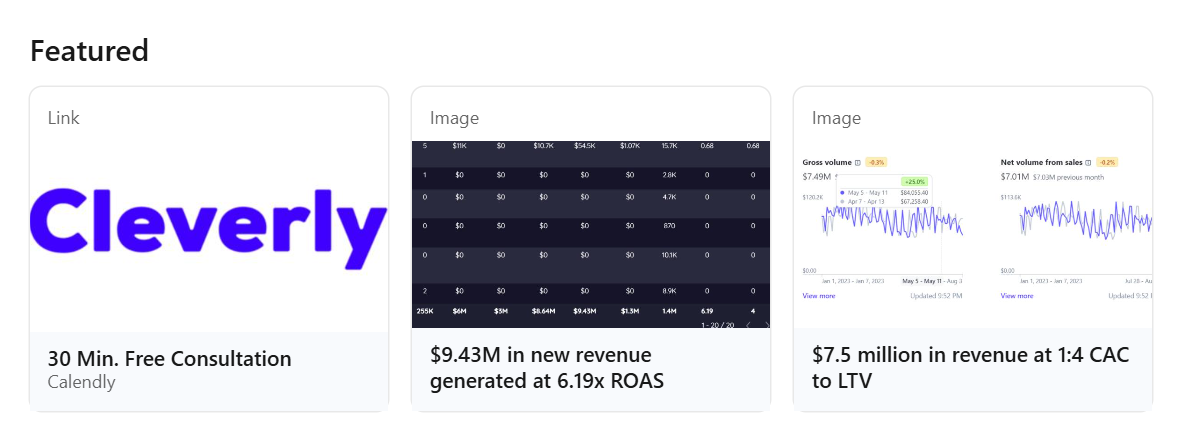
Include CTAs with Contact Info or Calendly
Finally, make it easy for leads to take the next step. Include a CTA (Call-to-Action) at the bottom of your About or Featured section with your email or a Calendly link to book a call.
A well-optimized linkedin profile for b2b makes inbound leads a natural outcome.
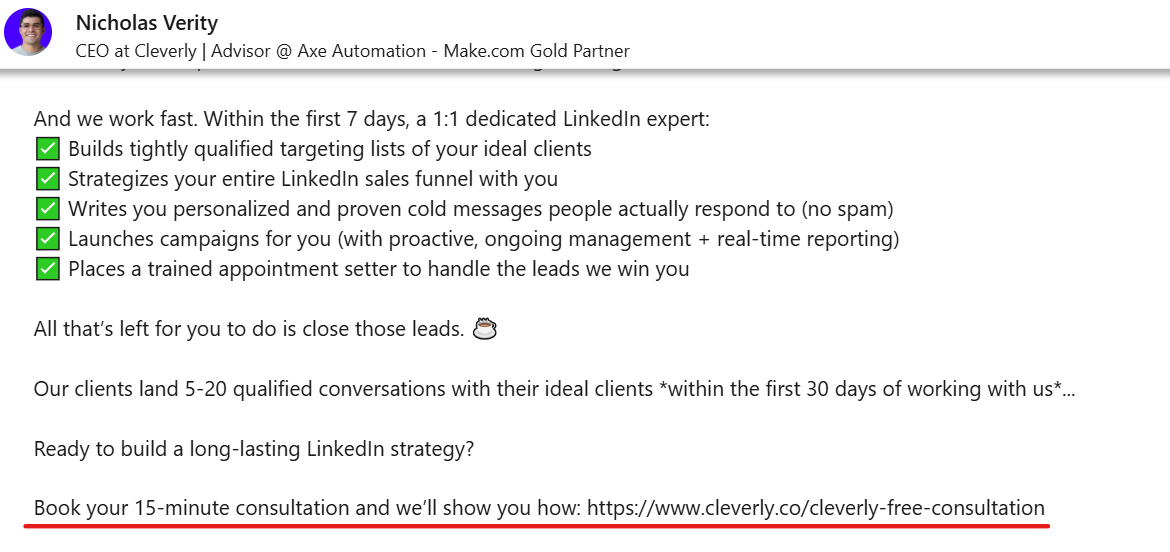
Freelancers and Consultants: Consider a Service Page Too
If you're a freelancer or independent consultant, a Calendly link in your About section isn't the only CTA option available anymore.
LinkedIn's Service Page feature lets you list your specific offerings directly on your profile, so a visitor can request a service without funneling every conversation through a generic "book a call" link. You can list up to ten distinct services, add a description for each, and specify whether you work remotely, in person, or both.
Most freelancers skip this feature entirely, which means most of their competitors skip it too. Setting one up is a fast way to stand out simply by being more discoverable than the people who never bothered.
A Service Page works alongside your Calendly CTA, not instead of it. Keep your Calendly link for prospects who already know they want to talk to you. Add a Service Page for visitors still figuring out exactly what they need and who want to see your offerings laid out before reaching out.
This is a smaller-scale version of the same principle Cleverly applies with our own LinkedIn lead generation service: make it as easy as possible for a warm prospect to take the next concrete step, however small.
Post Value-Driven Content Consistently
Once your profile is optimized, the next step in your linkedin content strategy is to stay visible and top-of-mind.
Here’s what works best for linkedin lead generation through content:
Weekly Short-Form Posts + Monthly Long-Form Articles
Post short, engaging content 1–2 times per week — think quick tips, industry insights, or personal lessons.
Complement this with 1–2 long-form articles per month (800–1,200 words) that showcase deep expertise.
Use Personal Storytelling for Relatability
Don’t be afraid to get personal. Content that humanizes you tends to outperform dry corporate posts.
A founder sharing a lesson from a failed launch, or a VP of Sales talking about overcoming pipeline anxiety, resonates far more.
Position Yourself as a Thought Leader in Your Niche
Share frameworks, strategies, and unique points of view to become a go-to expert. This builds authority and trust, key to lead generation from linkedin.
Use Strategic CTAs in Posts to Drive Leads
End posts with subtle CTAs like:
👉 “If you’d like to learn more, DM me.”
👉 “We just published a guide on this topic — comment ‘Guide’ and I’ll send it.”
It’s an essential part of linkedin content marketing that drives leads without being salesy.
Example:
Use LinkedIn Search Filters to Build Prospect Lists
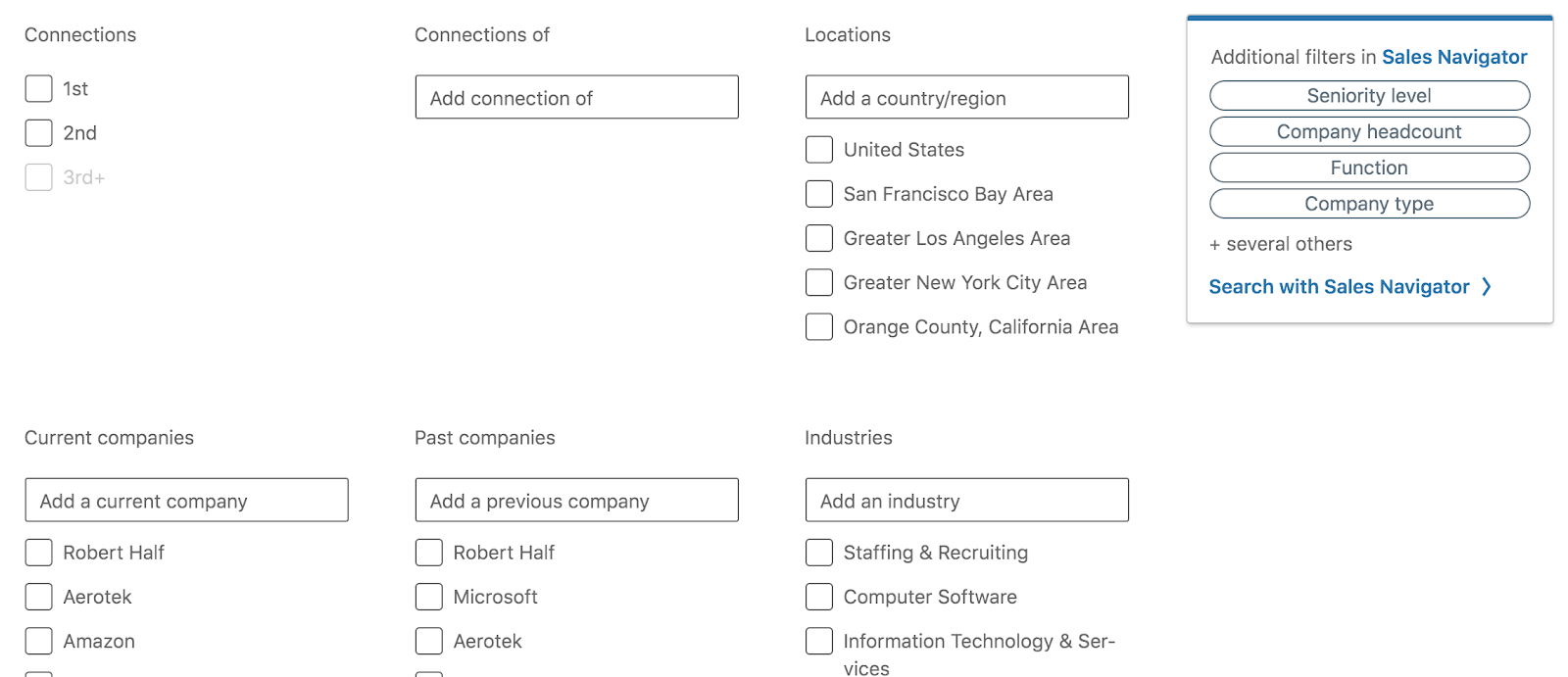
An underrated but powerful part of b2b lead generation linkedin is LinkedIn’s advanced search functionality.
Here’s how top profiles use it:
Boolean Searches to Filter by Industry, Job Title, Geography
Use Boolean operators (AND, OR, NOT) to build highly targeted searches.
Example:
CMO OR "Head of Marketing" AND SaaS AND US
This lets you find exactly the right decision-makers for your linkedin outreach strategy.
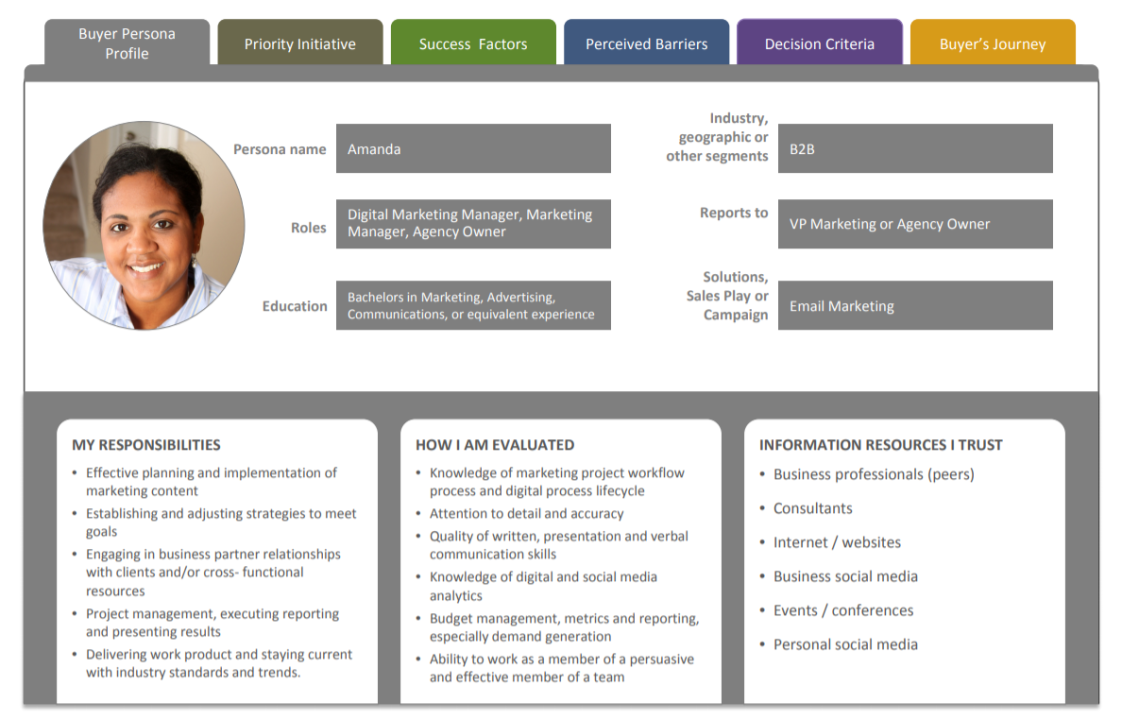
Segment Your Audience by Buyer Persona
Don’t treat all prospects the same. Create lists by key segments:
- Industry
- Seniority
- Geography
- Company size
This allows for more personalized outreach and better results.
Save Qualified Searches Weekly to Scale Outreach
Once you find a high-performing search, save it. Each week, revisit saved searches to identify new prospects — a consistent way to keep your pipeline full.
Engage with Prospects’ Recent Content
Before reaching out, engage meaningfully with their recent posts — comment, like, share.
This warms them up and increases the success of your LinkedIn prospecting tips.
Personalize Every Connection Request and Follow-Up
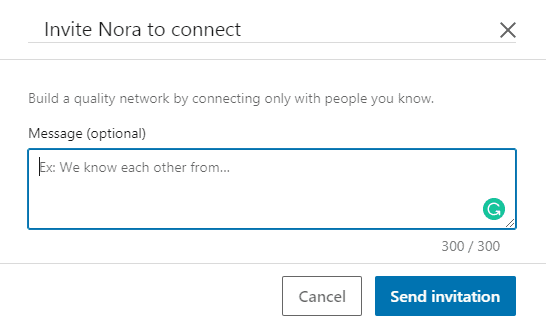
Sending generic messages is one of the fastest ways to be ignored. Here’s how to personalize your linkedin connection requests and messages:
Avoid “Hi, I’d Like to Connect” Messages
These are easy to ignore. Always personalize.
Reference Common Ground (Industry, Post, Mutual)
Mention a mutual connection, a post you liked, or a shared experience. Example:
“Hi [Name], loved your recent post on scaling B2B marketing teams. Would love to connect and swap ideas.”
Structure a 3-Message Sequence Before Pitching
Build rapport before pitching:
- Personalized connection message
- Value-driven follow-up (share a resource, ask a question)
- Only then, introduce your offer
Include a Soft CTA: Ask, Don’t Sell
Instead of hard-selling, ask for a conversation:
👉 “Would you be open to a quick chat about how we’re helping companies like yours generate leads on LinkedIn?”
This approach aligns perfectly with modern linkedin cold outreach b2b best practices.
Run LinkedIn Lead Gen Ads With Clear Offer Hooks
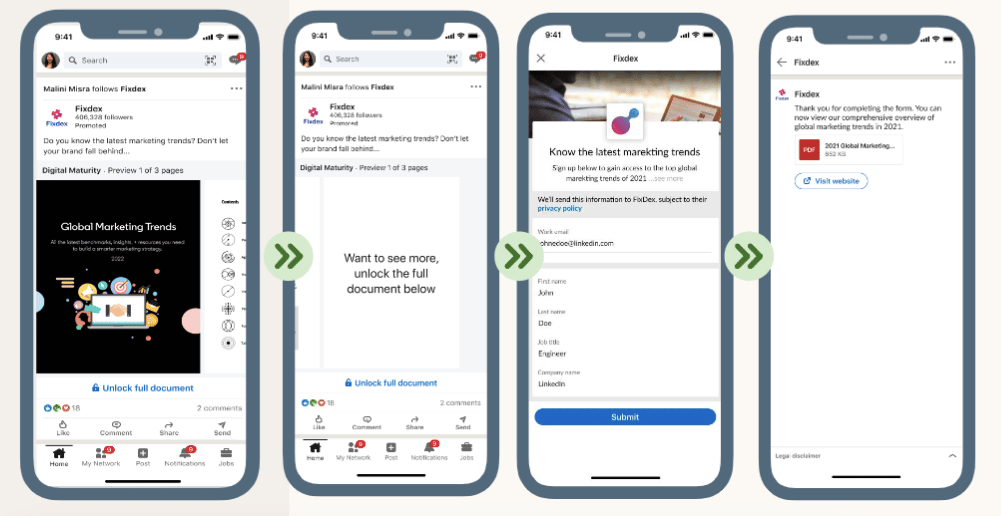
LinkedIn paid ads are a highly effective, scalable way to drive leads — when done right. Here’s what makes for winning linkedin b2b ad strategy:
Target Job Titles with Custom Audiences
Use LinkedIn’s targeting tools to reach specific roles (e.g. “VP of Sales” in “Enterprise SaaS”). This precision targeting powers high-converting linkedin lead gen ads b2b.
Use Lead Gen Forms with Clear Offers (Free Guide/Demo)
LinkedIn Lead Gen forms are great — but only if your offer is clear and compelling:
👉 Free guide
👉 Demo
👉 Strategy session
Keep the offer front and center.
Keep Forms Short and Mobile-Friendly
Shorter forms convert better. Aim for name, email, company, and role — that’s it.
Add Urgency With Time-Limited Copy
In your ad creative, use urgency to drive clicks:
👉 “Limited spots this month.”
👉 “Download before [date].”
Done right, linkedin paid lead generation through ads can deliver a consistent stream of qualified leads!
Not Every LinkedIn B2B Profile Should Be Optimized the Same Way
Before you touch a single section of your profile, get honest about what you're actually optimizing for.
Most advice treats a linkedin B2B profile like a one-size-fits-all checklist. Fix your headline, rewrite your About section, add a banner, done. But a founder trying to fill a calendar with sales calls and a job seeker trying to land an interview aren't solving the same problem. Applying every tactic equally to both wastes effort on the parts that won't move the needle for your specific goal.
Here's how to sequence your optimization based on what you're actually trying to achieve.
If You're a Founder or Operator
Your profile's job is to turn strangers into pipeline. Prioritize, in this order:
- Headline — lead with the outcome you drive, not your title
- About section — speak directly to the buyer's problem
- Active feed — consistent posting is what keeps you visible between profile views
Your banner and Featured section matter, but they're secondary. A founder with a mediocre banner and a sharp, active feed will out-convert a founder with a polished banner and a dormant profile every time.
If You're a Freelancer or Consultant
Your priorities shift slightly:
- Headline — same rule applies, outcome over title
- About section — this is where trust gets built before a stranger ever messages you
- Service Page — this is the feature most freelancers skip entirely, and it's often the difference between someone finding you and someone hiring you (more on this later)
If You're a Job Seeker or Career Switcher
Your goal isn't lead generation, it's getting noticed by the right recruiter or hiring manager. Prioritize:
- Headline — bridge your past experience to the role you want next, not just a list of skills
- About section — tell the story that connects where you've been to where you're going
Content posting and network building still help here, but they're a distant third compared to a headline and About section that make sense of your career pivot in the first ten seconds someone reads them.
The bottom line: treating every tactic in this guide with equal weight is how most people burn hours optimizing sections that were never going to move their specific goal. Sequence by purpose first, then use the rest of this guide to execute.
The patterns below hold true across all three goals. They're just weighted differently depending on which one is yours.
🧲 A Great Profile Attracts—We Convert
We turn optimized LinkedIn profiles into real B2B leads with targeted outreach. Start generating leads today from just $397/month.
What We Learned from Analyzing 1,000+ LinkedIn B2B Profiles
After studying 1,000+ LinkedIn B2B profiles across industries and seniority levels, one thing became clear:
Small details make a big difference when it comes to turning profile views into real leads.
Here are some of the most actionable insights we uncovered — and how you can apply them to your own linkedin b2b profile to drive better results.
High-Converting Profiles Focus on Problems Solved, Not Job Roles
One of the biggest patterns we saw in the top 10% of profiles was a clear focus on problems solved — not just job roles or generic descriptions.
Replace Generic Titles with Client-First Outcomes
Instead of simply listing your title (e.g. “Founder at ABC Consulting”), use a b2b linkedin headline that communicates value:
👉 “Helping DTC brands increase retention & LTV with lifecycle marketing”
👉 “Driving $312M in pipeline for B2B SaaS companies via LinkedIn”
This shift instantly tells prospects why they should connect and what you can do for them.
Add Specific Numbers in Experience Section
Profiles with concrete proof — numbers, case studies, percentages — outperform those with vague descriptions.
Instead of: “Responsible for LinkedIn lead generation campaigns”
Use: “Generated 224.7K+ LinkedIn leads and $51.2M in revenue for clients.”
Data builds trust fast in your linkedin b2b profile.
Avoid Passive Tone — Be Bold and Confident
Your tone matters. Passive language (“helped with…”, “assisted in…”) sounds weak. Use active, confident phrasing:
👉 “Led a team of 5 to drive 3x ROI on LinkedIn campaigns.”
👉 “Spearheaded $5M pipeline generation for mid-market fintech clients.”
The Best Performers Shared Content at Least 3x Weekly
Another clear pattern: The most successful profiles didn’t just optimize once and forget it.
They consistently shared content to stay visible and top of mind — a critical part of any b2b linkedin content strategy.
Consistency Builds Trust Over Time
Profiles that posted at least 3x weekly had significantly higher inbound lead rates than those who posted sporadically.
Consistency signals credibility and positions you as a trusted voice in your niche.
Carousels, Personal Insights, Client Wins, and Educational Posts Work Best
High-performing content types include:
- Carousels with actionable tips
- Personal insights and lessons learned
- Client wins (with permission) — great social proof
- Educational posts that teach something valuable
If you’re ever stuck for linkedin post ideas, these four formats are your go-to.
Use Hooks and Storytelling Frameworks
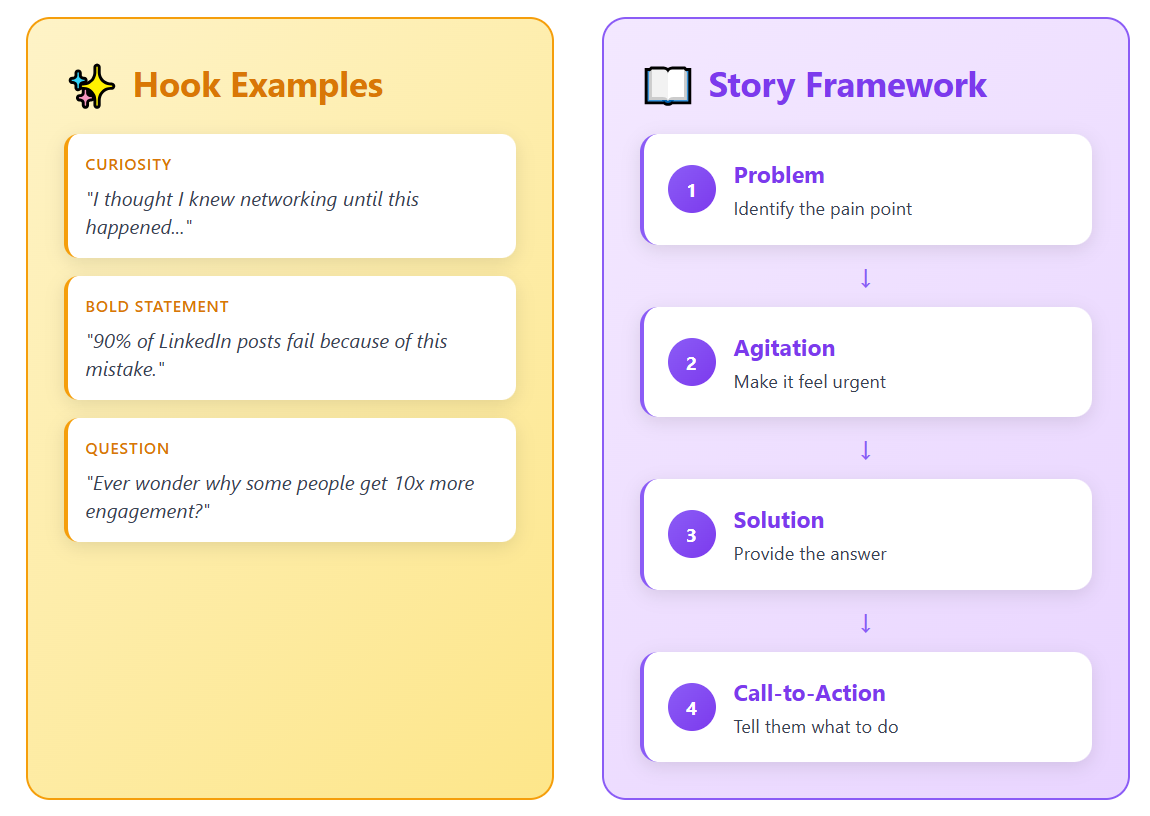
The first 2–3 lines of your post are crucial — they need to “hook” your reader to click See More.
Use curiosity, bold statements, or relatable questions to pull people in.
Pair that with a simple storytelling framework:
Problem → Agitation → Solution → Call-to-Action.
Profiles that consistently apply this formula dominate linkedin content engagement — and drive far more inbound opportunities.
Your Skills Section Only Works When It's Tied to Real Experience
Here's a change most B2B professionals haven't caught up on yet: LinkedIn no longer treats your Skills section as a standalone list.
Skills now need to be tagged to a specific job, project, or education entry to carry real weight. A skill sitting alone at the bottom of your profile, disconnected from any experience that backs it up, reads as an afterthought, not a credential.
Why a Tagged Skill Outperforms an Isolated One
Think about it from a prospect's perspective. If your LinkedIn B2B headline says you help SaaS companies scale pipeline, and your Skills section just lists "Lead Generation" with no experience attached, that skill is a word floating on its own. Tag it to your current role, and it now sits directly under the job where you actually did the work, a far stronger signal to anyone scanning for proof.
LinkedIn's own data backs this up. Members who list at least one skill get up to 2x more profile views and connection requests, and up to 4x more messages. Tagging skills to experience is what makes a skill discoverable and credible in the first place, not just visible.
Don't Try to Get Every Skill Endorsed
You don't need 50 endorsed skills. You need 3 to 5 that map directly to your positioning.
If your headline promises pipeline growth, endorsements for "B2B Lead Generation," "LinkedIn Outreach," or "Sales Strategy" carry far more weight than a scattershot list that includes skills unrelated to what you actually want to be known for.
How to Ask for the Right Endorsement
Most people wait for endorsements to trickle in randomly. Don't. Ask directly, and be specific.
A short message like this works well:
"Hey [Name], would you mind endorsing me for [specific skill] on LinkedIn? We worked together on [project/client], and it would mean a lot coming from you."
Naming the exact skill and the shared context makes it easy for a past colleague or client to say yes in under a minute, and it ensures the endorsement lands on the skill that actually supports your positioning.
Building the Right Network is Crucial for Inbound Leads
Finally, one of the biggest levers we observed was proactive linkedin network building.
The most successful B2B profiles didn’t sit back — they actively cultivated networks filled with ideal prospects and collaborators.

Send 20–50 Tailored Connection Requests Per Week
Outbound is key. Top performers sent 20–50 tailored connection requests weekly — not spammy blasts, but highly personalized invites to relevant prospects.
Accept Relevant Connections Only — Target Quality
Don’t accept every request. Curate your network around:
- Ideal buyers
- Industry peers
- Thought leaders
- Relevant collaborators
A smaller, highly targeted network is far better than a large but random one when it comes to grow linkedin connections with impact.
Encourage Meaningful Conversations in DMs and Comments
Great profiles don’t stop at connecting — they engage.
Top profiles regularly:
- Start genuine conversations in DMs
- Comment meaningfully on others’ posts
- Respond to comments on their own posts
This not only drives algorithm reach but also leads to real business conversations — which is the ultimate goal of your linkedin network building efforts.
Bottom line: Building an effective linkedin b2b profile isn’t a “set it and forget it” game.
It’s about positioning yourself around problems solved, showing social proof, sharing consistent content, and proactively growing a high-value network.
Advanced B2B LinkedIn Lead Generation Strategies
Once your profile is optimized and your basic content + outreach engine is running, the next level of success comes from more advanced B2B LinkedIn lead generation strategies.
After analyzing thousands of profiles and campaigns, here are 3 tactics the top 1% of B2B sellers on LinkedIn are using right now to generate even more leads — faster.
Host Live Sessions and LinkedIn Events to Attract Inbound Leads
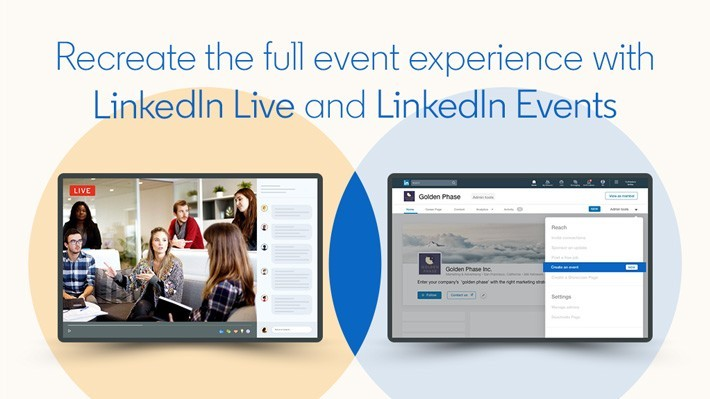
LinkedIn Events and LinkedIn Live are powerful, underutilized tools for B2B marketers — especially for generating inbound leads from LinkedIn.
Here’s how to make them work for you:
Create Topic-Specific Events
Boring webinars? Skip them.
The best linkedin events for b2b leads are hyper-specific and address urgent topics for your audience:
👉 “Top Hiring Mistakes SaaS Startups Make”
👉 “3 LinkedIn Prospecting Playbooks that Tripled Pipeline”
👉 “How CFOs Are Preparing for 2025 Market Shifts”
When your event speaks directly to your audience’s challenges, RSVPs — and leads — follow.
Build Pre-Event Hype Using Stories and DMs
Start promoting your event 1–2 weeks in advance using LinkedIn posts, Stories, and personalized DMs to warm prospects:
“Saw you’re scaling your team — we’re hosting an event on hiring pitfalls next week. Want the link?”
Personal outreach dramatically increases show-up rates and starts warm conversations.
Repurpose Recorded Events as Evergreen Lead Magnets
After the live event, repurpose the recording into:
- A gated download
- Short video clips for posts
- A pinned Featured post on your profile
Done right, your LinkedIn Live becomes an evergreen asset that generates inbound leads from LinkedIn long after the event is over.
Nurture Leads via Strategic Comments and Shared Connections
The fastest way to warm up cold prospects? Show up where they already are.
Smart sellers are using linkedin engagement tactics — especially in comments and shared networks — to build trust and nurture leads before ever sending a pitch.
Add Value in Comments on Posts of Your ICP
Identify 20–30 ideal buyers or accounts. Follow them. Engage meaningfully on their posts.
Leave insightful comments that demonstrate your expertise — not generic “Great post!” fluff.
Profiles that regularly engage with b2b leads on LinkedIn this way see 2–4x higher reply rates when they eventually reach out via DM.
Share Resources and Drop Value Before Pitching
Before sending a pitch, look for ways to add value:
- Comment with a relevant resource or article
- Share a quick win via DM (“Saw your post on hiring — here’s a hiring checklist our clients love.”)
- Introduce them to a helpful contact
When you consistently deliver value first, your pitch is welcomed — not ignored.
Use Mutual Connections for Warm Intros
Tap into your network. If you share a connection with a prospect, ask for an intro.
Leads sourced via linkedin comments and warm intros close at significantly higher rates than cold outreach alone.
Incorporating these advanced B2B LinkedIn lead generation strategies alongside profile optimization, consistent content, and personalized outreach can put your LinkedIn funnel on autopilot.
Using LinkedIn Profiles to Qualify Inbound and Outbound Prospects
Everything so far has been about optimizing your own profile. This section flips the lens: reading someone else's profile to figure out whether they're worth your time.
Whether a lead reaches out to you first or you're building an outbound list, the skill is the same. A quick linkedin profile analysis tells you far more about a prospect's fit and buying authority than their job title alone ever will, which matters for b2b lead qualification either way.
Reading a Profile for Role, Seniority, and Recent Activity
Before you respond to an inbound message or add someone to an outbound list, spend 60 seconds on their profile. You're looking for three things:
- Role and function — does their day-to-day actually touch the problem you solve, or are they adjacent to it?
- Seniority — do they have the authority to move a deal forward, or influence someone who does?
- Recent activity — have they posted, changed jobs, or engaged with content that signals they're actively thinking about this problem right now?
A profile that checks all three is worth prioritizing. A profile that checks none of them is worth deprioritizing, even if the job title on paper looks promising.
Job Titles That Signal Real Buying Authority (and Ones That Don't)
Title inflation makes this harder than it used to be. A "Director" at a 15-person startup and a "Director" at a 2,000-person enterprise can have wildly different budget authority, and plenty of profiles lean into an inflated title for visibility rather than accuracy.
If you're trying to identify B2B SaaS buyer roles using linkedin job titles, don't stop at the title itself. Cross-reference it against:
- Company size — the same title carries different weight depending on headcount
- Tenure — someone six months into a new senior role is often in an active evaluation window, while someone with several years in the same role has more internal influence but less urgency
- Ownership language — profiles that use words like "led," "owns," or "accountable for" in their experience section tend to reflect real authority more than titles alone
Adjacent-but-wrong roles are the most common qualification mistake. A "Head of Growth Marketing" and a "Head of Revenue Operations" might both look relevant to a lead gen pitch, but only one of them typically owns budget for outbound tools and services. Reading the actual experience section, not just the title, is what tells you which is which.
Using Recent Posts and Job Changes as a Qualification Signal, Not Just an Icebreaker
Most outreach guides tell you to reference a prospect's recent post to warm up a message. That's useful, but it's only half the value.
A recent job change often means a prospect is in an active evaluation window for tools and vendors, since new leaders typically review the existing stack in their first 60 to 90 days. A recent post about a challenge your service solves is a direct signal of intent, not just a conversation starter.
Treat these signals as qualification data first. If a prospect's recent activity lines up with a real, current need, move them up your list. If it doesn't, use it as an icebreaker and nothing more.
This Applies to Inbound Replies Too
The same profile-reading skill works in both directions. When an inbound lead responds to your outreach or messages you directly, don't take the reply at face value. Run the same quick check: role, seniority, recent activity. It takes less time to qualify an inbound reply this way than it does to sit through a discovery call with someone who was never going to buy.
Building this into your process, whether manually or through a LinkedIn lead generation service that already qualifies leads this way, keeps your pipeline full of conversations worth having.
🚀 From Profile Views to Pipeline Growth
Having a strong profile is step one, our outreach fills your inbox with qualified prospects. Book your free strategy call now.
When to Hire a LinkedIn Lead Generation Service
Many companies reach a point where managing LinkedIn prospecting in-house no longer scales — that’s when it makes sense to consider a LinkedIn lead generation service.
Here’s what to know before you outsource LinkedIn lead generation:
✅ Pros
- Faster scale — instantly expand your outreach volume
- Done-for-you prospecting — free up internal time
- Expert copywriting — tested messaging frameworks that drive replies
Agencies like ours specialize in precisely this, helping clients generate 224.7K+ leads and $51.2M+ in revenue with pricing starting at just $397/mo!
⚠️ Cons
- Potential loss of personalization if not well-managed
- Risk of brand misalignment if your ICP is misunderstood
When done right, working with a LinkedIn lead generation service like Cleverly is one of the fastest ways to scale your pipeline — without burning out your team.
Conclusion: Turn Your LinkedIn Into a Lead-Generating Machine
If there’s one key takeaway from our analysis of 1,000+ LinkedIn B2B profiles and high-converting campaigns, it’s this:
👉 Profile + Content + Outreach = Conversion.
An optimized LinkedIn profile for B2B gives prospects a reason to trust you. A consistent, value-driven LinkedIn content strategy keeps you top of mind.
And, thoughtful, personalized LinkedIn outreach is what turns connections into pipeline.
But the thread running through it all? Strategy + Personalization.
The best results on LinkedIn don’t happen by accident — they come from intentional messaging, relationship-first outreach, and testing what works.
If you implement even a few of the insights we’ve covered today, you’ll be well ahead of most of your competition — and you’ll start seeing more qualified B2B leads from LinkedIn.
And if you’d like to shortcut the learning curve and tap into a proven system…

At Cleverly, we’ve helped 10,000+ clients generate leads with some of the world’s most trusted companies — including: Amazon, Google, UBER, PayPal, Slack, Spotify, and many more.
That work has driven:
👉 $312 Million in pipeline revenue
👉 $51.2 Million in closed revenue — all through LinkedIn outreach.
If you’re interested in generating qualified B2B leads through LinkedIn, let’s talk! We’d love to help you do the same.
Frequently Asked Questions
Free Resource
How to Scale a Profitable Cold Call System
Get the complete guide — download it instantly now.
Free Ebook
Download the Free Guide
Enter your details to get instant access.
You're all set! 🎉
Your ebook is downloading now.
Click below if the download didn't start automatically.