Table of Contents
What Is LinkedIn InMail & Why It Works for B2B Outreach
Best Practices for Writing High-Converting LinkedIn InMails
10 High-Converting LinkedIn InMail Templates (With Examples)
Sales-Focused LinkedIn InMail Templates
How to Customize LinkedIn InMail Templates for Higher Response Rates
Why Partnering With a LinkedIn Lead Generation Agency Amplifies These Templates
Frequently Asked Questions
Modified On :
September 22, 2026
Key Takeaways
- LinkedIn InMail templates give you a proven structure to start conversations with decision-makers.
- Personalization is the secret ingredient that turns a template into a reply-worthy message.
- Keep your InMails short, clear, and value-driven—under 150 words works best.
- Use a conversational tone and avoid spammy sales language to build trust.
- Pairing these templates with a LinkedIn lead generation agency like Cleverly amplifies results.
- Done right, InMail outreach can drive pipeline, demos, and closed revenue consistently.
You're well aware that LinkedIn isn’t just another social network, it’s the go-to platform for B2B outreach that actually works.
With LinkedIn InMail, you have the unique advantage of sending direct, targeted outreach straight into the inboxes of your ideal prospects, without any awkward email guessing games.
But just having the InMail tool isn’t enough. Strong messaging is what turns those messages from “just skippable” to “let me reply.”
When you craft a message that speaks directly to your recipient’s needs, or better yet, their unspoken needs, you boost both open rates and reply rates. And that’s where templates become your unsung heroes.
We’ve seen time and again that repurposable templates, when combined with personalization, are the secret sauce for B2B sales success. You start with a structure that works, but then you make it feel uniquely meant for each prospect. That’s the difference between grabbing someone’s attention and losing it.
In this blog, we’re giving you 10 high-converting LinkedIn InMail templates that we've honed through real-world use at Cleverly, your trusted LinkedIn lead generation agency.
Let’s get you messaging with confidence, because when done right, sales LinkedIn InMail templates aren’t just messages, they’re conversations waiting to happen.
What Is LinkedIn InMail & Why It Works for B2B Outreach
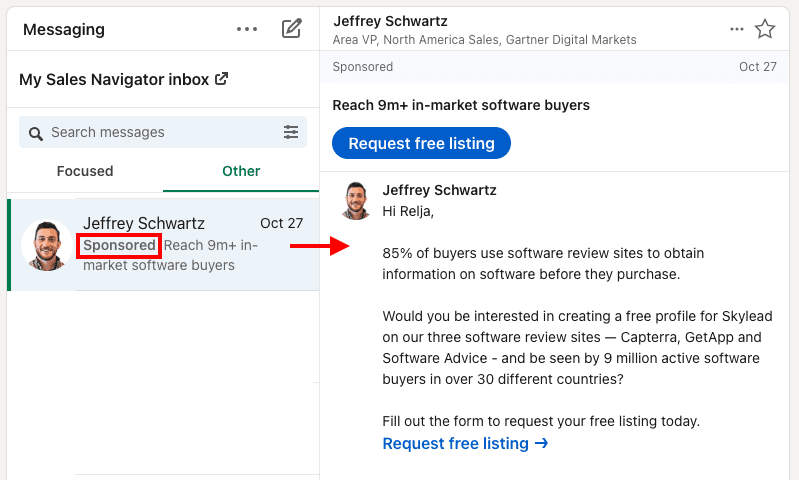
Before we dive into the actual LinkedIn InMail templates, let’s make sure we’re on the same page about what InMail really is, and why it’s such a powerful tool for B2B outreach.
LinkedIn InMail is a premium feature that lets you send direct messages to anyone on LinkedIn, even if you’re not connected.
When you compare LinkedIn InMail with regular LinkedIn messages, which only work if you have a first-degree connection, InMail breaks down that barrier and puts you right in front of the people you actually want to talk to.
Here’s why InMail is a game-changer for B2B sales:
- Direct access to decision-makers – Instead of waiting for introductions or wasting time on gatekeepers, you can go straight to executives, founders, and key buyers.
- Higher open and response rates – Studies show that InMails outperform cold emails when it comes to engagement. Why? Because people trust LinkedIn as a professional platform, so they’re naturally more open to relevant outreach.
- Built for personalization – InMail lives inside a prospect’s LinkedIn profile, which means you have instant access to their work history, job role, and recent activity. That context makes it much easier to send a message that feels tailored rather than generic.
Example: When looking for a job such as a chat moderator, LinkedIn InMail can be especially helpful. - Perfect for B2B lead generation – Unlike email, LinkedIn is purpose-built for professional networking. That’s why buyers are more receptive to sales conversations that start here—it feels natural, not intrusive.
When you combine the best LinkedIn InMail templates with personalization, you’re not just sending messages, you’re opening doors.
📩 Templates Are Great—Done-for-You Is Better
We write, send, and optimize your LinkedIn outreach to book real sales meetings. Plans start at just $397/month.
Best Practices for Writing High-Converting LinkedIn InMails
Before we jump into the best LinkedIn InMail templates, it’s important to understand the writing principles that make them work. Even the strongest template will fall flat if it’s written like a sales pitch instead of a real conversation.
Here are the practices we follow (and recommend you do too):
- Keep it concise – Your prospect isn’t sitting around waiting for a long sales message. Stick to under 150 words so it’s quick to read and easy to reply.
- Personalize the opening line – Skip the generic “I came across your profile.” Instead, use something from their background, role, or recent activity to show you’ve done your homework.
- Offer value first – Before you ask for time or pitch your service, give a reason they should care. Share an insight, resource, or quick win that’s useful to them.
- Write in a conversational tone – The best InMails read like a colleague reaching out, not a marketing brochure. Keep it natural, simple, and friendly.
- End with a clear, low-friction CTA – Instead of asking for a 30-minute call right away, start small: “Would it make sense to connect?” or “Open to a quick chat?”
- Avoid spammy language – Words like “guaranteed,” “exclusive offer,” or “limited time” belong in ads, not sales LinkedIn InMail templates. Keep it professional and trustworthy.
When you follow these guidelines, your LinkedIn InMail templates for lead generation become much more than canned scripts—they become conversation starters that feel authentic and drive real replies.
One more thing most templates skip entirely: the subject line.
Most advice on LinkedIn InMail best practices focuses only on the message body and forgets that InMail has its own separate subject field. That subject line is the first thing a prospect sees, before they ever open your message, and a weak one gets your InMail ignored no matter how good the body is.
- Skip generic subject lines – "Quick question" gets opened less often than something specific like "Noticed you're hiring 3 SDRs this month."
- Lead with curiosity, not a pitch – The subject line's only job is to earn the open. Save the offer for the body.
- Match the promise to the payoff – If your subject line implies a specific insight, the first line of your message needs to deliver it immediately. A mismatch here kills trust fast.
Quick subject line examples by template type:
- Problem-Solution template: "Is lead quality keeping up with your hiring?"
- ROI Hook template: "Cut cost-per-meeting by 30%?"
- Event-Based Outreach template: "Great seeing [Event Name] trending this week"
- Recruiting template: "Your work on [Project] caught my eye"
A strong subject line and a strong body aren't two separate skills. They're the same skill applied twice, which is why the best LinkedIn InMail best practices always start before the message even opens.
InMail Mistakes That Quietly Kill Response Rates
You can follow every best practice above and still get ignored, if you're making one of these mistakes without realizing it. These aren't obvious red flags. They're small habits that quietly tank reply rates, which is exactly why they're worth calling out as their own InMail best practices checklist.
Writing Like a Corporate Email
"I hope this message finds you well" has no place in an InMail. It's a phrase built for formal email threads, not a professional social platform where people expect a human voice. The moment a prospect reads that line, they mentally file your message as a template and stop paying attention.
Sending a Wall of Text
Most InMail gets read on a phone. A message that looks fine on a desktop screen can look like an intimidating block of text on mobile. If your InMail requires scrolling to finish, most prospects won't finish it.
Break it up. Short lines. One idea per paragraph. If you can't scan it in five seconds, it's too long.
Leaning on Buzzwords That Trigger Skepticism
Words like "synergy," "cutting-edge," "game-changing," or "revolutionary" don't sound impressive anymore, they sound like a script. Decision-makers see hundreds of these messages a month. Buzzwords are the fastest way to blend into that noise instead of standing out from it.
Over-Personalizing to the Point of Feeling Like Surveillance
There's a line between "I did my homework" and "I've been watching your every move." Referencing someone's job change is personalization. Referencing their kid's soccer game photo from three months ago is not. When personalization feels invasive instead of thoughtful, it creates the opposite of trust.
Keep personalization tied to professional context: their role, their company, their industry. That's specific enough to feel genuine without crossing into uncomfortable.
10 High-Converting LinkedIn InMail Templates (With Examples)
1. The Problem–Solution Approach
InMail Template:

Why it works:
This template speaks directly to a pain point your prospect already feels. When you show that you understand their challenge and offer a practical solution, you position yourself as helpful, not pushy. It taps into the psychology of relevance: people respond when they feel “this person gets me.”
When to use it:
Use this LinkedIn InMail template for lead generation when prospecting new decision-makers. It’s effective in the early stages of outreach, especially if you know the common problems in their industry.
2. The Mutual Connection Opener
InMail Template:

Why it works:
People trust people they know. By highlighting a mutual connection, you immediately lower resistance and create social proof. It makes your message feel warmer and more credible than a cold pitch.
When to use it:
Best used during prospecting when you share actual connections with a decision-maker. This kind of personalized outreach increases reply rates and makes your LinkedIn InMail examples feel authentic rather than scripted.
3. The Event-Based Outreach
InMail Template:

Why it works:
This template leverages timing. By referencing a shared event, you create immediate context and relevance. It shows you’re not blasting out generic LinkedIn InMail templates for lead generation, but tying your outreach to something fresh on their mind.
When to use it:
Best used right after industry events, conferences, or webinars—while the content is still top of mind. It’s especially effective for starting conversations with prospects you want to nurture long term.
4. The Compliment Opener
InMail Template:

Why it works:
Everyone appreciates genuine recognition. By opening with a thoughtful compliment—whether on their content, achievement, or company milestone—you build rapport immediately. This feels like a peer-to-peer conversation, not a sales pitch.
When to use it:
Ideal for prospecting and nurturing leads you’ve engaged with on LinkedIn. This type of opener makes your outreach stand out from generic LinkedIn InMail examples and sets a positive tone for future conversations.
5. The Value-First Share
InMail Template:

Why it works:
This template flips the usual sales outreach script. Instead of asking for something right away, you give value first. Sharing a relevant resource positions you as helpful and knowledgeable, which naturally builds trust and makes prospects more likely to engage.
When to use it:
Best for early prospecting strategy when you’re trying to start a relationship without coming across as pushy. This type of LinkedIn InMail template for lead generation works especially well with decision-makers who are busy and appreciate quick, actionable insights.
🚀 From InMail to Inboxed Leads
Stop testing scripts—let us handle the outreach and deliver qualified leads straight to you. Book your free strategy call today.
Sales-Focused LinkedIn InMail Templates
Not every message is about breaking the ice—sometimes you need to move the conversation closer to a real sales opportunity. The trick is to structure your sales LinkedIn InMail templates in a way that feels consultative, not pushy.
1. The ROI Hook
InMail Template:

Why it works:
This template hooks the reader by highlighting a measurable pain point and tying it to a clear ROI outcome. It’s direct, but still framed around their goals—not your pitch. Decision-makers are more likely to respond when the conversation is anchored in results.
When to use it:
Best for mid-funnel outreach when your goal is to book demos or discovery calls. It works well when you already know your prospect’s industry challenges and can tie them to a strong business case.
2. The Discovery Call Invite
InMail Template:

Why it works:
This template keeps the tone consultative instead of salesy. By framing it as a two-way conversation—where you want to learn as much as you want to share—you reduce friction and make it easier for the prospect to say yes.
When to use it:
Ideal for early-stage sales outreach when your goal is to qualify the prospect. This kind of sales LinkedIn InMail template is especially effective if you want to open the door without pushing for a full demo right away.
3. The Product Demo Invite
InMail Template:

Why it works:
This template positions the demo as a value-driven preview, not a sales pitch. By connecting the demo to something relevant in the prospect’s business, you make it feel timely and worth their attention.
When to use it:
Best when you know a prospect is in the consideration stage—they’re aware of their challenge and likely comparing solutions. This type of sales LinkedIn InMail template works especially well if your product has a strong “show, don’t tell” element.
4. The Competitive Edge Pitch
InMail Template:
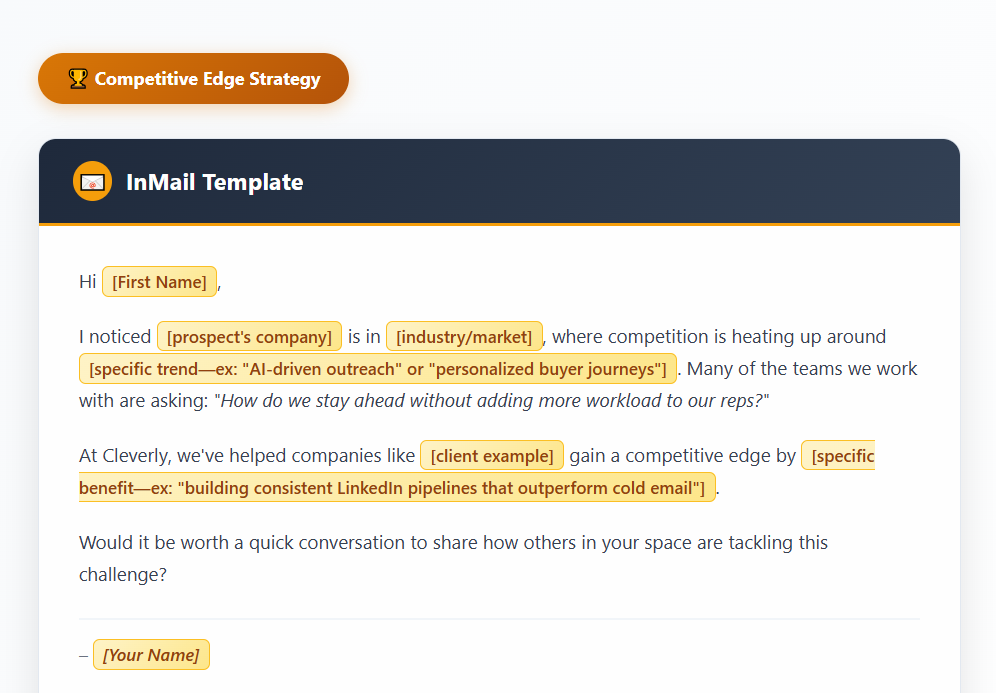
Why it works:
This template taps into a prospect’s natural fear of missing out. By framing your solution as a way to “stay ahead” in a competitive market, you make the conversation about protecting (or growing) their advantage, not just buying a service.
When to use it:
Great for prospects in competitive industries or when new trends are disrupting their space. This type of sales LinkedIn InMail template works well with decision-makers who want to benchmark themselves against peers.
5. The Time-Sensitive Offer
InMail Template:
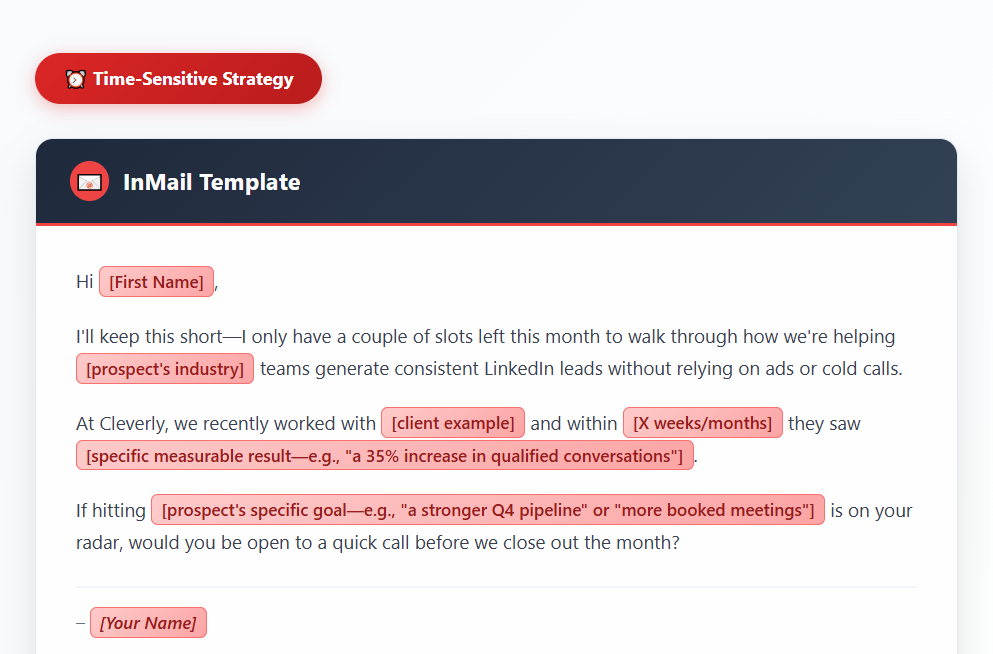
Why it works:
This template uses urgency but in a subtle, professional way. Instead of sounding spammy, it frames the timing as an opportunity. The specificity (limited slots, recent client result) makes it believable and action-oriented.
When to use it:
Best for warm or engaged prospects who are close to taking action but need a small nudge. This type of sales LinkedIn InMail template is ideal for end-of-quarter pushes or when you want to encourage quick decision-making.
LinkedIn InMail Templates by Seniority: CEO and Executive Sequences
A message that works on a marketing manager will usually fall flat on a CEO. Executives skim. They don't have time to read three paragraphs of context before they find out what you actually want.
That's why LinkedIn CEO outreach sequence templates need a different structure than the templates we covered above. Shorter opener. Fewer pleasantries. And critically, it's rarely a one-and-done message. It's a short sequence, built to earn attention across two or three touches instead of forcing it in one.
Why CEO-Level Messaging Needs a Shorter, Sharper Opener
A manager might reply to a message that opens with a compliment or a shared interest. A CEO wants to know why you're in their inbox in the first sentence.
Cut the warm-up. Lead with the one thing that matters to them: growth, risk, or competitive position. If you can't say it in the first line, it probably doesn't belong in a CEO template at all.
Reference the Company, Not the Person
Individual-level personalization (a recent post, a work anniversary) reads as small talk to a CEO. What lands instead is company-level context:
- A funding round or raise
- Recent expansion into a new market or region
- A shift in market position (new competitor, acquisition, leadership change)
This tells the CEO you understand their business, not just their LinkedIn activity.
Build a 2-3 Touch Sequence, Not a Single Message
Executives are busy, not unreachable. A single InMail competes with everything else in their inbox. A short sequence gives you two or three chances to land, each one lower pressure than the last.
Here's an example sequence we use:
Touch 1 — Initial InMail
"Congrats on the Series B. Expansion usually means outbound has to scale fast too. We've helped a few companies in your space book qualified meetings without adding headcount. Worth a 10-minute chat?"
Touch 2 — 5-Day Follow-Up
"Following up in case this got buried. Happy to send over a quick example of what we've done for similar companies post-raise, no call needed if that's easier."
Touch 3 — Low-Pressure Close
"No worries if now's not the right time. If outbound comes up as a priority later this quarter, feel free to reach out."
Why it works:
Each touch respects that a CEO's time is limited. The first message is a fast pitch tied to something real. The follow-up removes friction by offering something low-effort. The close keeps the door open without chasing. That combination is what makes LinkedIn CEO outreach sequence templates perform better than a single generic InMail ever could.
When to use it:
Reserve this sequence for founders, C-suite, and VP-level decision-makers where a single message won't carry enough weight to earn a reply.
LinkedIn InMail Templates for Recruiters
Sales InMails sell a solution. Recruiting InMails sell an opportunity, and that's a completely different conversation. If you send a candidate the same structure you'd send a prospect, it reads as tone-deaf. Nobody wants to feel "sourced" like a lead.
LinkedIn InMail templates for recruiters need to shift the entire frame: from what you're offering to what the candidate stands to gain.
Frame Around Career Growth, Not a Company Pitch
A sales template opens with a business problem. A recruiting template opens with the candidate's trajectory. Instead of "here's what we do," it's "here's where this could take you."
Passive candidates (the ones not actively job hunting) respond to messages that feel like a genuine opportunity, not a pitch deck.
Reference Specific Experience, Not Just a Job Title
Generic recruiter messages ("I saw your profile and think you'd be a great fit") get ignored constantly. Candidates can tell when a message was sent to 200 people with the same job title.
Instead, reference something specific:
- A project they led or shipped
- A skill they highlighted in their summary
- A career move that signals what they're looking for next
This is the same personalization principle from earlier in this guide, just pointed at a resume instead of a company profile.
Use a Lower-Pressure CTA
Sales CTAs ask for a meeting. Recruiting CTAs should ask for a conversation. "Open to a quick chat about where you're headed?" works far better than "Are you interested in this role?" with a passive candidate who isn't actively looking.
Example template:
"Came across your work on [specific project] and it's exactly the kind of experience we're looking for on a team we're building out. Not sure if you're exploring anything right now, but open to a quick, no-pressure chat about what it looks like?"
How This Differs from a Sales Template Structurally
When to use it: Best for sourcing passive candidates who aren't actively job hunting. The lower the perceived pressure, the higher the reply rate tends to be.
How to Customize LinkedIn InMail Templates for Higher Response Rates
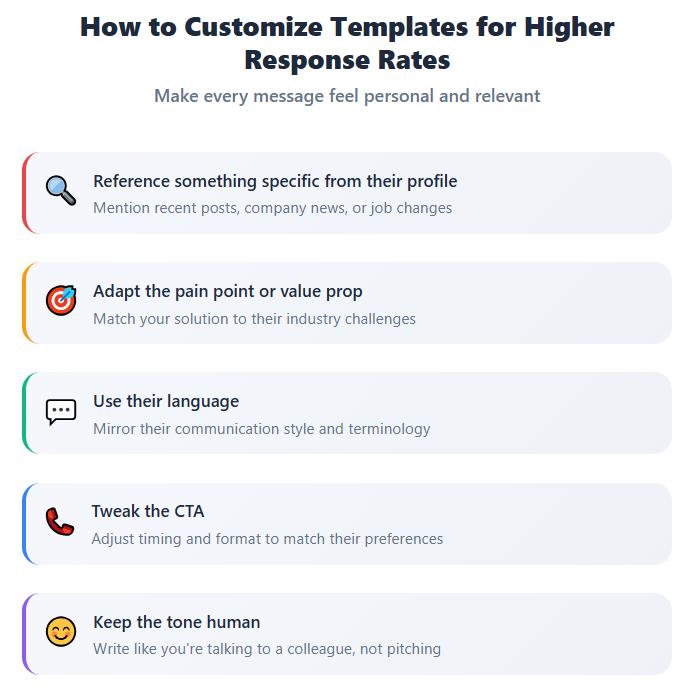
Even the best LinkedIn InMail templates won’t work if they feel copy-pasted. Prospects can spot generic outreach a mile away.
The real magic happens when you take a solid structure and personalize it so the recipient feels like the message was written just for them.
Here’s how to do it:
- Reference something specific from their profile – Mention their recent post, a shared connection, or a detail about their role. It shows you’ve done your homework.
- Adapt the pain point or value prop – Swap out the generic industry challenge for one that clearly applies to their company. For example, instead of “many teams struggle with lead quality,” try “I noticed your team is hiring more SDRs—are you finding lead quality keeping up with that growth?”
- Use their language – Mirror the words they use in job descriptions, posts, or company messaging. This makes your outreach sound familiar and relevant.
- Tweak the CTA – Instead of a one-size-fits-all call to action, adjust it to fit their level of interest. For a cold prospect, keep it low-friction (“open to connecting?”). For a warm lead, go for something more direct (“would you be open to a 20-min chat?”).
- Keep the tone human – Don’t over-polish. A natural, conversational style almost always gets higher response rates than corporate-sounding outreach.
When you customize thoughtfully, your LinkedIn InMail examples transform from “just another template” into messages that feel personal and genuine. That’s what makes people hit reply.
Why Partnering With a LinkedIn Lead Generation Agency Amplifies These Templates
Having proven LinkedIn InMail templates is half the battle—but pairing them with a trusted LinkedIn lead generation agency is what takes your outreach from good to unstoppable.
At Cleverly, we don’t just hand you scripts and wish you luck. We manage the full process, researching your ideal buyers, writing personalized outreach, and running campaigns that consistently land replies.
Our affordable pricing (just $397/mo) makes it easy for businesses of all sizes to scale without breaking the budget.
The results speak for themselves:
- 10,000+ clients served across industries
- Partnerships with companies like Amazon, Google, Uber, PayPal, Slack, and Spotify
- $312M in pipeline revenue generated
- $51.2M in closed revenue directly from LinkedIn outreach
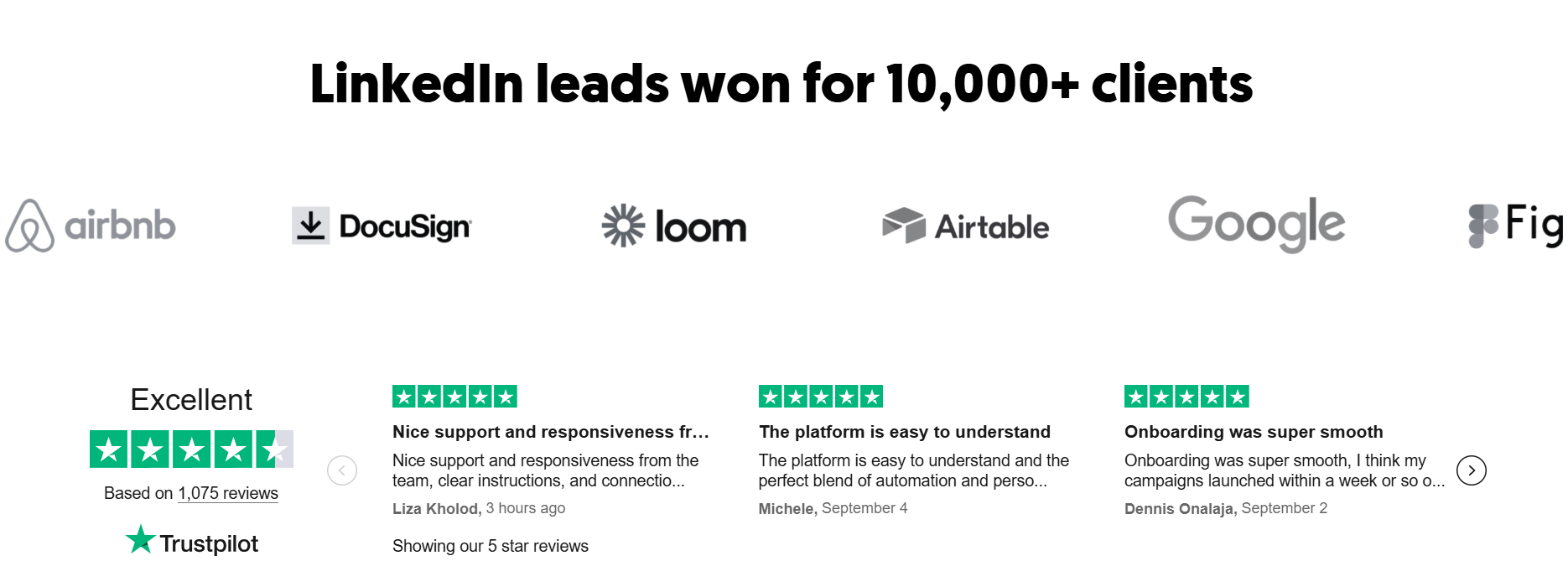
When you combine our done-for-you LinkedIn lead generation campaigns with these high-converting LinkedIn InMail examples, you get outreach that feels personal, professional, and scalable—all without adding work to your plate.
👉 Ready to turn conversations into revenue? Let’s build your pipeline together.
Frequently Asked Questions
Free Resource
How to Scale a Profitable Cold Call System
Get the complete guide — download it instantly now.
Free Ebook
Download the Free Guide
Enter your details to get instant access.
You're all set! 🎉
Your ebook is downloading now.
Click below if the download didn't start automatically.