Table of Contents
What Is Multithreading in Sales?
Multithreaded vs Single-Threaded Sales (Key Differences)
Signs Your Team Needs to Start Multithreading Right Now
The 4-Step Multithreading Sales Framework (Proven Method)
Key Roles You Should Always Include in Your Multithreading Strategy
Multithreading Email & LinkedIn Templates (Ready to Customize)
Tools That Make Multithreading Easier
How to Measure the Success of Multithreading in Your Pipeline
Common Mistakes When Implementing Multithreading (And How to Avoid Them)
How Cleverly Helps Companies Multithread Deals Through Better Lead Generation
Conclusion
Frequently Asked Questions
Modified On :
September 8, 2026
Key Takeaways
- Multithreading in sales means engaging 4-6+ stakeholders per deal instead of relying on one contact.
- Multi-threaded deals close 20-35% faster and win at 2-3x the rate of single-threaded deals because you're not dependent on one person's schedule or influence.
- Always identify and engage six key roles: champion, decision-maker, economic buyer, end user, technical stakeholder, and legal/procurement.
- Personalize your messaging for each stakeholder: CFOs care about ROI, VPs care about outcomes, end users care about usability.
- Start multithreading from day one of every deal, not as a last resort when your main contact goes silent.
- Track the right metrics: number of engaged stakeholders, deal velocity, multi-threaded vs single-threaded win rates, and multi-contact engagement scores.
A promising deal can fall apart when the only active contact changes jobs, stops replying, or fails to secure internal support. Sales multithreading reduces that risk by building direct relationships with several people involved in the purchase.
That means engaging the champion, economic buyer, decision-maker, end users, technical evaluators, and procurement team before one missing voice stalls the opportunity.
Each stakeholder gets a message tied to their priorities, while the entire buying group stays aligned around the same business case.
This guide explains how to map the buying committee, spot single-threaded deals, coordinate stakeholder outreach, use CRM reminders, and measure whether multithreading is improving pipeline quality.
What Is Multithreading in Sales?
Sales multithreading is the practice of building relationships with multiple stakeholders inside the same target account or active opportunity. Instead of depending on one contact, the seller engages the people who influence budget, technical approval, adoption, procurement, and the final decision.
You're not just talking to one person—you're connecting with the end user, their manager, the budget holder, and maybe even someone from procurement or IT. All simultaneously.
Why Multithreading Became Essential
B2B buying decisions aren't made by one person anymore. The average B2B purchase now involves 6-10 decision-makers, according to Gartner. That VP you've been talking to? They need buy-in from finance, sign-off from their boss, and approval from the team who'll actually use your product.
Multithreading sales emerged because companies realized distributed decision-making is the norm now, not the exception. One enthusiastic contact can't force a deal through on their own.
The Buying Committee Reality
Every deal has what we call a buying committee—a group of stakeholders who each have veto power or influence over the purchase:
- The economic buyer (holds the budget)
- The technical buyer (evaluates if it actually works)
- The end user (will they adopt it?)
- The champion (sells it internally for you)
Miss any of these people, and your deal stalls or dies. Multithreading in sales means you're intentionally mapping out and engaging this entire committee, not hoping your one contact handles it for you.
It's Risk Mitigation + Momentum
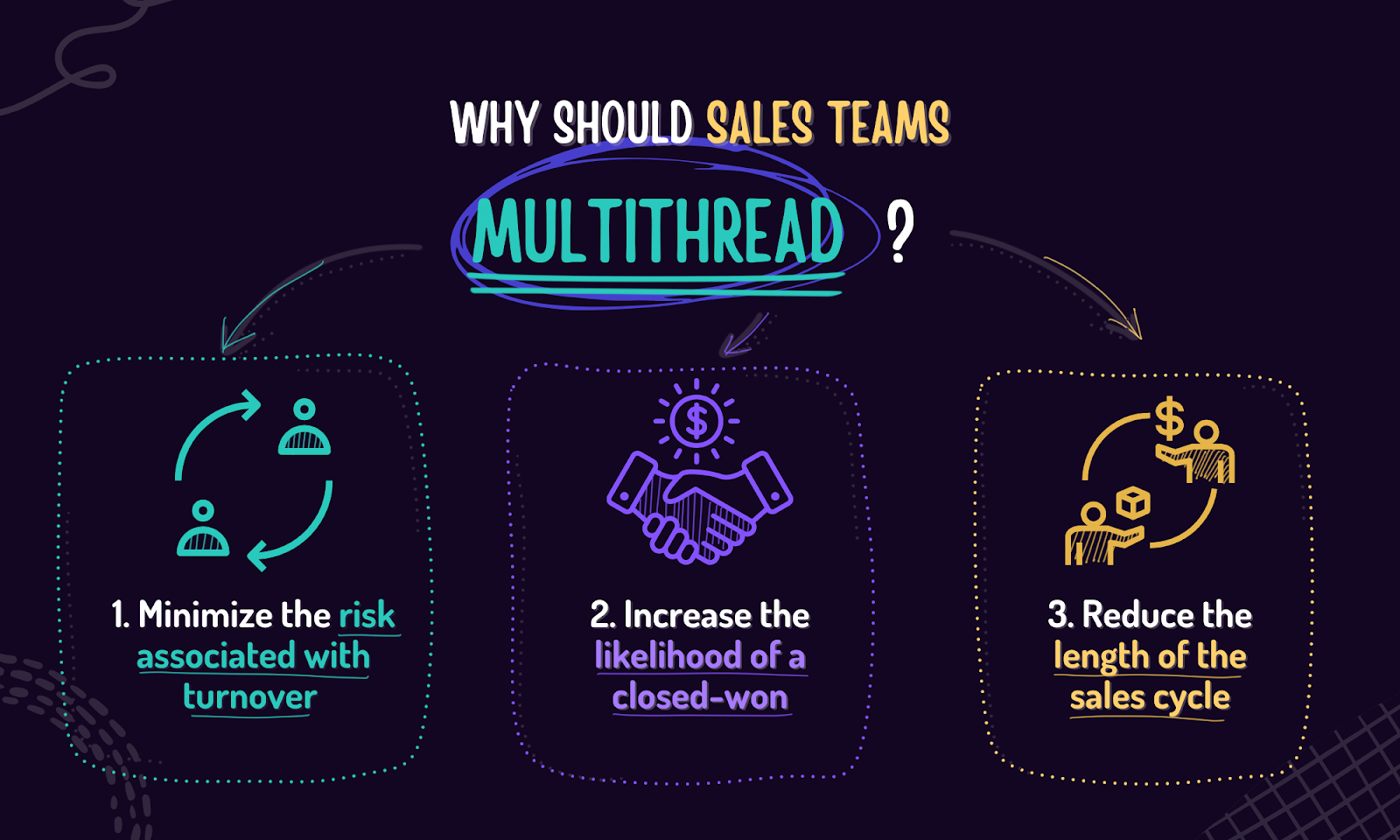
Here's the brutal truth: your champion quits, gets promoted, or goes on leave—and your deal evaporates. We've seen it happen countless times.
Multithreading protects you from single points of failure while simultaneously building momentum across the organization. When multiple people are excited about your solution, deals move faster and close more predictably.
Check This Out: 15+ Lead Magnet Ideas That Attract High-Quality Leads (Not Just Sign-Ups)
🔥 Talk to More Decision-Makers
Cleverly sends you qualified, multithread-ready leads so your team engages more stakeholders - and closes more deals.
Multithreaded vs Single-Threaded Sales (Key Differences)
Let's break down multithreaded vs single threaded sales so you can see exactly why one approach consistently outperforms the other.
The Real Difference
The numbers tell the story.
In multithreaded vs single threaded sales scenarios, multithreaded deals close 35% faster and have 2.5x higher win rates, according to sales data from companies like Gong.
Let’s learn with examples:
Single-thread failure: You spend three months building a relationship with a Director of Sales. They love your solution, you're forecasting the deal to close next quarter. Then they accept a job at another company. You try reaching their replacement, but they want to "evaluate all options" and bring in their preferred vendor. Deal lost.
Multithread win: You're talking to the same Director of Sales, but you've also connected with their VP, two team leads who'll use the product, and someone from finance who controls budget approvals. When the Director leaves, the VP emails you directly to keep the deal moving because they're already bought in. The team leads are asking when they can start. Deal closes on schedule.
See the difference? Multithreading sales turns one potential failure point into multiple safety nets.
Why Top AEs Never Single-Thread
Walk into any high-performing sales organization and you'll notice something: the AEs crushing quota aren't riding or dying with one champion. They're methodically building relationships across the entire buying committee from day one.
They know that even the best champion can't control every variable—budget freezes, priority shifts, internal politics, or simply getting overruled by their boss. When you're multithreaded, none of these become deal-killers. You've got allies at every level who can navigate obstacles and keep momentum going.
The reps struggling at 60% attainment? They're usually the ones saying "my champion said they'll handle it internally." Don't be that rep.
Signs Your Team Needs to Start Multithreading Right Now
If any of these sound familiar, you've got a multithreading sales problem that's costing you deals.
Your Deals Keep Hitting These Walls
👎 Momentum dies after the first few calls.
You had a great discovery call, sent the proposal, and then... crickets. Your contact says they're "still reviewing internally" for weeks. This is classic single-threading—you don't have visibility into what's actually happening inside their organization because you're only talking to one person.
👎 Decision-makers are mysteriously unavailable.
Your champion keeps saying "I need to run this by my boss" or "the VP wants to be involved," but that meeting never materializes. Translation: you don't have direct access to the people who actually sign contracts. Multithreading sales would have you talking to that VP directly from the start.
👎 Prospects vanish without explanation.
One day they're engaged, the next they've stopped responding entirely. No rejection, no feedback, just silence. When you're single-threaded, you have zero recourse. If that one person ghosts, your deal is dead.
👎 You've got one champion but zero traction.
They love your solution and talk a big game, but nothing moves forward. Here's what's really happening: they don't have the internal political capital or authority to get this across the finish line, and you have no relationships with the people who do.
Your Market Reality Check
👎 You're selling into mid-market or enterprise accounts.
If your average contract value is above $15K annually, you're not selling to individuals—you're selling to organizations. Organizations don't make decisions through one person. Period. Multithreading sales isn't optional at this level, it's mandatory.
👎 Your ICP involves buying committees.
Look at your closed-won deals and count how many people were involved. If it's consistently 3+ people, but your reps are only engaging 1-2 contacts per opportunity, you've identified the gap. You're hoping champions navigate internal complexity for you instead of building those relationships yourself.
The fix? Start implementing a multithreading sales strategy today. Map out the buying committee for every deal, identify who you're missing, and get introduced. We'll show you exactly how in the next section.
🚀 Close Faster With Better Leads
We deliver meeting-ready buyers to your pipeline. You focus on selling—we handle the prospecting. Pay only for qualified leads.
The 4-Step Multithreading Sales Framework (Proven Method)
Here's the multithreading sales strategy that's helped us generate $312 million in pipeline across 10,000+ clients.
Follow these four steps and you'll never lose a deal to single-threading again.
Step 1: Map Every Stakeholder
Before you send a single message, you need to know who's actually involved in the buying decision. We're talking about identifying:
- Decision-makers (who signs the contract and controls budget)
- Users (who'll actually use your product daily)
- Influencers (trusted advisors who shape opinions)
- Blockers (people who can kill the deal—procurement, IT, legal)
How to research this: LinkedIn Sales Navigator is your best friend here. Search the company, filter by department, and look at seniority levels. For a sales tool, you'd typically find the VP of Sales (decision-maker), sales managers (users), RevOps Director (influencer), and IT Director (potential blocker).
Check their profiles for recent activity, shared connections, and what they care about. This intel shapes your entire multithreading sales strategy.
Start with a documented ideal customer profile, then identify the departments and seniority levels that typically influence the purchase.
Step 2: Personalize Outreach for Each Persona
Here's where most reps screw up—they send the same pitch to everyone. Your CFO doesn't care about the same things your Head of Sales does. Different roles, different angles:
- CFO: Cost savings, ROI, efficiency gains. "We've helped companies reduce CAC by 40% while scaling pipeline predictably."
- Head of Sales: Team performance, quota attainment, pipeline visibility. "Your team books 30% more qualified meetings without adding headcount."
- COO: Operational efficiency, scalability, reducing bottlenecks. "Streamline your entire outbound process with half the operational overhead."
- RevOps: Data accuracy, integration ease, reporting capabilities. "Clean data flow into your CRM with zero manual entry."
Use this messaging framework for every persona: Pain → Impact → ROI. What problem do they specifically have? What's the business impact of not solving it? What's the measurable return if they do?

Step 3: Create Multi-Channel Touchpoints
Don't just hit LinkedIn or just send emails. A strong multithreading sales strategy uses multiple channels to reach each stakeholder:
- LinkedIn: Connection request with personalized note → engage with their content → send value-first message
- Email: Personalized cold email → follow-up with case study → share relevant insight
- Phone: Direct call to mobile or office line → voicemail with specific value prop
- Referrals: Ask your champion to introduce you → mutual connection warm intro
The goal isn't to spam people across channels—it's to meet them where they're most responsive. Some executives ignore LinkedIn but answer their phone. Others are email-only. Test and adapt.
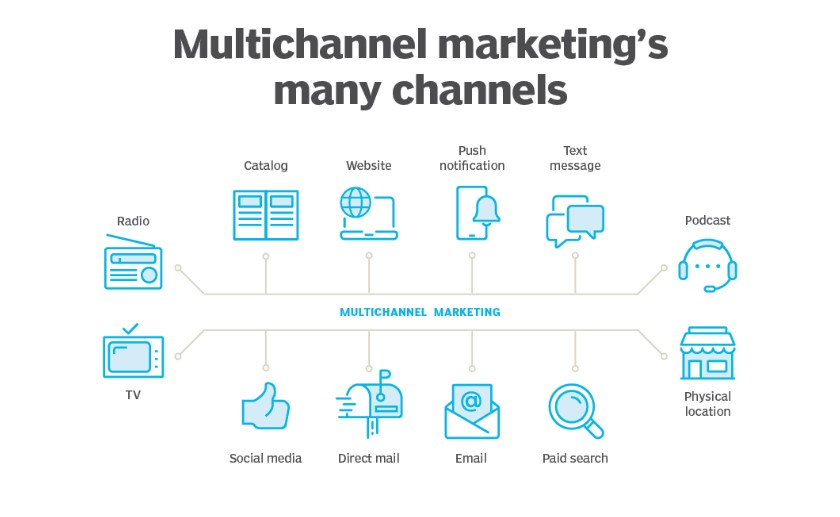
This is exactly how our lead generation services work at Cleverly. We run LinkedIn outreach, cold email campaigns, and cold calling simultaneously to ensure we're reaching decision-makers through their preferred channel. When you're multithreading at scale, multi-channel becomes non-negotiable.
For larger accounts, an enterprise LinkedIn lead generation process can help identify and engage several members of the buying group.
Step 4: Keep Everyone Engaged Throughout the Deal
You've made contact with multiple stakeholders—now don't let anyone fall off. Here's how to maintain momentum:
- Multi-stakeholder email follow-ups
After any call or demo, send a summary email that CC's everyone involved. "Hi [Champion], looping in [CFO] and [VP Sales] since we discussed budget and team rollout on today's call." - Group demo invitations
Don't do separate demos for each person. Invite the entire buying committee to one session. It forces alignment, surfaces objections early, and saves everyone time. - Alignment summaries after calls
Send a brief recap highlighting what each stakeholder cares about. "For [CFO]: projected 40% reduction in CAC. For [Head of Sales]: 10-30 qualified appointments per month. For [RevOps]: direct Salesforce integration with minimal manual entry."
When everyone sees you're addressing the whole committee's needs simultaneously, deals move faster. That's multithreading sales strategy in action—keeping all threads active, aligned, and moving toward close.
Adjust Your Multithreading Approach by Deal Stage
Multithreading should begin before the first demo, but the contacts and objective change as the opportunity progresses.
During prospecting and discovery, focus on finding the people affected by the problem. Invite relevant managers and end users into the first conversation so you can understand how the issue affects different teams.
During evaluation, add the technical stakeholders responsible for security, integrations, implementation, and data handling. Their concerns should surface before the deal reaches final approval.
During the business-case stage, engage the economic buyer and executive sponsor. Connect the proposed solution to revenue, cost, risk, or another measurable company priority.
Before procurement, confirm who reviews contracts, approves vendors, and signs the agreement. Record each person’s role, concerns, and next action in the CRM so a late-stage requirement does not reset the sales process.
Key Roles You Should Always Include in Your Multithreading Strategy
When you're building out your multithreading in sales approach, these are the six roles you need to identify and engage in every deal. Miss one, and you risk the deal stalling or dying.
✅ Champion
This is your internal advocate—the person who actively sells your solution when you're not in the room. They believe in what you're offering and want to see it implemented.
Why they matter: Champions navigate internal politics, schedule meetings with other stakeholders, and provide intel on how decisions actually get made. But here's the catch: a champion alone can't close a deal. They need air cover from decision-makers and budget approval from economic buyers.
How to engage them: Arm them with the materials they need to sell internally—ROI calculators, case studies, competitive comparisons, and talking points for each stakeholder.
Also Check: What is Automated Lead Nurturing and How Does it Work?
✅ Decision-Maker
This is typically a VP or C-level executive who has final say on whether the deal happens. They're evaluating strategic fit, not just features.
Why they matter: Even if everyone else loves your solution, the decision-maker can kill it if they don't see alignment with company priorities. In multithreading in sales, you cannot skip this person.
How to engage them: Focus on business outcomes, not product features. They care about revenue impact, competitive advantage, and strategic initiatives—not your UI or API documentation.
✅ Economic Buyer
The person who controls the budget and signs the contract. Sometimes this is the same as the decision-maker, but often it's not—think CFO, finance director, or department head with P&L responsibility.
Why they matter: No budget approval = no deal, regardless of how enthusiastic everyone else is. They're evaluating ROI, payback period, and whether this fits into their financial planning.
How to engage them: Lead with numbers. Show clear ROI projections, cost comparisons against current solutions or in-house efforts, and ideally reference similar companies they'd recognize who've seen measurable returns.
✅ End User
The people who'll actually use your product day-to-day—sales reps, marketing managers, customer success teams, whoever.
Why they matter: If end users hate the solution, adoption fails and you get churned at renewal. Plus, decision-makers often ask for their input during evaluation. Strong end-user buy-in accelerates deals because they pressure management to move faster.
How to engage them: Show them how it makes their job easier, not harder. Focus on usability, time savings, and removing friction from their daily workflow. Let them test drive it if possible.
✅ Technical Stakeholder
This could be IT, security, RevOps, or a technical architect—anyone who evaluates whether your solution actually works within their existing infrastructure.
Why they matter: Technical blockers kill deals silently. If IT says "this won't integrate with our systems" or security flags data concerns, you're done. In effective multithreading in sales, you surface these objections early by engaging technical stakeholders upfront.
How to engage them: Be specific about integrations, security certifications, data handling, and implementation requirements. If you're vague or try to gloss over technical details, they'll assume the worst and block the deal.
✅ Legal/Procurement
The folks who review contracts, negotiate terms, and ensure compliance with company purchasing policies.
Why they matter: You can have everyone else signed off and still spend months in legal review if you haven't engaged them properly. Procurement might also have preferred vendor relationships or requirements you need to navigate.
How to engage them: Get ahead of contract reviews by sharing your standard agreement early, or use AI contract review tools to reduce delays in the process and quickly address compliance concerns. Ask about procurement processes, approval workflows, and any vendor requirements upfront. The earlier you know their concerns, the faster you move through this stage.
When you systematically identify and engage all six of these roles, you're executing true multithreading in sales—not just hoping one champion carries your deal across the finish line. Map them, personalize your approach for each, and keep everyone aligned throughout the sales cycle.
Consistent stakeholder messaging also depends on a clear sales enablement strategy that gives reps role-specific proof, case studies, and objection responses.
Multithreading Email & LinkedIn Templates (Ready to Customize)
Here are the exact templates we use in our multithreading sales process. Copy them, personalize them, and use them to engage multiple stakeholders without sounding pushy or redundant.
Template 1: Reaching Out to Additional Stakeholders
When to use: You're already talking to one contact and need to connect with other decision-makers.
Email/LinkedIn:
Subject: Quick question about [specific initiative]
Hi [Name],
I've been working with [Champion Name] on [specific outcome—e.g., improving your outbound process], and they mentioned you oversee [their responsibility].
Quick context: We've helped companies like [similar company] achieve [specific result] by [brief how]. Given your focus on [their known priority], I thought it'd be worth a quick conversation.
Would 15 minutes this week work to explore if this makes sense for [Company]?
[Your Name]
Template 2: "Soft Introduction" Template
When to use: Your champion agrees to introduce you to other stakeholders but you're facilitating the intro.
Email:
Subject: [Champion] recommended we connect
Hi [New Stakeholder],
[Champion Name] suggested I reach out since you're involved in [relevant area—e.g., budget planning for sales tools].
We've been discussing how [Company] could [specific goal], and [Champion] thought your perspective on [their domain] would be valuable.
I'm not looking to add another meeting to your calendar unnecessarily—just wanted to see if a brief conversation makes sense. Happy to share what we've discussed with [Champion] so far.
Does [day/time] work for a quick 15-minute call?
[Your Name]
Template 3: Cross-Department Outreach Template
When to use: You need to loop in someone from a completely different department (like IT, finance, or legal) into a sales-focused conversation.
Email:
Subject: Integration question for [Company's] evaluation
Hi [Name],
I'm working with [Champion] in [their department] on [solution category—e.g., outbound lead generation], and your team's input would be helpful as we finalize details.
Specifically around [their area—e.g., data security, CRM integration, contract terms]. We want to make sure this works smoothly across departments, not just for sales.
Would you have 10 minutes this week for a quick technical walkthrough? Happy to work around your schedule.
[Your Name]
Why this works: You're positioning yourself as thorough and respectful of their domain, not trying to sneak a sale past them.
Template 4: Referral Ask Template
When to use: You need your champion to introduce you to the economic buyer or decision-maker.
Email to Champion:
Subject: Quick favor—intro to [Decision-Maker]
Hi [Champion],
Really appreciate our conversations so far. As we move toward [next step—e.g., finalizing the proposal], it'd be helpful to get [Decision-Maker Name]'s input on [specific area they care about—e.g., budget allocation, strategic priorities].
Would you be comfortable making an introduction? I want to make sure we're aligned with their expectations before moving forward.
Happy to draft something if that's easier for you.
Thanks, [Your Name]
Pro tip: Offering to draft the intro email makes it effortless for your champion to say yes.
Template 5: Meeting Alignment Email Template
When to use: After any call involving multiple stakeholders, send this to keep everyone aligned and engaged.
Email:
Subject: Quick recap—[Company] + [Your Company] discussion
Hi everyone,
Thanks for taking the time today. Here's a quick summary of what we covered:
What we discussed:
- [Key point 1 relevant to Decision-Maker]
- [Key point 2 relevant to End User]
- [Key point 3 relevant to Economic Buyer]
Next steps:
- [Your team's action item]
- [Their team's action item]
- [Scheduled follow-up meeting/demo]
What this means for each of you:
- [Decision-Maker Name]: [specific outcome for their priorities]
- [Economic Buyer Name]: [ROI/cost implications]
- [End User Name]: [how this impacts their daily workflow]
Let me know if I missed anything or if questions come up before our next call on [date].
[Your Name]
Why this works: Everyone sees you're addressing their individual concerns while keeping the whole group aligned—textbook multithreading sales.
Template 6: Objection-Handling Template for Multithreading
When to use: A stakeholder pushes back on involving more people ("just work through me").
In conversation or email:
"I understand why you want to keep the process simple. Here's why I'm suggesting we loop in [other stakeholder]: in our experience, deals move faster when [specific role] is involved early because [specific reason—e.g., budget questions get answered immediately, technical requirements are clear upfront].
It actually saves everyone time because we're not going back and forth later. Would it make sense to just get 15 minutes with them now to confirm [specific thing], so we can move forward confidently?"
Why this works: You're positioning additional stakeholders as accelerating the deal, not complicating it.
These templates are the foundation of effective multithreading sales. Customize them based on your industry, deal size, and company culture—but the structure works across the board.
The key is making each stakeholder feel like you're solving their specific problem, not just blasting the same pitch to everyone.
Tools That Make Multithreading Easier
Executing multithreading in sales manually is a nightmare—tracking multiple contacts, personalizing outreach at scale, and keeping everyone engaged requires the right tech stack. Here's what actually works.
How to Identify Deals Missing Buying-Committee Members
A useful multithreading tool should show more than the number of contacts attached to an opportunity. It should reveal which buying roles are represented, which roles are missing, and whether each contact is actively engaged.
Start by defining the roles required for the deal: champion, economic buyer, decision-maker, end user, technical evaluator, and procurement contact. Then create CRM fields for stakeholder role, influence level, support level, last meaningful interaction, and agreed next step.
Relationship-mapping and deal-intelligence tools can flag opportunities where only one person attends meetings, replies to emails, views shared material, or completes action items. These are warning signs that the opportunity remains single-threaded even if several contacts have been added to the CRM.
The right question is not “How many contacts are on this deal?” It is “Do we have active support from the people who control budget, approval, adoption, and implementation?”
LinkedIn Sales Navigator (Stakeholder Mapping)
Best for: Identifying and researching every stakeholder in your target accounts.
LinkedIn Sales Navigator lets you filter by company, department, seniority level, and job function to map out the entire buying committee. You can see who's connected to whom, track job changes that might impact your deals, and get alerts when stakeholders share content or change roles.
Why it matters for multithreading: You can't engage multiple stakeholders if you don't know who they are. Sales Navigator gives you the blueprint of every account's org structure and decision-makers.
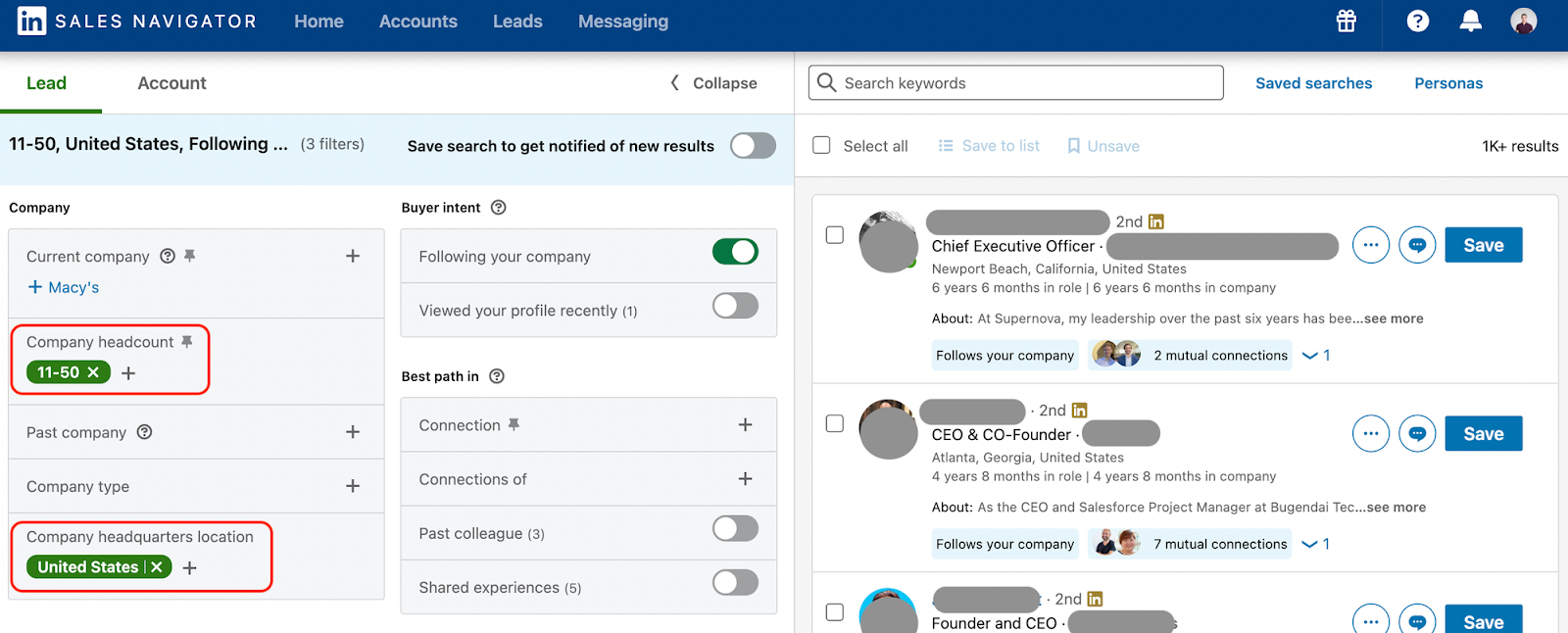
Use a structured LinkedIn Sales Navigator lead workflow to find adjacent decision-makers and organize them by account.
Apollo / ZoomInfo (Contact Discovery)
Best for: Finding accurate contact information—emails, direct dials, mobile numbers—for every person on your stakeholder map.
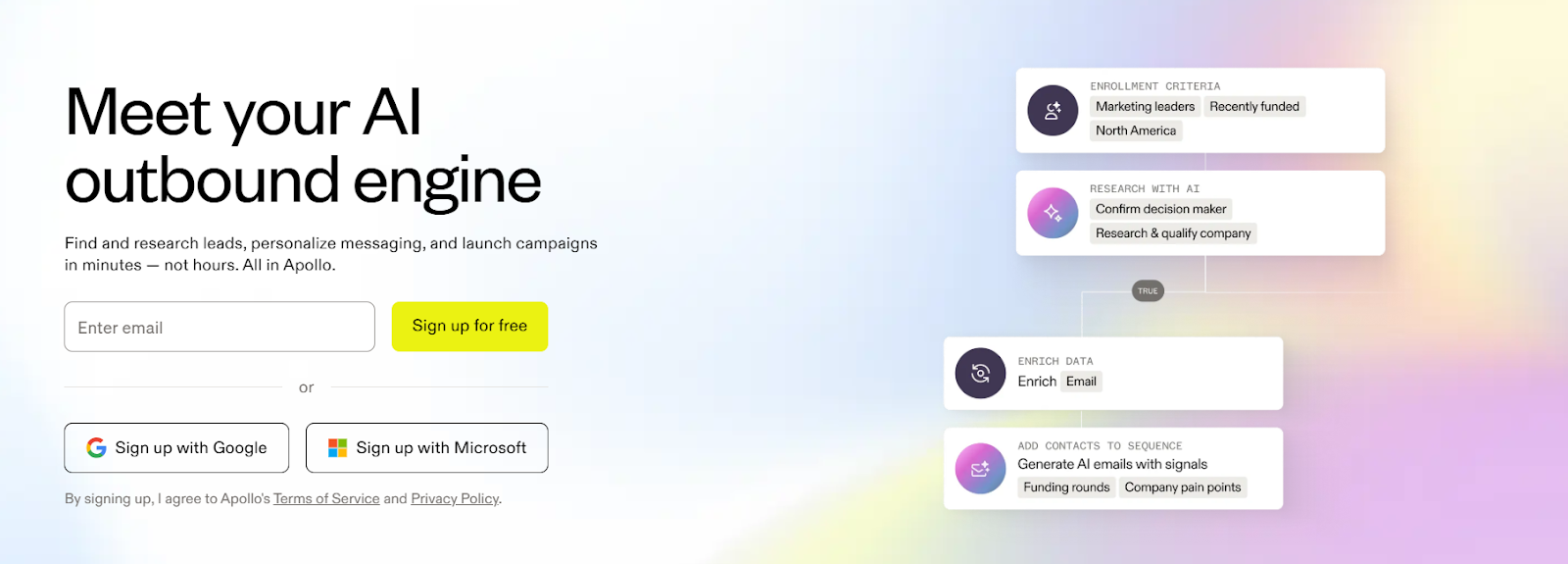
Both platforms provide verified contact data and company intelligence. Apollo is more affordable and includes built-in sequencing. ZoomInfo has deeper data coverage, especially for enterprise accounts.
Why it matters for multithreading: Once you've identified your stakeholders in Sales Navigator, you need their actual contact details. These tools fill that gap so you can reach decision-makers, economic buyers, and end users directly.
HubSpot / Salesforce (Tracking Multi-Contact Sequences)
Best for: Managing relationships with multiple contacts per account without losing track of who said what.
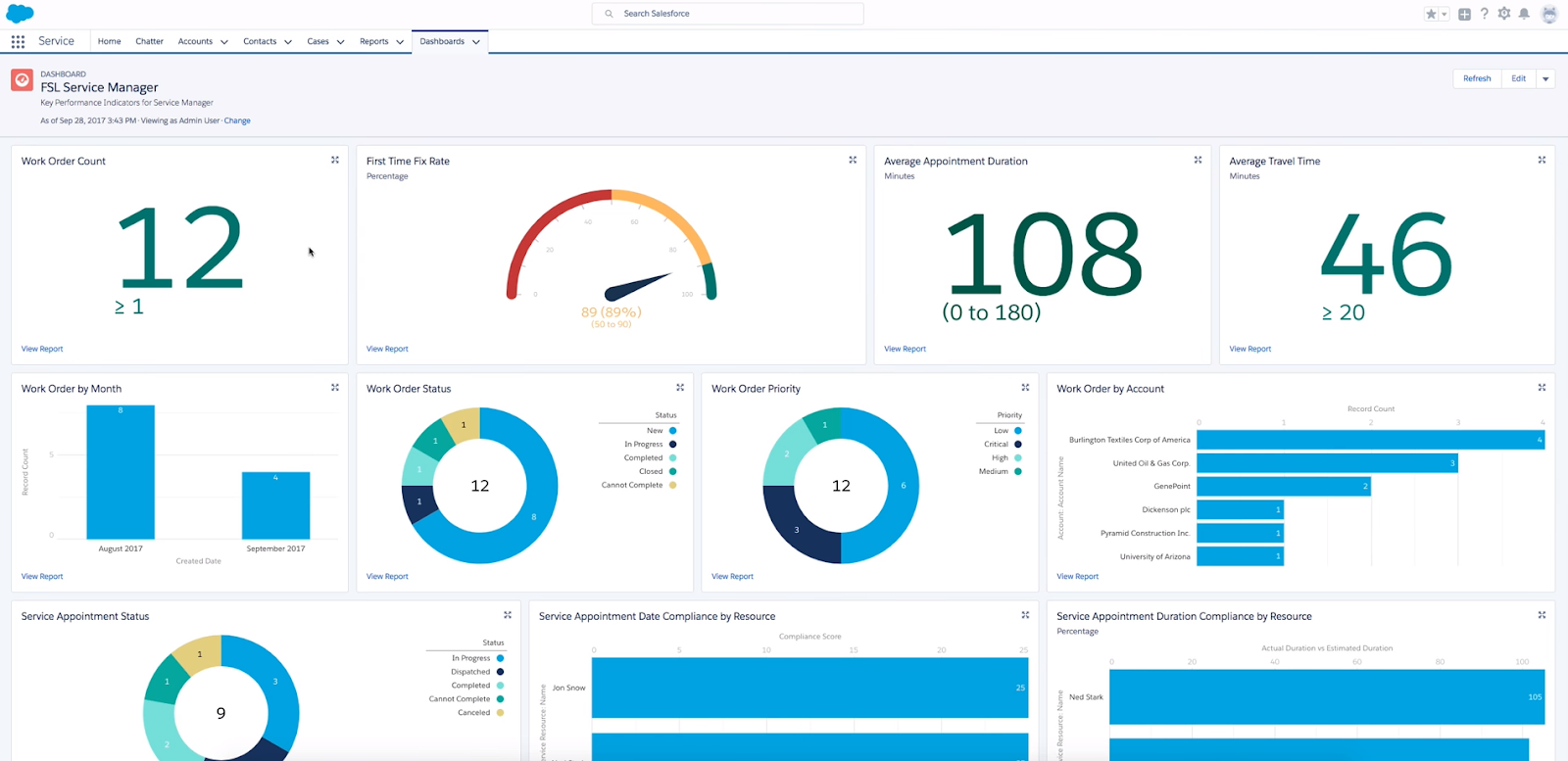
Both CRMs let you associate multiple contacts to a single deal, log interactions across all stakeholders, and create custom fields to track each person's role (champion, decision-maker, blocker, etc.). You can see the complete relationship map and communication history in one place.
Why it matters for multithreading: When you're talking to 5-8 people per deal, you need a system that shows you exactly where each relationship stands and prevents anyone from falling through the cracks. Your CRM is the central nervous system of your multithreading in sales strategy.
Automated Reminders for Multithreaded Enterprise Deals
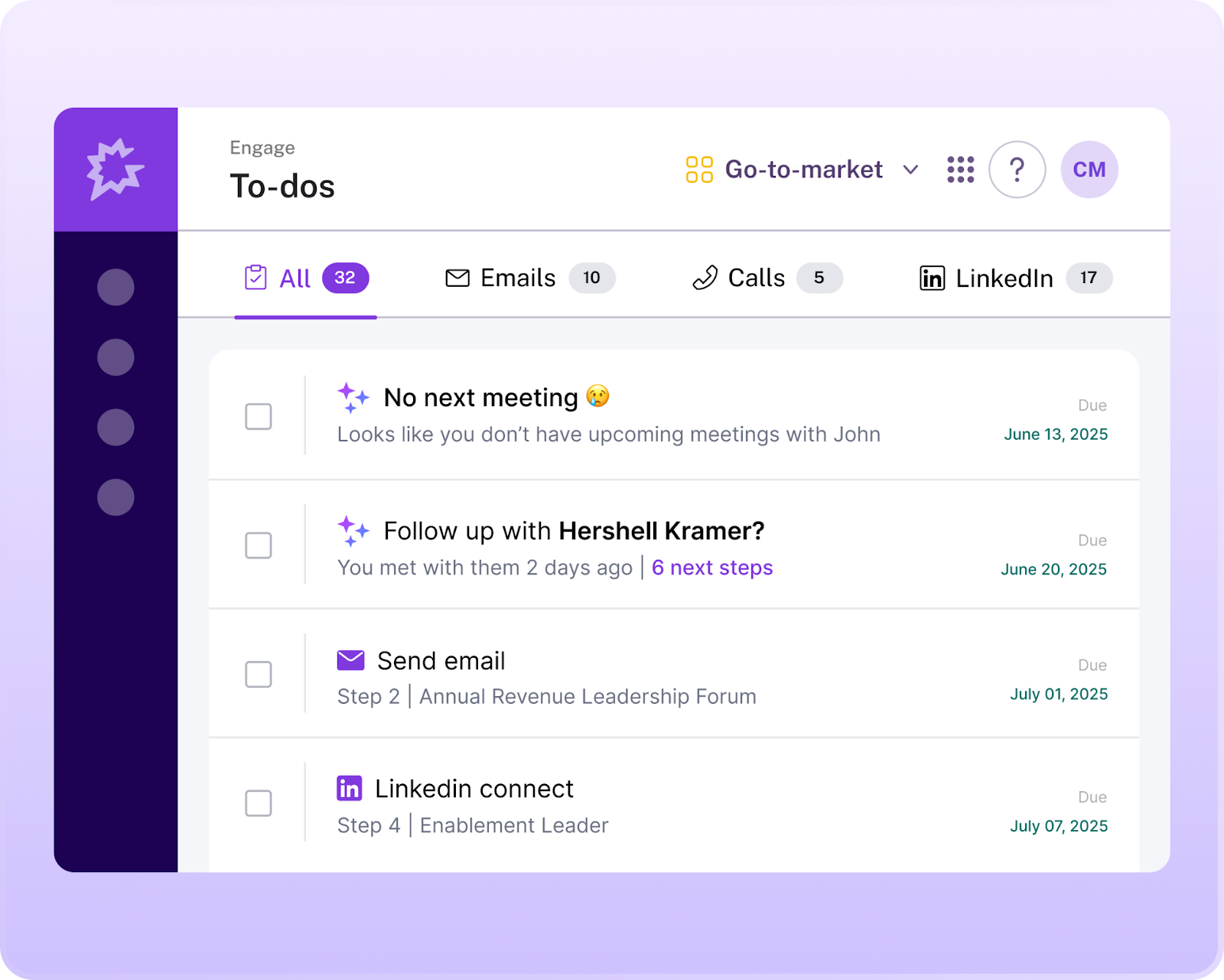
Long sales cycles make it easy for stakeholder relationships to go quiet. Automated reminders help reps maintain coverage without relying on memory or scattered notes.
Set CRM reminders when:
- No new stakeholder has been engaged after discovery
- The economic buyer has not joined before proposal review
- A technical evaluator has not responded within the agreed timeframe
- A key contact changes roles or leaves the company
- One stakeholder has completed every recent action
- An active contact has not received a relevant update
- A promised introduction is overdue
Each reminder should create a specific action, such as asking the champion for an introduction, contacting an adjacent stakeholder, sending role-specific proof, or scheduling a technical review.
Avoid sending identical automated messages to every member of the committee. Automation should prompt the right human action, while the message remains relevant to the stakeholder’s role and current deal stage.
Gong (Multi-Stakeholder Call Insights)
Best for: Analyzing conversations with multiple stakeholders to understand sentiment, identify blockers, and spot deal risks.
Gong records and transcribes sales calls, then uses AI to surface key moments—questions about pricing, concerns about implementation, competing solutions mentioned, or buying signals from different stakeholders. You can track which stakeholders are engaged versus skeptical.
Why it matters for multithreading: When you're managing conversations with an entire buying committee, Gong helps you spot patterns across stakeholders. Maybe your champion is enthusiastic but the CFO keeps raising ROI concerns—that insight changes your next move.
Outreach / Salesloft (Multi-Threaded Sequencing)
Best for: Running personalized, automated sequences to multiple stakeholders simultaneously without them feeling like they're in a mass campaign.
Both platforms let you create sequences that target different personas with different messaging, track engagement across all contacts in an account, and coordinate touchpoints so you're not accidentally spamming people.
Why it matters for multithreading: You can't manually send personalized emails to 6 people per account across 30 active deals. These tools automate the repetitive parts while keeping your outreach personal and coordinated—essential for scaling multithreading in sales.
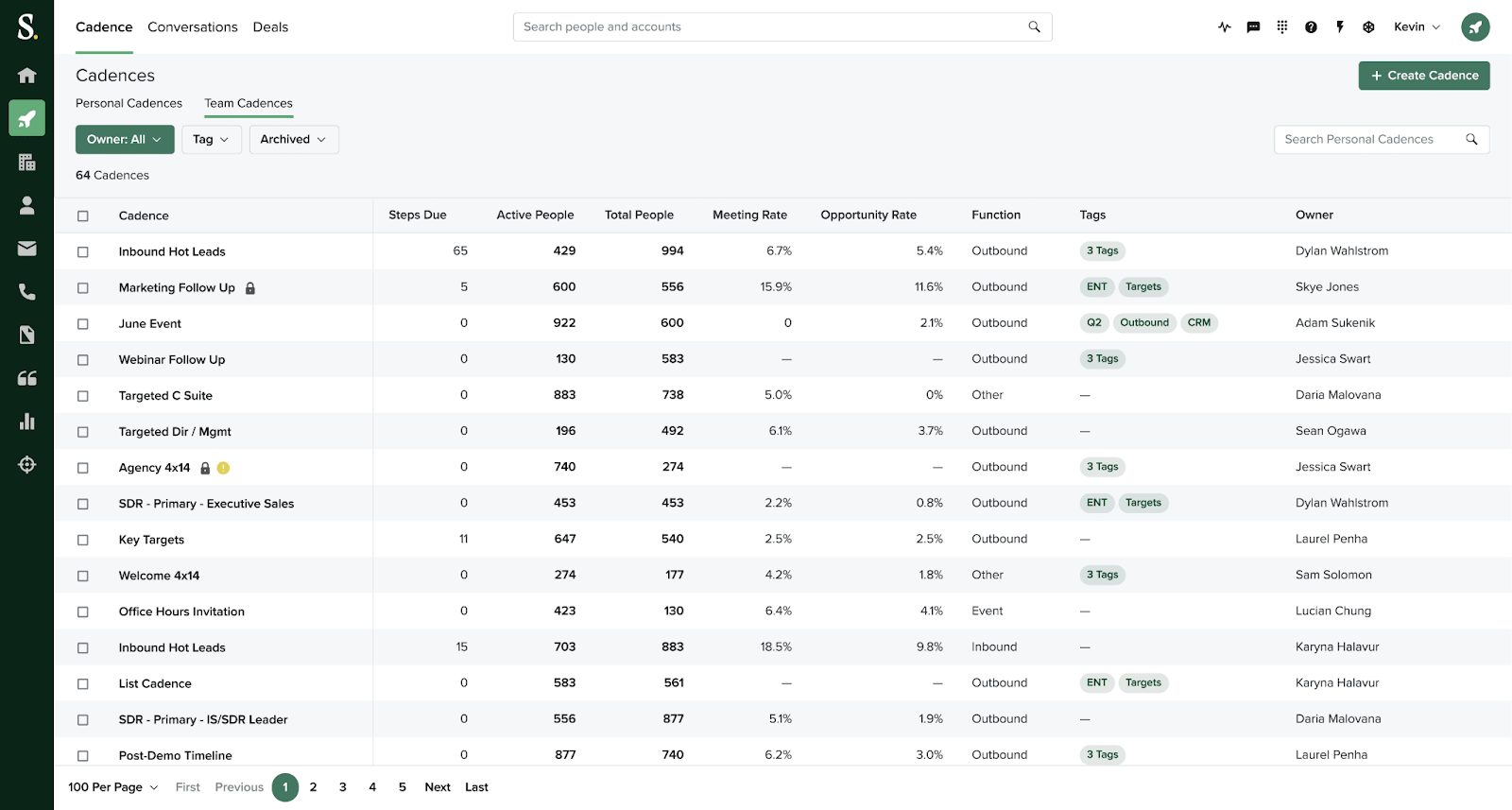
Shared Email Threads & Deal Intelligence Tools
Best for: Keeping entire buying committees engaged in one conversation thread and surfacing real-time deal insights.
Tools like Dooly help you create mutual action plans that all stakeholders can access. Clari provides deal intelligence and forecasting based on multi-contact engagement. DocSend tracks who's viewing your proposals and for how long, showing you which stakeholders are actually engaged.
Why it matters for multithreading: These tools create transparency and shared accountability. When the CFO, VP of Sales, and RevOps Director can all see the same timeline and deliverables, deals move faster because everyone's aligned on next steps.
The Reality Check: You don't need every tool on this list to start executing multithreading in sales. Start with Sales Navigator for mapping, your CRM for tracking, and one sequencing tool for outreach. Layer in the others as your process matures.
Explore More Here: Best Cold Email Software (Tested & Compared)
How to Measure the Success of Multithreading in Your Pipeline
You can't improve what you don't measure. Here's how to track whether your multithreading sales strategy is actually working or just adding busywork to your reps' calendars.
Multithreading success should be measured through stakeholder coverage and deal movement, not raw contact count. Track whether the right roles are engaged, whether participation is spreading across the account, and whether broader engagement improves deal velocity, win rate, and forecast accuracy.
How to Identify Single-Threaded Deals During Pipeline Review
A deal is single-threaded when progress depends primarily on one active relationship. Having several names attached to the account does not make it multithreaded if only one person attends meetings or responds to follow-ups.
During every pipeline review, ask:
- How many stakeholders have had a meaningful interaction with the seller?
- Do we have direct access to the economic buyer?
- Has a technical or operational evaluator reviewed the solution?
- Can the champion introduce us to the final decision-maker?
- Is more than one stakeholder completing next steps?
- What happens to this deal if the primary contact disappears tomorrow?
Flag the opportunity when fewer than three stakeholders are engaged, the economic buyer is unknown, or all communication flows through one contact. The next action should name the missing role, the reason that person needs to participate, and who will secure the introduction.
This turns multithreading from a general sales principle into a visible pipeline requirement.
Number of Stakeholders Engaged Per Deal
- What to track: Average number of contacts your team engages per opportunity, broken down by deal stage.
- Why it matters: Top-performing reps typically engage 5-7 stakeholders in closed-won deals versus 1-2 in lost deals. If your team average is below 3, you've got a single-threading problem.
- How to measure: Pull this directly from your CRM by counting associated contacts per opportunity. Set benchmarks—for example, 3+ contacts by discovery call, 5+ by proposal stage.
- Target benchmark: Aim for 4-6 engaged stakeholders in mid-market deals, 6-10 for enterprise. Anything below 3 means you're likely single-threaded.

Days to First Meeting with Decision-Maker
- What to track: Time elapsed between initial contact and getting a meeting with the actual decision-maker (VP-level or above).
- Why it matters: If your reps are spending weeks trying to "work their way up" through a champion, your multithreading sales strategy isn't aggressive enough. You should be reaching decision-makers directly within the first week.
- How to measure: Track the date of first outreach versus the date of the first meeting with someone at VP+ level. Calculate the average across all opportunities.
- Target benchmark: 7-10 days or less for outbound deals. If you're consistently hitting 20+ days, you're wasting time on gatekeepers instead of building multi-threaded relationships from the start.
Deal Velocity (Multi-Threaded vs Single-Threaded)
- What to track: Average sales cycle length for deals with 4+ engaged stakeholders versus deals with 1-2 contacts.
- Why it matters: Multi-threaded deals should close faster because you're not waiting on one person to coordinate internally. If your multi-threaded deals are taking longer, you're probably overwhelming prospects instead of orchestrating them properly.
- How to measure: Segment your closed deals by number of engaged contacts. Calculate average days from opportunity creation to closed-won for each segment.
- What good looks like: Multi-threaded deals typically close 20-35% faster than single-threaded ones. If you're not seeing this advantage, revisit how you're coordinating stakeholder engagement.
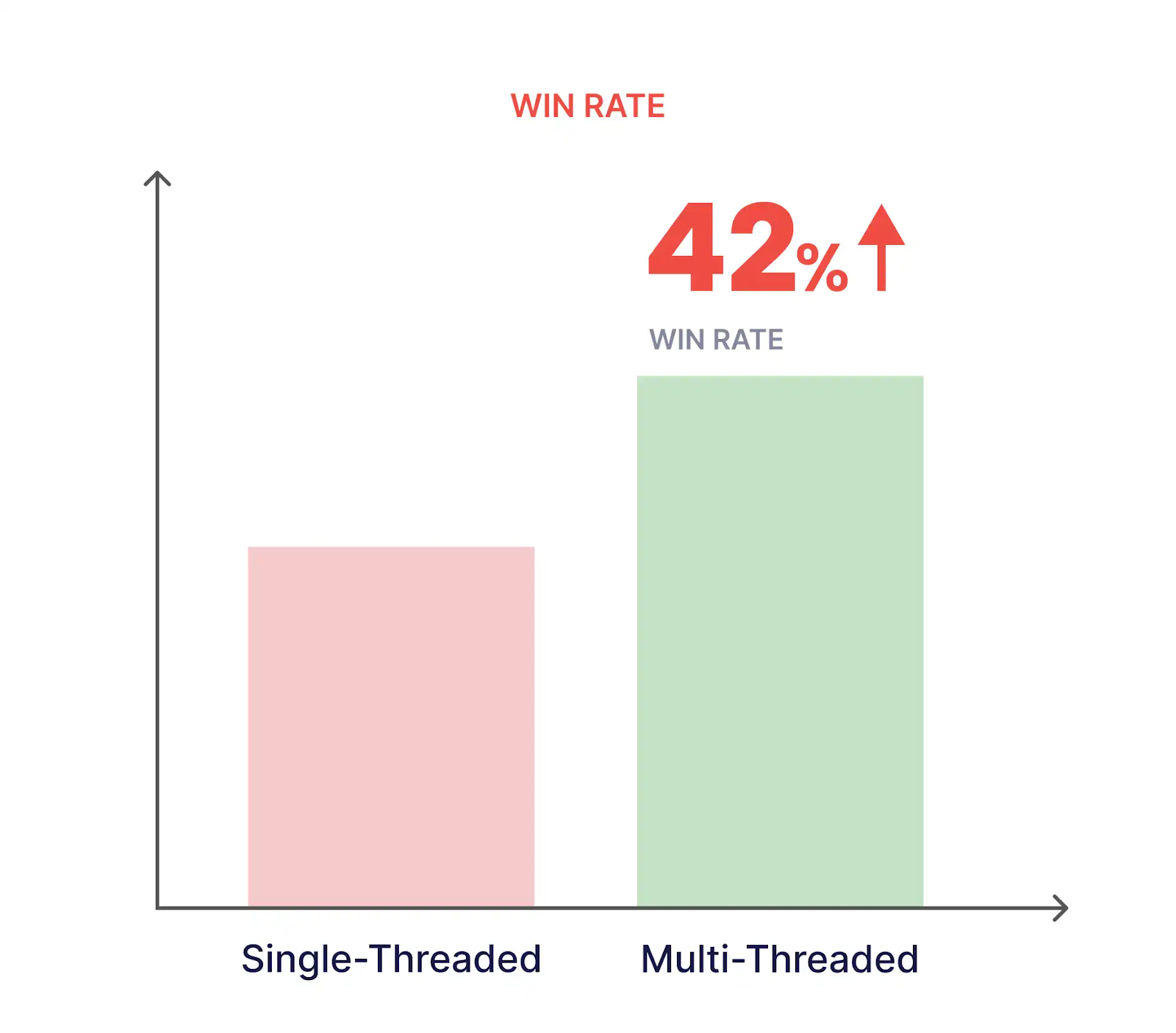
Multi-Threaded vs Single-Threaded Win Rate
- What to track: Win rate percentage for opportunities with 4+ contacts versus 1-2 contacts.
- Why it matters: This is the ultimate proof that your multithreading sales strategy works. Benchmark data shows multi-threaded deals win at 2-3x the rate of single-threaded deals.
- How to measure: Segment closed opportunities by number of engaged stakeholders. Calculate win rate for each segment: (Closed-Won / Total Opportunities) × 100.
- Target benchmark: If your single-threaded win rate is 20%, your multi-threaded win rate should be 40-50%+. If the gap isn't significant, your team isn't actually executing multithreading—they're just collecting more contacts without building real relationships.
Churn Rate for Single-Threaded Customers
- What to track: First-year renewal rates for customers where you only had 1-2 contacts during the sale versus those with 4+ engaged stakeholders.
- Why it matters: Even if you close single-threaded deals, they're more likely to churn because you haven't built organizational buy-in. When that one champion leaves or deprioritizes your solution, you're gone.
- How to measure: Tag customers at close based on how many stakeholders were engaged during the sales process. Track their renewal behavior 12 months later.
- What you'll find: Single-threaded customers typically churn at 1.5-2x the rate of multi-threaded ones. This reveals the hidden cost of not executing proper multithreading in sales—you're burning through customers as fast as you acquire them.
Multi-Contact Engagement Scores
- What to track: How many stakeholders are actively engaging with your content, emails, or calls at each deal stage.
- Why it matters: It's not enough to just email 6 people—you need to know if they're actually engaged. If only one person is responding while the other five ignore you, you're still functionally single-threaded.
- How to measure: Use your sequencing tool (Outreach, Salesloft) or sales engagement platform to track reply rates, meeting acceptance rates, and content engagement across all contacts in an account. Create an engagement score: (# of actively engaged contacts / # of total contacts) × 100.
- Target benchmark: Aim for 60%+ engagement rate across your stakeholder map. If you're below 40%, either you're targeting the wrong people or your messaging isn't resonating with key personas.
The Bottom Line: Start tracking these six metrics this week. Pull the data from your CRM, build a simple dashboard, and review it with your sales team monthly. You'll immediately see which reps are truly executing multithreading sales strategy and which ones are just paying lip service to it.
Common Mistakes When Implementing Multithreading (And How to Avoid Them)
Even when teams understand multithreading in sales, they still screw up the execution. Here are the biggest mistakes we see—and how to avoid them.
❌ Only Reaching Out After Deals Stall
The mistake: Your rep has been talking to one contact for six weeks. The deal goes dark. Now they suddenly want to reach out to other stakeholders as a Hail Mary.
Why it fails: You look desperate, and the other stakeholders wonder why you're just now involving them. Plus, your original contact might feel like you're going around them, which damages the one relationship you had.
How to avoid it: Build multithreading in sales into your process from day one. Map the buying committee during discovery and start engaging multiple stakeholders within the first week. Don't wait for problems—prevent them.
❌ Using the Same Messaging for All Roles
The mistake: Blasting the same pitch to the CFO, VP of Sales, and IT Director because "it's more efficient."
Why it fails: A CFO doesn't care about your UI improvements. An end user doesn't care about your five-year TCO analysis. Generic messaging signals you haven't done your homework, and busy executives will ignore you.
How to avoid it: Create persona-specific messaging frameworks. The CFO gets ROI projections and cost comparisons. The VP of Sales gets pipeline impact and team productivity gains. The IT Director gets integration specs and security certifications. Same solution, different angles.
❌ Failing to Secure Internal Champions
The mistake: You're so focused on reaching decision-makers and economic buyers that you ignore building a champion who'll advocate for you internally.
Why it fails: Even with access to the C-suite, you need someone inside the organization who believes in your solution and will push it forward when you're not in the room. Without a champion, deals die in internal discussions you're not part of.
How to avoid it: Identify your champion early—usually someone who feels the pain most acutely and has something to gain from your solution succeeding. Arm them with everything they need: ROI calculators, competitive battle cards, objection handlers, and internal talking points. Your champion is your force multiplier for multithreading in sales.
❌ Not Summarizing Calls or Creating Alignment Notes
The mistake: You have great conversations with multiple stakeholders but never document what was discussed or create shared accountability around next steps.
Why it fails: Stakeholders forget what was agreed to, conflicting information spreads across the organization, and momentum evaporates because no one knows who's responsible for what.
How to avoid it: Send a summary email after every multi-stakeholder call. Recap what each person cares about, document agreed-upon next steps with owners and deadlines, and make sure everyone's CC'd. This keeps the entire buying committee aligned and creates a paper trail that prevents "I never agreed to that" later.
Dive Deeper Into: Sales Call Structure We Used to Generate $16,000,000+
❌ Depending Too Heavily on One Channel
The mistake: Your team only uses LinkedIn for multithreading, or only sends emails, or only makes phone calls.
Why it fails: Different stakeholders prefer different communication channels. The VP might ignore LinkedIn but always answer their phone. The IT Director might never check voicemail but respond to emails within an hour. Single-channel outreach means you're missing key people.
How to avoid it: Use a multi-channel approach—LinkedIn, email, phone calls, and even referrals from mutual connections. Test what works for each stakeholder and adapt. At Cleverly, we've built our entire service around this: LinkedIn outreach, cold email, and cold calling running simultaneously because we know relying on one channel caps your results.
❌ Being Too Aggressive (Appears Political Internally)
The mistake: You bypass your champion completely and go straight to their boss, or you reach out to 12 people in the same department within two days without context.
Why it fails: You create internal tension and look like you're playing politics. Your original contact feels undermined, other stakeholders wonder why you're carpet-bombing their team, and suddenly everyone's defensive instead of open.
How to avoid it: Always loop your champion into your multithreading strategy. Say something like, "I want to make sure we're aligned with [Decision-Maker] and [Economic Buyer] as we move forward—would you be comfortable introducing me?" Give them visibility and control. And when reaching out to multiple people, space it out over 1-2 weeks with personalized, relevant messaging—not a mass blast.
The rule: Good multithreading in sales feels like you're being thorough and respectful of everyone's role. Bad multithreading feels like you're being pushy and political. The difference is transparency, pacing, and personalization.
Avoid these six mistakes and your multithreading in sales execution will immediately improve.
How Cleverly Helps Companies Multithread Deals Through Better Lead Generation
Multithreading in sales only works if you're actually reaching the right stakeholders with the right message. That's where most teams fall apart—they understand the strategy but lack the execution capacity to pull it off at scale.
We solve exactly this at Cleverly.
We Built Our Entire System Around Multithreading
As a b2b lead generation agency, we don't just book you meetings with random contacts. We identify and engage entire buying committees across three channels simultaneously:
Multi-channel outreach that actually works:
- LinkedIn outreach to connect with decision-makers and influencers.
- Cold email campaigns targeting economic buyers and end users.
- Cold calling to reach VPs and C-suite executives who ignore everything else.
We're not picking one channel and hoping it works. We're hitting multiple stakeholders through their preferred communication methods—which is how we've generated $312 million in pipeline revenue and $51.2 million in closed revenue for over 10,000 clients including Amazon, Google, Uber, PayPal, Slack, and Spotify.

We handle the research, the data, the personalization, and the multi-channel coordination so your sales team shows up to qualified meetings with entire buying committees already engaged.
Want to build a pipeline that reaches every decision-maker? 🚀
🚀 Book a FREE strategy call with us and we'll show you exactly how we'd multithread your target accounts!

Conclusion
Sales multithreading protects an opportunity from depending on one person’s authority, availability, or continued employment. It also gives the seller a clearer view of how the buying organization evaluates budget, risk, implementation, and adoption.
Start by mapping the committee, then engage each stakeholder with a reason tied to their role. Review stakeholder coverage during pipeline meetings, record relationship strength in the CRM, and create reminders when an important thread goes quiet.
The objective is not to contact more people for the sake of activity. It is to build enough informed support across the organization that the deal can keep moving when one contact cannot carry it alone.
Frequently Asked Questions
Free Resource
How to Scale a Profitable Cold Call System
Get the complete guide — download it instantly now.
Free Ebook
Download the Free Guide
Enter your details to get instant access.
You're all set! 🎉
Your ebook is downloading now.
Click below if the download didn't start automatically.