

Modified On :
July 3, 2026
Key Takeaways
- Real estate lead generation thrives on relationship-building and trust
- Responding to leads within 5 minutes increases conversion rates by 9x compared to waiting just 30 minutes.
- Multi-channel outreach (LinkedIn, cold email, and cold calling combined) consistently outperforms single-channel strategies in generating leads in real estate.
- Hyper-local targeting and personalized messaging convert better than generic campaigns.
- Automation and CRM systems keep you top of mind with leads who aren't ready to transact immediately.
Finding quality buyers and sellers consistently is the biggest challenge in real estate lead generation.
The days of relying solely on referrals, open houses, and cold-calling random numbers are behind us.
Today's top-performing agents and brokers are using multi-channel outreach strategies to fill their pipeline with qualified prospects who are actually ready to buy or sell.
Here's the thing: generating leads in real estate requires a system.
You need consistent touchpoints, personalized messaging, and the ability to reach decision-makers where they're already spending their time.
In this guide, we'll walk you through proven real estate lead generation strategies that work right now.
You'll learn how to generate real estate leads using LinkedIn outreach, cold email campaigns, and targeted cold calling.
At Cleverly, we've helped 10,000+ clients generate leads with companies like Amazon, Google, Uber, PayPal, Slack, and Spotify. That's resulted in $312 million in pipeline revenue and $51.2 million in closed revenue.
And, our cold calling team has made over 1 million calls and set 53,000+ appointments, generating $312 million in pipeline.
So, trust us, we know what we’re talking about. This guide will show you exactly what's working in real estate lead generation today.
What Is Real Estate Lead Generation?
Real estate lead generation is the process of identifying and attracting potential buyers, sellers, or investors, then capturing their contact information so they can enter a follow-up pipeline. It sits at the very top of the real estate sales funnel. Everything that comes after, nurturing, showings, negotiations, closing, depends on this first step working.
Here's the distinction that trips people up: a lead is not the same as a prospect.
A prospect is still cold. They might fit your target profile, a homeowner in a specific zip code, an out-of-state investor, a corporate employee relocating for work, but they haven't raised their hand yet.
A lead has taken some kind of action. They downloaded your buyer's guide. They filled out a home valuation form. They replied to your cold email or accepted your LinkedIn connection request. That small step is what moves someone from "a person you're targeting" to "a person you can actually follow up with."
Not all leads want the same thing, either.
- Buyer leads want education, comparisons, and reassurance. They're usually early in a longer decision.
- Seller leads want to know what their home is worth and how fast it will sell. They tend to move faster once they engage.
- Investor leads want numbers, cap rates, rental yield, appreciation trends, not lifestyle messaging.
Using the same script or landing page for all three is one of the fastest ways to waste ad spend and outreach hours.
Why Real Estate Depends on Lead Generation More Than Most Industries
A software company sells one customer a subscription and collects revenue from that account for years. Real estate doesn't work that way.
Every transaction is a one-time event. Once a buyer closes or a seller's home sells, that deal is finished. There's no recurring revenue sitting in your CRM from it. The only way to close deals next quarter is to keep refilling the pipeline this quarter. The average cost per lead in real estate hit $503 in 2026, up more than 12% from the prior year, which is exactly why a one-off referral here and there isn't a real strategy. It's a hope.
Inbound vs. Outbound: The Two Sides of Real Estate Lead Generation
There are two ways to build that pipeline.
Inbound lead generation is when people find you, through local SEO, content, and paid ads. The vast majority of homebuyers use online tools during their home search, so if your website and content aren't showing up in that search, you're invisible before you ever get a chance to make a first impression.
Outbound lead generation is when you find them first, through cold email, LinkedIn outreach, and cold calling, reaching investors, relocating professionals, expired listings, and FSBOs before they ever land on your website.
The strongest real estate businesses run both at the same time. Inbound builds your reputation and captures people already searching. Outbound creates deal flow on your timeline instead of waiting for the market to send you leads. We'll walk through both below.
Why Real Estate Lead Generation Is Different
Real estate lead generation doesn't work like other industries.
You're not selling a $50 subscription or a one-time software purchase, you're guiding people through one of the biggest financial decisions of their lives.
That changes everything about how you need to approach lead generation.
🤝 It's Relationship-Driven
A lead might see your ad, visit your website, or receive your cold email, but they're not going to hand over their business until they feel confident in you as their agent or broker.
This means your real estate lead generation strategy needs to prioritize relationship-building from the first touchpoint. Every email, LinkedIn message, or phone call should feel like you're starting a conversation, not closing a transaction.
📢 Localized Targeting Matters
Here's what makes real estate lead generation unique: your ideal client isn't scattered across the country—they're in specific neighborhoods, zip codes, and communities.
A lead in Austin doesn't care about your expertise in Miami, and vice versa. 💁♀️
When you're generating leads in real estate, you should be targeting prospects based on:
- Geographic location and specific neighborhoods
- Local market conditions and trends
- Property types relevant to that area
- Regional buyer or seller behavior
⌚ Fast Response Wins
Speed matters more in real estate than almost any other industry. Studies show that responding to a real estate lead within 5 minutes increases your odds of conversion by 9x compared to waiting even 30 minutes.
Think about it from the prospect's perspective: they're researching multiple agents, filling out forms, and comparing options. Whoever gets back to them first with a helpful, personalized response usually wins the business.
This is where real estate lead generation companies and agencies make a difference.
They have systems in place to ensure leads get immediate follow-up—whether that's through automated email sequences, instant phone calls, or same-day LinkedIn messages.
🔢 Multi-Channel Outreach Works Best
The best real estate lead generation strategies use multiple touchpoints to stay top of mind.
Here's what we see working:
- Cold email to introduce yourself and share relevant market insights.
- LinkedIn outreach to connect with high-net-worth individuals, investors, and relocating professionals.
- Cold calling to qualify leads quickly and book appointments on the spot
When someone sees your email, then gets a LinkedIn connection request, and finally receives a well-timed phone call, you're no longer just another agent, you're someone who's clearly serious about earning their business.
Compare:
🏡 Fill Your Pipeline With Qualified Buyers & Sellers
Stop chasing cold leads. We connect real estate pros with ready-to-talk clients. Start generating real estate leads from just $397/month or pay-per-meeting booked!
10 Proven Lead Generation Strategies for Real Estate Agents
Here's what's working right now for top-performing agents and real estate firms—a mix of traditional and modern lead generation tactics.
1. Optimize Your Website for Local Search
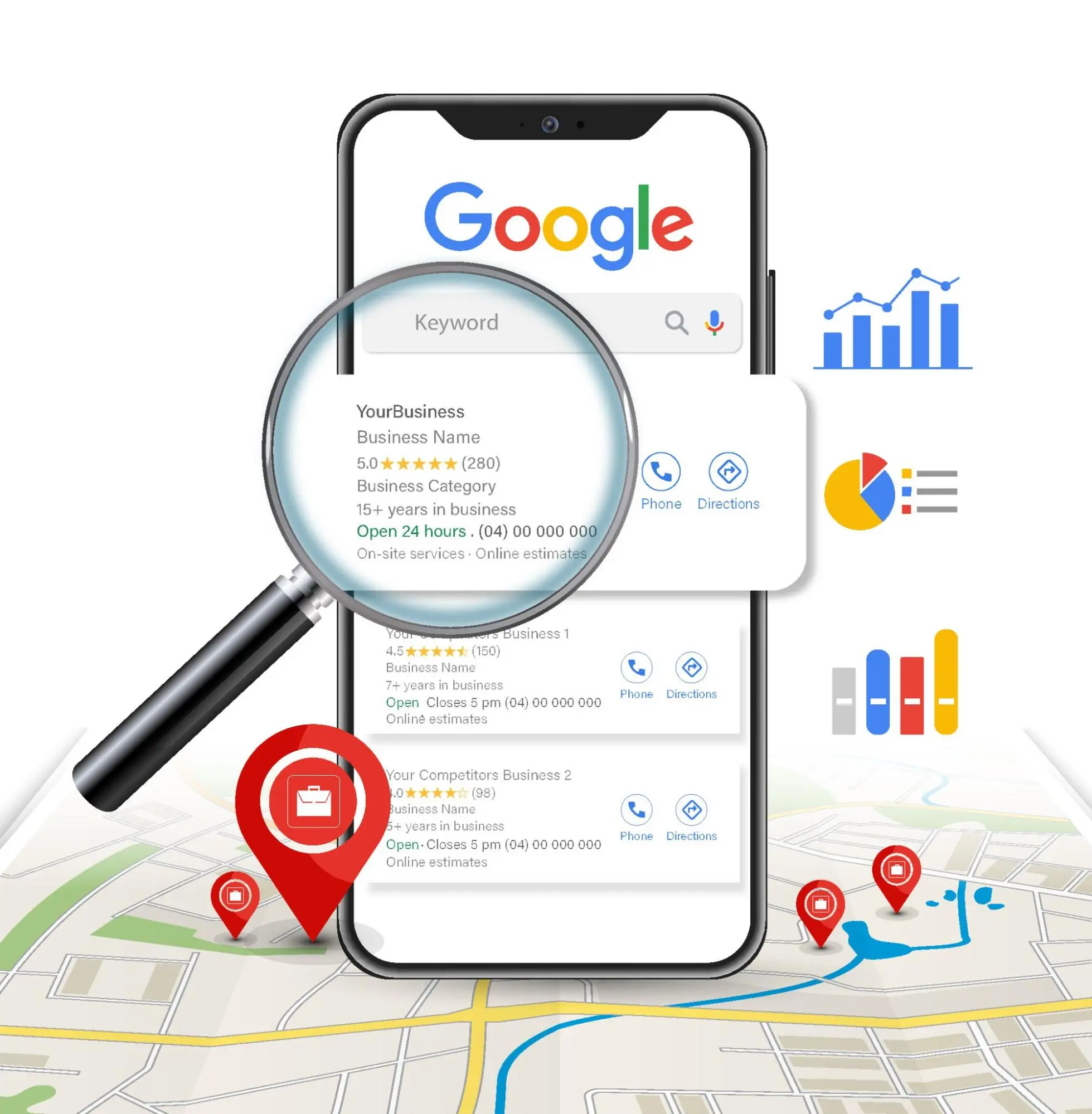
If someone searches for "real estate agent in Dallas" or "buy property in Brooklyn," your website needs to show up. That's where local SEO comes in.
How to generate real estate leads through local search:
- Target location-specific keywords like "real estate agent in [city]" or "homes for sale in [neighborhood]".
- Create dedicated landing pages for each area you serve.
- Add client testimonials, recent listings, and clear CTAs like "Schedule a Free Consultation" or "Get Your Home Valuation".
- Include your Google Business Profile and make sure your NAP (name, address, phone number) is consistent across directories.
When someone lands on your site, they should immediately see proof you know their local market—recent sales, neighborhood guides, and easy ways to reach you.
2. Run Hyper-Targeted Paid Ads (Google & Facebook)
Instead of advertising "Buy a home today," try "3-bedroom homes under $400K in Portland" or "Luxury condos in downtown Miami."
Use retargeting and lookalike audiences to reach people who've already visited your site or match the profile of your best clients.
Facebook and Google let you target by location, income level, life events (like recent engagement or job changes), and interests.
Example campaigns that perform well:
- "Homes under $500K in Austin".
- "Investment properties with 8%+ ROI in Phoenix".
- "First-time buyer programs in Seattle".
The more specific your targeting, the better your cost per lead.
Additional Info: Linkedin Ads 2025 Master Playbook For 10x ROAS

3. Leverage LinkedIn for High-Value Real Estate Leads
LinkedIn for real estate - one of the best channels for reaching high-net-worth individuals, property investors, commercial developers, and relocating professionals.
Here's what works:
- Connect with investors, developers, property managers, and corporate executives relocating to your area.
- Share market reports, neighborhood insights, and success stories (not just listings).
- Send personalized messages offering value—like exclusive off-market opportunities or local investment trends.
- Engage with prospects' content to stay visible
The key is building relationships first, not immediately pitching properties.
4. Use Cold Email Outreach to Reach Investors or Buyers
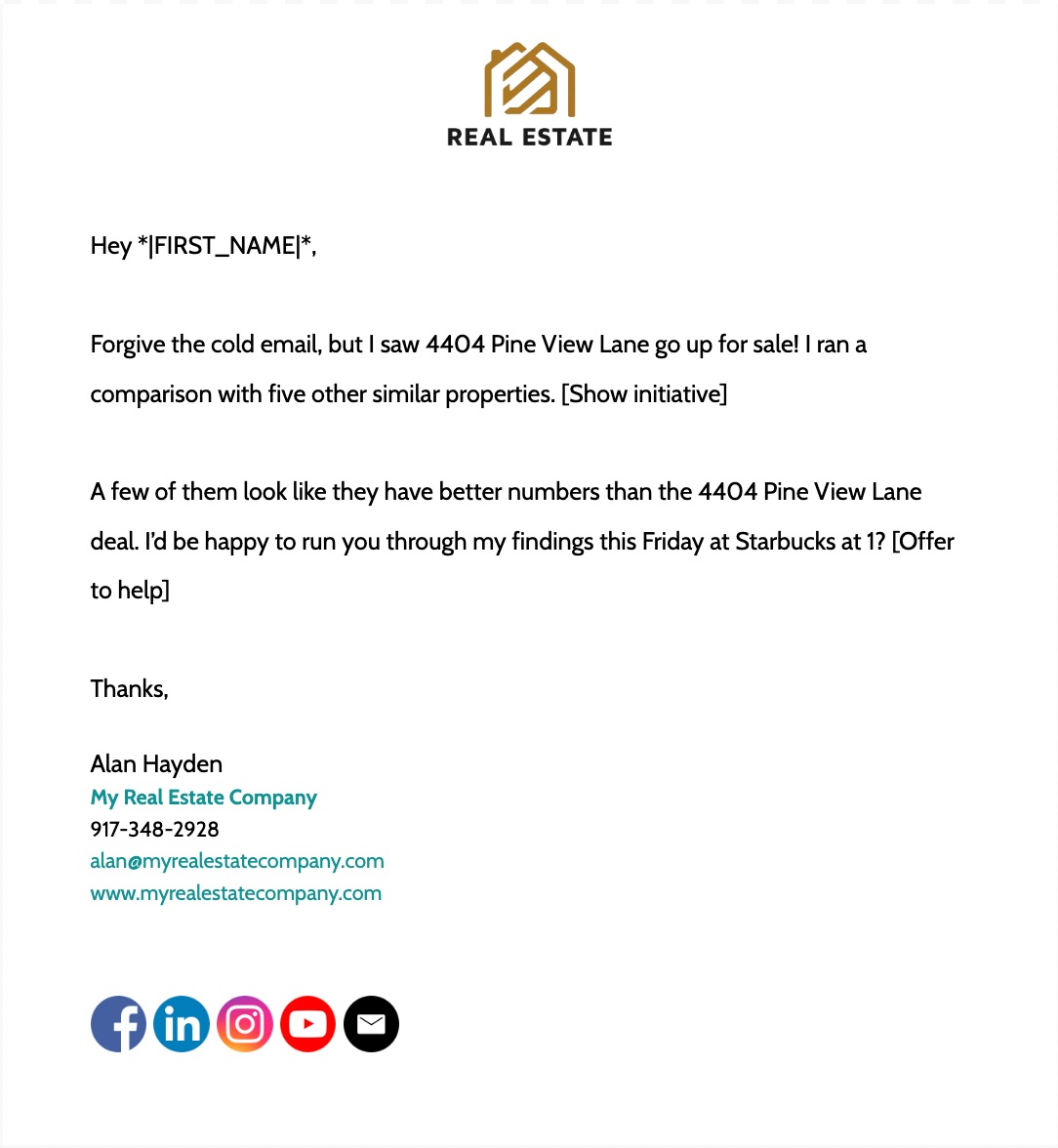
Cold email works when it's personalized and relevant. Targeted campaigns to property investors, corporate relocation managers, or out-of-state buyers actually get responses.
Example approach for generating leads in real estate through cold email:
"Hi [Name], I noticed you recently purchased a property in [neighborhood].
I work with investors in [city] and specialize in finding off-market deals with strong cash flow potential.
Would you be open to a quick call to discuss opportunities in [specific area]?"
The key is segmentation. One email for first-time buyers, another for investors, another for luxury clients. Each should feel like it was written specifically for them—because it was.
Check this out: Best Email Service for Cold Emails - Here’s What 10,000+ B2B Agencies Chose
5. Utilize Cold Calling for Immediate Engagement
Cold calling gets a bad rap, but it's still one of the fastest ways to qualify leads and book appointments.
The difference between cold calling that works and cold calling that annoys people? Value and timing.
Use cold calling to:
- Follow up with prospects who downloaded your buyer's guide or visited your listings.
- Reach expired listings or FSBOs (For Sale By Owner).
- Connect with leads who engaged with your ads but haven't converted yet
At Cleverly, our cold calling team has made over 1 million calls and set 53,000+ appointments, generating $312 million in pipeline.
The secret? Cold calling scripts that focus on helping, not selling. Build rapport quickly by asking about their goals, their timeline, and what's most important to them—then position yourself as the expert who can help.

6. Create Valuable Lead Magnets (Guides, Calculators, Market Reports)
People will give you their contact information, if you give them something worth it.
Lead magnets work because they provide immediate value in exchange for an email address.
High-converting lead magnets for real estate lead generation:
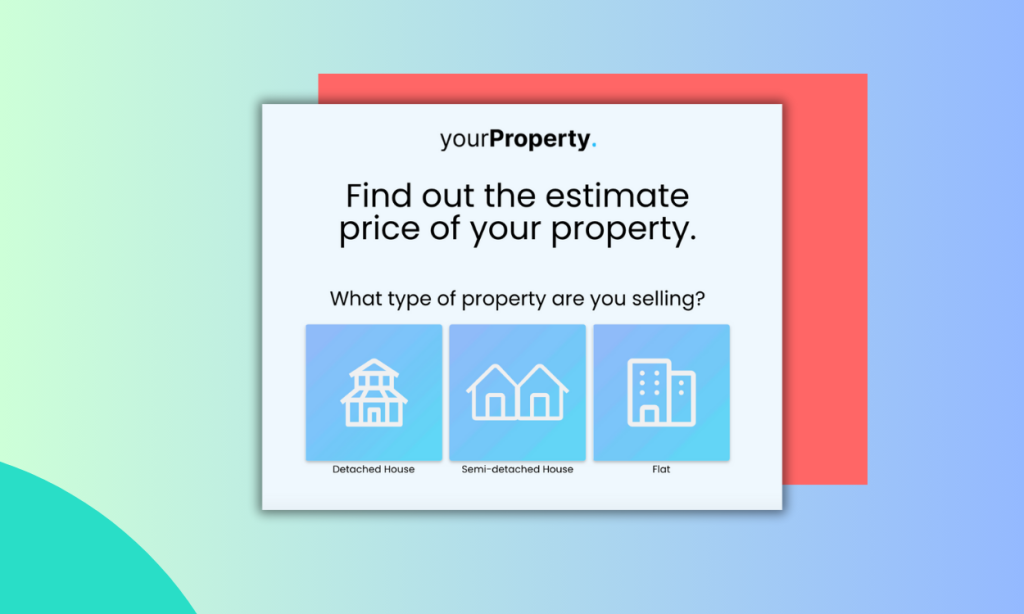
- "Free Home Valuation Tool"
- "First-Time Buyer Checklist"
- "[City] Neighborhood Guide for 2025"
- "Investment Property ROI Calculator"
- "Seller's Guide: 10 Things to Do Before Listing"
Gate these resources with a simple form on your website or landing page. Once someone downloads, they enter your email nurture sequence where you stay top of mind until they're ready to buy or sell.
7. Automate Lead Nurturing with CRM & Email Drip Sequences
Most leads aren't ready to transact immediately. They're researching, comparing agents, and waiting for the right time. That's where automation comes in.
Use a CRM like HubSpot, Salesforce, or Follow Up Boss to:
- Automatically send follow-up emails after someone downloads a guide or requests information.
- Trigger personalized sequences based on lead behavior (clicked on a listing? Send similar properties).
- Set reminders for manual touchpoints like phone calls or personalized video messages.
Automation keeps you top of mind without requiring you to manually email every lead every week. The best agents combine automated touchpoints with personal cold outreach to stay present without being annoying.
8. Use Social Proof and Video Testimonials
Nobody wants to be your first client. They want proof you've helped people like them successfully buy or sell properties.
Video testimonials are especially powerful because they feel authentic. Ask happy clients to record short videos (even on their phones) talking about:
- What was their biggest concern before working with you?
- How did you help them overcome it?
- What the outcome was (sold above asking, found their dream home, smooth closing process)
Feature these on your website, in email campaigns, and across social media. Before/after stories—like "We helped the Johnsons sell their home in 14 days for $30K over asking"—build instant credibility.

9. Partner with Local Businesses & Influencers
Your ideal clients are already working with other local businesses, mortgage brokers, moving companies, interior designers, contractors, and property inspectors.
Why not partner with them?
Collaboration ideas:
- Co-host a "First-Time Buyer Workshop" with a local mortgage lender.
- Run a referral program with moving companies and interior designers.
- Create co-branded content like "Complete Moving Checklist" or "Home Renovation ROI Guide".
- Partner with local influencers or bloggers to reach their audience.
These partnerships give you access to warm leads who are already in the buying or selling mindset.

10. Attend Local Events and Host Webinars
Building local authority happens when people see you as the go-to expert in your market. Attend (or sponsor) community events, chamber of commerce meetings, and neighborhood gatherings.
Hosting your own events works even better:
- "Understanding the [City] Real Estate Market in 2025" webinar.
- First-time buyer workshops.
- Investment property strategy sessions.
- Virtual home tours for out-of-state buyers.
Collect contact details at registration, then follow up with everyone who attended.

Match Your Strategy to the Type of Lead You're Chasing
Not every real estate lead responds to the same playbook. What works for a first-time buyer will fall flat with an investor, and what works for an investor will feel cold to a luxury seller. Here's how to adjust by segment.
First-Time Homebuyers
These buyers need the most education and trust-building before they'll pick up the phone. Free guides ("First-Time Buyer Checklist"), short webinars, and consistent social content work best here, since most first-time buyers search extensively on Google and social media before they ever contact an agent. That makes local SEO and content marketing your primary acquisition channels for this segment.
Luxury and High-Net-Worth Buyers
Mass advertising doesn't move this group. Personal introductions do.
Exclusive off-market listings, warm LinkedIn outreach, and referrals from financial advisors, estate attorneys, and wealth managers consistently produce the highest-value leads here. If you're only running Facebook ads for luxury inventory, you're fishing in the wrong pond.
Investors
Investors want numbers, not lifestyle photography. Cap rates, appreciation trends, and rental yield by zip code convert significantly better than a generic "dream home" pitch.
LinkedIn outreach and cold email built around specific market data perform well here because investors are used to evaluating deals on paper before they get on a call. The sales cycle runs longer than a typical buyer, but the transactions tend to be bigger and often repeat.
Sellers and Listing Leads
Sellers are the hardest segment to generate on demand, because most stay passive until they've already decided to move.
Expired listings and FSBOs remain the most accessible outbound targets. Expired listings convert at a 44% list rate and a 20.7% sold rate, the highest of any lead source in real estate, with an average of about 30 days from first contact to listing agreement. That gap exists because these homeowners have already decided to sell, they just haven't found the right agent yet.
For inbound seller intent, neighborhood farming, regular mail or in-person visibility in a specific area, paired with a home valuation tool on your website, captures sellers before they've even called anyone.
Relocating Professionals
LinkedIn is the primary channel here. Target corporate employees at companies known for frequent relocation, HR and mobility directors at large employers, and anyone who's recently updated their profile with a new city. A short, helpful message about the local market usually outperforms a full pitch at this stage.
Real Estate Lead Generation Companies: How to Evaluate and Choose One
At some point, most agents and brokers ask the same question: keep generating leads yourself, or pay someone else to do it?
Before deciding, it helps to know that "real estate lead generation company" actually covers a few very different business models. Mixing them up is how agents end up disappointed.
Lead Generation Companies vs. Lead Databases
A lead database sells you a list of contacts or a stream of inquiries. Zillow Premier Agent and Realtor.com's ReadyConnect are the most common examples. You pay for access, then you do the calling, texting, and nurturing yourself. Zillow Premier Agent pricing runs anywhere from a few hundred dollars a month to over $7,000 in competitive markets, and the leads aren't exclusive, the same inquiry can reach several agents at once.
A lead generation company is different. It runs the outreach on your behalf, writing the messaging, managing the sequences, and booking the appointments, handing you a warm conversation instead of a raw contact.
The cost, effort, and lead quality between these two models aren't close. A database gives you volume and control but demands hours of manual follow-up. An agency costs more per month but replaces that labor with a system.
What to Look for When Evaluating a Provider
Before signing anything, ask:
- Do they specialize in real estate, or is it one vertical among a dozen others they serve?
- Do they run active outreach (LinkedIn, cold email, cold calling), or only manage paid ads and SEO?
- How do they charge? Per lead, per booked appointment, or a flat monthly retainer? Each model shifts the risk differently.
- Can they show you who's actually being contacted? Transparency into targeting is a good proxy for how seriously they take quality.
A Simple Decision Framework
If you have time but not expertise, start with a DIY platform and commit to fast follow-up.
If you have budget and want a hands-off local presence, a managed ad service is a reasonable middle ground.
If you need volume fast and don't have the bandwidth to run outreach yourself, a full-service outbound agency, one that handles LinkedIn, cold email, and cold calling together, is usually the fastest path to a full calendar. That's the model Cleverly runs for real estate professionals, which we'll cover next.
How Cleverly Helps Real Estate Professionals Generate Qualified Leads
Finding leads is one thing. Building a consistent pipeline of qualified prospects who actually want to talk to you? That's where most real estate professionals struggle.
We create consistent deal flow through personalized outreach across multiple channels. We're not a database or a list provider.

We're a lead generation agency that handles the entire outreach process for you, so you can focus on what you do best: closing deals.
Here's how Cleverly helps real estate teams succeed:
We've helped 10,000+ clients across industries like Amazon, Google, Uber, PayPal, Slack, and Spotify generate $51.2 million in closed revenue.
Real estate professionals use Cleverly to fill their calendars with qualified buyer consultations, investor meetings, and listing appointments—without spending hours on manual outreach.
Let us handle the outreach while you focus on what actually generates revenue—building relationships and closing deals.

🚀 From Connections to Closings
Our done-for-you campaigns help agents, brokers, and investors book consistent, high-quality appointments. Book your free real estate lead gen strategy call today.
Cleverly's Real Estate Lead Generation Case Study
Generating leads in real estate doesn’t have to be complicated. Here’s an example of a REAL , real estate lead generation that we executed for our client:
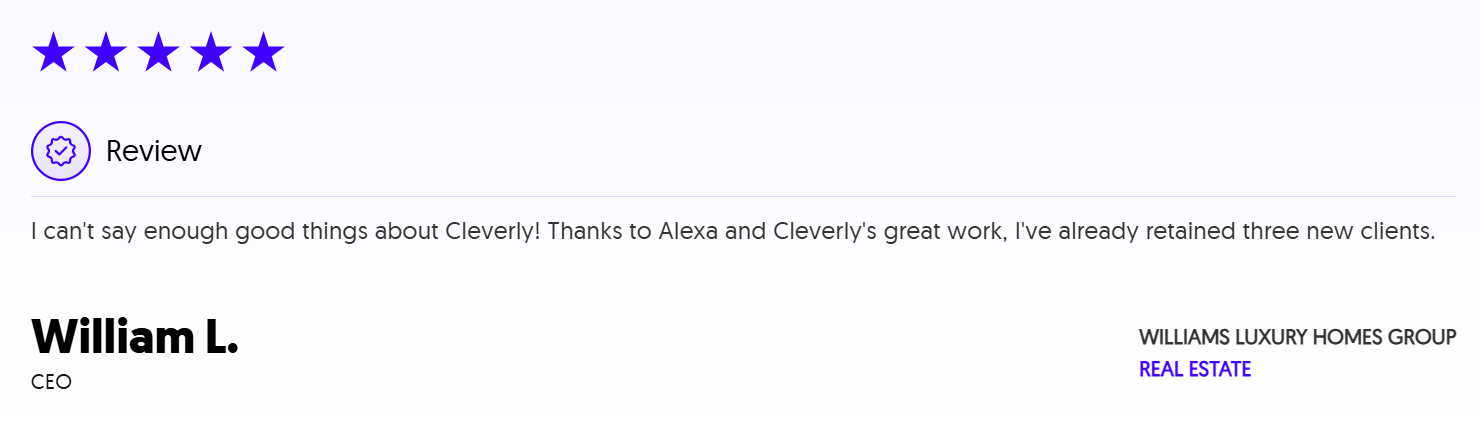
Williams Luxury Homes Group
⭐ 31 deals closed in 6 months , 40% Reply Rate
👀 Strategy
Implemented boolean targeting to exclude buyers and investors, focusing exclusively on sellers. Messaging leveraged TV show host status and 9% better sales performance metrics. Initial connection highlighted local market insights, followed by specific property success stories.
Third touch showcased a unique marketing approach. Local success stories achieved 59% higher acceptance rates, while specific performance metrics increased engagement by 51%, closing 31 deals with 40% reply rate.
🚀 Result
Conclusion
Real estate lead generation doesn't have to feel like guesswork. The key is consistency. One email won't close a deal.
One LinkedIn message won't book an appointment. But a systematic approach that touches prospects across multiple channels?
That's what turns cold leads into warm conversations and warm conversations into closed transactions.
If you're ready to stop chasing leads and start building a predictable pipeline, Cleverly can help.
We've already generated $312 million in pipeline revenue for clients across industries, and we're helping real estate professionals do the same every day.
Want to see how multi-channel outreach can work for your real estate business? Let's talk.
Frequently Asked Questions
Free Resource
How to Scale a Profitable Cold Call System
Get the complete guide — download it instantly now.

Free Ebook
Download the Free Guide
Enter your details to get instant access.
You're all set! 🎉
Your ebook is downloading now.
Click below if the download didn't start automatically.


