Table of Contents
Why Cold Calling Objections Happen (Psychology + Buyer Behavior)
A Proven Framework for Handling Any Cold Calling or Sales Call Objection
15+ Most Common Cold Calling Objections (With Scripts)
Advanced Cold Call Objection-Handling Techniques Used by Top SDRs
How to Reduce Objections Before You Even Dial
How Cleverly Helps Brands Book More Meetings by Handling Objections Professionally
Conclusion
Frequently Asked Questions
Modified On :
July 23, 2026
Key Takeaways
- Cold calling objections aren't rejections. They're buying signals wrapped in hesitation that reveal what's holding prospects back from saying yes.
- Use the Acknowledge → Clarify → Reframe → Provide Value → CTA framework to handle any objection with confidence and curiosity, not defensiveness.
- The top 15 objections (like "not interested," "send me an email," "we don't have a budget") can be flipped into conversations with the right scripts and psychology.
- Reduce objections before you dial by targeting better lists, personalizing with trigger events, warming prospects on LinkedIn, and leading with strong, relevant openers.
- Master advanced techniques like pattern interrupts, softening language, micro-commitments, and strategic silence to turn objections into open doors.
- Practice emotional control and objection-handling frameworks consistently - the more reps you do, the more meetings you book.
Most cold calls hit an objection within the first 15 seconds. "Not interested." "Send me an email." "We're all set." Sound familiar?
But here's what most sales teams get wrong - cold calling objections aren't rejections. They're actually buying signals wrapped in hesitation.
When a prospect says "we don't have budget," they're not slamming the door. They're telling you exactly what's holding them back from saying yes.
The difference between reps who book meetings and those who don't? Cold call objection handling. It's not about being pushy or scripted, it's about understanding the psychology behind the pushback and responding with frameworks that actually work.
In this guide, we're breaking down the most common cold call objections you'll face, the psychological triggers behind them, and the exact tactical responses we've tested across 1M+ cold calls.
We've helped brands like Amazon, Google, and PayPal navigate these exact scenarios—53K appointments set and $312M in pipeline generated—so we know what works (and what doesn't).
Let's get into it.
Why Cold Calling Objections Happen (Psychology + Buyer Behavior)
Let's be honest—when you call someone out of the blue, their brain goes into defense mode. Cold call rejections aren't personal. They're hardwired human behavior.
Here's what's really going on when prospects push back:
Buyers are slammed.
The average decision-maker gets 100+ emails and a dozen calls daily. Your call interrupts their flow, so their default response is "no" just to protect their time and headspace.
They've been burned before.
Most prospects have sat through terrible sales pitches—pushy reps, irrelevant offers, bait-and-switch tactics. When you call, they're bracing for another bad experience. That's why common cold call objections like "not interested" or "just send me an email" pop up instantly.
Timing is off.
Maybe they're in back-to-back meetings. Maybe they just signed with a competitor last month. Maybe the pain you solve isn't urgent right now. Overcoming cold call objections often comes down to whether you've caught them at the right moment.
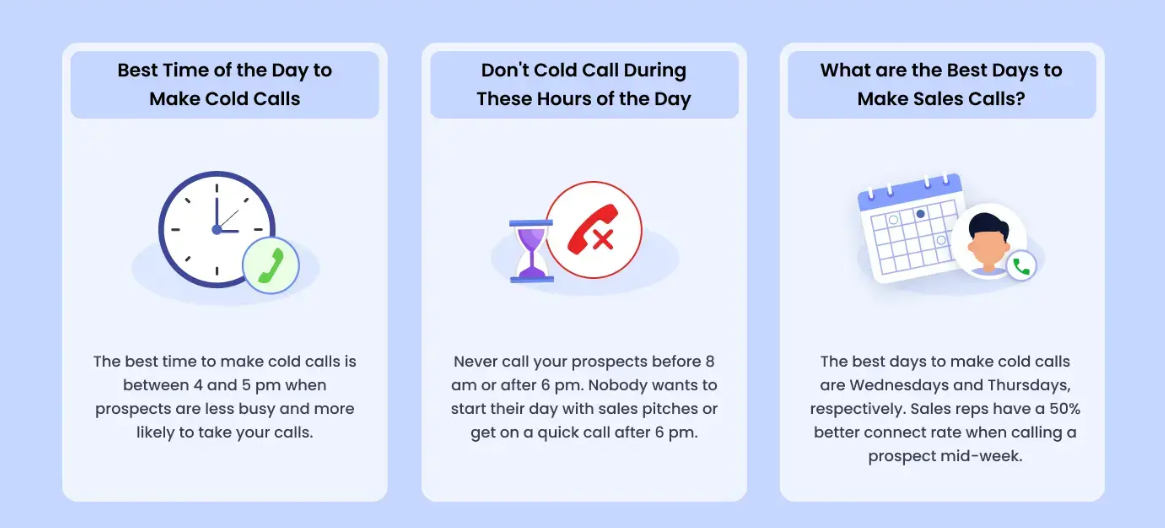
Learn More: Best Time to Cold Call (Backed by Data & Research)
You're a stranger.
There's zero relationship or context. They don't know you, don't trust you, and have no reason to believe you're different from the last 10 reps who called. Cold outreach means starting from scratch every single time.
They don't know they have a problem.
This is huge. If a prospect isn't aware their current process is costing them money, time, or deals, your solution sounds irrelevant. They're not objecting to you—they're objecting because they don't see the gap yet.
Here's the shift: When you understand the psychology behind cold calling objections, you stop taking them personally and start handling them strategically. Instead of reacting defensively, you respond with curiosity and confidence—because you know the objection is just a checkpoint, not a dead end.
The Base Rate Every SDR Needs to Know
Here is the data that explains why objections are unavoidable regardless of how good your script is.
According to Chet Holmes' Buyer Pyramid, only about 3% of your market is actively buying at any given moment. Another 7% are open to it. The remaining 90% either are not thinking about it, do not think they are interested, or know they are not interested.
That means roughly 6 out of every 10 cold calls will result in an objection or brush-off for purely statistical reasons — not because of anything you said or did. Top SDRs expect this. They do not take the first three objections of the day personally because they understand the math before they dial.
Gong's analysis of more than 300 million calls found that every successful call connection includes at least one objection. Objection-free calls almost never convert. A prospect who objects is actually more engaged than one who just says "no thanks" and hangs up — they are telling you something about their situation.
The goal of objection handling is not to eliminate objections. It is to turn the objection into information that helps you either book the meeting or schedule the right follow-up.
💰 Unlock the $312M Cold Calling Secret
Leverage the exact system that generated $312M in pipeline for giants like Amazon and Google. We guarantee 10-30 qualified calls every month with zero internal hiring risk.
A Proven Framework for Handling Any Cold Calling or Sales Call Objection
The 3 Types of Cold Calling Objections (and Why It Matters)
Before you respond to an objection, you need to know what kind it is. The same script does not work for all three types.
Type 1: Dismissive objections (reflex brush-offs)These show up in the first 5 seconds before the prospect has heard your pitch. "Not interested." "Send me an email." "I'm busy." These are not real objections — they are autopilot responses to being interrupted. The goal is not to overcome them; it is to get the prospect talking for 10 more seconds so they can actually hear what you do.
Type 2: Situational objections (timing, budget, bandwidth)These are real constraints. "We don't have budget." "Call me back next quarter." "We just hired for this internally." The prospect is not rejecting your product — they are telling you now is not the right moment. The goal here is to remove purchase pressure, log the context, and schedule a follow-up that aligns with when their situation changes.
Type 3: Competitive / existing solution objections"We already use [competitor]." "We handle this in-house." These are the richest objections because they contain the most intel. The prospect has already bought into the category — your job is to find the gap in what they have. Ask how they would rate their current solution and what would make it better.
Most of the 15+ objections in this guide fall into one of these three buckets. Knowing which type you are dealing with before you respond is the difference between a targeted answer and a random rebuttal that sounds scripted.
Whether you are on a cold call or a warm sales call, objections follow the same underlying patterns — and the same framework works for both.
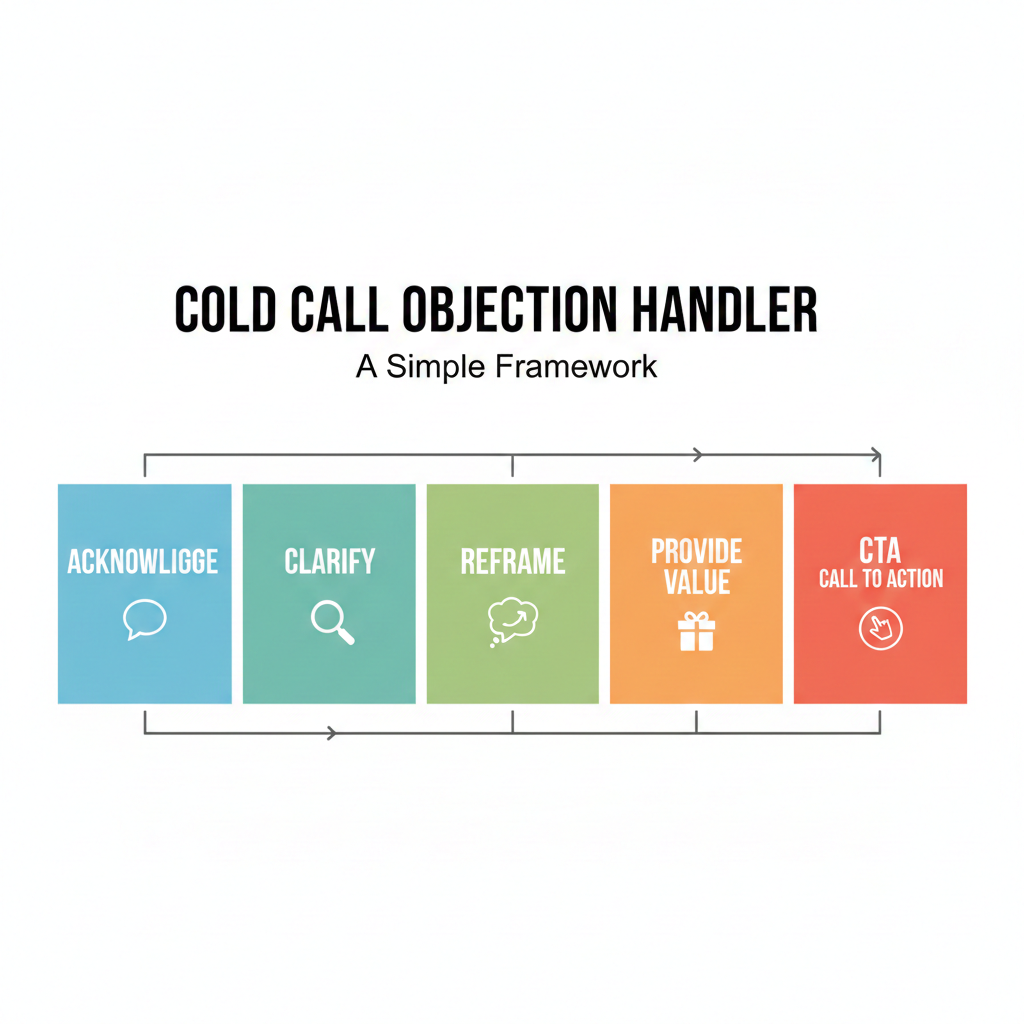
You don't need 50 different scripts for cold call objection handling. You need one solid framework that works every time. Here's ours:
Acknowledge → Clarify → Reframe → Provide Value → CTA
Let's break it down:
- Acknowledge: Don't fight the objection. Validate it. "I totally get that" or "That makes sense" immediately lowers their guard. You're not another pushy rep—you're someone who actually listens.
- Clarify: Ask a question to understand what's really behind the objection. "Not interested" could mean a dozen different things. "Just curious—is it timing, or is this just not a priority right now?" This buys you intel and keeps the conversation alive.
- Reframe: Shift their perspective without being salesy. If they say "we're all set," you might respond with, "A lot of our clients said the same thing before realizing they were leaving 30% of their pipeline on the table. Worth a quick look?"
- Provide Value: Give them a reason to keep talking—a stat, insight, or pattern you've seen with similar companies. Make it about them, not your product. "We've helped three companies in your space book 20+ qualified meetings a month by fixing one thing in their outreach. That's all this would be—a quick convo to see if there's a fit."
- CTA: End with a low-friction next step. Not "Can I get 30 minutes on your calendar?" More like, "How about a 10-minute call Thursday to see if this is even worth exploring?"
Now, here's what most reps miss: Your tone and pacing matter more than the actual words. If you sound defensive, rushed, or scripted, it doesn't matter how good your response is.
How to handle objections in cold calling comes down to staying calm, confident, and conversational—like you're genuinely trying to help, not close.
Buy yourself time. If an objection catches you off guard, pause. "That's a fair point—let me ask you this..." gives you two seconds to think instead of word-vomiting.
Know when to walk away. Not every objection is worth pushing through. If someone's rude, totally off-target, or clearly never going to be a fit, thank them for their time and move on. Graceful exits keep your energy high and your pipeline clean.
The goal isn't to "overcome" every objection—it's to handle them in a way that builds credibility and opens doors.
15+ Most Common Cold Calling Objections (With Scripts)
Alright, let's get into the real stuff. These are the common cold call objections you'll hear over and over, and the exact responses that actually work.
Quick-Reference: Cold Calling Objection Rebuttals
Here is a fast-scan table of the 15 most common cold calling objections, their type, and a one-line rebuttal for each. Full scripts and context for each objection are in the sections below.
Cold calling objections vs. rejections: know the difference
Not every pushback is the same and treating them the same is the fastest way to burn good pipeline.
Objections are negotiable signals. "Not now," "send me an email," "we already have something" — these are checkpoints, not conclusions. Most of the 15 types below are objections. They have a path through them.
Rejections are final. "Remove us from your list." "Do not call here again." "We will never need this." These are not objections. Pushing back on a hard rejection wastes your time, damages your reputation with that company, and is the single fastest way to get blacklisted. Log it, respect it, and move on.
The practical rule: if the prospect gives you any signal of timing, budget, curiosity, or conditional interest, that is an objection. If the tone or language is unambiguous and final, that is a rejection. Everything in the section below is an objection.
Know More: How to Handle Cold Call Rejection? A Practical Guide for SDRs in 2026
1. "Not interested."
Why they say it: Reflex. They haven't heard what you do yet, so this is just their autopilot "leave me alone" response.
How to respond: Don't take it at face value. Dig a little.
Script:
"Totally fair—most people aren't until they realize what we do. Just curious, are you currently happy with how many qualified leads you're bringing in each month, or is that something you'd want to improve?"
2. "We already have a solution."
Why they say it: They're comfortable with the status quo (or think they are).
How to respond: Acknowledge it, then plant a seed of doubt.
Script:
"That's great you have something in place. Most of our clients did too before they realized they were missing out on 20-30 meetings a month. Would it hurt to see if there's a gap?"
3. "Now isn't a good time."
Why they say it: You caught them mid-task or mid-thought.
How to respond: Respect their time but lock down a better one.
Script:
"No problem—when's better? I can call you back Thursday at 2, or would Friday morning work?"
4. "Send me an email."
Why they say it: They want you off the phone without committing to anything.
How to respond: Send the email, but stay in control.
Script:
"Happy to—what's your email? And just so I send over the right info, are you more focused on lead gen, appointment setting, or both right now?"
Then actually send it. And follow up.
5. "What is this about?"
Why they say it: You didn't hook them fast enough in your opener.
How to respond: Give them a one-liner that's relevant and intriguing.
Script:
"We help B2B companies like yours book 10-30 qualified sales calls every month without hiring in-house SDRs. Worth a quick conversation to see if it's a fit?"
6. "How did you get my number?"
Why they say it: They're skeptical or defensive about being contacted.
How to respond: Be honest and pivot to value.
Script:
"Good question—we use a few B2B databases. But honestly, I'm calling because I saw [company] is growing and thought this might be relevant. We help companies like yours generate pipeline without adding headcount. Sounds interesting?"
7. "We're not looking right now."
Why they say it: No urgency. Things are "fine."
How to respond: Create urgency by highlighting what they're leaving on the table.
Script:
"I hear you. Most companies we work with weren't actively looking either—until they realized they were losing out on 5-10 deals a month by not having a consistent outbound motion. Would a 10-minute call to explore that be worth it?"
8. "Call me back later."
Why they say it: Brush-off tactic or genuinely bad timing.
How to respond: Pin them down so "later" actually happens.
Script:
"No problem—what's a better time? I've got Thursday at 3 or Friday at 11 open. Which works?"
9. "We don't have the budget."
Why they say it: Either true, or they don't see the ROI yet.
How to respond: Reframe around cost vs. value.
Script:
"Totally get it—budget's always tight. But here's the thing: our clients are paying half of what it costs to hire in-house SDRs, and they're getting guaranteed appointments. If I could show you how this pays for itself in one deal, would that be worth a conversation?"
10. "I'm not the right person."
Why they say it: They're not the decision-maker (or don't want to deal with you).
How to respond: Get the right contact without burning the bridge.
Script:
"No worries—who should I be talking to about [lead gen/sales]? And would you mind if I mentioned you pointed me their way?"
11. "Can you get to the point?"
Why they say it: You're rambling or they're impatient.
How to respond: Respect their time and deliver value fast.
Script:
"Absolutely. We help B2B companies book 10-30 qualified sales calls a month, guaranteed. Takes 10 minutes to see if it's a fit—worth it?"
12. "Is this a sales call?"
Why they say it: They're annoyed or skeptical.
How to respond: Own it, but reframe.
Script:
"Yep, it is—but only if what we do is actually relevant to you. We help companies like yours generate pipeline without the hassle of hiring SDRs. If that's not interesting, I'll let you go. But if it is, let's talk for 5 minutes?"
13. "I don't take cold calls."
Why they say it: They're putting up a wall.
How to respond: Acknowledge and add levity.
Script:
"Fair enough—most people don't. But since I've got you for 30 seconds, can I just ask: are you happy with how many qualified meetings your team's booking right now?"
14. "We handle this internally."
Why they say it: They have an in-house team and don't see the need.
How to respond: Position yourself as a supplement, not a replacement.
Script:
"That's great you've got a team. We actually work alongside internal teams all the time—we handle the heavy lifting of cold outreach so your reps can focus on closing. Would it hurt to see if we could add 10-20 extra meetings a month to what you're already doing?"
15. "We don't work with agencies."
Why they say it: Bad experience with a cold calling agency or they prefer to keep things in-house.
How to respond: Differentiate yourself from the pack.
Script:
"I totally get that—a lot of our clients said the same thing before working with us. The difference? We don't just throw random callers at you. We place trained, no-accent SDRs who go live in 2 weeks with custom scripts, data, and a dialer—all for half the cost of in-housing. And we guarantee the appointments. If that sounds different, let's chat?"
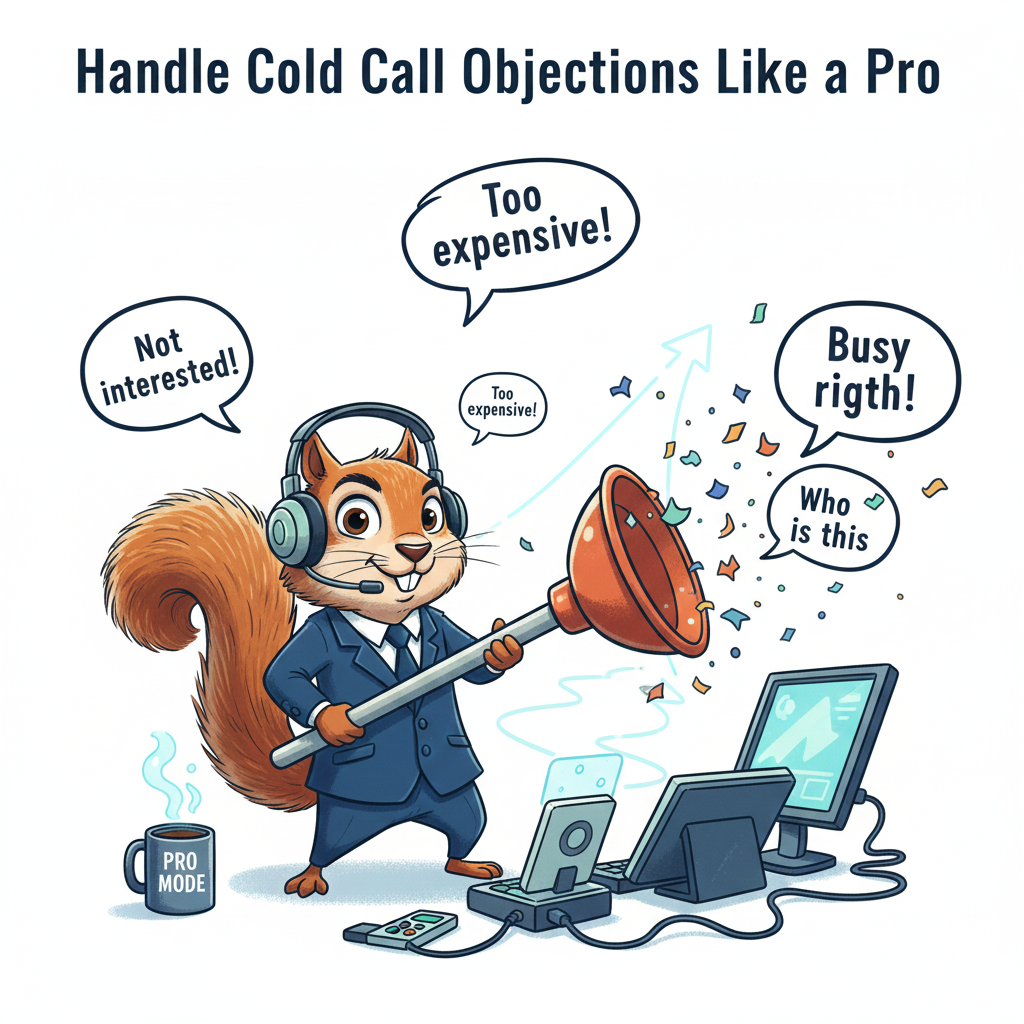
Bonus Objections
- "Just text me the info."
"Happy to—what's your number? And just so I text the right thing, are you more focused on lead volume or meeting quality?"
- "I'm walking into a meeting."
"No problem—when's better? I can call you back tomorrow at 10 or Thursday at 2. Which works?"
- "Can you email your pricing?"
"Absolutely—but pricing really depends on what you need. Takes 5 minutes to figure that out. Can we hop on a quick call Thursday?"
These cold calling objections aren't roadblocks—they're just part of the game. Master these responses, and you'll book more meetings than 90% of reps out there.
🤯 Outsource Your Cold Call Headaches (Guaranteed!)
Stop spending time on scripts and SDR training. Get pre-trained, no-accent experts using our proven system live in just two weeks—or we replace your appointment setter.
Advanced Cold Call Objection-Handling Techniques Used by Top SDRs
If you want to level up your game, it's not just about what you say when overcoming cold call objections, it's about how you say it.
The best SDRs use subtle psychological tactics that turn objections into open doors. Here are some cold calling tips that separates the top 1% from everyone else.
Pattern Interrupts
Most prospects expect you to launch into a pitch or argue with their objection. Don't. Break the pattern instead.
When someone says "not interested," try: "Wait—before you hang up, can I ask one quick question?"
That pause? It works. You've interrupted their autopilot response and bought yourself 10 more seconds to create curiosity.
Softening Language
Words like "totally fair," "I get that," and "that makes sense" are gold. They validate the prospect's objection without agreeing with it, which lowers their defenses immediately.
Instead of: "But let me tell you why..."
Try: "Totally fair—most people feel that way at first. Can I just ask..."
This isn't about being soft—it's about being strategic. Overcoming cold call objections starts with making the prospect feel heard, not sold to.

Gentle Pushback Techniques
You don't have to roll over when someone objects. Push back, but make it conversational and curiosity-driven.
"We're all set." → "That's great. Out of curiosity, are you getting 20+ qualified meetings a month right now, or is there room to scale?"
"Send me an email." → "Happy to—but before I do, can I ask what you're hoping to see in it so I don't waste your time?"
You're not arguing. You're asking questions that make them think.
Asking for Micro-Commitments
Don't go straight for the 30-minute demo. Break it down into smaller yes.
- "Does it make sense to spend 5 minutes exploring this?"
- "Can I ask you two quick questions to see if this is even relevant?"
- "Would Thursday or Friday work better for a quick call?"
Micro-commitments feel safer to prospects. And each small "yes" builds momentum toward the meeting.
Using Silence Strategically
After you respond to an objection, shut up. Let the silence sit for 2-3 seconds.
Most reps panic and keep talking, which makes them sound desperate. Top SDRs know that silence creates pressure—and nine times out of ten, the prospect will fill it by moving the conversation forward.
Try it. Ask a discovery question, then go quiet. You'll be shocked how often they start talking.
Redirecting Objections Into Discovery Questions
The best way to handle cold call objections? Turn them into opportunities to learn more about the prospect.
- "We don't have a budget." → "Fair enough. Can I ask—if budget wasn't an issue, is this something you'd want to improve?"
- "We're not looking right now." → "Got it. Just curious—what would need to change for this to become a priority?"
You're not fighting the objection. You're using it to uncover what's really going on—and that's where the real conversation starts.
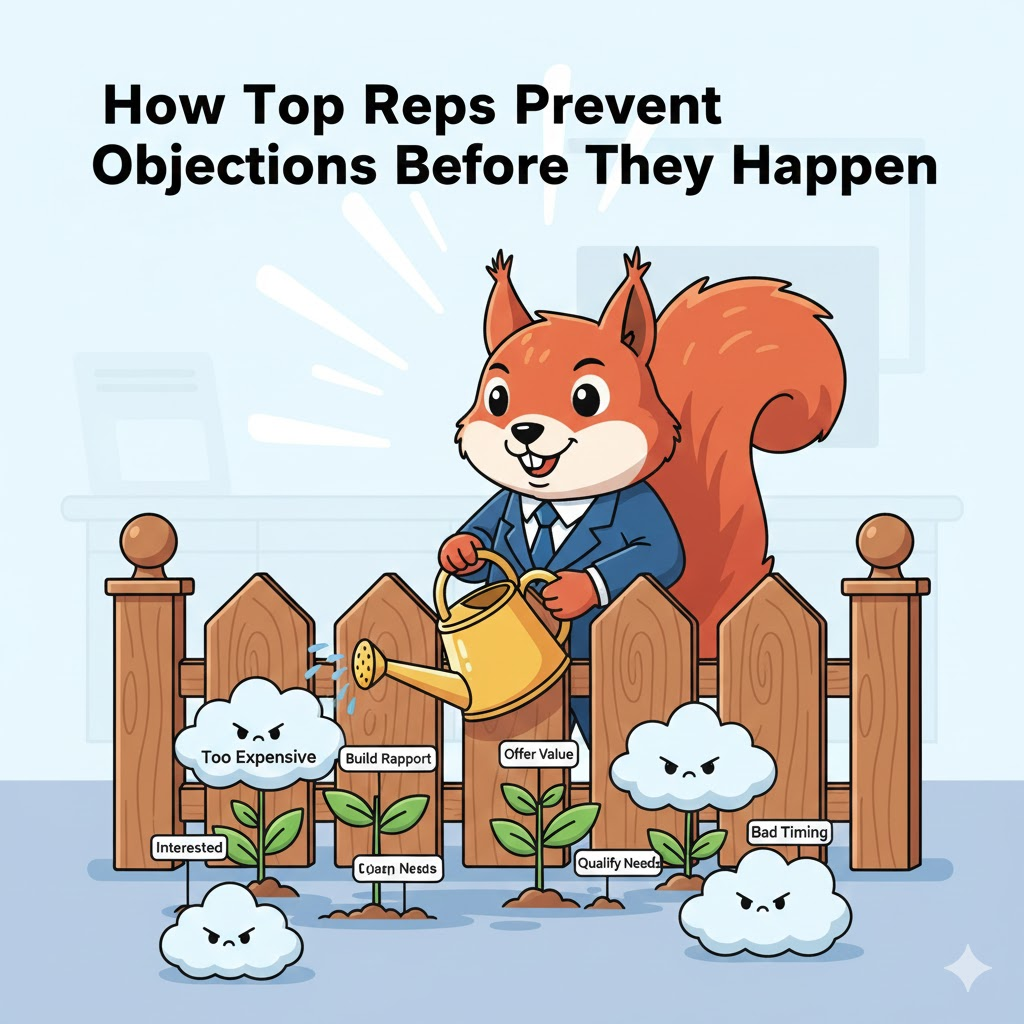
How Top Reps Prevent Objections Before They Happen
Here's the secret: the best SDRs don't just handle objections well—they prevent them from coming up in the first place.
👉 Lead with value, not your company. Don't say, "Hi, I'm calling from Cleverly." Say, "Hi, I work with B2B companies that want to book more qualified sales calls without hiring in-house. Does that sound relevant?"
👉 Set expectations upfront. "I know I'm catching you out of the blue—this will take 30 seconds, and if it's not a fit, I'll let you go." You've just defused their defensiveness before it even kicks in.
👉 Ask permission to continue. "Does it make sense to keep talking, or is now a bad time?" Giving them control actually makes them more likely to stay on the line.
Real Estate Cold Calling Objections (and How to Handle Them)
Real estate cold calling has a few objections that show up constantly and require industry-aware responses. Here are the four most common:
"I already have an agent."Type: Competitive. Response: "That's completely fine. I'm not here to replace your agent. I'm reaching out because I work with property owners in [area] who are exploring their options. Are you happy with where things are headed with your current setup, or is there anything you'd want to improve?"
"I'm not interested in selling right now."Type: Situational. Response: "Totally understand. A lot of the conversations I have are with owners who aren't actively looking — they just want to understand what their property is worth in today's market. Would a quick no-obligation value estimate be useful to have on hand?"
"How did you get my information?"Type: Dismissive. Response: "Public records and property databases. I only reach out to property owners in specific areas where we're working with buyers. I'll keep it short — are you open to a 5-minute conversation about market conditions in your area?"
"I've had bad experiences with agents before."Type: Competitive. Response: "I hear that more than you'd think. What specifically went wrong? That helps me understand if what I do would actually be a better fit, or if it wouldn't — and I'd rather tell you upfront than waste your time."
When you nail these techniques, overcoming cold call objections stops feeling like a battle. It becomes a conversation—and that's where deals get made.
How to Reduce Objections Before You Even Dial
If you're constantly battling objections, you're probably calling the wrong people—or calling them the wrong way. The real pros know that how to handle objections in cold calling starts before you pick up the phone.
Better List Targeting = Fewer Irrelevant Calls
If you're dialing random contacts from a generic list, you're going to get torched with objections. Period.
Start with tighter targeting. Are you calling companies in your ICP? Do they have the actual pain point you solve? Are you reaching the right titles?
We've made 1M+ cold calls, and here's what we've learned: a hyper-targeted list of 500 will always outperform a spray-and-pray list of 5,000. Quality over quantity kills when it comes to reducing objections.
Explore More Here: Sales Call Structure We Used to Generate $16,000,000+
Pre-Call Personalization (Make It Relevant)
Before you dial, spend 60 seconds researching the prospect. Look for trigger events that make your call timely and relevant:
- Did they just raise funding?
- Did they post a job opening for sales reps?
- Did their company just expand into a new market?
- Did they switch roles recently?
When you reference something specific in your opener—"Saw you guys just opened an office in Austin—congrats. That's actually why I'm calling..."—you immediately cut through the noise. Prospects don't object to relevance. They object to interruptions that feel random.
Multi-Channel Warming (LinkedIn Before the Call)
Cold calling doesn't have to be ice cold. Warm up your prospects first.
Before you call, engage with them on LinkedIn. Comment on a post, send a connection request with a short note, or like something they shared. When you call two days later and say, "Hey, I think we're connected on LinkedIn...", you're not a total stranger anymore.
This isn't about being sneaky—it's about building familiarity before the dial. And familiarity reduces resistance.
Learn the Difference: Cold Calling vs Warm Calling - Which Works Better for B2B Sales?
Set Context Early in the Call
Don't make prospects guess why you're calling. Set the context in your first 10 seconds.
Bad opener: "Hi, this is Jake from Cleverly. How are you today?"
Good opener: "Hi, this is Jake—I work with B2B companies that want to book more qualified meetings without hiring in-house SDRs. Does that sound relevant, or did I catch you at a bad time?"
You've told them why you're calling, given them an out, and made it about them—not you. That alone cuts objections in half.
Have a Strong Opener That Lowers Resistance
Your cold call opening line sets the tone for the entire call. If it's weak, vague, or salesy, you're inviting objections.
A strong opener should:
- Be clear about who you are and why you're calling.
- Create curiosity or highlight a pain point.
- Give the prospect permission to say no.
Example: "Quick question—are you happy with how many qualified sales calls your team is booking each month, or is that something you'd want to improve?"
You're not pitching. You're asking a relevant question that gets them thinking. And when prospects think, they engage—instead of objecting.
Use Credibility Markers Without Sounding Salesy
Drop credibility markers naturally into the conversation to reduce skepticism. You're not bragging—you're establishing that you're legit.
- "We've worked with companies like Amazon, Google, and PayPal..."
- "We've set over 53K appointments for B2B brands..."
- "Most of our clients were skeptical too until they saw the results..."
These aren't sales pitches. They're social proof nuggets that make the prospect think, "Okay, maybe this is worth hearing."
Track Objections Systematically — Every Call Is Data
If you are not logging objection types after every call, you are running your cold calling program blind.
Here is the minimum tracking system that separates improving teams from stagnant ones:
Log the objection type, not just the outcome. "No answer" tells you nothing. "No budget — revisit in Q4" tells your future self exactly when to call back and what to say when you do.
Review call recordings weekly. Spot the patterns: Which part of your opener triggers the most defensive reactions? Which objection type are you handling well versus consistently losing? Call recordings turn objections from frustrating one-offs into a curriculum.
Track your objection-to-follow-up conversion rate. The metric most SDRs ignore is how many soft rejections ("not now," "call me back," "bad timing") they actually follow up on — and how many of those convert. Across Cleverly's 1M+ calls, reps who log and follow up on soft rejections book 2-3x more meetings than reps who move on after the first no.
Run weekly objection debriefs with your team. Five minutes at the start of a call block: what objections came up this week, what worked, what did not. Over time this builds a team-specific playbook that is more accurate than any generic script.
The bottom line if you ask?
How to handle objections in cold calling is about making fewer objections happen in the first place. When you call the right people, at the right time, with the right context, objections drop. And when objections drop? Your meeting rates skyrocket.
Check These Out: Cold Calling Scripts That Actually Work (With Examples)
How Cleverly Helps Brands Book More Meetings by Handling Objections Professionally
Look, cold calling objections are part of the game. But here's the difference: most SDRs fold under pressure. Ours don't.
At Cleverly, we've turned cold call objection handling into a science. We've made 1M+ cold calls, set 53K appointments, and generated $312M in pipeline for brands like Amazon, Google, Uber, and PayPal.
We know every objection you'll face, and exactly how to flip it into a meeting.
Here's what makes us different as a cold calling agency:
✅ No-accent appointment setters who sound like they're part of your team—not a random outsourced call center.
✅ Rigorous 2-week training so our SDRs go live fast, handling objections like pros from day one.
✅ Breakthrough call scripts written specifically for your offer, tested across thousands of calls, and optimized for objection handling.
✅ Data, tech, and power dialer included—so you're not scrambling to figure out the logistics.
✅ Half the cost of in-housing—you get professional SDRs without the headcount, onboarding nightmares, or overhead.
✅ Guaranteed appointments or we replace the SDR—because we're that confident in our system.

We don't just teach you how to handle objections in cold calling. We do it for you—and we guarantee results. If you want 10-30 qualified sales calls every month without the hassle of building an in-house team, let's talk. 🚀
🚀 Book a call with Cleverly and see how our $5M cold calling system can fill your pipeline on autopilot.

Conclusion
Cold calling objections aren't the enemy. They're just part of the conversation. Every "not interested," "send me an email," or "we're all set" is an opportunity—not a dead end.
The reps who book meetings aren't the ones who avoid objections. They're the ones who've mastered how to handle objections in cold calling with confidence, curiosity, and frameworks that actually work. They stay calm, ask the right questions, and turn pushback into pipeline.
So here's your move: take the scripts and techniques from this guide, practice them until they feel natural, and remember—overcoming cold call objections is a skill, not a talent. The more you do it, the better you get. And the better you get, the more meetings you book.
Now go make those calls. Your pipeline's waiting.
Frequently Asked Questions
Free Resource
How to Scale a Profitable Cold Call System
Get the complete guide — download it instantly now.
Free Ebook
Download the Free Guide
Enter your details to get instant access.
You're all set! 🎉
Your ebook is downloading now.
Click below if the download didn't start automatically.