

Table of Contents
What Is ZoomInfo and How Does It Work?
ZoomInfo Features: What You Actually Get
ZoomInfo Pricing in 2026: What It Really Costs
Contract Terms Buyers Regret: Auto-Renewal and Lock-In
ZoomInfo Pros and Cons
What Users Praise About ZoomInfo
What Users Complain About: The Negative Reviews
Best Alternatives to ZoomInfo in 2026
Why a Managed Service Beats Buying Data Tools Yourself
Final Verdict: Is ZoomInfo Worth It in 2026?
Frequently Asked Questions
Modified On :
October 8, 2026
Key Takeaways
- A data platform is only as good as the contract wrapped around it. Read the renewal and credit terms before you judge the features.
- Rating gaps between review sites usually reflect who is writing the reviews. Enterprise buyers and small-business owners are rarely judging the same experience.
- Intent data, CRM enrichment, and org charts are what justify enterprise pricing. Contact data alone doesn't.
- The right ZoomInfo alternative depends on your market, your headcount, and who will operate the tool.
- Data access is never the bottleneck in outbound. Consistent execution on that data is.
ZoomInfo is the default name in B2B data. It is also one of the most argued-about contracts in the category.
If you search ZoomInfo reviews, you will see a gap that looks like a typo. The G2 seller profile shows 4.5 out of 5 from 12,890 reviews across five product profiles, while Trustpilot shows 1.7 out of 5 from 322 reviews. Both can be true. The gap says more about who is reviewing than about the software.
Cost is the other half of the story. The median ZoomInfo contract runs $31,875 per year across 1,313 verified purchases, according to Vendr. That is a big commitment, and this is why “is ZoomInfo worth it” is such a common search.
This review covers how it works, features, real pricing, contract terms, pros and cons, user sentiment, alternatives, and a verdict. We will tell you where ZoomInfo is genuinely strong, where buyers get burned, and who should skip it. It is written for sales leaders, RevOps, and founders evaluating or renewing.
What Is ZoomInfo and How Does It Work?
ZoomInfo is a B2B data and go-to-market platform. It combines a large contact and company database with intent signals, enrichment, and engagement tools. It is now marketed under names like GTM Workspace powered by ZoomInfo, so you may see both labels on its site and on review pages.
If you are asking how does ZoomInfo work, the short version is this:
- It builds the database from many sources. These include public sources, contributory networks, web crawling, and user contributions.
- You search by ICP. You filter by industry, size, tech stack, job title, location, and more.
- You push records to your CRM. Exports use credits, and enrichment keeps CRM records updated.
- You act on signals. Intent data shows which accounts are researching topics tied to your category.
It is built for mid-market and enterprise revenue teams, not solo sellers. Lighter tools give you a contact lookup. ZoomInfo gives you breadth, org charts, and intent on top.
Here is the part buyers often miss. Most of what you pay for is the data layer. The engagement tools (sequencing, dialer, conversation intelligence) are bundled, but they are rarely why people buy.
🔎 Better Data. Better Outreach.
Cleverly combines targeted prospecting with done-for-you LinkedIn, cold email, and cold calling to help 10,000+ businesses generate qualified leads.
ZoomInfo Features: What You Actually Get
Here is each capability, and how it stacks up against cheaper options. If you want the full feature list, check the current product pages on zoominfo.com, since packaging changes often.
Contact and Company Database
This is the core product. You get deep firmographic detail, direct dials, and emails across a large set of companies and contacts. Third-party reviewers widely cite it as the leader for North American direct-dial accuracy.
The catch is geography. Coverage and accuracy are thinner outside North America. If your ICP sits in Europe or APAC, test the data before you sign.
Intent Data
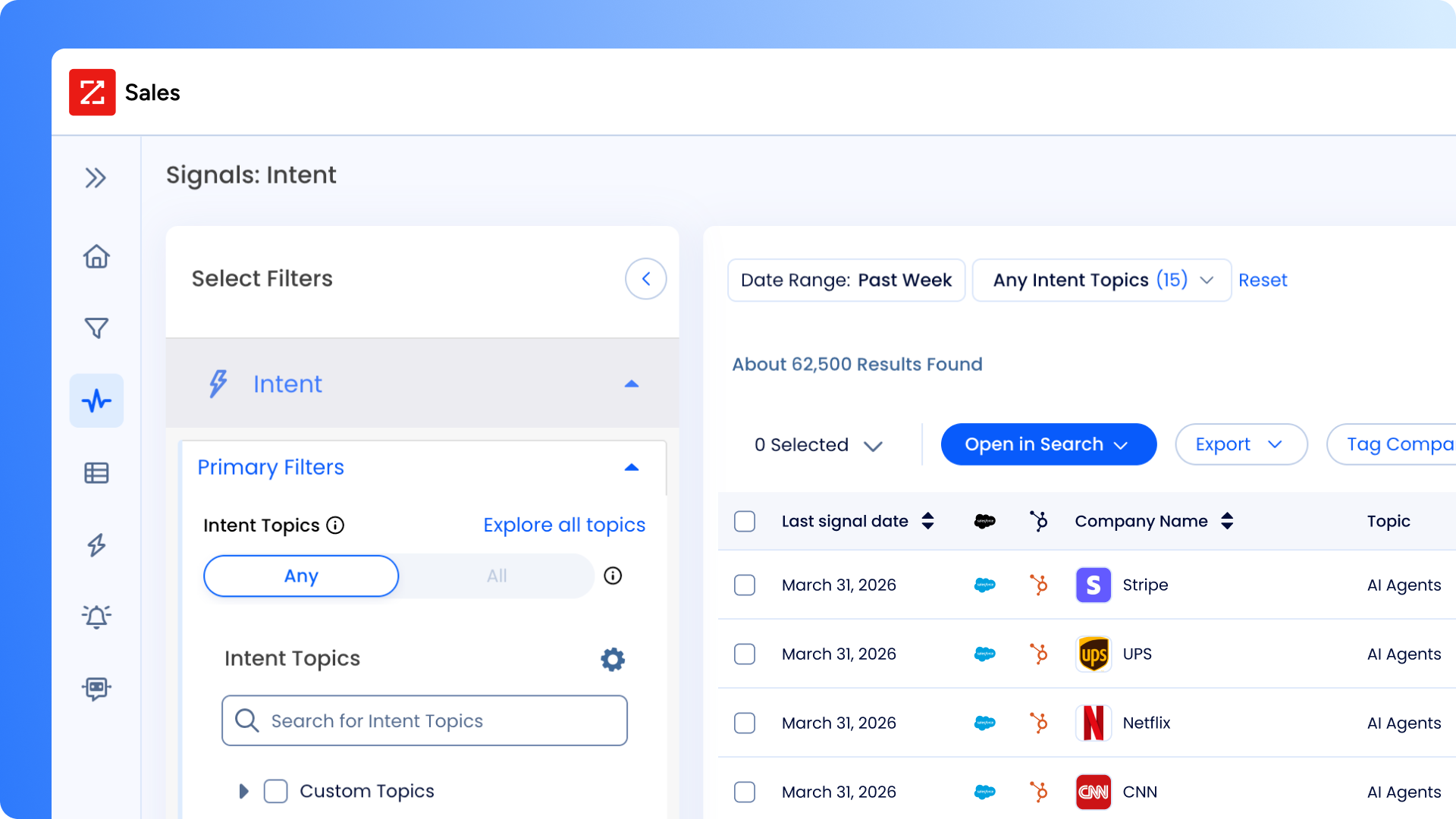
Intent data shows which accounts are researching topics related to your category. ZoomInfo's platform includes streaming intent and technology-site intent partnerships with G2, TrustRadius, and TechnologyAdvice.
This is often the real reason enterprise teams pick ZoomInfo over cheaper providers. It helps you prioritize accounts that are already in-market. It is usually priced as an add-on, not included in base tiers.
Enrichment and CRM Integration
ZoomInfo automatically enriches CRM records with firmographic and contact data. It integrates natively with the major CRMs. In our experience, this is where ongoing value sits. A clean, enriched CRM saves reps hours every week.
Technographics and Org Charts
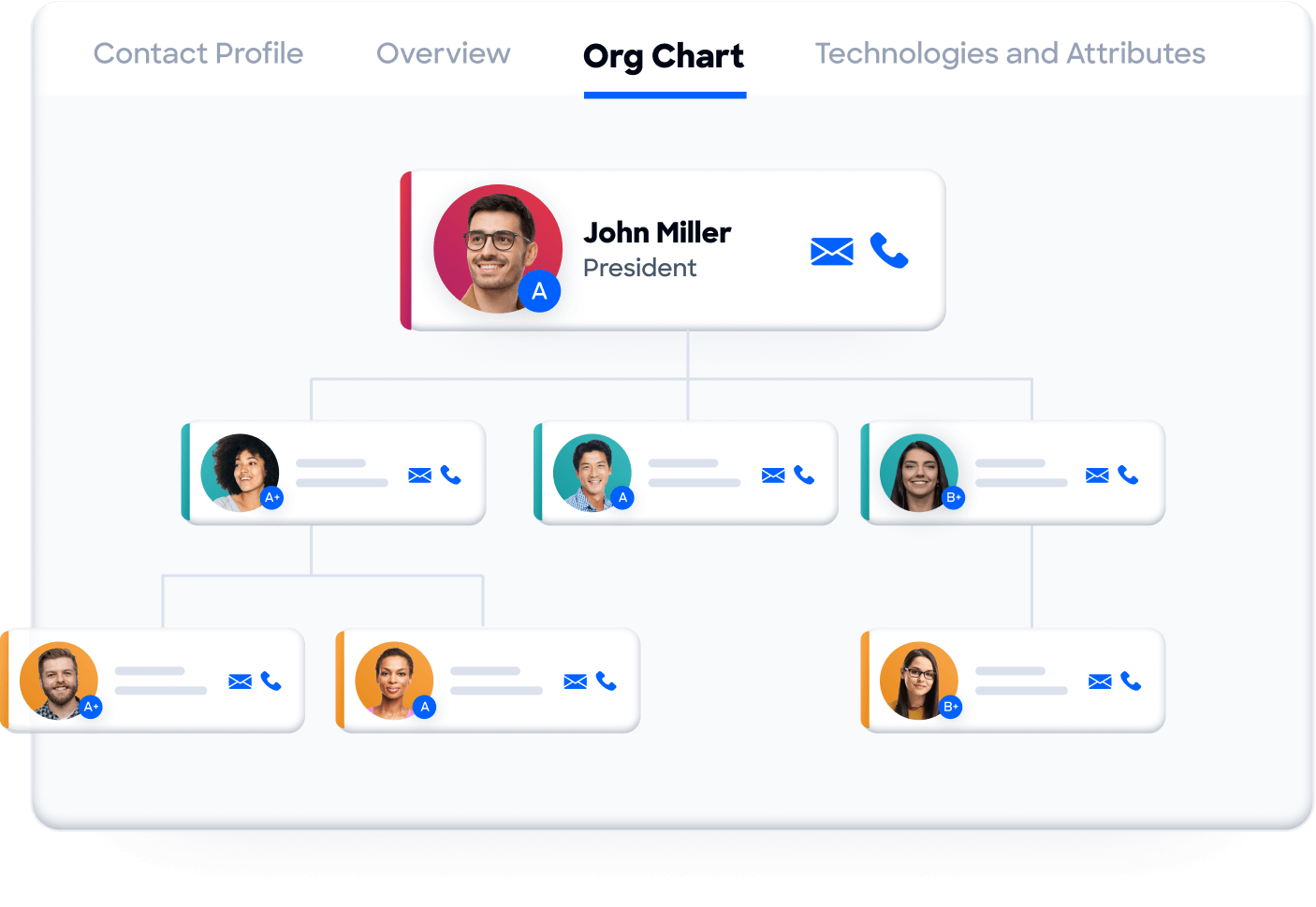
You get tech stack data and reporting-line mapping. That helps with multi-threading, which means reaching several stakeholders in one account. It is useful for enterprise ABM. It is overkill for a simple outbound motion.
Engagement Tools
Higher tiers bundle sequencing, a dialer, and conversation intelligence. They work, but they are generally weaker than dedicated tools. Most teams keep their existing sequencer.
Website Visitor Identification
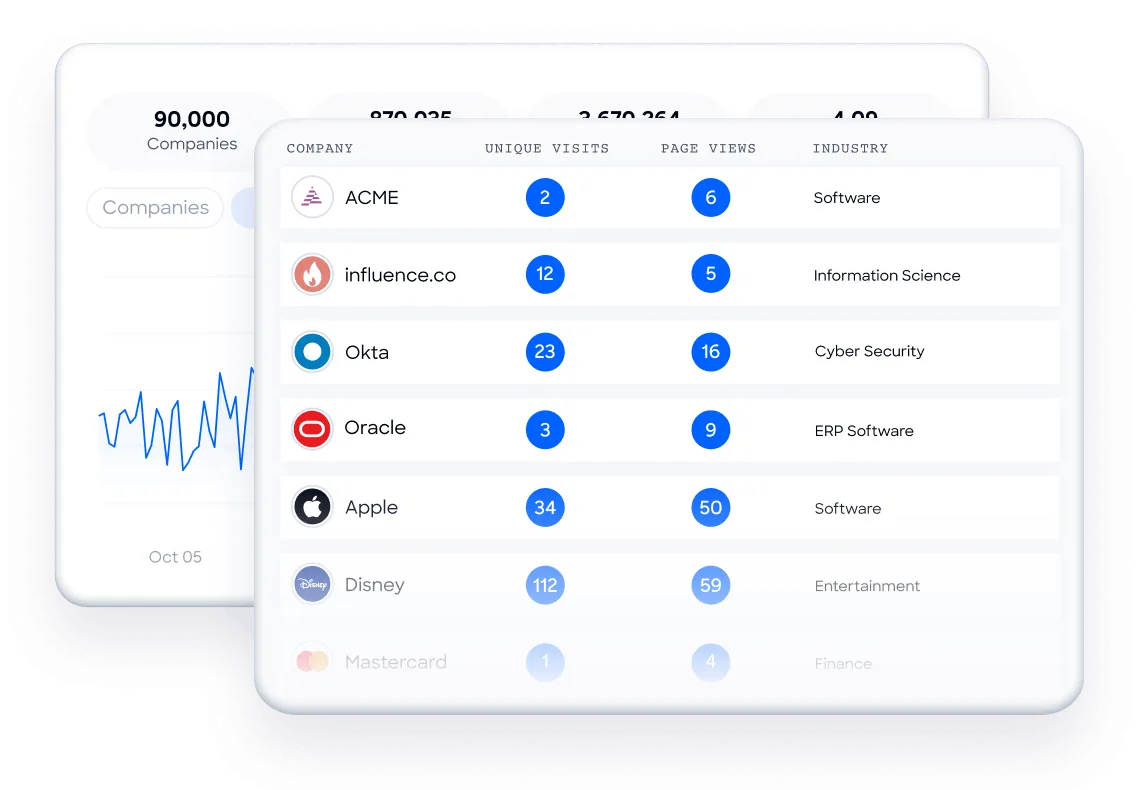
WebSights identifies companies behind anonymous website traffic. It is company-level, not person-level. It competes with cheaper standalone visitor ID tools.
If you want to understand what this data can and can't tell you, see our guide on B2B website visitor demographics.
Copilot and AI Features
ZoomInfo has added a GenAI layer called Copilot. It surfaces account insights, buyer recommendations, and next best actions, and ranks target accounts using signals like intent and executive scoops. It is a useful prioritization layer. It does not fix weak data or weak follow-up.
ZoomInfo Pricing in 2026: What It Really Costs
ZoomInfo pricing is quote-only. There is no public price list, and that opacity is itself a common complaint. Pricing is also negotiated, so treat everything below as a band, not a fact.
The structure usually has three parts:
- A base platform fee
- Per-seat licenses
- Blocks of export credits
Here are the bands reported across 2026 buyer guides:
Those figures come from buyer guides such as Vendr, Tropic, and Lead411, and ZoomInfo only sells annual contracts. One breakdown puts Professional at roughly $14,995 per year for three seats with 5,000 credits. Mid-market deals commonly run higher, and enterprise contracts go well beyond.
Credits are the trap. Exports consume credits. If you did not negotiate enough volume upfront, you hit the wall mid-term and pay for top-ups. Unused credits do not roll over.
Add-ons add up. Intent data, visitor ID, and engagement tooling are usually extra. A five-seat Advanced setup with add-ons can reach the mid-$30,000s. One analysis puts it at about $34,000 per year.
You can negotiate. Buyer data suggests 30 to 65% off list is common, with leverage concentrated at renewal time and quarter-end.
Now the honest comparison. Cheaper tools deliver core contact data at a fraction of the annual spend. You pay the ZoomInfo premium for intent, org charts, and CRM enrichment depth. If you do not need those, you are overpaying.
Pro tip: Ask for a written line-item quote. It should show seats, credits, add-ons, and the overage rate. If a rep can't give you the overage rate, treat that as a signal.
🚀 Skip the Data. Build Pipeline.
With 224.7K+ leads generated, 53,000+ meetings booked, and $312M+ pipeline, Cleverly helps B2B teams turn targeted prospects into real sales opportunities.
Contract Terms Buyers Regret: Auto-Renewal and Lock-In
This is the section most reviews skip, and the one you need most. Ask yourself is ZoomInfo worth it, and you have to price the contract, not just the product.
The most-cited complaint across review platforms is not data quality. It is the contract. A G2 discussion thread titled "Sneaky auto renewal clause in ZoomInfo contract" remains active years after the original post.
Here is what to watch for:
- Auto-renewal is standard. Notice windows commonly run 30 to 90 days before the term ends. Miss it and you are locked in for another year.
- Price escalators compound. Annual uplifts are common, and they stack inside an auto-renewed term. One review analysis cites renewal increases of 10 to 20%.
- Multi-year deals cut your leverage. A discount for a three-year term feels great on day one. It removes your ability to renegotiate when your needs change.
- Credits are cheap to negotiate upfront and costly to fix later. Once you are mid-term, the leverage shifts to the vendor.
- Downgrading is hard. Many reviewers say reducing seats at renewal turned into a fight.
Here is how to protect yourself:
- Diary the cancellation window the day you sign. Set two reminders: 120 days and 90 days before term end.
- Negotiate credits and escalation caps before signing. Ask for a cap on annual increases in writing.
- Get seat reduction rights in writing. Make sure you can scale down at renewal.
- Ask about data removal and destruction terms. Know what happens to exported data when you leave.
- Avoid multi-year terms unless the price lock is real. Verify what the lock covers.
The same instinct applies when you hire an outbound vendor. We cover it in our lead generation agency contract checklist.
(This is general guidance, not legal advice. Have counsel review any contract before you sign.)
ZoomInfo Pros and Cons
Let's put the whole picture side by side.
Pros
- Among the deepest B2B datasets available, especially for North American accounts.
- Intent data that helps you prioritize accounts already in-market.
- Strong CRM enrichment and integration depth.
- Org charts and technographics that support real enterprise multi-threading.
- One platform instead of a stitched-together stack.
- Enterprise-grade support and security posture.
Cons
- Cost is far above alternatives, and entry contracts price out most SMBs.
- Opaque, quote-only pricing makes budgeting and comparison hard.
- Auto-renewal and escalation clauses are the biggest source of customer regret.
- Credit overages add unplanned cost.
- Data accuracy outside North America is weaker.
- Job titles and roles decay, so a share of contacts have moved on.
- Bundled engagement tools rarely replace dedicated ones.
- Many users report aggressive sales and renewal practices.
What Users Praise About ZoomInfo
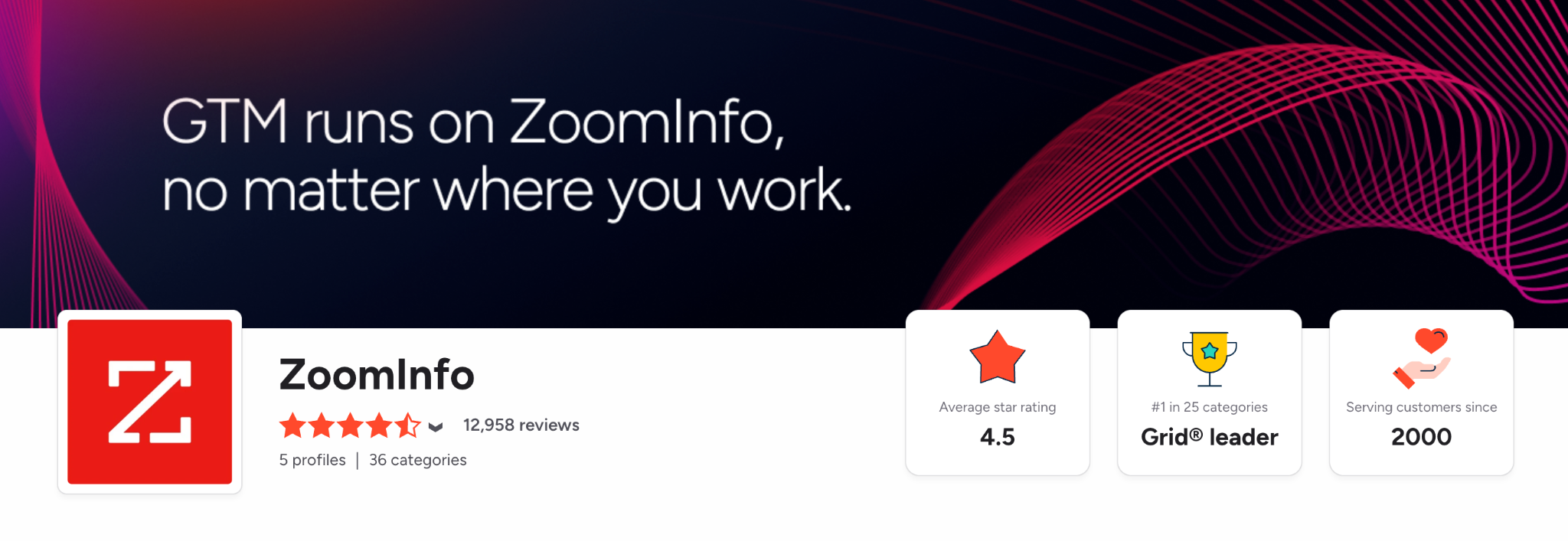
The positive side is real, and it is large. G2 shows 4.5 out of 5 across 12,890 reviews on the seller profile, and TrustRadius lists ZoomInfo Sales at 8.2 out of 10 from 1,879 reviews.
Here is what that praise tends to say:
- Data depth in US markets. Reviewers consistently credit coverage and contact detail. G2's feature scores show search and filtering at 8.6 out of 10 and contact data availability at 8.3.
- Better account prioritization. Intent data is repeatedly credited with helping reps focus on the right accounts.
- Reliable CRM sync. Enrichment is described as dependable and a real time-saver.
- Enterprise deal support. Org charts and multi-threading help on complex deals.
One G2 reviewer, a senior account executive, put the value of the data this way: "It's better than shooting in the dark."
The pattern is clear. People who praise ZoomInfo are usually enterprise or mid-market teams with a North American ICP, a real budget, and someone who runs the tool daily.
What Users Complain About: The Negative Reviews
A review that skips this part isn't worth reading. Here is what drives the low scores.
Why the rating gap exists. G2 reviewers are mostly verified B2B practitioners at mid-market and enterprise companies, where ZoomInfo's value proposition is strongest. Trustpilot captures more small business owners frustrated by pricing and contract terms that do not scale down. That is why one site says 4.5 and another says under 2. Also note that G2's seller profile combines several ZoomInfo products, while Trustpilot presents company-level feedback that goes beyond the software.
If you are an enterprise team, G2 is probably the better signal for product fit. But do not dismiss the Trustpilot complaints. They flag contract risks that apply at any company size.
The recurring themes in negative reviews:
- Contract and renewal disputes. This is the dominant theme.
- Aggressive follow-up after trials. Some reviewers describe persistent outreach and collections-style pressure.
- Data removal requests. Some users say requests were slow or ignored.
- Data accuracy. Complaints concentrate on international contacts and stale job titles.
- Credit exhaustion. Running out mid-contract forces costly top-ups.
- Downgrade friction. Reducing seats or scope at renewal is described as difficult.
- Cost versus usage for small teams. Smaller teams say the spend is hard to justify.
Best Alternatives to ZoomInfo in 2026
There is no single best replacement. The right pick depends on your market, budget, and who will run it. Verify current pricing on each vendor's site before you decide.
Apollo.io
Best for: budget-conscious SMBs that want data plus sequencing in one seat-priced tool.
If you are weighing Apollo AI vs ZoomInfo, the trade is simple. Apollo is far cheaper and has a usable free tier. Reported pricing runs about $49 to $149 per user per month. ZoomInfo gives you deeper intent signals and a broader enterprise feature set. Apollo's limitation is single-source data and thinner intent.
Cognism
Best for: EU and UK teams where GDPR compliance and phone-verified data matter.
International coverage is stronger than ZoomInfo's. It is still a significant annual commitment, so the budget conversation is similar.
Lusha

Best for: lightweight prospecting and LinkedIn-led workflows.
It is simple and affordable. The tradeoff is shallower firmographic and intent depth.
Clay
Best for: teams that want waterfall enrichment across many providers instead of one database.
Coverage and flexibility are the highest here. The limitation is that you need an operator who builds the workflows and manages credits.
We break it down in our Clay prospect list building guide.
UpLead, Lead411, and similar
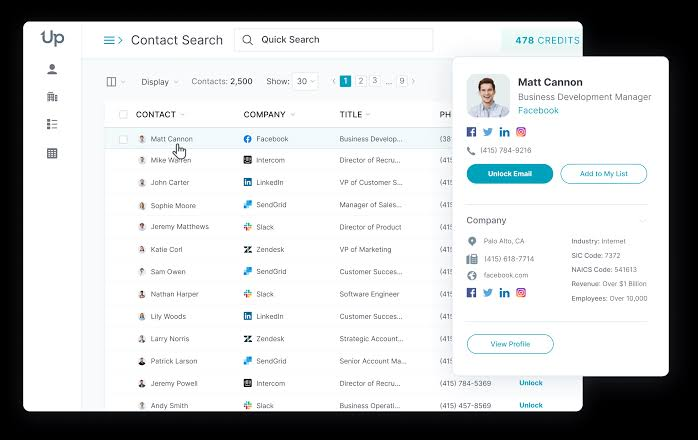
Best for: mid-market teams that want verified contact data without enterprise contracts.
Pricing is more transparent. The feature set is narrower, with less depth on intent and org charts.
LinkedIn Sales Navigator
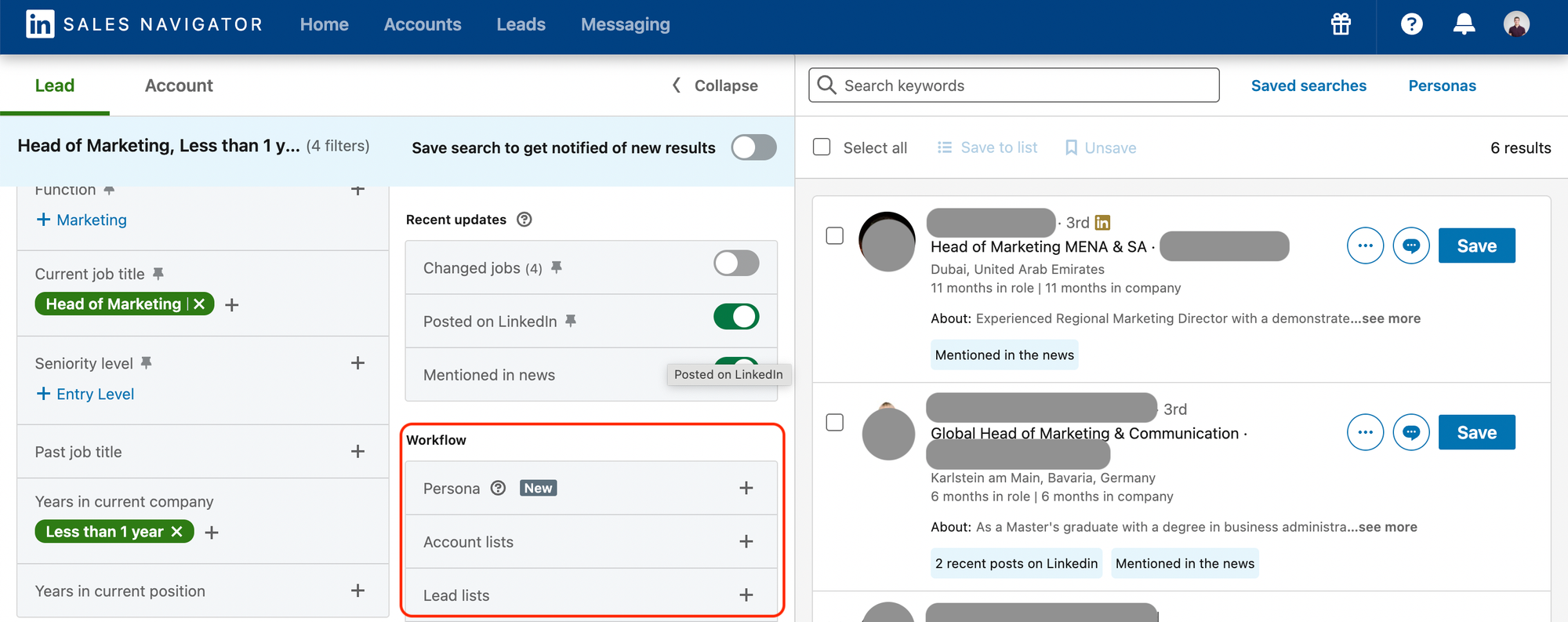
Best for: targeting and account research, not bulk contact export.
It is unbeatable for current role accuracy because people maintain their own profiles. The limitation is no bulk email export, so you will need another tool to get contact details.
Why a Managed Service Beats Buying Data Tools Yourself
Look at every option above. Each one is still a tool you have to staff, operate, and renew. The data is an input. It is not pipeline.
You may know this pattern. A team signs a five-figure data contract. Six months in, they find the constraint was never data access. It was the capacity to act on it consistently. Records get exported, a few sequences go out, and then the list sits.
Run the honest cost math. You pay for a ZoomInfo contract, plus a sequencer, plus deliverability infrastructure, plus the SDR time to work all of it. Compare that with a managed program that delivers booked meetings.
That is where we come in. Cleverly is a fully done-for-you lead generation agency. You are buying meetings, not seats and credits. We run it end to end:
- ICP definition
- Multi-source, verified list building
- LinkedIn outreach, cold email, and cold calling
- Reply handling
- Meetings booked onto your calendar
On data quality, our view is straightforward. A multi-source waterfall with verification beats any single database on coverage, including ZoomInfo.
We optimize for qualified meetings held, not records exported. And there are no auto-renewal traps, no credit overages, and no seats to negotiate down.
Paying for data but still short on meetings? See what a managed outbound program looks like. Book a strategy call with Cleverly.
Final Verdict: Is ZoomInfo Worth It in 2026?
ZoomInfo is genuinely strong for the right buyer. That buyer is an enterprise team with a North American ICP, a real budget, and someone to operate it.
It earns its price in three places: intent data, CRM enrichment at scale, and org-chart depth for complex deals. It does not earn it for SMBs, international-heavy ICPs, or teams that only need contact data.
Choose ZoomInfo if:
- You sell to North American accounts.
- You have a team large enough to use the seats and credits.
- You need intent data and org charts for complex deals.
- You have RevOps support to run it.
Look elsewhere if:
- You need contact data and nothing else.
- Your ICP is mostly outside North America.
- You are a small team with a limited budget.
- You do not have anyone to operate the platform.
Whatever you pick, negotiate credits and escalation caps upfront, and diary the cancellation window. That one habit prevents most of the regret in the reviews above.
The bigger point is this. Data access has never been the hard part of outbound. Consistent execution is. Decide who will do the work before you decide which database to buy.
Frequently Asked Questions
Free Resource
How to Scale a Profitable Cold Call System
Get the complete guide — download it instantly now.
Free Ebook
Download the Free Guide
Enter your details to get instant access.
You're all set! 🎉
Your ebook is downloading now.
Click below if the download didn't start automatically.


