Table of Contents
What to Look for in a Buyer Intent Data Tool
Quick Comparison: 7 Best Buyer Intent Data Tools
The 8 Best Buyer Intent Data Tools in 2026
How to Choose the Right Buyer Intent Data Tool for Your Team
How Cleverly Approaches Intent-Driven Outreach Differently
Conclusion
Frequently Asked Questions
Modified On :
September 22, 2026
Key Takeaways
- Intent data tools exist to close the gap between "fits our ICP" and "is actually shopping right now," which is the difference between a cold email and a well-timed one.
- Signal source matters more than feature lists. Third-party co-op data (Bombora), first-party review activity (G2), and website visitor identification (Leadfeeder) all answer a different question, and picking the wrong one wastes the budget.
- Bundled intent data (ZoomInfo, Apollo) saves you a tool, but standalone intent providers (Bombora, 6sense, Demandbase) go deeper on signal breadth and account scoring.
- A lot of "free" intent tools gate the useful part behind a paid tier. Test signal quality on a free plan before you commit a budget, but don't expect a free tier to run a real program.
- Intent data without an execution layer is just a dashboard nobody checks. The tool only pays off if reps actually act on the signal within days, not weeks.
Most reps get the timing wrong before they even open their CRM. Roughly 80% of the B2B buying journey now happens before a prospect ever talks to a salesperson, and 6sense's own research shows 81% of buyers pick a vendor before sales contact ever happens.
By the time your SDR sends that "just checking in" email, the deal might already be decided.
That's the entire premise behind intent data tools. Instead of guessing who's ready to buy, these platforms track behavioral signals, like content consumption, competitor research, review site visits, and website activity, to flag which accounts are actively in-market before they fill out a form or answer a cold call. Get that timing right and your outbound stops feeling like outbound.
This list breaks down the 7 best buyer intent data tools in 2026, ranked on signal quality, integrations, pricing transparency, and whether there's a free trial or tier worth testing.
We cover pure-play data providers, enterprise ABM suites, and budget-friendly all-in-ones, so whether you're a 3-person startup team or running ABM at scale, there's a fit here.
If you're comparing this to ZoomInfo specifically, or hunting for free buyer intent data tools, we flag those angles tool by tool.
What to Look for in a Buyer Intent Data Tool
Before you sign anything, run every option through these five filters.
✅ Data source quality. Ask where the signal actually comes from. Bombora pulls from a co-op of 5,000+ publisher sites. G2 pulls from its own review platform traffic. Leadfeeder pulls from your own website visitors. None of these are "better" in the abstract, but they answer different questions, and mixing them up leads to disappointment.
✅ Signal freshness. Weekly refresh is standard for third-party co-op data (Bombora updates every Sunday). If your sales cycle moves fast, a week-old signal can mean the account already shortlisted someone else.
✅ ICP targeting depth. Some tools give you broad topic-level intent with no firmographic filtering. Others let you slice by industry, headcount, and geography down to the account level. If you can't filter to your actual ICP, you're back to a noisy list.
✅ CRM and stack integration. Intent data that lives in a separate dashboard reps never open is dead weight. Check whether the tool pushes alerts directly into Salesforce or HubSpot, or whether it triggers a workflow automatically.
✅ Free trial or freemium availability. Enterprise ABM platforms rarely let you test before you buy. Tools like Apollo and Leadfeeder do, which makes them a lower-risk way to validate whether intent data actually improves your pipeline before you commit real budget.
🎯 Intent Data Is Powerful—Execution Wins Deals
We combine buyer intent data with LinkedIn, cold email, and cold calling to generate 15–30 qualified meetings every month.
Quick Comparison: 8 Best Buyer Intent Data Tools
The 8 Best Buyer Intent Data Tools in 2026
1. Bombora — Best Pure-Play Intent Data Provider

Bombora is the name that comes up in almost every intent data conversation, and for good reason. Its Company Surge scoring is the industry's most cited account-level intent model, and a lot of the "intent data" baked into other platforms (including ZoomInfo and 6sense) actually traces back to Bombora underneath.
How it works: Bombora runs a co-op of 5,000+ B2B publisher websites, tracking content consumption across thousands of topics to flag when a company's research activity on a given subject spikes above baseline.
Key features:
- Company Surge score by topic, refreshed weekly
- Account-level (not contact-level) intent
- Integrates with most major GTM platforms
Best for: teams that want the deepest third-party signal layer, especially if you're already on a platform that licenses Bombora data and just need to check whether you're paying for it twice.
Pricing and trial: No public pricing. Third-party procurement data puts entry contracts around $25K-$30K/year, climbing well past six figures for broader topic tracking. There's no self-serve free trial, and contracts are annual-only.
Pro tip: before buying Bombora directly, check your ZoomInfo, 6sense, or HubSpot contract. Several of these platforms already embed Bombora's Company Surge data, and paying for a separate license on top is a common, avoidable mistake.
2. 6sense — Best for Enterprise ABM and Predictive Buying Stage Scoring

6sense goes a step further than raw intent signals. It's built around identifying accounts in the "dark funnel," companies actively researching but not yet engaging with any vendor, and then predicting where they sit in the buying journey.
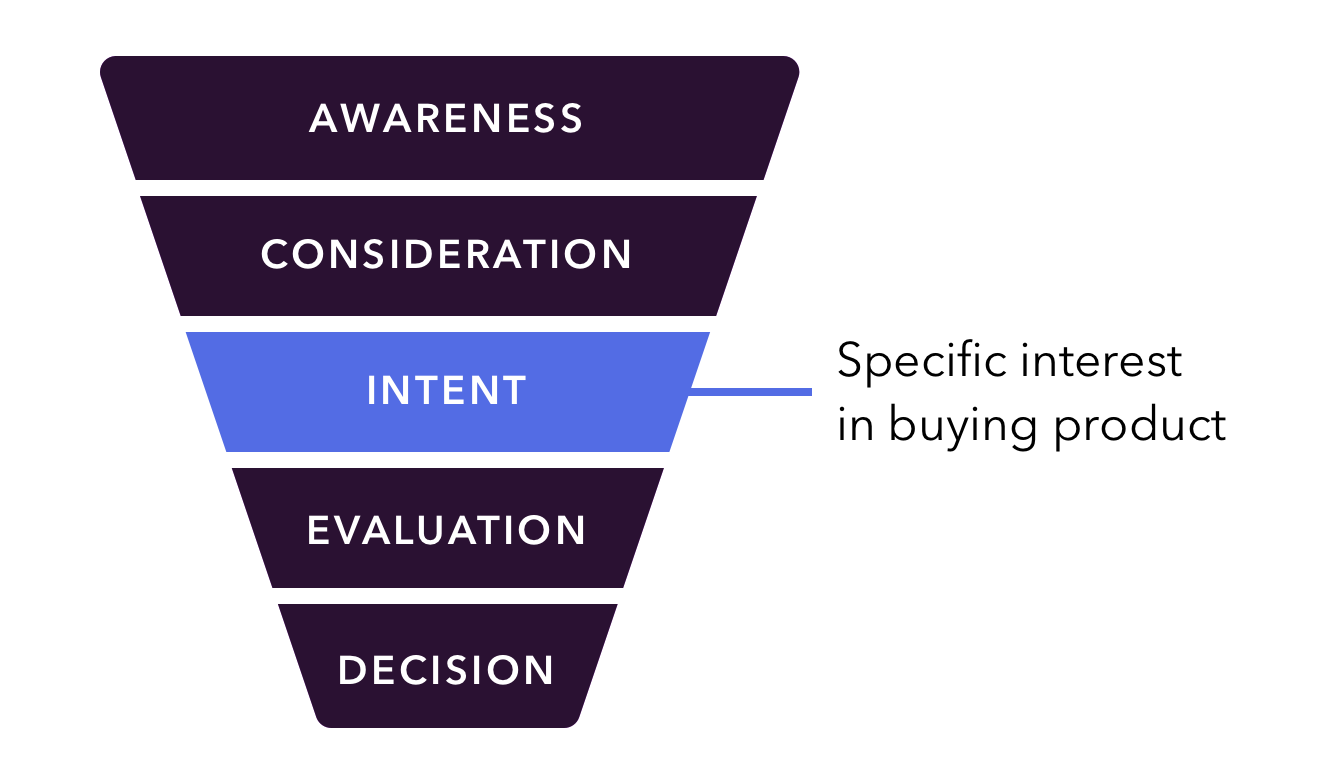
Key differentiator: predictive buying stage scoring tells you not just that an account is in-market, but whether it's in awareness, consideration, or decision stage. That lets reps match messaging to where the account actually is, instead of sending the same generic pitch to everyone flagged as "hot."
Features:
- Account identification and buying committee mapping
- Predictive scoring pulling from multiple intent sources
- Coordinated ad campaign activation
- CRM integration
Best for: mature ABM organizations running coordinated sales and marketing plays against enterprise accounts.
Pricing and trial: 6sense offers a free plan with 50 credits/month, which is enough to explore the interface but not enough to run a real program. Paid deployments are custom-quoted, and market data puts most contracts between $25K and $120K/year depending on modules and account volume. Similar to ZoomInfo for intent data in that it combines contact intelligence, intent, and account data in one platform, though 6sense leans harder into predictive AI.
3. ZoomInfo Intent — Best All-in-One with Largest Verified B2B Database
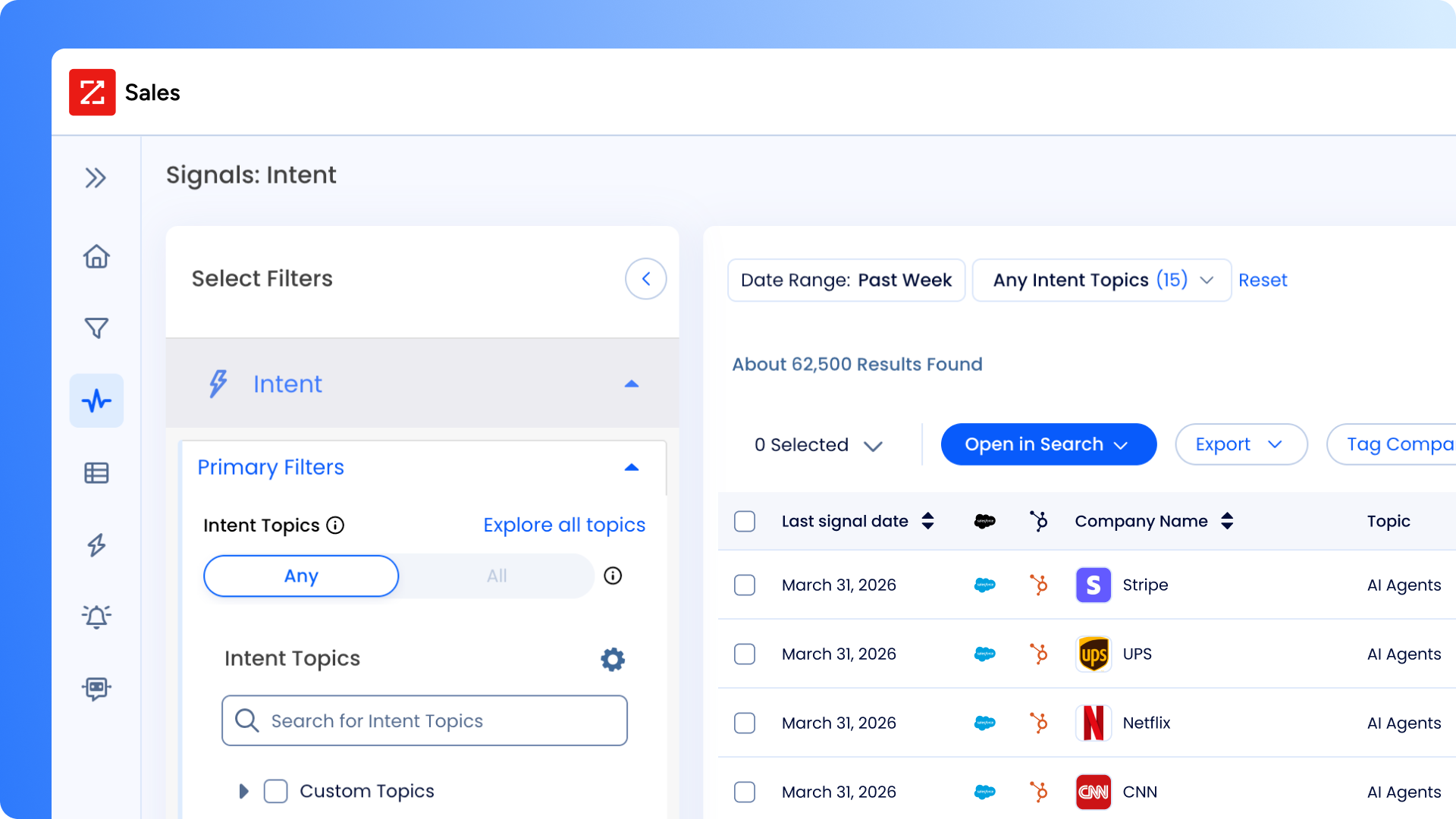
ZoomInfo's advantage isn't necessarily the depth of its intent signal, it's that the signal sits right on top of the largest contact and company database on the market, so there's no separate tool to integrate.
Key advantage: intent data is layered directly onto contact records inside ZoomInfo. When an account surges, you're already looking at the decision-makers and their verified numbers in the same screen.
Features:
- Topic surge alerts inside company search
- CRM sync (Salesforce, HubSpot)
- Workflow automation triggered by intent activity
Best for: sales teams already running on ZoomInfo who want intent-based prioritization without bolting on another platform.
Limitation: ZoomInfo's proprietary intent network isn't as broad as Bombora's co-op, so if you need the widest possible signal coverage, this isn't it.
Pricing and trial: ZoomInfo offers a free "Lite" tier, but that's a separate, limited product, not a trial of the full platform. Intent data specifically requires the Advanced plan, which runs roughly $25K-$30K/year before per-seat and credit add-ons. There's no self-serve free trial for the core intent-enabled tiers.
4. Demandbase — Best for Intent + ABM Advertising in One Platform

Demandbase bundles intent data, predictive account scoring, and B2B display advertising into a single platform, which makes it a fit for teams that want marketing and sales running from the same signal at the same time.
Key differentiator vs. 6sense: Demandbase leans harder into bundled advertising inventory. You can serve targeted ads to accounts showing intent while your SDRs run parallel outreach, all triggered from the same account list.
Features:
- Account-level intent scoring
- Advertising activation and website personalization
- CRM integration and account journey analytics
Best for: B2B marketing teams that want intent data and ABM advertising in one place instead of stitching two platforms together.
Pricing and trial: No free plan or self-serve trial. Entry contracts start around $22K-$45K/year, with full Demandbase One deployments (advertising, sales intelligence, personalization) frequently running into six figures. Everything runs through a sales demo first.
5. Leadfeeder — Best for Website Visitor Intent Identification

Leadfeeder identifies companies visiting your website via IP-based reverse lookup, turning otherwise anonymous traffic into named accounts with page-level detail.
Key differentiator: this is first-party intent, arguably the highest-confidence signal on this list, because these are accounts already aware of your brand and actively exploring your site, not just a topic somewhere on the internet.
Features:
- Named company identification from site visits
- Page-level detail (pricing page, case study, demo page views)
- CRM alerts when target accounts visit
- Lead scoring based on visit behavior
Best for: SMB and mid-market teams that want to know who's already checking them out, without an enterprise-level budget.
Pricing and trial: Leadfeeder's free plan identifies up to 100 companies/month with 7-day data retention, which is genuinely usable for testing signal quality. Paid plans start around $99/month (annual billing) and scale with the volume of companies identified. It's also one of the more GDPR-native options on this list if you sell into Europe.
Note: Leadfeeder operated under the Dealfront name from 2023 through March 2026, when the company rebranded the full platform back to Leadfeeder. If you've seen it referenced either way recently, that's why.
6. RB2B — Best for Real-Time Person-Level Website Visitor Identification

RB2B takes website visitor identification a step further than IP-based intent data providers like Leadfeeder. Instead of just telling you which company visited your site, RB2B identifies the actual person — name, LinkedIn profile, and job title — so your SDRs can reach out to the right contact directly, not just the account.
How it works: RB2B pushes real-time alerts to Slack or email when a named individual visits your website, pulling identity from LinkedIn profile matching rather than IP-to-company lookup alone.
Key features:
- Person-level (not just company-level) visitor identification
- Real-time Slack alerts with LinkedIn profile link
- Zero-friction setup — no complex CRM integration required to start seeing results
- Ideal for high-intent pages: pricing, demo, case studies
Best for : B2B SaaS teams that want to move fast on warm website visitors without waiting for a form fill or an email reply.
Pricing and trial : RB2B offers a free plan, making it one of the lowest-risk tools on this list to test. Paid plans unlock higher identification volume and deeper integrations.
7. Apollo.io — Best Budget-Friendly Option with Intent + Contact Data + Sequencing
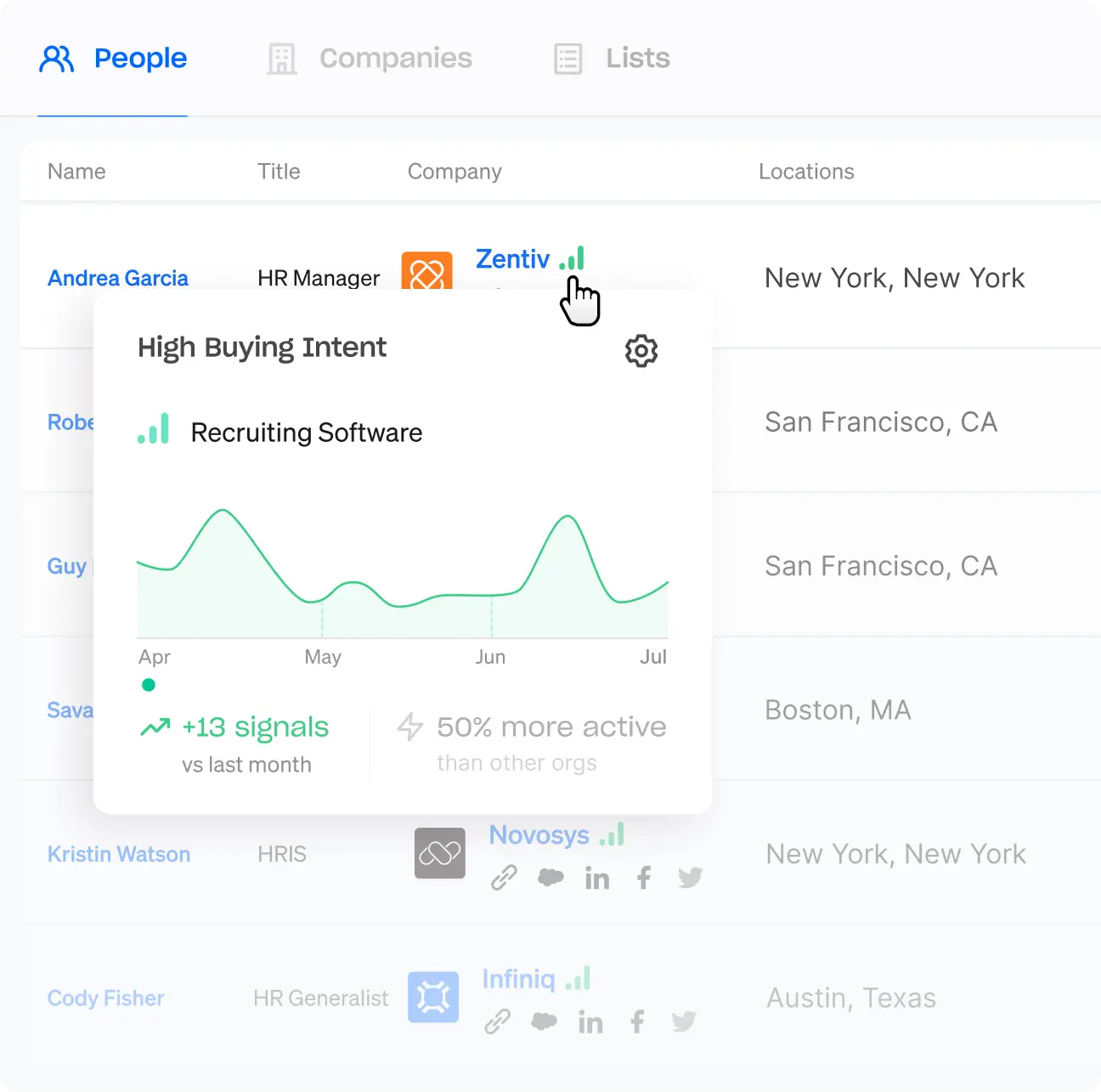
Apollo combines a 230M+ contact database with basic intent signals, lead scoring, and built-in email/call sequencing, so a rep can spot an intent-active account and launch outreach without leaving the platform.
Key differentiator: intent data, contact data, and outreach all live in one tool. That consolidation is Apollo's whole pitch against pricier point solutions.
Features:
- Intent-based account filtering
- Verified contact data with direct dials
- Email sequencing and CRM sync
- AI-assisted email writing
Best for: teams that want one platform covering identification, data, and outreach without paying for three separate tools.
Pricing and trial: Apollo's free plan is a real entry point but was scaled back in late 2025, so treat it as a way to test data quality, not a workable outbound engine. Paid plans start at $49/user/month (annual billing), with intent topics gated by tier, more topics unlock as you move up to Professional and Organization. It's meaningfully cheaper at the entry level than ZoomInfo or 6sense, which is the whole reason it shows up on "similar to ZoomInfo" comparisons.
8. G2 Buyer Intent — Best for Review-Site-Based Intent Signals

G2 Buyer Intent captures one of the most direct signals available: accounts that viewed your G2 profile, browsed a competitor's page, or read a comparison, meaning the prospect is actively evaluating vendors, not just researching a category in the abstract.
Key differentiator: the signal type itself. This isn't "someone read an article about your category." It's "someone at this company looked at you and a competitor side by side, this week."
Features:
- Account-level identification of G2 profile and category page visitors
- Competitor profile view alerts
- CRM integration (Salesforce, HubSpot) and Slack notifications
Best for: B2B SaaS companies with an active G2 presence that want to catch accounts mid-evaluation.
Ideal use case: a target account views your G2 profile and a competitor's profile on the same day. That's the moment to send a personalized note referencing the comparison, not a generic "just following up."
Pricing and trial: G2 Buyer Intent is sold as an add-on to a G2 vendor profile, custom-priced based on your product footprint and data package. A free trial is available, and it's worth noting the signal is only as useful as how much your buyers actually shop on G2, if your category doesn't get much G2 traffic, this tool won't have much to show you.
🚀 Turn Intent Signals Into Revenue
With 53,000+ meetings booked and $312M+ in pipeline generated, Cleverly helps 10,000+ businesses convert buying intent into predictable sales pipeline.
How to Choose the Right Buyer Intent Data Tool for Your Team
Match the tool to the job, not the other way around:
- Need the broadest third-party signal coverage → Bombora
- Running enterprise ABM with coordinated ad + sales plays → 6sense or Demandbase
- Already on ZoomInfo and want intent in the same place → ZoomInfo Intent
- Want to know who's visiting your site right now → Leadfeeder
- Need a budget-friendly all-in-one with a usable free tier → Apollo.io
- Have a strong G2 presence and want competitor comparison signals → G2 Buyer Intent
Team size is a real constraint here, not a footnote. Enterprise platforms like 6sense and Demandbase need a dedicated RevOps function to actually implement and run; without that, the platform sits half-configured. Smaller teams typically get more usable value out of Apollo or Leadfeeder.
Before you commit budget, check what's already embedded in your stack. Bombora's data shows up inside ZoomInfo, 6sense, and HubSpot, and a lot of teams end up paying for the same intent signal twice without realizing it.
And start cheap: Apollo's free tier and Leadfeeder's free plan both let you validate whether intent data actually moves your booking rate before you sign a six-figure contract on a platform you haven't tested.
How Cleverly Approaches Intent-Driven Outreach Differently
Buying the right intent data tool is only half the problem. Someone still has to check the dashboard daily, build the segment, write copy that references the actual signal, and get a message out before the account moves on. Most teams buy the tool and then let the alerts pile up unread, which is the single most common way intent data fails to produce pipeline.
We run outbound differently. Instead of handing you another dashboard to babysit, we fold intent signals directly into the LinkedIn, cold email, and cold calling campaigns we manage for you, so accounts that are actively in-market get personalized outreach within days, not whenever someone finally opens the report.
Our cold email service alone tracks 10+ intent signals as part of every campaign we run, which means the targeting layer is already built into the system instead of bolted on as a separate subscription.
This is why companies increasingly choose a done-for-you model over managing intent tools internally: the tool tells you who's ready, but timing, personalization, and follow-through determine whether that turns into a meeting.
We've generated $312 million in pipeline for clients across LinkedIn, cold email, and cold calling campaigns, and we do it without asking you to hire an operator just to run the signals you're already paying for.

If your team has the data but not the bandwidth to act on it fast, book a free consultation and we'll show you how it fits into your outbound.
Conclusion
The best intent data tools don't replace good targeting, they sharpen it. Knowing an account fits your ICP has never been the hard part. Knowing they're actively shopping right now, before a competitor gets there first, is what actually moves the needle on reply rates and booked meetings.
Start with a free trial, whether that's Apollo or Leadfeeder, and validate that the signal quality actually matches your ICP before you commit real budget to an enterprise platform.
Once you've confirmed intent data improves your meeting rate, scaling into Bombora, 6sense, or Demandbase becomes a much easier call. And if the bottleneck isn't the data but the execution, that's exactly the gap a managed outbound partner is built to close.
Frequently Asked Questions
Free Resource
How to Scale a Profitable Cold Call System
Get the complete guide — download it instantly now.
Free Ebook
Download the Free Guide
Enter your details to get instant access.
You're all set! 🎉
Your ebook is downloading now.
Click below if the download didn't start automatically.