Table of Contents
What Is Apollo.io?
Apollo.io Features Breakdown
Apollo.io Pricing — What Does It Actually Cost?
Apollo.io Pros and Cons
What Real Users Are Saying About Apollo.io in 2026
Apollo.io Alternatives Worth Considering
How Cleverly Approaches Cold Email Differently
Conclusion
Frequently Asked Questions
Modified On :
April 9, 2026
Key Takeaways
- Apollo.io is an all-in-one B2B sales platform combining a 265M+ contact database, email sequences, a dialer, intent data, and an AI assistant — starting at $49/user/month.
- Pricing looks affordable upfront, but the credit-based system, per-seat model, and no-rollover policy can drive real costs higher than expected.
- Data accuracy is the most consistent user complaint — expect bounce rates of 15–35% depending on industry and geography, with international data being notably weaker.
- G2 ratings are strong at 4.7/5, but Trustpilot sits at 2.9/5, driven largely by billing disputes, account suspensions, and slow customer support on lower-tier plans.
- Apollo.io is best suited for SMBs, startups, and solo SDRs running US-focused outbound who want one consolidated platform at a competitive price point.
- Teams that prioritize data accuracy, high-volume deliverability, or international prospecting will likely need a more specialized tool or a multi-tool stack.
If you've been researching outbound tools lately, Apollo.io has almost certainly come up.
It's one of the most talked-about platforms in the B2B sales world right now, and for good reason. It packs a huge amount into a single product at a price point that would have been unthinkable a few years ago.
But the thing is: Apollo.io reviews across the internet are all over the place. G2 gives it a 4.7/5 with 9,400+ reviews. Trustpilot sits at 2.9/5. Reddit threads swing between "great for prospecting on a budget" and "the bounce rates are brutal."
That kind of split makes it hard to know what you're actually getting.
This review cuts through the noise. We'll break down every major feature, explain exactly how the pricing works (including the parts they don't make obvious), share what real users are saying, and compare Apollo to the best alternatives on the market in 2026.
We'll also be honest about when a tool like Apollo is the right call — and when managing cold email purely through software stops making sense.
Whether you're a solo founder, an SDR team lead, or a growth marketer evaluating your stack, this guide will help you make a clear-eyed decision.
What Is Apollo.io?
Apollo.io is a B2B sales intelligence and engagement platform. The core idea is simple: instead of buying a separate lead database, a sequencing tool, a dialer, and a CRM, you get all of that in one place.
It was built to solve a real problem - outbound sales is fragmented.
Reps spend too much time switching between tools, exporting lists, re-entering data, and losing track of where a prospect is in a sequence. Apollo's pitch is that it eliminates that friction by keeping everything in a single workflow, from finding a lead to booking a meeting.
Today, Apollo is used by 500,000+ companies, from solo founders doing their own prospecting to mid-market SDR teams with dedicated operations support.
It sits in a space between lightweight email tools (like Instantly or Lemlist) and enterprise platforms (like ZoomInfo or Outreach) — and that positioning has made it the default choice for a lot of SMBs and early-stage startups running US-focused outbound.
The key things that set Apollo apart from a standard CRM or cold email tool:
- A built-in contact database with 265M+ contacts and 30M+ companies. No separate data subscription needed.
- Native email sequences in the same platform where you build your lists.
- A built-in dialer (on Professional and Organization plans).
- Intent data and buying signals built into the prospecting workflow.
- An AI assistant that launched in March 2026 and can execute outbound workflows via natural language.
That's a genuinely impressive feature set. The question is how well each piece works in practice and whether the whole is worth more than the sum of its parts.
📧 Apollo Finds Leads. We Turn Them Into Meetings.
Cleverly runs done-for-you LinkedIn + cold email outreach that’s generated $312M in pipeline for 10,000+ companies. Plans start at just $397/mo.
Apollo.io Features Breakdown
Lead Database and Prospecting
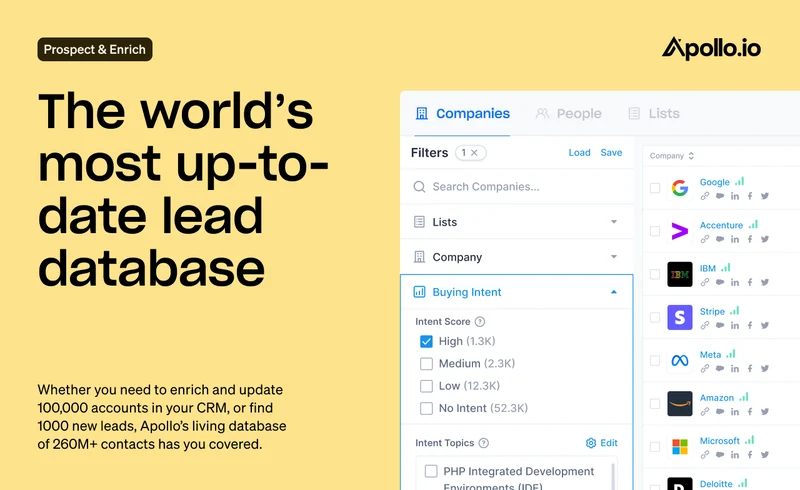
Apollo's database is the product's biggest selling point. It gives you access to 265M+ contacts and 30M+ companies, searchable across 65+ filters. You can slice by job title, seniority, department, company size, revenue, industry, funding stage, technologies used, and even recent signals like job changes or hiring activity.
In practice, the list-building experience is smooth. You can save complex personas — something like "VP of Sales at Series B SaaS companies with 50-200 employees in North America" — and pull those lists instantly without re-entering your criteria each time.
The Chrome extension lets you grab contact data directly from LinkedIn profiles, which speeds things up considerably for research-heavy workflows.
The database is strongest for US-based contacts in tech, financial services, and professional services. Coverage gets thinner for international markets, smaller companies, and niche industries — something we'll come back to in the pros and cons section.
Email Sequences and Outreach Automation
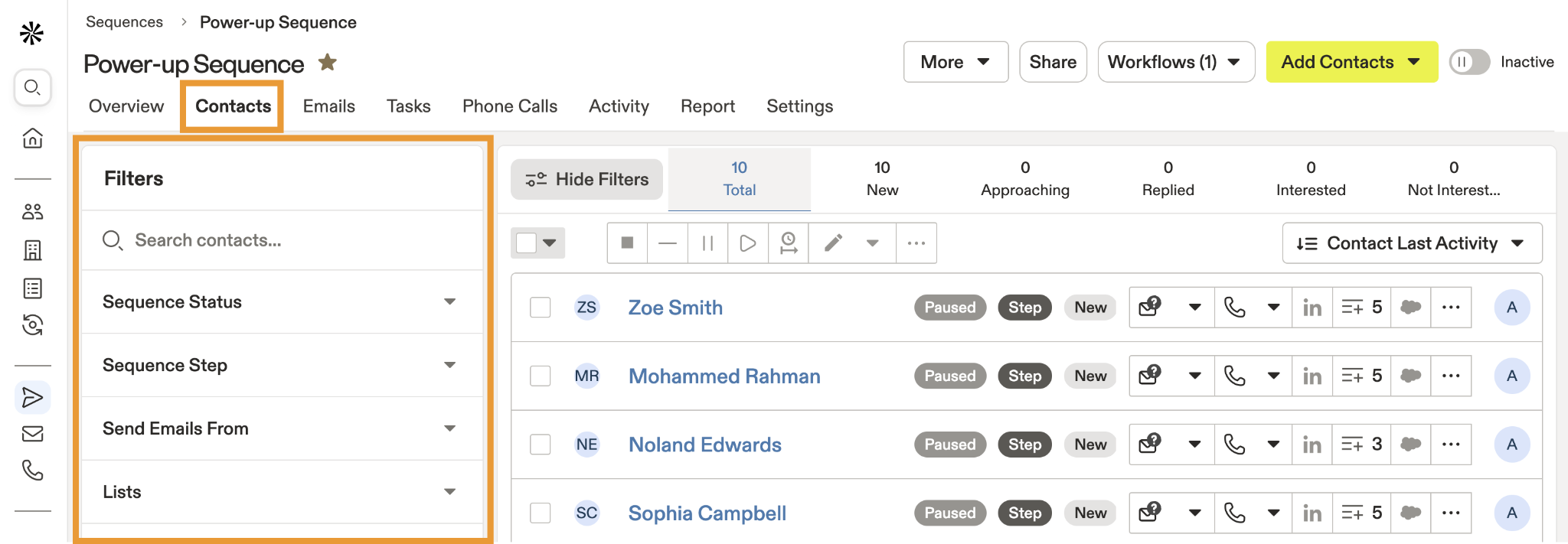
Apollo's sequencer is the main reason most outbound teams choose it over standalone data tools. You can build multi-step sequences that combine emails, phone tasks, and LinkedIn touchpoints. A/B testing is built in, which lets you test subject lines and body copy without exporting to a separate tool.
The real advantage here is that your contact data and your sequences live in the same place. You find a lead, add them to a sequence, and the emails go out — no CSV export, no re-importing into another platform. For solo SDRs or small teams, that workflow saves a lot of time.
One thing to know: Apollo uses shared sending infrastructure on most plans. Your emails go out through Apollo's servers alongside thousands of other users. If other senders on that infrastructure have poor list hygiene or spam-heavy practices, it can affect your deliverability.
Apollo added built-in email warmup in 2025, which helps — but dedicated cold email platforms like Instantly or Smartlead still give you more control over your sending reputation.
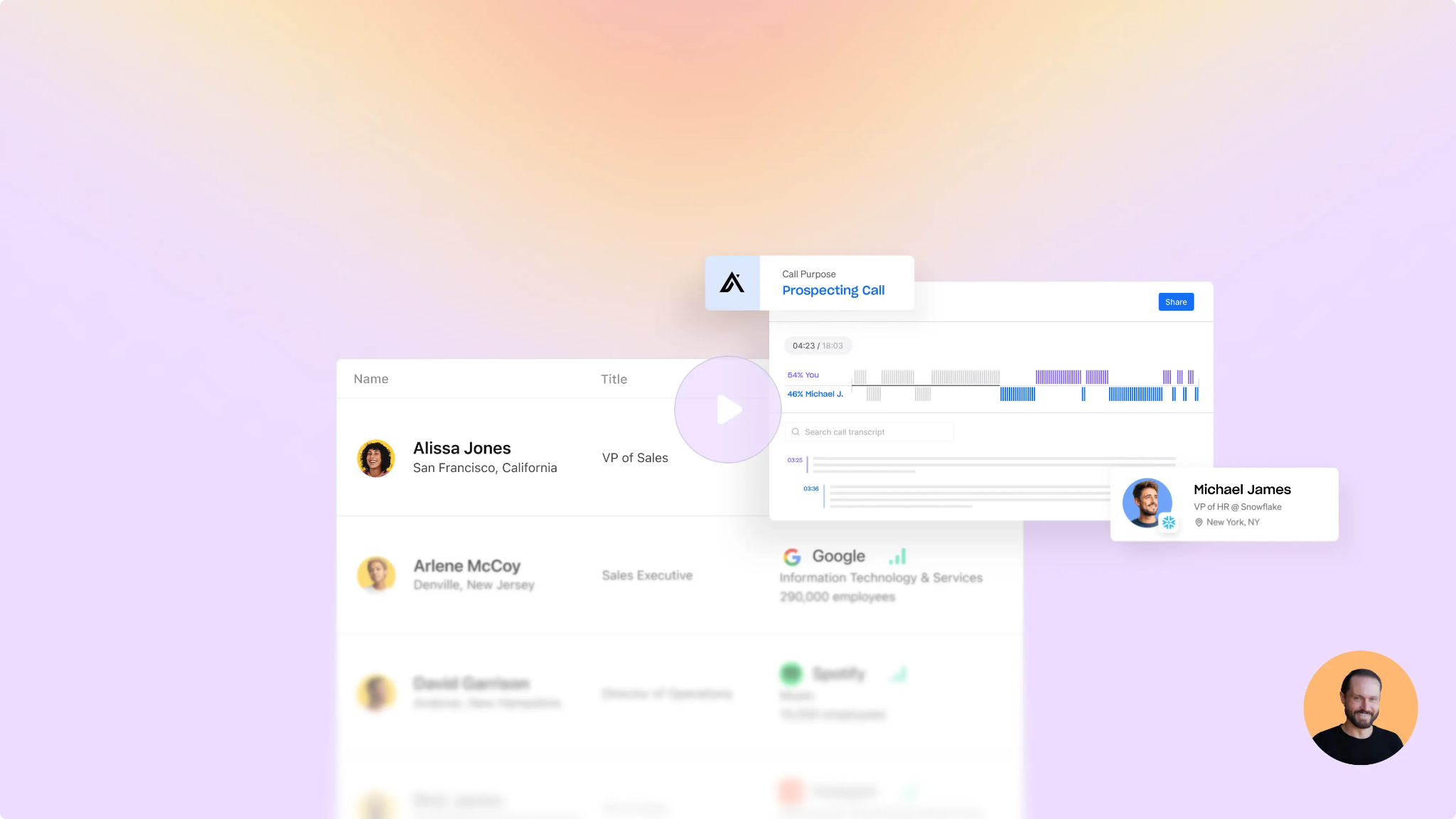
Cold Calling and Dialer
Apollo includes a built-in dialer starting on the Professional plan ($79/user/month). The US dialer covers basic outbound calling with call recording (up to 4,000 minutes/month). The Organization plan adds an international dialer and extends recording to 8,000 minutes.
In 2026, Apollo also launched an advanced dialer add-on that includes a parallel dialer — letting reps call multiple numbers simultaneously and connect to whoever picks up first. Apollo claims reps can complete up to 2.5x more calls with the parallel dialer. That's a meaningful productivity boost for call-heavy teams.
The caveat: Phone number data. Phone numbers cost 8 credits each in Apollo's credit system — the highest cost of any data type. And accuracy, especially for direct dials, is inconsistent.
📢 Multiple reviewers across G2 and Capterra flag outdated or incorrect phone numbers as a recurring issue. If cold calling is a primary channel for your team, you may want to supplement Apollo's phone data with a more specialized source.
Intent Data and Buying Signals
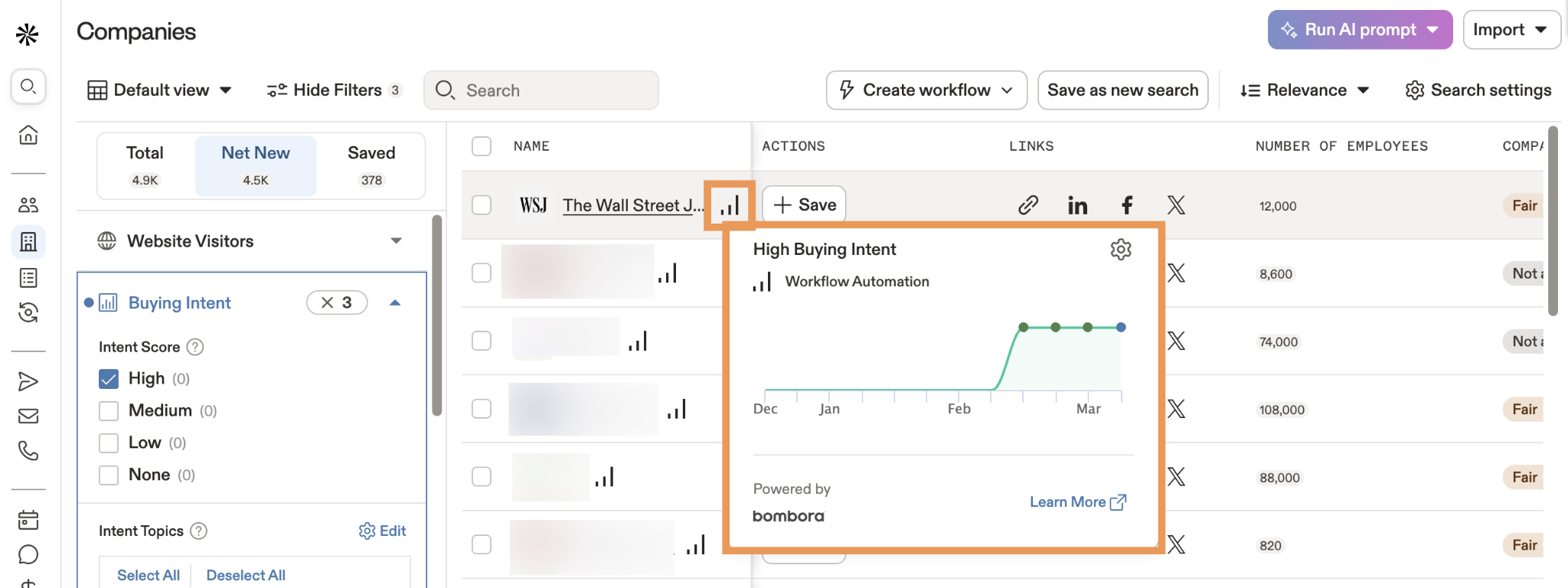
Apollo includes built-in intent data that flags accounts showing active buying behavior based on content consumption patterns across the web. The Basic plan unlocks 6 intent topics; the Organization plan expands this to 12 topics.
Intent signals help you prioritize which accounts to contact first — particularly useful when you're working a large list and need to decide where to focus.
Some G2 reviewers point to intent data as one of the features that's improved most noticeably in the past year, with Apollo's AI getting better at surfacing high-fit accounts at the right time.
That said, intent data is only as good as its signal quality. Apollo's intent coverage is solid for US markets but less reliable for international prospecting or niche verticals.
AI Features and Agentic Assistant
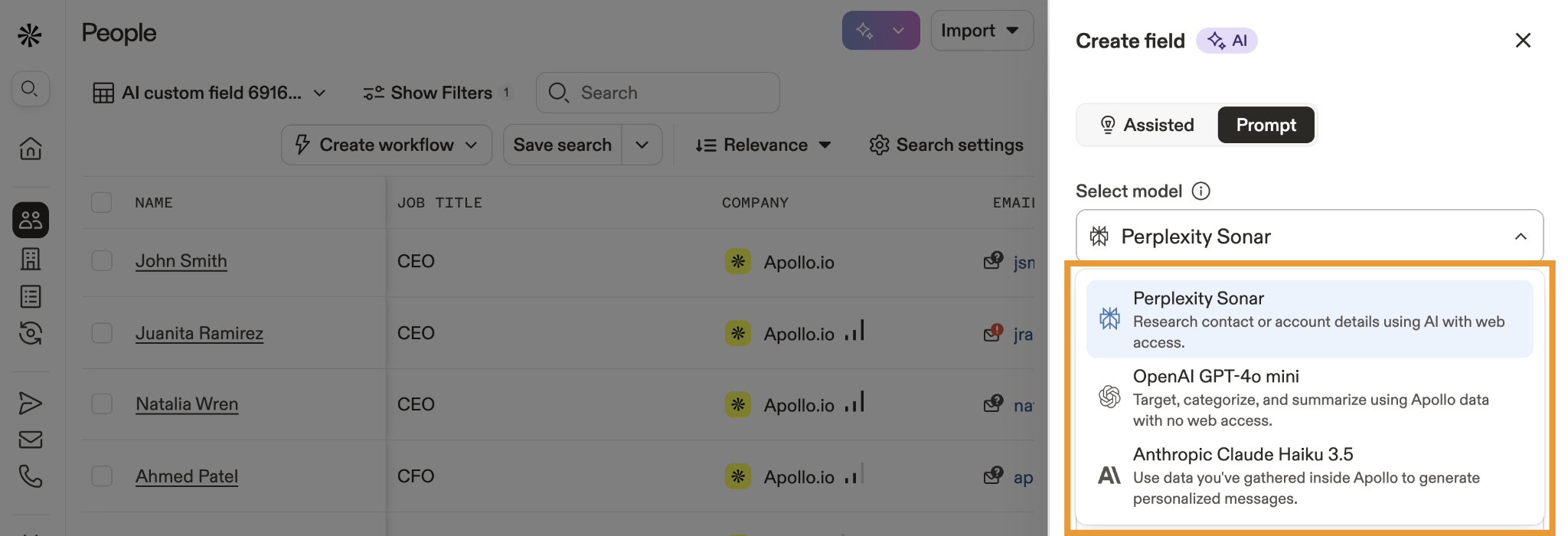
This is where Apollo has made the most noise in 2026. In March 2026, Apollo launched its AI Assistant, which is positioned as the first fully agentic GTM operating system. Instead of just providing suggestions, the AI Assistant executes workflows directly inside the platform based on natural language prompts.
You can say something like "find high-intent accounts in mid-market fintech and draft a 3-step email sequence for the VP of Sales" — and it will do it. Apollo reports that users who engage with the AI Assistant are 36% more likely to book meetings in their first 14 days.
Other AI features include:
- AI-powered lead scoring and next-step recommendations.
- Automated follow-up email drafting after calls (using conversation recordings).
- CRM field auto-population based on call transcripts.
- Expanded technographics using AI to analyze 10M+ job postings.
- Pre-meeting AI prep notes before video calls.
It's a lot of surface area. The features work better for reps who already have a clear ICP and messaging direction — the AI can execute and scale, but it won't do the strategic thinking for you.
Built-In CRM and Integrations
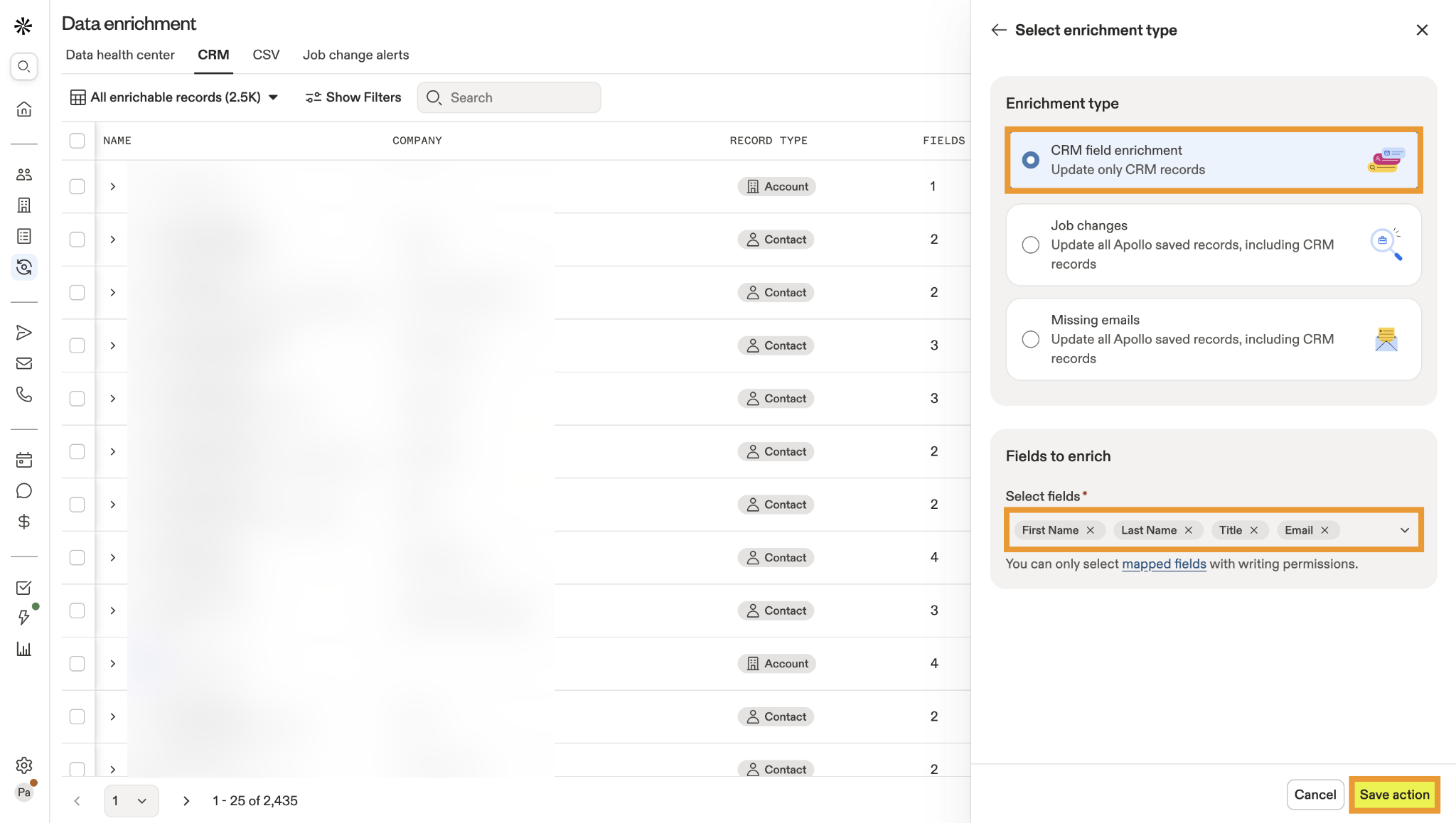
Apollo has basic CRM functionality built in: deal pipeline tracking, activity logging, contact history, and notes. For solo founders or very early-stage teams, it can serve as a lightweight CRM.
For anyone with a more complex sales process, it's a prospecting layer that syncs to your real CRM rather than replacing it.
Apollo integrates natively with Salesforce, HubSpot, Outreach, SalesLoft, Marketo, Zapier, Make, and all major email providers. The integrations generally work well, though several users note that initial setup can be finicky — particularly around field mapping and duplicate management. Expect some configuration time before things run cleanly.
Analytics and Reporting
Apollo's reporting covers the full outbound funnel. On the engagement side, you get email open rates, click rates, reply rates, and sequence-level drop-off analysis.
On the call side, you get dialer performance metrics and call recording reviews. Deal analytics track funnel conversion, at-risk deals, and rep performance.
Custom reporting is available on the Organization plan. Lower-tier plans give you standard dashboards without the ability to build custom views.
If you're running a team and need to report on specific KPIs or create rep leaderboards, you'll need to be on Organization or use a BI tool layered on top.
Website Visitor Tracking
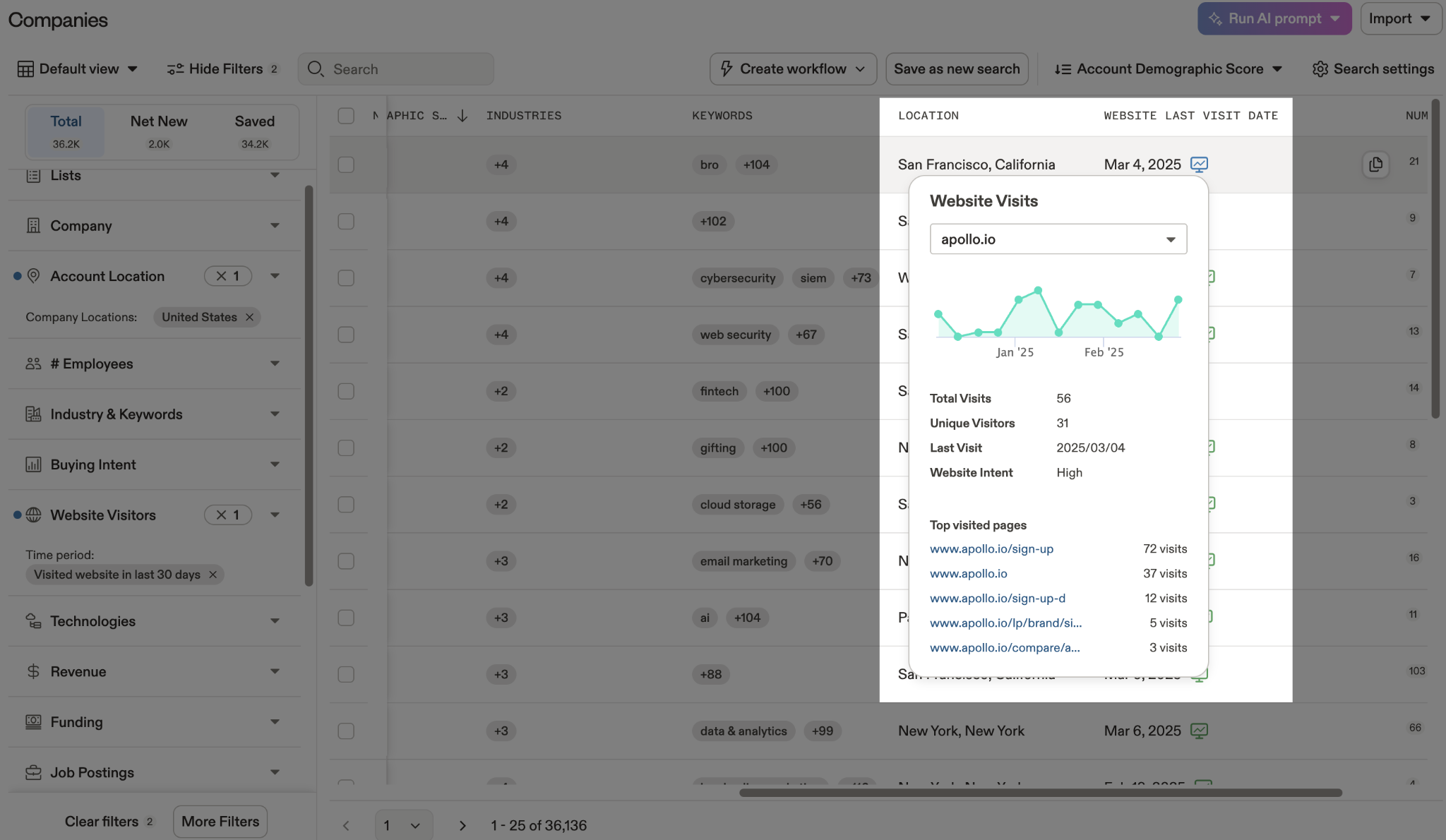
Apollo now offers website visitor tracking as part of its inbound solution. At the account level, it identifies which companies are visiting your site and cross-references that data with intent signals and buying behavior. Contact-level de-anonymization (identifying the specific individuals visiting) is currently in closed beta as of early 2026.
This feature is useful if you're running paid ads or have meaningful inbound traffic. It lets you build a workflow that automatically flags high-intent visitors, adds them to a list, and triggers outreach — all within Apollo.
For pure outbound teams with limited inbound traffic, it's less relevant but still a nice-to-have at no additional cost on paid plans.
Apollo.io Pricing — What Does It Actually Cost?
Apollo.io pricing looks straightforward at first glance. In practice, it's worth spending time understanding before you commit.
Plan Tiers (Annual Billing)
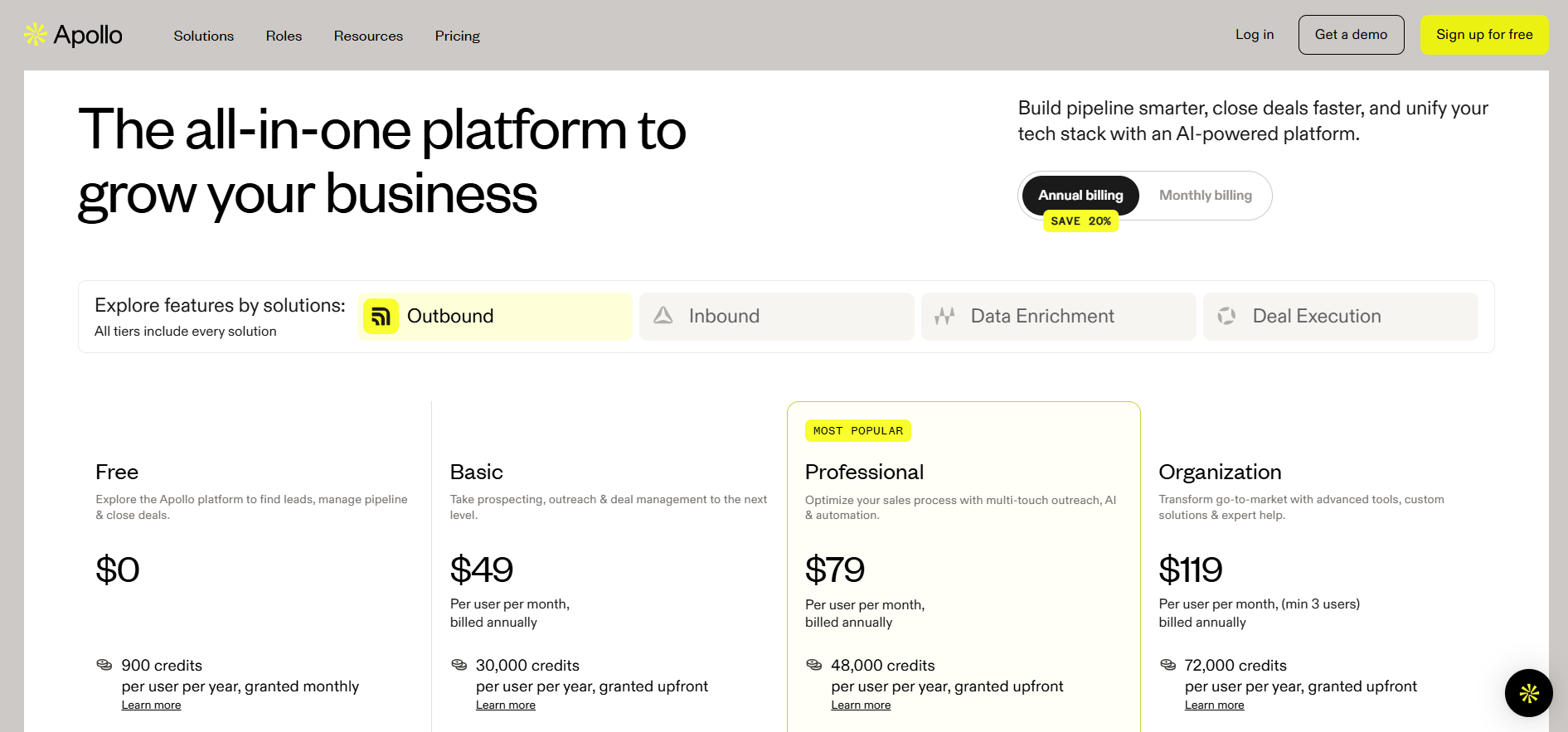
Free — $0/user/month
- 265M+ contact database access
- 5 mobile credits and 10 export credits per month
- Unlimited email credits (subject to Fair Use Policy — capped at 10,000/month for verified corporate domains, 100/month for non-corporate)
- 2 active sequences
- Basic filters
- Chrome extension
- Up to 5 AI Assistant chats
The free plan is genuinely useful for testing the platform or for solo founders doing light outbound. You will run into the credit limits quickly if you're doing any serious volume.
Basic — $49/user/month (annual) / $59/user/month (monthly)
- Unlimited sequences
- Advanced filters and CRM integrations (Salesforce, HubSpot)
- 6 intent topics
- 1,000 email credits/month + unlimited email sending through Apollo
- 100 mobile credits and 2,000 export credits per user
Note the distinction: "unlimited" email sending applies to emails sent through Apollo's platform. If you want to export contact data to a CSV or your CRM, you're capped at your export credit allocation. This trips up a lot of buyers.
Professional — $79/user/month (annual)
- Everything in Basic
- US dialer with call recording (4,000 minutes/month)
- Parallel dialer
- Unlimited mailboxes
- Advanced analytics and reporting
- A/B testing
Organization — $119/user/month (annual, minimum 3 seats)
- Everything in Professional
- International dialer (8,000 recording minutes/month)
- 12 intent topics
- Custom reporting
- SSO and advanced security
- AI-assisted email writing and call transcriptions
Is Apollo.io Cost-Effective?
For what you get, Apollo's pricing is genuinely competitive. Annual billing saves roughly 20% compared to monthly, and locking in annual pricing is smart given that the Basic plan has climbed from $19 to $49/user/month over the past few years.
That said, there are a few real-cost factors that the sticker price doesn't reflect:
Credit complexity.
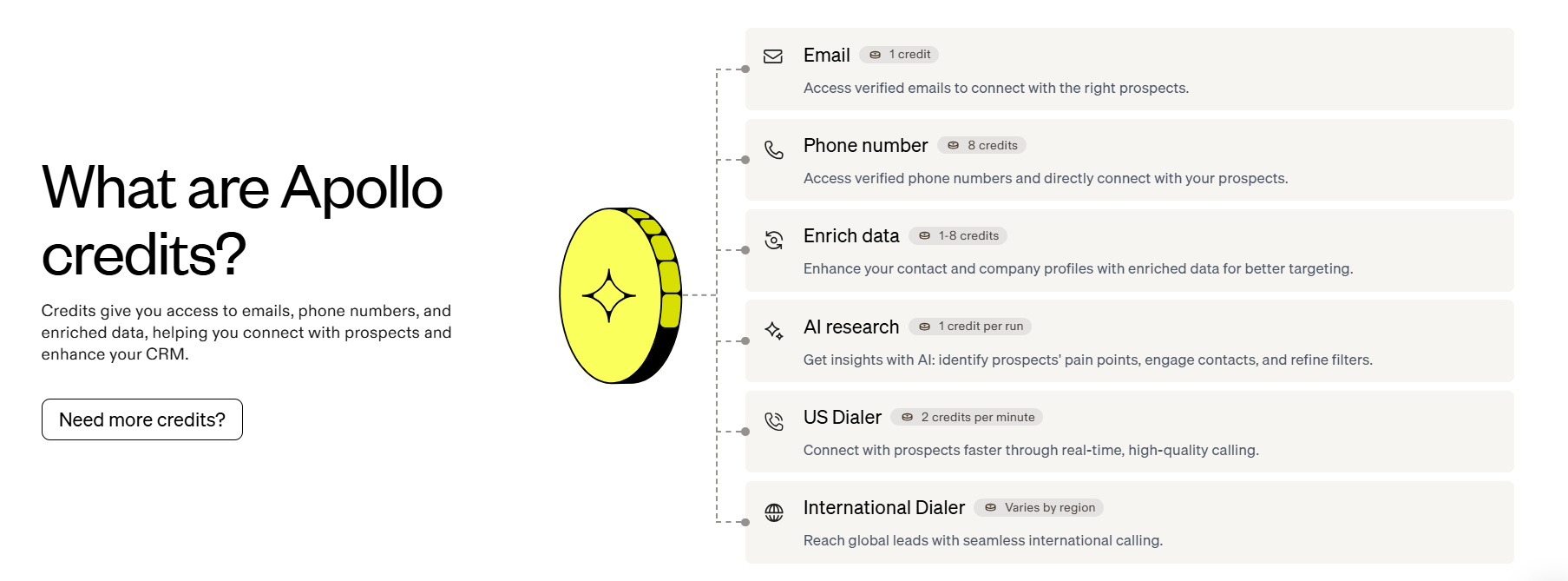
Apollo runs on a credit system where emails cost 1 credit, phone numbers cost 8 credits, and enrichment costs 1-9 credits per record. Credits expire at the end of each billing cycle with no rollover. If you're doing high-volume prospecting with a lot of direct dial lookups, you'll burn through credits faster than your allocation and need to buy add-ons at $0.20 per credit.
Per-seat pricing compounds fast.
A 5-person team on Professional (annual) runs $395/month or $4,740/year. For comparison, flat-fee tools like Instantly.ai start at $97/month for unlimited sending regardless of team size. As your team grows, Apollo's per-seat model becomes significantly more expensive than flat-fee alternatives for the sending and data layers.
Seat reductions mid-contract.
On annual plans, you cannot reduce your seat count before the contract term ends. If someone leaves your team, you're still paying for their seat. This is worth factoring into your total cost calculation before signing.
Annual price escalators.
Contracts often include annual price escalation clauses of 5-10%. Not unique to Apollo, but worth reviewing in your contract before signing.
📞 Got the Data? Now Book the Calls.
Our $5M cold calling system books 10–30 qualified meetings every month with trained SDRs. No hiring. No training. Just sales calls on your calendar.
Apollo.io Pros and Cons
Pros
✅ All-in-one feature depth at its price point.
No other platform at $49-$119/user/month gives you a contact database, email sequences, a dialer, intent data, CRM integrations, and an AI assistant under one roof. The consolidation value is real.
✅ Generous free plan.
Full database access, 2 sequences, the Chrome extension, and AI assistant access on the free tier is genuinely good. One of the best free tiers in B2B SaaS.
✅ Strong G2 rating and community.
A 4.7/5 across 9,400+ reviews with 624 G2 badges as of Winter 2026 reflects a large, mostly satisfied user base. The peer community and learning resources are strong.
✅ Fast list building.
65+ filters, saved personas, and the Chrome extension make it fast to go from ICP definition to a working prospect list. Most users report getting their first campaign set up within a day.
✅ Impressive AI velocity.
The 2025-2026 product roadmap has moved fast. Email warmup, the agentic AI assistant, parallel dialer, contact-level website visitor tracking, and expanded technographics all shipped in this window. Apollo is actively investing in the product.
✅ Accessible learning curve.
Easier to onboard than enterprise platforms like ZoomInfo or Outreach. New users with some outbound experience can get running quickly.
Cons
👎 Data accuracy is inconsistent.
This is the most consistent complaint across every review platform. Real-world users report bounce rates between 15-35% depending on geography and industry, versus the higher accuracy Apollo advertises. Job titles and company data for contacts who changed roles 6-12 months ago often remain stale. For US-based tech and SaaS contacts, the data is generally solid. For smaller companies, international markets, or niche industries, accuracy drops noticeably.
👎 Phone number quality.
Phone numbers cost 8 credits each and accuracy — particularly for direct dials — can drop significantly in certain industries. Cold calling-heavy teams may find Apollo's phone data inadequate as a standalone source.
👎 Customer support gaps on lower tiers.
Support is chat and email only, with no phone support available on any plan. Lower-tier users consistently report days-long wait times for resolution. If something breaks mid-campaign, you may be waiting a while for help.
👎 Credit system complexity.
Multiple pools (email credits, mobile credits, export credits), monthly expiration with no rollover, and opaque "fair use" policies create a frustrating experience for users trying to predict their actual monthly costs. This is the most common friction point in Trustpilot and Capterra reviews.
👎 Trustpilot rating of 2.9/5.
Across 1,085+ reviews, the Trustpilot complaints cluster around billing disputes, account suspensions, and support responsiveness. The Trustpilot audience tends to skew toward people who had a bad enough experience to seek out a review platform — but the volume and consistency of billing-related complaints is worth noting before committing to an annual contract.
👎 Deliverability risk from shared infrastructure.
Apollo's shared sending infrastructure means your sender reputation is partially influenced by the behavior of other platform users. For high-volume cold email, this is a meaningful limitation compared to platforms with dedicated sending environments.
👎 International data is weaker.
EMEA data in particular has noticeably lower accuracy and coverage than US data. If a meaningful portion of your prospecting is outside North America, this matters.
What Real Users Are Saying About Apollo.io in 2026
Here's what the review data actually looks like across platforms:
G2: 4.7/5 (9,400+ reviews)
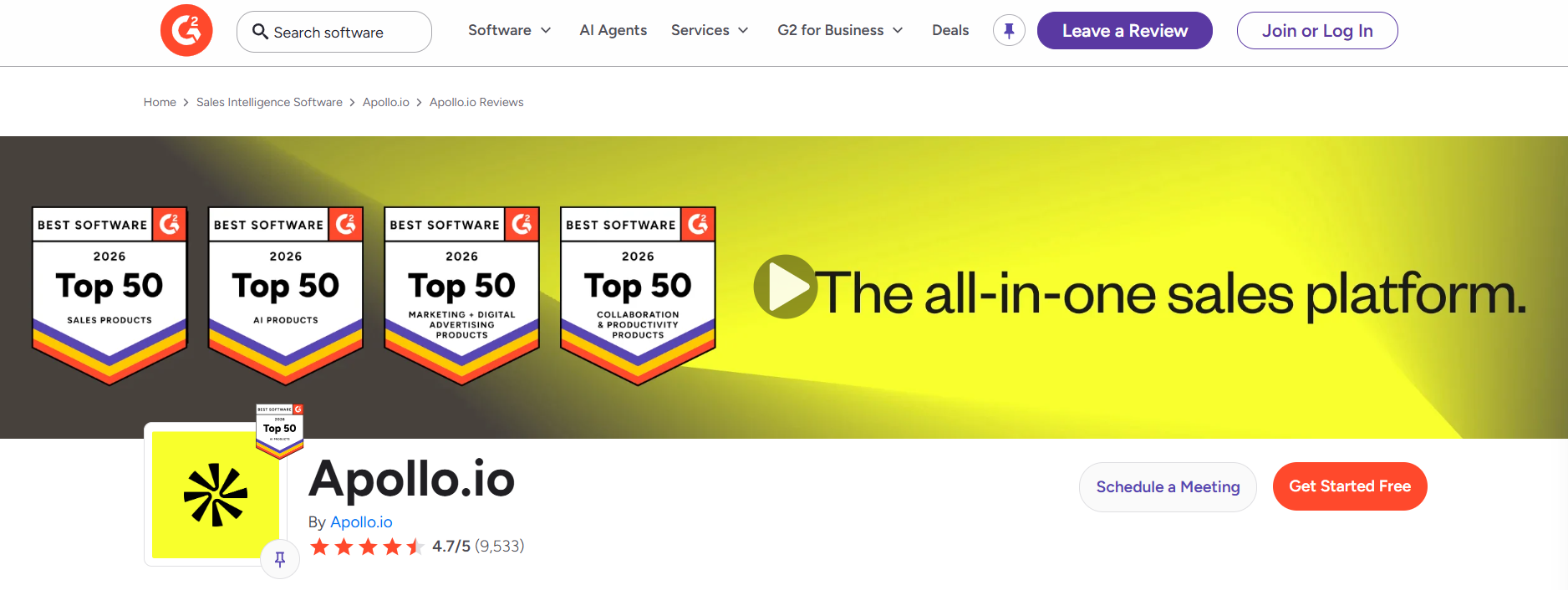
G2 reviewers consistently praise the database depth, all-in-one workflow, and ease of use. The Chrome extension and LinkedIn integration get specific callouts. The most common negative tags are "Inaccurate Data" (503 mentions) and "Data Inaccuracy" (458 mentions) — which tells you the data accuracy issue is not an edge case. Support responsiveness also shows up repeatedly in negative reviews.
Capterra: 4.5/5 (384 reviews)
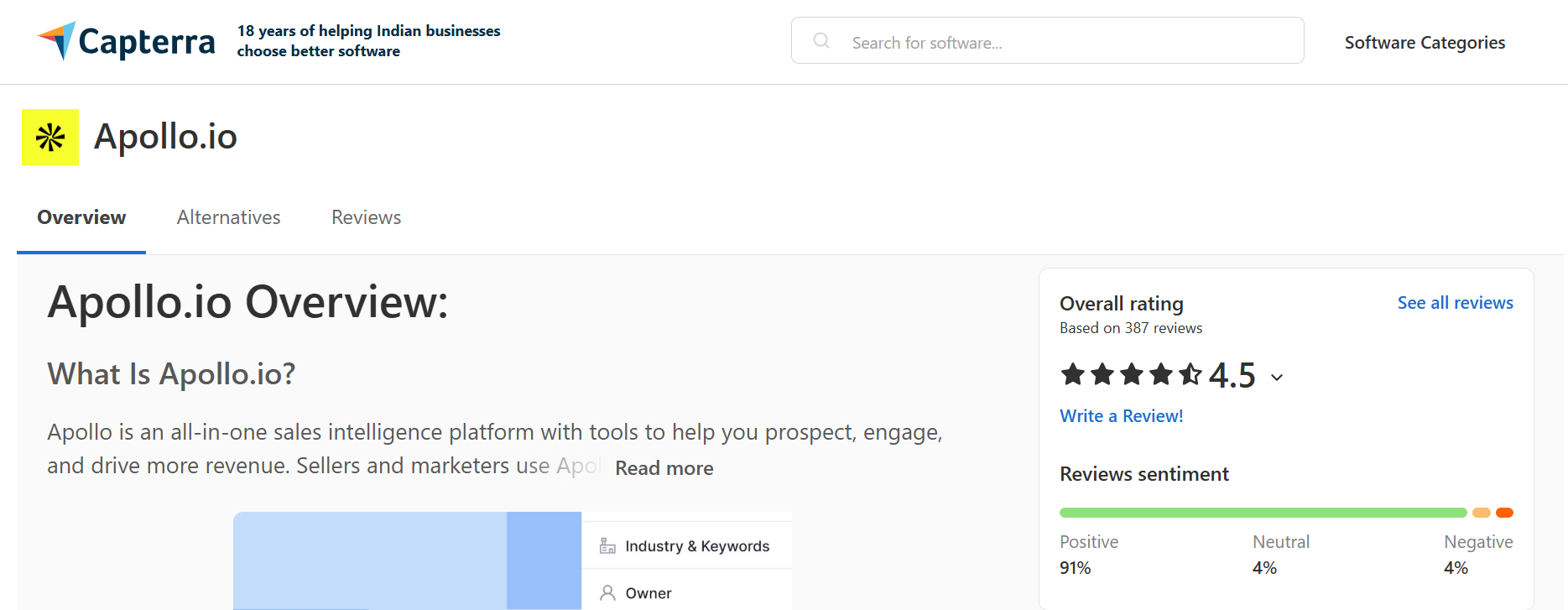
Capterra scores break out by sub-category. Customer Service scores 4.2/5, the lowest sub-category rating on the platform. Users who leave detailed Capterra reviews tend to have been using Apollo for longer periods, and the recurring theme in negative reviews is the credit system — particularly frustration that Apollo changes the credit usage model without passing benefits to annual billing customers.
Trustpilot: 2.9/5 (1,085+ reviews)

The Trustpilot picture is significantly more critical. The dominant themes: billing disputes (credits not rolling over as expected, non-refundable charges on downgrades), account suspensions that disrupt ongoing campaigns, and inability to reach meaningful support when issues arise. One user noted waiting 30+ minutes for "live" support. Another flagged being locked into a plan because a discount coupon prevented them from downgrading.
It's worth understanding the G2 vs. Trustpilot gap. G2 reviews are often collected via in-product prompts — you're asked to review when you're actively using and finding value in the tool. Trustpilot reviews skew toward people who sought out a place to share a bad experience.
Both data sets are real, and together they tell you: Apollo delivers genuine functional value for outbound prospecting, but the billing and account management experience creates friction that a meaningful number of users find unacceptable.
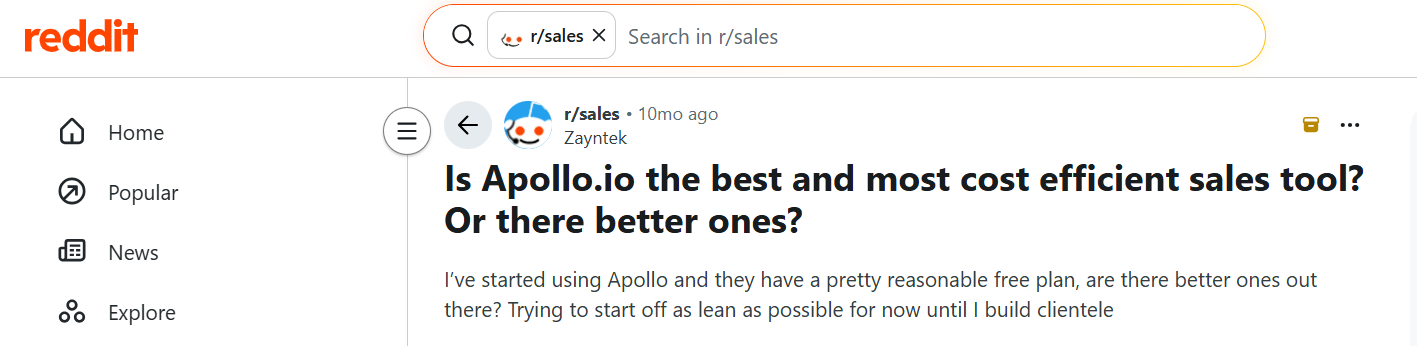
Reddit threads (r/sales, r/entrepreneur, r/coldemail) consistently recommend Apollo as the best free or low-cost starting point for outbound prospecting. The most common caveats: expect 15-20% bounce rates and clean your lists before sending, don't rely on phone numbers as your primary source, and watch the credit system closely or you'll get surprised at the end of the month.
Apollo.io Alternatives Worth Considering
If Apollo.io alternatives are on your shortlist, here's an honest look at the main ones:
ZoomInfo
Best for: Enterprise teams where data accuracy is non-negotiable.
ZoomInfo is the gold standard for B2B contact data, with email accuracy closer to 95% and proprietary intent signals, org charts, and technographic depth that Apollo can't match. If data quality is your primary constraint — especially for ABM or enterprise selling — ZoomInfo is a clear step up.
The tradeoff: Cost. ZoomInfo typically starts at $15,000-$50,000+ per year depending on seat count and data access. There are no built-in outreach tools, so you're still paying for a sequencing platform separately. For most SMBs and early-stage teams, it's out of budget.
Instantly.ai
Best for: High-volume cold email senders who want flat-fee pricing.
Instantly's strength is pure email sending at scale. The Hypergrowth plan at $97/month gives you unlimited email accounts, unlimited warmup, and up to 100,000 emails per month for your entire team — regardless of seat count. For teams where volume and deliverability are the priority, Instantly's flat-fee model beats Apollo's per-seat pricing significantly as you scale.
The gaps: no built-in contact database (you source leads separately), no dialer, and no LinkedIn automation. Instantly is a sending and warmup tool, not an all-in-one platform. You'll need a separate data source.
Read Detailed Review: Instantly.ai Review 2026 - Features, Pricing, Pros & Cons, Alternatives
Saleshandy
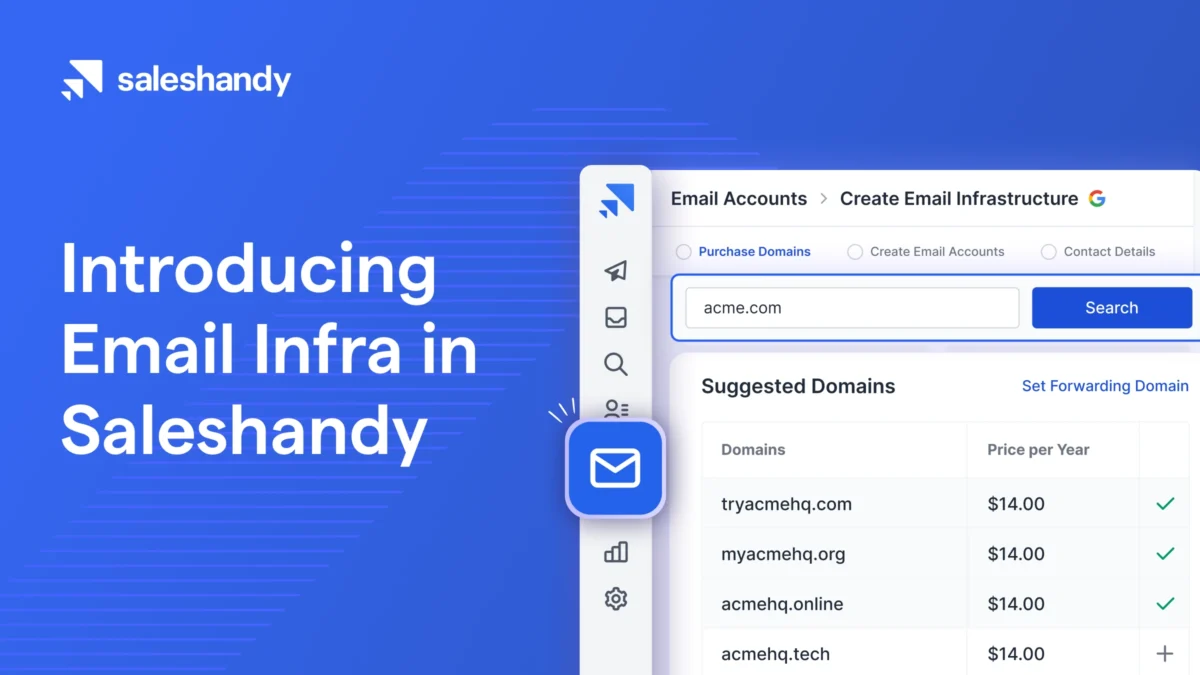
Best for: Teams that want Apollo-like data and email outreach at lower cost.
Saleshandy combines a 700M+ contact database with unlimited email accounts and an agency portal with white-labeling — starting at $25/month. It's a legitimate lower-cost alternative to Apollo for teams that primarily need data and email sequencing.
The gaps: no built-in dialer, no LinkedIn automation, and no intent data. Saleshandy is strong on the data and sending layer but doesn't match Apollo's feature breadth.
Lemlist
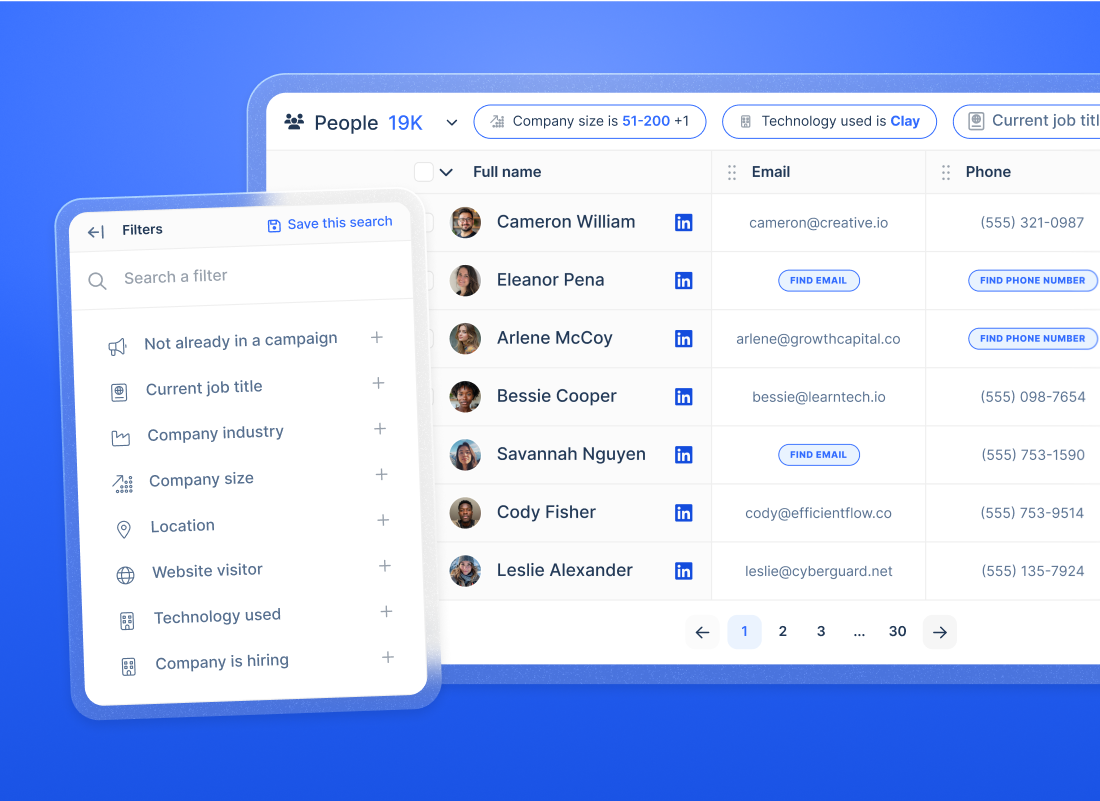
Best for: Personalization-heavy multichannel outreach across email, LinkedIn, WhatsApp, and calls.
Lemlist's differentiator is personalization: dynamic images, personalized video thumbnails, custom landing pages per prospect, and native multichannel sequencing. If your strategy relies on standing out through highly customized outreach rather than volume, Lemlist gives you tools Apollo doesn't.
The limitations: per-user per-account pricing adds up fast, there's no built-in CRM, and the contact database is a separate paid add-on. Lemlist also doesn't have the same database depth as Apollo.
Smartlead

Best for: Teams prioritizing email deliverability at scale.
Smartlead is built specifically around inbox placement — unlimited email accounts, unlimited warmup, IP rotation, and SmartDelivery analytics that give you visibility into where your emails are landing. If deliverability is your biggest outbound challenge, Smartlead is worth a close look.
The gaps: there's no contact database, no dialer, no LinkedIn automation, and no CRM. You need to bring your own leads. Smartlead is a specialized sending tool, not an all-in-one platform.
If you're evaluating these tools and wondering whether running cold email outreach in-house is the right move at all — that's a separate conversation. Keep reading.
How Cleverly Approaches Cold Email Differently
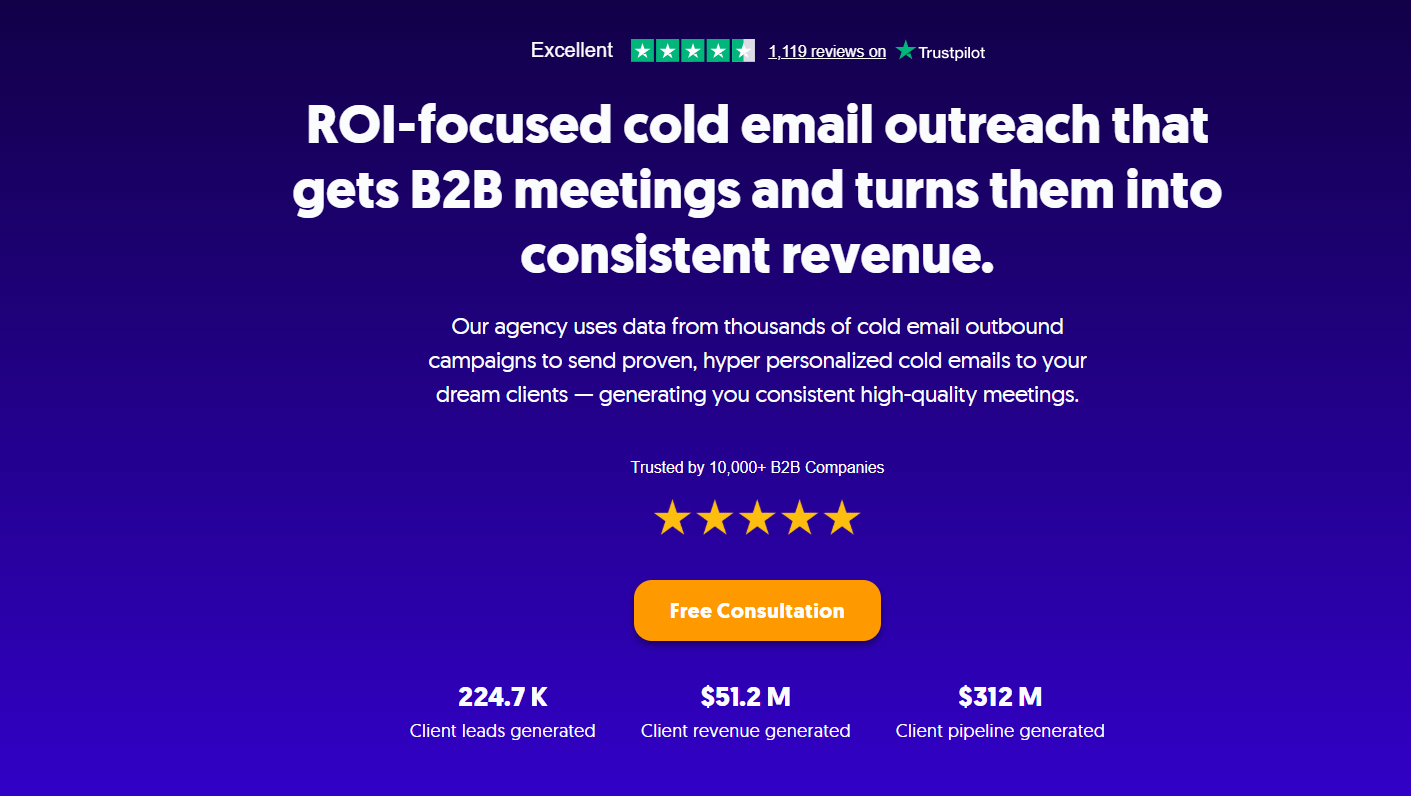
There's something worth naming directly: picking the right cold email tool is only one piece of the puzzle. The harder question is whether running cold email in-house — even with a solid tool — is actually the right structure for your team.
Apollo, Instantly, Smartlead, and every other platform on this list are tools. They require someone who knows what they're doing to operate them well. And operating cold email well means getting a lot of things right at the same time: copywriting that actually converts, a verified list aligned to your ICP, proper domain and mailbox setup, deliverability monitoring, sequence optimization, and ongoing testing. That's not a software setup problem — it's an expertise problem.
Most in-house teams discover this after a few months of mediocre results. They set up Apollo, build a list, write some sequences, hit send — and then wonder why the reply rates are low and the meetings aren't coming in.
What Cleverly does is different:
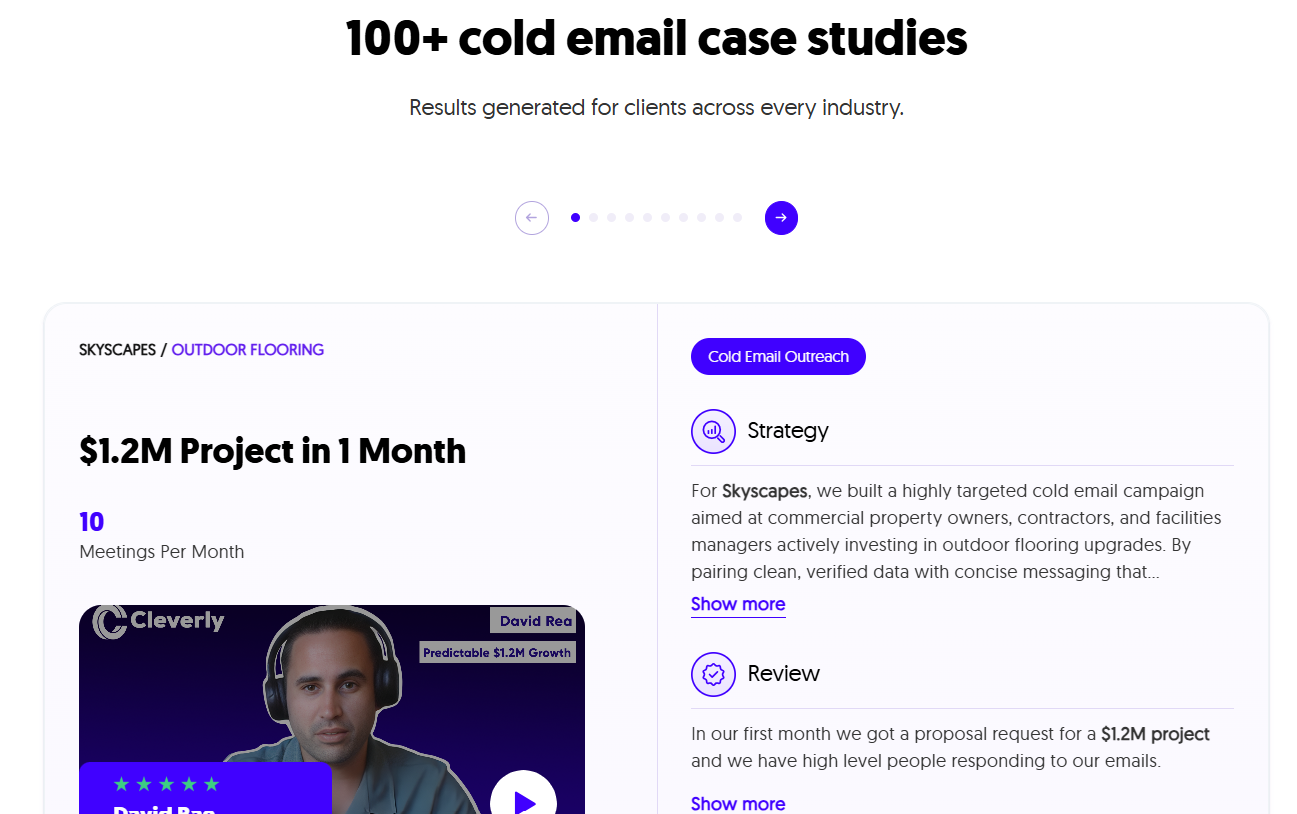
We build and operate complete cold email systems for B2B companies — from ICP targeting and verified list building to copy, sequencing, reply management, and ongoing optimization.
Trusted by 10,000+ B2B companies, we've generated 224.7K client leads, $312M in pipeline, and $51.2M in client revenue across thousands of outbound campaigns.
Our process:
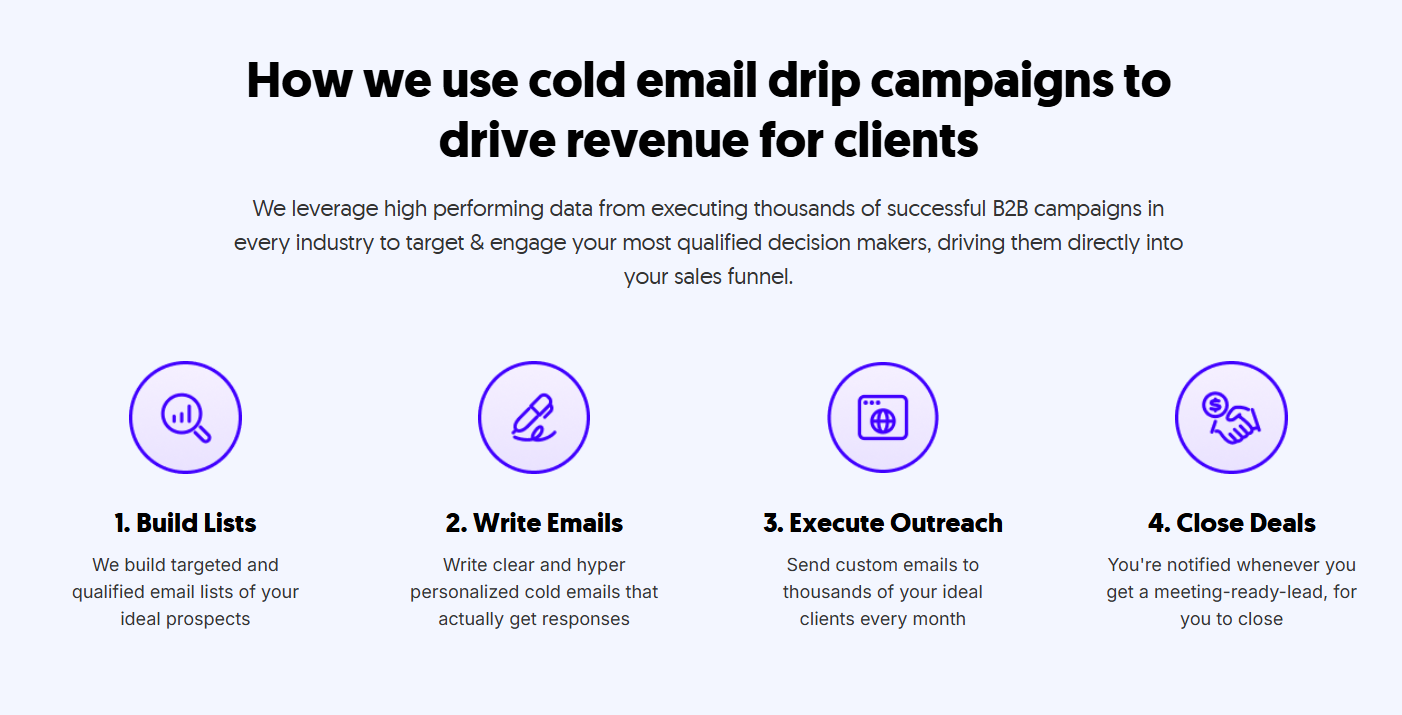
The difference between Cleverly and using Apollo yourself isn't just the tool — it's the team operating the tool at a professional level. Our multi-source verified lists, tested copy, and deliverability infrastructure reduce the trial-and-error that most solo tool users spend months working through.
We're also built for flexibility. Month-to-month pricing, no long-term contracts, and two engagement models:
- Retainer + Pay Per Lead — performance-based option aligned to outcomes
- Flat Monthly Retainer — $1,995/month for 10,000+ emails per month, fully done-for-you
The outcome we focus on isn't volume — it's qualified meetings. Better inbox placement, higher reply rates, and booked calls with the right people.
Want cold email handled end-to-end by a team that lives in this space? Book a free strategy call with Cleverly and we'll show you exactly how we'd approach your outbound.
Conclusion
Apollo.io is a genuinely capable all-in-one B2B sales platform. For the price, the combination of a massive contact database, email sequencing, a built-in dialer, intent data, and a fast-moving AI roadmap is hard to match. It's the right tool for a specific type of buyer.
Apollo.io is a strong fit if you are:
- An SMB, startup, or solo SDR doing US-focused outbound
- A team that wants one platform instead of stitching together 3-4 tools
- Budget-conscious and looking for the most feature-dense option at $49-$119/user/month
- Willing to accept some data imprecision in exchange for speed and consolidation
Consider an alternative if you:
- Need data accuracy above 85% for your campaigns — ZoomInfo is the better choice.
- Are doing significant EMEA or international prospecting — Apollo's coverage and accuracy drop noticeably outside North America.
- Are scaling a high-volume email operation where deliverability is the main lever — Instantly or Smartlead give you more control.
- Want flat-fee pricing that doesn't compound as your team grows.
- Don't have the in-house expertise to operate the tool effectively and optimize results over time — in that case, a done-for-you service like Cleverly may generate better ROI than a software subscription.
The G2/Trustpilot sentiment gap is worth taking seriously. Apollo works well as a prospecting and sequencing tool. The billing experience, credit complexity, and support responsiveness for lower-tier users are real friction points — not outliers.
Go in with clear expectations on both sides and you'll be better positioned to evaluate whether it's actually delivering for you.
Frequently Asked Questions
Free Resource
How to Scale a Profitable Cold Call System
Get the complete guide — download it instantly now.
Free Ebook
Download the Free Guide
Enter your details to get instant access.
You're all set! 🎉
Your ebook is downloading now.
Click below if the download didn't start automatically.