Table of Contents
What "Demographics" Actually Means in B2B
What Google Analytics Can and Can't Tell You
How B2B Visitor Identification Works
Company-Level vs Person-Level Identification
Tools to Get This Data
Set Realistic Expectations on Match Rates
Compliance and Privacy
What to Actually Do With the Data
How Cleverly Turns Visitor Data Into Booked Meetings
Conclusion
Frequently Asked Questions
Modified On :
September 24, 2026
Key Takeaways
- In B2B, age and gender tell you nothing useful. Firmographics, role, and intent are the demographics that actually predict a sale.
- Analytics platforms show you what happened on your site. Identification tools show you who was there. You need both to act with confidence.
- Company-level and person-level identification solve different problems. Pick based on what you're trying to do, not which tool advertises the biggest match rate.
- Vendor headline numbers are almost always more optimistic than what you'll see on your own traffic. Run a trial before you trust a benchmark.
- The value isn't in knowing who visited. It's in reaching the small slice that actually matches your ICP while the intent is still fresh.
You can see the traffic. You just can't see the buyers.
That's the quiet frustration behind most B2B analytics setups. You know 4,000 people hit your site last month, but you have no idea if any of them worked at a company you'd actually want as a client. Most B2B teams can watch a session count climb and still have zero idea which companies, or which roles, are hiding behind it.
Here's the reframe that changes everything: in B2B, B2B website visitor demographics aren't age or gender. Nobody closes a deal because they know a visitor was 34. What actually predicts a sale is firmographic fit, job title, and behavior. A VP at a 200-person SaaS company reading your pricing page is a completely different signal than a random bounce from a personal Gmail domain.
The reason you feel blind is structural. Standard analytics tools report aggregated behavior, not identity, by design.
In this guide, you'll learn what to actually track instead of consumer demographics, what analytics tools can and can't tell you, the different tool categories available, realistic match rate expectations, the compliance side, and how to turn any of this into a pipeline.
This is written for B2B marketers, demand gen leads, founders, and sales teams trying to qualify their own traffic.
What "Demographics" Actually Means in B2B
Forget everything you know about demographics from consumer marketing. Age, gender, household income, none of it tells you anything about a buying committee deciding whether to sign a $40K annual contract.
Website visitor demographics in B2B break down into four layers instead:
- Firmographics: company size, industry, revenue range, and location
- Technographics: the tools and platforms a company already runs
- Role and seniority: who inside the company is actually on your site
- Behavioral intent: which pages they visit, how often, and how deep into your site they go
Each layer means little on its own. Role and firmographics together beat either alone. A junior marketing coordinator visiting from a perfect-fit account tells you something completely different than a VP visiting from a company that will never buy from you.
One's a future champion to nurture. The other might just be noise.
Set your expectations early: you'll get some of this reliably, some partially, and some not at all. The goal isn't a complete profile on every visitor. It's enough signal to qualify traffic and prioritize who your team reaches out to first.
🎯 Turn Visitors Into Leads
Cleverly helps 10,000+ businesses turn targeted website and prospect data into qualified conversations through LinkedIn and cold email.
What Google Analytics Can and Can't Tell You
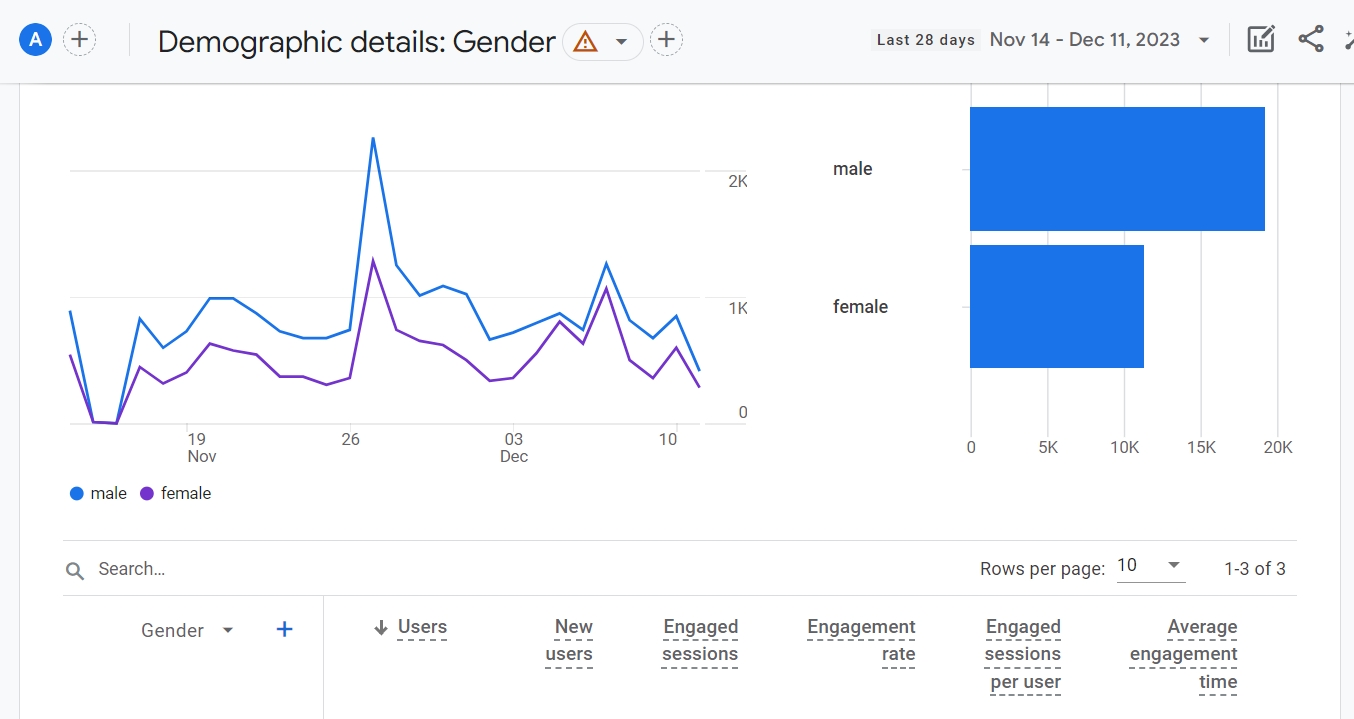
GA4 is genuinely good at certain things. It'll show you traffic sources, geography, device type, behavior flow through your site, and conversion paths. If you want to know which channel drove last month's spike or where people drop off in your funnel, GA4 answers that well.
Where it falls apart is identity. GA4's demographics reporting is modeled and estimated from aggregated signals, not observed from the actual visitor, and it's built around consumer-shaped categories like age brackets and gender that don't map to B2B buying behavior anyway.
The Hard Limit
GA4 does not tell you which company or person was behind a given visit. That's not a bug or an oversight. Analytics platforms are built to measure behavior patterns across large groups, not to identify individuals. Identity resolution is a separate product category entirely.
So use GA4 for what it's built for: channel performance, content engagement, and funnel drop-off. Just don't expect it to tell you who showed up. Website visitor analytics and visitor identification are two different jobs, and you need a tool for each.
How B2B Visitor Identification Works
A small script sits on your website, captures signals from each visit, and matches those signals against business databases to figure out who was likely there.
The matching happens through a few methods:
- Reverse IP lookup: matching the visitor's IP address to a known corporate network
- First-party cookies: recognizing a returning visitor's device across sessions
- Identity data partnerships: cross-referencing against identity graphs built from other data sources
What comes back depends on the match. At the company level, you typically get the company name, domain, industry, headcount, revenue range, and location. At the person level, when it resolves, you might get a name, job title, LinkedIn profile, and sometimes a work email.
Identification is only step one, though. Enrichment is what makes the raw match usable, appending the firmographic fields that let you actually score and prioritize the account rather than just knowing a name.
One accuracy note that matters more every year: remote work, VPNs, mobile networks, and privacy relays are steadily weakening the link between an IP address and an employer. That's a real headwind on match rates, and it's only getting stronger.
🚀 Turn Data Into Pipeline
With 224.7K+ leads generated, 53,000+ meetings booked, and $312M+ pipeline, Cleverly helps B2B teams turn the right audience into meetings.
Company-Level vs Person-Level Identification
This is the decision most teams get wrong first: choosing a tool before deciding which type of identification they actually need.
In practice, most mature teams run both, just for different jobs.
Company-level identification gives you market and channel insight: which accounts are engaging, which channels bring in ICP-fit companies, which content resonates with your target segments. Person-level identification is for the narrower job of direct outreach and timing, reaching a specific person while they're still actively researching.
One warning worth repeating: don't choose a tool purely on match rate. A smaller set of ICP-matched identifications is worth more than a large pile of irrelevant ones. Ten identified visitors from companies you'd actually sell to beat two hundred identified visitors from companies that will never buy.
Tools to Get This Data
You don't need an exhaustive vendor list here. You need to know the categories and what each one is actually for.
Analytics Platforms
GA4 and similar tools cover behavior, traffic sources, and conversion paths. Free, essential, and completely identity-blind. Every other tool below is meant to sit on top of this, not replace it.
Company-Level Identification Tools
Platforms like Leadfeeder, Dealfront, Leadinfo, and VisitorQueue specialize in broad, international coverage at the company level. These are your best starting point if you want visibility across all your traffic, not just US visitors.
Person-Level Identification Tools
Tools like RB2B focus on named US visitors specifically. These make the most sense when your actual goal is direct outreach, not analysis. If you're not going to act on a named visitor within days, this category probably isn't worth the spend yet.
Enrichment and Orchestration Layers
Platforms like Clay sit downstream of identification, appending firmographic fields, filtering for ICP fit, and routing qualified records to the right place. This is genuinely where raw identification turns into a usable list your sales team can work.
What to Evaluate Before Buying
- Match rate on your actual traffic, not the vendor's marketing benchmark.
- Data freshness and how often company records get re-verified.
- CRM and Slack integrations, and whether alerts land fast enough to act on.
- Geographic coverage relative to where your traffic actually comes from.
- Whether pricing is credit-based and how that scales as your traffic grows.
Set Realistic Expectations on Match Rates
This is where a lot of teams get burned by marketing copy.
Independent benchmarking across multiple platforms in 2026 puts realistic B2B company-level identification somewhere in the range of roughly a third to two-thirds of qualified traffic, depending heavily on your audience mix, geography, and industry.
Vendor benchmarks for company-level identification generally cluster in the 30 to 65 percent range, though independent testing sometimes finds actual results lower, closer to 10 to 40 percent, once you filter out bots and low-confidence matches.
Person-level rates run substantially lower and skew heavily toward US traffic. Realistic person-level match rates for US B2B traffic tend to land in the 5 to 20 percent range, and vendor claims well above 40 percent for person-level identification usually turn out to be blending in company-level numbers.
Match rates have also been trending down over the past several years, and it's not a small effect. With more than 60% of knowledge workers now regularly browsing from home networks, a large share of home IP addresses resolve to internet service providers instead of employers, which quietly erodes the accuracy of IP-based matching over time.
A few more things to keep in mind:
- A meaningful share of matches are low-confidence. Treat vendor headline numbers with real skepticism.
- Bot and crawler traffic inflates apparent traffic volume. Check whether your tool filters it out before it ever reports a match.
- Redefine what success looks like for your team. It's ICP-matched identifications, not total match percentage.
The practical move: run a trial and measure the match rate on your own traffic before you commit to anything.
Compliance and Privacy
A few non-negotiables before you install any identification script:
- Update your privacy policy to disclose visitor identification before the script goes live, not after.
- Company-level identification is generally the more defensible choice under GDPR.
- Person-level identification of EU visitors raises genuinely harder legal questions, which is why most person-level tools geofence the EU entirely.
- Cookie consent requirements affect what you're allowed to collect and when.
- Honor opt-outs and suppression requests immediately, and permanently.
- Be thoughtful about how you use visit-level detail. There's a real line between a useful signal and something that reads as surveillance to the person on the other end.
Quick disclaimer: this is general guidance, not legal advice. Verify your specific setup with counsel before you go live, especially if you have any EU traffic.
What to Actually Do With the Data
Identification without action is just a more expensive analytics dashboard. Here's where the data actually pays off:
- Validate your ICP, comparing who actually visits against who you assumed your buyer was.
- Score and prioritize accounts by firmographic fit plus page-level intent, not raw traffic volume.
- Judge channel quality by which accounts each channel brings, not just how much traffic it drives.
- Feed high-intent ICP matches into outbound sequences, filtering hard before anyone gets contacted.
- Build retargeting audiences from identified ICP accounts specifically.
- Inform your content strategy based on which pages your best-fit accounts actually read.
- Spot expansion signals when existing customers start browsing new product pages.
If you want the full workflow for turning this into outreach, Cleverly's Website Visitor Identification playbook walks through it end to end.
How Cleverly Turns Visitor Data Into Booked Meetings
Knowing who visited your site is only valuable if someone actually acts on it within a few days. That daily discipline, checking the identification feed, filtering for fit, and reaching out fast, is exactly what most internal teams can't sustain once the initial excitement wears off.
It's worth being honest about the limits here too. Visitor data is a supporting signal, not a green light. Most pageviews still aren't buying intent, and treating every identified visitor like a hand-raise is how teams burn through their best accounts with premature outreach.
This is where we come in.
Cleverly runs the full loop end to end: script setup, enrichment and ICP filtering, channel routing across LinkedIn, cold email, and cold calling, and reply handling all the way through to a booked meeting.
The approach mirrors what's in our own Website Visitor Identification playbook: tight ICP filtering first, then priority-based channel routing, so your best-fit accounts get reached the right way, not just reached fast. We optimize for ICP-matched meetings booked, not identified-visitor counts, which is a very different scoreboard than most identification vendors report on.
Across the accounts we've run this for, we've generated $312M in client pipeline and 224.7K leads for B2B companies working to turn exactly this kind of signal into real conversations.
Already know who's visiting but can't get to them fast enough? Book a free consultation and we'll build the outreach play for your traffic.
Conclusion
In B2B, the demographics that matter aren't age or gender. They're firmographics, role, and intent, and consumer-style data was never going to get you there. Analytics tells you what happened on your site. Identification tells you who was actually there. You need both layers working together, not one standing in for the other.
Match rates are lower than most vendors imply, and they're trending down as remote work and privacy tools spread.
Judge any tool you're evaluating on ICP-matched identifications, not headline percentages. Run a trial, measure the match rate on your own traffic, and check whether the visitors you're identifying actually look like your buyers.
The real value was never in knowing who showed up. It's in acting on the small subset that matters while the signal is still warm enough to do something with.
Frequently Asked Questions
Free Resource
How to Scale a Profitable Cold Call System
Get the complete guide — download it instantly now.

Free Ebook
Download the Free Guide
Enter your details to get instant access.
You're all set! 🎉
Your ebook is downloading now.
Click below if the download didn't start automatically.