Table of Contents
What Actually Determines Cold Email Fit
Products and Services That Sell Best Through Cold Email
Products and Services That Don't Work Well Through Cold Email
The Most Profitable Cold Email Niches Right Now
How to Pressure-Test Whether Your Offer Fits
How Cleverly Builds Cold Email Campaigns Around Offers That Convert
Conclusion
Frequently Asked Questions
Modified On :
September 10, 2026
Key Takeaways
- Cold email fit is a math problem, not a copywriting problem. The channel fails or succeeds based on deal size, market size, and buyer reachability long before a single email gets written.
- The offers that consistently work share three traits: a buyer who already knows they have the problem, a deal value that can absorb the cost of a meeting, and a large enough market to sustain volume.
- Low-ticket, hyper-local, and consumer-facing offers usually lose money on cold email even with great copy, because the channel's fixed costs never get covered.
- A poor fit isn't a dead end. It's a redirect signal, usually toward LinkedIn for smaller or relationship-driven markets, or cold calling for buyers who don't live in their inbox.
- You can pressure-test your own offer with five honest questions before you spend a dollar on infrastructure, list building, or tooling.
One mistake that costs teams the most money in outbound: they run a campaign, get almost no replies, and conclude that cold email doesn't work. What actually happened is narrower and more fixable. Cold email didn't work for that offer, sent to that market, at that price point.
This distinction matters more than ever. Cold email reply rates now average around 3.43% across billions of tracked sends, and yet 43% of sales teams still rank cold email as their most effective outbound channel.
Both of those things are true at once, and the difference between the teams in each camp usually comes down to what they're selling, not how they're writing.
This guide is a qualification exercise. By the end, you'll know which products to sell over cold email, which categories quietly waste budget, and how to run a five-question test on your own offer before you build a single sequence.
It's written from campaigns that have actually shipped, not from theory about email marketing in general.
If you're a founder, agency owner, or sales leader deciding whether to build or buy a cold email motion, start here before you start writing subject lines.
What Actually Determines Cold Email Fit
Before targeting or copy ever enters the conversation, five variables decide whether cold email has a chance of working for what you sell. Get these wrong and no amount of personalization saves the campaign.
Deal Size and Lifetime Value
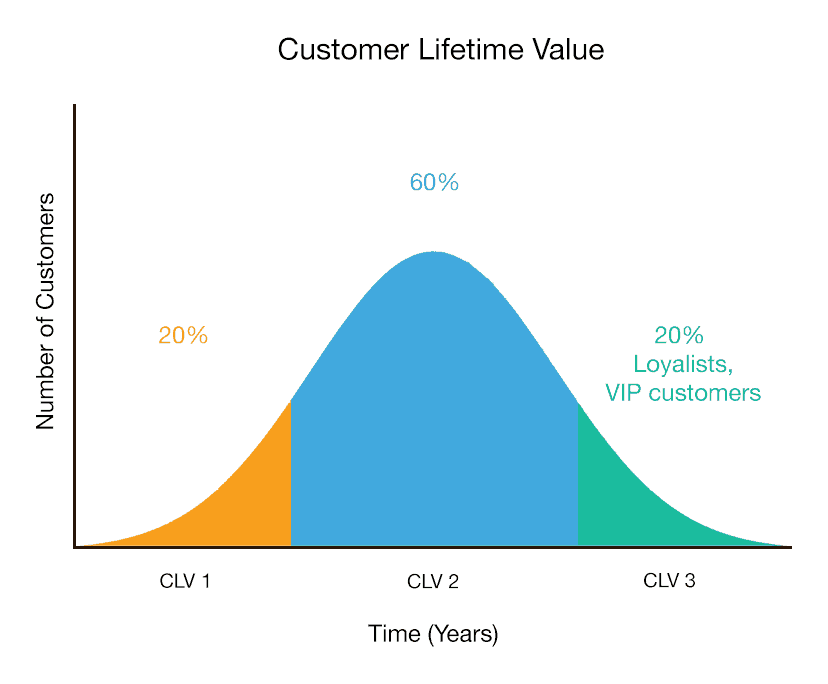
Cold email isn't free. Between data providers, sending infrastructure, warmup time, and the hours it takes to work replies, every meeting booked has a real cost behind it. Cold email typically produces 3 to 12 booked meetings per 100 touches at $40 to $150 per meeting, which sounds cheap until you compare it against what you're selling.
If your product sells for $50 and doesn't renew, that math never clears. If it's a $500 monthly subscription that sticks around for three years, a single conversion pays for the whole campaign several times over. Recurring revenue changes everything here. A modest monthly contract can justify the channel in a way a one-time low-margin sale never will.
Total Addressable Market Size
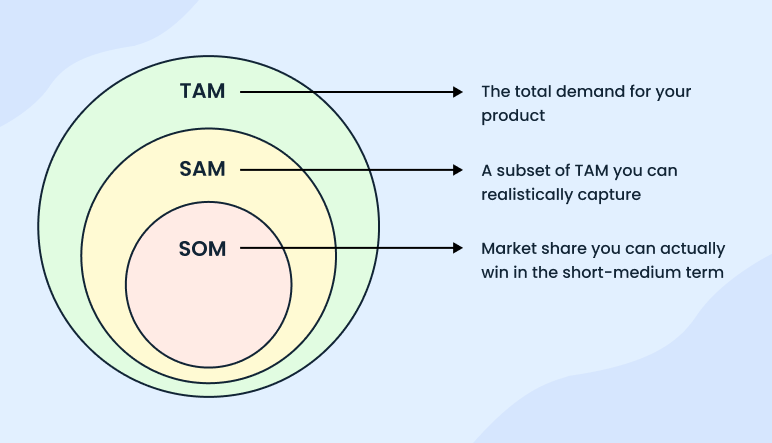
Cold email is a volume game by design. You need enough named accounts to run real sequences without exhausting your list in a few weeks. A large, reachable total addressable market is what makes reply-rate math actually work in your favor.
If your ICP is 200 companies in one metro area, cold email is the wrong tool. You'll burn through your entire list before you've learned anything useful, and every follow-up starts to look like harassment instead of persistence. Markets that size are usually better served by LinkedIn or a short list of well-researched calls, where each contact gets individual attention instead of getting lost in a sequence.
A practical threshold to hold yourself to: can you name several thousand realistic accounts? If the honest answer is no, cold email probably isn't your primary channel.
Whether the Buyer Is Reachable by Email
This sounds obvious until you actually map your buyer's day. Does your decision-maker have a verifiable business email they check regularly? Some roles live in their inbox. Marketing directors, IT managers, and finance leaders check email constantly because it's how their job gets done.
Other roles don't. Field technicians, retail staff, and tradespeople rarely check a business inbox mid-shift, and a lot of hourly-wage roles don't even have one tied to their actual work.
If your buyer falls into that second bucket, cold email will underperform no matter how sharp the copy is, simply because the message never gets seen.
Sales Cycle and Complexity

Long, multi-stakeholder sales cycles are completely fine for cold email. In fact, that's often where it shines, because the channel's job isn't to close the deal. It's to start the conversation. Even offers that require a live demo or heavy discovery work well, as long as the first email asks for something small: 15 minutes, not a signed contract.
Where this breaks down is when the first ask is too big for a cold relationship. "Can we get on a call to discuss your six-figure implementation" from a stranger's inbox rarely lands. "Worth a quick chat about X problem" usually does.
How Clearly the Problem Is Understood
Cold email works best when the buyer already knows they have the problem you solve. You're not creating awareness in a few lines of text. You're surfacing a solution to something they've already felt.
Category-creating offers, the kind that require explaining why the problem exists before you can explain your fix, struggle badly in a format that gets a few seconds of attention on a phone screen. Those offers usually need a longer education cycle: content, webinars, or a warmer channel where you have more room to build the case. Cold email isn't built for that job.
📧 Sell More With Cold Email
Cleverly’s done-for-you cold email campaigns help B2B teams reach the right buyers and generate qualified, meeting-ready leads.
Products and Services That Sell Best Through Cold Email
The categories below share a pattern: a known problem, an identifiable buyer, and enough deal value to justify the channel. These are consistently among the best products for cold email and the best cold email niches we've seen convert.
B2B SaaS and Software
Software sells well over cold email when it has a clear ROI story, defined buyer personas, and recurring revenue that justifies the cost of acquisition. The pitch works best when the pain is operational and already being felt, not aspirational.
Common failure mode: pitching a feature list to a buyer who hasn't named the problem yet. "Our platform has 40 integrations" means nothing to someone who doesn't know they need integrations. Lead with the pain, not the product tour.
Professional and Consulting Services
High deal values and buyers who decide based on expertise, not price, make this category reliable. Cold email's job here is just to get the door open. Credibility, case studies, and proof are what actually close the deal after that.
Common failure mode: vague positioning that reads as "we help businesses grow" or "we do everything for everyone." Generalist framing kills replies in this category faster than almost anything else.
Marketing and Growth Agencies
A well-understood problem, a large reachable market, and retainer-based economics make agencies a strong fit. Specific niche positioning consistently beats generalist agency outreach here. "We help SaaS companies fix churn" outperforms "we do marketing" every time.
Common failure mode: selling "marketing services" broadly instead of one specific, measurable outcome.
Recruiting and Staffing Services
Hiring pain is urgent and timing-driven, which makes it unusually easy to detect. Job postings, headcount growth, and funding announcements all act as buying signals that tell you exactly when to reach out.
Common failure mode: sending generic outreach when timing signals were sitting right there. If a company just posted five open roles, that's not a coincidence you should ignore.
Financial, Accounting and Advisory Services
High contract values, recurring relationships, and clearly defined buyer roles (CFOs, controllers, finance directors) make this category work. Compliance deadlines and tax seasons create natural, non-manufactured urgency.
Common failure mode: underestimating the trust deficit. This category needs credibility signals earlier in the sequence than most, since buyers are handing over sensitive financial decisions to a stranger.
IT, Cybersecurity and Managed Services
These are risk-driven purchases with clear budget owners and predictable renewal cycles. Compliance requirements give you a legitimate reason to reach out that doesn't feel like a sales pitch.
Common failure mode: fear-based messaging that tips over into spam territory. "Your data is at risk" landed on too many inboxes in 2023 and 2024. Specificity beats fear every time now.
Manufacturing, Industrial and B2B Supply
Large contract values and procurement teams that genuinely evaluate new vendors make this a stronger fit than most people assume. Long sales cycles aren't a problem, because the first ask is a conversation, not a purchase order.
Common failure mode: assuming these buyers can't be reached by email. Plenty of procurement and operations leaders check their inbox daily. Don't rule this vertical out on a bad assumption.
Logistics, Freight and Supply Chain Services
Quantifiable cost savings and repeat, high-volume relationships make this category work well. Buyers here actively compare vendors as part of standard practice, which lowers their resistance to hearing from someone new.
Common failure mode: leading with a rate quote instead of a specific inefficiency. "We're 12% cheaper" is forgettable. "Companies your size are losing X hours a week on manual tracking" gets read.
Enterprise and High-Ticket Offers
Reply rates run lower here, but each meeting carries outsized pipeline value, which justifies a slower, deeply researched, low-volume approach. This is where personalization actually pays for itself.
Common failure mode: running an enterprise offer through a high-volume, low-personalization playbook built for a completely different deal size. What works for a $500/month tool will not work for a $200,000 contract.
B2B Ecommerce, Equipment and Wholesale
Bulk order sizes and procurement-minded buyers make the deal size work here. Product catalogs and seasonal cycles support repeat outreach that doesn't feel random.
Common failure mode: consumer-style promotional copy ("Flash sale! 20% off!") sent to business buyers who are evaluating a vendor relationship, not browsing a storefront.
Products and Services That Don't Work Well Through Cold Email
Just as important as knowing what works is knowing what quietly drains the budget. These categories consistently show up on lists of best cold email niches to avoid, and for good reason:
- Low-ticket products. The margin usually can't cover data costs, infrastructure, and the time spent working replies.
- B2C and consumer offers. Cold emailing individuals raises deliverability and legal issues that B2B outreach simply doesn't face in the same way.
- Hyper-local services. A market too small to sustain a real sequence burns out fast and produces almost nothing.
- Impulse or emotionally driven purchases. These need visual merchandising and immediate gratification, not a text-based pitch sitting in an inbox.
- Highly regulated consumer categories. Healthcare, legal, and financial services aimed at individual consumers come with strict communication rules that make cold email risky.
- Offers requiring heavy education. If the buyer doesn't yet believe the problem exists, a few lines of email won't convince them.
- Roles that aren't email-reachable. Trades, field workers, and retail floor staff rarely check a business inbox during work hours.
None of this means cold email is broken. It means the offer and the channel don't match, and that's genuinely useful information.
If you land here, LinkedIn tends to work better for small, relationship-driven markets, and cold calling tends to work better for buyers who are hard to reach by email or need a real-time conversation to build trust.
🚀 Turn Cold Email Into Pipeline
Cleverly has generated $312M+ in pipeline and 224.7K+ leads for 10,000+ businesses through targeted outbound campaigns.
The Most Profitable Cold Email Niches Right Now
A niche being viable and a niche being profitable are two different things. Profitability comes from four things stacking together: high deal value, a large enough reachable market, an urgent problem, and buyers who are already actively comparing vendors.
Right now, the profitable cold email niches that consistently perform include B2B SaaS, agency and consulting services, recruiting, managed service providers and cybersecurity, logistics, and financial advisory. These aren't new categories. They've been reliable for years because the underlying math hasn't changed.
Two things are worth watching closely in 2026:
1. Saturation is real. Heavily targeted niches, especially SaaS and agencies, need sharper differentiation now, not more send volume. Buyers in these categories get pitched constantly, so generic outreach gets ignored faster than it did even two years ago.
2. Trigger events separate winners from everyone else. Niches with detectable buying signals, like funding announcements, hiring surges, leadership changes, or compliance deadlines, consistently outperform niches without them. Signal-anchored outreach isn't a nice-to-have anymore. It's closer to table stakes.
One trap worth naming directly: don't chase a "profitable niche" you have zero credibility in just because a blog post told you it converts well. Proof is what turns a reply into a meeting, and you can't fake proof in a category you've never actually served. You're better off niching down within a category you already understand than jumping across categories chasing a benchmark.
How to Pressure-Test Whether Your Offer Fits
Here's a practical self-assessment you can run before spending anything on infrastructure, list building, or tooling.
The Five Questions to Answer Honestly
- Is my average deal value high enough to absorb the cost of acquiring a meeting?
- Can I name at least several thousand realistic target accounts?
- Does my buyer have a business email they actually read?
- Does my buyer already know they have this problem?
- Can I explain the value in one sentence a stranger would understand?
If you answered no to two or more of these, cold email is probably not your best first move. If you answered yes to most of them, it's worth a small, controlled test.
Running a Small Validation Test
Pick one narrow segment and one specific offer. Don't test five audiences and three offers at once, because you won't be able to tell what's actually working. Run enough volume, with enough follow-up touches, to get a readable signal, not just a handful of sends that could go either way by chance.
What to measure, in order: positive reply rate first, then meetings booked, then opportunity quality. Each of those tells you something different about where the offer is breaking down, if it is.
Reading the Results Correctly
- Low reply rate with good targeting usually means the offer is wrong, not the copy. Don't rewrite the email for the tenth time. Reconsider what you're offering.
- Replies but no meetings usually means the ask is too big, or the value isn't clear enough once someone actually engages.
- Meetings but no pipeline usually means your targeting is off, not your messaging. You're reaching people who take the call but were never going to buy.
What to Do If You're a Poor Fit
You have three real options. Reposition the offer around a sharper, more urgent problem. Narrow to a segment where deal value is higher. Or move the budget to LinkedIn or cold calling, where smaller markets and harder-to-reach buyers get served better than a cold inbox ever will.
How Cleverly Builds Cold Email Campaigns Around Offers That Convert
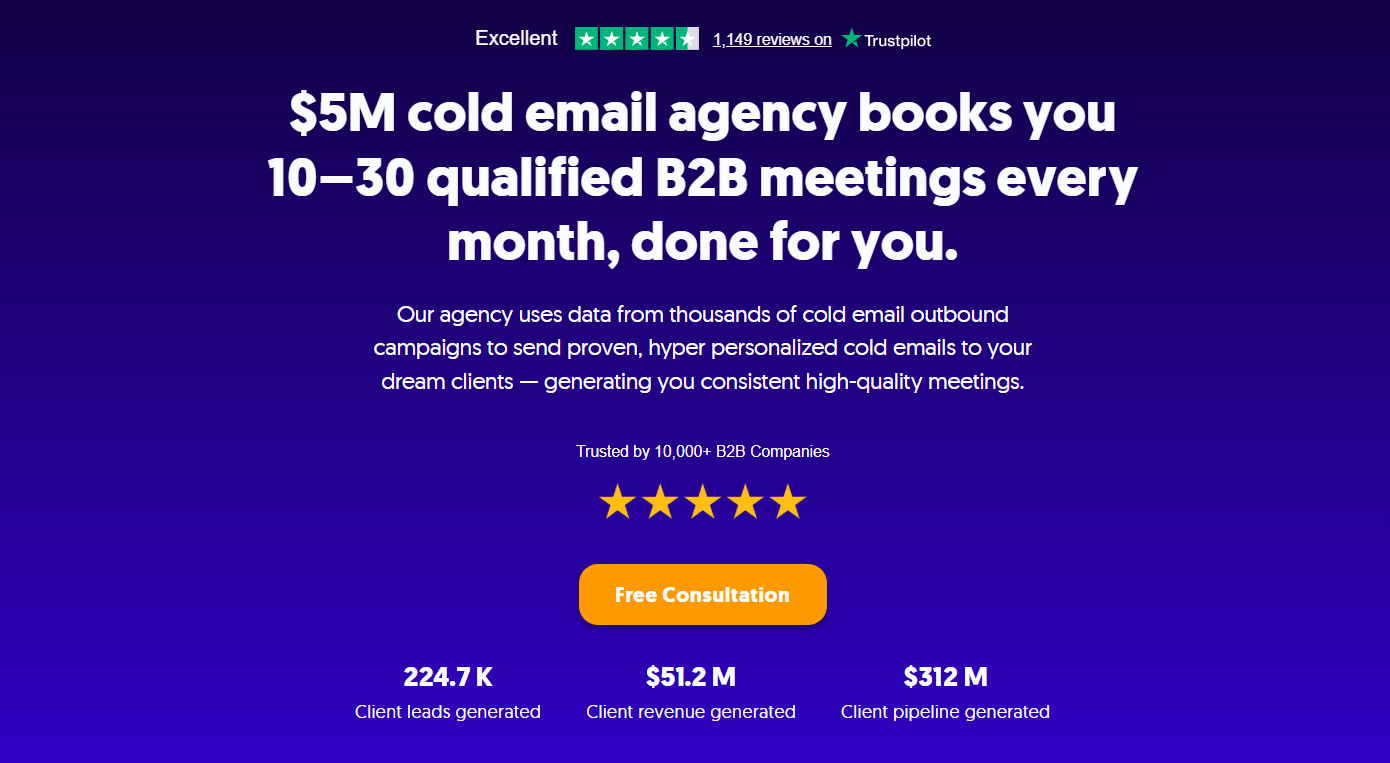
Knowing your offer fits cold email is the easy half of this. Building the list, the infrastructure, the sequencing, and the reply handling that actually turn that fit into booked meetings is where most teams stall out, and it's exactly where we spend most of our time.
At Cleverly, we start with offer and ICP work before we touch send volume, because the argument running through this entire guide holds true here too: the wrong offer, sent well, still fails.
We run this end to end, including ICP definition, verified multi-source list building, domain and deliverability infrastructure, sequence copywriting, and reply handling through to booked meetings on your calendar.
One thing that consistently moves the needle for clients: separating campaigns by audience and by problem instead of running one sequence that tries to promote everything you sell. A segmented campaign talking to one buyer about one pain point outperforms a broad one almost every time.
We optimize for qualified conversations with buyers who already have the problem you solve, not for send volume or open rates that look good on a dashboard but don't move revenue.
The practical upside is straightforward. No domains to warm yourself, no deliverability fires to put out at 6pm, and no months spent learning what actually converts in your category through trial and error on your own dime.
Not sure whether your offer is a fit for cold email? Book a free consultation and ICP review and we'll tell you honestly, one way or the other.
Conclusion
Cold email doesn't work or not work as a blanket rule. It works for offers with the right deal size, the right market size, a reachable buyer, and a problem that buyer already feels.
The categories that win share one trait above everything else: a known problem paired with an identifiable buyer who has a budget to spend.
A poor fit isn't a failure. It's useful information that redirects your budget toward LinkedIn or calling before you've wasted a quarter figuring it out the expensive way. Run the five-question test on your own offer, then validate it on one narrow segment before you build out any infrastructure.
The teams that win at cold email in 2026 aren't the ones sending the most volume. They're the ones who qualified the channel honestly before they scaled it.
Frequently Asked Questions
Free Resource
How to Scale a Profitable Cold Call System
Get the complete guide — download it instantly now.
Free Ebook
Download the Free Guide
Enter your details to get instant access.
You're all set! 🎉
Your ebook is downloading now.
Click below if the download didn't start automatically.