Table of Contents
What Is Cold Email Copywriting?
The Psychology Behind High-Reply Cold Emails
What Bad Cold Email Copywriting Looks Like (And Why It Gets Deleted)
Core Elements of High-Converting Cold Email Copy
Proven Cold Email Copywriting Frameworks
Cold Email Copywriting Examples That Get Replies
How AI Can Support Cold Email Copywriting (Without Ruining It)
How Cleverly Helps Teams Win with Cold Email Copywriting
Conclusion
Frequently Asked Questions
Modified On :
July 24, 2026
Key Takeaways
- Cold email copywriting is about starting conversations, not closing deals in the first message.
- Keep emails under 100 words with specific personalization that proves you researched the prospect.
- Use proven frameworks like PAS, Context-Insight-Question, and soft CTAs to structure your emails.
- Lead with the prospect's world and challenges, not your product features or company credentials.
- AI can speed up research and drafting, but human editing and strategy are essential for high reply rates.
- Test different approaches for different scenarios: first touch, referrals, pattern interrupts, and value driven follow ups.
Cold email copywriting isn't about tricks or hacks. It's about understanding what makes someone stop scrolling, read your message, and actually want to respond.
We've written thousands of cold emails that have generated over $312 million in pipeline revenue for clients like Amazon, Google, and Uber.
That volume matters here specifically: at this scale, you stop guessing which subject lines and frameworks work and start seeing it in the reply data across thousands of campaigns and industries, not just a handful of case studies.
The difference between emails that get ignored and emails that book meetings? Usually just a few strategic words.
In this guide, we're breaking down exactly how we approach cold email copywriting. You'll see the frameworks we use, real examples that convert, and the specific elements that turn cold prospects into booked meetings.
Just the stuff that actually works when your revenue depends on it.
What Is Cold Email Copywriting?
What is cold email copywriting? It's writing emails to people who don't know you yet, with one goal: get them to reply.
That's it. Not to inform, not to pitch, not to impress. Just to start a conversation.
Cold email copywriting is different from other email types:
- Newsletter copy goes to subscribers who already opted in. They expect to hear from you.
- Marketing emails promote products to existing contacts. There's already a relationship.
- Sales pitches assume interest and jump straight to features and pricing.
Cold emails? You're starting from zero. No permission, no relationship, no assumed interest.
That's why we follow a simple hierarchy when crafting every cold email:
- Relevance first. Show them you understand their world in the first line.
- Curiosity second. Give them a reason to keep reading without revealing everything.
- Conversation third. Make it easy and natural for them to respond.
Get these three right, and you'll get replies. Skip any of them, and your email dies in their inbox.
Learn More: How To Actually Get B2B Clients With Cold Email
🔥 Cold Emails That Get Replies
Cleverly writes, sends, and optimizes cold email campaigns that deliver meeting-ready leads. You only pay per qualified meeting.
The Psychology Behind High-Reply Cold Emails
Here's the truth: cold prospects don't care about your product. They care about their problems, their goals, and whether this random email is worth 30 seconds of their time.
Cold email copywriting works when you trigger the right psychological responses. We've tested this across thousands of campaigns, and these four triggers consistently drive replies:
1. Pattern interruption.
Most cold emails sound like cold emails. Generic subject lines, obvious templates, corporate speak. Your job is to sound like a real person who actually researched them. Break the pattern they expect.
2. Self-interest.
People scan emails asking one question: "What's in this for me?" If your first sentence is about you or your company, you've already lost. Lead with their world, not yours.
3. Specificity.
Personalization isn't a nice-to-have. Backlinko's analysis of 12 million outreach emails found that messages with personalized body copy get 32.7% more replies than generic ones (source). Vague emails get vague responses, or none at all. "I can help you grow" means nothing. "I noticed your SDR team grew from 5 to 12 in Q3" shows you did homework. Specificity builds credibility instantly.
Worth knowing before you set expectations: reply rates vary widely by industry, so a 3% reply rate might be strong in one vertical and underwhelming in another.
4. Low-friction CTA.
Asking for a 30-minute call in your first email? That's a big ask. Asking if they're open to a quick chat? Much easier to say yes to.
Why short, simple, and human copy wins
Your prospects read hundreds of emails daily. Long paragraphs get skimmed. Corporate jargon gets ignored. Emails that sound like they came from a template get deleted.
We keep our cold emails under 100 words because attention is earned, not given. We write like we're messaging a colleague, not presenting to a board. And we never use words we wouldn't say out loud.
When your cold email copywriting feels human, it gets human responses.
Also Check: Cold Email Outreach Best Practices
What Bad Cold Email Copywriting Looks Like (And Why It Gets Deleted)
Before you can write a cold email that gets replies, it helps to know exactly what's landing in spam right now. Most of it shares the same five fingerprints.
Zero real personalization. Swapping in a first name isn't personalization. It's a mail merge. If the sentence still makes sense with any name dropped into it, the prospect can tell, and so can the spam filter increasingly used to flag generic blasts.
Getting this right takes more than a first-name token. Real cold email personalization means referencing something specific enough that the prospect knows this email wasn't sent to a thousand other people.
The email is about the sender, not the reader. "We're excited to introduce our platform" tells the prospect nothing about their problem. The first three sentences of a cold email should be entirely about them: their team, their role, something they just did or said publicly.
The ask comes before the trust. Requesting a 30-minute call, a phone number, or a "quick chat this week" in the first email, before you've shown you understand anything about the business, is the fastest way to get ignored. Trust gets built in that order: relevance, then a small ask.
No evidence you did the work. Anyone can claim to help companies "grow revenue." The emails that get replies cite something specific and checkable: a recent hire, a job posting, a product launch, a stat pulled from the prospect's own website.
Sent to a role, not a person. "Dear Marketing Team" or a company-wide inbox signals a blast, not outreach. If you can't find the name of the person who owns the decision, that's a research problem to solve before you hit send, not something to paper over with a generic greeting.
Every one of the frameworks and examples further down this guide exists specifically to avoid these five traps.
🚀 Copy + Deliverability = Meetings
We handle copy, inboxing, targeting, and follow-ups—so your cold emails land, get replies, and book real sales calls.
Core Elements of High-Converting Cold Email Copy
Every cold email template for copywriting needs five components. Miss one, and your reply rate tanks. Here's how we structure each part:
These five elements work together, and we cover the deeper mechanics of each in our guide to cold email engagement best practices.
1. Subject line: curiosity over cleverness
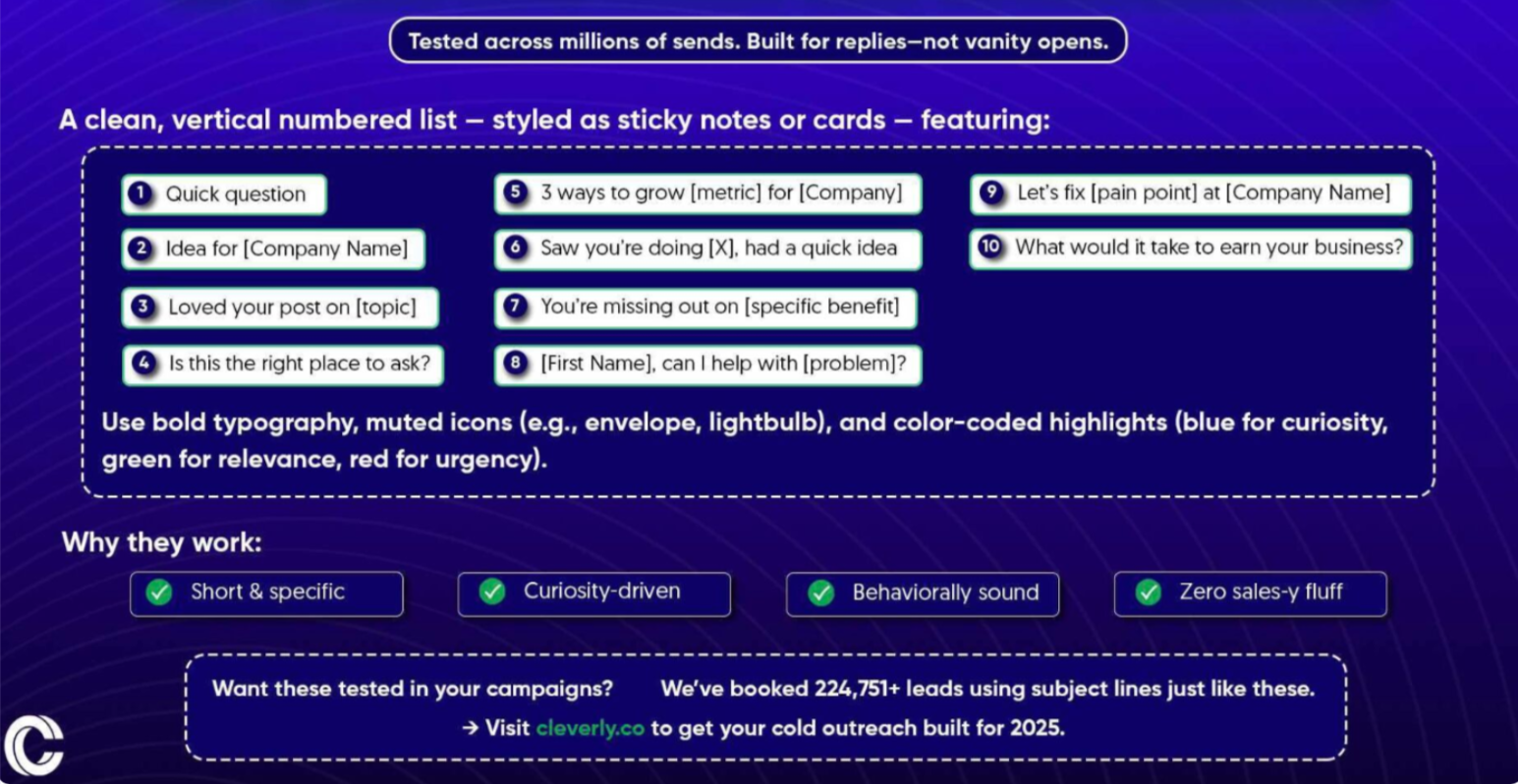
Your subject line has one job: get the email opened. That's it.
We skip the clever puns and creative wordplay. They don't work. Instead, we go for simple curiosity that feels relevant to the recipient.
Hunter's 2026 State of Cold Email report, based on 31 million emails sent in 2025, found subject lines with two personalized attributes (like first name and company) get a 56% higher reply rate than non-personalized ones, and the sweet spot for length is 5 to 6 words, not one or two (source).
That's why "Quick question about [their company]" outperforms a bare "Quick question."
2. Opening line: personalization that feels earned
The first sentence determines if they keep reading. Generic openers like "I hope this email finds you well" are instant delete signals.
We reference something specific about them or their company. A recent hire, a product launch, a LinkedIn post, an industry challenge. It proves you actually researched them and aren't blasting 1,000 people with the same template.
3. Problem framing: their world, not yours
After your opener, describe a challenge they likely face. Not what you think they need, what they actually deal with daily.
Talk about their world using their language. If you're reaching out to sales leaders, mention pipeline pressure and quota attainment. If it's marketing directors, reference attribution and CAC.
This is where most cold email copywriting fails. People jump to talking about themselves too early.
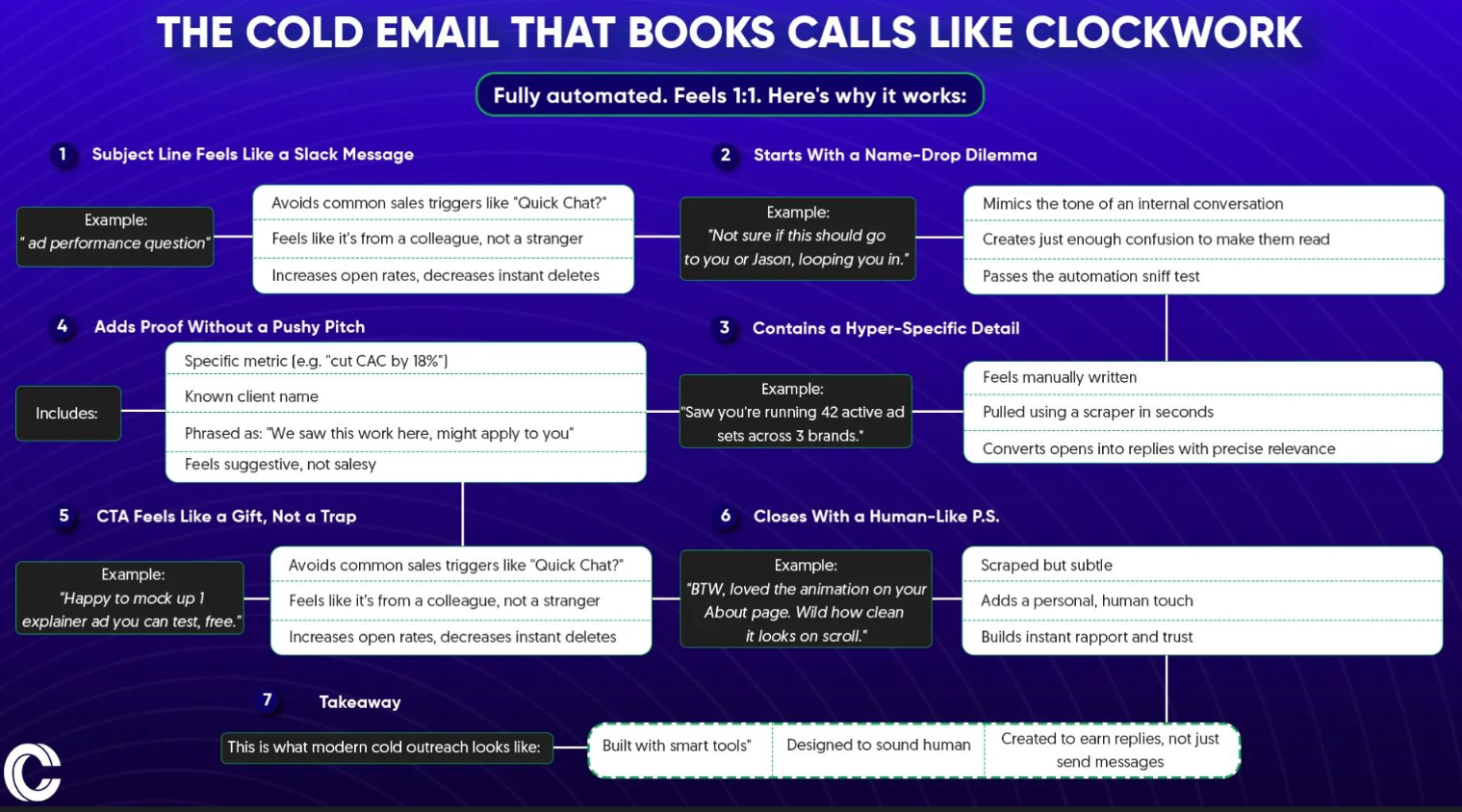
4. Value statement: outcome, not feature
Now you can mention what you do, but frame it around the outcome they care about. Not your product features.
👎 Bad: "We have AI-powered analytics and 50+ integrations."
👍 Good: "We help sales teams book 30% more qualified meetings without adding headcount."
One talks about you. One talks about their result.
5. CTA: conversation, not commitment
End with the easiest possible next step. We're asking for a reply, not a signed contract.
"Worth a quick chat?" works better than "Let's schedule a 30-minute discovery call to explore synergies."
Keep the friction low. Your goal with any cold email template for copywriting is to start a conversation, not close a deal in the first email.
Explore More: Cold Email Blueprint to Generate Leads (100% Tested)
Proven Cold Email Copywriting Frameworks
Good cold email copywriting follows patterns that work. Here are five frameworks we use depending on the prospect and situation. These aren't rigid templates, they're mental models for structuring your message.
PAS (Problem, Agitate, Solve)
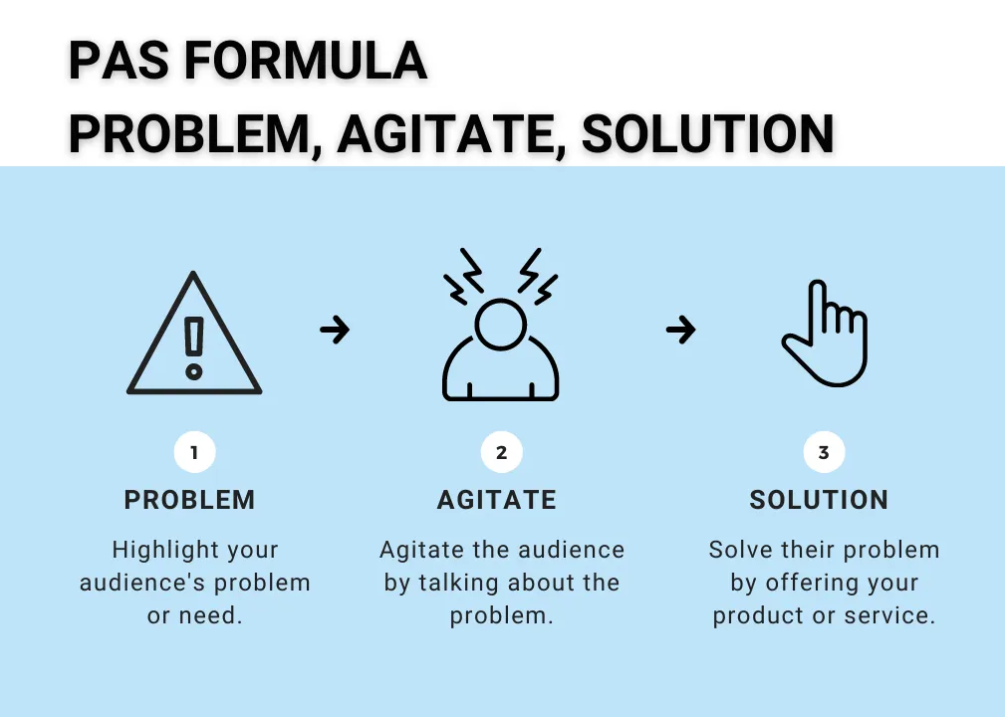
Start with a problem your prospect faces. Agitate it by highlighting why it matters or what happens if ignored. Then position your solution as the fix.
This framework works when you're targeting a clear, urgent pain point. It's direct and outcome focused.
AIDA adapted for cold outreach
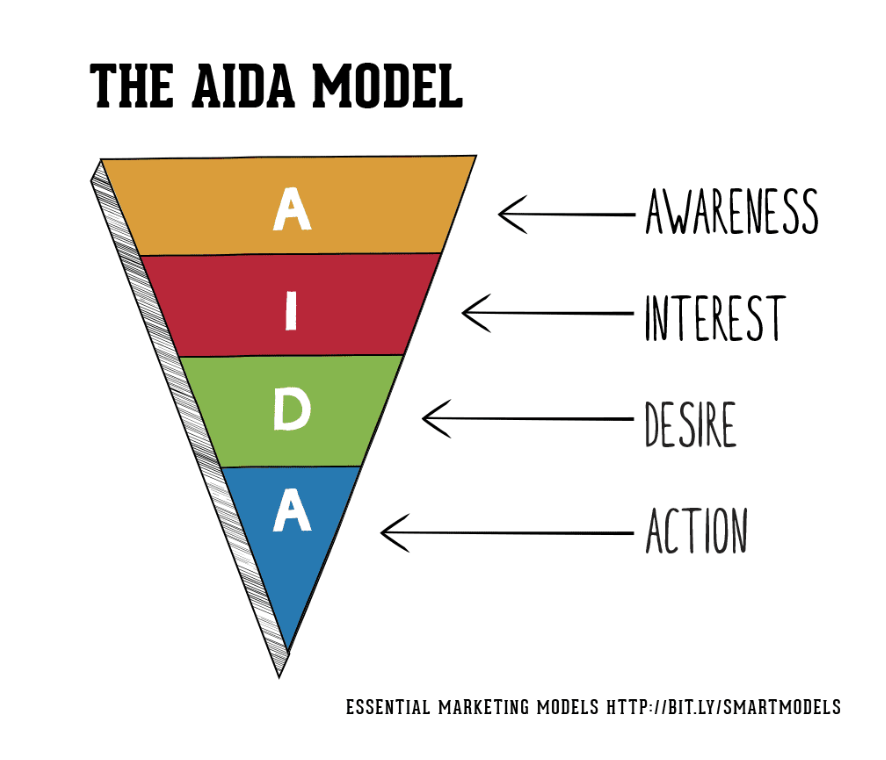
AIDA stands for Attention, Interest, Desire, Action. In cold email copywriting examples, we adapt it like this:
Grab attention with a personalized opener. Build interest by framing a relevant challenge. Create desire by showing a specific outcome they want. Drive action with a low friction reply ask.
The key difference from traditional AIDA? We're not trying to sell in the email. We're just trying to earn a reply.
Context, Insight, Question
Give context about why you're reaching out (something specific about them). Share an insight relevant to their situation (not generic advice). Ask a simple question that invites conversation.
This framework feels consultative, not salesy. It positions you as someone who understands their world and might have something valuable to share.
Observation based opener framework

Lead with something you noticed about their company, role, or industry. Connect that observation to a potential challenge or opportunity. Ask if it's worth exploring together.
We use this when prospects are in growth mode or experiencing visible change. Recent funding, new hires, product launches, market shifts. Your observation proves you're paying attention.
Soft CTA framework
Build your entire email around making the call to action feel effortless. Every sentence leads to one simple question or reply prompt at the end.
"Does this sound relevant?" or "Worth a brief chat?" These soft CTAs convert better than aggressive asks because they respect the prospect's time and autonomy.
Each framework serves a different scenario. The best cold email copywriting examples use the right structure for the right prospect at the right time.
Cold Email Copywriting Examples That Get Replies
Here are real cold email copywriting examples that work. We've grouped them by intent so you can see what works in different scenarios.
Cold email subject lines that actually get opened
A framework only works if the subject line gets the email opened first. Here are subject lines we've tested across campaigns that consistently outperform generic alternatives, grouped by scenario:
For a first touch: "Quick question about [their team/project]," "Idea for [Company]'s [specific initiative]," "[Mutual pain point], right?"
For a referral: "[Mutual contact] said I should reach out," "Following up for [mutual contact]"
For a pattern interrupt: "This might be off base," "Random question for you"
For a follow-up: "One more thing on [topic]," "Closing the loop on [Company]"
For a value-add touch: "Saw this and thought of [Company]," "A resource for [their specific challenge]"
The pattern across all of them: specific over generic, five to six words, and a direct line to something the recipient actually cares about. Skip exclamation points, ALL CAPS, and anything that reads like a mass send. Those signals get caught by spam filters before a human ever sees the subject line.
Also Check: The Best Cold Email Subject Lines & How to Write Them
First touch cold email
This is your initial outreach to someone who's never heard of you.
Subject: Quick question, [Name]
Hi [Name],
Saw you recently expanded your sales team from 8 to 15 reps. Congrats on the growth.
Most teams we work with hit a wall around this size. Reps have meetings but pipeline stays flat.
We help B2B teams turn more conversations into qualified pipeline. Worth a quick chat?
[Your name]
Short, specific, and leads with their world.
Referral based cold email
You have a mutual connection. Use it immediately.
Subject: [Mutual contact] suggested I reach out
Hi [Name],
[Mutual contact] mentioned you're looking to improve response rates on outbound. We've helped companies like [similar company] book 40% more meetings without changing their target list.
Open to a brief conversation about what's working for your team?
[Your name]
The referral earns you credibility. Don't waste it with a long pitch.
Pattern interrupt email
Break expectations when you're in a crowded space.
Subject: This might be completely off base
Hi [Name],
I'm reaching out cold, so this might be irrelevant. If so, just ignore.
I work with SaaS companies stuck at $5M ARR trying to hit $10M. The issue is usually lead quality, not lead volume.
If that sounds familiar, let's talk. If not, no worries.
[Your name]
Acknowledging you might be wrong makes you more human.
Short "no scroll" email
When attention is everything, go ultra concise.
Subject: 2 minute conversation?
[Name], do you have 2 minutes this week to talk about improving your team's show-up rate for demos?
We've helped 6 companies in [their industry] increase attendance by 30%+.
[Your name]
Under 40 words. Gets to the point instantly.
Follow up email adding new value
Don't just bump your original email. Add something new.
Subject: One more thing, [Name]
Hi [Name],
Following up on my email from last week about pipeline conversion.
I just published a breakdown of what's working for SDR teams in Q4. Thought you might find it useful even if we don't end up chatting.
[Link]
Worth discussing how this applies to your team?
[Your name]
You're giving value whether they reply or not. These cold email copywriting examples show different approaches for different situations.
The commonality? They're all short, relevant, and human.
For a full breakdown of how to follow up without sounding pushy, including timing and what to say when someone goes quiet, see our follow-up guide.
How AI Can Support Cold Email Copywriting (Without Ruining It)
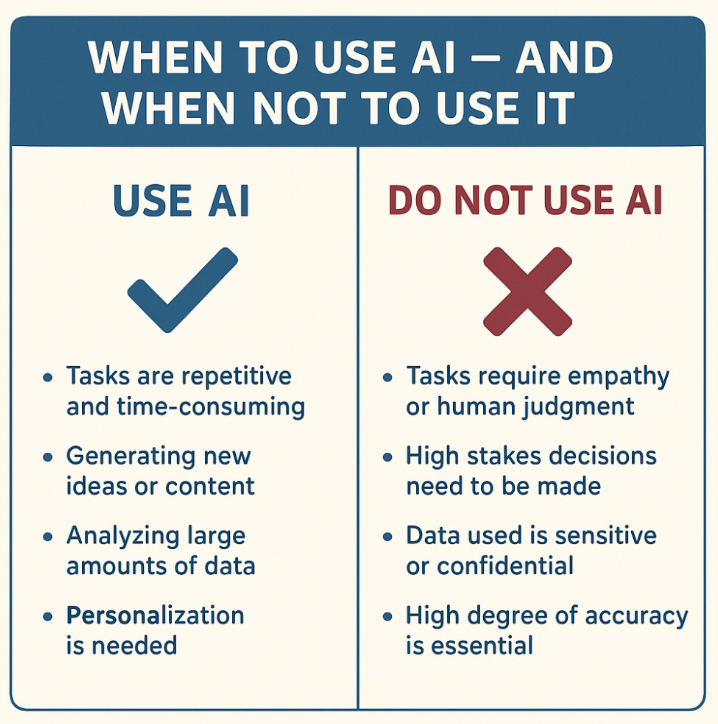
AI for cold email copywriting is a tool, not a replacement. Use it wrong and your emails sound robotic. Use it right and it speeds up your process without killing your conversions.
What AI is good at
- Research. AI can pull company info, recent news, and relevant details about your prospect in seconds. It's faster than manually browsing LinkedIn and company websites.
- Drafting variations. Need 5 different subject lines? AI can generate options quickly. You pick the best one and refine it.
- Rewriting for tone. Got a draft that sounds too formal? AI can adjust the tone to be more conversational or direct in seconds.
These tasks save time without sacrificing quality.
What AI should NOT do
- Mass generate generic emails. The biggest mistake we see is people using AI for cold email copywriting to blast out 500 identical emails. Prospects can tell. Your reply rate crashes.
- Replace strategy and ICP thinking. AI doesn't know your ideal customer profile or which pain points actually resonate. It can't replace the strategic thinking that makes cold email copywriting work.
Feed AI garbage inputs, you get garbage outputs.
Best practice: AI plus human editing workflow

Here's how we actually use AI:
- Use AI to research the prospect and draft a first version. Then edit it yourself. Add specificity, cut fluff, make it sound like you.
- The AI handles the heavy lifting. You handle the strategy and final polish.
The data backs this up. Hunter's 2026 report found manually edited emails get an 18% higher reply rate than fully automated ones, and 69% of decision-makers say it bothers them when an email sounds AI-written unless it reads genuinely human (source). AI drafts. You still have to make it sound like you.
At Cleverly, we combine AI for cold email copywriting with experienced copywriters who've written thousands of high converting emails. That's how we maintain quality at scale while booking meeting ready leads for over 10,000 clients.
AI is your assistant, not your autopilot.
Check This: 10+ High-Converting ChatGPT Prompts for Cold Emails
How Cleverly Helps Teams Win with Cold Email Copywriting

Look, you can spend months testing subject lines, tweaking CTAs, and hoping your cold emails get replies. Or you can work with a cold email outreach agency that's already cracked the code.
We've sent millions of cold emails for 10,000+ clients including Amazon, Google, Uber, PayPal, and Spotify. The result? $312 million in pipeline revenue and $51.2 million in closed deals.
What makes us different:
We don't charge you for emails sent or contacts reached. We don't bill you for opens or clicks. You only pay for meeting ready leads we actually deliver.
No fluff metrics. No vanity numbers. Just qualified prospects who show up ready to talk business.
Our team combines expert cold email copywriting, rigorous testing, and smart AI tools to write emails that get responses. We handle the research, the writing, the sending, and the follow ups. You handle the sales conversations.
Ready to stop guessing and start booking meetings?
Let's talk about how Cleverly can fill your pipeline with qualified leads. You only pay for results.
Book a strategy call with Cleverly →

Conclusion
Cold email copywriting isn't about finding the perfect template and hitting send 10,000 times. It's a skill that improves with practice, testing, and actually paying attention to what gets replies.
The emails that work follow three principles: relevance, clarity, and restraint.
Relevance means you did your homework. Clarity means they understand your message in 10 seconds. Restraint means you're not trying to close a deal in the first email.
Focus on starting conversations, not pitching products. When you shift that mindset, your copy gets better and your reply rates follow.
The prospects who need what you offer are out there. Your job is to write emails worth responding to.
Frequently Asked Questions
Free Resource
How to Scale a Profitable Cold Call System
Get the complete guide — download it instantly now.
Free Ebook
Download the Free Guide
Enter your details to get instant access.
You're all set! 🎉
Your ebook is downloading now.
Click below if the download didn't start automatically.