Table of Contents
Who Are B2B Decision Makers?
How to Identify the Right Decision Makers at a Target Account
Best Tools to Find B2B Decision Makers
Best Strategies for Reaching B2B Decision Makers
How to Message B2B Decision Makers to Get a Response
Common Mistakes When Targeting B2B Decision Makers
How Cleverly Helps B2B Teams Reach the Right Decision Makers at Scale
Conclusion
Frequently Asked Questions
Modified On :
July 14, 2026
Key Takeaways
- The average B2B buying committee now includes 6 to 13 stakeholders, so targeting one contact per account is the fastest way to stall a deal.
- Identify decision makers by mapping who owns the pain, then researching org structure and confirming actual budget authority before you reach out.
- LinkedIn Sales Navigator, Apollo.io, ZoomInfo, Clay, and Bombora each solve a different piece of the puzzle: finding people, verifying contacts, and spotting buying signals.
- Reaching decision makers takes a coordinated sequence across LinkedIn, email, and phone, not a single touch on one channel.
- Multi-threading three or more stakeholders at the same account closes deals roughly twice as fast as relying on a single champion.
What kills more B2B pipelines than bad product-market fit is reaching the wrong person. You send a great pitch to someone who nods along, says "this looks interesting," and then goes quiet, because they never had the authority to say yes in the first place.
This isn't a small problem anymore. Forrester's Buyers' Journey Survey puts the average B2B buying group at 13 stakeholders, and Gartner's research still confirms enterprise committees running 6 to 10 people deep, each doing their own research before ever talking to a rep.
On top of that, deals multi-threaded across four or more committee members close at roughly double the rate of single-threaded deals.
That's the gap this guide closes. You'll learn who actually counts as a B2B decision maker, how to map the real buying committee at a target account, which tools surface verified contacts fastest, and how to reach those people with messaging that gets a reply instead of a "not interested."
Who Are B2B Decision Makers?
A B2B decision maker is anyone with real authority over whether a purchase happens. That's a wider group than most reps assume. It includes the person who controls the budget, the one who evaluates technical fit, the end users who'll actually use the product, and the executive who signs off at the end.
The part that trips people up: there's rarely one decision maker. There's a committee, and every seat on it can say no.
Common decision maker roles by function:
Two roles matter more than the rest: the champion and the economic buyer. The champion is usually a VP or Director who wants your solution and fights for it internally.
The economic buyer, often the CFO or a C-suite exec, controls whether the budget actually gets released. Miss either one and the deal stalls, no matter how good your product is.
🎯 Reach Decision-Makers. Not Dead Ends
Our LinkedIn, cold email, and cold calling campaigns generate 15–30 qualified meetings every month with the people who can actually say yes.
How to Identify the Right Decision Makers at a Target Account
Identification has to happen before you write a single message. Send the right pitch to the wrong person and you don't just lose that email, you burn your shot at the whole account.
Step 1: Define Who Owns the Problem You Solve
Start with the pain, not the job title. Whatever functional role feels your problem most directly is almost always your primary champion.
Ask these four questions for every target account:
- Who feels the pain day to day?
- Who controls the budget?
- Who evaluates the technology?
- Who signs the contract?
Do this once for your ICP, not once per account. That documented committee map becomes your repeatable process instead of a fresh guessing game every time.
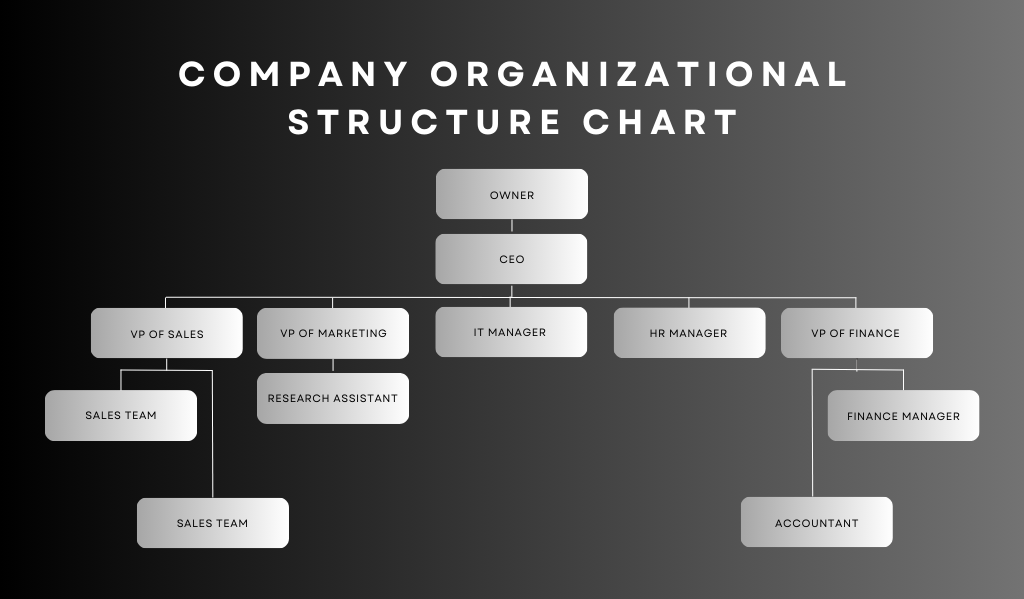
Step 2: Research the Org Structure
LinkedIn is still the fastest place to map a company's org chart. Search the company name plus the department you're targeting and you'll surface most of the relevant employees by seniority.
A few things worth checking beyond the obvious search:
- Recent hires and promotions in the relevant function. New execs are building their stack and are far more open to new vendors than someone who's been in the seat for three years.
- The company's own website (team pages, press releases) for leadership names that don't always show up in a LinkedIn search.
- Job postings. A company hiring five SDRs is investing in outbound. A RevOps opening means they're building pipeline infrastructure. Both are buying signals if your solution fits.
Step 3: Confirm Authority Before You Reach Out
A title doesn't automatically equal authority. A "Director" at a 20-person startup often has more real budget power than a "Director" at a 5,000-person company. Calibrate seniority against company size before you decide who to prioritize.
Look for signals like press quotes about vendor decisions, event speaking slots, or posts about the exact problem you solve. When you're not sure, start with the champion (VP or Director level) rather than cold-hitting the C-suite with zero context.
Best Tools to Find B2B Decision Makers
The right tools save you hours of manual digging by surfacing verified contact data, buying intent, and org structure in one place.
LinkedIn Sales Navigator
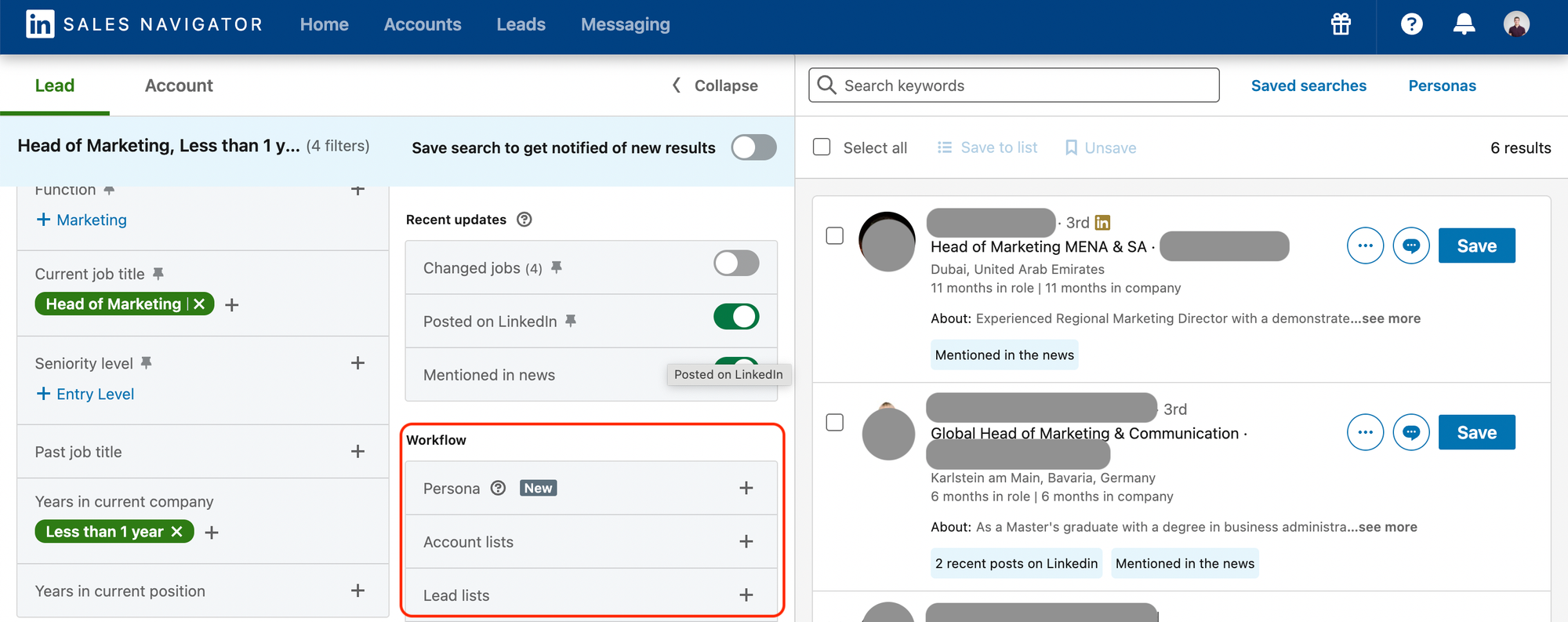
Still the most powerful way to find B2B decision makers by company, title, seniority, department, and function all at once. Saved searches with job-change alerts and TeamLink warm intro paths make it easy to build a full committee map for any target account. Pair it with a data enrichment tool like Clay or Apollo once you've identified who to contact.
Apollo.io
A contact and company database built for combining prospecting, email finding, and sequencing in one place. It's strong for finding verified emails and direct dials, and its intent data flags accounts already researching your category, so you can prioritize the ones already in a buying window.
ZoomInfo
Enterprise-grade data with strong accuracy for mid-market and large accounts. Org chart visualization and "Scoops" (trigger events like leadership changes or funding) make it a solid fit when you're prospecting into bigger, more complex organizations.
Clay
A data enrichment and workflow tool that pulls from 50+ sources and layers in AI-generated personalization signals. Once you've identified your buying committee, Clay is where you build out enriched profiles (recent posts, job changes, company news) that make your outreach feel specific instead of generic.

Bombora (Intent Data)
Monitors which companies are actively consuming content tied to specific topics, which helps you prioritize target accounts based on actual research behavior instead of just firmographic fit. Accounts already showing intent convert at a noticeably higher rate than cold accounts with zero context.
🚀 Better Targeting. Bigger Pipeline.
With 53,000+ meetings booked and $312M+ in pipeline generated, we know how to get your message in front of the right buyers.
Best Strategies for Reaching B2B Decision Makers
Finding the right person is half the job. Getting them to actually respond is the other half, and it's where most outreach falls apart.
LinkedIn Outreach: The Highest-Signal Direct Channel
LinkedIn is where most senior decision makers are already active, and a personalized message there feels a lot less intrusive than a cold call. When you're figuring out how to reach B2B decision makers, this is usually the first channel to lean on.
- Connection request: personalize the note with something real, a shared connection, their recent post, company news, not a pitch. The goal is the connection, not the meeting.
- First message after connecting: open a conversation. Share an insight, ask a qualifying question, or reference something specific to their role. Don't pitch on message one.
- What gets a response: relevance (does this apply to my actual situation), specificity (is this person talking to me or 500 other people), and brevity (can I get this in 30 seconds).
Cold Email: High Volume, High Personalization
Cold email reaches the decision makers who aren't spending much time on LinkedIn, especially VPs and Directors who still prefer email for business communication.
A structure that consistently converts:
- Personalized first line
- One-sentence pain or outcome statement
- One proof point (company name + result)
- Low-friction CTA (a 15-minute call, nothing bigger)
Keep the first touch under 100 words. Decision makers read emails in seconds, and personalization that references a real trigger event (funding, a new hire, a product launch) outperforms generic templates every time.
Cold Calling: Direct Access When Done Right
Cold calling is still the fastest way to reach someone who's ignored your digital touches. A 90-second live conversation can do what five emails can't.
It works best as the third touch in a sequence (LinkedIn, then email, then call), not as your opening move. For senior decision makers, call early: 7:30 to 9 AM or 5 to 6 PM, before or after the meeting-heavy middle of the day.
Get to the reason for your call in under 20 seconds. Long openers get hung up on. Direct ones get a conversation.
Multi-Touch Sequencing: Persistence Across Channels
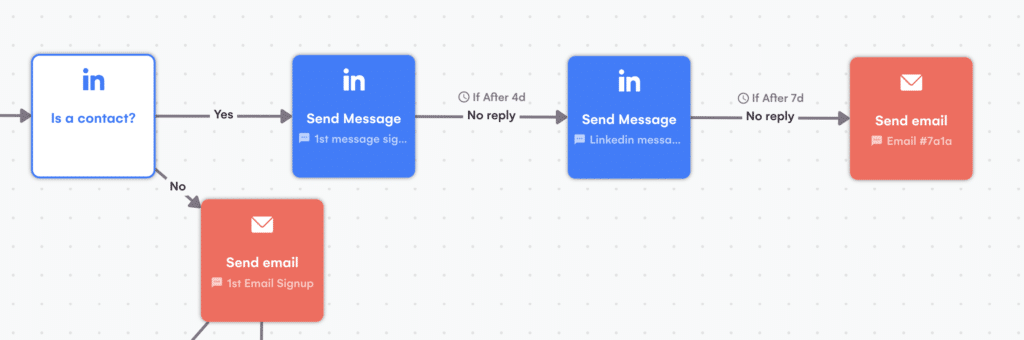
This is where best strategies for reaching B2B decision makers really comes down to one idea: most people need 5 to 8 touches before they respond, and RAIN Group's research shows top-performing reps book first meetings in 5 touches on average, while average performers need 8. One email or one call isn't a strategy. It's a coin flip.
A sequence structure that holds up in practice:
LinkedIn connection → cold email touch 1 → LinkedIn follow-up → cold email touch 2 → cold call + voicemail → cold email touch 3 → breakup email
Each touch needs a new angle: a different pain point, a case study, a fresh insight. Repeating the same message just trains the prospect to ignore you. Space touches 2 to 4 days apart. Daily contact reads as spam fast.
Trigger-Based Outreach: Timing Matters More Than You Think

The best moment to reach a decision maker is right after something changes at their company. A trigger signals active evaluation, and response rates jump because the problem is already top of mind.
Watch for: new executive hires in the relevant department, funding rounds, headcount growth in the target function, competitor wins or losses, earnings calls that mention your pain area, product launches, or tech stack changes.
Tools like Sales Navigator alerts, ZoomInfo Scoops, Bombora, and even Google Alerts on the right keywords keep you on top of these without manual checking every day.
How to Message B2B Decision Makers to Get a Response
Decision makers get dozens of outreach messages a day. The ones that break through are relevant, specific, and short. This is the practical core of how to target key decision makers in B2B sales.
Lead With Their Problem, Not Your Product
Most outreach opens with "we help companies do X." Decision makers skip right past this because it's about you, not them. Open instead with something specific to their role: "Most [role] at [company size] companies we talk to are dealing with [specific pain], is that something your team is navigating right now?" The goal of sentence one is making them think this person actually gets my situation. That's what earns sentence two.
Use Specificity as a Credibility Signal
"We work with companies like yours" reads as mass outreach. "We helped [similar company] increase [metric] by [X] in [timeframe]" reads as a real conversation. Naming a recognizable customer in the same industry is the fastest credibility shortcut you have. And a specific CTA like "Are you free Thursday at 10am for 15 minutes?" consistently outperforms an open-ended "let me know if you'd like to chat."
Keep Every Touch Short
First emails under 80 words. LinkedIn messages under 5 sentences. Voicemails under 20 seconds. Long messages signal you don't respect their time. Short ones signal confidence. Save the depth for the actual call.
Common Mistakes When Targeting B2B Decision Makers
❌ Targeting one person per account. One contact means one "no" kills the whole deal. Multi-thread at least 2 to 3 buying committee members per account.
❌ Reaching out with no trigger context. Outreach that ignores what's actually happening at the company gets ignored right back. Research before every send.
❌ Pitching too early. Leading with the product before you've earned relevance is the fastest way to get deleted.
❌ Giving up after one or two touches. Most responses land after touch 4 or later. Stop early and you miss the majority of your own pipeline.
❌ Misidentifying the decision maker. Great outreach to the wrong person at the right company still wastes the account.
How Cleverly Helps B2B Teams Reach the Right Decision Makers at Scale
Manually mapping buying committees, researching org charts, and verifying contact data across dozens of target accounts eats up time most outbound teams simply don't have. That's the exact gap we built Cleverly to close.
We're a B2B lead generation agency that handles the full decision maker targeting process for you: ICP-based account selection, buying committee research, verified contact sourcing, and personalized multi-channel outreach across LinkedIn and cold email.
For each client, we build a verified list of decision makers matched to their ICP, write sequences tailored by role and pain point, and run a coordinated cadence that reaches the full committee, not just one contact per account.
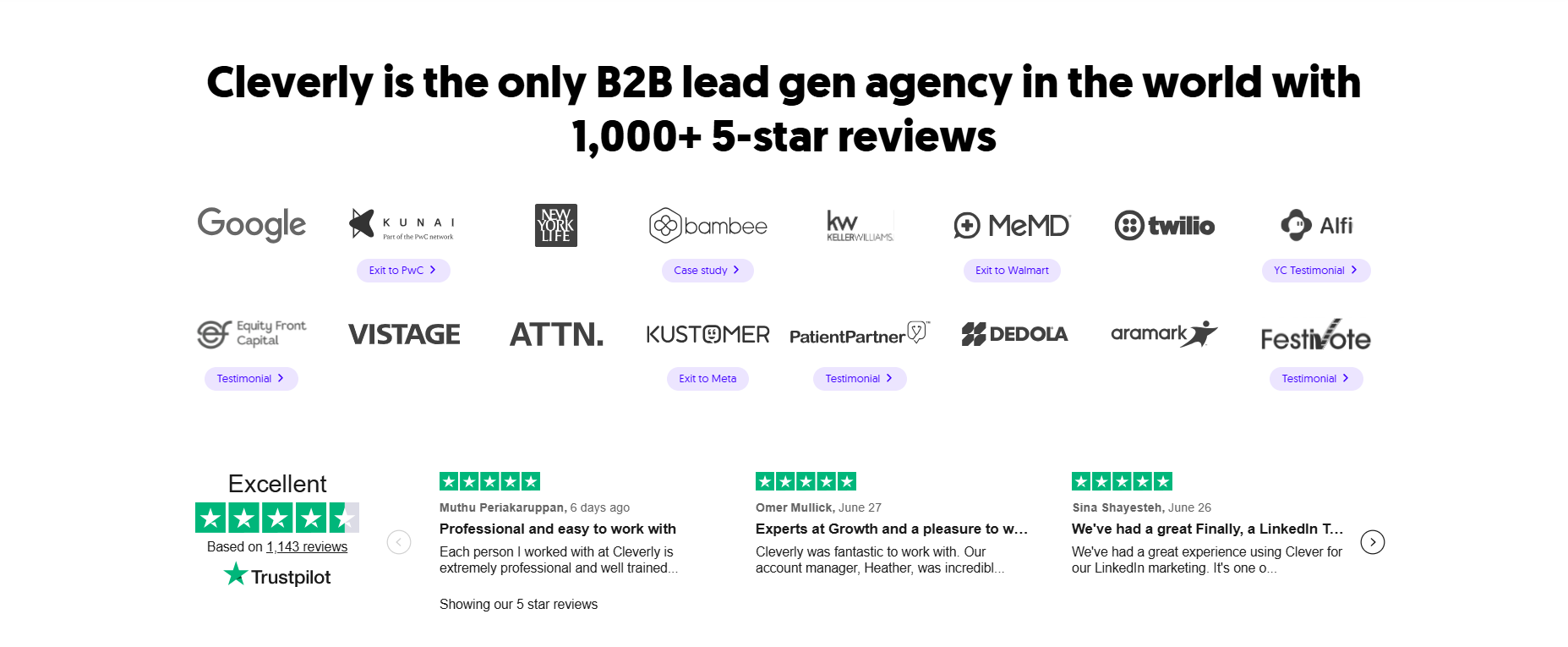
We've run this process for over 10,000 clients, including teams at Amazon, Google, Uber, PayPal, Slack, and Spotify, generating $312M in pipeline along the way.
If you'd rather have qualified meetings show up on your calendar than spend another quarter building lists by hand, our LinkedIn lead generation services start at $397/month with no long-term contract, cold email lead generation - you can choose to pay per meeting ready lead and cold calling service at half the pricing of hiring in-house.
Want a done-for-you system that identifies and reaches the right decision makers at your target accounts? Book a strategy call with Cleverly and we'll show you what a real committee map for your ICP looks like.
Conclusion
Reaching the right B2B decision makers is the foundation everything else in outbound depends on. You can have the sharpest messaging in the world, but if it lands with someone who can't say yes, it was never going to convert.
The framework holds up across every account: figure out who owns the pain, map the full buying committee, use the right tools to find verified contacts, then reach out with relevant, specific messaging across multiple channels and touches.
Start with one target account, map the committee completely, run a real sequence to every role on it, and once that works, systematize it across the rest of your list.
Frequently Asked Questions
Free Resource
How to Scale a Profitable Cold Call System
Get the complete guide — download it instantly now.
Free Ebook
Download the Free Guide
Enter your details to get instant access.
You're all set! 🎉
Your ebook is downloading now.
Click below if the download didn't start automatically.