

Table of Contents
Why Staffing Agencies Struggle With Their Own Business Development
What Appointment Setting Actually Looks Like for a Recruiting Firm
Who to Target: Building an ICP for Staffing Agency BD
How to Build an Appointment Setting System for Your Staffing Firm
Common Staffing Agency BD Mistakes That Kill Pipeline Consistency
When to Outsource Appointment Setting for Your Staffing Firm
How Cleverly Fills Staffing Agency Pipelines
Conclusion
Frequently Asked Questions
Modified On :
July 13, 2026
Key Takeaways
- Staffing agencies that depend entirely on referrals and repeat business are one client decision away from a pipeline crisis — a systematic appointment setting for staffing agencies process is what separates firms that grow consistently from firms that grow by accident.
- Niche ICP targeting combined with buying trigger signals — like active job postings and recent funding rounds — dramatically outperforms generic outreach lists.
- Multi-channel sequences across LinkedIn, cold email, and phone (7–10 touches over 10–14 business days) consistently outperform single-channel, single-touch BD attempts.
- Recruitment and staffing cold email reply rates land between 5% and 8% — among the highest of any B2B vertical — because the pain is immediate and obvious. The firms capitalizing on that are the ones with a structured outreach system.
- When internal bandwidth for BD is limited, outsourcing appointment setting to a specialized agency produces more meetings at a lower total cost than hiring and managing a dedicated BD rep in-house.
Staffing agencies are in the business of filling pipelines — for everyone but themselves. You know how to source candidates, qualify them fast, and deliver them ready to start. But when it comes to your own new client pipeline, most firms are running on referrals, repeat business, and hope.
That works — until it doesn't. One major client pauses hiring, reduces headcount, or gets acquired, and suddenly there's no systematic pipeline to fall back on.
42% of staffing agencies lost revenue in 2025. The ones that grew had something in common: they weren't waiting for referrals to come in. They had a structured outbound system running regardless of how busy the delivery team was.
In 2026, the staffing firms winning new client business consistently are the ones that have built a real appointment setting for staffing agencies system — not reactive BD, not occasional cold outreach, but a repeatable process that generates qualified client meetings every single month.
This guide covers exactly how to build that system: why staffing agency BD breaks down, who to target and when, how to run multi-channel outreach specific to recruiting firms, and when outsourcing the BD function makes more sense than building it in-house.

Why Staffing Agencies Struggle With Their Own Business Development
There's a real irony here. Staffing agencies are experts at filling pipelines for other companies. They know exactly how to find candidates, qualify them fast, and deliver them ready to start. But their own staffing agency business development pipeline? That's often a completely different story.
The core problem isn't effort. It's structure.
The Expertise Gap
Staffing firms are built around delivery. Finding and placing candidates is what the team is good at, what they're measured on, and where immediate revenue comes from.
Business development requires a completely different skill set — list building, outreach sequencing, objection handling, pipeline tracking — and most agencies don't have a single person whose sole job is new client acquisition.
When your best recruiters are juggling BD in between placements, BD always loses. Placements are immediate revenue. BD is deferred revenue. That math plays out the same way every time.
The Reactive BD Trap
The most common staffing agency business development pattern looks like this: the firm runs well on referrals and repeat business for a while. Then a major client reduces headcount, pauses hiring, or gets acquired.
Suddenly the team is scrambling to fill the gap — cold outreach starts happening in a burst, the pipeline looks thin, and everyone's stressed.
A pipeline built reactively is always one client decision away from a crisis. The only way out of that cycle is a consistent outbound motion that runs whether the delivery team is busy or not.
The Generic Pitch Problem
Staffing is one of the most crowded B2B markets. There are over 43,000 staffing businesses operating in the US right now. "We place great candidates and have a strong talent network" describes literally every one of them.
Without a specific niche, a differentiated value proposition, and a clearly defined ICP, cold outreach for a staffing firm gets ignored at the same rate as every other generic vendor message in the prospect's inbox.
The Referral Dependency
Referrals are the highest-converting lead source in staffing — and there's no debate there. But when referrals are the only lead source, pipeline volume is determined by client satisfaction and timing, not by a system that can be scaled or optimized.
🎯 Need 15–30 More Client Meetings Every Month?
We help staffing agencies identify hiring companies, reach decision-makers, and book qualified sales conversations through LinkedIn, cold email, and cold calling.
What Appointment Setting Actually Looks Like for a Recruiting Firm
Appointment setting for staffing agencies means generating qualified meetings with the people who own hiring decisions — talent acquisition directors, VP People, COOs, CTOs, or VP Engineering, depending on your niche — at companies actively or predictably hiring in your specialty area.
The goal of each meeting is not to pitch your full service catalog. It's to open a focused conversation around one specific hiring challenge the prospect has right now and position your firm as the specialist who's already solved that problem for similar companies.
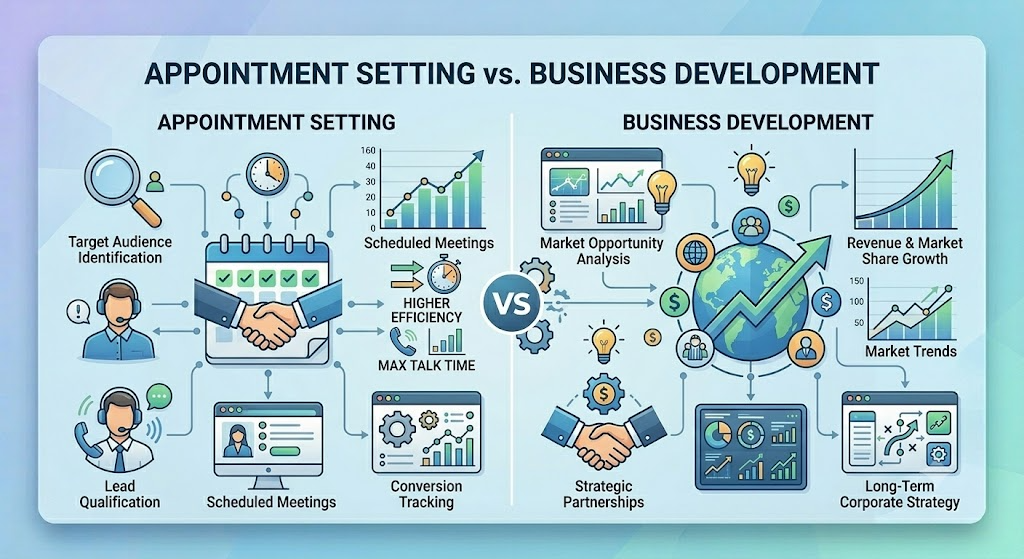
Appointment Setting vs. Business Development
These aren't the same thing, and conflating them is one of the most common recruiting firm client acquisition mistakes we see.
Appointment setting is the top-of-funnel function. Its job is getting the first qualified conversation scheduled. BD is what happens after — converting that conversation into a contract, a first placement, and ultimately an ongoing client relationship. Both matter, but treating them as the same activity means neither one gets done well.
What "Qualified" Actually Means
Not every company with open roles is worth pursuing. A qualified appointment for a staffing firm means: the prospect is actively hiring (or about to hire) in your niche, they have authority or meaningful influence over vendor selection, their company size and role type fit your placement model, and they're not locked into a managed service contract with no room for new vendors.
The conversion path for staffing BD looks like this:
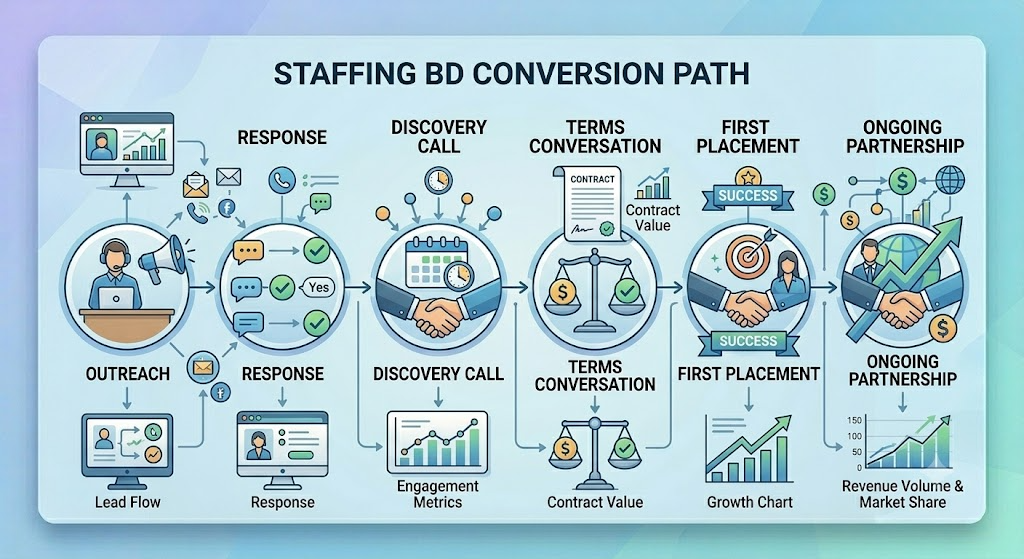
The first placement is the ROI on your BD investment. The ongoing relationship is the profit. Keep that framing in mind — it shapes how you run every conversation from the initial outreach through the first engagement.
Who to Target: Building an ICP for Staffing Agency BD
Generalist staffing firms compete on price. Niche firms compete on knowing the market. A clearly defined ICP is what makes your recruiting firm lead generation more efficient and every outreach message more specific.
Building the ICP
The most common mistake in staffing agency business development is trying to win every client. A sharp ICP produces more meetings per outreach dollar because the message can be specific enough to feel relevant rather than generic.
The best place to build your ICP from is your existing best clients. Look at the ones that paid on time, expanded the engagement, referred you to others, and stayed through market cycles.
What industry were they in? What size? Who was the hiring contact? What triggered them to engage your firm initially? That pattern is your ICP — build your prospecting list to replicate it.
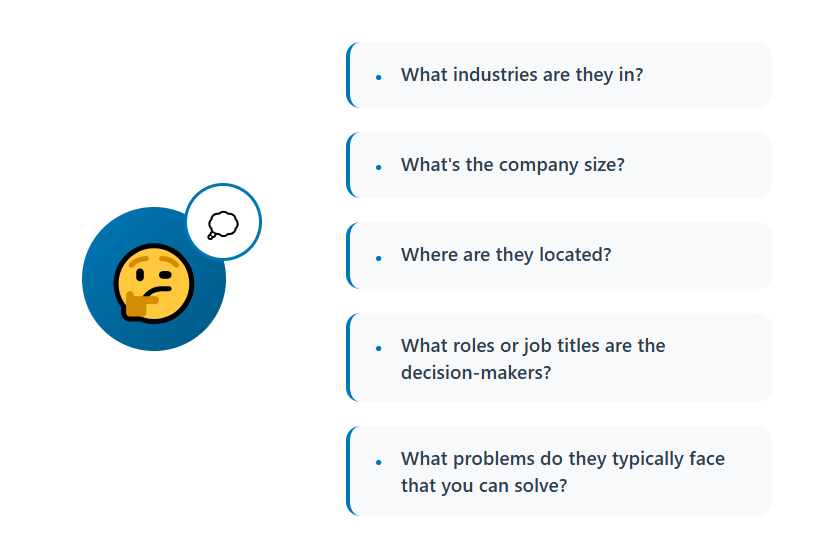
ICP dimensions to define:
- Industry vertical (tech, healthcare, finance, manufacturing, professional services)
- Company size range where your placement model is economically viable
- Role types and seniority levels you place
- Geography
- Decision-maker titles specific to your niche
Title Targeting by Niche
The right title depends on what your firm actually places. For technical roles: VP Engineering, CTO, Director of Engineering. For operational roles: COO, VP Operations, Head of Talent. For broad hiring: VP People, Director of Talent Acquisition, CHRO. Define target titles based on who feels the pain of a slow fill or a bad hire most acutely in your specific niche — those are the people who take the meeting.
Buying Triggers: The Highest-Leverage Signal in Staffing BD
Not all companies in your ICP are equally ready to engage a staffing vendor right now. Buying triggers identify which ones are in an active hiring window — and those are the accounts you should prioritize above everything else.
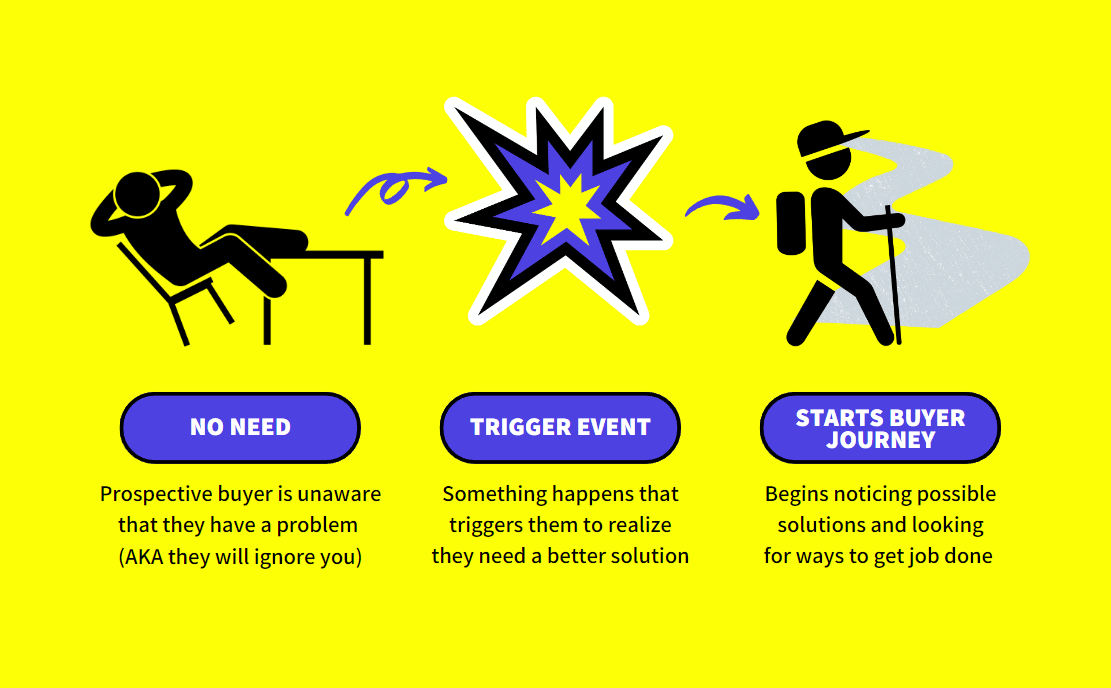
Primary signals:
- Active job postings in your specialty area on LinkedIn, Indeed, and company career pages — companies posting multiple roles in your niche are signaling active demand in real time.
- Recent funding announcements — companies that just closed a round typically hire aggressively in the following 3–6 months.
Secondary signals:
- Executive hires in relevant functions (a new CTO often means a hiring wave in engineering).
- Company growth signals in LinkedIn headcount data or business databases.
- Market expansion or new product line announcements requiring rapid talent acquisition.
Signal-based outreach — messages tied to a real, observable hiring trigger — dramatically outperforms generic outreach sent to the broader ICP list.
A message sent to a company actively posting in your niche is meaningfully more likely to produce a reply than the same message sent to a company that fits the ICP on paper but shows no current hiring signal. Build trigger identification into your list-building process, not just your copy.
🚀 Build a Predictable Pipeline Without Adding More Recruiters
Cleverly's done-for-you appointment setting service combines targeted prospecting, multi-channel outreach, and SDR follow-up to help staffing firms consistently generate new business opportunities.
How to Build an Appointment Setting System for Your Staffing Firm
This is a step-by-step framework for staffing firm pipeline building — a system that runs consistently whether the team is busy with placements or not, and that produces a measurable number of new client meetings every month.
Step 1 — Define Your Niche and Ideal Client Profile
Before you send a single outreach message, get specific about who you're targeting.
The niche should sit at the intersection of three things: where you have your strongest placement track record, where your talent network is deepest, and where the market has enough depth to sustain a consistent outreach volume over time.
The output of Step 1: a one-page ICP brief covering target industries, company size range, decision-maker titles, geography, and the specific role types you're best positioned to fill quickly. That brief informs every list-building and copywriting decision that follows.
Step 2 — Identify and Prioritize Buying Triggers
Not all companies in your ICP are ready to engage a staffing firm right now. Buying triggers tell you which ones are.
How to operationalize trigger monitoring:
- Set up Google Alerts and LinkedIn alerts for target companies and relevant hiring keywords.
- Use Sales Navigator's saved search alerts to surface companies posting in your niche.
- Use intent data tools to identify accounts showing elevated hiring activity before the job posting even goes live.
Prioritize trigger-qualified prospects over the standard ICP list in every outreach cycle. A well-timed staffing agency cold outreach message that references what the prospect is actively dealing with right now will always outperform a well-written message sent to a company that might need you someday.
Step 3 — Build a Multi-Channel Outreach Sequence
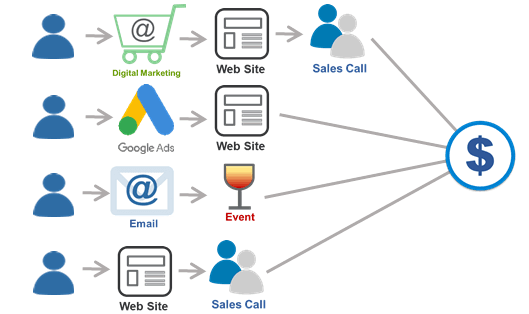
Single-channel, single-touch outreach produces a fraction of what a structured sequence generates. One analysis found that around 80% of sales require five or more touchpoints. In a trust-based market like staffing, that number is likely higher.
Sequence structure (over 10–14 business days):
- LinkedIn connection request
- Personalized email referencing the specific hiring trigger
- LinkedIn follow-up message
- Phone call
- Email follow-up
- Final LinkedIn touch
What goes in each touch: a specific reference to the prospect's situation (the recent job posting, the funding announcement, the growth signal), your niche positioning, and a low-friction ask. Not a pitch deck. Not a full capabilities overview. Just enough to get 20 minutes on the calendar.
Copy principle: write for the hiring manager's problem, not your agency's capabilities. "You're scaling engineering in a market where senior engineers are the hardest they've been to source in years — here's how we've filled that exact role type for companies in your position" is far more compelling than "we specialize in tech placements and have a strong candidate network."
Volume benchmark: a well-run BD outreach program for a staffing firm should generate 50–100 new prospect touches per week — enough to produce consistent meeting flow without burning through your addressable market too quickly.
Step 4 — Qualify Every Prospect Before Booking a Meeting
Not every company that responds to your outreach is worth an hour of a senior consultant's time. Define qualification criteria upfront so the appointment setting function filters for meetings that are likely to advance, not just meetings that fill the calendar.

Minimum qualification criteria:
- Prospect is actively hiring (or confirmed within 90 days) in your niche.
- Contact has hiring authority or meaningful influence over vendor selection.
- Company size and role type fit your placement model.
- Prospect is not locked into a retained search or MSP arrangement that closes out new vendors.
A short email or LinkedIn exchange can surface the most critical qualification factors before a calendar slot is committed. Surface the disqualifiers early — a company that fits the ICP on paper but has a hiring freeze or is entirely inbound-only is better identified before a 45-minute discovery call, not after.
Step 5 — Follow Up Consistently Across Every Stage

Most staffing BD conversations don't close in the first meeting. They close after a hiring need becomes urgent enough to act. Consistent follow-up is what keeps your firm top of mind when that moment arrives.
Post-meeting follow-up cadence:
- Within 24 hours: recap of the conversation and agreed next steps
- At 2 weeks: a relevant piece of market intelligence or a candidate profile relevant to their open roles
- Monthly: a value-add touch — market salary data, a talent shortage insight for their specific role type, or a recent placement case study
Build the follow-up system into your ATS or CRM with hard reminders, not in your head. Manual follow-up at this volume fails consistently. The firms with the most consistent staffing firm pipeline building are the ones that have made follow-up a process, not a personality trait.
The referral ask: the best time to ask for a referral is immediately after a successful placement or a genuinely positive meeting. Build a formal ask into your post-placement process and watch the highest-converting lead source in staffing become a reliable pipeline input rather than a pleasant surprise.
Step 6 — Convert First Meetings Into Long-Term Client Relationships

A first placement is a foot in the door, not a client. The firms that consistently fill their own pipeline are the ones that convert first-time clients into ongoing partnerships.
First meeting goal: don't pitch all your services. Identify one specific, immediate hiring need you can solve better than the alternatives, propose a low-risk engagement — a single contingency search or a trial placement — and deliver faster than expected.
When a client sees your firm fill a hard role quickly, the conversation shifts. They expand the engagement. They introduce you to colleagues. They stop shopping around. The first placement is the ROI on your BD investment; the ongoing relationship is the profit.
Building predictable repeat business: quarterly business reviews with active clients, proactive market updates on the talent pools they hire from, and early warning when relevant candidate supply is shifting. Treat active clients like a retention motion, not just a service delivery.
Common Staffing Agency BD Mistakes That Kill Pipeline Consistency
Understanding how staffing agencies get clients consistently means understanding what kills pipeline before it starts.
❌ No dedicated BD function. When recruiters handle both placements and new business, BD always loses. Placements are immediate revenue, BD is deferred revenue. Even a fractional BD resource focused solely on new client acquisition changes the output dramatically.
❌ Generic outreach with no trigger or niche angle. "We're a staffing firm with a large candidate network and competitive pricing" is the message every prospect receives from every agency. Without specificity, there's no reason to respond. The outreach has to reference something real and specific about the prospect's situation right now.
❌ Stopping at one or two touches. In a market requiring 7–10 touches for a meaningful response, reps who stop after two attempts are leaving the majority of their potential pipeline untouched. The sequence has to run in full — not just the first two messages.
❌ Over-relying on job board sourcing. Responding to job postings is reactive BD — you're competing with every other agency who saw the same listing at the same time. Proactive outreach to trigger-qualified prospects before the posting goes live gives your firm a meaningful first-mover advantage.
❌ Not tracking the pipeline. BD without a CRM logging every prospect interaction, touch count, and pipeline stage means there's no data to optimize from and no system to hold the BD function accountable against real metrics.
When to Outsource Appointment Setting for Your Staffing Firm
There's a specific set of conditions that make outsourcing BD for a staffing agency more practical than building the function in-house.
Signs it's time to outsource:
- The internal team is fully occupied with placements, and BD happens only when someone has spare capacity — which is almost never.
- Outreach volume is too low to produce consistent meeting flow.
- The team lacks the time or expertise to build and run a multi-channel sequence from scratch.
- The cost of hiring, training, and managing a full-time BD rep exceeds the budget available.
What outsourcing appointment setting provides: a dedicated team handling ICP-matched list building, multi-channel outreach copy, sequence management, follow-up, and meeting booking — without the overhead of a full-time hire. The system runs whether the delivery team is busy or not.
What outsourcing doesn't replace: your niche positioning, ICP clarity, and ability to run a strong discovery call once the meeting is booked. The external team gets the meeting on your calendar. Your team has to close it.
How to evaluate an appointment setting agency for a staffing firm: ask whether they've run BD campaigns for staffing or professional services clients before, what their messaging approach looks like for an industry that requires trust-based selling, and how they define and qualify a meeting-ready prospect specifically in the staffing context.
How Cleverly Fills Staffing Agency Pipelines
Building a consistent appointment setting system for staffing agencies in-house takes time, headcount, and ongoing optimization — and for most staffing firms, the delivery team is too valuable to redeploy for BD work.
Cleverly is a fully done-for-you B2B appointment setting agency that works both cold prospects and warm leads from your existing CRM, converting them into confirmed sales calls using LinkedIn outreach, cold email, and cold calling simultaneously.
For staffing and recruiting firms, we build ICP-matched prospect lists targeting the titles that own hiring decisions — talent acquisition leaders, VPs of People, COOs, and operations executives — at companies showing active hiring signals in your niche. Then we run personalized multi-touch sequences until a qualified meeting is booked and lands on your calendar.
The process runs in four steps: cold calling 200–300 decision-makers daily to build new pipeline, funneling existing CRM and marketing leads through an AI-powered dialer to revive stalled conversations, qualifying contacts fast to filter poor-fit prospects before anyone reaches your calendar, and delivering booked appointments directly to your team — ready to close.
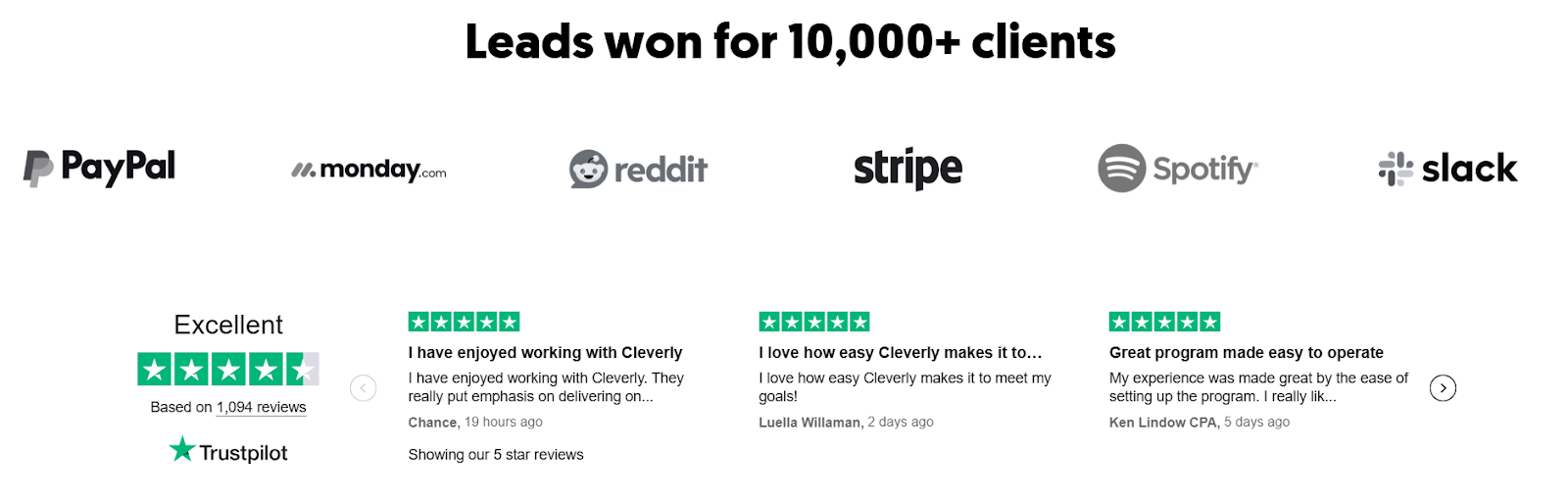
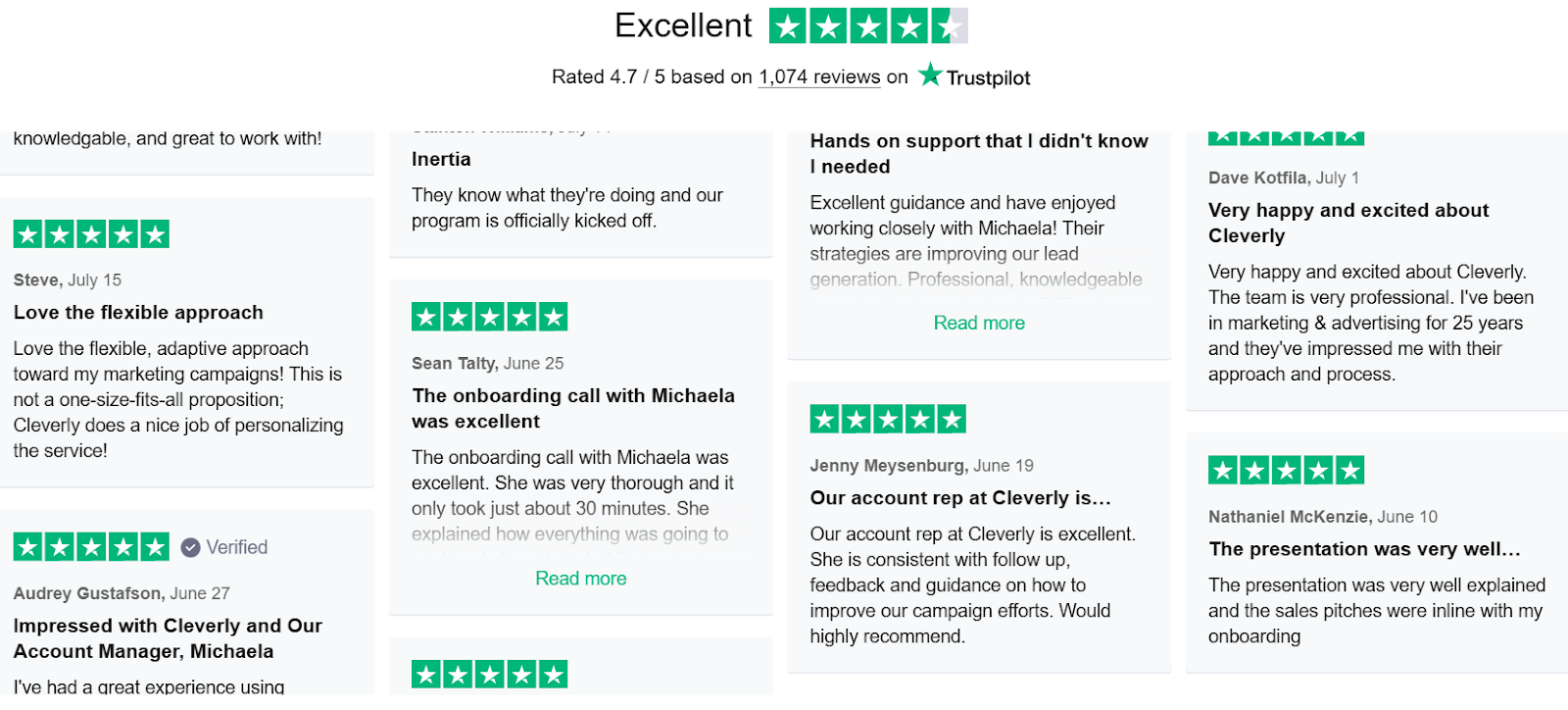
What staffing firm clients stop dealing with: inconsistent BD driven by recruiter bandwidth, generic outreach that doesn't reference specific hiring context, follow-up that falls through the cracks, and the ongoing cost of managing an internal BD hire. Rated 4.6/5 on Trustpilot across 1,136+ reviews, Cleverly has set 53,000+ appointments and generated $312M in client pipeline across 10,000+ clients.
Cold Calling Appointment Setting starts at $2,997/month for 10–40 appointments/month, with a dedicated SDR, parallel dialer, call recordings, and guaranteed SDR replacement if targets aren't met.
Ready to fill your firm's pipeline the same way you fill your clients'? Book a strategy call with Cleverly and see exactly how we'd build your BD outreach from day one.
Conclusion
Staffing agencies that rely on referrals and repeat business alone are one client decision away from a pipeline crisis. The firms growing predictably in 2026 are the ones that treat their own BD with the same structure and discipline they bring to candidate sourcing — a defined niche, a trigger-based target list, a multi-channel sequence, consistent follow-up, and a clear qualification process.
Build the system, measure it against the right metrics, and optimize it like any other business function. Or outsource it to a team that already runs it at scale. Either way, the reactive BD era is expensive — and the cost shows up exactly when you can least afford it.
Frequently Asked Questions
Free Resource
How to Scale a Profitable Cold Call System
Get the complete guide — download it instantly now.
Free Ebook
Download the Free Guide
Enter your details to get instant access.
You're all set! 🎉
Your ebook is downloading now.
Click below if the download didn't start automatically.


