Modified On :
August 4, 2026
Key Takeaways
- Target high-intent prospects that match your ICP instead of chasing volume, quality leads close 3-5x faster than generic ones.
- Reach decision makers directly from first contact to eliminate weeks of internal championing and approval delays.
- Lead with specific problems and quantified business impact, not product features, to accelerate internal buy-in.
- Respond to prospect inquiries within one hour, speed-to-lead directly impacts close rates and prevents competitor interference.
- Use outbound channels like cold calling for real-time feedback instead of waiting months for inbound discovery.
- Align lead generation with strict qualification criteria so your sales team only works meeting-ready opportunities.
Every B2B sales leader knows the pain. Your pipeline looks healthy, but deals drag on for months.
Prospects ghost after promising calls. Your team works harder, but revenue goals still feel out of reach.
See, you don't need to slash prices to close faster. You need to shorten sales cycle length by fixing what actually slows deals down.
We've helped over 10,000 companies speed up their sales process without touching their pricing.
The secret? Focus on the right buyers, eliminate decision bottlenecks, and keep momentum alive from first touch to signed contract.
Let's show you exactly how to do it.
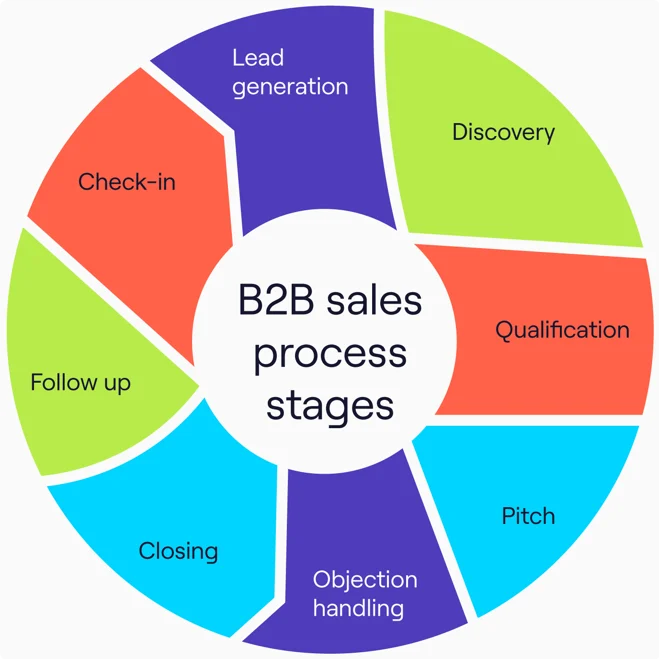
What Is a B2B Sales Cycle? (Stages Explained)
A B2B sales cycle is the full sequence a prospect moves through, from the first time they hear about your company to the moment they sign.
Every deal follows some version of this path. The stages don't change much. What changes is how long a prospect sits in each one.
Here's the standard flow:
- Prospecting: You identify companies that match your ICP and start outreach.
- Qualifying: You confirm the prospect has the problem, the budget, and the authority to buy.
- Demo or discovery: You show how your product solves their specific problem.
- Negotiation: You work through pricing, contract terms, and internal approvals.
- Close: The prospect signs and becomes a customer.
Some teams add extra stages, like a technical evaluation or a security review. Others compress qualifying and discovery into one call. The number of stages depends on your industry, deal size, and how many people need to sign off before a contract moves forward.
That distinction matters early on. A five-person startup selling a $2,000/year tool doesn't have the same cycle as an enterprise vendor selling a $200,000 platform to a Fortune 500 buyer. More stakeholders and more budget scrutiny mean more stages, and more stages mean more places for a deal to stall.
Once you know where your deal actually sits in this flow, you can start diagnosing exactly where it's getting stuck. That's what the rest of this guide covers.
Why B2B Sales Cycles Get Longer Than They Should
Before you can learn how to shorten a B2B sales cycle, you need to understand what's stretching it out in the first place.
Most sales delays aren't about your product or pricing. They happen because of preventable mistakes in your process. Here's what kills momentum:
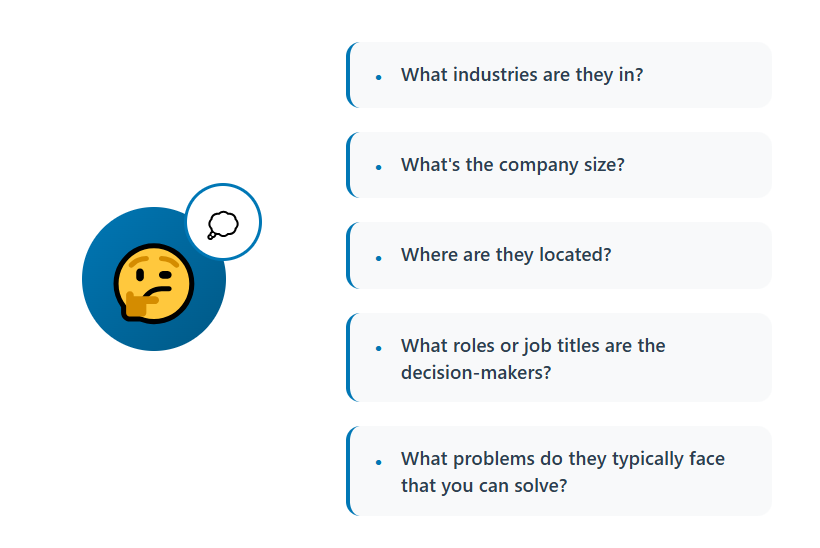
Poor ICP and low buying intent
When you target anyone who might buy instead of companies actively looking to solve the problem you fix, you spend months nurturing leads that were never ready. Chasing low intent prospects means longer conversations, more objections, and deals that stall indefinitely.
Selling to non-decision-makers
Your champion loves your solution. But they can't sign the contract. Now you're stuck waiting for them to convince their boss, who has different priorities and questions you've never addressed. Every layer you add to the decision process adds weeks to your timeline.
Unclear value proposition
If prospects don't immediately understand how you solve their specific problem, they'll keep researching alternatives. Vague messaging creates confusion. Confusion creates delay. When buyers can't clearly articulate your value to their team, your deal sits in limbo.
Too many discovery loops
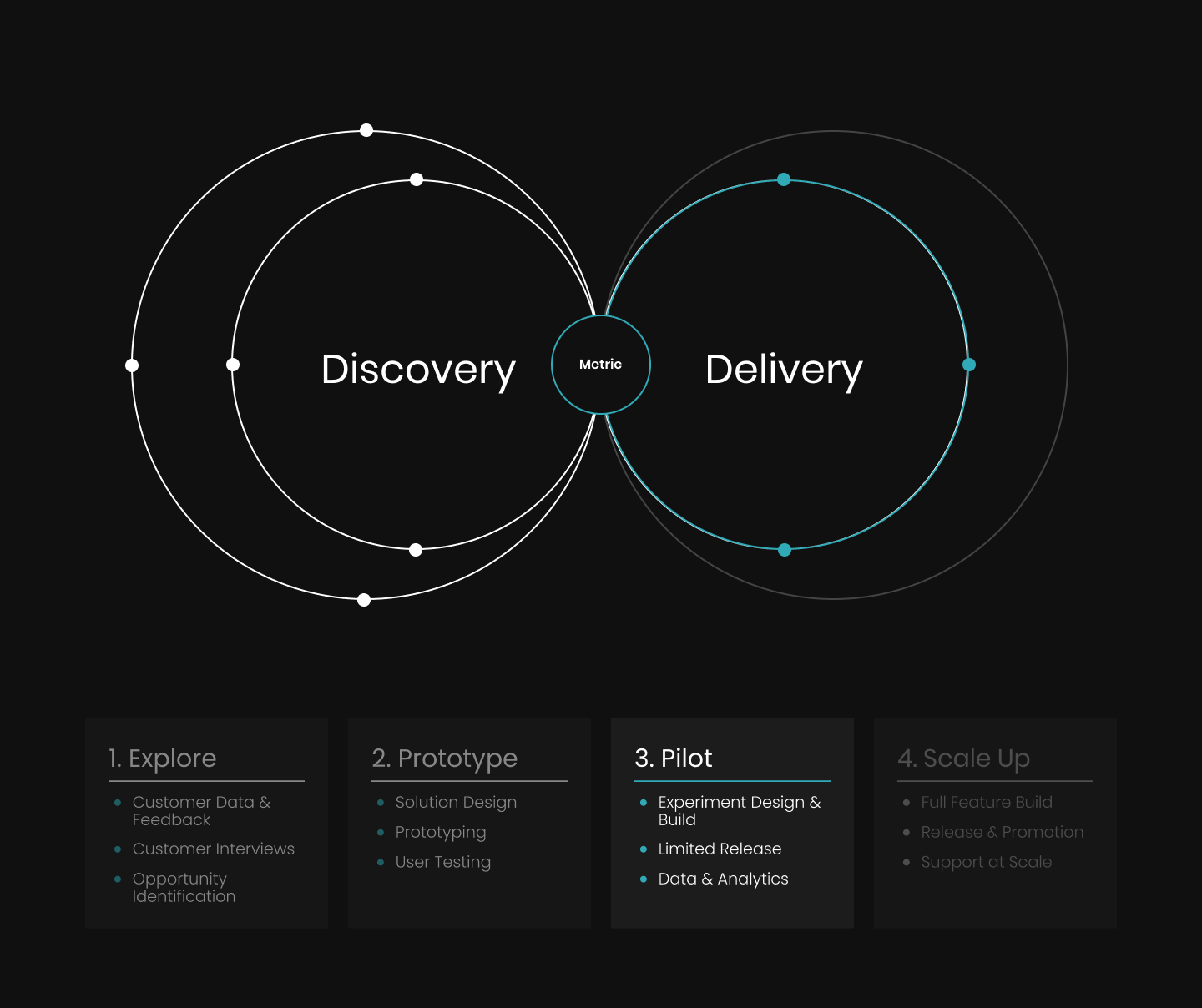
Endless discovery calls feel thorough, but they signal indecision. When you keep digging for information instead of moving toward a solution, prospects lose confidence. Each extra meeting pushes your close date further out.
Slow follow-ups and handoffs
A prospect shows interest on Monday. Your rep follows up on Thursday. That three day gap let competitors swoop in. Worse, when leads get passed between SDRs, AEs, and solution engineers with no coordination, buyers feel the friction and momentum dies.
The good news? Each of these problems has a fix. And none of them require you to discount.
Also Check: B2B Sales KPIs Every Revenue Team Should Track
🚀 Speed Comes From Qualification
From $397/mo LinkedIn outreach to pay-per-meeting email and 10–30 guaranteed calls/month, we remove friction before sales begins.
Typical B2B Sales Cycle Length & Benchmarks
So how long should your sales cycle actually take? It depends almost entirely on deal size and how many people need to say yes.
As a rough guide, based on recent benchmarking across B2B deal sizes:
Cycles have generally stretched over the last few years. Enterprise deals that closed in four to six months back in 2020 now often take six to twelve months, and mid-market cycles have crept from a 45-90 day range into a 60-120 day band.
A big driver is buying committee size, which has grown to six to ten stakeholders on average for deals above $100K, up from four to six a few years ago. More stakeholders don't just add time. They add unpredictability, since every added person is another calendar to align and another set of concerns to resolve.
Here's why the benchmark matters more than the number itself: comparing your cycle to a generic industry average tells you almost nothing. Compare it against your own deal size band and buying committee size instead.
If your $75K deals close in 45 days while similar deals typically take 90-120, you're already ahead of the market. If they're taking 200 days, that's not your market being slow. That's your process.
To set an internal target, pull your last 20-30 closed-won deals in a given tier and calculate the median, not the average. A handful of outlier enterprise deals will skew a mean and make your benchmark useless. Then track where time is actually being lost: stalled follow-up, stalled internal approval, or stalled qualification.
That's where the strategies below come in.
Why Discounting Rarely Speeds Up B2B Deals
When deals slow down, sales teams often reach for discounts. It feels like the fastest path forward. But here's what actually happens: you sacrifice margin without gaining speed.
Smart strategies to shorten sales cycle without sacrificing quality never start with lowering your price. Here's why discounting backfires:
Discounts attract the wrong buyers
Price shoppers aren't decision makers. They're tire kickers comparing quotes across vendors with no urgency to solve their problem. When you discount to win their attention, you fill your pipeline with prospects who'll drag out negotiations for another 10% off. These deals take longer and close at lower rates.
Price objections delay approvals
Think a discount will speed up internal approvals? It usually does the opposite. When you drop your price mid-deal, buyers wonder what else they can negotiate. Finance teams get suspicious about your real value. Suddenly you're in procurement hell answering questions about why your pricing changed, extending your sales cycle by weeks.
Lower trust and higher churn
Buyers who choose you because you're cheapest leave the moment someone undercuts you. They also demand more support, negotiate harder on renewals, and refer fewer customers. You've traded a healthy sales cycle for a problematic customer relationship that costs more than it generates.
Why confidence and clarity close faster than price cuts
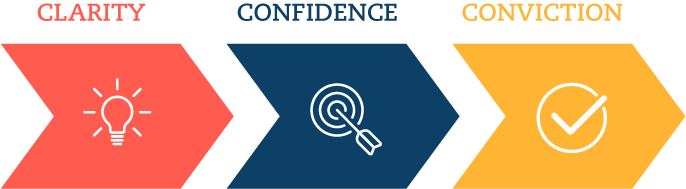
We've closed thousands of deals at full price by doing one thing: making the buying decision simple. When prospects clearly understand your value, see proof it works for companies like theirs, and know exactly what happens next, they move fast. Confidence eliminates delay. Discounts just create new objections.
The companies that consistently shorten sales cycle length focus on removing friction, not removing dollars from invoices.
Read More: Perfect B2B Sales Strategy to Close More Deals (Proven Methods)
What Actually Shortens a B2B Sales Cycle
If discounting doesn't work, what does? The companies that consistently shorten sales cycle length focus on five fundamentals that eliminate delay at every stage.
Lead quality over lead volume
Chasing 1,000 mediocre leads takes longer than closing 100 perfect fit prospects. When you target companies that match your ICP exactly, with the right revenue size, tech stack, and pain points, conversations move faster. These buyers already understand their problem. They just need to know you can solve it.
Know More: What “Good Lead Quality” Actually Means in B2B
Buying intent and timing
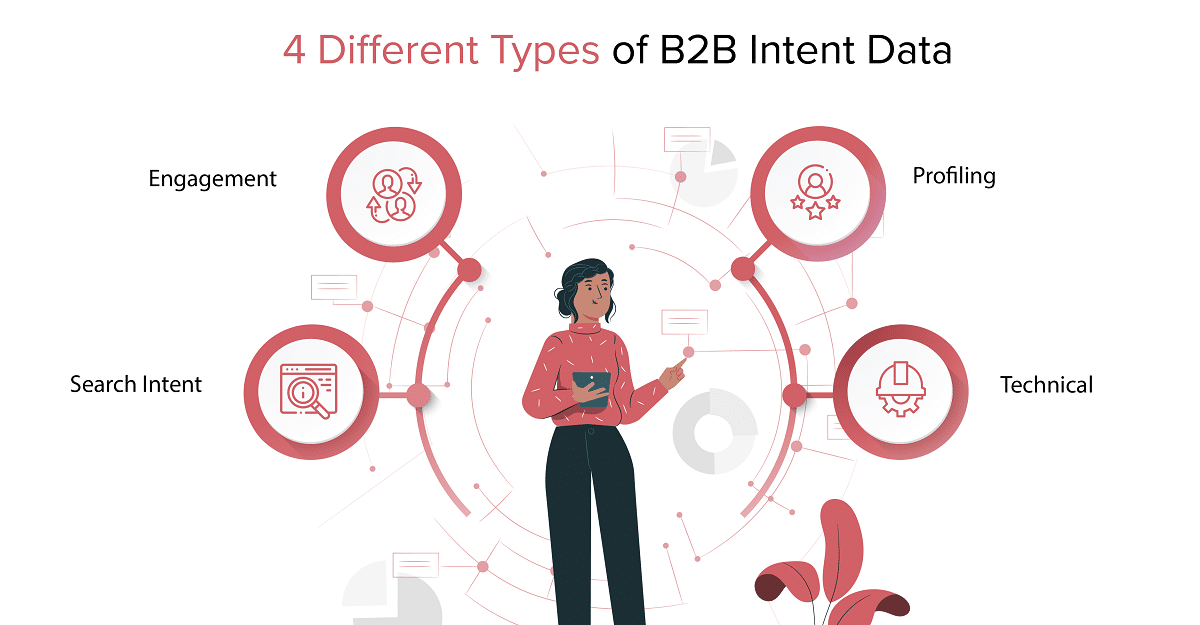
The fastest deals close when buyers are actively looking for solutions. Target companies showing intent signals like job postings for roles your product supports, recent funding announcements, technology changes, or leadership transitions.
These timing triggers mean budgets are allocated and stakeholders expect change. You're not convincing them they have a problem. You're showing up when they're ready to fix it.
Decision-maker access

Stop pitching analysts and coordinators. Get directly to VPs, directors, and C-level executives who control budgets and timelines. When you reach decision makers from your first message, you skip weeks of internal championing and political navigation.
Message clarity
Your outreach should answer one question immediately: why should this prospect care right now? Skip the generic introductions. Lead with the specific problem you solve for companies like theirs, proof you've done it before, and what happens next.
Clear messaging gets responses. Vague pitches get ignored or forwarded through endless internal discussions.
Speed of response and follow-up
When a prospect replies or books a call, your response time directly impacts close rates. Respond within an hour and you catch them while they're focused on the problem.
Wait a day and they've moved on to other priorities. Fast follow-ups signal that working with you will be smooth. Slow responses make buyers worry about future support and communication.
These five factors control your sales velocity more than any pricing strategy ever will.
Explore Further: B2B Sales KPIs Every Revenue Team Should Track
🔥 Close Faster With Better Leads
Cleverly delivers meeting-ready leads via LinkedIn, cold email, and cold calling - so sales starts with qualified buyers.
7 Proven Strategies to Shorten the B2B Sales Cycle
These shorten sales cycle effective outreach strategies eliminate delays at every stage of your process. Apply them in order for maximum impact.
Strategy 1: Tighten Your ICP to Eliminate Low-Intent Deals
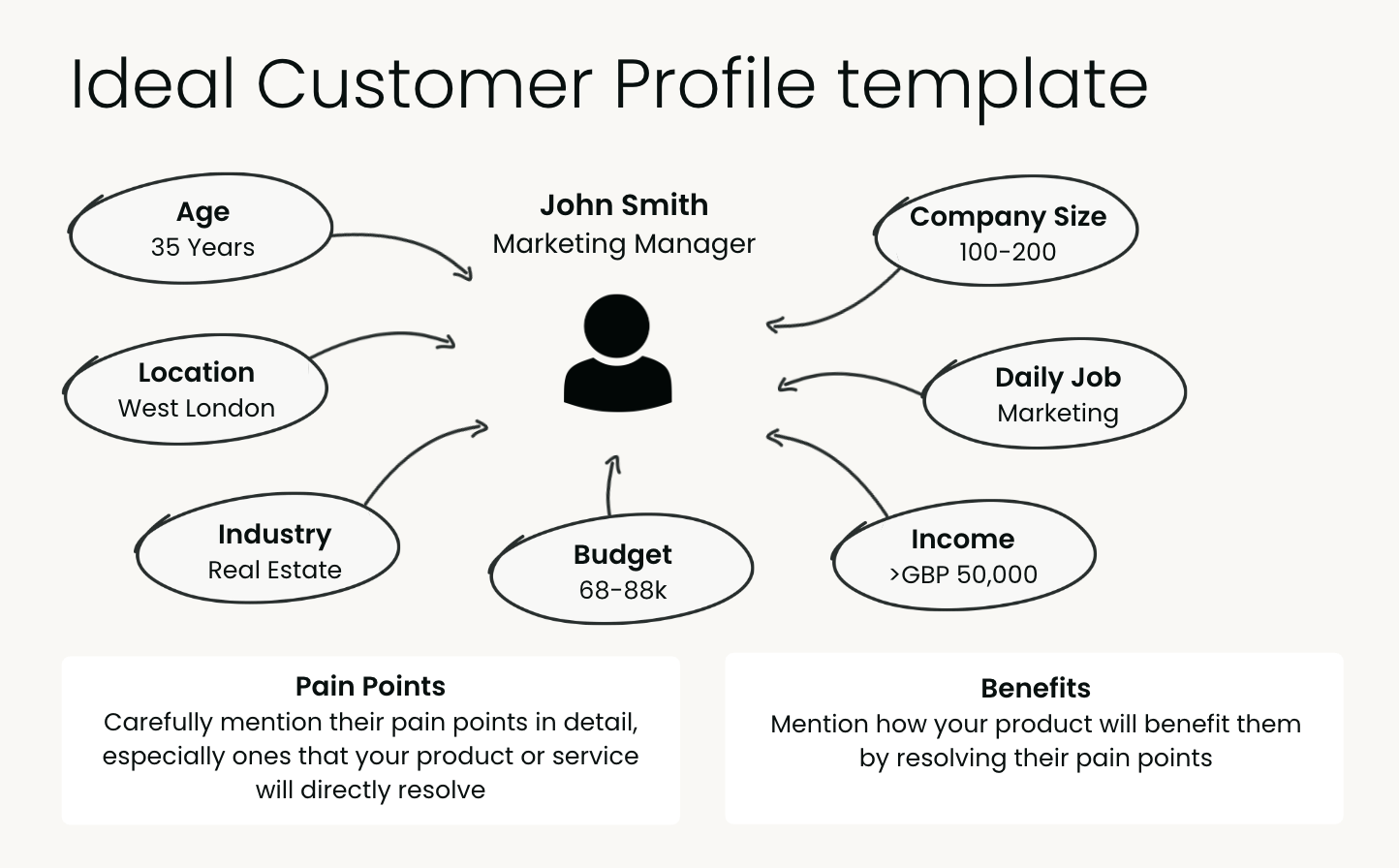
Firmographics, technographics, and trigger-based targeting
Start with company size, industry, and revenue range. Add technographics like current tools and integrations. Then layer in trigger events like funding rounds, leadership changes, or competitor churn. This combination identifies buyers who need your solution now, not someday.
Red flags that signal long sales cycles
Watch for companies in hiring freezes, recent platform migrations, or industries with slow procurement processes. If prospects match these patterns, they'll drag regardless of your pitch quality. Remove them from targeting.
Why fewer, better-fit leads close faster
100 perfect fit accounts will shorten sales cycle length more than 1,000 random prospects. Your reps spend time on conversations that progress instead of chasing deals that were never going anywhere.
Strategy 2: Reach Decision-Makers Earlier

Mapping buying committees upfront
Identify who influences, approves, and signs contracts before your first outreach. Target multiple stakeholders simultaneously instead of hoping your champion will do it for you.
Avoiding champion-only conversations
Champions help, but they can't close deals alone. When you only talk to one person, you're always one reorganization or priority shift away from a stalled deal.
How multi-threading speeds up decisions
Engaging multiple decision makers early means objections surface faster, budgets get confirmed sooner, and internal politics don't surprise you at contract stage. Our cold calling service connects you directly with VPs and C-level executives, skipping the gatekeeper maze entirely.
Strategy 3: Lead With the Problem, Not the Product
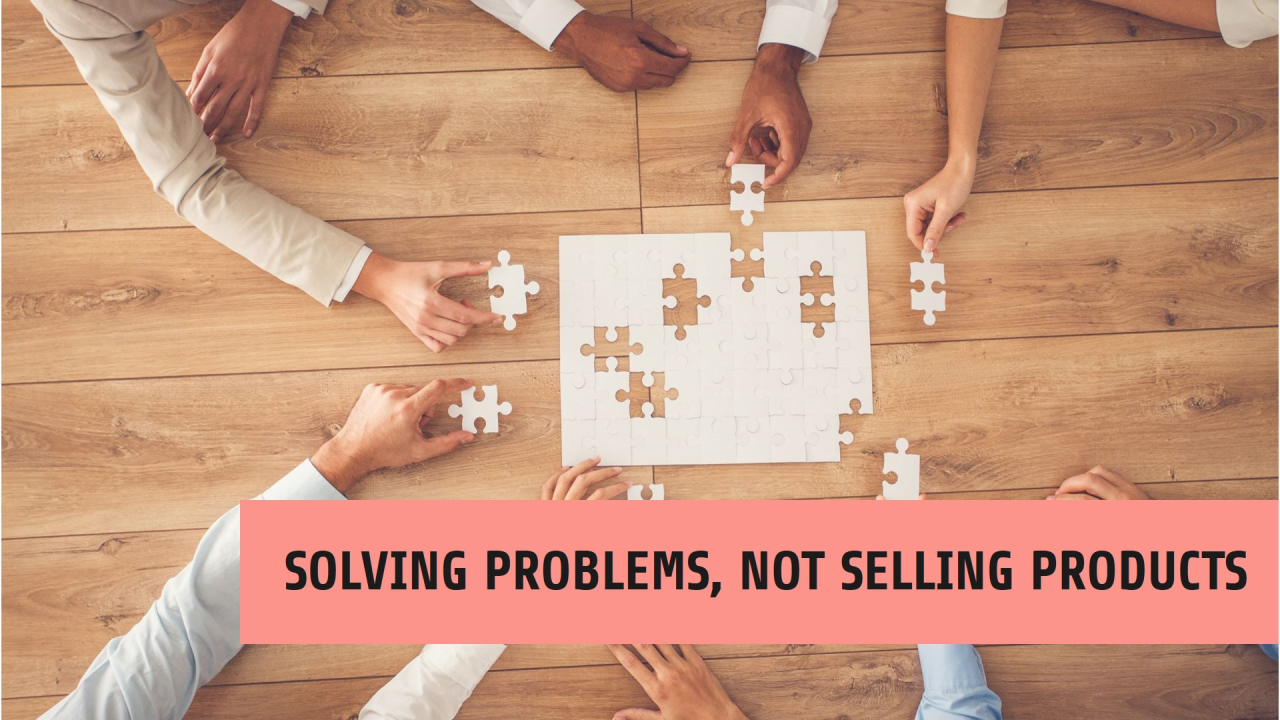
Framing outreach around urgent pain
Your first message should identify the exact problem your prospect is facing right now. Generic value propositions get ignored. Specific pain points get responses.
Quantifying business impact
Don't say you improve efficiency. Say you cut manual data entry by 15 hours per week. Numbers make problems feel urgent and solutions feel concrete.
Why problem clarity accelerates internal buy-in
When your prospect can clearly explain to their team what problem you solve and what it costs them not to fix it, approvals happen faster. Vague pitches create internal debates that stretch for months.
Strategy 4: Use Faster Feedback Outreach Channels
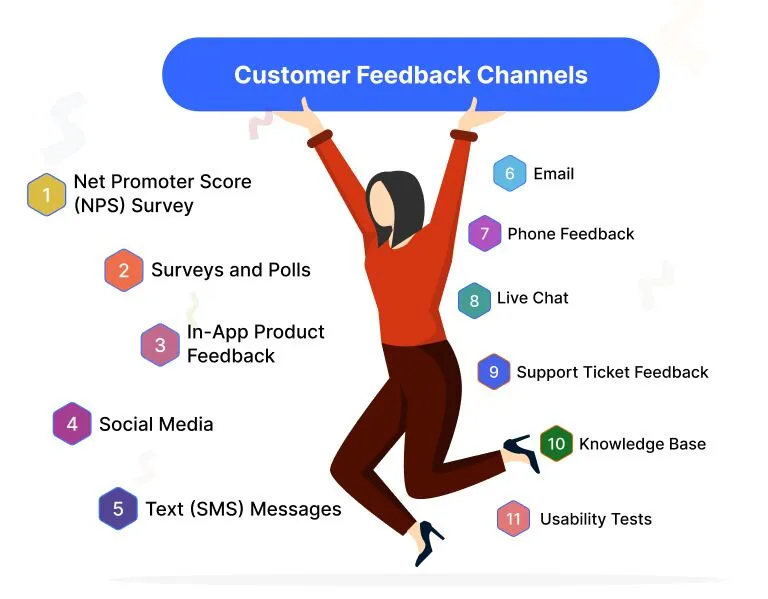
Why outbound shortens cycles vs inbound
Outbound reaches buyers when you choose, not when they eventually find you. You control timing and messaging, which means you can target high intent moments instead of waiting for organic discovery.
Cold email vs LinkedIn vs cold calling for speed
Cold email works for volume. LinkedIn outreach builds relationships. But cold calling gets real-time feedback and closes gaps instantly. When you need to shorten sales cycle length dramatically, conversations beat messages. At Cleverly, our $5M cold calling system books 10-30 qualified sales calls every month with no-accent appointment setters, breakthrough call scripts, and guaranteed results.
Compare: LinkedIn vs Cold Email vs Cold Calling
Importance of real-time conversations
Async communication adds days between each exchange. Phone and video calls surface objections, answer questions, and move deals forward in minutes instead of weeks.
Strategy 5: Remove Friction From Early Sales Conversations
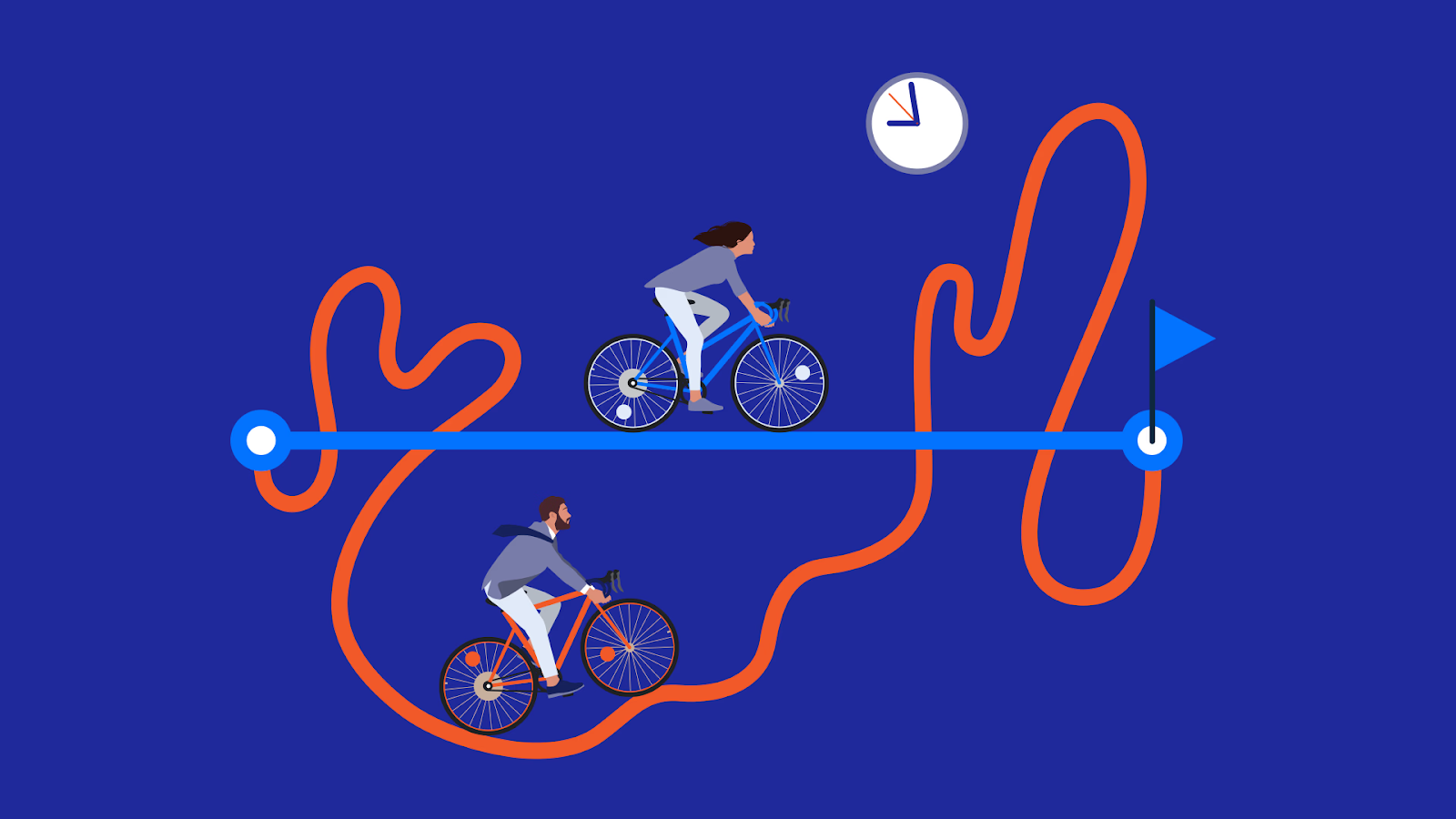
Setting expectations on the first call
Tell prospects exactly what happens next, how long each stage takes, and what you need from them. Uncertainty creates delay. Clear processes create momentum.
Pre-answering common objections
Send case studies, ROI calculators, and implementation timelines before prospects ask. When objections get resolved proactively, deals don't stall.
Sharing proof points early
Testimonials from similar companies eliminate "will this work for us" doubts immediately. Social proof speeds up internal approvals because decision makers can point to comparable success stories.
Avoiding unnecessary demo steps
Not every prospect needs a full technical demo. Match your process to their buying stage. Early conversations should qualify fit, not showcase every feature.
Strategy 6: Improve Speed-to-Lead and Follow-Up Discipline

Why response speed beats persistence
Responding within one hour increases conversion rates by 7x compared to waiting just two hours. Fast replies catch prospects while they're focused on the problem. Slow responses let competitors fill the gap.
Follow-up timing benchmarks
Follow up within 24 hours after any interaction. For high intent leads, same day follow-up is non-negotiable. Every delay gives buyers time to deprioritize or explore alternatives.
How slow follow-ups add weeks to the cycle
A three day gap between touchpoints can stretch a 30 day sales cycle to 60 days. Momentum dies in silence. Consistent communication keeps deals progressing.
Strategy 7: Align Lead Generation With Sales Qualification
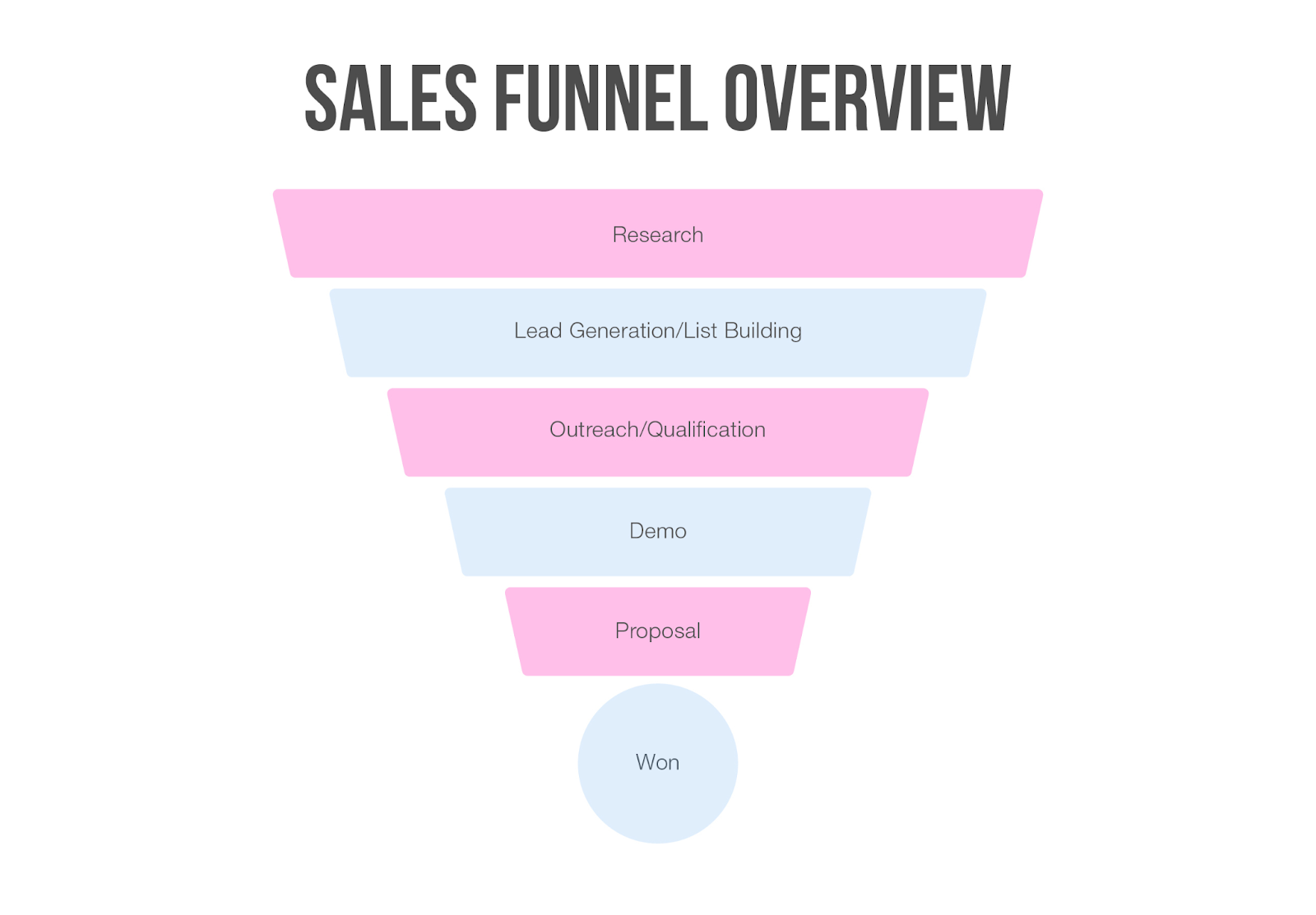
Why misaligned lead gen bloats pipelines
When marketing or SDRs pass unqualified leads to AEs, reps waste time on conversations that never close. Bloated pipelines hide real problems and make forecasting impossible.
Passing only sales-ready conversations
Set clear handoff criteria. Qualified leads should have confirmed pain, budget awareness, decision maker access, and realistic timeline. Anything less belongs in nurture, not active pipeline. Our LinkedIn and cold email services at Cleverly only send you meeting-ready leads, so your sales team focuses on closing instead of qualifying.
Reducing stalled and maybe later deals
Tight qualification upfront means fewer deals that sit in your pipeline for months marked as "thinking about it." Clean pipelines close faster because reps focus energy on real opportunities.
Strategy 8: Use Account-Based Marketing to Compress Multi-Stakeholder Deals
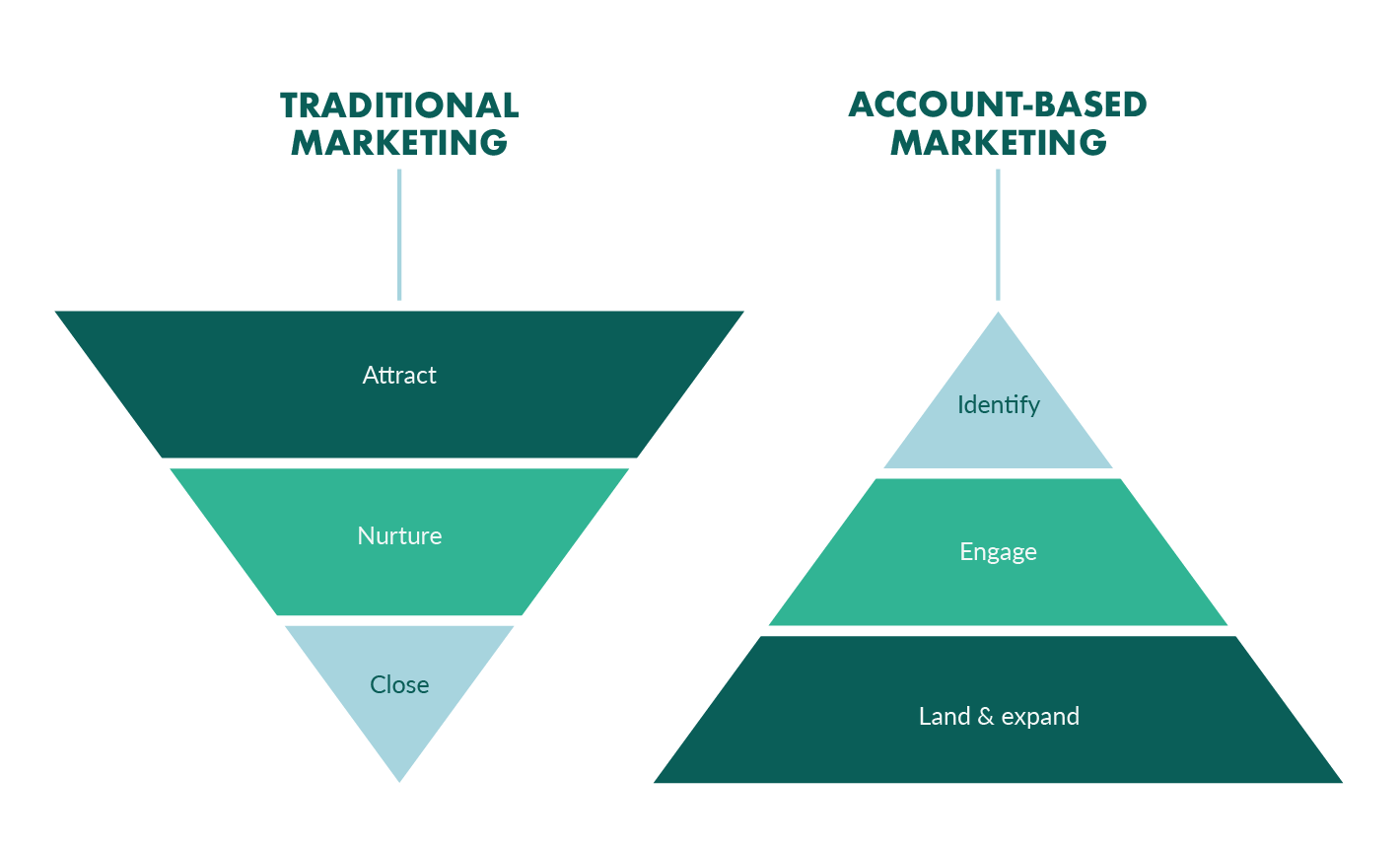
What ABM actually means for sales cycle length
Account-based marketing means treating a handful of high-value accounts like individual markets instead of running one generic campaign across your whole ICP. You build a target account list, then coordinate personalized outreach to every stakeholder inside that account at the same time.
Personalized campaigns per target account
Generic outreach makes each stakeholder start from scratch. Personalized ABM campaigns speak to what each person on the buying committee actually cares about. The technical evaluator gets implementation detail. The CFO gets the ROI math. The VP gets the strategic case. Nobody has to translate your pitch for someone else internally.
Aligning sales and marketing on named accounts
ABM only works when sales and marketing agree on the same target list and move in sync. Marketing builds awareness and content for the account. Sales follows with direct outreach to the people on that list. When both teams work the same account at the same time, the prospect sees one coordinated company, not two disconnected departments.
Why ABM speeds up multi-stakeholder buy-in
Coordinated sales and marketing touchpoints move prospects through the pipeline far faster than either channel working alone, and companies running ABM report meaningfully faster sales cycles on average compared to generic outbound. That speed comes from removing the lag between stakeholders.
Instead of your champion explaining your value to five other people over three weeks, each of those five people has already seen relevant, personalized content before your rep ever gets on a call with them.
For deals with six or more decision makers, which is now the norm at the enterprise level, ABM isn't a nice-to-have. It's the only practical way to get everyone moving at the same speed.
Strategy 9: Use CRM and Automation to Remove Manual Delays
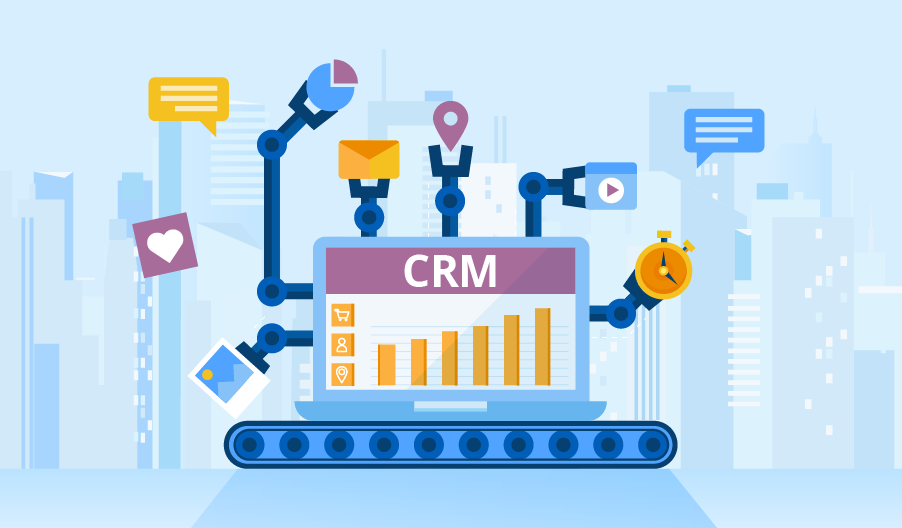
Role of CRM in tracking deal stage and bottlenecks
Your CRM should tell you exactly where every deal is stuck, not just where it started. Set up stage-by-stage tracking so you can see how long deals sit in qualifying versus negotiation. If most of your deals bottleneck at the same stage, that's not bad luck. That's a process problem you can fix.
Automating follow-ups and data entry
Manual data entry eats hours reps could spend selling instead. Businesses that implement CRM technology see an average 29% increase in sales revenue and a 34% boost in sales productivity, largely because automated logging, follow-up sequences, and reminders replace the busywork that used to fall on reps. When a prospect goes quiet for three days, automation flags it instead of relying on someone to remember.
Lead scoring to prioritize high-intent deals
Not every open deal deserves the same attention today. Lead scoring ranks your pipeline by fit and intent, so reps work the accounts most likely to close first instead of splitting time evenly across everything sitting in the CRM. A company that just visited your pricing page three times should get a call before one that downloaded an ebook six months ago and went quiet.
Forecasting accuracy from structured pipeline data
Companies that implement CRM technology also see up to 42% improvement in sales forecasting accuracy. Clean, structured pipeline data makes it obvious which deals are actually progressing and which ones are stalled and quietly inflating your numbers. Fewer surprises at quarter end means less pressure to discount just to hit a target.
CRM automation alone tends to shorten sales cycles by roughly 8-14% in most benchmarking studies, without a single change to pricing or positioning. That's a meaningful chunk of time recovered just from removing manual delay.
Read More: Sales Enablement Strategy
How Cleverly Helps B2B Teams Close Deals Faster
As a lead generation agency that's generated $312 million in pipeline for over 10,000 clients, we know exactly what it takes to shorten sales cycle length without touching your pricing.
We don't send you random leads. We target high-intent companies that match your ICP with active buying signals, so your sales team only talks to prospects ready to move now.
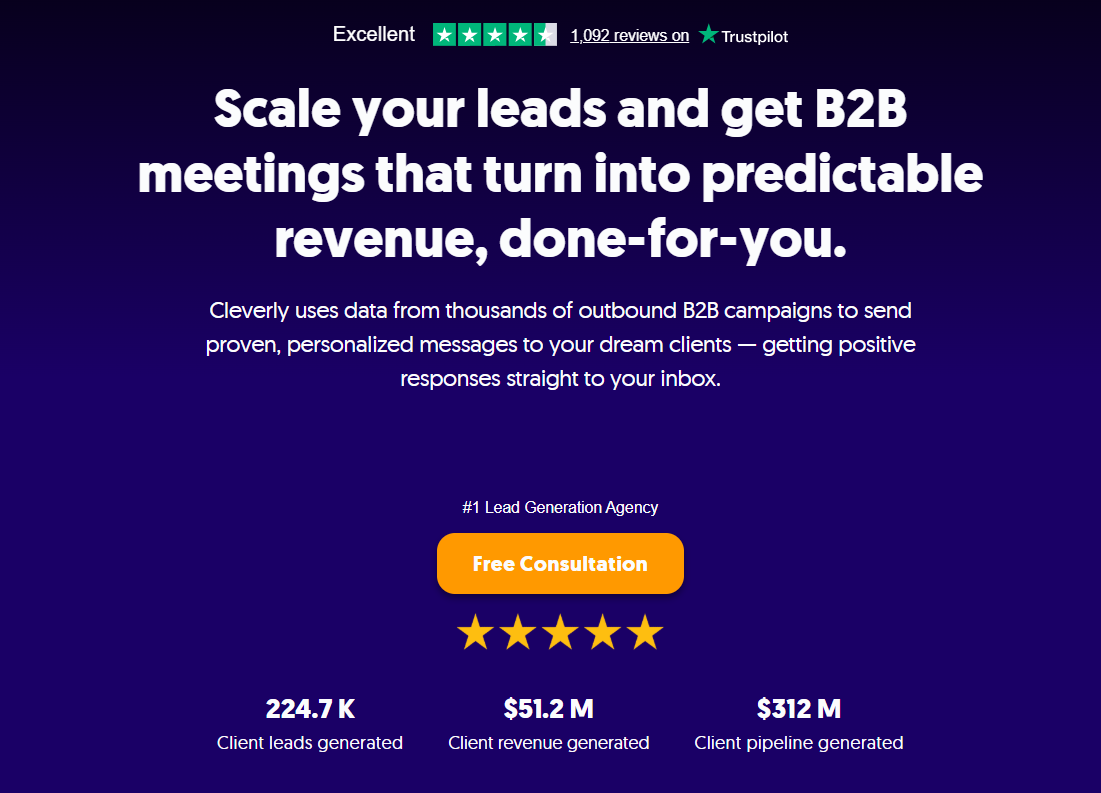
Our outreach goes straight to decision makers, VPs, directors, and C-level executives who can actually sign contracts. No more months wasted on champions who can't close deals.
You choose the channel that fits your sales motion.
- Our LinkedIn services start at just $397/month.
- Cold email campaigns work on a pay-per-meeting-ready-lead model, so you only pay for results.
- Our $5M cold calling system includes no-accent appointment setters, breakthrough scripts, data, tech, power dialer, and a guarantee of 10-30 qualified sales calls every month.
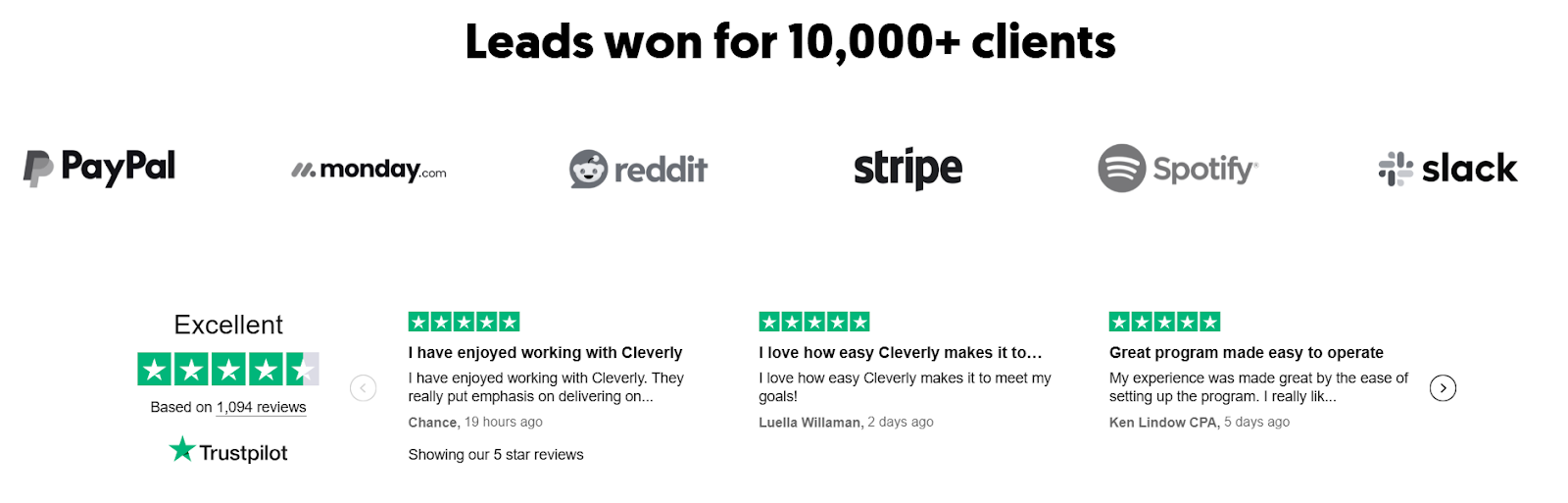
We handle conversations from first touch to sales-ready qualification. Your AEs only jump in when prospects are vetted, interested, and ready to progress. That means your team spends time closing deals instead of chasing tire kickers.
We've helped companies like Amazon, Google, Uber, PayPal, Slack, and Spotify build pipeline that actually converts.
No long contracts. No wasted budget on unqualified activity. Just meeting-ready opportunities that close faster at full price.
Ready to fill your calendar with qualified sales calls?
🔥 Book a strategy session!

Conclusion
You don't need to cut prices to shorten sales cycle length. You need to fix what's actually slowing deals down.
Shorter sales cycles come from better inputs, not discounts. When you target high-intent buyers who match your ICP, reach decision makers directly, and respond fast with clear messaging, deals move at the speed they should. Intent, relevance, and speed matter more than price ever will.
The fastest way to close faster is fixing the top of your funnel. Stop filling your pipeline with low-quality leads that were never going to close. Start conversations with the right people at the right time with the right message. Everything else falls into place.
Shorten sales cycle length by doing the work that matters. Your pricing stays intact. Your margins stay healthy. And your team finally hits revenue goals without the endless grind.
Frequently Asked Questions
Free Resource
How to Scale a Profitable Cold Call System
Get the complete guide — download it instantly now.
Free Ebook
Download the Free Guide
Enter your details to get instant access.
You're all set! 🎉
Your ebook is downloading now.
Click below if the download didn't start automatically.