

Table of Contents
What Is B2B Demand Generation?
Why Traditional Demand Gen Is Broken in 2026
How to Build a B2B Demand Generation Strategy That Works
B2B Demand Generation Strategies That Actually Work
Best AI-Driven Demand Generation Methods in 2026
How Cleverly Supports B2B Demand Generation with Outbound
Conclusion
Frequently Asked Questions
Modified On :
September 18, 2026
Key Takeaways
- Demand gen in 2026 isn't a top-of-funnel checkbox. It has to work across the entire buyer journey, because most of that journey now happens before anyone talks to your sales team.
- The old MQL scoreboard is misleading. Volume without pipeline conversion just means you're feeding sales reps a list of names who were never going to buy.
- AI-mediated research changes the game. If your content and brand aren't showing up in AI-generated answers, you're invisible during the exact window where buyers form their shortlist.
- Buying committees have gotten bigger and more fragmented, so single-persona campaigns miss most of the people who actually influence the deal.
- Outbound and demand gen aren't competing strategies. The best programs use outbound to accelerate awareness that content and SEO already built.
Here's the uncomfortable part of B2B buying in 2026: by the time a prospect fills out a form or takes a call, the decision is mostly already made.
Recent research from 6sense puts the point of first contact at roughly 61% through the buyer's journey, and buyers who've already ranked a preferred vendor stick with that pick around 80% of the time. Gartner's numbers are even starker, showing buyers complete up to 80% of their evaluation without ever picking up the phone.
That's the whole problem with treating B2B demand generation strategy as a bottom-of-funnel lead capture exercise. If you're only showing up once someone's ready to buy, you've already missed the part of the process where the decision got made.
This guide breaks down what's actually working in demand gen right now: the frameworks, the channels, the AI-driven tactics reshaping visibility, and how to build a system that compounds instead of resetting every quarter.
What Is B2B Demand Generation?
Demand generation is a full-funnel marketing approach built to create awareness, build genuine interest, and nurture buying intent, all with the end goal of generating qualified pipeline for sales. It's not a single campaign or channel. It's the connective layer between "nobody's heard of you" and "we're ready to talk."
The distinction that matters most: demand gen builds market awareness at scale, while lead generation captures people who are already actively in-market. You need both, but they're not interchangeable.
Demand gen also has to work across the entire buying committee, not just the person who eventually fills out a form. That means speaking to the technical evaluator, the budget holder, the end user, and the executive sponsor, often in the same content and the same campaign.
Demand Generation vs. Lead Generation
Think of it this way: demand gen casts a wide net and builds the market's understanding of a category. Lead gen narrows that funnel down to people showing active buying signals right now. One feeds the other.
Without demand gen, your lead gen motion runs dry. Without lead gen, your demand gen never turns into revenue.
🚀 Demand Creates Interest. Outbound Creates Meetings.
Our LinkedIn, cold email, and cold calling campaigns generate 15–30 qualified meetings every month with your ideal buyers.
Why Traditional Demand Gen Is Broken in 2026
The MQL model is failing for a simple reason: volume doesn't predict revenue. Chasing form fills produces a lot of names that were never going to close, and MQL-to-SQL conversion still averages around 13% industry-wide. Meanwhile, teams are drowning in leads sales won't work.
A few forces are breaking the old playbook at the same time:
- AI-mediated research is reshaping discovery. Buyers are asking ChatGPT, Perplexity, and AI Overviews for vendor shortlists before they ever run a traditional search. If you're not cited in those answers, you don't exist during early research.
- Generic content stopped building trust. Original data, real opinions, and practitioner-level detail win. Recycled "what is X" content gets ignored.
- Buying committees have grown. Deals now regularly involve 6 to 10 stakeholders, sometimes more on complex purchases. Targeting one persona misses most of the room.
- The pre-sale phase is where deals get decided. Once a buyer has ranked a shortlist, that preference is sticky. Showing up late means fighting an uphill battle against a decision that's already been made.
What's replacing the old model: account-level scoring instead of individual MQLs, multi-channel presence instead of single-channel campaigns, and intent-led prioritization instead of "spray and see what sticks."
How to Build a B2B Demand Generation Strategy That Works
Demand gen success comes from a documented strategy, not a pile of disconnected campaigns. Teams with a written strategy consistently outperform teams improvising quarter to quarter. Here's a four-step framework that holds up.
Step 1: Define Your ICP and Buying Committee
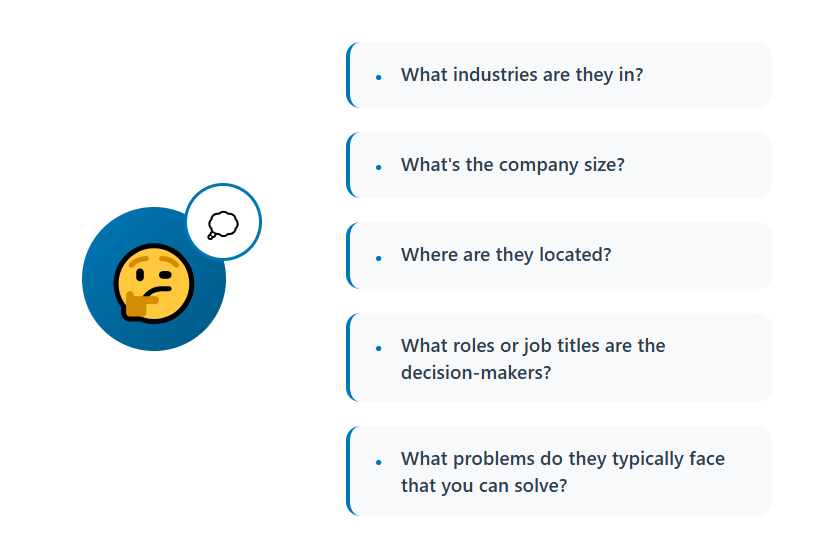
Start with the Ideal Customer Profile: company size, industry, growth stage, tech stack, and revenue range. Then go a level deeper and map the buying committee itself. Who initiates the search for a solution? Who influences it? Who signs off? Who actually uses the product day to day?
Each of those roles cares about something different. A technical buyer wants integration details. A budget holder wants ROI math. Messaging that treats them the same way loses both.
Step 2: Map Demand Gen to the Full Buyer Journey

Your content and campaigns need to show up at every stage, not just the bottom:
- TOFU: broad educational content, blogs, social posts, video, podcasts
- MOFU: comparison content, webinars, case studies, intent-based retargeting
- BOFU: demos, ROI calculators, proof assets, direct outbound sequences
The goal is simple: be present and credible at every stage, so by the time a buyer is ready to talk, you're already on the shortlist instead of trying to get on it.
Step 3: Choose Core Demand Gen Channels Strategically
Don't spread thin across every channel available. Pick two or three primary channels based on where your ICP actually spends time.
In 2026, that shortlist usually includes LinkedIn, organic search, email, webinars, and outbound. Layer intent data on top so you're prioritizing accounts already showing buying signals, not guessing.
Step 4: Set Metrics That Connect to Revenue
MQL counts don't tell you much on their own. Track pipeline influenced, pipeline created, deal velocity, and win rate by channel instead. Useful metrics include account penetration rate, number of engaged accounts, and time to pipeline.
Most importantly, get marketing and sales aligned on one shared definition of "pipeline." Disagreement here quietly kills more demand gen programs than any tactic ever will.
📈 Turn Demand Into Revenue—Not Just Traffic
With 53,000+ meetings booked and $312M+ in pipeline generated, Cleverly helps 10,000+ businesses convert market demand into predictable sales opportunities.
B2B Demand Generation Strategies That Actually Work
Strategy is the blueprint. Here's what's actually producing pipeline right now.
Content Marketing: Build Authority Before Buyers Are Ready

Content marketing remains the channel most B2B marketers rate as effective, with 83% pointing to it as their top demand gen driver. But volume isn't the advantage anymore. Specificity is.
Original research, data-backed frameworks, and genuinely opinionated content outperform generic explainer posts every time. The formats doing the heaviest lifting right now: data studies, comparison guides, practical playbooks, and expert roundups.
Distribution matters just as much as creation. Publishing great content where your buyers actually spend time beats publishing more content everywhere.
SEO and AI Overview Optimization

Organic search is still used by roughly 67% of B2B demand gen teams, but the mechanics have changed. Ranking in AI Overviews and getting cited by LLMs now matters as much as classic SERP position.
That means structuring content around clear entities and answerable questions, so AI models can pull from it directly. Focus on informational and commercial-intent queries that map to where buyers actually are in their research, and lean into long-tail, high-specificity terms. They convert better than broad, generic keywords ever did.
For smaller businesses building their AI stack, resources covering the best AI tools for small businesses can also help identify practical solutions for research, content creation, and marketing.
LinkedIn Paid Advertising and Organic Presence

LinkedIn remains the strongest B2B paid channel for precision targeting by job title, seniority, industry, and company size.
- Paid: Sponsored Content, Lead Gen Forms, and Conversation Ads work well for account-level awareness and retargeting.
- Organic: thought leadership from company pages and employee voices builds long-term brand recall that paid alone can't buy.
AI-driven bidding can meaningfully lower cost per click when it's configured with real audience constraints, not left fully automated.
One of the highest-value plays here: retarget website visitors and video viewers with content built for the middle and bottom of the funnel, not more top-of-funnel awareness they've already seen.
Webinars and Virtual Events

Webinars consistently rank among the highest-converting demand gen activities because live interaction builds trust faster than static content. The structure that works: educational content first, product-adjacent insight second, customer story third.
Skip the product pitch in a pure demand gen webinar. It undercuts the trust you're trying to build.
Every webinar should get repurposed aggressively into clips, blog posts, and email sequences. For account-based plays, smaller virtual roundtables with target accounts outperform big broadcast-style events.
Email Marketing and Nurture Automation
Email still earns its place as a top demand gen channel, but only when it's used to educate, not just promote. Nurture sequences should map to where the buyer actually is: early-stage content for people just getting oriented, social proof and case studies for people further along.
Personalization needs to go beyond first names. Segment by industry, ICP tier, and actual engagement behavior.
Triggered workflows, like a sequence that fires when someone visits your pricing page or downloads a specific guide, accelerate pipeline in a way generic blasts never will.
Outbound Lead Generation as a Demand Amplifier

Outbound doesn't compete with demand gen. It accelerates it. Once demand gen has built awareness inside your ICP, outbound proactively reaches the accounts already showing signals, whether that's re-engaging cold inbound leads or breaking into a new vertical.
The channels that matter here are LinkedIn outreach, cold email, cold calling, and appointment setting, each suited to a different stage and persona. Outbound performs best when it's tied directly to demand gen content.
Referencing a specific piece of content the prospect actually engaged with in your outreach changes the entire tone of that first message.
Video Content and Thought Leadership
Short-form video, especially on LinkedIn and YouTube Shorts, is the fastest-growing B2B demand gen format right now. Thought leadership video does double duty: it builds individual brand equity for founders and sales leaders while driving inbound trust for the company as a whole.
Formats worth investing in: quick how-to explainers, direct POV takes, behind-the-scenes looks, and customer interviews. Long-form webinar content should get cut down into 60 to 90 second clips for steady, always-on social distribution.
Intent-Based Targeting and Account Prioritization

Intent data tells you which accounts are actively researching your category before your competitors even notice them. Sources break down into first-party (website visits, content downloads), second-party (review site activity), and third-party (platforms like Bombora and 6sense).
Use that data to time your outbound sequences, trigger the right nurture enrollments, and prioritize which accounts sales should follow up on first.
Accounts showing high intent convert meaningfully faster than cold accounts, which makes intent data one of the highest-leverage inputs in a modern demand gen stack.
Best AI-Driven Demand Generation Methods in 2026
AI has changed how demand gen teams research, create, target, and optimize, often all four at once.
Predictive Intent Scoring
AI models now analyze behavioral patterns across your CRM, website, and third-party data to score accounts by buying likelihood. This replaces static, rule-based MQL scoring with dynamic scores that update continuously as behavior changes.
Tools like 6sense, Demandbase, ZoomInfo, and MadKudu are built specifically for this.
AI-Powered Content Personalization
Dynamic personalization now adjusts website and email experiences based on a visitor's company, industry, and stage in the journey. AI can recommend the next-best piece of content based on prior engagement, which shortens the nurture timeline considerably.
It also lets you localize messaging for different verticals without building entirely separate campaigns from scratch.
Generative AI for Content Scaling and Testing
AI genuinely speeds up production across blog posts, social copy, email variants, and ad creative, especially for generating multiple headline and copy variants to test at scale.
The catch: AI-generated content still needs human editing, original data, and a real point of view to stand out in 2026. Original insight beats generic AI output in both search rankings and reader trust, every time.
AI-Optimized Paid Media Bidding
AI bidding algorithms, including Google Performance Max and LinkedIn's automated bidding, can reduce cost per click meaningfully when they're set up correctly. The important part is guardrails: set audience constraints and negative targeting rather than handing full control to automation.
Use AI to spot your top-performing audiences and shift budget toward them dynamically as conversion signals come in.
How to Measure B2B Demand Generation Performance
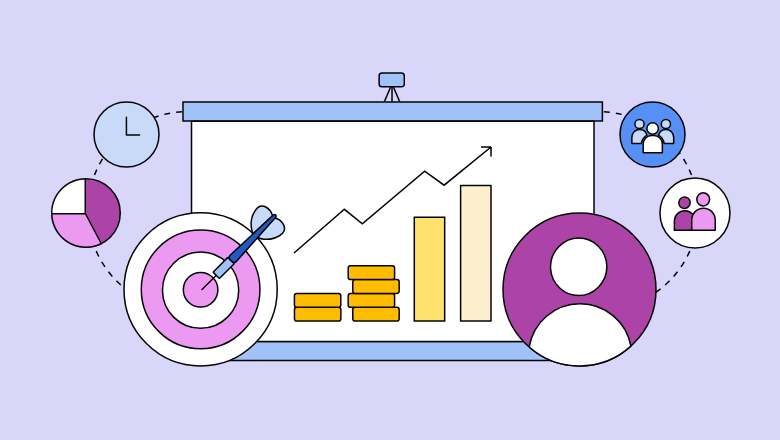
The core KPIs that actually matter: pipeline created, pipeline influenced, cost per pipeline dollar, account penetration rate, and sales cycle velocity.
Channel-specific measurement matters too. Look at organic traffic quality, not just volume. Track email engagement by segment rather than blanket open rates. Watch LinkedIn CTR and follower growth as leading indicators, not vanity metrics.
Use a multi-touch attribution model instead of first-touch or last-touch. Demand gen contributes across the entire journey, and single-touch models will always undercount its actual impact.
Just as important: get marketing and sales aligned on one shared definition of "pipeline" before you start reporting numbers, or you'll spend more time arguing about the dashboard than acting on it.
A reasonable review cadence: weekly for channel performance, monthly for pipeline contribution, quarterly for a full strategy review.
How Cleverly Supports B2B Demand Generation with Outbound
Demand gen fills the top of the funnel, but awareness alone doesn't book meetings. That's where outbound comes in, and it's where we focus at Cleverly.
Once your demand gen engine has identified which accounts are engaging, whether that's website visitors, content downloaders, or accounts showing intent signals, our team runs LinkedIn outreach, cold email, and cold calling campaigns built to turn that awareness into actual conversations.
We've helped 10,000+ clients generate leads with companies like Amazon, Google, Uber, and Slack, and that work has produced $312M in client pipeline to date.

The process is built around real SDR execution, not just automated sequences. Messaging is personalized against the specific accounts your demand gen data flags, so outreach references what a prospect has actually engaged with instead of reading like a cold, generic pitch.
For teams that don't want to build and manage that infrastructure internally, a done-for-you outbound program handles targeting, copywriting, deliverability, and follow-up end to end.
If you're generating demand but not converting enough of it into pipeline, that gap between awareness and booked meetings is exactly what a LinkedIn outreach and cold email program is built to close.
Book a free consultation here to know more!
Conclusion
Demand gen in 2026 isn't a set of isolated campaigns. It's a compounding system where content, SEO, paid, outbound, and intent data all reinforce each other over time. The teams pulling ahead aren't the ones spending the most.
They're the ones building for AI-mediated discovery, treating the entire buying committee as the audience, and measuring pipeline instead of chasing MQL volume.
If you're not sure where your program stands, audit your current mix against the strategies above and find the one or two gaps that matter most. That's usually a better use of a quarter than adding another channel to an already scattered plan.
Frequently Asked Questions
Free Resource
How to Scale a Profitable Cold Call System
Get the complete guide — download it instantly now.
Free Ebook
Download the Free Guide
Enter your details to get instant access.
You're all set! 🎉
Your ebook is downloading now.
Click below if the download didn't start automatically.


