Table of Contents
What Is Sales and Marketing Alignment?
Why Sales and Marketing Alignment Matters in B2B
Sales vs Marketing Goals — Where Misalignment Starts
The Core Pillars of Sales and Marketing Alignment
How to Align Sales and Marketing Step by Step
What Sales Needs From Marketing to Close More Deals
What Marketing Needs From Sales to Improve Lead Quality
How Cleverly Helps Align Sales and Marketing for B2B Growth
Conclusion
Frequently Asked Questions
Modified On :
September 2, 2026
Key Takeaways
- Sales and marketing alignment means both teams share the same ICP, lead definitions, messaging, and revenue goals.
- Misalignment costs you pipeline quality, longer sales cycles, and wasted budget on leads that never convert.
- Alignment requires seven pillars: shared ICP, unified messaging, agreed lead definitions, a documented SLA between teams, shared metrics, a connected tech stack, and continuous feedback loops.
- Sales needs context and consistent messaging from marketing; marketing needs honest feedback and buyer intelligence from sales.
- True alignment isn't a one-time project but an operating system where both teams win or lose together based on revenue, not departmental metrics.
Your sales team thinks marketing sends garbage leads. Your marketing team thinks sales can't close a deal if their life depended on it.
And meanwhile, your competitors who figured out sales and marketing alignment are booking meetings while you're stuck in Slack arguments about lead quality.
We've worked with over 10,000 B2B companies, and the pattern is always the same.
The businesses crushing their revenue goals aren't necessarily smarter or better funded. They just got their sales and marketing teams rowing in the same direction.
Sales and marketing alignment isn't about forcing everyone to be best friends or scheduling more meetings nobody wants to attend. It's about building a system where marketing generates leads that sales actually wants to call, and sales provides feedback that makes marketing better at their job.
In this guide, we're breaking down exactly how modern B2B teams align these two critical functions without the fluff, buzzwords, or theoretical frameworks that look great on LinkedIn but fail in real life.
What Is Sales and Marketing Alignment?
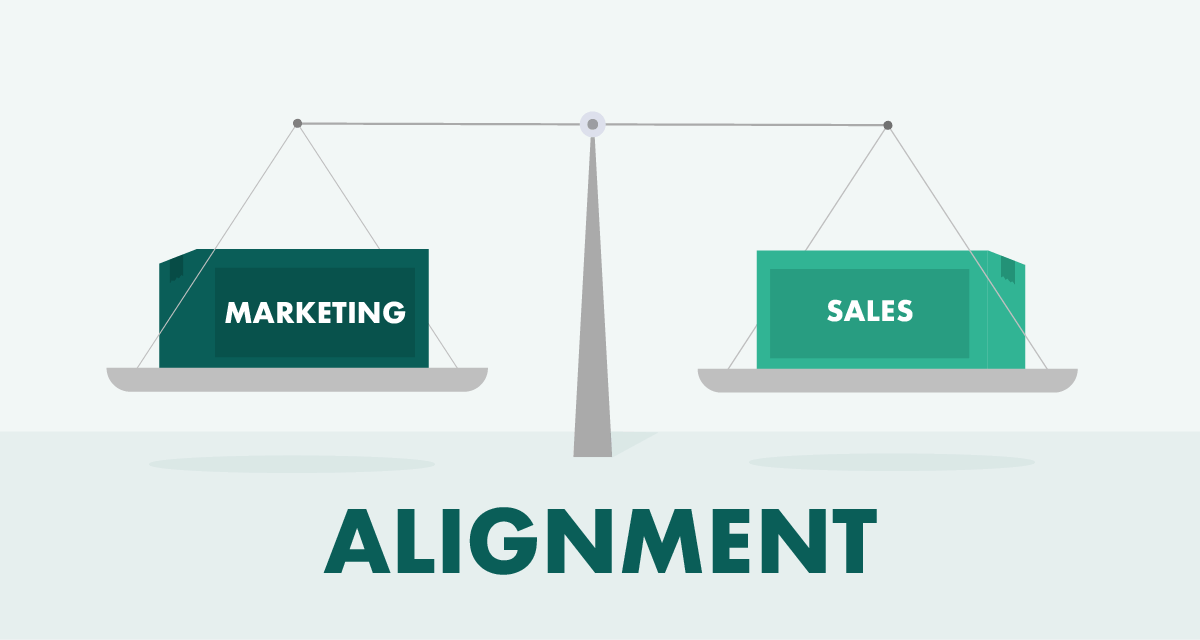
B2B marketing and sales alignment means both teams share the same goals, target the same buyer, and use the same definition of a qualified lead. That's it. No complicated frameworks needed.
Here's what real alignment looks like in practice:
- Marketing builds campaigns around the exact pain points sales hear on calls.
- Sales gives marketing specific feedback on which leads convert and why.
- Both teams agree on what makes a lead "qualified" before anyone wastes time.
- Revenue targets are shared, not siloed by department.
Working together is when sales and marketing attend the same meetings and smile politely.
True B2B marketing and sales alignment is when marketing creates content based on objections sales heard last week, and sales actually follows up on leads within 24 hours because they trust the quality.
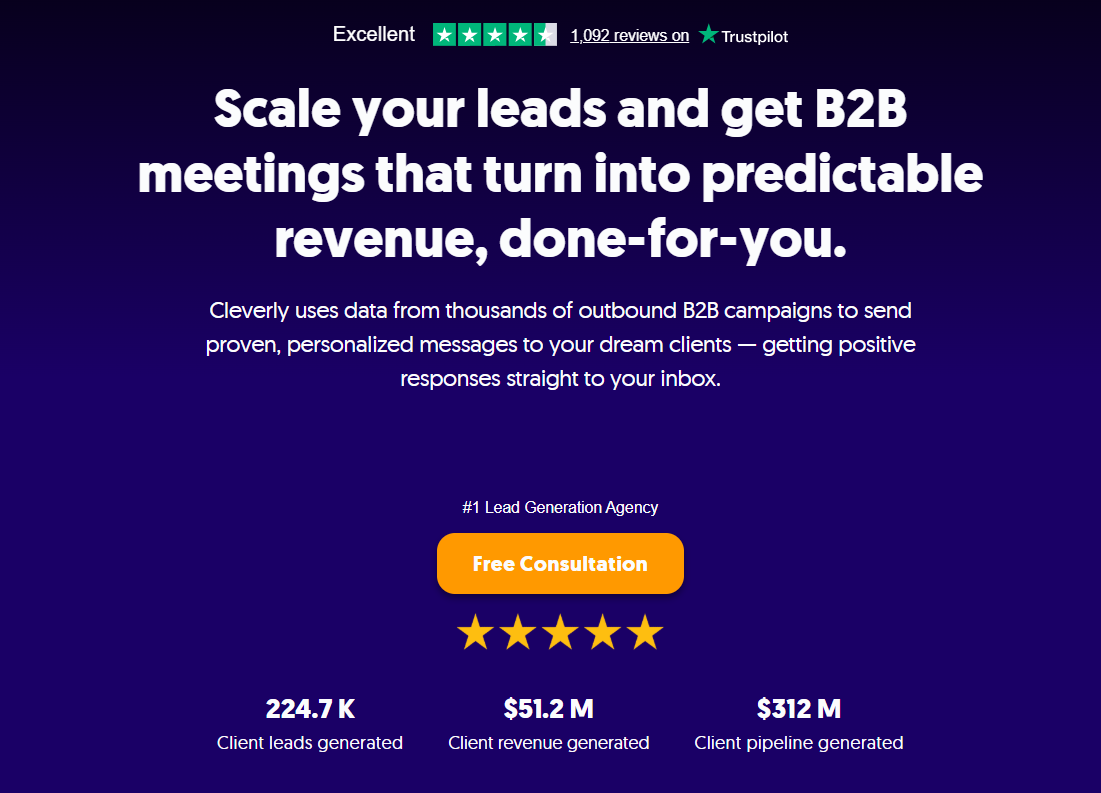
When we work with clients at Cleverly, alignment shows up in the numbers ($51.2 M Client revenue generated and $312 M Client pipeline generated). Pipeline quality jumps because marketing targets the right companies.
Close rates improve because sales receive leads that match their ICP. Revenue becomes predictable instead of a monthly guessing game.
The difference isn't subtle. Aligned teams close deals faster because everyone's working from the same playbook.
Also Check: How to Measure Sales Success
🤝 Alignment That Books Meetings
From $397/mo LinkedIn outreach to pay-per-meeting email and our $5M cold calling system (10–30 guaranteed calls/month)—we deliver quality conversations, not vanity metrics.
Why Sales and Marketing Alignment Matters in B2B
The benefits of sales and marketing alignment show up immediately in your pipeline, and the costs of misalignment get expensive fast.
What you gain with alignment:
- Higher quality leads: When both teams define "qualified" the same way, sales stops wasting time on leads that were never going to close.
- Faster sales cycles: Buyers hear consistent messaging from first touch to close, so there's less confusion and fewer stalled deals.
- Better targeting over time: Sales feedback helps marketing refine ICP targeting and messaging based on what actually converts, not guesses.
- Lower customer acquisition costs: You stop burning budget on channels and campaigns that don't produce revenue.
What misalignment costs you:
Misaligned teams mean marketing celebrates MQLs while sales complains about lead quality. You end up with a bloated pipeline full of unqualified leads, longer sales cycles because messaging doesn't match buyer needs, and teams pointing fingers instead of fixing problems.
As your company scales, misalignment doesn't just slow growth. It actively prevents it. We've seen B2B teams stuck at the same revenue number for years simply because sales and marketing operated like separate companies.
What the Data Says About Misalignment:
This isn't just our take. The research backs it up, and the numbers explain why the finger-pointing never actually stops.
- The perception gap is real, and it's wide. Forrester's research on sales and marketing alignment found that while the vast majority of C-level executives believe their sales and marketing teams are working well together, roughly two-thirds of the sales and marketing professionals actually doing the work report the opposite. Leadership is describing an intention. The people running the handoffs are describing what actually happens to a lead.
- Alignment predicts whether you hit your number. Sales organizations that prioritize alignment with marketing are nearly three times more likely to exceed their new customer acquisition targets than those that don't, according to Gartner research.
- The buying committee has grown, so misalignment shows up faster. Forrester's most recent research puts the typical B2B purchase at 13 internal stakeholders, plus outside influencers, and that number climbs for complex or strategic deals. Nearly 89% of B2B buying decisions now cross more than one department.
That perception gap is usually the first thing worth fixing, before the SLA, before the tech stack, before anything else. If leadership already believes alignment exists, there's no internal pressure to build any of it. And with over a dozen people now weighing in on a single deal, sales and marketing showing up with different stories in front of the buyer isn't a minor annoyance. It's a lost deal.
The benefits of sales and marketing alignment aren't theoretical. They show up in conversion rates, deal velocity, and whether your revenue forecast actually means something.
The Four Stages of B2B Sales and Marketing Alignment Maturity
Not every company needs to fix everything at once. B2B sales and marketing alignment happens in stages, and knowing which stage you're actually in tells you what to fix first instead of throwing every tactic at the wall.
Stage 1: Strategic Alignment
This is the starting point. Both teams agree on the ICP, the go-to-market motion, and the core messaging. There's no shared tooling yet, no shared dashboard. Just agreement on who you're selling to and how you talk about it.
Most companies think they're further along than this. Most aren't.
Stage 2: Technology Integration
Now the systems start talking to each other. CRM and marketing automation share a unified customer view, and lead handoffs move automatically instead of through a spreadsheet someone forgets to update by Friday.
This is where a lot of B2B teams get stuck. Agreeing on strategy in a meeting is easy. Getting two platforms to actually sync is not.
Stage 3: Operational Integration
Shared KPIs replace departmental metrics. Workflows streamline so a lead doesn't sit for three days waiting on manual review. Both teams work off the same weekly numbers instead of two separate reports that never quite match.
Stage 4: Revenue Unification
The finish line. Sales and marketing co-own the pipeline and the revenue number. Nobody asks whose lead it was anymore. Everybody asks whether it closed.
Most B2B companies we work with sit somewhere between Stage 1 and Stage 2. Getting to Stage 4 doesn't happen through better vibes in meetings. It happens by fixing the seven pillars below, one at a time.
Explore More: B2B Sales KPIs Every Revenue Team Should Track
Sales vs Marketing Goals — Where Misalignment Starts
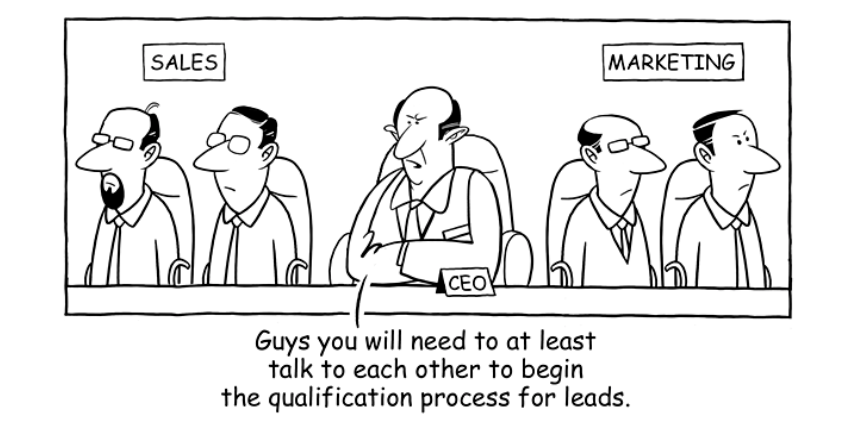
Most aligning sales and marketing efforts fail because the teams are literally measured on opposite things.
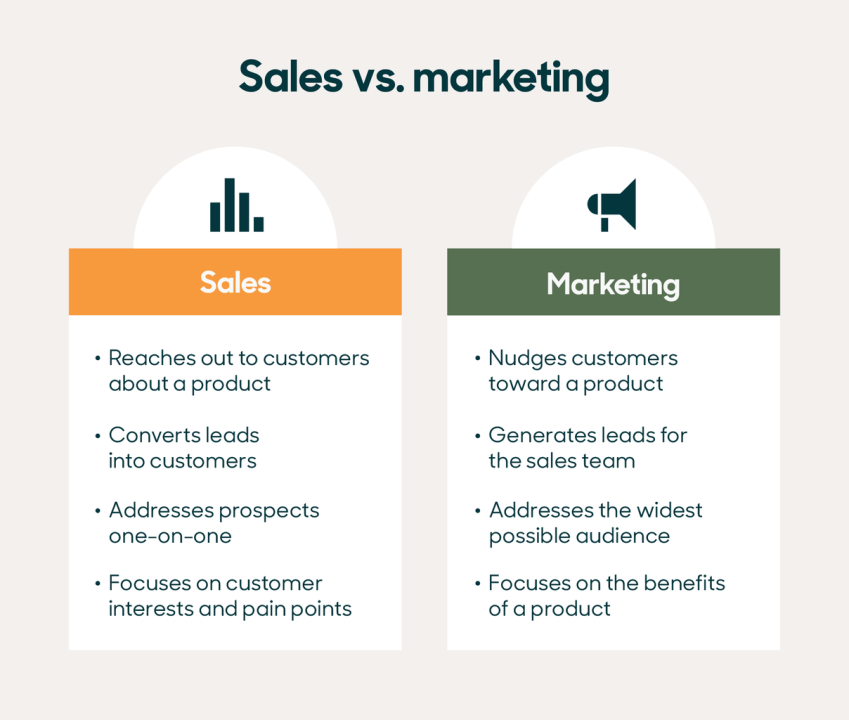
Marketing gets judged on MQLs, website traffic, email open rates, and content downloads. Sales gets judged on closed deals, revenue, and quota attainment.
See the problem?
Here's how this plays out:
Marketing runs a campaign that generates 500 MQLs and celebrates the win. Sales calls those leads and finds out 450 of them are students, competitors, or people who downloaded an ebook by accident.
Sales says the leads are trash. Marketing says sales isn't following up fast enough. Nobody wins.
Why volume metrics kill alignment:
When marketing optimizes for lead volume instead of lead quality, they'll do whatever it takes to hit their MQL target. That means looser form requirements, broader targeting, and content offers that attract anyone with a pulse.
Sales inherits a pipeline full of people who were never going to buy.
The fix isn't complicated. Aligning sales and marketing starts with shared revenue ownership.
Both teams need to care about the same number: revenue generated from qualified opportunities. Not form fills. Not discovery calls with unqualified prospects. Actual closed deals.
Aligning sales and marketing means both teams win or lose together based on revenue, not departmental vanity metrics.
🔥 Where Strategy Meets Execution
Cleverly turns ICPs, offers, and messaging into LinkedIn, cold email, and cold calling campaigns sales teams can actually close.
The Core Pillars of Sales and Marketing Alignment
How to align sales and marketing comes down to seven non-negotiables. Miss any of these, and you're back to finger-pointing and pipeline problems.
1. Shared ICP and Buyer Personas
Both teams need to target the exact same companies and decision makers. Not similar. The same.
Marketing can't build campaigns for mid-market SaaS companies while sales closes enterprise manufacturing deals. Sit in the same room and define your ideal customer profile together: company size, industry, revenue, tech stack, and the specific person you're trying to reach.
When the ICP is shared, marketing attracts the right accounts and sales doesn't waste time explaining why half the leads don't fit.
Read More: How to Build High-Converting B2B Buyer Personas That Drive Revenue
2. Unified Messaging and Value Proposition
Your prospect shouldn't hear one story from marketing content and a completely different pitch on the sales call.
How to align sales and marketing messaging: Sales should tell marketing exactly what objections they hear, what language resonates, and which pain points actually drive deals.
Marketing builds campaigns around that reality. The value proposition stays consistent from the first LinkedIn ad to the final contract.
3. Agreement on Lead Definitions
This is where most misalignment lives. Marketing thinks an MQL is anyone who downloaded a guide. Sales thinks a qualified lead is someone ready to buy next week.
Define these together:
- MQL: What actions indicate someone might be a fit?
- SQL: What criteria make them worth a sales conversation?
- Qualified meeting: What needs to be true for this to be worth everyone's time?
At Cleverly, we focus on meeting-ready leads, people who match the ICP and have actual buying intent. No fluff, no tire kickers.

4. Shared Success Metrics Tied to Revenue
Stop measuring marketing on MQLs and sales on quota separately. Both teams need shared metrics:
- Pipeline generated from qualified opportunities
- Conversion rates from lead to close
- Revenue attributed to aligned efforts
- Customer acquisition cost across the full funnel
How to align sales and marketing around metrics: Pick 3-5 numbers both teams review weekly. If marketing's MQLs aren't converting to revenue, that's a marketing problem. If sales isn't closing qualified opportunities, that's a sales problem.
5. Continuous Feedback Between Teams
Alignment isn't a one-time meeting. It's an ongoing feedback loop.
Sales needs to tell marketing which leads are converting and why. Marketing needs to share what messaging is resonating in campaigns. Weekly syncs focused on pipeline quality, not blame, keep both teams improving.
We build this into how we work with clients. Outreach insights from sales calls feed back into targeting and positioning. Marketing adjusts campaigns based on what's actually closing deals, not what sounds good in theory.
How to align sales and marketing is simple in concept: shared target, shared message, shared definitions, shared metrics, and constant communication. Execute those five pillars, and alignment stops being a problem.
6. The Sales-Marketing Service Level Agreement (SLA)
Most of this breaks down because nobody ever wrote it down.
Sales and marketing alignment best practices always include a documented SLA, not a verbal understanding from last quarter's planning meeting. A handshake agreement gets forgotten the moment a new hire joins or a quota resets.
Here's what actually belongs in it:
- Sales response time: The specific window sales commits to following up after marketing hands off a lead. 24 hours is common. Some teams push for same-day.
- Marketing volume commitment: The number of qualified leads marketing agrees to deliver each month or quarter to keep a full pipeline flowing.
- Disqualification feedback requirement: A mandatory process for sales to log the actual reason a lead got disqualified. Not "bad lead." Wrong company size. No budget. Wrong title. Something marketing can act on.
Write it down. Put it in a doc both teams can reference without asking someone to remember what was agreed six months ago. Review it monthly.
Without a documented SLA, definitions of what makes a qualified sales meeting drift every time someone new joins either team. With one, both sides know exactly what they're accountable for, and "your leads suck" turns into "here's specifically why these three didn't qualify."
We build this kind of documented handoff standard into how we work with clients. When we say meeting-ready, it's measured against criteria your team agreed to in writing, not our best guess at what "qualified" means.
7. A Connected Tech Stack, Not Just a Connected Team
Sales marketing alignment breaks down at the system level long before it breaks down at the people level.
If your CRM and your marketing automation platform run as separate silos, alignment stays theoretical no matter how well the teams actually get along.
Here's the practical version of the problem: a rep picks up the phone with zero visibility into what content a prospect engaged with, what pages they viewed, or what triggered their interest. That rep starts the call cold on a lead marketing considers warm. The prospect can tell.
The fix isn't another meeting. It's a single source of truth.
That means:
- Marketing engagement data (page visits, downloads, email opens) visible directly inside the CRM record sales actually works from.
- Lead scoring criteria both teams agreed on, not one team's private spreadsheet.
- Automated handoffs that trigger the moment a lead crosses the agreed threshold, not a manual export at the end of the week.
Signs your stack, not your team's attitude, is the actual bottleneck:
- Sales asks "who is this person" on calls marketing already flagged as warm.
- Reps build their own tracking sheets because they don't trust what's in the CRM.
- Marketing can't see which leads converted without messaging sales directly to ask.
If any of that sounds familiar, you don't have a personality conflict between departments. You have a plumbing problem. Fix the connection between systems, and a lot of the sales-vs-marketing tension disappears, because both teams are finally looking at the same information.
Dive Deeper: Sales Outreach - How to Build a Scalable B2B Growth Engine
How to Align Sales and Marketing Step by Step
Here's the practical framework for how to align sales and marketing without endless meetings or consultants. Five steps, executed in order.
Step 1: Define and Document ICP Together
Lock sales and marketing in a room (virtual or physical) and don't let them out until they agree on your ideal customer profile.
Document everything: company size, industry, revenue range, tech stack, decision makers, buying triggers, and deal breakers. Marketing uses this to build targeting. Sales uses it to qualify leads. One ICP, zero confusion.
Step 2: Align on Lead Quality and Qualification Criteria
Stop the "your leads suck" arguments by agreeing upfront what makes a lead qualified.
Write down the specific criteria:
- What firmographic data needs to match?
- What behaviors or engagement indicates interest?
- What disqualifies someone immediately?
Both teams use the same checklist. If a lead meets the criteria, sales works it. If it doesn't, marketing fixes targeting. This is how to align sales and marketing on quality from day one.

Step 3: Sync Messaging Across Outreach and Content
Sales should share the exact language that's working in conversations. What pain points get prospects leaning in? What objections come up repeatedly? Which value propositions actually close deals?
Marketing takes that intelligence and builds it into campaigns, email sequences, and content. The prospect hears the same story whether they're reading a blog post or sitting on a discovery call.
At Cleverly, we build sales-ready messaging from real buyer conversations. Marketing doesn't guess what resonates because sales tells them what's already working.
Step 4: Establish Feedback Loops from Sales to Marketing
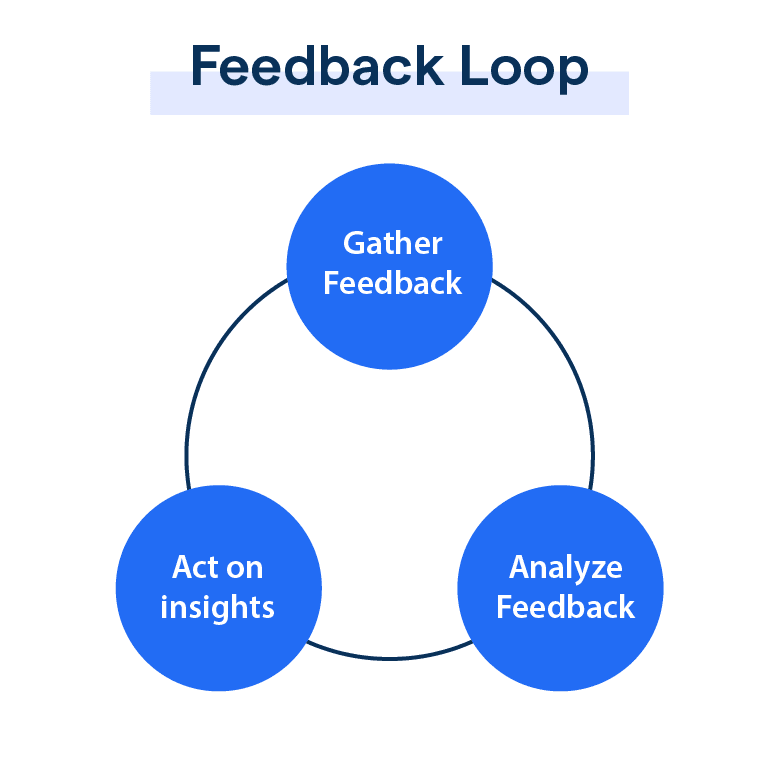
Create a simple weekly process where sales reports back to marketing:
- Which leads converted and why
- Which sources or campaigns produced the best opportunities
- What messaging is falling flat
- What new objections or patterns are emerging
Marketing uses this feedback to refine targeting, adjust messaging, and kill campaigns that aren't producing revenue. This feedback loop is non-negotiable for how to align sales and marketing long term.
Step 5: Review Pipeline Performance Together Regularly
Schedule a weekly or biweekly pipeline review where both teams look at the same dashboard:
- How many qualified opportunities entered the pipeline?
- What's the conversion rate from lead to close?
- Where are deals stalling?
- What's the revenue impact?
No finger pointing. Just honest assessment of what's working and what needs fixing. When both teams own the same numbers, alignment becomes automatic.
How to align sales and marketing isn't complicated. It's disciplined execution of these five steps, repeated consistently until alignment becomes how your company operates by default.
What Sales Needs From Marketing to Close More Deals

Sales and marketing alignment best practices start with marketing giving sales the tools to actually close business, not just generate activity.
Here's what sales needs:
- Clear positioning and problem framing: Sales can't pitch effectively if marketing's message is vague. Define the exact problem you solve and who has it.
- Account-level insights: Which companies are engaging with content? What pages did they visit? Give sales context before the first call.
- Warm context for outreach: "I saw you downloaded our guide" beats cold outreach every time. Marketing engagement creates natural conversation starters.
- Consistent messaging across touchpoints: When a prospect moves from marketing to sales, the story shouldn't change. Same pain points, same value prop, same language.
- Nurture and reactivation support: Not every lead closes immediately. Marketing should run nurture campaigns to keep deals warm and reactivate stalled opportunities.
When we generate leads for clients at Cleverly, we provide the context sales needs. Who the prospect is, why they engaged, and what message resonated. Sales shows up to calls prepared, not guessing.
Here’s More: Sales Enablement Strategy - How B2B Teams Close More Deals
What Marketing Needs From Sales to Improve Lead Quality

Sales and marketing alignment best practices only work when sales gives marketing the intelligence to get better at targeting and messaging.
Here's what marketing needs:
- Honest feedback on lead quality: Don't just complain. Tell marketing specifically what's wrong with the leads and what good looks like.
- Real buyer language and objections: Marketing can't write compelling content without knowing what prospects actually say. Share the exact words buyers use and the objections that come up on every call.
- Deal insights on wins and losses: Why did deals close? Why did they fall apart? This intelligence helps marketing target better accounts and adjust positioning.
- Clear signals on ICP fit: When leads don't match the ICP, tell marketing immediately. The faster marketing knows, the faster they fix targeting.
- Fast feedback cycles: Waiting until the quarterly business review is too late. Marketing needs weekly input to iterate campaigns and improve quality in real time.
At Cleverly, outreach insights from sales conversations feed directly back into how we refine targeting and messaging. Marketing gets better because sales provides the data to improve.
Sales and marketing alignment best practices aren't complicated. Sales needs context and consistency. Marketing needs honest feedback and buyer intelligence. Trade those two things regularly, and alignment takes care of itself.
How Cleverly Helps Align Sales and Marketing for B2B Growth
Most B2B lead generation agencies pump out volume and disappear. We act as the bridge between strategy and execution, so your sales and marketing teams actually work together instead of against each other.
How we create alignment:
Alignment starts with ICP definition and offer clarity. We don't guess who to target. We work with your team to define exactly who converts, then build outreach around those accounts.
Our sales-ready messaging comes from real buyer conversations, not marketing theory. We test what resonates, refine based on responses, and feed those insights back to your marketing team so targeting and positioning improve over time.
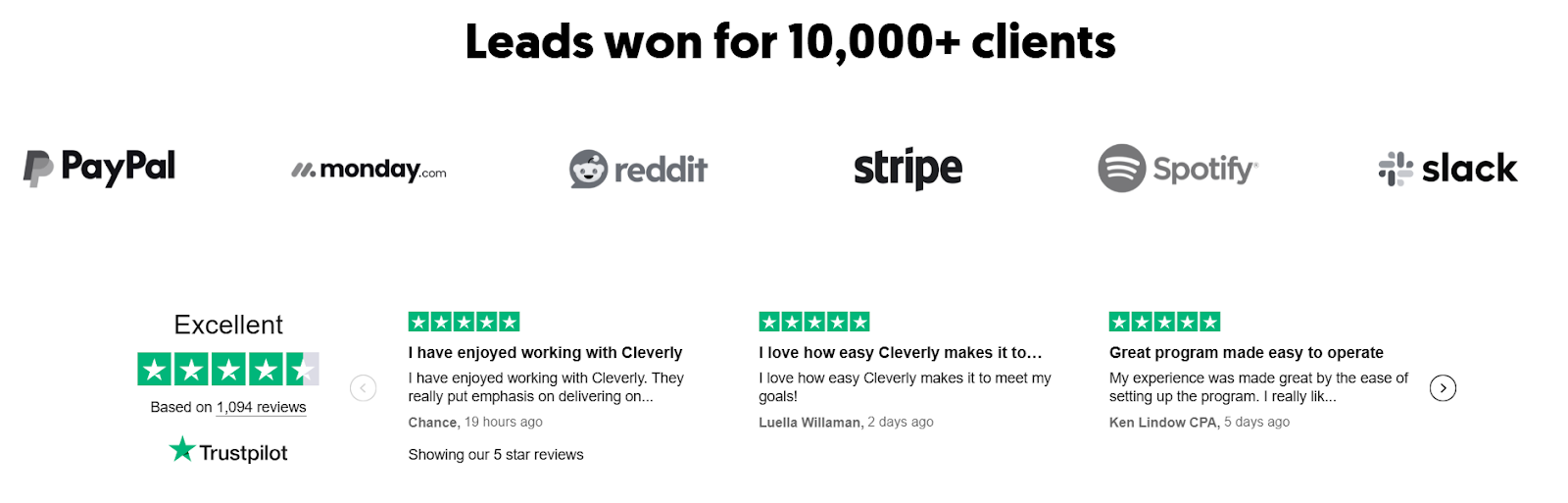
We've helped over 10,000 clients generate $312 million in pipeline revenue and $51.2 million in closed revenue because we focus on one thing: lead generation systems that sales teams can actually close.
Our approach across three channels:
- LinkedIn lead generation: Starting at just $397/month, we handle targeting, messaging, and outreach so you get meeting-ready leads.
- Cold email lead generation: You only pay for the meeting-ready leads we send you. No fluff, no unqualified tire kickers.
- Cold calling: Our $5M system places a no-accent appointment setter, writes breakthrough scripts, and guarantees 10-30 qualified sales calls every month or we replace the SDR. We've made over 1 million cold calls and set 53,000+ appointments at half the cost of building in-house.
We focus on quality conversations, not vanity metrics. When sales closes deals from the leads we generate, marketing sees what's working. When deals stall, we adjust targeting together.
That's alignment. That's how a B2B lead generation agency should work. Want to see how this plays out for your team? Let's talk.

Conclusion
Sales and marketing alignment isn't a workshop you attend once and forget about. It's how your company operates every single day.
Revenue grows when both teams target the same accounts, speak the same language, and share honest feedback on what's working and what isn't. The strongest B2B teams we work with don't argue about lead quality or blame each other for missed targets. They align around pipeline quality and revenue, not departmental silos.
If your sales and marketing teams are still operating like separate companies, you're leaving money on the table. Fix the alignment, and the growth follows.
Ready to build a lead generation system both teams can trust? We've done it for 10,000+ companies. Let's do it for yours.
Frequently Asked Questions
Free Resource
How to Scale a Profitable Cold Call System
Get the complete guide — download it instantly now.

Free Ebook
Download the Free Guide
Enter your details to get instant access.
You're all set! 🎉
Your ebook is downloading now.
Click below if the download didn't start automatically.