Table of Contents
What Is ABM (Account-Based Marketing)?
What Is Demand Generation?
ABM vs. Demand Generation: Head-to-Head Comparison
Key Differences Between ABM and Demand Generation
When to Prioritize ABM
When to Prioritize Demand Generation
When to Run Both ABM and Demand Generation Together
How to Choose: A Decision Framework for 2026
How Outbound Lead Generation Powers Both ABM and Demand Gen
How Cleverly Approaches ABM and Demand Gen Outbound Differently
Conclusion
Frequently Asked Questions
Modified On :
July 23, 2026
Key Takeaways
- ABM and demand gen aren't rival strategies. They solve different problems: one targets specific accounts with precision, the other builds pipeline volume across a broad market.
- The right choice depends on your deal size, sales cycle length, and buying committee size, not on which strategy sounds more advanced.
- Most B2B companies eventually need both, weighted differently based on where their pipeline problem actually sits.
- ABM works best when your pipeline problem is quality (wrong-fit leads). Demand gen works best when your pipeline problem is quantity (not enough leads).
- Outbound execution, cold email, LinkedIn, and calling, is often the fastest way to activate either strategy without waiting months for organic results to compound.
The ABM vs demand gen debate isn't really a debate. Most top-performing B2B companies run both at the same time. What trips people up isn't whether to use one or the other. It's figuring out which one deserves more of your budget, your team's time, and your attention this quarter.
Here's why this gets confusing. Demand gen still contributes the majority of pipeline at most B2B organizations, largely because it operates across a much broader surface area of leads and channels.
At the same time, a large share of marketers report that ABM delivers better ROI than their other marketing efforts. Both of these things are true. They just describe different parts of the same funnel.
This guide breaks down what ABM and demand gen actually are, how they differ in targeting, content, metrics, and returns, and when you should lean harder into one over the other. By the end, you'll have a decision framework you can actually apply to your own pipeline, not just another definition of both terms.
This matters most for marketing leaders, RevOps, and founders who are deciding where the next marketing dollar and the next headcount should go.
What Is ABM (Account-Based Marketing)?
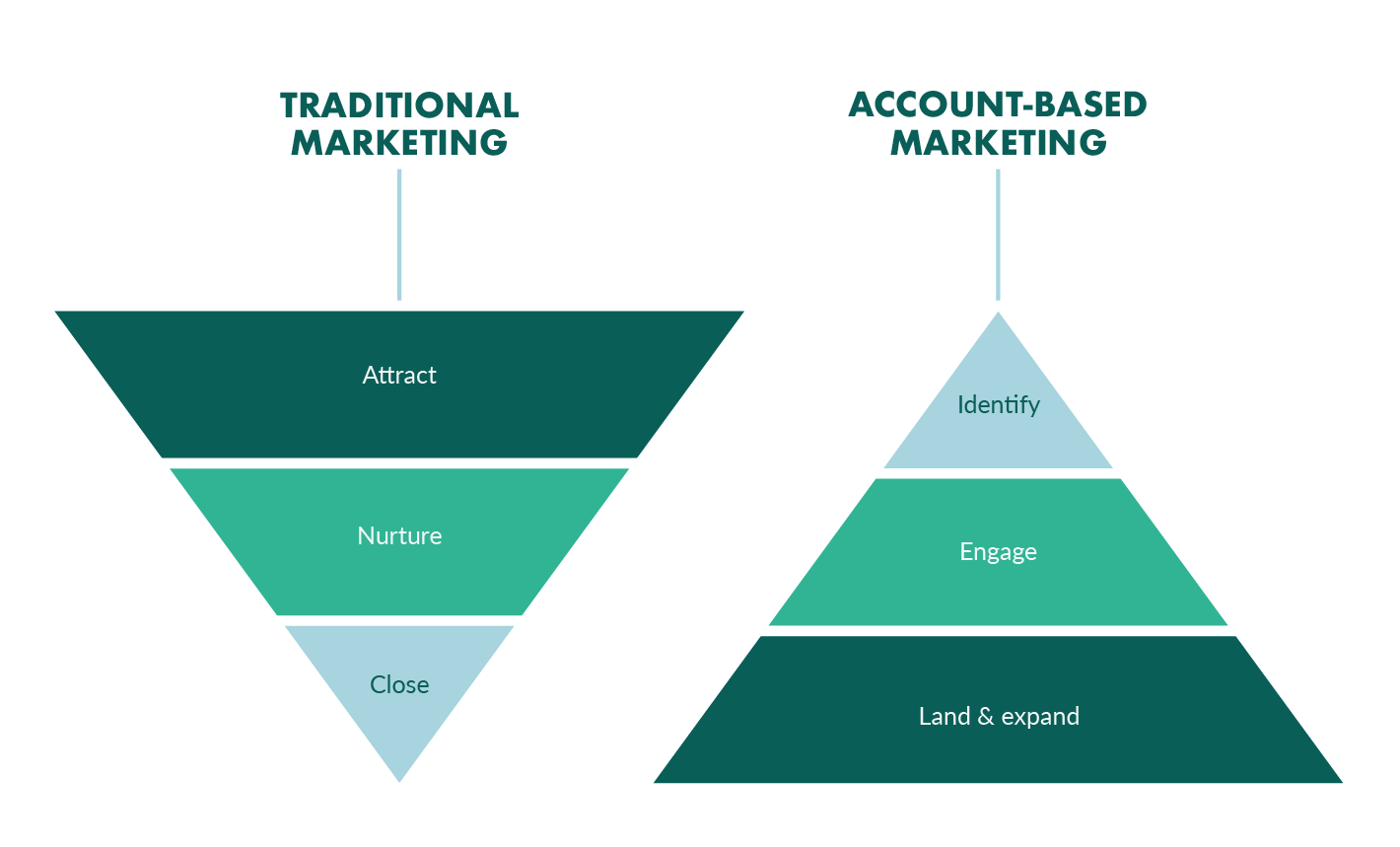
ABM is a B2B strategy where sales and marketing agree on a defined list of high-value target accounts first, then build personalized campaigns around each one.
Instead of broadcasting a message to a wide market and seeing who bites, you pick the companies you want as customers and design everything around winning them specifically.
This flips the traditional lead gen model on its head. Normal lead gen starts with a message and waits to see who responds. ABM starts with the account list and works backward from there.
The Three Types of ABM
- Strategic ABM (1:1): Deep, highly personalized campaigns built for a handful of named accounts. Think custom microsites, executive-level messaging, and account-specific content.
- ABM Lite (1:few): Personalization built for small clusters of similar accounts, grouped by industry, size, or use case.
- Programmatic ABM (1:many): Scaled personalization using intent data and automation to reach a larger set of target accounts without one-off manual work for each.
The output ABM is built to produce isn't lead volume. It's pipeline and closed revenue from accounts that are genuinely a good fit.
ABM tends to work best when:
- Your average contract value (ACV) is $50K or more per year
- Sales cycles run 6 to 18 months
- Buying committees include 6 to 10 stakeholders
- Your ideal customer profile (ICP) is narrow and well understood
🎯 ABM Finds the Right Accounts. We Start the Conversations.
Our LinkedIn, cold email, and cold calling campaigns generate 15–30 qualified meetings every month with your ideal buyers.
What Is Demand Generation?
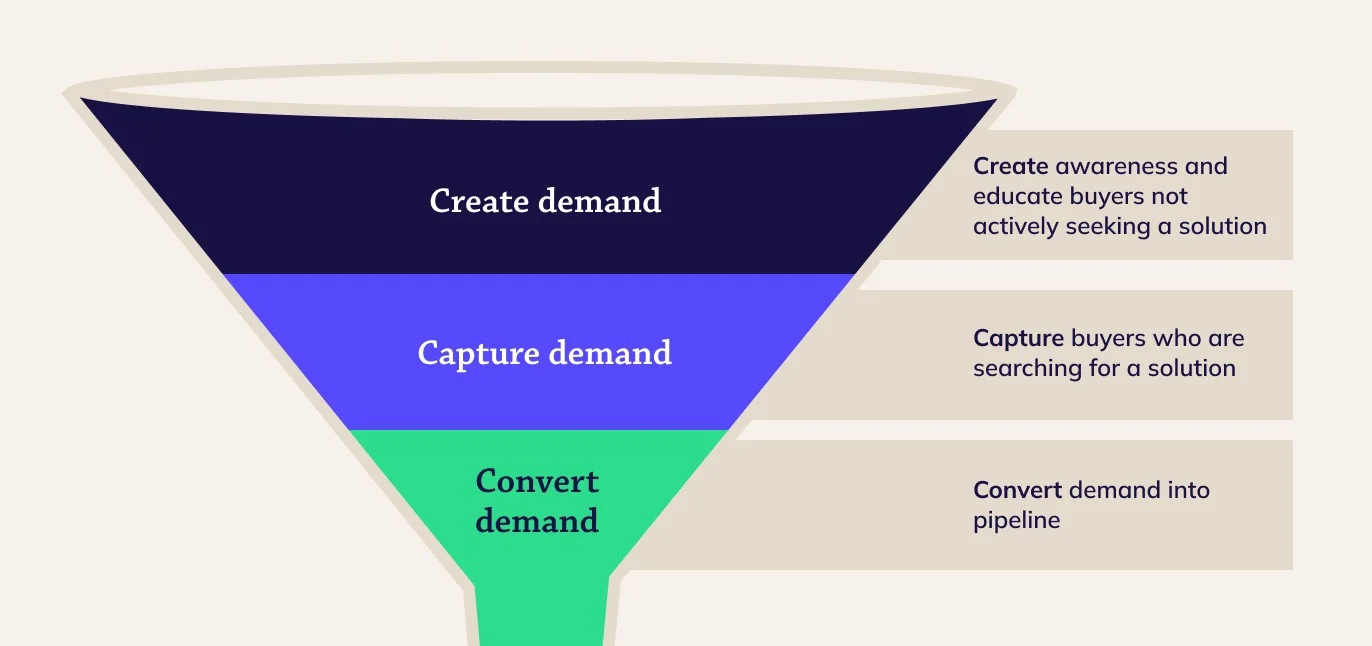
Demand generation is a broader strategy focused on creating awareness and interest across a wide segment of the market, then capturing and nurturing that interest into pipeline. It's the engine most B2B companies rely on to keep the top of the funnel full.
The mechanic is straightforward: create value at scale through content, ads, and events, capture leads as they engage, nurture them through automation, then hand qualified leads to sales.
Key channels include:
- SEO and content marketing
- Paid search and paid social (LinkedIn, Meta)
- Webinars and virtual events
- Email nurture sequences
- PR and thought leadership
Demand gen is measured differently than ABM. Its job is producing lead volume, MQLs, and brand awareness across a market that's too large to personalize for individually.
Demand gen tends to work best when:
- ACV is under $50K per year
- Your total addressable market (TAM) is large and not tightly defined
- Sales cycles are shorter
- Your sales team is built to handle a high volume of inbound leads
ABM vs. Demand Generation: Head-to-Head Comparison
🚀 Turn Strategy Into Predictable Pipeline
With 53,000+ meetings booked and $312M+ in pipeline generated, Cleverly helps 10,000+ businesses turn ABM and demand gen into real revenue.
Key Differences Between ABM and Demand Generation
Targeting: Focused vs. Broad

ABM starts with the account list. You identify the right companies first, then build campaigns around them. Precision is the entire point of the exercise.
Demand gen starts with the message. You create content or ads designed to attract the right type of person, then filter and qualify whoever shows up.
Here's the practical implication: ABM needs a tight, sales-approved account list before a single campaign launches. Demand gen can go live with a broader persona definition and refine it as data comes in.
Getting this backward is expensive. Running ABM-style personalized outreach against a poorly defined account list burns budget on companies that were never going to buy. Running broad demand gen when you actually need enterprise pipeline produces a pile of MQLs your sales team can't convert.
Content and Messaging: Personalized vs. Scalable
ABM content is account-specific and persona-specific. It references the prospect's industry, recent company news, competitive positioning, or a pain point you already know they have. That level of specificity takes real production effort per piece.
Demand gen content is built for broad appeal. It answers common questions, educates a wide audience, and ranks in search without needing to be rewritten for every reader.
One advantage ABM has: messaging can reference real-time company events like funding rounds, leadership changes, or expansion announcements. That kind of relevance is hard for generic demand gen content to match.
The tradeoff is scale. Demand gen content compounds and scales almost indefinitely. ABM content depth doesn't scale the same way unless you invest in dynamic personalization tools or dedicated account teams.
Metrics: Quality vs. Volume
ABM metrics center on the accounts you actually targeted: pipeline generated from that list, win rate on those deals, average deal size, account engagement, and time to close.
Demand gen metrics center on efficiency at scale: MQL volume, cost per lead, marketing-qualified pipeline, traffic, and email or webinar engagement.
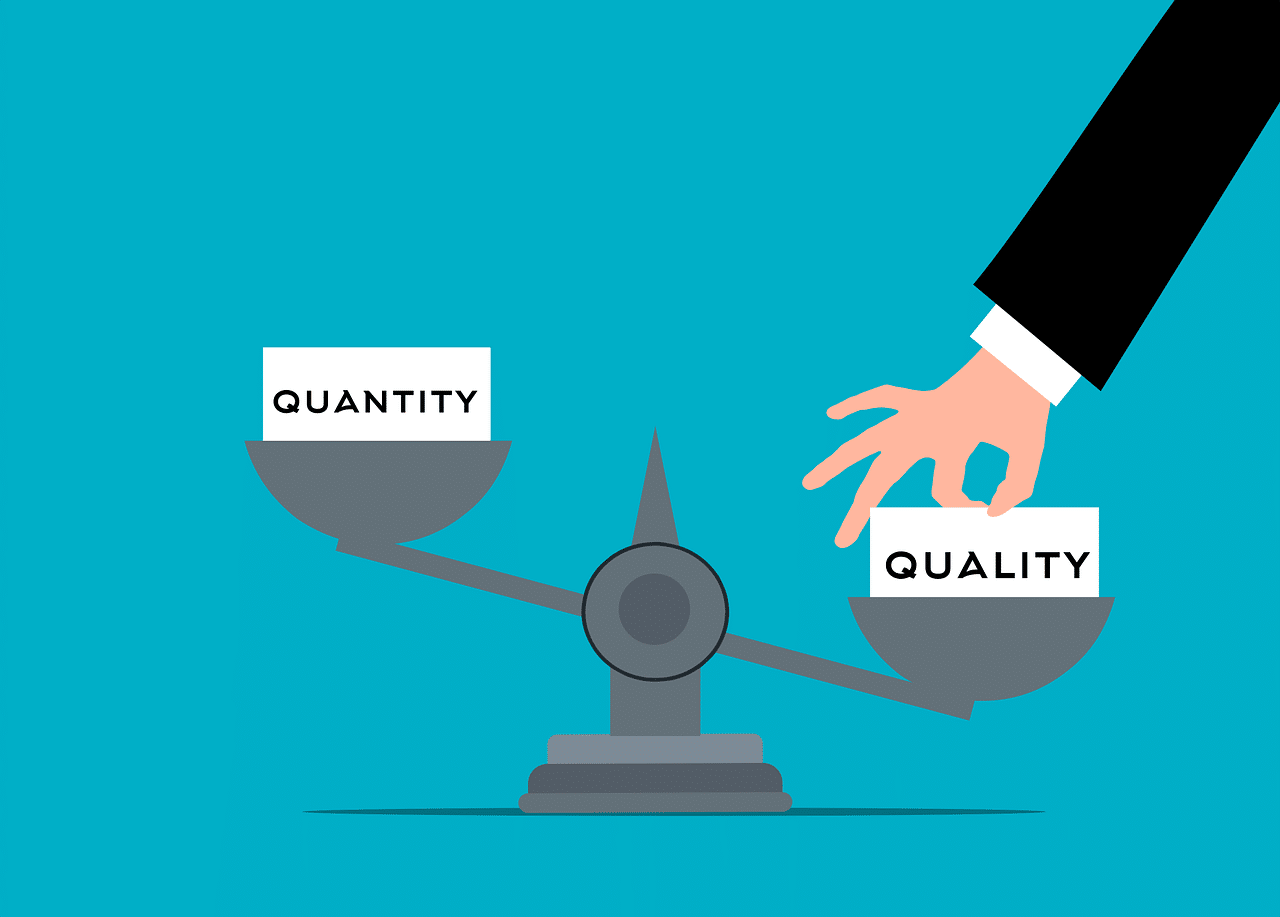
The distinction that matters most: ABM success is measured against a defined account list, not total pipeline. Demand gen success is measured on volume and efficiency across the whole funnel.
A common mistake is grading ABM programs using demand gen metrics like MQL count. That comparison pushes teams toward the wrong optimization decisions almost every time.
ABM vs. Demand Gen ROI: What the Data Shows

This is where the debate usually gets oversimplified. A large share of B2B marketers, cited widely across ITSMA and other industry research, report that ABM delivers higher ROI than their other marketing strategies. That tracks: larger deal sizes, higher win rates, and shorter sales cycles on well-matched accounts add up fast.
At the same time, demand gen still contributes the bulk of B2B pipeline at most organizations. It remains the volume engine feeding the top of the funnel across the industry.
Teams that integrate both motions instead of running them as separate silos consistently report stronger outcomes, both in pipeline volume and in revenue growth, than teams that keep them apart.
The context that matters here: ABM tends to produce a lower cost per closed deal when ACV is high and your ICP is well-defined. Demand gen produces a lower cost per lead at volume. These aren't competing for the same win. They're optimizing for different outcomes entirely.
Sales Alignment: Tight vs. Loose

ABM requires tight sales-marketing alignment by design. Both teams have to agree on the account list, the messaging, and the handoff criteria before a campaign ever launches.
Demand gen runs looser. Marketing generates MQLs, scores them, and passes qualifying leads to sales, who then decide what to pursue.
ABM without alignment fails fast. If marketing builds personalized campaigns for 50 accounts while sales is chasing a different 50, that investment is wasted. The mechanism that keeps ABM working is a shared account list, reviewed and signed off by sales leadership before any budget goes out the door.
When to Prioritize ABM
Lean into ABM when several of these are true for your business:
- ACV is $50K or more per year. The higher per-account investment only pays off when deal sizes justify it.
- Sales cycles run 6 to 18 months. Long cycles need the sustained, multi-touch engagement ABM is built to deliver. Demand gen leads tend to go cold over long evaluation periods.
- Buying committees include 6 or more stakeholders. ABM supports multi-threaded outreach that reaches each person with relevant messaging. Demand gen usually only reaches whoever clicked the ad.
- Your TAM is small and well-defined. If your addressable market is a specific list of 500 companies, broad reach doesn't help you. Precision does.
- Your pipeline problem is quality, not quantity. If marketing is producing volume but sales conversion is weak, the issue is fit. ABM narrows focus to the accounts most likely to close.
- You have an existing customer base to expand. ABM works especially well for land-and-expand motions targeting upsell and cross-sell inside named accounts.
When to Prioritize Demand Generation
Lean into demand gen when these apply instead:
- ACV is under $50K. Lower deal values don't justify the per-account cost that true ABM requires.
- Your TAM is large and undifferentiated. If you're selling to hundreds of thousands of potential buyers, broad reach beats account-level precision.
- Your sales team is built for inbound. A high-velocity, inbound-handling sales motion needs demand gen's volume to stay fed. ABM's slower pace doesn't match that model.
- Brand awareness is your biggest gap. If your market doesn't know you exist yet, demand gen's broad reach solves an awareness problem ABM can't fix at scale.
- You haven't nailed down your ICP yet. Demand gen helps surface which segments actually convert before you commit to ABM's precision targeting.
- Budget is tight. Demand gen scales at a lower cost per lead when your budget can't stretch to cover ABM's per-account investment.
When to Run Both ABM and Demand Generation Together

Most mature B2B companies land here eventually. The integration model works like this: demand gen creates broad awareness and captures intent signals across your market.
ABM then layers personalized, high-touch engagement on top of the highest-value accounts already showing that intent. Both motions feed the same revenue goal.
A large majority of top-performing B2B companies now run both strategies under one unified set of revenue goals, and industry benchmark surveys show close to half of mature marketing teams have formally integrated ABM and demand gen processes rather than running them separately.
Here's how they complement each other in practice:
- Demand gen fills the funnel with market-level awareness, keeps your brand visible to buyers who aren't in-market yet, and generates inbound leads on its own.
- ABM converts the highest-value subset of that awareness into pipeline through personalized, multi-stakeholder engagement.
A common resource allocation model for most B2B companies looks like 60 to 70% of budget on demand gen for volume and awareness, and 30 to 40% on ABM for accelerating your highest-value accounts.
The metric that makes this integration actually work is pipeline generated from target accounts. Track that specifically for ABM's contribution, while demand gen gets measured against total pipeline and CPL.
Keeping these separate in your reporting is what stops the "ABM vs demand gen" argument from ever starting internally.
How to Choose: A Decision Framework for 2026
Run through this in order:
✅ Step 1: Assess your ACV. Above $50K, lean ABM. Below $50K, lean demand gen.
✅ Step 2: Assess your TAM. Limited, well-defined account universe favors ABM. Large, broad TAM favors demand gen.
✅ Step 3: Assess your pipeline problem. If conversion is low and the ICP feels wrong, that's a quality issue: lean ABM. If you simply don't have enough leads coming in, that's a quantity issue: lean demand gen.
✅ Step 4: Assess your sales cycle length. 6 months or more, lean ABM. Under 6 months, lean demand gen.
✅ Step 5: Assess your team's readiness. If your ICP is tight, sales is aligned, and you have content resources for personalization, you're ready for ABM. If any of those are missing, build your demand gen foundation first.
The most likely outcome for most companies isn't picking one. It's running both, weighted by your ACV, TAM, and current pipeline health, with demand gen as the volume engine and ABM as the acceleration layer on your best-fit accounts.
How Outbound Lead Generation Powers Both ABM and Demand Gen
Both strategies ultimately depend on the same thing: reaching the right people with the right message. Outbound is often the fastest execution layer for either one, especially for teams that don't have months to wait for organic channels to compound.
For ABM, cold outreach through LinkedIn, email, and phone is the primary channel for reaching specific decision-makers at named target accounts. Personalized by account and persona, and coordinated across multiple stakeholders on the same buying committee, outbound does the heavy lifting that a single ad or blog post can't.
For demand gen, outbound adds volume and speed to pipeline generation that content and paid channels take months to build organically. It complements inbound with an active motion instead of waiting for people to find you.
We run multichannel outbound at Cleverly, LinkedIn, cold email, and cold calling, for B2B companies that need both motions working from one managed partner instead of stitching together separate tools and vendors.
If you're trying to figure out where your pipeline problem actually sits, and want a team that's already run this playbook across 10,000+ clients, that's a conversation worth having before you build another internal process from scratch.
How Cleverly Approaches ABM and Demand Gen Outbound Differently
Running ABM and demand gen well both come down to execution, not just strategy. Most teams get the framework right and then struggle to actually staff, personalize, and sustain the outreach that both motions depend on.
That's the gap we fill.
For ABM-style outbound, we build hyper-personalized LinkedIn and email sequences targeted at your named accounts, coordinated across the multiple stakeholders on a buying committee instead of just the one person who happens to reply first.
For demand gen, we add an active outbound layer, cold email and cold calling, that generates pipeline volume faster than content and paid channels alone.
We've helped 10,000+ B2B companies, including teams at Amazon, Uber, and Slack, generate qualified pipeline through this exact combination.

Companies come to us instead of managing this in-house because building a deliverability infrastructure, writing account-specific copy at scale, and running a trained SDR team is a full-time operation on its own, one most marketing teams don't have the bandwidth to run well alongside everything else on their plate.
If you're weighing where to put your next dollar between ABM and demand gen, book a strategy call and we'll help you figure out which motion actually solves your pipeline problem.
Conclusion
ABM and demand gen were never really competing strategies. They serve different parts of the same B2B growth equation, and treating them as an either-or choice is what causes most of the budget waste in this debate.
The framework is simple to recap: high ACV, a limited ICP, and a long sales cycle point you toward ABM. Low ACV, a broad TAM, and high volume needs point you toward demand gen. Most companies land somewhere in between, running both at a ratio that matches their actual pipeline health.
The integration payoff is real. Companies running both motions together consistently outperform teams keeping them siloed.
The question worth asking isn't "ABM or demand gen." It's "what does our pipeline problem actually look like, and which motion solves it most directly?" Start there, allocate your budget accordingly, and revisit that balance every quarter as your pipeline data tells you more.
Frequently Asked Questions
Free Resource
How to Scale a Profitable Cold Call System
Get the complete guide — download it instantly now.
Free Ebook
Download the Free Guide
Enter your details to get instant access.
You're all set! 🎉
Your ebook is downloading now.
Click below if the download didn't start automatically.