Table of Contents
What Are B2B Intent Signals?
5 Types of B2B Intent Signals That Predict Buying Readiness
How to Find Buying Intent Signals in B2B
How to Score Leads Based on Intent Signals
How to Act on Intent Signals: Turning Data Into Outreach
Best Tools for Finding and Scoring B2B Intent Signals
How Cleverly Activates Intent Signals to Generate B2B Leads
Conclusion
Frequently Asked Questions
Modified On :
July 22, 2026
Key Takeaways
- Buying intent isn't about finding more leads. It's about finding the right accounts at the exact moment they're already looking, before they shortlist a vendor without you in the room.
- First-party signals (your own website and CRM data) and third-party signals (research activity happening outside your properties) answer two different questions, and the strongest programs use both instead of picking one.
- No single signal proves intent. Stacking two or three aligned signals, like a funding event plus a pricing page visit, turns a guess into a real buying indicator.
- Intent decays fast. A company researching your category today may sign with someone else in two weeks, so the speed of your response matters as much as the quality of your data.
- Scoring only works if it's tied to real outcomes. Build your model around firmographic fit plus intent activity, then recalibrate the weights based on what actually closes, not what looks good on paper.
Your B2B outreach doesn't fail because the pitch is bad. It fails because it lands on the wrong day. You're reaching out to a company six months before they need you, or six months after they already signed with someone else. That's a timing problem, not a messaging problem.
B2B intent signals exist to fix exactly that. They tell you which companies are actively researching, comparing vendors, and moving toward a decision right now, not someday.
The numbers back this up. Teams running signal-based selling close deals at 32% win rates versus 13% for list-based ABM, according to a 2026 benchmark of 94 B2B companies.
Separately, G2 has found that accounts showing intent on its platform convert at 2.6x the rate of accounts with no G2 intent signal. And speed compounds the advantage: acting on a signal within 48 hours drives roughly 4x higher conversion than waiting.
This guide breaks down what intent signals actually are, the five types that predict buying readiness, how to find and score them, and how to turn that data into outreach that actually books meetings.
If you're a sales or marketing leader tired of guessing which accounts to prioritize, this is for you.

What Are B2B Intent Signals?
B2B intent signals are behavioral data points, essentially digital body language at the company level, that show a business is actively researching or preparing to buy a specific product or service.
Firmographic data tells you who a company is: industry, size, location, revenue. Intent signals tell you what they're doing right now: reading competitor comparisons, checking pricing pages, hiring for roles that imply new budget, or requesting demos.
These signals show up on two levels:
- Account level — the company as a whole is showing in-market behavior.
- Contact level — a specific person inside that company is doing the researching.
The goal isn't to generate more leads. It's to find the right leads at the right moment, before they issue an RFP or reach out to a competitor first.
First-Party vs. Third-Party Intent Signals

First-party signals come from your own properties: website visits, content downloads, pricing page views, demo requests, trial signups, email opens, webinar attendance. You already own this data.
Third-party signals come from behavior tracked across external sources. Platforms like Bombora, G2, 6sense, and Demandbase monitor company-level research activity across thousands of B2B publications and review sites, then surface accounts showing elevated interest in your category.
Practical difference: first-party signals mean high intent, because the company already knows you exist. Third-party signals mean early intent, because they're still researching the category and may not know your name yet.
Pro tip: use both together. Third-party data tells you which accounts to target. First-party data tells you which of those accounts to call first.
🎯 Prospect Smarter. Close Faster.
We use intent data, LinkedIn, cold email, and cold calling to generate 15–30 qualified meetings every month with buyers already in-market.
5 Types of B2B Intent Signals That Predict Buying Readiness
Content Consumption Signals
When an account consumes multiple pieces of content on one topic, blog posts, whitepapers, comparison guides, review pages, in a short window, that's active category research.
Third-party providers like Bombora, G2 Buyer Intent, and TechTarget track this by aggregating reading behavior across thousands of B2B publications. The strongest indicator isn't steady interest. It's a spike: an account that suddenly increases reading on a topic after months of silence is showing real buying intent.
How to use it: when a target account triggers a topic surge, pull them out of the nurture queue and into active outreach immediately.
Search and Research Signals
Companies searching for competitor names, category keywords, or "best [solution] for [industry]" comparisons are already evaluating options.
You can catch this through G2 competitor page views, Bombora keyword signals, and IP-matching tools like Leadfeeder that identify which companies are visiting specific pages on your own site.
The highest-value version of this signal: a company that viewed your competitor's G2 profile and then landed on your website. They're comparing right now, and the window to engage is short.
Engagement and Product Signals
Webinar registrations, demo requests, free trial signups, pricing page visits, repeat website sessions. These are all first-party signals, and they're among the strongest indicators of near-term purchase intent because the prospect self-identified their interest.
For SaaS companies, product qualified lead (PQL) signals matter too: daily active usage, feature activation, team invitations. Users who hit these milestones convert far more often than cold MQLs.
CRM rule of thumb: any contact who crosses a high-value threshold, a demo request, a trial activation, a pricing page revisit, should trigger a sales notification and outreach within the hour.
Hiring and Operational Signals
Job postings tell you what a company is investing in. A business hiring a Head of Revenue Operations, a VP of Customer Success, or a LinkedIn Ads Manager is signaling a specific buying need tied to that role.
Track this through LinkedIn, Indeed, and Glassdoor, or use tools like Bombora, Clay, and Apollo that surface hiring signals automatically. Other operational tells worth watching:
- Office expansions or relocations (new infrastructure needs).
- Tech stack changes detected via BuiltWith or Clearbit.
- Leadership changes (a new CRO or CMO usually means a fresh look at vendors).
If a company posts five SDR roles and you sell SDR tools or outsourced SDR services, that's not subtle. That's a direct buying signal.
Financial and Trigger Event Signals
- Funding events: a company that just raised a Series A, B, or growth round has a budget and is actively building out its GTM stack. That's a primary buying window.
- M&A activity: mergers and acquisitions create infrastructure consolidation needs and urgent vendor evaluation timelines.
- Contract renewal windows: most B2B contracts run 12 to 24 months. Targeting a company 90 days before likely renewal is one of the highest-leverage timing plays in competitive outreach.
- Executive changes: a new CMO, CRO, or VP Sales typically reviews and replaces 30 to 50% of existing vendor relationships within their first six months. That's a direct trigger for your category.
Track these through Crunchbase, LinkedIn Sales Navigator alerts, and news monitoring tools like Google Alerts or Owler.
How to Find Buying Intent Signals in B2B
Third-Party Intent Data Platforms
Third-party platforms aggregate research behavior across thousands of external B2B sites, then surface company-level "topic surge" scores for accounts that are in-market for your category.
Here's how it works: when multiple people at a company consume content on a specific topic, say "outsourced SDR" or "email deliverability," the platform scores that company as surging on that topic. Bombora is generally considered the gold standard here, and its methodology is embedded inside most major GTM platforms like ZoomInfo, 6sense, and Demandbase.
Activation tip: connect your intent data source to your CRM so surging accounts get flagged automatically for outreach or dropped into an ABM campaign. Manual review kills the speed advantage this data is supposed to give you.
Your Own First-Party Data Sources
- Website analytics: reverse IP lookup tools like Leadfeeder, Dealfront, or Warmly reveal the companies behind anonymous website visits, especially valuable on pricing, case study, and product pages.
- CRM behavioral data: email opens, link clicks, content downloads, and webinar attendance should all feed your lead scoring model.
- Chat and demo request data: anyone who engages via live chat, requests a demo, or fills out a contact form is showing the highest possible first-party intent.
One setup detail that gets skipped often: make sure every first-party engagement event is timestamped in your CRM. Recency matters as much as the signal itself. A pricing page visit from six months ago tells you almost nothing.
Trigger Event Monitoring
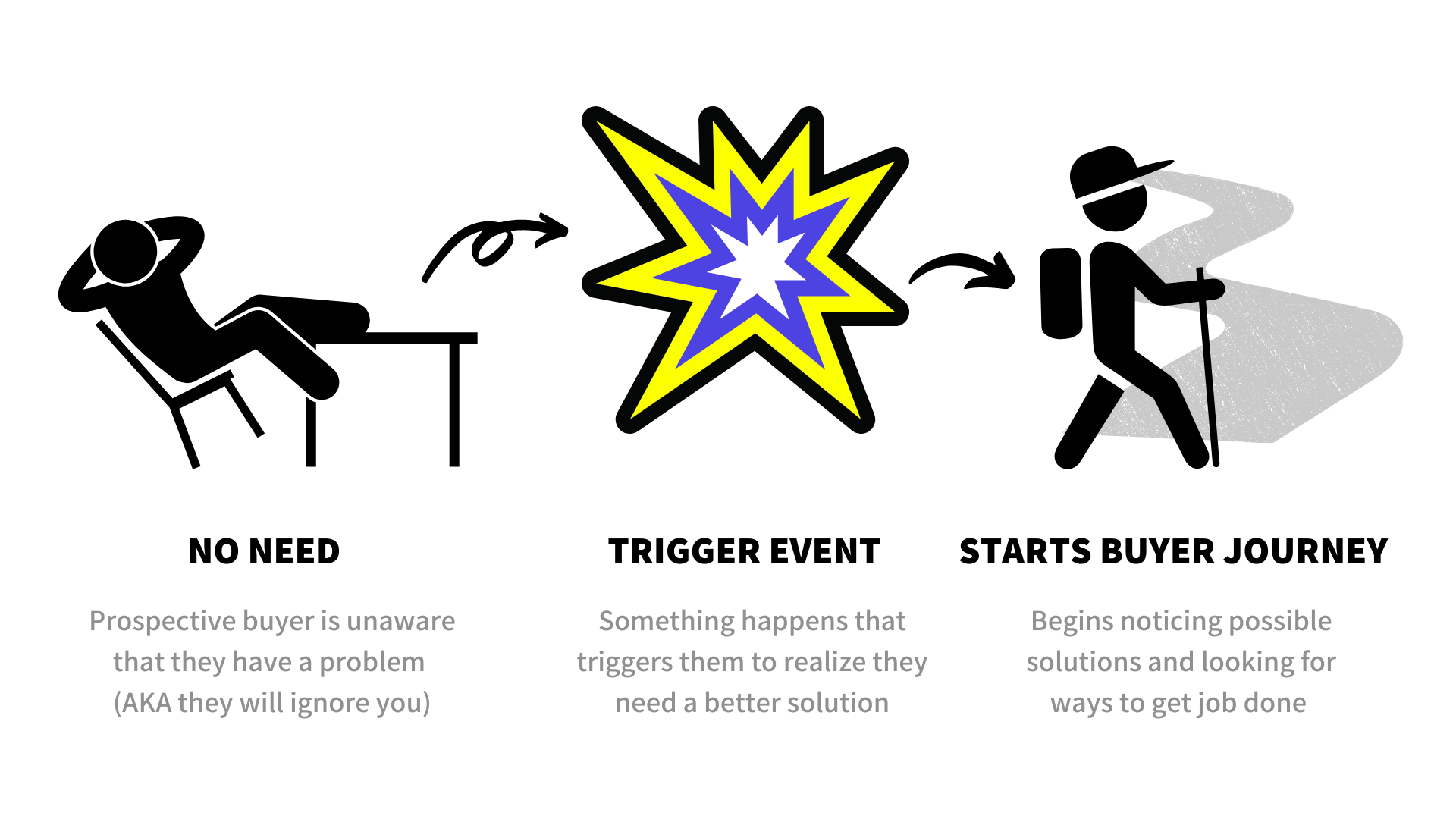
Set up automated alerts so trigger events reach you in real time instead of days or weeks late.
- LinkedIn Sales Navigator: alerts for job changes, company growth, and news mentions at followed accounts.
- Google Alerts: monitors target company names for funding news, leadership changes, expansions.
- Crunchbase and PitchBook: funding round notifications for accounts matching your ICP.
- Clay: pulls trigger events from multiple sources, funding, job postings, tech stack changes, LinkedIn activity, into one enrichment workflow.
Social and Community Signals
A prospect liking or commenting on a competitor's post, or sharing content about a problem your solution solves, is a quiet but real intent signal. So is participation in industry Slack groups, Discords, or forums where someone's actively asking questions about your category.
G2 Buyer Intent surfaces accounts that viewed competitor profiles or comparison pages, one of the cleanest third-party signals available. Social listening tools like Buska or Mention can track when target accounts post about your solution category, giving you a natural, non-creepy opener for outreach.
🚀 Stop Chasing Cold Prospects
With 53,000+ meetings booked and $312M+ in pipeline generated, Cleverly helps you reach companies that are ready to have sales conversations.
How to Score Leads Based on Intent Signals
Firmographic Fit Score + Intent Score = Outreach Priority
Two questions determine where an account lands in your priority queue:
- Firmographic fit (who they are): does this account match your ICP on industry, size, geography, tech stack, revenue? Score 0 to 50.
- Intent score (what they're doing now): are they researching your category, showing topic surges, or triggering buying events? Score 0 to 50.
The combined score sets your action:
A perfect-fit account with zero intent is still worth targeting eventually. But an average-fit account showing strong intent should jump the queue every time. Fit tells you if they could buy. Intent tells you if they're about to.
Building Your Intent Signal Scoring Model
Start by assigning weighted point values to your highest-value signals:
- Demo request or trial signup: 40 points
- Pricing page visit (2+ times): 30 points
- Bombora topic surge on your category: 25 points
- G2 competitor page view: 25 points
- Funding event in the last 90 days: 20 points
- Job posting implying budget: 15 points
- Webinar attendance: 15 points
- Content download: 10 points
- General website visit (non-pricing): 5 points
Set a threshold, say 50+ combined points, that triggers immediate SDR outreach. Then review the weights quarterly against what actually closed in your CRM. If pricing page visits aren't correlating with closed deals as strongly as job postings, your model needs updating. Don't set it once and walk away.
Stacking Signals for Confidence
One intent signal alone is a weak indicator. A stack of aligned signals is a strong one.
Example of a high-confidence stack: Bombora topic surge + G2 competitor view + pricing page visit + recent funding round = contact immediately.
Avoid reacting to a single blog read or one email open. That's noise, not intent. Require at least two or three aligned signals before triggering sales action. Teams that discipline themselves here see better results: signal-based motions with layered signals produce meaningfully higher win rates than teams that fire on every isolated data point.
How to Act on Intent Signals: Turning Data Into Outreach
Trigger-Based Outreach Sequences
Set up automated workflows so outreach fires the moment an account crosses your intent threshold. Don't wait for a weekly pipeline review to catch it.
A simple example flow: Bombora topic surge detected → account auto-created or updated in CRM → SDR assigned → LinkedIn connection request sent within 24 hours → cold email sequence launched on day two.
Personalize the first message around the signal itself: "I noticed [company] is evaluating [category] options. We work with companies like yours on exactly this."
Speed genuinely matters here. Intent signals decay fast, and research suggests they lose roughly half their predictive value within about a week.
A company surging on a topic today may have already picked a vendor in two weeks. Reaching out within 24 to 48 hours of detection consistently outperforms delayed contact.
Personalizing Outreach Using Intent Context
Reference the signal without being creepy about it: "We work with a lot of [industry] companies that are evaluating [category] right now." That implies awareness without revealing you're tracking their specific behavior.
Match your angle to the signal type:
- Funding trigger → growth angle: "Now that you're scaling, how are you thinking about X?"
- Hiring signal → capacity angle: "We see you're building out your SDR team."
- Tech stack change → integration angle tied to what they just added or dropped
If you have signal context and send a generic message anyway, you're wasting the exact advantage this data was supposed to give you.
Aligning Sales and Marketing on Intent Data
Marketing uses intent data to run ABM campaigns, serving targeted ads and content to surging accounts before sales makes contact. Sales uses it to prioritize who gets worked first in the daily prospecting queue.
Build a shared playbook that defines which signals trigger marketing nurture versus direct sales outreach, so both teams aren't working the same account with conflicting messages at the same time.
Review monthly: which signals from the past 30 days actually produced meetings, opportunities, and closed deals. Use that to recalibrate your thresholds.
Best Tools for Finding and Scoring B2B Intent Signals
Bombora

The market's leading pure-play intent data provider. Its Company Surge scoring aggregates content consumption across thousands of B2B publisher sites and topics, and it's embedded inside most major GTM platforms including ZoomInfo, 6sense, Demandbase, HubSpot, and Salesforce. Best for teams wanting the deepest third-party coverage as an add-on to an existing stack.
6sense

An enterprise ABM platform with strong predictive AI that shows not just that an account is in-market, but where they are in the buying journey. Combines first-party, third-party, and CRM data into account-level buying stage models. Best for mature ABM organizations running coordinated sales and marketing plays.
Demandbase

An enterprise intent and ABM platform bundling advertising, personalization, and intent capabilities together. Its main differentiator versus 6sense is bundled ad inventory rather than deeper signal ingestion. Best for teams that want intent, ABM advertising, and personalization in one place.
ZoomInfo Intent
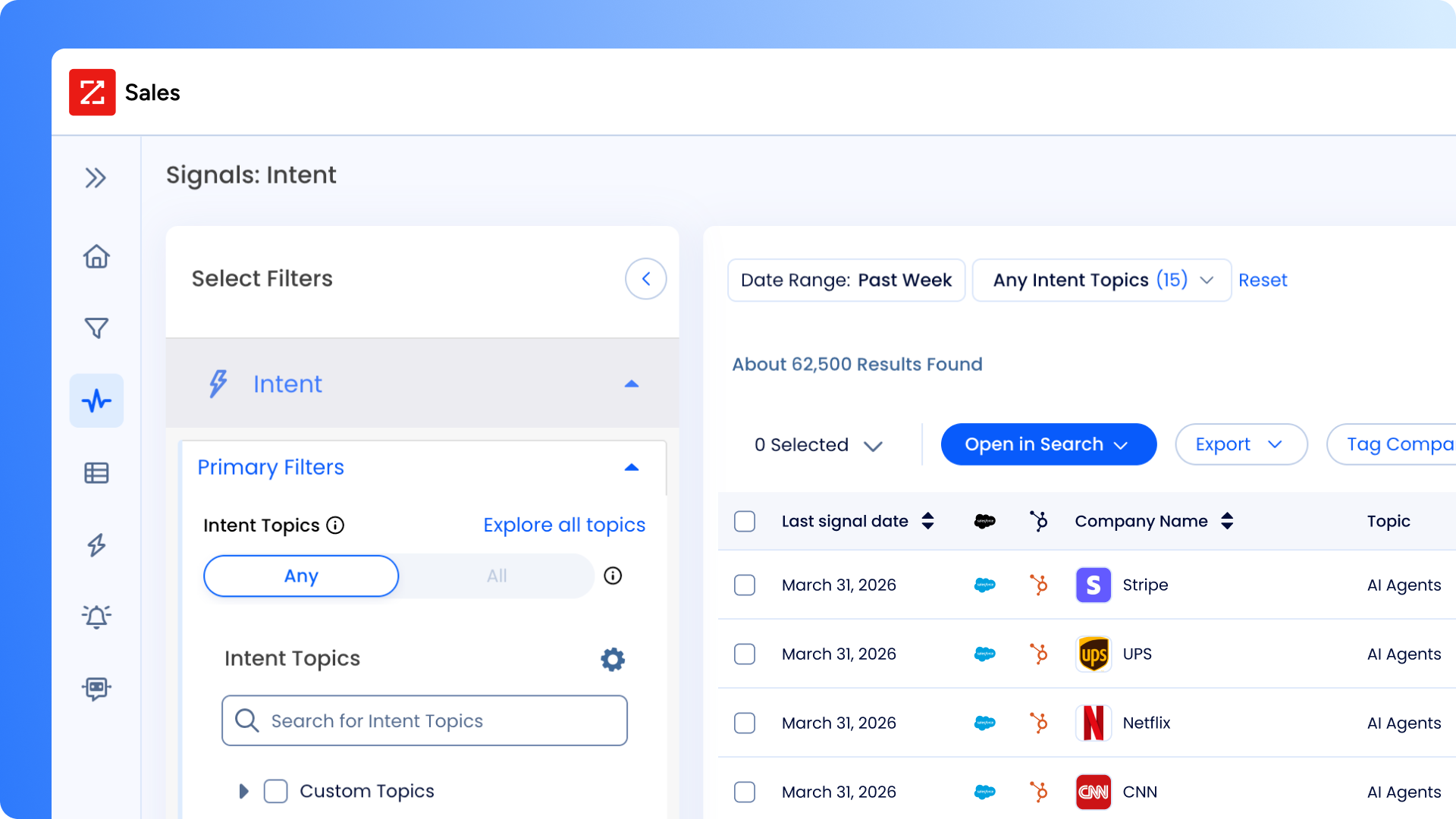
An intent layer built directly into ZoomInfo's contact and company database, so there's no separate integration step. Surfaces topic surge activity layered over ZoomInfo's large contact database. Best for teams already on ZoomInfo who want intent-based prioritization without adding another tool.
Leadfeeder / Dealfront

Identifies the companies behind anonymous website traffic using IP-based reverse lookup, turning visits into named accounts. Shows exactly which pages were viewed, how often, and by how many people. Best for SMB and mid-market teams that want first-party intent visibility without enterprise-level investment.
Apollo
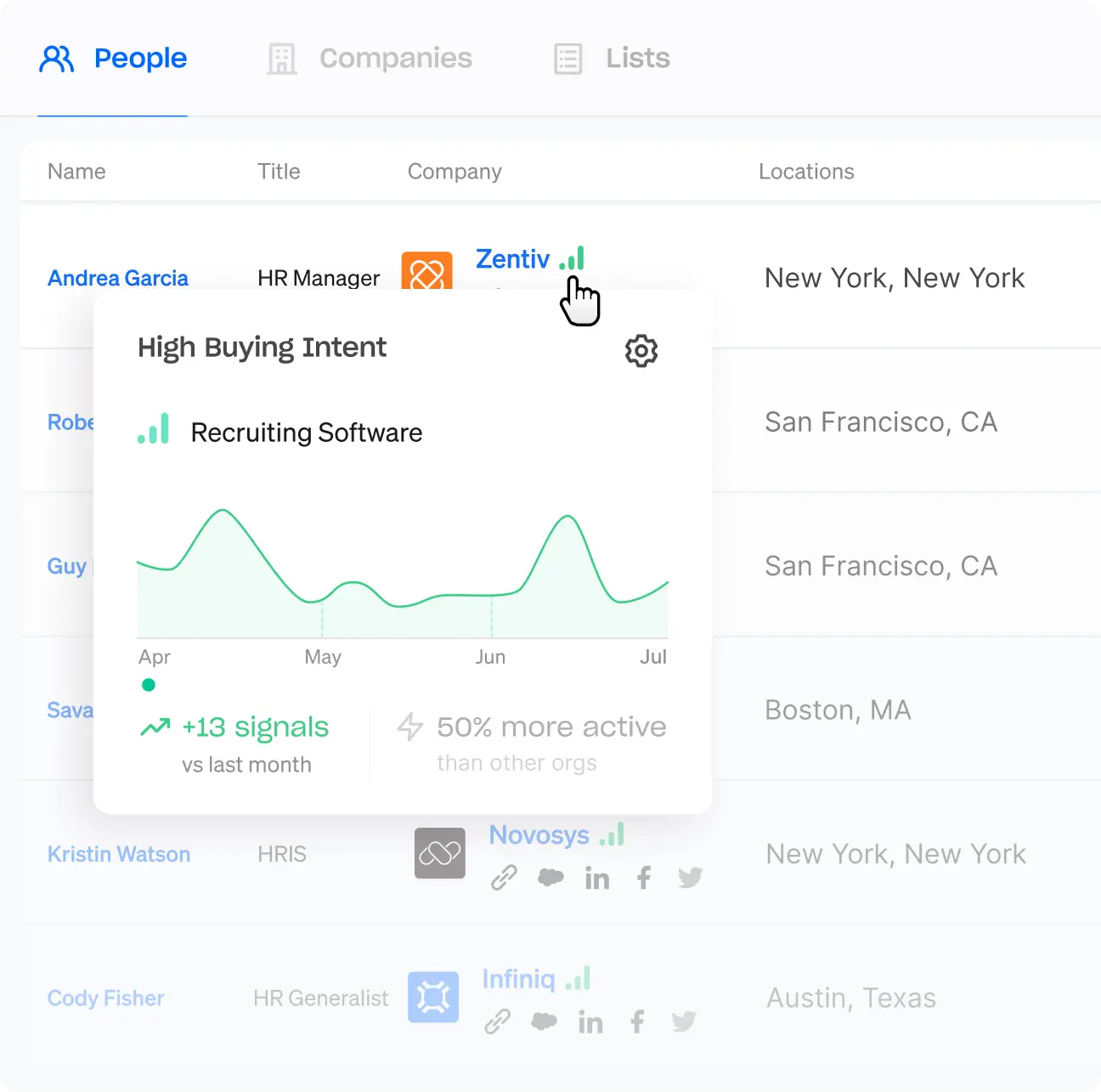
Combines a large contact database with intent signals and lead scoring in one prospecting and sequencing platform. A more budget-friendly entry point for teams that want intent data, contact data, and sequencing bundled together. Best for teams wanting an all-in-one platform with basic intent included.
How Cleverly Activates Intent Signals to Generate B2B Leads
Finding intent signals is only half the work. The other half, and the part most teams underinvest in, is acting on them fast, across the right channels, before the window closes.
Cleverly runs LinkedIn outreach, cold email, and cold calling, which are the three highest-converting outbound channels for reaching in-market B2B buyers once you've identified them.
We build prospect lists filtered not just by ICP firmographics, but by actual buying signals, so outreach reaches accounts with real active need instead of accounts that simply match a profile on paper.
That speed matters more than most teams realize. When a target account signals intent, fast, coordinated outreach across LinkedIn, email, and phone books meetings at a much higher rate than a single-channel, delayed follow-up ever will.
This is why we run multi-channel campaigns instead of betting everything on one channel and hoping the timing lines up.

We've generated 224,700+ leads and $312 million in pipeline for clients across every B2B industry, built on targeted, signal-informed outreach rather than volume for its own sake.
If you're sitting on intent data you're not fully activating, see how Cleverly turns that signal into booked meetings!
Conclusion
Intent signals don't generate revenue on their own. Activated intent signals do. The five types worth tracking, content consumption, search and research behavior, engagement and product usage, hiring and operational moves, and financial trigger events, all point to the same underlying goal: knowing when a company is ready before your competitor does.
The teams winning with this in 2026 aren't the ones with the most data. They're the ones who combine firmographic fit with stacked intent signals, respond within 24 to 48 hours of detection, and personalize outreach around the specific context each signal provides.
Start simple. Set up website visitor identification, add one third-party intent source, stack your signals, set a scoring threshold, and let that drive your outreach priority list starting tomorrow.
Frequently Asked Questions
Free Resource
How to Scale a Profitable Cold Call System
Get the complete guide — download it instantly now.

Free Ebook
Download the Free Guide
Enter your details to get instant access.
You're all set! 🎉
Your ebook is downloading now.
Click below if the download didn't start automatically.