Table of Contents
What Is Micro-Segmentation?
Why Micro-Segmentation Matters for Outbound Campaigns
Types of Data Used for Customer Micro-Segmentation
How to Build a Micro-Segmentation Strategy for Outbound (Step-by-Step)
Micro-Segmentation Examples in Outbound Campaigns
Common Micro-Segmentation Mistakes to Avoid
How Cleverly Uses Micro-Segmentation to Drive B2B Lead Generation
Conclusion
Frequently Asked Questions
Modified On :
May 22, 2026
Key Takeaways
- Micro-segmentation divides your total addressable market into highly specific cohorts — built on firmographic, technographic, behavioral, and intent data — so every campaign feels purpose-built for its recipient.
- Campaigns targeting fewer than 50 recipients average a 5.8% reply rate vs. 2.1% for campaigns sent to 1,000+ contacts — smaller, tighter segments drive dramatically better results.
- Layering data types is what makes customer micro-segmentation precise: firmographics tell you who to target; technographic and intent data tell you when and why.
- Segmented campaigns can drive up to a 760% increase in revenue compared to non-segmented approaches — and effective micro-segmentation lifts revenues by 5–15% while improving marketing ROI by 10–30%.
- The biggest mistakes teams make: over-segmenting too early, using only one data type, and writing generic copy for specific segments — undoing all the targeting work before a single email lands.
Outbound campaigns don't fail because the copy is bad. They fail because the targeting is too broad.
Sending the same message to a VP of Sales at a bootstrapped 20-person agency and a VP of Sales at a 500-person Series C SaaS company is not a segmentation strategy. It's a list. And lists don't produce pipeline — precision does.
That's exactly what micro-segmentation changes. Instead of one campaign blasted to thousands, you run twenty tailored campaigns to fifty highly specific prospects each.
The math works: campaigns targeting fewer than 50 recipients average a 5.8% reply rate, compared to just 2.1% for campaigns targeting over 1,000 contacts. That's nearly a 3x difference — not from better copy, but from better targeting.
This guide covers what micro-segmentation is, the data that powers it, how to build a strategy from scratch, real-world examples, and the mistakes that kill results before campaigns even launch.
If you're running outbound — or planning to — this is how you stop competing on volume and start winning on relevance.

What Is Micro-Segmentation?
Micro-segmentation is the practice of dividing your total addressable market into highly specific, granular groups — based on behavioral, firmographic, technographic, and intent data — so every outbound campaign feels purpose-built for its recipient.
It's different from standard segmentation in a meaningful way. Traditional segmentation groups prospects by broad categories: industry, company size, geography.
Micro-segmentation layers in behavioral signals, tech stack, buying intent, and role-specific pain points to create cohorts of 10–100 prospects that share a specific context — not just a category.
Think of the difference this way:
The core principle: the smaller and more precise the segment, the more relevant the message. The more relevant the message, the higher the reply rate, the faster the qualification, and the stronger the pipeline.
The biggest contributing factors to top-performing campaigns are micro-segmentation, problem-focused messaging, frequent A/B testing, and smart automation. That's not a coincidence — it's a pattern that repeats across every vertical and every channel.
🎯 Broad Targeting Kills Reply Rates
We build hyper-targeted outbound campaigns that actually convert. LinkedIn, cold email & calling—fully done for you.
Why Micro-Segmentation Matters for Outbound Campaigns
The problem with broad outbound is simple: generic messaging to large audiences creates noise, damages sender reputation, and burns through your ICP list faster than pipeline gets built. Decision-makers today receive dozens of outbound messages daily.
The ones that break through feel personally relevant. Everything else gets deleted in under three seconds.
Benefits of micro-segmentation show up across every dimension of outbound performance.
Higher Reply Rates and Conversion
Campaigns using tight segmentation, intent signals, and omnichannel follow-up can reach 10–20% reply rates on high-fit segments. Compare that to the platform-wide average of 3.43%, and the gap speaks for itself.
For cold outbound, average reply rates hover around 3–5.1%, while top-quartile programs can reach 15–25% with tight targeting and strong hooks. The difference between average and elite is almost never the copy alone — it's the targeting upstream of it.
Better Personalization at Scale
One of the biggest misconceptions about micro-segmentation in marketing is that it trades scale for relevance. It doesn't. Messaging frameworks are built once per segment, then deployed across all matching prospects.
Each segment gets a distinct angle, a pain point framing specific to that cohort, and a CTA matched to where those buyers actually sit in their journey. The result: outreach that feels 1:1 even when sent at volume.
More Efficient Use of Sales Resources
Reps stop working sprawling, poorly defined lists and start spending time on the highest-fit accounts. Prospects receiving relevant outreach qualify faster and require less education. You eliminate wasted touches on accounts that were never a real fit — and that time compounds across a quarter.
Sales teams using segmentation close deals 30% faster, and companies with segmentation see an average 12% lift in revenue.
Stronger Revenue Impact
Segmented campaigns can drive up to a 760% increase in revenue compared to non-segmented approaches. Effective micro-segmentation lifts revenues by 5–15% and improves marketing ROI by 10–30%. TabulardotData
These aren't marginal gains. They're the difference between outbound that pays for itself and outbound that drains budget.
Deeper Account Intelligence Over Time
Every segment run teaches you something. Which pain points land. Which triggers drive response. Which cohorts convert faster. This intelligence compounds: future campaigns to similar segments get sharper with every iteration.
Micro-segmentation data feeds back into ICP refinement, product positioning, and sales enablement — making the whole revenue org smarter over time.
Types of Data Used for Customer Micro-Segmentation
Micro-segmentation is only as precise as the data powering it. The teams that underperform on segmentation almost always share one thing in common: they're relying on a single data type when the best results come from layering multiple signals.
Here's what the full data stack looks like.
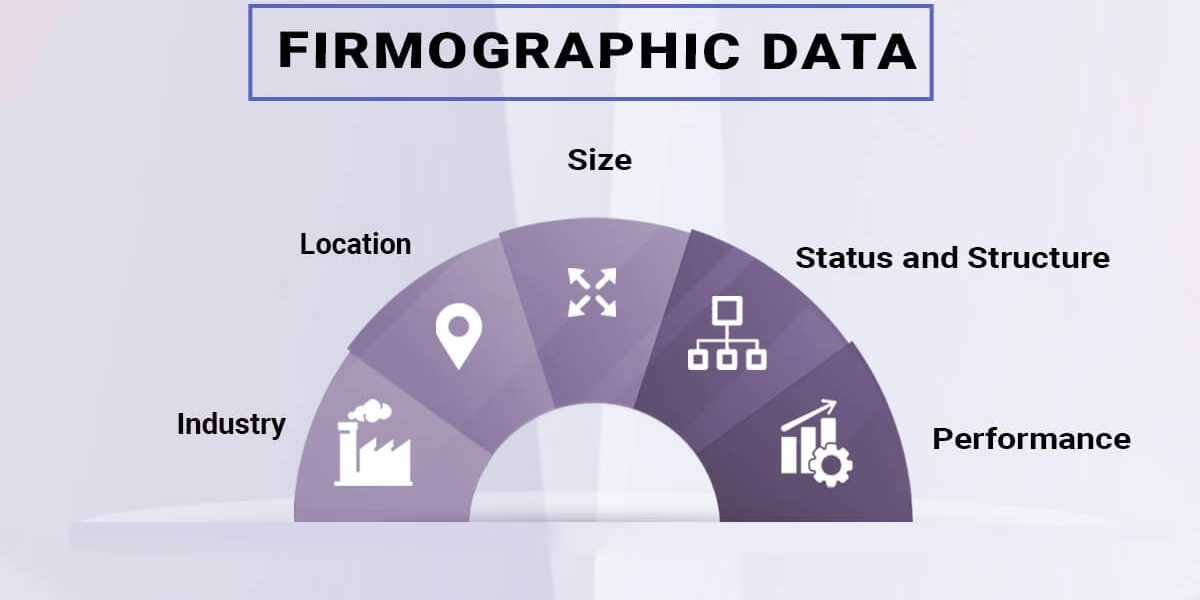
Firmographic Data
Company-level attributes: industry vertical, employee count, annual revenue, geography, ownership structure, growth rate. Firmographic data builds your base segments — the starting ICP filter.
Use case: "Series B SaaS companies, 50–200 employees, North America, growing headcount at 20%+ per year."
Limitation: Firmographics alone are table stakes. They tell you who to target — not when or why.
Technographic Data
The technology stack and software tools a company uses: their CRM (Salesforce, HubSpot), sales engagement platform (Outreach, Salesloft), marketing automation (Marketo, Pardot), cloud infrastructure, analytics stack.
Use case: Segment by tech stack to tailor messaging around integration opportunities, competitive displacement, or tool-specific pain points. "Companies using HubSpot + Outreach" get different messaging than "companies using Salesforce only."
Why it matters: Referencing a prospect's actual stack immediately signals relevance. It tells them you did the work — and that's rare enough to stand out.
Behavioral Data
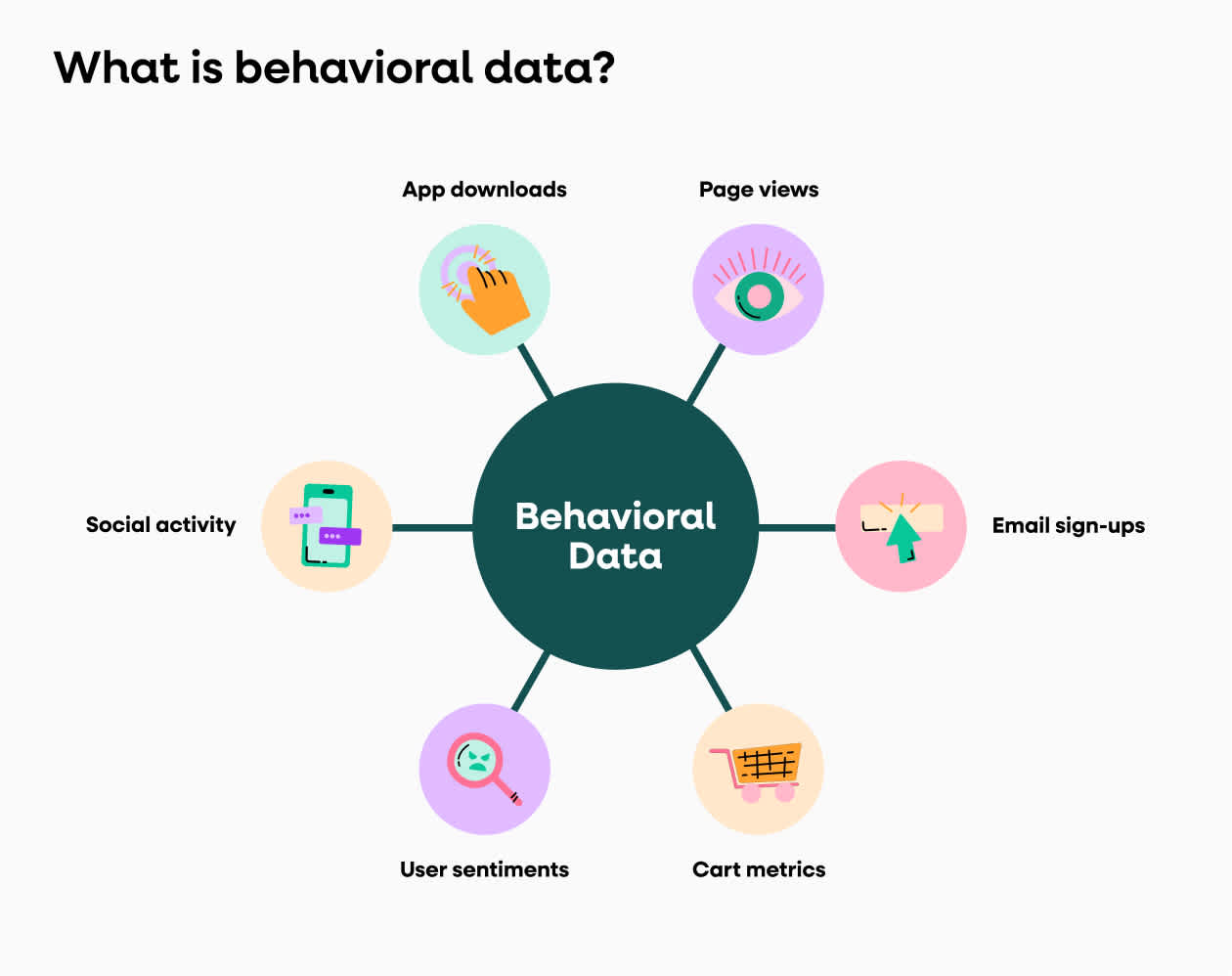
How prospects interact with your brand: website visits, content downloads, pricing page views, email opens, webinar attendance, product trial activity.
Use case: Segment warm prospects who have already shown intent. These cohorts warrant entirely different messaging than cold accounts with no prior touchpoints. Behavioral data is the clearest signal of where a prospect sits in their buying journey — and it changes the entire tone and angle of your outreach.
Psychographic and Role-Level Data
Decision-maker priorities, pain points, and communication style by role. A CFO cares about ROI and risk. A VP of Sales cares about pipeline and quota attainment. A VP of Marketing cares about attribution and spend efficiency. A Head of RevOps cares about process efficiency and CRM hygiene.
Use case: Build persona-level messaging frameworks within each firmographic or technographic segment so every stakeholder receives messaging aligned to their specific priorities — not just their title.
This is the layer that turns a good micro-segment into a great campaign.
Intent Data
Third-party intent signals indicating an account is actively researching solutions in your category: keyword search activity, competitor content consumption, G2 or Capterra profile visits, review site engagement.
Use case: Trigger micro-segmented outreach the moment a target account starts researching a competitor or the exact problem your product solves. Timing is everything in outbound.
Sources to know: 6sense, Bombora, G2 Buyer Intent, ZoomInfo Intent.
Intent data transforms outbound from interruption to relevance. You're reaching buyers when they're already looking — not 6 months before or after.
🚀 Better Segmentation = Bigger Pipeline
$312M pipeline generated across outbound channels. We handle targeting → messaging → booking. You close.
How to Build a Micro-Segmentation Strategy for Outbound (Step-by-Step)
Think of this as a build sequence. Each step unlocks the next. Skipping ahead is where most execution failures happen.
Step 1: Audit Your Current ICP and Identify Segment Variables
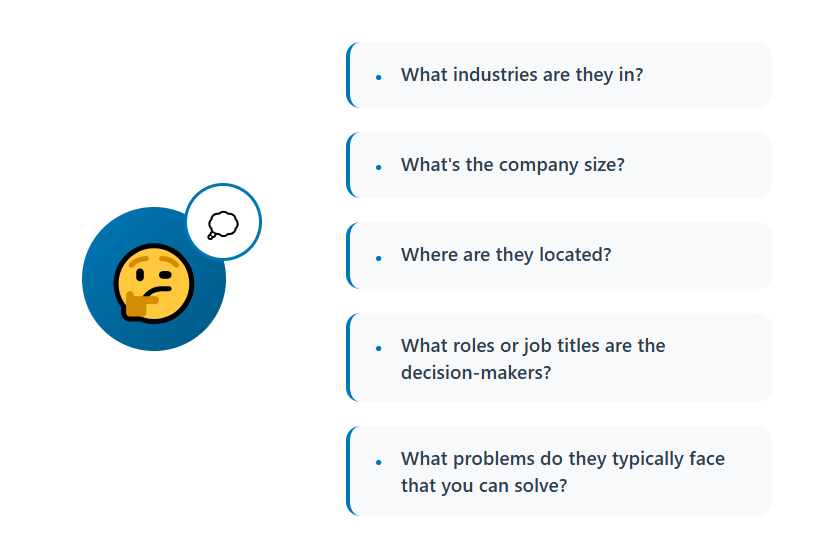
Start with your best existing customers — the ones who closed fast, expanded, and stayed. What firmographic, technographic, and behavioral attributes do they share?
Identify 3–5 variables that most reliably predict fit and conversion. These become the axes of your micro-segments.
One trap to avoid early: creating too many segments before you've validated which variables actually correlate with conversion. Start with 8–12 meaningful segments with enough volume to justify building distinct messaging for each.
Step 2: Layer in Data to Define Precise Segments
Stack firmographic + technographic + intent data to move from broad ICP to specific cohort.
Example build: "VP of Sales at Series B SaaS companies, 50–200 employees, using Salesforce + Outreach, actively researching sales engagement tools" — that is a micro-segment.
"VP of Sales at SaaS companies" is not.
Use tools like ZoomInfo, Apollo, Clay, or Cognism to enrich and validate lists before building campaigns. Garbage data at this stage kills the entire downstream effort.
Step 3: Build a Distinct Messaging Framework Per Segment
Each segment gets its own:
- Subject line angle — tied to a segment-specific trigger or pain point
- Opening hook — directly relevant to that cohort's context
- Value proposition framing — built around what matters most to that specific buyer profile
- Social proof — a case study or outcome from the same industry, size, or role
- CTA — matched to where that segment sits in the buying journey
What stays consistent across segments: your brand voice, offer clarity, and follow-up structure.
The goal: a prospect in any segment should read your message and think, "this was written for someone exactly like me."
Step 4: Select the Right Channel Mix Per Segment
Not all segments respond equally to all channels. Channel selection should follow the data.
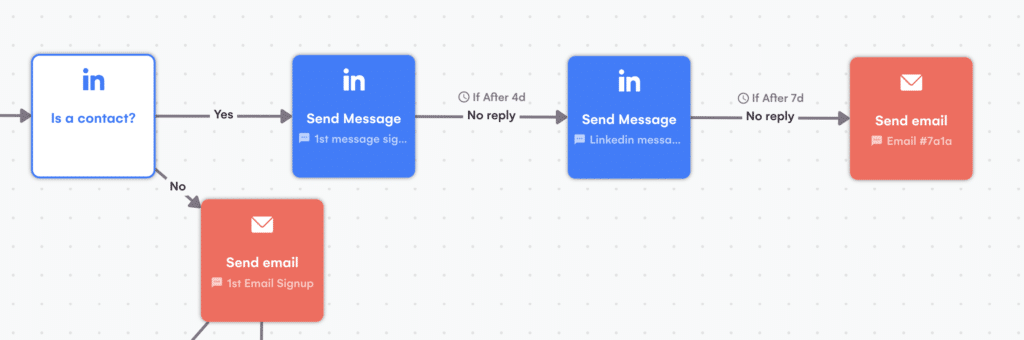
- LinkedIn outreach: best for relationship-heavy, high-ACV segments and decision-makers active on the platform.
- Cold email: best for large-volume segments with verified contact data and a clear, direct value prop.
- Cold calling: best for high-intent, high-ACV segments where speed-to-conversation drives conversion.
- Multi-touch sequences: combine 2–3 channels for enterprise segments where single-channel reach is insufficient.
The segment dictates the channel — not the other way around.
Step 5: Set Segment-Specific KPIs Before Launch
Define success metrics per segment before sending a single message. This forces clarity on what "working" actually means for each cohort.
Core metrics to track per segment: reply rate, positive reply rate, meeting booked rate, pipeline generated.
Segment-level benchmarks give you a comparison baseline. If one segment dramatically outperforms the others, that becomes the template for future segmentation decisions.
Step 6: Test, Measure, and Iterate by Segment
Run segments for a minimum of 2–3 weeks before drawing conclusions. Short windows produce misleading data.
A/B test one variable at a time per segment: subject line, opening hook, CTA, or channel. Kill or pause underperforming segments early. Double down on segments showing above-benchmark reply and conversion rates.
Feed learnings back into Step 1. Every campaign cycle should sharpen your ICP definitions and segment variables.
The compounding effect here is real — teams that iterate consistently see measurably better results by campaign 3 or 4 than they did on launch.
Micro-Segmentation Examples in Outbound Campaigns
Here's how the framework above actually translates into real campaign execution.
Technographic Segment: Targeting by Competitor Stack
Segment: Companies using a direct competitor's tool as their primary sales engagement platform.
Messaging angle: Lead with a pain point specific to that tool's known limitations. Position your solution as the direct upgrade without attacking the competitor by name.
Why it works: The prospect already understands the category. No education needed — just relevance. They read your message and it lands because it's describing something they already feel.
Firmographic + Intent Segment: High-Growth Companies Actively Researching
Segment: Companies that have grown headcount by 30%+ in the past 6 months and are showing intent signals around your product category.
Messaging angle: Acknowledge the growth trigger directly — "scaling this fast brings new challenges in [area]" — then tie your value prop to what fast-growing companies at their stage typically struggle with.
Why it works: Timing plus relevance. You're reaching them while the pain is live, not 6 months before it surfaces or after they've already bought.
Role-Level Segment: Same Company, Different Stakeholders
Segment: Same target account, different decision-makers — VP of Sales, CFO, Head of RevOps.
Messaging angle: Entirely different for each role. VP of Sales hears about pipeline and quota. CFO hears about ROI and cost per meeting. Head of RevOps hears about process efficiency and CRM hygiene.
Why it works: Multi-threaded outreach to the same account increases deal velocity while ensuring no single stakeholder can block the conversation unilaterally. One message rarely closes a deal — three conversations across the right stakeholders does.
Behavioral Segment: Warm Prospects Who Visited Pricing
Segment: Prospects who visited your pricing page but didn't convert or request a demo.
Messaging angle: Low-friction outreach that acknowledges their research stage without being pushy. Offer a comparison resource, a relevant case study, or a 15-minute call to answer questions.
Why it works: Behavioral data confirms intent. The prospect is already in consideration mode — your outreach is an assist, not a cold interruption. The conversion threshold is much lower than it is for a cold account.
Common Micro-Segmentation Mistakes to Avoid
Getting the strategy right matters. But so does avoiding the execution errors that kill results before campaigns even launch.
❌ Over-segmenting too early. Creating 40+ micro-segments before validating which segment variables actually correlate with conversion adds complexity without adding results. Start with 8–12 meaningful segments and expand based on performance data.
❌ Using only one data type. Firmographics alone produce segments that are too broad to enable real personalization. The messaging you can write for "VP of Sales at SaaS companies" will always feel generic — because it is. Layer in technographic or intent data and the segment becomes specific enough to build messaging that actually lands.
❌ Building generic messaging for specific segments. This is the most common and most costly mistake. The work of micro-segmentation is entirely wasted if the message sent to each segment is still a slightly modified version of the same generic template. Different segment, different message — no exceptions.
❌ Ignoring segment volume minimums. Segments with fewer than 20–30 contacts don't produce statistically meaningful data. You can't learn from a sample that small. Either expand the segment definition or hold it until you have enough contacts to draw real conclusions.
❌ Not tracking segment-level performance separately. Combining all segment results into a single campaign report makes it impossible to identify what's working and what isn't. Every segment needs its own performance row — reply rate, positive reply rate, meetings booked, pipeline generated.
❌ Rebuilding instead of iterating. Teams that scrap entire segment strategies after a single poor campaign miss the actual problem — which is almost always the messaging, not the segment definition. Iterate on the angle before you abandon the cohort.
How Cleverly Uses Micro-Segmentation to Drive B2B Lead Generation
Most outbound failures aren't a channel problem or a copy problem. They're a targeting problem. Sending the right message to the wrong segment at the wrong time produces the same result as bad copy sent to the right one: silence.
At Cleverly, we build precision micro-segmented outbound campaigns for B2B companies — combining firmographic, technographic, and intent data to create cohorts that receive messaging built specifically for their profile, pain points, and stage in the buying journey.
The difference between our approach and generic outreach is where the work actually happens: upstream, in the targeting layer, before a single message gets written.
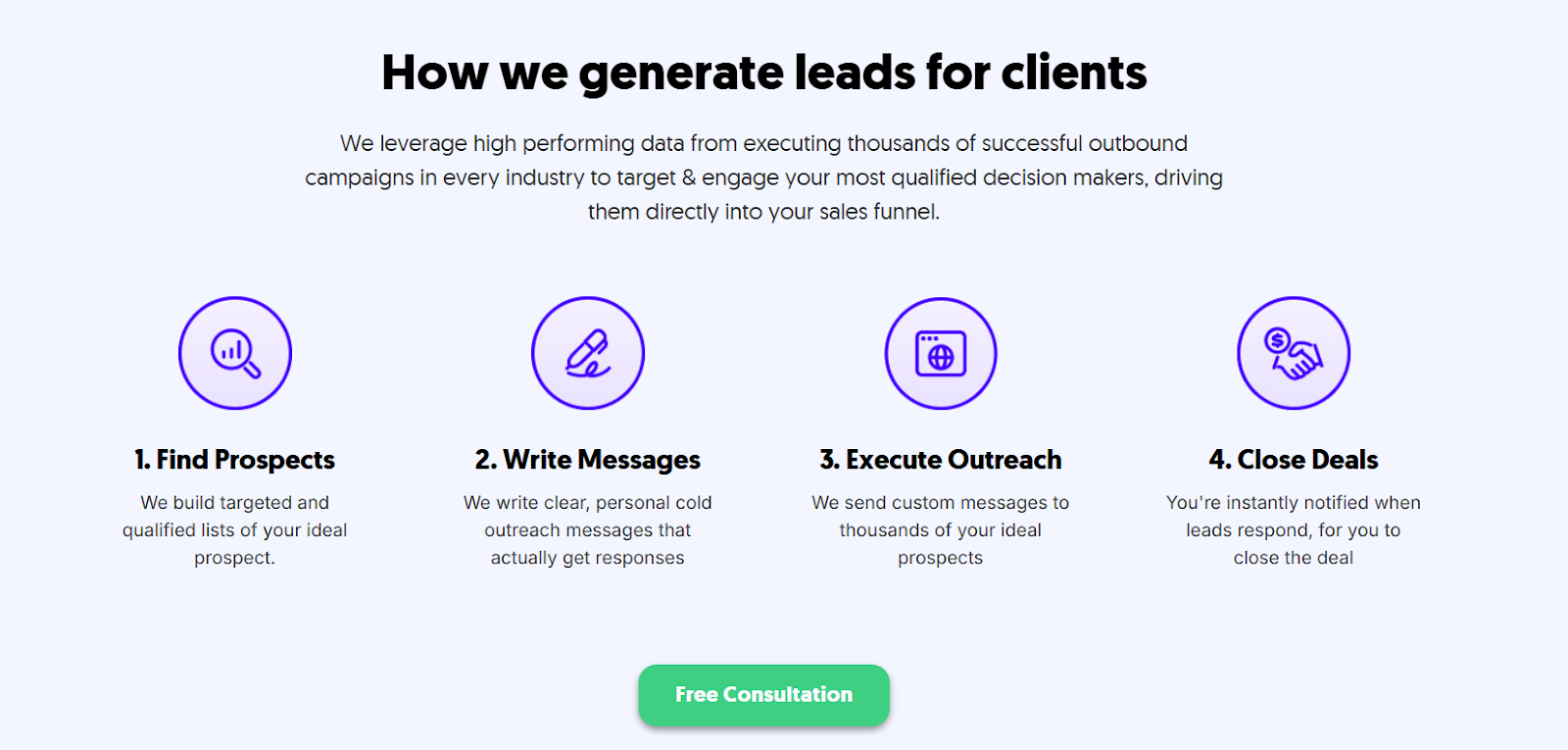
Our ICP-aligned verified lists are built from multi-source data. Each segment gets its own messaging framework — tested and refined across thousands of campaigns across LinkedIn outreach, cold email, and cold calling — matched to the right channel for that specific buyer type.
We're not optimizing for sends or open rates. We're optimizing for qualified meetings with the right decision-makers.
What this means practically: our clients skip the 2–3 month trial-and-error phase that most teams go through when standing up micro-segmented outbound for the first time.
We've helped 10,000+ B2B companies — including teams at Amazon, Google, Uber, and Slack — generate $312M in pipeline revenue through outbound that's built on precision, not volume.
If you want micro-segmented outbound built and run by a team that specializes in B2B lead generation, book a strategy call with Cleverly and we'll show you exactly how we'd approach your market.
Conclusion
Micro-segmentation is not a complexity add-on to your outbound motion. It's the foundation of whether outbound generates pipeline or generates unsubscribes.
The shift is simple in principle: stop targeting audiences and start targeting cohorts — smaller, more specific groups that share a real pain point, a relevant trigger, and a genuine reason to respond.
Start with your best customers, build the data layer, define 8–12 segments, and iterate. Every campaign cycle sharpens your targeting and compounds your pipeline output. That's the game.
Frequently Asked Questions
Free Resource
How to Scale a Profitable Cold Call System
Get the complete guide — download it instantly now.
Free Ebook
Download the Free Guide
Enter your details to get instant access.
You're all set! 🎉
Your ebook is downloading now.
Click below if the download didn't start automatically.