

Table of Contents
What Is SaaS Lead Nurturing?
Why Most SaaS Companies Fail at Lead Nurturing
SaaS Lead Nurturing Benchmarks to Know
How to Build a SaaS Lead Nurturing System (Step-by-Step)
Best Strategies for Nurturing B2B SaaS Leads
Common Mistakes to Avoid in SaaS Lead Nurturing
How Cleverly Helps SaaS Companies Build Qualified Pipeline
Conclusion
Modified On :
July 7, 2026
Key Takeaways
- SaaS lead nurturing works when it's built around behavioral signals and lead scoring, not a generic time-based drip that ignores what the prospect is actually doing.
- Trial users and MQLs need separate nurture tracks. Treating a trial signup the same as a whitepaper download wastes your best conversion window.
- Speed decides deals. Following up within the first hour converts dramatically better than waiting a day, yet most SaaS teams still respond slowly or not at all.
- Lead scoring only works when marketing and sales agree on the threshold that triggers human outreach versus continued automated nurturing.
- Nurturing fixes the leads you already have. If your top of funnel is thin or unqualified, no sequence will save your pipeline numbers.
A trial expires. An MQL goes cold three weeks after downloading a whitepaper. Sales says the leads were garbage. Marketing says sales never followed up.
This fight happens at almost every SaaS company, and it's rarely about lead volume. It's about what happens, or doesn't happen, in the gap between first touch and sales conversation.
The numbers back this up. Industry-wide, only about 13% of MQLs convert to SQLs on average, though B2B SaaS companies with tighter lead scoring and faster follow-up typically land closer to 18-25%, with top performers pushing into the 30-40% range.
Following up within the first hour produces roughly a 53% conversion rate versus 17% when follow-up waits past 24 hours.
On the trial side, the median free-to-paid conversion rate across free trial products sits around 8%, though products requiring a credit card upfront convert at roughly 30%, nearly five times higher.
This guide breaks down what SaaS lead nurturing actually looks like when it works: the benchmarks to measure against, the system to build, and the specific sequences and triggers that turn trial signups and MQLs into pipeline your sales team actually wants to work.
What Is SaaS Lead Nurturing?
Lead nurturing in SaaS is the process of building trust and demonstrating value with prospects and trial users over time, so that by the time sales reaches out, the answer is already leaning toward yes.
It's not just an email drip. A real nurture system includes:
- Email sequences tied to behavior, not just a calendar
- In-app messaging and product nudges
- Direct sales outreach for high-intent prospects
- Content delivered at the right stage of evaluation
- Automated triggers based on what the user actually does
There are two distinct audiences you're nurturing in SaaS, and they need completely different treatment. Trial users are product-qualified. They're already inside your product, which means their behavior tells you exactly how close they are to converting.
MQLs are marketing-qualified, which is a much weaker signal. Someone who downloaded a pricing comparison guide is not the same as someone who hit your pricing page three times this week.
What nurturing isn't: a newsletter blast, a single drip sequence applied to everyone regardless of fit, or an excuse to delay a phone call when a lead is clearly ready to talk to sales.
🚀 More Trials. More Qualified Pipeline.
We help SaaS companies generate 15–30 sales-ready meetings every month through LinkedIn, cold email, and cold calling.
Why Most SaaS Companies Fail at Lead Nurturing
Most nurture problems trace back to a handful of repeatable mistakes.
🚩 The MQL trap. An MQL measures marketing activity, not buying intent. A form fill from six months ago and a demo request from yesterday often get scored the same way, which means sales wastes time chasing leads that were never close to ready.
🚩 Time-based drips instead of signal-based nurturing. Sending email three on day five regardless of what the prospect is doing ignores the one thing that actually matters: what they just did in your product or on your site.
🚩 No lead scoring at all. Without lead scoring, every lead looks the same on a rep's list. High-intent prospects sit in the same queue as leads that filled out a form for a lead magnet and never opened another email.
🚩 Slow follow-up. This is the most fixable problem and the most common one. Teams that respond within the first hour convert at meaningfully higher rates than teams that wait a day, yet most SaaS companies still route leads through a queue that takes hours or days to clear.
🚩 Single-channel nurturing. Email-only nurturing misses prospects who are more active on LinkedIn, more responsive to a phone call, or simply buried in an inbox that gets 200 emails a day.
🚩 Sales and marketing misalignment. No shared definition of "qualified," no agreed handoff process, and no joint accountability for what actually turns into pipeline.
SaaS Lead Nurturing Benchmarks to Know
Before you rebuild your nurture system, know what you're actually working toward. These are the numbers worth benchmarking against:
SEO-sourced MQLs tend to convert at much higher rates than paid social or webinar-sourced ones, and channel mix explains a large share of the variance in these numbers.
If your MQL-to-SQL rate is sitting below 15%, the problem is rarely a sales execution issue. It's almost always a loose MQL definition, slow follow-up, or messy contact data.
Use these numbers as a diagnostic, not a scoreboard. If you're well below benchmark on trial conversion but your activation rate is strong, the leak is somewhere in the nurture sequence itself, not the product.
📈 Scale Beyond Trial Signups
Join 10,000+ B2B companies using Cleverly to build a predictable outbound pipeline that consistently feeds your sales team.
How to Build a SaaS Lead Nurturing System (Step-by-Step)
Step 1: Segment your leads

Split trial users from MQLs first. Then segment further by ICP fit (company size, industry, role), engagement level, and buying stage. A trial user at a 500-person company evaluating for a team rollout looks nothing like a solo founder kicking the tires.
Step 2: Define your lead scoring model
Combine firmographic fit (does this account match your ICP), behavioral signals (pricing page visits, feature usage, content engagement), and recency. Set a clear threshold where a lead automatically triggers sales follow-up instead of sitting in automated nurture.
Step 3: Map separate nurture tracks
A trial user sequence and a cold MQL sequence should not share a single template. Build them independently, with different goals: one is trying to prove value before expiration, the other is trying to build enough trust to earn a conversation.
Step 4: Set up behavioral triggers

Identify the actions that actually signal intent: trial signup, pricing page visit, a specific feature getting activated, a return login after a week of silence. Build an automated response to each one instead of relying on a fixed calendar.
Step 5: Align sales follow-up cadence
Agree, in writing, on which leads get immediate human outreach (high score, pricing page visit plus ICP fit) versus which stay in automated nurture. This single agreement fixes more pipeline problems than any new tool you'll buy this year.
Step 6: Measure pipeline contribution, not MQL volume
Track SQL conversion rate, time from MQL to opportunity, and pipeline generated per channel. If a channel produces a lot of MQLs but almost no pipeline, that volume isn't worth celebrating.
Best Strategies for Nurturing B2B SaaS Leads
Each strategy below solves a specific bottleneck. Pick the ones that match where your funnel is actually leaking, not the ones that sound the most sophisticated.
Email Nurture Sequences for Trial Users
Trial users are your warmest audience. They've already signed up, which means the job now is proving value before the clock runs out.
A sequence that actually works:
- Day 1-2: Welcome email restating the problem your product solves, with a quick-start guide and clear trial expectations.
- Day 3-4: Feature spotlight on the one or two features most correlated with activation, ideally with an example from a similar company.
- Day 5-7: A social proof moment, like a case study from a company in the same industry or size range.
- Day 8-10: Direct objection handling on the reasons trials typically don't convert: price, complexity, time to value, integration concerns.
- Day 12-13: A trial expiry reminder with a clear upgrade path and a direct offer to talk to someone.
The key principle: behavioral triggers should override the calendar. If a user activates a core feature on day three, skip straight to social proof instead of running the full sequence in order.
Signal-Based and Behavioral Nurturing

Replace the fixed calendar with trigger-based responses. The goal is sending the right message the moment a prospect signals intent, not on whatever day your automation platform has scheduled.
High-intent triggers worth acting on immediately:
- A pricing page visit
- Returning to the app after a stretch of inactivity
- Activating a key feature for the first time
- Visiting an upgrade page
- A job change at a target account
A practical example: a prospect hits your pricing page, and within 30 minutes they get an automated email with a plan comparison and a clear CTA to book a call. If there's no response in 24 hours, a sales rep gets notified to reach out directly. Signal-based sequences convert significantly better than time-based ones because the message actually matches what the prospect is doing right now.
Role-Based Nurture Tracks
A single deal can include a technical evaluator, a budget owner, and an end user, and each one needs different content to move forward.
- Economic buyers want ROI, a business case, and a cost comparison.
- Technical evaluators want integration docs, security details, and API capabilities.
- End users want ease of use, time savings, and how it fits into their daily workflow.
Use form data, enrichment, or CRM fields to identify role and route each contact to the right track. The payoff is faster objection resolution and a shorter sales cycle, because every stakeholder gets content that answers their actual question instead of a generic overview.
Sales Outreach for High-Intent MQLs
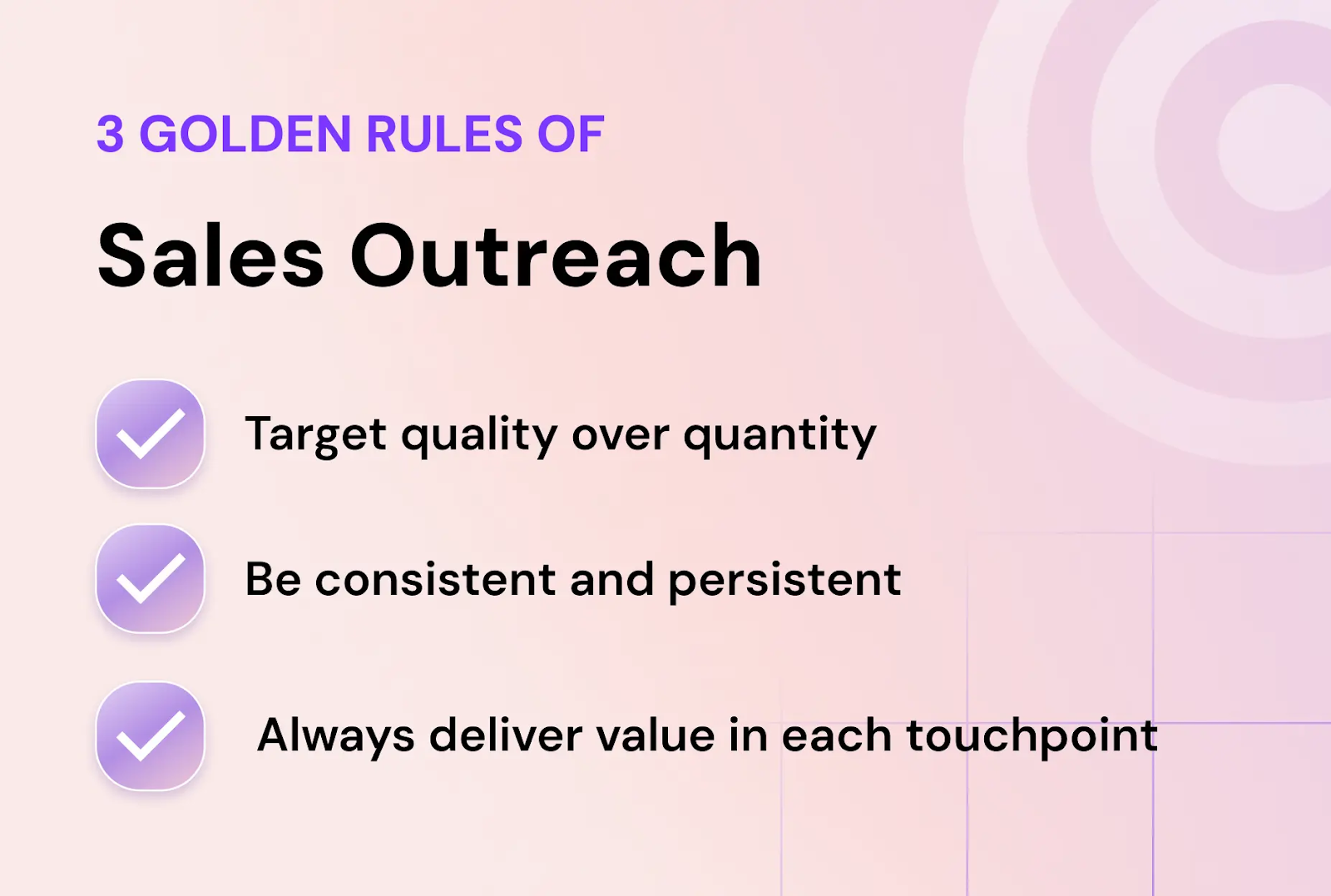
Not every MQL belongs in an automated sequence. A prospect who hits your pricing page, matches your ICP, and shows active engagement deserves a human, not another templated email.
Speed is the deciding factor here. Whoever reaches a high-intent prospect first, with a message that references what they actually did, almost always gets the meeting. A sequence that works:
- Day 1: Personalized email referencing the specific trigger ("Saw you checked out our enterprise pricing")
- Day 2: LinkedIn connection request
- Day 4: Follow-up email with a relevant case study
- Day 7: A final, low-friction CTA
Agree ahead of time on the score threshold that moves a lead into this track versus continued automated nurturing. Without that agreement, this sequence never gets consistent execution.
Multi-Channel Nurturing Beyond Email
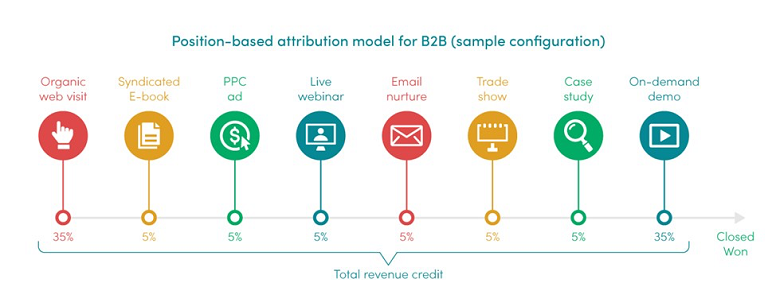
Email-only nurturing misses the prospects who live on LinkedIn, respond better to a phone call, or barely open marketing emails at all.
- LinkedIn outreach running parallel to email for high-fit MQLs increases touchpoint coverage and reply rates.
- Retargeting ads using CRM data keep your brand in front of MQLs and trial users who haven't converted yet.
- In-app messaging keeps the conversion conversation inside the product through tooltips, progress prompts, and usage-based nudges.
- Webinars and live demos give mid-funnel leads a low-pressure way to ask questions before committing.
Lead Scoring to Prioritize Pipeline
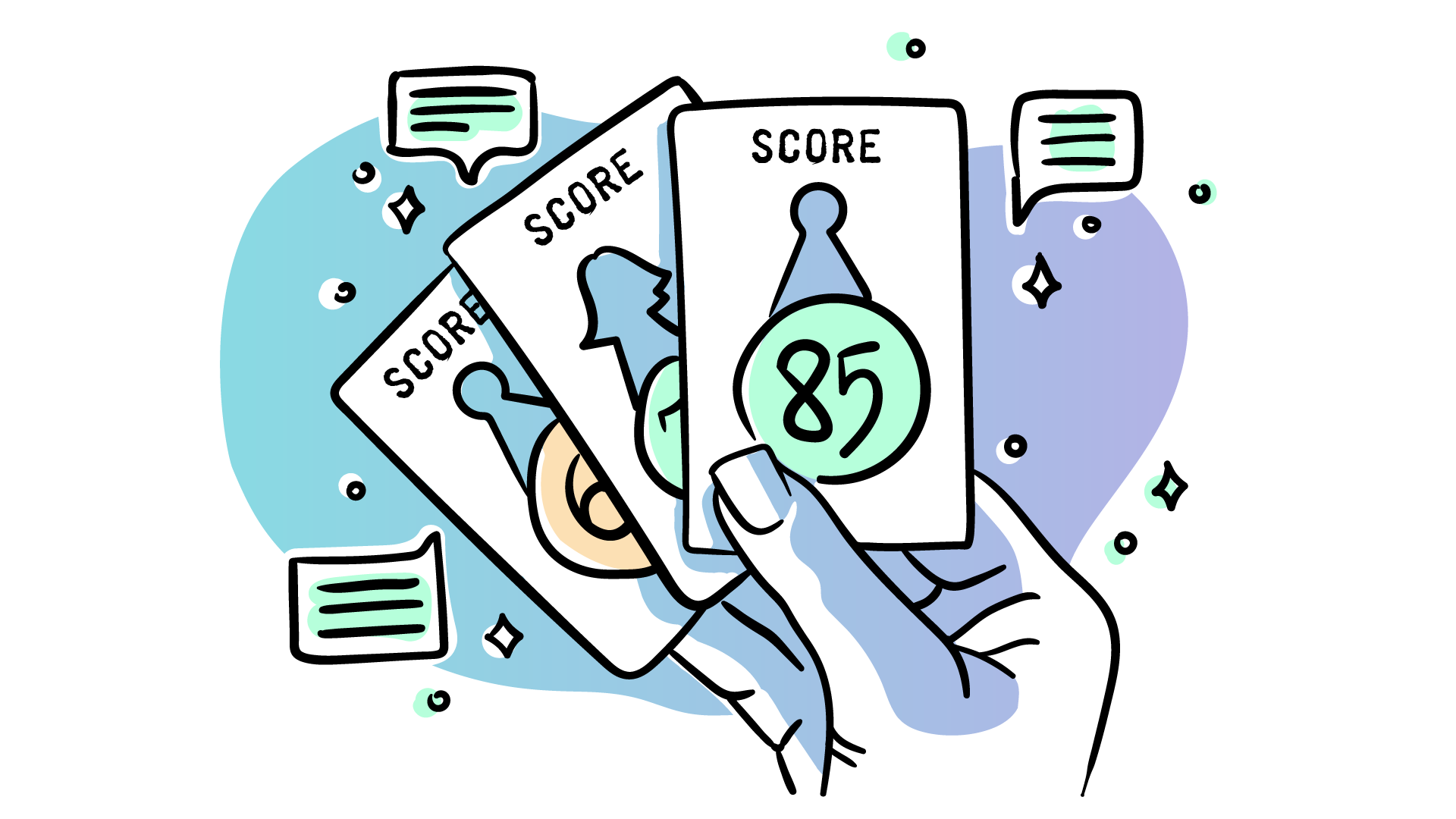
Scoring exists so sales time goes to the leads most likely to close, not spread evenly across a flat list.
Build your model around:
- Firmographic fit: company size, industry, and title matching your ICP
- Behavioral signals: pricing page visits, demo requests, feature activation
- Recency: engagement in the last 7 days versus 30 days of silence
Set a clear threshold for when a lead moves from marketing nurture to sales outreach, and make sure both teams agree on it.
Enrichment matters here too. Incomplete records produce unreliable scores, so verify role, company size, and intent signals before you score anything.
Revisit the model quarterly. Buyer behavior shifts, and a scoring model built two years ago is probably misrouting leads today.
Common Mistakes to Avoid in SaaS Lead Nurturing
❌ Treating every MQL as equally ready to buy, when a whitepaper download and a pricing page visit are completely different signals.
❌ Running one nurture sequence for every segment instead of building distinct tracks for trial users, cold MQLs, and re-engagement leads.
❌ Over-emailing. High frequency without relevance increases unsubscribes and damages your sender reputation faster than it drives conversions.
❌ Skipping a defined sales handoff, so leads sit in nurture indefinitely and never actually become pipeline.
❌ Measuring MQL volume instead of pipeline contribution, which rewards the wrong behavior across the whole team.
❌ Ignoring score decay. A lead that engaged heavily three months ago and has gone silent since is not the same priority it was then.
How Cleverly Helps SaaS Companies Build Qualified Pipeline
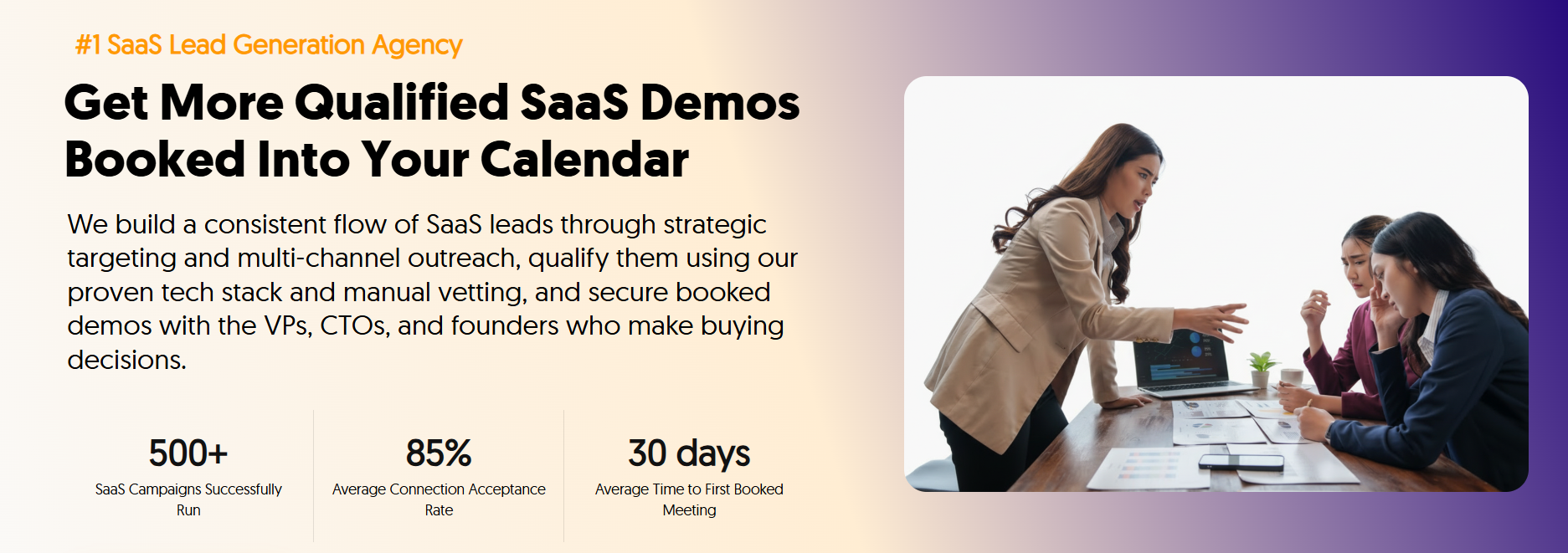
Nurturing converts the leads you already have, but none of it matters if the top of your funnel is thin or unqualified to begin with. This is where a lot of SaaS teams quietly struggle. They've built a solid nurture system, and it still underperforms, because the leads entering it were never a strong ICP match.
We built Cleverly around solving that half of the problem. As a SaaS lead generation agency, we run done-for-you outbound across LinkedIn, cold email, and cold calling, targeting prospects who actually match your ideal customer profile before they ever reach your nurture sequence.
That means firmographic and technographic targeting built around your ICP, outreach messaging written around the specific pain points your buyers deal with, and campaigns designed to book qualified meetings rather than rack up impressions.
We've run this playbook across 10,000+ clients, generating $312M in pipeline and $51.2M in closed revenue for companies including Amazon, Google, and Uber.
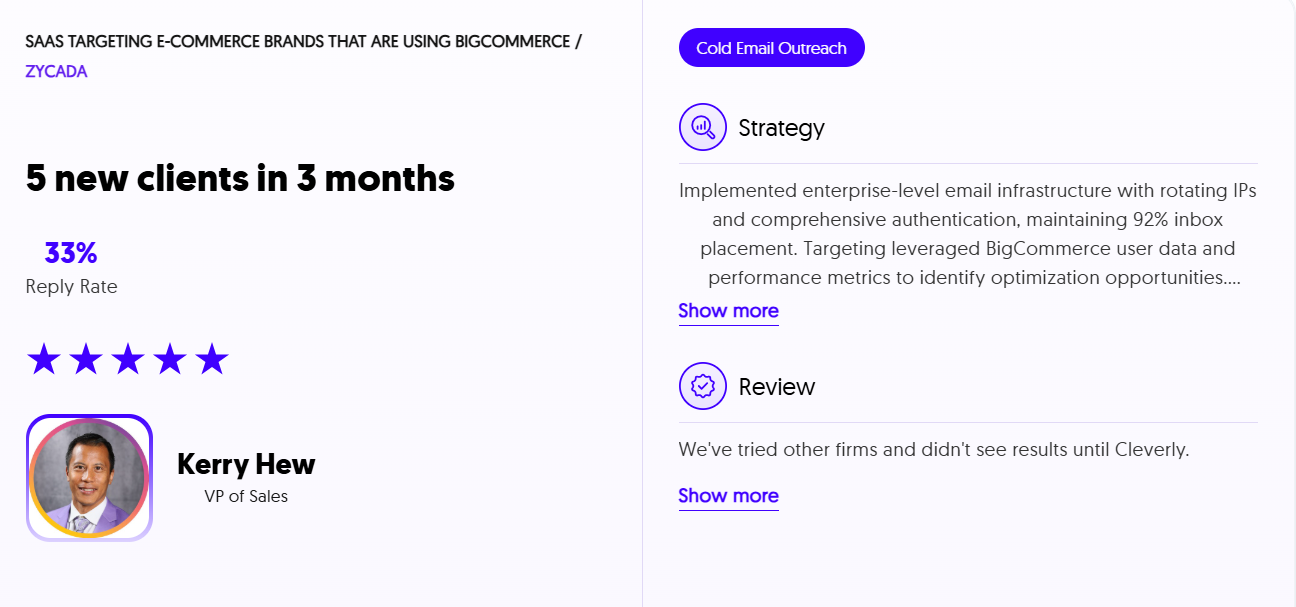
The practical result for a SaaS team is simple: your nurture system finally has good inputs to work with, because the leads entering it are already qualified before your first touch.
Want a done-for-you outbound system feeding your SaaS pipeline with qualified leads? Book a strategy call with Cleverly.
Conclusion
Lead nurturing isn't a drip campaign you set once and forget. It's a system built on lead scoring, behavioral triggers, segmented tracks, and real alignment between sales and marketing about what "ready" actually means.
The SaaS companies converting trials and MQLs at the highest rates treat nurturing as a revenue function they measure by pipeline contribution, not a marketing checkbox measured by open rates.
Start with your biggest leak. If trials aren't converting, fix the sequence. If MQLs are going cold, fix scoring and follow-up speed. If sales and marketing can't agree on what qualified means, start there before touching anything else.
Every improvement compounds, because a better nurture system doesn't just convert more leads. It converts better leads, faster, at a size worth closing.
Frequently Asked Questions
Free Resource
How to Scale a Profitable Cold Call System
Get the complete guide — download it instantly now.
Free Ebook
Download the Free Guide
Enter your details to get instant access.
You're all set! 🎉
Your ebook is downloading now.
Click below if the download didn't start automatically.


