

Table of Contents
What Is Intent-Based Outreach?
Types of Intent Signals You Should Be Tracking
How to Source and Layer Intent Data (Signal Stacking)
How to Use Intent Data for LinkedIn Outreach
How to Use Intent Data for Cold Email Outreach
How to Use Intent Data for Sales: A Step-by-Step Workflow
Best Tools for Intent-Based Outreach in 2026
How Cleverly Helps B2B Teams Run Intent-Driven Outreach
Conclusion
Frequently Asked Questions
Modified On :
May 13, 2026
Key Takeaways
- Intent-based outreach targets prospects showing active buying signals rather than static lists, making every touchpoint more relevant and better-timed.
- Up to 70% of the B2B buying journey happens before a prospect ever talks to a vendor — intent data helps you show up during that invisible window.
- Signal stacking — layering two or more independent signals on the same account — is what separates meetings booked from messages ignored.
- For both LinkedIn outreach and cold email, the signal type determines your message angle, not the other way around.
- The 24–48 hour action window is real: acting on a fresh signal dramatically outperforms following up on data that is two weeks old.
You could have the sharpest subject line, the cleanest copy, and an ICP that is dialed in perfectly — and still get a 2% reply rate. Because you caught the prospect when they were not thinking about their problem.
Timing is the variable that most SDR teams never optimize.
What makes that worse: the average B2B path-to-purchase spans 211 days and crosses 76 tracked touchpoints — and most of that happens without any vendor knowing.
70% of the B2B buying journey is inside the dark funnel, where prospects are researching, comparing, and shortlisting quietly, long before they fill out a form or reply to an email.
Intent-based outreach flips the model.
Instead of blasting a list on an arbitrary schedule, you reach out when a prospect is actively showing signs of being in-market. You show up at the right moment, with the right message, to the right person.
Today we uncover exactly how to do that: what intent signals are, how to source and layer them, how to activate them across LinkedIn and cold email, which tools to use in 2026, and a step-by-step workflow your team can run starting this week.
What Is Intent-Based Outreach?
Signal-based outreach is outreach triggered by real-time buying signals rather than static lists or arbitrary send schedules.
Traditional prospecting works on volume. You pull 500 accounts that match your ICP, load them into a sequence, and fire. Some reply. Most do not.
The problem is not the targeting or even the copy most of the time — it is that you are reaching the right people at the wrong stage of their journey.
Intent-based outreach works differently. It treats buying signals as a readiness indicator — a data-driven clue that someone is actively researching the problem your product or service solves.

When a prospect reads comparison content, shows up on a review site in your category, or triggers a topic surge on a third-party publisher network, that is the signal. That is when you reach out.
The shift happening in 2026 is about timing.
If you wait for inbound, you have probably already lost. Intent data is what gets you in front of accounts while they are still making up their minds.
The teams winning in outbound right now are not sending more emails. They are sending fewer, better-timed ones — to accounts that already have a problem top of mind.
🎯 Right Prospect. Right Timing. Bigger Pipeline.
We combine intent signals with LinkedIn & cold email outreach. So you reach buyers when they’re ready to talk.
Types of Intent Signals You Should Be Tracking
Not all buying signals carry the same weight. Before you build a workflow, you need to understand what you are actually tracking and how to rank those signals by intent strength.
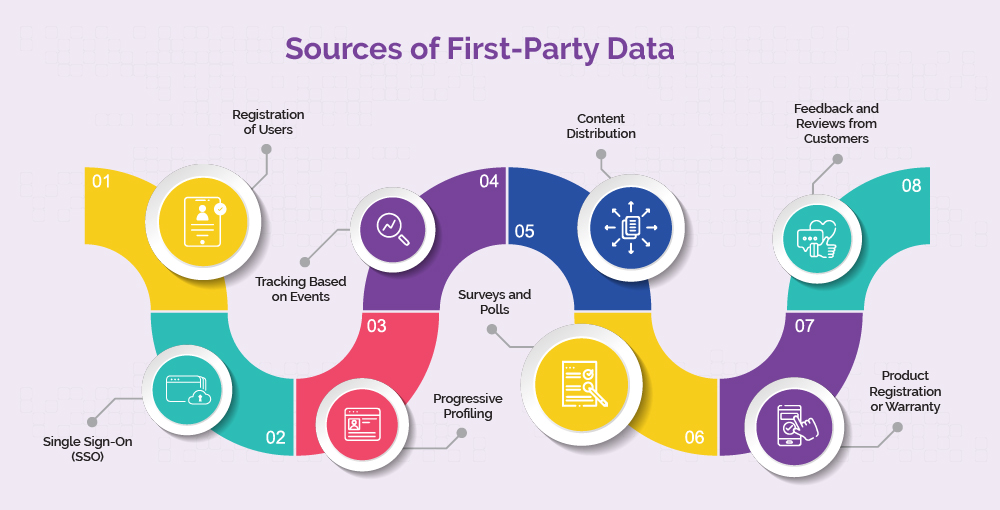
First-Party Signals
These come from your own properties: website visits, pricing page views, content downloads, demo requests, return visits, and email engagement patterns. First-party signals are the highest-quality signals you have because the prospect came directly to you.
A prospect who visits your pricing page three times in a week is not browsing. They are evaluating. That is a strong, actionable signal.
Second-Party Signals
Second-party signals come from platforms you partner with or share data with: review site activity on G2 or TrustRadius, event attendance data, co-marketing engagement. These are especially valuable because review site research is one of the most predictive behaviors in a B2B buyer's journey.
Forrester's 2025 research found that 92% of B2B buyers enter the purchasing process with at least one vendor already in mind. Most of that preference forms on review and comparison platforms.
Third-Party Signals
Third-party intent data tracks topic research happening across the open web — not just on your site. Providers like Bombora aggregate behavioral data across thousands of B2B publisher sites and flag accounts that are showing unusual research activity around topics relevant to your category.
If a company's employees are suddenly consuming content around "SDR tools," "outbound automation," or "LinkedIn prospecting" at rates well above baseline, that is a surge worth acting on.

Behavioral Signals
These include LinkedIn post engagement, job title changes, new hires in relevant roles, and funding announcements.
A new VP of Sales at a company in your ICP is often an ideal trigger. They are arriving with budget authority, fresh ambition, and usually a mandate to improve pipeline. That is a warm door to knock on.
Tech Signals
Technographic signals track tool installs and removals. If a company just churned from a competitor or added an adjacent tool to their stack, their buying behavior has shifted.
That is a buying signal, even if it does not look like one on the surface.

How to Rank Signals by Intent Strength
A single low-intent signal is not enough to trigger outreach. But combine a few, and the picture changes entirely.
How to Source and Layer Intent Data (Signal Stacking)
This is where most teams leave meetings on the table. They buy a single intent data source, set up an alert, and fire off outreach whenever an account triggers one signal. That approach does not work well.
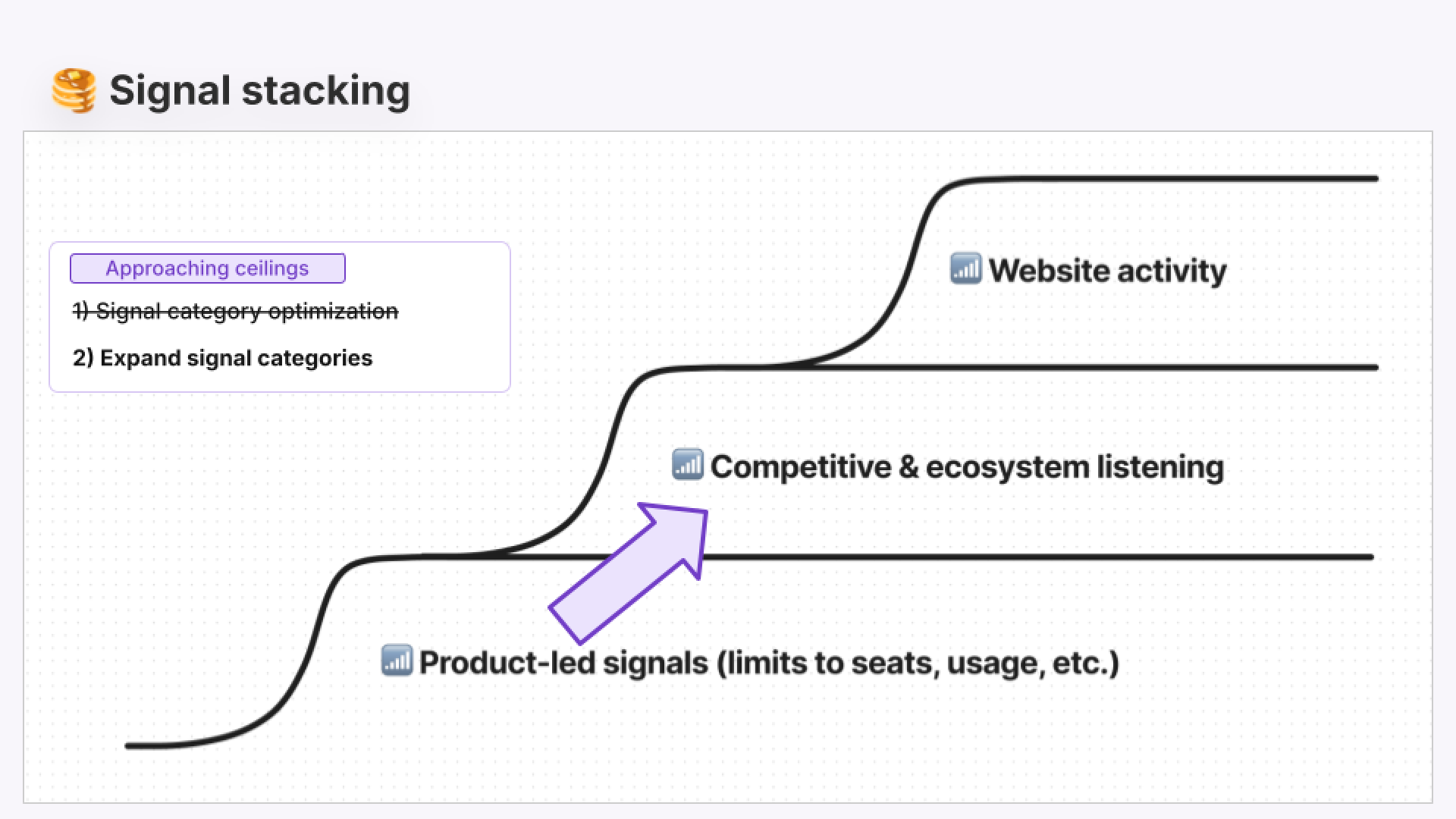
Signal stacking is the practice of layering two or more independent buying signals on the same account before triggering outreach.
No single intent signal should trigger outreach alone. The magic happens when you layer signals — combining first-party website behavior with third-party topic research, review site activity, and champion tracking.
Think about it from the buyer's perspective. A company visiting your homepage once is not a buying signal. That same company visiting your homepage, checking your pricing page, then showing up on G2 in your category, and then triggering a Bombora surge on a related topic?
That is a pattern worth acting on — fast.
Why One Signal Is Never Enough
Single-signal outreach averages reply rates in the 1–5% range. When you stack signals and personalize your message around the specific combination, reply rates climb significantly.
Campaigns using tight segmentation, intent signals, and omnichannel follow-up can reach 10–20% on high-fit segments.
How to Stack Signals
Build your stacking workflow like this:
- Start with a third-party surge from Bombora or G2 Buyer Intent.
- Cross-reference against your ICP criteria (company size, industry, tech stack, geography).
- Check if the account has shown any first-party signals in the last 30 days.
- Look for behavioral triggers: new hires in relevant roles, funding events, LinkedIn activity.
- Accounts that show up across two or more of these layers go to the top of your outreach priority list.
The 24–48 Hour Action Window
Speed matters here. A buying signal from 3 weeks ago is noise. B2B buying cycles are compressed — the window between "actively researching" and "selected a vendor" can be as short as 2–4 weeks for mid-market deals.
If your intent data has a 14-day lag and your team takes another week to action it, you are contacting someone who has already made their decision. The workflow needs to be fast: signal fires, account gets reviewed, outreach goes out within 48 hours.
A Simple Signal Stacking Workflow Without a Massive Tech Stack
You do not need six tools to start doing this well. Here is a lean version:
- Use Bombora or Apollo's built-in intent for third-party signals.
- Use a basic visitor identification tool (Warmly, RB2B) for first-party signals.
- Use LinkedIn Sales Navigator for behavioral trigger filtering.
- Build a shared prioritized list weekly (or daily if you have the capacity).
- Route high-intent accounts to your best reps before anything else.
Start there. You can always add layers as you scale.
🚀 Intent Data Is Useless Without Execution
We turn buying signals into booked meetings—done for you. More replies. More calls. More revenue.
How to Use Intent Data for LinkedIn Outreach
LinkedIn is where intent data for LinkedIn turns into actual pipeline — if you know how to use it without coming across like you are running surveillance.
Identifying In-Market Prospects on LinkedIn

LinkedIn Sales Navigator gives you several ways to find accounts already showing buying behavior:
- Accounts where employees have engaged with relevant content in your category.
- Decision-makers who have viewed your team's profiles (a strong first-party signal).
- Companies that match your ICP with recent buyer intent filters turned on.
- Contacts who follow competitors or engage with competitor content publicly.
These behavioral signals tell you who is paying attention, even if they have not raised their hand yet.
Writing Connection Requests That Feel Natural
The biggest mistake people make here is telegraphing that they know too much. You want to reference the signal without making the prospect feel tracked.
If someone just posted about scaling their outbound team, your connection request can naturally reference that.
If a company just received Series B funding, you can acknowledge their growth. You do not need to say "I saw that you triggered a Bombora surge on our topic category." The insight informs your angle — it does not become your opening line.
Some practical connection request angles by signal type:
- Job change signal: Lead with congratulating them on the new role, mention what you do in a way that is relevant to their new responsibilities.
- Content engagement signal: Reference the content they liked or the topic they clearly care about.
- Company growth signal: Acknowledge the milestone and position your relevance naturally.
InMail Personalization Based on Signal Type
When sending InMail, the signal determines your framing:
- Competitor engagement signal: Lead with a comparison angle — what you do differently, a specific outcome.
- Topic surge signal: Lead with an insight or resource on that exact topic before making an ask.
- Tech removal signal: Reference the challenge that often causes companies to make that switch.
Sequencing for Intent-Led LinkedIn Outreach
A clean intent-led LinkedIn sequence looks like this:
- Connection request (signal-informed angle, no pitch)
- Acceptance message — value-add, reference something relevant, no CTA yet
- Signal-specific message — tie in the insight directly, soft ask
- Follow-up — a different angle, maybe a case study or quick question
LinkedIn InMail response rates range from 18–25%, significantly higher than cold outreach email alone.
When you layer intent data on top of that, the response quality improves even further — you are more likely to get a real conversation, not just a "not interested."
How to Use Intent Data for Cold Email Outreach
Intent data cold email works best when you resist the urge to use it as a reason to blast a bigger list. The point is precision, not volume.
Map Signals to Email Triggers
Not every signal deserves the same email. Build a mapping before you start writing:
Writing First Lines That Reference Signals Without Sounding Creepy
The first line has to feel natural. Here are two versions of the same signal-informed opener for a prospect who just hired a new VP of Sales:
👎 Version A (bad): "I noticed your company recently hired a VP of Sales on LinkedIn, so I wanted to reach out..."
👍 Version B (good): "Scaling an outbound motion from scratch in a new role is usually the first challenge a new VP of Sales runs into. If that is where [Company] is headed..."
Same signal. Completely different feeling. Version B speaks to the situation without announcing that you were watching their LinkedIn activity.
Segmenting Your Cold Email Lists by Intent Strength
Your highest-intent accounts — those stacking multiple strong signals — should never be in the same sequence as early-stage researchers. Separate them:
- High-intent (3+ signals stacked): Direct, outcome-focused sequence, tighter follow-up cadence.
- Medium-intent (1–2 signals): Educational sequence, slower cadence, longer warming window.
- Low-intent (single behavioral trigger): Nurture-style sequence, content-led, no aggressive CTA.
Timing Around Signal Freshness
A buying signal from 3 weeks ago is noise. Build signal age into your email workflow as a hard filter. If the signal is older than 14 days when you are ready to send, either hold it for a new trigger or step back to a nurture sequence.
Sending intent-based outreach on stale data is worse than not using intent data at all — it signals to the prospect that you are out of touch.
Common Mistakes to Avoid
- Sending the same email sequence to all intent tiers (kills personalization at scale).
- Using stale signals without refreshing them.
- Skipping follow-up after one touch — most intent-triggered deals close after the second or third message.
- Making the signal the subject of the email instead of the situation it implies.
Campaigns combining verified intent signals with human-written personalization get response rates beyond 8% and even 20% in some verticals.
The ceiling goes up fast when you stop treating intent data as a list filter and start using it as a message-shaping tool.
How to Use Intent Data for Sales: A Step-by-Step Workflow
Here is a practical, repeatable workflow your team can run. This is how to use intent data for sales in the real world, not in a vendor deck.
Step 1: Define Your ICP and Map Predictive Signals
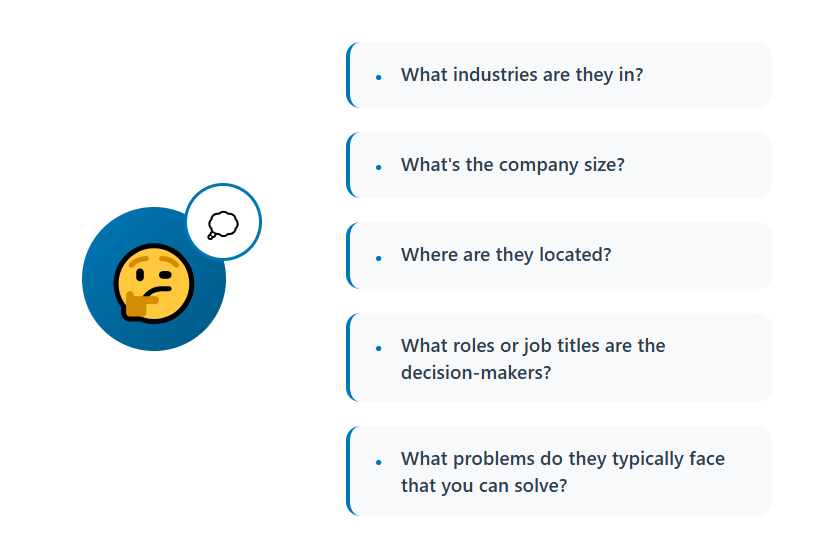
Before you touch any tool, get clear on what buying looks like for your specific offer. Which signals correlate most strongly with deal close for you? For some companies, it is G2 category views. For others, it is new VP hires combined with a tech removal. Map it before you build.
Step 2: Set Up Your Intent Data Stack
You do not need everything at once. A practical starting stack:
- First-party: A website deanonymization tool (Warmly or RB2B)
- Third-party: Bombora via Apollo or ZoomInfo, or G2 Buyer Intent if your category is on G2
- Behavioral: LinkedIn Sales Navigator filters for job changes and company growth events
Step 3: Layer and Score Signals into a Tiered Account List
Pull signals weekly (or daily for high-volume teams). Layer them against your ICP. Assign a score based on signal count and signal strength.
Your Tier 1 accounts — high ICP fit, multiple strong signals — are where your best reps spend Monday morning.
Step 4: Route High-Intent Accounts to the Right Rep
Not every signal goes to the same rep. Route by territory, deal size, and signal type. A funding announcement in an enterprise account should go to an AE with enterprise experience, not a junior SDR.

Step 5: Trigger Personalized Outreach Within 24–48 Hours
Signal fires. Account is verified. Rep gets assigned. Outreach goes out across LinkedIn and cold email within the action window. The message is built around the specific signal combination, not a generic template.
Step 6: Track, Refine, and Drop What Is Not Working
Run a monthly review. Track which signal types are converting to meetings and which ones are generating noise. Some signals will be predictive for your ICP. Others will not. Drop the ones that do not convert after 90 days and double down on the ones that do.
Best Tools for Intent-Based Outreach in 2026
Here are the tools worth knowing for B2B intent data outreach right now:
Bombora
The industry standard for third-party intent. Bombora pioneered B2B intent data with its cooperative data model, collecting consent-based signals from 5,000+ premium B2B publisher websites.
When a company's employees consume content at above-baseline rates on a given topic, Bombora flags a Company Surge. Named a Leader in Forrester's 2025 Wave. Pricing typically runs from $25,000 to $100,000 per year. Best for teams that need broad, open-web intent across large TAMs.
G2 Buyer Intent

Best for catching high-intent prospects actively comparing tools in your category. If a company is on G2 looking at your competitors, they are in an active buying cycle.
The signal is strong and the timing is tight. Works especially well for SaaS companies with an established G2 presence.
Apollo.io
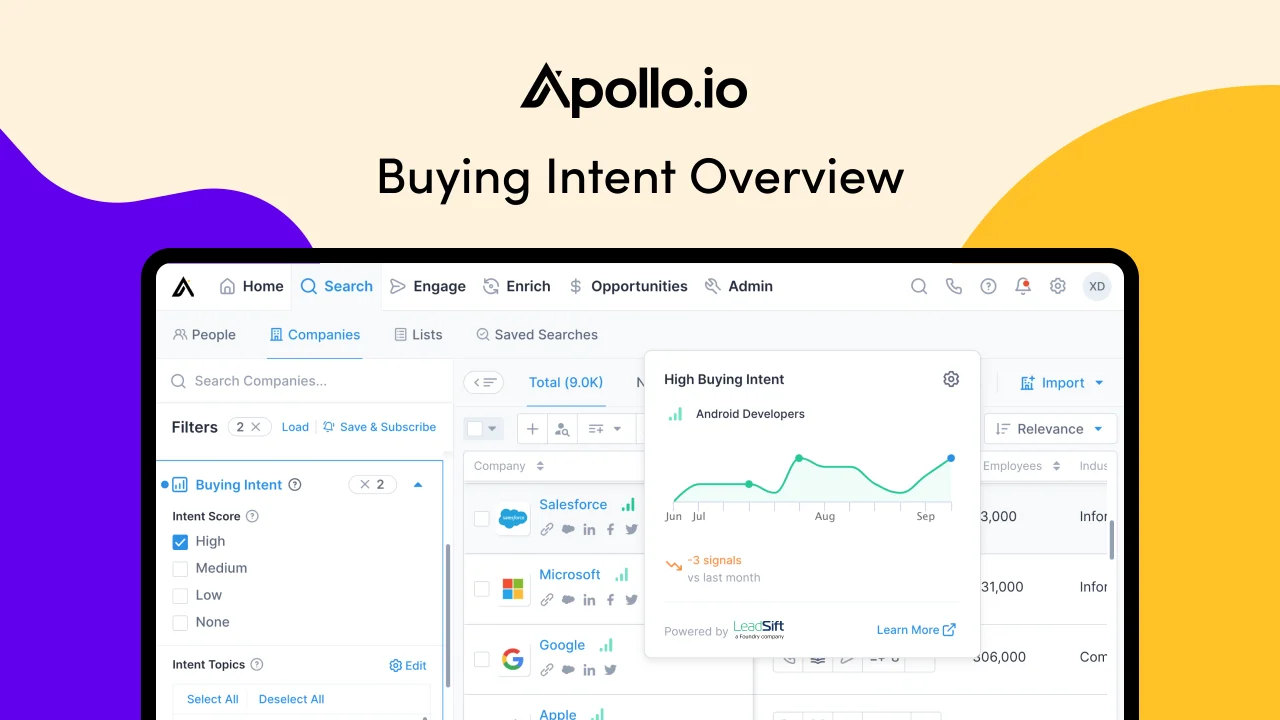
Apollo combines a prospecting database with built-in intent signals in one platform. For teams that want a single tool for prospecting, intent filtering, and sequence management, Apollo is a strong starting point. The number one problem with intent data is not getting it — it is doing anything useful with it. Apollo solves part of that by keeping the workflow inside one interface.
Clay
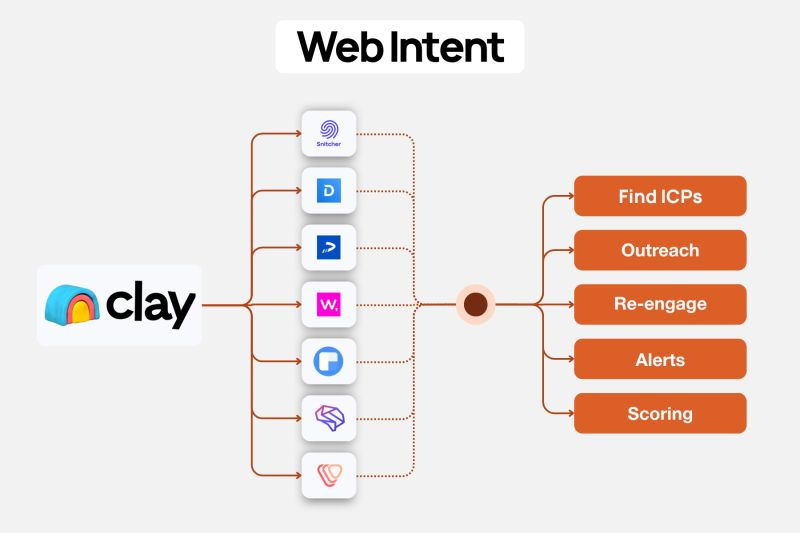
Clay is where signal stacking gets powerful at scale. It pulls from multiple data sources — waterfall enrichment, Bombora, LinkedIn data, funding news, job change APIs — and lets you build automated workflows that score and prioritize accounts without a full RevOps team. If you want to build a multi-source intent stack without hiring three data analysts, Clay is the tool.
ZoomInfo Intent

Enterprise-grade intent data with deep account coverage and native CRM integrations. Works well for organizations already in the ZoomInfo ecosystem. ZoomInfo tracks Company Surge intent data across thousands of web topics to flag in-market buyers at the account level, with real-time enrichment and native syncing to Salesforce, HubSpot, Outreach, and Marketo. Best for larger teams with existing CRM infrastructure.
When One Tool Is Enough vs. When to Build a Multi-Source Stack
Start with one tool. Prove ROI on a single intent signal type. Then layer. Most teams that buy five intent tools before they have a workflow to activate any of them end up with expensive noise, not better pipeline.
What to evaluate when choosing: data freshness (how old are the signals?), coverage of your ICP, integration depth with your existing CRM and outreach tools, and whether the platform surfaces signals or also helps you act on them.
How Cleverly Helps B2B Teams Run Intent-Driven Outreach
Most teams know intent data is valuable. Where they get stuck is the activation layer — translating a signal into a personalized message, sent at the right time, through the right channel, to the right person.
That is where the work actually happens, and it is where most in-house teams hit a wall.
At Cleverly, intent data is foundational to how we build outreach programs — not an afterthought bolted onto a generic sequence. Before we write a single message for a client, we identify which accounts are showing in-market signals and build the outreach list around that prioritization. ICP fit plus signal strength determines who gets contacted first, not arbitrary list size.
From there, we map the signal type to the message angle. A prospect triggered by a G2 competitor comparison gets a different LinkedIn opener and cold email sequence than a prospect triggered by a new VP hire. That specificity is what drives reply quality — not just reply rate.
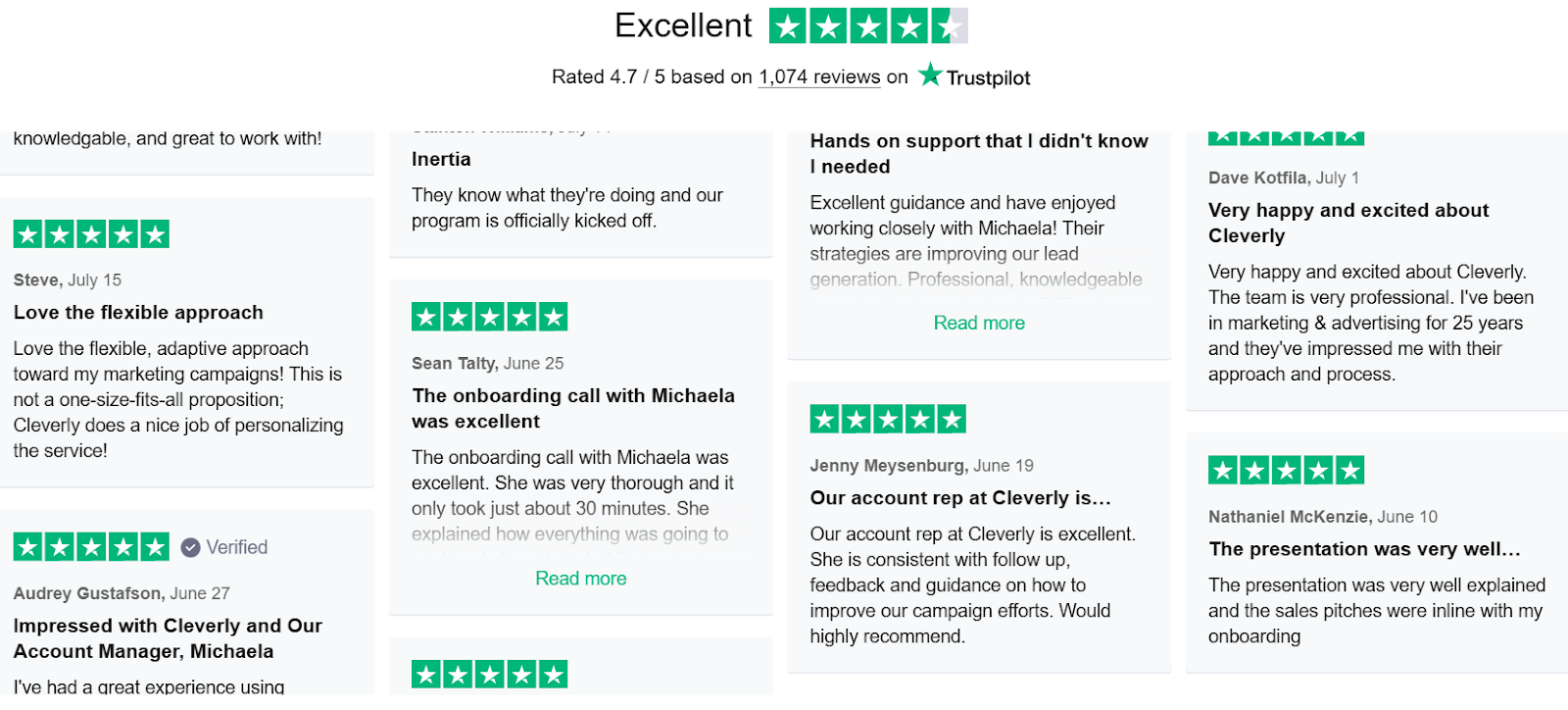
We have helped over 10,000 clients generate qualified pipeline across LinkedIn outreach and cold email lead gen, producing $312M in pipeline revenue and $51.2M in closed revenue through outreach that is built on targeting and timing, not volume.

For teams that want to add cold calling into the mix, our $5M Cold Calling System books 10–30 qualified sales calls per month with a dedicated no-accent appointment setter, custom scripts, and full outbound infrastructure — at half the cost of building it internally.
If your outreach is reaching the right people but at the wrong time, or the right time but with the wrong message, we can help.
Book a strategy call with Cleverly and we will show you exactly how we would approach your ICP with intent-first outreach across LinkedIn, cold email, and cold calling.
Conclusion
Intent-based outreach is not a one-time tactic. It is a system — built on the right data sources, the right timing, and the right message framing. When those three things align, outreach stops feeling like interruption and starts feeling like relevance.
The teams winning in 2026 are not sending more. They are moving faster on better signals. They see the trigger, act within 48 hours, and say something that proves they understand the prospect's situation.
Start simple: pick one signal type, build a clean workflow around it, and prove the model before you layer more complexity on top. The future of B2B outbound is not louder. It is smarter.
Frequently Asked Questions
Free Resource
How to Scale a Profitable Cold Call System
Get the complete guide — download it instantly now.
Free Ebook
Download the Free Guide
Enter your details to get instant access.
You're all set! 🎉
Your ebook is downloading now.
Click below if the download didn't start automatically.


