Table of Contents
What Are LinkedIn Groups and Why Do They Matter for Lead Generation?
Why LinkedIn Groups Are an Underused Lead Generation Goldmine
How to Find the Right LinkedIn Groups for Your ICP
How to Use LinkedIn Groups Effectively to Generate Leads (Step-by-Step)
The Secret to Generating Leads from LinkedIn Groups Most People Miss
LinkedIn Group Outreach — What to Say and How to Say It
Creating Your Own LinkedIn Group for Long-Term Lead Generation
Common Mistakes to Avoid When Using LinkedIn Groups for Lead Generation
How Cleverly Uses LinkedIn Groups as Part of a Full LinkedIn Lead Generation System
Conclusion
Frequently Asked Questions
Modified On :
April 20, 2026
Key Takeaways
- LinkedIn Groups give you direct access to pre-qualified, high-intent prospects in a far less saturated environment than the main feed or cold outreach.
- Group membership is a buying intent signal — use it to build targeted outreach lists and personalize your messaging with a warm, relevant icebreaker.
- Consistent value-first engagement in the right groups builds familiarity before direct outreach, which directly improves connection acceptance and reply rates.
- Owning your own LinkedIn Group is one of the most underused long-term lead generation assets in B2B — members who join are self-qualifying prospects.
- Success with LinkedIn Groups isn't about joining the most groups — it's about being genuinely useful in the right five to seven, and converting those conversations into meetings.
LinkedIn inboxes aren’t empty, they’re overwhelmed with the same messages.
And yet, right inside the same platform, there's a channel most SDRs and founders haven't touched: LinkedIn Groups. LinkedIn generates 80% of all B2B leads from social media — and groups concentrate the highest-quality segment of that audience in one place. 89% of B2B marketers use LinkedIn for lead generation, and 62% say it actually produces leads for them.
The problem? Almost everyone chasing those leads is doing the same thing — cold connection requests, mass outreach, templated sequences. Groups are a different game entirely. They offer pre-qualified audiences, natural conversation starters, and a warm context that cold outreach simply can't replicate.
This guide is for SDRs, founders, B2B marketers, and sales teams who want to stop fighting for attention in a crowded feed and start generating real pipeline from LinkedIn Groups.
We'll cover how to find the right groups, how to engage strategically, how to extract leads, and how to convert group conversations into booked meetings.
What Are LinkedIn Groups and Why Do They Matter for Lead Generation?
Groups 101 — Members vs. Owners
LinkedIn Groups are communities of professionals gathered around shared industries, roles, interests, or challenges. They exist as semi-private spaces within the platform where members post discussions, ask questions, share content, and engage with peers.
There are two sides to groups: being a member and being a group owner or admin.
As a member, you can engage in discussions, connect with other members, and leverage the shared context for outreach. As a group owner, you get additional capabilities — including the ability to message all members directly, which is a significant outreach advantage we'll cover later.
Why Group Membership = Buying Intent
What makes groups different from the general LinkedIn feed: membership is intentional.
When someone joins a group called "B2B SaaS Growth Strategies" or "Sales Operations Leaders," they're actively signaling an interest in that topic. That's a buying intent signal you can use. It's a level of ICP qualification that you'd otherwise have to infer from job titles and company data alone.
Groups also bypass connection limits. In many groups, you can message other members without being connected first — a meaningful advantage when LinkedIn's weekly connection request caps are getting tighter.
Why Groups Are Making a Comeback
The main LinkedIn feed has become increasingly algorithm-driven and competitive. Organic reach for company pages has dropped significantly, and individual post visibility is more inconsistent than ever.
Groups, by contrast, operate as curated spaces where content surfaces to a specific, opted-in audience. Less noise. More relevance. That's exactly the environment serious B2B prospecting needs.
💼 Posting in Groups ≠ Pipeline
We turn LinkedIn engagement into booked sales calls. Done-for-you outreach starting at $397/mo.
Why LinkedIn Groups Are an Underused Lead Generation Goldmine
Less Competition, More Access
Most SDRs and outbound teams are laser-focused on cold connection sequences and LinkedIn Sales Navigator lists. Groups barely register on their radar. That means you're showing up in a less saturated environment — talking directly to decision-makers who aren't being bombarded the way they are everywhere else.
LinkedIn's B2B lead generation costs 28% lower than paid search, and that efficiency is even more pronounced in groups where there's zero ad spend required. It's one of the few genuinely free channels left in B2B outbound.
High-Intent, Pre-Qualified Audience
Members self-select into groups based on their role, industry, or challenge. If someone's in a "Revenue Operations" group, you already know something meaningful about them without a single sales call. That pre-qualification makes your outreach sharper and your personalization more natural.
Groups also provide built-in conversation starters. Someone just posted a question about pipeline forecasting? That's your icebreaker. No cold, out-of-nowhere message required.
How to Find the Right LinkedIn Groups for Your ICP
Using LinkedIn's Search to Find Groups
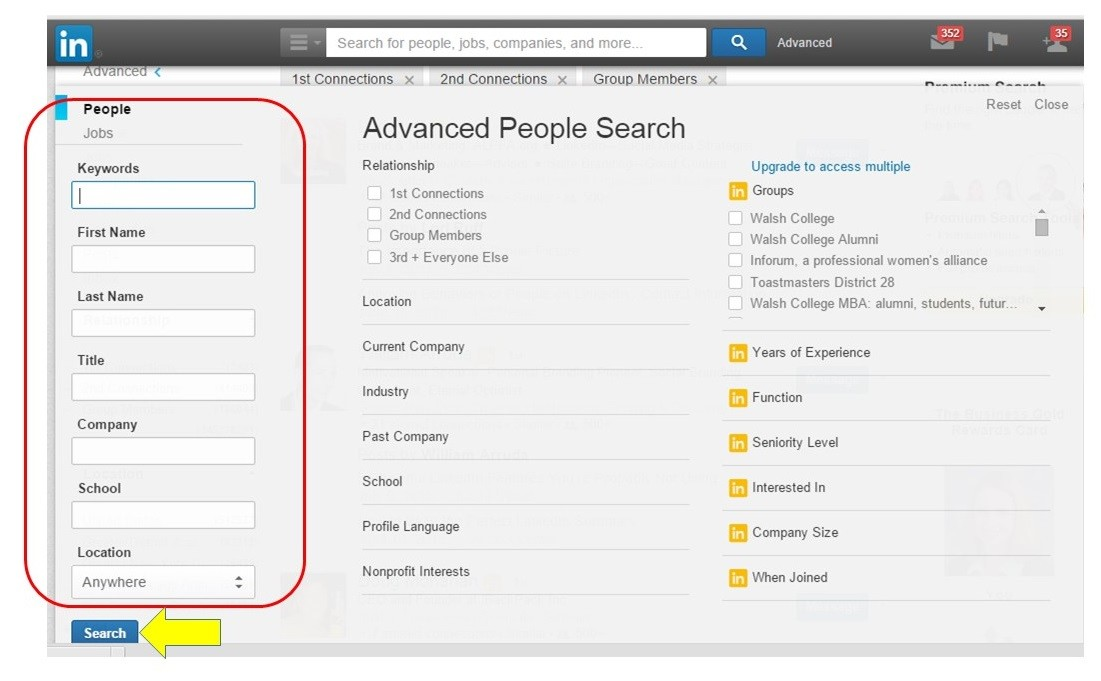
Start with LinkedIn's search bar. Type in industry-specific keywords relevant to your ICP — things like "B2B SaaS founders," "revenue operations," or "enterprise sales leaders" — and filter the results by Groups. You'll surface dozens of active communities organized around exactly those topics.
LinkedIn also shows a "Groups You May Like" suggestion feature based on your existing profile activity and connections. It's worth checking this regularly — it often surfaces niche groups you wouldn't have found through a search.
Research Where Your Prospects Already Are
One of the most effective targeting moves: look at the LinkedIn profiles of your best-fit existing customers or target accounts and check which groups they're already members of. If your ICP is concentrated in three or four specific groups, that's where you should be investing time.
How to Evaluate a Group Before Joining
Not all groups are worth your time. Here's what to look for:
✅ Member count — aim for groups with at least 5,000 members. Smaller groups often lack the volume of conversations worth engaging in.
✅ Activity level — check the recency of posts. A group with daily or weekly discussions is active. One with posts from three months ago is a ghost town.
✅ Member seniority — scroll through recent members and active contributors. If most are entry-level, it's the wrong room.
✅ Post quality — genuine discussion, questions, and shared insights signal a healthy group. Mostly promotional spam signals a low-quality one.
🚩 Red flags to avoid: groups full of entry-level members, heavy promotional posting with minimal genuine discussion, or no recent activity at all.
Start with 5 to 7 highly relevant groups rather than joining 50 mediocre ones. Depth beats breadth here.
🚀 From Conversations to Closed Deals
10,000+ clients used Cleverly to generate pipelines. We handle outreach, replies & booking—you just close.
How to Use LinkedIn Groups Effectively to Generate Leads (Step-by-Step)
Step 1 — Observe Before You Engage
Don't jump in on day one with a post or a pitch. Spend the first one to two weeks watching.
Understand the group's tone. What questions come up repeatedly? Who are the top contributors? What content generates the most discussion? This intelligence makes every future interaction more targeted and relevant.

Step 2 — Engage With Value, Not Pitches
Answer questions genuinely. Share a useful insight from your own experience. Spark a discussion by posting a thought-provoking question.
LinkedIn promotes top contributors with enhanced visibility in groups — consistent, valuable participation literally increases how many people see your profile. Reps with high Social Selling Index scores generate 45% more opportunities and are 51% more likely to hit quota — and active group engagement is one of the fastest ways to build that score.
Step 3 — Share Content That Earns Attention
Post content that's genuinely relevant to the group: a case study, a counterintuitive take, a practical tip, or a poll that sparks debate.
Avoid promotional content. The moment your post reads like an ad, you lose the room. Lead with education and relevance. The goal is familiarity, not conversion — at least at this stage.
Step 4 — Identify and Shortlist Prospects
Use the group's built-in search to filter members by job title, company, and location. Build a targeted list of ICP-fit members directly from within the group.
This is list-building with built-in intent signals. Someone in a "VP Sales" group who fits your ICP is a warmer prospect than a cold name from a data tool — and you already have a shared context to reference.
Step 5 — Send Personalized Connection Requests
Reference the shared group as a natural icebreaker in your connection request. Something specific works far better than "I'd love to connect."
Instead of: "Hi [Name], I'd love to connect."
Try: "Hi [Name], I'm a member of [Group Name] too — saw your post on [topic] and it resonated. Would love to connect."
Hyper-personalized connection requests see 60-70%+ acceptance rates versus 29% for generic pitches Sales So — the group reference is exactly the kind of personalization that drives that gap.
Step 6 — Move the Conversation Forward
After connecting, don't immediately pitch. Continue engaging before you ask for anything.
Use a group discussion you were both part of as a natural reference point in your follow-up message. Something like: "Caught your comment in [Group] about [topic] — curious if you've looked at [approach] as a solution. Happy to share what we've seen work." That's a warm, relevant, low-pressure opener that doesn't feel like cold outreach.
The Secret to Generating Leads from LinkedIn Groups Most People Miss
The Member Extraction Approach
Here's the play most people skip entirely: using group membership as a buying intent signal to build enriched outreach lists.
If someone joined a "B2B Revenue Operations" group, they're actively invested in that space. Export or manually shortlist members who fit your ICP, enrich their data with a tool like Clay or Apollo, and launch a personalized outreach sequence that explicitly references the group.
The icebreaker writes itself: "I noticed we're both in [Group Name] — wanted to reach out because a lot of members there are dealing with [specific pain point] and we've been helping teams solve it."
That's not a cold message. That's a warm, context-driven opener that doesn't feel like an intrusion.
Creating Your Own LinkedIn Group as a Long-Term Lead Magnet
This is the play most B2B teams haven't considered — and it's one of the highest-ROI long-term moves on LinkedIn.
When you own a group, you're not just a participant — you're the host. Members who join are actively opting into your content and community. Every new member is a self-qualifying prospect. And as the admin, you can message all members directly, which is an outreach channel most platforms don't give you for free.
Name your group around a pain point or outcome your ICP cares about — not your company name. "B2B Pipeline Growth for SaaS Teams" will attract your audience. "[Your Company Name] Community" won't.
One important technical note: LinkedIn only allows you to set a group's privacy settings (private vs. public) at the time of creation. You can't change it afterward, so think that through before you launch.
The Compounding Familiarity Effect
What the data and experience both confirm: consistent group presence builds familiarity before you ever send a direct message.
Prospects who've seen your name in group discussions, engaged with your content, or read your replies are dramatically more likely to accept your connection and respond to your LinkedIn outreach. You're not a stranger anymore — you're a familiar face who adds value to a community they already care about.
LinkedIn Group Outreach — What to Say and How to Say It
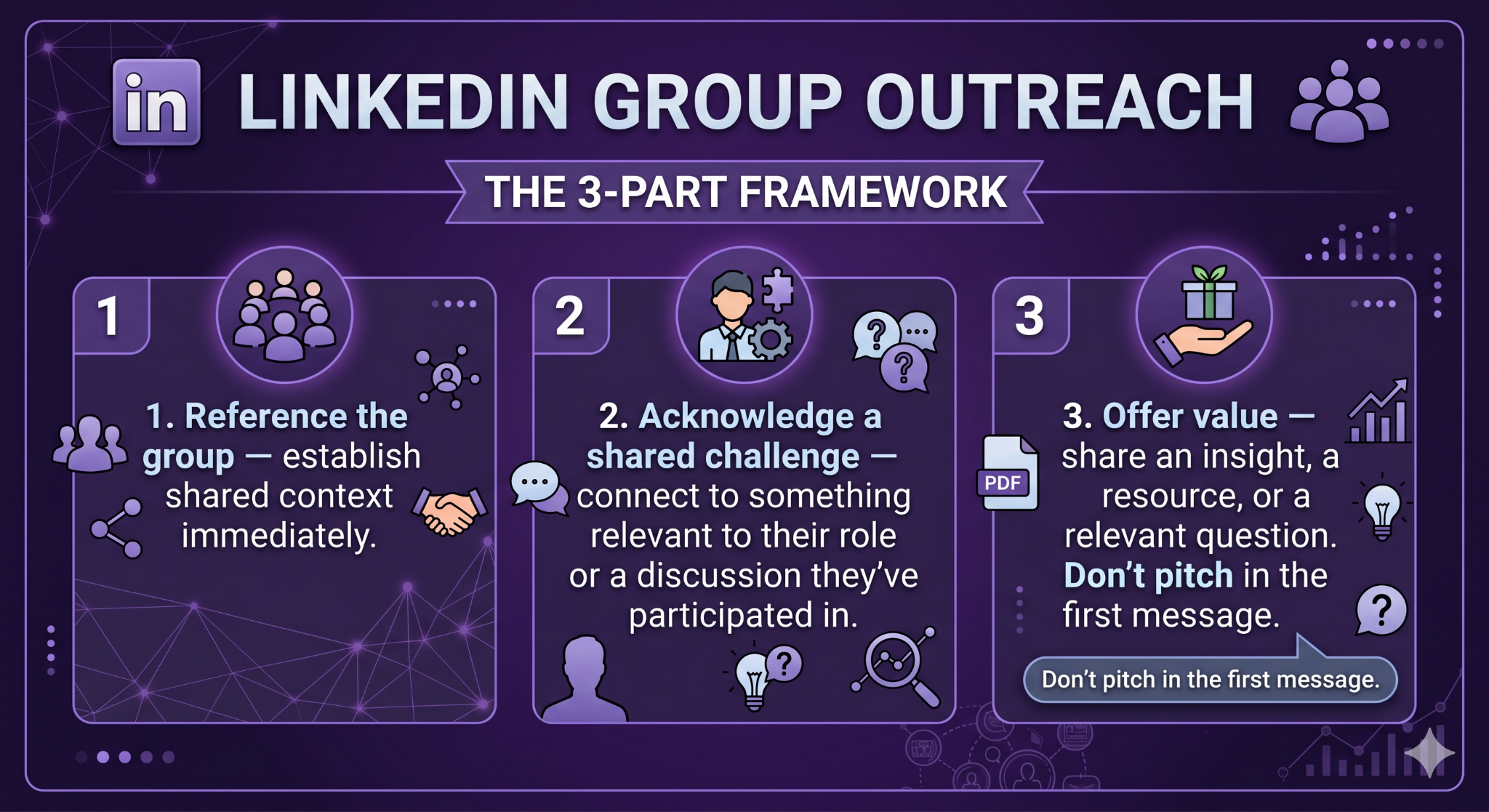
The 3-Part Framework
Every effective outreach message from a group context follows the same basic structure:
- Reference the group — establish shared context immediately.
- Acknowledge a shared challenge — connect to something relevant to their role or a discussion they've participated in.
- Offer value — share an insight, a resource, or a relevant question. Don't pitch in the first message.
This framework works because it doesn't feel like cold outreach. It feels like a natural extension of a conversation that's already been happening.
Messages That Work vs. Messages That Get Ignored
Ignored: "Hi [Name], I help companies like yours grow revenue. Would love to connect and share how we do it."
Works: "Hey [Name] — we're both in [Group Name] and I saw your post on [specific topic]. We've been tackling that same challenge with a few SaaS teams lately. Happy to share what we've been seeing. Would love to connect."
The difference isn't the offer — it's the specificity and the context. One reads like a blast. The other reads like a human who was paying attention.
Timing Matters
The best window to reach out is after you've been involved in two or three discussions together — or after they've engaged with something you posted. At that point, your message feels less like outreach and more like a natural next step in a conversation that's already happening.
Creating Your Own LinkedIn Group for Long-Term Lead Generation
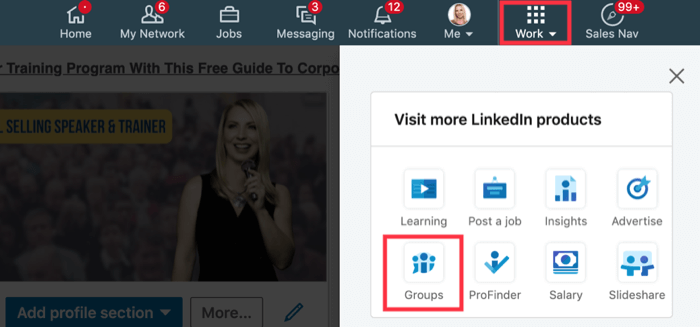
Why Owning a Group Is More Powerful Than Joining One
Being a member gives you access. Being an owner gives you authority, direct messaging rights, and a self-populating list of prospects.
Every person who joins your group is telling you: "I care about this topic enough to opt in." That's the kind of intent signal that makes outreach dramatically more efficient.
How to Name and Position Your Group
Your group name should describe the outcome or problem your ICP is trying to solve — not your brand. Think:
- "B2B Sales Leaders: Pipeline Growth & Outbound" ✅
- "Cleverly Network" ❌
Use clear, searchable language. LinkedIn's search indexes group names, so use the exact terms your ICP would type.
Growing Your Group
Start by inviting your existing connections who fit the ICP. Promote the group in your content with a simple CTA. Use your admin privileges to keep the conversation going — post questions, share resources, and actively welcome new members.
A healthy group needs a consistent cadence of posts and responses. If you let it go quiet, it loses its value. Treat it like a community, not a broadcast channel.
Common Mistakes to Avoid When Using LinkedIn Groups for Lead Generation
❌ Pitching Immediately After Joining or Connecting
This is the fastest way to get ignored — or removed. Groups have a very low tolerance for anyone who shows up and immediately starts selling. You need to earn the right to have that conversation first.
❌ Joining Too Many Groups and Spreading Yourself Thin
Being a passive member of 30 groups produces nothing. Being an active, visible contributor in five to seven relevant groups produces conversations. Consolidate your effort.
❌ Posting Promotional Content Disguised as Value
"Here's how we helped a company grow 40%..." followed by a link to your case study is a promotional post, not a value post. The group will see through it. Share insights, perspectives, and lessons — not sales assets.
❌ Ignoring Group Rules
Most active groups have rules. Violate them and you'll get removed. Read the pinned posts and guidelines before you post anything.
❌ Treating Groups as a Broadcast Channel
Groups are for conversation, not announcements. If every post is you talking at people, you'll lose the room fast. Ask questions. Respond to others. Engage genuinely.
❌ Not Tracking What's Actually Working
If you're in five groups and only one is generating real conversations, double down there and drop the rest. Track which groups are producing replies, connections, and meetings — and let the data guide your time.
How Cleverly Uses LinkedIn Groups as Part of a Full LinkedIn Lead Generation System
LinkedIn Groups are a smart tactic. But they work best when they're part of a complete, systematic approach — not something you're figuring out between other responsibilities.
At Cleverly, our done-for-you LinkedIn lead generation system combines group intelligence with ICP targeting, multi-source data enrichment, and personalized messaging built around what your prospects actually care about.
We identify which group memberships signal buying intent, use that data to build tighter, more relevant prospect lists, and craft outreach that references shared context rather than starting cold.
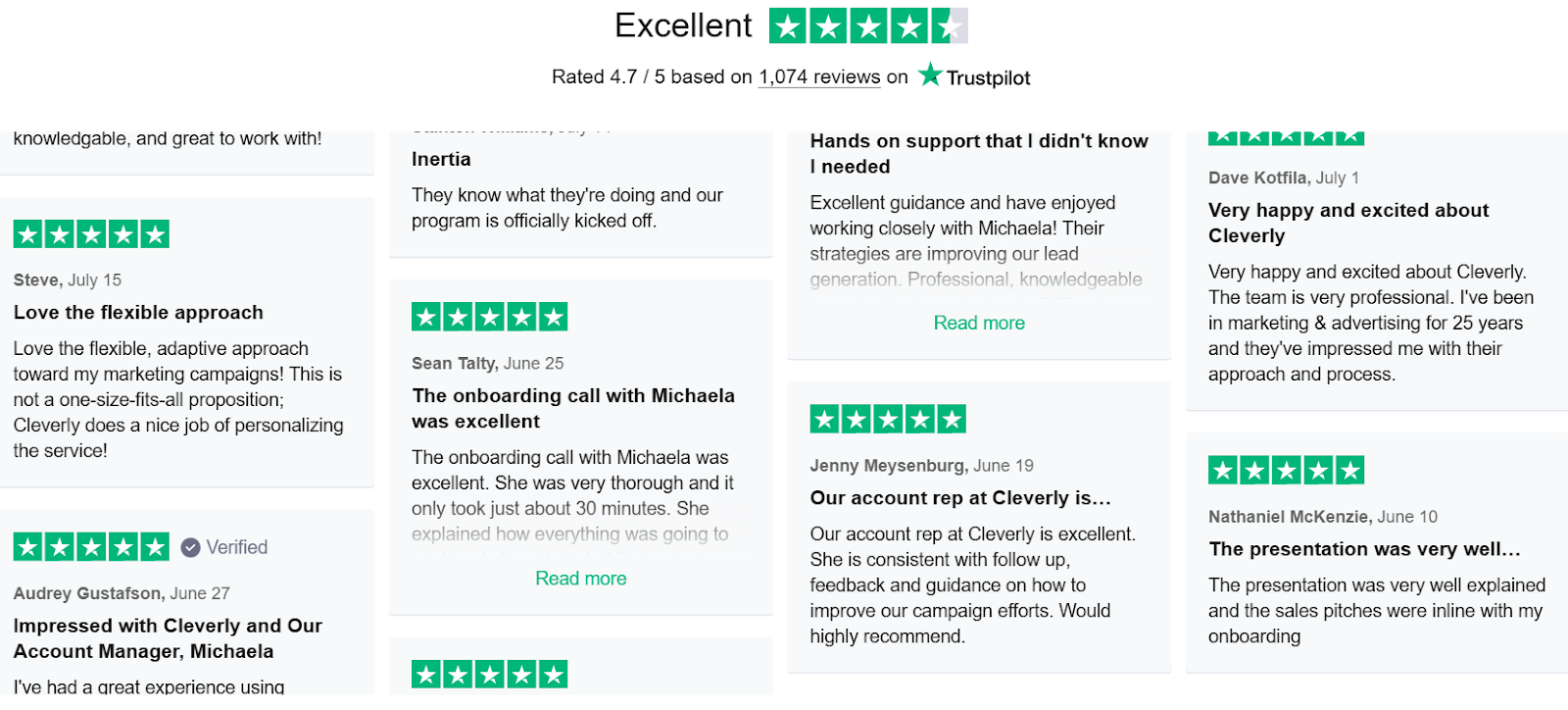
The result is a fundamentally different kind of outbound — one where your prospects feel like you've done your homework, not just found their name in a database. Our clients see higher connection acceptance rates and stronger reply rates because the personalization is genuine, not templated.
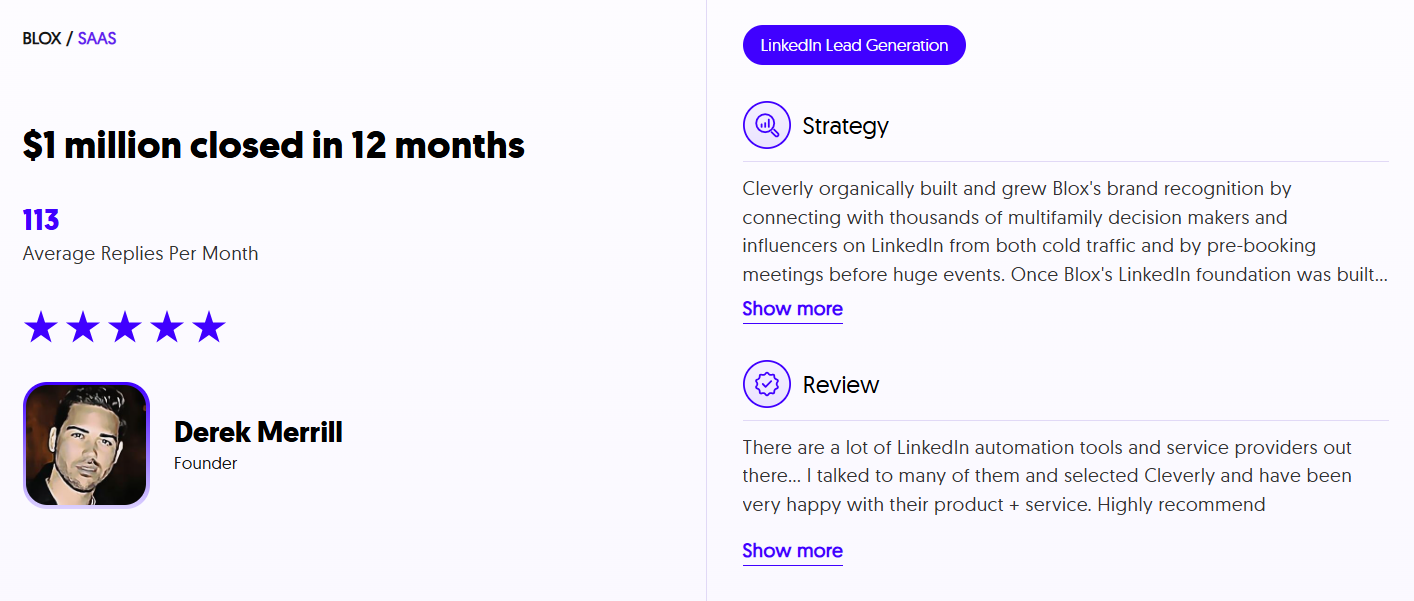
We've helped 10,000+ B2B companies generate $312M in pipeline and $51.2M in closed revenue through LinkedIn outreach — and none of that happens through generic blast sequences. It happens through targeting, relevance, and consistency.
If you want qualified conversations and booked meetings without spending three hours a day doing manual research and follow-up, Cleverly handles all of it — targeting, messaging, engagement, and reply management — completely done for you.
🤝 Book a strategy call with Cleverly and see exactly how we'd approach your LinkedIn pipeline.
Conclusion
LinkedIn Groups remain one of the most underutilized channels for B2B lead generation in 2026 — and the gap between teams using them strategically and those ignoring them is only widening.
The teams winning with groups aren't in the most groups. They're consistently valuable in the right ones, using group membership as an intent signal, and converting those warm connections into real conversations.
That's the playbook. Start with five groups, show up with value, and build from there.
Frequently Asked Questions
Free Resource
How to Scale a Profitable Cold Call System
Get the complete guide — download it instantly now.
Free Ebook
Download the Free Guide
Enter your details to get instant access.
You're all set! 🎉
Your ebook is downloading now.
Click below if the download didn't start automatically.