Table of Contents
What Is LinkedIn Personal Branding & Why It Matters in 2025
Optimize Your Profile for Personal Branding
Content Strategy for LinkedIn Personal Branding
Growing Your Network & Visibility
Measuring the Impact of Your Personal Brand
Cleverly Can Accelerate Your LinkedIn Personal Branding
Conclusion
Frequently Asked Questions
Modified On :
August 12, 2026
Key Takeaways
- LinkedIn personal branding turns your profile into a reputation-building asset, not just a resume.
- Optimizing your photo, headline, and About section is the first step to attracting the right audience.
- A simple content strategy with clear pillars keeps you consistent and memorable.
- Growing your network with smart connections and engagement boosts your visibility and authority.
- Tracking visits, impressions, and inbound leads helps measure personal branding success.
When it comes to growing in your career or business today, nothing beats LinkedIn personal branding.
The way you show up on LinkedIn decides whether people see you as just another professional or as someone worth following, connecting with, and doing business with.
The challenge is, most people don’t know where to start. Should you focus on polishing your profile? Posting content? Or building relationships in your network?
Well… it’s all connected.
When you approach personal branding on LinkedIn the right way, you can build authority in your industry, attract better opportunities, and open doors that don’t come through job boards or cold outreach for B2B.
Let’s walk you step by step through how to use LinkedIn for personal branding; from optimizing your profile to sharing the right content to building real authority.
What Is LinkedIn Personal Branding & Why It Matters in 2025
So, what is LinkedIn personal branding really? At its core, it’s the way you shape how people see you on LinkedIn.
While a profile simply lists your job title, experience, and skills, a personal brand goes a step further, it tells your story, highlights your expertise, and shows others what you stand for.
In other words, anyone can have a LinkedIn profile, but not everyone has a personal branding on LinkedIn strategy that makes them memorable.
Think of it this way:
- A profile is your digital resume.
- A brand presence is your reputation, it’s what people remember and talk about when you’re not in the room.
And here’s why this matters more than ever in 2025.
Why LinkedIn Personal Branding Is Key Today
The way buyers, recruiters, and decision-makers behave has changed. People don’t just trust company pages or polished ads anymore, they trust people.
When you know how to use LinkedIn for personal branding, you become that trusted voice in your niche. Instead of chasing opportunities, opportunities start coming to you.
Some quick reasons why it matters right now:
- Trust shift → People prefer connecting with individuals over logos.
- Content-driven sales → The majority of B2B buyers say thought leadership content shapes who they work with.
- Engagement at scale → LinkedIn now has over 1 billion users, with 16%+ engagement growth year over year (and business-related content drives the most traction).
- Lead generation powerhouse → 4 out of 5 LinkedIn members drive business decisions, making it the #1 platform for B2B networking.
That’s the real power of LinkedIn personal branding, your presence works for you 24/7, even when you’re not online.
LinkedIn's Own "Accelerating Your Career with Personal Branding" Course
If you want proof that personal branding on LinkedIn isn't just an agency talking point, look at what LinkedIn itself teaches.
Accelerating Your Career with Personal Branding is a LinkedIn Learning course taught by leadership strategist Shadé Zahrai. It runs about 38 minutes and covers how to craft a brand statement, manage how others perceive you, and communicate that brand consistently online.
It's not built for business owners specifically. It's aimed at anyone trying to move their career forward, from individual contributors to executives, which makes it a useful primer no matter what stage you're at.
Here's the important part: the course teaches the thinking behind personal branding, not the LinkedIn execution. It won't tell you how often to post or what a good headline looks like. Think of it as the mindset layer that sits underneath everything in this guide. Pair it with an active posting strategy and you get both the "why" and the "how."
You can find it by searching "Accelerating Your Career with Personal Branding" directly in LinkedIn Learning, or through your organization's LinkedIn Learning access if your company provides it.
🌟 Branding Builds Trust, Outreach Builds Leads
A strong personal brand gets you noticed. Cleverly’s LinkedIn lead gen service turns that attention into booked sales calls. Start generating B2B leads for just $397/month.
Step 1 – Finding Your "Niche of One" Before You Post
Before you touch your headline, your About section, or your first post, you need to answer one question: what's the one problem you solve better than most people in your space?
That's your niche of one. It's not a job title. It's the specific outcome people should associate with your name.
Here's why this matters more than most people think. LinkedIn's algorithm now builds what's essentially a "topic profile" for every creator, tracking what you post about and rewarding consistency within that lane. Reach is no longer capped by network size; it's shaped by topical consistency and demonstrated expertise, and creators are generally advised to keep 70 to 80 percent of their posts inside a defined topic cluster. Post about five different things and the algorithm can't classify you, which means it doesn't know who to show your content to.
Generalist positioning gets lost in the feed for the same reason a generalist elevator pitch gets lost in a room. "I help businesses grow" tells people nothing. "I help agency owners fix their outbound reply rates" tells them exactly when to think of you.
A simple framework to test your niche:
- Audience → Who exactly are you trying to reach? Be specific enough that you could picture one person.
- Outcome → What result do you help that audience get? Not a service description, an outcome.
- Proof → What experience or result backs up your claim to that outcome?
If you can fill in "I help [audience] achieve [outcome] through [your approach/proof]," you have a niche worth building around.
This isn't just a content exercise. Your niche is what feeds directly into the headline formula and About section copy in the next step, and into every content pillar you choose after that. Skip this step and you'll spend months rewriting a headline that never quite lands, because it was never anchored to anything specific in the first place.
Step 2 – Optimize Your Profile for Personal Branding
Your profile is the foundation of everything you do on LinkedIn. Before you think about posting content or growing your network, you need to get this part right.
Let’s go through some practical LinkedIn profile optimization tips for personal branding so your profile works as a strong first impression.
Profile Photo & Banner Branding
Your profile photo is the first thing people see. Make sure it looks professional, approachable, and consistent with how you want to be perceived in your industry.
- Use a high-quality headshot with good lighting.
- Wear what you’d typically wear in a professional setting.
- Keep the background clean and distraction-free.
Your banner is equally important. Most people leave it blank, which is a missed opportunity.
Use it to reinforce your brand, whether that’s a tagline, your expertise area, or a clean branded graphic that tells people what you do at a glance.

Compelling Headline & About Section
Your LinkedIn headline shouldn’t just say your job title, it should tell people what value you bring.
Instead of “Marketing Manager,” try “Helping SaaS Companies Generate Qualified Leads Through LinkedIn.” That’s clear, value-driven, and keyword-friendly.
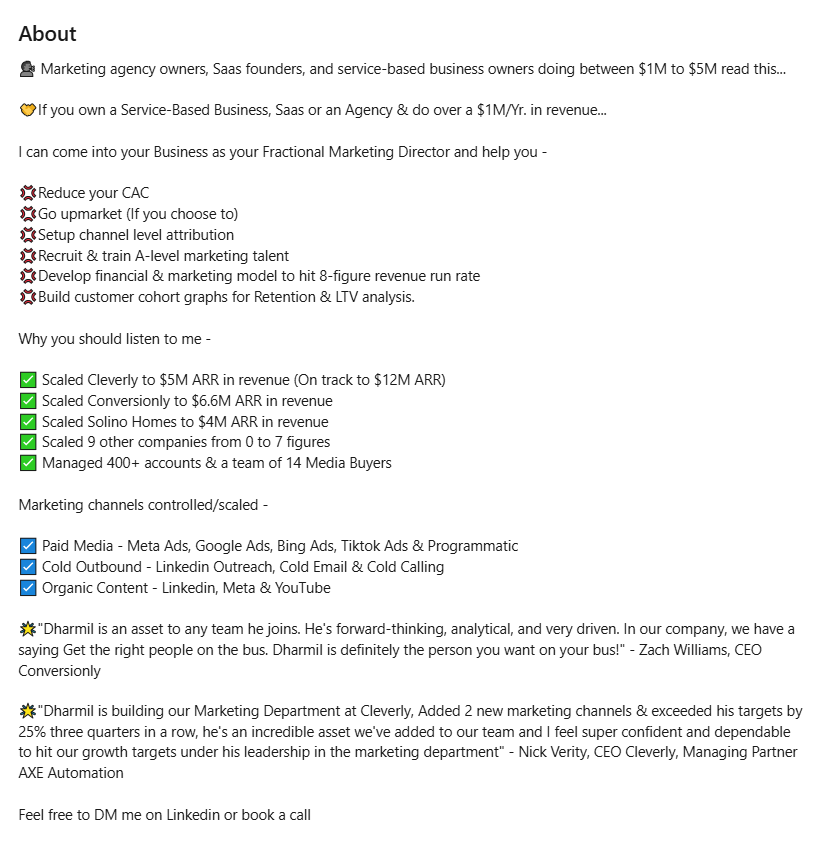
The About section is your chance to expand. Think of it as your elevator pitch in writing:
- Start with what you do and who you help.
- Add a line or two about your approach or philosophy.
- Sprinkle in relevant keywords like personal branding on LinkedIn or your industry niche so you’re discoverable.
- End with a call to action (e.g., “Let’s connect if you’re looking to grow your B2B pipeline”).
Featured Section & Portfolio Showcase
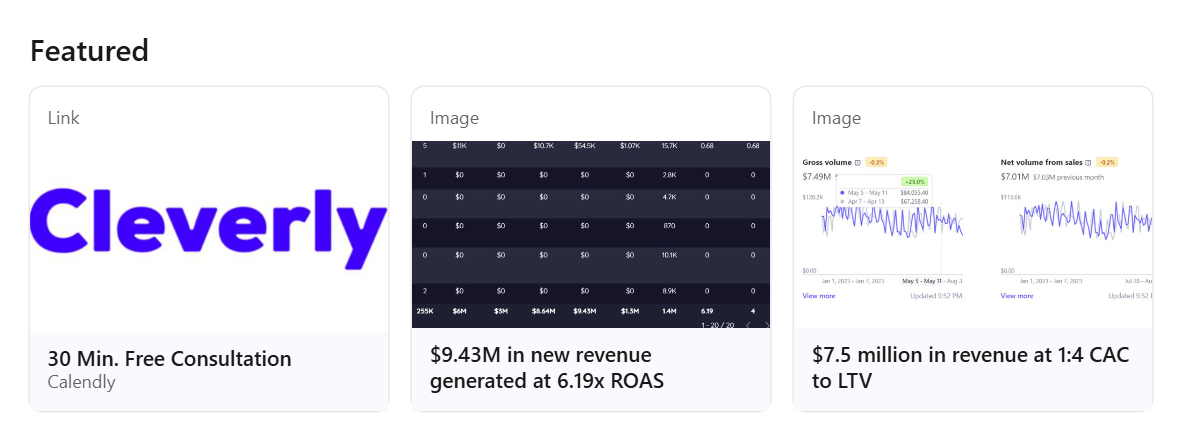
The Featured section is where you highlight your best work.
If you’ve been featured in articles, spoken on podcasts, written blogs, or created LinkedIn content that performed well, pin them here. It’s like a mini portfolio that instantly shows credibility.
This is especially important if you’re thinking about how to build a personal brand on LinkedIn, your content needs to be seen, not just posted once and forgotten.
Recommendations & Skills for Social Proof
You can say you’re great at what you do, but it hits differently when other people say it. That’s why recommendations and endorsements matter.
- Ask colleagues, clients, or managers to write specific recommendations highlighting your skills and results.
- Keep your skills section updated—add ones that align with your personal brand.
- Endorse others generously; it often comes back your way.
These elements together build authority and social proof, making your profile not just a resume but a trust-building asset.

Step 3 – Content Strategy for LinkedIn Personal Branding
Once your profile is ready, the next step is building visibility through content. Posting consistently helps people see your expertise and personality in action.
The good news? You don’t need to reinvent the wheel, you just need the right LinkedIn content ideas for personal branding and a simple plan to stay consistent.
Establishing Content Pillars
Content pillars are the themes you post around. They keep your content focused and make sure you’re known for something specific. A good mix usually includes:
- Expertise → Share tips, frameworks, or insights from your field.
- Personal stories → Talk about your journey, lessons learned, or even challenges—this makes you relatable.
- Industry insights → Comment on trends, news, or changes in your niche.
When you balance these, you come across as knowledgeable, approachable, and trustworthy.
Consistency: Posting Frequency & Engagement
You don’t need to post every day, but you do need consistency. For most professionals, 2–3 times per week is enough to stay visible without burning out.
- Create a simple schedule you can stick to.
- Block time to engage with others before and after posting.
- Don’t ghost—engagement builds momentum.
A 90-Day Staged Plan for Building Your Brand
"Post consistently" is easy advice to give and hard advice to follow if you're starting from zero. Most people either freeze up trying to post perfectly from day one, or they post daily for two weeks and burn out.
A staged approach fixes both problems. Here's a simple way to think about your first 90 days of learning how to use LinkedIn for personal branding:
Month 1: Audit and observe. Finish your profile optimization from Step 2. Then focus entirely on commenting, not posting. Spend time leaving thoughtful comments on posts in your niche every day. There's no posting pressure yet. You're building the habit of showing up and getting comfortable with what good content in your space actually looks like.
Month 2: First posts, low frequency. Start posting once or twice a week. At this stage, the hook (the first one to two lines of your post) matters more than anything else. Spend more time writing and rewriting your opening line than the rest of the post combined. Don't worry about views yet; worry about whether the hook makes someone stop scrolling.
Month 3: Scale and audit. Move up to your target cadence of 2 to 3 posts a week. Now start comparing views against follower growth, not just against likes. Rising views with flat follower growth usually means your hook is working but your positioning isn't sticky enough yet. That's a signal to revisit your niche from Step 1, not a signal to post more.
Staging it this way prevents the early burnout that kills most personal branding attempts. You're not trying to "go viral" in week one. You're building the muscle in a sequence that compounds.
Mix of Formats
Different people prefer different content types, so mix it up:
- Text posts → Simple, storytelling-style updates.
- Carousels → Great for breaking down frameworks or step-by-step processes.
- Videos → Quick tips, opinions, or behind-the-scenes moments.
- Polls → Easy way to spark engagement and learn from your audience.
Experiment with formats until you see what resonates with your network.
Leveraging Trends & Hashtags
Staying relevant doesn’t mean chasing every trend, but it helps to be aware of what your audience is talking about.
Jumping into timely conversations shows you’re plugged into your industry.
- Use 3–5 hashtags per post (broad + niche).
- Add your perspective on trending topics rather than just reposting.
- Align trends with your content pillars so your brand message stays consistent.
Engagement Strategy: Comments, DMs, Networking
Posting is only half the game. The real growth comes from engaging with others.
- Leave thoughtful comments on posts in your niche—it gets you noticed.
- Reply to every comment on your posts (it doubles your reach).
- Use DMs to build genuine relationships, not just pitch.
When people see you showing up in their feed and conversations, you naturally build credibility and trust.
Over time, this makes your LinkedIn personal branding stronger than any profile update alone.
🚀 From Authority to Appointments
Personal branding is step one; our proven outreach system ensures your profile attracts real business opportunities. Book your free LinkedIn strategy session today.
Step 4 – Growing Your Network & Visibility
You can have the best profile and strong content, but without the right audience, your efforts won’t get far.
Knowing how to build a personal brand on LinkedIn also means intentionally growing your network and showing up where it matters.
Smart Connection Requests
Don’t just hit “Connect” and hope for the best. A personalized invite goes a long way.
Mention something you have in common, why you’d like to connect, or a specific piece of content they shared that resonated with you. It turns a cold connection into a warm one.
- Keep it short (2–3 sentences).
- Focus on building a relationship, not selling.
- Quality beats quantity—don’t add hundreds of random people.

👀 Find Out More: How to Remove Connections on LinkedIn
Building Relationships With Industry Leaders
If you want to be seen as an authority, engage with people who already have influence in your field. Comment on their posts, share your take, and tag them when it’s relevant.
Over time, this consistent interaction puts you on their radar and in front of their audience too.
Joining & Engaging in LinkedIn Groups/Events
Groups and LinkedIn events are underrated tools for visibility. Just avoid spamming—add value through thoughtful comments and discussions.
- Join 3–5 active groups related to your industry.
- Attend virtual events and follow up with attendees.
- Share your insights from these spaces on your own profile.

Using LinkedIn Search & Creator Mode
LinkedIn gives you tools to expand your reach if you know how to use them:
- Search filters → Find people by job title, company, location, or interest.
- Creator Mode → Unlocks features like showcasing your hashtags, enabling “Follow” on your profile, and access to LinkedIn analytics.
When you combine these strategies, your visibility increases and your LinkedIn personal brand starts working beyond your immediate circle.
The more intentional you are, the easier it becomes to grow an engaged network that aligns with your goals.
Step 5 – Measuring the Impact of Your Personal Brand
You’ve optimized your profile, built a content strategy, and grown your network. But how do you know if it’s actually working?
Tracking LinkedIn personal branding success isn’t about vanity metrics; it’s about understanding whether your presence is opening the right doors.
Tracking Profile Visits, Impressions & Content Reach
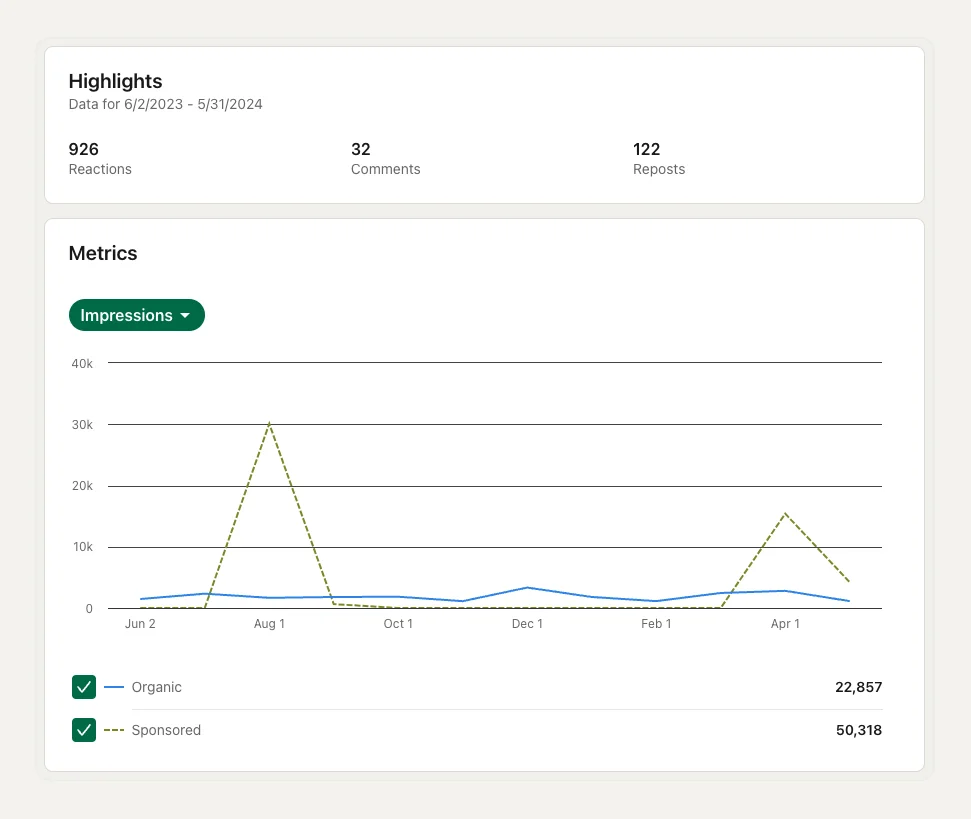
Your LinkedIn analytics is your starting point. Keep an eye on:
- Profile views → Are more people checking you out after your posts?
- LinkedIn Post impressions → How many times your content is showing up in feeds.
- LinkedIn Engagement → Comments, shares, and likes that signal people are paying attention.
These numbers show whether your content and positioning are making you more visible.
Monitoring Inbound Connection Requests & DMs
A strong personal brand doesn’t just push content, it pulls people in. When you start receiving more connection requests from relevant professionals, or when people DM you asking for advice, partnerships, or collaborations, it’s a clear sign that your brand is working.
Leads & Opportunities as the Ultimate ROI
At the end of the day, the true measure of LinkedIn personal branding success is the opportunities it creates. These can look different depending on your goals:
- New clients or sales leads.
- Speaking or podcast invitations.
- Job offers or recruiter outreach.
- Partnerships or collaborations.
The ROI of your personal brand is it’s credibility that converts into real results. That’s why building and tracking your brand on LinkedIn isn’t a “nice to have” anymore; it’s a business growth strategy.
LinkedIn Personal Branding for Agency Owners
If you run an agency, the personal branding math works differently for you than it does for an individual contributor, and it's worth calling out directly.
Founder-led content consistently outperforms agency company pages. Sprout Social's Q1 2026 Index puts LinkedIn engagement around 4.7 percent for personal-profile content versus roughly 1 to 2 percent for company pages, and the gap holds across most industry breakdowns. If your agency is putting most of its content energy into the company page instead of your own profile, you're leaving reach on the table.
Position around client results, not services offered. Every agency says it does LinkedIn outreach, cold email, or ad management. Almost none of them show the actual before-and-after numbers behind a specific client win. Posting "here's what we do" content competes with every other agency's homepage. Posting "here's what happened when we did X for a client like Y" competes with almost nothing.
Balance founder visibility with team advocacy. You don't need to be the only voice. Account managers and strategists posting about their day-to-day work adds volume and reach without diluting your personal brand, as long as everyone's content still ties back to the same client-outcome positioning.
The most common credibility mistake agency owners make is posting generic "thought leadership" that could have come from any agency in the category. If your post could be reposted by a competitor with the logo swapped and nobody would notice, it's not building your authority. It's building the category's.
👀 Gain Insight: Why Done-for-You LinkedIn Lead Generation Delivers Faster ROI
Cleverly Can Accelerate Your LinkedIn Personal Branding
Building your brand on LinkedIn takes time and consistency. The good news? You don’t have to do it alone.
We’re a LinkedIn lead generation agency trusted by over 10,000 clients…including teams at Amazon, Google, Uber, PayPal, and more.
Here’s how we can help you take your LinkedIn personal branding to the next level:
- Done-for-you lead generation → We help you turn profile views and visibility into qualified conversations with your ideal prospects.
- LinkedIn content ghostwriting → Don’t have time to post consistently? Our team creates authority-driven content for you—so you boost impressions, engagement, and trust without staring at a blank screen.
- Inbound + outbound results → While your personal brand pulls in opportunities, we also proactively connect you with decision-makers who matter.
💸 And the proof is in the numbers:
- 224,700+ client leads generated
- $51.2M in client revenue created
- $312M in client pipeline built
With Cleverly, you save hours each week while building a personal brand that not only looks good but also drives business growth.
And the best part? Our pricing starts at just $397/month—making professional LinkedIn growth accessible for individuals and teams alike.
If you’re serious about turning your LinkedIn presence into real revenue, let’s talk!

Conclusion
At the end of the day, LinkedIn personal branding is about more than looking polished, it’s about showing up consistently, sharing your expertise, and building relationships that turn into real opportunities.
When you optimize your profile, post valuable content, and grow your network with intention, LinkedIn stops being “just another platform” and becomes a driver of your professional success.
Your personal brand is already speaking for you on LinkedIn, the question is, what story is it telling?
Frequently Asked Questions
Free Resource
How to Scale a Profitable Cold Call System
Get the complete guide — download it instantly now.
Free Ebook
Download the Free Guide
Enter your details to get instant access.
You're all set! 🎉
Your ebook is downloading now.
Click below if the download didn't start automatically.