Table of Contents
Why Most LinkedIn Outreach Still Fails in 2026
The Core Elements That Actually Book Sales Meetings on LinkedIn
LinkedIn Outreach Framework That Converts Conversations Into Meetings
How High-Performing Teams Scale LinkedIn Outreach Without Killing Results
How Cleverly Helps Companies Book Sales Meetings on LinkedIn
Conclusion
Frequently Asked Questions
Modified On :
September 17, 2026
Key Takeaways
- LinkedIn outreach that books meetings prioritizes narrow ICP targeting over broad volume.
- Conversation-first messaging outperforms pitches every single time.
- Real personalization references specific context, not surface-level details like job titles.
- Follow up 2-3 times with new value, then move on.
- Scale by adding profiles and maintaining quality, not blasting more messages per account.
- Meeting requests work best after you've qualified interest through natural dialogue
Most LinkedIn outreach gets ignored. The difference between messages that get deleted and LinkedIn outreach that books meetings?
It's not about sending more messages. It's about doing fewer things, but doing them right.
We've analyzed thousands of campaigns at Cleverly, and the patterns are clear. The LinkedIn lead gen strategies that worked in 2023 don't cut it anymore.
LinkedIn's algorithm has changed, buyer behavior has shifted, and decision makers are drowning in generic pitches.
Here's what actually works in 2026.
Why Most LinkedIn Outreach Still Fails in 2026
We see it constantly. Companies send hundreds of connection requests, get decent acceptance rates, maybe even some replies. Then nothing. No meetings. No pipeline.
The problem isn't effort. It's execution. Here's where most LinkedIn outbound best practices get ignored:
Over-automation kills personalization.
Tools that auto-send 100 messages a day create obvious patterns. Recipients can tell when you've plugged their company name into a template. LinkedIn's algorithm can tell too, and it throttles your reach accordingly.
Pitching in the first message.
You wouldn't walk up to someone at a conference and immediately ask for a 30-minute meeting. LinkedIn is no different. Decision makers need a reason to care before they'll consider your calendar link.
Targeting titles instead of timing.
Just because someone is a VP of Sales doesn't mean they're actively looking for lead generation solutions right now. Following LinkedIn outbound best practices means identifying signals that indicate actual buying intent, not just matching job titles to your ICP.
Measuring the wrong metrics.
Connection acceptance rates and reply rates feel productive. But if those conversations don't turn into booked meetings, you're just creating busy work. The only metric that matters is qualified meetings on your calendar.
Also Check: LinkedIn Prospecting To Generate 30+ Inbound Leads Every Month
💬 Meetings, Not Messages
Cleverly runs done-for-you LinkedIn outreach that turns cold connections into qualified sales meetings. Plans start at $397/month.
The Core Elements That Actually Book Sales Meetings on LinkedIn
LinkedIn outreach that books meetings isn't built on tricks or hacks. It's built on fundamentals that most teams skip because they seem too basic or too slow.
Here's what separates campaigns that fill calendars from campaigns that just fill inboxes.
1. A Clearly Defined, Narrow ICP
Broad targeting feels safer. "We can help any B2B company" sounds like more opportunity. In reality, it kills conversion.
Why broad targeting fails: When you message 500 different types of prospects, you can't speak to specific pain points. Your message becomes generic by necessity. Generic messages get ignored.
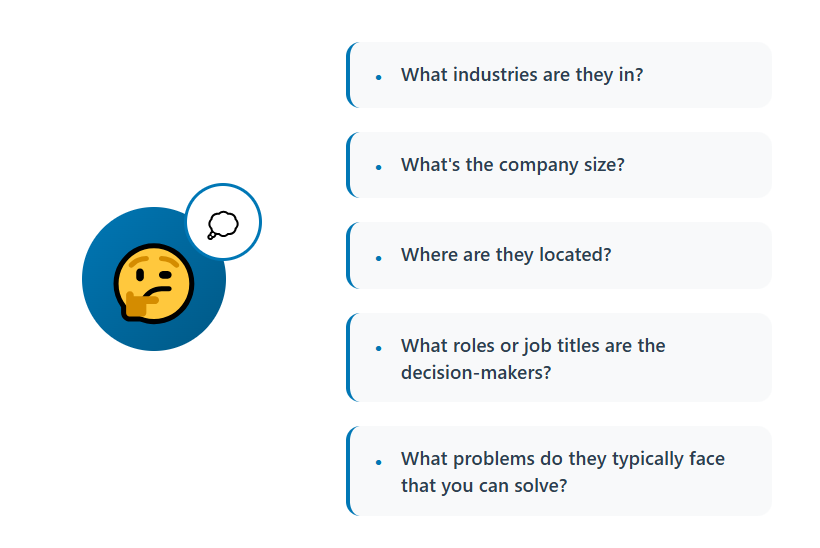
The power of sub-niching: The best LinkedIn outreach that books meetings targets a specific role, in a specific industry, experiencing a specific trigger event. Example: VP of Sales at Series B SaaS companies who just raised funding. Or Director of Operations at healthcare clinics expanding to multiple locations.
The narrower your focus, the more specific your message can be. The more specific your message, the higher your response rate.
2. A Cold-Safe Offer (Not a Product Pitch)
There's a massive difference between what you sell and why someone should take a meeting with you.
What you sell: "We're a LinkedIn lead generation agency that helps B2B companies book more meetings."
Why they should talk: "We'll show you the three targeting mistakes that are probably killing your LinkedIn response rates right now."
Cold-safe offers that work:
- Sharing specific data or benchmarks relevant to their role
- Offering a free audit or assessment of their current approach
- Providing access to a resource that solves an immediate problem
- Introducing them to a relevant connection in your network
Save the product pitch for the actual meeting. The message just needs to earn the conversation.
3. Context-Driven Personalization
Personalization in 2026 isn't about mentioning their company name or commenting on their latest post. LinkedIn users have seen those tactics a thousand times.
Real personalization references:
- A specific challenge their industry is facing right now (not generic pain points)
- A recent company announcement that creates a logical reason to reach out
- A mutual connection or shared experience that builds immediate credibility
- Content they've shared that relates directly to what you're offering
Surface-level personalization (congrats on the new role, I saw your post about X) signals that you're running volume. Context-driven personalization signals that you actually have a reason to be reaching out to them specifically.
4. Mining Post Engagement to Find Pre-Qualified Prospects
Sales Navigator filters get you a list of people who match your ICP on paper. They don't tell you who's actually paying attention right now.
Here's a faster way to build a warmer list. Find a post from a thought leader your ICP actually follows, someone talking about a problem you solve. Pull the list of people who liked or commented on it. You don't need new software for this. It's one of the simplest [linkedin prospecting tools that actually book meetings], and most teams skip it because it takes a few extra manual minutes.
Anyone engaging with that post just told you two things: they're active on LinkedIn right now, and they cared enough about that specific topic to stop scrolling and comment. That's a stronger signal than a job title alone will ever give you.
Why this list converts better than cold Sales Navigator filters:
- Everyone on it already raised their hand around a specific topic, not a generic industry tag.
- You have a real, specific reason to reach out instead of a generic icebreaker.
- The list refreshes every time a relevant post goes up, so you're never working stale data.
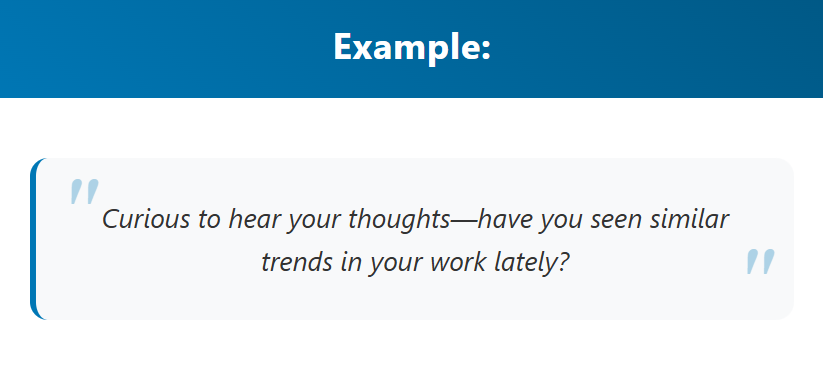
When you reach out, reference the post directly. "Saw your comment on [name]'s post about [specific challenge]. Curious how you're handling that at [company] right now" is a completely different message than "I see we're both in SaaS."
Reply rates for outreach built on signal-based lists like post engagers, job changers, or topic posters typically land in the 25 to 55 percent range, compared to just 3 to 8 percent for outreach sent to a cold, static list. That gap alone is usually bigger than anything you'll get from tweaking message copy.
For more on stacking this with traditional filters, see our guide on LinkedIn Sales Navigator filters.
5. Conversation-First Messaging
The goal of your first message isn't to book a meeting. It's to start a conversation that naturally leads to a meeting.
Opening messages that work: They acknowledge a specific problem, ask a relevant question, or offer genuine value without asking for anything in return. They're short. They're conversational. They don't include calendar links.
Questions outperform statements because they require a response. "Are you currently using LinkedIn for outbound?" is weaker than "What's been your biggest challenge with LinkedIn outreach so far?" The first is a yes/no question. The second invites dialogue.
6. Proper Timing & Follow-Up Cadence
Most people either follow up too aggressively or not at all.
When to follow up: If someone accepts your connection request but doesn't reply to your first message, wait 4-7 days. If they reply but go quiet, wait 3-5 days. If they explicitly say "not interested," stop immediately.
When to stop: After 2-3 follow-ups with no response, move on. Persistence is good. Being annoying destroys your brand.
A concrete follow-up timeline that won't feel like spam:
If you want a repeatable cadence instead of judging it case by case, this is the timeline we run:
- Day 0: Send the connection request. No pitch, no ask. Just a short, specific reason for connecting.
- Hours 1 to 7 after they accept: Send your first message. Lead with something useful, a resource, an observation, a question. Never a calendar link this early.
- Day 3 to 4, if no response: Follow up with a new piece of value, not a repeat of your first message. Share a relevant insight or resource tied to what they do. "Just following up" isn't a reason to respond.
- Day 10 to 14: Make your ask. If you've built enough context by now, this is where you invite them to a conversation. Send one final check-in a few days later if you still haven't heard back, then stop.
That's how to book meetings on LinkedIn without spam: fewer, sharper touches on a fixed schedule instead of a daily nudge. RAIN Group's buyer research puts the average number of touchpoints needed to land an initial meeting at 8 across channels, with top performers needing only 5. A connection request, first message, and two well-timed follow-ups already gets you most of the way there.
Why fewer, better touches work: Sending 5 generic follow-ups doesn't book meetings. Sending 2 highly relevant follow-ups that add new information or context does. Each follow-up should give them a fresh reason to respond, not just repeat your first message.
The best LinkedIn outreach that books meetings respects the prospect's time and inbox. Quality over volume isn't just good advice. It's the only thing that works at scale anymore.
Also Check: How to Build a LinkedIn Lead Engine (Without Paying for Ads)
LinkedIn Outreach Framework That Converts Conversations Into Meetings
Getting replies is one thing. Turning those replies into actual meetings is where most LinkedIn lead generation strategy efforts fall apart.
The framework that works.
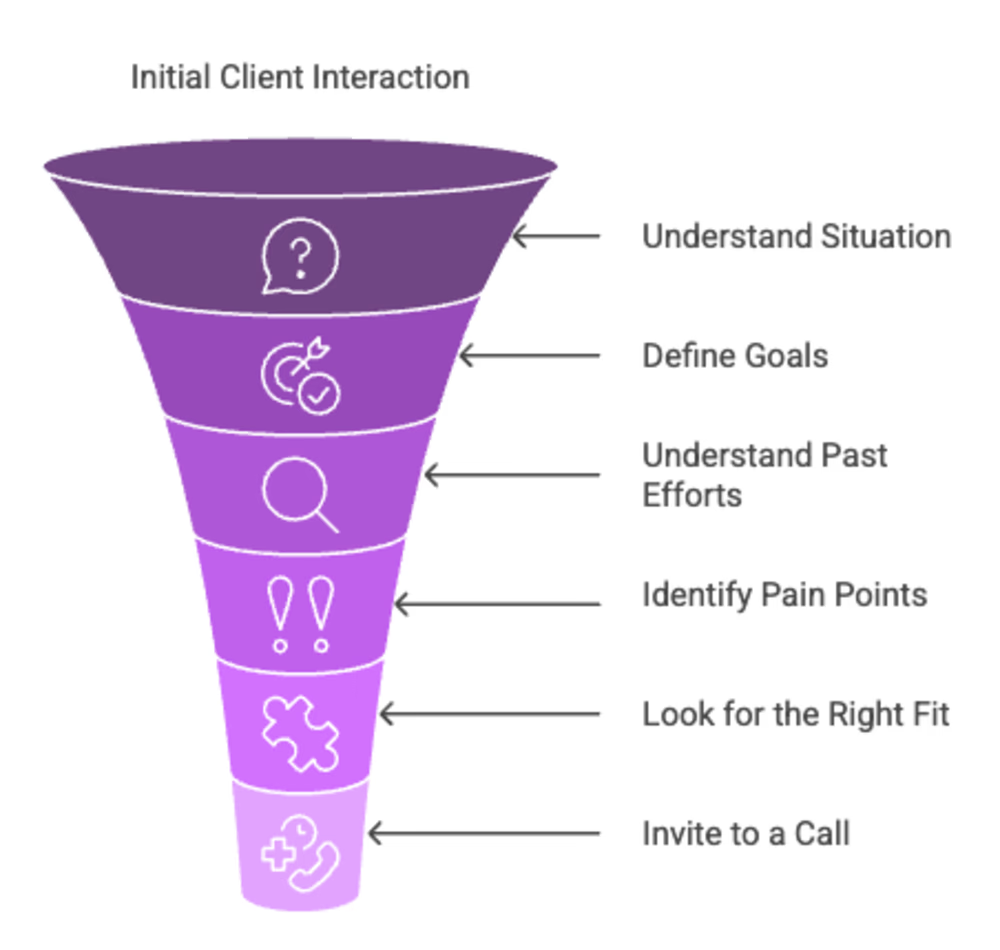
Connect → Engage → Soft-Commit → Qualify → Invite
This isn't revolutionary, but most teams skip steps or rush the process. For prospects who aren't ready to commit to a meeting yet, especially on longer sales cycles, there's a step worth adding before you qualify.
Connect: Send a personalized connection request with a brief, relevant reason. No pitch. No ask. Just context for why you're reaching out.
Engage: Once connected, start a conversation that provides value first. Share an insight, ask a thoughtful question, or reference something specific to their situation. The goal is dialogue, not a meeting request.
Soft-Commit: If you're wondering how you can book more sales meetings using LinkedIn without pushing too early, this step is often the missing piece. Instead of asking for a meeting directly, invite the prospect to something lower-friction, a relevant webinar, panel, or event your company is hosting or sponsoring. An RSVP is a much easier yes than a 30-minute call with someone they just met, and it still tells you they're interested enough to show up.
Qualify: Listen for signals that indicate they have the problem you solve and the authority or influence to act on it. This happens through natural back-and-forth conversation, not an interrogation.
Invite: When you've confirmed fit and built some rapport, transition to the meeting. The key word is invite, not pitch. You're inviting them to a conversation that benefits them, not asking them to sit through your sales deck.
A strong LinkedIn lead generation strategy treats each stage as necessary. Skip one, and your conversion rate drops.
Signals That Indicate Meeting Readiness
Don't ask for a meeting too early. Watch for these indicators:
- They ask questions about how you've helped similar companies.
- They mention a specific challenge or goal related to what you offer.
- They engage multiple times (not just a one-word reply).
- They reference timing ("we're looking at this for Q2").
- They ask about your process, pricing, or how it works.
These signals tell you they're past skepticism and into consideration mode. That's when you suggest a call.
How Top Performers Transition From Chat to Calendar
The transition shouldn't feel like a hard turn. It should feel like the logical next step.
❌ Weak transition: "Do you have 15 minutes this week to chat?"
✅ Strong transition: "Based on what you mentioned about [specific challenge], it sounds like we should talk through a few options. I can walk you through what's worked for other [their industry] companies in about 20 minutes. Does Tuesday or Thursday work better?"
The difference: You're referencing their specific situation, positioning the meeting as valuable to them, and making it easy to say yes with concrete options.
The best LinkedIn lead generation strategy doesn't force meetings. It creates situations where prospects want to meet.
📈 $312M Pipeline from LinkedIn
Trusted by 10,000+ teams, Cleverly uses real buyer data, not guesses, to book meetings your sales team can close.
How High-Performing Teams Scale LinkedIn Outreach Without Killing Results
Most companies hit a wall when they try to scale LinkedIn outreach. They either keep it too manual and can't generate enough pipeline, or they automate everything and watch their response rates crash.
The teams that scale successfully do something different. They build systems that maintain quality while increasing volume.
Human-Led Outreach vs AI-Only Automation

AI can help with research, draft initial messages, and identify patterns. But it can't replace human judgment in LinkedIn lead generation strategy.
Where automation works: Pulling prospect data, identifying trigger events, scheduling messages within safe limits, tracking engagement metrics.
Where humans are non-negotiable: Writing personalized opening messages, responding to replies with context and nuance, reading between the lines to qualify prospects, knowing when to push for a meeting vs when to back off.
The campaigns that book meetings at scale use AI as a research assistant, not a replacement for actual outreach. If your prospects can tell a robot wrote your message, you've already lost.
Scaling Profiles, Not Blasting Volume
Here's where most teams get it wrong. They think scaling means sending more messages per profile per day. It doesn't.
The right way to scale:
- Add more team members running outreach (each with their own profile)
- Keep daily message volume per profile conservative (20-30 max)
- Maintain high personalization standards across all profiles
- Distribute your ICP across multiple senders so no single profile gets flagged
The wrong way to scale:
- Pushing one profile to send 100+ messages daily
- Using mass automation tools that trigger LinkedIn's spam filters
- Sacrificing message quality to hit arbitrary activity metrics
We've worked with over 10,000 clients at Cleverly, and the pattern is consistent. Teams that scale horizontally (more profiles, same quality) outperform teams that scale vertically (same profiles, more volume) every single time.
How Many Meetings Should LinkedIn Outreach Realistically Generate?
This is the question every sales leader eventually asks, and there's no single clean number.
A reasonable range: For one well-run profile working a properly narrowed ICP, expect somewhere around 1 to 5 booked meetings a month. Median performance tends to land around 1 to 2 booked meetings per rep per month, with top-quartile campaigns reaching 4 to 5.
Why it varies so much: ICP narrowness and deal size drive most of the variance. A broad, generic audience churns through more prospects for fewer meetings, even with strong copy. A tightly defined ICP paired with a specific trigger event, like the sub-niche targeting covered earlier in this guide, converts at a meaningfully higher rate because every message can be specific instead of generic. Deal size matters too. Smaller, faster-cycle deals typically produce more volume. Enterprise sellers targeting fewer, larger accounts should expect fewer meetings and treat each one as higher stakes.
Set your own benchmark after month one. Industry averages are a starting point, not a target. After 30 days you have your own baseline: acceptance rate, reply rate, and meetings booked from your specific ICP and messaging. Compare month two against that, not against a number from a blog post.
Red flags that volume is being prioritized over meeting quality:
- Acceptance or reply rates keep climbing, but meetings booked stays flat.
- Meetings are getting booked, but a growing share no-show or turn out to be poor fits, worth checking against what actually counts as a qualified sales meeting.
- Messaging looks templated across profiles instead of tailored to each ICP segment.
- Daily send volume per profile keeps creeping past the 20-30 range.
If you're seeing two or more of these at once, the engine is optimizing for the wrong metric. Go back to the fundamentals earlier in this guide before adding more volume.
For a full breakdown of acceptance, reply, and meeting benchmarks by scenario, see our LinkedIn benchmarks guide.
Why Systems and Process Matter More Than Tools
Everyone asks what tools to use. That's the wrong question.
The right question is: Do you have a repeatable process for identifying prospects, crafting relevant messages, qualifying interest, and booking meetings?
Strong systems include:
- Clear ICP documentation that everyone follows
- Message frameworks (not templates) that maintain consistency
- Response handling playbooks for common scenarios
- Meeting qualification criteria so you're not booking junk calls
- Regular performance reviews to identify what's working and what's not
Tools just execute your process faster. If your process is broken, better tools won't fix it. They'll just help you fail at scale.
A solid LinkedIn lead generation strategy prioritizes process over technology. Once you've proven what works manually, then you systematize it. Not the other way around.
Explore More: How B2B Video Marketing Boost LinkedIn Outreach & Lead Generation
How Cleverly Helps Companies Book Sales Meetings on LinkedIn
We're a LinkedIn lead generation agency that handles the entire outreach process for you. No SDR team needed. No figuring out what works. Just qualified meetings on your calendar.
What we do:
- Done-for-you LinkedIn outreach – We research prospects, write messages, manage conversations, and book meetings
- ICP refinement – We identify the exact roles, industries, and trigger events that convert into pipeline
- Meeting-focused approach – We optimize for booked meetings, not connection rates or reply metrics
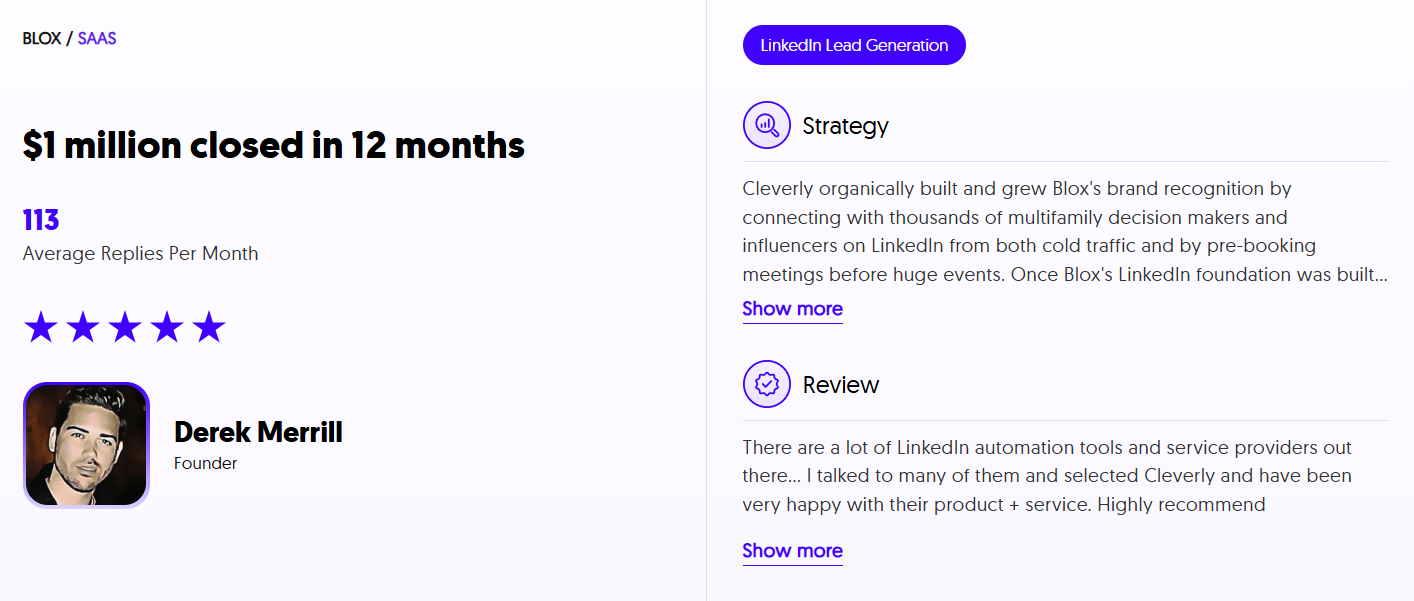
The results: Our clients have generated $312 million in pipeline revenue and $51.2 million in closed revenue. We've worked with Amazon, Google, Uber, PayPal, Slack, and Spotify.
Pricing starts at just $397/month.
Ready to fill your calendar with qualified meetings?
Book a strategy call with Cleverly!

Conclusion
LinkedIn isn't saturated. Bad outreach is.
The platform still works. Decision makers are still active. Deals are still closing. The difference between campaigns that book meetings and campaigns that get ignored comes down to three things: relevance, timing, and conversation quality.
LinkedIn outreach that books meetings in 2026 doesn't rely on tricks or volume. It's built on strong offers, narrow targeting, and actual human conversations. The teams winning right now are the ones treating prospects like people, not pipeline numbers.
If you're willing to do fewer things better, LinkedIn will keep delivering meetings. If you're chasing shortcuts and automation hacks, you'll keep wondering why nothing works.
Strong offers plus human conversations win. Everything else is noise.
Frequently Asked Questions
Free Resource
How to Scale a Profitable Cold Call System
Get the complete guide — download it instantly now.
Free Ebook
Download the Free Guide
Enter your details to get instant access.
You're all set! 🎉
Your ebook is downloading now.
Click below if the download didn't start automatically.