Table of Contents
Why Getting Your First B2B Clients Without a Network Is Different
Define Your ICP Before Any Outreach — The Foundation Everything Else Depends On
8 Proven Strategies to Get B2B Clients Without a Network
How to Get Clients Without Referrals — The Mindset Shift That Changes Everything
Step-by-Step: How to Land Your First 10 B2B Clients From Scratch
Common Mistakes New Businesses Make When Trying to Get B2B Clients
How Cleverly Helps New B2B Businesses Build a Client Pipeline From Scratch
Conclusion
Frequently Asked Questions
Modified On :
May 15, 2026
Key Takeaways
- Starting without a network isn't a disadvantage — it's a forcing function to build systems that scale beyond referrals.
- A sharp Ideal Customer Profile (ICP) is the single biggest lever for early client acquisition; specificity always beats volume.
- Cold email, LinkedIn outreach, and cold calling are the three fastest channels to land your first B2B clients from scratch.
- Your first 10 clients won't come from brand recognition — they'll come from relevance, persistence, and a compelling offer framed around the buyer's problem.
- Building a consistent outreach system in months 1–3 creates the proof points that power referrals, inbound, and compounding growth in months 4–12.
When you search ‘how to get clients for a new business,’ you probably expect growth hacks. The reality is much harder: you’re starting with no reputation, no network, and no proof.
You're not optimizing a pipeline. You're building one from nothing.
The good news? It's more than doable.
61% of B2B marketers say generating leads is their biggest challenge — which means even companies with resources and brand recognition find it hard.
The difference for a new business is that you can move faster, get more personal, and be more specific than any large company can afford to be.
At this stage, 95% of your outreach strategy is about being present and relevant before the need becomes urgent. Outbound is the only channel that lets you create that presence from day one without an audience.
We break down exactly what works when you're starting from scratch: how to define who you're targeting, eight proven strategies for landing B2B clients without a network, the step-by-step path to your first 10 clients, and the most common mistakes that slow new businesses down.
Why Getting Your First B2B Clients Without a Network Is Different
Learning how to get clients for a new business isn’t the same as scaling an established one. You’re building trust from absolute zero.
When you have no existing reputation in the market, every prospect interaction starts cold.
There's no mutual contact to borrow credibility from, no logo wall to point to, and no social proof to smooth the conversation. You're asking someone to take a chance on someone they've never heard of, for a problem they may not have articulated yet.
That changes the rules completely. So, your first few clients are won by three things that you can control from day one:
- A razor-sharp ICP. When every outreach feels targeted rather than random, prospects notice. Specificity signals competence before a single word of your pitch is read.
- A compelling offer framed around the buyer's problem. Not a service description. Not a capabilities deck. One sentence about the outcome you deliver and who you deliver it for.
- A consistent, multi-touch outreach system. Nobody buys from a stranger on the first contact. B2B sales cycles require repeated exposure before trust forms.
Where most new businesses go wrong: they pitch too broadly, too early, and quit before the system has a chance to work. They treat first-touch outreach like a direct sales moment instead of the start of a relationship.
The real mindset shift here is this: your first 10 clients don't need to love your brand. They need to believe you understand their problem better than anyone else who has ever reached out to them.
That belief is something you can create entirely through research, relevance, and specificity — no track record required.
🚀 No Network? Outbound Fixes That.
We help new businesses book qualified meetings from scratch. LinkedIn, cold email & calling—done for you.
Define Your ICP Before Any Outreach — The Foundation Everything Else Depends On
B2B client acquisition for a new business almost always breaks down at this stage. Not because the outreach is bad. Because the targeting is.
The single biggest mistake new B2B businesses make is starting outreach before they've defined exactly who they're reaching out to.
The result is generic messaging that connects with no one, a low reply rate that feels demoralizing, and a false conclusion that outbound doesn't work.
It does work. But only when the list and the message match.
What a Real ICP Looks Like
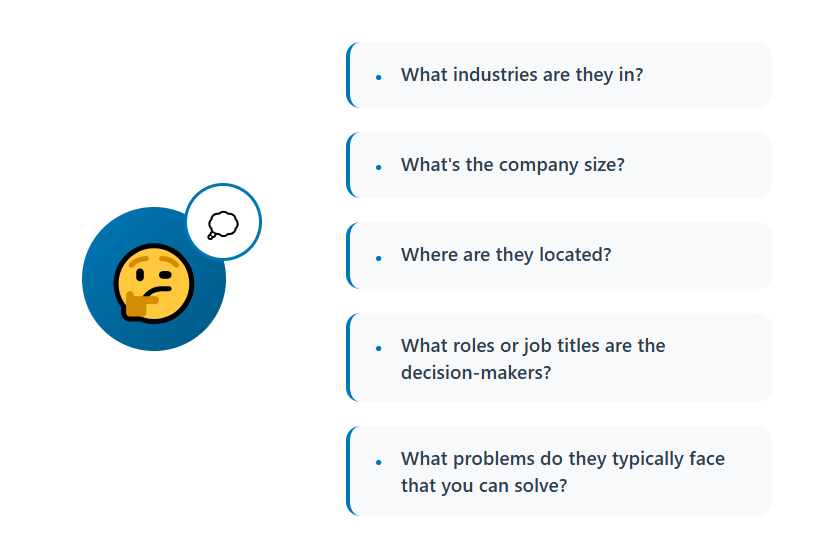
An Ideal Customer Profile isn't just "small businesses in the US." A working ICP includes:
- Industry and sub-vertical — not just "tech," but "Series A SaaS companies in HR tech"
- Company size — headcount and revenue range where your offer creates the most value
- Geography — where are they and does it matter for your service?
- Decision-maker title — who actually approves the purchase?
- Key pain points — what's keeping them up at night that you specifically solve?
- Budget range — can they afford what you charge?
- Good fit vs. bad fit signals — what tells you immediately this is a waste of time?
How to Build Your ICP Without Prior Clients
Start with who you most want to work with based on your expertise and actual interest. Then:
- Identify 3–5 companies that would be a dream client.
- Reverse-engineer their profile — industry, size, structure, buying signals.
- Research where those types of buyers spend time: which LinkedIn groups, which Slack communities, which conferences, which publications.
That becomes your initial ICP. It's not permanent — it sharpens with every conversation you have.
The One ICP at a Time Rule
New businesses that try to target multiple personas simultaneously almost always fail at both. Your messaging gets diluted, your list gets messy, and your conversion rates drop across the board.
Focus on one ICP until you land 2–3 clients in that segment. Then expand. This isn't limiting — it's the fastest path to proof points, refined messaging, and a working pipeline.
8 Proven Strategies to Get B2B Clients Without a Network
These strategies work independently, but they compound when combined. Don't try all eight at once — start with 2–3 that fit your bandwidth and ICP, execute them consistently, and add channels once you have traction.
1. Cold Email Outreach — The Fastest Path to First Conversations
If you're figuring out how to find B2B clients from scratch, cold email is where most new businesses should start. It's low cost, scalable, and doesn't require an audience, a reputation, or a warm contact to initiate.
What makes cold email work at early stage isn't volume. It's specificity.
A 50-person, hyper-targeted list with a message that feels personally written will outperform a 500-person generic blast every single time. Reply rates confirm this repeatedly across campaigns.
The anatomy of a high-converting cold email for a new business:
- Subject line: Specific enough to feel relevant, not broadcast-style. Avoid "Quick question" and "Partnership opportunity." Be direct about what it's about.
- Opening line: Reference something specific about the prospect or their company. Not a compliment. A real observation — something you noticed about their role, their company's growth, a post they wrote, a problem common in their space.
- Value line: One sentence. The outcome you deliver, not a list of services. "We help [persona] achieve [specific outcome] in [timeframe]" beats a feature list every time.
- CTA: Low friction. A simple question or a request for a 15-minute call. Not a demo request, not a proposal.
Early-stage tip: Send in batches of 20–30 at a time so you can iterate on messaging before scaling. What gets a 3% reply rate in batch one gets 12% by batch three if you're actually reading the responses and adjusting.
Track reply rate (aim for 10–15% on a well-targeted campaign), positive reply rate, and meetings booked per 100 sent.
2. LinkedIn Outreach and Social Selling
LinkedIn is the most direct channel available for reaching B2B decision-makers by exact title, company size, industry, and seniority — without needing anyone to introduce you.
For a new business without a network, this is significant. You're not cold-calling a general number or hoping someone forwards your email. You're reaching the actual buyer directly.
The basic LinkedIn outreach sequence for new businesses:
Connection request with a short, personalized note (not a pitch) → Follow-up message after acceptance → Value-add message 3–4 days later → Soft CTA to a short call
Four touches over 14 days, all conversational, none of them asking for a commitment.
The social selling layer adds a warm element before the connection request. Comment meaningfully on a prospect's recent posts — share a genuine perspective, not "great post!" — before sending the request.
Two or three real interactions before the connection request turns a cold approach into a semi-warm one. Open rates and acceptance rates both go up.
Profile optimization matters more than most people expect. A prospect will check your profile before accepting your connection request. If your headline says "Founder at [Company Name]," you've told them nothing. Your headline should speak to the buyer's outcome: "We help mid-market SaaS companies book more qualified pipeline through outbound" is a completely different signal.
Realistic expectations for a well-run LinkedIn sequence: 25–35% connection acceptance rate, 10–20% reply rate on the follow-up sequence.
One more thing worth noting: LinkedIn outreach from a founder's personal profile consistently outperforms outreach from a company page or SDR. People respond to human curiosity. They don't respond to corporate scripts.
3. Cold Calling — The Highest-Conversion Channel When Done Right
Cold calling is the most direct path to a real conversation. And for a new business, a real conversation is worth more than 100 emails — because you can handle objections in real time, adjust your pitch based on their tone, and build rapport in minutes rather than weeks.
Most new founders avoid cold calling for two reasons: fear of rejection and no proven cold calling script. The first 20 calls are genuinely uncomfortable. By call 50, the pattern recognition kicks in and the discomfort drops significantly. By call 100, it's just a skill you have.
What a good cold call looks like for B2B client acquisition:
Research-led opener (reference something specific about their company or role) → one open-ended pain-point question → listen far more than you pitch → ask for a 15-minute call to explore further, not a commitment to buy
Cold calling works especially well for new businesses targeting industries where decision-makers are more reachable by phone: construction, manufacturing, healthcare, professional services, and local B2B verticals. It also works well when emails are going unanswered — a call cuts through where digital touchpoints stall.
Practical starting point: 20 dials per day to a highly targeted list. Quality of list matters far more than volume here. Fifty perfectly matched contacts beat 500 loosely relevant ones every time.
4. Community Engagement — Building Credibility in the Rooms Your Buyers Are In
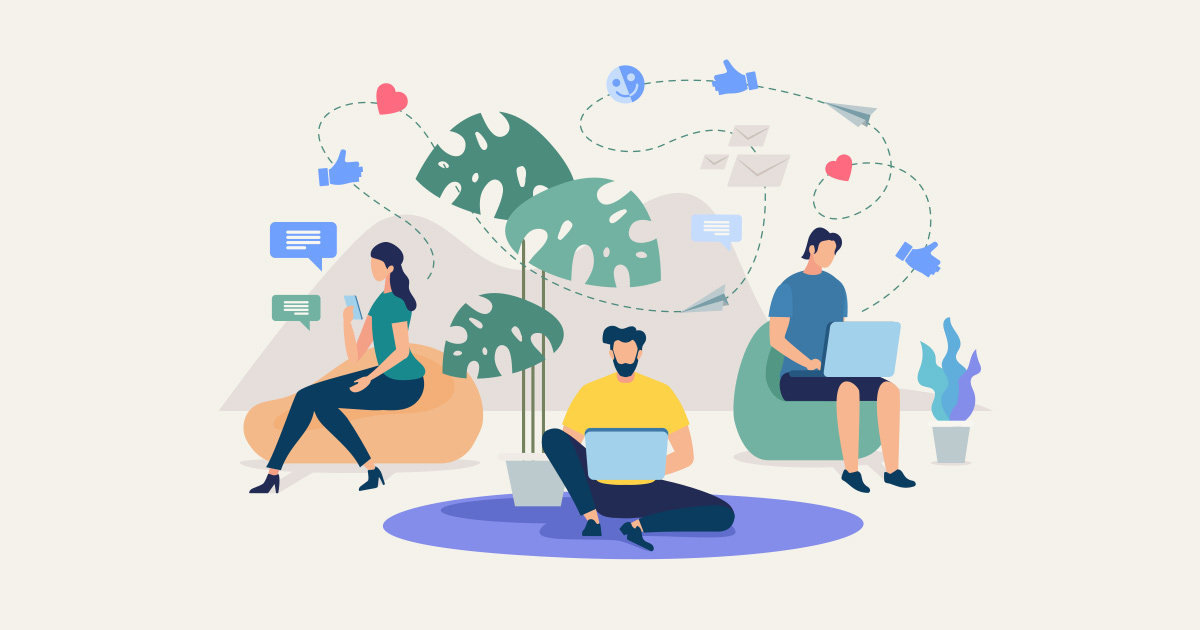
Online communities are where B2B buyers talk candidly about their problems, ask for vendor recommendations, and share what's working and what isn't.
For a new business, showing up consistently in the right communities is one of the most underrated ways to get clients without referrals.
Where to find the right communities: industry-specific Slack groups, LinkedIn groups, Reddit communities (r/entrepreneur, plus vertical-specific subreddits), Discord servers, niche forums, and association member groups.
The rule: provide value first, every time. Leading with a pitch in a community gets you ignored at best, removed at worst. The approach that actually works is becoming genuinely useful — answer questions in your area of expertise, share a relevant framework, offer a real opinion on a common debate, point to a resource that actually helps.
The compounding effect is real. Consistent contribution over 6–8 weeks builds name recognition within a community. The first DMs often start with "I've seen your responses in [X group] — we're dealing with this exact problem." That's a warm inbound lead that came from no ad spend and no cold outreach.
Community-based client acquisition is slower than cold outreach (2–4 months vs. 2–6 weeks), but the leads are warmer and the conversions are higher. It works best as a parallel strategy alongside outbound, not a replacement for it.
5. Strategic Partnerships with Complementary Businesses

A strategic partner is a non-competing business that serves the same buyer you do. Their existing clients are warm leads for you — and yours are warm leads for them.
Examples of natural partnerships:
- A web design agency and a B2B copywriter.
- A CRM consultant and a marketing automation platform.
- An HR consultant and a recruitment firm.
- A fractional CFO service and a bookkeeping firm
How to approach potential partners as a new business: lead with a referral offer rather than asking for one. "I'd love to send clients your way and see if there's a natural fit to collaborate" is a significantly easier first conversation than asking for referrals before you've demonstrated any value.
What a working partnership looks like: mutual referrals, co-created content (a joint webinar or guest blog), or bundled service packages that serve a client's adjacent needs.
Why this works without a network: you're borrowing the trust your partner has already built with their clients. A warm introduction from a trusted partner converts at 15–25%. Cold outreach converts at 2–3%. The math is obvious.
Where to find partners: LinkedIn search for complementary service providers targeting your ICP, industry associations, and the same communities your buyers are in.
6. Content Marketing and Thought Leadership — Playing the Long Game
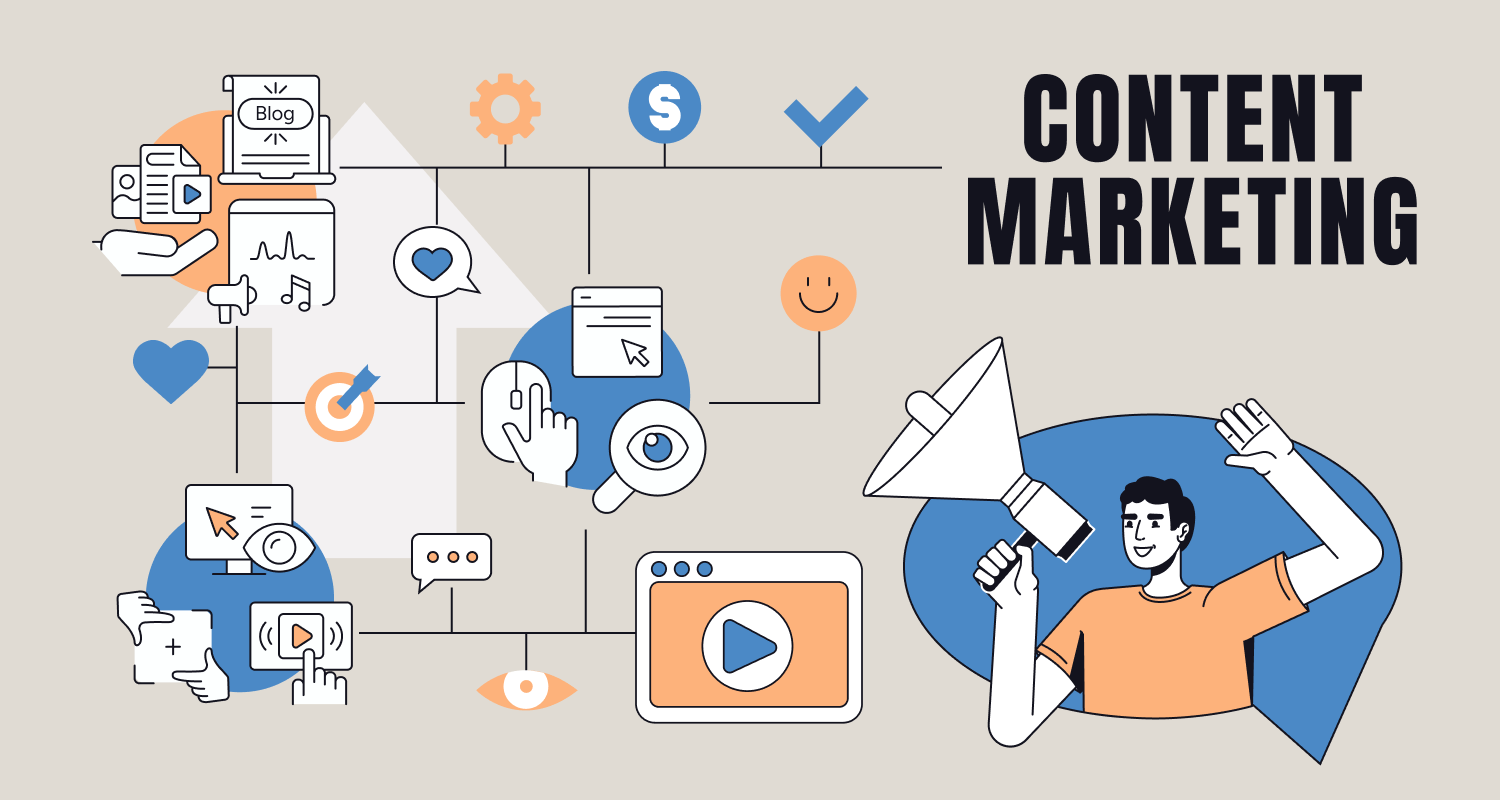
Content marketing won't produce first clients in week one. But for finding B2B clients at scale over time, nothing compounds faster once it's running.
The content strategy for a new business without an audience is simple: start narrow, go deep. Write specifically about the problems your ICP faces — not general industry commentary. A post titled "Why HR tech demos fail and what to do instead" will reach your ICP faster than "5 tips for better B2B marketing."
Highest-leverage content formats for B2B client acquisition:
- LinkedIn posts — fastest distribution, best for reaching a specific audience in your network and beyond. Can produce direct outreach responses in 4–6 weeks if your ICP is active on the platform.
- Long-form blog posts — compound SEO value over time. Slower start, stronger long-term return.
- Process breakdowns and case study formats — even hypothetical or anonymized scenarios build credibility when framed as "here's how we think about this problem."
The content-outreach connection: a prospect who has read your LinkedIn post or blog before receiving your cold email converts at significantly higher rates. Your content pre-warms the approach. When someone recognizes your name from something useful they read, your cold message no longer reads as cold.
Realistic timeline: first inbound leads from blog content appear around month 3–4 with consistent publishing. LinkedIn content specific to your ICP can produce results in 4–6 weeks. It's a parallel channel, not a replacement for outbound in the early months.
7. Offer a Pilot or Risk-Reversal to Land Your First Clients
The biggest objection you'll face as a new business is straightforward: "Why should I trust you if you have no proven results?"
The pilot offer is the most practical answer to that question.
A time-limited, scoped-down version of your service at a reduced rate — or even free for the right partner — in exchange for a testimonial, a case study, and an ongoing relationship if results are delivered. That's the deal, stated plainly.
What makes a good pilot offer:
- A specific, defined deliverable (not "I'll help your business")
- A clear timeframe (2–4 weeks is enough for most service offers)
- A measurable success metric agreed on upfront
- A natural conversion path to a full engagement if the pilot works
Important framing: don't give away unlimited free work. A pilot should be scoped, professional, and come with a clear ask — the right to use the results as a testimonial and case study. This makes the exchange feel like a business partnership, not desperation.
The compounding value of getting this right: one strong case study from a pilot client is worth more than 1,000 cold pitches for a new business. It shifts every future conversation from "trust me" to "here's proof." That transformation in credibility is the single fastest way to break through the cold outreach ceiling.
Use this for your first 1–3 clients when lack of social proof is the primary conversion blocker — not as a permanent pricing strategy.
8. Industry Events, Conferences, and Online Communities

In-person and virtual industry events are where B2B buyers actively look for solutions. The context does the heavy lifting — everyone in the room or on the call has the same problems, speaks the same language, and is already in buying mode in a way that cold outreach can never replicate.
For a new business, this removes friction before a single word is spoken.
The right approach to events: don't go to collect business cards. Go to have 5 meaningful conversations. One real connection that leads to a discovery call is worth more than 30 cards you'll never follow up on.
Pre-event outreach on LinkedIn: identify 10–15 attendees whose company profiles match your ICP. Send a connection request before the event — "I noticed we're both attending [X event], would be great to connect while we're there." It's low-friction, relevant, and sets up a warm interaction before you've spent a dollar on registration.
Online events and virtual summits are lower cost and still highly effective for initial introductions, especially for new businesses with tight budgets.
The follow-up is what most people skip: a LinkedIn message or short email within 24–48 hours of meeting someone converts at 3–5 times the rate of cold outreach. The conversation is already warm. Use it.
Where to find relevant events: LinkedIn Events tab, industry associations, Eventbrite, vertical-specific community newsletters, and niche conference directories in your space.
📈 You Don’t Need Connections. You Need Conversations.
$312M pipeline generated across outbound channels. We handle outreach → replies → booking. You close.
How to Get Clients Without Referrals — The Mindset Shift That Changes Everything
Most new business owners wait for referrals because referrals feel easier. The trust is pre-built. The ask is implicit. The conversion rate is high. None of that is wrong — referrals are great when they come.
The problem is that waiting for them is a strategy that produces feast-or-famine revenue with no predictability and no control.
The referral dependency trap: businesses built on referrals have no control over pipeline volume, timing, or quality. One dry quarter — one client who stops referring — and the entire system stalls. There's no lever to pull.
What proactive outreach gives you that referrals never can: a controllable, scalable, measurable system for getting clients without referrals that isn't dependent on other people's timing or goodwill.
The reframe that makes outbound easier: cold outreach isn't rejection-seeking. It's relevance-testing. When a prospect doesn't reply, that's data — about your ICP, your messaging, or your offer. It's not a verdict on your business. Every iteration of the message gets you closer to the version that converts.
The compounding timeline most new businesses don't talk about:
- Months 1–3: almost entirely outbound. Hard work, low conversion, high learning rate.
- Months 4–6: first organic leads and early referrals appear from initial clients. Momentum builds.
- Months 6–12: a natural balance between inbound and outbound. Referrals from your outbound-acquired clients. Content starting to pull its weight.
The businesses that build the most sustainable B2B client bases don't start with a great network. They start with a consistent outbound system and let the network grow out of it.
Step-by-Step: How to Land Your First 10 B2B Clients From Scratch
This is the path. No shortcuts, no hacks — just the sequence that produces your first B2B clients with consistent execution.
Step 1: Define your ICP with precision. One target persona. One core pain point. One outcome you deliver. Write it in one sentence before you do anything else.
Step 2: Build a list of 100–200 companies that match your ICP. Use LinkedIn Sales Navigator, Apollo.io, or manual research. Quality over quantity — every name on the list should genuinely match.
Step 3: Optimize your LinkedIn profile and email signature for credibility. Your headline speaks to the buyer's outcome. Your summary explains who you help and what you deliver. Your email signature reinforces the brand. Every touchpoint is a trust signal before the conversation starts.
Step 4: Write 3 cold email variants and 1 LinkedIn connection sequence. Short. Specific. Outcome-focused. No decks. No long intros. Just a clear message about who you help and why you're reaching out.
Step 5: Launch outreach at controlled volume. 20–30 cold emails per day, 20–30 LinkedIn requests per week. Track reply rate per variant from the first send.
Step 6: Take every discovery call as a learning session. The goal in the first 3–5 calls isn't to pitch — it's to understand the problem in the prospect's own language. What you learn here rewrites your messaging better than any copywriter can.
Step 7: Refine your offer based on what you heard. After 3–5 discovery calls, you'll hear the same pain points in the same words repeatedly. Build that language into your outreach. Your conversion rate will go up noticeably.
Step 8: Close your first 1–2 clients. Use a pilot offer if needed. Deliver exceptional results — these become your first proof points for every future conversation.
Step 9: Request a testimonial and case study immediately. Right after delivery, while the impact is fresh. One strong proof point changes your entire outreach trajectory.
Step 10: Repeat with a sharper ICP and better messaging. Each cycle of this process gets faster and more efficient. The second round of outreach converts at a higher rate than the first. The third is better still.
Realistic timeline: first discovery calls in weeks 2–3; first paying client in weeks 4–8 with consistent daily execution; 10 clients within months 3–5.
Common Mistakes New Businesses Make When Trying to Get B2B Clients
These aren't theoretical — they're the patterns that consistently show up in campaigns that don't convert.
❌ Targeting too broadly
"Any company that needs marketing help" is not an ICP. Broad targeting produces low conversion and generic messaging that resonates with no one. The more specific your list, the better everything performs downstream.
❌ Leading with services, not outcomes
Prospects don't care about your process. They care about their result. "We do X, Y, Z" loses to "we help [persona] achieve [outcome] in [timeframe]" every time. Frame everything around what they get, not what you do.
❌ Pitching on the first message
A cold message that opens with a pitch signals that you care more about your sale than their problem. Open with curiosity and relevance. The pitch comes after trust is established — not before.
❌ Giving up after 1–2 touches
Most B2B purchase decisions require 5–8 touchpoints before the buyer responds. Stopping at touch two means abandoning 80% of your potential pipeline. Build a sequence, not a single message.
❌ Trying every channel simultaneously
New businesses that spread across cold email, LinkedIn, cold calling, content, events, and partnerships all at once execute none of them well. Start with two channels. Master them before adding more.
❌ Waiting until everything is "ready."
The perfect website, the perfect case study, the perfect testimonial — none of these exist when you start. Your first client doesn't come from a polished brand. It comes from one specific, well-researched conversation.
❌ Underpricing to compensate for lack of proof
Desperation pricing attracts difficult clients and tells the market your work isn't worth much. A scoped pilot offer with a clear professional exchange is always more credible than an aggressively discounted ongoing contract.
How Cleverly Helps New B2B Businesses Build a Client Pipeline From Scratch
Building a client acquisition system from scratch while simultaneously running a new business is genuinely one of the hardest operational challenges a founder faces.
The targeting, messaging, outreach execution, follow-up sequencing, and continuous optimization required to produce consistent pipeline is essentially a full-time job on its own.
That's where Cleverly comes in. We build and run fully done-for-you B2B lead generation systems for new and growing businesses — so founders can stay focused on closing and delivering while we handle the pipeline side.

From ICP definition and verified list building to LinkedIn and cold email campaigns with personalized, tested messaging, we manage the entire outbound process end-to-end. Responses and booked meetings get handed off directly to you.
For new businesses specifically, this matters more than the usual agency pitch. The trial-and-error phase that costs most founders their first 60–90 days of potential pipeline — figuring out the right targeting, the right message, the right sequence — is replaced with frameworks and playbooks that we've validated across 10,000+ B2B campaigns.
Companies like Amazon, Google, Uber, PayPal, Slack, and Spotify have all used Cleverly's systems. We've generated $312M in pipeline and $51.2M in closed revenue through LinkedIn outreach alone.
LinkedIn outreach services start at $397/month with month-to-month pricing and no long-term contracts. Cold email lead gen operates on a performance model — you only pay for meeting-ready leads we actually deliver.
If you have a validated offer and a defined target buyer, we can build the pipeline system around it.
Book a strategy call with Cleverly and let's talk about what your first 90 days of consistent outbound looks like.
Conclusion
Getting B2B clients for a new business without a network is entirely achievable. Thousands of founders, agency owners, and consultants have done it using the exact strategies in this guide. The first clients are the hardest — but they're also the most important, because they create the proof, the process, and the confidence that make every client after them easier to win.
The most important thing to take away: don't wait for the right conditions. A sharp ICP, a specific offer, and a consistent outreach system are all you need to start. The perfect website, the polished case study, the warm introduction — all of that comes later, and it comes faster than you'd expect once the first few clients are in.
Client acquisition is a skill that compounds with repetition, and the founders who build the most successful B2B businesses are rarely the ones who had the best network at launch. They're the ones who started the conversation first and kept showing up.
Frequently Asked Questions
Free Resource
How to Scale a Profitable Cold Call System
Get the complete guide — download it instantly now.
Free Ebook
Download the Free Guide
Enter your details to get instant access.
You're all set! 🎉
Your ebook is downloading now.
Click below if the download didn't start automatically.