Table of Contents
Why LinkedIn Content Is the #1 Inbound Lead Channel for B2B in 2026
What Makes a LinkedIn Content Framework Actually Work for Lead Generation
Framework 1 — The Content Pillar Framework (Build Authority Across 3–5 Core Themes)
Framework 2 — The Problem-Agitate-Solution (PAS) Post Framework
Framework 3 — The 4-3-2-1 Content Cadence Framework (Consistency Without Burnout)
Framework 4 — The Carousel (Document Post) Framework for Maximum Reach
Framework 5 — The Thought Leadership + Soft CTA Framework
Framework 6 — The Engagement-to-Inbound Framework (Strategic Commenting)
How to Convert LinkedIn Content Engagement into Qualified Inbound Leads
Common LinkedIn Content Mistakes That Kill Inbound Lead Generation
How Cleverly Combines LinkedIn Content Strategy with Done-for-You Outreach
Conclusion
Frequently Asked Questions
Modified On :
May 11, 2026
Key Takeaways
- 80% of all B2B social media leads come from LinkedIn — yet most professionals are still posting without a framework and wondering why nothing converts.
- Content pillars, PAS posts, and the 4-3-2-1 cadence framework are three of the highest-leverage systems for turning LinkedIn into a consistent inbound channel.
- Carousel (document) posts generate up to 278% more engagement than single-image posts — and are the most underused format in B2B content strategies.
- The LinkedIn algorithm in 2026 rewards saves, dwell time, and reshares above all else — which means depth beats frequency every single time.
- Profile optimization is the silent conversion layer: your content drives the traffic, but your profile is what turns a viewer into an inbound lead.
- Combining a strong content engine with a done-for-you outbound system is the fastest way to build a predictable pipeline in 2026.
Do you also treat LinkedIn like a bulletin board like most people? They post when they remember, share the occasional thought, and then wonder why their DMs are quiet.
The reality: 80% of all B2B social media leads come from LinkedIn — and yet the majority of companies aren't using the platform with any real framework behind their content. They're guessing. And guessing doesn't build a pipeline.
The shift that separates high-performing LinkedIn creators from everyone else isn't creativity. It's structure. Inbound generates 2.5x higher revenue growth than outbound — but capturing that inbound on LinkedIn requires more than showing up. It requires a repeatable system.
This guide breaks down the proven frameworks for LinkedIn content creation that B2B founders, SDRs, consultants, and sales leaders are using right now to attract decision-makers, build authority, and generate qualified inbound leads — consistently.
Why LinkedIn Content Is the #1 Inbound Lead Channel for B2B in 2026
Before we get into the frameworks, it's worth understanding why LinkedIn works differently from every other channel.
The Platform Where Buyers Are Already in Work Mode
LinkedIn's context is unique. When someone opens LinkedIn, they're not watching cat videos or scrolling vacation photos. Four out of five LinkedIn members drive business decisions at their companies — and when they're on the platform, they're actively thinking about problems, solutions, and vendors.
That professional mindset is something you simply can't replicate on Instagram or X. It's baked into the platform's DNA.
The Algorithm Has Changed — in Your Favor (If You Know How to Play It)
LinkedIn's algorithm in 2026 no longer rewards the loudest voice. It rewards the most useful one.
The "saves/bookmarks" metric, newly added in Q4 2025, has become an important algorithm signal — posts receiving saves get significantly more distribution than posts that only receive likes. Long-form content also wins: long-form text posts over 1,300 characters get 18% more engagement than short posts.
The creators who are winning right now are the ones producing content worth saving, sharing, and coming back to.
The Compounding Advantage of Consistent Content
Here's what makes LinkedIn content so powerful for B2B LinkedIn lead generation: it compounds.
A post you write today gets initial distribution. But if it earns saves and reshares, LinkedIn keeps pushing it for days or weeks.
Your profile gets viewed by people who found you through a post from two months ago. Authority builds over time — and leads start arriving even when you're not actively prospecting.
🚀 Content Gets Views. Outreach Gets Meetings.
We turn LinkedIn into a pipeline machine—done for you. More conversations. More calls. More deals.
What Makes a LinkedIn Content Framework Actually Work for Lead Generation
A lot of B2B professionals are posting on LinkedIn. Very few are doing it with lead generation intent. Here's the difference.
Posting for Vanity vs. Posting for Pipeline
Vanity posting looks like this: sharing industry news, writing general thoughts, celebrating team wins. These posts might get likes from your existing network. They rarely attract your ICP.
Pipeline posting is different. Every piece of content is designed with a specific buyer in mind — their pain points, their language, their questions. You're not broadcasting. You're having a one-to-many conversation with the exact people you want in your pipeline.
The Three Pillars Every Effective LinkedIn Content Framework Needs
No matter which specific framework you use, every effective LinkedIn content creation framework for inbound leads is built on three pillars:
✅ Audience clarity — You know exactly who you're writing for. Not "B2B companies." Not "marketers." A specific title, industry, and pain point.
✅ Content structure — Every post follows a format: a hook that stops the scroll, a body that delivers value, and a close that invites a conversation or action.
✅ Consistent call-to-action — Not a pitch in every post, but a clear pattern of inviting engagement, connection, and conversation over time.
Your Profile Is the Conversion Layer
Here's something most people miss: your content drives traffic, your profile converts it.
If someone reads a post that resonates and clicks your profile — only to find a vague headline and a 2019 summary — the inbound lead is gone. LinkedIn profile optimization (headline, About section, Featured section, CTA) is the non-negotiable foundation that makes content actually pay off.
Framework 1 — The Content Pillar Framework (Build Authority Across 3–5 Core Themes)
The most common reason B2B professionals post inconsistently? They wake up every morning asking "what do I post today?" — and eventually, they stop posting at all.
Content pillars solve this problem at the root.
What Content Pillars Are and How to Define Yours
A content pillar is a core theme that your audience cares about and that you have genuine expertise in. You pick 3–5 of them and rotate through them consistently.
Here's a practical example breakdown:
For a B2B SaaS founder:
- SaaS growth strategy
- Founder lessons and mistakes
- Product-led vs. sales-led growth
- Customer success and retention
- Cold outreach and pipeline building
For a B2B consultant:
- Industry trends and contrarian takes
- Client case studies (anonymized)
- Frameworks and methodology
- Common mistakes your ICP is making
- Behind-the-scenes of your process
For a B2B lead gen agency:
- LinkedIn outreach performance data
- Cold email deliverability
- SDR hiring and management
- Campaign case studies
- Content-led inbound strategies
The Content Mix That Drives Inbound
Once you have your pillars, rotate your content type across them using this mix:
- 60% educational — teach something specific and actionable
- 20% storytelling — share experience, failure, or a lesson learned
- 10% social proof — case studies, client wins, results
- 10% soft CTA — invite a conversation, share a resource, point to a service
This balance keeps your feed from feeling like a sales pitch while still generating consistent inbound.
💼 Inbound Is Slow. Outbound Closes Faster.
10,000+ clients generated pipeline with Cleverly. We handle outreach, replies & booking—you close.
Framework 2 — The Problem-Agitate-Solution (PAS) Post Framework
If you only learn one post-writing framework, make it this one.
How PAS Works on LinkedIn
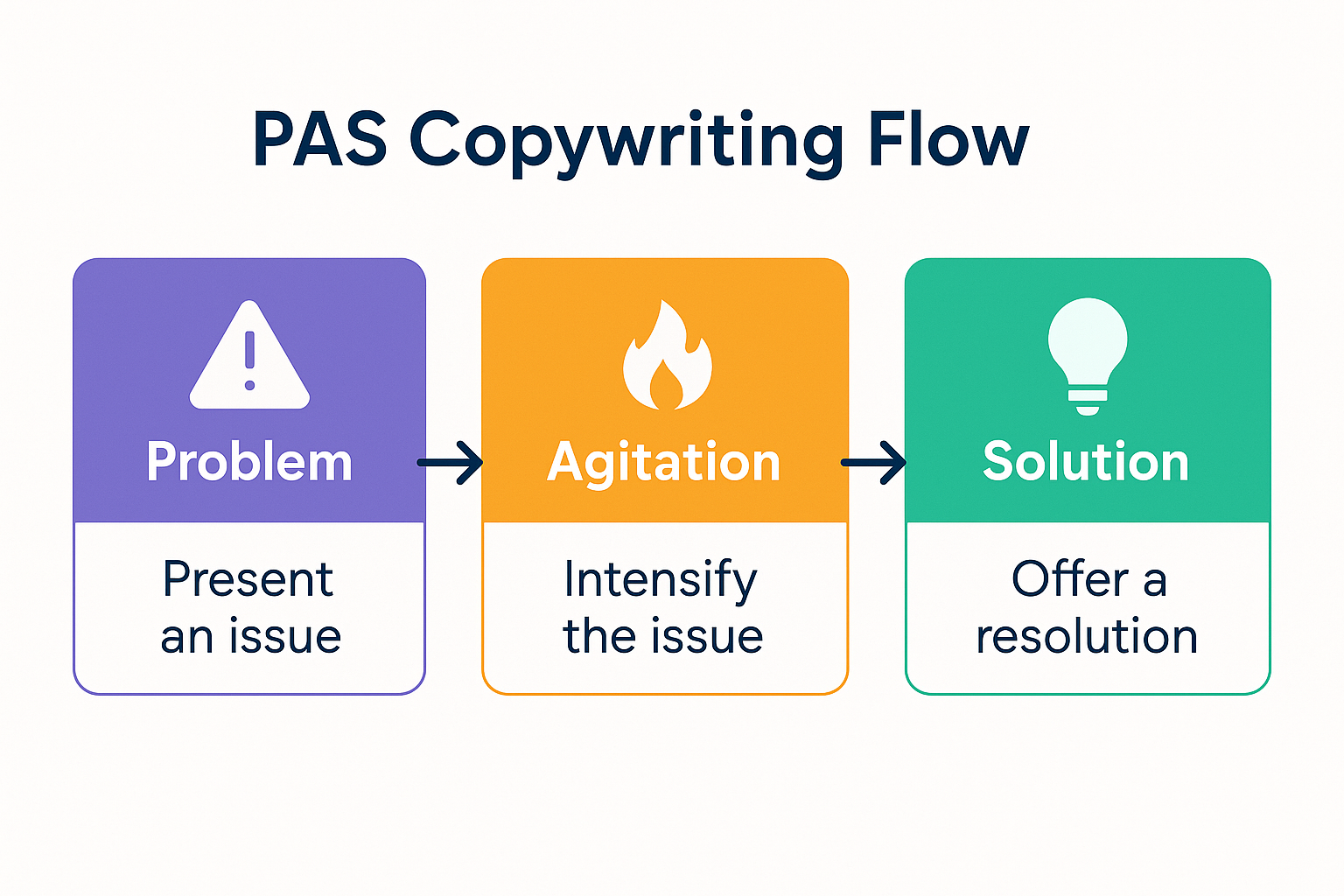
The PAS framework is built around a simple psychological truth: people are more motivated by pain than by opportunity. Here's how to apply it to a LinkedIn post:
- Problem — Open with a problem your ICP experiences, stated as a fact or a direct call-out. This is your hook.
- Agitate — Deepen the pain. Explain why the problem is worse than they realize, or what it's costing them.
- Solution — Deliver the resolution. Your framework, your insight, your perspective — or an invitation to a conversation.
Writing Hooks That Stop the Scroll
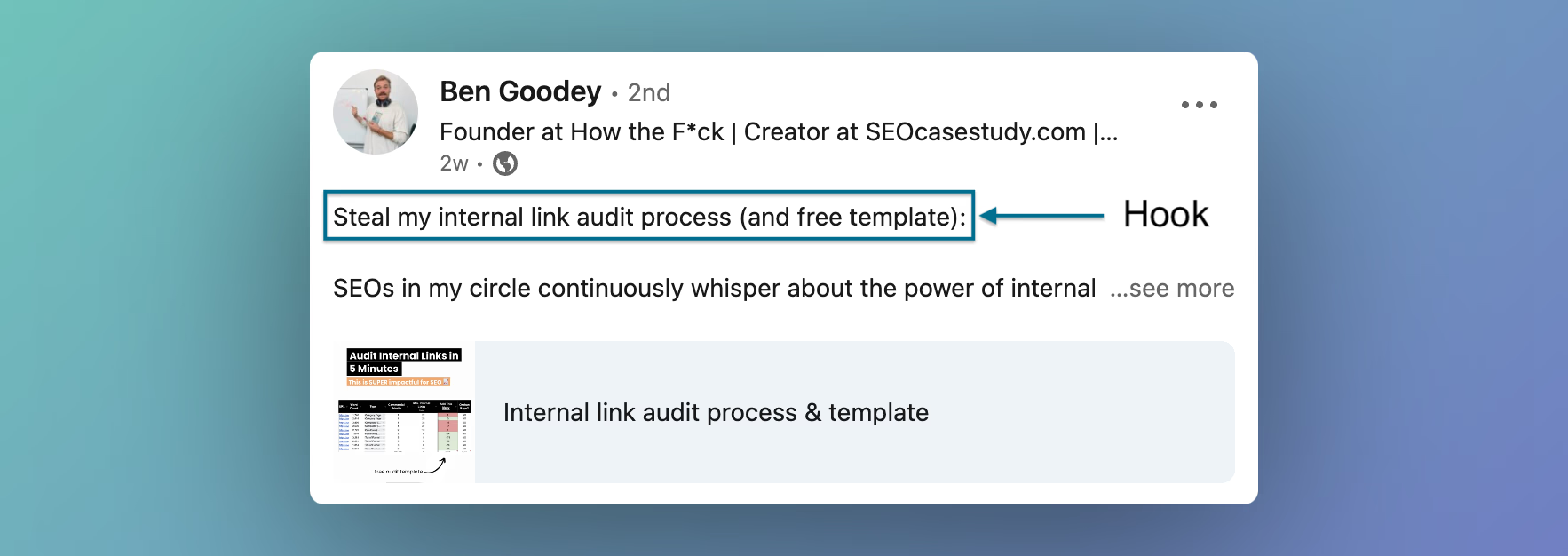
The hook is everything on LinkedIn. Posts with a personal story or lesson learned get 38% more engagement than promotional posts — which tells you exactly how to open.
Strong hook patterns that work:
- "Most B2B founders make this mistake with LinkedIn outreach — and it costs them 3 months of wasted pipeline."
- "Here's why your LinkedIn content isn't generating leads. (It's not the algorithm.)"
- "I spent $50K on LinkedIn ads before I figured out the free version worked better."
The first line is the only thing a reader sees before clicking "see more." Make it hurt a little — in a way your ICP recognizes.
When to Use PAS vs. Other Frameworks
PAS is best for awareness and conversion-stage content — posts designed to get DMs and connection requests from qualified buyers who recognize their own pain in what you wrote. For top-of-funnel reach and shares, the carousel framework (Framework 4) works better.
Framework 3 — The 4-3-2-1 Content Cadence Framework (Consistency Without Burnout)
Consistency is the cheat code on LinkedIn. But most people fail at it — not because they lack ideas, but because they have no system.
What the 4-3-2-1 Framework Is
The 4-3-2-1 content cadence maps out your monthly posting schedule as follows:
- 4 educational posts — actionable frameworks, how-tos, industry insights
- 3 storytelling posts — personal experience, lessons learned, contrarian takes
- 2 social proof posts — client wins, case studies, before/after results
- 1 soft CTA post — a resource, a consultation offer, a direct invitation to connect
This gives you 10 posts per month. At three posts per week (Tuesday, Wednesday, Thursday), you have your full month planned in one sitting.
Batch Creation: The Practical System
Don't write posts daily. Block two hours at the start of each month and write all 10. Here's the batch workflow:
- Step 1 — Choose the four pillars you'll rotate through this month.
- Step 2 — Write the four educational posts first (these take the most thought).
- Step 3 — Pull three real stories or lessons from recent work.
- Step 4 — Write two social proof posts using anonymized client data or measurable results.
- Step 5 — Write one soft CTA that connects naturally to where your audience is in the buying journey.
The Three Stages of LinkedIn Content Growth
Here's what to realistically expect:
- Months 1-3 — Small reach, slow growth. You're building the habit and finding your voice. Stay focused.
- Months 4-6 — Your existing network engages more. You start attracting new followers from your ICP. Inbound DMs begin.
- Months 6-12 — The compounding effect kicks in. You're getting profile views from decision-makers who found you through a post. Inbound leads arrive weekly.
Businesses posting consistently see 2x higher engagement and 7x faster follower growth than less active profiles. The math is simple. The only variable is whether you stick with it.
Framework 4 — The Carousel (Document Post) Framework for Maximum Reach
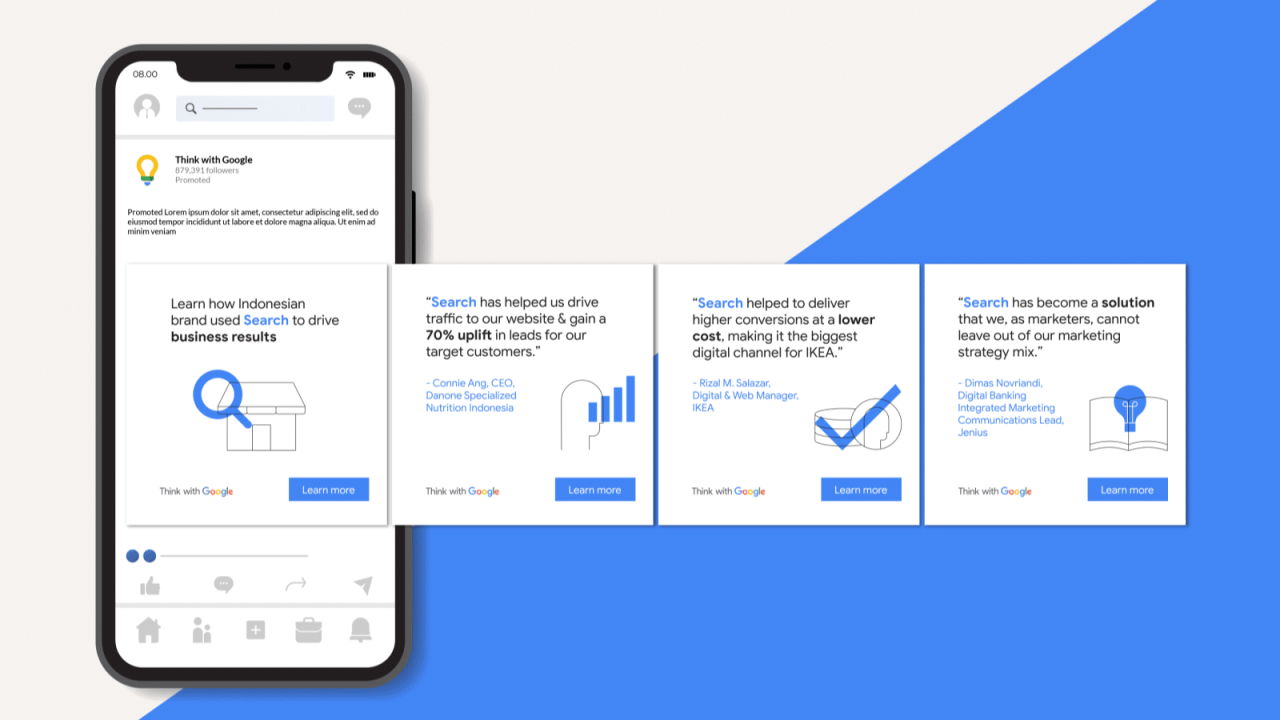
If you're not doing carousels yet, you're leaving the highest-performing format on LinkedIn completely untouched.
Why Carousels Dominate the LinkedIn Algorithm in 2026
Carousel/document posts achieve a 6.60% engagement rate — the highest of any content format on LinkedIn in 2026. Document posts generate 3.2x more reach than standard image posts, driven largely by the "swipe" behavior that signals high dwell time to the algorithm.
Every swipe through a carousel is a signal that the reader is engaged. LinkedIn reads that as: show this to more people.
The 8-Slide Carousel Structure That Works for B2B Lead Generation
Here's the framework that consistently drives saves, reshares, and profile visits from ICP buyers:
- Slide 1 (Hook) — Bold statement or counterintuitive claim. Make it visual, make it click-worthy.
- Slide 2 (Problem) — State the pain your ICP is experiencing. They should see themselves in this slide.
- Slide 3-6 (Framework/Steps) — Your actual value. A step-by-step system, a ranked list, a decision framework. This is the reason they'll save the post.
- Slide 7 (Insight) — A surprising data point, a contrarian take, or a "here's what most people miss" moment.
- Slide 8 (CTA) — Soft invitation: "Save this for later," "Share with someone who needs this," or "DM me the word [X] and I'll send you the full guide."
Topics That Perform Best in Carousel Format
The content types that consistently earn saves and reshares in B2B:
- Step-by-step frameworks ("The 5-step LinkedIn outreach sequence that books meetings")
- Common mistake lists ("7 reasons your LinkedIn content isn't generating inbound leads")
- Industry comparisons ("LinkedIn vs. cold email for B2B pipeline in 2026")
- Beginner-to-advanced guides ("How to build a content strategy from zero")
You don't need a design team. Canva has LinkedIn carousel templates built in, and a clean, simple design performs as well — often better — than a heavily designed deck.
Framework 5 — The Thought Leadership + Soft CTA Framework
Generic content gets generic results. This is the framework for standing out.
What Real Thought Leadership Looks Like on LinkedIn
<iframe src="https://www.linkedin.com/embed/feed/update/urn:li:share:7445869199685746688?collapsed=1" height="651" width="504" frameborder="0" allowfullscreen="" title="Embedded post"></iframe>
Thought leadership is not sharing industry news with a paragraph of commentary. That's curation, and it's everywhere.
Real thought leadership means putting your name on a proprietary point of view — something that only someone with your specific experience would say. A counter-narrative. A prediction. An honest take on why something the industry accepts as true is actually wrong.
Examples:
- "Everyone tells B2B founders to post daily. Here's why I post 3x a week and get better results."
- "Cold email isn't dying. Bad cold email is dying. Here's the difference."
- "LinkedIn reach is not about followers. It's about depth of engagement per post. Here's what that means for your strategy."
The Soft CTA Structure That Generates DMs Without Feeling Salesy
The best soft CTAs lead with value and end with an invitation — never a pitch. Examples that actually work:
- "If this framework resonated, I'm happy to walk through how we'd apply it to your specific ICP — feel free to connect or drop a comment below."
- "I break this down in detail for clients every week — if you want the full breakdown, just DM me and I'll share it."
- "We've built this system for 10,000+ B2B companies. If you're curious how it would apply to your situation, let's talk."
"How I..." posts generate 3x more saves than listicles — which tells you exactly how to frame experience-driven thought leadership content.
Framework 6 — The Engagement-to-Inbound Framework (Strategic Commenting)
This is the most underused LinkedIn content creation framework for inbound leads in 2026. It doesn't require creating a single post.
Why Strategic Commenting Is a Lead Generation Tactic
When you leave a value-driven comment on a post from someone in your ICP, three things happen: the post author sees your name, other commenters see your insight, and LinkedIn shows your profile to people engaging with that same post.
Every comment is a micro-distribution event. Done well, it drives profile views, connection requests, and warm inbound DMs — without sending a single cold message.
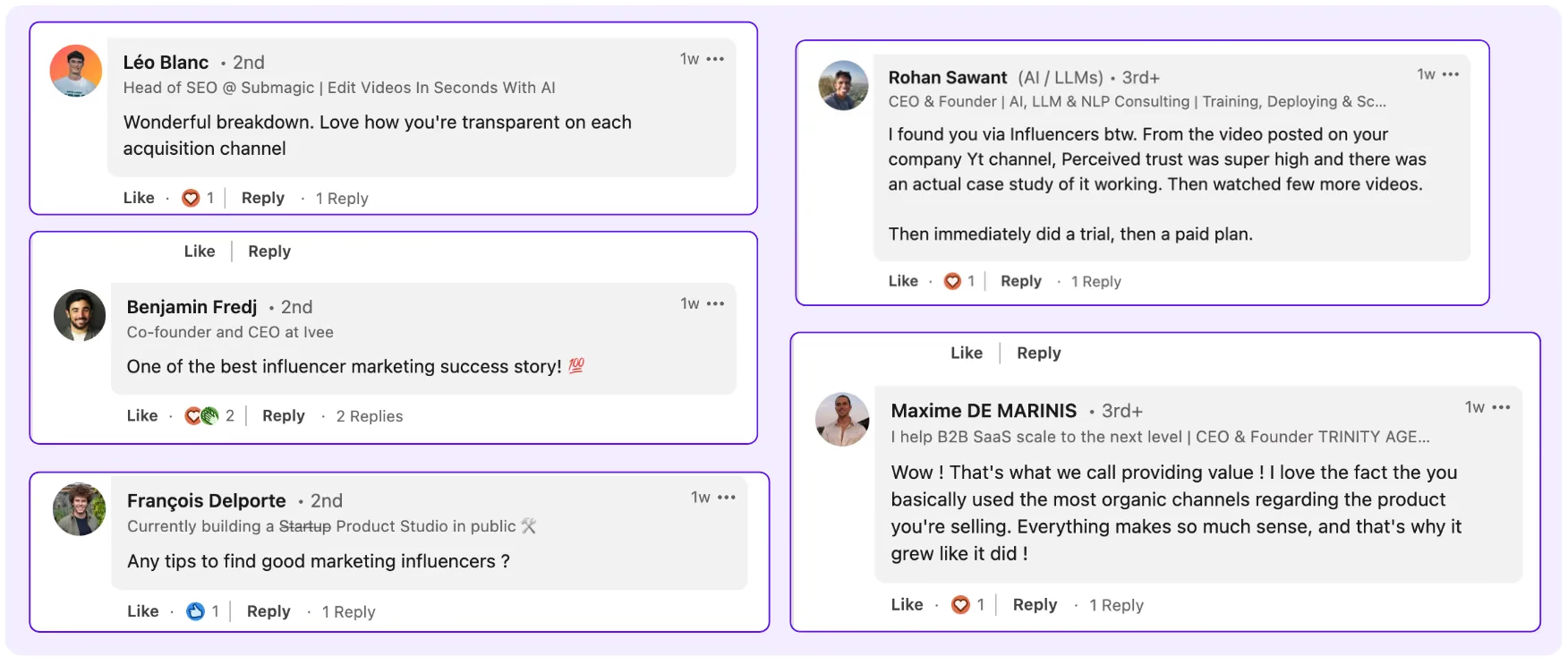
The 3-Part Comment Structure
The comments that generate the most profile visits and follow-back connections follow a simple structure:
- Acknowledge — Reference something specific in the post that genuinely resonated.
- Add insight — Contribute one piece of original thinking that extends the conversation.
- Invite — End with a question or an open-ended invitation: "Curious what you've seen on your end" or "Happy to share the framework we use if useful."
This pattern makes you stand out from generic "Great post!" comments that add zero value.
Building the Flywheel
The most powerful approach combines both frameworks: your content attracts followers, your commenting attracts prospects.
Creators who reply to every comment within the first hour see 2x more total impressions — because the algorithm treats that early engagement as a signal to distribute further. Engage with your own posts fast, and engage with your ICP's posts consistently.
How to Convert LinkedIn Content Engagement into Qualified Inbound Leads
Getting engagement is step one. Converting it into pipeline is step two.
From Post Engagement to Conversation
When someone from your ICP likes, comments on, or saves your post, that's a warm signal. Most people ignore it. High-performing creators act on it.
The play: visit their profile, send a personalized connection request referencing the post, and open a conversation naturally — not with a pitch. "Saw you engaged with my post on [X] — would love to connect and see if there's crossover." That's it.
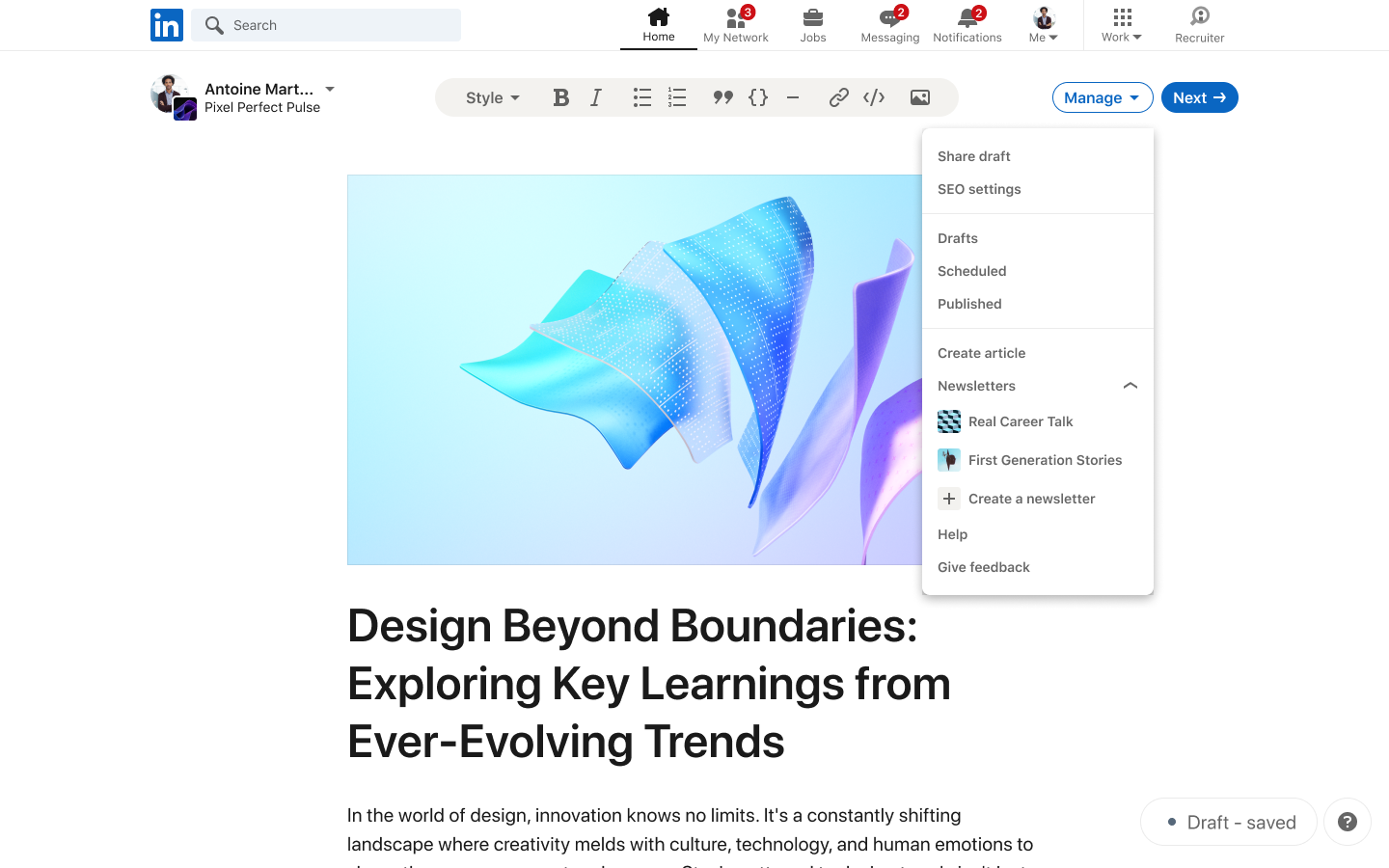
LinkedIn's Native Newsletter as a Lead Capture Tool
LinkedIn newsletters have seen 150% year-over-year subscriber growth, making them the fastest-growing content format on the platform. Newsletters let you build a subscriber audience directly inside LinkedIn — people who've opted in to receive your content regularly.
This is inbound infrastructure. Build a newsletter, post consistently, and you're essentially growing an owned audience of warm prospects.
Key Metrics Beyond Vanity
Stop tracking likes. Start tracking these:
✅ Inbound DMs from ICP — the clearest signal your content is working
✅ Profile views from decision-makers — track weekly via LinkedIn analytics
✅ Connection requests from target companies — measure quality, not quantity
✅ Comment quality — are the right people engaging?
✅ Demo or consultation requests — the ultimate conversion metric
Common LinkedIn Content Mistakes That Kill Inbound Lead Generation
Even experienced B2B professionals make these mistakes. Here's what to watch for.
❌ Posting Without a Defined ICP in Mind
Content that tries to speak to everyone converts no one. If your last five posts could have been written by anyone in any industry, they won't attract the specific buyers you actually want.
❌ Treating Every Post as a Sales Pitch
The 10:1 rule applies on LinkedIn: for every promotional post, publish ten that deliver pure value with no ask. Audiences tune out accounts that pitch constantly.
❌ Relying Entirely on AI-Generated Content
Decision-makers can spot soulless, templated posts instantly. AI can help you draft and edit, but the point of view, the story, and the specific insight have to come from you. An AI humanizer tool can also help make AI-generated content sound more natural and authentic.
❌ Disappearing After a Hot Week
Posting five times in a week and then going dark for three weeks is worse than posting twice a week consistently. The algorithm penalizes inactivity, and your audience forgets you exist.
❌ Sharing External Links in Every Post
LinkedIn actively suppresses posts with outbound links in the body. If you need to share a link, put it in the comments — not the post itself.
❌ Ignoring Comments and DMs
Engagement is a two-way signal. When someone comments and you don't respond, you're telling the algorithm (and the commenter) that the conversation ends there.
How Cleverly Combines LinkedIn Content Strategy with Done-for-You Outreach
A strong content strategy builds authority and attracts inbound — but for most B2B teams, content alone isn't enough to hit consistent pipeline targets quarter after quarter.
That's where Cleverly comes in.
We pair LinkedIn content strategy with precision outbound: ICP-aligned prospect lists, personalized messaging sequences, and proven follow-up frameworks — all executed for you. Your content warms up the market. Our outreach converts it.
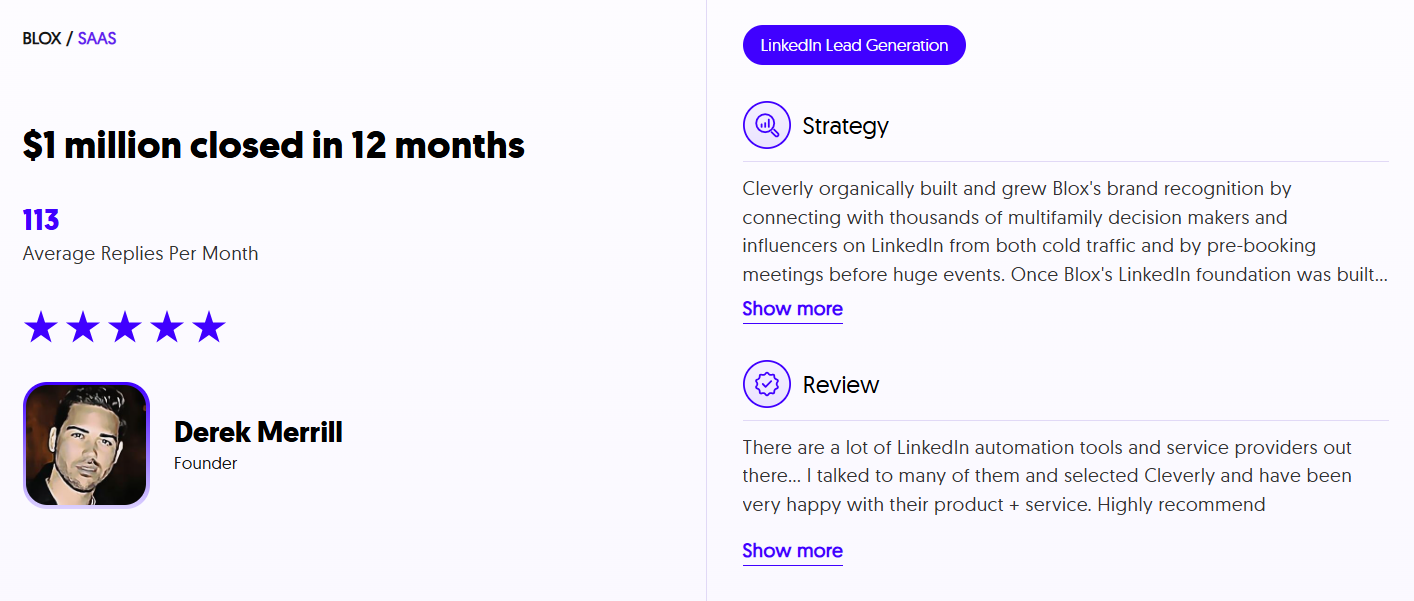
Here's what done-for-you LinkedIn lead generation at Cleverly looks like in practice: we handle targeting, messaging, connection request campaigns, follow-up sequences, and reply management. Your team shows up to qualified meetings — not inboxes.
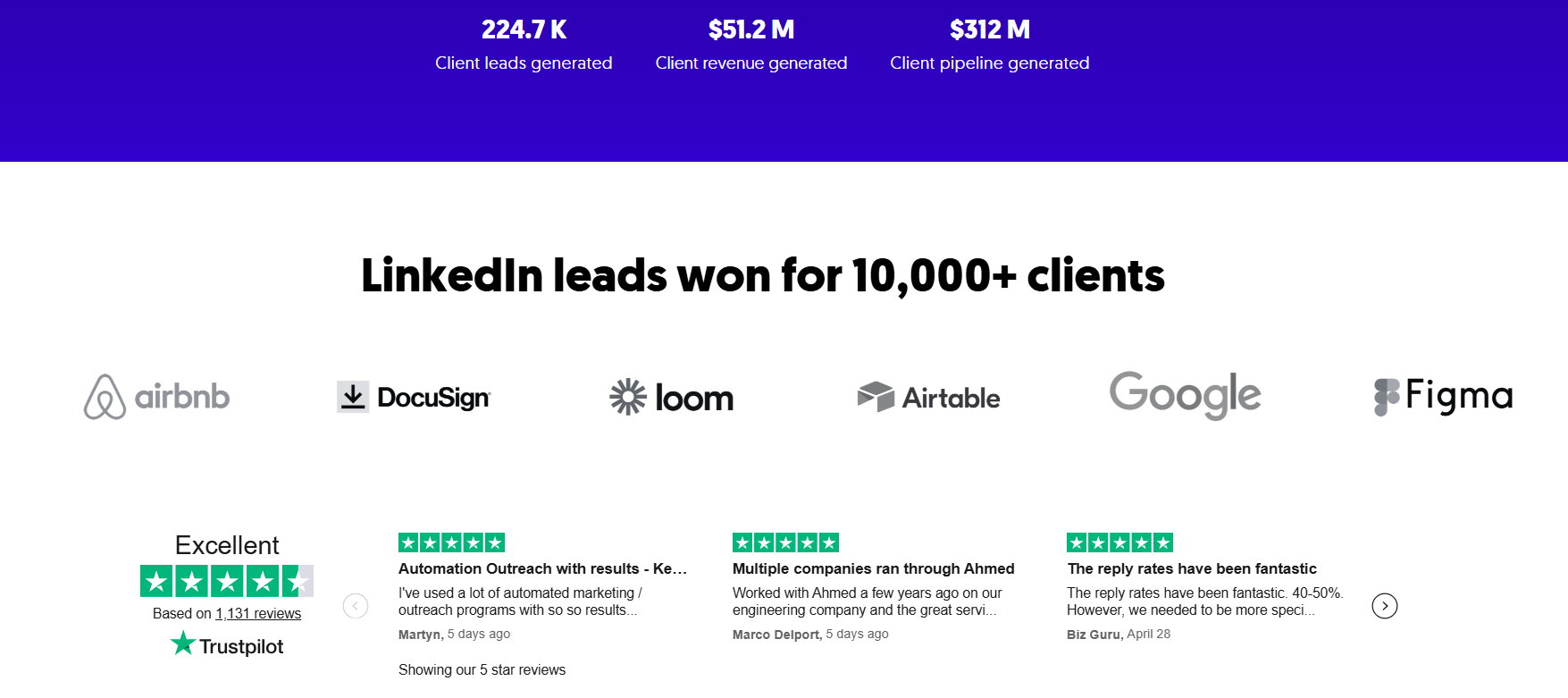
We've helped 10,000+ B2B companies generate $312M in pipeline and $51.2M in closed revenue, working with companies like Amazon, Google, Uber, PayPal, Slack, and Spotify. Our LinkedIn outreach service starts at $397/month — a fraction of what it costs to hire one SDR.
If you want a LinkedIn presence that both attracts inbound and drives outbound conversations simultaneously, that's exactly what we're built for.
🤝 Book a free strategy call with Cleverly and see how we'd approach your pipeline.
Conclusion
LinkedIn content creation isn't a shortcut to overnight pipeline. It's a compounding investment — one that builds authority, earns trust, and generates qualified inbound leads on a timeline that rewards consistency.
The frameworks in this guide — content pillars, PAS posts, the 4-3-2-1 cadence, carousels, thought leadership, and strategic commenting — work when applied with discipline. Start with one. Build the habit. Then layer in the rest.
The fastest path to a predictable LinkedIn inbound engine is pairing great content with a smart outreach system that fills the gaps in between.
Frequently Asked Questions
Free Resource
How to Scale a Profitable Cold Call System
Get the complete guide — download it instantly now.
Free Ebook
Download the Free Guide
Enter your details to get instant access.
You're all set! 🎉
Your ebook is downloading now.
Click below if the download didn't start automatically.