

Table of Contents
What Is an Outreach Campaign?
Types of Outreach Campaigns
Why Most Outreach Campaigns Fail
How to Create a Successful Outreach Campaign (Step-by-Step)
Outreach Campaign Ideas That Work in 2026
How to Adapt Outreach Campaigns to New Customer Pain Points
How Cleverly Builds and Runs Cold Outreach Campaigns for B2B Companies
Conclusion
Frequently Asked Questions
Modified On :
May 25, 2026
Key Takeaways
- A successful outreach campaign is a structured, multi-touch system — not a one-time email blast — built on a precise ICP, targeted prospect list, and sequenced messaging across the right channels.
- Generic, single-touch outreach fails because it requires 8–12 touchpoints to book a meeting with a cold B2B prospect, yet most reps stop after two or three attempts.
- Multi-channel outreach campaigns combining email and LinkedIn outperform single-channel strategies by 287%, generating significantly more replies and meetings.
- Personalization beyond a first name — referencing trigger events, role-specific pain points, or company news — can double or even triple reply rates compared to generic templates.
- The best outreach campaign strategy treats outreach as a compounding asset: each campaign teaches you something that makes the next one sharper.
Sending a few cold emails and a handful of LinkedIn messages isn't an outreach campaign — it's a coin toss. And it shows in the results.
Research consistently shows it takes 8–12 touchpoints to book a meeting with a cold B2B prospect — yet most SDRs give up after 2–3 attempts. That gap is where pipeline gets left on the table.
The difference between outreach that converts and outreach that disappears isn't luck or list size. It's strategy.
A defined process — right audience, right message, right channel, right sequence — is what separates a 3% reply rate from a 15% one.
Advanced personalization alone can double cold email response rates, and nearly 4 in 5 sales and marketing decision-makers say they engage with cold outreach when it's tailored to their company or context.
Let’s walk you through building an outreach campaign from scratch: ICP definition, channel selection, message writing, sequencing, and measurement.
What Is an Outreach Campaign?
An outreach campaign is a structured, multi-touch effort to contact a defined group of prospects through specific channels — with the goal of starting a conversation, booking a meeting, or generating a qualified lead.
The key word is structured. Ad hoc prospecting is random: you send a message, wait a few days, forget about it, and move on.
An outreach campaign has a defined audience, a documented sequence, specific messaging per touchpoint, and measurable outcomes you review at the end.
The core mechanics follow a simple loop:
Identify → Contact → Follow Up → Convert → Measure
And then start again — smarter than before.
🚀 Most Outreach Campaigns Fail Before the First Message
Wrong targeting. Weak copy. No follow-up system. We fix the entire outbound engine—done for you.
Types of Outreach Campaigns
Before building your campaign, it's worth getting clear on which type fits your audience and resources. Each one works differently — and the wrong choice for your ICP will cost you time and money.
Email Outreach Campaign
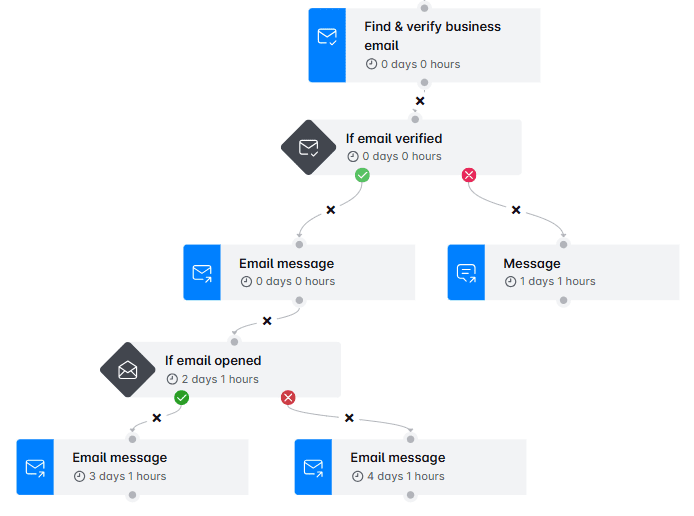
An email outreach campaign is a multi-step cold email sequence targeting prospects who haven't heard from you before. It's built for scale: once your copy and sequence are dialed in, you can run it to hundreds or thousands of prospects simultaneously.
- Best for: Large TAMs, companies with verified lead lists, and teams targeting prospects who live in their inboxes
- Typical structure: 4–6 emails over 2–3 weeks
- Benchmark to hit: Aim for a 5%+ reply rate; anything above that usually reflects strong relevance and clean data rather than luck
Cold email is effective, but only when your deliverability infrastructure is solid and your list is clean. A generic email blast to a dirty list will destroy your sender reputation before it generates a single meeting.
LinkedIn Outreach Campaign
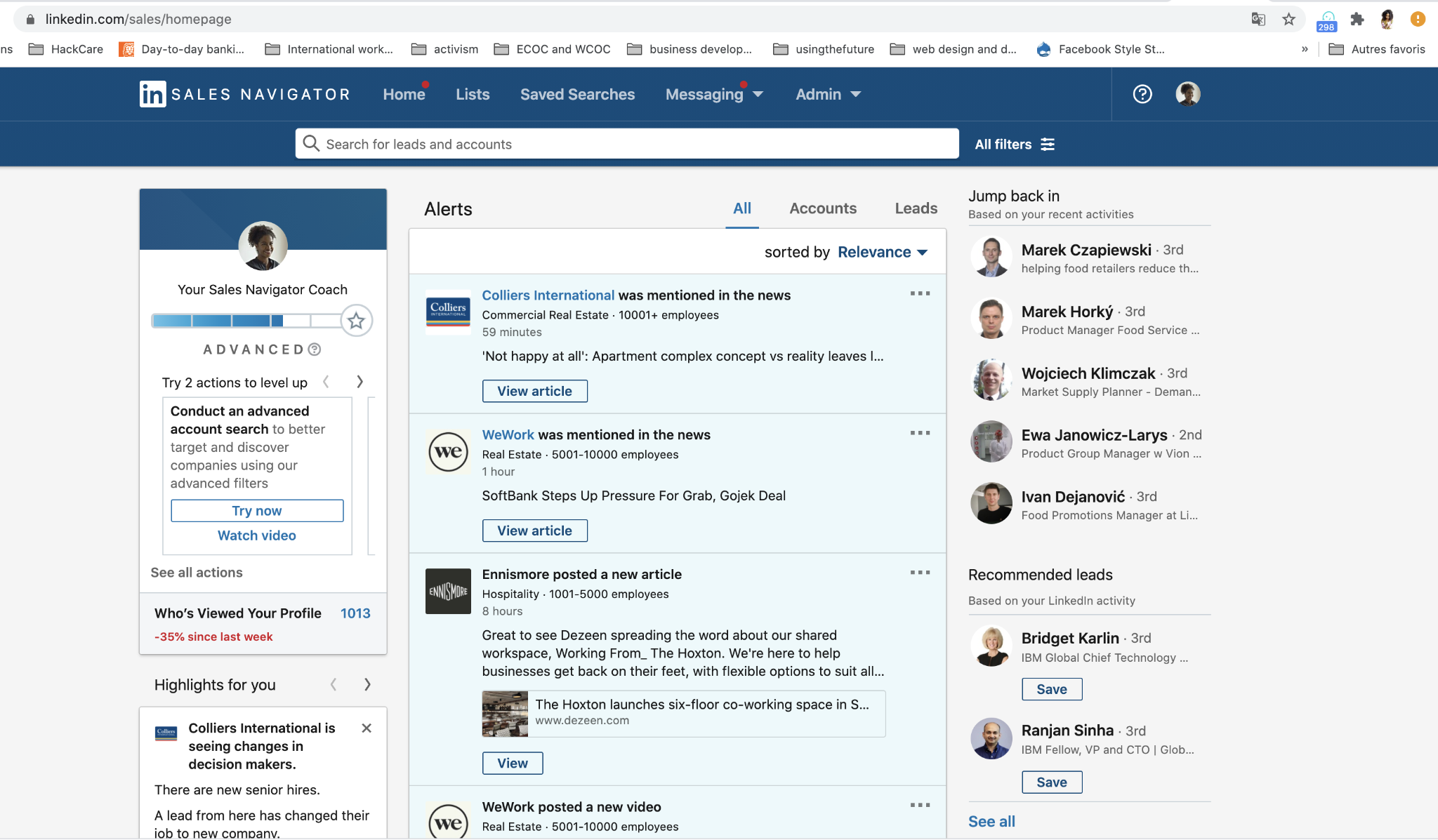
A LinkedIn outreach campaign uses connection requests and DM sequences to reach decision-makers where they're already spending professional time. It's more personal than email by design — the medium signals a human-to-human conversation, not a mass send.
- Best for: Niche audiences, high-ticket B2B deals, and accounts where you need trust before you pitch
- Typical structure: Connection request (no pitch) → follow-up DM → value-add message → soft CTA
- Benchmark to hit: LinkedIn DMs reply at 10.3% on average for cold outreach — significantly higher than cold email alone
The tradeoff is volume. LinkedIn has weekly connection limits, so this channel requires tighter targeting than email. Every connection slot you use needs to count.
Multi-Channel Outreach Campaign (Email + LinkedIn)
Combining email and LinkedIn touchpoints inside a single sequence is the highest-performing approach available to most B2B teams. Prospects see your name across multiple surfaces. By the time you ask for a meeting, you're not a stranger.
Campaigns using three or more channels achieve 287% higher purchase rates compared to single-channel strategies, with LinkedIn delivering 10.3% response rates versus email's 5.1%.
- Best for: Mid-market and enterprise accounts with longer sales cycles, and any team that wants to maximize reply rates without increasing list size
If you're only running email or only running LinkedIn, this is the upgrade worth making first.
Re-Engagement Outreach Campaign
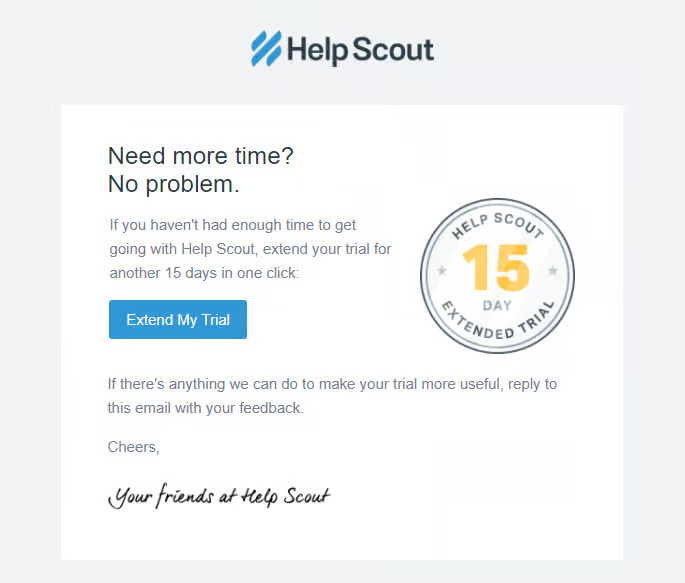
A re-engagement campaign targets leads who went cold — past prospects who never converted, churned customers, or contacts who stopped responding mid-sequence. These convert at higher rates than cold outreach because there's already some context between you.
The angle is simple: acknowledge the gap, reference the past interaction, offer something fresh. A "Is this still relevant?" message with a new case study or a changed offer often reopens doors that seemed permanently closed.
- Best for: Teams with strong CRM data and prior relationship history to reference
- Key advantage: Lower friction than cold outreach — you're reactivating, not introducing
Partnership and Community Outreach Campaign
This one's longer-build, lower-conversion upfront — but generates high-quality leads when executed well. The goal isn't a sales call. It's a relationship with someone who already has trust with your ICP: a complementary vendor, an industry newsletter, a community operator.
Done right, a single partnership deal outperforms months of cold outreach in terms of lead quality. Done wrong, it's a lot of emails about "synergies" that go nowhere.
Why Most Outreach Campaigns Fail
There's no shortage of teams running outreach campaign strategies that produce nothing. The failure modes are predictable.
👎 No defined ICP
Reaching the wrong people with the right message is still a losing strategy. If your list is built on loose criteria — "anyone in SaaS" or "US companies with 50+ employees" — you're burning budget on prospects who will never convert regardless of how good your copy is.
👎 Generic messaging
Mass templates that don't reference the prospect's role, industry, or a specific pain point signal that you haven't done your homework. Only 5% of senders personalize every email — and those who do get 2–3x better results. If your message could have been sent to 10,000 people unchanged, it will perform like it was.
👎 Single-touch strategy
One email is not a campaign. Follow-up emails collectively generate 42% of all campaign replies, yet 48% of reps never send a second message — abandoning nearly half of all possible responses. Your first message is just the introduction. The sequence is where the conversion happens.
👎 Measuring activity, not outcomes
Counting emails sent instead of replies received, meetings booked, and pipeline generated tells you nothing useful. Activity metrics are vanity. Outcome metrics are the ones worth optimizing for.
👎 Poor list quality
Bad data kills deliverability and skews your metrics before a single reply comes in. A 10% bounce rate is enough to get a domain flagged. Clean your list before you run a single touch.
👎 No follow-up structure
The majority of conversions come from the 3rd, 4th, or 5th touchpoint — not the first. Teams that skip follow-up aren't running a campaign. They're cold-calling once and calling it a strategy.
📈 Good Outreach Creates Conversations. Great Outreach Creates Revenue.
We run LinkedIn, cold email & calling end-to-end. More replies. More meetings. More pipeline.
How to Create a Successful Outreach Campaign (Step-by-Step)
Here's the exact process for building an outreach campaign that generates consistent, qualified conversations.
Step 1: Define Your Outreach Goals
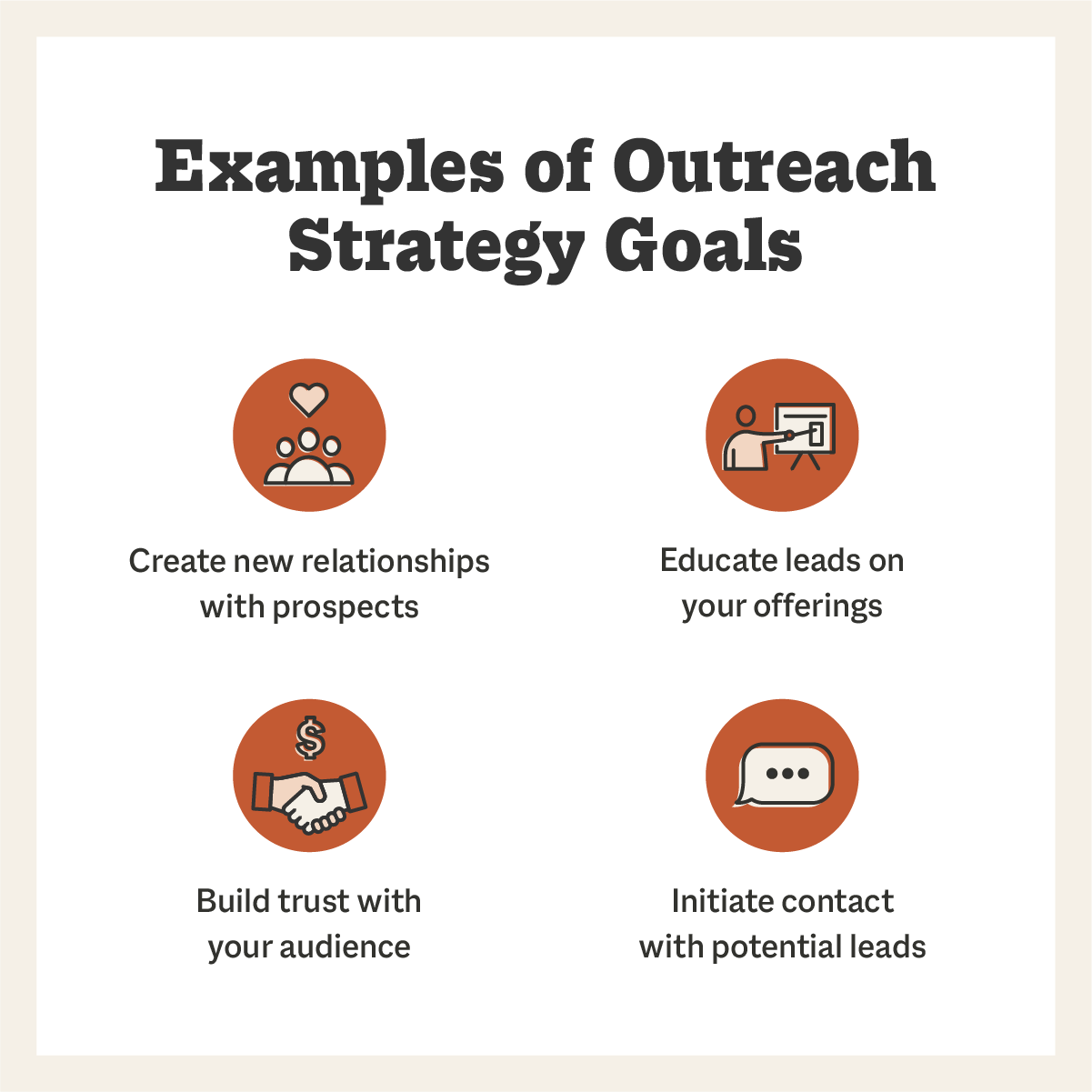
Before you write a single message, get clear on what success looks like. Vague goals produce vague results.
"Generate more leads" is not a goal. "Book 20 discovery calls per month from Series A SaaS founders in the US" is a goal. The difference matters because it shapes every decision downstream: who you target, what you say, which channels you use, and how you measure success.
Set goals across these four dimensions:
Align these with your sales team before you build anything. If marketing defines a "qualified lead" differently than sales does, the campaign will generate activity that goes nowhere.
Step 2: Define Your Ideal Customer Profile (ICP)
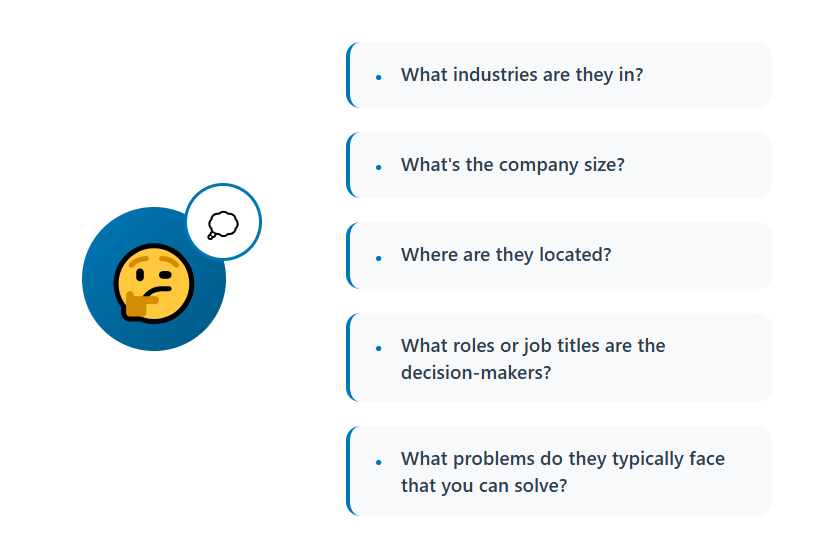
Your ICP is the foundation of every successful outreach campaign. Without it, you're prospecting at random — and random outreach produces random results.
A strong ICP goes beyond job title and company size. Build it across these dimensions:
- Firmographic: Industry, company size, revenue range, geography, funding stage
- Role-specific: Job title, seniority level, reporting structure, key responsibilities
- Pain points: What's costing them time, money, or pipeline right now
- Tech stack: What tools they already use (signals budget, sophistication, and integration fit)
- Buying triggers: What events signal they're ready to buy — new funding, leadership change, hiring surge, product launch
The fastest way to build your ICP accurately is to analyze your 10 best existing clients. What do they have in common? What triggered them to buy? What problem were they solving when they found you?
One principle worth internalizing: narrower ICP = higher reply rates. Broader ICP = wasted outreach.
Targeting "B2B SaaS companies" is not an ICP. Targeting "VP of Sales at Series B SaaS companies in the US who are actively hiring SDRs" is.
Step 3: Build and Verify Your Prospect List
Translate your ICP into a list of specific companies and contacts using tools like Apollo, LinkedIn Sales Navigator, or Clay. This is where targeting decisions become actual data.
A strong prospect list includes:
- Verified business email address
- LinkedIn profile URL
- Company size and industry
- Job title and seniority
- Recent trigger events (if available)
Always verify emails before sending. Unverified lists damage your sender domain's reputation and skew your reply rate data before a campaign even gets off the ground. Keep your bounce rate under 3%. A 10% bounce rate is enough to get your domain flagged, and recovering from that is far harder than preventing it.
Prioritize quality over volume. 200 highly targeted prospects consistently outperform 2,000 generic ones — in reply rates, meeting quality, and closed revenue.
Step 4: Score and Prioritize Your Leads
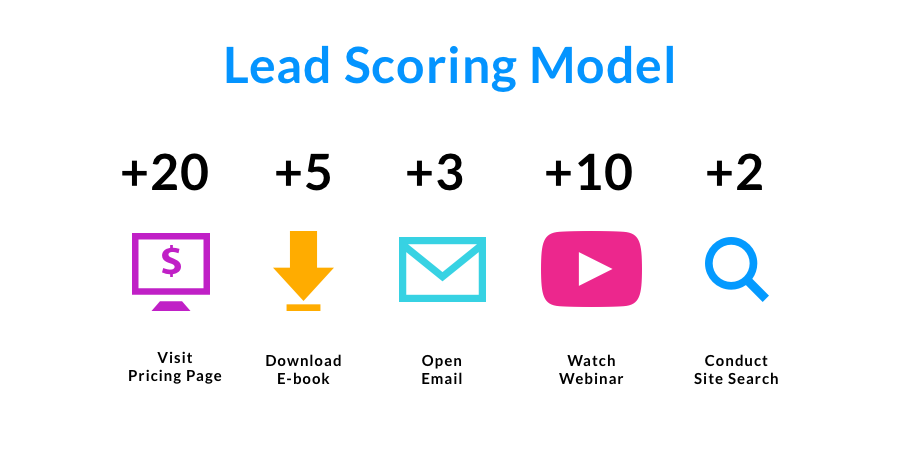
Not every prospect deserves the same level of outreach effort. Lead scoring helps you direct your highest-effort, most personalized work toward your highest-fit accounts.
Score across three dimensions:
- Firmographic fit — Does the company match your ICP on size, industry, and revenue?
- Behavioral signals — Have they visited your website, engaged with your content, or shown buying intent?
- Trigger events — Recent funding, new hire in a relevant buying role, competitor announcement, job postings that signal a budget cycle?
Then tier your list:
- A-tier: High ICP fit + strong signal → fully personalized multi-touch sequences
- B-tier: Good ICP fit, no strong signal → semi-personalized sequences
- C-tier: Weak ICP fit → low-touch automation or skip entirely
Work A-tier accounts first, always. They're your highest-probability opportunities and deserve your best copy.
Step 5: Choose Your Outreach Channels
Channel selection should follow your audience's behavior — not internal convenience. The channel your prospects actually use is the one you should be on.
Email outreach works best for large TAMs and scalable reach. About 77% of B2B buyers prefer to be contacted via email over any other channel. It's the foundational channel for most outbound teams.
LinkedIn outreach works best for niche decision-maker targeting, high-ticket deals, and accounts where trust matters before you pitch. The reply rates are higher than email, but the volume ceiling is lower.
Multi-channel (email + LinkedIn) produces the strongest results for B2B outreach and is the approach we recommend for any team targeting mid-market and enterprise accounts. The sequencing that works:
- LinkedIn connection request (no pitch)
- Email → personalized opener + pain point + CTA
- LinkedIn DM → short, value-led message
- Email → follow-up with a new angle
- Email → social proof or case study
- Final email → break-up message with a clear off-ramp
Match channel intensity to deal size. High-ticket deals justify more manual, personalized effort per prospect. A $200K ACV account deserves a different level of investment than a $5K one.
Step 6: Write Personalized, High-Converting Messages
Personalization goes well beyond inserting a first name. Real personalization demonstrates you've done your homework — and that alone separates your message from the other 100+ emails landing in your prospect's inbox that day.
What real personalization looks like in practice:
- Referencing a specific trigger event ("Saw you just closed your Series B — congrats on that")
- A role-specific pain point ("Most VP Sales at your stage are still running outbound manually — it caps at around 15 meetings a month")
- Recent company news ("Noticed you're scaling the SDR team — that usually means outbound capacity becomes the constraint before quota does")
Adding advanced personalization — tailored to the recipient's context — roughly doubles response rates compared to generic outreach, with highly personalized campaigns boosting replies by 142% compared to non-personalized blasts.
Cold email structure that converts:
- Hook — personalized opener referencing something specific about them
- Pain point — name the problem concisely, in their language
- Value prop — how you solve it, in one sentence
- CTA — a single, low-friction ask (not a 30-minute call on the first message)
LinkedIn message structure:
Keep it short. Two to three sentences max. No pitching in the connection request. The goal of the first message is a reply — not a signed contract.
What to avoid in every channel: lengthy company intros, "just checking in" follow-ups with no new value, and asking for a 30-minute call before you've earned five seconds of attention.
Step 7: Build a Structured Follow-Up Sequence
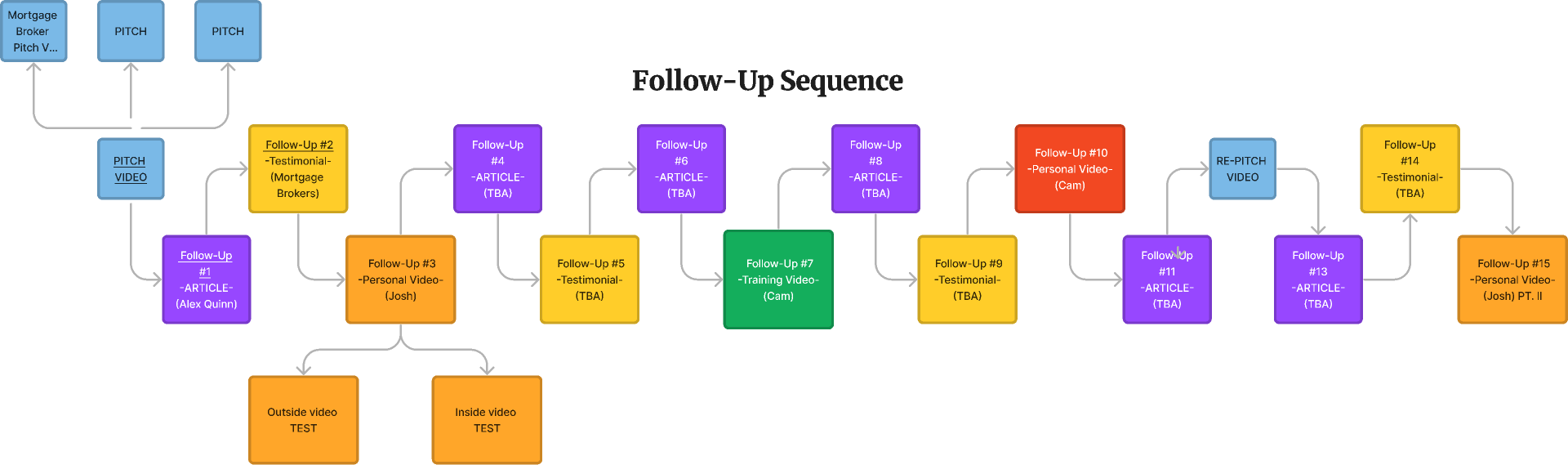
A single message is not a campaign. 55% of replies come from follow-ups — not the first touch. If you're not following up with new value at each step, you're leaving the majority of your potential replies on the table.
Recommended sequence length: 4–6 touches over 2–3 weeks for cold outreach.
The follow-up rule: each message adds new value. A relevant insight, a case study, a specific question, a different angle on the original offer. Never send a "just following up on my last email" with no substance. That's not a follow-up — it's noise.
Sample multi-channel sequence:
On timing: emails launched on Monday with follow-ups pushed on Wednesday consistently outperform other timing patterns, and 9:30–11:30 AM in the recipient's local timezone is the optimal send window.
Step 8: Automate, Track, and Optimize
Use outreach automation tools — Apollo, Instantly, Smartlead, Lemlist — to run sequences at scale without sacrificing personalization. Automation handles the delivery and timing. Your job is the strategy and the copy.
Log every touchpoint in your CRM. Without documentation, patterns stay invisible and you end up guessing at what's working instead of knowing.
Key metrics to track:
- Reply rate (positive + negative)
- Meetings booked per sequence
- Cost per opportunity
- Pipeline conversion rate from outreach-sourced meetings
Review performance monthly. Identify exactly where the sequence breaks — is it the subject line, the first email body, or the follow-up cadence? Then test one variable at a time: one subject line against another, one CTA against another. Not five things at once, or you won't know what moved the needle.
Outreach Campaign Ideas That Work in 2026
If your current sequence is performing below benchmark — or you're starting from scratch — these outreach campaign ideas consistently generate pipeline for B2B teams right now.
Trigger-based outreach

Reach out immediately after a funding round, leadership change, or job posting that signals buying intent. Timing is 80% of relevance — the same message sent three weeks earlier or later gets ignored. Set up alerts for your ICP using tools like Apollo or Sales Navigator, and build a short-response sequence you can deploy within 48 hours of a trigger.
Pain-point specific sequences

One generic sequence for your entire ICP almost never outperforms. Build separate campaigns for each major pain point: one sequence for teams struggling with pipeline volume, another for teams struggling with conversion rates, another for teams trying to reduce reliance on inbound. Different problems require different openers, different social proof, and different CTAs.
Case study-led outreach
Lead with a specific, concrete result: "We helped a 50-person SaaS company in your space book 40 meetings in 60 days — here's how." Concrete proof beats abstract claims every time. The more the reference company looks like your prospect's company, the better this works.
Event follow-up outreach
Target attendees of an industry conference or webinar with a "we were both there" opener. The shared context drops friction dramatically and makes the first message feel far less cold than it actually is.
Re-engagement sequences
Go back through your CRM and identify leads who went cold in the last 6–18 months. A simple "Is this still relevant?" message with a fresh angle or new offer often converts at higher rates than cold prospects — because you've already done the cold introduction once.
Seasonal or timing-based campaigns
New quarter, new budget cycle, post-holiday relaunch — these give you a natural reason to reach out that doesn't require a specific trigger event at the prospect's company.
How to Adapt Outreach Campaigns to New Customer Pain Points
Pain points shift. Market conditions change, companies move through growth stages, and industry trends evolve.
An outreach campaign built around the pain points of 12 months ago may be missing what your ICP actually cares about right now.
Running the same sequence for 12+ months without updating it isn't just lazy — it signals to your prospects that you're out of touch with their world.
How to identify shifting pain points:
- Sales call recordings — what objections and problems come up most in discovery?
- Customer interviews — what's changed in how they think about the problem you solve?
- Support tickets and churn reasons — what frustrated existing customers?
- LinkedIn posts and comments from your ICP — what are they talking about, complaining about, celebrating?
- Competitor messaging changes — if competitors are updating their positioning, it usually reflects a shift in what buyers are asking about
The adaptation process:
Audit your top-performing sequences quarterly. Update pain point language to reflect what's current. Test a new angle against your existing control sequence before replacing it entirely.
Segment by pain point, not just by persona. A VP of Sales at a 100-person company might be dealing with a cost-reduction challenge in one quarter and a growth challenge in another. One message can't speak to both. Build separate sequences for:
- Cost-reduction pain points ("we're over-budget and need to cut outbound overhead")
- Growth pain points ("we need to get from 15 to 40 meetings a month")
- Compliance and risk pain points ("we need outbound that doesn't violate data privacy regulations")
Trigger-based adaptation: When market events — economic shifts, regulation changes, major technology disruptions — hit your ICP, the teams that launch a campaign addressing the new pain first almost always capture the most pipeline. Your competitors are updating messaging too. The window to be first is narrow.
How Cleverly Builds and Runs Cold Outreach Campaigns for B2B Companies
Building and running a high-performing cold outreach campaign in-house sounds manageable until you're actually doing it.
You need clean data, solid deliverability infrastructure, copywriting that converts, LinkedIn strategy, multi-channel sequencing, and continuous optimization — all at the same time. Most teams underestimate that operational lift by a significant margin.
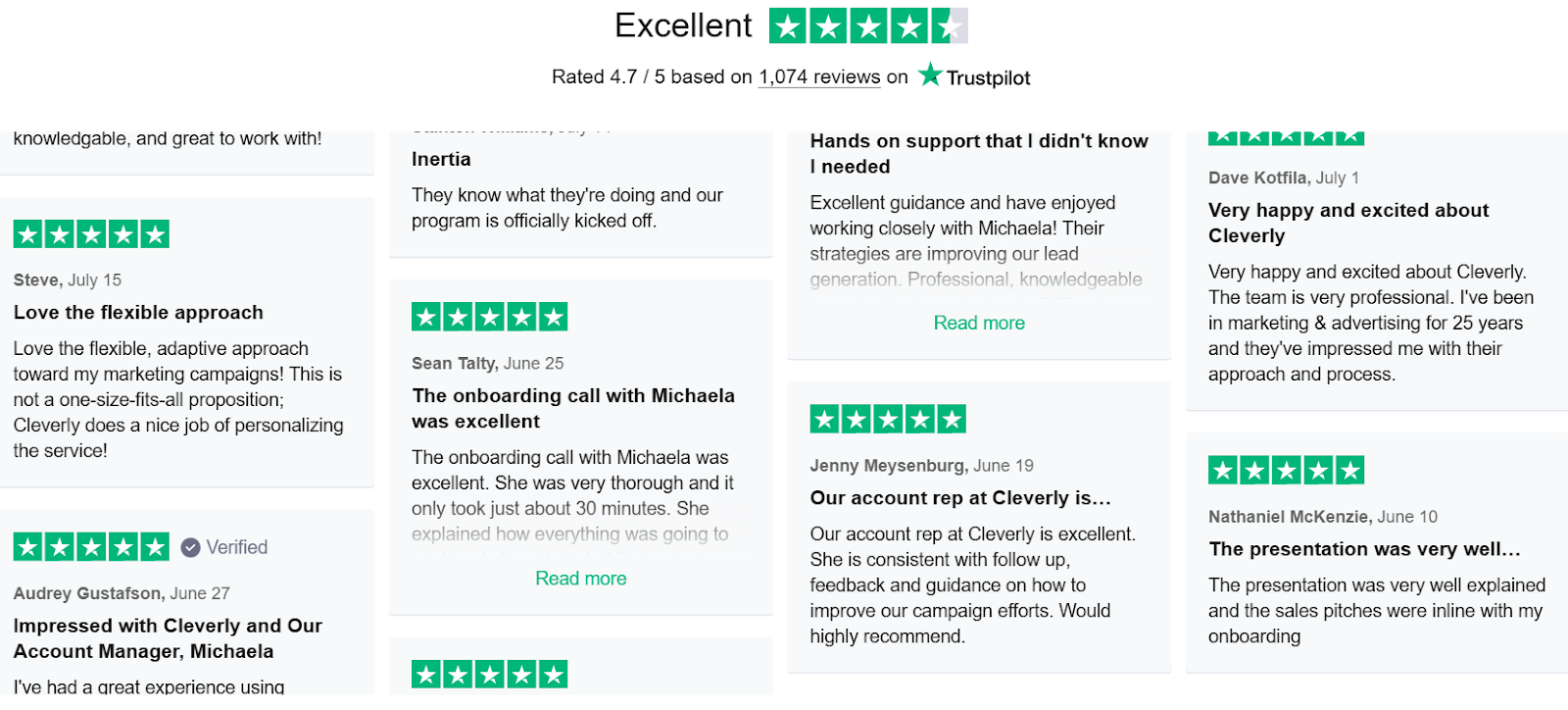
That's what Cleverly handles end-to-end. We build and run done-for-you LinkedIn and cold email outreach campaigns for B2B companies — from ICP-based list building and verified data sourcing to message copywriting, sequence execution, and reply handling.
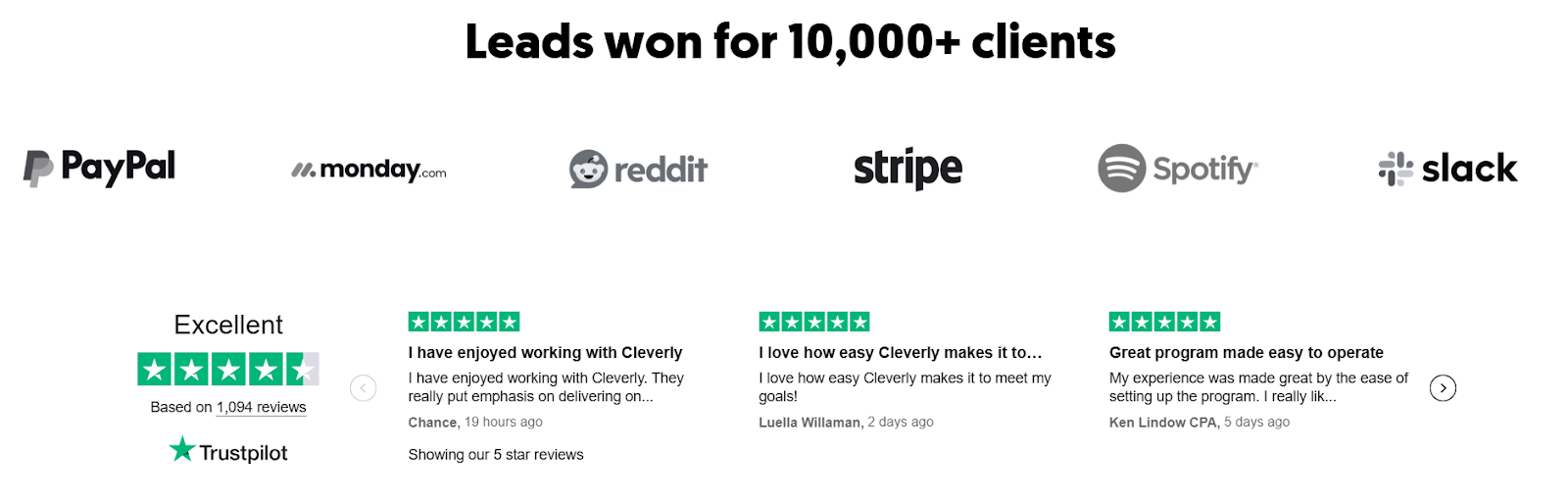
We've done this for 10,000+ clients across industries including Amazon, Google, Uber, PayPal, Slack, and Spotify, generating over $312M in pipeline revenue in the process.
The difference between Cleverly and a tool subscription is outcomes. We don't hand you a platform and wish you luck. We run the campaign, continuously optimize it against real reply rate and meeting booking data, and deliver qualified meetings directly onto your calendar — no SDR hiring, no sequence management, no trial-and-error on deliverability.
Our cold email lead gen model gives you two options depending on your growth stage: Scale (pay per lead, so you only pay for meeting-ready conversations we send you) and Growth (flat monthly retainer).
LinkedIn outreach starts at $397/month with month-to-month pricing and no long-term contracts.
And for teams that want phone added to the mix, our cold calling system books 10–30 qualified sales calls per month with a dedicated appointment setter, custom scripts, and full outbound infrastructure included.
If you want a cold outreach agency to handle the full system while you focus on closing, book a strategy call with Cleverly!
Conclusion
A successful outreach campaign is not a one-time send — it's a repeatable system. Built on a precise ICP, personalized messaging, structured multi-touch sequencing, and consistent measurement, it compounds over time: each campaign teaches you something that makes the next one more precise.
The eight steps in this guide give you the full playbook. Start with one well-defined ICP segment, one channel, and a five-touch sequence. Prove the system works before you scale it.
The teams winning at outbound in 2026 aren't the ones sending the most messages — they're the ones building the most accurate, repeatable process.
Frequently Asked Questions
Free Resource
How to Scale a Profitable Cold Call System
Get the complete guide — download it instantly now.
Free Ebook
Download the Free Guide
Enter your details to get instant access.
You're all set! 🎉
Your ebook is downloading now.
Click below if the download didn't start automatically.


