

Table of Contents
What Is Gojiberry AI and How Does It Work?
Gojiberry AI Features: What You Actually Get
Gojiberry AI Pricing: What It Costs and What's Capped
Best Use Cases for Gojiberry AI
Gojiberry AI Pros and Cons
What Real Users Say About Gojiberry AI
Gojiberry AI Alternatives Worth Considering
Why Cleverly Is the Best Alternative to Gojiberry AI for Cold Outreach
Final Verdict: Is Gojiberry AI Worth It?
Frequently Asked Questions
Modified On :
October 5, 2026
Key Takeaways
- Signal-based prospecting beats static list-buying because it targets people who are already showing intent, not just people who fit a job title filter.
- A tool's setup speed tells you nothing about its long-term reliability. Fast onboarding and weeks of signal-tuning can both be true of the same product.
- Seat and sender caps are the most overlooked limitation in AI SDR tools. Always map your team size against the cap before you buy, not after.
- Enrichment bundled into a subscription is a real cost saver, but it only matters if the underlying data quality holds up at scale.
- No AI prospecting tool, however capable, replaces the need for deliverability infrastructure and human judgment on live replies. Those two things decide whether meetings actually get booked.
Gojiberry AI review searches have spiked for a reason. As of Q1 2026, roughly 41% of enterprise B2B teams had some form of AI SDR in production, up from about 12% a year earlier, and B2B cold email reply rates have slid to somewhere around 4 to 5%, down from near 6.8% in 2023. Teams are hunting for an edge, and "find people who are already showing interest" is a more honest pitch than "blast more emails."
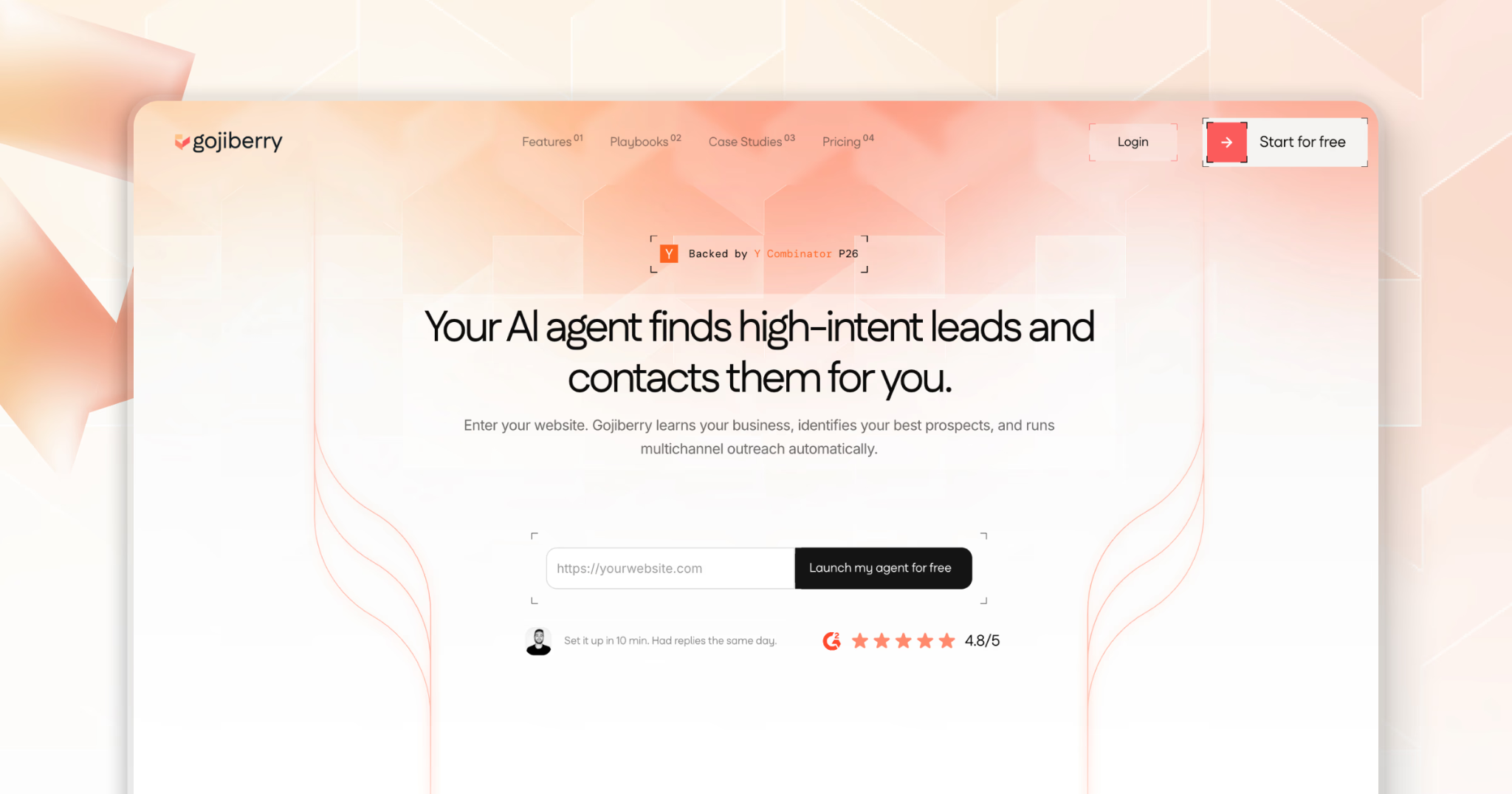
Gojiberry AI is a Y Combinator backed AI GTM agent built around that exact idea. You point it at your website, it infers who you sell to, and it starts surfacing prospects based on buying signals instead of a static contact list.
Here is the problem with most Gojiberry AI review content already online: a lot of it comes from competing outreach tools with an obvious incentive to steer you toward their own product.
This review covers what Gojiberry actually does, its real feature set, its current pricing structure, honest pros and cons, what actual users say, and the alternatives worth considering, including where done-for-you outbound fits if software alone isn't the right call for your team.
This review is for founders, small sales teams, and agencies evaluating AI SDR tools, mostly in the sub-$100-per-seat range.
What Is Gojiberry AI and How Does It Work?
Gojiberry positions itself as an AI GTM agent, not just another sequencer. The pitch is that it replaces a stack of separate tools: one for prospecting, one for enrichment, one for copywriting, and one for sending. Instead of stitching those together yourself, one agent is supposed to handle the whole motion.
The Core Mechanic
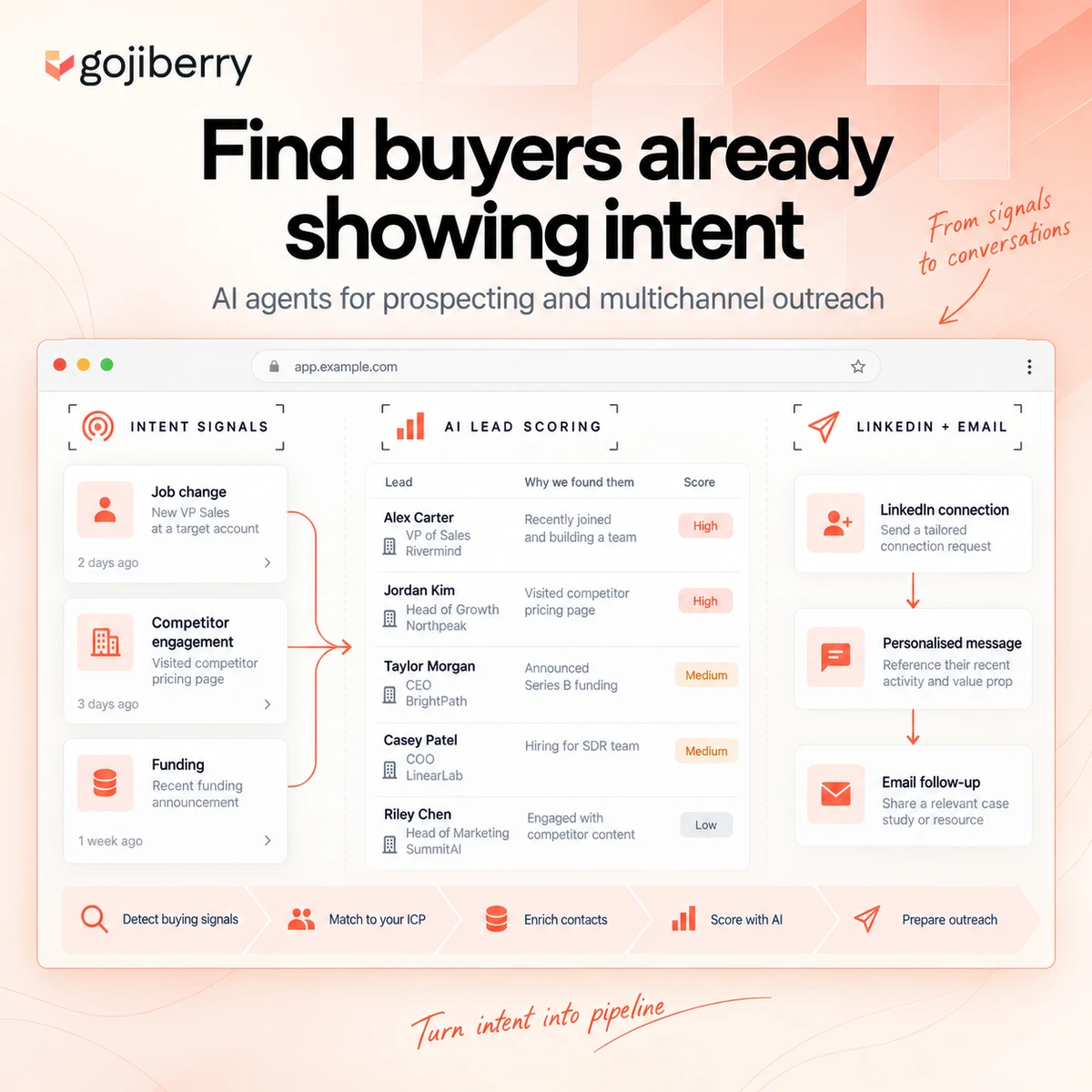
The agent detects buying and social signals (think competitor engagement, company follows, job changes, funding announcements, and general activity in your space), scores prospects against your ideal customer profile, and then runs outreach across channels without you building a sequence by hand.
Setup
Setup is genuinely fast. You give it your website URL, it reads the page, and it infers what you sell and who your buyer likely is. That is a real point in its favor compared to tools that make you fill out a long onboarding form before anything happens.

Who It's Built For
Gojiberry is YC-backed, hosted in the EU, and claims north of 2,000 teams on the platform. It's built mainly for founders and operators running their own outbound, with organization accounts available for agencies and teams managing multiple workspaces.
How It Differs From a Traditional Sequencer
A normal sequencer waits for you to write the steps: email one, wait three days, email two. Gojiberry's agent is supposed to decide timing and messaging itself based on signal activity, so there are no sequences to build in the traditional sense. That's the main architectural difference, and it's also where most of the learning curve complaints in user reviews come from, since you're trusting the agent's judgment more than you would with a tool you fully configure yourself.
🤖 Good Tools. Better Outreach.
Cleverly combines AI with proven LinkedIn, cold email, and cold calling strategies to generate 15–30 qualified meetings every month.
Gojiberry AI Features: What You Actually Get
Here's the feature breakdown, with a note on how mature each capability appears to be based on current documentation and user feedback.
Buying Signal Detection
This is the product's central differentiator and the actual reason people buy it. The agent monitors signals like competitor engagement, company follows, job changes, funding events, and general activity relevant to your space, then builds lookalike audiences from your best existing customers on top of that.
Worth verifying before you buy: marketing copy and third-party reviews don't fully agree on exactly how many signal types are tracked. Treat any specific count you see quoted online as approximate until you confirm it directly with current sales or support.
ICP Filtering and Lead Scoring
Prospects get scored and filtered before a single message goes out. This addresses the most common outbound failure mode: contacting people who were never a realistic fit in the first place. Lookalike modeling off your current customer base is the mechanism doing most of the work here.
Multichannel Outreach
Gojiberry runs email and social outreach with AI-written, context-aware messages, and the agent coordinates timing itself rather than you building a manual sequence. One thing to confirm before you commit: Gojiberry markets this as multichannel, but several independent reviews describe the actual outreach weighting as fairly LinkedIn-heavy. If your buyers live mostly in their inbox and not on LinkedIn, ask directly how channel mix actually breaks down for your use case.
Email Waterfall Enrichment
Enrichment runs across 15+ data providers, bundled into the plan rather than billed separately. That's a genuine cost advantage over stacking something like Clay alongside a separate sender tool. You're not managing a third enrichment subscription or a separate credit system on top of your outreach cost.
Unified Inbox and AI Reply Drafting
Replies land in one inbox with a drafted response ready for your review. That keeps a human in the loop on the conversations that actually matter, which is the right design choice for anything beyond the earliest-stage cold touch.
Copilot vs. Autonomous Mode
You can run the agent fully automated or require approval on every message before it sends. The approval mode is what makes this usable for brand-sensitive teams who don't want an AI agent fully unsupervised on their outbound voice.
Integrations
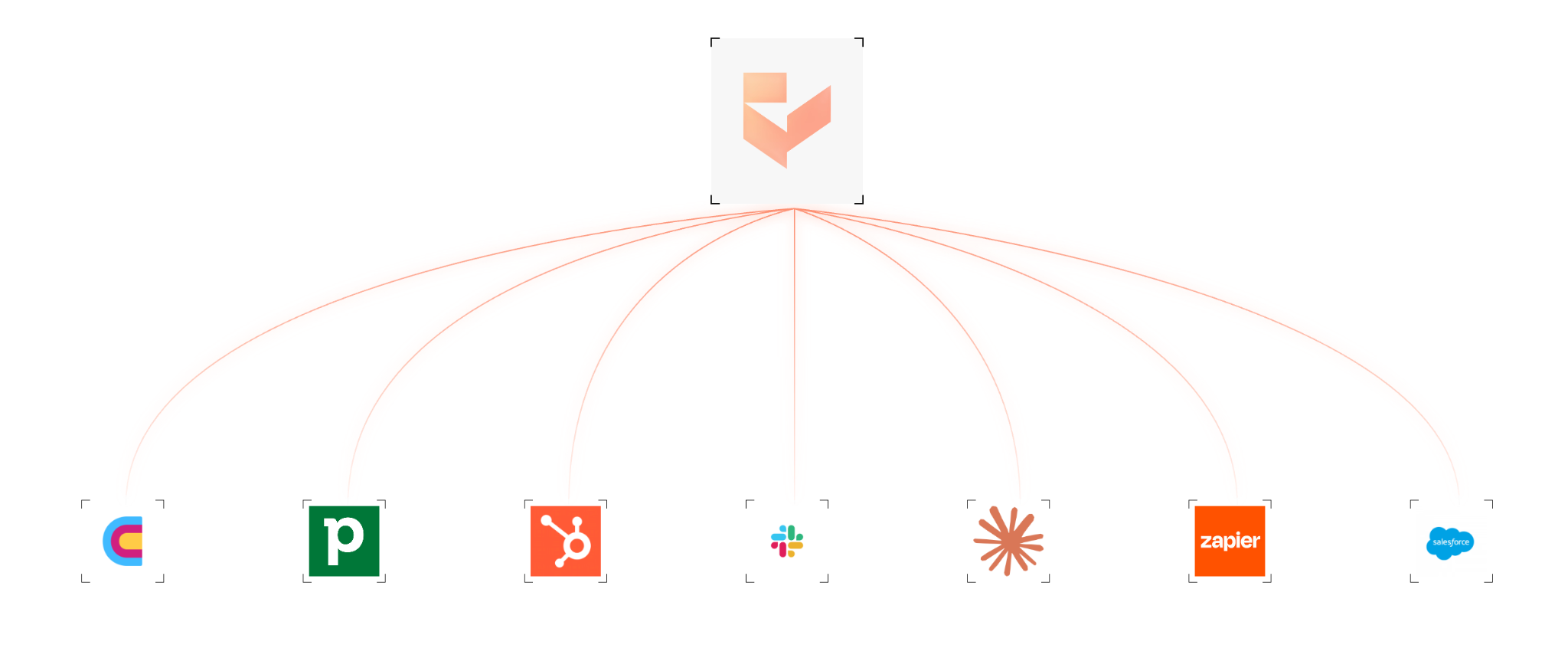
Gojiberry connects to HubSpot and Pipedrive, plus API access for custom workflows. Some current documentation also references MCP-style integration, which would let you run prospecting tasks from an AI assistant directly. That's a notable feature at this price point if it holds up as described, though we'd recommend confirming current integration depth directly before building a workflow around it.
Gojiberry AI Pricing: What It Costs and What's Capped
This is where you need to slow down, because the pricing structure has changed over time and online sources don't fully agree with each other.
Gojiberry runs on a core subscription plus add-ons model rather than a simple tiered pricing page. According to Gojiberry's own current help documentation, the standard subscription includes:
From there, you add capacity as needed:
- Additional AI Outreach Agent: roughly $59/month, each adding about 900 contacted prospects per month, its own ICP, and its own LinkedIn sender.
- Additional automated lead source (signals or lookalike targeting): roughly $29/month.
- Organization Member accounts for agencies or multi-workspace teams: roughly $99/month per member, each with its own login, campaigns, and agents.
- Extra credit packages: starting around $25/month.
Separately, multiple third-party sources (coupon and review sites, not Gojiberry's own documentation) consistently cite a $99/month "Pro" plan as the commonly discussed entry price, and some describe trial access as a 7-day trial for $1 rather than a card-free free trial.
The limit that matters most in practice: the base plan's two LinkedIn seats and two agents get tight fast for any team past one or two active outbound operators. Model your actual team size against the add-on costs before you commit, because the sticker price and the real monthly cost can diverge quickly once you're past a solo setup.
The hidden cost readers often miss: Gojiberry doesn't supply warmed domains or inbox infrastructure. Whatever you pay for the subscription, deliverability setup is still on you.
🚀 Turn AI Into Pipeline
With 224.7K+ leads generated, 53,000+ meetings booked, and $312M+ pipeline, Cleverly helps 10,000+ businesses turn smarter outbound into growth.
Best Use Cases for Gojiberry AI
Gojiberry fits best for:
- Solo founders running outbound alongside everything else. This is the strongest fit by a wide margin.
- Small B2B SaaS teams with a defined ICP and no dedicated SDR yet.
- Agencies testing intent-based outreach before committing to a bigger, more expensive stack.
- Teams whose buyers are genuinely active on LinkedIn, where social signals actually exist to detect.
- Anyone trying to replace a multi-tool stack (prospecting tool, enrichment tool, sender) with one subscription.
- Teams already using Claude or a similar assistant who want prospecting inside an existing workflow, if MCP integration holds up as documented.
Where it fits poorly: offline or non-digital buyer segments, enterprise ABM with large buying committees, and any team that needs more than a couple of senders running at volume.
Gojiberry AI Pros and Cons
Pros
- Signal-based targeting produces warmer, more relevant prospects than a static list pull.
- Setup is genuinely fast, live in minutes rather than days.
- Enrichment is included, removing a separate credit-based subscription.
- Strong value at the entry price point for what's bundled.
- CRM and (if confirmed) MCP integrations are unusual at this price bracket.
- Approval mode keeps a human in control of outbound messaging.
Cons
- Fully dependent on public social activity. If your buyers aren't visible on LinkedIn, there are meaningfully fewer signals for the agent to work with.
- The two-seat, two-agent base plan limits teams past a couple of reps quickly.
- Signal configuration has a real learning curve. Several users describe weeks of tuning before lead quality improved.
- Performance and platform speed issues show up in independent reviews, though apparently being addressed.
- Support response times are criticized in multiple reviews.
- The review base is genuinely thin so far (low double digits across major platforms), so long-term reliability isn't proven yet.
- No domain or inbox infrastructure included, so deliverability remains entirely your responsibility.
What Real Users Say About Gojiberry AI

Trustpilot is where most of the signal lives. The most recent snapshot (late September 2026) puts Gojiberry around 4.4 to 4.5 out of 5 across roughly 68 to 78 reviews, a meaningfully larger and more positive base than earlier in the year, when the count sat closer to 30 reviews in the high 3s. That trajectory itself tells you something: this is a product still accumulating its track record in real time, not one with a settled reputation yet.
The praise clusters around three things. Reviewers consistently call out the intent-based targeting itself, describing a platform that puts them in front of the right ICP at the right moment instead of a cold list. Setup speed comes up often too.
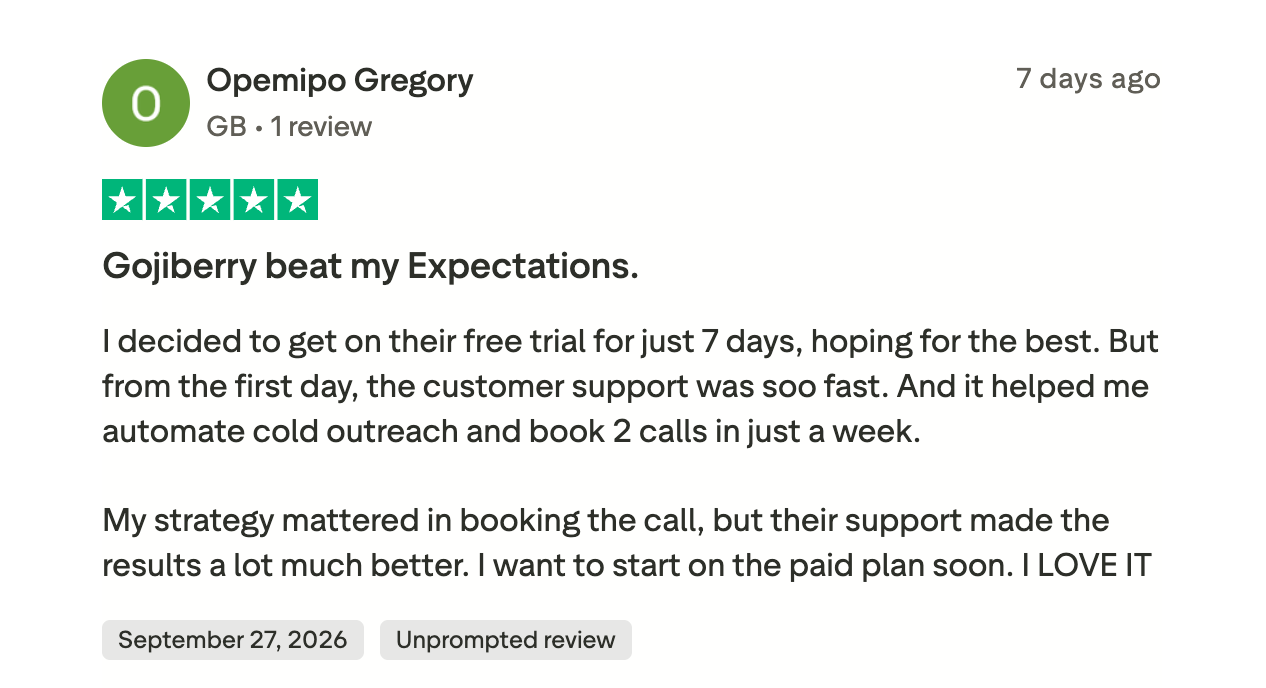
One reviewer in a tough, highly specific industry wrote that they booked 2 calls in just a week after launching their first campaign. Support quality is the third recurring theme, with multiple reviewers naming specific team members who walked them through setup personally.
The criticism is narrower but consistent. Lead quality and ICP accuracy show up as the main complaint from unhappy reviewers, with a few describing outreach that missed their actual target buyer and used stale data. Billing and cancellation experiences come up too.
One Trustpilot reviewer in September 2026 flagged a renewal they weren't notified about and a refund request that was initially refused, though Gojiberry's team did respond and offered to process it, which is a reasonable sign of responsiveness even when the original experience was rocky.
G2 tells a similar but smaller-sample story. Third-party tracking of G2's listing puts Gojiberry around 4.6 out of 5 across roughly 14 to 15 reviews, with the same praise pattern: intent-over-volume targeting, ease of use, and support. That review count is still low enough that G2 itself has flagged it, at various points, as too thin to generate reliable buying insight, so treat the G2 score as early-adopter sentiment rather than a mature signal.

The pattern worth taking away: positive reviews skew toward solo founders and operators with a tightly defined ICP who got fast, hands-on support during setup. Complaints skew toward lead quality and billing clarity, the two things that matter most once you're past the honeymoon week. Neither platform has enough review volume yet to call this a proven long-term track record, even with scores trending upward.
Gojiberry AI Alternatives Worth Considering
HeyReach
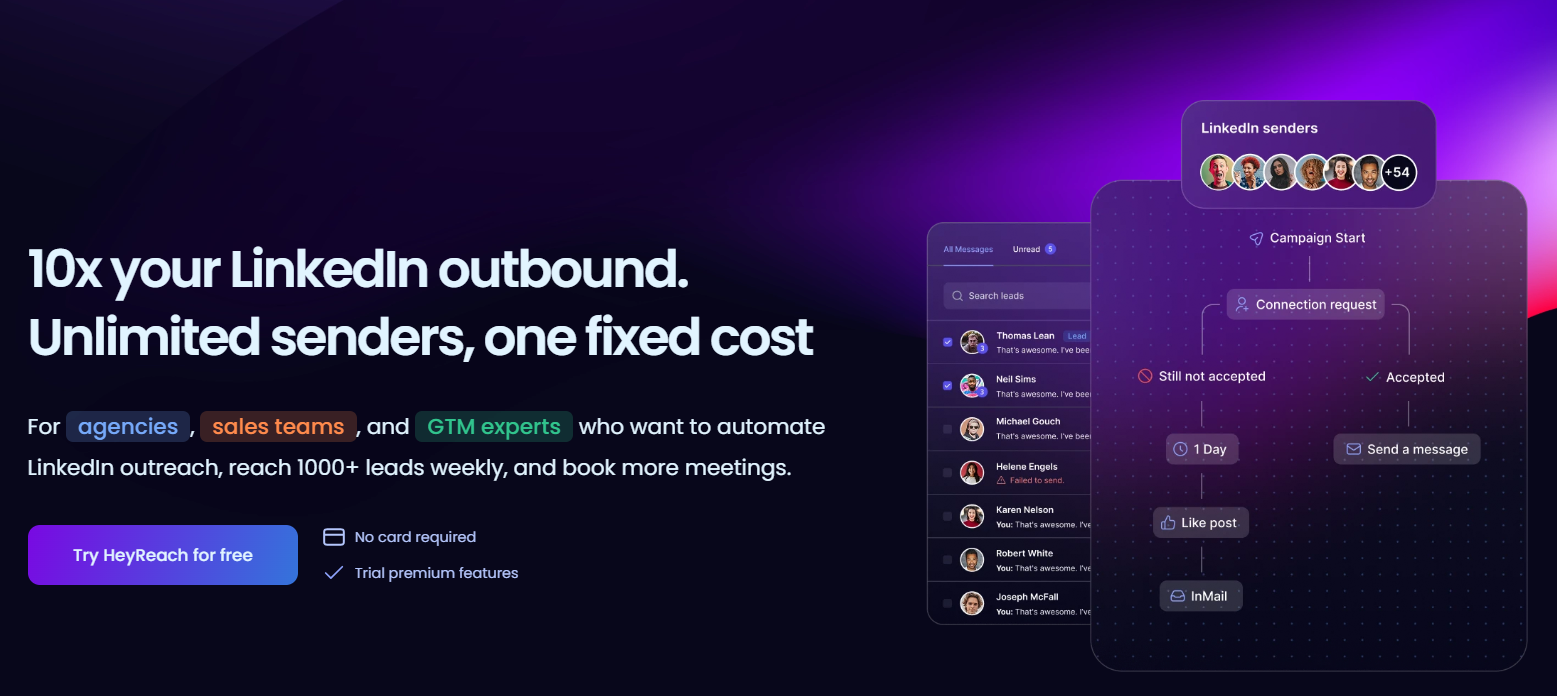
Best for: agencies or teams running LinkedIn outreach from many sender accounts at once.
HeyReach's entire design centers on one problem Gojiberry doesn't solve: running outbound from more than two or three LinkedIn accounts without tripping LinkedIn's spam detection. It connects multiple LinkedIn profiles to a single campaign and automatically rotates connection requests, messages, and profile visits across them, so no single account absorbs the full daily volume. Pricing is sender-based, starting in the roughly $79/month range per connected account and scaling to flat agency tiers (commonly cited in the $199 to $299/month range) that bundle in unlimited senders and white-labeling for client work.
The honest tradeoff: HeyReach is LinkedIn-only, with no email channel and no intent-signal detection, so you bring your own targeting logic and your own list. It's the strongest pick specifically for scale and multi-account management, not for the signal-based "who's actually in-market" layer that defines Gojiberry.
Smartlead

Best for: high-volume, email-led outbound where deliverability is the bottleneck, not targeting.
Smartlead is a pure cold email sending and deliverability platform, and it's one of the few in the category that includes unlimited mailboxes and unlimited warmup on every tier, with entry pricing starting around $39/month and scaling to roughly $379/month at the top end based on send volume. That structure makes it a strong fit if your real problem is inbox rotation, bounce control, and sender reputation at scale. What it doesn't do is find anyone for you.
There's no contact database and no buying-signal detection built in, and deliverability add-ons like dedicated monitoring or email verification are billed separately on top of the base plan. Smartlead assumes you already know who to contact; it just makes sure the email actually lands.
Clay + a Sender

Best for: teams that want to design their own enrichment and routing logic from scratch rather than accept a vendor's defaults.
Clay is the most flexible option on this list by a wide margin. It lets you build custom enrichment waterfalls across dozens of data providers, run conditional logic on who qualifies, and push the output into whatever sending tool you prefer (commonly Smartlead or Instantly for email). That flexibility comes at a real cost: Clay runs on usage-based credit pricing that climbs quickly with volume, and you're responsible for stitching together the sending layer yourself since Clay doesn't send outreach on its own.
This is the right call if your team has the technical capacity to build and maintain that stack. It's the wrong call if you wanted an agent to just handle it, which is the entire premise of what Gojiberry and the "done-for-you" category are trying to replace.
Apollo
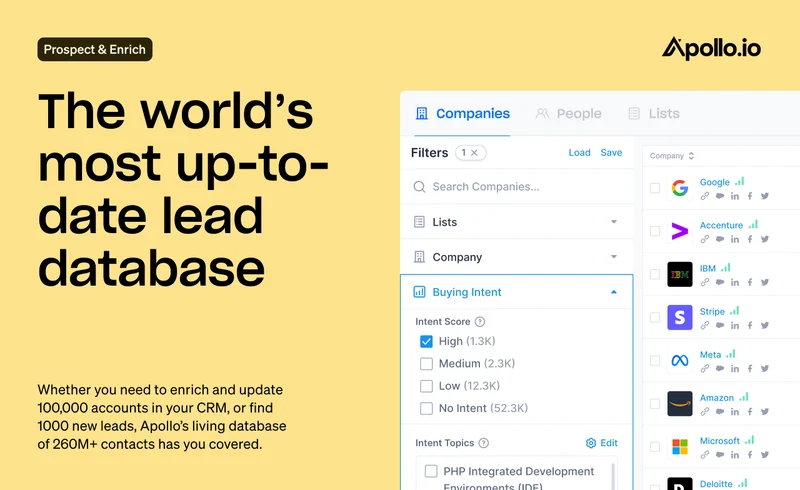
Best for: teams that want a contact database and basic sequencing in one seat-priced tool, without piecing together a multi-vendor stack.
Apollo's draw is scale of data: a database of 275M+ contacts bundled with sequencing, CRM-lite tools, and engagement tracking, priced per user from free up through roughly $49, $79, and $119 per user per month on annual billing. For teams that mainly need volume and don't yet have a defined data source, that's a meaningful advantage over Gojiberry, which doesn't ship its own contact database in the same way.
The catch is Apollo's credit system: email, mobile, and export credits are metered separately, expire at the end of each billing cycle, and can push real costs well above the advertised per-seat price once a team is actually using the database at volume. Apollo also doesn't do intent-signal detection. You're buying reach and infrastructure, not a targeting layer that tells you who's in-market right now.
Full AI SDR Platforms
Best for: teams that want one AI agent to own the entire top-of-funnel motion, not just the signal-detection and messaging layer.
Platforms in this bracket, Artisan's Ava being the most visible example, position themselves as a full "AI BDR" rather than a prospecting tool: finding leads, writing and sending outreach, and in some cases handling replies, all from one agent with its own contact database. Pricing here is almost always sales-gated rather than published, with real-world figures commonly landing anywhere from roughly $2,000 to $5,000+ per month depending on lead volume and seat count, usually under an annual contract. That buys genuine autonomy and a broader scope than Gojiberry covers.
It also means less transparency on exact cost before a sales call, a higher commitment to walk away from if it doesn't work out, and, per independent reviews of this category, channel coverage that's often still email-heavy in practice despite multichannel marketing claims. This tier makes sense once your outbound motion and budget have outgrown a sub-$100 tool, not as a starting point.
Why Cleverly Is the Best Alternative to Gojiberry AI for Cold Outreach
Every option above, Gojiberry included, is software you still have to operate. You're the one tuning signals, managing the sender cap, fixing deliverability, and following up every single day. Gojiberry finds and messages prospects for you, but domains, inbox infrastructure, and the judgment calls on which replies are actually worth pursuing stay on your plate.
Cleverly takes a different approach: you're buying booked meetings, not a subscription to configure. We run ICP definition, multi-source verified list building, domain and deliverability infrastructure, cold email and LinkedIn outreach, cold calling, and reply handling through to a confirmed meeting on your calendar, end to end.
The sender-cap problem goes away entirely, since you're not buying seats or managing additional accounts as you scale volume. And on the hardest part, handling live replies and objections, trained humans do the qualification work that no AI agent reliably manages yet.
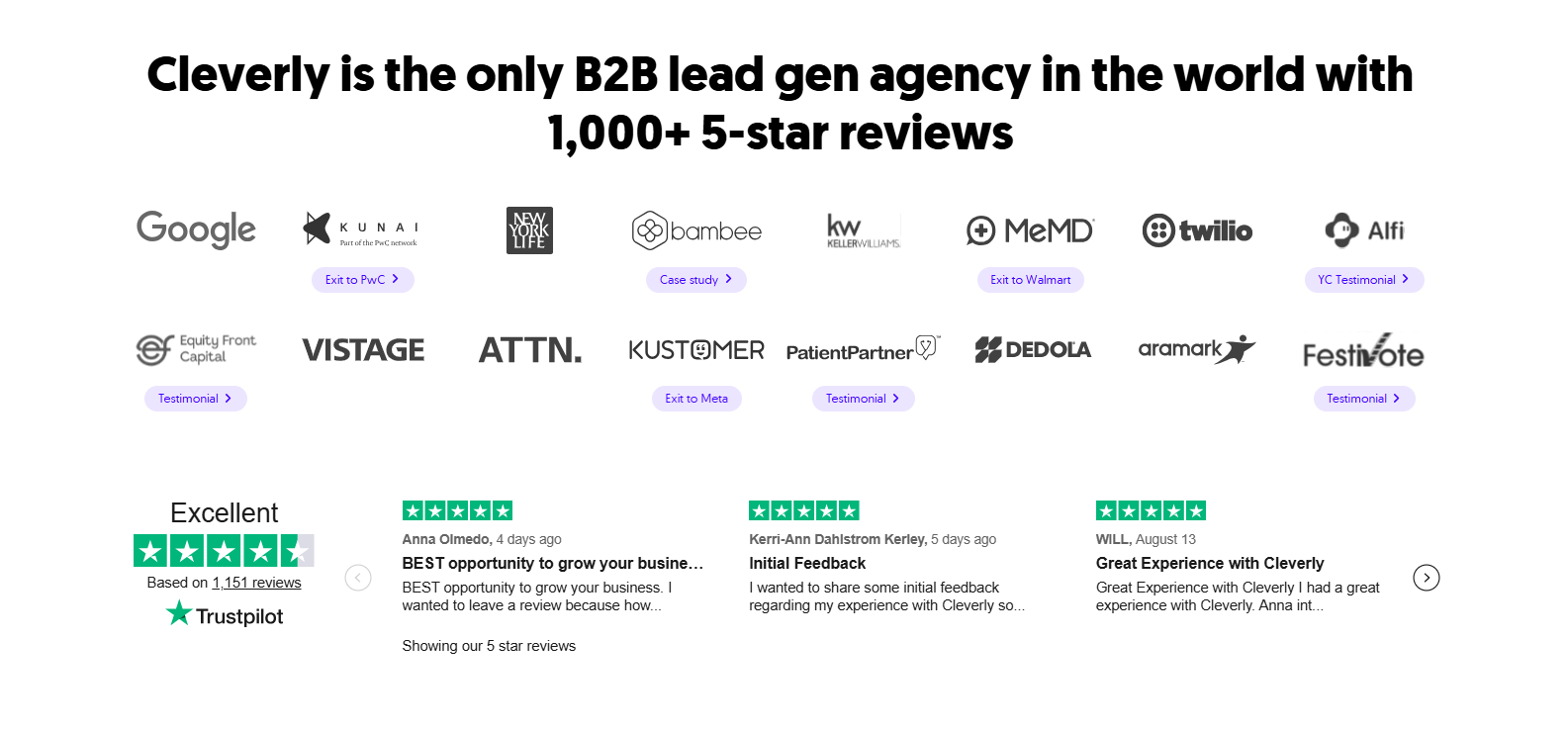
Across our client base, we've generated $312M in pipeline and set appointments for 10,000+ companies, because what we optimize for is qualified meetings held, not prospects contacted.
Want booked meetings instead of another tool to configure? Get a free consultation from Cleverly.
Final Verdict: Is Gojiberry AI Worth It?
The honest verdict is that Gojiberry AI is strong value for solo founders and small teams whose buyers are active on LinkedIn, at a price that genuinely undercuts a stacked Clay-plus-sender setup once you factor in bundled enrichment. Where it struggles is predictable: teams past a couple of senders, buyer segments without meaningful public social activity, and anyone who needs fast support turnaround on day one.
If you're evaluating it, the smart move is to run the trial on one narrow ICP and judge it on reply quality, not on how many prospects got contacted. And whichever AI SDR tool you land on, remember that none of them hand you deliverability infrastructure or human judgment on the replies that actually turn into revenue. That part still has to come from somewhere.
Frequently Asked Questions
Free Resource
How to Scale a Profitable Cold Call System
Get the complete guide — download it instantly now.
Free Ebook
Download the Free Guide
Enter your details to get instant access.
You're all set! 🎉
Your ebook is downloading now.
Click below if the download didn't start automatically.


