Table of Contents
What Are AI SDR Tools?
Benefits of Using AI SDR Tools for Outbound Automation
What to Look for in the Best AI SDR Tools
Quick Comparison: 10 Best AI SDR Tools at a Glance
10 Best AI SDR Tools for Outbound Automation in 2026
Free AI SDR Tools: What You Can (and Can't) Expect
AI SDR Tools vs. Human SDRs: How to Think About the Tradeoff
How Cleverly Combines Human Expertise With Done-For-You Outbound
Conclusion
Frequently Asked Questions
Modified On :
July 1, 2026
Key Takeaways
- AI SDR tools now run 41% of enterprise outbound programs, up from just 12% a year ago, and net SDR headcount at US B2B SaaS companies is down 18% year over year as a result.
- Autonomous "digital worker" tools like 11x and Artisan replace top-of-funnel SDR work entirely, while assisted tools like Apollo make your existing reps faster. Your ICP and budget should decide which camp you shop in, not the hype.
- Pricing spans an enormous range in 2026, from $49/month self-serve platforms to $15,000+/month enterprise digital workers, and the sticker price rarely reflects total cost once credits, seats, and add-ons come into play.
- Cost per qualified opportunity has dropped 54% with hybrid AI-plus-human pods compared to human-only teams, which is a real gain but well short of the "AI replaces your SDR team" pitch you'll hear from some vendors.
- No AI SDR tool replaces the judgment a trained human brings to objection handling and complex qualification. The teams getting the best results treat AI as a volume and consistency layer, not a full substitute for strategy.
Hiring an SDR team used to be the only way to scale outbound. Now it's rarely the first one.
A junior SDR in the US costs $45,000 to $55,000 in base salary, and once you add benefits, tools, management overhead, and a three-to-six-month ramp period, the fully loaded cost per rep climbs well past $100,000 a year.
A team of five reps can represent over half a million dollars in annual cost before a single meeting gets booked. That math is exactly why AI SDR tools have moved from a curiosity to a default line item in outbound budgets.
Enterprise adoption jumped from 12% to 41% in a single year, and net SDR headcount in US B2B SaaS is already down 18% as companies rethink how outbound gets built.
But "AI SDR" has become a catch-all term covering wildly different products. Some are fully autonomous digital workers that run your entire top-of-funnel motion without a human touching a sequence.
Others are AI-assisted platforms that make your current reps faster without replacing anyone. The pricing gap between those two categories is massive, and picking the wrong one for your stage means either overpaying for autonomy you don't need or underbuying the automation your team actually needs.
This guide breaks down what AI SDR automation tools actually do, what separates a good one from an overhyped one, and the 10 platforms worth evaluating in 2026, whether you're a founder replacing your first SDR hire or a RevOps leader consolidating a bloated tech stack.
What Are AI SDR Tools?
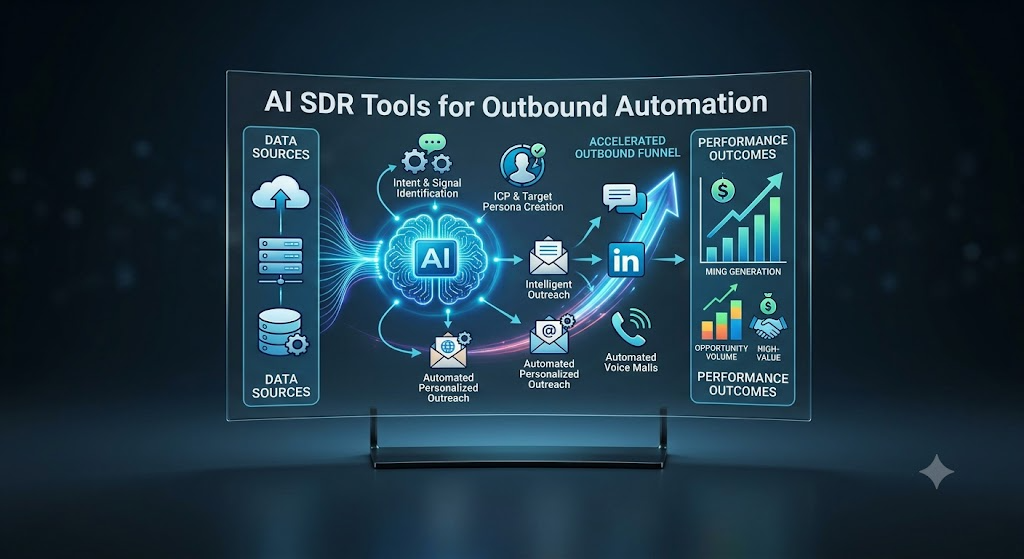
AI SDR tools are software platforms that use artificial intelligence to automate the prospecting, outreach, personalization, and follow-up work traditionally handled by a human sales development rep.
At a functional level, they handle four things: finding contacts that match your ideal customer profile, writing and sending personalized email or LinkedIn messages, managing multi-step sequences, and detecting replies so a human can step in when a conversation gets warm.
Two flavors of "AI SDR"
The category splits into two genuinely different products, and confusing them is the single most common mistake buyers make.
AI-assisted tools help a human SDR work faster. Think Apollo or ZoomInfo Copilot: the rep still owns the workflow, but AI handles research, drafting, and prioritization behind the scenes.
Fully autonomous agents run the outbound motion end to end. Tools like 11x's Alice or Artisan's Ava are built to operate as a "digital worker," identifying accounts, writing sequences, and handling follow-ups with minimal human input.
Neither is inherently better. The right pick depends on whether your bottleneck is rep capacity (autonomous agents help more) or rep quality and speed (assisted tools help more).
What they still don't replace
For all the "AI employee" marketing language, no platform in this category closes deals, manages a real relationship, or navigates a genuinely complex enterprise sale on its own.
Multiple reviewers across G2 and Reddit flag the same pattern: AI-written outreach can feel generic at scale, and autonomous agents without buying-signal data often email everyone in an ICP with equal priority, whether or not they're actually in-market.
Human judgment still decides who gets a live conversation and how a real objection gets handled.
🤖 AI Can Start Conversations. We Help Close Them.
Combine AI with experienced SDRs to generate more qualified meetings and predictable pipeline.
Benefits of Using AI SDR Tools for Outbound Automation
AI SDR tools earn their place in a tech stack for a few concrete reasons, not just because "AI" is in the name.
- Scale without headcount: one AI agent can run the sequence volume of two to three human SDRs simultaneously, without a hiring cycle.
- Consistent cadence: no sick days, no missed follow-ups, no burnout-driven drop in send volume mid-quarter.
- Faster personalization at scale: modern tools pull firmographic and intent signals to write relevant opening lines automatically, instead of a rep manually researching each account.
- Lower cost per opportunity: Bridge Group's 2026 SDR metrics show cost per qualified opportunity falling from $487 with human-only pods to $224 with hybrid AI-plus-human pods.
- Faster pipeline velocity: automated follow-up keeps prospects moving through a sequence without a rep remembering to circle back.
The honest caveat: raw reply rates have actually fallen as volume has climbed. Per-rep monthly outbound volume rose roughly 6.4x with AI augmentation, but reply rates dropped from 4.7% to 2.9% over the same period.
More sending isn't automatically better sending. The tools that win long-term are the ones that pair volume with real signal-based targeting, not just louder blasting.
What to Look for in the Best AI SDR Tools
Before you sit through ten demos, narrow the field using these criteria.
✅ Autonomy level
Decide upfront whether you want a tool that assists your reps or one that operates independently. This single decision filters out half the market immediately.
✅ Personalization quality
Ask for real sample output, not a cherry-picked demo email. Several tools in this space, including well-funded ones, get consistent reviewer feedback that AI copy "feels the same" at scale once you send more than a handful.
✅ Data and prospecting capability
Some tools ship with a built-in contact database (Apollo, Artisan, Regie.ai). Others require you to bring your own data feed. Know which one you're buying before you sign.
✅ Multichannel support
Email-only tools are cheaper but limit reach. If phone is part of your motion, check whether calling is native (Amplemarket, Nooks) or requires a separate add-on, since several "multichannel" tools quietly bolt calling on for extra cost.
✅ Deliverability infrastructure
Sending reputation, warmup, and inbox rotation matter more than almost any other feature on this list. A perfectly written email that lands in spam is worthless.
✅ CRM integration
Confirm bi-directional sync with Salesforce or HubSpot before you commit. Surface-level "integration" that only pushes data one way creates more manual work, not less.
✅ Reply and intent detection
Can the tool tell a genuinely interested reply from an out-of-office auto-response and route it to a human fast? This is where a lot of the cheaper tools fall short.
✅ Pricing model
Per seat, per contact, or usage-based credits all behave very differently as you scale. A tool that looks cheap at 500 contacts can double in cost by month three if you're not watching the credit meter.
🚀 The Best Outbound Teams Use AI—Not Replace People With It
Leverage AI-powered workflows backed by experts who've generated 53,000+ appointments and $312M+ in pipeline.
Quick Comparison: 10 Best AI SDR Tools at a Glance
10 Best AI SDR Tools for Outbound Automation in 2026
Each tool below is reviewed by its primary strength. Match the pick to where your process actually needs leverage, not to whichever one has the loudest marketing.
1) 11x (Alice)
Best for: fully autonomous outbound from prospecting to meeting booking
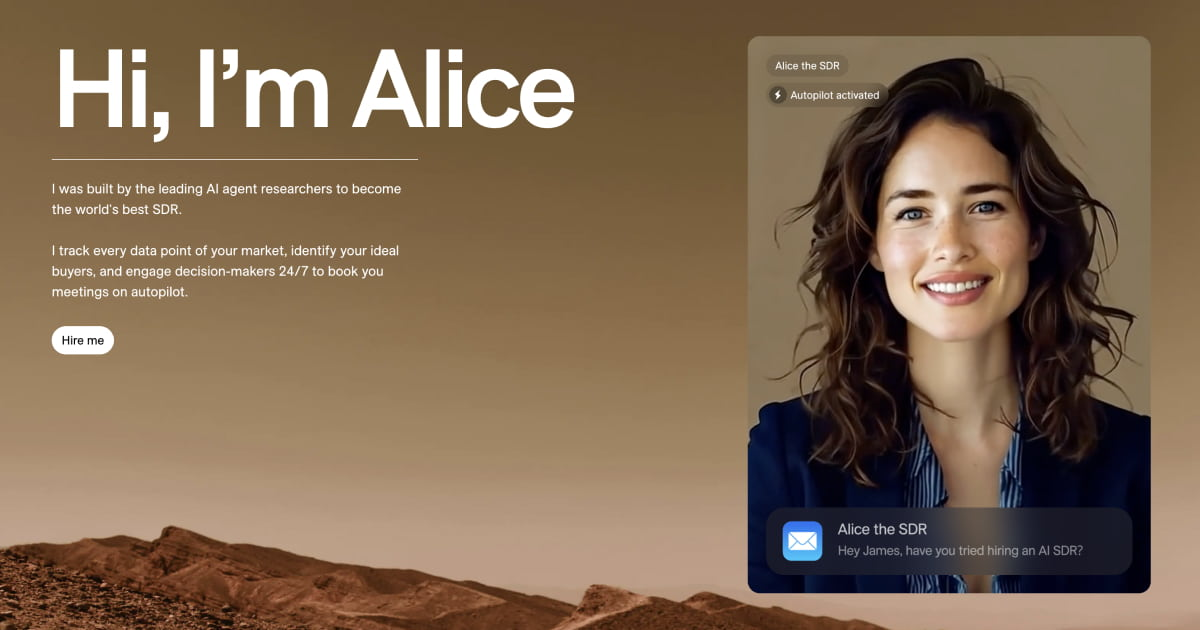
11x's Alice is the closest thing on this list to a true "digital worker." It handles ICP targeting, personalized email and LinkedIn outreach, and autonomous follow-up without a rep managing each step. The company also offers Julian, a separate AI phone agent for inbound qualification.
Where it fits: teams with $50K+ average deal sizes who want to replace or heavily augment SDR headcount and have the budget for enterprise-tier pricing.
Worth knowing: 11x doesn't publish pricing. Third-party procurement data and multiple independent reviews put the real cost around $5,000 to $15,000 a month depending on contact volume and channels, with annual contracts standard and total first-year commitments often landing between $50,000 and $60,000. There's no built-in calling without adding Julian separately, and several reviewers note the AI's personalization can feel surface-level without a dedicated signal layer feeding it.
2) Artisan (Ava)
Best for: an AI SDR agent that handles prospecting, outreach, and follow-up end to end at a lower price point than 11x
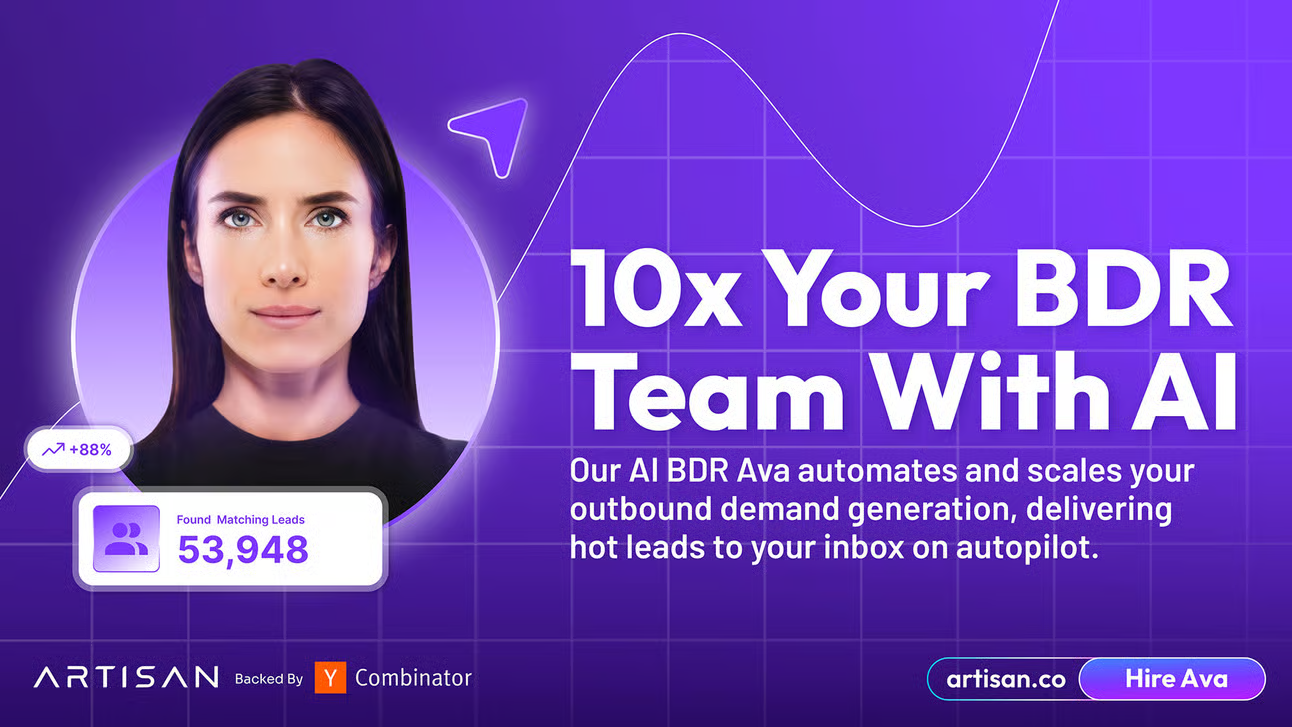
Ava sources leads from Artisan's 300M+ contact database, writes multi-step email and LinkedIn sequences, and manages follow-ups with built-in deliverability tooling including warmup and mailbox health scoring.
Where it fits: startups and lean teams that want a managed AI outbound function without hiring, and without committing to enterprise pricing on day one.
Worth knowing: Artisan publishes tiered pricing starting at a free plan (300 credits/month), an Intern plan around $280/month, and an Employee plan around $660/month, with custom Enterprise pricing above that. That transparency is a genuine advantage over 11x. The trade-off: several reviewers, including Reddit threads and G2 reviews, describe the outreach as feeling templated without heavy signal-based targeting layered on top, and LinkedIn automation is limited to basic touchpoints like profile views and connection requests rather than deep engagement.
3) Apollo.io
Best for: AI-assisted prospecting and outreach backed by one of the largest B2B databases on the market.
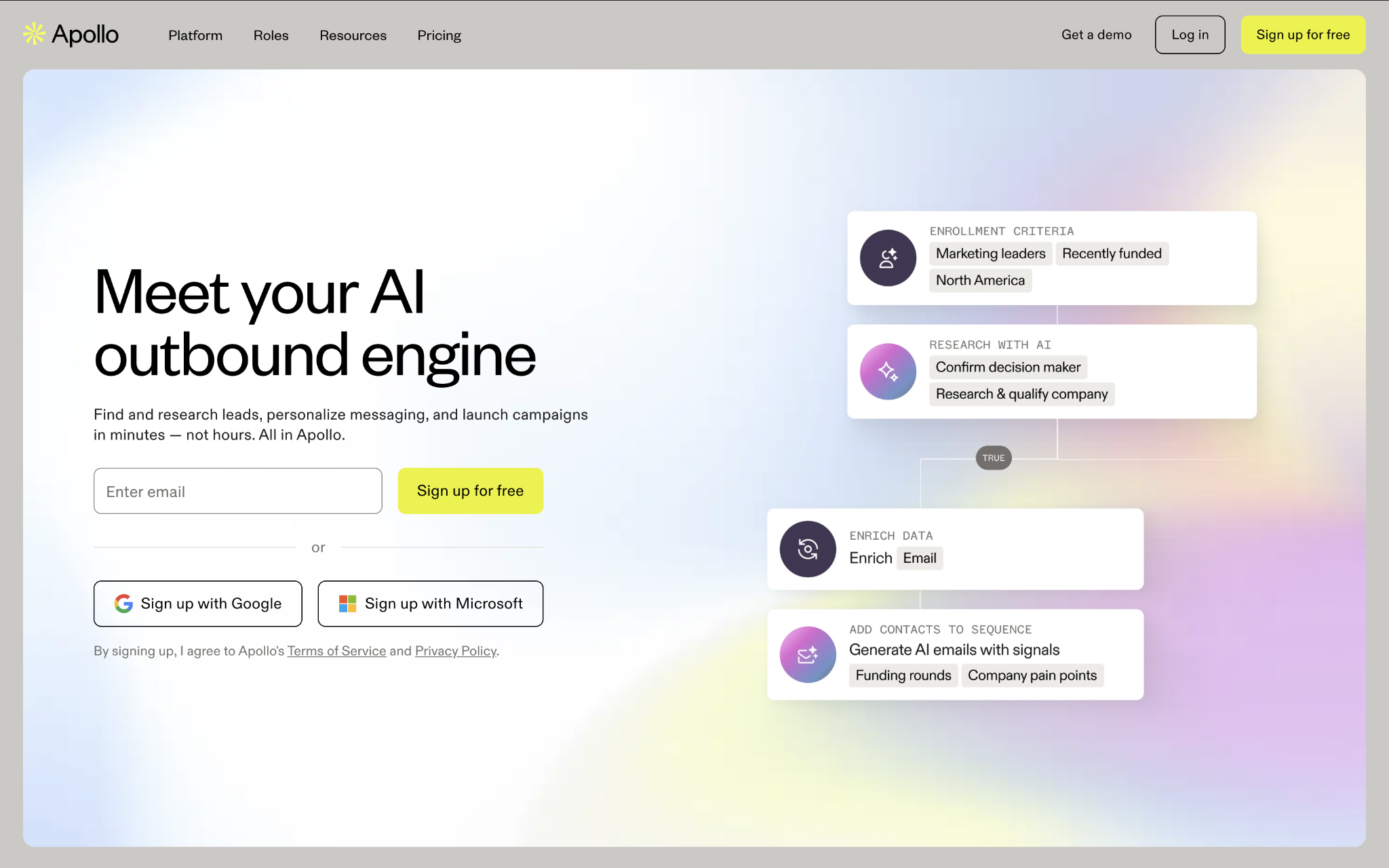
Apollo pairs a 275M+ contact database with AI email writing, a LinkedIn extension, buying-intent signals, and built-in sequencing, all in one platform.
Where it fits: SDR teams and founders who need prospecting and outreach without stitching together a separate data provider and sending tool.
Worth knowing: Apollo offers a genuinely usable free tier and paid plans at $49, $79, and $119 per user per month on annual billing. The catch is the credit system. Every meaningful action, exporting a contact, revealing a mobile number, draws from a pool that doesn't roll over, and heavy users report real costs running well above the sticker price once overages kick in. If your team's usage is unpredictable month to month, budget for that variance before you commit.
4) Regie.ai
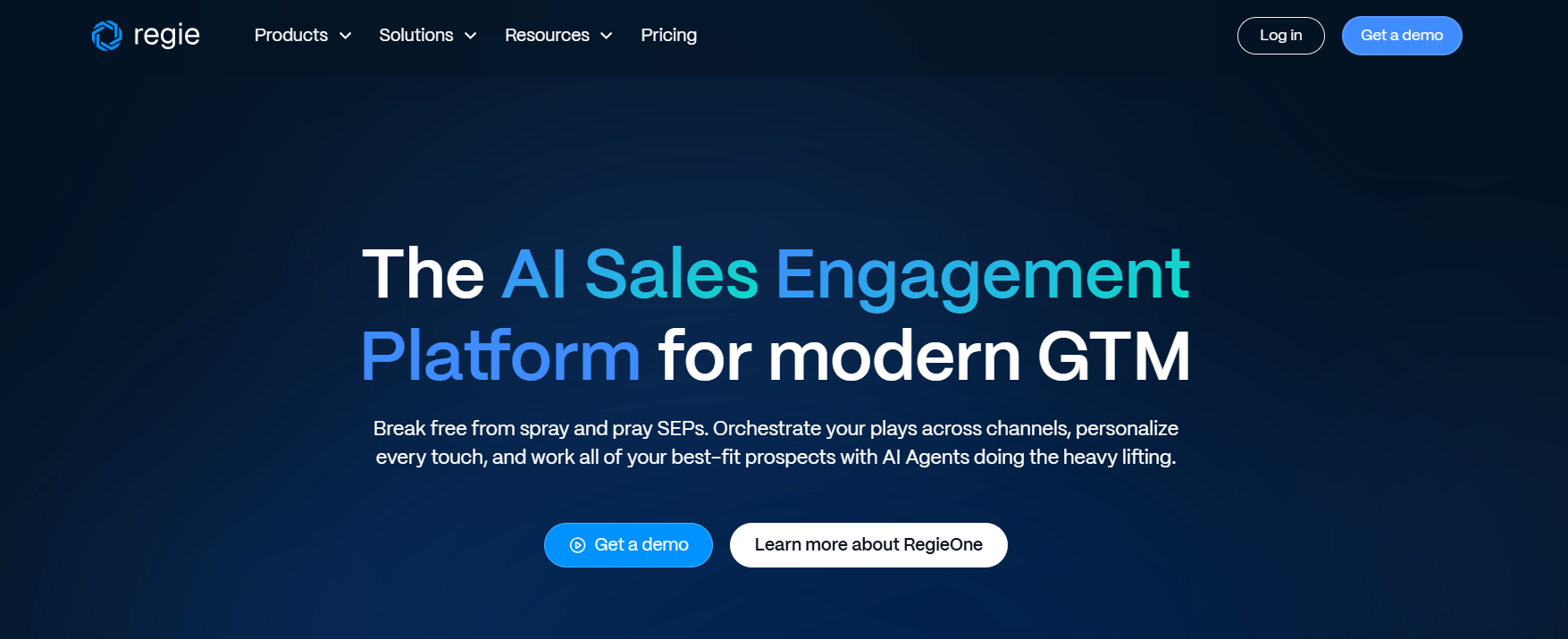
Best for: AI prospecting paired with automated outbound sequence building for teams that want everything in one platform
RegieOne combines a 220M+ contact database, AI-generated sequences across email, LinkedIn, and phone, and a parallel dialer capable of ringing up to nine lines simultaneously.
Where it fits: teams running high-volume outbound that want to consolidate their data, writing, and calling stack into a single AI-native platform.
Worth knowing: Regie.ai's publicly quoted tiers start at $180 per user per month for AI SEP, with seat minimums, and $499 per user per month for Force Multiplier Rep. Some third-party sources report the platform has also moved toward flat annual pricing around $35,000 for core packages. A recurring theme in reviews: AI-generated copy can read as robotic, meaning reps still spend real time editing before anything goes out, which cuts into the time savings the platform is meant to deliver.
5) Coldreach
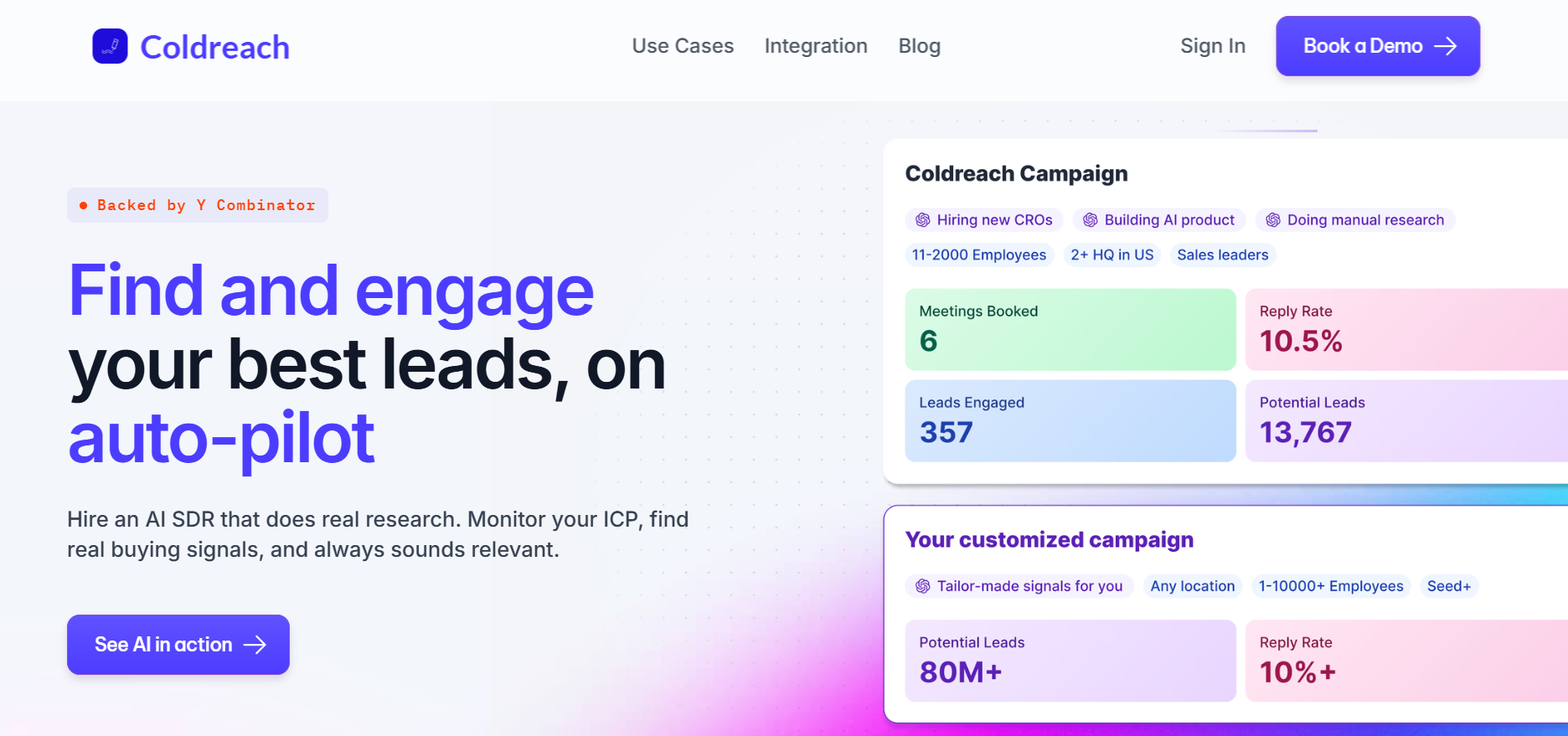
Best for: intent-based prospecting that starts with research, not a template
Where several tools on this list optimize for volume, Coldreach optimizes for relevance. It monitors 113M+ accounts and 550M+ contacts, and every outreach message opens with a specific, researched reason for contact, whether that's a hiring signal, a funding round, or a tech-stack change you define in plain English.
Where it fits: teams whose ICP is specific enough that generic AI personalization won't cut through, and who'd rather email fewer, better-targeted accounts than blast a broad list.
Worth knowing: Coldreach's self-service plans start at $899/month, scaling through Growth, Pro, and Enterprise tiers, with a fully managed done-for-you option around $3,000/month. Reported reply rates across 500,000+ emails average 3.8%, well above typical cold email baselines, though that performance depends heavily on how tightly you define your signal criteria upfront.
6) Salesforge (Agent Frank)

Best for: an AI email agent bundled with genuinely strong deliverability infrastructure
Salesforge's Agent Frank writes and sends personalized email sequences in 20+ languages, operating in either fully autonomous auto-pilot mode or an approval-based co-pilot mode. The platform includes unlimited mailboxes and free premium warmup, which is a real cost saver compared to paying for warmup separately.
Where it fits: teams that want automated outbound without the ceiling that per-mailbox or per-seat pricing puts on scaling.
Worth knowing: the core Salesforge platform starts around $48 to $96 a month, but Agent Frank itself is a separate add-on starting around $499/month for 1,000 active contacts, and infrastructure add-ons can push the real monthly spend higher. Multiple reviewers note Frank handles broad-ICP, high-volume motions well but struggles with tight, technical ICPs where nuanced copy matters more than volume.
7) Amplemarket
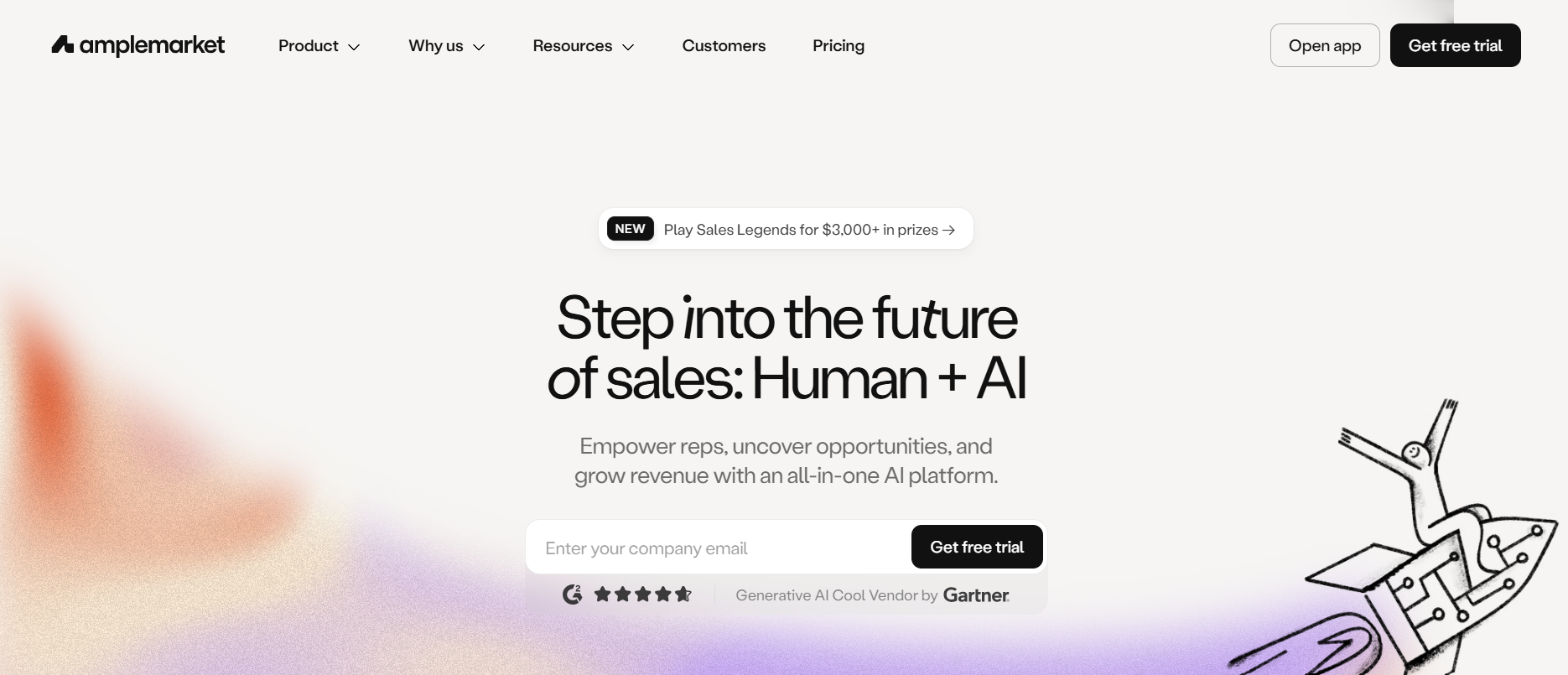
Best for: full outbound automation across email, LinkedIn, and phone in a single consolidated platform
Amplemarket's Duo Copilot suite (Signal, Research, and Sequence agents) pulls from a 200M+ verified contact database, surfaces buyer intent at the individual level rather than just the company level, and prepares multichannel sequences a rep approves before sending.
Where it fits: teams that want to replace a fragmented stack of a data provider, a sequencer, and a phone tool with one login, and are comfortable with an annual commitment.
Worth knowing: pricing starts around $600/month on annual-only contracts, with the Growth tier commonly landing between $2,000 and $5,000/month depending on team size. Users consistently praise the AI personalization quality and phone number accuracy. The most common complaint is email deliverability issues at scale, which is worth stress-testing during any trial before you sign a full-year deal.
8) Outreach
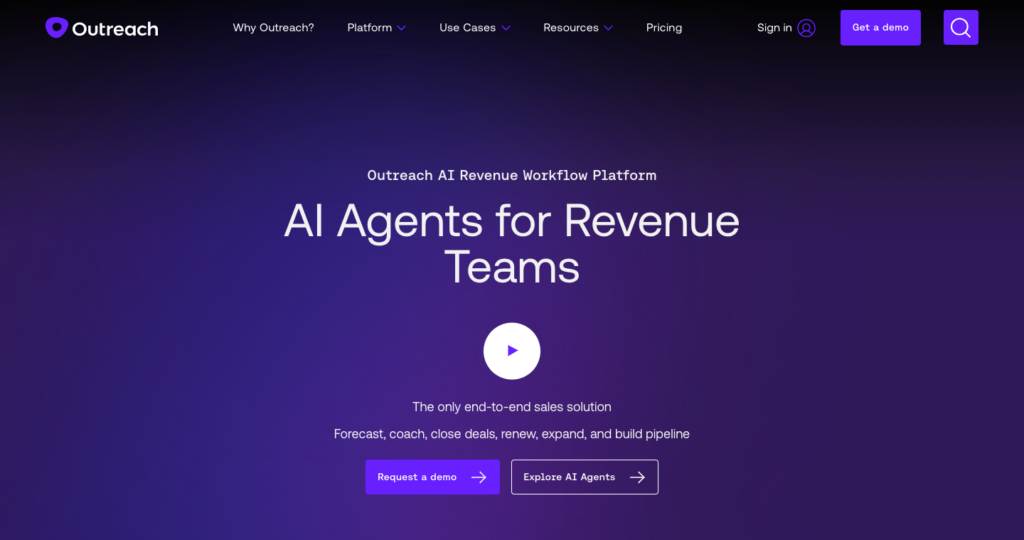
Best for: enterprise sales engagement that goes beyond top-of-funnel into deal management and forecasting
Outreach has expanded well past its original sequencing roots into a full revenue platform: multichannel sequences, conversation intelligence through Kaia, and AI-driven forecasting, all with deep, genuinely excellent Salesforce sync.
Where it fits: mid-market to enterprise teams with 50-plus reps that need a single platform spanning outbound execution through pipeline visibility.
Worth knowing: Outreach doesn't publish pricing, and industry estimates plus Vendr contract data put entry pricing around $100 to $120 per user per month, climbing past $160/user/month at the Enterprise tier, with onboarding fees commonly in the $5,000 to $15,000 range on top. It's genuinely overkill for teams under 20 reps, and Outreach has no native website visitor identification, meaning intent-driven teams will likely need to bolt on a separate signal tool regardless.
9) Nooks
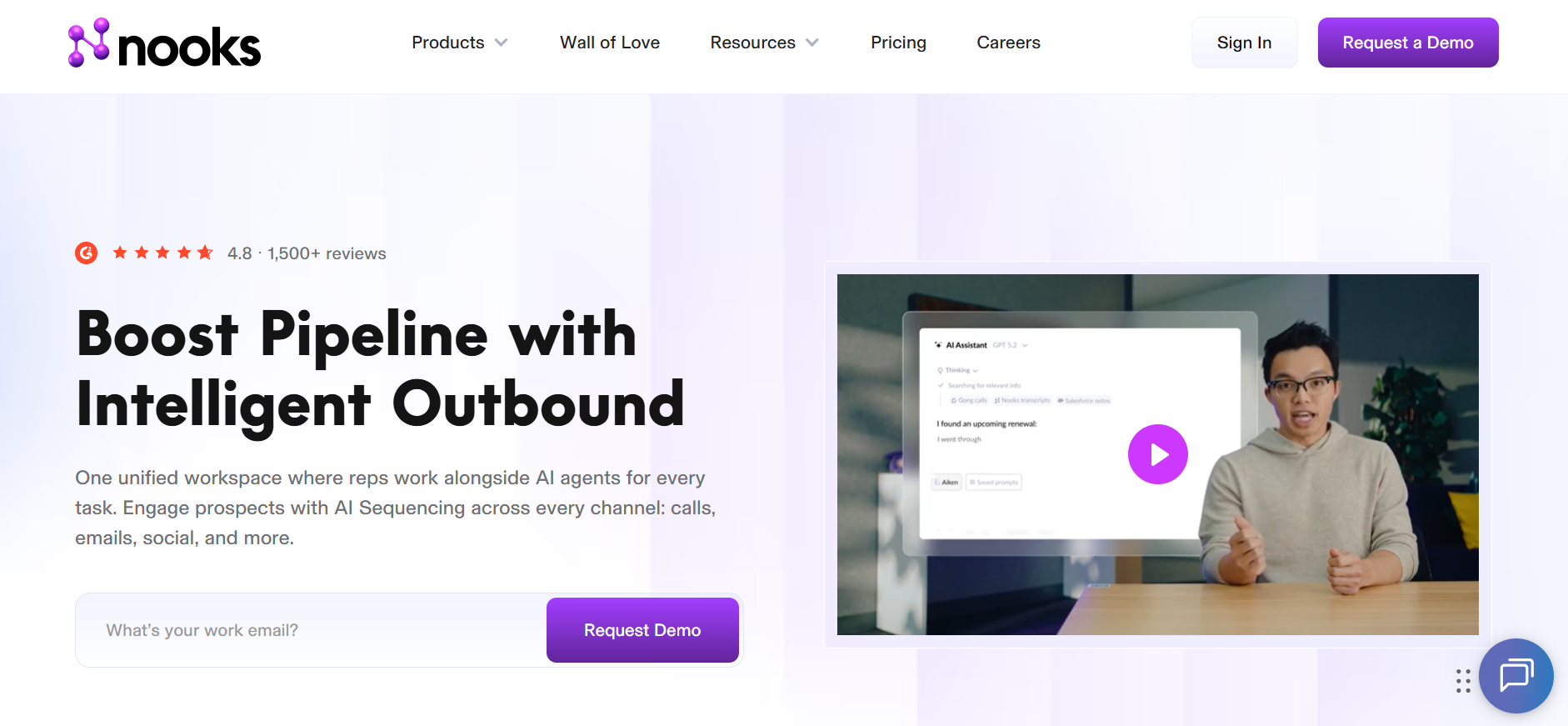
Best for: AI parallel dialing for teams where cold calling is the primary channel
Nooks lets reps dial multiple numbers simultaneously, routes the first live answer to the rep, and adds a virtual salesfloor for remote teams plus AI-powered call coaching and automatic CRM logging.
Where it fits: phone-heavy SDR teams that want to dramatically increase daily dial volume and live conversation time, and who value the coaching and culture benefits of a shared virtual floor.
Worth knowing: pricing runs around $4,000 to $5,000 per seat annually on quote-based contracts. It's the highest per-seat cost on this list for a single-channel tool, and it's worth going in eyes open: parallel dialing introduces a brief connection delay that some prospects read as a robocall, and aggressive dial volume can get phone numbers flagged faster than single-line dialing. If your motion is genuinely multichannel rather than phone-first, Nooks solves one piece of a larger puzzle, not the whole thing.
10) ZoomInfo Copilot
Best for: AI-powered prospecting layered on top of the most comprehensive B2B database available
Copilot sits on ZoomInfo's core data asset, using AI to prioritize accounts dynamically based on real-time buying signals, generate account summaries, and draft outreach grounded in actual company activity rather than inferred intent.
Where it fits: enterprise teams that already need accurate, large-scale B2B data and want an AI layer built directly on top of it, rather than stitching a separate intent tool onto a different data provider.
Worth knowing: ZoomInfo doesn't publish self-serve pricing. Copilot specifically lives at the Elite tier, which typically starts around $40,000 a year, with real-world enterprise contracts often landing between $30,000 and $100,000-plus depending on seats and credits. This is squarely an enterprise-budget tool, not a starting point for a lean team.
Free AI SDR Tools: What You Can (and Can't) Expect
Genuinely autonomous AI SDR agents are not available for free, and that's not a marketing gap, it's an infrastructure cost issue. Running AI-driven research, personalization, and sending at scale simply costs money to operate, so free tiers are built to be limited by design.
👍 What you can get for free: Apollo.io's free plan gives you real access to its full contact database with basic sequencing (capped at two active sequences) and unlimited email credits under fair-use limits. Artisan also offers a free tier with 300 credits a month, enough to test the interface and workflow before committing.
👎 What you won't get for free: fully autonomous agents, buying-intent data, multichannel automation, or serious deliverability infrastructure like dedicated warmup and inbox rotation.
Free tiers are genuinely useful for testing data quality and getting a feel for a platform's workflow. They are not built to run a real outbound campaign at volume.
If you're validating whether AI outreach works for your ICP before committing budget, Apollo's free plan is the most practical starting point on this list.
AI SDR Tools vs. Human SDRs: How to Think About the Tradeoff

This isn't really an either-or decision, and treating it that way is where most teams get the ROI math wrong.
AI SDR tools excel at: volume, consistency, speed, personalization at scale, and being available around the clock without a ramp period.
Human SDRs excel at: complex objection handling, reading tone and nuance in a live conversation, relationship-building over multiple touches, and navigating enterprise accounts with multiple stakeholders.
The 2026 data backs up a hybrid approach over full replacement. Cost per qualified opportunity fell 54% when teams paired AI with human reps, not when they eliminated humans entirely.
Bridge Group's research shows the modern SDR "pod" has shifted from four SDRs and a manager to one senior human SDR functioning as a reply specialist, two to four AI SDR seats handling volume, and a fractional RevOps role managing sequence performance and deliverability.
The practical takeaway: let AI handle top-of-funnel volume and initial engagement. Bring a human in once a real conversation starts. Teams trying to fully replace SDR headcount with an autonomous agent report the most disappointment, because even the best AI still can't read a hesitant "maybe" on a call the way a trained rep can.
How Cleverly Combines Human Expertise With Done-For-You Outbound
AI SDR tools are genuinely powerful, but every platform on this list still requires setup, ICP calibration, message testing, and ongoing optimization to actually deliver booked meetings instead of just sent emails. That's the part the demos don't show you: the tool is only as good as the strategy behind it.
That's the gap we built Cleverly to close. Instead of asking you to evaluate ten platforms, configure credit systems, and manage deliverability infrastructure yourself, we run done-for-you B2B lead generation across LinkedIn, cold email, and cold calling, combining proven outreach frameworks with real human SDR execution and hands-on campaign management.
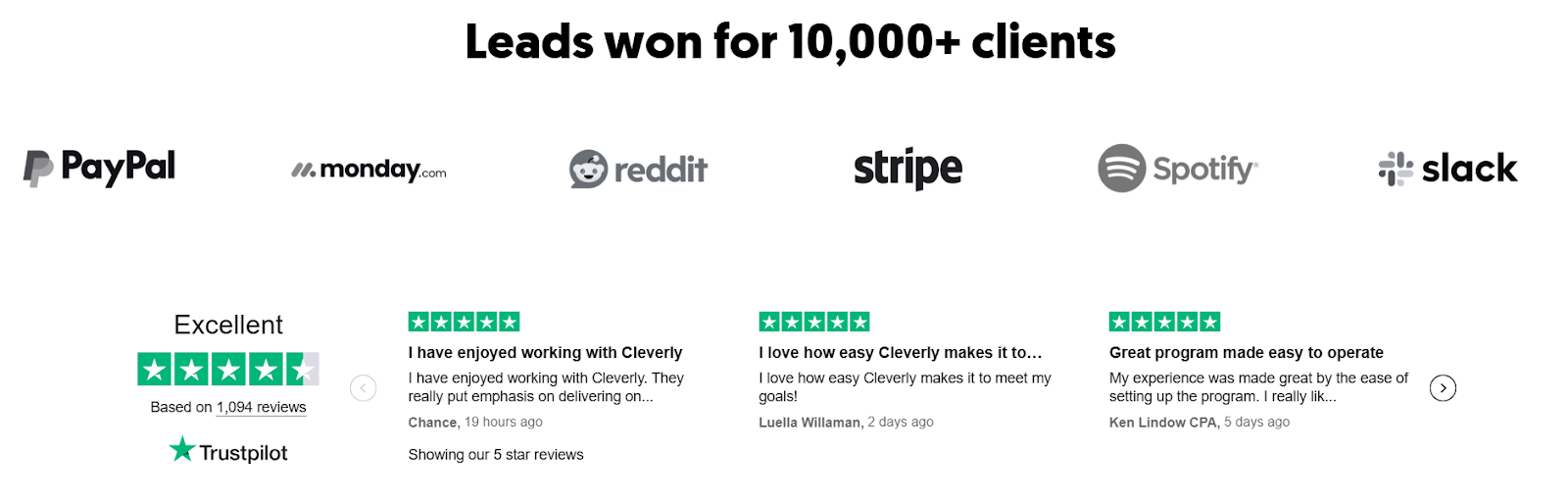
We've generated $312 million in client pipeline and helped 10,000+ B2B companies, including teams at Airbnb, DocuSign, and Loom, book qualified conversations without building or babysitting an AI SDR stack from scratch.
Where a tool like Apollo or Artisan hands you the technology and expects you to figure out the ICP, the message, and the channel mix, we bring the strategy layer that makes any tech stack actually convert: multi-layer personalization, deliverability infrastructure that's already dialed in, and real SDRs who know how to handle the reply an AI agent can't.
LinkedIn lead generation starts at $397/month with no long-term contract, and our cold email model is performance-based, meaning you pay for meeting-ready leads, not credits sitting unused in a dashboard.
Want outbound results without spending the next quarter configuring a platform? Book a strategy call with Cleverly and we'll walk through what a done-for-you setup would look like for your ICP.

Conclusion
AI SDR tools have moved from an experiment to standard infrastructure, and the real question in 2026 isn't whether to use one, it's which category actually fits your outbound motion. Fully autonomous agents like 11x and Artisan make sense for teams ready to replace top-of-funnel SDR work entirely and willing to pay enterprise prices for that autonomy.
AI-assisted tools like Apollo make more sense for teams that want to make existing reps faster without a five-figure annual commitment.
Start by naming your actual bottleneck, whether that's prospecting volume, personalization quality, or follow-up consistency, and build your stack around solving that specific problem rather than chasing the platform with the flashiest demo.
The best AI SDR tool for outbound automation is the one that reaches your buyer the way they actually respond, not the one with the longest feature list.
Frequently Asked Question
Free Resource
How to Scale a Profitable Cold Call System
Get the complete guide — download it instantly now.
Free Ebook
Download the Free Guide
Enter your details to get instant access.
You're all set! 🎉
Your ebook is downloading now.
Click below if the download didn't start automatically.