Table of Contents
What Is Client Profiling?
Why Client Profiling Is Critical for B2B Sales
Types of Client Profiles in B2B Sales
How to Build a Client Profile Step-by-Step
Client Profiling Software & Tools
Common Mistakes in Client Profiling
How Client Profiling Improves B2B Lead Generation
How Cleverly Uses Client Profiling to Improve Outreach Results
Conclusion
Frequently Asked Questions
Modified On :
September 8, 2026
Key Takeaways
- Client profiling is the foundation of any effective B2B outreach strategy, not an optional step.
- Broad targeting wastes budget; precision targeting drives real pipeline.
- A strong client profile combines firmographics, pain points, and buying signals, not just demographics.
- The best profiles are built by analyzing your existing best customers and working backwards.
- Client profiling software supports the process, but the strategic thinking has to come first.
- Profiles should be treated as living documents and updated regularly as your market evolves.
If your outreach numbers look decent but your sales pipeline feels thin, targeting is usually the problem. Most B2B teams cast a wide net, reach a lot of people, and end up with leads that go nowhere.
Sound familiar?
That's exactly where client profiling comes in.
When you know precisely who you're going after, every touchpoint, whether it's a LinkedIn message, a cold email, or a phone call, lands with a lot more relevance. And relevance is what moves people from "who is this?" to "let's talk."
In this guide, we'll walk you through what client profiling for B2B sales actually looks like in practice, how to build one, and how to use it to consistently bring in better-quality leads.
What Is Client Profiling?
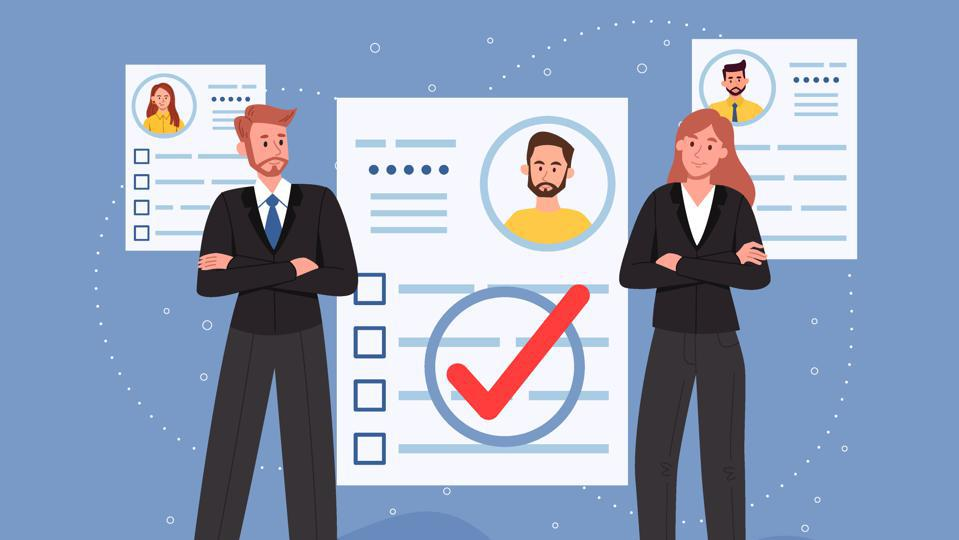
Client profiling is the process of analyzing your existing best customers to identify the specific company-level and person-level attributes that predict fit, fast close cycles, and long-term value. The output is a documented profile your sales and marketing teams use to target similar accounts from the start.
A complete client profile answers four questions:
- Who is the company? (industry, size, revenue, geography)
- Who inside the company are you reaching? (title, seniority, department)
- What problem are they trying to solve right now?
- What signals tell you they are ready to buy?
Client Profiling vs. Buyer Persona vs. ICP
These three terms get used interchangeably a lot, but they're not the same thing:
Think of it this way: Your ICP tells you which companies to target, your buyer persona tells you who to talk to, and your client profile ties it all together.
Why It Matters in B2B Sales
Without a clear client profile, your outreach is essentially a shot in the dark. You end up sending the same message to a 10-person startup and a 500-person enterprise, and neither feels like it was written for them.
When you get profiling right, everything downstream gets easier: your messaging gets sharper, your lists get cleaner, and your conversion rates go up because you're spending time on the right people instead of everyone.
Learn More: What “Good Lead Quality” Actually Means in B2B
🚀 From ICP to $312M+ in Pipeline
10,000+ companies trust Cleverly to convert precise targeting across LinkedIn, email, and phone into sales-ready meetings that close.
Why Client Profiling Is Critical for B2B Sales
Most outreach problems aren't messaging problems. They're targeting problems. And that's exactly what solid client profiling for B2B sales solves.
Here's what changes when you build your outreach around a well-defined client profile:
Reduces wasted outreach.
You stop burning time and budget on companies that were never a good fit to begin with. Every rep, every sequence, every call is pointed at someone who actually has a reason to buy.
Improves reply rates.
When your message speaks directly to someone's situation, they respond. Generic outreach gets ignored. Relevant outreach gets replies.
Increases meeting quality.
More targeted prospecting means the people who do show up on calls are actually qualified. Fewer "just browsing" conversations, more real pipeline.
Improves CAC efficiency.
When you're not wasting cycles on bad-fit accounts, your cost to acquire a customer drops. You're doing more with the same resources.
Shortens sales cycles.
Good-fit clients understand your value faster. There's less back and forth, fewer objections, and a shorter path from first touch to closed deal.
Enables account-based strategies.
ABM only works when you know exactly who you're going after. A strong client profile is the foundation that makes account-based marketing and sales actually executable.
Profiling isn't just a research exercise. It directly impacts your revenue efficiency, and skipping it is one of the most common reasons B2B outreach underperforms.
Types of Client Profiles in B2B Sales
Most B2B client profiles layer several data types together. Here is what each one covers and why it matters:
1. Firmographic profilesThe foundation. Firmographics capture company-level attributes: industry, headcount, annual revenue, geography, and org structure. This is the data that defines which companies belong on your target list.
2. Psychographic profilesThe mindset layer. Psychographics describe the values, priorities, and decision-making style of the buyer inside that company. A CFO at a risk-averse financial services firm and a CFO at a fast-growing SaaS startup may have identical firmographic profiles but completely different buying behavior. Psychographics explain the difference.
3. Behavioral profilesThe action layer. Behavioral profiles capture how a company or person has engaged with content, competitors, or solutions in your category. Attending a relevant webinar, downloading a competitor's pricing guide, or posting about a specific pain point on LinkedIn are all behavioral signals that tell you they are in-market.
4. Technographic profilesThe tech stack layer. Knowing what software a company already uses tells you a lot about their sophistication level, their existing workflow gaps, and whether they are a natural fit for your solution. A company running on spreadsheets has different needs than one already using enterprise CRM tools.
5. Needs-based profilesThe urgency layer. Needs-based profiles define the specific problem the company is actively trying to solve. This is the most predictive of timing. A company that just missed its Q1 pipeline target is not the same prospect as one running at 120% of quota, even if they look identical on paper.
The strongest B2B client profiles combine all five layers. Firmographics tell you who to target. Psychographics tell you how to message them. Behavioral, technographic, and needs-based data tell you when and why to reach out now.
B2B vs. B2C Client Profiling: Key Differences
The fundamental logic of profiling is the same in both contexts, but the data, timeline, and approach differ significantly:
This is a working profile, not a persona. It does not describe a fictional character. It describes the real-world company type and contact that Cleverly's strongest campaigns are built around.
🎯 Profile Smarter. Close Faster.
Cleverly turns ideal client profiles into pipeline using LinkedIn outreach, pay-per-meeting cold email, and guaranteed cold calling—done for you.
How to Build a Client Profile Step-by-Step
Building a strong client profile for B2B sales doesn't require a fancy framework. It just requires being honest about who your best customers actually are and working backwards from there.
Step 1: Analyze Your Best Existing Customers
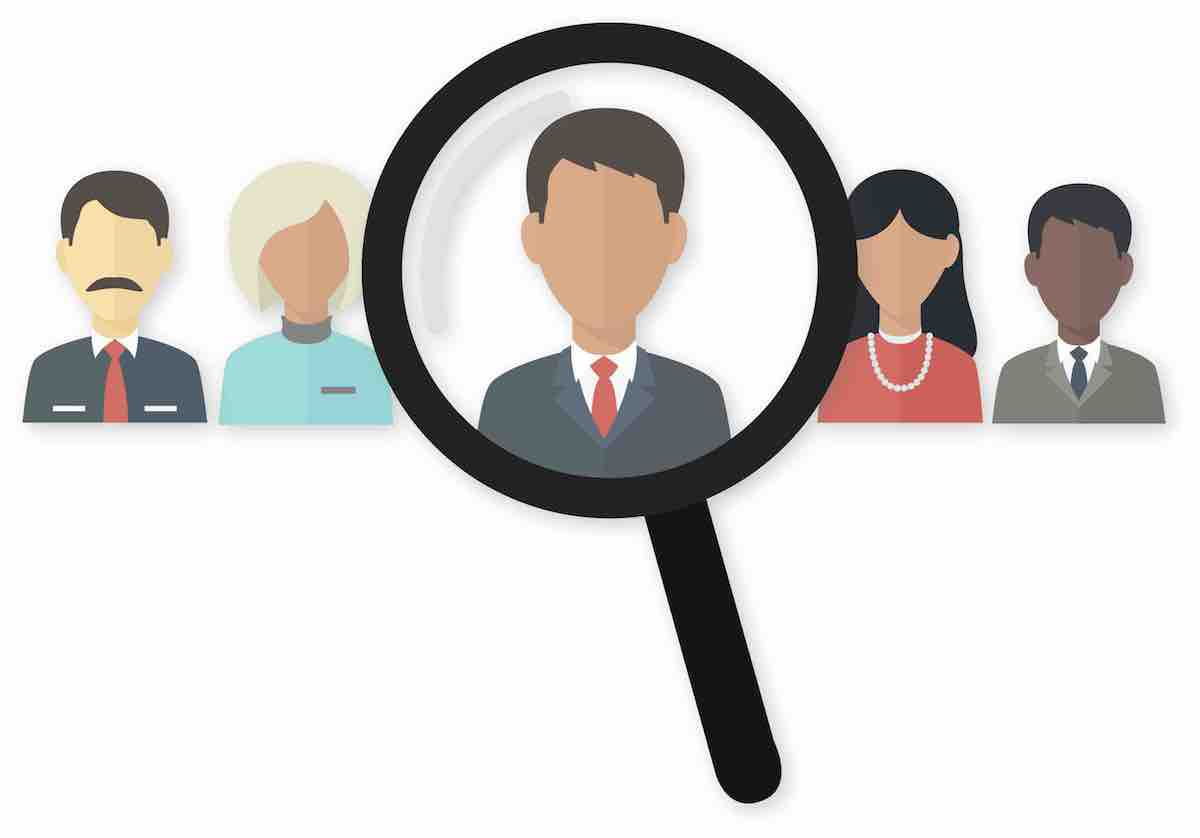
Start with your current customer base and identify who's actually working out. Look at:
- Revenue contribution – Who are your highest-value accounts?
- Sales cycle length – Which deals closed fastest with the least friction?
- Lifetime value – Who renews, expands, and sticks around?
The clients who score well across all three are your north star. Your goal is to find more people like them.
Step 2: Identify Common Attributes
Once you've shortlisted your best clients, look for patterns. What do they have in common?
- Industry – Are they clustered in specific verticals?
- Company size – Headcount range, revenue bracket?
- Role – Who was the main point of contact or decision-maker?
These shared attributes become the backbone of your client profile.
Here is what a complete B2B client profile looks like in practice:
This is a working profile, not a persona. It does not describe a fictional character. It describes the real-world company type and contact that Cleverly's strongest campaigns are built around.
Step 3: Define Their Pain Points
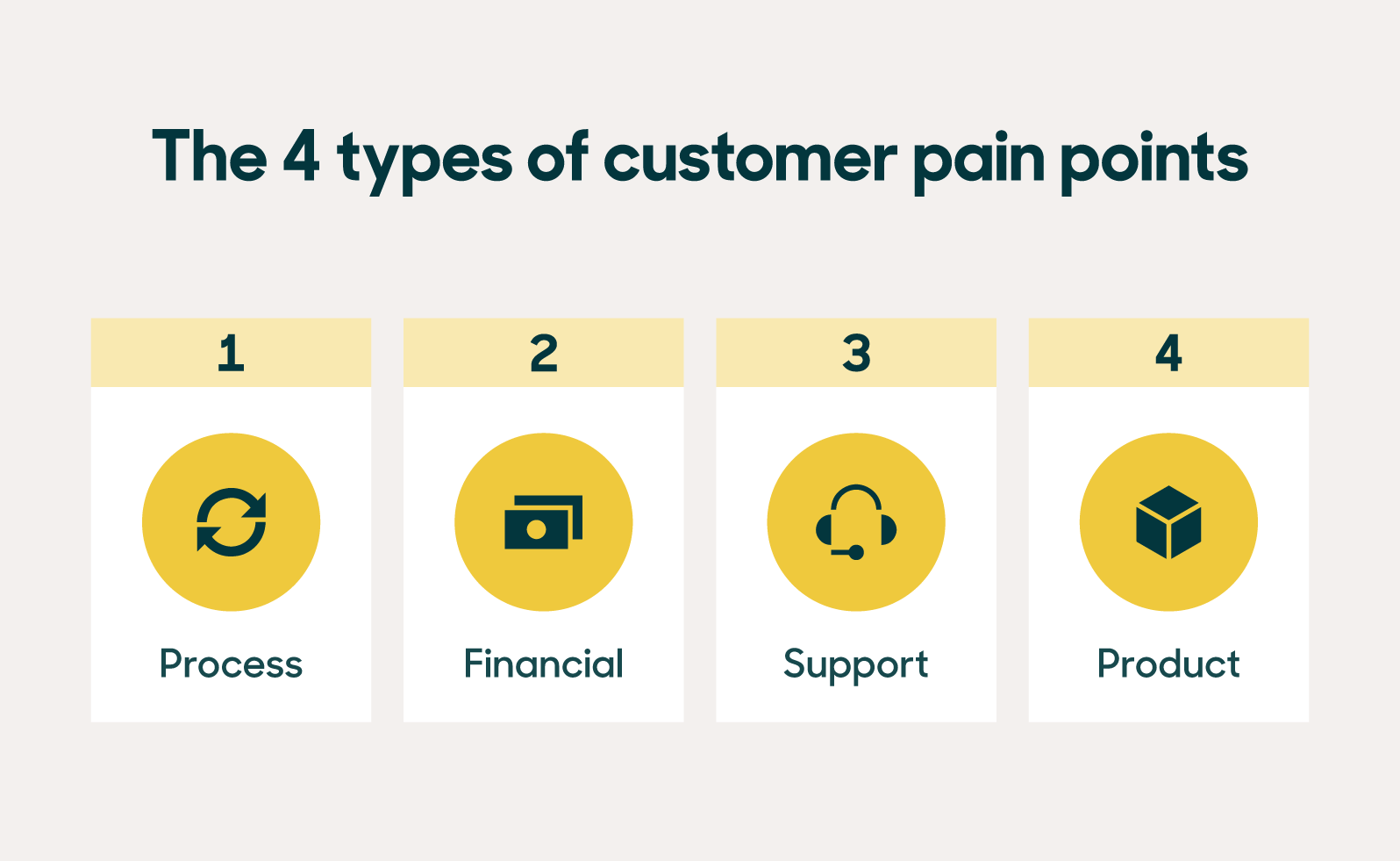
Good profiling goes beyond demographics. You need to understand what's actually keeping your best clients up at night before they found you. Pain points usually fall into three buckets:
- Operational – Inefficient processes, team bandwidth issues, tool gaps
- Revenue-related – Inconsistent pipeline, low conversion rates, high churn
- Strategic – Scaling challenges, entering new markets, competitive pressure
The more specific you get here, the more your outreach will resonate.
Step 4: Identify Buying Signals
Not every company that fits your profile is ready to buy right now. Buying signals help you prioritize. Common ones in B2B include:
- Recent funding or headcount growth
- A new hire in a relevant leadership role
- Job postings that signal a pain point you solve
- Technology changes or recent tool adoption
These signals tell you who's in-market, so you can reach out at the right moment.
Step 5: Define Your Exclusions
This step gets skipped a lot, but it's just as important. A good client profile should also tell you who you're NOT targeting. Think about:
- Company sizes that historically churn or never close
- Industries where your product is a poor fit
- Roles that lack budget authority or decision-making power
Exclusions keep your lists clean and save your team from chasing deals that were never going to close.
Also Check: Appointment Setting Best Practices
Client Profiling Software & Tools

The right client profiling software makes the process faster and more accurate, but it's worth understanding what each category actually does before you go tool shopping.
Here are the most commonly used client profiling tools in B2B sales, organized by function:
No single tool covers everything. Most B2B teams combine a CRM (to track what you know) with a sales intelligence or enrichment tool (to fill in what you do not know) and an intent platform (to surface who is active right now). Start with the category that has the biggest gap in your current workflow, not the most feature-rich option.
That said, no tool replaces the thinking that has to happen first. Client profiling software works best when you already know what you're looking for. If your profile is vague going in, the tools will just help you reach the wrong people faster.
How AI Improves Client Profiling in 2026
AI does not replace the strategic thinking behind a strong client profile. It speeds up the data work that used to take hours.
List enrichment at scale. AI-powered enrichment tools can take a raw list of company names and automatically pull firmographic data, contact information, technographic data, and recent news or signals for each account. What used to take a researcher two hours per account now takes seconds.
Pattern recognition across closed-won deals. AI tools integrated with your CRM can analyze which accounts in your pipeline share attributes and surface patterns you would not spot manually. If your fastest-closing deals all share three firmographic traits you had not weighted heavily, AI can tell you that.
Intent signal monitoring. AI-backed intent platforms track behavioral signals across the web and flag accounts that are actively researching your category. This makes your profile dynamic: instead of a static list, you have a live feed of which best-fit accounts are ready to hear from you right now.
Automated profile scoring. Once your profile is defined, AI can score every new lead or prospect against it in real time, so your reps only spend time on accounts that actually fit. This is where profiling stops being a research exercise and starts being a revenue operation.
More Tools: 10 Sales Intelligence Tools B2B Teams Actually Use to Close More Deals
Common Mistakes in Client Profiling
Even teams that do client profiling still get it wrong in a few predictable ways. Here's what to watch out for:
❌ Being too broad.
"Any company with a sales team" is not a profile. The broader your definition, the harder it is to write messaging that resonates with anyone specifically. Narrow down until it feels almost too specific, that's usually about right.
❌ Profiling only on demographics.
Firmographics like industry and company size are a starting point, not the finish line. If you're not also capturing pain points, triggers, and buying behavior, your profile is incomplete.
❌ Ignoring deal profitability.
A client that closed fast isn't always your best client. If they churned in 90 days or required constant hand-holding, they shouldn't be shaping your profile. Factor in lifetime value and margin, not just acquisition ease.
❌ Not updating profiles over time.
Markets shift, your product evolves, and the clients who were a great fit two years ago may not be today. Your client profile should be a living document, not a one-time exercise.
❌ Treating all leads equally.
Not every lead that fits your profile is equally ready or equally valuable. Prioritize based on buying signals, fit score, and potential deal size rather than working every lead the same way.
Getting these wrong doesn't just hurt your outreach, it affects your entire pipeline from top to bottom.
How Client Profiling Improves B2B Lead Generation
What Is Lead Profiling?
Lead profiling is the application of your client profile to inbound leads. Where client profiling defines who you want to go after, lead profiling uses that same criteria to score and qualify the leads that come in.
When someone fills out a form, books a call, or replies to outreach, lead profiling answers the question: does this person and this company actually match the profile we built? It filters for fit before your sales team spends time on a discovery call, which is why well-profiled pipelines tend to have higher meeting-to-close rates than pipelines built purely on volume.
There's a direct line between how well you profile and how well your outreach performs. It's not complicated, it just requires getting the order of operations right.
Better client profiling means your lists are built around companies and people who actually have a reason to respond. That precision is what drives higher reply rates because your message doesn't feel random, it feels relevant.
Higher reply rates naturally lead to better meetings. When the right people are responding, you're not spending half your calls figuring out if there's even a fit. The lead qualification work is already done before the call happens.
Better meetings mean a lower cost to acquire a customer. You're closing faster, with less back and forth, because everyone in the room belongs there.
There's also a less talked about benefit: profiling reduces outbound fatigue. When your reps are working a focused, well-defined list instead of blasting everyone, they stay sharper, their messaging stays tighter, and the whole motion is more sustainable.
This is exactly why the best B2B lead generation agencies lead with profiling before anything else. Volume without targeting is just noise. Profiling is what turns outbound into a repeatable, efficient system.
How Cleverly Uses Client Profiling to Improve Outreach Results
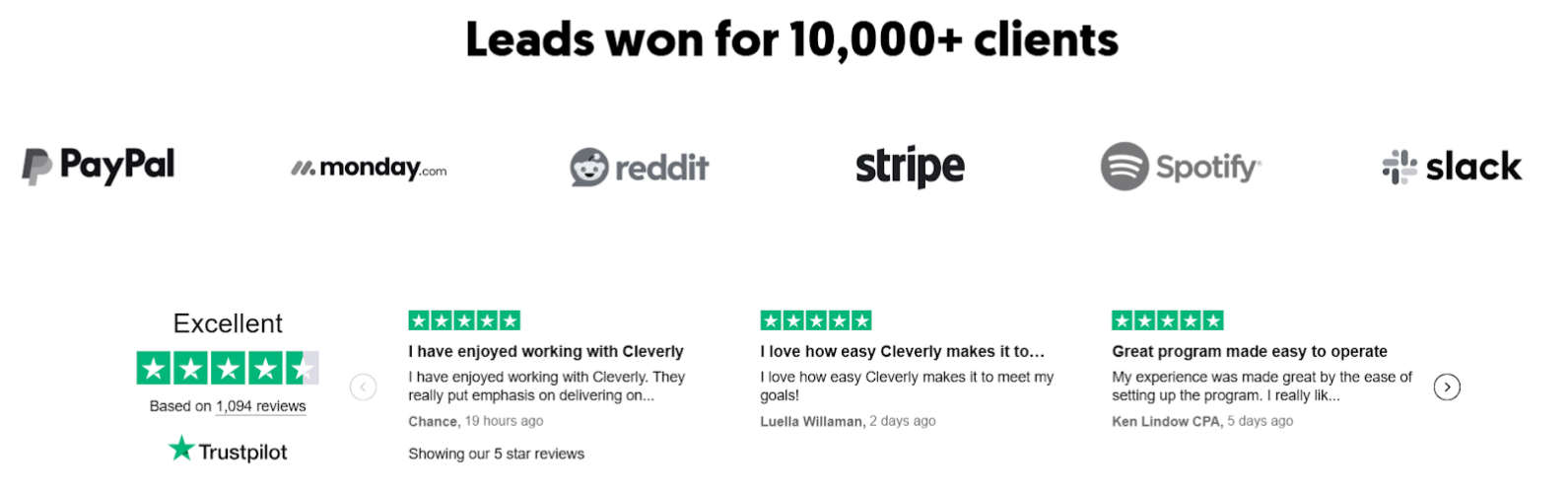
We've run outbound campaigns for 10,000+ clients across companies like Amazon, Google, Uber, PayPal, Slack, and Spotify. One thing that's always been true: the campaigns that perform best start with a clearly defined client profile, not a big list.
As a B2B lead generation agency, here's how we approach it:
- ICP-first targeting before a single message goes out.
- Data-driven list building based on firmographic and behavioral fit.
- Role-based personalization so messaging speaks directly to the person receiving it.
- Continuous refinement based on meeting quality, not just volume.
- Focus on qualified pipeline so your team is spending time on real opportunities.
We do this across LinkedIn outreach starting at just $397/month, cold email where you only pay for meeting-ready leads, and our cold calling system that books 10 to 30 qualified sales calls every month, guaranteed.
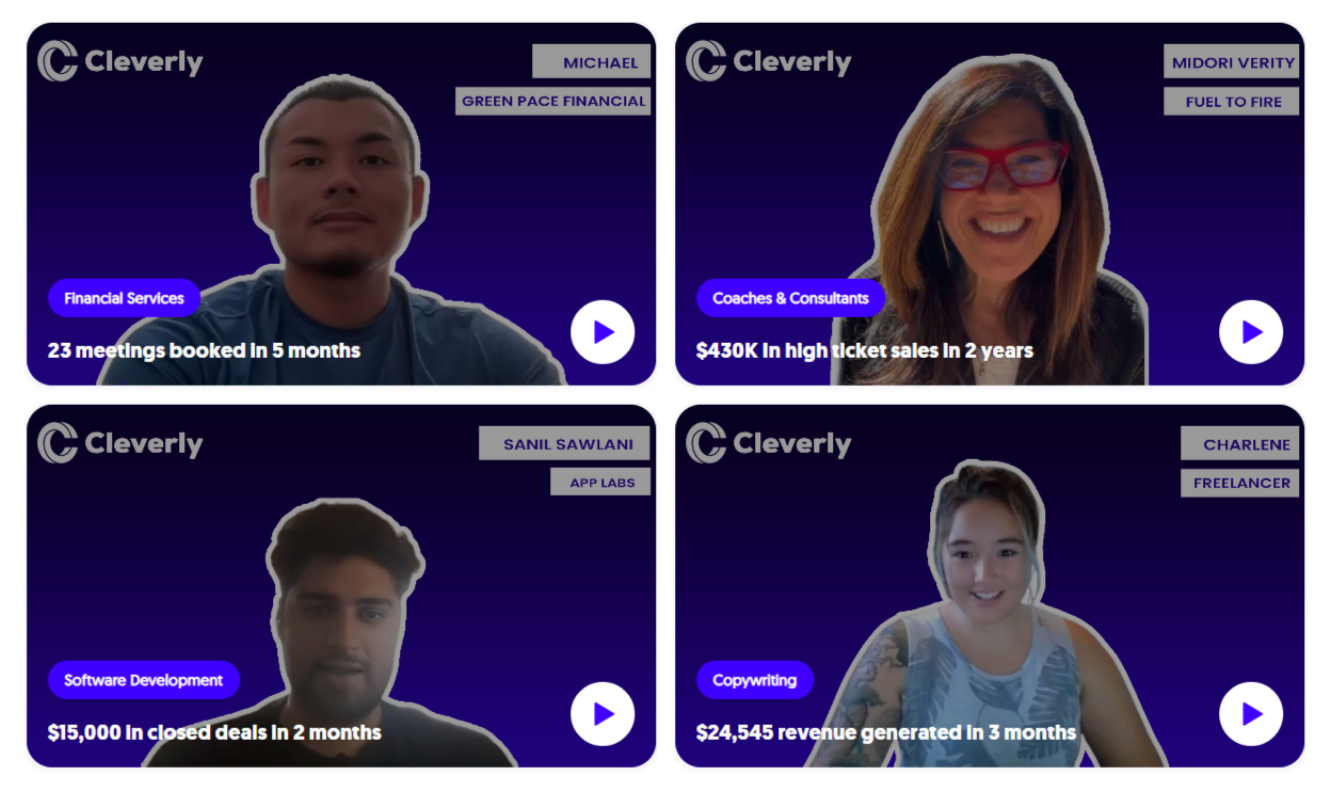
If your outreach feels inconsistent or your meetings aren't converting the way they should, your client profile is probably the first thing worth looking at. We can help you fix that.
Talk to us today and let's build your outreach around the right targets from day one.
Conclusion
Client profiling isn't a one-time setup task, it's the foundation your entire outbound strategy sits on. When you know exactly who you're targeting, your messaging gets sharper, your meetings get better, and your pipeline becomes a lot more predictable.
The teams that consistently grow in B2B aren't just doing more outreach, they're doing more precise outreach. Get your profile right, keep refining it, and everything else gets easier.
Frequently Asked Questions
Free Resource
How to Scale a Profitable Cold Call System
Get the complete guide — download it instantly now.
Free Ebook
Download the Free Guide
Enter your details to get instant access.
You're all set! 🎉
Your ebook is downloading now.
Click below if the download didn't start automatically.