Table of Contents
What Are Account-Based Marketing Tools?
How Account-Based Marketing Tools Support the B2B Sales Funnel
Key Features to Look for in Account-Based Marketing Tools
8 Best Account-Based Marketing Tools for B2B Companies
How to Choose the Right Account-Based Marketing Tool for Your Team
How Account-Based Marketing Tools Sync with Sales Pipelines
How Cleverly Executes Account-Based Marketing Without Tool Overload
Conclusion
Frequently Asked Questions
Modified On :
October 7, 2026
Key Takeaways
- Account based marketing tools work best when paired with a clear ICP and coordinated sales and marketing strategy.
- Enterprise platforms like Demandbase and 6sense offer deep intelligence but require significant budget and implementation resources.
- SDR-focused tools like Apollo and Sales Navigator are essential for prospecting and multi-channel outreach at scale.
- Always choose tools that sync seamlessly with your CRM so account engagement data lives where your sales team actually works.
- Start with lighter tools and prove your ABM strategy works before investing in expensive enterprise platforms.
- ABM success comes from focus and execution, not from having the most features or the biggest tech stack
If you're still doing spray-and-pray outreach in 2026, you're burning budget and losing deals to competitors who've figured out something better.
Account based marketing tools have gone from being a luxury for enterprise teams to a must-have for any B2B company serious about growth.
Why? Because decision-makers are drowning in generic pitches. They've learned to ignore anything that doesn't feel relevant to their specific business.
What we see every day: sending 10,000 cold emails might get you meetings, but targeting 100 high-fit accounts with personalized outreach gets you better meetings with people who actually have budget and authority.
But here's where most teams mess up.
They buy expensive ABM software, plug in their target accounts, and wonder why nothing changes. The best account based marketing tools don't work in isolation. You need:
- A tight ICP so you're going after accounts that actually fit
- SDRs who can turn account intelligence into real conversations
- A strategy that connects your tools to actual pipeline, not just vanity metrics
The tools we're covering today are the ones actually moving the needle for B2B account based marketing. But remember, software is just the starting point. What separates companies booking 30 qualified calls a month from those struggling to get 5 isn't the tools themselves. It's how you use them.
Let's get into it.
What Are Account-Based Marketing Tools?
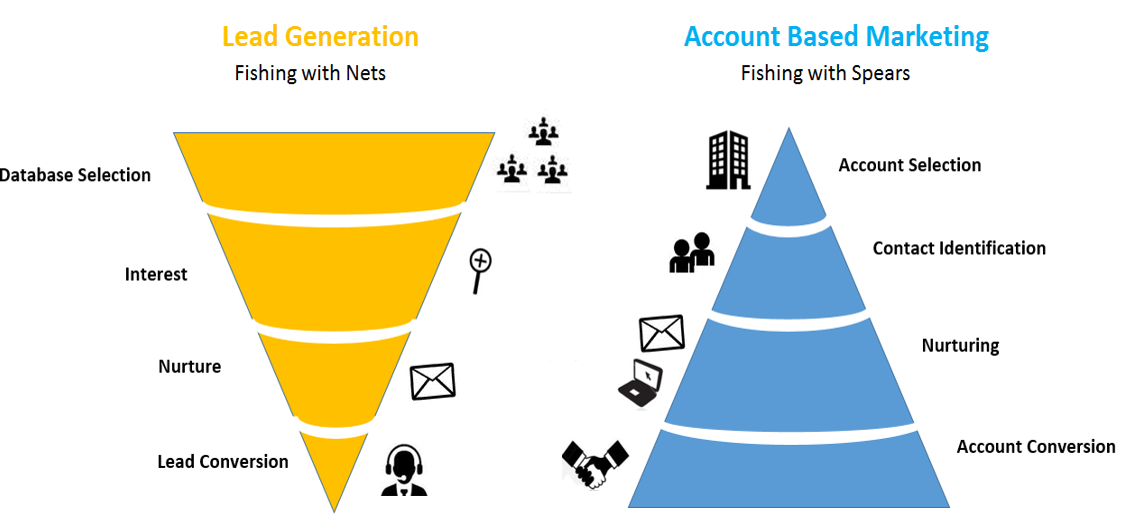
Account based marketing tools help you focus your outreach on specific companies instead of blasting everyone in your database.
Take it this way - traditional marketing casts a wide net and hopes someone bites. ABM flips that. You pick 50 or 500 target accounts, then coordinate your entire sales and marketing effort around those specific companies.
How account based marketing tools are different from your standard marketing automation:
- Traditional tools score individual leads and send mass campaigns.
- ABM tools track engagement at the account level and coordinate multi-channel touchpoints across decision-makers.
What do these tools actually do? Four main things:
- Targeting: Identify and prioritize which accounts match your ICP
- Orchestration: Coordinate outreach across email, LinkedIn, ads, and calls
- Personalization: Tailor messaging based on company-specific insights
- Measurement: Track account engagement, not just individual clicks
In modern B2B sales, ABM sits right between marketing and sales. Marketing uses these tools to warm up accounts. SDRs use the same data to have smarter conversations.
When both teams work from the same account list with the same intelligence, you stop wasting time on prospects who'll never close.
Also Check: How to Use LinkedIn for Account-Based Marketing
🚀 Turn Target Accounts Into Meetings
Skip expensive ABM platforms. We deliver meeting-ready leads from your ideal accounts—you only pay when conversations happen.
How Account-Based Marketing Tools Support the B2B Sales Funnel
B2B account based marketing tools don't just help you find accounts. They help you actually close them.
Identifying and prioritizing high-value accounts
Most teams waste months chasing accounts that were never going to buy. Good ABM tools fix this by scoring accounts based on firmographics, technographics, and intent signals.
You end up with a focused list of companies that actually match your ICP, instead of a bloated CRM full of junk leads.

Mapping buying committees
B2B deals don't close because one person likes your product. They close when you've reached the VP, the director using it daily, and the CFO signing the check.
Account based marketing tools show you who these people are at each target account so your SDRs aren't just hitting the same gatekeeper over and over.
Coordinating outreach across teams
Here's where most companies fall apart. Marketing runs LinkedIn ads to an account while sales has no idea. An SDR cold calls while marketing just sent an email.
ABM tools sync everything so your sales and marketing teams actually work together instead of stepping on each other's toes.
Tracking what actually matters
Forget open rates and click-throughs. Tools that sync account-based marketing data with sales pipelines show you real engagement.
Are multiple stakeholders from your target account visiting your pricing page? Did three people from the same company download your case study? That's the signal your SDRs need to strike while the account is warm.
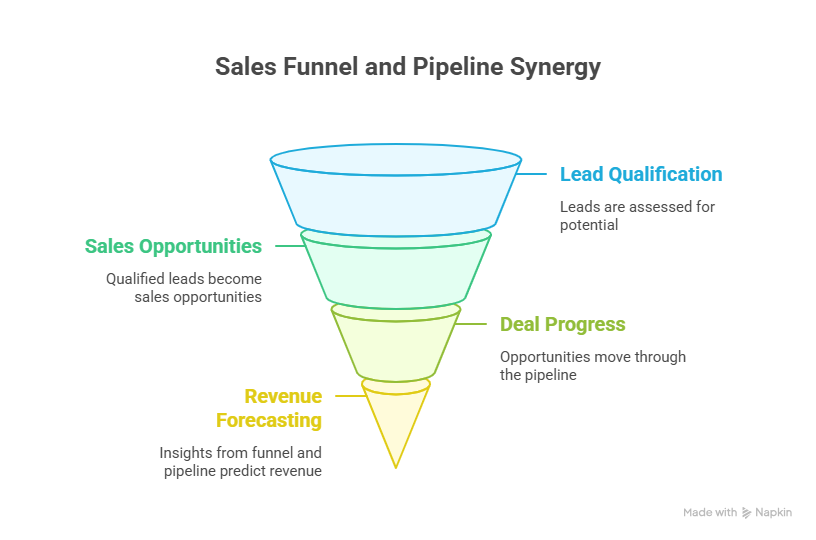
When you connect these dots, you're not just generating activity. You're building a pipeline with accounts that close.
Learn More: B2B Sales KPIs Every Revenue Team Should Track
Key Features to Look for in Account-Based Marketing Tools
Not all ABM platforms are built the same. The most effective account based marketing tools have these features baked in.
Account-level data enrichment and intent signals
You need tools that tell you which accounts are actually in-market. Look for platforms that surface technographic data, funding rounds, hiring patterns, and content consumption. When an account starts researching solutions like yours, you want to know before your competitors do.
CRM and sales pipeline sync
If your ABM tool doesn't talk to your CRM, you're creating more work, not less. Tools that sync account-based marketing data with sales pipelines automatically update account status, log engagement, and flag hot accounts for your SDRs. No manual exports. No data sitting in silos.
Multi-channel orchestration
ABM isn't just email. The best account based marketing tools for sdr teams let you coordinate LinkedIn outreach, cold calling, personalized ads, and email sequences from one place. Your SDR sees that marketing ran ads to an account, so they know to reference that in their cold call.
Role-based visibility
Marketing needs to see campaign performance. SDRs need talking points and contact info. AEs need deal context. Good ABM tools give each team the view they actually need without overwhelming them with irrelevant data.
Reporting that ties to revenue
Clicks and impressions don't pay the bills. Look for tools that report on account progression, pipeline influenced, and closed-won revenue by account. You should be able to answer: "Which accounts moved from cold to meeting-booked this month?" and "What was our ABM-sourced pipeline this quarter?"
If a tool checks these boxes, it's worth testing. If it doesn't, keep looking.
Explore More: Best Prospecting Tools for B2B Sales Teams (Free & Paid)
Account-Based Marketing Tools at a Glance
Before you read eight full reviews, here's the short version.
Pick Your Tool by Use Case
- Full-stack enterprise ABM: Demandbase or 6sense
- Ad-driven mid-market ABM: RollWorks or Terminus
- SDR-led outbound: Apollo.io + LinkedIn Sales Navigator
- Already living in HubSpot: HubSpot's native ABM tools
- Budget-first starter: Apollo's free tier paired with Sales Navigator Core
What to Stack Together
Most teams don't run one tool. They run a small stack sized to their team.
- Solo SDR stack: Sales Navigator + Apollo.io. Enough intelligence and volume to run targeted outbound without a marketing budget attached.
- 5-person sales team stack: Sales Navigator + Apollo.io + RollWorks. Adds a light advertising layer so accounts get warmed before your reps call.
- 20-person RevOps stack: 6sense or Demandbase + Sales Navigator + a CRM-native sync. At this size, the intelligence platform earns its cost because enough reps are acting on the signal daily.
Avoid This Mistake
Don't buy Demandbase, 6sense, or Terminus before you have a defined ICP, an actual target account list, and an outreach motion that's already booking some meetings. These platforms amplify a strategy that's working. They don't build one from scratch. Teams that skip this step usually spend three months in implementation and still can't answer "which accounts moved this quarter."
🔥 ABM Without the Tool Overload
Cleverly executes true ABM using LinkedIn, cold email, and cold calling—targeting real decision-makers, not just accounts.
8 Best Account-Based Marketing Tools for B2B Companies
We've organized these best account based marketing tools for SDR teams by what they actually help you do, not by which ones have the biggest marketing budget.
1. Demandbase
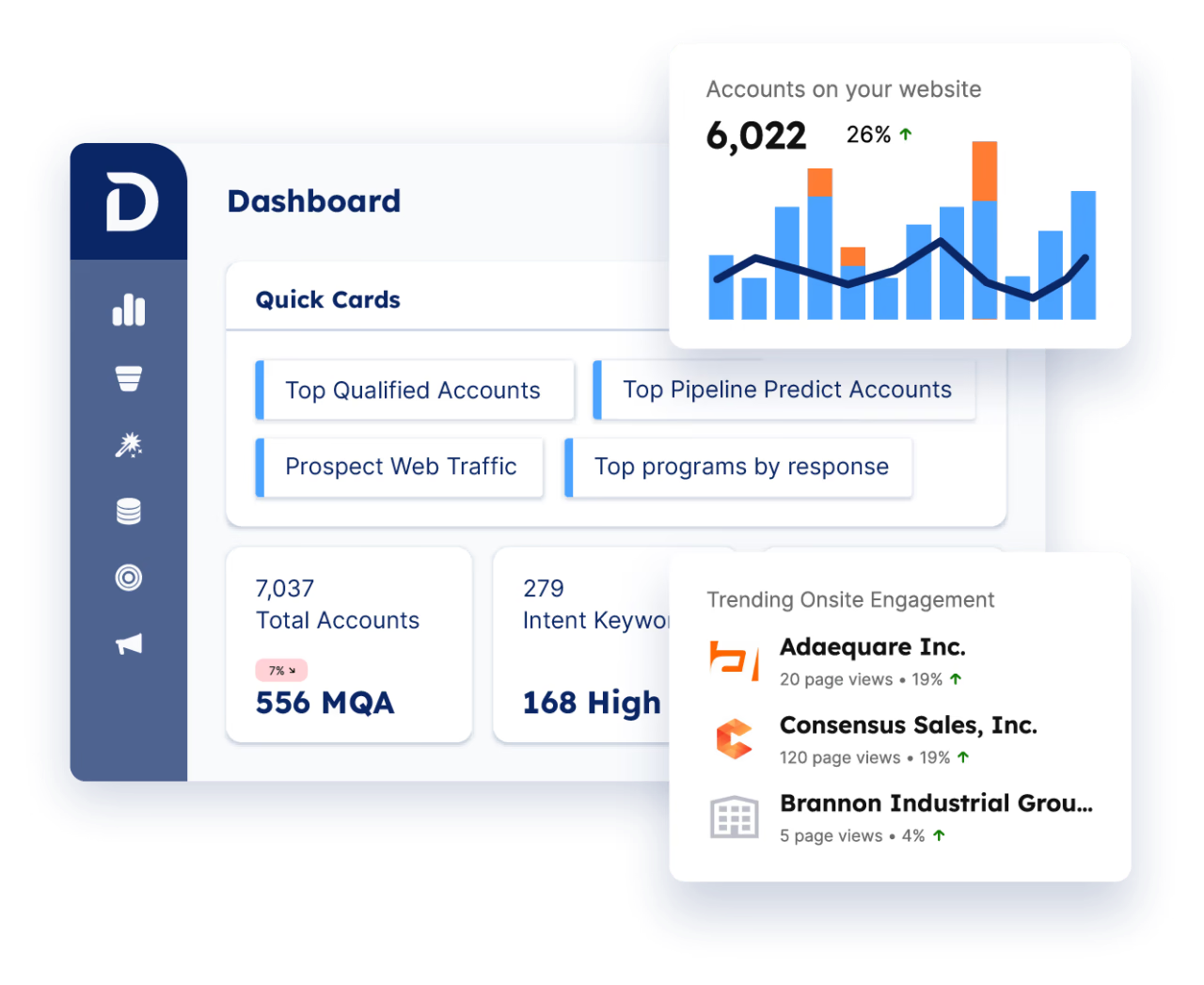
Demandbase is the enterprise-grade option when you need everything under one roof. It's built for companies running serious ABM programs where sales and marketing need to work off the same playbook.
What makes it stand out is the depth of account intelligence. You're not just getting contact data. You're seeing which accounts are in-market right now, what they're researching, and how to reach every person in the buying committee.
Core Features:
- AI-powered account identification that finds and scores your best-fit targets.
- Intent data monitoring to catch accounts actively researching solutions.
- Native B2B ad platform for personalized display campaigns.
- Website personalization that adapts content for specific visiting accounts.
- Sales alerts delivered directly to Slack or email when accounts engage.
- Cross-channel orchestration across ads, email, and sales touchpoints.
- Account-level analytics tied to pipeline and revenue.
- Deep CRM integration with Salesforce, HubSpot, and marketing automation platforms.
Best For: Mid-market to enterprise B2B companies with complex sales cycles, deal sizes over $50K, and dedicated ABM teams that need a full-stack solution.
Pricing: Custom enterprise pricing based on company size, number of accounts, and features. Expect to budget significantly for both platform fees and per-user costs.
2. 6sense
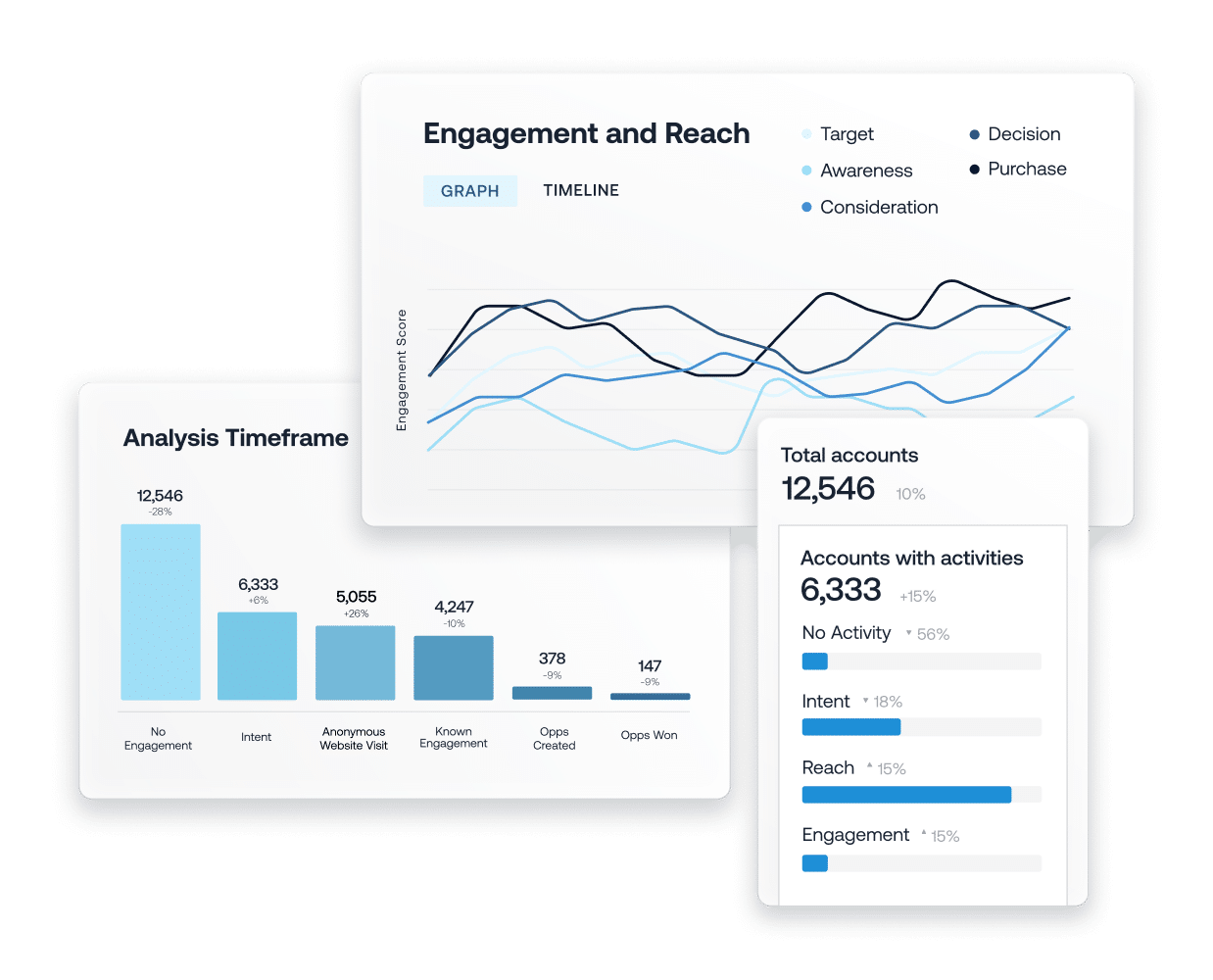
6sense is all about uncovering the "dark funnel." Most of your buyers are researching anonymously long before they ever talk to sales. This platform shines a light on that hidden activity.
The predictive AI is what sets it apart. Instead of reacting to form fills, you're getting ahead of accounts while they're still in research mode. Your SDRs know which accounts to call and exactly when to reach out.
Core Features:
- Anonymous visitor identification to see which companies are on your site before they convert.
- Buyer intent data tracking billions of third-party signals across the web.
- Predictive account scoring based on likelihood to buy.
- Multi-channel orchestration across email, ads, social, and sales outreach.
- Real-time sales alerts with "next best actions" pushed to your CRM or sales engagement tool.
- Dynamic website personalization based on account stage.
- Revenue analytics that measure pipeline influence and account progression.
- Native integration with Salesforce, HubSpot, Marketo, and sales engagement platforms.
Best For: Mid-market to enterprise B2B companies with long sales cycles that need to identify demand before competitors do. Works best with dedicated ABM and ops teams.
Pricing: Custom enterprise pricing based on users, features, and data volume. There's a free plan with basic sales intelligence and limited monthly credits for smaller teams testing the waters.
3. Terminus
Terminus is built for teams that want to run coordinated plays across every channel without juggling five different tools. It's the control center for your entire ABM motion.
What we like is how it bridges the gap between marketing running ads and SDRs making calls. Everyone sees the same account engagement data, so your outreach actually feels coordinated instead of random.
Core Features:
- Account identification using first-party data and third-party intent signals from Bombora.
- Multi-channel orchestration across display ads, LinkedIn, web personalization, chat, and email.
- Real-time sales alerts showing which accounts are engaging and where.
- Attribution and ROI measurement connecting campaigns directly to pipeline.
- Dynamic website personalization and email banners tailored to specific accounts.
- Tight CRM integration with Salesforce and HubSpot for unified workflows.
Best For: Mid-market and enterprise B2B companies with high deal values and defined target account lists. Best when sales and marketing are ready to work off the same playbook.
Pricing: Custom pricing based on which modules you need, account database size, and usage volume. No public pricing available.
4. HubSpot
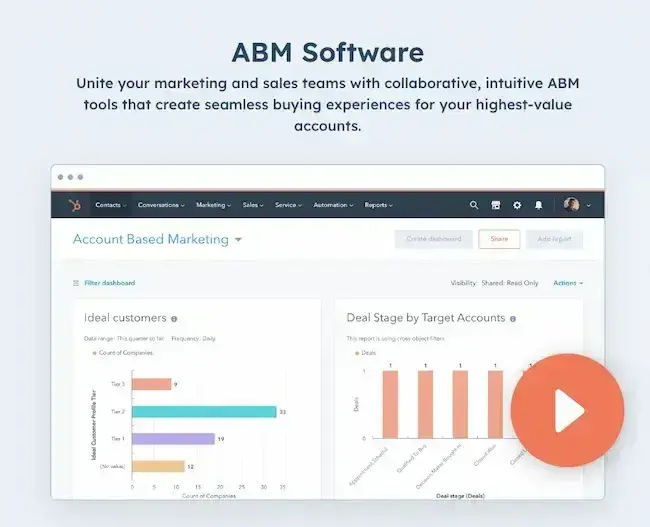
If you're already living in HubSpot, you don't need to rip and replace everything to start doing ABM. Their built-in capabilities let you shift from lead-based to account-based without adding another login.
It's not as deep as standalone ABM platforms, but for teams that want to test ABM or run lighter programs, it gets the job done without the enterprise price tag.
Core Features:
- Target account identification using firmographic, technographic, and AI-powered recommendations.
- ICP tiering and company scoring to prioritize your best-fit accounts.
- Buying role assignment to track decision-makers, influencers, and champions.
- Centralized account dashboard showing all activity, deals, and contacts in one view.
- Personalized content across emails, landing pages, and website using smart content.
- Multi-channel campaigns synced with LinkedIn and Google Ads for coordinated targeting.
- Workflow automation for lead handoffs and sales alerts on high-engagement accounts.
- ABM reporting dashboards measuring engagement, pipeline velocity, and revenue impact.
Best For: B2B companies already using HubSpot that want to layer ABM into their existing workflows without adding complex new tools. Works well for teams with deal sizes over $20K.
Pricing: ABM features included in Professional and Enterprise tiers. Marketing Hub Professional starts at $890/month (includes 3 seats, 2,000 contacts), Sales Hub Professional at $90/seat/month. Onboarding fees apply ($3,000 for Marketing Hub Pro, $1,500 for Sales Hub Pro).
5. LinkedIn Sales Navigator
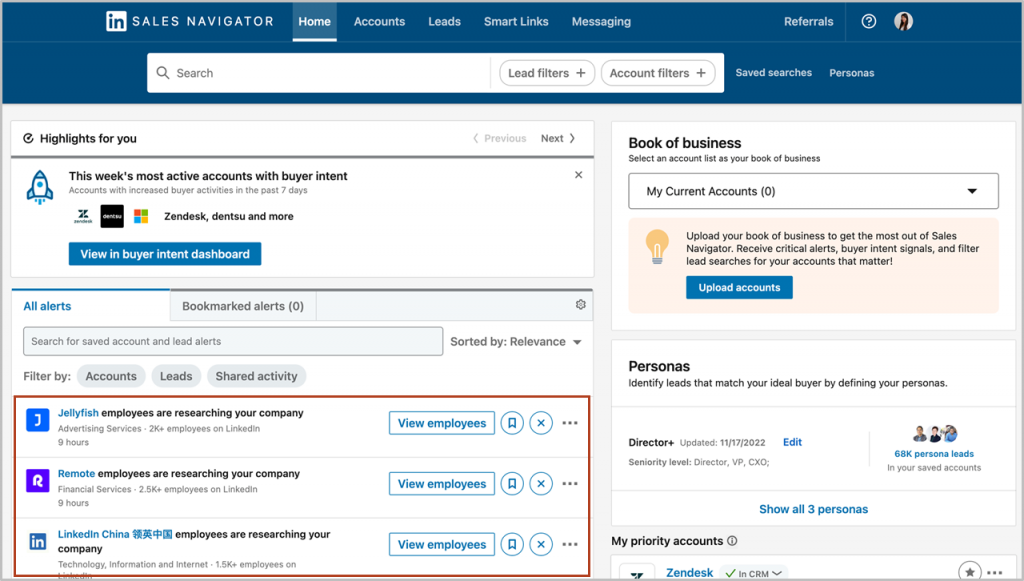
Sales Navigator isn't technically an ABM platform, but it's become essential infrastructure for any account based marketing tools stack. If you're doing outbound to enterprise accounts, this is where you find and reach decision-makers.
The real value is the intelligence layer. You see org charts, job changes, and company news in real-time. Your SDRs can personalize outreach based on what's actually happening at the account, not generic templates.
Core Features:
- Advanced search with 50+ filters to find exact decision-makers at target accounts.
- Real-time alerts on job changes, promotions, and company news.
- Custom account and lead lists for organized tracking.
- InMail messaging to reach prospects outside your network.
- TeamLink to leverage your team's connections for warm introductions.
- Buyer intent signals showing which accounts are researching your solution.
- CRM integration on Advanced Plus to sync data with Salesforce or HubSpot.
Best For: B2B sales teams and SDRs doing targeted outreach to enterprise accounts with complex buying committees. Essential for the best account based marketing tools for sdr workflows.
Pricing: Core plan at ~$99.99/month ($79.99/month annually) for individual sellers. Advanced at ~$159.99/month ($139.99/month annually) for team collaboration. Advanced Plus starts around $1,600/seat/year with custom enterprise pricing for CRM integration.
6. RollWorks (AdRoll ABM)
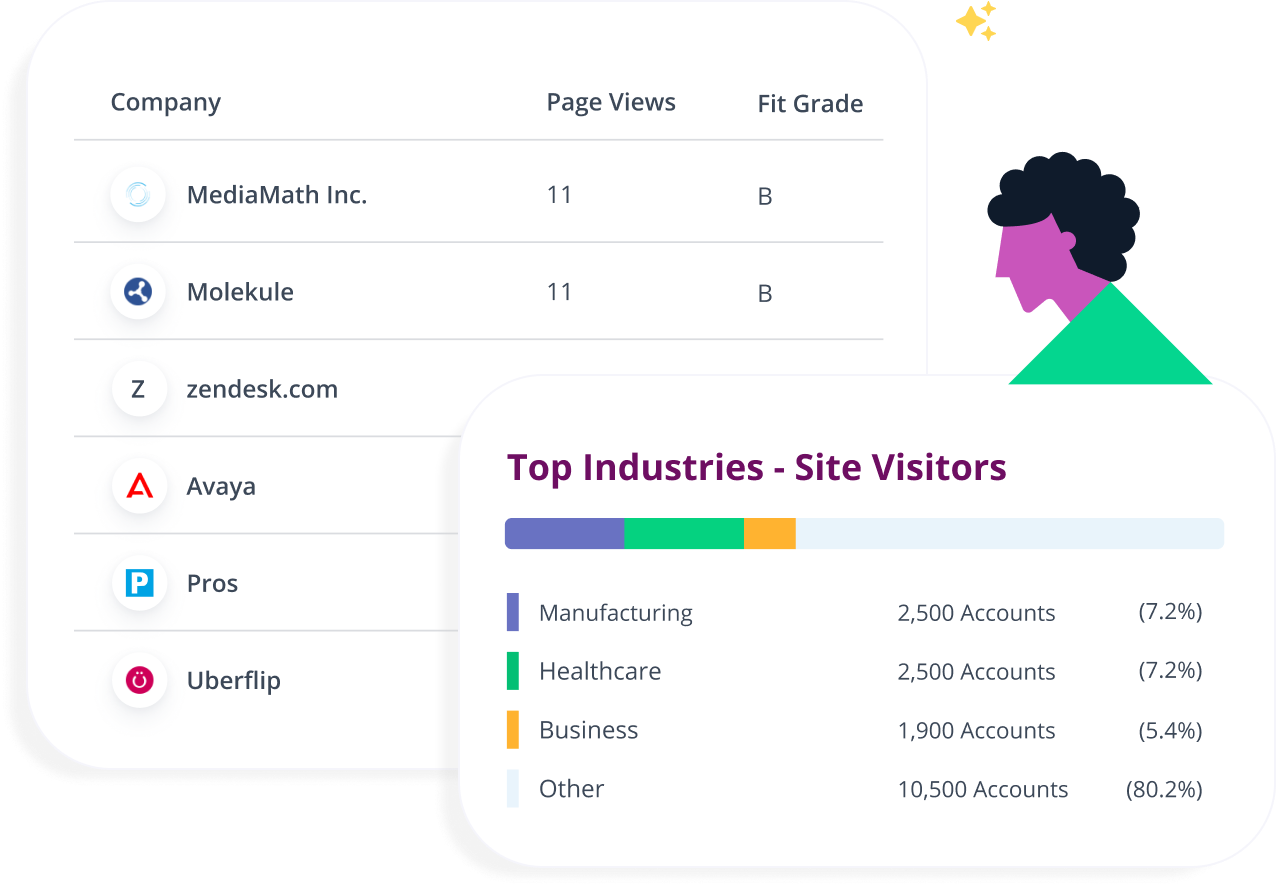
RollWorks is the sweet spot for teams that want serious ABM capabilities without the enterprise complexity. It's built around paid advertising, so if your strategy includes running targeted display and social campaigns, this is worth a look.
What stands out is how it alerts your sales team. When an account spikes in engagement, your SDRs get pinged in Slack or email with context. No more cold calling accounts that aren't warm yet.
Core Features:
- Account identification and ML-powered scoring to build prioritized target lists.
- Intent data integration via Bombora to catch accounts actively researching.
- Multi-channel advertising across display, retargeting, LinkedIn, and Facebook.
- Dynamic ad personalization that inserts target company names into creative.
- Account spike alerts delivered daily to sales via email or Slack.
- Buyer journey tracking through custom funnel stages with automated triggers.
- Analytics dashboards measuring ad spend, engagement, and pipeline influence.
- CRM integration with Salesforce, HubSpot, and Marketo for data sync.
Best For: Mid-market B2B teams that want to scale account-based advertising without the enterprise price tag. Great for organizations focused on ad-driven pipeline growth.
Pricing: Free tier available for basic retargeting (pay only media spend). Paid ABM packages start just under $1,000/month for small to mid-sized teams. Custom pricing based on account volume and features needed.
7. RB2B
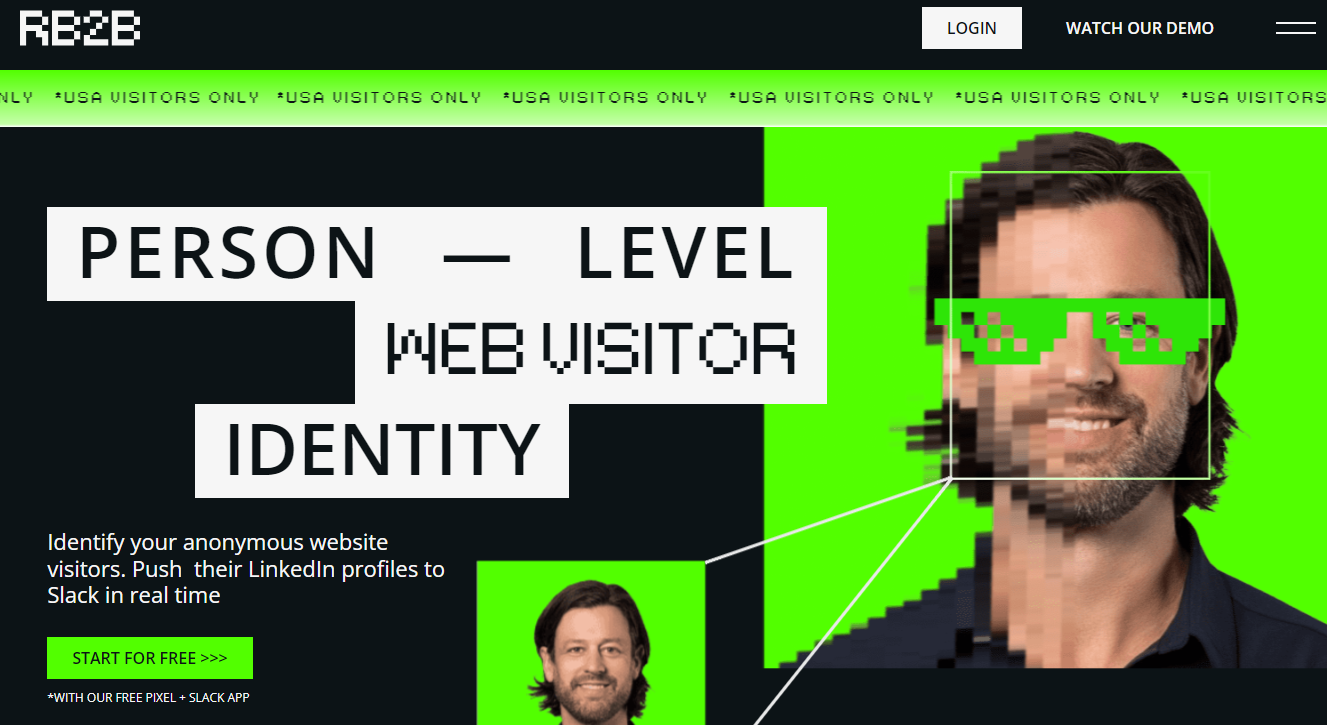
RB2B is a great fit for B2B teams that want to know exactly who is visiting their website and turn anonymous traffic into sales opportunities. As an account based marketing software, RB2B can identify individual visitors and provide details like their name, job title, LinkedIn profile, and business email.
What stands out is how quickly sales teams can act on these visitor signals. RB2B can send identified visitors directly to Slack, Microsoft Teams, or your CRM, while its Hot Leads and Hot Pages features help teams prioritize visitors showing strong buying intent.
Core Features:
- Person-level visitor identification for U.S. website traffic, along with global company-level identification.
- Visitor profiles with names, job titles, LinkedIn URLs, and business email addresses on eligible plans.
- Real-time alerts through Slack and Microsoft Teams when relevant prospects visit your website.
- Hot Leads filtering to prioritize visitors based on company size, revenue, seniority, department, geography, and other ICP criteria.
- Hot Pages to identify visitors viewing high-intent pages such as pricing, demos, and product pages.
- CRM integrations with HubSpot and Salesforce to alert sales reps and trigger workflows.
- Integrations with Clay, Zapier, Apollo, webhooks, and other sales and marketing tools.
- Pageview history, repeat visitor tracking, and top-page visit reporting to provide more context around visitor engagement.
Best For: B2B sales and marketing teams that want to identify website visitors, prioritize high-intent prospects, and turn existing website traffic into actionable sales opportunities.
Pricing: Free plan available with up to 150 monthly resolutions. Starter starts at $79/month, while Pro starts at $149/month and Pro+ starts at $199/month. A 7-day full-featured trial is also available.
8. Apollo.io
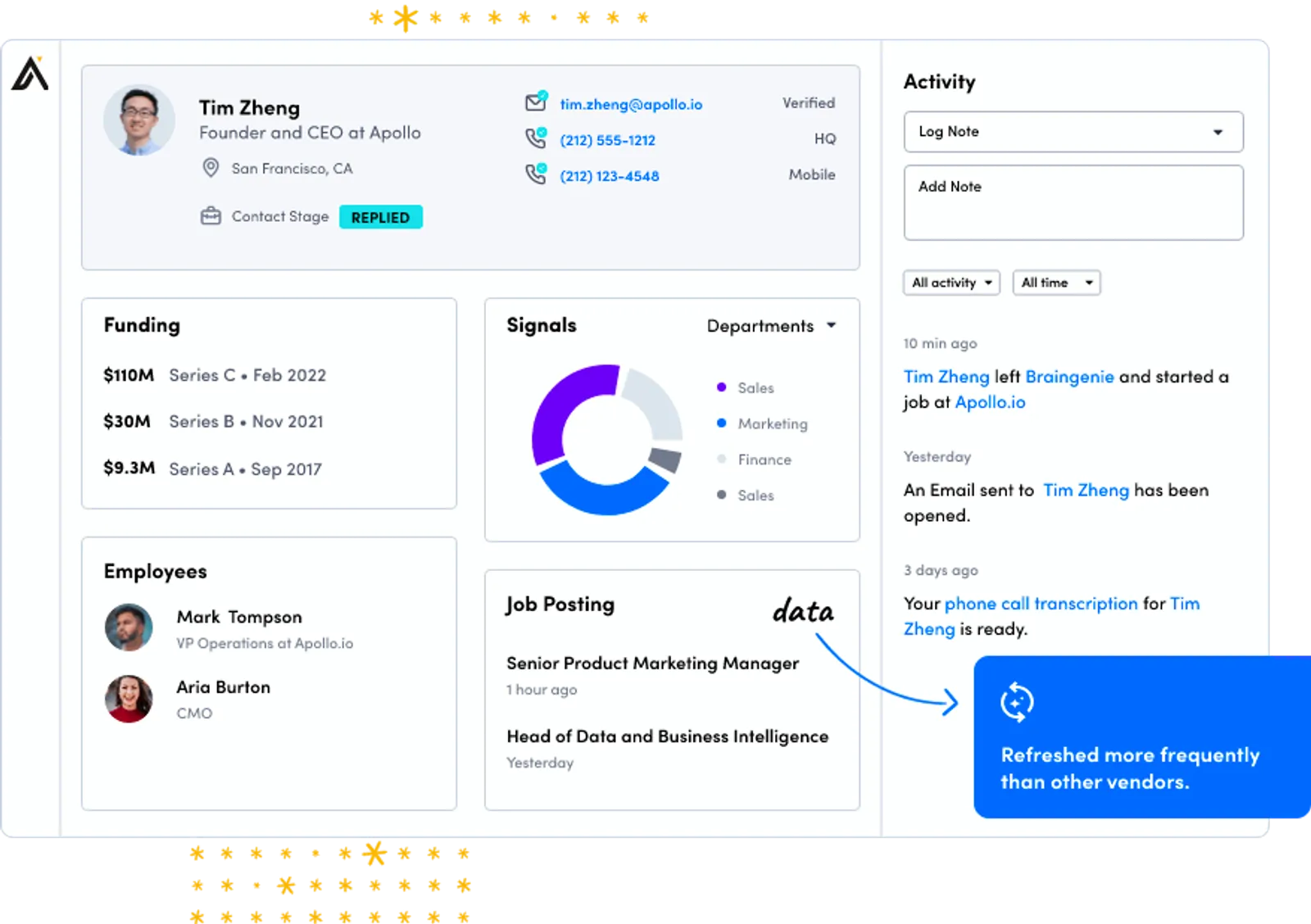
Apollo isn't a pure ABM platform, but it's become the go-to for SDR teams running targeted outbound at scale. If you need to build account lists, find decision-makers, and orchestrate multi-channel sequences without spending enterprise money, this is it.
The database is massive—275 million contacts—and the filters let you get hyper-specific. Plus, you're handling prospecting, sequencing, and dialing all in one place instead of stitching together three tools.
Core Features:
- B2B database with 275M+ contacts and 60M+ companies for building target lists.
- 65+ advanced search filters including job titles, technographics, and intent signals.
- Multi-channel sequences automating email, calls, and LinkedIn outreach.
- AI-powered email personalization for tailored messaging at scale.
- CRM integration and data enrichment syncing with Salesforce and HubSpot.
- Account scoring to prioritize high-value targets based on engagement.
- Analytics dashboards tracking open rates, replies, and campaign ROI.
- Workflow automation to trigger actions based on account behavior.
Best For: Small to mid-sized B2B sales teams running email-first, targeted outbound. Perfect for SDRs who need an affordable all-in-one prospecting and engagement tool.
Pricing (Annual): Free plan with 1,200 credits/year and basic features. Basic at $49/user/month (30K credits/year). Professional at $79/user/month (48K credits/year, includes dialer). Organization at $119/user/month (72K credits/year, 3-user minimum, international dialer).
Account-Based Outreach Tools: Turning Account Intelligence Into Conversations
Here's a distinction most teams miss. ABM platforms tell you which accounts to target. They don't send the outreach.
Demandbase, 6sense, and Terminus are intelligence and targeting layers. They score accounts, surface intent, and run ads. But when it comes time to actually message the VP at your target account, none of them are built for that job. That's what account-based outreach tools do. They take the account intelligence and turn it into multi-touch sequences a human reads and replies to.
If your ABM stack feels like it's producing a great list with nobody calling it, this is the layer you're missing.
Outreach.io
Outreach is the enterprise-grade sales execution platform built for structured, multi-touch account sequences. It's the tool sales managers reach for when they need visibility into every rep's activity on every target account.
What makes it useful for ABM specifically: Outreach integrates directly with Demandbase and 6sense, so a sequence can trigger automatically the moment an account shows intent. Your SDR isn't guessing when to reach out. The platform tells them.
Best For: Teams running coordinated, structured plays where a sales manager needs to see rep-level account activity across the board.
Pricing: Not publicly listed, but typical costs run $100 to $175 per user per month. Outreach holds a 4.3/5 rating on G2.
Salesloft
Salesloft plays in the same category as Outreach but leans harder into conversation intelligence. If coaching your SDRs on call quality matters as much as automating the sequence itself, this is the better fit.
Its revenue lifecycle management features also make it a stronger pick for AE-heavy teams running expansion plays into accounts you already have a foothold in, not just net-new outbound.
Best For: Teams that want engagement automation and coaching in one platform, especially AEs working existing accounts.
Pricing: Roughly $75 to $165 per user per month, and G2 reviewers currently rate it slightly ahead of Outreach at 4.5 versus 4.3.
Clay
Clay isn't an outreach platform in the traditional sense. It's the data orchestration layer that makes hyper-personalized outreach possible at scale.
It pulls from 75+ enrichment sources to auto-research each target account, then builds personalized first lines and trigger-based messaging without a human doing the digging. Think of it as the tool that gives an SDR team Apollo-level volume with something closer to Demandbase-level personalization, without the enterprise price tag of the latter.
Best For: Teams that want to research and personalize at a scale no human researcher could match.
Pricing: A free tier exists, with paid plans starting around $185/month and scaling to $495/month for teams that need CRM sync and sequencing built in. Clay carries a strong 4.7/5 rating on G2, though reviewers consistently flag that costs escalate fast once you're running production volume.
Smartlead and Instantly
Both are cold email infrastructure built for volume, not full ABM platforms. If your account-based motion is email-first, these are what keep your sequences landing in the inbox instead of spam.
Smartlead starts around $39/month and includes unlimited mailboxes and warmup on every tier, which matters when you're running dozens of sending accounts against a target list. Instantly holds a 4.8/5 rating on G2 and is often the pick for teams that want sending, verified data, and reply handling in one subscription rather than stitching pieces together.
Best For: SDR teams running email-first account-based outreach where deliverability is the primary bottleneck, not personalization depth.
Outreach Tools vs. Full ABM Platforms: Which Do You Need First?
If your bottleneck is getting personalized messages in front of decision-makers at accounts you've already identified, outreach tools deliver ROI faster than an enterprise ABM platform ever will.
If your bottleneck is figuring out which accounts to go after in the first place, you need the intelligence layer before you need the outreach layer. Most teams eventually run both. Almost none need to buy them at the same time.
Account-Based Selling Tools: How ABS Differs From ABM
Account-based marketing and account-based selling target the same accounts. They're run by different teams, with different tools, and confusing the two is why a lot of ABM programs stall at the handoff to sales.
ABM is marketing-led. It warms target accounts through ads, content, and campaigns before a rep ever picks up the phone.
ABS is sales-led. It's an AE or SDR doing the research, mapping the buying committee, and running personalized outreach to specific stakeholders at a named account. Both strategies aim at the same company. The motion, and the tooling, is completely different.
That difference matters because the average B2B buying committee now runs 6 to 10 people spanning end users, technical evaluators, finance, procurement, and an executive sponsor, and Forrester's 2024 research puts the average B2B purchase at 13 stakeholders across multiple departments. No single ABM campaign reaches all of them. That's a rep's job, and it's why ABS tools are built for individual account research and relationship mapping, not programmatic campaign delivery.
LinkedIn Sales Navigator (Already Your Core ABS Tool)
You already know Sales Navigator from earlier in this article, but it's worth naming directly: it's the core ABS tool. Org chart navigation, job-change alerts, and warm intro paths through shared connections are exactly what a rep needs to map a buying committee and find a way in that isn't a cold InMail to a stranger.
Gong
Gong analyzes every sales call and email to surface which accounts are at risk, which stakeholders are actually engaged, and what language is landing with each buyer persona. For an AE running ABS on a handful of named accounts, that's real-time coaching most other tools can't provide.
Pricing: Foundation-level access typically runs $1,400 to $1,600 per user per year, and Gong holds a 4.7/5 rating on G2 across more than 6,500 reviews.
Clari
Clari uses AI to forecast deal health at the account level, flag at-risk pipeline, and surface which accounts are showing buying signals across your team's activity. It's less about the individual conversation and more about giving sales leaders account-level pipeline predictability.
Pricing: Roughly $144 to $1,080 per user per year depending on tier, plus platform fees, with a 4.6/5 rating on G2.
ABM vs. ABS: Which Do You Need?
If your reps are the primary driver of outreach, invest in ABS tools. If marketing is warming accounts before sales ever touches them, ABM tools come first. Most enterprise teams eventually run both in parallel, one team warming the account, one team running the buying committee. The mistake is buying either one without the other and wondering why deals stall halfway through.
Check Out More Tools: Best Lead Scoring Tools for B2B Sales Teams
How to Choose the Right Account-Based Marketing Tool for Your Team
Picking account based marketing tools isn't about which one has the most features. It's about what actually fits how your team sells.
Match tools to your sales motion
Selling $10K deals to SMBs? You don't need Demandbase. Closing $500K enterprise contracts with 9-month cycles? Apollo alone won't cut it. Your deal size and sales complexity should dictate your tool stack, not the other way around.
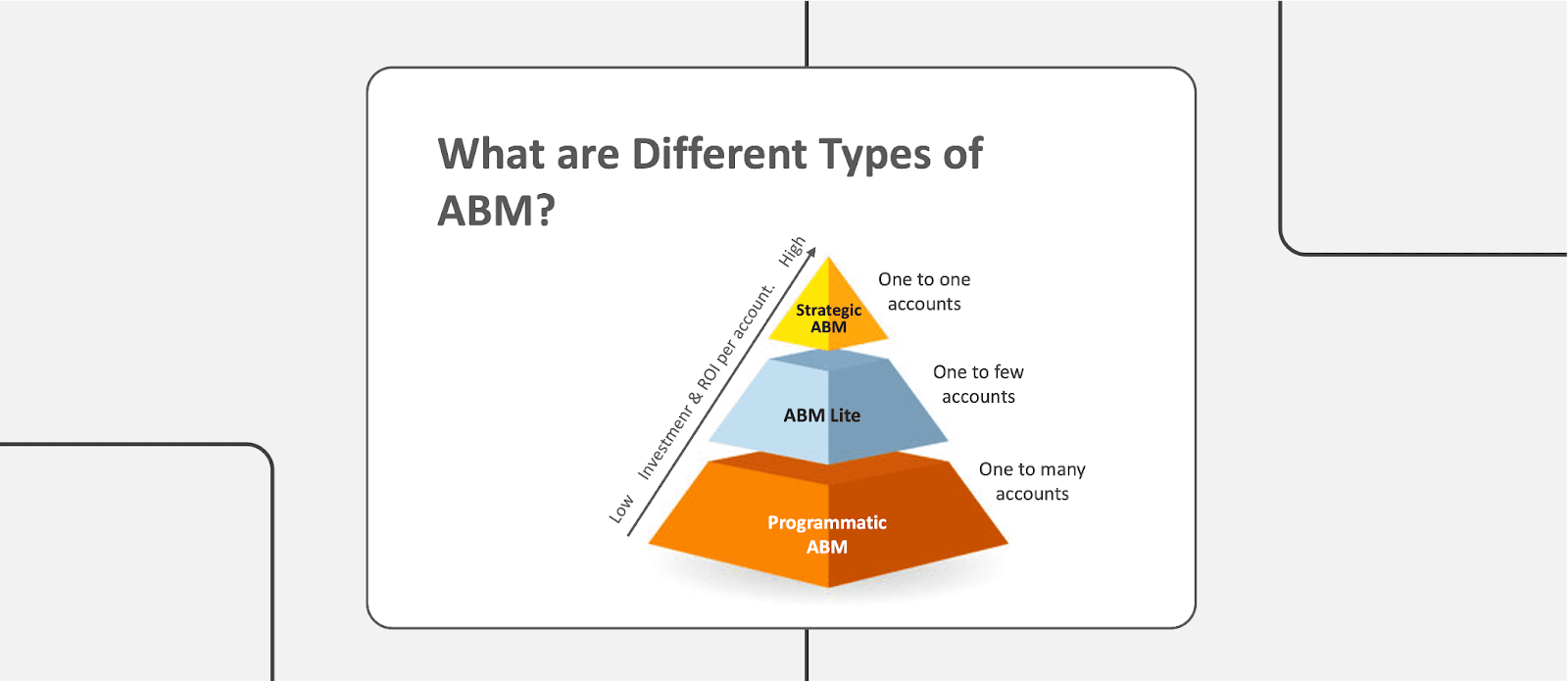
SDR-led vs marketing-led ABM
If your SDRs are driving outbound and booking meetings, you need tools that make them faster—think Apollo or Sales Navigator. If marketing is running multi-channel campaigns to warm accounts first, platforms like Terminus or 6sense make more sense. Most teams need both motions, but one usually leads.
Budget and implementation reality
Enterprise ABM platforms can run $50K-$200K+ annually and take months to implement. If you're a 10-person sales team, that's overkill. Start with lighter tools, prove the strategy works, then upgrade when you've got the pipeline to justify it.
Why teams overbuy too early
We see this all the time. Companies buy expensive account based marketing tools, spend three months on setup, and still don't have a clear ICP or outbound process. The tool doesn't fix a broken strategy. Get your account selection and messaging dialed in first. Then layer in software to scale what's already working.
How Account-Based Marketing Tools Sync with Sales Pipelines
The best tools that sync account-based marketing data with sales pipelines don't just track activity. They push intelligence directly into your CRM so SDRs and AEs actually use it.
Real-time account engagement in your CRM
When someone from a target account downloads your case study or visits your pricing page three times in a week, that signal should automatically update in Salesforce or HubSpot. Your rep sees it before they make their next call. No manual checking dashboards.
Stage progression based on account behavior
Good ABM tools move accounts through pipeline stages based on engagement thresholds, not just form fills. When multiple stakeholders from the same company engage, the account gets flagged as "hot" and your AE gets notified. You're tracking the account, not individual leads.
Attribution that connects to revenue
Tools that sync account-based marketing data with sales pipelines show which accounts marketing warmed up and which ones SDRs sourced cold. When a deal closes, you can trace it back to specific campaigns or touchpoints. That's how you prove ABM ROI instead of guessing.
If your ABM tool lives in a separate dashboard that sales never opens, you're wasting money. The sync has to be seamless, or it won't get used.
How Cleverly Executes Account-Based Marketing Without Tool Overload
Most companies buy a full ABM stack and still struggle to book meetings. Here's why: tools don't book calls. People do.
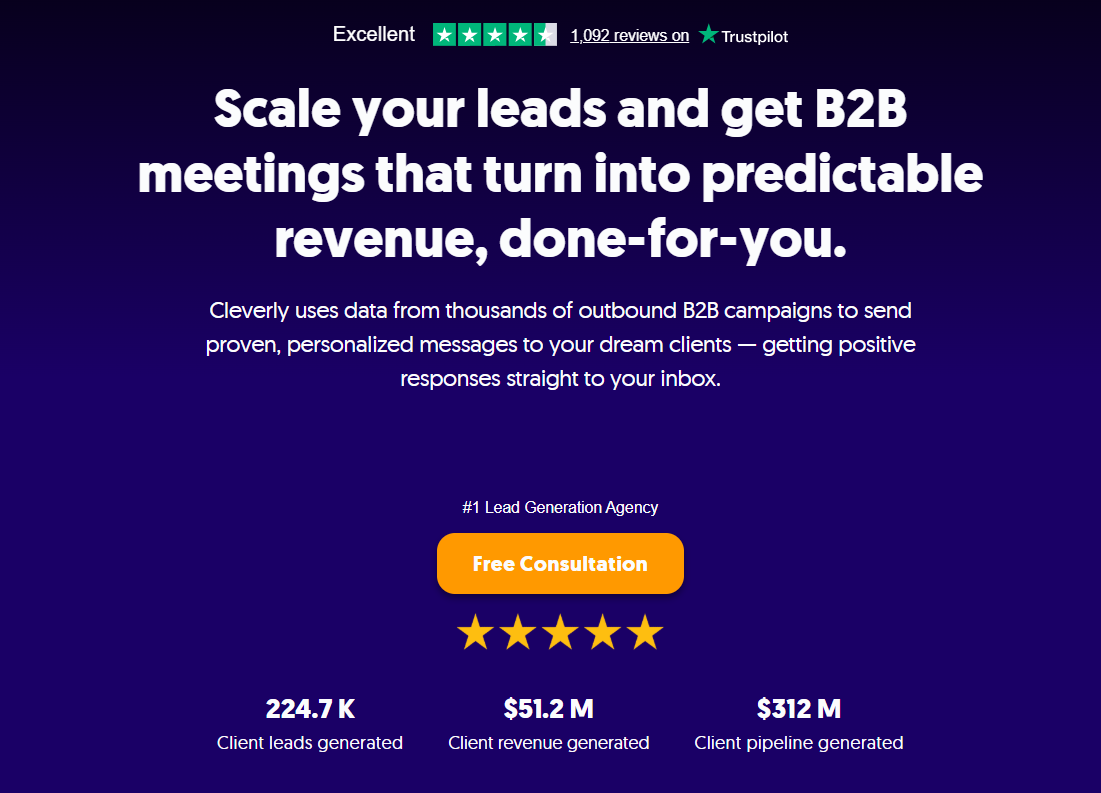
At Cleverly, we flip the script. We're a B2B lead generation agency that uses an outbound-first ABM approach. Instead of relying on software to do the heavy lifting, we layer human intelligence on top of the right tools.
Our ABM process:
- Account selection and ICP refinement: We help you identify which accounts are actually worth targeting, not just who fits a broad filter.
- SDR-led ABM execution: Our trained appointment setters run personalized cold email, LinkedIn outreach, and cold calling to the exact decision-makers at your target accounts.
- Human personalization at scale: We don't just plug company names into templates. Every message references account-specific insights your buyers actually care about.
What that looks like in practice:
Our LinkedIn and cold email services start at just $397/month, and with cold email, you only pay for meeting-ready leads we deliver.
Need a more aggressive approach? Our cold calling system books 10-30 qualified sales calls every month, guaranteed. You get a no-accent appointment setter, custom scripts, data, tech stack, and a power dialer—all for half the cost of hiring in-house.

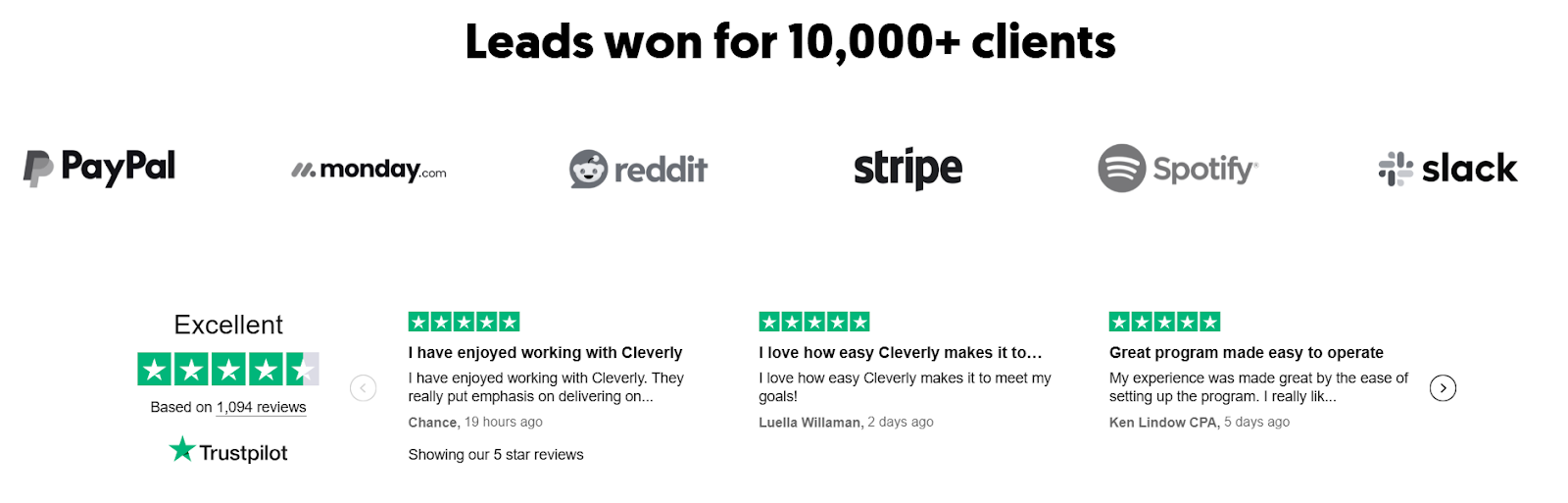
We've helped 10,000+ clients generate $312 million in pipeline revenue with companies like Amazon, Google, Uber, PayPal, and Spotify. That's not from flashy dashboards. It's from real conversations with real buyers.
Ready to stop overthinking your ABM stack and start booking meetings?
Let's talk about how Cleverly can run your outbound ABM motion.
Conclusion
Account based marketing tools give you the infrastructure to run ABM at scale. But the tool itself isn't the strategy.
The platforms we covered—Demandbase, 6sense, Terminus, HubSpot, Sales Navigator, RollWorks, and Apollo—are all solid. But they only work when sales and marketing are aligned on the same target accounts, using the same data, and executing coordinated plays.
The real takeaway: ABM success doesn't come from having the most features. It comes from focus. A tight ICP, a clear outreach strategy, and consistent execution will always outperform a bloated tech stack with no direction.
Pick the account based marketing tools that match your sales motion. Get your targeting and messaging right. Then let the tools amplify what's already working.
That's how you turn ABM from a buzzword into a real pipeline.
Frequently Asked Questions
Free Resource
How to Scale a Profitable Cold Call System
Get the complete guide — download it instantly now.
Free Ebook
Download the Free Guide
Enter your details to get instant access.
You're all set! 🎉
Your ebook is downloading now.
Click below if the download didn't start automatically.