

Table of Contents
Why No-Budget B2B Lead Generation Works Differently for Startups
Build Your Foundation First — The Zero-Cost Setup Every Startup Needs
8 Free Strategies to Generate B2B Leads as a Startup
The Best Free Tools for B2B Lead Generation in 2026
How to Build a Startup B2B Sales Strategy Without a Budget
When to Move From Free to Paid Lead Generation
How Cleverly Helps Startups Build Predictable B2B Pipeline
Conclusion
Frequently Asked Questions
Modified On :
May 15, 2026
Key Takeaways
- No budget doesn't mean no pipeline — cold email, LinkedIn outreach, community engagement, and cold calling cost nothing but time and are producing real results for startups in 2026.
- Define your ICP, optimize your LinkedIn profile, and set up a free CRM before running a single outreach sequence — skipping this step is the fastest way to burn your first 30 days.
- Cold email and LinkedIn are your highest-leverage free channels; start there, master them for 60 days, then layer in content, partnerships, and directories.
- Free tool tiers in 2026 — Apollo, HubSpot, Snov.io, Streak, Google Search Console — are enough to run a fully functional outbound system at startup scale.
- Earned channels compound; paid channels stop the moment spend stops. Build earned assets now so your pipeline doesn't disappear the day you pause ad spend.
You wait until you have a budget to start building pipeline. Six weeks pass. Then three months. By the time you're ready to go, you’re sitting on a validated product with zero inbound, zero relationships, and a revenue target that now feels completely unreachable.
The reality is that the most effective B2B lead generation for startups costs time, not money.
Content marketing generates 3x more leads than outbound at 62% lower cost. Companies using multi-channel follow-up increase conversions by 3x compared to single-channel approaches.
And in 2026, free tool tiers have matured to the point where you can run a complete outbound and inbound system without spending a dollar on software.
"No budget" in this guide means no paid ads, no data subscriptions, no agency retainer — not no tools. Free tiers are genuinely powerful now.
Today we cover everything a pre-revenue founder, solo SDR, or lean sales team needs: how to build the right foundation, eight free strategies to execute immediately, a complete free tool stack, and a month-by-month framework for turning zero-budget effort into a repeatable pipeline.
Why No-Budget B2B Lead Generation Works Differently for Startups
Established companies buy pipeline. They spin up paid search, subscribe to intent data platforms, and hire SDR teams. That approach works at scale — but it's not available to you right now, and honestly, that's an advantage.
Startup lead generation forces a discipline that most funded companies never develop: precision over volume.
When you can't afford to blast 10,000 contacts through an automated sequence, you focus on the 50 accounts that actually fit. That habit — targeting the right buyer over chasing high volume — is exactly what produces a healthy pipeline at any stage.
You also have three assets that money genuinely cannot replicate:
- Authenticity. A founder reaching out to a potential customer is inherently more compelling than an SDR at a mid-size company working a script. People respond to genuine curiosity about their problems.
- Speed. You can pivot your messaging, ICP, or channel in 48 hours. A 200-person sales organization cannot.
- Genuine interest. You built something because you believe it solves a real problem. That conviction reads differently in an outreach message than a templated sequence.
The core principle here is simple: trade spend for precision. Fifty perfectly targeted prospects will outperform 5,000 broadly matched ones every time — and cost nothing more to reach.
🚀 No Budget for Ads? Use Outbound Instead.
We help startups book qualified meetings without burning cash on ads. LinkedIn, cold email & calling—done for you.
Build Your Foundation First — The Zero-Cost Setup Every Startup Needs
Before any outreach strategy works, three foundational elements need to be in place. Most startups skip one or all three and then wonder why their first 30 days of outreach produces nothing. This is where that failure happens.
1. Define a Laser-Focused ICP
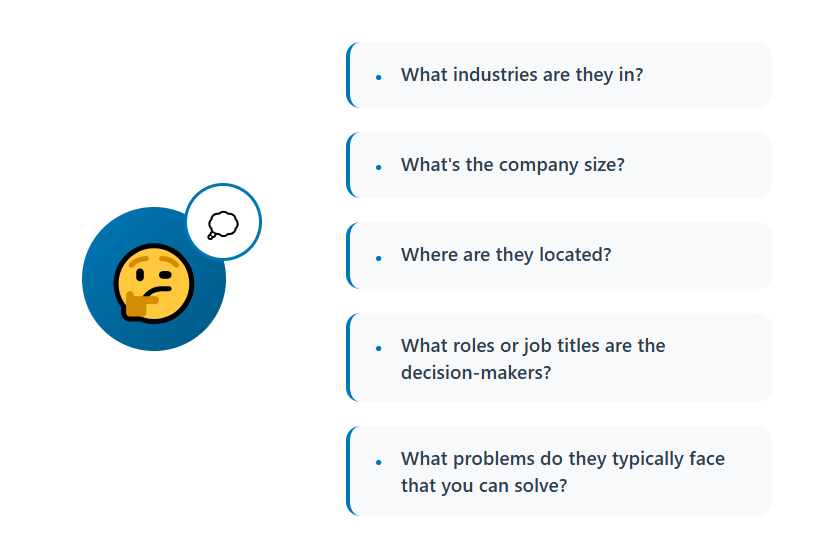
Lead generation for early stage startups lives or dies on ICP clarity. A fuzzy ICP produces fuzzy results — you end up with a list of vaguely related companies, inconsistent messaging, and a reply rate that tells you nothing useful about whether your offer actually works.
Your ICP needs six things nailed down:
- Industry (one or two to start, not five)
- Company size (headcount or revenue band — be specific)
- Geography (where are these buyers concentrated?)
- Decision-maker title (who actually owns the problem you solve?)
- Top pain points (what keeps them up, in their own words?)
- Disqualifiers (who should never make your list, no matter how good the firmographic fit looks?)
The fastest way to define this without any research budget: identify five companies that would be your absolute dream clients if they signed tomorrow. Then reverse-engineer what they have in common. That profile is your ICP. Use LinkedIn's basic search and Apollo.io's free tier to validate that enough of these companies exist to build a meaningful target list.
2. Optimize Your LinkedIn Profile for Credibility
Before a prospect ever responds to your cold email or connection request, they check your LinkedIn profile. This is non-negotiable behavior in B2B — it happens every time.
A strong profile costs nothing to build and can increase cold outreach conversion by 2 to 3x on its own. Run through this checklist:
- LinkedIn Headline: outcome-focused, not job-title-focused. "Helping SaaS teams book 20% more demos through cold outreach" beats "Founder at [Company]" every time.
- Banner: relevant to your ICP's world — not a stock photo of a city skyline.
- Summary: written for the prospect, not about you. What problem do you solve? Why should they care?
- Featured section: a case study, a relevant piece of content, or a clear CTA. Don't leave this blank.
If your profile still reads like a resume, your outreach is operating at a significant disadvantage before the first message lands.
3. Set Up a Free CRM

80% of B2B deals are won on follow-up. Without a CRM, follow-up falls through the cracks — consistently. You'll remember the prospects who replied and forget the 40 who didn't, even though those 40 are often just one or two touchpoints away from a response.
The best free options in 2026:
- HubSpot Free — unlimited contacts, deal tracking, task reminders. More than enough for early-stage volume.
- Notion CRM template — works well if you already live in Notion.
- Apollo.io free plan — doubles as a contact database and lightweight CRM.
Track these five things from day one: contact name, company, last touchpoint date, response status, and next follow-up date. That's it. Complexity comes later. Right now you need a system that keeps you from losing warm prospects in a spreadsheet graveyard.
8 Free Strategies to Generate B2B Leads as a Startup
Each of these strategies runs at zero paid budget. Don't try to run all eight at once — pick two or three that fit your ICP and your current bandwidth, master them for 60 days, then add more. Spreading too thin too early is how startups end up with eight mediocre channels instead of two strong ones.
1. Cold Email Outreach — The Highest-Leverage Free Channel
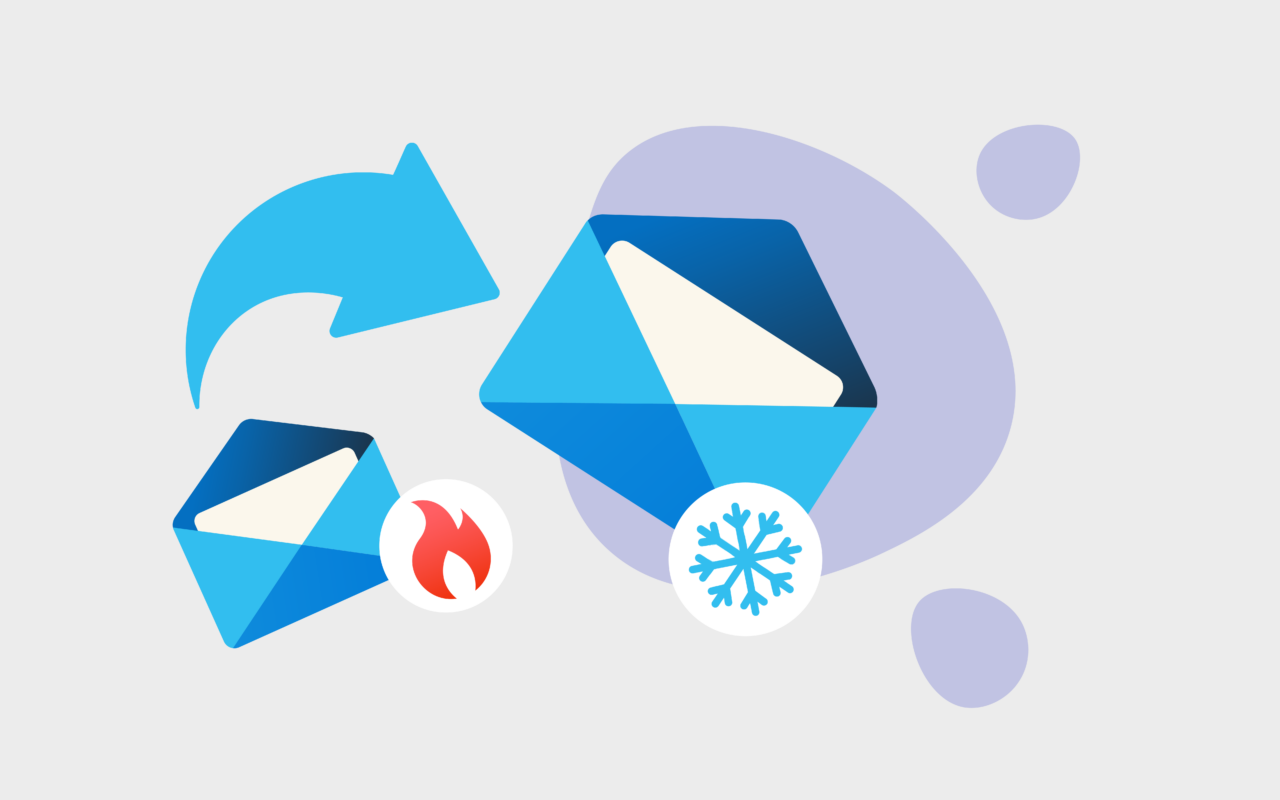
Cold email is the most cost-effective way to generate B2B leads for free when executed with precision. The channel is not saturated — lazy cold email is saturated. Personalized, well-researched cold email to the right 30 people still works.
Your free cold email stack:
- Apollo.io free tier — 50 verified contact exports per month
- Snov.io free — email finder and verifier for supplementing your list
- Gmail + Streak — sequence management directly inside your inbox, free
A 30-person hyper-targeted list outperforms a 300-person generic blast. Every time. Here's the formula that works:
- Subject line: specific to their company or role, not clickbait
- Opener: one observation about them — a recent company announcement, a post they wrote, a challenge common to their industry
- Middle: one sentence on the outcome you deliver, not the features you have
- CTA: low friction — "Would it make sense to chat for 15 minutes?" not "Here's a link to my 45-minute discovery call"
Iterate every 20 to 30 sends. If your reply rate isn't hitting 10 to 15%, change the opening or the CTA before you change anything else.
One email infrastructure step that's non-negotiable before you send a single email: set up SPF, DKIM, and DMARC on your sending domain. Skip this and your deliverability craters before you've even found your messaging.
2. LinkedIn Outreach and Founder-Led Social Selling
LinkedIn gives you direct access to decision-makers filtered by title, industry, and company size — for free. No other free channel does this as precisely.
The approach that works on the free tier: send a personalized connection request, then run a 3 to 4 touch sequence over 14 days. Each message should build on the last. Don't pitch in message one. Don't pitch in message two. Lead with curiosity, share something useful, earn the conversation before you ask for anything.
Founder outreach converts consistently better than SDR outreach. Use that. Your messages should sound like a curious person who built something relevant and genuinely wants to understand their situation — because that's exactly what you are.
Add a social selling layer on top: comment genuinely on a prospect's post before you send a connection request. One relevant comment turns cold outreach semi-warm. It takes 60 seconds and it works.
Free tier benchmarks to aim for: 25 to 35% connection acceptance rate, 10 to 20% reply rate on follow-up sequences. LinkedIn caps new accounts at roughly 100 connection requests per week — quality over speed is the only viable strategy at that volume.
3. Community Engagement — Build Reputation Where Buyers Already Are

B2B buyers don't just research vendors — they discuss their problems in communities long before they ever engage a sales team. Being present where those conversations happen is one of the most underrated B2B leads without budget strategies available.
Where to find these communities:
- Industry Slack groups (most niches have 2 or 3 active ones — one Google search finds them)
- LinkedIn groups (lower engagement but still relevant for some verticals)
- Reddit (many B2B communities here are surprisingly active)
- Discord servers organized around tools or verticals your ICP uses
- Niche forums specific to your industry
The rule is absolute: provide value first, always. Never lead with a pitch. That means solving posted problems with real answers, sharing templates or frameworks without a content gate, and contributing data points that help others make decisions.
The conversion path is slower than cold outreach — expect 6 to 12 weeks before communities produce warm leads consistently — but the leads that come through are higher trust and higher intent than almost anything else on this list.
4. Content Marketing and SEO — The Long Game That Compounds for Free

Every other strategy on this list generates leads while you're working it. Content marketing generates leads while you sleep. That's why it belongs in your mix, even if the results take months to show up.
Businesses that publish blogs consistently generate 13x more leads and achieve better long-term returns.
Your free content stack:
- Google Search Console — tracks organic search performance at no cost
- Ubersuggest free tier — keyword research and content gap analysis
- LinkedIn articles and posts — free publishing to a professional audience
- Medium or Substack — expands your distribution beyond your existing network
Write about the problems your ICP brings to discovery calls. Write about your most common objections and why they're valid or not. Write about the questions you answer most on sales calls. That content is already inside your head — you just need to put it where your buyers are searching for it.
LinkedIn posting 2 to 3 times per week builds an audience that organically warms your outreach pipeline. A prospect who's seen your posts for 3 weeks is already familiar with your thinking before your connection request ever arrives.
SEO timeline is honest: first inbound leads from blog content typically appear in 3 to 6 months. LinkedIn content starts producing results in 4 to 6 weeks. Run both.
5. Guest Posting and Podcast Appearances

You don't need to build your own audience to reach your ICP. Borrow one.
Guest posting and podcast appearances let you show up in publications and shows your buyers already trust — without the 6-month lag of building your own. The approach for finding guest post opportunities: search "[your industry] + write for us" in Google.
For podcasts, niche B2B shows actively want guests with relevant expertise. A 30-minute appearance puts you in front of a targeted ICP audience that someone else spent years building.
Free tools for finding podcasts: Spotify, Apple Podcasts, and Listen Notes' free tier all work. Look for shows in the 500 to 5,000 listener range — smaller audiences are more targeted and hosts are more likely to respond to a cold pitch.
The SEO bonus: every guest post generates a backlink that improves your own site's ranking. One guest post does double duty — ICP reach and domain authority.
One rule for every appearance: one actionable takeaway and one CTA. A free resource or your LinkedIn profile, not a sales pitch. The goal is inbound DMs from interested prospects, not direct sells from a podcast outro.
6. Strategic Partnerships and Co-Marketing

A strategic partner is any non-competing business serving the same buyer you do. An agency that handles paid ads for SaaS companies is a natural partner for a SaaS sales tool. A fractional CFO is a natural partner for a financial operations platform.
The right way to start: lead with a referral to them before you ask for anything. Reciprocity works, but only when you initiate it.
Free co-marketing formats that work:
- Joint LinkedIn posts — both audiences see it, zero cost
- Co-hosted webinars using Zoom's free tier — invite both email lists
- Co-authored guides — shared SEO benefit for both parties
The trust transfer effect is real. Leads acquired through referrals cost 80% less than paid leads — and partner intros convert at 15 to 25% versus 2 to 3% for cold outreach. One good partnership can outperform a month of cold email volume.
Where to find partners: LinkedIn search, shared communities, and tool ecosystem partner directories. HubSpot's partner network alone connects you to hundreds of complementary service providers.
7. Product Hunt, Startup Directories, and Review Sites
These platforms attract buyers who are already searching for solutions — which means less convincing work than cold outreach by a significant margin.
Free platforms worth listing on:
- Product Hunt — spike in traffic, signups, and press mentions on launch day. Best for SaaS products with a demo-ready experience.
- G2 and Capterra — free listing. Five strong reviews from beta or pilot users can transform conversion for prospects who find you through category searches.
- Clutch — strong for service businesses.
- Crunchbase — keeps you discoverable for investors and partners, not just buyers.
Review site strategy: ask your beta users or pilot clients for reviews immediately after they see value. Don't wait until they've been using the product for six months — the peak moment of satisfaction is right after the first win. Five authentic reviews go further than any sales page copy.
Directory listings are a compounding long-tail channel, not a spike play. They won't replace outreach, but they add a layer of inbound that runs on autopilot once set up.
8. Cold Calling — The Most Overlooked Free Outreach Channel
Cold calling is completely free and consistently overlooked by early-stage founders precisely because it's uncomfortable. That's exactly why it's still effective — the channel is less saturated than email and LinkedIn because most people avoid it.
Founder calling works better than SDR calling for one clear reason: the authenticity is immediately apparent. A genuine founder who built something to solve a specific problem is disarming on the phone in a way that a scripted appointment setter isn't.
Free calling tools: Google Voice, WhatsApp Business for international prospects, or your personal mobile if you're comfortable with it.
The effective opener is research-led, not scripted. Reference something specific — a trigger event, a recent company announcement, a challenge common to their segment — then ask one pain-point question and listen more than you talk. Close with a low-pressure CTA: "Would it make sense to send you over a quick overview and reconnect next week?"
Start with 15 to 20 targeted calls per day. At that volume, quality of list matters more than call volume. Free phone number sources: LinkedIn profiles (many people list them), Apollo's free tier, and company contact pages.
💼 Startups Don’t Need Huge Budgets. They Need Pipeline.
From prospecting to booking—we handle the entire outbound engine. You focus on closing and growing.
The Best Free Tools for B2B Lead Generation in 2026
Free tiers in 2026 are legitimately functional for early-stage B2B leads without budget. Here's the stack that covers every part of a working lead gen system:
One important note: validate your approach before upgrading anything. Free tools have limits by design — but those limits are usually enough to prove a channel works before you invest in scaling it. Upgrade only after a channel earns it.
How to Build a Startup B2B Sales Strategy Without a Budget

No-budget startup B2B sales strategy means fewer things done with more precision. The biggest mistake is trying to run everything at once.
Here's a month-by-month framework that sequences the right activities in the right order:
✅ Weeks 1 to 2
Define your ICP completely. Optimize your LinkedIn profile. Set up your free CRM. Build your first 50-person target list using Apollo and LinkedIn basic search. Set up SPF, DKIM, and DMARC on your sending domain.
✅ Weeks 3 to 4
Launch cold email at 20 to 30 sends per day. Start LinkedIn sequences at 20 to 30 connection requests per week. Join 2 to 3 relevant communities and begin contributing without pitching.
✅ Month 2
Review your messaging data and iterate on what's not working. Add one content or community channel. Identify and reach out to your first two potential partners. Write your first LinkedIn post based on a common ICP objection.
✅ Month 3
Turn your first satisfied pilot client into a case study. Pitch 3 relevant guest post opportunities. Optimize whichever outreach sequence is performing best. Look at your community presence — are you getting DMs yet?
✅ Month 4 and beyond
Organic inbound starts showing up. Partnership referrals begin flowing. Your outbound system is running on an optimized, proven sequence. Now you're scaling something that works, not experimenting with something that might.
👍 One rule to govern all of this: One metric per channel. Reply rate for email, acceptance rate for LinkedIn, inbound DM rate for community. Don't add a new channel until you have 60+ days of clean data from the ones you're already running. More channels earlier does not mean more pipeline. It usually means diluted focus and muddier data.
When to Move From Free to Paid Lead Generation
Free channels do one thing paid channels can't: validate your ICP and messaging with real market feedback before you spend anything. That's the job. Once they've done it, the signals below tell you it's time to invest:
You're ready for paid tools or agencies when:
- Your contact-to-meeting rate is at or above 3%.
- You've identified a clear ICP winner — one segment responds meaningfully better than others.
- You have validated messaging — sequences that predictably produce replies and calls.
- You have 2 to 3 case studies showing real outcomes for real clients.
- You're hitting the volume ceiling on free tool tiers and that ceiling is the only thing limiting your output.
The first paid investments to make: Apollo's paid plan for higher monthly contact volume, or LinkedIn Sales Navigator for precision targeting filters that free LinkedIn doesn't offer.
The wrong time to pay: before your ICP and offer are validated. Paid tools scale what you're already doing — they don't fix what's broken. If your free sequences aren't producing replies, upgrading to a paid tool just means you burn through a larger contact list faster with the same broken messaging.
The trigger for outsourcing to an agency is different: it's when the time you're spending on lead generation costs more than what a specialized team would charge to handle it. At that point, you're not saving money by doing it yourself — you're just moving slowly.
How Cleverly Helps Startups Build Predictable B2B Pipeline
There's a specific moment when most founders realize they need to make a change.
The offer is validated. The ICP is clear. The messaging is working. But the bottleneck is now execution capacity — and every hour spent on prospecting, list building, and sequence management is an hour not spent on closing, building, or expanding.
That's exactly where Cleverly comes in.
We handle the entire outbound system end-to-end: ICP definition and precision targeting, verified multi-source contact list building, LinkedIn and cold email outreach sequences, response handling, and meeting handoff directly to your calendar.
Our team brings proven playbooks built across 10,000+ clients — including companies like Amazon, Google, Uber, PayPal, Slack, and Spotify — so there's no 3-month learning curve while you figure out what messaging works in your vertical.
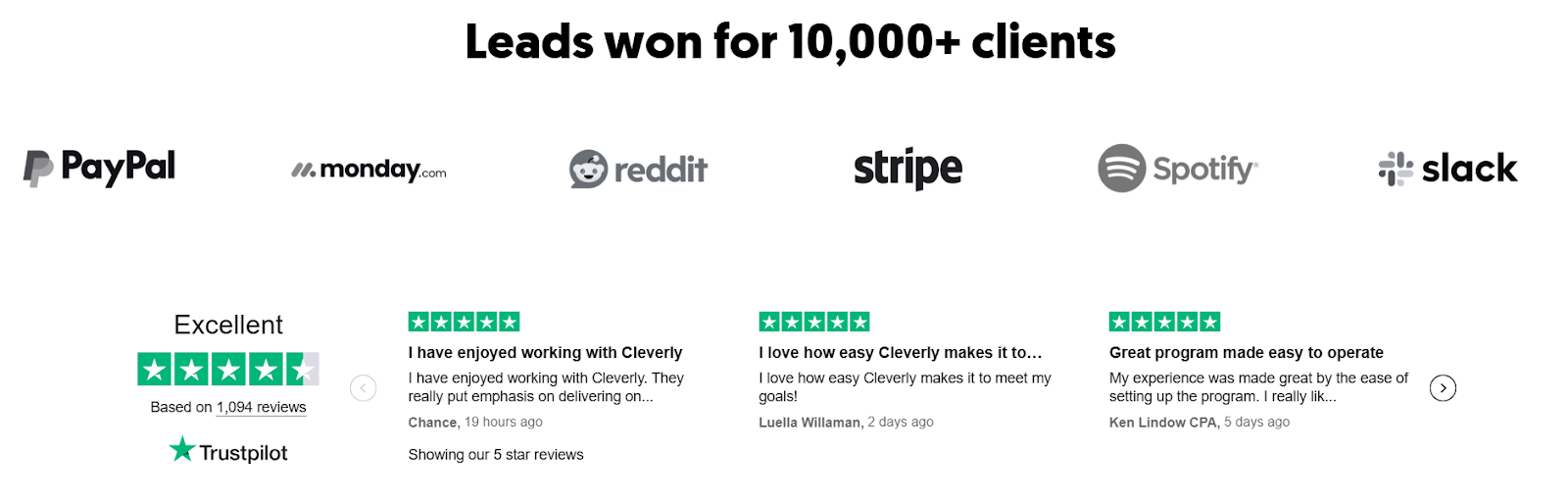
For startups specifically, that speed matters. We've generated $312M in pipeline revenue and $51.2M in closed revenue through LinkedIn outreach alone, and our systems compress the ramp time from "starting outreach" to "consistent meetings booked" significantly.
LinkedIn services start at $397/month. Cold email services operate on a performance model — you only pay for meeting-ready leads we actually deliver. No long-term contracts. Month-to-month.
If your offer is validated and you're ready to build a scalable pipeline without pulling your founder time into daily outreach operations, book a strategy call with Cleverly and we'll walk through exactly what a done-for-you system would look like for your stage and ICP.

Conclusion
Budget is not the bottleneck. Precision, consistency, and the right channel mix are. Every strategy in this guide is executable at zero cost starting today — and the founders who build early-stage pipeline without paid support tend to come out the other side with something more valuable than a list of meetings: they have a deep, firsthand understanding of what messaging works, which ICP segment responds, and what the actual objection landscape looks like in their market.
Start before you feel ready. Your first 50 cold emails will teach you more than any strategy document. Earned channels compound over time in a way paid channels never do — so the work you put in during these early months builds an asset that keeps generating returns long after the initial effort. Build it now.
Frequently Asked Questions
Free Resource
How to Scale a Profitable Cold Call System
Get the complete guide — download it instantly now.
Free Ebook
Download the Free Guide
Enter your details to get instant access.
You're all set! 🎉
Your ebook is downloading now.
Click below if the download didn't start automatically.


