Table of Contents
What Is B2B Customer Acquisition?
What Is B2B Customer Acquisition Cost (CAC)?
2026 B2B Customer Acquisition Cost Benchmarks
Why B2B Customer Acquisition Costs Are Rising
Best Strategies for B2B Customer Acquisition in 2026
How to Reduce Customer Acquisition Costs for B2B SaaS
Best Practices for B2B Customer Acquisition
How Cleverly Supports Lower CAC Through Targeted Outbound
Conclusion
Frequently Asked Questions
Modified On :
February 24, 2026
Key Takeaways
- B2B customer acquisition costs have risen 60% over the past five years and are still climbing.
- CAC without LTV context is meaningless, always evaluate the two together.
- Most companies underestimate their true CAC by ignoring headcount and tool costs.
- Efficiency beats volume, better targeting and conversion rates lower CAC faster than spending more.
- Multi-touch outbound outperforms any single-channel approach consistently.
- The companies winning at acquisition control their pipeline inputs, not just their budgets
If you're in B2B sales or marketing, you've probably noticed that landing new customers isn't getting any cheaper.
B2B customer acquisition costs have been climbing steadily across SaaS and service industries, and most teams are feeling it, whether in longer sales cycles, higher ad spend, or more reps needed to hit the same numbers.
Here's the thing though: a lot of companies don't actually know what their real acquisition cost looks like. They're tracking some numbers, sure, but the full picture? Not always.
That's exactly what this guide is for. We're breaking down:
- Updated CAC benchmarks across key B2B industries so you know where you actually stand.
- What's driving acquisition costs up and why it's not just an ad spend problem.
- How to reduce CAC strategically, not just by cutting budgets or running a few quick tests.
Let's get into it.
What Is B2B Customer Acquisition?
B2B customer acquisition is the process of turning a stranger into a paying business customer. That sounds simple, but it covers a lot of ground.
It's easy to mix up a few related terms, so here's a quick breakdown:
- Lead generation = getting someone to raise their hand (a form fill, a reply, a booked call)
- Pipeline creation = moving that lead into an active sales conversation
- Customer acquisition = closing the deal and bringing in revenue
All three are connected, but they're not the same thing. Acquisition is the full journey from first touch to closed-won.
What goes into your acquisition cost?
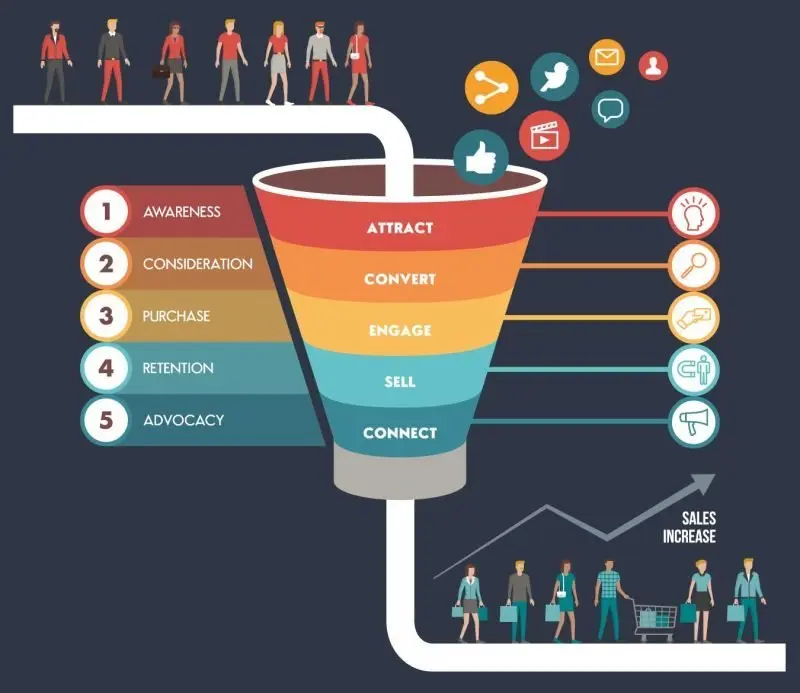
When you add it all up, B2B customer acquisition pulls from multiple buckets:
- Marketing spend (ads, content, events)
- Sales team salaries and commissions
- SDR teams and outbound programs
- Tools and software (CRM, sequencing, enrichment, dialers)
Most companies undercount because they only look at one or two of these, not all of them.
How is B2B different from B2C?
In B2C, you're often selling to one person making a quick decision. In B2B, you're dealing with longer sales cycles, multiple stakeholders, and a buying committee that can take months to align.
That's why B2B customer acquisition is a fundamentally different game and why your strategy needs to reflect that.
Also Check: B2B Sales KPIs Every Revenue Team Should Track
💰 Lower CAC. Higher Pipeline.
Cleverly runs LinkedIn outreach, pay-per-meeting cold email, and guaranteed cold calling—so you invest in meetings, not wasted spend.
What Is B2B Customer Acquisition Cost (CAC)?
B2B customer acquisition cost is exactly what it sounds like: how much it costs you, on average, to win one new customer.
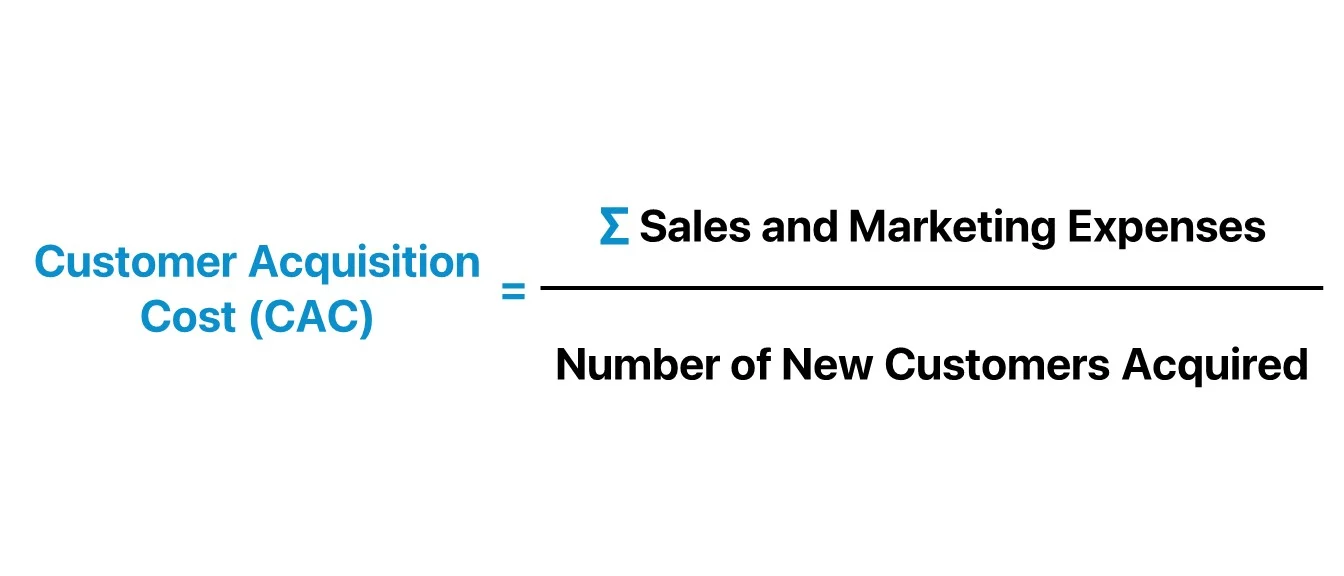
The formula is straightforward:
CAC = Total Acquisition Spend ÷ New Customers Acquired
So if you spent $50,000 last quarter and closed 10 new customers, your CAC is $5,000.
What should you include in that spend number?
This is where most teams get it wrong. A real CAC calculation includes:
- Ad spend (paid search, LinkedIn ads, display)
- SDR salaries and commissions
- Agency fees (lead gen, content, SEO)
- Marketing software (automation, analytics, ABM tools)
- Sales tools (CRM, dialers, data enrichment, sequencing)
If you're only counting ad spend or just one channel, you're looking at a fraction of your true cost.
Why do most companies underestimate CAC?
A few common reasons:
- They track channel-level spend but ignore headcount costs.
- SDR salaries and onboarding costs get buried in HR budgets.
- Tool costs are spread across multiple team invoices.
- They only count direct marketing spend, not the full sales motion.
The result? They think their CAC is $2,000 when it's actually closer to $6,000. That gap makes it really hard to make smart decisions about where to invest.
Know More: Perfect B2B Sales Strategy to Close More Deals (Proven Methods)
2026 B2B Customer Acquisition Cost Benchmarks
Here's the honest truth: B2B customer acquisition cost varies wildly depending on your segment, deal size, and how you sell. There's no one-size-fits-all number. But these ranges give you a solid starting point.
A few things worth noting here:
- Overall CAC has increased about 60% over the past five years across B2B and B2C alike.
- Heading into 2026, new customer acquisition costs rose 14% while growth slowed, making efficiency more critical than ever.
- Top-quartile SaaS companies spend about $1.00 to acquire $1 of new ARR, while underperformers spend $2.82 or more.
Why higher deal size allows higher CAC
If you're selling a $500/month SMB tool, you can't afford to spend $8,000 to close a deal. But if you're selling a $150,000/year enterprise contract, a $12,000 CAC can make total sense. The math works because the return is proportionally larger.
Bigger deals justify longer sales cycles, more touches, and higher acquisition spend. That's not inefficiency, that's just how enterprise sales works.
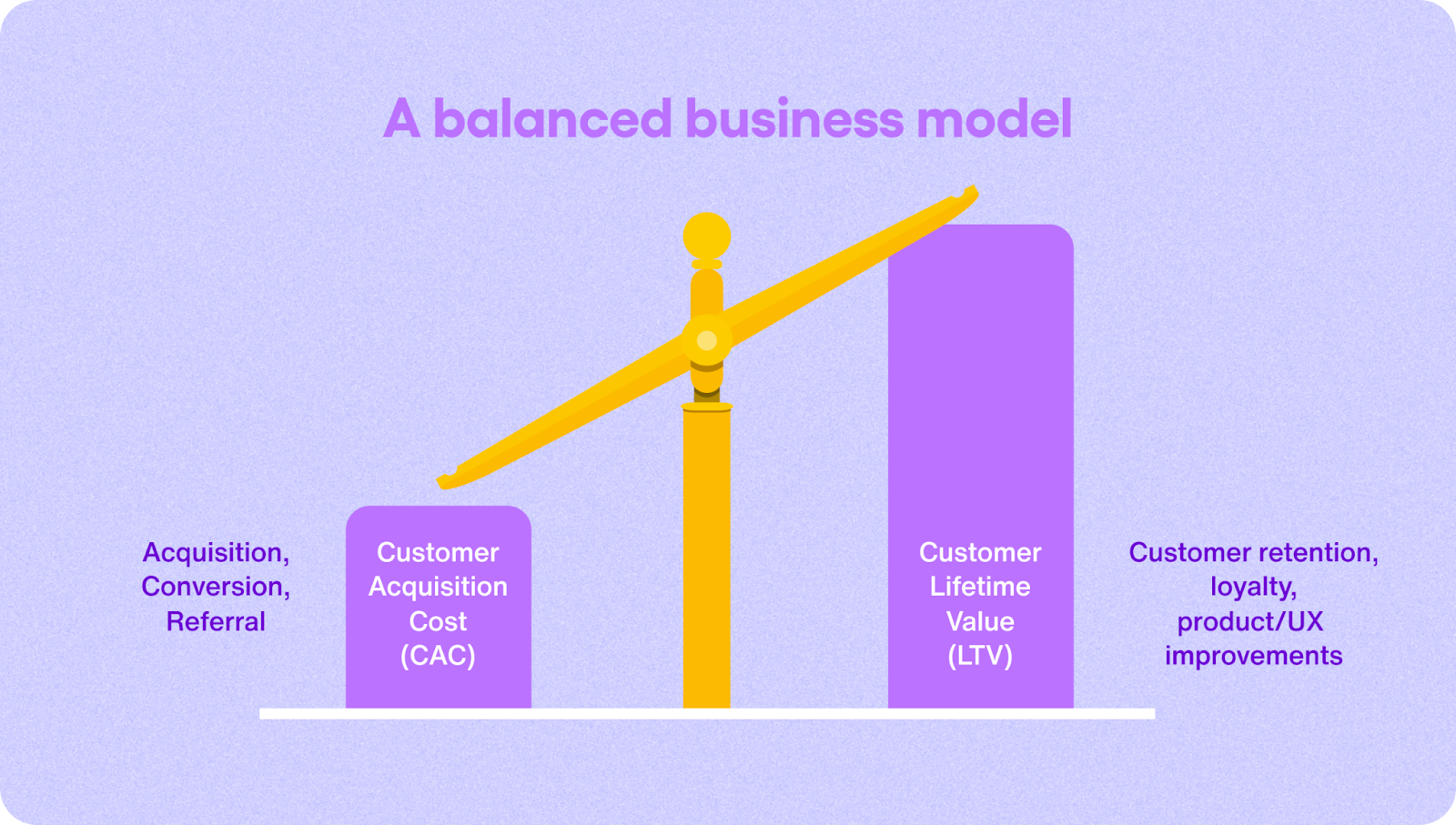
Why CAC alone is meaningless without LTV
A $5,000 CAC sounds expensive until you find out the customer sticks around for 4 years and pays $3,000/month. Suddenly that number looks great.
That's why the LTV:CAC ratio is the metric that actually tells you if your acquisition model is working. Most sustainable businesses aim for an LTV to CAC ratio of 3:1 or 4:1. Below 3:1, you're likely spending too much to acquire or not retaining long enough. Above 5:1, you might actually be underinvesting in growth.
Always look at CAC in context. The number by itself tells you almost nothing.
Learn: How to Measure Sales Success (Metrics That Actually Matter)
🚀 Turn Strategy Into $312M+ Pipeline
10,000+ companies trust Cleverly to deliver sales-ready meetings across LinkedIn, email, and phone—fueling scalable B2B growth.
Why B2B Customer Acquisition Costs Are Rising
If your B2B customer acquisition strategy feels like it's working harder for less, you're not imagining it. A few things have shifted across the board that are making acquisition more expensive for almost everyone.
Ad saturation
Every channel is crowded. LinkedIn, Google, Meta, they're all more competitive than they were three years ago. More advertisers competing for the same eyeballs means higher CPCs and lower returns on the same spend.
Email inbox competition
Cold email still works, but inboxes are noisier than ever. Prospects are getting hit from every angle, and generic outreach gets ignored fast. Getting a reply now takes better targeting, better copy, and usually more follow-ups.
Longer buying cycles
The average B2B SaaS sales cycle now spans 134 days, up from 107 days in early 2022. More time in the pipeline means more touchpoints, more sales hours, and more cost per deal.
Multi-stakeholder decisions
Deals don't get signed by one person anymore. You're often working with a buying committee of 4 to 6 people, each needing different information and different levels of convincing. That complexity adds up fast.

Channel fatigue
Buyers have seen it all. The same webinar invite, the same white paper download, the same LinkedIn message. When a channel gets overused, response rates drop and you have to spend more to get the same result.
Poor attribution clarity
Most teams struggle to connect spend to revenue accurately. Without clear attribution, budget gets wasted on channels that look like they're working but aren't driving actual pipeline.
How this connects to modern buying behavior
Today's B2B buyer doesn't move in a straight line. They read a blog post, see a LinkedIn ad, get a cold email, watch a demo on YouTube, ask a peer, and then finally respond. That's a lot of touches across a lot of channels before a single conversation happens.
The problem? Most teams are still measuring and budgeting like the journey is simple. It's not. And until your B2B customer acquisition strategy reflects that multi-touch reality, you'll keep overpaying to close deals.
Here’s More: Buying Signals Explained
Best Strategies for B2B Customer Acquisition in 2026
There's no shortage of tactics out there. But the best strategies for B2B customer acquisition aren't about doing more. They're about doing the right things with less waste. Here are the pillars that actually move the needle.
1. Narrow Your ICP
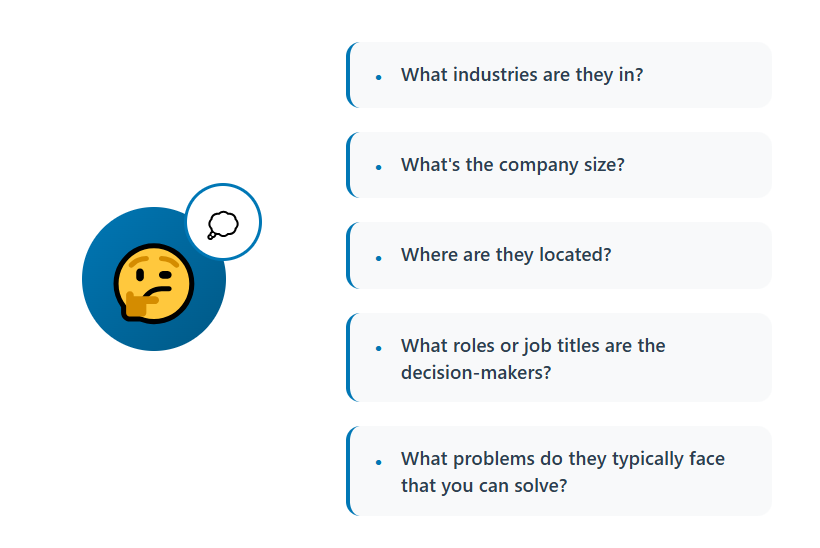
The biggest CAC killer is going too broad. When you're targeting everyone, you're really targeting no one.
Tightening your Ideal Customer Profile means:
- Less wasted outreach on accounts that will never convert.
- Higher reply rates because your messaging is more relevant.
- Shorter sales cycles because you're talking to people with the actual problem you solve.
Precision targeting is one of the fastest ways to lower acquisition costs without cutting spend.
2. Invest in Multi-Touch Outbound
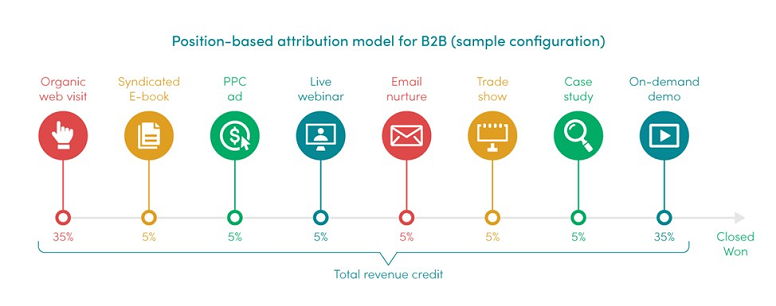
A single cold email rarely closes a deal. But a well-sequenced combination of cold email + LinkedIn + calls builds familiarity over time, and familiarity drives responses.
When a prospect sees your name in their inbox, then on LinkedIn, then gets a call, you're no longer a stranger. That recognition alone increases reply rates significantly. Multi-touch outbound done right feels less like cold outreach and more like a warm conversation starter.
3. Improve Conversion Between Funnel Stages
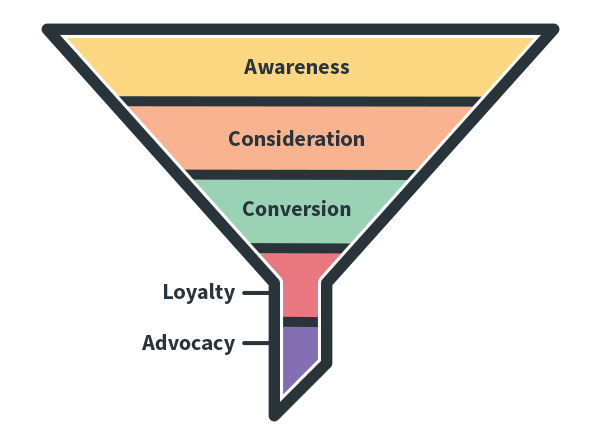
You don't always need more leads at the top. Sometimes the bigger win is fixing the leak in the middle.
Think about it: a 10% improvement in lead-to-meeting conversion, plus a 10% improvement in meeting-to-opportunity conversion, can compound into a 20-30% improvement in overall pipeline without spending a single extra dollar on acquisition.
Audit where prospects are dropping off and fix that first.
4. Align Marketing and Sales
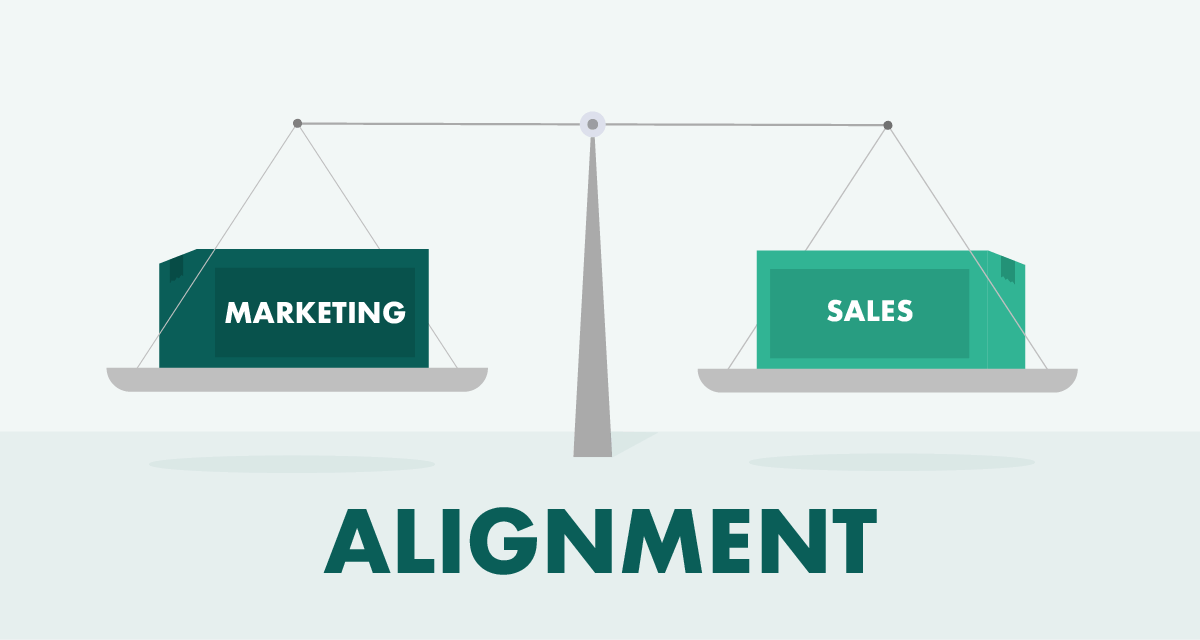
Misalignment between marketing and sales is one of the most expensive and underrated CAC problems. Leads fall through the cracks, follow-up is slow, and good prospects go cold.
A few things that make a real difference:
- Agreed-on lead qualification criteria (so sales isn't chasing bad fits)
- Fast follow-up SLAs on inbound leads
- Shared visibility into pipeline and conversion data
When both teams are rowing in the same direction, deals close faster and CAC drops.
5. Focus on Pipeline Quality, Not Lead Volume
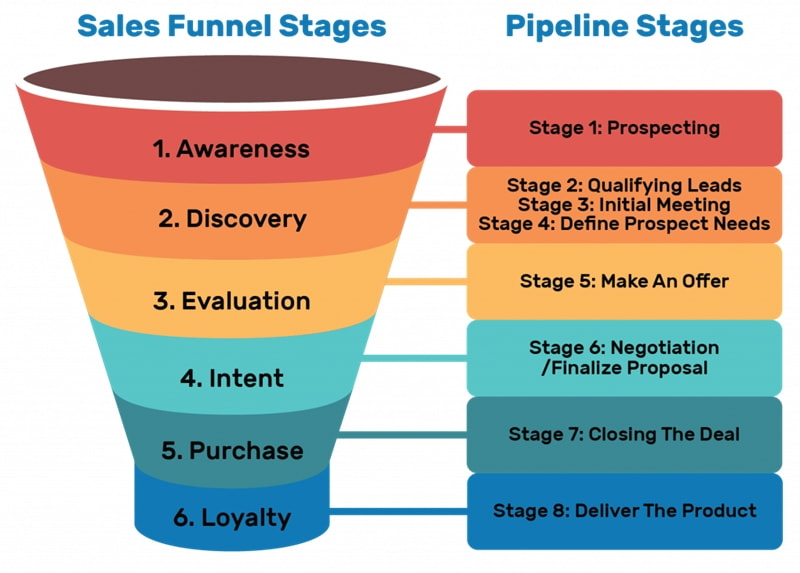
More leads is not always better. A bloated pipeline full of bad-fit accounts wastes sales capacity and inflates your real CAC.
The goal is fewer, better leads that are more likely to convert. A qualified meeting with a real buyer is worth ten times more than ten unqualified form fills. When you shift focus to pipeline quality, your win rates go up and your cost per closed deal goes down.
How to Reduce Customer Acquisition Costs for B2B SaaS
A lot of teams think how to reduce customer acquisition costs for B2B SaaS comes down to spending less. Cut the ads, shrink the team, reduce the tools. But that's not really the answer.
Lower CAC is mostly about converting better, not spending less. Here's where to focus:
✅ Reduce wasted ad spend
Start by killing spend on audiences, channels, and campaigns that aren't producing pipeline. Not just clicks or impressions but actual meetings and opportunities. If you can't draw a line from a channel to revenue, it's a candidate for reallocation.
✅ Improve meeting-to-opportunity conversion
Getting meetings is only half the battle. If those meetings aren't converting to real opportunities, you're still leaking money. Work on discovery call quality, pre-meeting research, and how reps handle early objections. A small lift here compounds fast.
✅ Shorten sales cycles
Every extra week in the sales cycle adds cost. Things that help:
- Better upfront qualification so you're not nurturing bad fits for months
- Clear next steps after every meeting
- Multi-threading early so you're not waiting on one stakeholder to move
✅ Improve qualification standards
Not every lead should get the same attention. Build tighter criteria for what a sales-ready lead actually looks like, company size, intent signals, budget, timeline, and make sure your team is applying it consistently.
✅ Increase outbound efficiency
Outbound gets expensive when targeting is sloppy. Focused outreach to a well-defined ICP with a relevant message will always outperform blasting a broad list. Better targeting means fewer reps chasing fewer bad leads, which directly lowers your cost per closed deal.
✅ Focus on high-LTV accounts
Not all customers are worth the same. If you can identify which segments retain longer, expand more, and churn less, it makes sense to weight your acquisition efforts toward them. A slightly higher CAC for a high-LTV account is almost always a better investment than a low CAC for an account that churns in six months.
The bottom line: reducing customer acquisition costs for B2B SaaS is really an efficiency problem. Fix the conversion leaks, tighten your targeting, and improve what happens after the lead comes in. That's where the real savings are.
Best Practices for B2B Customer Acquisition
Getting acquisition right isn't a one-time fix. These best practices for B2B customer acquisition are the habits that separate teams with predictable pipelines from those constantly scrambling to hit number.
Track full-funnel metrics
Most teams track top-of-funnel really well and bottom-of-funnel reasonably well. The middle? That's where visibility usually breaks down. You need to know conversion rates at every stage: lead to meeting, meeting to opportunity, opportunity to close. Without that, you're flying blind when something goes wrong.
Measure CAC by channel
Your blended CAC gives you a starting point, but it hides a lot. One channel might be delivering customers at $1,500 while another is costing you $8,000 for the same result. Break it down by channel so you know exactly where to invest more and where to pull back.
Avoid single-channel dependency
If 80% of your pipeline comes from one source, that's a risk. Channels shift, algorithms change, costs spike. The teams that stay consistent build across multiple channels so no single change wipes out their pipeline.
Build predictable outbound systems
Outbound works best when it runs like a system, not a series of one-off efforts. That means:
- Defined sequences with consistent follow-up cadences
- Clear ICP criteria before any outreach goes out
- Regular testing and iteration on messaging
- Metrics tracked at every step so you know what's working
Predictability is what makes outbound scalable. Without it, results are inconsistent and hard to improve.
Invest in retention to offset CAC
Every customer you keep is one you don't have to go acquire again. Strong retention stretches the return on every dollar you spent acquiring that customer in the first place. Even a modest improvement in churn can significantly improve your LTV:CAC ratio without touching your acquisition spend at all.
Acquisition and retention aren't separate strategies. The best teams treat them as two sides of the same growth equation.
How Cleverly Supports Lower CAC Through Targeted Outbound
Knowing what to fix is one thing. Having the right team to execute it is another.
That's where we come in. Cleverly is the highest-rated B2B lead generation agency, and everything we do is built around one goal: getting you more qualified meetings at a lower cost per acquisition.
Here's how we help:
- Better ICP targeting so your outreach reaches the right people from day one.
- Higher reply rates through proven, personalized messaging across every channel.
- Higher conversion to opportunity by focusing on meeting-ready leads, not just contacts.
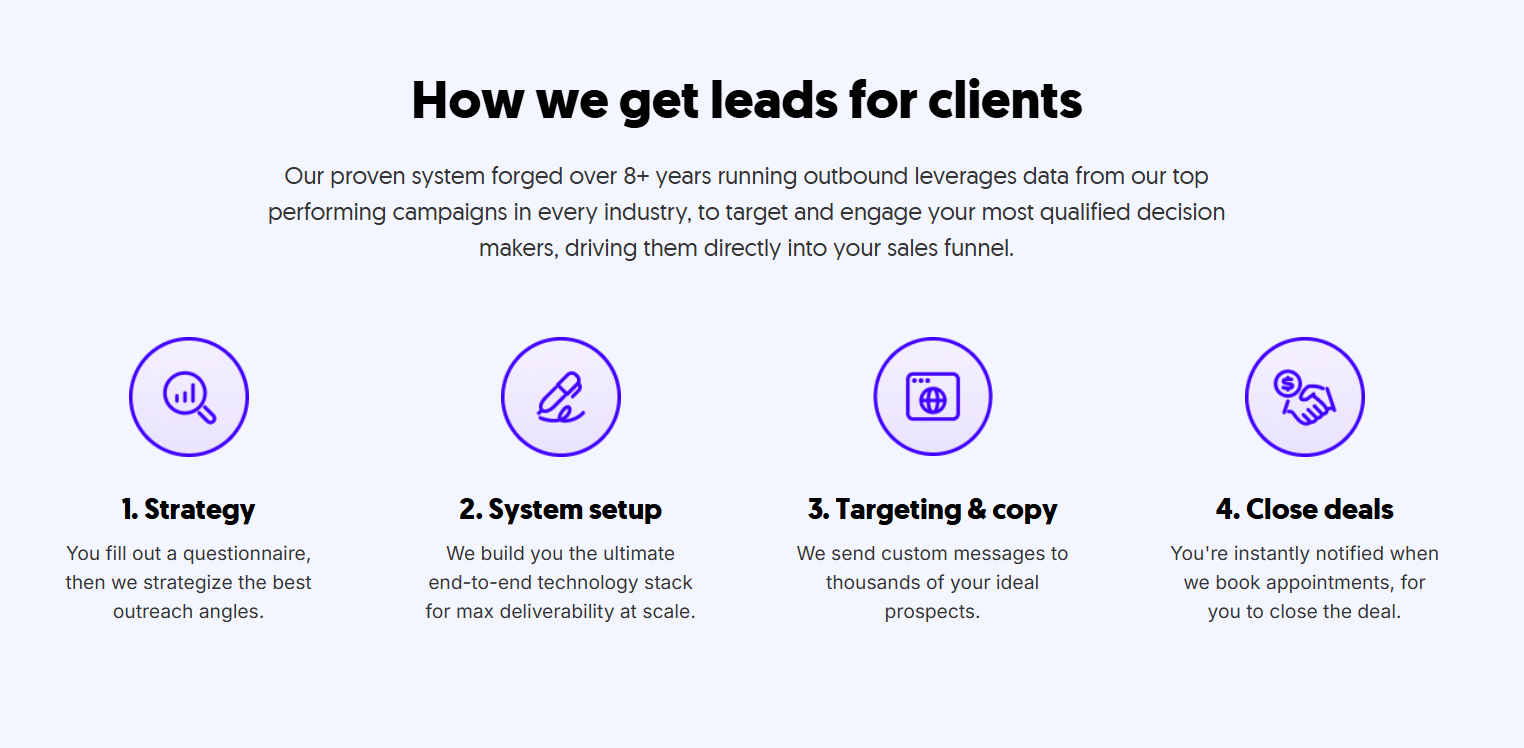
We run fully done-for-you outbound across three channels:
- LinkedIn lead gen starting at just $397/month, used by companies like Amazon, Google, Uber, PayPal, Slack, and Spotify.
- Cold email where you only pay for meeting-ready leads we send you, zero retainer risk.
- Cold calling through our $5M system that books 10 to 30 qualified sales calls every month, guaranteed. No-accent appointment setter placed, breakthrough scripts written, data and power dialer included, all at half the cost of building in-house.
We've helped 10,000+ clients generate $312M in pipeline and $51.2M in closed revenue.
Strategic outbound done right reduces your reliance on expensive paid ads and brings your CAC down without cutting corners.
Ready to build a leaner, more efficient pipeline?
See how Cleverly works →

Conclusion
B2B customer acquisition is getting harder and more expensive. That's just the reality heading into 2026.
Benchmarks are useful, but they only give you context. They don't tell you what to do next. What actually moves the needle is efficiency: better targeting, tighter qualification, and outreach that reaches the right people across multiple channels.
Single-channel strategies are fragile. Multi-touch wins.
The companies that keep CAC under control aren't spending less. They're spending smarter and controlling what goes into their pipeline from the start. That's the real edge.
Frequently Asked Questions
Free Resource
How to Scale a Profitable Cold Call System
Get the complete guide — download it instantly now.
Free Ebook
Download the Free Guide
Enter your details to get instant access.
You're all set! 🎉
Your ebook is downloading now.
Click below if the download didn't start automatically.