Table of Contents
What Is an AI SDR?
What Does a Human SDR Actually Do?
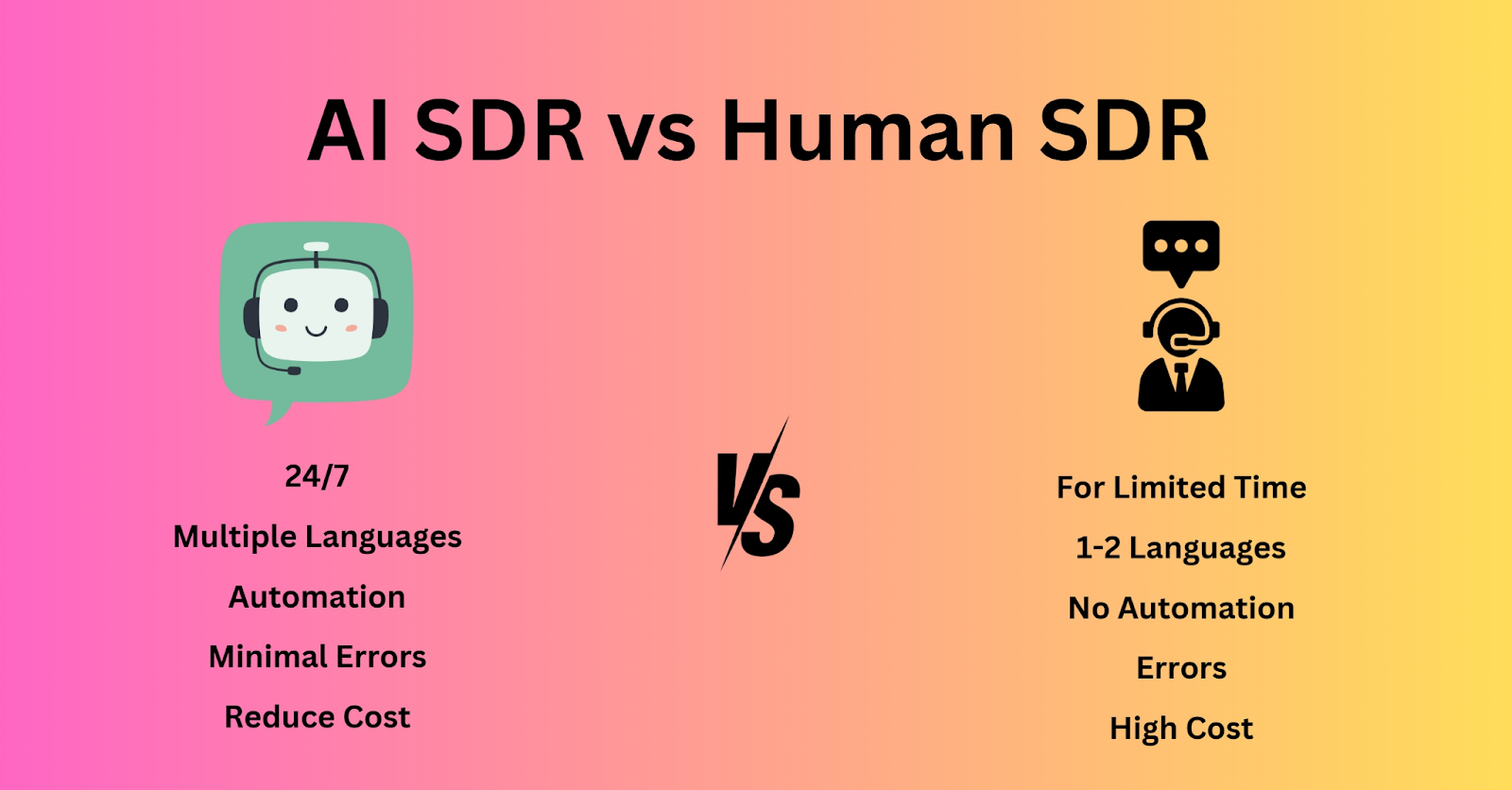
AI SDR vs. Human SDR — Full Side-by-Side Comparison
Where AI SDRs Win
Where Human SDRs Win
The Hidden Costs Most Teams Don't Factor In
Can AI SDRs and Human SDRs Work Together?
How Cleverly Helps B2B Teams Book More Meetings Without Choosing Between AI and Human
Conclusion
Frequently Asked Questions
Modified On :
June 3, 2026
Key Takeaways
- AI SDRs win on speed, scale, and cost — human SDRs win on meeting quality, nuance, and complex deal qualification.
- The AI SDR market hit $5.81 billion in 2026 at a 32% CAGR — this is a structural shift in how outbound teams operate, not a trend.
- AI SDRs deploy in days with zero ramp time; human SDRs cost $90K–$120K+ fully loaded and take 60–90 days to reach full productivity.
- 22% of sales teams have already fully replaced human SDRs with AI — but the highest-performing teams run intelligent hybrid models, not one-or-the-other.
- The biggest mistake revenue leaders make is choosing an SDR model based on hype instead of their actual TAM, deal size, and sales motion.
Booking more meetings is not the same as booking better meetings. That distinction is costing revenue teams millions in wasted AE time, inflated pipeline, and deals that never close.
The AI vs. human SDR debate has exploded in 2025–2026 — but most miss the real question sales leaders are asking: "Will it generate more qualified pipeline for my business, at a cost that makes sense?"
According to a 2026 Business Research Company report, the AI SDR market grew from $4.39B in 2025 to $5.81B in 2026 at a CAGR of 32.3%. Salesforce's State of Sales report shows AI adoption among sales teams has surged from 39% to 81% in just two years.
And yet, only 19% of companies grew their human SDR headcount in 2025 — the lowest rate across all sales functions.
This guide gives you what the hype cycle doesn't: a clear side-by-side breakdown of capabilities, real costs, performance gaps, and a decision framework for choosing the right model (or the right combination) in 2026.
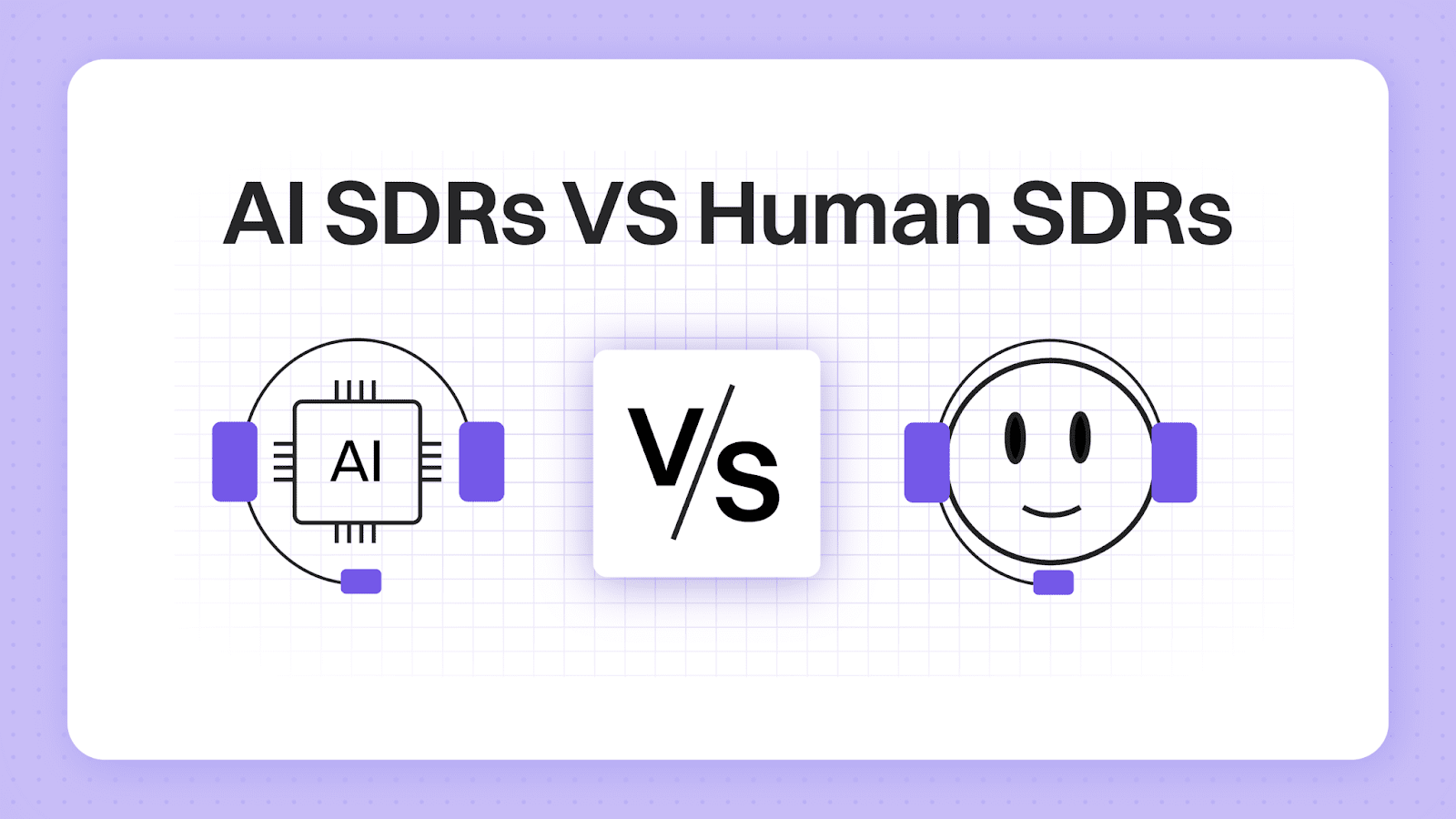
What Is an AI SDR?
An AI SDR is an autonomous software system that performs the end-to-end workflow of a human SDR — without a salary, a ramp period, or an off day.
It combines large language models, machine learning, and NLP to handle prospecting, personalized outreach, follow-up sequencing, and basic reply handling — all at machine speed and scale.
The key word is autonomous. It independently identifies ICP-fit prospects, crafts personalized outreach based on intent signals, and manages full cadences without human input between touchpoints.
How AI SDRs Operate in an Outbound Workflow
A typical AI SDR workflow moves through five stages:
- Prospecting: Scans contact databases, LinkedIn, news feeds, and intent platforms to build ICP-targeted lists.
- Personalized outreach: Generates messages referencing the prospect's role, company news, hiring signals, or tech stack.
- Multi-channel sequencing: Orchestrates coordinated outreach across email, LinkedIn, SMS, and voice — switching channels based on engagement data.
- Reply handling: Manages simple positive and negative responses and routes interested replies to a human.
- Meeting booking: Autonomously schedules meetings on the AE's calendar when a prospect engages positively.
Key AI SDR Tools in 2026
The market has matured fast. Platforms like Artisan (flagship AI SDR "Ava"), 11x.ai (autonomous digital workers), Qualifieds AI SDR Piper, and Landbase (agentic GTM-1 Omni model) represent the leading edge. The AI SDR industry has consolidated quickly around a handful of platform archetypes — autonomous agents, hybrid assistants, and workflow-embedded copilots — each targeting different GTM motions and team sizes.
Enterprise contracts for platforms like 11x start around $40,000–$45,000 per year — before data and infrastructure costs are factored in.
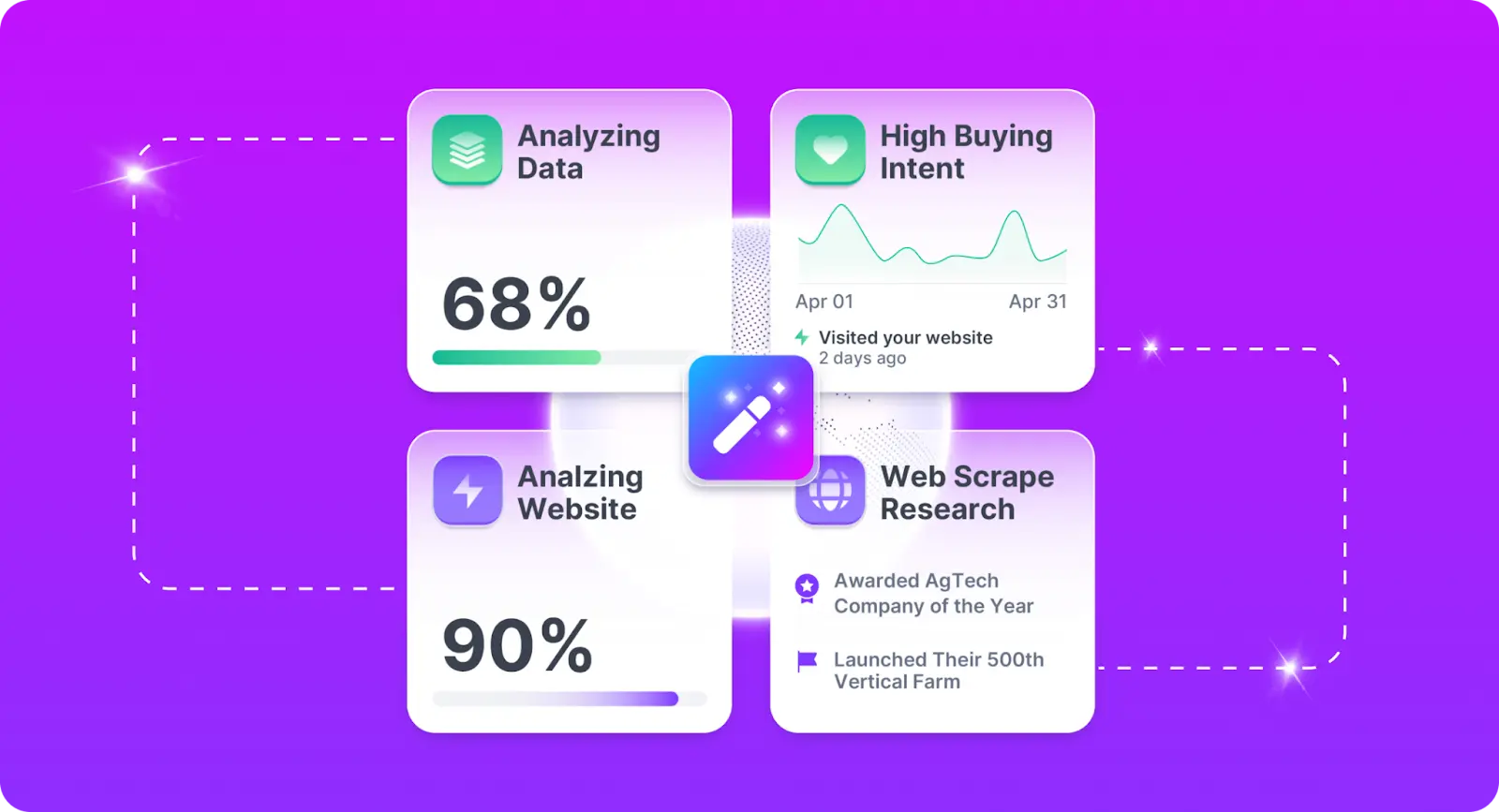
AI SDR Tool vs. AI SDR System
An AI SDR tool automates one part of the workflow — like AI copywriting inside a sequencer.
An AI SDR system is an end-to-end autonomous stack: data sourcing, targeting, personalization, sequencing, reply management, and booking — all without a human in the loop between steps.
Most companies that report disappointing AI SDR results bought a tool and expected a system. The two are not interchangeable.
🤖 AI Is Fast. Meetings Are Faster.
Cleverly combines LinkedIn + cold email + cold calling to generate a real pipeline. Over $312M in pipeline created for 10,000+ companies.
What Does a Human SDR Actually Do?
Core Responsibilities and Where the Value Sits
A human SDR covers four functions: prospecting, outreach, lead qualification, and handoff to an AE.
On paper, this mirrors what AI SDRs do. In practice, the difference is in how each function gets executed — and how much real-world judgment is applied at every step.
A human SDR reads between the lines. They notice a prospect's LinkedIn post signals a budget conversation. They adjust their tone after a company announces layoffs. These daily judgment calls are the difference between a booked meeting and a burned contact.

Where Human SDRs Add Irreplaceable Value
Human SDRs consistently outperform AI where contextual nuance and real-time conversation determine whether a meeting gets booked:
- Objection handling: A human pivots mid-conversation and reframes value in real time. AI responds from a script — it cannot navigate a skeptical prospect through a live back-and-forth.
- Trust-dependent industries: In healthcare, finance, and legal, AI-generated outreach doesn't just underperform — it can permanently damage a prospect relationship.
- Reading conversational intent: Human SDRs gauge interest from word choice, response time, and tone in ways that rule-based AI qualification cannot yet replicate.
The Real Cost of a Human SDR in 2026
A human SDR costs around $60,000 in base salary — but that's only the beginning.
Factor in benefits, tools, manager time, and recruiting costs, and the fully-loaded cost runs $90,000–$120,000+ per year. Add a 60–90 day ramp period and a 30–45% annual SDR attrition rate, and the true investment becomes significant fast.
AI SDR vs. Human SDR — Full Side-by-Side Comparison
Pro Tip: If your average deal size is above $50K and involves multiple stakeholders, meeting quality matters far more than meeting volume. Prioritize human SDR capability — or a hybrid model — over raw AI output.
📞 Want 10–30 Sales Calls Every Month?
Our $5M cold calling system with trained SDRs books qualified meetings for you. Plus LinkedIn and cold email outreach to keep your pipeline full.
Where AI SDRs Win
High-Volume Top-of-Funnel Prospecting
When your TAM is large and your goal is to initiate contact across thousands of ICP-fit accounts simultaneously, AI SDRs are unmatched.
Salesforce data shows human reps spend only 28% of their time on actual selling. AI eliminates much of the research and sequencing work that consumes the other 72% — freeing humans for conversations that actually move deals forward.
Speed to Launch With Zero Ramp
Hiring a human SDR takes weeks. Onboarding takes months.
An AI SDR system deploys in days — no recruiting costs, no benefits, no performance management overhead. For early-stage teams validating a new ICP or testing outbound messaging strategies, this speed advantage is critical.
Consistent Follow-Up Without Drop-Off
One of the most consistent failure modes in human-led outbound is follow-up inconsistency — SDRs get busy, deprioritize accounts, or forget entirely.
AI SDRs execute every step of every cadence, every time, without exception. The difference between a 3-touch and a 7-touch cold outreach sequence isn't just two extra emails — it's the difference between catching a prospect at the right moment or missing them entirely.
24/7 Outreach Across Time Zones
AI SDRs don't operate 9-to-5. They engage prospects in Singapore at 2am and follow up with London leads at 6am — all without additional headcount.
For companies selling into global markets, around-the-clock execution is a genuine competitive advantage that a human team simply can't match without significant cost.

Where Human SDRs Win
Complex, Multi-Stakeholder Enterprise Deals
When a deal involves a procurement committee, multiple champions, and a multi-month buying cycle, the relationships built before a meeting matter as much as the meeting itself.
Human SDRs navigate organizational complexity, adapt messaging based on who they're talking to, and build the credibility that earns a meeting with a CFO or VP of Engineering. In enterprise sales motions, the wrong message at the wrong moment doesn't just miss — it burns the account.
Trust-Dependent Industries
Healthcare, financial services, legal, and professional services require professional credibility before a meeting will even be considered.
Prospects in these spaces are acutely aware of automated outreach. A human SDR who demonstrates genuine industry knowledge isn't just better here — they're often the only approach that works.
Real-Time Objection Handling
Consider this: a prospect replies, "We already work with a competitor — what makes you different?"
An AI SDR returns a pre-scripted response. A human SDR asks a follow-up question, uncovers what's actually frustrating about the current solution, and tailors their reply in real time. Multiply that gap across hundreds of conversations and the pipeline difference is enormous.
High-Ticket Offers Where Quality Beats Volume
When your ACV is $100K+, one meeting with the wrong prospect costs more than ten missed meetings with the right one.
Human SDRs pre-qualify through conversation, identify whether real budget and authority exist, and protect AE time from meetings that will never close.
The Hidden Costs Most Teams Don't Factor In
The Real Cost of an AI SDR System
The sticker price of an AI SDR tool is easy to find. The full cost of a deployed AI SDR system is not.
Beyond the platform fee — ranging from $1,000/month for entry-level tools to $40,000+/year for enterprise systems — there are significant hidden costs most teams overlook:
- Data subscriptions: Quality contact and intent data adds $500–$3,000+/month.
- Prompt engineering: Getting AI messaging to sound human and stay on-brand requires skilled, ongoing setup — not a one-time task.
- Human oversight: Most AI SDR deployments still require someone to review flagged replies and course-correct messaging drift.
- Deliverability infrastructure: Email domain warming and spam monitoring require dedicated attention at scale.
The Real Cost of a Human SDR
A $60K base salary becomes $90K–$120K+ fully loaded when you include payroll taxes, benefits, tools, and manager bandwidth.
Factor in 60–90 days to full productivity and sub-18-month average tenure, and you're paying full cost for six months of ramp — before attrition risk kicks in for the remaining 12.
The Meeting Quality Gap: Volume ≠ Pipeline Value
An AI SDR booking 30 meetings per month with low-quality prospects costs your AEs time and inflates top-of-funnel metrics without adding real pipeline value.
The downstream cost of bad meetings — missed quota, wasted AE cycles, and a distorted view of ICP fit — can far exceed the apparent savings of an AI-only approach. Always measure cost-per-qualified-meeting, not cost-per-meeting.
Pro Tip: Before evaluating any SDR solution, define your meeting quality benchmark first. What must be true before a meeting reaches an AE? Build that criteria into your evaluation — not just volume targets.
Can AI SDRs and Human SDRs Work Together?
The Hybrid Model: How Leading Outbound Teams Structure It
The teams generating the most qualified pipeline in 2026 aren't choosing between AI and human — they're combining both intelligently.
AI handles what it does best: volume, speed, and consistency. Humans handle what they do best: judgment, nuance, qualification, and relationship. The result is an outbound system that scales without sacrificing meeting quality.
A well-structured hybrid model divides responsibilities clearly:
- AI handles: ICP identification, prospect list building, multi-channel sequencing, cadence execution, and routing of engaged replies.
- Human SDRs handle: Warm reply responses, live qualification conversations, objection handling, and meeting confirmation before passing to an AE.
Where to Draw the Handoff Line
The handoff moment — where AI passes to human — is the most critical design decision in a hybrid outbound system.
The right trigger is any reply that requires judgment to interpret. Simple positive responses can route to AI scheduling logic. Anything ambiguous, skeptical, or objection-containing should immediately go to a human.
A Real-World Hybrid SDR Workflow
Here's what a high-performing hybrid outbound workflow looks like in practice:
- AI pulls and prioritizes 500 ICP-fit accounts based on intent signals and firmographic data.
- AI executes a 7-touch multi-channel sequence across email and LinkedIn over 21 days.
- Positive engagements trigger AI-scheduled intro call confirmations.
- Questions, objections, or ambiguous replies route instantly to a human outbound specialist.
- The specialist qualifies, clears objections, and confirms intent before handing to an AE.
- The AE receives a pre-qualified meeting with full context — not just a calendar invite.
This model consistently outperforms both AI-only and unmanaged human SDR approaches when executed with the right handoff structure.
How Cleverly Helps B2B Teams Book More Meetings Without Choosing Between AI and Human
Most outbound teams face a false binary: buy an AI SDR tool and hope it performs, or hire a human SDR and wait three months for results.
Cleverly was built on the conviction that neither approach, on its own, is the answer.
Cleverly doesn't make you choose between AI and human — it engineers the optimal blend for each client's ICP, goals, and sales motion.
Data infrastructure and automation handle targeting and sequencing while human judgment sits at the core of messaging, reply handling, and qualification.
The result is outreach that scales without losing the contextual relevance that actually books meetings for you!
Across LinkedIn lead generation, cold email outreach, and cold calling, Cleverly runs every channel as a fully managed system — not a tool you operate yourself.
🚀 LinkedIn campaigns start at $397/month with human-crafted messaging and ICP-precise targeting.
🚀 Cold email runs on a pay-per-meeting model, so you only pay for meeting-ready leads.
🚀 Cold calling places a trained, pre-vetted SDR on your account in two weeks, making 200+ dials per day with guaranteed appointments or a free replacement.
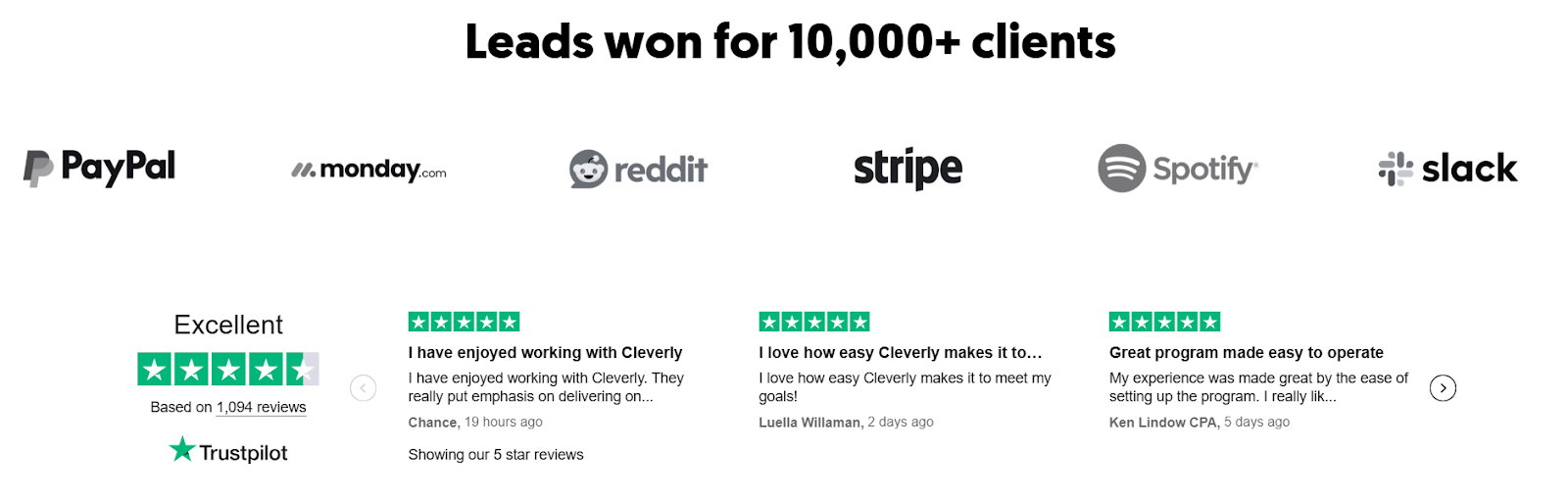
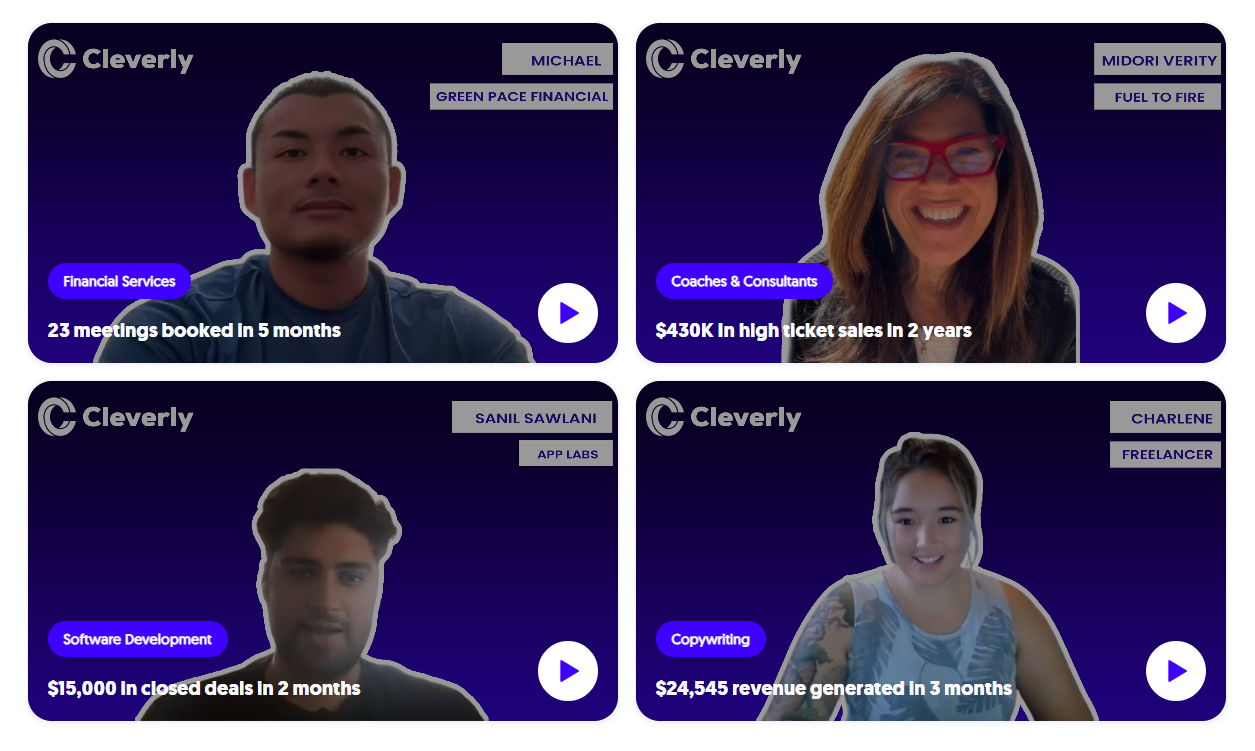
With 10,000+ clients served and $312M+ in pipeline generated, Cleverly has seen firsthand what separates outbound that books real meetings from outbound that generates activity metrics. The difference is almost never the tool — it's the strategy, the targeting, and the quality of execution behind it.
🚀 Ready to Combine AI Efficiency with Human-Led Outbound? Book your free strategy call.
Conclusion
There is no universal winner in the AI vs. human SDR debate — and any vendor who tells you otherwise is selling something. The right answer depends entirely on your TAM, deal size, and sales motion.
The teams winning in 2026 aren't debating which to choose. They're building intelligent hybrid systems where AI and human each play to their strengths — and they're partnering with execution experts who can engineer those systems from day one. Start with fit, not hype.
Frequently Asked Questions
Free Resource
How to Scale a Profitable Cold Call System
Get the complete guide — download it instantly now.
Free Ebook
Download the Free Guide
Enter your details to get instant access.
You're all set! 🎉
Your ebook is downloading now.
Click below if the download didn't start automatically.