Table of Contents
What Is Cold Calling Appointment Setting?
Why Appointment Setting Is Critical in Cold Calling
Cold Calling Appointment Setting Process
Cold Call Appointment Setting Script
Common Mistakes in Cold Calling Appointment Setting
Tips to Improve Cold Calling Conversion Rates
Tools That Help With Appointment Setting
Cold Calling vs Other Appointment Setting Channels
How Cleverly Helps Book Meetings Through Cold Calling
Conclusion
Frequently Asked Questions
Modified On :
July 31, 2026
Key Takeaways
- Cold calling appointment setting is a structured process, not a volume game.
- Qualifying before pitching is what separates booked meetings from wasted dials.
- A good script gives reps a framework, not a word-for-word read.
- Objections are part of every call and how you handle them determines your conversion rate.
- Multi-channel outreach combining calls, email, and LinkedIn outperforms any single channel.
- Consistent tracking and call review is what turns an average cold caller into a top performer.
Most people treat cold calling like a numbers game. Dial enough people, and someone will eventually say yes. That's not a strategy, that's hope.
Cold calling appointment setting is a different discipline entirely. It's not about volume for the sake of volume. It's about calling the right people, saying the right things, and getting a "yes, let's talk" before they hang up.
Done right, cold calls are still one of the fastest ways to get a decision-maker on your calendar. No waiting weeks for an email reply. No competing in someone's crowded inbox. Just a real conversation that either moves forward or doesn't.
In this guide, we're breaking down exactly how to turn cold calls into booked meetings, from the first hello to a confirmed slot on your calendar.
What Is Cold Calling Appointment Setting?
Cold call appointment setting is the process of calling a prospect you've never spoken to before and getting them to agree to a formal meeting with your sales team.
It's one step in a larger sales process, but it's one of the most important ones.
Cold calling vs. appointment setting: what's the difference?
- Cold calling is the act of making the call
- Appointment setting is the goal of that call, getting a meeting on the calendar
- Not every cold call is an appointment setting call, but in B2B sales, it usually should be

The role of SDRs
Sales Development Representatives (SDRs) own this part of the process. Their job isn't to close deals. It's to start conversations and hand off qualified, booked meetings to Account Executives.
Why it matters for your pipeline
- No meetings = no pipeline
- Cold call appointment setting feeds your sales funnel with real, qualified conversations.
- It's one of the few outbound channels where you can go from zero to booked meeting in under 10 minutes.
Tools that Help: Best Sales Pipeline Management Software
📞 Turn Cold Calls Into 10–30 Sales Meetings Monthly
Our $5M cold calling system books qualified appointments using trained SDRs and proven call scripts. Guaranteed meetings — or we replace the SDR.
Why Appointment Setting Is Critical in Cold Calling
If your reps are cold calling without a clear goal of booking a meeting, they're just making noise. Here's why cold calling appointment setting is what separates active pipeline from wasted dials:
It turns conversations into pipelines.
Every booked meeting is a potential deal. Without appointment setting, cold calls are just conversations with nowhere to go.

It makes your sales team more efficient
- SDRs focus on prospecting and booking
- AEs focus on closing
- No one is doing everything, and doing it poorly
It separates prospecting from closing.
Mixing these two roles is one of the biggest mistakes B2B teams make. When you split them, both functions perform better.

It directly improves conversion rates.
A structured appointment setting process means reps aren't winging it. They follow a process, qualify properly, and only book meetings that are worth both parties' time.
Also Check: Scale Smart And Outsource Cold Calling Services
Cold Calling Appointment Setting Process
There's no magic to booking meetings over the phone. It's a repeatable process. Here's how it works:
Step 1: Target the Right Prospects
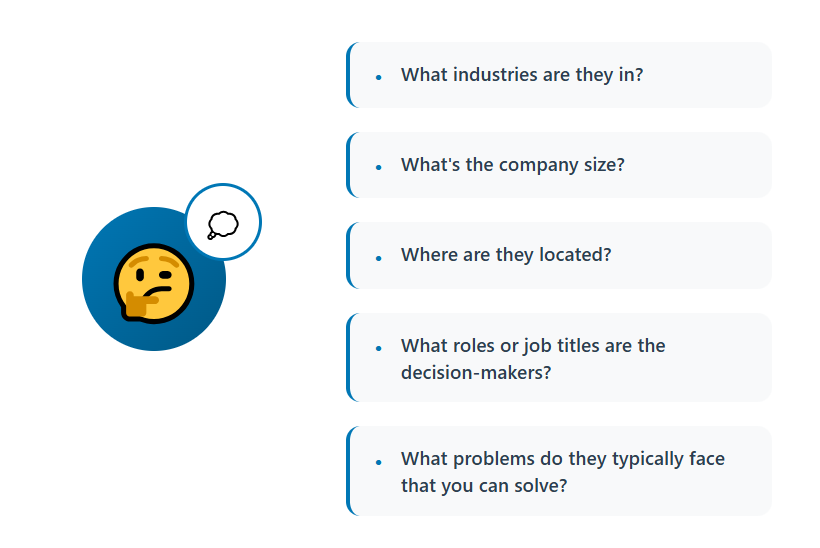
Before you dial, get clear on who you're calling.
- Define your Ideal Customer Profile (ICP): industry, company size, job title, pain points
- Build targeted lists based on that ICP, not just whoever's available in a database
- Bad targeting = low connect rates, worse conversations
Step 2: Prepare Before the Call
You don't need to spend 30 minutes researching every prospect. But you do need context. Having your target notes integrated inside a modern business phone system allows reps to view company details and role-specific value propositions instantly before starting a call.
- Know the company, their role, and one relevant reason you're calling.
- Have your value proposition ready: what problem do you solve and why does it matter to them specifically.
Step 3: Start the Conversation
The first 15 seconds decide everything.
- Lead with a strong, specific opening line that earns their attention.
- State who you are, why you're calling, and ask if it's a decent time.
- Don't pitch immediately. Get permission to continue first.
Learn More Here: Best Cold Call Opening Lines to Nail the First 15 Seconds (With Examples)
Step 4: Qualify the Prospect
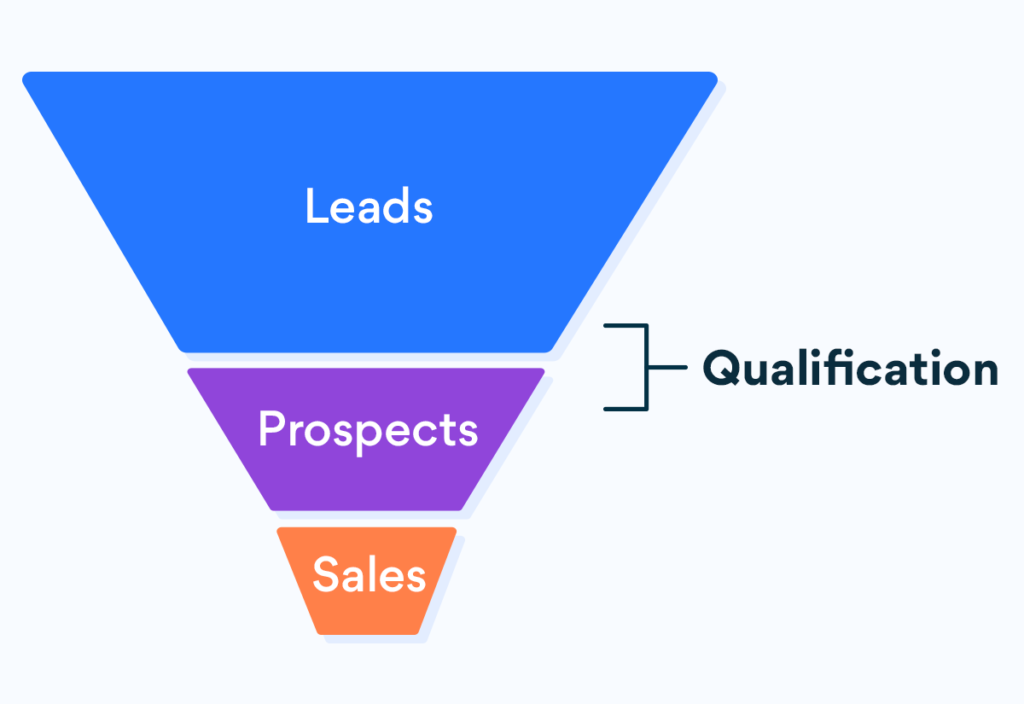
Not everyone you call is worth booking a meeting with.
- Ask questions to understand their current situation and challenges.
- Confirm there's a real need your solution can address.
- If they're not a fit, move on. A bad meeting wastes everyone's time.
Step 5: Pitch the Meeting
This is where most reps overcomplicate it.
- Position the meeting around value for them, not your product features.
- Keep the ask simple: "Would it make sense to set aside 20 minutes this week to see if we can help?".
- Short, low-commitment asks convert better.
Step 6: Handle Objections
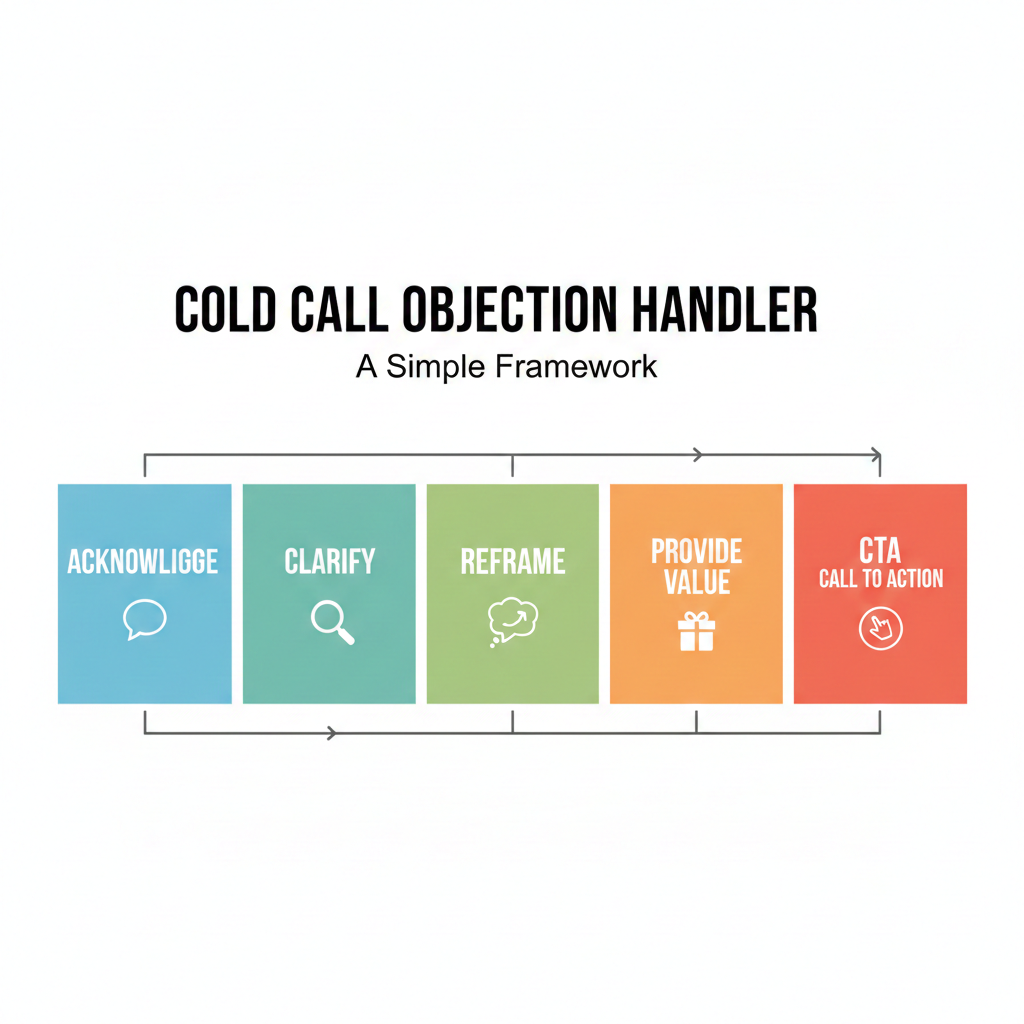
Cold calling objections aren't rejections. They're questions in disguise. Common ones you'll hear:
- "I'm not interested" -- ask what's driving that
- "Send me an email" -- acknowledge, then re-anchor to the value of a quick call
- "We already have a solution" -- ask how it's working for them
Stay calm, stay curious, and don't cave at the first pushback.
More on This: Cold Calling Rejection - How Top SDRs Turn No Into Next
Step 7: Book the Appointment
You've done the hard part. Now lock it in.
- Suggest two specific times: "Does Tuesday at 10 or Thursday at 2 work?"
- Send a calendar invite immediately while they're still on the phone
- Confirm the meeting details: time, who's joining, what to expect
A booked meeting that doesn't get a confirmation is just a verbal promise. Always send the invite.
Interesting Read: Sales Call Structure We Used to Generate $16,000,000+
🚀 Skip Hiring SDRs. Start Booking Calls.
We’ve made 1M+ cold calls, set 53K appointments, and generated $312M in pipeline. Get a trained appointment setter live in just 2 weeks.
Cold Call Appointment Setting Script

A good cold call appointment setting script isn't a script you read word for word. It's a framework that keeps the conversation moving in the right direction.
These examples give you the structure. Make them sound like you.
Script 1: B2B SaaS Appointment Setting
Opening: "Hey [Name], this is [Your Name] from [Company]. I know this is a cold call, do you have 30 seconds so I can tell you why I reached out?"
Context + Value: "We work with [similar companies] helping them [specific result, e.g., cut their sales cycle down by getting more qualified meetings on the calendar]. I noticed [relevant trigger, e.g., you recently expanded your sales team] and thought it might be worth a quick conversation."
Qualification: "Out of curiosity, how are you currently handling your outbound? Is it mostly inbound leads, or do you have an active prospecting motion going?"
Follow-up: "And is that something you're trying to scale up this quarter, or more of a back-burner thing right now?"
Meeting Pitch: "That makes sense. Based on what you've shared, it might be worth 15 minutes to show you how we're helping similar companies get more meetings without adding headcount. No pitch deck, just a quick conversation."
Close: "Does early next week work, or is later in the week better for you?"
Script 2: B2B Agency Services (Cold Calling Agency)
Best for: Agencies selling marketing, lead gen, or growth services to SMBs or mid-market companies.
Opening: "Hey [Name], it's [Your Name] from [Company]. Quick cold call here, got 30 seconds?"
Context + Value: "We help [industry] companies build outbound systems that actually generate pipeline. Most of the teams we work with were either doing it manually or not at all, and we helped them get [specific outcome, e.g., 15 to 20 qualified sales calls booked every month]."
Qualification: "How's your current lead gen setup? Are you doing any outbound, or mostly relying on referrals and inbound?"
Follow-up: "Is growing your pipeline something that's a priority right now, or are you focused on other things?"
Meeting Pitch: "Got it. It might be worth a quick chat to see if what we're doing would translate to your business. It's 15 minutes, and you'll walk away knowing exactly how we'd approach it for you."
Close: "What does your calendar look like this week or next?"
Script 3: Real Estate (Commercial or Investment)
Best for: Commercial real estate firms or investment groups prospecting property owners or developers.
Opening: "Hey [Name], this is [Your Name] with [Company]. I know I'm catching you out of the blue, do you have a minute?"
Context + Value: "We work with property owners in [area/market] who are looking to [sell, lease, refinance, or reposition] their assets. We recently helped someone in a similar situation [specific result, e.g., close 20% above asking in under 60 days]."
Qualification: "I'm curious, are you currently doing anything with the [specific property or portfolio], or is it something you're holding onto for now?"
Follow-up: "And if the right opportunity came along, is that something you'd want to at least look at?"
Meeting Pitch: "Makes sense. Would it be worth 15 minutes to go over what the market looks like right now for properties like yours? No commitment, just want to give you a clear picture."
Close: "Are you free sometime this week, or does next week work better?"
Script 4: General B2B (Any Industry)
Best for: Teams selling to a broad set of industries where the pain point is consistent.
Opening: "Hey [Name], it's [Your Name] from [Company]. Cold call, I'll keep it short. Do you have 30 seconds?"
Context + Value: "We help [role, e.g., VP of Sales, business owners] at [company type] solve [core problem, e.g., inconsistent pipeline, low connect rates]. We've worked with [X number of companies] in your space and the results have been pretty consistent."
Qualification: "Quick question, what does your current [process area, e.g., outbound sales motion] look like right now?"
Follow-up: "Is that working well for you, or is it something you're trying to improve?"
Meeting Pitch: "Okay, based on what you're describing, I think there's something real here. Can we grab 15 minutes this week? I'll show you exactly what we're doing for companies in your position."
Close: "Does Tuesday or Wednesday work, or do you want to push it to later in the week?"
A few things to keep in mind across all scripts:
- Never read these line for line. Know the structure, then talk like a normal person.
- If they say no to a meeting, ask one more question before you let them go.
- The close should always offer two options. It makes it easier to say yes than no
Common Mistakes in Cold Calling Appointment Setting
Most reps don't lose deals because of bad luck. They lose them because of avoidable habits. Here's what to watch out for:
❌ Talking too much: The call should feel like a conversation, not a monologue. If you're doing more than 50% of the talking, you've already lost them. Ask questions, then actually listen.
❌ Pitching too early: Jumping into your pitch before you understand their situation is one of the fastest ways to get hung up on. Earn the right to pitch by qualifying first.
❌ No personalization: "I'm calling because we help companies like yours..." tells them nothing. Reference something specific, their industry, a recent hire, a trigger event. Generic openers get generic responses, which is usually a no.
❌ Weak call-to-action: Ending a call with "so, would you maybe want to connect sometime?" is not a close. Be direct. Offer two specific times and make it easy for them to say yes.
❌ Not following up: Most meetings aren't booked on the first call. If you're not following up at least 3 to 5 times across calls, voicemails, and emails, you're leaving meetings on the table.
Tips to Improve Cold Calling Conversion Rates
Small adjustments in how you run calls can make a significant difference in how many meetings you book. Here's what actually moves the needle:
✅ Focus on the conversation, not the pitch: Your goal on a cold call is not to explain everything about your product. It's to get the prospect talking and find a reason to meet. Treat it like a conversation between two people, not a sales presentation.
✅ Keep calls short and clear: Respect their time. A well-run cold calling appointment setting call should take 3 to 5 minutes. If you can't make your point in that window, you need to tighten your message.
✅ Personalize based on role: A VP of Sales and a Marketing Director have different problems. Your opening line, your questions, and your meeting pitch should reflect that. One script for everyone is a missed opportunity.
✅ Follow a structured script: Not a word-for-word read, but a clear framework: open, qualify, pitch the meeting, handle objections, close. Reps who wing it are inconsistent. Reps who follow a structure are predictable in the best way.
✅ Track and optimize performance: Look at your connect rate, conversion rate, and objection patterns regularly. If you're getting a lot of "send me an email" responses, your opener might need work. If people are dropping off at the pitch, your value prop isn't landing. Data tells you where to fix it.
Dive Deeper: Best Time to Cold Call (Backed by Data & Research)
Tools That Help With Appointment Setting
The right tech stack for cold calling appointment setting service makes things faster, cleaner, and easier to scale. Here's what you actually need:
CRM Tools
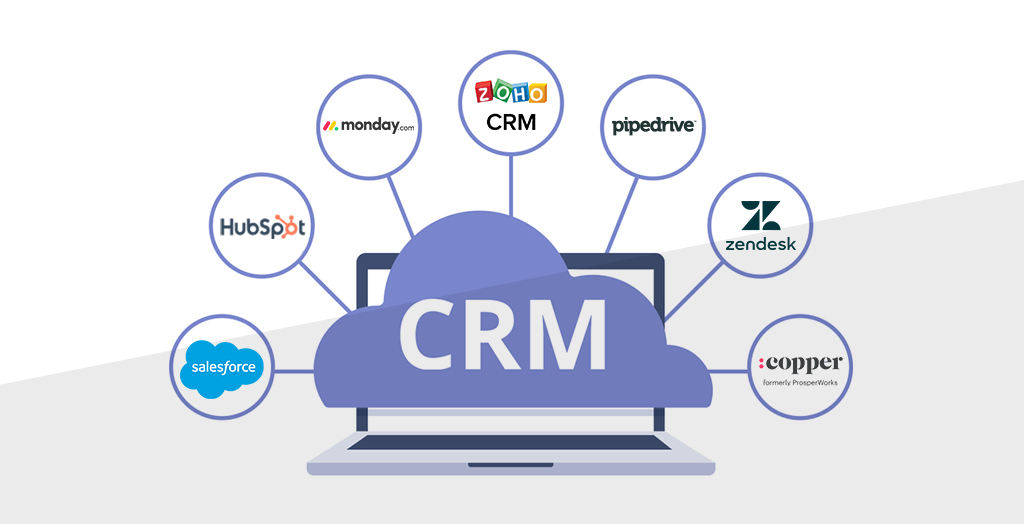
Your CRM is the backbone of your outbound process. It tracks every prospect, every call, every follow-up, and every booked meeting in one place.
- Salesforce: Best for larger sales teams that need deep customization and reporting
- HubSpot: A solid option for SMBs. Clean interface, easy to use, good native integrations
- Pipedrive: Great for small teams that want a simple, visual pipeline without the complexity
Dialing Software
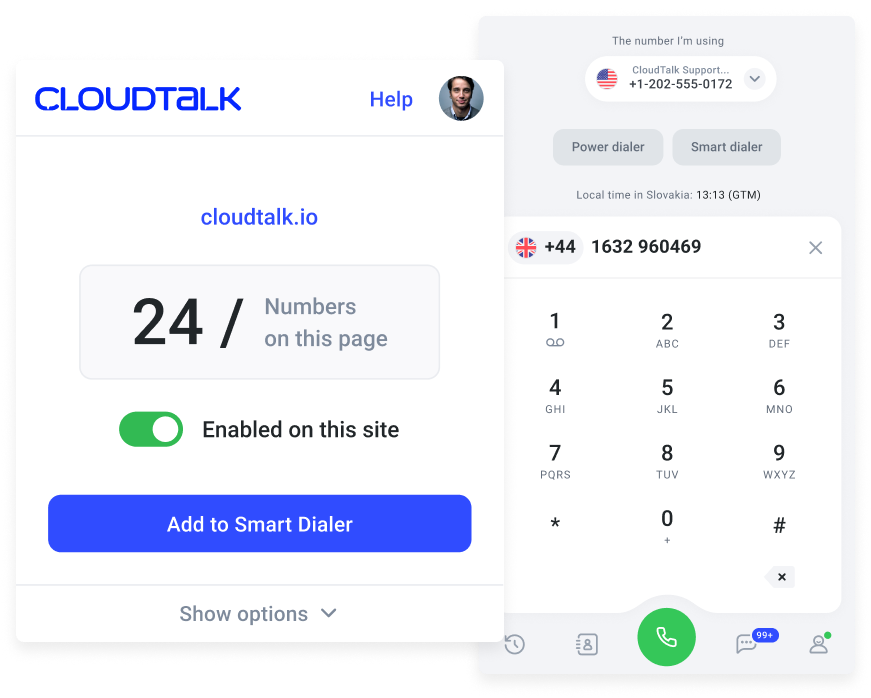
Manual dialing kills productivity. A power or parallel dialer lets reps move through lists faster and spend more time in actual conversations.
- Aircall: Cloud-based, easy to set up, integrates well with most CRMs
- Orum: AI-powered parallel dialer built specifically for high-volume outbound teams
- PhoneBurner: Popular among SMB sales teams for its simplicity and call logging features
Call Tracking and Recording Tools
You can't improve what you don't review. Call tracking tools help managers coach reps and help reps self-correct.
- Gong: Records and analyzes calls using AI. Surfaces patterns in winning vs. losing conversations.
- Chorus (by ZoomInfo): Similar to Gong. Good for teams already in the ZoomInfo ecosystem.
- CallRail: A more lightweight option for tracking call volume, sources, and outcomes.
Scheduling Tools
Once a prospect says yes to a meeting, make booking frictionless.
- Calendly: The most widely used scheduling tool. Lets prospects pick a time directly from your calendar.
- Chili Piper: Built for B2B sales teams. Routes meetings automatically and integrates with CRM.
- Google Calendar / Outlook: Still works fine for manual booking, especially on smaller teams.
The best stack is the one your team actually uses consistently. Don't overcomplicate it.
Cold Calling vs Other Appointment Setting Channels
Cold calling is powerful, but it doesn't exist in a vacuum. Here's how it stacks up against other outbound channels and when to use each:
Cold Calling vs Cold Email
Cold email is great for warming someone up. Cold call appointment setting is what gets you on the calendar.
Cold Calling vs LinkedIn Outreach
LinkedIn is excellent for building familiarity before a call. But if you're waiting for someone to reply to a connection request to start a conversation, you're moving too slow.
When to Use Each Channel
- Use cold calling when you need meetings fast and you have a well-defined ICP.
- Use cold email when you're working a larger list and need to scale touches.
- Use LinkedIn when you're targeting senior decision-makers who are active on the platform.
- Use all three when you want to maximize your chances of getting a response.
The Case for a Multi-Channel Approach
The highest-converting outbound teams don't pick one channel. They combine all three.
A prospect might ignore your email, scroll past your LinkedIn message, and then pick up your call on Tuesday morning. That's not a coincidence. That's sequencing.
Cold call appointment setting works best when it's part of a coordinated outbound system, not a standalone tactic.
Learn Why: Single-Channel Outreach Is Breaking Your Attribution Model
How Cleverly Helps Book Meetings Through Cold Calling
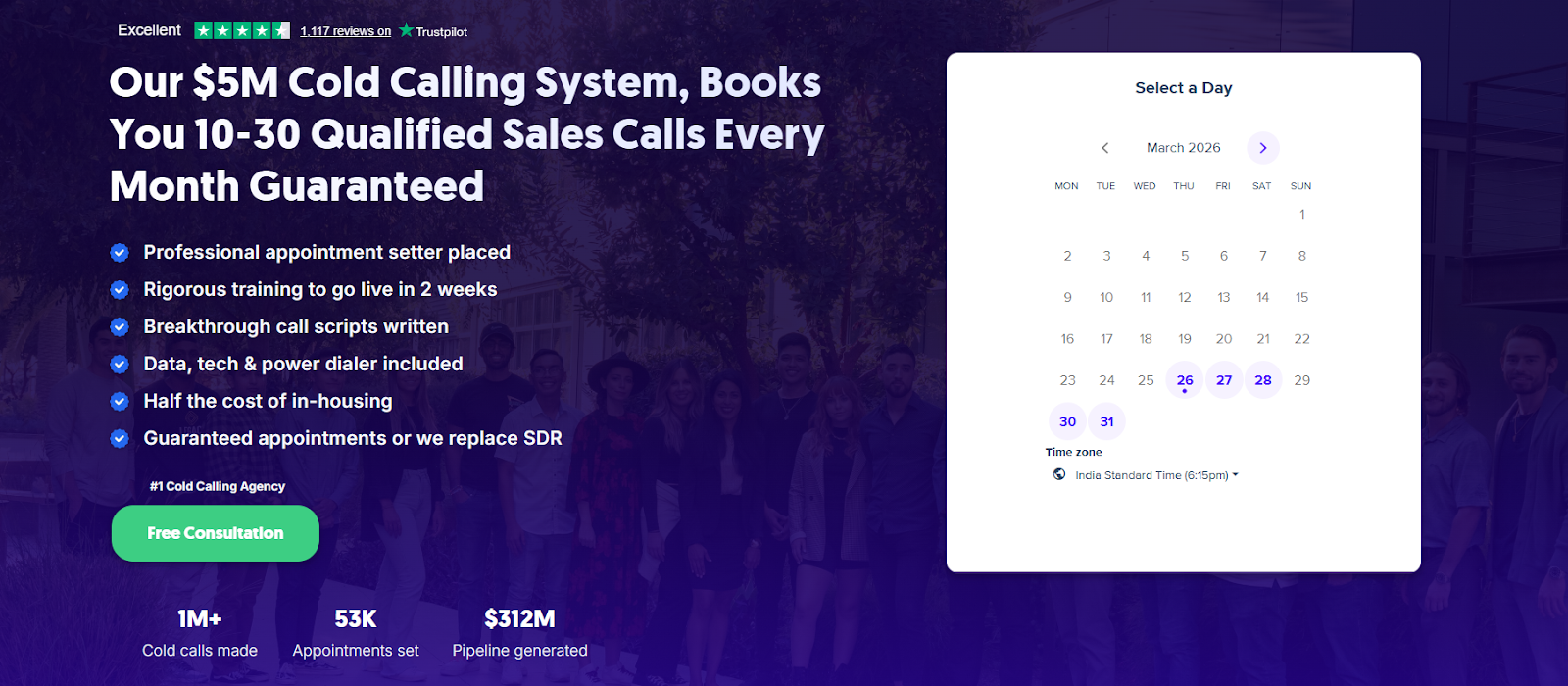
You can have the best script in the world, but if the person dialing doesn't have the experience, the training, or the volume to back it up, you're not going to see results. That's where we come in.
Cleverly is the #1 cold calling agency for B2B companies that want a fully done-for-you appointment setting system without the headache of building one in-house.
Here's what that actually looks like:
The results speak for themselves:
- 1M+ cold calls made
- 53K appointments set
- $312M in pipeline generated
What you get with Cleverly's cold calling system:
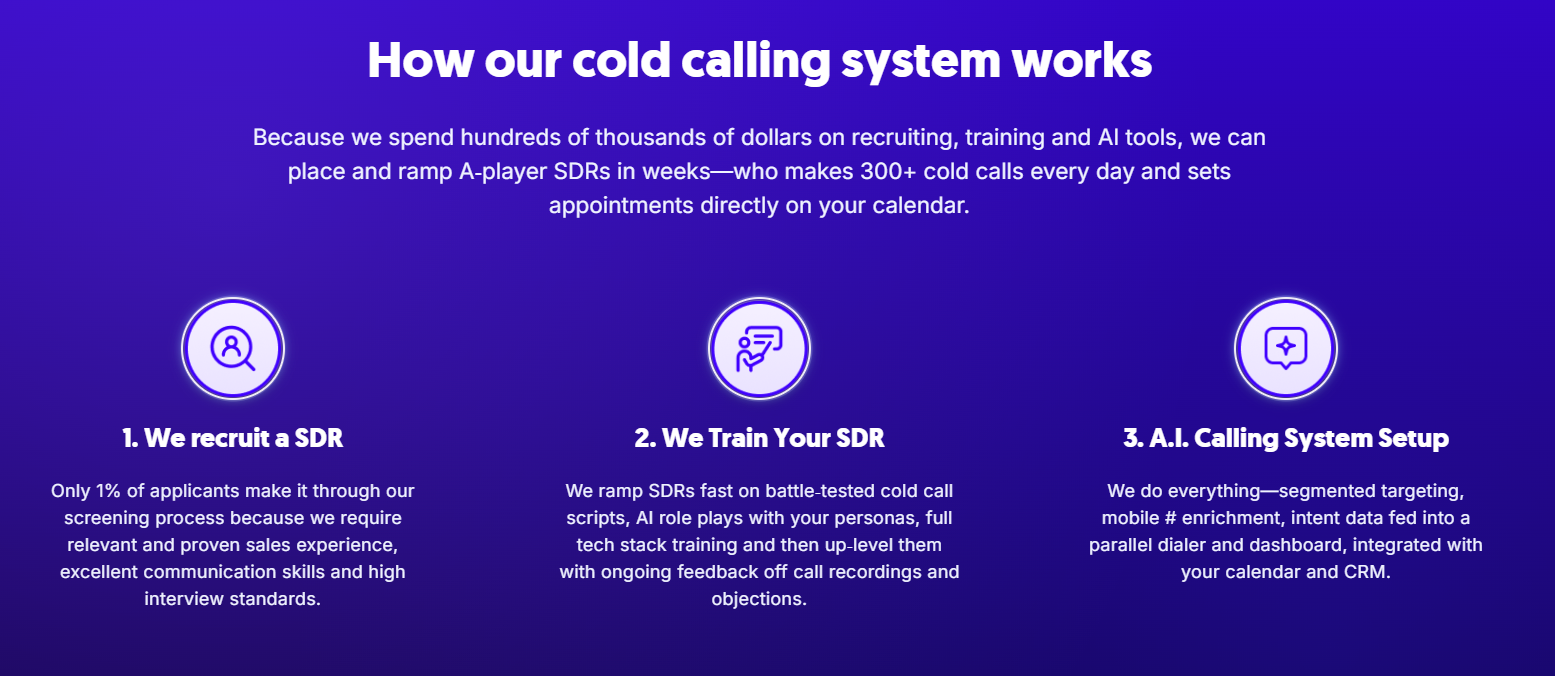
- A pre-vetted SDR placed on your account (only 1% of applicants make it through our screening).
- Fully trained and live in 2 weeks using AI-powered role plays and real call recordings.
- Breakthrough cold call appointment setting scripts written specifically for your ICP.
- Full tech stack setup: segmented targeting, mobile number enrichment, parallel dialer, and dashboard.
- Calendar and CRM integration so meetings land exactly where they need to.
- Guaranteed appointments, or we replace your SDR at no extra cost.
- All of this for one flat monthly cost at half the price of hiring in-house.
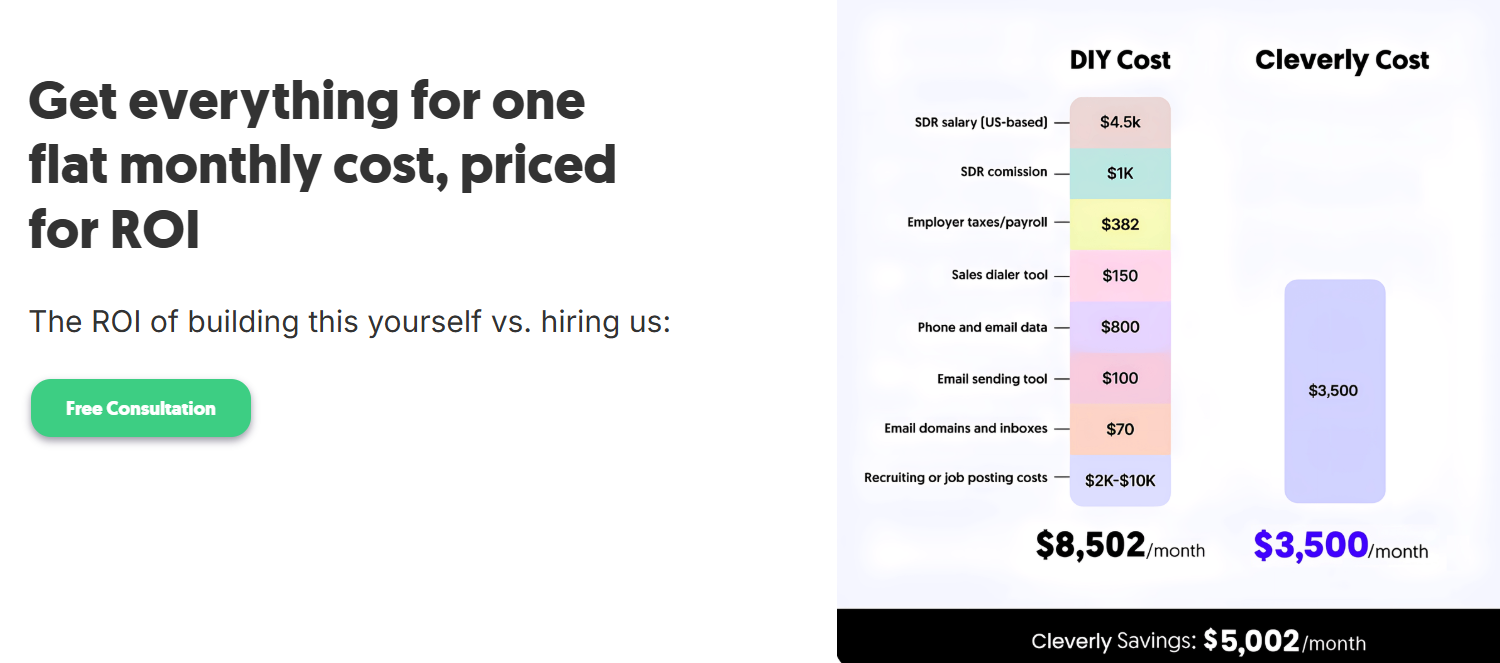
Why teams choose us over building in-house:
Building your own cold calling appointment setting function means recruiting, onboarding, training, buying tools, and managing performance, all before you see a single meeting booked. Most teams take 3 to 6 months just to get ramped.
With Cleverly, you're ramped in 3 weeks. Your SDR is already trained on President's Club scripts and making 200+ dials a day before most in-house hires have finished their first week of onboarding.
2x less risk of failure. 4x faster ramp to KPIs. One flat monthly cost.
If you're serious about filling your pipeline with qualified meetings, our cold calling agency is built to do exactly that, at scale, consistently, and without the guesswork.
Book a call with Cleverly and get your first appointments in weeks, not months.

Conclusion
Cold calling appointment setting works when you treat it as a system, not a shot in the dark.
The reps who consistently book meetings aren't the ones with the most charisma. They're the ones who show up prepared, follow a structure, and keep optimizing based on what the data tells them.
Your job on a cold call is not to sell. It's to earn a meeting. Get that part right consistently, and the pipeline takes care of itself.
Frequently Asked Questions
Free Resource
How to Scale a Profitable Cold Call System
Get the complete guide — download it instantly now.
Free Ebook
Download the Free Guide
Enter your details to get instant access.
You're all set! 🎉
Your ebook is downloading now.
Click below if the download didn't start automatically.