

Table of Contents
Why Outreach Tools Fail — The Real Reason Most Teams Hit a Wall
8 Signs Your Outreach Tool Isn't Working
Tool Problem vs. Strategy Problem vs. Resource Problem — How to Diagnose Correctly
When to Outsource Lead Generation — 5 Situations Where an Agency Wins
What to Expect in the First 90 Days with a Lead Generation Agency
When NOT to Outsource Lead Generation Yet
How Cleverly Helps B2B Teams Replace Underperforming Outreach Tools with a Done-For-You System
Conclusion
Frequently Asked Questions
Modified On :
May 11, 2026
Key Takeaways
- A connection acceptance rate below 20% on LinkedIn is a warning sign that can trigger account restrictions — the 2026 benchmark is 30–45%.
- Most outreach tool failures aren't tool problems — they're targeting, messaging, or resource problems in disguise.
- If your team spends more than 30% of outreach-related time managing the tool instead of having conversations, the math is broken.
- The right time to outsource is when your offer is validated and the bottleneck is execution capacity, not strategy.
- A done-for-you agency brings the ICP definition, copywriting, data, and optimization — not just platform access.
A B2B team signs up for a LinkedIn automation platform or a cold email sequencer, sends a few hundred messages, and waits.
The replies don't come. Meetings aren't booked. And after two or three months, the tool gets the blame.
That's not a tool problem. It's a strategy and execution problem. Most B2B deals require 5–12 touchpoints, and the average team isn't coming close to that with inconsistent, unoptimized sequences.
Today we break down exactly what it looks like when outreach tool performance has hit its ceiling, how to diagnose whether it's a tool issue, a strategy issue, or a resource issue — and when outsourcing lead generation to a dedicated agency is the smarter, more cost-effective move.
Why Outreach Tools Fail — The Real Reason Most Teams Hit a Wall
Tools don't generate pipelines. Strategies executed through tools do.
The most common failure mode we see: a company buys a tool expecting it to solve a fundamentally human problem. Messaging. Targeting. Follow-up. Offer clarity.
These aren't software problems. No automation platform can write a compelling sequence for a poorly defined ICP. No tool can save a weak value proposition.
There are three root causes behind most outreach tool failures:
- Weak ICP definition. You're reaching the wrong people at scale. Volume amplifies the problem rather than fixing it.
- Generic messaging. No personalization, no relevance, no hook. 73% of decision-makers say personalization matters for cold outreach — yet most tool users default to copy-paste templates.
- Execution gaps. Sequences get built and abandoned. Follow-ups go out late or not at all. No one is running A/B tests. No one is iterating.
Here's the framing that matters: some of these problems a better tool can solve. Others only a better strategy — or a dedicated team — can fix.
Knowing which situation you're in before switching tools or hiring an agency is what separates companies that break through from companies that keep repeating the same cycle with a new subscription.
🚀 If Your Tool Worked, You’d Have Pipeline By Now
We run LinkedIn, cold email & cold calling—fully done-for-you. More replies. More meetings. Less wasted time.
8 Signs Your Outreach Tool Isn't Working
These aren't vague "low reply rate" signals. These are the specific diagnostics that tell you something deeper is broken.
1. Your Connection Request Acceptance Rate Is Below 20%
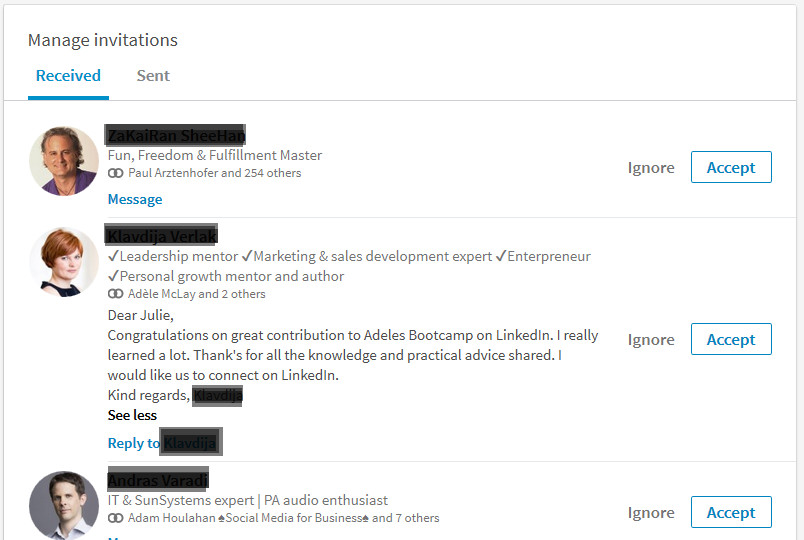
The 2026 benchmark for LinkedIn connection acceptance is 30–45%. Below 20% is a warning sign that can trigger LinkedIn account restrictions.
If you're under that threshold, the tool isn't the issue. It's targeting or profile credibility — or both. Sending connection requests to too broad an audience, using identical templated messages, or running a thin LinkedIn profile will tank your acceptance rate regardless of which platform you use.
LinkedIn now assigns every account a Trust Score that determines how many actions your account can safely perform each week. High-trust accounts can send up to 200 connection requests per week; accounts with poor signals can drop to as few as 50.
A tool can't fix this. LinkedIn outreach that isn't working at the connection stage is a targeting and credibility problem, not a sending volume problem.
2. Replies Are Coming In But No Meetings Are Being Booked
Getting a reply and getting a meeting are two very different wins — and confusing them masks the real problem.
If your sequences are generating responses but your calendar stays empty, the issue is usually one of three things: your offer isn't clear enough, your CTA is too weak, or your follow-up can't convert soft interest into a booked call.
Automated follow-ups can't compensate for a messaging problem. If the hook doesn't create urgency and the ask doesn't make it easy to say yes, no amount of automation will close the gap.
3. Your Sequences Stop at 1–2 Touchpoints

Up to 50% of sales go to the first vendor to respond, and most deals require 5–12 touchpoints. Most tool users never get there. They stop at one or two follow-ups because managing more feels like a part-time job.
This is a signal the tool is too complex for the team using it — or that no one has dedicated bandwidth to build and manage proper multi-touch sequences.
Either way, the pipeline impact is real. If your cold outreach isn't getting results past the first message, the sequence structure is the first place to look.
4. You Can't Tell What's Working and What Isn't
If your tool doesn't surface clear data on reply rates, open rates, and meeting conversion broken down by sequence, message, and persona — you're running campaigns blind.
The common result: teams keep running the same broken sequence for months because there's no signal telling them to stop. Analytics gaps are one of the most underrated reasons outreach tools stop converting. If you can't measure it, you can't fix it.
5. You're Getting Flagged, Warned, or Restricted by LinkedIn
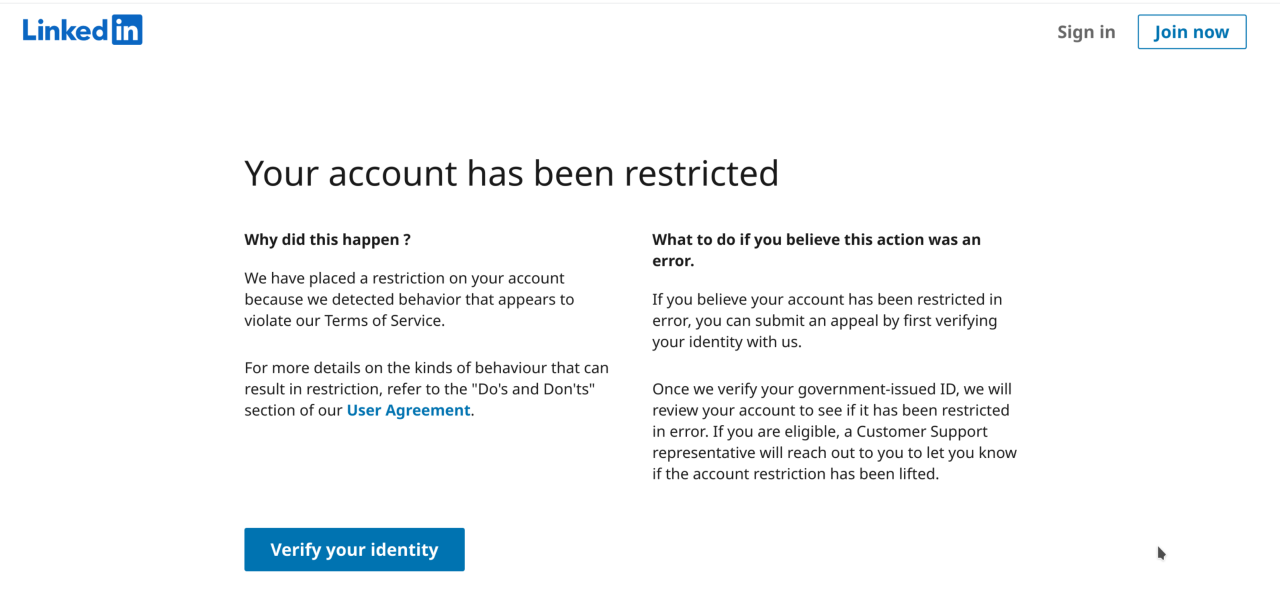
LinkedIn has moved decisively against volume-based outreach. In late 2025, Open InMail sends were capped to under 100 per month — an 87% drop from prior limits.
If your account has received warnings, connection request throttling, or a temporary restriction, you've hit the ceiling of what tool-based automation allows at your volume. LinkedIn's algorithm now tracks acceptance rate, reply rate, pending invites, and organic activity to calculate your Trust Score continuously.
This isn't something you can work around with a different tool. It's a signal that the execution model itself needs to change.
6. Your Team Is Spending More Time Managing the Tool Than Selling
Outreach tools are supposed to free up selling time. If your SDR or founder is spending hours every week cleaning lists, building sequences, monitoring reply threads, and troubleshooting deliverability — the math is upside down.
A practical benchmark: if more than 30% of outreach-related time is tool management rather than actual conversation, you have an efficiency problem. This is often the clearest signal that you need to outsource LinkedIn outreach or cold email execution entirely. The tool is consuming more resources than it's generating.
7. You've Been Running the Same Sequence for 3+ Months with No Iteration
Stale sequences are a silent pipeline killer. What worked six months ago rarely performs at the same rate today. Buyer behavior shifts, inboxes get more competitive, and messaging that felt fresh loses its edge.
Most tool users set a sequence once and leave it running because they don't have bandwidth to optimize. Without someone owning the iteration cycle — testing subject lines, refining CTAs, retiring dead angles — cold outreach results decay over time regardless of how good the tool originally was.
8. Your Cost Per Meeting Is Higher Than What an Agency Would Charge

This is the most business-case-driven signal, and the hardest one to ignore.
Most teams underestimate the true cost of in-house outreach. Add up the tool subscription, the SDR or founder hours, data and enrichment costs, copywriting time, and management overhead. Divide by meetings booked per month.
If that number exceeds what a specialized agency charges per meeting, the economics of DIY outbound no longer hold. The fully loaded cost of cold outreach ranges from $300 to $500 per lead when you factor in rep salary, tools, and overhead.
Agencies that specialize in this work bring economies of scale in data, tooling, and optimization that most internal teams can't match.
Tool Problem vs. Strategy Problem vs. Resource Problem — How to Diagnose Correctly
Before switching tools or signing with an agency, you need to know which type of problem you actually have. Getting this wrong is expensive.
The resource problem is the most common — and the most commonly misdiagnosed. Companies hire a new tool when what they actually need is execution firepower.
Companies outsource before their strategy is solid, then blame the agency when results are poor.
If your ICP is defined, your offer is differentiated, and your value prop is clear — but the pipeline still isn't consistent — that's a resource problem. That's when hiring a lead generation agency makes the most sense.
📈 Tools Create Activity. Agencies Create Revenue.
$312M pipeline generated across outbound channels. We handle targeting → outreach → booking. You close.
When to Outsource Lead Generation — 5 Situations Where an Agency Wins
1. You Need Pipeline Faster Than You Can Hire
Recruiting, onboarding, and ramping an SDR takes three to six months — and that's on a good timeline. An agency can launch outreach in days. For startups and growing B2B teams that can't wait for headcount to come through, outsourcing the prospecting layer is often the fastest path to qualified meetings.
2. Your Internal Team Is Already Maxed Out
Founders and small sales teams wearing too many hats can't execute consistent multi-touch outreach at scale. When every person on the team is already overextended, the outreach either doesn't get done or it gets done inconsistently — which is almost as bad as not doing it at all. Outsourcing frees your team to focus on closing, not filling the top of the funnel.
3. You're Testing a New Market or Persona
Entering a new vertical, geography, or ICP requires dedicated outreach capacity and fast learning cycles. Agencies with established playbooks for similar markets can compress the testing timeline significantly. You're not starting from zero — you're borrowing from pattern recognition built across hundreds of campaigns.
4. You've Validated Your Offer but Pipeline Is Still Inconsistent
If you've refined your ICP, tightened your messaging, and confirmed that prospects are genuinely interested when you get in front of them — but you still can't fill the calendar reliably — the bottleneck is execution capacity. This is the ideal moment to bring in an agency. Your strategy is solid; you just need the firepower to run it at scale.
5. Your Cost Per Meeting Is Unsustainable
When the fully-loaded cost of DIY outreach exceeds what a specialized agency charges per meeting, the financial case makes itself. Omnichannel outreach combining email, LinkedIn, and phone can boost results by over 287% versus email-only sequences — but running all three channels well in-house requires significant investment in tools, data, and people.
What to Expect in the First 90 Days with a Lead Generation Agency
Realistic expectation-setting matters here. Don't judge an agency on month one results.
✅ Month 1 is almost entirely setup: ICP alignment, list building, copywriting, tech configuration, domain warming. Real outreach volume hasn't started yet. This is the foundational work that determines whether month three delivers.
✅ Month 2 is when full outreach begins. Data on what's working starts accumulating. The good agency uses this data immediately — iterating subject lines, refining personas, pulling sequences that aren't converting.
✅ Month 3 is when the optimization cycle hits its stride. Reply handling improves, meeting quality becomes measurable, and the feedback loop between messaging and results tightens.
A few non-negotiables before signing with any agency: define what a "qualified meeting" means in writing.
Confirm how they protect your domains. Verify data sourcing quality. Clarify who handles responses and how.
Any agency that promises meetings in week one is a red flag — real outbound has a ramp period, and anyone telling you otherwise hasn't done this at scale.
When NOT to Outsource Lead Generation Yet
Outsourcing amplifies what you already have. It doesn't create what's missing.
Don't outsource if:
- You haven't defined your ICP clearly enough to describe your ideal buyer in one sentence.
- Your value proposition isn't differentiated enough that a prospect would feel the pain of not hearing it.
- Your sales team can't handle inbound meeting volume — more meetings won't help if the close process is broken.
- You have no defined process for following up on booked meetings.
The agency's job is to get you into the right conversations. Your team still needs to close them. If the handoff process isn't ready, the meetings the agency books won't convert — and you'll have paid for a pipeline that leaks at the next stage.
How Cleverly Helps B2B Teams Replace Underperforming Outreach Tools with a Done-For-You System
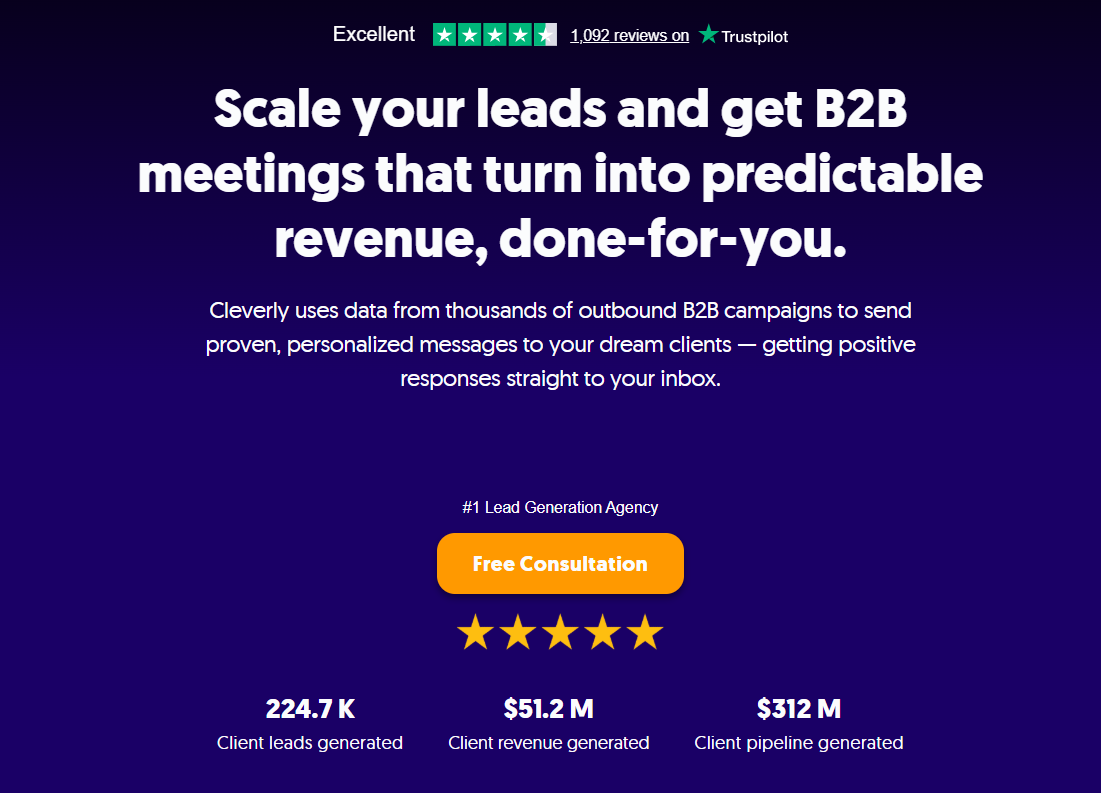
Cleverly isn't a tool. It's a full-service B2B lead generation agency whose internal efforts have hit a ceiling — whether that's LinkedIn, cold email, or cold calling.
When you work with Cleverly, the entire execution layer comes with it. That means ICP definition, verified list building, personalized sequence copywriting, LinkedIn outreach execution, cold email infrastructure and deliverability, response handling, and meeting handoff.
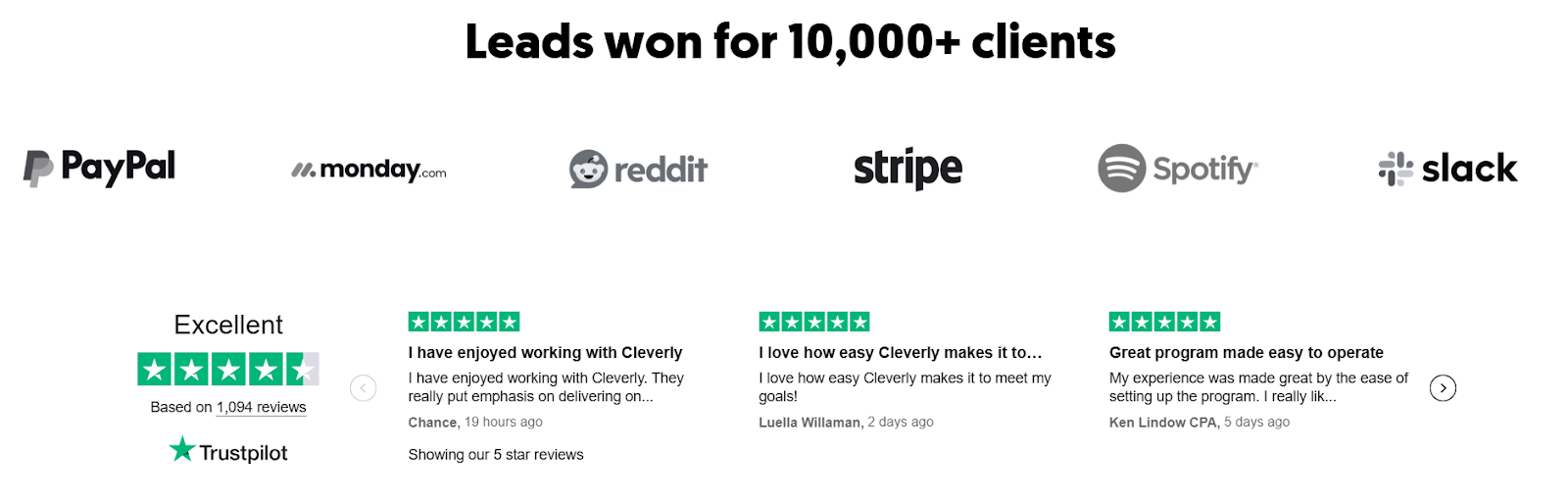
You're not getting platform access and a knowledge base — you're getting a team that has built this process across 10,000+ clients, including work for companies like Amazon, Google, Uber, PayPal, Slack, and Spotify. The results from that work: $312M in pipeline generated and $51.2M in closed revenue.
Our LinkedIn lead generation service starts at $397/month. Cold email service works on a performance model — you only pay for meeting-ready leads. And for teams that need phone coverage, Cleverly's $5M Cold Calling System places a dedicated no-accent appointment setter, handles all training and scripting, and guarantees 10–30 qualified sales calls per month or we replace the SDR.
This is the done-for-you alternative to managing tools, troubleshooting deliverability, and optimizing sequences with a team that was never built for it.
Tired of tools that promise pipeline and deliver spreadsheets?
🤝 Book a strategy call with Cleverly

Conclusion
Outreach tools work — when the strategy behind them is right and the team has the bandwidth to execute consistently. The signs in this guide aren't reasons to give up on outbound. They're diagnostics that tell you where the actual problem lives.
If you've diagnosed a resource problem, your offer is validated, and your ICP is clear — outsourcing your lead generation is one of the highest-leverage moves you can make.
The question isn't whether to do outbound. It's whether doing it in-house is still the right model for where your business is right now.
Frequently Asked Questions
Free Resource
How to Scale a Profitable Cold Call System
Get the complete guide — download it instantly now.
Free Ebook
Download the Free Guide
Enter your details to get instant access.
You're all set! 🎉
Your ebook is downloading now.
Click below if the download didn't start automatically.


