Table of Contents
What Is Multichannel Marketing?
What Is Omnichannel Marketing?
Omnichannel vs Multichannel Marketing (Side-by-Side Comparison)
Omnichannel vs Multichannel Examples in B2B
Which Strategy Works Better for B2B Lead Generation?
Common Misconceptions About Omnichannel and Multichannel
How Cleverly Applies Omnichannel Thinking to B2B Lead Generation
Conclusion
Frequently Asked Questions
Modified On :
September 8, 2026
Key Takeaways
- Multichannel means using multiple channels independently, while omnichannel connects them with shared context and data.
- Omnichannel creates a unified prospect experience, multichannel maximizes channel presence.
- Multichannel works for speed and testing, omnichannel wins for high-value accounts and complex sales.
- More channels doesn't equal omnichannel, integration and context sharing does.
- Small teams can execute omnichannel strategies with basic CRM tools and good communication.
- Cohesion beats volume in modern B2B outreach, prospects reward coordinated experiences with meetings.
We've all been there. Someone in a meeting throws out "omnichannel" and "multichannel" like they're interchangeable, and honestly, most people just nod along.
Here's the thing though: omnichannel vs multichannel isn't just marketing jargon splitting hairs.
The difference actually matters for your bottom line.
Think about it. One approach treats each channel like its own island. Email does its thing, LinkedIn does its thing, cold calling does its thing. The other connects them all so your prospect gets a seamless experience no matter where they interact with you.
For B2B lead generation, that distinction is huge. It's the difference between:
- Prospects feeling spammed across five different channels.
- Prospects experiencing a coordinated conversation that actually moves them forward.
We're going to break down omnichannel vs multichannel marketing in very simple, show you real examples, and explain why one consistently outperforms the other when it comes to booking qualified sales calls.
No fluff. Just what you need to know.
What Is Multichannel Marketing?
Multichannel marketing means you're reaching prospects through multiple channels. Email, LinkedIn, cold calls, ads, direct mail. You're showing up in different places, which is good.
The catch? Each channel runs on its own track.
Your email team sends their campaigns. Your LinkedIn outreach person does their thing. Your cold calling team works their list. They're all going after the same goal, but they're not talking to each other.
Here's what that looks like in B2B:
- Your SDR sends a cold email on Monday.
- Your LinkedIn team sends a connection request on Wednesday (with no idea about the email).
- Your caller dials them on Friday and has zero context about the previous two touchpoints.
- Your retargeting ads show them a completely different message.
Each channel has its own messaging, its own cadence, its own data. The prospect gets hit from multiple directions, but there's no thread connecting it all.
The strengths of multichannel marketing:
- You're casting a wider net and increasing touchpoints.
- Different prospects prefer different channels, so you're covering your bases.
- It's easier to set up since teams can work independently.
- You can test what works in each channel separately.
Where it falls short:
The experience feels disjointed. A prospect might respond to your LinkedIn message, but your email sequence keeps hammering them because the systems don't sync. Or they tell your caller they're not interested, but your email automation doesn't know to stop.
For prospects, it often feels like they're dealing with three different companies instead of one lead generation agency that has its act together.
That's the gap omnichannel vs multichannel addresses, and we'll get into that next.
Explore More: LinkedIn vs Cold Email vs Cold Calling: Which Channel Works Best
🔥 Execute True Omnichannel Outreach
Cleverly connects LinkedIn, cold email, and cold calling into one coordinated system so prospects see one message, not noise.
What Is Omnichannel Marketing?
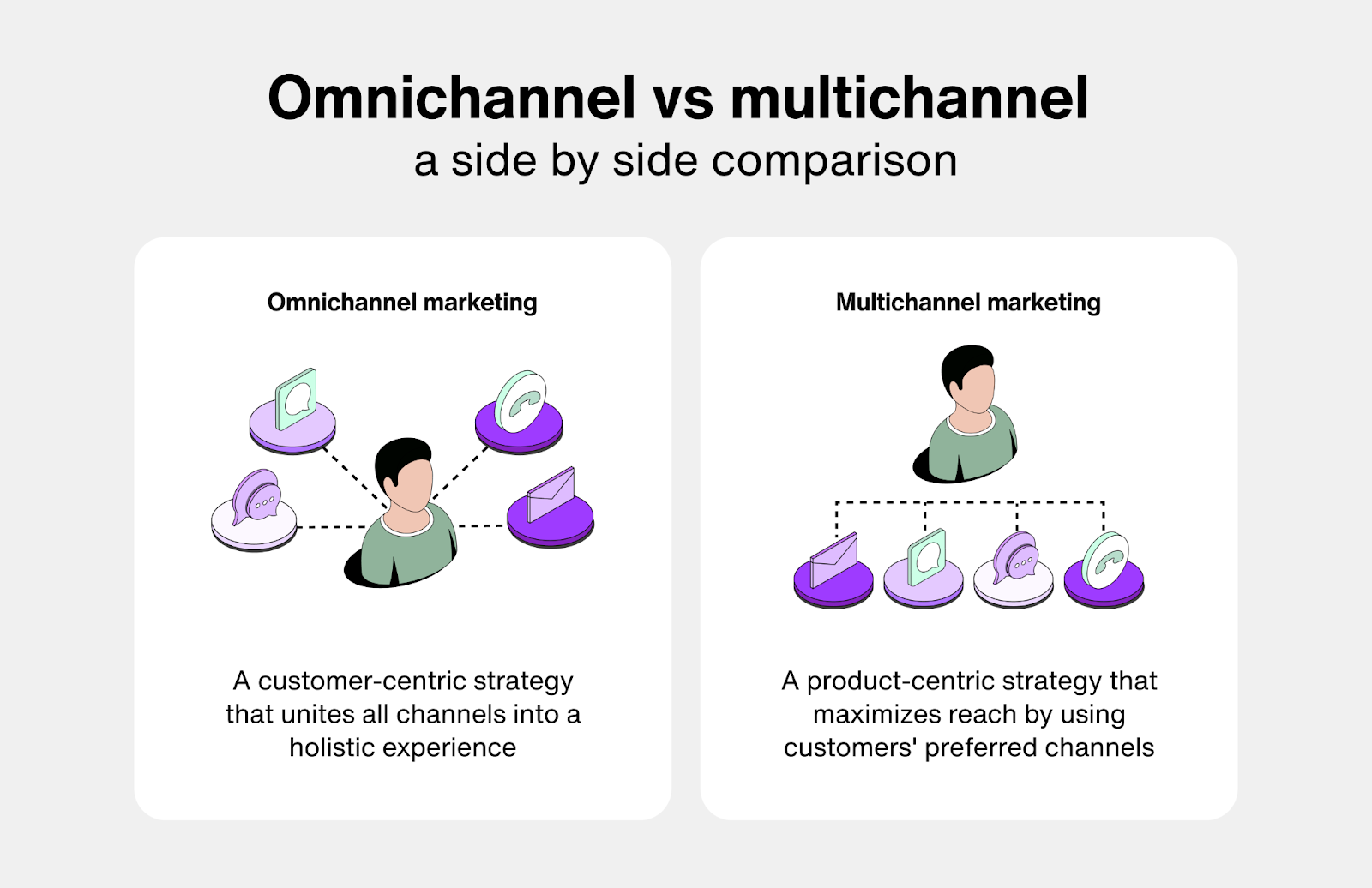
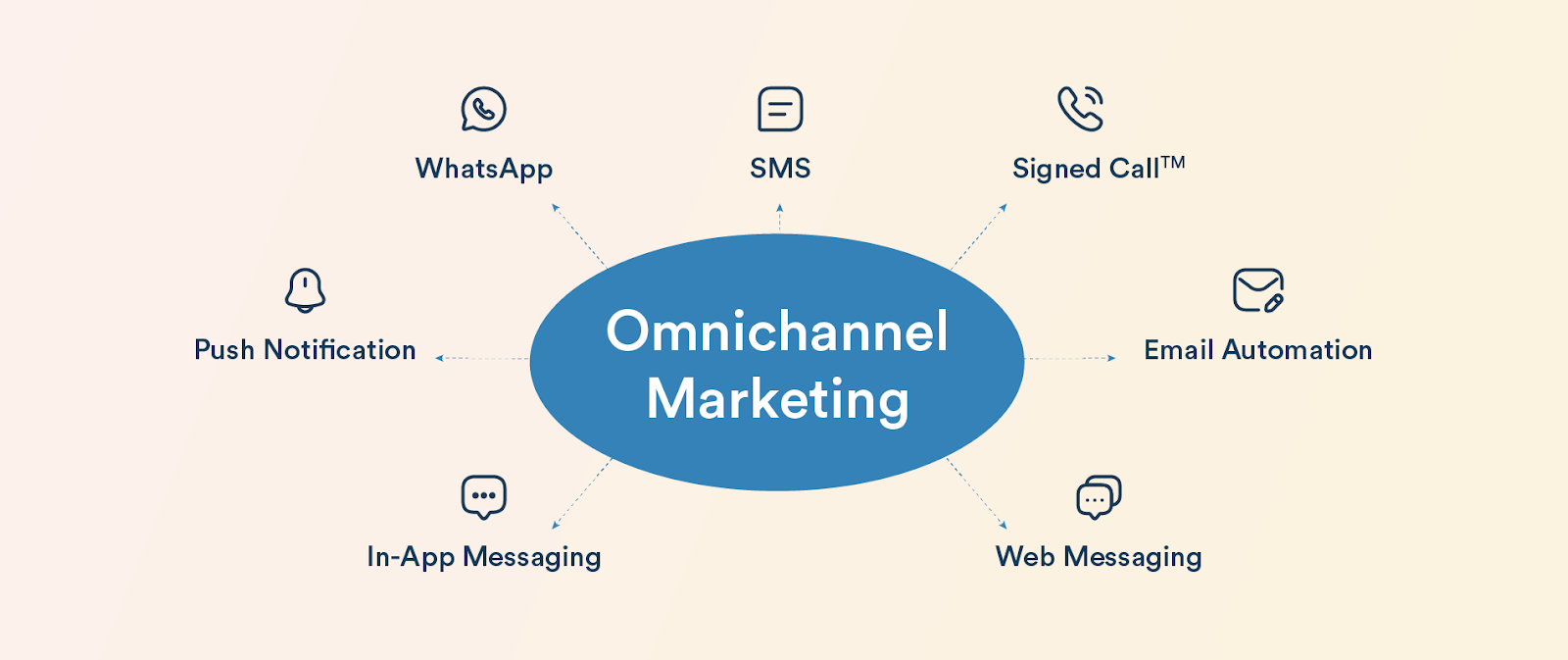
Omnichannel marketing is when all your channels work together as one system. Same goal, same data, same conversation.
The big difference? Everything's connected around the prospect's experience, not your internal team structure.
When a prospect interacts with you on LinkedIn, that information flows to your email system and your calling team. When they click an email link, your outreach adjusts. When they ask your caller a question, that context shows up in the next LinkedIn message.
Here's the shift:
Instead of asking "what should our email say?" and "what should our LinkedIn say?" separately, you're asking "what does this specific prospect need to hear next, and which channel makes the most sense?"
It's experience-led, not channel-led.
In B2B, omnichannel marketing looks like this:
- Your LinkedIn message introduces a problem your prospect is facing.
- Two days later, your email shares a case study relevant to their industry (because you know they viewed your LinkedIn profile).
- Your caller follows up with context about both previous touchpoints and can reference specific pain points the prospect engaged with.
- If they're not ready, you nurture them with content that builds on what they've already shown interest in.
Everything feels like one coherent conversation instead of random outreach hitting them from different directions.
Why omnichannel shines in B2B
The sales cycle is longer. Prospects need multiple touches. They research across channels before taking a meeting.
Omnichannel marketing meets them wherever they are and remembers the conversation.
More importantly, it respects their time. You're not repeating yourself. You're not ignoring their responses. You're having an actual dialogue that progresses.
That's what separates good lead generation from the spray and pray approach most companies are stuck in.
Learn More: B2B Omnichannel Customer Journey: Stages, Maps, and Tactics That Close Deals
Omnichannel vs Multichannel Marketing (Side-by-Side Comparison)
Multichannel focuses on reach, while omnichannel focuses on relevance. In B2B, omnichannel wins when deal size, trust, and buying complexity matter.
Disadvantages of Each Approach: Cost, Complexity, and Compliance
The comparison table makes omnichannel look like the obvious winner. It usually is, for the reasons we covered. But it's not free, and pretending otherwise sets you up for a messy rollout.
Let's talk about what each approach actually costs you.
Omnichannel's real cost is integration, not tools.
You can buy every sales engagement platform on the market and still not have omnichannel marketing. The expensive part is connecting them so LinkedIn activity, email opens, and call notes live in one place your whole team can see.
That means:
- Engineering or ops time to wire your CRM, email platform, and LinkedIn tool together, or budget for a platform that already does it.
- Data cleanup before integration, since disconnected systems almost always have duplicate or conflicting records.
- Change management, because your SDRs, AEs, and support reps all need to actually check the shared record before reaching out, not just have access to it.
None of this is a dealbreaker. But if you go into omnichannel thinking it's a messaging strategy instead of an operational one, you'll underbudget it every time.
Compliance exposure grows the moment you centralize data.
Here's something most omnichannel guides skip: connecting your channels means creating a single, richer profile of every prospect. That's exactly the kind of data GDPR and CCPA were built to regulate.
GDPR penalties can reach 4% of global annual revenue or €20 million, whichever is higher. CCPA violations run $2,663 to $7,988 per incident. Neither cares whether the mishandled data lived in your CRM, your email tool, or a spreadsheet your LinkedIn team kept on the side.
Practically, this means:
- Document your legal basis for tracking prospects across channels, especially if you're combining LinkedIn engagement data with email tracking and call recordings.
- Know your deletion timelines. GDPR gives you roughly 30 days to honor a deletion request, and that request now has to reach every connected system, not just one.
- Audit vendor data flows, because a shared record across three tools means three vendors now touch the same prospect's personal information.
This isn't a reason to avoid omnichannel. It's a reason to loop in whoever owns compliance at your company before you connect your stack, not after.
Attribution gets harder, not easier.
Multi-touch attribution sounds like an omnichannel superpower until you're staring at a deal that touched LinkedIn, email, and a call, and you're trying to explain to leadership which channel actually earned the meeting.
This isn't unique to you. Most B2B teams still default to last-touch attribution despite buyer journeys running well past a single channel, mostly because building a model that fairly credits every touchpoint is genuinely hard, not because teams don't know better.
Budget for this conversation early. Decide whether you're optimizing for "which channel gets credit" or "did the combined sequence book the meeting," because chasing perfect attribution can quietly become its own full-time project.
Multichannel's low cost has a hidden tax: inconsistent messaging.
Multichannel is cheap to launch precisely because nothing has to talk to anything else. That's also exactly why it breaks down with sophisticated buyers.
A prospect who gets a "let's connect" LinkedIn message the same week your email sequence is pitching a demo isn't confused about your tech stack. They're confused about whether anyone on your team is paying attention. That inconsistency is the cost you're paying for the lower setup lift, it just shows up in your reply rate instead of your invoice.
The honest takeaway: multichannel's cost advantage is real, but it's a cost you defer, not one you avoid. You'll pay for the lack of coordination eventually, either in wasted spend or in prospects who tune you out.
🚀 From Channels to Conversions
We don’t just run multiple channels. We sync them to deliver qualified, meeting-ready leads you only pay for.
Omnichannel vs Multichannel Examples in B2B
Let's make this real with two scenarios targeting the same VP of Sales.
Multichannel Example:
- Monday: Your email team sends a cold email about booking more sales calls.
- Wednesday: Your LinkedIn team sends a connection request with a pitch about lead generation (no idea the email was sent).
- Friday: Your caller dials them, introduces your company from scratch, and asks if they're interested in more leads.
The VP is confused. Are these three different companies? Three different salespeople who don't talk? They've now heard your pitch three times in three different ways with zero acknowledgment of the previous touches.
Result: They ignore all future outreach because it feels spammy and disorganized.
Omnichannel Example:
- Monday: Your system sends a personalized email mentioning a specific challenge their industry faces with lead quality.
- Wednesday: They don't respond, but they view your LinkedIn profile. Your system automatically sends a connection request that references the email topic and shares a relevant case study.
- Thursday: They accept the connection and click the case study link. Your system flags them as engaged.
- Friday: Your caller reaches out with full context. "Hey, I know my colleague reached out earlier this week about lead quality. I saw you checked out our case study on helping SaaS companies. Does that challenge resonate with your team?"
The conversation starts from a place of familiarity, not from zero.
Result: The VP feels heard, not hunted. They're way more likely to take the meeting.
Why Omnichannel vs Multichannel Examples Show Such Different Outcomes?
The multichannel approach maximizes touches. The omnichannel approach maximizes relevance.
In the first scenario, you're interrupting three times with the same message. In the second, you're progressing a conversation with context that builds. You're proving you pay attention before you ever ask for their time.
That's the conversion difference. Prospects can tell when your left hand doesn't know what your right hand is doing. And in B2B, where trust matters, that sloppiness kills deals before they start.
Learn More About: The Perfect B2B Sales Strategy to Close More Deals (Proven Methods)
Which Strategy Works Better for B2B Lead Generation?
Here's the honest answer: it depends on what you're trying to accomplish.
📢 When multichannel makes sense:
If you're moving fast and need to test what resonates, multichannel gets you data quickly. You can run separate experiments in email, LinkedIn, and calling without waiting for integration.
It's faster to launch and easier to scale when you're just figuring out your messaging.
Early stage companies often start here because:
- You need volume to find what works.
- Your systems aren't built for integration yet.
- Speed matters more than sophistication.
- You're testing different ICPs across channels
📢 When omnichannel wins:
Once you know your ideal customer and you're going after higher value accounts, omnichannel destroys multichannel in performance.
Think about it. If you're targeting 100 enterprise accounts worth $50K each, you can't afford to look sloppy.
These prospects get hit with outreach all day. The companies that stand out are the ones that feel coordinated and relevant.
Omnichannel is better for:
- Account-based approaches where you're targeting specific companies.
- Complex B2B sales with longer cycles and multiple decision makers.
- High ticket offers where trust and credibility matter.
- Competitive markets where prospects have lots of options.
But here's what actually matters most:
Channel strategy is secondary to offer quality. A lead generation agency can execute perfect omnichannel outreach, but if your offer sucks or your targeting is off, you're still not booking meetings.
We've seen companies obsess over omnichannel orchestration while ignoring the basics:
- Are you reaching the right people?
- Does your message address a real pain point?
- Is your offer compelling enough to justify a meeting?
- Can you back up what you're promising?
Get those right first. Then layer in omnichannel thinking to amplify what's already working.
The best approach? Start multichannel to find your winners. Then shift to omnichannel to maximize conversion on your best channels and highest value targets.
That's how you build a predictable pipeline instead of just hoping something sticks.
Evolving From Multichannel to Omnichannel: A Maturity Path
"Start multichannel, then shift to omnichannel" is easy to say and vague to execute. So here's what that shift actually looks like in three stages.
Stage 1: Independent channels, testing what resonates
This is where most teams start, and it's the right place to start. Your email, LinkedIn, and calling efforts run separately because you're still figuring out messaging, ICP fit, and which channels your buyers actually respond to.
You're not ready to move on until you have enough data to know which channels are working and roughly why. Moving to Stage 2 before you have that clarity just means integrating a strategy you haven't validated yet.
Stage 2: Shared CRM visibility across teams
This is the first real step toward omnichannel, and it doesn't require enterprise software. It means your SDRs, LinkedIn team, and callers can all see the same prospect record, including recent activity, before they reach out.
You're ready for this stage when:
- Reps are duplicating outreach because nobody knows what's already been sent.
- You have a CRM in place, even a basic one, that everyone actually logs activity into.
- Leadership is willing to enforce the habit of checking the record before contacting a prospect, since the tool alone won't fix this.
Stage 3: Context-triggered sequencing across channels
This is full omnichannel. Instead of a fixed cadence, your outreach adjusts based on what the prospect actually does. They view your LinkedIn profile, and your email references it. They click a case study, and your caller knows before dialing.
You're ready for this stage when:
- Stage 2 is already working reliably, meaning shared visibility is a habit, not an aspiration.
- You know your highest-value segments, because context-triggered sequencing is worth building for accounts where the extra precision pays off.
- You have someone accountable for the system, whether that's a RevOps hire or an agency partner, since automated cross-channel logic breaks quietly if nobody owns it.
The signal to move forward is never a date on a calendar. It's whether the stage you're in is actually working and whether the complexity of the next stage is justified by what you're going after. Plenty of profitable B2B teams stay at Stage 2 indefinitely, and that's a completely reasonable place to stop if your deal sizes don't demand more.
Omnichannel vs Multichannel in Customer Support and Contact Centers
Everything so far has been about prospecting. But omnichannel vs multichannel doesn't stop mattering once you book the meeting and close the deal.
It actually gets more important, because now the stakes are retention, not just a first reply.
Here's the uncomfortable stat: only about 7% of contact centers deliver truly seamless handoffs between channels. Everyone else is asking customers to repeat themselves between chat, phone, and email, the exact multichannel problem we spent this whole article warning you about, just moved to post-sale support.
Why disjointed support undoes a perfectly coordinated outbound motion
Think about the effort it takes to run true omnichannel outreach. You've connected LinkedIn, email, and calling. Your prospect had a coordinated, contextual experience getting to the deal.
Then they become a customer, open a support ticket, and get asked "can you walk me through the issue again?" by someone who has no idea they already explained it over chat.
That whiplash is worse than mediocre support alone. It tells the customer the coordination they experienced during the sales process was a performance, not how your company actually operates. Companies with connected omnichannel service retain customers at roughly 89%, compared to about 33% for teams running channels independently, which tells you how much revenue is actually riding on this.
Support is reactive. Sales is proactive. That difference changes what "omnichannel" means here.
In prospecting, you control the sequence. You decide when the LinkedIn message goes out, when the email follows, when the call happens.
In support, the customer decides. They pick the channel, they pick the moment, and often they're already frustrated when they reach out. Omnichannel support isn't about orchestrating a journey, it's about making sure whichever door they walk through, the person on the other side already knows what happened at the last one.
That means:
- Shared ticket and interaction history across chat, phone, and email, not just shared contact records.
- Context that travels with escalations, so a chat that gets escalated to a phone call doesn't start from zero.
- Consistent resolution ownership, so the customer isn't bounced between reps who each only see part of the story.
Where B2B teams underinvest relative to sales-side omnichannel
Most B2B companies will spend real money integrating their LinkedIn outreach, email, and calling for prospecting. Fewer make the same investment in connecting their support channels once the deal closes.
That's backwards. The prospect you spent weeks coordinating outreach for is now a paying customer with a much lower tolerance for disjointed experiences, and a much bigger platform if they decide to complain publicly about it.
If your outbound motion is genuinely omnichannel but your support tooling is three disconnected inboxes, you've built a great front door and a frustrating hallway right behind it.
Dive Deeper: What is Multithreading in Sales?
Common Misconceptions About Omnichannel and Multichannel
Let's clear up some confusion we hear all the time.
❌ "More channels equals omnichannel"
Nope. This is the biggest mistake we see.
Adding TikTok, Instagram, Twitter, and webinars to your email and LinkedIn doesn't make you omnichannel. It just makes you multichannel with more chaos.
Omnichannel vs multichannel isn't about quantity of channels. It's about integration. You could have an omnichannel strategy with just two channels if they're connected and contextual. Meanwhile, someone running eight disconnected channels is still doing multichannel, just badly.
Quality over quantity wins every time.
❌ "Omnichannel is only for enterprises with massive budgets"
Wrong again.
Yes, enterprise companies have fancier marketing automation and bigger tech stacks. But the core principle of omnichannel is simple: don't make your prospect repeat themselves, and don't pretend previous interactions didn't happen.
You can do this with basic tools:
- A shared CRM where email, LinkedIn, and calling notes live in one place.
- Simple tagging to track engagement across channels.
- Team communication so everyone knows what's happening with each prospect.
We've worked with startups doing $1M ARR who execute better omnichannel strategies than $100M companies because they actually talk to each other and check the CRM before reaching out.
❌ "One sequence fits all channels"
This one's sneaky because it sounds efficient.
Some teams think omnichannel means sending the exact same message across email, LinkedIn, and calling at the same time. That's not omnichannel, that's just annoying multichannel.
Each channel has different strengths:
- Email is great for sharing detailed resources and case studies.
- LinkedIn works for social proof and warm introductions.
- Calling is best for real-time conversation and objection handling.
True omnichannel marketing adapts the message to fit the channel while maintaining the same underlying narrative. Your LinkedIn message might tease a concept. Your email delivers the full explanation. Your call discusses application to their specific situation.
Same story, different formats. That's the difference.
Data Silos: The Root Cause Behind Fragmented Prospect Experiences
If you've read this far and thought "we're trying to be omnichannel and it's still not working," this section is probably why.
It's usually not a lack of effort. It's disconnected tools.
Nearly half of businesses say data silos are actively preventing a consistent customer experience across their teams. That tracks with what we see constantly in B2B outreach: teams that genuinely want coordinated, contextual outreach but are working across systems that were never built to talk to each other.
Your SDR isn't ignoring the email sequence on purpose. They just can't see it.
The most common silo points in B2B outreach:
- A LinkedIn automation tool that tracks connection requests and replies, with no visibility outside itself.
- A separate email platform running sequences that don't know what LinkedIn already sent.
- A dialer or calling tool logging notes in yet another system, disconnected from both.
- Manual spreadsheets filling the gaps between all three, which age badly and rarely get updated consistently.
Each tool individually might be excellent. Together, without integration, they create exactly the fragmented prospect experience this entire article has been warning you about. Breaking down these internal silos is consistently named by marketers as the single biggest barrier to running an effective multichannel or omnichannel strategy, ahead of budget or headcount.
Auditing your stack before you add anything new
Before you buy another tool or add another channel, map what you actually have:
- List every tool touching prospect or customer data, including ones different teams adopted independently.
- Trace where each tool's data goes, or more usefully, where it stops. If LinkedIn engagement data never reaches your CRM, that's your silo.
- Identify who owns each system, because silos often persist simply because no one has authority to force integration between two tools that report to different managers.
Fix the silo before you add the channel
This is the part teams get backwards. Adding a fourth channel to three disconnected ones doesn't get you closer to omnichannel, it gets you a bigger version of the multichannel mess you're already trying to escape.
The fix-order that actually works: get your existing channels sharing data first, confirm reps are actually using that shared visibility, and only then consider whether a new channel adds enough value to justify the added complexity.
Cohesion beats coverage. A well-integrated two-channel motion will consistently outperform four disconnected ones.
How Cleverly Applies Omnichannel Thinking to B2B Lead Generation
We don't just talk about omnichannel. We live it.
At Cleverly, we've helped over 10,000 clients generate $312 million in pipeline by treating outreach like an actual conversation, not a spam campaign.
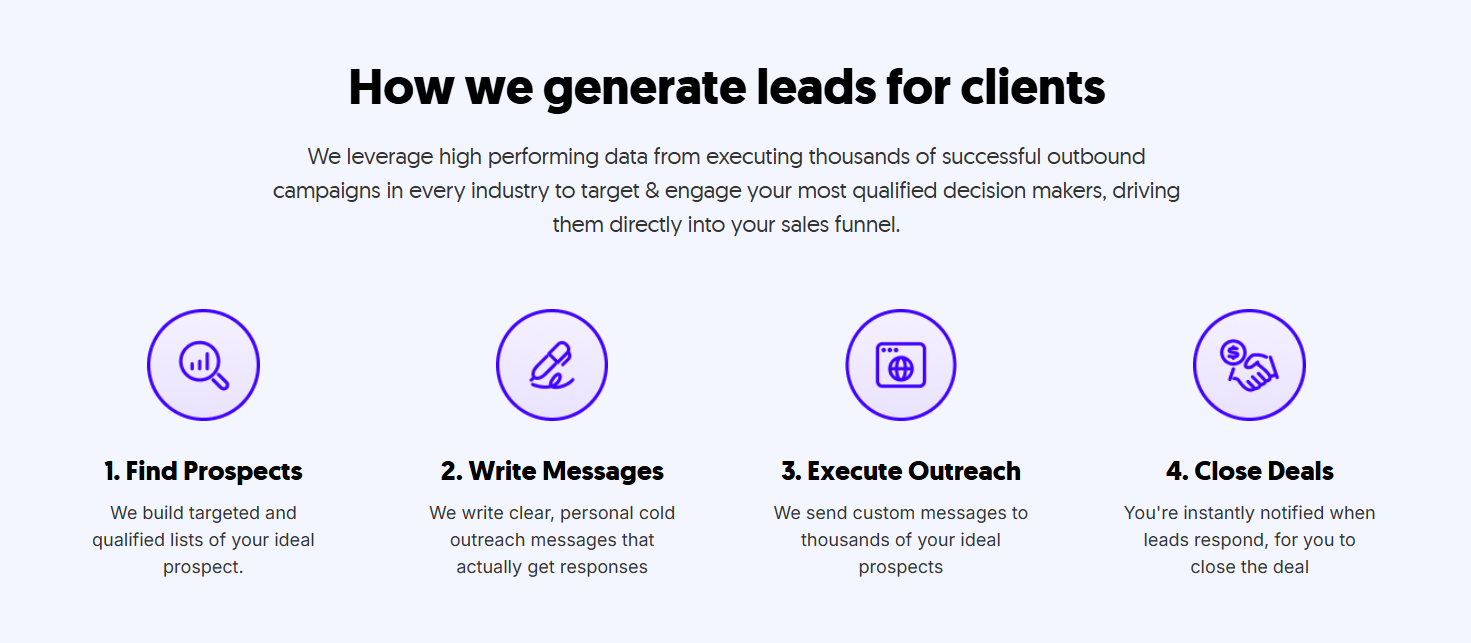
Here's how we do it differently:
- Strategy first, channels second.
We look at your ICP and deal size, then pick the channels that actually make sense. Selling to enterprise? LinkedIn + calling with email nurture. High-volume SMB play? Email-heavy with strategic call follow-up. We're not adding channels to look busy.
- Context flows everywhere.
When a prospect engages with your LinkedIn message, our system flags it. When they click your email, your caller knows. When they ask a question on a call, it informs the next email. No repeated introductions. No asking them to explain their problem twice.
- One source of truth.
Every touchpoint, every response, every insight lives in one place. Your LinkedIn outreach team, email team, and callers are reading from the same playbook and can see exactly where each prospect stands.
🚀 The result? Coordinated touchpoints that feel like one smart lead generation agency working your accounts, not three random vendors throwing darts.
We've proven it works. Our clients see higher response rates, better meeting show rates, and shorter sales cycles because prospects aren't confused about who we are or what we're offering.

Want outreach that feels connected, not chaotic?
Book a strategy call and we'll show you exactly how we'd orchestrate your channels to actually book meetings.
🔥 Get your FREE Consultation Today!
Conclusion
Look, omnichannel vs multichannel isn't about picking a winner. They're both tools in your toolkit.
Multichannel gets you moving fast. Omnichannel gets you converting high-value accounts. The right choice depends on who you're targeting, how complex your deal is, and what stage you're at.
But here's what we know for sure: in 2025, cohesion beats volume every single time.
Prospects don't care how many channels you're on. They care whether you remember the last conversation. They care whether your outreach feels like a thoughtful dialogue or a robocall with extra steps.
The companies winning in B2B lead generation right now? They're the ones who stopped obsessing over how many touchpoints they can cram in and started asking whether those touchpoints actually work together.
Your prospects can tell the difference. And they'll reward the ones who get it right with their time, their attention, and eventually, their business.
So stop treating your channels like separate campaigns. Start treating them like one coordinated effort to have a real conversation.
That's how you book meetings. That's how you build pipeline. That's how you win.
Frequently Asked Questions
Free Resource
How to Scale a Profitable Cold Call System
Get the complete guide — download it instantly now.
Free Ebook
Download the Free Guide
Enter your details to get instant access.
You're all set! 🎉
Your ebook is downloading now.
Click below if the download didn't start automatically.