Table of Contents
What Are Sales Engagement Platforms?
Why Sales Engagement Platforms Matter for B2B Outreach
10 Best Sales Engagement Platforms for B2B Outreach
AI-Powered Sales Engagement Platforms — What Actually Moves the Needle
How to Choose the Right Sales Engagement Platform for Your Team
Sales Engagement Platforms vs Done-for-You Lead Generation
How Cleverly Uses Sales Engagement Platforms to Drive Real Pipeline
Conclusion
Frequently Asked Questions
Modified On :
August 31, 2026
Key Takeaways
- Sales engagement platforms automate outreach, track engagement, and manage follow-ups across email, calls, and LinkedIn.
- The best platform depends on your team size, channel mix, budget, and whether you need all-in-one simplicity or enterprise-grade features
- AI features are valuable when they prioritize leads, optimize timing, or surface conversation insights, not when they just generate generic content.
- Multichannel sequencing (email + calls + LinkedIn) consistently outperforms single-channel approaches for B2B outreach.
- Platforms are tools that amplify strategy. They won't fix poor messaging, weak targeting, or inconsistent execution.
- Small teams can succeed with affordable platforms like Apollo.io or Close; enterprises need robust solutions like Outreach or Salesloft.
Sales engagement platforms have completely changed how B2B teams run outreach. Gone are the days of juggling spreadsheets, manual follow-ups, and hoping your emails actually land in someone's inbox.
Today's best sales engagement platforms handle the heavy lifting - automating sequences, tracking engagement, and keeping your pipeline organized across email, calling, and LinkedIn workflows.
Whether you're an SDR booking 50 calls a month or a founder trying to scale outreach without hiring an army of reps, the right platform makes all the difference.
But here's the thing: not all platforms are built the same. Some excel at cold email deliverability, others crush it with dialer integrations, and a few are leveraging AI to actually make your outreach smarter (not just flashier).
We've tested dozens of these tools across thousands of campaigns for our clients. In this guide, we're breaking down the top sales engagement platforms that actually move the needle for B2B lead generation.
Let’s dive in!
What Are Sales Engagement Platforms?
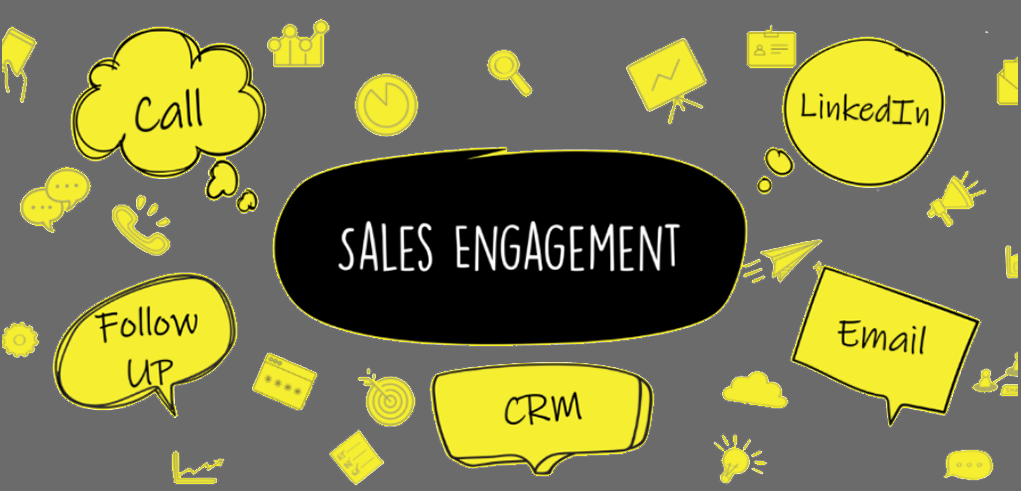
Sales engagement platforms are tools that help sales teams execute and manage outreach at scale.
More like your outreach command center. They automate follow-ups, track who's engaging with your emails or calls, and keep everything organized in one place.
Where people get confused: these aren't CRMs. Your CRM (like Salesforce or HubSpot) stores customer data and manages relationships.
Sales engagement platforms actually execute the outreach: sending emails, logging calls, running sequences, and telling you when a prospect opens your message or clicks a link.
They're also different from marketing automation tools. Marketing platforms handle mass campaigns to big audiences. Sales engagement tools are built for 1-to-1 and 1-to-few outreach where personalization actually matters.
Where they fit in your stack:
- CRM holds your data
- Sales engagement platform runs your outreach
- Marketing automation handles top-of-funnel campaigns
What they're actually used for:
- Building multi-touch sequences (email, call, LinkedIn)
- Automating follow-ups so nothing falls through the cracks
- Tracking engagement in real-time (opens, clicks, replies)
- Keeping reps focused on conversations, not admin work
So, if you're doing B2B sales engagement, these platforms turn chaos into a repeatable system.
Also Check: B2B Sales KPIs Every Revenue Team Should Track
🚀 Skip the Stack. Get Meetings.
From $397/mo LinkedIn outreach to pay-per-meeting email and 10–30 guaranteed calls/month, we turn outreach into revenue.
Why Sales Engagement Platforms Matter for B2B Outreach
A B2B sales engagement platform is the difference between scattered outreach and a system that actually scales.
Here's why they matter:
- Consistency across reps: Everyone follows the same proven LinkedIn or email sequences instead of winging it.
- Nothing slips through: Automated follow-ups mean prospects don't go cold because someone forgot to circle back.
- Real-time engagement data: You know exactly who's interested before you pick up the phone.
- Multi-channel coordination: Email, calls, and LinkedIn all working together instead of competing for attention.
- Scale without headcount: One rep can manage 10x more conversations without dropping quality.
- Better conversion rates: Timely, relevant touchpoints based on actual behavior—not gut feel.
The reality? B2B deals take 8-12 touches on average. Without a sales engagement platform, most reps give up after 2-3. That's the pipeline left on the table.
For B2B lead generation, these platforms turn outreach from a numbers game into a strategic process. You're not just sending more emails, you're having better conversations at the right time.
The Sales Engagement Software Market: Size, Adoption, and ROI Timeline
If you're building the case for a purchase internally, the market context helps make it.
The global sales engagement platform market is projected to grow from about $9.2 billion in 2026 to $26.6 billion by 2033, at a compound annual growth rate of roughly 16.3%. That's not hype math. It reflects how many sales teams have already made the switch: around 66% of sales teams in the United States now report using an engagement platform to manage customer communication, with adoption climbing as teams look to automate follow-up and improve pipeline visibility.
Adoption doesn't guarantee ROI on day one, though. The median payback period for sales automation tools typically lands around two to four months, once reps ramp on the sequences and the automation starts replacing manual admin work.
Why this context matters when you're making the case internally:
- A growing category is a safer bet. Vendors investing in a market this size are less likely to sunset your platform or stop shipping features next year.
- A two-to-four-month payback window sets real expectations. If finance asks how fast the tool pays for itself, you now have a benchmark instead of a guess.
- Adoption at this scale means your reps have likely used something similar. New hires with B2B experience elsewhere probably already know a comparable tool, which shortens ramp time.
Use these numbers to frame the ask, not as a promise. Your actual payback still depends on how consistently your team runs the sequences, not just which platform lands on the contract.
More Tools to Explore: Best Sales Pipeline Management Software for B2B Teams
10 Best Sales Engagement Platforms for B2B Outreach
We've run outreach for thousands of clients - from scrappy startups to enterprise teams closing seven-figure deals.
These are the B2B sales engagement platforms that consistently deliver results when you need to scale outreach without sacrificing quality.
1. HubSpot Sales Hub
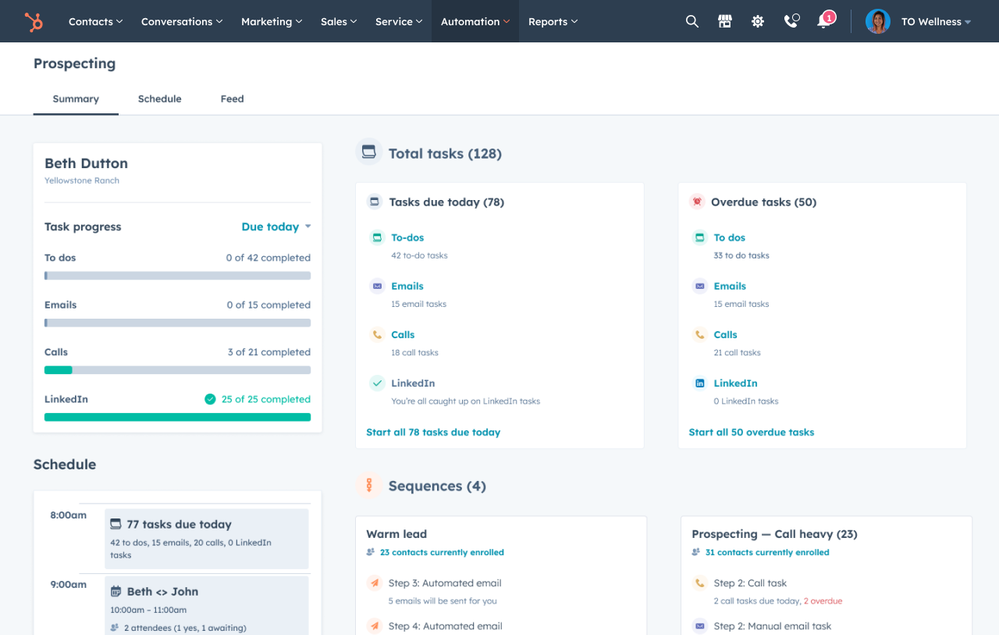
HubSpot Sales Hub is a full-stack sales platform built on top of their CRM. It's designed for teams that want sales, marketing, and customer data all talking to each other in one place—not scattered across five different tools.
What makes it stand out is how tightly everything integrates. Your email sequences, call logs, meeting bookings, and pipeline management all live in the same ecosystem. For teams tired of duct-taping tools together, it's a clean solution.
Core sales engagement features:
- Email tracking and customizable templates with open/click notifications.
- Automated sales sequences for follow-ups and task triggers.
- One-click meeting scheduling that syncs to your calendar.
- Visual pipeline management with drag-and-drop deal tracking.
- Built-in calling with AI transcription and conversation intelligence.
- Document tracking to see when prospects view proposals.
- Sales automation workflows for lead routing and task creation.
- AI-powered assistance for prospecting, meeting prep, and email drafting.
- Quote generation with e-signatures and payment collection.
Best for: SMBs and growing sales teams that want an all-in-one platform where sales, marketing, and service data actually work together. Scales well for enterprises with complex processes.
Pricing (Annual billing gets you a discount):
- Free: Basic CRM, email tracking, meeting scheduling (unlimited users)
- Starter: $15/seat/month (automation, templates, basic reporting)
- Professional: $100/seat/month (advanced automation, forecasting, e-signature)
- Enterprise: $150/seat/month (predictive scoring, conversation intelligence, custom objects)
2. Outreach

Outreach is built for teams running complex, high-volume outreach where every conversation matters. It's an AI-powered sales engagement platform that acts as mission control for all your buyer interactions—email, calls, LinkedIn, and everything in between.
What separates Outreach is the depth of its AI capabilities. We're not talking basic automation—this platform analyzes sentiment, scores deal health, and even joins your meetings to surface real-time insights. If you're managing a large BDR team or enterprise deals with long cycles, it's built for that level of complexity.
Core sales engagement features:
- Multi-channel sequences across email, calls, and LinkedIn.
- AI-powered buyer sentiment analysis and deal health scoring.
- Automatic CRM sync and task management (eliminates manual data entry)
- Kaia AI assistant that joins meetings, suggests content in real-time, and transcribes calls
- Built-in dialer and meeting scheduler with calendar sync
- Unified pipeline view with AI-driven insights to identify at-risk deals
Best for: Mid-sized to large enterprise teams with complex sales cycles and big BDR operations. Especially strong for Salesforce-heavy organizations managing high-volume, multi-channel outreach.
Pricing: Not publicly listed. Requires custom quote from sales team. Annual contract required.
- Estimated range: ~$100–$160/user/month for base plans
- Additional costs: Implementation and onboarding fees ($1,000–$8,000)
3. Salesloft
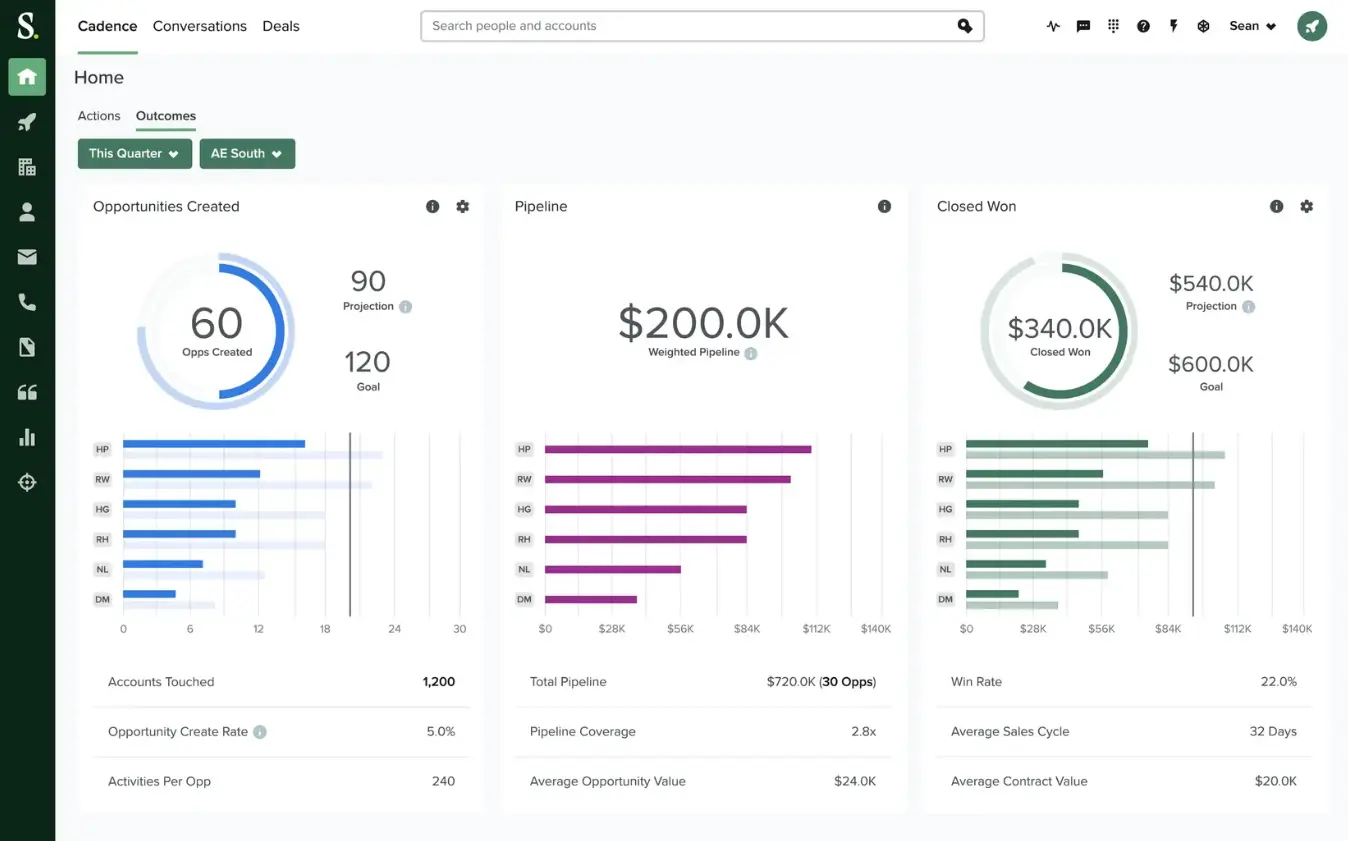
Salesloft is a revenue orchestration platform that goes beyond basic engagement—it's built to connect every piece of your sales process from first touch to close. Think of it as the connective tissue between your outreach, conversations, pipeline management, and deal execution.
The standout feature is Rhythm, their AI engine that actually prioritizes your workflow based on real buyer signals. Instead of guessing which lead to call next, the platform surfaces high-value tasks dynamically. For enterprise teams juggling hundreds of deals, that clarity is gold.
Core sales engagement features:
- Cadence management for automated multi-channel sequences (email, calls, social).
- Conversation intelligence that records calls and identifies winning patterns.
- Unified deal and pipeline management with risk identification.
- AI-powered prioritization (Rhythm) that surfaces high-value tasks based on buyer signals.
- Advanced analytics and customizable dashboards for activity and performance tracking.
- Seamless bi-directional CRM integration (Salesforce, Microsoft Dynamics).
- Sales automation for follow-ups, scheduling, and data logging.
Best for: Mid-market to large enterprise revenue teams (SDRs, AEs, CSMs, leadership) managing complex B2B sales cycles. Ideal for organizations that need deep analytics, extensive automation, and tight integration across their sales tech stack.
Pricing: Custom quote required. No public pricing. Book a demo to get details.
- Estimated cost: ~$1,000/user/year (minimum 3-10 seats typically required)
- Add-ons: Built-in dialer and advanced features like forecasting cost extra
- Tiers: Advanced (engagement and deal tracking) and Premier (adds revenue forecasting and advanced AI)
4. Apollo.io
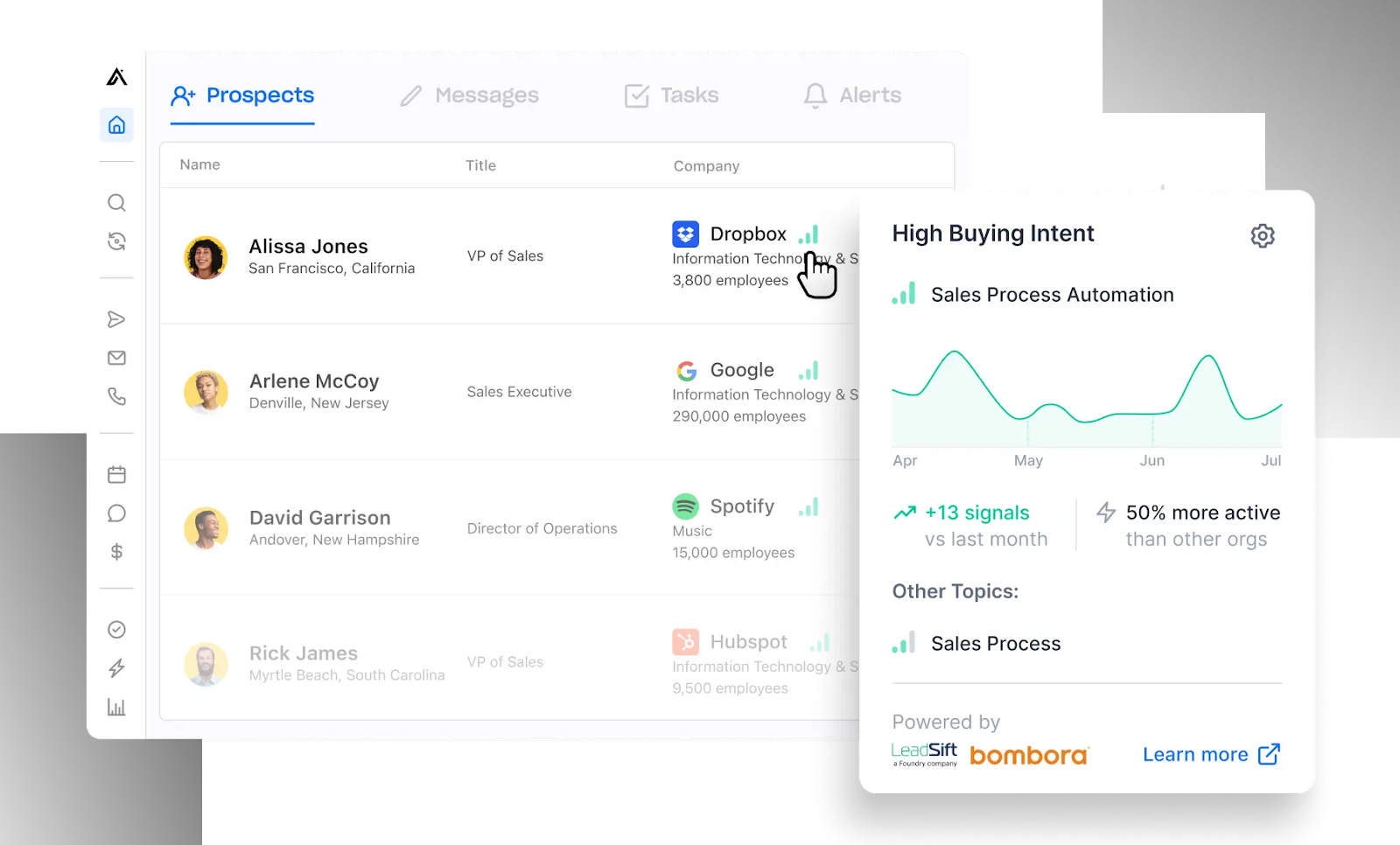
Apollo.io is the Swiss Army knife of outreach sales engagement platforms, it combines a massive B2B database with engagement tools in one package. Instead of paying for a data provider and a separate engagement platform, you get both.
The real value is in how quickly you can go from "I need to target VP of Sales at SaaS companies" to actually running sequences. The database has 275M+ contacts with solid filtering, and you can launch multi-channel campaigns without leaving the platform. For teams that need to move fast without duct-taping tools together, it's a solid play.
Core sales engagement features:
- B2B database with 275M+ contacts and detailed firmographic/technographic data.
- 65+ search filters including job titles, industry, location, and intent signals.
- Multi-channel automated sequences (email, calls, LinkedIn tasks).
- Built-in dialer with call recording, transcription, and CRM logging.
- AI-powered email drafting, lead scoring, and personalization at scale.
- Email deliverability tools with inbox warm-up and spam testing.
- Bidirectional CRM sync (Salesforce, HubSpot).
- Real-time analytics tracking opens, clicks, and reply rates.
Best for: Small to mid-sized sales teams and startups looking for an affordable all-in-one solution that combines prospecting data with engagement tools. Great for consolidating your sales tech stack.
Pricing: (Annual billing, credit-based system)
- Free: $0/user/month (limited credits for testing)
- Basic: $49/user/month (more credits, advanced filters, basic CRM integration)
- Professional: $79/user/month (US dialer, call recording, A/B testing)
- Organization: $119/user/month (minimum 3 users—international dialer, advanced security, custom reports)
5. Close
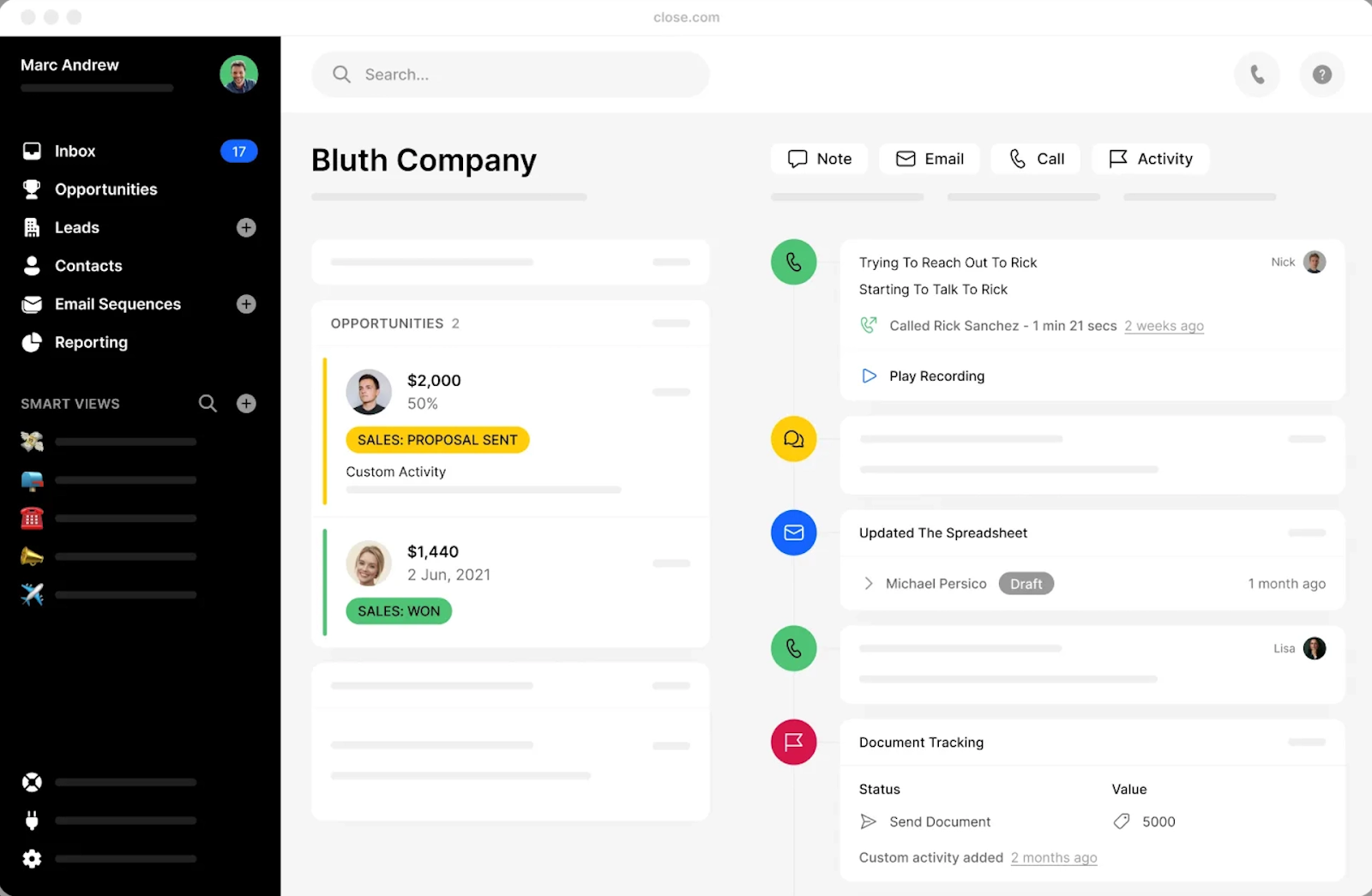
Close is a sales engagement tool built specifically for teams that live on the phone and need everything in one place. No more toggling between your CRM, dialer, email tool, and SMS platform—it's all baked in and actually works together.
What makes Close different is how fast you can move. Built-in calling, texting, and email sequences mean you're executing outreach instead of managing integrations. For SMBs doing high-touch outbound, it eliminates the tool fatigue that comes with enterprise platforms.
Core sales engagement features:
- Built-in calling and SMS with automatic logging and tracking.
- Automated email sequences with open, click, and reply tracking.
- Power and predictive dialers for high-volume calling.
- Visual sales pipeline with customizable stages and centralized follow-up inbox.
- AI-powered call transcription, lead summaries, and email rewrite assistance.
- Automated workflows for lead assignment, task creation, and triggered communications.
- Built-in reporting and customizable dashboards for performance tracking and forecasting.
Best for: Small to medium-sized businesses and scaling sales teams that rely heavily on outbound calls, emails, and SMS. Perfect for teams wanting powerful communication tools without the complexity of enterprise CRMs.
Pricing: (Annual billing, 14-day free trial on all plans)
- Solo: $9/user/month (individual users)
- Essentials: $35/user/month (small teams)
- Growth: $99/user/month (automation and power dialers)
- Scale: $139/user/month (predictive dialer, advanced controls for high-volume calling)
- Custom plans available for larger teams
6. Freshsales
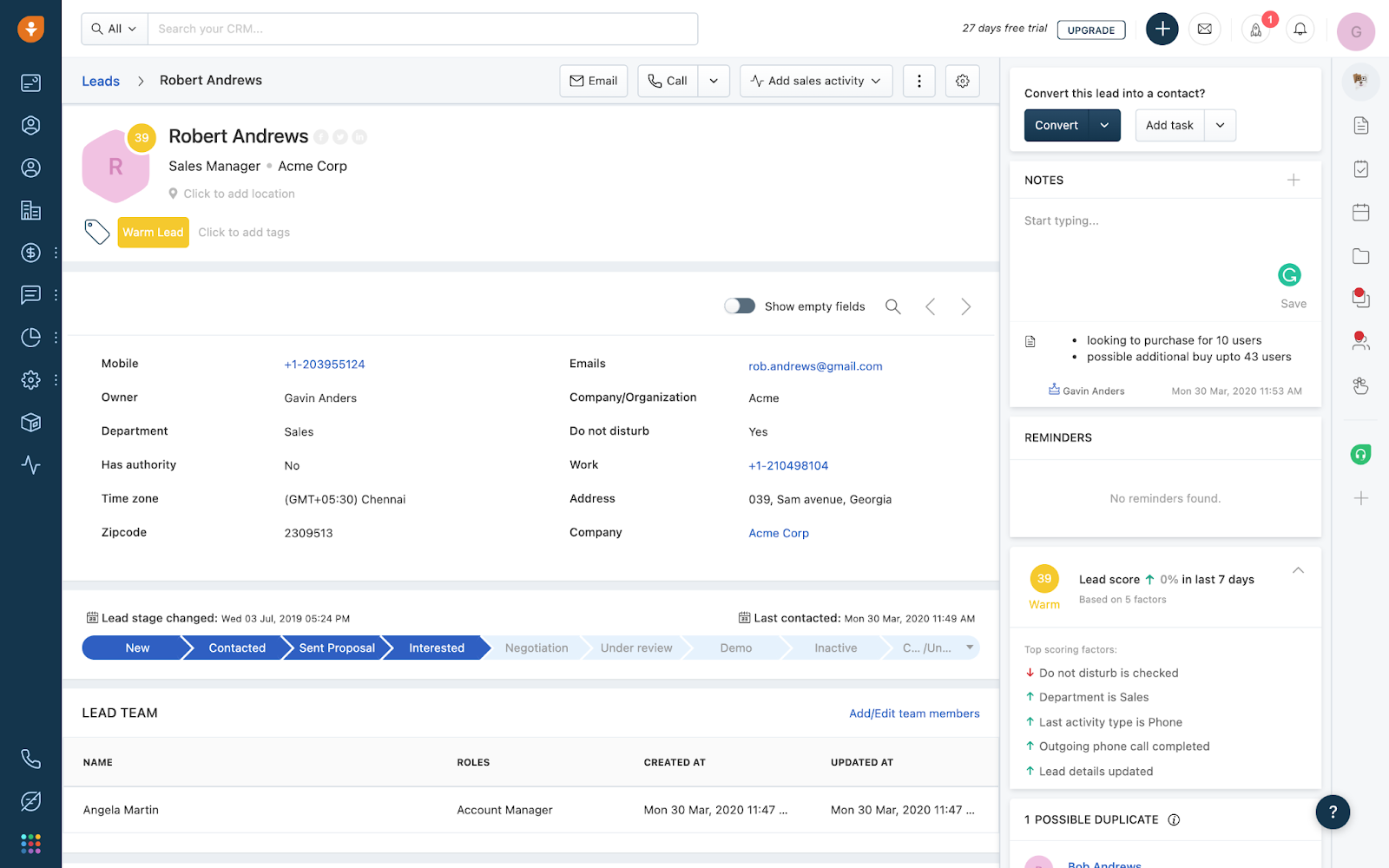
Freshsales is an AI-powered CRM that brings sales and marketing into one clean system. It's designed for teams that want to move fast without getting bogged down in complicated setup or feature overload.
The standout here is Freddy AI—it actually scores and prioritizes your leads based on engagement and historical data, so your reps aren't guessing who to call next. Combine that with omnichannel engagement (phone, email, chat, WhatsApp, Messenger) and you've got a solid all-in-one platform that punches above its price point.
Core sales engagement features:
- Omnichannel engagement with built-in phone, email, chat, and social integrations (WhatsApp, Facebook Messenger).
- AI-powered lead scoring that automatically prioritizes hottest prospects.
- Sales sequences and automation for follow-up campaigns across email, calls, and texts.
- Visual pipeline management with customizable drag-and-drop views (Kanban, list, table).
- 360-degree customer view with complete activity timeline for personalized outreach.
- AI-driven insights and dynamic forecasting to predict revenue and spot at-risk deals.
Best for: Startups, SMBs, and larger enterprises looking for an easy-to-use, affordable all-in-one CRM that connects sales and marketing without the enterprise complexity.
Pricing: (Per user/month, billed annually)
- Free: $0 (up to 3 users with basic features)
- Growth: $9
- Pro: $39
- Enterprise: $59
7. Groove
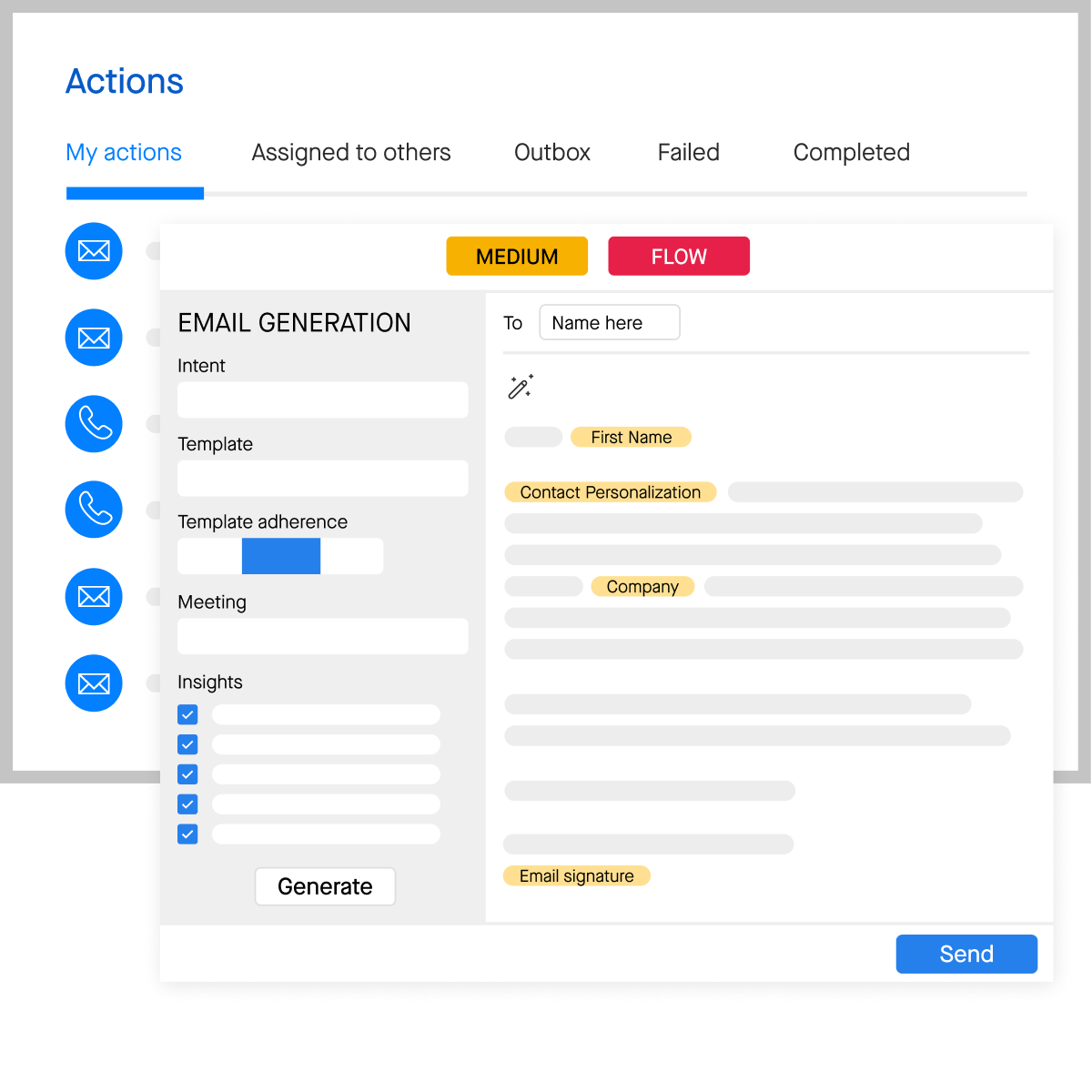
Groove (now part of Clari) is built for one thing: making Salesforce teams way more productive. If your entire sales org lives in Salesforce, Groove eliminates the constant tab-switching and manual data entry that kills momentum.
The native integration is the key differentiator—everything syncs in real-time without leaving your inbox or calendar. Combined with AI that captures every activity and surfaces what's actually working, it's a productivity multiplier for enterprise teams that can't afford reps spending half their day on admin work.
Core sales engagement features:
- Multi-channel campaigns with automated "Flows" (email, calls, social touches).
- Native Salesforce integration that syncs all data and activities in real-time.
- Email and activity tracking for opens, clicks, and replies.
- Sales dialer with one-click calling and automatic call recording logged to Salesforce.
- Meeting scheduler for direct calendar booking.
- AI-powered activity capture with data-driven recommendations.
- Real-time analytics and dashboards for performance, campaign effectiveness, and pipeline health.
Best for: Large enterprises and mid-size businesses deeply invested in Salesforce who need seamless integration and high-productivity workflows. Used by SDRs, AEs, and CSMs across revenue teams.
Pricing: Custom enterprise pricing—no public plans. Contact sales for quote at Groove.
- Estimated range: $50–$70/user/month (third-party estimates)
- Typically requires minimum user count or annual contract
8. Reply.io
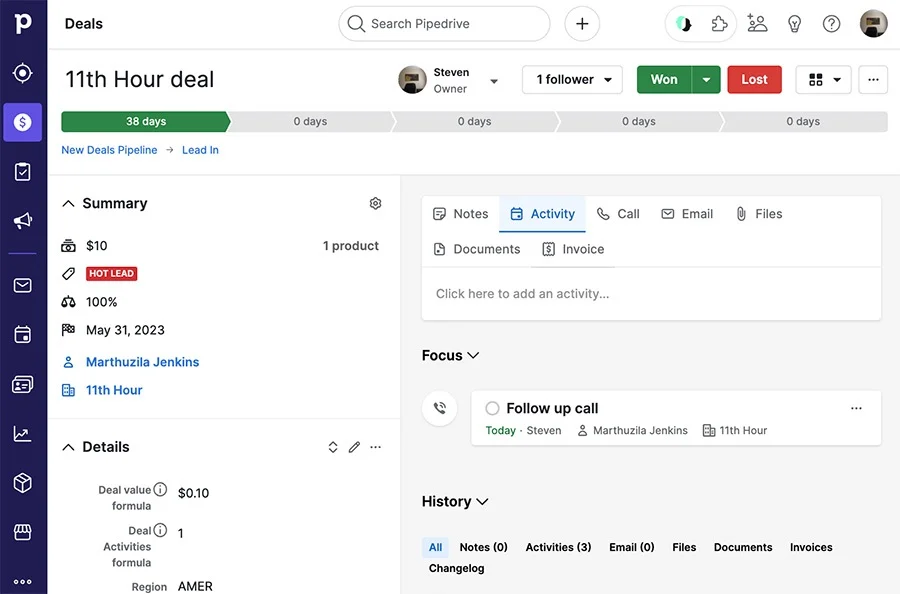
Reply.io is built for teams that want to automate outreach across every channel without sacrificing personalization. Email, LinkedIn, calls, SMS, WhatsApp—all running in coordinated sequences from one platform.
The game-changer is Jason AI, their AI SDR that actually handles prospecting end-to-end. It generates personalized emails, suggests messaging, and drafts responses at scale. Plus, the built-in email warm-up and deliverability tools mean your messages actually land in inboxes instead of spam folders.
Core sales engagement features:
- Multichannel automated sequences across email, LinkedIn, calls, SMS, and WhatsApp.
- AI-powered personalization with Jason AI for email generation and response drafting.
- Built-in B2B contact database with Chrome extension for LinkedIn email finding.
- Email deliverability suite with unlimited warm-up, validation, and domain audits.
- CRM integrations with Salesforce, HubSpot, and Pipedrive.
- Detailed analytics tracking opens, clicks, replies, and team performance.
Best for: Growing sales teams, B2B lead generation agencies, and recruiters who want to automate and scale outbound prospecting across multiple channels. Ideal for consolidating your tech stack and leveraging AI for personalized outreach.
Pricing: (Billed annually, free trial available)
- Email Volume: ~$49/user/month (email automation, 1,000 active contacts)
- Multichannel: ~$89/user/month (email + LinkedIn, unlimited contacts; calls/SMS may be add-ons)
- Agency: ~$166/month (unlimited clients and users)
- AI SDR (Jason AI): ~$259/month (fully automated AI-powered prospecting)
Note: Some channels like calls, SMS, and advanced LinkedIn features may require extra fees or credits.
9. Yesware
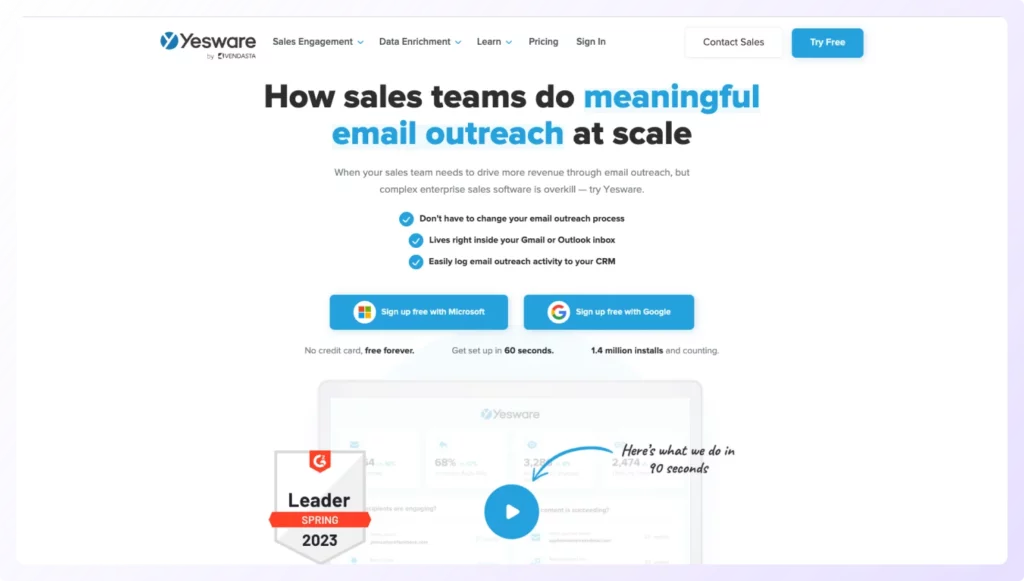
Yesware lives inside your Gmail or Outlook inbox—no switching tabs, no separate platform to log into. It's built for reps who want engagement tools without abandoning the email client they already use every day.
The simplicity is the selling point. Email tracking, templates, automated sequences, and meeting scheduling all happen right in your inbox. For small teams that don't need enterprise-level complexity and just want to track engagement and automate follow-ups efficiently, it's a clean solution.
Core sales engagement features:
- Real-time email tracking for opens, link clicks, and attachment views.
- Customizable email templates you can save and share across the team.
- Multi-channel campaigns with automated email sequences and call/LinkedIn reminders.
- Meeting scheduler with direct calendar syncing (Google/Outlook).
- Performance reports on emails, templates, and campaigns with engagement metrics.
- Automatic CRM integration that syncs activity and campaign data to Salesforce.
- Prospector tool with B2B database access for lead sourcing and contact enrichment.
Best for: Small to mid-sized sales teams and solo professionals who want a simple, inbox-native solution for email outreach and follow-ups. Perfect for Gmail/Outlook users who rely on Salesforce and don't need enterprise complexity.
Pricing: (Monthly billing shown, annual offers discount. Free Forever plan available with basic tracking)
- Pro: $19/seat/month (unlimited tracking, personal reports)
- Premium: $45/seat/month (unlimited campaigns, team features, shared templates)
- Enterprise: $85/seat/month (advanced Salesforce integration, dedicated support)
10. Mixmax
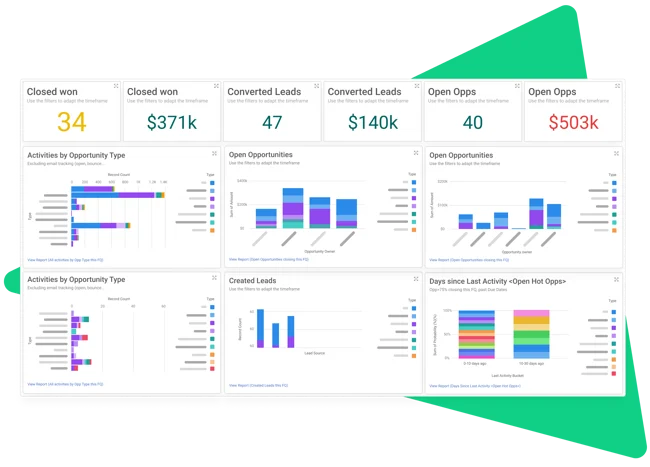
Mixmax is a browser extension that turns your Gmail or Outlook inbox into a full-fledged sales engagement platform. No separate login, no new interface to learn—just powerful automation and tracking right where you already work.
What makes it stand out is the AI Compose and Smart Send features that actually improve your emails and timing, plus in-email interactive elements like polls and CTAs that boost engagement. For teams that live in their inbox and want quick implementation without a heavy lift, it's a smart play.
Core sales engagement features:
- Multichannel sequences automating outreach across email, phone, SMS, and LinkedIn.
- Real-time email tracking for opens, clicks, and replies.
- AI assistance for email drafting and send-time optimization.
- One-click meeting scheduling with shared calendars and automated reminders.
- Workflow automation with if/then rules for CRM updates and follow-up tasks.
- Personalization at scale with email templates using dynamic fields and conditional logic.
- In-email interactive elements (polls, surveys, CTAs) to boost engagement.
- Performance analytics on sequences, templates, and team members.
Best for: Small to medium-sized B2B sales teams, SDRs, AEs, and CSMs who primarily work in Gmail or Outlook and want to automate email workflows without complex implementation. Great entry-level, plug-and-play solution.
Pricing: (Annual billing offers discount, free plan available)
- Free: $0/user/month (basic tracking and scheduling)
- SMB: $29/user/month (email sequences, shared calendars)
- Growth: $49/user/month (AI features, personalization, analytics)
- Growth + CRM: $69/user/month (deep Salesforce/HubSpot integration, API access)
- Enterprise: Custom pricing
Other Major Platforms Worth Knowing: ZoomInfo, Salesforce, and Gong
Ask ten different sales leaders for their top sales engagement platform picks and you'll get ten different lists. That's because a few major players don't fit neatly into a ranked "best sales engagement platform" list, even though plenty of B2B teams run their entire outbound motion through them.
Here's where they fit.
ZoomInfo: Data and Engagement in One Bundle
ZoomInfo built its name on B2B data, and its engagement layer (called Engage) is bundled on top of that data instead of sold as a separate product. Your reps get verified contact records, intent signals, and sequencing in the same workspace instead of syncing two different vendors.
What makes it different:
- A verified data foundation first. ZoomInfo's platform combines verified B2B data with AI-driven seller execution, built on a foundation that includes 120 million direct-dial phone numbers and 200 million-plus verified business emails, so the contacts feeding your sequences start out cleaner than lists pulled from a standalone engagement tool.
- Engage runs sequences against that data. Email, call, and task sequencing works the way most engagement platforms do, but it's built to trigger off ZoomInfo's own intent and buying-signal data rather than a general-purpose CRM feed.
- The tradeoff is lock-in. You're buying an ecosystem, not just a sequencing tool. Teams that want to swap engagement vendors without losing their data provider (or the other way around) will feel that friction.
Best for: Teams already leaning on ZoomInfo for prospecting who want engagement built on the same data layer instead of syncing two separate systems. If you want to see how ZoomInfo's intent and technographic signals stack up against dedicated data platforms, that's worth a separate look.
Salesforce Sales Engagement: Native, Not a HubSpot Swap
This one causes real confusion. Salesforce Sales Engagement (formerly High Velocity Sales) is Salesforce's own native add-on for sequencing and cadences. It's a different thing entirely from running HubSpot Sales Hub with a Salesforce integration bolted on.
What makes it different:
- Sales Cadences replace a third-party sequencer. Reps build multi-step outreach (email, call, custom tasks) directly on lead and contact records inside Salesforce, with no separate engagement license required on Unlimited Edition.
- Einstein Activity Capture and Conversation Insights are built in. Call logging and basic AI-driven insights come from the same vendor as your CRM instead of a bolted-on integration.
- Pricing starts around $50 per user per month as an add-on for editions that don't include it natively, on top of your existing Sales Cloud license.
Best for: Salesforce-heavy orgs that want cadence management without adding another vendor into the data-sharing conversation.
Gong: Not an Engagement Platform, But Worth Knowing
Gong isn't a sales engagement platform. It's a conversation intelligence tool that records, transcribes, and analyzes sales calls to surface what's actually happening in your team's conversations. It's category-adjacent, and it's common to see Gong running alongside Outreach or Salesloft rather than instead of them.
Where it fits:
- Deal visibility, not sequencing. Gong won't send your emails or queue your calls. It tells you what happened after the call already took place.
- Pairs naturally with engagement platforms. Plenty of enterprise teams using Outreach or Salesloft for execution also run Gong for coaching and deal-risk flags.
- Volume matters here. Smaller teams doing a few hundred calls a month rarely generate enough conversation volume to justify a dedicated conversation intelligence layer stacked on top of engagement software.
Best for: Teams that already have an engagement platform handling execution and want a second layer of visibility into what's actually being said on calls.
One more distinction worth making: none of these three are sales enablement tools either. If your real bottleneck is content, training, or onboarding rather than outreach execution, that's a different category to shop for entirely.
Where this leaves you: if you're already deep in Salesforce or ZoomInfo, staying inside that ecosystem usually beats bolting on a "top 10" pick that duplicates data you already pay for. The best sales engagement platform for your team might be the one your existing stack already includes, not the one topping someone else's list.
🔥 Tools Don’t Book Meetings. We Do
Cleverly runs LinkedIn, cold email, and cold calling outreach end-to-end—delivering meeting-ready leads you only pay for.
AI-Powered Sales Engagement Platforms — What Actually Moves the Needle
Every sales engagement platform now slaps "AI-powered" on their homepage. But here's the truth: most AI features are nice-to-haves, not game-changers.
The question isn't whether a platform has AI, it's whether that AI actually helps you close more deals.
Where AI genuinely helps:
- Prioritization: AI scores leads based on engagement patterns and tells you who to call first. No more guessing or working alphabetically through your list.
- Timing optimization: Algorithms figure out when specific prospects actually check their email, so your messages hit at the right moment.
- Conversation insights: Call transcription and sentiment analysis surface what's working (and what's tanking) across your team's conversations.
- Data capture: Automatic activity logging eliminates manual CRM updates that waste hours every week.
What AI cannot replace:
- Strategy: AI doesn't know your ICP, buying committee, or competitive positioning.
- Messaging: Generic AI-generated emails sound like...generic AI-generated emails. Your value prop still needs a human brain.
- Targeting: Algorithms can't replace understanding your market, pain points, and decision-making process.
How to evaluate AI claims realistically
Don't get sold on buzzwords. Ask: "Does this AI feature save my reps time or help them have better conversations?" If it's just auto-generating bland emails or surface-level insights you could've figured out yourself, it's not worth paying extra for.
The best AI-powered platforms for sales engagement augment what your team already does well. They don't try to replace strategy and critical thinking with automation.
Explore Further: Best Prospecting Tools for B2B Sales Teams (Free & Paid)
How to Choose the Right Sales Engagement Platform for Your Team
Picking the right sales engagement platform is about fit. The tool that works for a 100-person enterprise SDR team will be overkill (and overpriced) for a 5-person startup, and vice versa.
Team size and outbound maturity
If you're just starting outbound, you don't need enterprise-grade orchestration. A simpler platform with email sequences and basic tracking gets you moving fast. Mature teams with complex workflows need advanced automation, AI prioritization, and deep analytics.

Channel mix (email-only vs multichannel)
Running email-only campaigns? Platforms with strong deliverability tools matter most. If you're coordinating email, calls, LinkedIn, and SMS, you need true multithreading—not just email automation with a dialer bolted on.
CRM and data stack compatibility
Your sales engagement platform should sync seamlessly with your CRM. If you're all-in on Salesforce, native integration is non-negotiable. Light CRM users can get away with basic syncing. Also check: does it play nice with your data enrichment tools, calendar, and other sales tech?

Budget vs ROI expectations
Expensive doesn't mean better. A $150/seat platform makes sense if it helps AEs close $50K deals. For SDRs booking $5K opportunities? That math doesn't work. Calculate cost per meeting booked or pipeline generated—not just the sticker price.
In-house execution vs external support
Be honest: will your team actually build sequences, optimize campaigns, and analyze data consistently? If not, either choose a platform with strong support/templates or work with a B2B lead generation agency that handles execution while you focus on closing deals.
The right platform amplifies what your team already does well. The wrong one becomes shelfware in three months.
Compliance and data security features to check before buying
Every outbound platform touches regulated data the moment it stores a phone number or email address. Skipping this check during evaluation is how a compliance gap turns into your problem instead of your vendor's.
What to confirm before you sign:
- GDPR, CCPA, and TCPA relevance. If you're calling or emailing contacts in the EU, California, or across state lines in the US, these frameworks apply to your outreach regardless of company size. TCPA violations carry statutory damages of $500 to $1,500 per violation, with no aggregate cap on how many violations can stack in a single non-compliant campaign. GDPR penalties can reach up to 20 million euros or 4% of global revenue in extreme cases.
- Opt-out and consent tracking built in, not bolted on. Your platform should log consent status and honor opt-outs automatically across every sequence a contact is in, not just the one where they clicked unsubscribe.
- Data encryption and permission controls. Who inside your team can export contact lists? Can a departing rep walk out with your entire book of prospects? Role-based permissions matter as much as encryption at rest.
- Written documentation of where data lives. If a prospect asks how their data is stored or requests deletion, you need a real answer faster than "let me check with the vendor."
The uncomfortable part: when a compliance gap surfaces, it's your company's liability, not the software vendor's. Vendors sell tools. You own how those tools get used against your prospect list. Confirm the compliance features exist before you're the one explaining a violation to legal.
Why data quality determines whether any platform actually works
Here's something the platform comparisons above won't tell you: the best sequence strategy in the world fails on top of bad data.
The cascade looks like this. A bad phone number leads to a wasted dial. A wasted dial lowers your connect rate. A lower connect rate means fewer real conversations, which means missed quota, no matter how good your cadence logic is.
What "good enough" data actually requires:
- Verified direct-dial numbers, not switchboard guesses. A number that reaches a receptionist isn't the same as one that reaches your buyer.
- Current job titles. B2B contact data decays at approximately 2.1% per month, compounding to 22.5% annually, with high-quality providers delivering 97%-plus accuracy against an industry average closer to 50%. A title that was correct in January can easily be wrong by fall.
- Bounce rates under control. High bounce rates don't just waste a send. They damage your domain's sender reputation, which then suppresses deliverability for every email you send after, inside the platform or outside it.
This is exactly why the CRM and data stack question above matters so much. A sales engagement platform with flawless sequencing logic still can't fix a list built on stale titles and disconnected numbers. If your connect rates and reply rates are dropping and you've already ruled out messaging, look at your data source before you look at your platform.
Sales Engagement Platforms vs Done-for-You Lead Generation
See, sales engagement platforms are just tools. They don't write your messaging, build your sequences, or fix deliverability issues. That's all on you.
Platforms are tools — execution still matters
Buying Outreach or Apollo doesn't automatically fill your calendar. Someone still needs to craft compelling copy, test sequences, manage deliverability, analyze data, and iterate constantly. Most teams underestimate how much work that actually is.
Hidden costs: setup, optimization, deliverability, training
Beyond the subscription, factor in: implementation fees, ongoing optimization time, email warm-up costs, training new reps, troubleshooting CRM syncs, and managing sender reputation. These add up—fast.
When DIY platforms make sense
If you have experienced SDRs, dedicated ops support, and proven messaging, running your own platform works. You maintain control, iterate quickly, and build institutional knowledge.
When agencies outperform tools alone
If outbound isn't your team's core competency, a B2B lead generation agency often delivers better ROI. They handle the entire execution - copy, sequences, deliverability, data…while your reps focus purely on closing meetings they show up to.
The real question isn't "platform or agency?" It's "where should my team spend their time?"
Read More: Why Done-for-You LinkedIn Lead Generation Delivers Faster ROI
How Cleverly Uses Sales Engagement Platforms to Drive Real Pipeline
At Cleverly, we don't just recommend sales engagement platforms, we actually use them to generate real results for our clients.
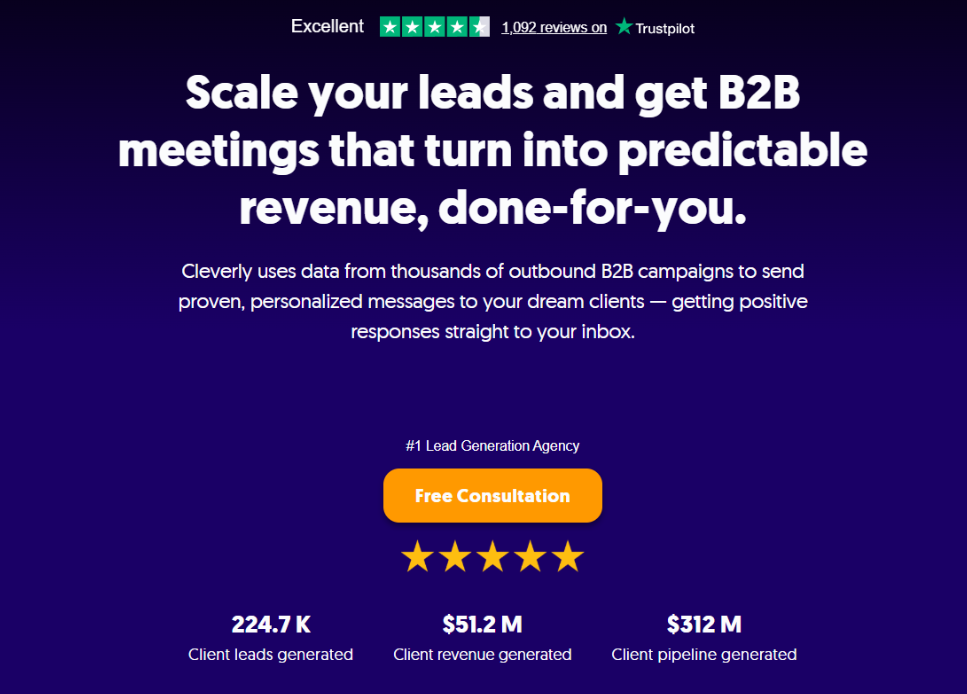
We've helped 10,000+ companies like Amazon, Google, Uber, and Spotify generate $312M in pipeline revenue because we treat these platforms as part of a complete system, not a silver bullet.
How we approach it:
We select the right platform based on your ICP, deal size, and channel mix. Then we execute across LinkedIn, cold email, and cold calling—building sequences, optimizing messaging, managing deliverability, and continuously refining based on what's actually driving meetings.
Our team handles the entire outbound operation while your reps focus on what they do best: closing deals.
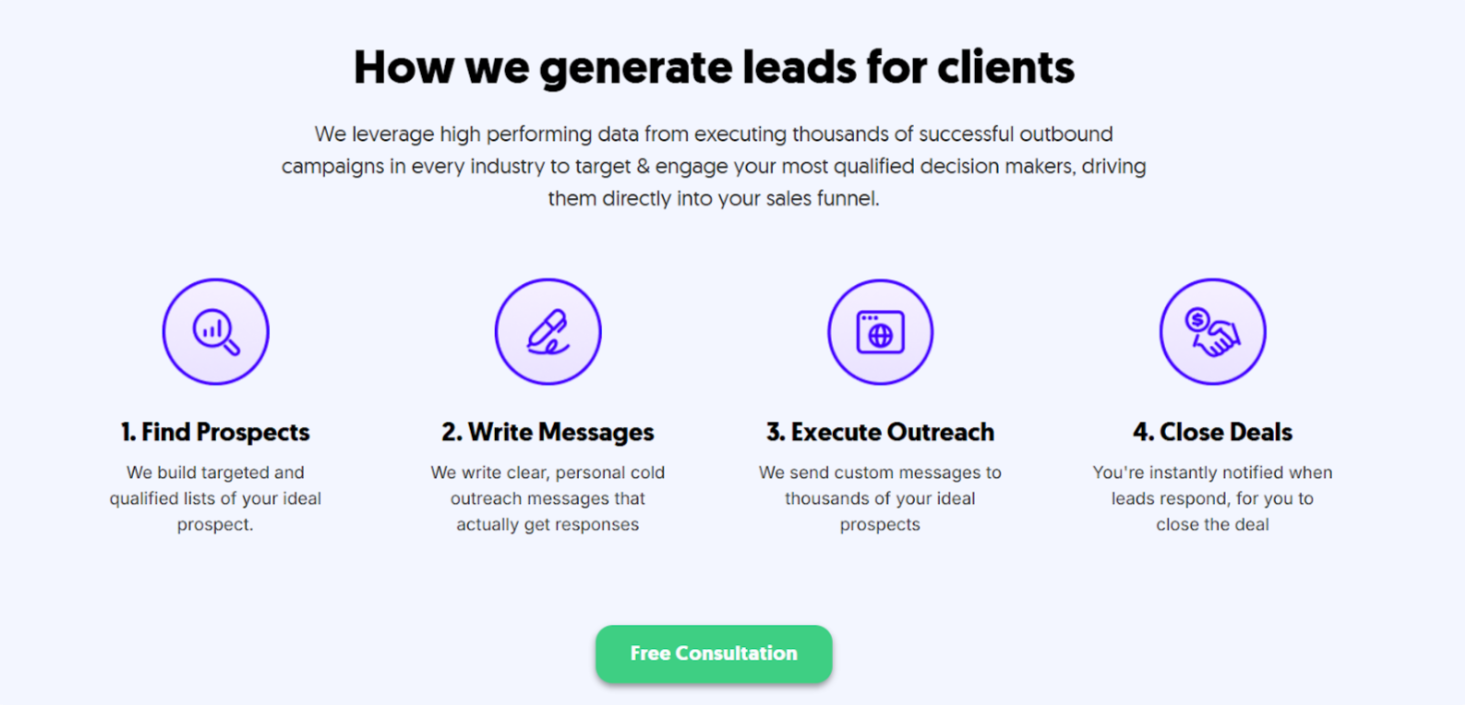
Whether it's LinkedIn lead gen starting at just $397/month, cold email where you only pay for meeting-ready leads we send you, or our $5M cold calling system that books 10-30 qualified sales calls every month guaranteed, we bring the expertise, the execution, and the accountability.
You get a no-accent appointment setter, breakthrough scripts, data and tech included, all at half the cost of building this in-house. And if we don't hit the mark? We replace the SDR or make it right.
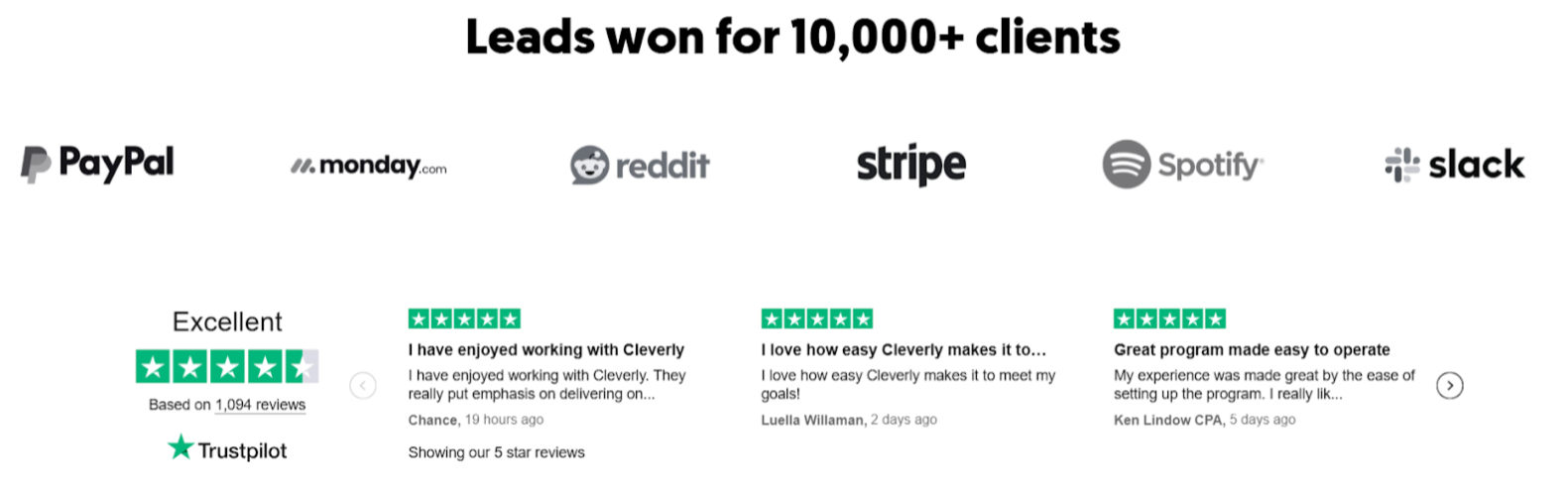
The difference between us and a platform subscription? We're a B2B lead generation agency that owns the outcomes, not just the activity. Our clients focus on pipeline and revenue—we handle everything else.
Ready to stop managing tools and start booking meetings? Let's talk about how Cleverly can build your outbound engine.
🚀 Book a FREE Consultation

Conclusion
Sales engagement platforms are powerful…but only when paired with solid strategy and consistent execution. The fanciest tool in the world won't save generic messaging, poor targeting, or sequences that fizzle out after two touchpoints.
The right platform depends on your goals, team size, and how you want to execute. DIY works when you have the bandwidth and expertise. Done-for-you works when you'd rather focus on closing than campaign optimization.
Engagement + relevance + consistency = Results. The best sales engagement platform is the one that helps you deliver the right message, to the right person, at the right time—over and over again.
Whether you build it yourself or partner with experts, make sure your outbound system is designed to win conversations, not just send emails. That's where real pipeline comes from.
Frequently Asked Questions
Free Resource
How to Scale a Profitable Cold Call System
Get the complete guide — download it instantly now.
Free Ebook
Download the Free Guide
Enter your details to get instant access.
You're all set! 🎉
Your ebook is downloading now.
Click below if the download didn't start automatically.