Table of Contents
Why the First 90 Days Make or Break Your First SDR Hire
Before Day 1 — What to Set Up Before Your SDR Starts
Days 1–30 — Learn the Foundation (Zero Quota Phase)
Days 31–60 — Build Momentum (50% Quota Phase)
Days 61–90 — Execute at Full Capacity (75–100% Quota Phase)
SDR Productivity Benchmarks to Track at Every Phase
Common Mistakes Managers Make When Onboarding Their First SDR
How Cleverly Helps B2B Companies Generate Pipeline While Their SDR Ramps
Conclusion
Frequently Asked Questions
Modified On :
October 14, 2026
Key Takeaways
- The average SDR ramp time is 3.1–3.2 months — but teams with a structured onboarding plan consistently cut that to 6–8 weeks.
- A zero-quota first 30 days isn't optional — it's the difference between building confident reps and burning them out before they ever hit stride.
- Most first SDR hires fail because of bad systems, not bad people — onboarding is a revenue protection strategy, not just HR paperwork.
- The 30-60-90 framework maps to three non-negotiable phases: learn, practice, perform — in that exact sequence, no shortcuts.
- SDR productivity benchmarks shift at every phase — track dials, live conversation rate, and quota attainment as separate signals, not one combined score.
- Your first SDR's 90-day window is real pipeline time — use done-for-you outbound to bridge the gap while your rep ramps.
You finally pulled the trigger and hired your first SDR. Offer letter signed. Start date locked in. And now the question nobody warned you about hits you square in the face: what do you actually do with them on day one?
This is where most first-time SDR hires go wrong — and it almost never comes down to the rep. A poorly onboarded SDR isn't just slow. They build bad habits, misrepresent your product, and damage prospect relationships before a single meeting is booked. The cost compounds fast.
Average SDR ramp time sits at 3.1 months. But here's the part that stings: teams with a formal, structured onboarding plan ramp their SDRs 3.4 months faster than teams that don't — meaning a new SDR can be generating pipeline 100+ days earlier at the exact same cost.
This guide gives you the battle-tested 30-60-90 day SDR onboarding plan — with exact milestones, realistic activity benchmarks, coaching cadences, and checkpoint reviews at every phase.

Why the First 90 Days Make or Break Your First SDR Hire
Most first SDR hiring situations look the same. You bring someone on, hand them a laptop and a login to your CRM, maybe walk them through the product demo once, and hope they figure it out.
That's not onboarding. That's trial by fire — and the numbers show it.
20% of new sales hires leave within the first 90 days, primarily due to poor onboarding. And when that happens, the cost isn't just a bruised ego.
An SDR who quits in month three costs your organization between $25,000 and $50,000 in recruiting, training, and lost pipeline.
Think about what that actually means for a small sales team or a founder-led org. You've lost three months of runway. You've lost the pipeline that rep should have been building. And you're starting the hiring cycle from scratch — usually in a worse position than before.
The good news is that this is almost entirely preventable. Organizations with strong employee onboarding practices enjoy 82% greater employee retention and 70% better productivity.
The 30-60-90 framework works because it's built around how people actually learn — not how fast you want them to produce.
The three phases, simply put:
- Days 1–30: Learn the foundation. Zero quota. All absorption.
- Days 31–60: Build momentum. 50% quota. Coaching-heavy.
- Days 61–90: Execute at full capacity. 75–100% quota. Independent outbound.
Each phase has specific milestones, activity targets, and a checkpoint review before the rep advances. Skip a phase, and you skip the foundation it was meant to build.
🚀 1 SDR Won’t Build Pipeline Fast Enough
We run LinkedIn, cold email & cold calling—done for you. More meetings, faster ramp, zero hiring delays.
Before Day 1 — What to Set Up Before Your SDR Starts
Here's a rule that separates great SDR managers from average ones: your new hire's success is determined before they walk through the door.
If your messaging isn't documented, your ICP isn't defined, and your tools aren't set up — your SDR will spend their first two weeks doing your prep work instead of learning their craft. That's wasted ramp time you can't get back.
Here's your outbound sales onboarding checklist for the week before day one:
📋 Documentation
- ICP profile and buyer persona sheets — who they're targeting, why, and what problem gets solved
- Competitive battle cards — how you stack up and how to handle objections on that front
- Objection handling guide — the top 10 objections and the exact language to respond with
🛠 Tech Stack Access
- CRM access with a sandbox or test account (so they can practice without breaking real data)
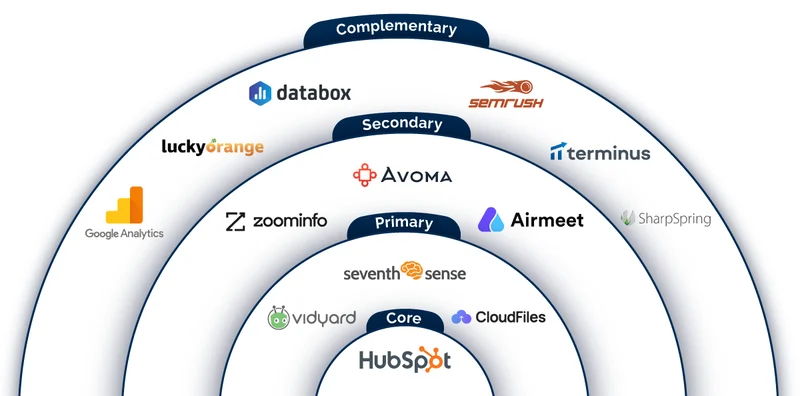
- Sequencing tool (Apollo, Outreach, Salesloft — whichever you use)
- LinkedIn Sales Navigator
- Cold calling dialer and call recording software (Gong, Chorus, or similar)
🎙 Call Library
- Pull 10 of your best cold calls and save them somewhere accessible
- Include 5 recorded discovery calls that show what a qualified conversation looks like
- Add 2–3 customer testimonial videos so the rep understands what success looks like from the buyer's side
👥 Manager Readiness
- Block daily 1:1 coaching time in your calendar for weeks 1–4 — non-negotiable
- Assign an onboarding buddy (an existing rep or AE) who can shadow with your new SDR
The reps who ramp fastest don't do it alone. They ramp fast because someone prepared the runway for them.
Days 1–30 — Learn the Foundation (Zero Quota Phase)
This phase has one job: get your SDR to a place where they understand who they're calling, why they're calling, and what to say when someone picks up. That's it.
No meetings expected. No quota. Just learning done right.
Week 1 — Orientation, ICP, and Product Basics

Resist every instinct to throw your new SDR onto the phones in week 1. It feels productive. It is not.
Week 1 looks like this in practice:
- Day 1: Company mission, values, team intros, and sales culture overview — what winning looks like here
- Days 1–3: Deep ICP dive — who they're calling, the pain those people feel, and why your product solves it better than the alternatives
- Days 2–4: Surface-level product knowledge — enough to pique interest and handle basic curiosity, not enough to close a deal (that comes later)
- Days 3–5: Shadow 2–3 top performers daily — your new SDR sits in on live calls and takes structured notes on what they observe
By Friday of week 1, your new SDR should be able to answer: Who is our ideal customer, what keeps them up at night, and what does our solution do for them? If they can't answer that clearly, week 2 starts with a reset.
Week 2 — Messaging, Tools, and Mock Calls

Now you introduce the tools and the actual words they'll be using.
Walk your new SDR through your email templates and cold call scripts line by line — not just "here's the doc, read it." Explain why certain phrases are used, what they're designed to do, and what happens when the prospect doesn't respond the way the script assumes.
Key activities for week 2:
- CRM and sequencing tool training — hands-on, in the sandbox environment
- Daily role-play sessions with you or the onboarding buddy, with a heavy focus on objection handling
- Minimum 2 recorded call reviews per day — your SDR should be watching top performers and annotating what they notice
- End-of-week checkpoint: Can your SDR handle a live mock call with you throwing standard objections? If yes, move forward. If no, add another 2–3 days of role-play before going live.
The mock call checkpoint is not optional. It's the gate between learning and doing.
Weeks 3–4 — Low-Stakes Live Outreach Begins

This is where your SDR makes their first real outreach — but on the lowest-risk accounts in your pipeline.
Start them on highly qualified inbound leads or smaller, lower-priority accounts. Not your Tier 1 targets. Not the key enterprise accounts you've been building toward.
The reason is simple: mistakes made on a warm inbound lead cost you less than mistakes made on a high-value cold prospect.
Activity targets for weeks 3–4:
- 30–40 calls per day
- 20 outbound emails per day
- Daily 1:1 with you — review 2 recorded calls per session, not just a check-in conversation
- Begin A/B testing 2 different subject lines and 2 different cold call openers to start building data
Day 30 milestone checkpoint: Does your SDR have a strong ICP understanding? Are they messaging confidently? Have they completed at least a handful of live conversations without freezing up?
If yes — they're ready for phase two.
📞 Skip the Learning Curve. Start Booking Calls.
Trained SDRs, proven scripts, full outbound system included. We fill your calendar—you focus on closing deals.
Days 31–60 — Build Momentum (50% Quota Phase)
Your SDR has the foundation. Now it's time to build the muscle.
This phase is about increasing output, sharpening qualification skills, and shifting from script-dependence to genuine, personalized conversations. The training wheels don't come off completely — but they're getting looser.
Ramping Activity and Qualification Skills
Dial targets increase progressively across this phase — from the 30–40 range in weeks 3–4 up to 50–60 per day by week six.
But here's the shift: the metric that matters more than dials right now is live conversation rate. A rep hitting 60 dials and getting zero live conversations isn't making progress. A rep hitting 45 dials and getting 8 live conversations is building real skill.
Coaching cadence during this phase:
- One structured 1:1 per week (not just a sync — agenda-driven, with call recordings pulled for review)
- Two recorded call reviews per week, selected by you based on patterns you're seeing
- Your SDR should begin prospecting independently with you in an oversight role, not a hand-holding one
Refining Messaging and Personalization
By week five, your SDR should be moving beyond reading scripts verbatim.
They should be opening cold calls with lines that reference something specific about the prospect — their company, their role, a recent event. Not long, theatrical openers. Just one specific thing that signals "I did 30 seconds of research before calling you." That alone improves connect rates.
Introduce these habits during days 31–60:
- Personalized openers: One relevant observation before transitioning to the pitch
- Buying signal recognition: Teach your SDR to recognize when a prospect is showing genuine interest (asking follow-up questions, requesting more information) vs. being politely dismissive
- Batch your activities: All calls in one block, all email responses in another — context-switching kills productivity
Focus Tier 1 accounts on your best-fit ICP only. This is not the time to spray-and-pray.
Day 60 Checkpoint — Pass or Extend?
At day 60, you run a structured checkpoint before clearing your SDR for the final phase.
Ask these three questions:
- Is the SDR consistently hitting 50% of quota?
- Is their live conversation rate increasing week-over-week?
- Is meeting show rate acceptable (at least 70%+ of booked meetings are showing)?
If the answer to all three is yes — they're cleared for phase three.
If no on any of them — don't panic, but don't ignore it either. Add two weeks of targeted coaching, identify the specific bottleneck (is it knowledge? is it skill execution? is it mindset and confidence?), and address it directly before moving forward.
Extending the ramp isn't failure. It's due diligence.
Days 61–90 — Execute at Full Capacity (75–100% Quota Phase)

This is where it all comes together — or where gaps in the earlier phases become visible. Either way, this phase tells you exactly what you're working with.
Full Independent Outbound Execution
Your SDR now owns their outbound pipeline end-to-end.
No scripts required. No "shadow me first." They build their own lists, run their own sequences, handle their own objections, and manage their own calendar of booked meetings. The training wheels are off.
Daily activity targets for days 61–90:
- 80–100 dials per day
- 20–25 contacts reached
- 10–12 live conversations per day
Weekly coaching reduces to twice per week — and one of those sessions should be driven by the SDR. They pull a call they want feedback on, they identify what they think went wrong, and you validate or redirect. That self-awareness is the marker of a rep who's going to be around for the long haul.
Performance Optimization and Pipeline Building

The focus now shifts from activity completion to pattern recognition.
What types of openers are getting the most traction? Which industries are connecting at higher rates? What objections keep showing up — and is the SDR's response to those objections getting better each week?
Habits to build during this phase:
- Track personal metrics daily in a simple spreadsheet — connects, meetings booked, show rate, pipeline value added
- Reduce research time per batch by building reusable prospect intel templates for common ICP verticals
- Focus Tier 1 account time on deep personalization — one-to-one outreach where the prospect feels genuinely researched
- Identify two or three winning call patterns and actively try to replicate them across different accounts
Day 90 Graduation Review
At day 90, you run a final structured review — not a casual conversation, an actual assessment.
Green flags — rep is graduated:
✅️ Hitting 75–100% of quota consistently
✅️ Operating independently with minimal manager intervention
✅️ Contributing to team knowledge (sharing wins, flagging new objection patterns, helping newer hires)
Yellow/red flags — extend with a plan:
🚩 Below 50% quota at day 90 with full coaching support
🚩 Still dependent on manager for basic decisions
🚩 Low show rate or high no-show rate on booked meetings
If a rep with full coaching support is still below 50% at day 90, that's a signal worth taking seriously. It may be a hiring mismatch — and the sooner you identify that, the less it costs you in runway and pipeline.
SDR Productivity Benchmarks to Track at Every Phase

One of the most common gaps in SDR ramp up plans is vague milestone tracking. "Is the rep doing well?" isn't a benchmark. Here's what to actually measure:
Days 1–30 (Zero Quota Phase)
- Completion of all training modules by day 14
- Passing the mock call checkpoint by end of week 2
- First live outreach conversations completed in weeks 3–4
- ICP and messaging comprehension — assessed via a simple role-play quiz at day 30
Days 31–60 (50% Quota Phase)
- Dials per day: 50–60 by week 6
- Live conversation rate: 12–18% of dials resulting in a live conversation
- Meetings booked per week: 2–4 (depending on your ICP and sales cycle)
- Show rate: 70%+ of booked meetings show up
Days 61–90 (75–100% Quota Phase)
- Quota attainment: 75–100%
- AE satisfaction score: Are the meetings your SDR books actually progressing in the pipeline?
- Time to first meeting: Tracking how quickly they move a cold prospect to a booked call
- Pipeline contribution: Total pipeline value added per week
🚩 Red flag to watch: If a rep is below 50% of quota at day 90 after receiving full structured coaching, that's not a ramp problem anymore — it's a hiring mismatch worth addressing directly.
Use this data to iterate your onboarding program. Every new hire teaches you something. Document what worked, what didn't, and update the plan before the next one starts.
Common Mistakes Managers Make When Onboarding Their First SDR
Even smart managers with good intentions make these mistakes. Most of them are completely avoidable.
❌ Putting them on phones in week 1
Week 1 is for ICP, product, and process. A rep who dials before they understand any of those three things will build bad habits that take weeks to unlearn.
❌ Overloading on product training instead of ICP focus
Your SDR doesn't need to know every feature. They need to know the top three pain points your product solves and how to articulate that in 30 seconds. Deep product knowledge can come later.
❌ No structured coaching cadence
Leaving reps to self-manage in month one is one of the fastest ways to lose them. Daily coaching during weeks 1–4 isn't micromanaging — it's the structure that gives new reps the confidence to improve.
❌ Skipping recorded call reviews
The single highest-leverage onboarding asset is recorded call review — your reps can't see what they sound like in real time. Two recorded call reviews per day in the first 30 days compounds faster than almost any other training activity.
❌ Setting full quota from day one
Setting a full quota from day one demoralizes reps and incentivizes shortcuts. Use a graduated ramp — 0% in month one, 50% in month two, 75–100% in month three.
❌ No clear milestone reviews at day 30, 60, and 90
Without structured checkpoints, you won't catch problems early enough to fix them. Build these into your calendar before the rep starts, not after.
How Cleverly Helps B2B Companies Generate Pipeline While Their SDR Ramps
The reality no one tells you when you make your first SDR hire: the 90-day ramp window is real, and your pipeline doesn't pause while your rep finds their feet.
Most first SDR hires won't generate a meaningful pipeline at full capacity until month 3 or later — and for many early-stage teams, that gap is where momentum dies. The solution isn't rushing your rep. It's building an outbound system that runs in parallel while they're getting up to speed.
That's where Cleverly comes in. We run fully done-for-you outbound across LinkedIn outreach, cold email, and cold calling — building ICP-aligned lead lists, writing and testing outreach copy, and delivering meeting-ready conversations directly to your calendar.
Your SDR inherits a warm pipeline and a set of real conversations to learn from, instead of starting from scratch with a cold list and no context.
We've helped 10,000+ B2B companies generate $312M in pipeline and $51.2M in closed revenue. Our LinkedIn outreach starts at $397/month, and our cold calling system books 10–30 qualified meetings per month with a no-accent, trained appointment setter placed in 2 weeks — or we replace them.
You close the deals. Your SDR is learning the craft. We keep the pipeline moving.
📞 Don't Let the Ramp Window Kill Your Pipeline
Cleverly runs done-for-you outbound so your first quarter doesn't go dark while your SDR ramps. LinkedIn, cold email, cold calling — fully managed, meeting-ready leads delivered to you.
Book your free strategy call →

Conclusion
The SDR onboarding plan you build for your first hire isn't just an HR document. It's a revenue protection strategy — and the structure you create now becomes the repeatable system every future hire will run through.
Learn, practice, perform — in that exact order. Give your rep the foundation before you ask for results, give them coaching before you hand them autonomy, and give them a real milestone review before you call them ramped.
Your first SDR's success is a direct reflection of the system you build around them. Build it well the first time, and every hire after that gets easier.
Frequently Asked Questions
Free Resource
How to Scale a Profitable Cold Call System
Get the complete guide — download it instantly now.
Free Ebook
Download the Free Guide
Enter your details to get instant access.
You're all set! 🎉
Your ebook is downloading now.
Click below if the download didn't start automatically.