Table of Contents
What Is Psychographic Segmentation?
Types of Psychographic Segmentation
Psychographic Segmentation Examples
Psychographic vs Demographic Segmentation
Why Psychographic Segmentation Matters in Marketing
How to Use Psychographic Segmentation in B2B Marketing
How to Collect Psychographic Data
Common Mistakes in Psychographic Segmentation
How Psychographic Segmentation Improves Lead Generation
How Cleverly Uses Psychographic Insights for Better Targeting
Conclusion
Frequently Asked Questions
Modified On :
September 2, 2026
Key Takeaways
- Psychographic segmentation goes beyond demographics to reveal why buyers make decisions.
- The five core categories are personality, values, interests, lifestyle, and attitudes.
- Real-world examples show how B2B and B2C brands use psychographics to drive conversions.
- Collecting data from surveys, CRM, LinkedIn, and social media builds stronger segments.
- Combining demographic and psychographic data produces the sharpest targeting.
- In lead generation, psychographic insight directly improves response rates and lead quality.
Most businesses segment their audience by age, job title, or location. That's a start, but it doesn't tell you why someone buys.
Psychographic segmentation fills that gap. It focuses on what drives your audience: their motivations, interests, values, and behaviors.
And when you understand why people make decisions, your marketing actually lands.
In this guide, we cover what psychographic segmentation is, how it works, real examples, and how to use it to sharpen your marketing and lead generation.
What Is Psychographic Segmentation?
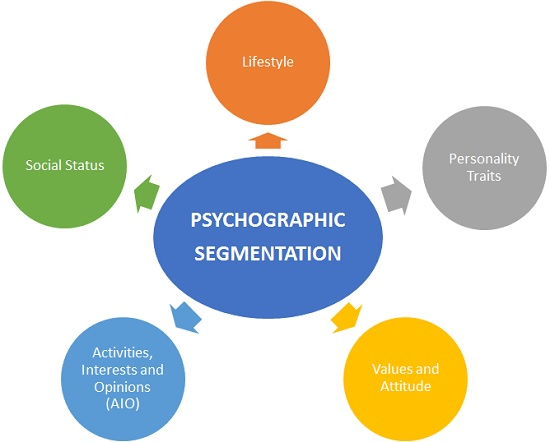
Psychographic segmentation is the practice of grouping your audience based on psychological traits rather than just demographics. Instead of asking "who are they?" it asks "what do they care about?"
Those traits include:
- Interests — what they spend time on
- Values — what they believe in
- Lifestyle — how they live and work
- Personality — how they think and make decisions
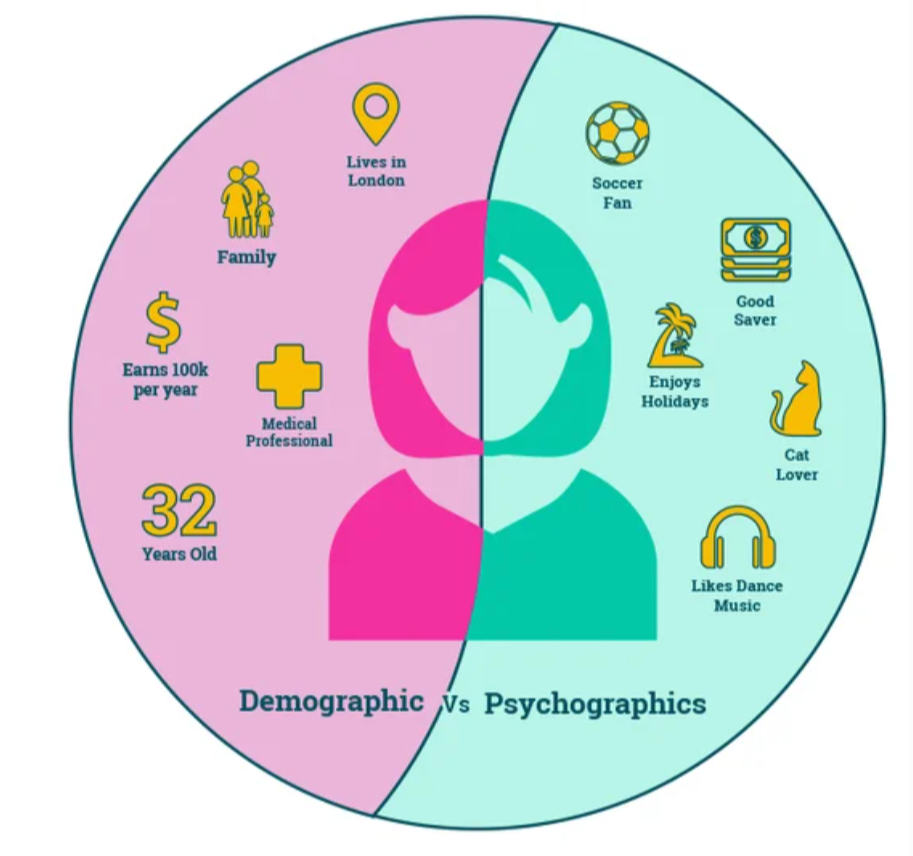
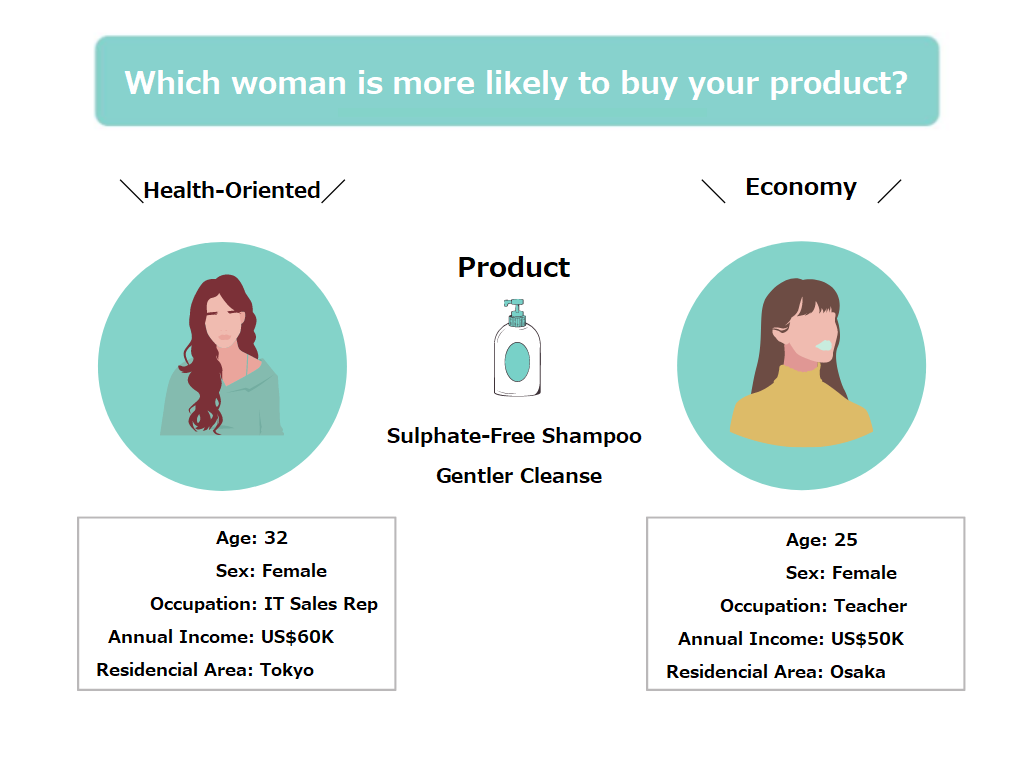
The key difference from demographic segmentation is depth. Demographics tell you a buyer is a 35-year-old VP of Sales.
Psychographic market segmentation tells you that VP is competitive, data-driven, and motivated by hitting quota at all costs. That's the insight that shapes messaging.
Read More: TAM, SAM, SOM Explained: How to Calculate Your Market Size
🔥 Target Buyers Who Actually Convert
Cleverly helps 10,000+ companies reach decision-makers at Amazon, Google, Uber & more. Lead gen plans start at just $397/mo.
Types of Psychographic Segmentation
Psychographic market segmentation breaks down into five main categories. Each one gives you a different lens into your audience.
Personality Traits
Is your buyer risk-averse or a calculated risk-taker? Introverted or relationship-driven? Personality shapes how they evaluate options and who they trust. Knowing this helps you match your tone and format to how they prefer to receive information.
Values and Beliefs
Some buyers prioritize ROI above everything. Others care deeply about company culture, sustainability, or innovation. Messaging that aligns with what they already believe converts much better than messaging that asks them to change their mind.
Interests and Hobbies
What does your buyer read, follow, or engage with outside of work? These signals show up clearly on LinkedIn and social media. They tell you which communities your audience belongs to and what angles will catch their attention.
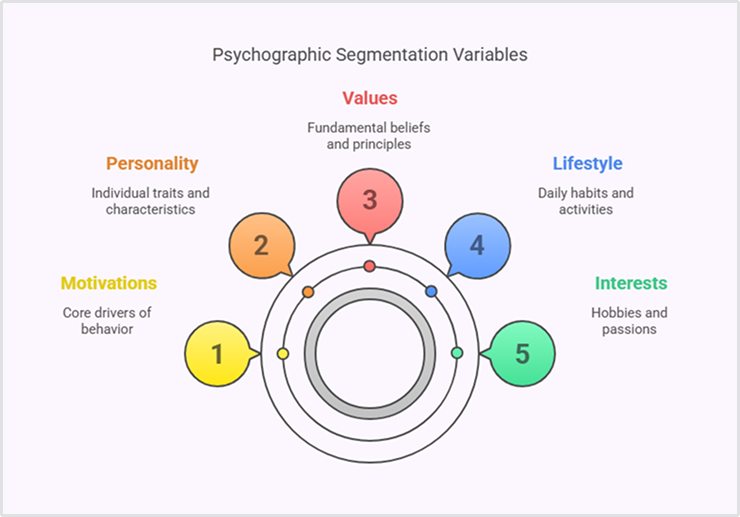
Lifestyle Choices
A founder grinding through a growth phase has different content consumption habits than a seasoned enterprise executive. Lifestyle context helps you show up at the right time, in the right place, with the right message.
Attitudes and Opinions
How does your buyer feel about outsourcing, automation, or scaling fast? Their attitude toward your category determines how much friction you'll face. Segment by attitude and you can address objections before they even come up.
Psychographic Segmentation Examples
Here are three practical psychographic segmentation examples across different industries.
Example 1: SaaS Product — Targeting Growth-Focused Founders
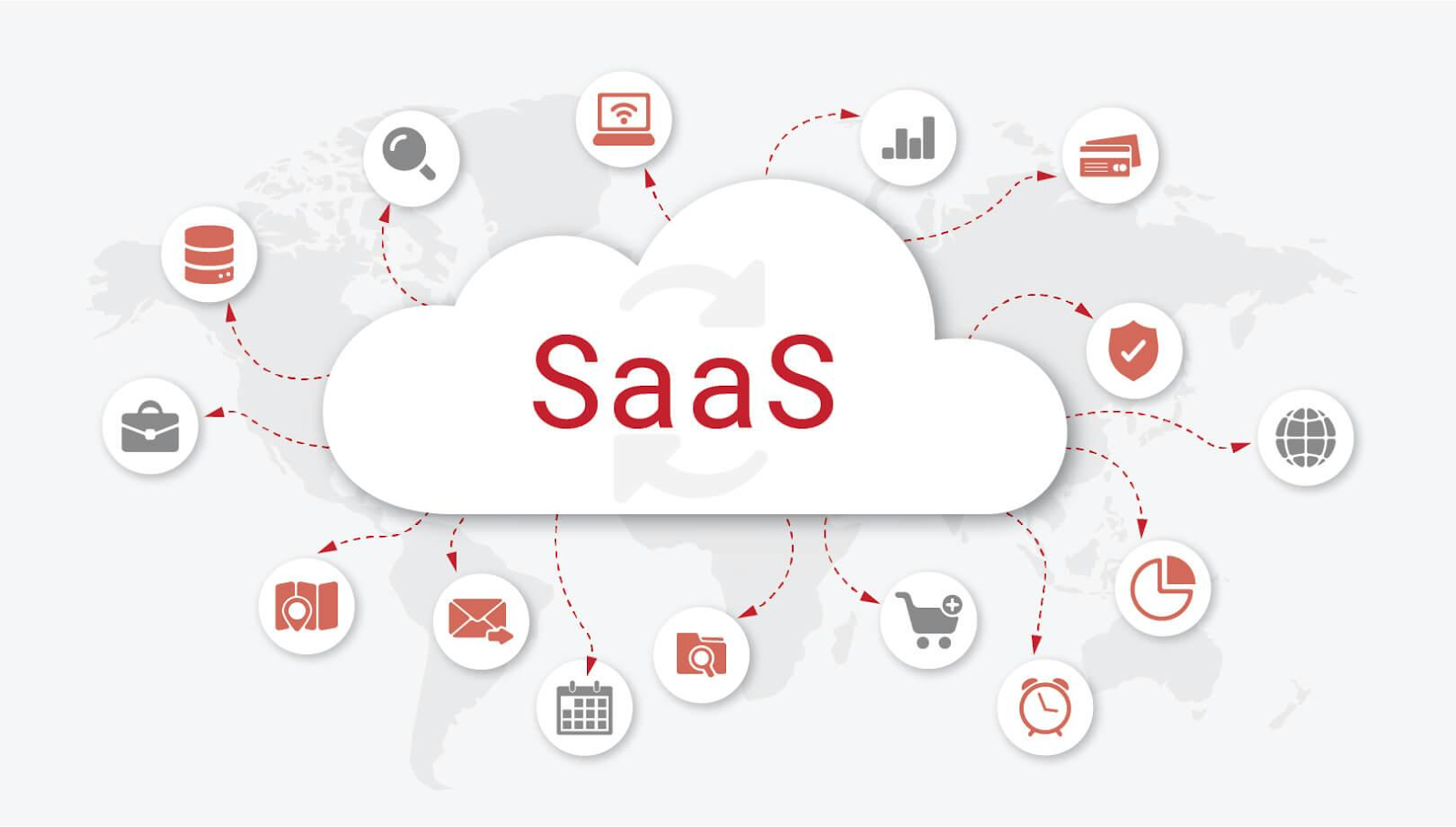
A project management SaaS doesn't just target "startups." They target founders who are obsessed with operational efficiency, frustrated by team misalignment, and actively looking for ways to scale without adding headcount.
That psychographic profile shapes everything: the ad copy, the case studies they feature, even the subject lines in their outreach. The result is messaging that feels personally written rather than broadcast.
Example 2: B2B Marketing Agency — Targeting Results-Driven Decision-Makers

A B2B agency segments its audience by mindset, not just title. They focus on marketing leaders who are tired of vanity metrics, want pipeline-driven results, and are skeptical of agencies that can't show ROI.
This is psychographic segmentation in marketing at its most practical. The agency doesn't pitch creative work. They pitch outcomes, numbers, and accountability. That's what this segment responds to.
Example 3: E-commerce Brand — Targeting Lifestyle-Based Audiences
A premium fitness brand doesn't just target people aged 25-40. They target people who identify as performance-focused, follow biohacking content, and view fitness as a core part of their identity.
That identity-based segmentation drives higher loyalty and repeat purchases because the brand speaks to who the customer is, not just what they bought.
Example 4: Patagonia: Targeting Environmentally Conscious Consumers
Patagonia doesn't market to "outdoor shoppers." It markets to people who see environmental responsibility as part of their identity. The brand's "Don't Buy This Jacket" campaign told customers to buy less, not more, and its Worn Wear program lets customers trade in old gear for repairs instead of new purchases.
That's psychographic segmentation taken to its logical extreme: messaging that asks customers to consume less works only if you've correctly identified an audience that values sustainability over convenience. Get that segment wrong and the same campaign reads as bizarre marketing malpractice.
Example 5: Harley-Davidson: Targeting Identity-Driven Buyers
Harley-Davidson isn't selling transportation. It's selling a sense of freedom, rebellion, and belonging to a community, which is why the brand built its marketing around events like the Sturgis Motorcycle Rally instead of engine specs. Riders who buy a Harley are often buying into an identity first and a motorcycle second.
This is the same principle SaaS and B2B brands can borrow: figure out what identity your buyer wants to reinforce by choosing you, then build messaging around that instead of your feature list.
Learn More: 5 Ps of Marketing Explained (With B2B Examples)
🤝 From Targeting to 10–30 Sales Calls Monthly
Our $5M cold calling system puts trained SDRs booking qualified meetings for you. Guaranteed appointments—or we replace the SDR.
Psychographic vs Demographic Segmentation
Demographics get you in front of the right audience. Psychographic segmentation in marketing gets you a response from them. You need both, but psychographics is what actually moves the needle on conversions.
Psychographic vs. Behavioral Segmentation
There's a third piece to this puzzle worth knowing: behavioral segmentation. If demographic segmentation tells you who someone is and psychographic segmentation tells you why they buy, behavioral segmentation tells you what they've actually done, purchase history, website visits, email opens, product usage.
The two work best together. Behavioral data tells you a prospect downloaded your pricing page twice this week. Psychographic data tells you why: they're a growth-stage founder who's anxious about wasted spend and evaluating three vendors at once. One without the other gives you half the picture.
If you haven't combined these data types into a single working profile yet, that's exactly what a proper B2B buyer persona is for.
Why Psychographic Segmentation Matters in Marketing
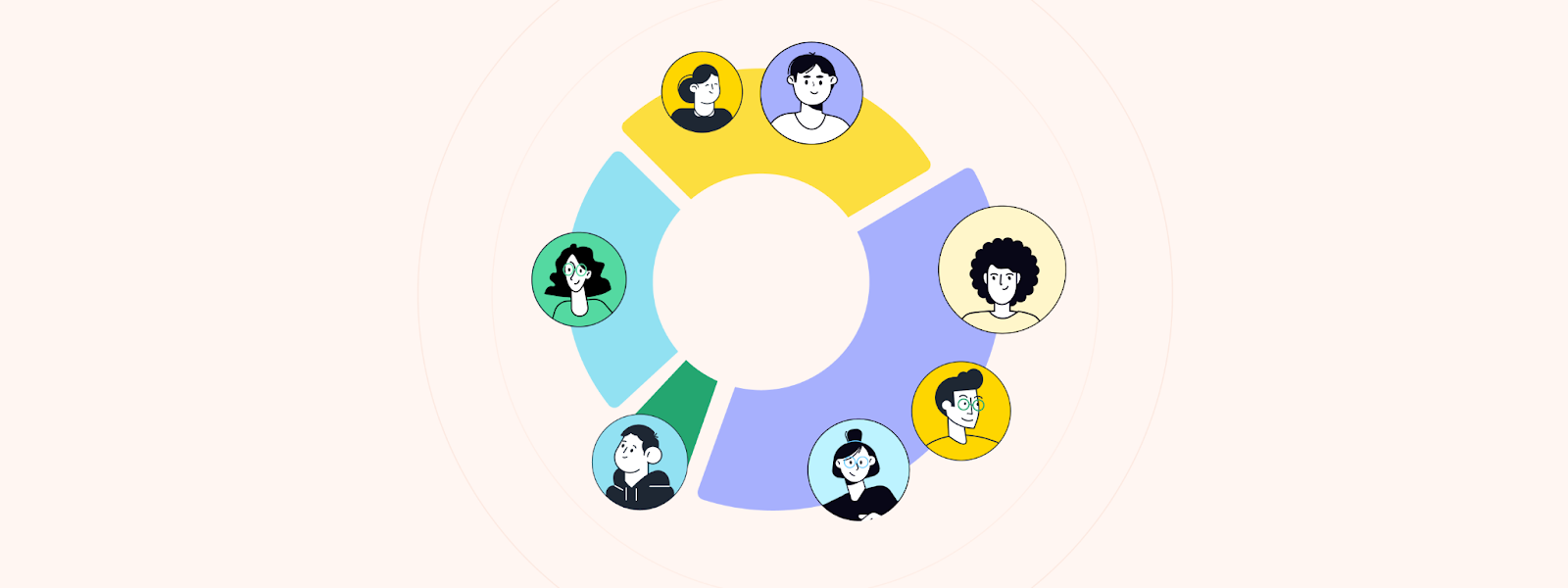
Why teams that use psychographic segmentation consistently outperform those that don't:
- Better targeting — you reach people who are mentally ready to buy, not just demographically eligible.
- Improved personalization — messaging reflects their actual motivations, not assumptions.
- Higher engagement — content that speaks to values and interests gets read, shared, and clicked.
- Stronger messaging — you address real objections and speak the buyer's language.
- Increased conversion rates — relevance drives action; generic messaging doesn't.
When your outreach mirrors how your buyer thinks, the response rate jumps. It's that straightforward.
How to Use Psychographic Segmentation in B2B Marketing
How to apply psychographic segmentation in marketing practically:
1. Identify buyer motivations
Start by asking: what is this person trying to achieve, and what are they afraid of? Growth, recognition, job security, and efficiency are common B2B motivators.
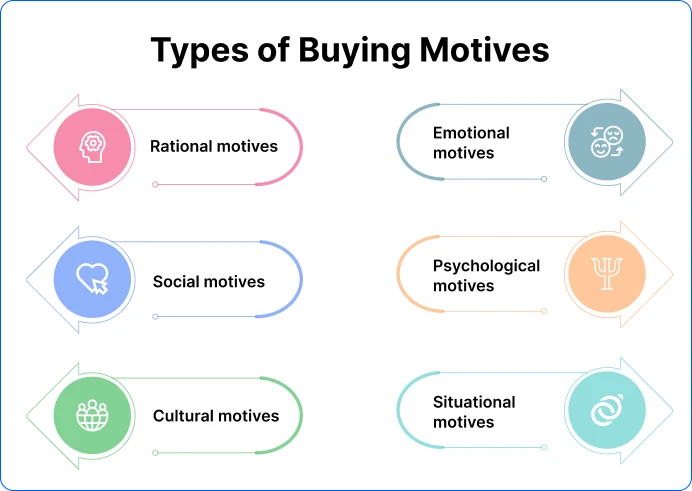
If you don't already have a clear read on this, structured B2B market research is the fastest way to stop guessing at buyer motivations and start confirming them.
2. Tailor your messaging
Don't lead with features. Lead with the outcome your buyer cares about most. A CFO wants cost efficiency. A VP of Sales wants pipeline. Speak to that directly.
3. Improve outreach campaigns
Use psychographic data to write sequences that feel relevant from the first line. Reference their industry challenges, their growth stage, or their publicly stated priorities.
4. Align with your ICP
Your Ideal Customer Profile should include psychographic traits, not just firmographic ones. Layer in attitude, motivation, and buying behavior to make targeting more precise.
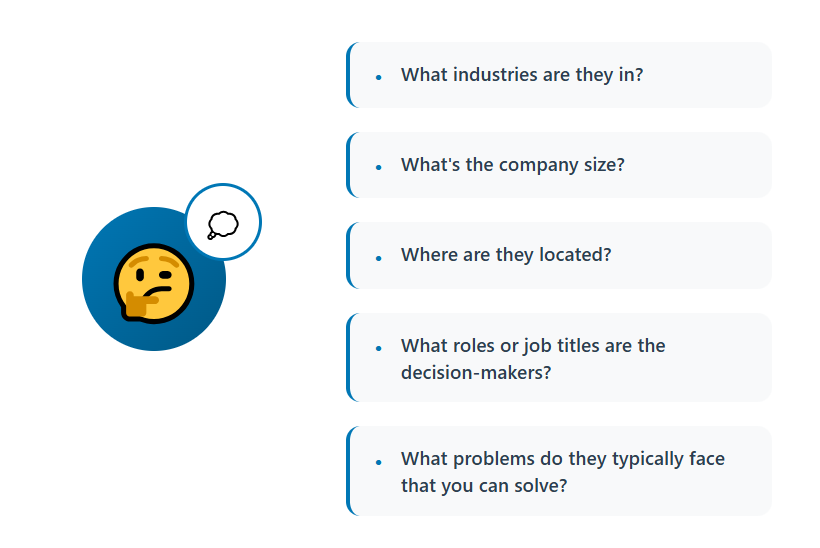
This is the same discipline behind good client profiling, building a working picture of your best-fit buyer that goes beyond firmographics.
How to Collect Psychographic Data
You don't need to guess. Here's where the data already exists:
- Surveys and interviews — ask your best customers what drives their decisions
- Social media insights — look at what your audience engages with and follows
- LinkedIn activity — posts they like, content they share, groups they join
- Website behavior — which pages they visit, how long they stay, what they download
- CRM data — patterns in your closed-won deals reveal psychographic signals
The more signals you collect, the sharper your segments get. Start with your existing customer base and work backwards.
One more thing worth knowing: psychographic research has traditionally been slow and expensive because it depends on surveys and interviews that take real time to run at scale. That's starting to change.
A December 2025 study in the Journal of Strategic Marketing proposed using large language models alongside established psychological value frameworks to identify psychographic segments directly from existing text data, cutting down on the need for fresh primary research every time you want to refine a segment. You still need real signals to validate against, but the barrier to doing this well is dropping.
Whatever method you use, the output is only as good as the contact data feeding it, which is where data enrichment comes in
Common Mistakes in Psychographic Segmentation
These are the pitfalls we see most often:
❌ Relying only on demographics — age and title alone won't tell you how someone thinks.
❌ Overgeneralizing audiences — "small business owners" is not a psychographic segment.
Here's what overgeneralizing actually looks like in practice. Say your research shows that a chunk of your ICP, VPs of Sales at mid-market SaaS companies, also happen to be avid golfers.
Building an entire outreach sequence around golf metaphors and imagery might feel clever, but you'll alienate the VPs of Sales who couldn't care less about golf while doing nothing to strengthen your case with the ones who do. A shared hobby isn't automatically a psychographic segment.
The segment is whatever's actually driving their buying decision, competitive pressure, quota anxiety, team scaling problems, and that's what your messaging should be built around, not the first interesting data point you happen to find.
❌ Ignoring real data — building segments based on assumptions instead of actual signals.
❌ Not aligning messaging — collecting psychographic data but still sending generic outreach.
❌ Lack of testing — treating your first segment as final instead of iterating based on response data
The biggest mistake is treating psychographic segmentation as a one-time exercise. It needs to be a living part of your strategy.
The Real Limitations of Psychographic Segmentation
Beyond execution mistakes, psychographic segmentation has some baked-in constraints worth knowing before you build a strategy around it.
It's genuinely harder to measure than demographic or behavioral data. Age and job title are facts. Values and attitudes are self-reported or inferred, which means more room for error and interpretation.
Privacy matters more here than with other data types. Psychographic signals often come from social media activity, survey responses, and inferred behavior, which puts them closer to the kind of data that regulations like GDPR and CCPA care about. If you're building B2B outreach around psychographic profiling, keep your data collection sources documented and consent-aware, not just effective.
Segments can overlap more than they should. A prospect can be simultaneously risk-averse and growth-obsessed, values-driven and price-sensitive. Real people don't sort neatly into one bucket, and treating your segments as mutually exclusive will eventually produce messaging that contradicts itself.
This is part of why more teams are moving toward micro-segmentation for outbound campaigns instead of a handful of broad buckets.
None of this means psychographic segmentation isn't worth doing. It means treating it as a living, testable hypothesis rather than a fixed label you assign once and never revisit.
How Psychographic Segmentation Improves Lead Generation
This is where psychographic segmentation directly hits your pipeline:
- Targeting high-intent prospects — you prioritize people who are in the right mindset to buy, not just in the right industry.
- Improving outreach relevance — your messages address real problems, not generic pain points.
- Increasing response rates — personalized, insight-driven outreach gets replied to; batch-and-blast doesn't.
- Better lead qualification — when your targeting is tighter, the leads you book are more likely to close.
In B2B lead generation, relevance is everything. Psychographic segmentation is how you build it systematically.
How Cleverly Uses Psychographic Insights for Better Targeting
At Cleverly, we don't just look at job titles and company sizes. We dig into what actually drives your ideal buyers to take action.
As the highest-rated, 100% done-for-you lead generation agency for B2B, here's how we apply psychographic thinking across every campaign:
- Identifying decision-maker motivations — we research what your buyers care about most, whether that's growth, efficiency, risk reduction, or competitive advantage.
- Crafting personalized outreach — every message we write reflects the buyer's mindset, not a generic template.
- Aligning messaging with buyer intent — we match your offer to where they are in their decision-making process.
- Multi-channel campaigns — we run this across LinkedIn, cold email, and cold calling to reach buyers wherever they're most active.
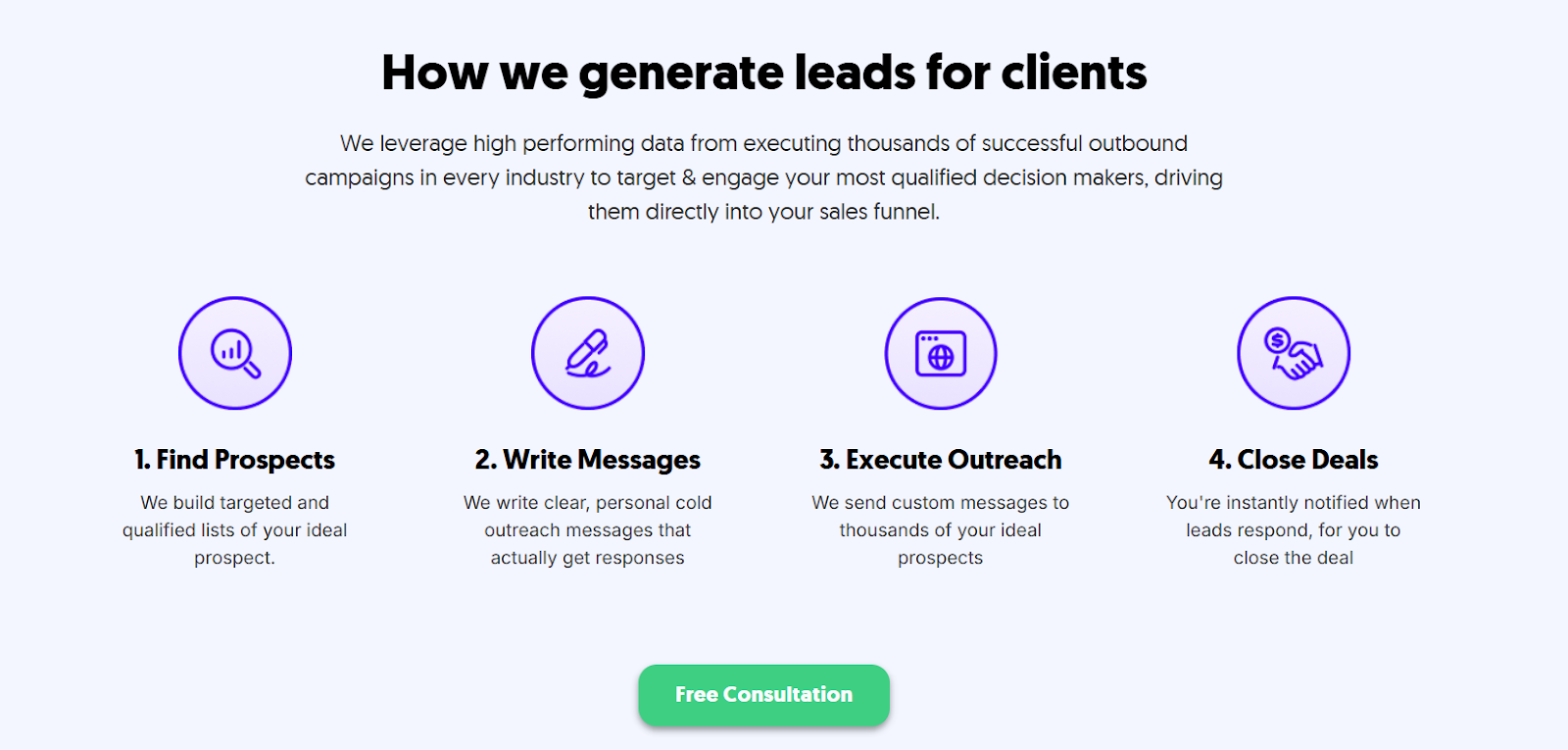
Here's what that looks like in practice across our three core services:
🔥 LinkedIn Lead Generation — Our LinkedIn outreach campaigns target decision-makers with messaging built around their specific motivations. We've helped 10,000+ clients generate leads with companies like Amazon, Google, Uber, PayPal, Slack, and Spotify. That's resulted in $312M in pipeline revenue and $51.2M in closed revenue. Plans start at just $397/month.
🔥 Cold Email Lead Generation — We send hyper-personalized cold email sequences to the right psychographic segments within your ICP. And you only pay for meeting-ready leads we actually send you.
🔥 Cold Calling Lead Generation — Our $5M cold calling system books you 10 to 30 qualified sales calls every month, guaranteed. We place a no-accent appointment setter, write breakthrough call scripts, and include all the data, tech, and power dialer. You get 1M+ cold calls made, 53K appointments set, and $312M in pipeline generated, at half the cost of in-housing.
If you want outreach that actually resonates, talk to Cleverly.
Conclusion
Psychographic segmentation helps you understand why your customers act, not just who they are. When you layer it onto your demographic data, your targeting gets sharper, your messaging gets more relevant, and your results follow.
Businesses that understand buyer behavior don't just reach more people. They convert more of them.
Frequently Asked Questions
Free Resource
How to Scale a Profitable Cold Call System
Get the complete guide — download it instantly now.
Free Ebook
Download the Free Guide
Enter your details to get instant access.
You're all set! 🎉
Your ebook is downloading now.
Click below if the download didn't start automatically.