Table of Contents
What Is Done-For-You Email Marketing?
What's Included in a Done-For-You Cold Email Service?
Done-For-You Email Marketing vs. DIY: Which Is Right for You?
How Done-For-You Cold Email Boosts Deliverability
How to Scale Cold Outreach with a Done-For-You Agency
What to Look for in a Done-For-You Email Marketing Agency
Cleverly: A Cold Email Marketing Agency That Handles Everything
Conclusion
Frequently Asked Questions
Modified On :
July 16, 2026
Key Takeaways
- Done-for-you email marketing works because it hands off the whole system, infrastructure, targeting, copy, and sending, not just the software. Trying to DIY any one piece without the others usually breaks the chain.
- Deliverability is now the actual bottleneck in cold email, not copywriting. Get the domain setup and warm-up wrong and no amount of good messaging saves the campaign.
- A tighter ICP consistently outperforms a bigger list. Agencies that ask hard questions about your buyer before building anything are doing the part that actually drives replies.
- Scaling cold email is a step-by-step progression, not a volume switch you flip. Launching conservative and scaling based on performance data is what protects the domain long term.
- The agencies worth paying are the ones running cold email as one piece of a coordinated system alongside LinkedIn and calling, not as an isolated channel with no visibility into the rest of your outreach.
Cold email still works. The bar just got higher. A good cold email bounce rate this year is under 3%, and spam complaints have to stay under 0.3% or Google and Yahoo start throttling your domain.
That's not a suggestion. It's an enforced rule, and most teams find out about it the hard way, after their domain is already flagged.
Here's what's changed. Google's bulk sender guidelines require anyone sending 5,000+ messages a day to Gmail to keep spam complaints below 0.3%, and crossing that line can block your domain from Gmail inboxes entirely.
Authentication, warm-up, mailbox rotation, list hygiene: none of this used to matter much.
Now it's the whole game. Elite outbound teams are using AI for roughly 80% of research and sequencing work in 2026, freeing up humans to focus on messaging and strategy instead of grunt work.
That combination, rising technical complexity plus shrinking internal bandwidth, is exactly why done-for-you email marketing has become the default move for B2B teams that need pipeline without building an outbound department from scratch.
This guide breaks down what a DFY cold email service actually includes, how it protects deliverability, how to scale it properly, and what separates a good agency from one that'll burn your domain in month two.
What Is Done-For-You Email Marketing?
Done-for-you email marketing is exactly what it sounds like. An agency or specialist team runs your entire cold outreach operation on your behalf, from technical setup to sending to reporting. You're not logging into a tool and figuring out sequences yourself. You're getting booked meetings.
This is different from two things people often lump it in with:
- Email marketing software: Tools like Mailchimp or ActiveCampaign that you operate yourself, usually for newsletters or nurture flows.
- Newsletter marketing: Sending to people who already opted in and know your brand.
Done-for-you cold email is specifically about reaching people who've never heard of you. The agency owns the strategy, the cold email infrastructure, the copy, the sends, and the reporting. You own the calendar full of meetings that shows up at the end.
This model fits a specific kind of company best:
- B2B teams with a clear ICP but no internal ops to execute against it.
- Teams that tried DIY cold email and hit a deliverability wall (domain flagged, opens tanking, no replies).
- Companies that want to add outbound as a new channel fast, without a 3 to 6 month ramp.
If any of that sounds familiar, keep reading. The next section breaks down exactly what you're paying for when you go done-for-you.
📧 Cold Email That Lands in Inboxes—Not Spam
Our done-for-you email campaigns generate 15–30 qualified meetings every month with expert deliverability and personalized outreach.
What's Included in a Done-For-You Cold Email Service?
A real done-for-you cold email service isn't just "we'll send some emails for you." It's a full system. Here's what should be inside it.
Technical Setup and Deliverability Infrastructure
This is the part most DIY teams skip, and it's the part that determines whether your emails land in an inbox or a spam folder.
A proper setup includes:
- Secondary sending domains, separate from your main domain, so cold outreach never puts your primary brand domain at risk.
- SPF, DKIM, and DMARC records configured correctly on every sending domain.
- Multiple mailboxes per domain, typically 3 to 5, to distribute volume instead of hammering one account.
- One-click unsubscribe compliance, which Google, Yahoo, and Microsoft now require for bulk senders.
- Ongoing DNS health monitoring to catch misconfigurations before they tank sender reputation.
Pro tip: if an agency can't walk you through their DMARC policy in plain English, that's a red flag. Deliverability infrastructure is not optional anymore. It's the foundation everything else sits on.

ICP Research and List Building
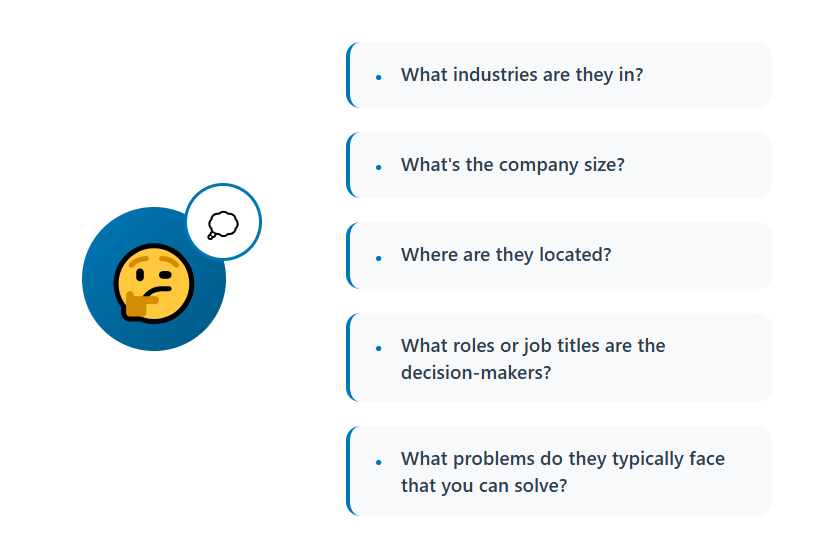
Good targeting beats a big list every time. A done-for-you team builds prospect lists matched to your actual ideal customer profile: industry, company size, geography, title, tech stack, and intent signals, not a generic database pull.
That includes:
- Contact-level enrichment: verified emails, direct dials, LinkedIn profiles.
- List hygiene before a single send goes out, keeping bounce rate under 2%.
- Ongoing list refresh throughout the campaign, automatically suppressing unsubscribes, bounces, and replied contacts.
Copywriting and Sequence Strategy
The agency writes everything: subject lines, opening lines, body copy, and CTAs, tailored to each persona and segment.
What good 2026 copy looks like:
- Under 80 words per email, plain text formatting, no HTML template bloat.
- Personalized opening lines that reference something specific about the prospect.
- A single call-to-action, not three asks buried in one email.
- Built-in A/B testing across subject lines, CTAs, and value props.
Sequences typically run 4 to 6 steps with follow-ups spaced strategically. The first email in a sequence captures 58% of all replies, with the remaining 42% coming from follow-ups, so a good agency won't let you stop after one send.
Campaign Launch, Management, and Optimization
Once live, the agency manages timing, volume pacing, and mailbox rotation across every sending account. Typical sending volumes run 20 to 50 emails per mailbox per day, with randomized 3 to 8 minute intervals between sends so the pattern looks human, not automated.
They're also watching:
- Spam complaint rate (target: under 0.3%)
- Open rate (good = above 45%)
- Reply rate (target: 5 to 15%+)
Campaigns get adjusted weekly based on this data. Copy, targeting, or infrastructure, whatever's underperforming gets fixed before it compounds.
Reporting and Pipeline Handoff
You should get weekly or monthly reports covering emails sent, open rates, reply rates, positive replies, and meetings booked. Some agencies go further and manage the actual reply handling, qualifying conversations before they hit your calendar. That's the difference between "we send emails" and "we build pipeline."
Done-For-You Email Marketing vs. DIY: Which Is Right for You?
This isn't a question of which approach is "better." It's a question of what you have in-house.
DIY makes sense when you've got strong in-house ops, someone who can write cold copy that converts, and time to manage infrastructure and run tests. If that's your team, a DIY tool stack running $300 to $800 a month can absolutely work.
Done-for-you makes sense when your team is lean, you've already burned a domain with a DIY attempt, you need results on a timeline, or nobody in-house has run cold email before.
Here's the thing that's shifted in 2026: the technical skill floor for DIY cold email has gone way up. Authentication requirements, one-click unsubscribe mandates, and inbox provider enforcement mean a misconfigured setup doesn't just underperform, it can permanently damage a domain.
What used to be a weekend project for a marketing generalist now requires someone who understands sender reputation the way an SEO understands search algorithms.
🚀 53,000+ Meetings Started With Better Email Campaigns
From domain setup to campaign optimization, Cleverly helps 10,000+ businesses turn cold email into predictable B2B pipeline.
How Done-For-You Cold Email Boosts Deliverability
This is the part that actually justifies the price tag. Here's how a done-for-you setup protects your sending reputation where a DIY setup usually doesn't.
Proper Domain and Authentication Setup
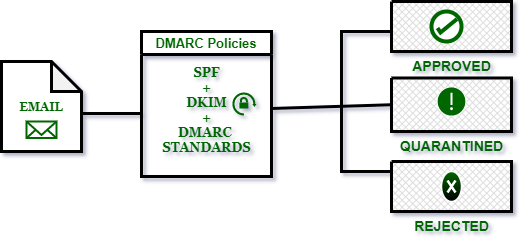
Most deliverability problems trace back to one thing: broken or missing SPF, DKIM, or DMARC records. A done-for-you agency sets these up correctly before a single email goes out, not after opens start dropping.
Dedicated sending subdomains keep cold outreach activity separate from your main domain, so a bad campaign never puts your primary brand reputation at risk. Enforced DMARC policy also signals to inbox providers that your domain is legitimately managed, not spoofed.
Mailbox Warm-Up Before Any Sends
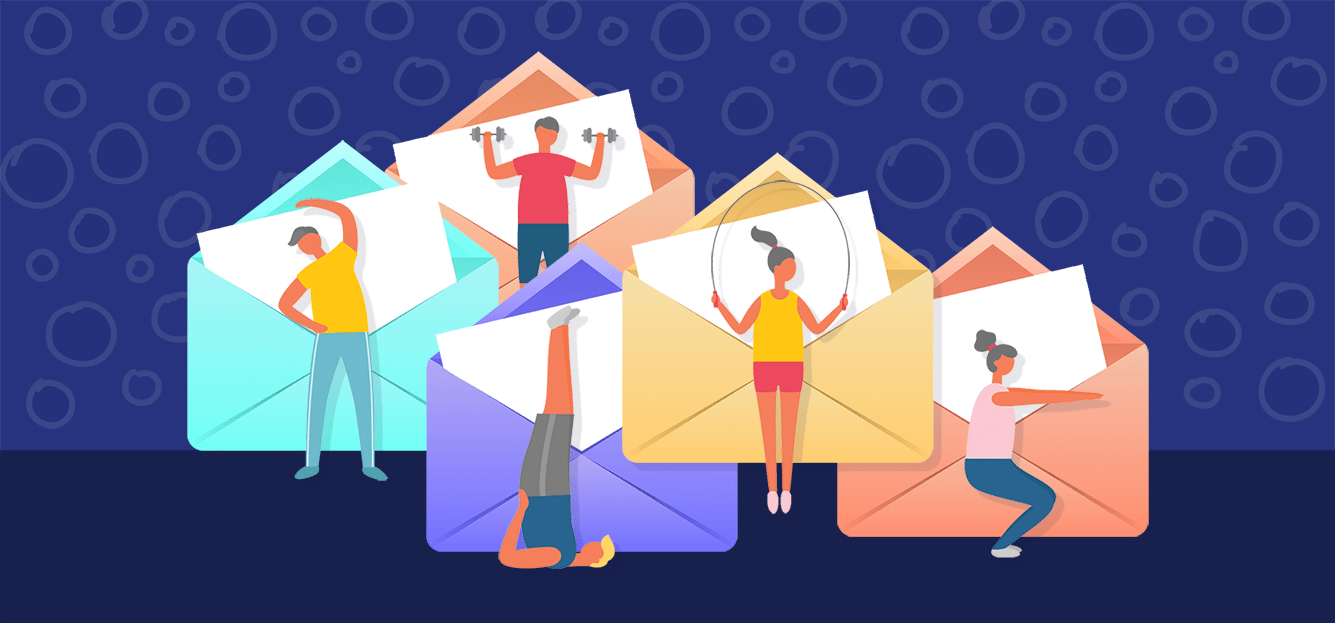
New mailboxes need real warm-up time before they can handle volume. The recommended window is 2 to 4 weeks of gradual sending increases, paired with positive engagement signals like opens and replies, before scaling to production volume.
Warm-up tools simulate real inbox interactions to build sender score over time. This is the single most commonly skipped step in DIY cold email, and it's usually the reason new domains get burned in the first two weeks.
Volume Pacing and Sending Rotation
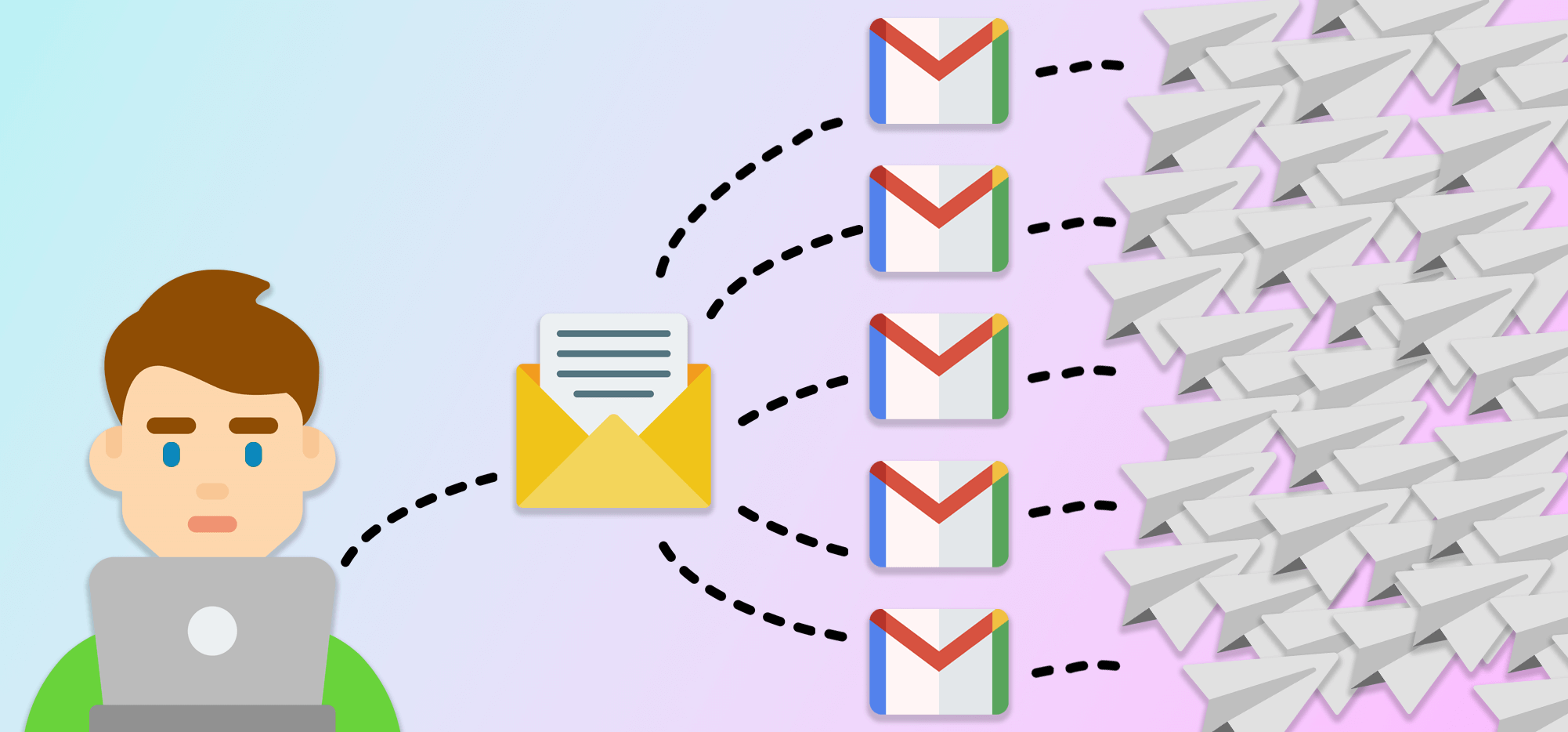
Sending too fast from a new domain is the number one cause of deliverability failure. A done-for-you agency rotates sends across 3 to 5 mailboxes per domain, keeping each one well under the daily thresholds that trigger spam filters, and follows business-hour timing with human-like intervals instead of bulk blasts at fixed times.
Ongoing List Hygiene and Bounce Management
Bounces over 2% trigger inbox provider penalties, so list hygiene isn't optional. Every contact gets verified before sending, and bounced, unsubscribed, or out-of-office contacts get continuously suppressed. Role-based addresses like info@ or sales@ get excluded entirely, since they're the fastest way to damage sender reputation when they bounce or mark spam.
How to Scale Cold Outreach with a Done-For-You Agency
Scaling cold email isn't about sending more. It's about scaling the right way without burning what you've built. Here's the process a solid done-for-you email campaigns partner runs.
Step 1: Define Your ICP and Targeting Parameters
The agency works with you to nail down target industries, company sizes, geographies, job titles, and buying triggers. Small, tightly segmented sequences under 200 prospects consistently generate nearly 2x more replies than large, loosely targeted ones, so specificity beats list size almost every time. Secondary segments get identified early for split testing across personas or verticals.
Step 2: Build the Sending Infrastructure
Secondary domains get purchased and configured, usually 2 to 4 for scale. Mailboxes go through warm-up, which takes 3 to 4 weeks before the first cold send goes out. Authentication records get verified, unsubscribe links get embedded, and tracking domains get set up correctly from day one.
Step 3: Write and Test Sequences
The agency drafts 3 to 5 sequence variants for testing across ICP segments. Each sequence runs 4 to 6 emails on a defined cadence, typically Day 1, Day 3, Day 7, and Day 14. Subject lines and opening lines get tested in week one before volume scales up.
Step 4: Launch at Conservative Volume and Scale Up
Initial sends run 20 to 30 emails per mailbox per day while the team watches deliverability closely. Scaling criteria usually look like: open rate above 40%, bounce rate below 2%, spam complaint rate below 0.1%. Volume increases weekly as reputation builds, and a good agency manages this progression systematically instead of guessing.
Step 5: Optimize, Iterate, and Report
Weekly review of open, reply, and meeting-booking rates by sequence, segment, and subject line. Underperforming copy gets swapped, high performers get scaled. Monthly strategy sessions assess ICP fit and plan the next testing cycle.
What to Look for in a Done-For-You Email Marketing Agency

Not every agency claiming to be done-for-you actually runs a real system. Here's how to tell the difference before you sign anything.
- Deliverability expertise. Ask them to explain domain setup, warm-up, and authentication in detail. If they can't, walk away.
- Transparent reporting. You want weekly metrics on opens, replies, and meetings booked, not a vanity dashboard that shows sends and nothing else.
- An ICP-first approach. Do they ask detailed questions about your buyer before building lists, or are they pulling from a generic database?
- Copywriting quality. Ask for sample sequences. Personalized and concise, or templated and wordy?
- Channel integration. Does their cold email connect to LinkedIn and calling, or does it operate in a silo?
- Contract flexibility. Avoid long lock-ins until results are proven. Month-to-month should be on the table.
- Proven results. Look for case studies with measurable outcomes, reply rates, meetings booked, pipeline generated, not just a logo wall.
Among the best done-for-you email marketing agencies, this is what separates the ones that protect your domain from the ones that treat it as a numbers game.
Cleverly: A Cold Email Marketing Agency That Handles Everything
We built Cleverly around a simple idea: outbound shouldn't require you to become a deliverability expert just to get meetings on your calendar.
As a cold email marketing agency, we handle domain and infrastructure setup, ICP list building, copywriting, sequence management, deliverability monitoring, and reporting, all under one roof, alongside our LinkedIn outreach and cold calling services.
That last part matters more than people expect. Running cold email, LinkedIn, and calling together outperforms any single channel running alone, and we coordinate all three from one team instead of handing you off to separate vendors who don't talk to each other.
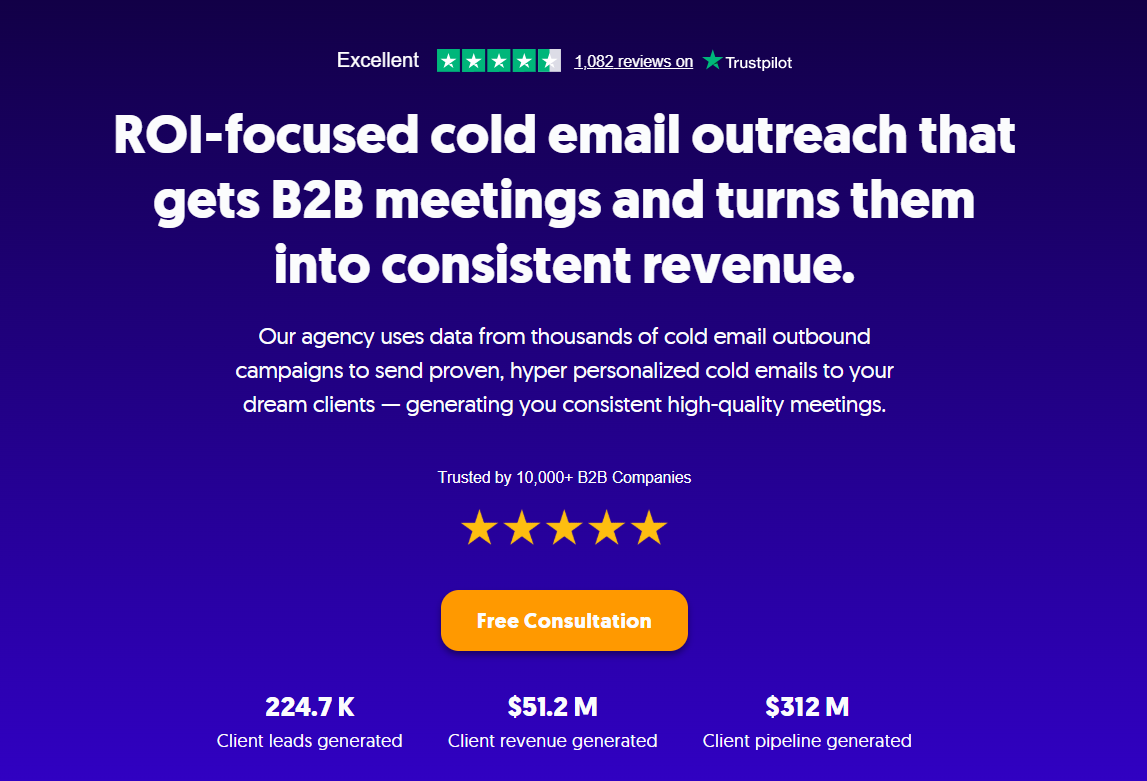
We've run this playbook for 1,000+ active clients, generating $312M in pipeline and 224.7K leads for companies across nearly every B2B industry.
If you're a B2B company that wants a done-for-you outbound system without stitching together five different tools and vendors, this is exactly the gap we fill.
🚀 Book a free strategy call and we'll walk you through what a cold email system built for your ICP would actually look like.
Conclusion
Done-for-you email marketing removes the two things that actually kill cold outreach: deliverability complexity and execution bandwidth. You're not just outsourcing sends. You're outsourcing domain setup, warm-up, list hygiene, copywriting, and the weekly optimization that keeps a campaign from decaying after month one.
The right agency doesn't treat cold email as a side task. They treat it as a system, one where every piece, from DNS records to reply handling, is built to protect your domain while it books you meetings.
If you're serious about adding outbound as a real channel in 2026, starting with a partner who already knows how to run that system beats months of trial and error figuring it out yourself.
Frequently Asked Questions
Free Resource
How to Scale a Profitable Cold Call System
Get the complete guide — download it instantly now.
Free Ebook
Download the Free Guide
Enter your details to get instant access.
You're all set! 🎉
Your ebook is downloading now.
Click below if the download didn't start automatically.