Table of Contents
2026 Cold Email Benchmarks — What Good Actually Looks Like
The Foundation — Deliverability Comes Before Engagement
8 B2B Cold Email Engagement Strategies That Work in 2026
Cold Email Engagement Metrics to Track and Diagnose
Common Cold Email Engagement Mistakes to Avoid in 2026
How Cleverly Handles Cold Email Outreach End-to-End
Conclusion
Frequently Asked Questions
Modified On :
September 10, 2026
Key Takeaways
- The average B2B cold email reply rate in 2026 is 3.43% — but elite senders consistently hit 10.7%+. The gap comes down to targeting, copy, deliverability, and follow-up discipline, not volume.
- Deliverability is the foundation. SPF, DKIM, DMARC, domain warm-up, and verified lists must be in place before any engagement strategy can work.
- Short emails win. First-touch emails under 80 words with a single CTA outperform longer formats by 2.4x on reply rate.
- Follow-ups are non-negotiable. Stopping at step one abandons nearly half your pipeline.
- Multi-channel integration (email + LinkedIn + phone) produces significantly more engagement than cold email alone — and should be part of every high-value account sequence.
Cold email is not dying. It's just gotten a lot less forgiving.
Average cold email response rates have declined from 8.5% in 2019 to 3.43% in 2026. That drop is because most teams are still running 2019-era playbooks: broad lists, long emails, vague subject lines, and one or two follow-ups before giving up.
The teams winning in 2026 look completely different.
Elite cold emailers are replacing volume with precision — AI agents now handle roughly 80% of research and sequencing work, freeing humans to focus on positioning, messaging strategy, and high-value conversations.
The question has shifted from "how many emails can we send?" to "how precisely can we target?"
Cold email still delivers up to $42 ROI for every $1 spent when campaigns are tightly targeted, and 43% of sales teams rank it as their most effective outbound channel.
The channel works. The execution gap is what separates the 3.43% average from the 10.7%+ elite.
This guide covers 2026 benchmarks, deliverability fundamentals, eight proven B2B cold email engagement strategies, timing frameworks, and a diagnostic system for measuring and improving every part of your outbound program.

2026 Cold Email Benchmarks — What Good Actually Looks Like
Before you optimize, you need to know what you're optimizing toward. Here's where the numbers stand in 2026.
Instantly's 2026 Cold Email Benchmark Report analyzes billions of cold email interactions across thousands of active workspaces. These are the tiers that matter:
The average cold email open rate in 2026 is 27.7%, with a good open rate sitting above 45%. Reply rate is the more reliable signal — open rates are significantly inflated by Apple Mail Privacy Protection.
A few data points every B2B sender should know going into 2026:
- 58% of all replies come from the very first email in a sequence — your opener sets the ceiling for the entire campaign.
- Follow-ups contribute the remaining 42% of replies — most reps never send a second email and leave nearly half their pipeline untouched.
- Sweet spot sequence length: 4–7 touchpoints. Under 4 and you're leaving replies on the table. Beyond 7, returns diminish fast unless each step adds genuine new value.
- Smaller, tightly targeted campaigns outperform high-volume blasts by a significant margin: campaigns under 50 recipients average a 5.8% reply rate versus 2.1% for larger sends.
The implication is clear. Precision beats volume every time.
📩 More Emails Won’t Fix Bad Engagement
We build cold email campaigns prospects actually reply to. You only pay for qualified meetings we deliver.
The Foundation — Deliverability Comes Before Engagement
The most compelling subject line in the world doesn't matter if your email lands in spam. Deliverability is not a setup task you check off once.
It's an ongoing system that directly determines whether your cold email engagement strategies ever get a chance to work.
Inbox placement is governed by engagement signals. High engagement leads to better placement, which generates even more engagement — a positive feedback loop. Low engagement works in reverse.
There are four non-negotiables before running any campaign.
1) Technical Authentication Setup

SPF, DKIM, and DMARC records are mandatory on every sending domain — not optional. Without proper authentication, emails get flagged, domain reputation tanks, and inbox placement drops to near-zero.
This setup takes 15–30 minutes. No other single action delivers a higher deliverability ROI. For DMARC policy, start with p=none to monitor your sending activity, then move to p=quarantine as your sending volume matures and reputation builds.
2) Domain Warm-Up

A new sending domain has no reputation with ESPs. Send at volume from day one and you'll land in spam before a single prospect ever sees your copy.
The warm-up process is simple: start at 5–10 emails per day and scale gradually over 4–6 weeks. Automated Email warm-up tools like TrulyInbox, Warmbox, and Mailreach handle inbox-to-inbox engagement automatically, building your sender reputation without manual effort.
3) Multi-Domain Infrastructure

Never send all campaign volume from a single domain. One domain is one point of failure — if it gets flagged, your entire outbound program stops.
A proper multi-domain setup distributes sends across separate warmed domains. The safe daily send limit per domain is 35–40 emails maximum. Multi-domain infrastructure also limits blast radius: if one domain gets flagged, the others keep running while you recover.
4) List Hygiene and Bounce Rate Control
Bounce rate is the biggest differentiator between performance tiers. Top performers keep bounces under 1.5%, while bottom performers see rates above 12% — which destroys sender reputation and drags every other metric down.
Keep your bounce rate below 2% at all times. Verify emails before every send using tools like Apollo, ZeroBounce, or NeverBounce. Avoid catch-all domains — they accept any address format but carry high bounce risk.
Refresh your lists every 90 days since B2B contact data decays at roughly 30% per year. And remove unsubscribes, bounces, and non-responders from active sequences immediately.
8 B2B Cold Email Engagement Strategies That Work in 2026
Engagement is won or lost before you write a single word. Targeting and deliverability determine whether your copy ever gets a chance. But once that foundation is solid, these eight strategies are what separate elite senders from the average pack.
Strategy 1 — ICP Precision and Micro-Segmentation
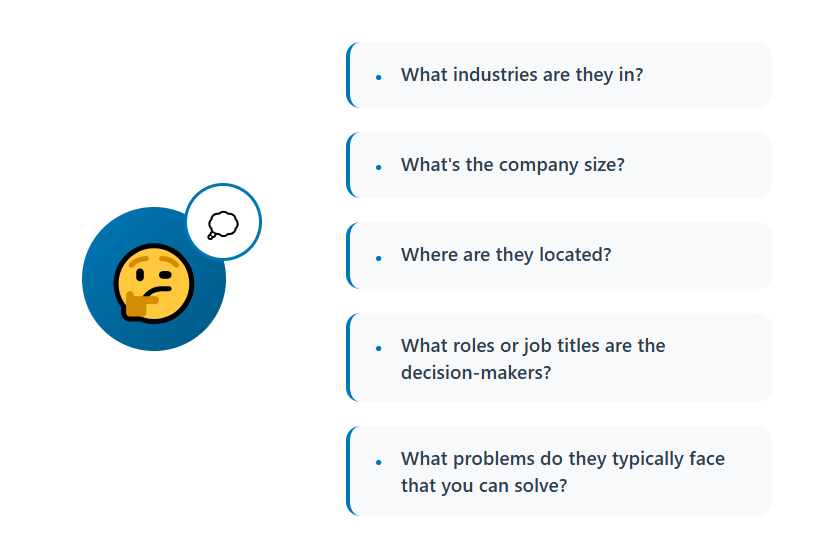
Broad lists produce low engagement. This isn't a theory — the data confirms it consistently. Campaigns under 50 recipients average a 5.8% reply rate versus 2.1% for large sends.
That's nearly a 3x difference driven entirely by targeting precision.
Your ICP needs to go deeper than job title. Build it around industry, company size, tech stack, growth signals, and specific pain points.
Then take it a step further with micro-segmentation: break your ICP into tight sub-segments and write different copy for each. "VP Sales at Series B SaaS companies with 50–200 employees who are currently hiring SDRs" is a segment. "B2B software companies" is not.
Intent signals that sharpen targeting: recent funding rounds, hiring velocity, leadership changes, new product launches, and competitor usage data.
The rule is simple: one campaign per segment. Mixing personas in a single sequence kills personalization and reply rate simultaneously.
Strategy 2 — Subject Lines That Get Opened
Your subject line determines whether the rest of your work gets seen. Subject lines that reference a specific problem, outcome, or situation relevant to the prospect's world get opened consistently — generic lines get ignored.
What kills subject lines: vague promises like "Quick question," generic curiosity bait like "Have you tried this?", and obvious sales language like "Partnership opportunity."
What works: specificity that feels relevant to the prospect's world, not a broadcast to everyone.
Tactics that lift open rates:
- Reference a specific trigger: "Your Series B + scaling sales team"
- Reference the prospect's company or role: "[Company] + [your category]"
- Ask a question the prospect actually wonders about: "Still managing [painful process] manually?"
A/B test subject lines every week. Small changes — sometimes just one word — can produce 20–30% swings in open rate.
Strategy 3 — Email Copy That Earns Replies
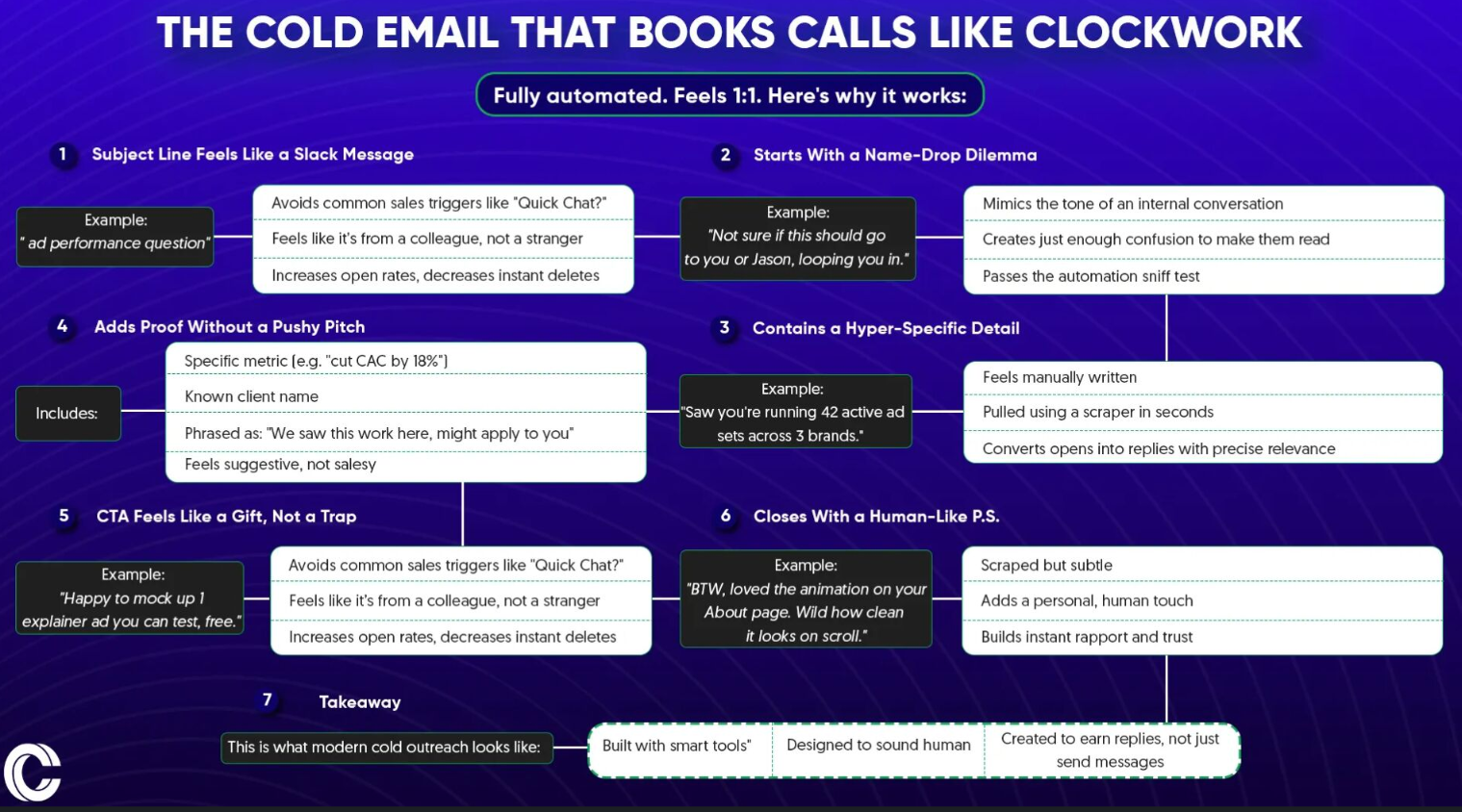
The data on email length is unambiguous. The optimal range for cold email copy in 2026 is 50–125 words, achieving reply rates roughly 50% higher than longer formats. Elite performers keep first-touch emails under 80 words. Brevity forces clarity. Every word has to earn its place.
Problem-first positioning is the copy framework that drives replies:
Wrong: "We help companies like yours streamline their sales process with AI."
Right: "Most [title] at [company type] I talk to are still manually [specific painful task] — is that something on your radar?"
Lead with their challenge. Follow with relevance. Close with a single, low-friction CTA.
The best-performing CTA in 2026: "Would you have a couple of minutes to chat about this over the next few days?" Binary questions consistently outperform open-ended requests. "Does this make sense?" outperforms "Let me know your thoughts."
No attachments or links in the first email — both trigger spam filters. Keep it clean.
Strategy 4 — Personalization Using Intent and Buying Signals

Generic personalization no longer moves the needle. "I noticed you work at [Company]" is the new spam. A generic cold email gets less than 1% response rate. A well-personalized email using real buying signals can reach 15–18% — a 15x improvement from the same number of sends.
Signal-based personalization is the new floor for any serious outbound program. Here's what to use:
- Hiring signals: "Noticed you're hiring three SDRs — most teams scaling this fast hit [specific bottleneck]."
- Funding: "Congrats on the Series B — companies at your stage usually face [specific challenge]."
- Tech stack: Reference tools they use and the gap your product fills.
- Content engagement: Reference a post or article the prospect published recently.
AI agents now handle roughly 80% of signal research for elite teams. The human's job is messaging strategy, not manual research.
The personalization floor: every email should reference at least one observable, specific fact about the prospect or their company.
Strategy 5 — Follow-Up Sequences That Add Value

58% of all replies come from the first email, with the remaining 42% coming from follow-ups. Stopping at step one means you're walking away from nearly half your pipeline before giving it a real chance.
The optimal email sequence length is 4–7 touchpoints. Four is the minimum for capturing the full follow-up window. Beyond seven requires genuinely new value at every touch.
Follow-up best practices:
- Step 2: Make it feel like a reply, not a reminder. "Quick follow-up on my note below" outperforms formal follow-ups significantly.
- Each step uses a different angle: case study, social proof, new pain point, relevant data point or insight.
- Never "just checking in": every touch must add something the prospect didn't have before.
- Spacing: 3–4 days between touches — close enough to maintain momentum, far enough to avoid overwhelming.
After a full sequence with no reply, wait 2–3 months before re-engaging with a completely fresh angle. Timing matters as much as messaging.
Strategy 6 — Sending Timing and Weekly Cadence
Timing affects engagement almost as much as copy quality. The same email sent at the wrong moment gets ignored. Here's how to structure the week:
Day
Best Use
Monday
Launch new sequences — prospects return with fresh inboxes and clear priorities
Wednesday
Send follow-up touches — highest engagement day of the week
Friday
Triage auto-replies (OOO responses) and reschedule for Monday
Friday sees the highest volume of auto-replies as prospects set out-of-office messages. Smart automation can triage these responses and reschedule follow-ups for Monday, maintaining sequence momentum.
Best send times: 8–10 AM and 1–3 PM in the prospect's local time zone. Always send in their time zone, not yours.
Consistent sending patterns matter more than most people realize. ESPs learn to trust predictable daily volume. Sending 500 emails one day and nothing the next flags suspicious behavior and damages domain reputation.
Strategy 7 — A/B Testing for Continuous Improvement
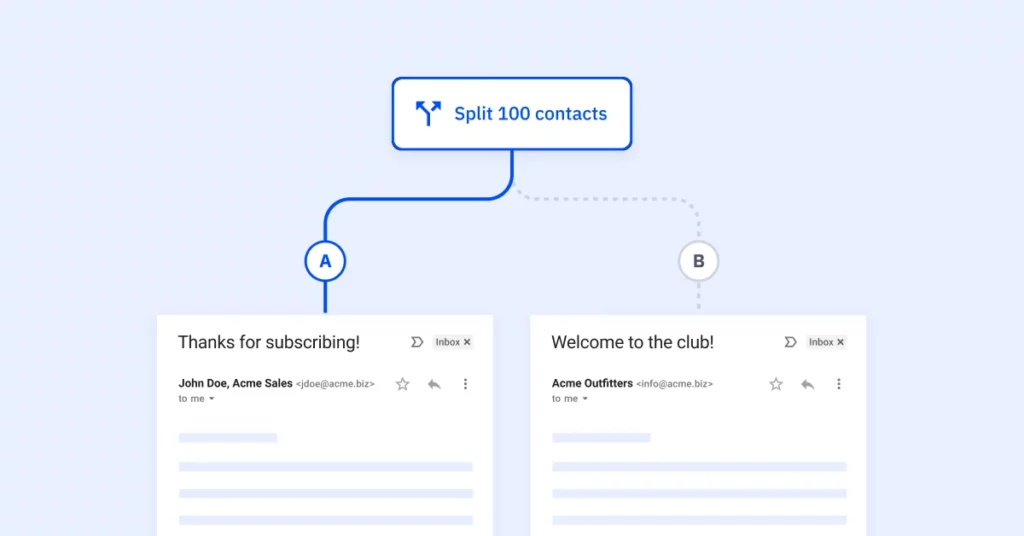
Elite senders test new messaging every week — not monthly, not quarterly, every week. This is one of the highest-leverage habits in outbound.
Test one variable at a time:
- Subject line: word count, specificity, question vs. statement
- Opening line: signal-based vs. pain-point vs. social proof
- CTA: binary question vs. low-friction ask vs. direct calendar link
- Email length: 50 words vs. 100 words
- Sequence angle per step: case study vs. competitor comparison vs. data point
Minimum sample size before calling a winner: 100+ sends per variant. What to track: open rate for subject line tests, reply rate for copy tests, positive reply rate for offer and angle tests.
The compounding effect is real. Improving reply rate by 0.5% per month through consistent testing doubles performance within a year. Teams that treat testing as optional will always plateau.
Strategy 8 — Multi-Channel Integration
Cold email alone is a single channel. Multi-channel sequences that combine email, LinkedIn, and phone produce dramatically more engagement than email-only outreach.
How multi-channel improves cold email engagement specifically:
- A LinkedIn connection before email means the prospect recognizes your name — open rate increases.
- Commenting on a prospect's LinkedIn post before emailing turns cold outreach into semi-warm outreach.
- A phone follow-up after an email sequence stalls reaches the prospect through a completely different channel and moment of attention.
Recommended sequence structure for high-value accounts:
LinkedIn Connect (Day 1) → Cold Email (Day 3) → Email Follow-Up (Day 6) → LinkedIn Message (Day 9) → Cold Call (Day 11) → Final Email (Day 14)
Never let cold email be the first touchpoint in a high-value account campaign. Warm the relationship first, even minimally.
🚀 Cold Email Isn’t Dead. Generic Outreach Is.
We handle targeting, copy, deliverability & sending end-to-end. More replies. More calls. Zero busywork.
Cold Email Engagement Metrics to Track and Diagnose
Track metrics at both campaign level and sequence step level. Aggregate numbers hide where the problem actually lives.
Diagnostic framework:
- Low open rate: Fix subject lines and check deliverability and inbox placement.
- Good open rate, low reply: Fix copy — too long, wrong angle, no personalization, or weak CTA.
- Good reply rate, low positive reply: Fix ICP targeting or offer clarity.
- High bounce rate: Fix list hygiene immediately. Stop sending until it's resolved.
📌 Pro tip: Apple Mail Privacy Protection inflates open rate data significantly. Treat open rate as a directional signal, not a precise performance measure. Reply rate is the only reliable engagement metric in 2026.
Common Cold Email Engagement Mistakes to Avoid in 2026
These are the patterns that keep teams stuck at average — or below it.
❌ Sending to broad, unverified lists
Volume without precision equals low engagement plus deliverability damage. Verified email lists achieve roughly 2x the reply rate of unverified lists and 5–6x the reply rate of purchased lists.
❌ Leading with your product
Prospects care about their problem, not your solution. Product-first openers kill reply rates before the prospect gets to your second sentence.
❌ Emails that are too long
The optimal range for cold email copy is 50–125 words, achieving reply rates roughly 50% higher than longer formats. Emails over 200 words are working against you.
❌ Multiple CTAs
A confused prospect doesn't reply. Force a clear, single decision.
❌ Stopping at step 1 or 2
This is the most common mistake in cold email. You're abandoning 42% of potential replies before they had a chance to happen.
❌ Generic personalization
"I loved your LinkedIn post" is now the new spam. Signal-based personalization referencing real buying triggers is the baseline in 2026.
❌ Sending on a cold domain
Skip warm-up and you land in spam from day one. Every strategy on this list becomes useless.
❌ No A/B testing
Running the same sequence for months without iteration guarantees stagnation. The teams compounding results are testing every week.
❌ Ignoring multi-channel
Email-only sequences convert at a fraction of what coordinated multi-channel cadences produce.
❌ Tracking opens as success
With Apple Mail Privacy Protection inflating open data, opens are a vanity metric. Positive reply rate and meetings booked are the numbers that matter.
How Cleverly Handles Cold Email Outreach End-to-End
Running a high-performing cold email program in 2026 means getting six things right simultaneously: deliverability setup, ICP precision, copy quality, sequencing, follow-up discipline, and continuous testing. Get five right and the sixth one will undermine all of them.
That's the reality most in-house teams face. You optimize copy but don't have the infrastructure. You build the infrastructure but don't have the bandwidth to write, test, and iterate weekly. One or two things get done well. The rest leaks pipeline quietly.
At Cleverly, we build and run complete cold email outreach systems for B2B companies — from ICP targeting and verified list building to copy, sequencing, and reply handling.
What that means in practice: ICP definition and micro-segmentation, verified contact list building with bounce rate controlled from the start, domain setup, authentication, and warm-up infrastructure, multi-touch sequences written and A/B tested for your specific offer, signal-based personalization at scale, and qualified meeting handoff when prospects are ready to talk.
The playbooks we use have been built across thousands of campaigns and for companies ranging from early-stage startups to enterprise names like Amazon, Google, Uber, PayPal, Slack, and Spotify.
That depth eliminates the 60–90 day trial-and-error period most in-house teams burn through figuring out what works.
We've generated over $312M in pipeline and $51.2M in closed revenue for our clients — and with our Scale model, you only pay for meeting-ready leads we actually send you.
If you want cold email services run at a top-quartile level without the execution overhead, book a strategy call with Cleverly.
We'll show you exactly how the system works and what results you can realistically expect from your specific market.

Conclusion
Cold email in 2026 rewards precision and punishes volume.
Start with the non-negotiables: SPF, DKIM, DMARC, domain warm-up, verified lists. Then layer in the eight B2B cold email engagement strategies covered here.
Add LinkedIn and phone touchpoints as multipliers, not afterthoughts. And track the metrics that actually connect to pipeline — positive reply rate and meetings booked — not vanity opens.
Teams that commit to consistent iteration outperform static campaigns within a single quarter.
Frequently Asked Questions
Free Resource
How to Scale a Profitable Cold Call System
Get the complete guide — download it instantly now.
Free Ebook
Download the Free Guide
Enter your details to get instant access.
You're all set! 🎉
Your ebook is downloading now.
Click below if the download didn't start automatically.