Table of Contents
What Is a Customer Reactivation Campaign?
Why Customers Go Inactive
How to Identify and Segment Inactive Customers Before You Launch
How to Build a Customer Reactivation Campaign Strategy
Email Reactivation Campaign — How to Do It Right
LinkedIn Reactivation Campaign — Re-Engaging B2B Customers
Multi-Channel Reactivation — Beyond Email
Reactivation Campaign Examples That Actually Work
Incentive Strategy — How to Win Customers Back Without Discounting Your Brand
How to Measure Reactivation Campaign Success
How to Prevent Customers from Going Dormant in the First Place
How Cleverly Helps B2B Teams Scale Reactivation Outreach
Conclusion
Frequently Asked Questions
Modified On :
May 26, 2026
Key Takeaways
- Reactivating a dormant customer costs 5–7x less than acquiring a new one — your CRM is an untapped revenue asset most teams ignore.
- Segment before you send: lapsed customers, silent churners, and price-sensitive churners all need different messaging to re-engage.
- A 4–5 touch multi-channel sequence (email + LinkedIn + SDR) consistently outperforms single-channel reactivation attempts.
- Lead with value and "what's new" before you ever drop an incentive — progressive disclosure protects your margins.
- The real success metric isn't whether a customer clicked — it's whether they're still active 90 days after reactivation.
You're probably spending a significant chunk of your budget trying to attract net-new logos. Cold outreach to people who've never heard of you, paid ads to new audiences, trade show booths. All of it necessary — but only part of the picture.
Sitting quietly in your CRM right now is a list of companies that already bought from you, worked with your team, and understood your value. They're not gone. They're just dormant. And they represent some of the cheapest, fastest pipeline you're leaving on the table.
Reactivating a lapsed customer costs 5–7x less than acquiring an equivalent new customer — and existing customers contribute 65% of total revenue for most businesses. Yet the majority of B2B companies have no structured system to go after that dormant base.
This guide covers everything you need to run reactivation campaigns that actually work: why customers churn, how to segment and prioritize dormant accounts, channel-specific execution across email and LinkedIn, real campaign examples, and how to measure what matters.
Whether you're in marketing, sales, or RevOps — this is your playbook.
What Is a Customer Reactivation Campaign?
A customer reactivation campaign is a structured, multi-touch outreach initiative designed to re-engage accounts that have gone dark — no purchases, no logins, no responses.
It's different from retention, which focuses on keeping active customers engaged. Reactivation starts after the relationship has already gone quiet.
There are two types of inactive customers worth distinguishing:
- Lapsed customers stopped engaging but didn't formally cancel. They might be opening occasional emails, but they're not buying and they're not talking to your team. They need a nudge, not a rebuild.
- Churned customers explicitly ended the relationship — cancelled their contract, stopped renewing, or walked away. Getting them back requires a stronger case. You need to show what's changed, not just remind them you exist.
The reason B2B reactivation campaigns work better than cold acquisition is simple: these accounts already know you. They've been through your sales process, evaluated your product, and made a buying decision once. The trust barrier is lower. The sales cycle is shorter. And the objections are usually more specific — which means they're easier to address.
The goal is to move dormant accounts through a clear progression: inactive → re-engaged → converted → retained.
🔄 Your Old Leads Are Still Pipeline Opportunities
We build outbound campaigns that re-engage cold prospects at scale. LinkedIn, cold email & calling—done for you.
Why Customers Go Inactive
Running a reactivation campaign without understanding why customers left is like treating symptoms without diagnosing the disease. Your messaging will miss, and your reactivation rate will reflect that.
Five churn triggers come up again and again in B2B:
1. Unmet expectations — The product or service didn't deliver what was promised during the sales process. Onboarding was rushed, the use case wasn't validated, and the customer never hit their "aha moment."
2. Poor perceived value — Cost felt disproportionate to outcomes at renewal time. This is especially common when no one on your team was proactively demonstrating ROI throughout the contract.
3. Budget cuts or internal changes — Leadership transitions, reorgs, and department restructuring kill contracts that were otherwise healthy. The champion left. The new person didn't inherit the relationship.
4. Competitor switch — A competitor offered something that specifically addressed an unmet need. This is the hardest churn to reverse, but it's not impossible — especially if the competitor didn't deliver either.
5. Neglect — No proactive customer success. No check-ins. The customer drifted, and nobody noticed until it was too late.
Before you build any campaign, pull your CRM data. Look at exit notes, NPS trends in the 60 days before disengagement, and product usage drop-offs.
The churn reason determines the message. Price-sensitive churners need a completely different approach than someone who left because a champion switched companies.
How to Identify and Segment Inactive Customers Before You Launch
Not every dormant account deserves the same investment. Spraying a reactivation sequence across your entire churned database is a fast way to burn list health and get low returns. Prioritize first.
Step 1: Define your inactivity threshold by business model
- SaaS: 30 days without login
- B2B services: 90 days without a touchpoint or purchase
- Ecommerce: 60–90 days without an order
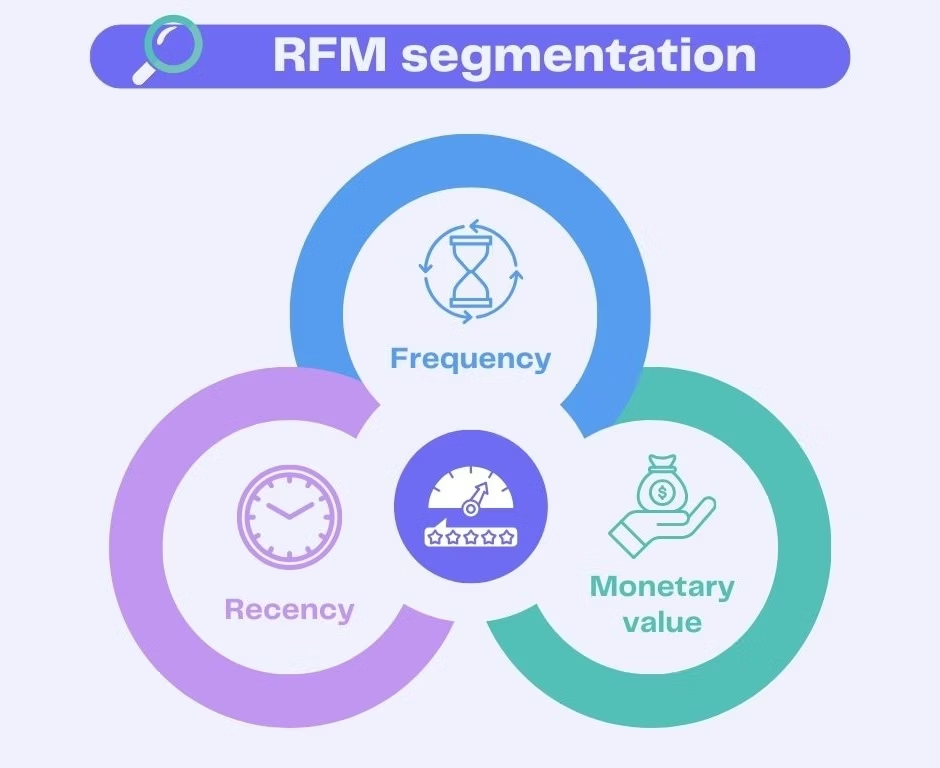
Step 2: Apply RFM segmentation across dormant accounts
- Recency: When did they last engage?
- Frequency: How often did they buy or use the product at peak?
- Monetary: What was their historical ACV or LTV?
Step 3: Tier by reactivation priority
Step 4: Segment by churn type for messaging alignment
- Silent churn (no feedback) → curiosity angle, "here's what's new"
- Price-sensitive churn → value reframe or revised pricing tier
- Competitor switch → specific outcome proof + competitive differentiation
- Internal change/champion left → new stakeholder outreach + relationship rebuild
The rule is simple: one message does not fit all. Segment first, personalize second, sequence third.
🚀 Most Companies Stop Following Up Too Early
$312M pipeline generated through consistent outbound. We turn ignored leads into booked sales conversations.
How to Build a Customer Reactivation Campaign Strategy
Before you write a single email, lock in your objectives. What does success actually look like?
Define your targets upfront:
- Reactivation rate: benchmark for B2B reactivation campaigns is 5–15%
- Revenue per reactivated customer vs. new customer ACV
- 90-day retention rate post-reactivation (this is your real north star)
- Campaign ROI: (revenue from reactivated accounts − campaign costs) ÷ campaign costs
Build a 4–5 touch sequence, not a one-time blast:
Space touches 5–7 days apart. Starting the sequence at the 30–60 day dormancy mark gives you the best shot at reactivation before the relationship fully cools.
Your win-back playbook should include:
- Email templates segmented by churn type
- LinkedIn messaging scripts for Tier 1 and Tier 2 accounts
- SDR call scripts for high-value accounts
- Retargeting ad copy for accounts fully disengaged from owned channels
Align your sales and marketing teams before you launch. Define who follows up on re-engaged accounts, how quickly, and with what offer. Reactivation campaigns that generate re-engagement but have no sales follow-up process are a wasted effort.
Email Reactivation Campaign — How to Do It Right

Email is the primary channel for most reactivation campaigns — it's cost-effective, scalable, and more personalizable than almost any other channel. But it only works if dormant contacts actually open it.
Global email open rate benchmarks for reactivation campaigns climbed to an average of 21.4% in 2025, up from 17% in 2023 — and brands that personalize their re-engagement efforts consistently outperform that average.
Subject Lines That Work for Dormant Lists
The subject line is everything when emailing a contact who hasn't opened in months. A few angles that consistently perform:
- Curiosity gap: "You've missed 3 major updates"
- Loss aversion: "Your [benefit] is waiting — expires Friday"
- Personal and direct: "Quick question, [First Name]"
- Pain-point callback: "Still working through [problem they mentioned]?"
Email Body Structure
- Opening: Acknowledge the gap without guilt — "It's been a while" works better than over-apologizing
- Value hook: What's new or improved since they left — not a sales pitch
- Proof: One customer outcome or testimonial line
- Offer (touches 3–4 only): Specific, time-bound, and segment-appropriate
- CTA: Single, low-friction — "Book a 15-min call" or "See what's new"
Personalization Levers
- Reference their original use case or stated goal from the sales process
- Mention the specific feature or product they used most
- Use company name, not just first name — "[Company] + [your product]" in a subject line outperforms generic personalization
Technical Checklist
- Remove hard bounces and unsubscribes before sending
- Test plain-text vs. HTML — plain text often wins for reactivation because it feels personal, not automated
- Optimize for mobile — dormant contacts are more likely to open casually
- A/B test subject lines with at least 200 contacts per variant before scaling
Reactivation email benchmark: Roughly 45% of customers who receive a reactivation email open subsequent emails — even one campaign can prime the pump for further engagement.
LinkedIn Reactivation Campaign — Re-Engaging B2B Customers
For B2B accounts who stopped opening your emails, LinkedIn is your highest-leverage second channel. It's a warm interruption — a message or ad in a professional context where the buyer is already thinking about business.
There are three approaches that work well for LinkedIn reactivation campaigns:
1. Direct Connection + Message via Sales Navigator
Reconnect or message accounts referencing the past relationship. Mention something specific — a new role they just started, a company announcement, a product update directly relevant to their use case.
Message framework:
- Opening: "We worked together on [X] about [timeframe] ago"
- Value signal: "We've [launched/improved/expanded] [specific thing] since then"
- Soft CTA: "Worth a quick conversation to see if it makes sense now?"
2. LinkedIn InMail
For decision-makers you're not connected to — especially new stakeholders at dormant accounts who may not know your company at all. Keep InMails short, reference the account history if applicable, and lead with a specific value point.
3. LinkedIn Retargeting Ads
Upload your dormant customer list as a custom audience and serve sequential ad creative: brand awareness → product update → customer outcome → offer. This works especially well for accounts that have gone completely dark on owned channels.
One important targeting note for B2B reactivation campaigns: use Sales Navigator to monitor job changes at dormant accounts.
A new decision-maker in the buying role is a warm reactivation signal — they're evaluating vendors fresh, and your track record with the company is an asset, not a liability.
Multi-Channel Reactivation — Beyond Email
Single-channel reactivation underperforms. Dormant customers who stopped opening your emails need to see you somewhere else. Here's how to layer additional channels into a coordinated sequence.
Retargeting Ads
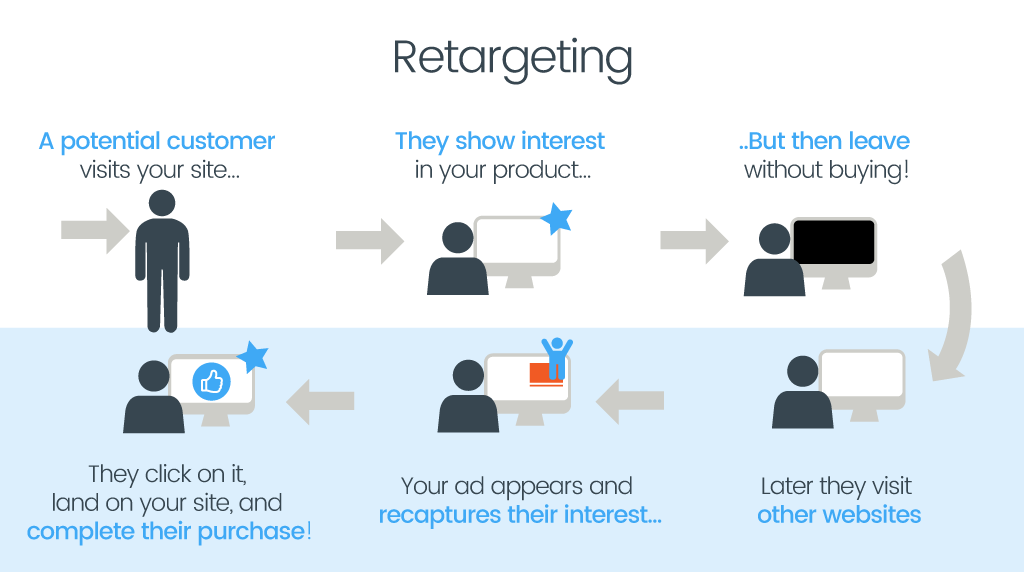
Upload your dormant customer list to LinkedIn, Meta, or Google as a custom audience. Run sequential creative: awareness first, then product update, then a testimonial, then an offer. This channel works especially well for accounts completely disengaged from email and requires no direct contact — it's pure brand reintroduction.
SDR Outreach for High-Value Accounts
Tier 1 accounts deserve a human touch. An SDR or AE calling a former customer is not a cold call — it's a warm call with account history behind it. The SDR should review all previous engagement notes, understand the original churn reason, and approach the call with a specific reason to reconnect.
SDR script structure: Acknowledge the gap → share what's changed → ask one qualifying question → offer a specific next step. Keep it under three minutes. Don't pitch. Qualify.
SMS or Push Notifications
Reserve this for your highest-value dormant accounts or time-sensitive incentive windows. Keep messages under 160 characters and lead with value — "Your account credit expires [date]" performs far better than generic re-engagement copy.
Direct Mail (Premium Accounts)
Physical mail cuts through completely in an all-digital world. A personalized letter or small, relevant gift tied to a specific return offer is one of the highest-converting reactivation tactics for enterprise-level accounts. Track response via a unique URL or QR code so you can attribute it properly.
Reactivation Campaign Examples That Actually Work
Theory is useful. But let's talk about what a real reactivation campaign sequence looks like in practice.
Example 1 — SaaS "What's New" Email Sequence
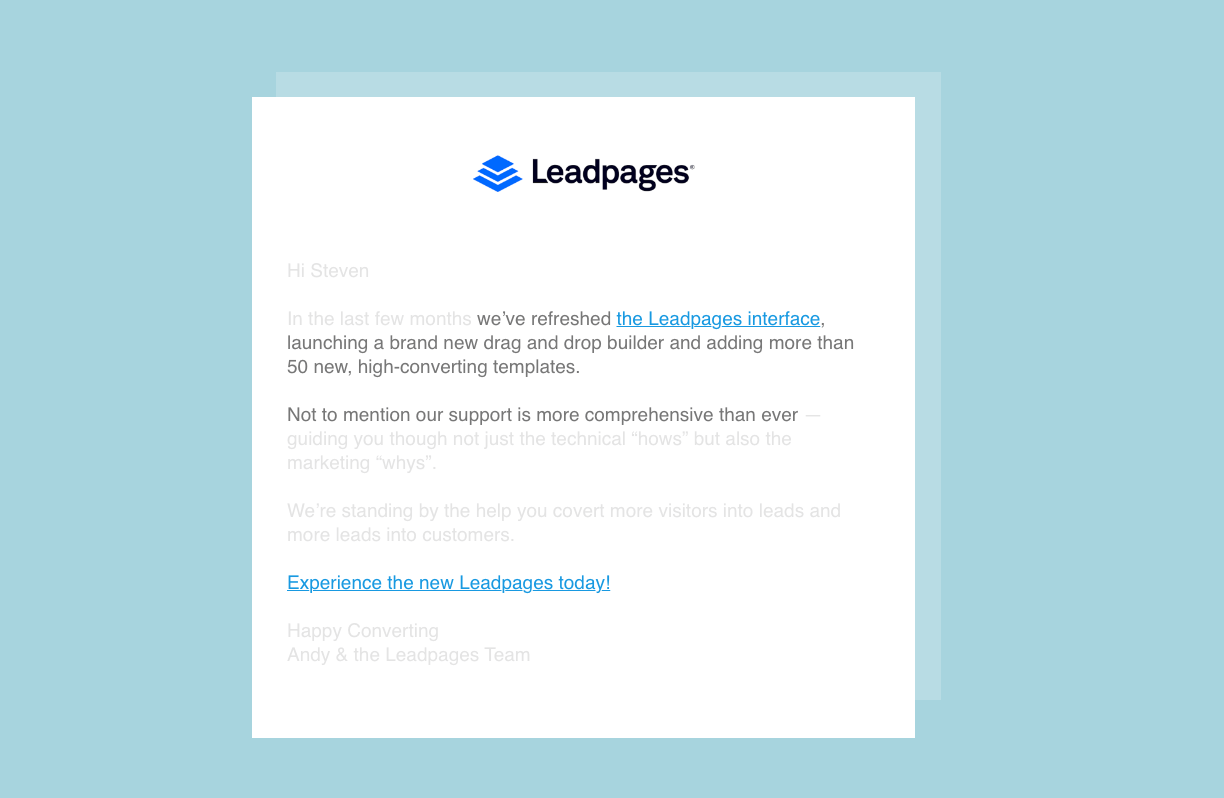
Best for: Accounts that churned due to unmet product expectations
- Subject: "We've made [product] significantly better since you left"
- Body: Three specific improvements relevant to their original use case, one customer quote from a similar company, and a CTA to book a demo
- Why it works: You're not asking them to forget why they left — you're showing them that reason no longer applies
Example 2 — B2B "We Miss You" + Offer Sequence
Best for: Price-sensitive churners
The key is not leading with the offer. By Day 14, the account has already seen your value reframe and social proof — the offer converts because the case has already been built.
Example 3 — LinkedIn + Email Coordinated Campaign
Best for: High-value accounts, Tier 1 reactivation
This coordinated approach significantly outperforms single-channel sequences for B2B accounts — the multi-touch presence signals that you're serious about the relationship, not just auto-blasting.
Example 4 — AI-Driven Win-Back (Brex Case Study)
Brex used AI-powered signals to identify lapsed customers showing renewed interest indicators — job changes, website revisits, competitor comparison activity. They delivered personalized reactivation touchpoints aligned precisely to re-engagement timing rather than arbitrary date triggers. The result was a 40% increase in booked demos from formerly dormant accounts.
The takeaway: intent signals should drive your sequencing, not just calendar dates.
Incentive Strategy — How to Win Customers Back Without Discounting Your Brand
Poorly designed incentives train customers to wait for deals. If every reactivation campaign leads with a 30% discount, you're teaching your lapsed base that patience pays. That's a long-term margin problem.
Tier your incentives by customer value:
Non-discount alternatives that often perform equally well:
- Early access to a new feature or beta product
- Free strategic consultation or account review session
- Exclusive benchmark report or industry data relevant to their use case
- Free onboarding or migration support for returning accounts
The progressive disclosure rule applies here: don't lead with your best offer. Start with value and "what's new" on touches 1–2. Escalate to an incentive only on touches 3–4. This preserves your margin for the accounts that truly need a nudge vs. those who would have come back anyway.
One more thing: urgency must be authentic — "offer expires [specific date]" outperforms vague "limited time" language. Track incentive redemption rate separately from reactivation rate. If almost every reactivated customer waits for touch 4 to respond, you're building a discount-dependent customer base.
How to Measure Reactivation Campaign Success

Running a reactivation campaign without rigorous tracking is just guessing. Here's what to measure, and what benchmarks to hold yourself to.
Primary metrics:
- Reactivation rate: (churned customers who re-engage ÷ total targeted) × 100. Database reactivation campaigns recover 5–15% of dormant leads on average — this is your benchmark range for B2B AI Agents Plus
- Revenue per reactivated customer: Compare against your new customer ACV to calculate true campaign ROI
- Campaign ROI: (revenue from reactivated accounts − campaign costs) ÷ campaign costs
- 90-day retention rate: The percentage of reactivated customers still active 90 days out — this is the real success metric, not just whether they clicked
Email-specific benchmarks:
- Open rate: 12–15% is healthy for reactivation; below 8% signals a subject line or list quality problem
- Click-through rate: 2–5% benchmark
- Unsubscribe rate: above 0.5% means your message-to-list match is off
Cohort analysis worth running: Compare the LTV of reactivated customers against continuously active customers tracked over 6–12 months.
In many B2B businesses, reactivated customers end up showing higher LTV because the win-back process forced you to address the root issue that caused disengagement in the first place.
Critical diagnostic: if reactivated customers are churning again within 60 days, the campaign didn't fix the underlying problem. Don't rerun the sequence — go back and diagnose what the real churn driver is before spending more on reactivation.
How to Prevent Customers from Going Dormant in the First Place
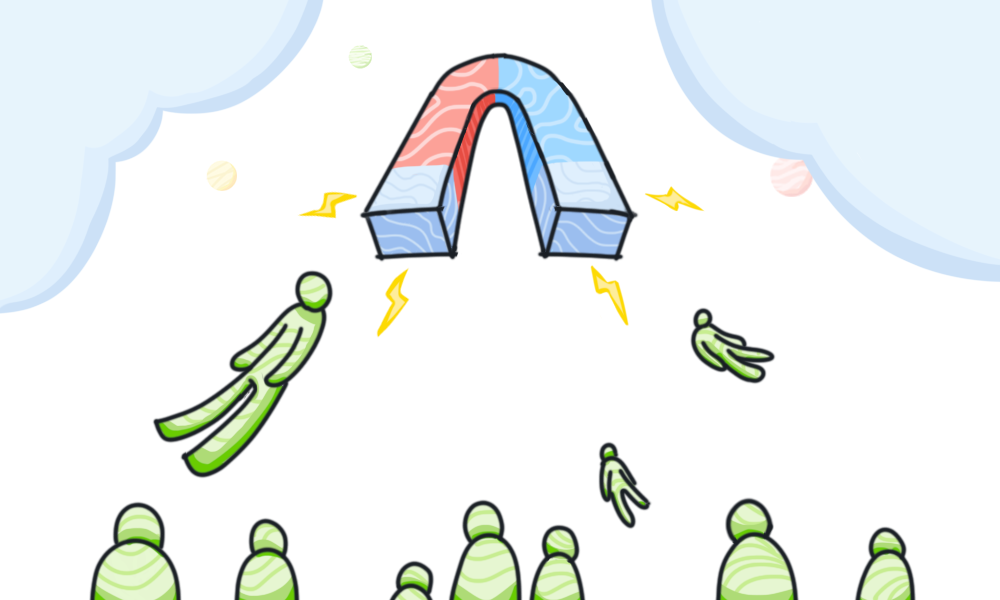
Reactivation is reactive. The highest-leverage play is catching at-risk accounts before they fully disengage.
Early warning signals to monitor in your CRM:
- Declining email open rates over 4+ consecutive weeks.
- Reduced login frequency or feature usage drop-off.
- Longer gaps between purchases or scheduled touchpoints.
- NPS scores falling from a previous survey period.
Set automated health score alerts in your CRM to flag accounts before they tip into dormancy. A proactive check-in from a CSM or AE costs almost nothing compared to a full reactivation sequence later.
Proactive engagement for at-risk accounts:
- Personal check-in email from the assigned rep — not a marketing automation blast
- Educational content on underused features tied to their specific use case
- Invitation to a beta, private community, or exclusive event
Audit your onboarding process. Customers who never reach their "aha moment" in the first 30 days face the highest churn risk. Time-to-value in the first month is one of the strongest predictors of long-term retention.
And treat reactivation data as a product feedback loop. If the same churn reason keeps appearing — "product didn't deliver X," "never used feature Y," "felt unsupported post-sale" — that's not a marketing problem. That's a product or service gap that no campaign can fully compensate for.
How Cleverly Helps B2B Teams Scale Reactivation Outreach
Building a reactivation program in-house sounds manageable — until you add up what it actually takes.
Among segmenting your dormant CRM, writing copy for multiple churn personas, building multi-channel sequences, running A/B tests, and following up on re-engaged accounts, reactivation never gets the bandwidth it deserves.
That's where Cleverly comes in.
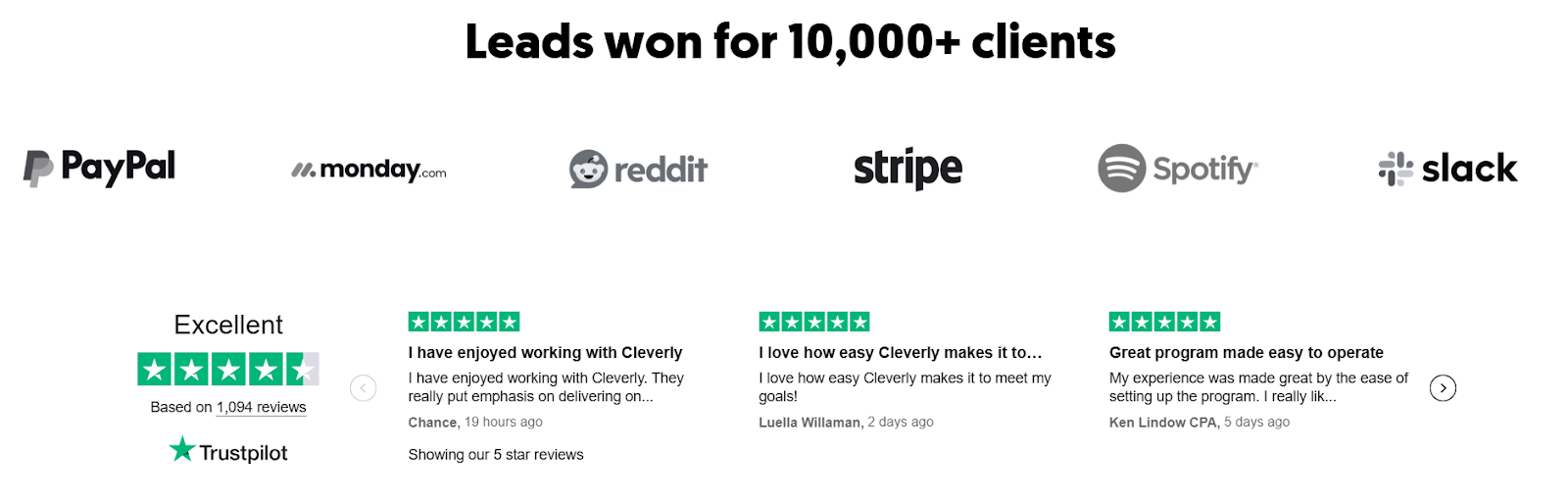
We're a fully done-for-you B2B lead generation agency trusted by 10,000+ clients, and reactivation campaigns are one of the highest-ROI programs we run.
We start by cleaning and re-enriching dormant CRM records — because stale data is one of the first things that kills reactivation deliverability.
From there, we segment dormant accounts by churn type and build tailored, multi-touch sequences designed around the specific reason each account went quiet.
Our execution spans LinkedIn outreach, cold email, and cold calling — all coordinated so your dormant accounts hear from you across the channels that are most likely to get a response.
We've generated over $312M in pipeline for clients through outbound programs, and reactivation often outperforms net-new acquisition in terms of time-to-meeting and conversion rate.
LinkedIn services start at $397/month, and our cold email model means you only pay for meeting-ready leads we deliver.
If you have a valuable dormant database sitting untouched, we can turn it into active pipeline — without your team managing the execution.
Book a strategy call with Cleverly and let's map out what a reactivation program looks like for your business.
Conclusion
Dormant customers are not dead leads. They're the most cost-efficient pipeline opportunity most B2B teams aren't working. The relationship already exists. The trust baseline is already established. You just need a system to re-engage them the right way.
The formula is straightforward: segment by churn type, personalize by root cause, execute a multi-channel sequence, and measure 90-day retention — not just re-engagement clicks.
Run the three highest-ROI plays (email sequence, coordinated LinkedIn + email, and SDR outreach for Tier 1 accounts), lead with value before incentives, and let your churn data inform product and service decisions going forward.
Your next quarter's pipeline might already be in your CRM. You just haven't run a real reactivation campaign to find it yet.
Frequently Asked Questions
Free Resource
How to Scale a Profitable Cold Call System
Get the complete guide — download it instantly now.
Free Ebook
Download the Free Guide
Enter your details to get instant access.
You're all set! 🎉
Your ebook is downloading now.
Click below if the download didn't start automatically.